Media Kit 6 DEC 4 MAY - THE EXHIBITION - The Exhibition Media Kit
←
→
Page content transcription
If your browser does not render page correctly, please read the page content below
T H E                                          E X H I B I T I O N

                                                                                                                      6 DEC
                                                                                                                      2019 UNTIL

                                                                                                                      4 MAY
                                                                                                                        2020

                                                                                                                     Media Kit

An exhibition developed & toured by the Australian Museum & Questacon – The National Science and Technology Centre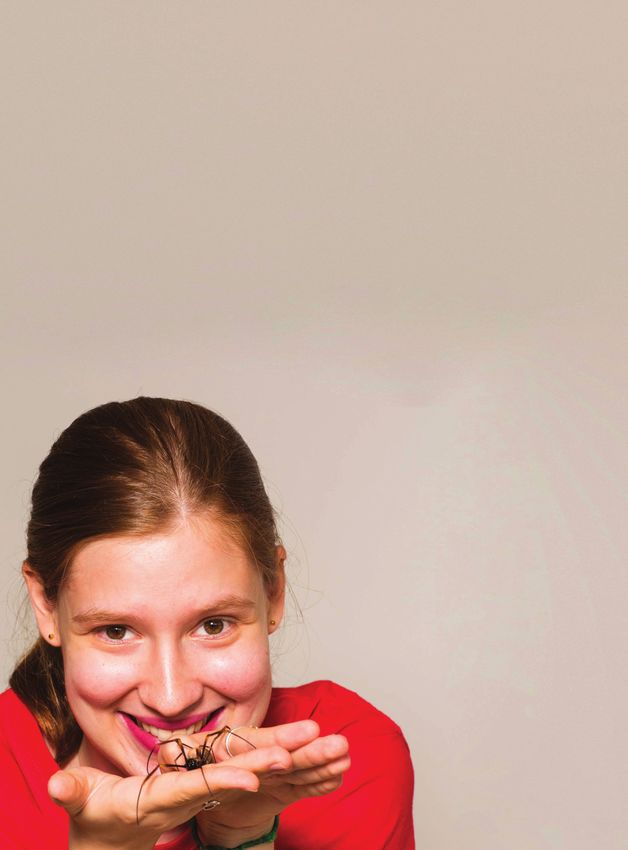
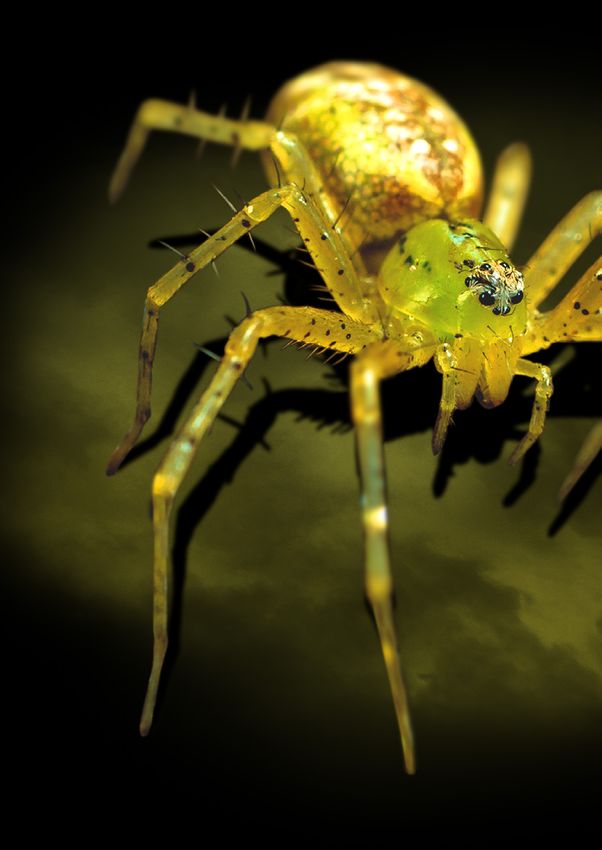
Lynx spider
Photo © Robert Whyte
Spiders
- The Exhibition
Spiders are awesome - they can spin webs, climb,
swim, dance, parachute and they can even drop
a limb when threatened and grow it back. Found
on every continent in the world except Antarctica,
spiders are one of nature’s great success stories.
Spiders - The Exhibition at Queensland Museum will give visitors an
eight-eyed insight into the amazing world of arachnids.
Providing a combination of immersion and information, Spiders -
The Exhibition showcases the latest science surrounding arachnids
that allows the visitor an up close glimpse into the fascinating world
of spiders.
Spiders - The Exhibition features fascinating interactive displays,
along with more than 200 spider specimens including live Australian
tarantulas, funnel-webs, redbacks and giant water spiders.
Spiders - The Exhibition will be a once in a lifetime experience,
with engaging and fun interactives for all ages.
Come and get an eight-eyed insight into the amazing world of
arachnids when Spiders - The Exhibition opens at Queensland
Museum on 6 December, 2019.
Spiders - The Exhibition is a joint project between the Australian
Museum and Questacon – The National Science & Technology Centre,
Canberra and will run at Queensland Museum until 4 May 2020.
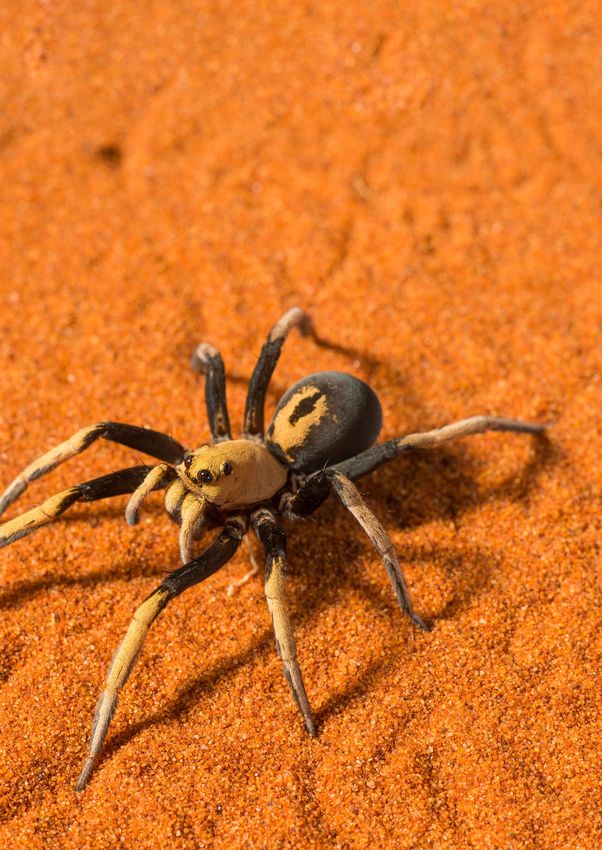
Wolf spider, Hoggicosa bicolor

Explore the Exhibition
– Themes
What is a Spider                          Spider Survival
Visitors to Spiders – The Exhibition      Just how these creatures have
are dared to enter into the world         survived millions of years all over
of hunting, burrowing and weaving         the world is unveiled through
spiders and learn the origin of           an explanation of venom, silk,
arachnids from a time before              movement, vision and vibrations.
dinosaurs. This is illustrated with
                                          This content involves hands-
fossils and amber from the Australian
                                          on interactives, models and live
Museum collection.
                                          deadly Funnel-web and Redback
                                          Spider specimens.
Spider Diversity
and Distribution                          Spider Science and
The diversity of spiders is a major       Discoveries
theme of the exhibition and a family
                                          There is a constant stream of new
tree illustrated with real spider
                                          science discoveries in the field of
specimens begins the journey into
                                          arachnology and venom and silk
understanding some of the 48,000 +
                                          technologies that are highlighted in
species from around the world.
                                          the exhibition through interviews
Using 3D scanning technology an           with scientists.
interactive touchscreen demonstrates
                                          Traditional Aboriginal knowledge
spider anatomy as visitors virtually
                                          systems are also included to add to
dissect and view spiders from the
                                          our understanding of spiders, silk
inside out.
                                          and venom.
Spiders inhabit just about every corner
of the globe and the range of habitats
can be explored though touchscreens       Queensland Museum
with audio visual content and
interactive spider environments.
                                          Research
                                          Queensland Museum arachnologists
                                          undertake research to document
Spider Reproduction                       biodiversity and learn about our
                                          changing environment. Taxonomy
Stunning world-first footage of the       — the identification of new species
phenomenal 3mm long Peacock               of animals — is a core component
Spider and his mating ritual introduce    of the Museum’s research program.
the visitor to the dangerous world of     Learn more about four new species
spider reproduction.                      of trapdoor spiders that have recently
                                          been discovered and described by
                                          Queensland Museum scientists.
                                          These new species have been given
                                          the common name of Palisade Trapdoor
                                          Spiders because their distinctive
                                          burrows protrude out of the ground
                                          like miniature turrets or towers.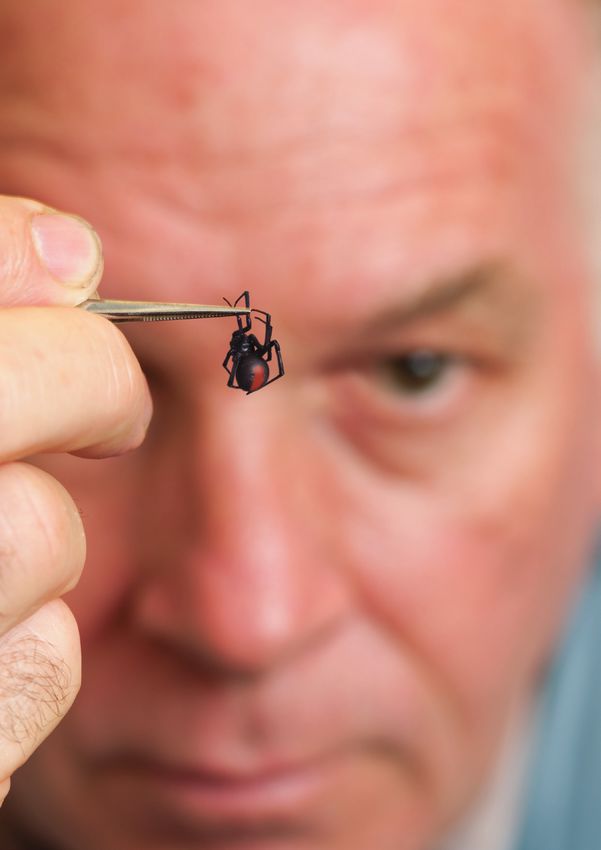
MEET THE SPIDERS
Most Spiders are smaller than your thumb, but they have a
mighty reputation. Venom and silk are their superpowers and
they save us from a world that would otherwise be overrun
with insects.
At Spiders – The Exhibition, you can find out how
these amazing animals have become one of the most
successful creatures on Earth. Chances are you’re always
close to a spider.
A useful way to get to know spiders is to group them
according to their lifestyles. Hunters, burrowers and
weavers differ in the way they catch their food (prey)
and how they use silk.
Come face to face with 12 live spider species during your visit
to Spiders - The Exhibition. Here you can meet some of the
amazing arachnids that will make Queensland Museum their
home until 4 May 2020.

                                                                  WATCH SPIDERS
                                                                  COME TO LIFE!
                                                                  Watch the spiders come to life by scanning images from the
                                                                  Spiders exhibition with the Spiders Augmented Reality app!
                                                                  You can make them dance, snap a picture with them and keep
                                                                  the Peacock Spider as a pet.
                                                                  Spiders that are featured in the app include:
                                                                  •    St Andrews Cross Spider
                                                                  •    Queensland Whistling Tarantula
                                                                  •    Wolf Spider
                                                                  •    Redback Spider
                                                                  •    Red headed Mouse Spider
                                                                  •    Peacock Spider
                                                                  Uncover the secrets of these under-appreciated arachnids
                                                                  by downloading the Spiders AR to your Apple or Android
                                                                  device today!
                                                                  Don’t forget to share your experience on Facebook,
                                                                  Twitter and Instagram with #qldmuseum
                                                                  The Spiders exhibition is a joint exhibition between
                                                                  the Australian Museum and Questacon.

                                                                                                           Please note: Visitors are
                                                                                                           not permitted to handle
                                                                                                           live spider specimens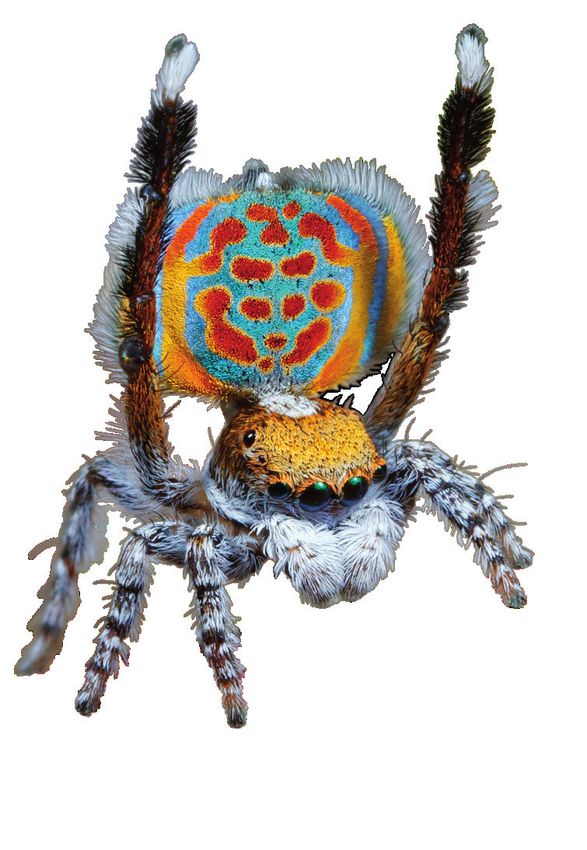
Giant Water Spider                                             Green Jumping Spider
Scientific Name: Megadolomedes trux                            Scientific Name: Mopsus mormon
Distribution: 	East coast Australia, from Sydney to           Distribution:    Northern Australia
                 Queensland.                                   Habitat:         Amongst green foliage (arboreal)
Habitat: 	Riparian zones of slow moving to still              Lifespan:        Up to 2 years, approx. 1 year as adults.
                 bodies of water (flat water).                 Adult Size:      16mm body length.
Lifespan: 	Up to 2 years, approx. 6 months to 1               Diet: 	Insects; flies, crickets, dragonflies; and
                 year as adults.                                                smaller spiders.
Adult Size: 	160mm leg span and 25mm body length.             Behaviours:	    Found amongst green foliage where
                 Leg span can reach 180mm.                                      green body camouflages.
Diet: 	Insects (larvae and adult), small                                       Large eyes forward facing providing
                 tadpoles and small fish.                                       wide range view, probably in colour,
Behaviours: 	They can walk across and float on the                             smaller eyes facing side and back
                 water with the help of a dense covering                        showing a blurry wider peripheral vision.
                 of hair on the legs that trap air pockets                      Will stalk prey until in reach (2-3cm)
                 and a hydrophobic exoskeleton that                             where it will pounce on top of prey,
                 repels water.                                                  using comparatively large chelicerae to
                 Megadolomedes can run quite fast on                           crush and envenom.
                 water and land. On water, they propel
                 themselves with the inner two pairs of
                 legs and use the front pair to detect
                 ripples or vibrations from possible prey.
	They can dive and stay underwater for a
                 while by trapping air bubbles with their
                 dense hairs.
	They can detect prey by detecting water
                 vibrations with sensory slits in their legs
                 (mostly their front pair).
	They hang upside down from rock
                 overhangs, plants or sticks to moult
                 their exo-skeleton.
	They have been seen wriggling their
                 tarsus or their palps to lure fish.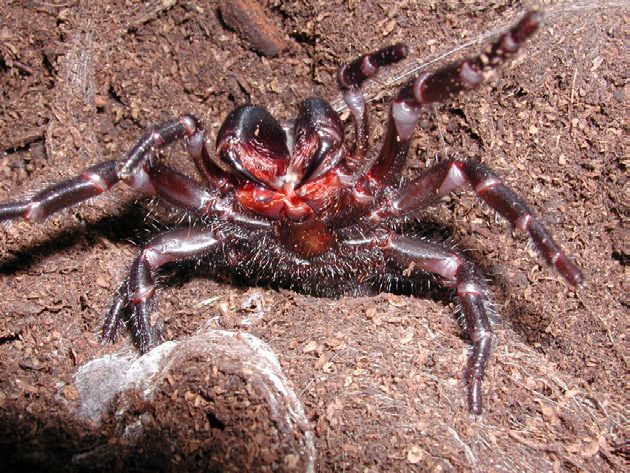
Social Huntsman Spider                                      Net-casting Spider
Scientific Name: Delena cancerides                          Scientific Name: Deinopis sp.
Distribution: 	South-western and eastern mainland          Distribution:    All over Australia.
                 Australia and Tasmania.                    Habitat: 	Suspended in low lying vegetation in
Habitat: 	Under the loose bark of trees, mostly                             woodland, grasslands and urban areas.
                 Blackwood, Acacia melanoxylon,             Lifespan:        Up to 2 years, approx. 1 year as adults.
                 and River Red Gum, Eucalyptus              Adult Size:      Up to 3cm body length.
                 camaldulensis.                             Diet: 	Terrestrial insects such as crickets,
Lifespan:        Up to 2 years, approx. 1 year as adults.                    cockroaches and beetles.
Adult Size:      140mm leg span and 30mm body length.       Behaviours: 	Makes a small web of a few strands of
Diet: 	Insects such as beetles, crickets,                                   silk from which it suspends, holding a net
                 cockroaches and slaters.                                    made from silk with its front pair of legs.
Behaviours: 	After mating with female, the male will       	Will build over a dry leaf directly below
                 go off to mate with other females while                     which it marks with white dots of urate.
                 the gravid (pregnant) female will seal                      It uses these as targets. Once a prey
                 the bark to the tree with really strong                     item walks over the white dot, the spider
                 webbing and lay small green eggs into a                     throws the web-net over it.
                 flat purse made from her silk and wrap     	The front middle pair of eyes (Posterior
                 it up.                                                      Median Eyes) are considerably enlarged
	The young will hatch inside the sac and                                    and are better at gathering light in the
                 stay there until their first moult.                         dark than a cat or an owl.
	The mother will then tear open the sac                    	The light sensitive retina (that causes
                 and the young will gather around the                        their eyes to shine in torch light) is
                 mother’s area.                                              destroyed by the light at each dawn due
	She will share her food until they                                         to not having eyelids, however, unlike
                 can catch their own and share it                            any bird or mammal, this membrane is
                 between themselves.                                         reconstructed every evening.
	Rather than leaving the mother, they
                 will stay with her and continue to catch
                 and share food with their siblings until
                 they mature.
	The older siblings will even watch the
                 next egg sac, while the mother goes off
                 to hunt.
	They will generally disperse when they
                 reach maturity or sub-adulthood.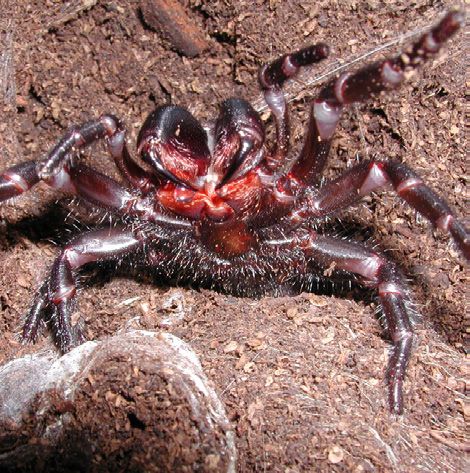
Sydney Funnel-web Spider                                    Redback Spider
Scientific Name: Atrax robustus                             Scientific Name: Latrodectus hasseltii
Distribution: 	Endemic to Sydney, as south of Illawarra,   Distribution:    All Australia
                 as west as the Blue Mountains and as       Habitat: 	Dark areas in woodlands, grasslands and
                 north as Central Coast.                                     urban areas.
Habitat: 	Damp Forest and urban areas, often               Lifespan:        Up to 3 years, approx. 2 years as adult.
                 under rocks or wood.                       Adult Size:      12mm body length (females)
Lifespan:        3-10 years.                                Diet: 	Invertebrates and small vertebrates,
Adult Size:      35mm body length                                            whatever it can catch in its web.
Diet:            Insects.                                   Behaviours: 	Builds a web in dark places with strands
Behaviours:      Will burrow down with a funnel like                        of silk coming down.
                  opening surrounded with trip wires.       	This complex web is efficient in snaring
	Burrows heavily lined with silk giving                                     many things. Passing prey that trip on
                  “sock” appearance.                                         the lower lines of silk when become
	Normally found underneath rocks and                                        stuck. The trip lines snap and spring up
                  wood embedded in damp soils.                               and the prey only gets more stuck.
	Most toxic spider in the world,                           	Ensnared prey struggle sending
                  Atracotoxin being a neurotoxin causing                     vibrations along the silk which notifies
                  severe pain, muscle cramps, tingling in                    the spider of the presence of food.
                  lips, headaches, loss of eyesight and     	The spider will wrap they prey in silk
                  paralysis of respiratory system, death.                    and eat it later.
	No deaths or severe cases known since                     	Their silk can catch and transport prey
                  the development of the antivenom                           larger than itself.
                  in 1981.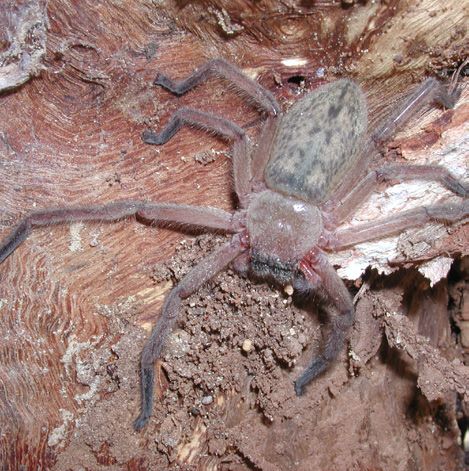
Australian Tarantulas:                                     Golden Orb-weaving Spider
Brush Tarantula                                            Scientific Name: Nephila plumipes/edulis
Scientific Name: Coremiocnemis tropix                      Distribution:    All Australia.
                                                           Habitat: 	Woodlands and Urban areas
Whistling Tarantula                                        Lifespan:        Up to 2 years, approx. 1 year as adults.
Scientific Name: Phlogius sp.                              Adult Size:      240mm body length (females)
                                                           Diet: 	Flying insects, occasionally birds
Feather-leg Tarantula                                                       and bats.
Scientific Name: Selenotypu sp.                            Behaviours: 	Constructs an orb web which ensnares
                                                                            any insect that is unfortunate to fly
Distribution: 	Northern Australia and central regions.                    into it.
Habitat:         Phlogius & Coremiocnemis spp. are        	Will also prey on birds or bats that
                 found in flooding grasslands and                           become ensnared, spitting digestive
                 rainforest. Selenotholus & Selenotypus                     fluid inside prey sucking the externally
                 spp. are found in semi-arid grasslands.                    digested food through small holes.
Lifespan:        5-15 years.                                                Wraps up prey in silk, sometimes.
Adult Size: 	Body length can grow over 50mm and           	Sense vibrations of struggling prey
                 leg span can be up to 180mm.                               caught in silk.
Diet: 	Large insects, small vertebrates (rarely           	Females spend most their lives in the
                 birds though despite sometimes being                       centre of their orb web. Males will roam/
                 called “Bird-Eating Spider”).                              balloon to find a mate.
Behaviours:      Nocturnal and burrowing.                  	Webs stay up permanently, unlike most
	When alarmed, they make a whistling/                                      other orb-weavers. They will patch up
                 hissing sound by rubbing the hairs of                      small breaks only recreating a web when
                 the chelicerae together. This is called                    it is badly damaged.
                 stridulation.                             	Preferred method of capture is prey
	Will sit at their burrow entrance at                                      gets caught in web, spider moves to it
                 and wait for prey to walk past. It will                    bites to envenom then wraps it up. It
                 occasionally actively search for prey.                     then retreats to the hub of the web with
	Burrows can be up to 30cm deep ending                                    the prey package or leaves the prey
                 with a cavern where they spend most                        package for later.
                 the day.
St. Andrews Cross Spider Maleny Palisade Trapdoor Spider
Scientific Name: Argiope keyserlingi Scientific Name: Euoplos turrificus
Distribution: Eastern Australia Distribution: South East Queensland, Australia, on the
Habitat: Woodlands, heath, dry sclerophyll forest southern Blackall Range near Maleny
and urban areas. Habitat: Subtropical rainforest, in a burrow with
Lifespan: Up to 2 years, approx. 1 year as adults. a D-shaped door that sits on top of a
Adult Size: 20mm body length (females) short turret
Diet: Flying insects. Lifespan: Unknown, but likely 5-15 years, and
Behaviours: Constructs an orb web which ensnares females probably 10+ years as adults
any insect that is unfortunate to fly Adult Size: 25-30 mm body length as adults
into it. Diet: Variety of ground-dwelling insects and
Sense vibrations of struggling prey arthropods
caught in silk. Behaviours: Females spend their lives in their
Females spend most their lives in the burrow, whereas males mature and
centre of their orb web. Males will roam/ wander in search of a mate during
balloon to find a mate. summer and autumn.
Webs stay up permanently, unlike most This species has a burrow entrance and
other orb-weavers. They will patch up trapdoor that are very distinctive and
small breaks only recreating a web when species-specific.
it is badly damaged. At night, trapdoor spiders wait poised
Preferred method of capture is prey gets just inside their burrow entrance,
caught in web, spider moves to it, wraps pouncing on any prey that walks past,
it up then bites to envenomate. It then injecting it with fast-acting venom and
retreats to the hub of the web with the then dragging the unfortunate victim
prey package or leaves the prey package back into the burrow.
for later.MEET QUEENSLAND MUSEUM’S ARACHNOLOGISTS Queensland Museum is home to one of the Southern Hemispheres most active arachnology department with the team of arachnologists describing more than 1,000 species of spiders, which is almost a third of all spiders in Australia. The unit is headed by Queensland Museum’s very own spider man, Dr Robert Raven who has discovered around 500 species. Some of these spiders have been named after celebrities including Judi Dench, Helen Mirren, Jack Nicolson, surfer Mick Fanning, Karl Lagerfeld, Sir David Attenborough, Bob Marley and ballet icon Li Cunxin.
Dr Michael Rix
Dr Mike Rix is a Principal Curator of Arachnology and Research Fellow in
the Biodiversity and Geosciences Program at the Queensland Museum.
He completed his undergraduate studies at the University of Queensland,
and his Ph.D. at the University of Western Australia in 2009. Before joining
Queensland Museum in 2015, Mike worked at the Western Australian
Museum and the University of Adelaide. Mike works primarily on the
taxonomy, systematics, evolutionary biology and molecular biology of
Australian spiders. The overriding aim of his research is to combine
phylogenetic approaches to explore biogeographic and other evolutionary
problems, with revisionary taxonomic approaches to describe and conserve
species. He has dedicated most of his career to working with collections and
to taxonomically documenting the remarkable spider fauna of Australia,
and has described 214 species in eight families.
How many species of spiders have you described?
As of September 2019, I have described 214 new species of spider.
What is your favourite species of spider and why?
My favourite spiders are Pelican Spiders of the family Archaeidae. These
enigmatic animals were actually known from fossils before living specimens
were discovered in the forests of Madagascar. Today, they are only known
from mainland Australia, Madagascar and southern Africa, but fossils are
known from the Jurassic Period, and there have been Pelican Spiders on
Earth for over 200 million years. They have highly modified bodies, with a
hugely elevated head region and long, spear-like mouthparts, which they
use to prey on other spiders (they are also sometimes called Assassin
Spiders). In Australia we have 38 named species, and in Queensland they
occur in rainforest habitats from the Lamington National Park north to the
Wet Tropics. These remarkable ‘living fossils’ have captured my interest for
over 20 years, and I study them whenever I can!
Why did you become an arachnologist?
I first discovered arachnology at the age of 10, when I saw what I thought
to be an ant in some bushland near Ipswich. I realised it wasn’t an ant when
it looked up at me, and then abseiled down to a leaf on a line of silk! What
I had found was actually an Ant-Mimicking Jumping Spider (Link to this:
http://theconversation.com/spiders-disguise-themselves-as-ants-to-hide-
and-hunt-their-prey-33953), and from that moment on I was hooked! I
soon discovered that spiders were endlessly fascinating, poorly known and
terribly misunderstood, and I decided by about the age of 12 that I wanted
to pursue a scientific career in arachnology. I’ve never looked back since!
What is your favourite spider fact?
That large female trapdoor spiders in the Australian arid zone can live to
over 40 years of age in the wild!
I love spiders because...
They are endlessly fascinating, and can teach us so much about evolutionary
processes, ecology and conservation biology. Spiders have a bad-wrap, but
the vast majority of species are harmless to humans, and are the dominant
predators of insects in all terrestrial environments (and thus crucial to the
maintenance of life on Earth). They exhibit an extraordinary diversity of
morphologies, lifestyles and behaviours, and have been around for over 300
million years. We still have so much to learn about these amazing animals,
and still so many new species to scientifically describe.
Dr Robert Raven
Dr Robert Raven is the Head of Terrestrial Biodiversity and Principal
Curator, Chelicerata, at Queensland Museum. He has a wide knowledge of
invertebrate groups, including earthworms and snails, as well as some frogs.
Robert heads one of the most active arachnological units in the Southern
Hemisphere. Robert first studied spiders to manage his fear of them. Soon
after that, when he tried to study the behaviour and ecology of spiders
around Brisbane, he discovered that very little was known about their
names. Some were new species so he started working on their taxonomy,
naming them. He was Chairman of Queensland Museum’s Animal Ethics
Committee. Robert has described close to 500 new spider species from
Australia, New Caledonia, Fiji, Solomon Islands, Colombia, Peru, Panama,
Mexico, India, south-east Asia, New Guinea.
How many species of spiders have you described?
Too many! I am sitting at around 500 species of spiders that I have
described and they are from around the world.
What is your favourite species of spider and why?
My favourite species of spider is the Bob Marley Marine Spider, Desis
bobmarleyi. I found this spider on the beach in North Queensland and my
colleagues and I described it a few years ago. The reason I love this spider
so much is because it lives on reefs and only sees air about three to four
times a year when the tide drops to 0.3 metre. How does that work??
Why did you become an arachnologist?
I am quite an unusual case as I am an arachnologist with a fear of spiders!
I had a fear of the thought of a spider on my arm and decided the only way
to logically manage my fear was to study them, from there I discovered
there was actually very little known about spiders and I started to describe
them. And while I can manage my fear in a work capacity, I know that if a
huntsman jumped on me while asleep in bed, I would be petrified!
What is your favourite spider fact?
Some male Daddy Long legs have a reproductive organ bigger than the rest
of the body.
I love spiders because…
They always continue to amaze and challenge me. Also I believe the most
important things that spiders have done is to allow me to meet an amazing
diversity of people and visit some marvellous places through the work I do
with them. Which is amazing to think all of this has stemmed from my initial
fear of them.
Dr Owen Seeman
Dr Owen Seeman became an arachnologist about 25 years ago, thanks to
seasickness torpedoing aspirations in marine biology, and a realisation that
he knew nothing about insects, except that most were not marine and they
were more interesting than seashells. This transitioned to a fascination for
mites and the extraordinary things they do in some of the most unusual
places. After studying flower-inhabiting mites that ride on bees and birds,
the remarkable diversity of mites on passalid beetles, and a dalliance with
the Tasmanian mite fauna, he joined the Queensland Museum as a collection
manager and acarologist (a special branch of arachnology dedicated to
mites and ticks). Much of his research has focused on the species diversity,
morphological adaptations and curious relationships between mites and
their host insects.
How many species of spiders have you described?
Although Owen has described no new species of spiders, he has described
121 species of mites, solo or in research teams.
What is your favourite species of spider and why?
My favourite type of spider is the Bolas Spiders, and I’ll choose the bird-
dropping spider (Celaenia excavata). What’s not to love about a spider that
mimics not only a piece of poo, but also the pheromones of female moths?
At night, when male moths are seeking a mate, these unsuspecting lovebirds
end up becoming food for the spider. Another cool thing about these is that
they’re orb-weavers that have abandoned orb webs. This is because moths
are hard to catch in webs (thanks to their scales), and so orb-weavers have
evolved cunning ways of trapping them. Mimicing female sex pheromones,
and foregoing web altogether, is the pinnacle of this evolutionary pathway!
Why did you become an arachnologist?
In the long ago, I became fascinated by insects, especially parasitic insects,
which are not only economically important but sometimes bizarre. This
grew into a love for ticks, which are a type of mite, and thus an arachnid. I
was soon swayed to do an honours project on a type of mite that had been
found on birds, but should really live in flowers – and, as we suspected, they
turned out to be riding on the heads of nectar-feeding birds as a way of
moving between flowers. Mites may be tiny, but partly thanks to this they do
all sorts of weird and wonderful things, and I’ve loved working on them for
25 years.
What is your favourite spider fact?
I love that spiders can be caught in their own webs – it’s just that they’re
wonderfully adept at moving on them. Webs aren’t just entirely sticky:
there’s often dry web that the spiders walk on; and many touch the webs
only with their hook-like claws at the tips of their feet. Should they get sticky
web on their feet, they soon give them a clean. Some spiders also specialise
on web-building spiders as prey, and these often have cunning strategies
for moving on (or simply avoiding) the web so they can attack the builder of
the web!
I love spiders because…
To be totally biased, the best spiders are the ones that are hosts to mites!
But my favourite groups of animals are those that express a huge diversity
of behaviours. In spiders, I love how they’re all predators, but they catch
their prey in all sorts of different ways that seem astonishingly clever to a
human observer. In can be the way a jumping spider stalks and hunts prey;
how a net-caster builds its intricate trap; or how a tiny silver dewdrop spider
raids the webs of golden-orb weavers.
FUN
       SPIDER
       FACTS

Did you know?
• S piders were one of the earliest animals to live on land, about      • S piders can self-amputate to escape a bird or another predator.
  400 million years ago, making them much older than dinosaurs!            Some spiders can also regrow their legs when they next moult!
• W
   hen dinosaurs roamed the earth during the Jurassic period            • S piders are often eaten by hunting wasps seeking food for their
  (191 – 136 million years ago), orb weaving spiders where                 young, spider eggs are very nutritious for many wasps, flies
  spinning sophisticated aerial webs to catch flying insects.              and lacewings.
• S piders are called invertebrates because they don’t have             • S piders also like to eat other spiders, sometimes they eat their
  backbones. They come from the class Arachnida meaning they               siblings, mates or their babies!
  have a front body and a rear body, 8 legs, 2 biting or piercing
                                                                         • S piders can be found in Aboriginal art including bark and rock
  mouth parts and 2 palps. Other arachnids found in Queensland
                                                                           painting, particularly in the Northern Territory of Australia.
  include mites and ticks and scorpions.
                                                                         • S piders live in almost every habitat on earth – except for polar
• O
   nly about one third of the 10,000 spiders in Australia have
                                                                           regions, high mountains and the open ocean.
  been named.
                                                                         • S piders are an important part of nature – their venom and silk
• P
   rimitive spiders include trapdoor, funnel-web, wishbone,
                                                                           are used in medical research, pest control and fibre technology.
  curtain web, mouse spiders and tarantulas and can live for up
                                                                           Spiders help out by eating lots of insect pests!
  to 25 years!
                                                                         • S ome spiders are threatened species in Australia due to
• M
   odern spiders include orb-weaving, net-casting, daddy-long-
                                                                           clearing and degrading of bushland. Habitat conservation is
  legs, water, fishing, nursery, redback, brown widow, wolf, crab,
                                                                           essential to maintaining sustainable ecosystems.
  jumping, huntsman, ant and white-tailed species and usually
  live for 1 or 2 years.                                                 • S piders are awesome - they can spin webs, climb, swim, dance,
                                                                           parachute and balloon.
• W
   e use amber spider fossils – that is, complete spiders trapped
  in clear, sticky, tree resins, to show us that spiders like the ones
  we know today, lived more than 30 million years ago.
                                                                                                                    Dr Robert Raven holding
                                                                                                                           a redback spider
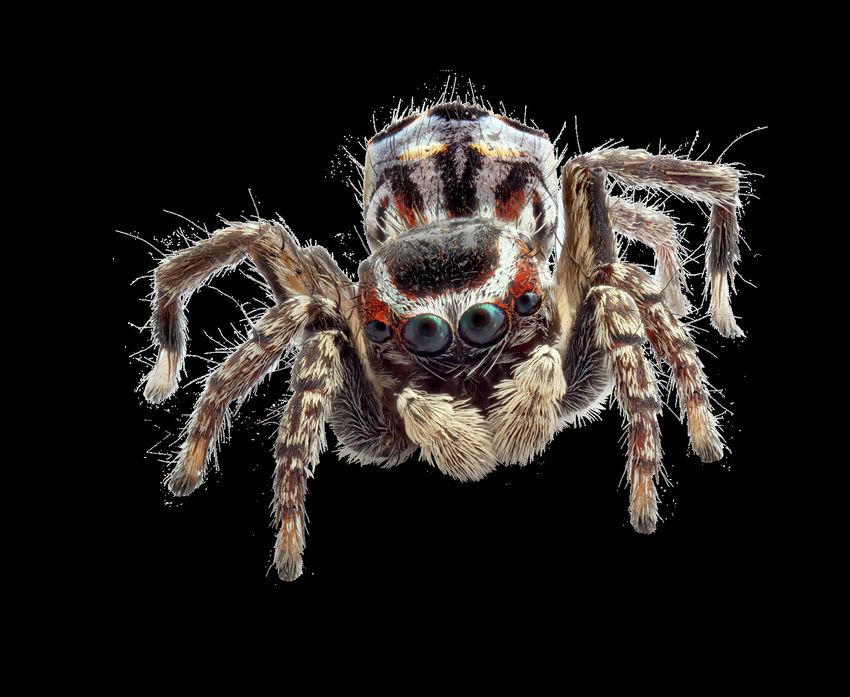
Peacock Spider, Maratus harrisi
IMAGES
A selection of images that are indicative of what visitors
can expect when they visit Spiders - The Exhibition

Images for media use
A range of images of exhibition objects are available for download
and use by media via the Spiders - The Exhibition
https://www.dropbox.com/sh/5cw4tebdesm0jkv/AABax-uCSWKNsyHH0rg3csf-a?dl=0
Supplied photo captions and credits — included in the image
gallery — must accompany publication.
Tickets                                                  Events &
BOX OFFICE                                               Public Programs
 Tickets                       Prices
 Adult:                        $15.50
                                                         After Dark (18+ only )
 Concession/ Adult Student:    $13.50                    Grab a drink and explore all the Museum has to offer — natural
                                                         history, cultural heritage, science and human achievement
 Child (5-15 years)            $12.50
                                                         that tells the changing story of Queensland. Get entry to the
                               (children under 5 FREE)
                                                         entire Museum including Spiders - The Exhibition There will
 Family (2A + 2C):             $46                       be demonstrations and displays, live music, entertainment and
 Member Adult                  $13.95                    expert talks.
 Member Concession             $12.15                    Dates to be confirmed.
 Member child                  $11.25
 Member Family                 $41.40
Tickets can be purchased at www.qm.qld.gov.au            A Night at the Museum
                                                         Explore the museum as the sun goes down at our night time
                                                         adventure for our smallest visitors.
                                                         Enjoy an evening full of fun for the whole family and entry to
                                                         every level of the museum including Spiders - The Exhibition.
                                                         Dates to be confirmed.

                                                         Annual Pass Holders
                                                         Adult: $18.90
                                                         Child (5-15 years): $13.50
                                                         Family (2 Adults + 2 Children): $54
                                                         Annual Pass Holders will need to present their card and ticket
                                                         on entry. Prices include all booking fees.

                                                         Food and Drink
                                                         A selection of hot and cold family friendly food and drinks will
                                                         available for purchase.
                                                         The event is licensed. ID will be required to purchase alcohol
Spiders - The Exhibition Shop
Loved finding out more about our eight-legged friends?
Then a visit to the Spiders - The Exhibition shop on Level
3 is a must for those wanting to take home a souvenir to
remember their experience.
There is a range of spider themed giftware including hats,
backpacks, t-shirts and water bottles.
S
TOTE
KIDS BU
CKET HA
T
MOCKU
P
FABRIC
CO
Blue top LOU
an
Red mid d br
dle pane
Screenpr
int spid
e
White Qu
eenslan
d
PRINT PA
Print wh NEL:
ite on re
540mm d
wide x 80 cotton drill
mm highMedia enquiries media@qm.qld.gov.au Christine Robertson, (07) 3840 7789 | 0417 741 710 Kylie Hay, (07) 3842 9388 | 0434 565 852 Social Media Facebook: Facebook.com/qldmuseum Twitter: @qldmuseum Instagram: qldmuseum #qldmuseum #SpidersQM
You can also read


