Spring Breakers from San Antonio Team up with SRSU Geology Club
←
→
Page content transcription
If your browser does not render page correctly, please read the page content below
Page four

                                                          Newsletter 12 2012-2013
                                            Sul Ross State University Quality Enhancement Plan

   Spring Breakers from San Antonio Team up with SRSU Geology Club
   By Kevin W. Pang (The Ranger/San Antonio College) and Logan
           Gordon (Sul Ross State University) , excerpted

     For many students, Spring Break connotes a journey to South Padre
Island. For the San Antonio College’s student Geological Society and the
Sul Ross State University Geology Club, it meant a trip to Big Bend
National Park. The Chihuahuan desert, located in southwest Texas and
north central Mexico, is larger than the state of Rhode Island.
     The trip began in San Antonio, where 12 San Antonio College
students, a reporter, College faculty and a photographer, loaded gear
into two vans and embarked upon the seven-hour drive to Sul Ross.
     So just how is it that San Antonio College students decided to spend
their Spring Break in Big Bend to learn about Texas Geology?
     TheBonnie
    Dr.   story goes that Logan Gordon, Sul Ross Geology Club secretary
                Warnock
met some San Antonio College Geology Club members at a meeting in
San Antonio sponsored by Adelante Tejas to increase participation
enrollment, retention, transfer and graduation in the sciences at both
schools. Gordon was allegedly making claims that “West Texas and Sul
Ross are the greatest place to study geology because there’s every type
of rock: sedimentary, metamorphic and volcanic” or something in that
vein. She went bolder: “In fact, all you have to do is walk outside (in
Alpine) and you can see mountains.”
     Mountains? In Texas? The San Antonio College students wisely
insisted that she prove it and a plan to take a joint field trip to Big Bend
National Park was quickly hatched.
     The San Antonio group spent the first night in the Lobo Village dorm
rooms. On Saturday morning early, the San Antonio College students
met with seven members of the Sul Ross Geology Club and a four-vehicle         The group also visited Tuff Canyon. Hiking through
caravan proceed South to Big Bend National Park: Destination                   the canyon, Gordon explained that Tuff “is
Cottonwood Campground. The group took Ross Maxwell Drive to Sotol              consolidated ash deposited by a volcanic,
Vista, a scenic overlook of Santa Elena Canyon and Tuff Canyon in Big          pyroclastic eruption. It is easily eroded and
Bend National Park.                                                            therefore a canyon has formed in this particular
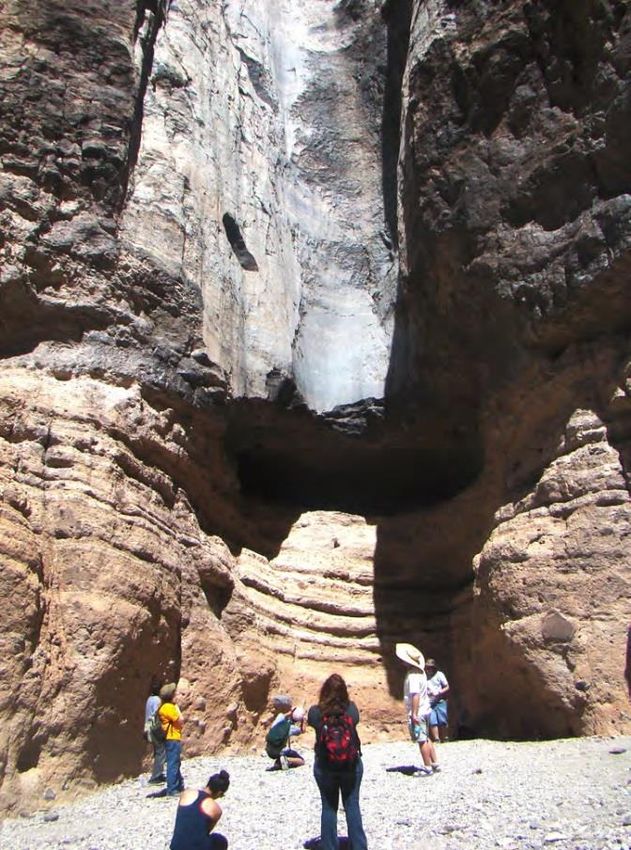
     Upon arriving at the Lower Burro Mesa Pour-off, the students drank        spot.”
water, and snacked on bananas and wraps before setting out for what                The evening’s entertainment was six hours of
geologists do often: Hiking.                                                   star gazing into the night sky.The next morning, at
     The trail began in sandy terrain, changing to rocky terrain over the      Santa Elena Canyon where the Rio Grande runs
course of three-quarters of a mile. Within the pour-off, two students did      between 1,500 feet cliffs, students and advisers
what geologists also do: They scaled a 40-foot-deep channel formed by          scaled boulders and studied the thick layers of
erosion and composed of a volcanic surge deposit, just to see the              limestone near the river on the U.S. side.
formation up close. The formation contains gas escape tubes, called                That afternoon, students hiked the Window
maars, which formed when the flow came into contact with ground                Trail in the Chisos Basin and spent the final
water.                                                                         evening together at the rocky campsite otherwise
     Gordon described the differentiating sizes of the crystals in the         known as “the Boathouse Bar and Campground”
channel that were formed as the magma cooled. Just to be sure                  in Terlingua where the visiting students learned
everyone noticed, she also pointed out the mountains.                          about the mining history of The Terlingua District.
Page two

SRSU Continues to Expand as a Leader in Science
     Sul Ross State University students and faculty made seven
scientific presentations at the annual Texas Academy of
Science meeting at Schreiner University, Kerrville. Sul Ross
presentations were:
• “An annotated vascular flora of The Nature Conservancy
    Preserve of the Davis Mountains, Jeff Davis County, Texas”
    by J. James Keeling, Alpine.
• “Variations in mescaline concentrations in the crown,
    subterranean stem, and root of Lopophora williamsii
    (Peyote) and ethnobotanical implications” by Molly Klein,
                                                                            •   “A comparison of the ectoparasitic fauna of Peromyscus
    Alpine; Dr. M. Kalam, and Dr. Martin Terry.
                                                                                and Heteromys genera between Presidio County, Texas
• “A geochemical and microbial diversity survey of a natural
                                                                                and La Tigra and Cusuco National Park in Honduras” by
    iron seep within Big Bend Ranch State Park” by Julia Green,
                                                                                Lizbeth Marquez, Marfa; and Ritzi.
    Alpine; and Jackie Denson.
                                                                            The presentations represented work conducted by students
• “An analysis of the distribution and diversity of
                                                                            and faculty in the Biology, Earth and Physical Sciences, and
    Thaumarcaeota within the springs and soils of the
                                                                            Natural Resource Management Departments, covering a
    northwestern Chihuahuan Desert” by Laura Tang,
                                                                            variety of different research areas and topic sections.
    Westminster, Cal.; and Jackie Denson.
                                                                                 The Earth and Physical Science Department and the Rio
• “Status of the tamarisk leaf beetle (Diorhabda spp.) as a
                                                                            Grande Research Center were further represented by a special
    saltcedar (Tamarix) biocontrol agent along the Rio Grande
                                                                            screening of the newly created Sul Ross research film
    River in Presidio County and its impact on a non-target
                                                                            experience, the Confluence. This film, created by former
    species, Tamarisk aphylla” by Anne Marie Hilscher, Alpine;
                                                                            student Chris Hillen, features a number of prominent Sul Ross
    and Dr. Christopher M. Ritzi.
                                                                            and area individuals addressing the issues associated with a
• * “Influence of fire on and succession of microbial
                                                                            limited bi-national resource, the Rio Grande/Rio Bravo. The
    communities after disturbance in Marfa grasslands” by
                                                                            film was shown to an audience of around 45-50 scientists
    Masahiro Ohnishi, Alpine; Dr. Bonnie Warnock, Jackie
                                                                            during the Thursday night activities, and was hosted by Dr.
    Denson, and Dr. Louis Harveson.
                                                                            Kevin Urbanczyk. (from The Skyline)

Women-in-Art Class Travels
                                                                                ANRS Sponsors Lectures on
                                                                                 Ecology and Horse Fever
                                                                                The 19th SALE Leaders
                                                                            in Agriculture Lecture
                                                                            featured Dr. Fred Smeins
                                                                            from Texas A&M
                                                                            University. The title of his
                                                                            presentation was
                                                                            “Natural Resources &
                                                                            Agriculture: Current
                                                                            Issues, Future Prospects
                                                                            & Ecological Constraints.”
                                                                                Dr. Sharon Spier,
The Sul Ross Art Club and the class, Women in Art, took an early            DVM, PhD, from the UC
Spring Break vacation to the city of Santa Fe, New Mexico. Eight Sul        Davis School of Veterinary
Ross students (Mariaha Williams, Leinora Alimboyoguen, Shelby               Medicine also gave a
Rogers, Olivia Gallegos, Judith Loya, Alexander Costa, Brent Bandi)         lecture on
and professor Ellie Meyers Madrid enjoyed the unique cultural art           “Corynebarterium
scene at this historic city. The trip intinerary included: In the wake of   pseudotuberculosis
Juárez, the drawings of Alice Leora Briggs at the University of New
                                                                            infection (“Pigeon
Mexico Art Museum; Woven and Stitched by Judy Chicago at the
David Richard Gallery; the Georgia O’Keeffe Museum, and various art         Fever”): A re-emerging
galleries on the famous Canyon Road. Photo by Brenda Gallegos               disease in Texas horses.”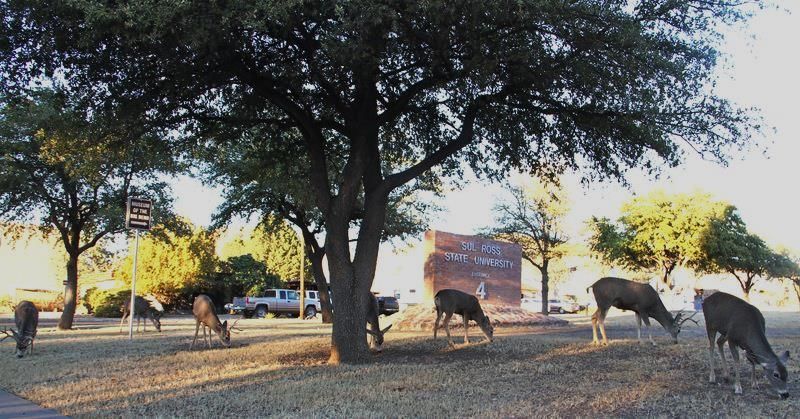
Page three

   Hands Across the Border Again--Boquillas Crossing Reopens!!!
                                                                        Closed since 911, Boquillas has reopened. The Skyline sponsor,
                                                                    Cheryl Zinsmyer, traveled to the historic reopening in Big Bend
                                                                    National Park to record the event.
                                                                        Prior to closing, visitors could ride across the river in a wooden
                                                                    boat, then pay $1 each to ride a burro or horse into the rustic
                                                                    settlement that sports a cantina, restaurant and store. A trip to
                                                                    Boquillas was an experience tourists and locals could find nowhere
                                                                    else, and the town’s economy suffered greatly after the crossing was
                                                                    closed. Many SRSU and local residents fought hard for its reopening.
                                                                        The crossing is open from 9-6, Wednesday through Sunday. Run
                                                                    by BBNP, visitors must have a valid passport.

Walk the Mall and Join the Deer

    Gwen Sullivan, SRSU Data Tracking Specialist, recently
formed a walking group called “I Walk Big Bend” (look for it on
Facebook). The goal is to get some exercise and fresh air while
visiting with co-workers, friends, and the community.               Graduate student, Jeff Keeling’s, General Botany lab tours the
    Chuy Spencer created a +/- 2 mile course that takes             campus identifying trees like this Arizona cypress.
advantage of every beautiful viewing point on campus. Join
them every Tuesday and Thursday at 5:15 pm at the fountain
on the mall, returning to the fountain at about 6pm. Hikers
are invited to invite someone else and come, even if they only
have 15 minutes, which will still give everyone a nice workout.

     Former SRSU professor in Burma
      Dr. Steve Platt, former Sul Ross State University Biology
 professor, stands atop Mount Saramati, at 12,600 feet, the
 highest point in western Burma. Platt, a Southeast Asia
 Regional herpetologist, is conducting research in Southeast
 Asia for the Wildlife Conservation Society. According to Platt,
 “We are now back in Yangon after almost two months in the
 field. We spent most of our time on the upper Chindwin River
 and walking through the Naga Hills. While in the Naga Hills we
 hiked up Mount Saramati, at 12,600 feet, the highest point in
 western Burma. No doubt about it, getting to the summit
 ranks high among my achievements. It took us 13 days of
 walking to reach the summit and get back. We started at           trails in name only - more like livestock paths. The
 about 550 feet and it took over a week to reach 4500 feet.        pucker factor was really high in places with the trail threading
 The following day we climbed to 9300 feet and established a       along narrow ledges. Once at the summit I had myself
 base camp. The nights were near freezing at that elevation.       photographed in an SRSU T-shirt as promised.” (Photo Courtesy
 From there we walked to the summit along trails that are          Dr. Steve Platt)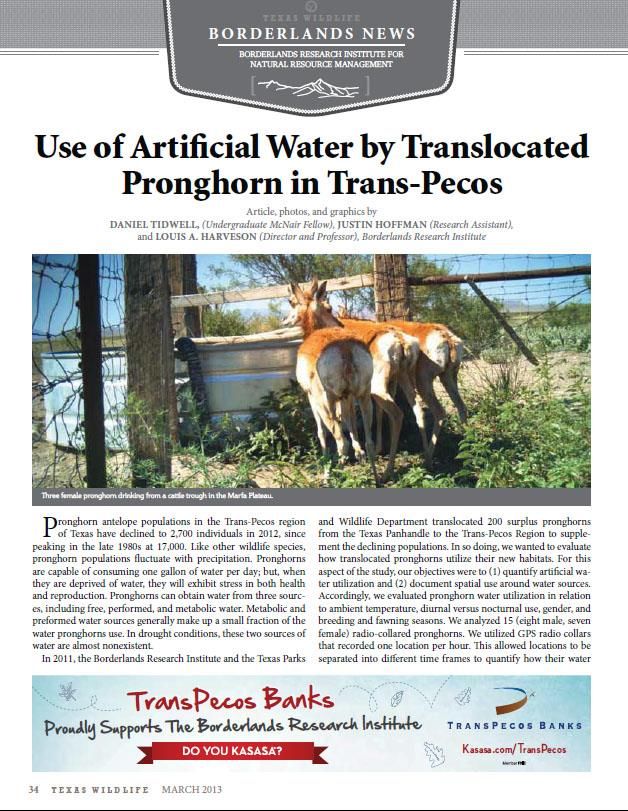
Page four

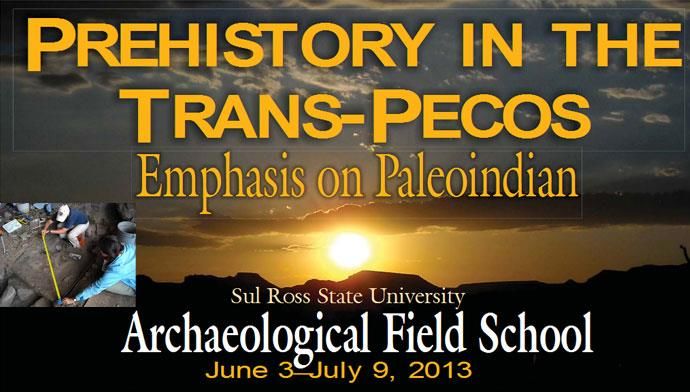
Summer Session 1, SRSU will be offering a new course in Anthropology with excavation of an 11,000 year old Native
American campsite. Hosted by the Center for Big Bend Studies, the course includes six credit hours. For more
information: Here is a link to the field school website: http://ww2.sulross.edu/cbbs/fieldschool-2013.php
 Here is a link to the field school poster in PDF format: http://ww2.sulross.edu/cbbs/docs/2013-fieldschool-poster.pdf
 Here is a link to the GLD activities page on the CBBS website: http://ww2.sulross.edu/cbbs/rsch_lykesDuncan.php
 Or contact Samuel Cason scason@sulross.edu for more information

                                  Mythbusting
                                  Skyline Editor
                                  Angela Greenroy, editor of the SRSU
                                  student newspaper looked into the
                                  “law” about Texas bluebonnets and
                                  found that it is NOT illegal to pick the
                                  state flower.
                                       She says TDPS issued a news
                                  release in 2002 stating, “Is it really
                                  illegal to pick bluebonnets? The
                                  answer is no—there is no law against
                                  picking our State Flower. However,
                                  there are laws against criminal
                                  trespass so make sure you’re not on
                                  private property when you stop to
                                  take your annual kids-in-the-
                                  bluebonnets photo.”
                                       TDOS cautions, however, that
                                  there are laws about destroying
                                  government property, destroying
                                  rights-of-way, and impeding traffic.
                                  Photo by Greenroy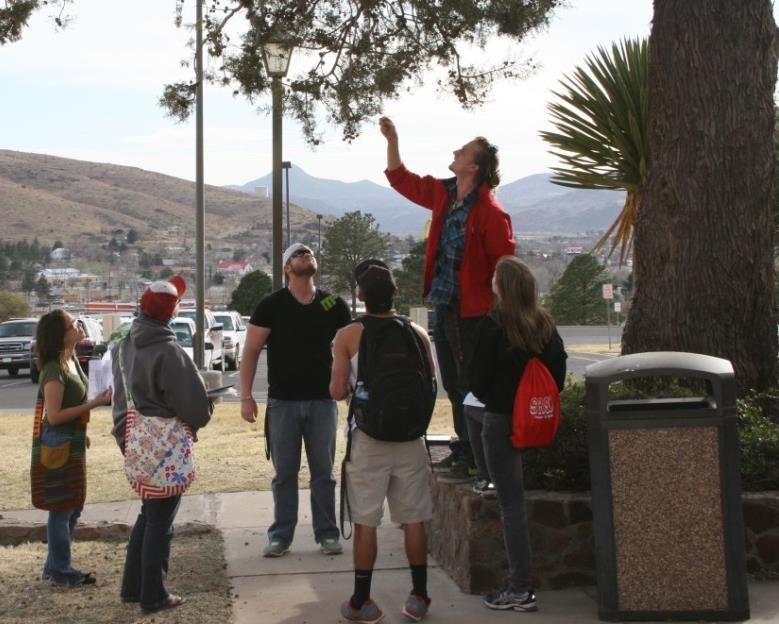
Page five

  Adelante Tejas Continues to Expand SRSU’s Geology Footprint
                                                                                  Marrying Geology to
                                                                                  Technology
                                                                                      The Rio Grande Research Center
                                                                                  and Dr. Kevin Urbanczyk provided a
                                                                                  workshop on campus GIS called
                                                                                  “Mapping and the Cloud: Campus
                                                                                  GIS” in March at the Wildenthal
                                                                                  Library Room 201. A boxed lunch
                                                                                  from Aramark was provided. This
                                                                                  event was sponsored by Adelante
                                                                                  Tejas and the Department of
                                                                                  Education.
                                                                                       During the workshop Urbanczyk
                                                                                  and undergraduate student, Kitty
                                                                                  Siboyan, demonstrated how data can
                                                                                  be used to develop a campus
                                                                                  Geographic Information System using
                                                                                  the Sul Ross State University campus
                                                                                  as a model. They also instructed
                                                                                  participants in where to locate and
                                                                                  use mapping resources and tools that
                                                                                  are increasingly (and freely) available
                                                                                  in “the cloud.” The session was very
                                                                                  useful for faculty, staff and students
                                                                                  who want to be able to use and
                                                                                  create maps of their own to
                                                                                  represent geographically referenced
                                                                                  information.

New Scanning Electron Microscope and $500,000 Upgrades
    Sul Ross State University’s new scanning electron              “The bottom line is: Sul Ross will produce graduates with
microscope (SEM) is expected to enhance research capacity in      knowledge of analytical methods and specific, sought-after
the physical and natural sciences.                                expertise, enabling them to be academically and
    The microscope, along with lab upgrades exceeding             professionally competitive candidates for future careers,”
$500,000 are being provided through Adelante Tejas (Forward       Urbanczyk said.
Texas): A Partnership to Improve STEM Education with San
Antonio College. The project is 100 percent funded through a
Department of Education award. The ultimate goal of Adelante
Tejas is to increase enrollment, progress and graduation in the
sciences.
     “A student attending a larger school probably wouldn’t
get close to a SEM as an undergrad,” said Dr. Kevin Urbanczyk,
director of the Rio Grande Research Center. “That experience
would be reserved for graduate and post-doctoral candidates
and their supervising faculty,”
Page six

Undergrad Wildlife Student Publishes Article on Pronghorn Research
     Daniel Tidwell, SRSU senior majoring in NRM and a          Research Institute. According to Tidwell, he and Harveson
McNAir Fellow, has published an article in the March edition    and several other NRM students are working on a new
of Texas Wildlife. Co-authors on the article were SRSU          handbook for managing pronghorn in the Trans-Pecos. SRSU
graduate student and research assistant, Justin Hoffman, and    provides an excellent opportunity for hands-on research
Dr. Louis Harveson, professor and Director of the Borderlands   opportunities for both graduate and undergraduate students.

Students Ask for Outdoor Hoops                                                                           Unusual Sighting
                                                                                                         of Funnel Cloud
                               Student Support Services                                                  near Alpine
                           continues to try to provide more                                              during Recent
                           entertainment for the students of                                             Rain and Hail
                           Sul Ross State University and
                           Alpine residents. Their latest
                           project is a plan to construct an
                           outdoor basketball court on
                           campus.
                               Liz Castillo, Director of
                           Student Support Services,
                           presented the idea of an outdoor
                           basketball court at a recent
                           Student Government Association
                           meeting. Almost immediately she
                           had 22 groups jump on board to                                                The Skyline photo
                           help support the project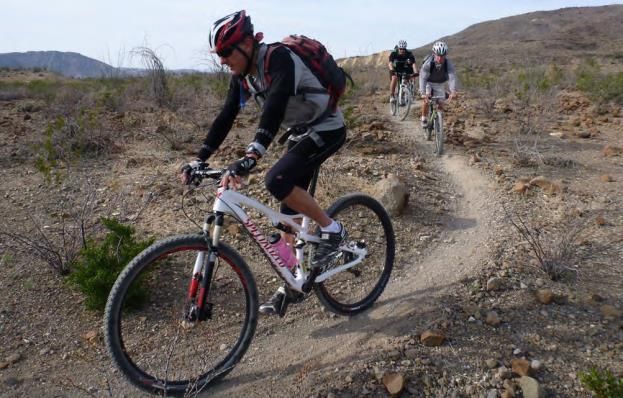
Page seven

    Sul Ross’s Outdoorsy Folks Rock and Roll and Trip
 Hands-on Wild                                                                                 Down the River with Tom,
                                                                        Julius Dasch
                                                               Dr. Julius Dasch, a 1956 Sul    Huck, Joe, and Schwab
 Life Management                                               Ross State University
                                                               graduate and former
                                                               adjunct professor, received
                                                               the 2013 NASA National
                                                               Space Grant Distinguished
                                                               Service Award. Dasch was
                                                               former director of the
                                                               National Aeronautics and
                                                               Space Administration
                                                               (NASA) space grants
                                                               program.
  Dr. Louis Harveson,
  Borderlands Research Institute         Students and Roman Follow the Bard                    Concepción Gomez, Adrian
  director and Sul Ross professor                                                              Soto and Michael Lopez
  of Natural Resource                                                                          The script for Tom Sawyer and
  Management, continues to                                                                     the Jackson Island Pirates was
  bring in wildlife research                                                                   directed by and adapted from the
  opportunities for                                                                            Mark Twain novel Tom Sawyer
  undergraduates and                                                                           by Gregory M. Schwab, Professor
  graduates.                                                                                   of Theatre. Schwab’s play follows
                                                                                               an epic pirating adventure
         Our China                                                                             between three close friends--
                                                                                               Tom, Huck Finn and Joe Harper--
         Connection                                                                            as they escape to a river island
                                                                                               and attempt to live as pirates on
                                                                                               their own.

                                                                                                 Field of Dreams
                                     Professor Dona Roman bravely led students on a trip      Mike Castrignano, a
                                     to England. Students spent their days touring the        graduate assistant
                                     town of London, walking in the footsteps of Charles      coach for the SRSU
Dr. Quint Thurman, Provost,          Dickens and William Shakespeare, and spent their         baseball team, will
and Cesario Valenzuela, Vice         evenings attending theatre performances, all as part     leave with two
President of Finance and             of SRSU coursework related to literature and             degrees and at least
Operations, visited China on a       theatre. Trippers included Kayla Perkins, Christina      two minor league
mission to recruit juniors,          Esparza, Ashley Page and Karibeth Page, Adrian           championships. He
seniors and grad students            Soto, Leca Addison and Brooke Addison (Angelo            arrived in Alpine four
from Heze University in Heze         State University student), Madelyn C. Farmer, Matt       years ago with $65 in
and Qufu University in Qufu.         Hall, and Angela Greenroy. (Photo by Angela              his pocket and a
                                     Greenroy).                                               dream.

         Geology and Bikes are Professor’s Passions
    Dr. Kevin Urbanczyk, Sul Ross State University Professor of Geology in the
Earth and Physical Sciences Department and Director of Rio Grand Research
Center has biked with the likes of George W. Bush and Lance Armstrong. He
participates in and leads the Rincon Loop of the Chihuahuan Desert Bike Fest
as a geological tour.
    Advisor for the Sul Ross Geology Club, Urbanczyk also began the Sul Ross
Hancock Hill Club, which restores and maintains bike trails on college property
east of the Sul Ross campus.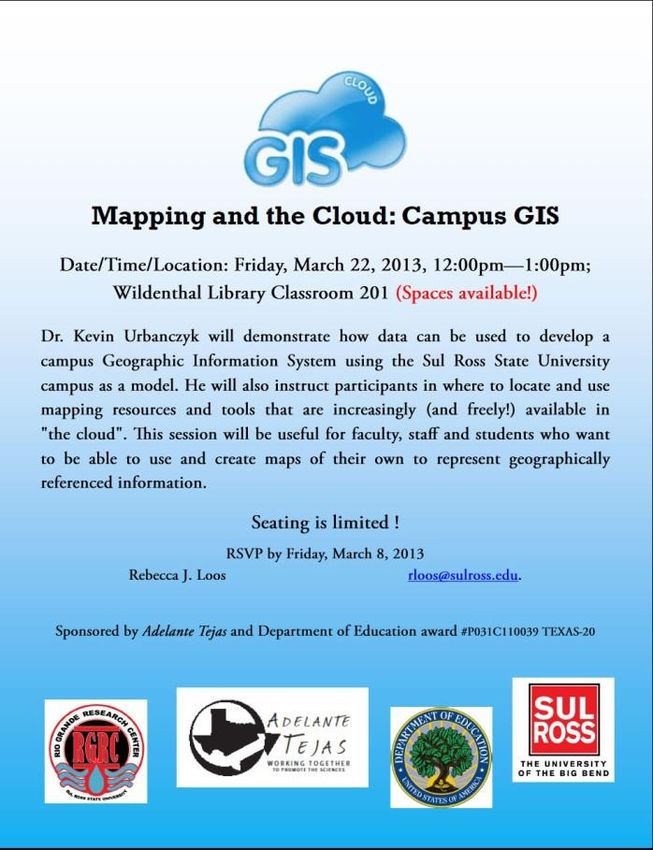
Page eight

             At the
             SRSU
             Cactus
             Garden

                      March 19, 2013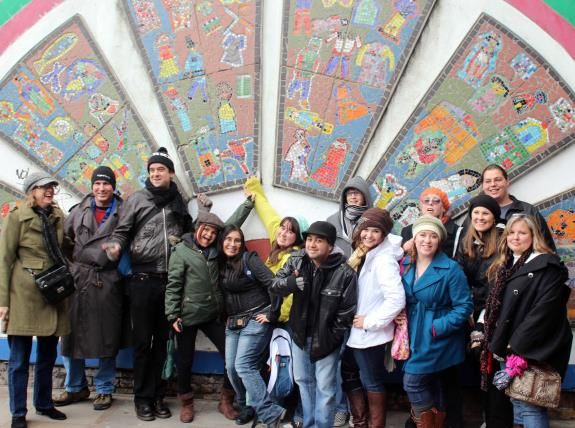
You can also read


