St. Joseph's Hospital and Medical Center Community Health Implementation Strategy 2019 2021 - Dignity Health
←
→
Page content transcription
If your browser does not render page correctly, please read the page content below

St. Joseph’s Hospital and Medical Center

Community Health Implementation Strategy 2019 – 2021
TABLE OF CONTENTS

At‐a‐Glance Summary                                             2

Mission, Vision and Values                                      4

Our Hospital and the Community Served                           5

Implementation Strategy Development Process
  Community Health Needs Assessment                            11
  CHNA Significant Health Needs                                11
  Creating the Implementation Strategy                         16

2019‐2021 Implementation Strategy
   Strategy and Plan Summary                                   17
   Community Grants Program                                    24
   Anticipated Impact                                          24
   Planned Collaboration                                       25
   Financial Assistance for Medically Necessary Care           28
   Program Digests                                             29

Appendices

    Appendix A: Community Board and Committee Rosters          37

    Appendix B: Other Programs and Non‐Quantifiable Benefits   39

    Appendix C: Financial Assistance Policy Summary            40

St. Joseph’s Hospital and Medical Center
2019-2021 Implementation Strategy

                                           1
AT‐A‐GLANCE SUMMARY
Community Maricopa County and the defined service area are considered the community
Served for St. Joseph’s Hospital and Medical Center (SJHMC) and St. Joseph’s Westgate
Medical Center (SJWMC). Community is further defined through geographic
primary and secondary borders as well as the demographic data from those
patients who enter our doors. St. Joseph’s Hospital draws approximately 85.7 %
of its patients from Maricopa County, 10.75% from outside Maricopa County but
within Arizona, and 3.52% from outside the state. Sixty‐one percent of the
population of the state of Arizona resides within Maricopa County. The primary
service area includes all residents in a defined geographic area surrounding the
hospital and does not exclude low‐income or underserved populations. The
primary service area for SJHMC includes the high‐risk zip codes making up the
top 75% of the total patient cases.
Significant The significant community health needs the hospital is helping to address and
Community that form the basis of this document were identified in the hospital’s most
Health Needs recent Community Health Needs Assessment (CHNA). Those needs are:
Being Access to Care
Addressed Mental/Behavioral Health/Substance Abuse
Overweight/Obesity – Diet Related Illnesses
Cancer
Trauma/Injury Prevention
Social Determinants of Health
Planned Dignity Health St. Joseph’s Hospital and Medical Center and St. Joseph’s
Actions for Westgate and will launch its three‐year Community Health Implementation
2019‐2021 Strategy entitled “Live Healthy and Well” (LiveHW). The LiveHW Initiative will
provide the platform for the seven dimensions of wellness to be integrated
throughout the health and community systems. These dimensions include
social, emotional, spiritual, environmental, occupational, intellectual and
physical wellness. Each of these seven dimensions act and interact in a way that
contributes to our own quality of life. The increased recognition of the social
needs of the community and how they intersect with the health needs will be a
key focal point of the three‐year initiative along with a focus on health equity
for those individuals who are marginalized by race, culture, gender, age, and
other social and physical barriers.
This document is publicly available at:
https://www.dignityhealth.org/arizona/locations/stjosephs/about‐us/community‐
benefit/community‐benefit‐resources . This information is shared broadly with the community
through e‐mail distribution program. The information is shared on Facebook, Twitter, Linked In, e‐
mail list serves, community meetings and presentation. Written comments on this report can be
submitted to the St. Joseph’s Hospital and Medical Center (SJHMC) and St. Joseph’s Westgate
St. Joseph’s Hospital and Medical Center
2019-2021 Implementation Strategy
2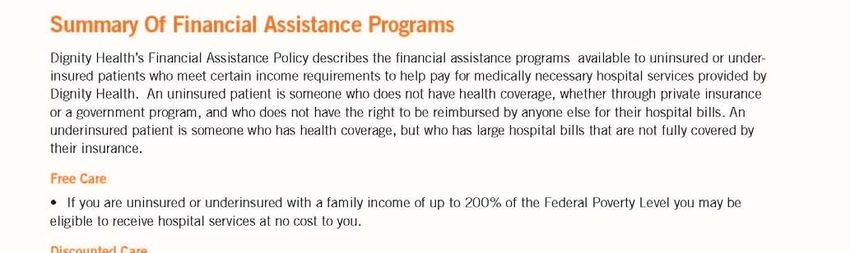
Medical Center (SJWMC) and St. Joseph’s Westgate Community Health Office at 350 West Thomas
Road, Phoenix, Arizona 85013 or by e‐mail at CommunityHealth‐SJHMC@DignityHealth.org.

St. Joseph’s Hospital and Medical Center
2019-2021 Implementation Strategy

                                           3
MISSION, VISION AND VALUES
St. Joseph’s Hospital and Medical Center is a part of Dignity Health, a non‐profit health care system
made up of more than 60,000 caregivers and staff who deliver excellent care to diverse communities
in 21 states. Headquartered in San Francisco, Dignity Health is the fifth largest health system in the
nation.
At Dignity Health, we unleash the healing power of humanity through the work we do every day,
in hospitals, in other care sites and the community.
Our Mission
We are committed to furthering the healing ministry of Jesus. We dedicate our resources to:
Delivering compassionate, high‐quality, affordable health services;
Serving and advocating for our sisters and brothers who are poor and disenfranchised; and
Partnering with others in the community to improve the quality of life.
Our Vision
A vibrant, national health care system known for service, chosen for clinical excellence, standing in
partnership with patients, employees, and physicians to improve the health of all communities
served.
Our Values
Dignity Health is committed to providing high‐quality, affordable healthcare to the communities
we serve. Above all else we value:
Dignity ‐ Respecting the inherent value and worth of each person.
Collaboration ‐ Working together with people who support common values and vision to
achieve shared goals.
Justice ‐ Advocating for social change and acting in ways that promote respect for all persons.
Stewardship ‐ Cultivating the resources entrusted to us to promote healing and wholeness.
Excellence ‐ Exceeding expectations through teamwork and innovation.
St. Joseph’s Hospital and Medical Center
2019-2021 Implementation Strategy
4
OUR HOSPITAL AND THE COMMUNITY SERVED

About St. Joseph’s Hospital and Medical Center

Located in the heart of Phoenix, founded in 1895 by the Sisters of Mercy, Dignity Health St. Joseph’s
Hospital and Medical Center is a 586‐bed, not‐for‐profit hospital that provides a wide range of
health, social and support services with special advocacy for the poor and underserved. As of 2017,
SJHMC has 4,565 staff, 200 Research Employees, 183 Employed Faculty Physicians, 1,109
Credentialed Community Physicians, 260 Residents in 20 specialties, and 813 Volunteers. SJHMC is
a nationally recognized center for quality tertiary care, medical education and research. It includes
the internationally renowned Barrow Neurological Institute®, the Heart & Lung Institute®, University
of Arizona Cancer Center at St. Joseph’s, and a Level 1 Trauma Center verified by the American
College of Surgeons.

Description of the Community Served

St. Joseph’s Hospital and Medical Center (SJHMC) serves the geographic area for the hospital is
Maricopa County, the common community for all partners participating in the Synapsei
collaborative. Maricopa County is the fourth most populous county in the United States. With an
estimated population of 4 million and growing, Maricopa County is home to well over half of
Arizona’s residents. Maricopa County encompasses 9,224 square miles, includes 27 cities and towns,
as well as the whole or part of five sovereign American Indian reservations. Maricopa County is
ethnically and culturally diverse, home to more than 1.2 million Hispanics (30% of all residents),
216,000 African Americans, 157,000 Asian Americans, and 77,000 American Indians. According to
the U.S. Census Bureau, 14% percent of the population does not have a high school diploma, 17%
are living below the federal poverty level, and over 600,000 are uninsuredii.
Dignity Health defines the community served by a hospital as those individuals residing within its
primary and secondary service areas. For this report the focus will be on the primary service area of
SJHMC. The primary service area includes all residents in a defined geographic area surrounding the
hospital and does not exclude low‐income or underserved populations. Located in the heart of
Phoenix, Arizona, SJHMC draws populations from Maricopa County, outside Maricopa County but
within Arizona, and from outside the state. SJHMC’s primary service area is within the urban inner
city areas, and it also serves the suburban and rural communities for high‐risk services. According to
the Community Need Index (CNI), a proprietary tool developed by Dignity Health, the primary
service area includes both moderate and high‐risk areas with significant socio‐economic barriers.
Zip code areas with the highest risks include 85003, 85004, 85006, 85007, 85008, 85009, 85015,
85017, 85019, 85031, 85033, 85040, and 85301.iii
A summary description of the community is below, and additional details can be found in the
CHNA report online.

St. Joseph’s Hospital and Medical Center
2019-2021 Implementation Strategy

                                             5
Primary Care Area (PCA) Statistical Profiles are revised annually and provide detailed information on
the demographics, health resources, hospital utilization, and health status indicators in defined
geographic areas throughout Arizona. According to the Arizona Department of Health Services
(ADHS), the Avondale, Buckeye, Camelback East, Central City Village, Chandler Central, Estrella
Village, Glendale Central and North, Laveen, Maryvale Village, Peoria North, Surprise and Tempe
North PCAs have been federally designated as a Medically Underserved Areasiv. More than half of
the population of SJHMC’s primary service area is adults between 20‐64 years of age. Nearly 17.2%
of residents do not have a high school diploma, and approximately 16.3% are without health
insurance. These data show that the population as a whole is majority White, and with a median
income below Maricopa County and the state of Arizona. Table 1 provides the specific age, sex, and
race/ethnicity distribution and data on key socio‐economic drivers of health status of the population
in SJHMC’s primary service area compared to Maricopa County and the state of Arizona.
Table 1. Demographic information for the St. Joseph Hospital and Medical Center primary
service area.
SJHMC PSA Maricopa County Arizona
Population: estimated 2016 2,902,805 4,088,549 6,728,577
Gender
Male 49.8% 49.5% 49.7%
Female 50.2% 50.5% 50.3%
Age
0 to 9 years 14.5% 13.8% 13.3%
10 to 19 years 14.2% 13.8% 13.6%
20 to 34 years 23.1% 21.2% 20.5%
35 to 64 years 36.0% 37.3% 36.7%
65 to 84 years 10.8% 8.0% 9.2%
85 years and over 1.4% 5.9% 6.7%
Race
White 47.4% 56.9% 77.8%
Asian/Pacific Islander 3.6% 4.0% 3.2%
Black or African American 6.0% 5.0% 4.3%
American Indian/Alaska
Native 1.7% 1.5% 4.4%
Other/Unknown 2.3% 2.3% 7.0%
Ethnicity
Hispanic 39.0% 30.3% 30.5%
Median Income $48,600 $53,694 $51,340
Uninsured 16.3% 13.9% 13.6%
Unemployment 4.8% 4.4% 5.4%
No HS Diploma 17.2% 14.0% 13.8%
St. Joseph’s Hospital and Medical Center
2019-2021 Implementation Strategy
6*% of Population 5+ non‐English 7.6% 9.2% 8.9%
speaking
*Renters 44.4% 39.0% 36.9%
CNI Score 4.0 3.4
Medically Underserved Area Yes
*Source: U.S. Census American Community Survey, 5 year estimates 2013‐2017
One tool used to assess health need is the Community Need Index (CNI) created and made publicly
available by Dignity Health and Truven Health Analytics. The CNI analyzes data at the zip code level
on five factors known to contribute or be barriers to health care access: income, culture/language,
education, housing status, and insurance coverage. Scores from 1.0 (lowest barriers) to 5.0 (highest
barriers) for each factor are averaged to calculate a CNI score for each zip code in the community.
Research has shown that communities with the highest CNI scores experience twice the rate of
hospital admissions for ambulatory care sensitive conditions as those with the lowest scores.
Dignity Health has developed the nation’s first standardized Community Need Index (CNI) in
partnership with Truven Health Analytics. The CNI identifies the severity of health disparity for every
zip code in the United States based on specific barriers to healthcare access. The CNI considers
multiple factors that are known to limit health care access such as income, language, educational,
insurance and housing barriers. The ability to pinpoint neighborhoods with significant barriers to
health care access is an important new advancement for public health advocates and care providers.
According to the CNI illustrated below, the primary service area has a mean CNI score of 4 and
includes both moderate and high‐risk areas with significant socio‐economic barriers. Zip code areas
with the highest risks include 85003, 85004, 85006, 85007, 85007, 85009, 85014, 85015, 85017,
85019, 85021, 85023, 85029, 85031, 85033, 85035, 85037, 85040, 85041, 85042, 85043, 85051,
85122, 85201, 85204, 85210, 85281, 85301, 85302, 85303, 85323, 85353, and 85364v.
St. Joseph’s Hospital and Medical Center
2019-2021 Implementation Strategy
7Primary Service Map – Community Needs Index
Primary Service Area CNI Scores
Zip Code CNI Score Population City County State
85003 5 9893 Phoenix Maricopa Arizona
85004 5 6030 Phoenix Maricopa Arizona
85006 5 26837 Phoenix Maricopa Arizona
85007 5 15497 Phoenix Maricopa Arizona
85008 5 61987 Phoenix Maricopa Arizona
85009 5 56314 Phoenix Maricopa Arizona
85012 3.4 6940 Phoenix Maricopa Arizona
85013 3.8 20775 Phoenix Maricopa Arizona
85014 4.2 26840 Phoenix Maricopa Arizona
85015 5 41033 Phoenix Maricopa Arizona
85016 4 37069 Phoenix Maricopa Arizona
85017 5 40872 Phoenix Maricopa Arizona
85018 3.6 36245 Phoenix Maricopa Arizona
St. Joseph’s Hospital and Medical Center
2019-2021 Implementation Strategy
885019 5 26643 Phoenix Maricopa Arizona
85020 4 34775 Phoenix Maricopa Arizona
85021 4.8 39811 Phoenix Maricopa Arizona
85022 3.8 49918 Phoenix Maricopa Arizona
85023 4.2 35832 Phoenix Maricopa Arizona
85027 3.4 39589 Phoenix Maricopa Arizona
85028 2.4 20239 Phoenix Maricopa Arizona
85029 4.4 45812 Phoenix Maricopa Arizona
85031 5 31959 Phoenix Maricopa Arizona
85032 4 69226 Phoenix Maricopa Arizona
85033 5 56391 Phoenix Maricopa Arizona
85035 5 49036 Phoenix Maricopa Arizona
85037 4.2 49579 Phoenix Maricopa Arizona
85040 5 32400 Phoenix Maricopa Arizona
85041 4.2 65874 Phoenix Maricopa Arizona
85042 4.2 46098 Phoenix Maricopa Arizona
85043 4.6 42051 Phoenix Maricopa Arizona
85044 2.6 40284 Phoenix Maricopa Arizona
85051 5 42644 Phoenix Maricopa Arizona
85053 3.4 29961 Phoenix Maricopa Arizona
85122 4.2 57888 Casa Grande Pinal Arizona
85138 2.6 43214 Maricopa Pinal Arizona
85201 4.6 50779 Mesa Maricopa Arizona
85204 4.4 66676 Mesa Maricopa Arizona
85205 3.4 43398 Mesa Maricopa Arizona
85210 4.6 39243 Mesa Maricopa Arizona
85224 3 46593 Chandler Maricopa Arizona
85225 4 75370 Chandler Maricopa Arizona
85248 2.2 36325 Chandler Maricopa Arizona
85249 2 48083 Chandler Maricopa Arizona
85254 2.2 47753 Scottsdale Maricopa Arizona
85255 2 47040 Scottsdale Maricopa Arizona
85281 4.8 64075 Tempe Maricopa Arizona
85282 3.6 52175 Tempe Maricopa Arizona
85283 3.4 47190 Tempe Maricopa Arizona
85301 5 64419 Glendale Maricopa Arizona
85302 4.2 38875 Glendale Maricopa Arizona
85303 4.6 35890 Glendale Maricopa Arizona
St. Joseph’s Hospital and Medical Center
2019-2021 Implementation Strategy
985304 3 27847 Glendale Maricopa Arizona
85308 2.8 67460 Glendale Maricopa Arizona
85323 4.6 47815 Avondale Maricopa Arizona
85326 4 66221 Buckeye Maricopa Arizona
85335 3.6 38657 El Mirage Maricopa Arizona
85338 3.4 54696 Goodyear Maricopa Arizona
85339 3.6 46318 Laveen Maricopa Arizona
85340 2.8 33787 Litchfield Park Maricopa Arizona
85345 3.8 63930 Peoria Maricopa Arizona
85351 2.6 29594 Sun City Maricopa Arizona
85353 4.2 40153 Tolleson Maricopa Arizona
85364 4.6 72928 Yuma Yuma Arizona
85365 4 52385 Yuma Yuma Arizona
85374 2.6 46444 Surprise Maricopa Arizona
85379 2.6 50793 Surprise Maricopa Arizona
85382 2.4 46052 Peoria Maricopa Arizona
85383 1.6 50970 Peoria Maricopa Arizona
85392 3.4 42612 Avondale Maricopa Arizona
85395 2.2 34771 Goodyear Maricopa Arizona
86314 4 37060 Prescott Valley Yavapai Arizona
St. Joseph’s Hospital and Medical Center
2019-2021 Implementation Strategy
10IMPLEMENTATION STRATEGY DEVELOPMENT PROCESS
The hospital engages in multiple activities to conduct its community benefit and community health
improvement planning process. These include, but are not limited to: conducting a Community
Health Needs Assessment with community input at least every three years; using five core principles
to guide planning and program decisions; measuring and tracking program indicators and impact;
and engaging the Community Health Integration Network (CHIN) and other stakeholders in the
development of an annual community benefit plan and triennial Implementation Strategy.
Community Health Needs Assessment
The significant needs that form the basis of the hospital’s community health programs were
identified in the most recent Community Health Needs Assessment (CHNA), which was adopted on
January 23, 2019.
The hospital conducts a CHNA at least every three years to inform its community heath strategy and
program planning. The CHNA report contains several key elements, including:
Description of the assessed community served by the hospital;
Description of assessment processes and methods, including: the data used; how the
hospital solicited and took into account input from a public health department, members or
representatives of medically underserved, low‐income and minority populations; and the
process and criteria used in identifying significant health needs and prioritizing them;
Presentation of data, information and assessment findings, including a prioritized list of
identified significant community health needs;
Community resources (e.g., organizations, facilities and programs) potentially available to
help address identified needs; and
Discussion of impacts of actions taken by the hospital since the preceding CHNA.
CHNA Significant Health Needs
The following statements summarize each of the areas of priority for SJHMC, and are based on data
and information gathered through the CHNA.
Access to Care
Community members and key informants overwhelmingly felt that access to care is an important
issue for the community. When community survey respondents were asked, what was the most
important “Health Problem” impacting their community, access to care was the number one
concern. Within SJHMC’s primary service area, 20.1% of the population is unemployed and
uninsured with 20.7% employed making under $25,000vi. Additionally, there are disparities
experienced across members of certain racial/ethnic backgrounds, with Hispanics and American
Indians being least likely to have insurancevii.
St. Joseph’s Hospital and Medical Center
2019-2021 Implementation Strategy
11Maternal Health is an important part of mothers, infants, and child’s overall health and wellbeing.
It determines the health of the next generation and can help predict health challenges for families,
communities, and the medical care system. Moreover, healthy birth outcomes and early detection
and treatment of health conditions among infants can prevent deathviii. Maricopa County’s infant
mortality rates from 2012‐2016 range from 5.3 to 6.3 infant deaths per 1,000 births. The SJHMC
Primary Service Area infant mortality rate is higher than Maricopa Countyix.
Mental/Behavioral Health
Mental and behavioral health are terms often used interchangeably to refer to a spectrum of health
conditions that can be distinct or often co‐occurring. Mental/Behavioral health includes ways of
promoting well‐being by preventing or intervening in mental illnesses such as anxiety or depression,
and also aims to prevent or intervene in substance abuse and suicide. Mental/behavioral health was
ranked as one of the most important health problems impacting the community by key informants;
this was echoed by focus groups participants.
Substance abuse was one of the top concerns for both focus group participants and key informants.
Key informants listed alcohol and drug abuse as two of the riskiest health behaviors community
members are engaging in. In 2017, the United States Health and Human Services Department
declared a public health emergency and announced a plan to combat the opioid crisis. In 2016, 790
Arizonians died from opioid overdoses and trends show an increase of a startling 74% over the past
four years.x
Suicide was the eighth leading cause of death for Maricopa County residents and SJHMC’s primary
service area in 2016. Suicide rates across Maricopa County have slightly increased from 2012‐2016,
with male rates 3 times higher than female suicide rates. In Maricopa County, rates of suicide are
highest among age groups 45‐54 and 75+, which could indicate a potential health disparity in
identification, referral or treatment of suicidal ideation.
Alzheimer’s disease is a type of dementia that causes problems with memory, thinking, and
behavior.xi In Arizona, 2,943 deaths occurred in 2015 due to Alzheimer’s disease and it is the fifth
leading cause of death, which is a 182% increase since 2000xii. In Maricopa County and SJHMC’s
primary service area, Alzheimer’s disease is the fourth leading cause of death.xiii
Neurotic Diagnoses: personality disorders, depressive disorders, anxiety disorders, OCD,
phobias, eating disorders, stress and adjustment disorders and sleep
disorders
Organic Psychotic dementias, alcohol induced mental disorders, drug‐induced mental
Diagnoses: disorders, transient mental disorders, and persistent mental disorders
Other Psychoses schizophrenic disorders, episodic mood disorders, other
Diagnoses: nonorganic psychoses, pervasive developmental disorders
St. Joseph’s Hospital and Medical Center
2019-2021 Implementation Strategy
12Suicide: Intentional self‐harm (gun discharge, jumping from a high place,
crashing, etc.), poisoning by medicaments and biological substances,
toxic effects of non‐medicinal substances, asphyxiation
Alcohol Related alcohol abuse or dependence, toxic effects from alcohol,
Diagnoses: alcoholic myopathy, and alcohol‐induced chronic
pancreatitis
Drug Overdose drug abuse or dependence, overdose on all drugs
Diagnoses: (including opioids), and injuries related to be under the
influence of a drug
Chronic Disease
Cardiovascular Disease
Cardiovascular disease is the second leading cause of death for Maricopa County and SJHMC’s
primary service area. The primary risk factors include diabetes, overweight/obesity, poor diet,
physical inactivity and excessive alcohol use. Many of these are the same risky behaviors key
informants reported being concerned about for the primary service area.
Overall, the number of deaths related to cardiovascular disease in the SJHMC PSA as well as
Maricopa County overall are increasing. According to the hospital discharge data and death data
for Maricopa County, adults age 75 and older have the highest rates of cardiovascular disease‐
related inpatient discharges, emergency department visits and mortality.
Diabetes
More than one million U.S. adults are now living with diabetes or pre‐diabetes, according to a report
released by the Centers for Disease Control and Preventionxiv. Diabetes is the sixth leading cause of
death in SJHMC’s primary service area indicating a sustained health need. The rate of deaths related
to diabetes in Maricopa County has fluctuated across the years 2012 to 2016 with a low of 23.2 per
100,000 and a high of 26.4 per 100,000. Overall, there has been a slight increase in deaths due to
Diabetes in both Maricopa County and the SJHMC primary service area. These mortality rates are
very close to those of Maricopa County as a whole. According to the behavioral risk factor
surveillance survey, the number of people reporting they have been told they have diabetes is also
increasing. The ED rates per 100,000 for Diabetes in the SJHMC primary service area has been
increasing overall since 2012 but the IP rates have held fairly steady.
Overweight/Obesity
Arizona has the 30th highest adult obesity rate in the nation, and the 32rd highest obesity rate for
youth ages 10‐17xv. In Maricopa County, males have higher rates of being overweight, and Hispanics
have higher rates of obesity when compared to non‐Hispanic whitesxvi. Key informants felt that
St. Joseph’s Hospital and Medical Center
2019-2021 Implementation Strategy
13being overweight, poor eating habits and lack of exercise were among the top five risky health
behaviors community members were engaging in.
Cancer
While advancements continue to be made in the fight against cancer, it remains the leading cause
of death in Maricopa County and the SJHMC’s primary service area and was identified as one of the
top five areas of concerns from key informants. Colorectal cancer death rates in Maricopa County
and SJHMC primary service area has fluctuated over the last five yearsxvii. In SJHMC primary service
area, colorectal rates are just below Maricopa County ratexviii.
Safety & Violence
Trauma/Injury Prevention
In the United States, deaths from unintentional injuries is the seventh leading cause of death among
older adults, and falls account for the largest percentage of those deaths. In 2016 unintentional
injuries was the fifth leading cause of deaths in Maricopa County and SJHMC’s primary service area
and falls were ninth leading cause of death. Unintentional injuries are preventable and largely due
to lifestyle choices. Nationally, nearly one‐third of these deaths are due to car crashes and nearly
another one‐third is due to accidental poisoningsxix. Males are more likely to suffer from an
unintentional injury with the exception of falls which are more prevalent among females.
From the years 2012‐2016, the inpatient discharge and emergency department rates per 100,000
for motor vehicle accidents in the SJHMC PSA were consistently lower than the rates for Maricopa
County as a whole. The death rates per 100,000 for the SJHMC primary service area were not higher
than Maricopa County’s rates either. In 2016, the death rate for the SJHMC PSA was 12.6 deaths
per 100,000 which are almost to the goal of Healthy people 2020 with a goal of 12.4 deaths per
100,000 individuals. The races with the highest ED visits due to a motor vehicle accident were
American Indian and African American. Even looking at the ED rates by race, Maricopa County’s
rates were still higher for those same populations.
Falls
Falls are a great concern, particularly among the aging population. Looking at both the inpatient
hospitalization rates and emergency department rates for the SJHMC PSA, it can be seen that the
rates follow almost the same exact trend as Maricopa County overall, but the rates are consistently
lower than Maricopa County’s.
Pedestrian Injuries
A pedestrian related injury is any injury to a pedestrian due to a motor vehicle accident. The
SJHMC’s primary service area has higher emergency department visit rates per 100,000 compared
to Maricopa County’s rates. It is also noteworthy that the inpatient hospitalization rates are lower
than the emergency department visit rates.
St. Joseph’s Hospital and Medical Center
2019-2021 Implementation Strategy
14Violence
In Maricopa County, males enter the emergency room due to violence at a much higher rate than
females. It was also found that deaths due to interpersonal violence are more likely in the SJHMC
primary service area than in Maricopa County overall.
Housing and Homelessness
A household is considered cost burdened if they are paying 30% or more (for homeowners) and 50%
or more (for renters) of their gross income towards housing, which includes rent or mortgage,
utilities, etc. If a household is cost burdened then it can make it more difficult to afford the other
necessities such as transportation, health care, food, child care, clothing, etc. To better understand
the population considered cost burdened by home ownership or renting, a map was created. The
map indicated:
‐ At least an estimated 20% of all people are considered living in poverty
‐ At least an estimated 25% of all homeowners are considered cost burdened
‐ At least an estimated 46% of all renters are considered cost burdened
Social Determinants of Health
According to Health People 2020, a social determinants of health is a condition in the environment
in which people are born, live, learn, work, play, worship, and age that affect a wide range of health
and qualify‐of‐life outcomes and risks. For the SJHMC primary service area, transportation, access
to food, and housing were mapped to better understand those social determinants of health for this
primary service area.
Several social determinants are identified in the CHNA, which include, but are not limited to, housing
and homelessness; access to food‐low‐income and low‐access to grocery stores; and transportation.
Additional detail about the needs assessment process and findings can be found in the CHNA report,
which is publicly available at https://www.dignityhealth.org/arizona/locations/stjosephs/about‐
us/community‐benefit/community‐benefit‐resources or upon request at the hospital’s Community
Health office.
St. Joseph’s Hospital and Medical Center
2019-2021 Implementation Strategy
15Creating the Implementation Strategy
Rooted in Dignity Health’s mission, vision and values, St. Joseph’s Hospital and Medical Center
(SJHMC) is dedicated to improving community health and delivering community benefit with the
engagement of its management team, Community Board and Community Health Integration
Network (CHIN). The board and committee are composed of community members who provide
stewardship and direction for the hospital as a community resource (see Appendix A). These parties
review community benefit plans and program updates prepared by the hospital’s community health
director and other staff.
As a matter of Dignity Health policy, the hospital’s community health and community benefit
programs are guided by five core principles. All of our initiatives relate to one or more of these
principles:
Focus on Disproportionate Unmet Health‐Related Needs;
Emphasize Prevention including activities that address the social determinants of health;
Build Community Capacity;
Demonstrate Collaboration; and
Contribute to a seamless continuum of care.
Process and Criteria for Prioritization
The process for prioritization included engagement with both internal Dignity Health stakeholders
and community partners from CHIN and the ACCN. The first step of the process was a
comprehensive presentation that included an overview of the CHNA findings and key emerging
health needs. Stakeholders in attendance of the March 2019 Arizona Community of Care Network
meeting participated in a “needs strategy activity” where they were able to identify strategies and
opportunities for integration with the hospital. The ACCN identified areas and programs that they
can collaborate with the hospital and community to create healthier and sustainable communities.
CHIN members in attendance of the April 2019 meeting also participated in a strategy activity, where
they reviewed community outcomes, discussed major inequities, and determined the best
strategies for each outcome.
St. Joseph’s Hospital and Medical Center
2019-2021 Implementation Strategy
162019‐2021 IMPLEMENTATION STRATEGY
This report specifies planned activities consistent with the hospital’s mission and capabilities. The
hospital may amend the plan as circumstances warrant. For instance, changes in significant
community health needs or in community assets and resources directed to those needs may merit
refocusing the hospital’s limited resources to best serve the community.
Strategy and Program Plan Summary
The following is a summary of the key programs and initiatives that have been a major focus of
SJHMC’s over the last year to address the identified and prioritized needs of the community. The
key programs are continuously monitored for performance and quality with ongoing improvements
to facilitate their success. The Community Health Integration Network (CHIN), Executive Leadership,
the Community Board and Dignity Health receive reports regarding the success of the key initiatives
as well as community benefit reports. We implemented the Coordinated Community Network
Initiative (CCNI) to provide an opportunity for Care Coordinators to refer patients to hospital
programs as well as community programs that assist individuals with chronic health conditions,
housing, access to health services, transportation and much more. This tool provides the
opportunity to evaluate the accessibility of resources and to determine what programs are still
needed. We also use Healthifyxx to survey and navigate resources for Medicare and Medicaid
beneficiaries through the CMS Accountable Health Community, 2MATCH (To Match and Align
Through Community Hubs) Project. xxi
We have categorized the needs to reflect the “Dignity Health Community Health Strategy Blueprint
2019‐2023” to increase the care continuum, promote innovation and transformational approaches
to improve health outcomes, and to address the social determinants of health (SDOH) within our
community and the health system. Existing programs with evidence of success and impact are
identified within these key strategy areas to meet the community needs identified in the CHNA.
Through our work and collaboration with Maricopa County and the State of Arizona’s Department
of Health and Human Services, we participate in the Health Improvement Partnership of Maricopa
County (HIPMC) and Synapse to improve the outcomes for programs that are research and
evidence‐based, provide outcomes, and sustainable interventions. CHIS objectives are collected on
an ongoing basis by the Maricopa County Department of Public Health (MCDPH) from organizations
participating in HIPMC. We work closely with the partners within HIPMC and also contribute through
the hospital’s programs to improve the community. We also collaborate with our community
partners in the Arizona Communities of Care Network where we use collective impact and asset‐
based strategies for program development and improvement.
Program outcomes are measured using SMART goals to address the immediate needs and provide
a framework to address the preventive factors or social determinants of health. We do this in
collaboration with our partnering service lines within the hospital, community partners, the County
and State of Arizona. We will continue to engage and utilize the Collective Impact Model and
St. Joseph’s Hospital and Medical Center
2019-2021 Implementation Strategy
17enhance the collaborations within the Arizona Communities of Care Network and further promote
the work within HIPMC, Arizona Partnership for Healthy Communities, the Preventive Health
Collaborative of Maricopa County, and Synapse.
Health Need: Access to Care
Strategy or Activity Summary Description
Education, Collaboration with Keogh Health Connections, FSL, Circle the City and
Enrollment and other Community programs to assist with insurance and program
Outreach Activities enrollments
Educate community and patients on end‐of‐life decisions
Care navigation for Community grant to Care Connection Resources, to establish primary
vulnerable care medical homes, home visits, social need navigation. Integrate
populations and Care Navigators within health care facilities to meet the needs of
needy populations diverse patient populations – i.e. homeless, refugees, asylum seekers,
aging, chronically ill, fragile infants and other areas as needed.
Increase the integration of community resources using care navigators
both in and outside the hospital.
Community Health Muhammed Ali Parkinson’s Center
Workers Promotoras/Community Health Workers
Trained volunteers deliver in‐home educational program to Hispanic
families, entirely in Spanish
Conduct 13 weekly visits and provide educational material for the
families
Families are followed for 6 months.
Maternal/Fetal MOMobile (Maternal Outreach Mobile Unit)
Care Provide prenatal and postpartum care for low ‐income, uninsured
pregnant women
Mobile clinic travels to 4 different locations within Maricopa County
weekly
Nurse Family Partnership and home visiting programs for high risk
families.
Care Coordination ACTIVATE, ACTIVATE Prime/CATCH
Home Visiting Case manage patients with limited or no insurance
Provide access to free medical equipment
Patients are followed for 30 ‐ 90 days
Anticipated Impact: The hospital’s initiatives to address access to care has anticipated to result
in: early identification of patients with limited access to care; gains in public or private health
care coverage; increased knowledge about how to access and navigate the health care system;
increased enrollment in medical insurance, social service, social needs, and increased primary
care “medical homes” among those reached by navigators and promotoras. Reduction in
St. Joseph’s Hospital and Medical Center
2019-2021 Implementation Strategy
18Emergency Department utilization, reduced readmission rates, length of stay in hospitals, and
increased access to health and human services for primary prevention and health protection.
Health Need: Mental/Behavioral Health
Strategy or Activity Summary Description
Mental Health Mental Health First Aid
Awareness 8‐hour course that gives people the skills to help someone who is
developing a mental health problem or experiencing a mental
health crisis.
Builds mental health literacy, helping the public identifies,
understand, and respond to signs of mental illness.
Community Grants Dignity Health Community Grants
Communities of Care have proposed projects that deal directly with
mental and behavioral health issues in our community
Substance Abuse Substance Abuse Initiatives with Community Medical Services
Initiative Program to assist opioid and drug abuse patients with treatment
beginning at the bedside and transitioning to treatment in
community.
Collaborative and partnership program working with Community
Medical Services, Hush‐a‐bye Nursery and others to provide care
transitions for addicted individuals.
Maternal Mental Screenings of mothers and fathers for mood disorders and
Health treatment options
Increase supports for parents both in home and in the community
through collaborations and partnerships with organizations such as
the Women’s Health Innovations.
Educate on Adverse Childhood Experiences and Trauma Informed
Care when possible
Alzheimer and Education program to be developed to educate on signs and
Dementia symptoms of Alzheimer’s and Dementia disease
Education Community collaborations to increase awareness and integrations
End of Life Education
Anticipated Impact: Improved mental and behavioral health of the community and patients
utilizing hospital services, reduction in readmission rates, Emergency Department visits, length of
stay, engagement with primary care and mental behavioral health provider, increased education
on signs and symptoms of mental and behavioral health conditions – drug, substance, alcohol
and memory disorders as well as knowing how to receive care and prevent disease.
St. Joseph’s Hospital and Medical Center
2019-2021 Implementation Strategy
19Health Need: Chronic Disease
Strategy or Activity Summary Description
Diabetes DEEP (Diabetes Education and Empowerment Program) self‐management
Prevention and workshops in English and Spanish
Management Collaboration with community partners providing assistance to
meet ongoing needs of Diabetics
Disease Self‐ Healthies Living with Chronic Conditions
Management Series of free classes that teach participants how to self‐manage
their chronic conditions
Strategies and tools are provided to improve health and overall
quality of life
Offered in English and Spanish
Stroke Prevention Health promotion and stroke prevention education for seniors,
community and employees that identify cardiovascular risk factors
Increases the number of individuals who recognize signs and
symptoms of stroke
Nutrition and MOMobile education on nutrition for mother, baby and family
Physical Activity Collaboration with City parks in the Initiative to increase activity
Programs and nutrition
Promote healthy food trucks and farmers markets in the area with
patients and community
Advocate for SNAP benefits, access to healthy food programs using
SNAP benefits
Utilize Community Health Workers/Navigators to assist with
obtaining social services and transportation to food locations
Chronic Disease ACTIVATE Sepsis Prevention and Assistance Program
Prevention and Management of sepsis post hospital visits
Assistance Program Home visiting program and increased monitoring for 30 days
Social needs being met by program
Education and Prevention activities
Anticipated Impact:
The hospital’s initiative to address chronic conditions has anticipated results in: increasing the
number of individuals being referred to appropriate professionals to receive medical care and
education needs, improving the community’s knowledge of how to manage chronic conditions,
improving access to information on prevention, and increasing the community’s capacity to
improve their overall health. Improved overall health, reduction of morbid co‐morbidities,
reduction of use of Emergency Department, increase in primary care utilization, increased
knowledge and care for chronic condition, reduction of deaths, increased education and disease
prevention. Reduction in length of hospital stays and readmissions with an increase of utilization
of primary health services.
St. Joseph’s Hospital and Medical Center
2019-2021 Implementation Strategy
20Health Need: Safety and Violence
Strategy or Activity Summary Description
Stop the Bleed Bleeding control classes held in community settings
National campaign to build resilience by better preparing the public
to save lives by raising awareness of basic actions to stop life
threatening bleeding.
Equips organizations with bleeding control kits
Injury Prevention Pedestrian Safety – community education
Improvement of walking areas for pedestrians and collaboration
with local governments to improve walkways
Community Safety Education on use of motorized scooters
Collaboration between SJHMC Trauma Dept. and Barrow
Community Outreach Dept. to develop outreach plan to increase
awareness and education on motorized scooter safety.
Fall Prevention ACTIVATE/ACTIVATE Prime to do home safety evaluation
Promote and collaborate with organizations who conduct home
safety evaluation
Collaborations with Community organizations to provide support
for fall prevention efforts. Referrals to organization such as FSL and
other groups to do the home improvements
“Balance Matters” ‐ Balance and strengthening program to reduce falls.
Trauma and Emergency Department: The Trauma Prevention Staff
provides a Home Safety curriculum that teaches parents and
guardians how to have a more child safe environment, and prevent
unintentional injuries. Presentations can be scheduled by
appointment for agencies and organizations.
Human Trafficking Human Trafficking Task Force
Education on Human Trafficking to community, clinical and staff to
identify and assist individuals who are experiencing human
trafficking.
Provides supports to community and individuals require assistance
Expands collaborations and partnerships to education, address and
assist in prevention of human trafficking
Educate and Promote the use of the PEARR tool (Trauma Informed
Care)
Work with organizations to educate and inform youth on human
trafficking and abuse
Educate on Adverse Childhood Experiences.
St. Joseph’s Hospital and Medical Center
2019-2021 Implementation Strategy
21Traumatic Brain Barrow Brainbook
Injury Prevention Developed to provide a comprehensive concussion education to
Arizona High School Athletes.
The interactive module offers students a fun‐to‐navigate series of
educational activities, features videos from local high‐profile
athletes and utilizes a Q&A format to walk student‐athletes
through symptoms and signs of a concussion, encourages them to
report all suspected concussion (in themselves or a teammate), and
explains to them what to do if they have a concussion.
Barrow Brain Ball
First video game that educates young children about concussion.
The game offers special features that teach kids how to play smart
and safely avoid collisions on the football field.
The free app is designed for children between the ages of 8 and 12
and is available for download on Google Play and Apple’s App
Store. Promotion of the benefits of this game to prevent
concussions.
Anticipated Impact: The hospital’s initiative to address trauma and injury have anticipated
results in: increasing the community’s knowledge of trauma/ injury risks, empowering the
community to avoid these risks, and providing access to items that increase safety and reduce
the likelihood of enduring a traumatic injury.
Health Need: Homelessness & Housing Insecurity
Strategy or Activity Summary Description
Medical Respite Circle the City provides respite to homeless individuals discharging
and transitional from the hospital and medical services – continue to increase
placement opportunities to increase bed capacity and referrals
Health and Human Service Campus transition plan, campus alignments
and system improvements through a coordinated transition planning
system using NaviHealth and Healthify as a tool to send referrals and
track patient and community referrals
Health and Housing HOMeVP Committee – “Continuum of Care Partnerships
Collaborate with health providers, insurance organizations, city,
county, state agencies, and other social service organization to
educate, inform, prevent and advocate for better housing policies,
increased affordable housing, increased advocacy for
renters/homeowners rights, reduction in evictions and foreclosures
Prevention efforts to end homelessness
St. Joseph’s Hospital and Medical Center
2019-2021 Implementation Strategy
22Collaborate and partner organizations that can increase assistance for
supportive health and social services for homeless and nearly homeless
individuals
Homeless Initiative Homeless Initiative (SB1152)
Implement SB 1152 and Homeless Initiative
Increase collaborations for assisting homeless individuals with their
transfer to community by providing food, clothing, transportation and
other social needs when possible.
Social 2MATCH (To Match Align and Match Through Community Hubs)
Determinants of surveys Medicare and Medicaid beneficiaries on their social needs and
Health navigates their needs connecting them to needed services
Support and integrate tenants of 2MATCH as best practice in other
programs
Anticipated Impact: Reduce homelessness, increase housing, and improve social services that
support the needs of the community. Reduce readmissions, injuries, improved health, advocate
for improved policies and support increases in workforce navigation for overall improvement.
Health Need: Cancer
Strategy or Activity Summary Description
Women’s Wellness Women’s Wellness Clinic provides free breast exams, mammograms,
pap smears, pelvic exams, and rectal exams to low income and
uninsured women. They focus on teaching women ways to reduce
their cancer risks, including risks of skin cancer, cervical cancers, and
colorectal cancers.
Breast and Ovarian AZ Department of Health – Breast and Ovarian Cancer Screening Program
Cancer Collaboration with the AzDHS – Breast and Ovarian Cancer Screening
Program to work closely with Federally Qualified Health Center’s
(FQHC’s) physicians to be educated in appropriate screening guidelines
for breast and ovarian cancer screening by Cancer Center Medical
Directors. They will provide advice and guidance for the most up‐to‐
date guidelines for screening and evaluation.
Cancer Support Collaboration with Cancer Support Community and the American
Navigation Cancer Society to provide on‐site and community education and
navigation for cancer patients and their caregivers. Help individuals
who are poor, disenfranchised and underserved navigate their social
and health needs. Cancer Support Navigators and Interpreters are
multi‐lingual and meet the patients cultural and linguistic needs,
especially for Spanish speaking patients and community members
Medication Cancer Center assists in completing applications for Cancer
Assistance Medications for uninsured and underinsured
St. Joseph’s Hospital and Medical Center
2019-2021 Implementation Strategy
23Anticipated Impact: To increase access to care, increase social and medical supports and to
ensure patients are screened within the cancer guidelines. These projects also increase patients
and communities ability to continue to receive the care they need within their communities and
culture.
Community Grants Program
One important way the hospital helps to address community health needs is by awarding financial
grants to non‐profit organizations working together to improve health status and quality of life in
the communities we serve. Grant funds are used to deliver services and strengthen service systems,
to improve the health and well‐being of vulnerable and underserved populations.
In Fiscal Year 2019, the hospital awarded 8 grants totaling $548,753. Below is a complete listing of
FY19 grant projects; some projects may be described elsewhere in this report.
Grant Recipient Project Name Amount
Catholic Charities Community Refugee Health Partnership $74,800
Services, Inc.
Maggie’s Place Strengthening Homeless Pregnant and Parenting $67,200
Women
BakPAK Arizona’s First Health Navigation & Transportation $50,000
System for the Homeless
Purple Ribbon Council to Cut Youth Violence Intervention & Prevention Project $75,000
Out Domestic Abuse (DBA (Y‐VIPP)
BLOOM365)
Circle The City Coordinated Hospital Discharge and Diversion $75,000
Program
Valle del Sol Healthy Kiddos, Healthy Communities $79,753
Family Involvement Center (FIC) Strong Families Healthy Communities $84,500
Ability 360 The Ability Program $42,500
Anticipated Impact
The anticipated impact of the hospital’s activities on significant health needs are summarized above,
and for select programs in the Program Digests section of this report. Overall, the hospital
anticipates that actions taken to address significant health needs will improve health knowledge,
behaviors, and status; increase access to needed and beneficial care; and help create conditions that
support good health. The hospital is committed to measuring and evaluating key initiatives. The
hospital creates and makes public an annual Community Benefit Report and Plan, evaluates impact,
and sets priorities for its community health program in triennial Community Health Needs
Assessments.
St. Joseph’s Hospital and Medical Center
2019-2021 Implementation Strategy
24Planned Collaboration
The Community Health Integration Network (CHIN), the Board Committee for St. Joseph’s Hospital
and Medical Center, is comprised of hospital experts, board members, community members, city,
county, scholars, physicians, care coordinators, funders and others. CHIN comes together to work
closely with the hospital by assisting in determining the needs, evaluating, and sustaining ongoing
work within the hospital and community. This group provides supports and connections to current
programs to meet the ongoing needs identified in the CHNA. Since 2012, SJHMC has engaged with
the community, nonprofit organizations, businesses, and governmental agencies in the Arizona
Communities of Care Network (ACCN). The ACCN is a demonstration of utilizing the Collective
Impact Model and putting it into action. The key intent is to foster collaborations borne of shared
responsibility among various organizations and agencies to transform health in our community by
meeting the needs of the disenfranchised and underserved.
Through our work and collaboration with Maricopa County and the State of Arizona’s Department
of Health and Human Services, we participate in HIPMC and Synapse to improve the outcomes for
programs that are research and evidence‐based, provide outcomes, and sustainable interventions.
CHIS objectives are collected on an ongoing basis by the Maricopa County Department of Public
Health (MCDPH) from organizations participating in HIPMC. We work closely with the partners
within HIPMC and also contribute through the hospital’s programs to improve the community.
We also collaborate with our community partners in the Arizona Communities of Care Network
where we use collective impact and asset‐based strategies for program development and
improvement.
St. Joseph’s Hospital and Medical Center (SJHMC) engages in many community‐building activities to
improve the community’s health and safety by addressing the root causes of health problems such
as poverty, homelessness and environmental hazards. The Arizona Communities of Care Network
provides the structure and engagement needed to bring the community together to work on
complex issues facing our community. HOMeVP (Health and Housing of Medically Vulnerable
People) works to reduce and eliminate health and housing disparities and collaborates with more
than 30 agencies, state and county. We work closely with Project Cure to provide unused medical
supplies and equipment to improve the health of third world countries. The following are
organizations we work with to strengthen the community’s capacity to promote the health and well‐
being of its residents by offering the expertise and resources of health care organizations.
St. Joseph’s Hospital and Medical Center
2019-2021 Implementation Strategy
25List of Current Community Organizations
1 and 10 Juvenile Diabetes Research Foundation
Ability 360 Keogh Health Connections
Alzheimer's Association Desert Southwest Kids Sports Stars
Chapter Lodestar Day Resource Center
American Cancer Society Maggie’s Place
American Heart Association Make‐a‐Wish Foundation
American Lung Association in Arizona March of Dimes
American Stroke Association Maricopa Association of
Anti‐Defamation League GovernmentsMaricopa County Healthcare
Arizona Asthma Coalition for the Homeless
Arizona Agency on Aging Maricopa County Public Health and Human
Arizona Behavioral Health Association (ABC Services
Housing) Mercy Housing Southwest
Arizona Cardinals Charities Mid‐Western University
Arizona Chamber of Commerce Mission of Mercy
Arizona Chapter of the National Multiple Mountain Park Health Center
Sclerosis Society Muscular Dystrophy Association
Arizona Children's Association NAMI of Southern Arizona
Arizona Community Foundation National Kidney Foundation of Arizona
Arizona Dental Association National Safety Council, Arizona Chapter
Arizona Department of Education Native American Connections
Arizona Department of Health Services Native American Community Health
Arizona Department of Oral Health Center, Inc.
Arizona Diamondbacks Charities Neighborhood Christian Center
Arizona Early Intervention Program Not My Kid
Arizona Firearm Safety Coalition Parkinson’s Association
Arizona First Things First Parson’s Family Health Center
Arizona Kidney Foundation Phoenix Day Center/Health Links
Arizona State University Phoenix Fire Department
Asian Pacific Community in Action Phoenix Indian Health Center
Assisted Living Arizona Senior Housing Phoenix Police Department
Institute Phoenix Rescue Mission
Autism Speaks Phoenix Sympathy
B.R.A.I.N.S Clinic Project C.U.R.E
BHHS Legacy Foundation Raising Special Kids
Black Nurses Association Re‐Invent Phoenix
Bloom 360 Rural Metro
Boys and Girls Club of Phoenix Ryan’s House
Brighter Way Foundation Save the Family
Catholic Charities Services Society of St. Vincent de Paul
St. Joseph’s Hospital and Medical Center
2019-2021 Implementation Strategy
26Cancer Support Community Sojourner Center
Center for African American Health Arizona Southwest Autism Research and Resource
Central Arizona Shelter Services (CASS) Center (SARRC)
Chicanos Por la Causa Southwest Center for HIV/
Children’s Action Alliance Southwest Human Development
Children’s Museum of Phoenix Students Supporting Brain Tumor Research
Circle of the City – Homeless Respite The American Indian Prevention Coalition
City of Glendale Touchstone Behavioral Health Center
City of Phoenix Tumbleweed Center for Youth
Cooperation for Supportive Housing (CSH) Development
Community Bridges Inc. UMOM New Day Center
Delta Dental of Arizona Foundation United Way – Valley of the Sun
Duet: Partners in Health & Aging University of Arizona
Elaine Valle Del Sol
Esperanca Valley Center of the Deaf
Family Involvement Center Virginia G. Piper Charitable Trust
Feeding Matters Vitalyst Health Foundation
Fight Night Foundation Wesley Community Health Center
Florence Crittenton Services of Arizona, Women's Health Coalition of Arizona
Inc. YMCA
FSL‐ Foundation for Senior Living YWCA
Fresh Start Women’s Foundation and
Center
Girls Ranch
Golden Gate Community Center
Glendale Fire and Police Department
HARP Foundation
Health Services Advisory Group (HSAG)
Healthy Communities
Healthy Lifestars
Homeward Bound
Hospice of the Valley
Human Services Campus
International Rescue Committee (IRC)
Jewish Family and Children's Services This is a sample of the current list of partners and may
not reflect all of the current partners.
St. Joseph’s Hospital and Medical Center
2019-2021 Implementation Strategy
27You can also read


