U.S. and International Health Responses to the Ebola Outbreak in West Africa - Tiaji Salaam-Blyther Specialist in Global Health
←
→
Page content transcription
If your browser does not render page correctly, please read the page content below
U.S. and International Health Responses to
the Ebola Outbreak in West Africa

Tiaji Salaam-Blyther
Specialist in Global Health

October 29, 2014

                               Congressional Research Service
                                                     7-5700
                                                www.crs.gov
                                                      R43697
U.S. and International Health Responses to the Ebola Outbreak in West Africa
Summary
In March 2014, an Ebola Virus Disease (EVD) outbreak was reported in Guinea, West Africa. The
outbreak is the first in West Africa and has caused an unprecedented number of cases and deaths.
The outbreak is continuing to spread in Guinea, Sierra Leone, and Liberia (the “affected
countries”); it has been contained in Nigeria and Senegal, and has been detected in Mali. As of
October 22, 2014, more than 10,000 people have contracted EVD, more than half of whom have
died.
Until October 2014, no secondary EVD cases had occurred outside of Africa. That month, health
workers in Spain and the United States contracted EVD cases while providing care for Ebola
patients. Other factors make this outbreak unique, including
• its introduction into West Africa;
• multi-country outbreaks occurring simultaneously;
• disease transmission within urban areas; and
• an unprecedented scale and pace of transmission.
In the aggregate, between 1976, when Ebola was first identified, through 2012, there were 2,387
cases, including 1,590 deaths, all in Central and East Africa. The number of Ebola cases in this
outbreak is four times higher than the combined total of all prior outbreaks, and the number of
cases is doubling monthly. The U.S. Centers for Disease Control and Prevention (CDC) and the
World Health Organization (WHO) have projected an exponential increase in cases. WHO
estimated that by the end of November, some 20,000 people may contract Ebola; CDC estimated
that “without additional interventions or changes in community behavior,” up to 1.4 million could
contract EVD in Liberia and Sierra Leone by January 2015. CDC indicates, however, that the
outbreak may not reach such proportions since responses are intensifying. In Liberia, for
example, improvements in burial practices have resulted in roughly 85% of all bodies being
collected within 24 hours of being reported to national officials.
In an August 2014 report, WHO estimated that it would cost roughly $500 million to contain the
outbreak by January. In September, international responses accelerated. The United Nations
(U.N.) established the United Nations Mission for Ebola Emergency Response (UNMEER) “to
utilize the assets of all relevant U.N. agencies” to address the health and broader social impacts of
the outbreak. A proposed U.N. response would cost roughly $1 billion, about half of which would
be aimed at addressing health impacts.
The United States is the leading funder of the international Ebola response, and its financial
support is growing. As of October 25, almost 900 U.S. government personnel had deployed to the
region, and some 4,000 military personnel will be deployed to the region. The U.S. Agency for
International Development (USAID) reports that as of October 22, U.S. funding for EVD
responses totaled $344.6 million. In addition, the Department of Defense (DOD) is planning to
spend more than $1 billion on EVD activities in West Africa. On October 17, President Obama
established an Ebola Czar to coordinate U.S. domestic and global responses to the Ebola
outbreak.
Some global health experts have criticized the U.S. and international response to the Ebola
outbreak, decrying the pace and scale of assistance. The limited impact of U.S. and international
Congressional Research ServiceU.S. and International Health Responses to the Ebola Outbreak in West Africa responses to the Ebola outbreak has raised several questions regarding global health governance structures, international commitment to bolstering pandemic preparedness and response capacity in poor countries, and global support for strengthening health systems. The international community lacks a rapid response team of health professionals prepared to address health emergencies like the ongoing West African Ebola outbreak. Debates about whether WHO should have such capacity have been at the heart of recent WHO reform debates. While deliberating the appropriate response to ongoing Ebola outbreak, Congress is likely to discuss the breadth of health, social, economic, development, and security challenges that this outbreak is causing, as well as how U.S. global health aid is apportioned. This report focuses on the health impacts of the outbreak and discusses U.S. and international responses to those health challenges. Congressional Research Service
U.S. and International Health Responses to the Ebola Outbreak in West Africa

Contents
Background ...................................................................................................................................... 1
    Ebola Care and Treatment ......................................................................................................... 2
    Distinguishing Factors ............................................................................................................... 2
    Unrelated, Ongoing Ebola Outbreak ......................................................................................... 4
    Congressional Actions ............................................................................................................... 4
Health System Constraints in Affected Countries ........................................................................... 4
    Governance and Leadership ...................................................................................................... 5
    Financing ................................................................................................................................... 5
    Human Resources ...................................................................................................................... 6
    Service Delivery ........................................................................................................................ 9
    Commodities/Supply Chain Networks .................................................................................... 10
    Information .............................................................................................................................. 10
International Health Responses ..................................................................................................... 11
    WHO Ebola Response Roadmap ............................................................................................. 13
    WHO Community Care Campaign.......................................................................................... 14
U.S. Responses to Pandemic Threats and Ebola............................................................................ 15
    USAID Pandemic Preparedness Efforts .................................................................................. 15
        USAID Ebola Responses .................................................................................................. 16
    CDC Pandemic Preparedness Efforts ...................................................................................... 17
        CDC Ebola Responses ...................................................................................................... 17
    Department of Defense Ebola Responses ................................................................................ 17
Possible Issues for Congress .......................................................................................................... 18
    Human Resource Constraints .................................................................................................. 19
    Leadership of the International Outbreak Response................................................................ 20
    U.S. Support for Ebola Responses and Health Systems .......................................................... 21
    Evaluating U.S. Responses ...................................................................................................... 22
    Addressing the Long-Term and Broader Effects of the Outbreak ........................................... 23
    Considering Research and Development Needs ...................................................................... 24
Conclusion ..................................................................................................................................... 25

Figures
Figure 1. Ebola Outbreaks: 1976-2014, as Reported on October 22, 2014 ..................................... 1
Figure 2. Map of Current and Past Ebola Outbreaks ....................................................................... 3
Figure 3. Health Statistics: Affected Countries, Africa, High-Income Countries, World ................ 7
Figure 4. Health Personnel Ratios and EVD Deaths Among Health Workers................................. 8
Figure 5. Bed Capacity in Ebola Treatment Units by Country ........................................................ 9
Figure 6. Laboratory Confirmed EVD Cases by Country ............................................................. 11
Figure 7. Timeline of International EVD Funding Requests ......................................................... 11
Figure 8. Pledges, Commitments, and Disbursements for UN Ebola Plan .................................... 13

Congressional Research Service
U.S. and International Health Responses to the Ebola Outbreak in West Africa Tables Table 1. Impact of Health System Deficiencies on Ebola Outbreak Containment .......................... 5 Table 2. Selected Health System Financing Statistics, 2011............................................................ 6 Table 3. United Nations Ebola Response Plan............................................................................... 12 Table 4. Similarities and Differences Between ETUs and CCCs .................................................. 14 Table 5. USAID Pandemic Preparedness Funding ........................................................................ 16 Table 6. CDC Global Disease Detection Funding ......................................................................... 17 Contacts Author Contact Information........................................................................................................... 25 Congressional Research Service
U.S. and International Health Responses to the Ebola Outbreak in West Africa

Background
Ebola virus disease (Ebola, or EVD) is a severe, often fatal disease that was first detected in the
Democratic Republic of the Congo (DRC) in 1976.1 Originating in animals, EVD is spread to and
among humans through contact with the blood, other bodily fluids, organs, and corpses of those
infected. It is not transmitted through the air, and the World Health Organization (WHO)
maintains that there is minimal risk of contracting EVD on a plane,2 though most airlines have
suspended flights to and from the affected countries.3

In March 2014, an EVD outbreak was reported in Guinea, West Africa. The outbreak is the first in
West Africa and has become the largest, most persistent ever documented. The outbreak is
continuing to spread in Guinea, Sierra Leone, and Liberia (“affected countries”) and has ended in
Nigeria and Senegal, after having infected 20 people in Nigeria and one in Senegal. As of late
October, nearly 10,000 people have contracted EVD, of whom almost 5,000 have died (Figure
1). WHO regularly updates EVD cases at http://www.who.int/ebola.
         Figure 1. Ebola Outbreaks: 1976-2014, as Reported on October 22, 2014

             Source: Created by CRS Global Health Specialist Tiaji Salaam-Blyther from WHO data.

Due to inadequate disease surveillance capacities in the region, WHO estimates that actual cases
may be two to four times higher than reported.4 Some health experts are concerned that the weak
surveillance systems in neighboring countries may miss EVD cases. On October 23, Mali
reported its first EVD case and some suspect that Cote d’Ivoire may have undetected cases.5
WHO is reportedly sending a team to Mali to help with clinical management, epidemiology,
contact tracing and social mobilization.

1
  This section was summarized from WHO, Ebola, fact sheet, number 103, April 2014.
2
  WHO, “WHO: Air travel is low-risk for Ebola transmission,” Note for the Media, August 14, 2014 and WHO,
“Statement on travel and transport in relation to Ebola virus disease (EVD) outbreak, August 18, 2014.
3
  “WHO urges calm as Kenya bans contact with Ebola-affected countries,” The Guardian, August 17, 2014.
4
  WHO, Situation Report Update, September 8, 2014.
5
  Abby Ohlheiser, “WHO sending experts to Mali after first Ebola diagnosis in the West African country,” Washington
Post, October 24, 2014.

Congressional Research Service                                                                                    1
U.S. and International Health Responses to the Ebola Outbreak in West Africa Ebola Care and Treatment There are no drugs proven to prevent or treat EVD, though efforts are underway to develop them. In October, press reports indicated that WHO planned to begin testing two Ebola vaccines in January on some 20,000 health workers and other volunteers. The organization also indicated that a treatment might be available for use in Liberia by early November.6 In the absence of specific treatments, health practitioners treat EVD symptoms with supportive care, which can reduce the fatality rate. Spread of the disease can be limited through the use of disease surveillance and containment measures. WHO has released manuals that outline appropriate patient care, management of contaminated objects, safe burial practices, and diagnostic protocol.7 These measures successfully contained all the previous Ebola outbreaks. Distinguishing Factors The Ebola virus that is circulating in West Africa is not new. Health experts are familiar with methods to treat and contain it. The disease is spreading quickly, however, because the health systems in the affected countries are ill-equipped to implement requisite disease containment and surveillance measures. Key factors that distinguish this outbreak from previous EVD outbreaks include the following: Emergence in West Africa. Prior to the current outbreak in Guinea, Liberia, and Sierra Leone (affected countries), EVD outbreaks were concentrated in the DRC, Gabon, Sudan South Sudan, and Uganda (Figure 3). Simultaneous multi-country outbreaks. Disease transmission along the shared borders of Guinea, Liberia, and Sierra Leone has been intense and despite efforts to detect the disease at the borders, people infected with Ebola have imported the disease into other countries. Contact tracing and disease containment have halted the spread in Senegal and Nigeria where the outbreak ended on October 17 and 19, respectively. In Nigeria, an imported case resulted in an outbreak that infected 20 people and killed eight. A single imported case in Senegal was contained to the index case. WHO is investigating a new EVD case in Mali. Until October, no EVD cases outside of Africa resulted in secondary cases. In that month, health workers in the United States and Spain contracted EVD while caring for EVD patients. No additional cases have been reported from the health workers. No other reports have emerged of EVD spreading in other countries where EVD patients have been evacuated. Cases in urban areas. Previous outbreaks were confined to rural and forested areas, whereas the current outbreak is spreading in rural and urban settings alike. Responders are struggling to isolate cases and contain the outbreak in densely populated urban areas that lack sufficient access to clean water and sanitation and face severe shortages of health workers and clinics. Scale and pace of transmission. Ebola is spreading at an unprecedented rate in the affected countries. In Liberia, reported cases are doubling every 15-20 days and in Sierra Leone, reported 6 The Guardian, “WHO aims for Ebola serum in weeks and vaccine tests in Africa by January,” September 22, 2014. 7 WHO, Interim Infection Prevention and Control Guidance for Care of Patients with Suspected or Confirmed Filovirus Haemorrhagic Fever in Health-Care Settings, with Focus on Ebola, August 2014. Congressional Research Service 2
U.S. and International Health Responses to the Ebola Outbreak in West Africa

cases are doubling every 30-40 days.8 Health experts link the unabated spread of EVD in the
affected countries to weak health systems.

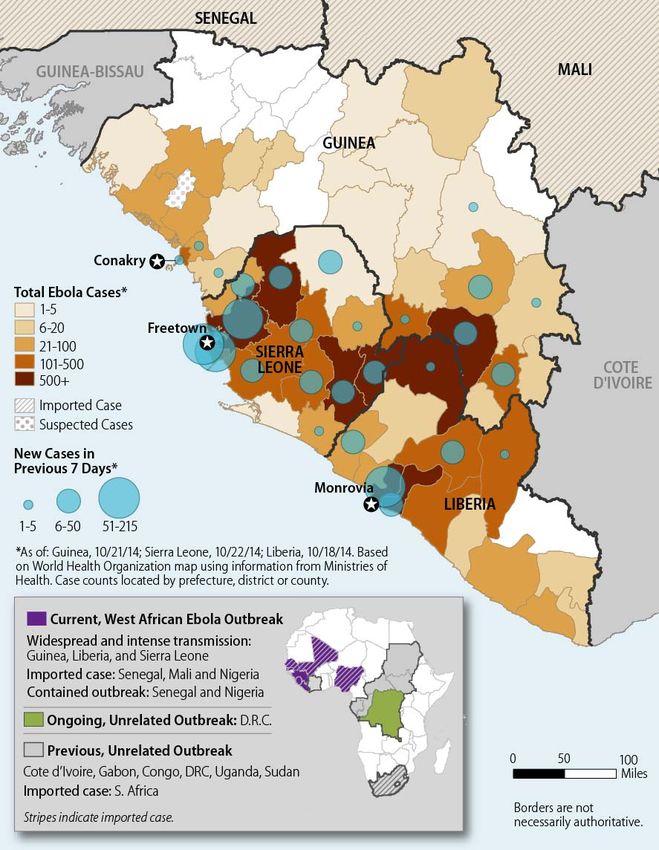
                      Figure 2. Map of Current and Past Ebola Outbreaks

    Source: Created by CRS Visual Information Specialist Amber Wilheim from WHO data.

8
 Martin Meltzer et al., “Estimating the Future Number of Cases in the Ebola Epidemic—Liberia and Sierra Leone,
2014-2015,” MMWR, (September 23, 2014), volume 63.

Congressional Research Service                                                                                   3
U.S. and International Health Responses to the Ebola Outbreak in West Africa Unrelated, Ongoing Ebola Outbreak A separate Ebola outbreak that is unrelated to the ongoing West Africa outbreak was detected in the DRC on August 24, 2014.9 It reportedly began in late July or early August, when a woman contracted an EVD-like hemorrhagic fever after butchering a wild animal. She later died and infected several others. As of October 20, there have been 66 cases and 49 deaths in the DRC, including eight deaths among health workers. All but five of the 1,121 contacts have completed the 21-day follow-up period.10 This is the seventh outbreak of EVD in the DRC since 1976. Congressional Actions Congressional actions to address the outbreak have been accelerating. Several committees have convened hearings on the Ebola outbreak and in July and September 2014, U.S. Representative Karen Bass and Senator Christopher Coons introduced legislation recognizing the severe impacts and threats of the outbreak.11 Also in September, Congress enacted legislation (P.L. 113-164, Continuing Appropriations Resolution, 2015) that provided $88 million for the Ebola response: $30 million for CDC Ebola response activities in West Africa and $58 million for research and development of specific treatments and vaccines for Ebola. Congress has also permitted the Department of Defense (DOD) to reprogram roughly $750 million of FY2014 Overseas Humanitarian Disaster and Civic Aid (OHDACA) funds to build 17 Ebola treatment units (ETUs) in Liberia and to support ongoing U.S. efforts in the region (see “Department of Defense”). For more information on DOD responses to the Ebola outbreak, see CRS Report IN10152, Increased Department of Defense Role in U.S. Ebola Response, by Don J. Jansen. Health System Constraints in Affected Countries The health systems in the affected countries were already weak before the Ebola outbreak, and have become overwhelmed by the crisis. According to WHO, there are six components of a health system: (1) human resources; (2) governance and leadership; (3) financing; (4) commodities and supply chain networkers; (5) service delivery; and (6) information.12 The affected countries face severe deficiencies in each of these areas and the outbreak is exacerbating these challenges. This section describes how constraints in each component of the affected countries’ health systems enable the virus to continue to spread. Table 1 summarizes these issues. 9 This section was summarized by CRS from WHO, Ebola virus disease – Democratic Republic of Congo, Disease Outbreak News, August 27, 2014 and September 10, 2014. 10 WHO, Ebola Response Roadmap Situation Report, October 22, 2014. 11 H.Res. 701, Expressing the sense of the House of Representatives that the current outbreak of Ebola in Guinea, Sierra Leone, and Liberia is an international health crisis and is the largest and most widespread outbreak of the disease ever recorded and S.Res. 541, Recognizing the severe threat that the Ebola outbreak in West Africa poses to populations, governments, and economies across Africa and, if not properly contained, to regions across the globe, and expressing support for those affected by this epidemic. 12 For more information on health systems, see http://www.who.int/topics/health_systems/en/. Congressional Research Service 4
U.S. and International Health Responses to the Ebola Outbreak in West Africa

                      Table 1. Impact of Health System Deficiencies on Ebola Outbreak Containment
                                                                       Human                                         Service
                           Governance                Financing                              Commodities                              Information
                                                                      Resources                                      Delivery

Description          Policies, strategies, and     Mechanisms       The people who        Goods that are          The              The collection,
                     plans that inform the         used to fund     provide               used to provide         management and   analysis, and
                     course of action a country    health efforts   healthcare and        healthcare.             delivery of      dissemination of
                     will take to meet the         and allocate     support health                                healthcare.      health statistics
                     health needs of its people.   resources.       delivery.                                                      for planning and
                                                                                                                                   allocating health
                                                                                                                                   resources.
Impact of            Slow initial government       Insufficient     Shortages of not      Insufficient supply     Many health      Limited capacity
Health               response to the Ebola         financial        only health           of protective           facilities in    to conduct
System               outbreak and incapacity       resources to     personnel, but        equipment               Liberia and      contact tracing
Component            to implement national         fund local       also support          threatens the safety    Sierra Leone     and diagnosis calls
Deficiency in        Ebola plans has diminished    responses and    staff like grave      of healthcare           remain closed    into question the
Ebola                public confidence in          pay health       diggers and           workers (including      due to staff     actual EVD cases
Context              political authorities and     personnel        statisticians limit   community               shortages and    and impedes
                     limited efforts to dispel     contribute to    the ability to        volunteers) and is      other factors.   efforts to detect,
                     rumors and fears about        human resource   detect, prevent,      associated with                          treat, and control
                     Ebola.                        and commodity    and treat EVD         hospital- and clinic-                    the virus.
                                                   shortages.       cases.                based infections.

Source: Created by CRS Global Health Specialist Tiaji Salaam-Blyther from WHO webpage on health systems, http://www.who.int/topics/
health_systems, and research on the Ebola outbreak.

                Governance and Leadership
                The unabated spread of the outbreak in the affected countries has contributed to perceptions of
                government ineptitude. Mistrust of public officials has prompted many civilians to ignore or resist
                government responses. Reports of attacks on health workers and health facilities (run by non-
                governmental organization and national health ministries alike) persist. The affected governments
                have used armed forces to enforce disease control measures and to quarantine neighborhoods,
                further deepening public resentment. Some have questioned the effectiveness of quarantines and
                criticized the measures, citing concerns about human rights, food scarcity, and possible unrest.
                Following criticisms by health experts and protests, Liberia and Sierra Leone have stopped
                quarantining some neighborhoods, though some quarantine zones remain. Despite concerns about
                quarantine practices, Sierra Leonean officials had characterized a three-day “Stay Home House to
                House” sensitization campaign a success, noting during which 92 bodies had been recovered and
                56 Ebola cases were detected.13

                Financing
                Per capita health spending in Guinea, Liberia, and Sierra Leone has been relatively low (Table 2),
                contributing to poor conditions of publicly-funded health facilities. Health workers and other
                government personnel often experience delays in compensation and benefits, contributing to
                absenteeism and human worker shortages. As the Ebola outbreak intensified, some health workers
                abandoned their posts, citing not only safety concerns (from lack of protective equipment) but

                13
                  Naina Bajekal, “Ebola Lockdown in Sierra Leone Finds 150 New Cases,” Time, September 22, 2014 and Umaru
                Fofana, “Sierra Leone wraps up three-day Ebola lockdown,” Reuters, September 21, 2014.

                Congressional Research Service                                                                                        5
U.S. and International Health Responses to the Ebola Outbreak in West Africa
also frustration over not receiving salaries. Several local staff at Ebola treatment units in Liberia
had reportedly not been paid for three months.14 Donors, including the United States, have since
begun to offer financial aid to Liberia to support payment of health workers salaries and other
financial incentives.
Table 2. Selected Health System Financing Statistics, 2011
% of Population Health Personnel Per Capita Gov. Gov. Health Budget as %
Living on < $1 Daily per 10,000 Pop. Health Spending of Total Gov. Spending
Guinea 43.3% not available $15 6.8%
Liberia 83.8% 2.8 $27 19.1%
Sierra Leone 51.7% 1.9 $31 12.3%
Nigeria 68.0% 20.2 $49 6.7%
Africa 51.5% 14.6 $76 9.7%
World 21.5% 43.3 $619 15.2%
Source: Created by CRS Global Health Specialist Tiaji Salaam-Blyther from WHO, World Health Statistics Report, 2014.
Notes: Health personnel refers to doctors, nurses, and midwives.
All of the outbreak-affected countries lack sufficient financial resources to fund their national
Ebola response plans and need financial support. Several donors have pledged to provide support
to the affected countries, though gaps persist (see “International Health Responses”). To meet the
health and secondary effects of the outbreak, the United Nations estimates that it will cost Guinea
$194 million, Liberia, $473 million, and Sierra Leone $220 million. Roughly half of these
resources will be needed for addressing health needs.15
Human Resources
Due to severe shortages of health workers and clinics, the majority of people infected with Ebola
in Liberia are without access to medical care and treatment. Inadequate access to health personnel
and facilities is also a problem in Sierra Leone and Guinea. Human resource constraints and
concerns about conditions in health centers are prompting people to care for the ill on their own,
facilitating the spread of the virus. The shortage of medics and health facilities also means that
people needing care for non-EVD related issues have nowhere to go.
Observers are troubled not only by inadequate access to Ebola care but also to the impact that
clinic closures are having on broader health issues, particularly maternal and child health. Before
the outbreak, maternal and child mortality rates in the EVD-affected countries were among the
highest in the world (Figure 3). In 2012, roughly 26% of all maternal deaths in sub-Saharan
Africa occurred in the four countries, where more than 46,000 women died from pregnancy-
related complications (an average of 126 daily deaths).16 Also in 2012, nearly one million
children died in the affected countries before reaching their fifth birthday, accounting for roughly
14
USAID, West Africa Ebola Outbreak—Update #2, August 11, 2014.
15
United Nations Office for the Coordination of Humanitarian Affairs (UNOCHA), Ebola Virus Disease Outbreak:
Overview of Needs and Requirements, September 2014.
16
UNICEF, Trends in Maternal Mortality: 1990 to 2013, 2014.
Congressional Research Service 6U.S. and International Health Responses to the Ebola Outbreak in West Africa
30% of all under-five deaths in sub-Saharan Africa.17 Most of these deaths could have been
prevented with adequate access to vaccines, clean water and sanitation, and nutrition.
Figure 3. Health Statistics: Affected Countries, Africa, High-Income Countries, World
Source: Created by CRS Global Health Specialist Tiaji Salaam-Blyther from WHO, World Health Statistics Report, 2014.
Acronym: Tuberculosis (TB)
Notes: Maternal mortality refers to the death of a woman while pregnant or within 42 days of a terminated pregnancy
from any cause related to or aggravated by the pregnancy or its mismanagement, but not from accidental or incidental
causes. Neonatal mortality refers to the probability of dying during the first 28 days of life. Infant Mortality refers to the
probability of dying within the first year of life. Under-Five Mortality refers to the probability of dying between before five
years of age. All statistics collected in 2012, except maternal mortality rate, collected in 2013. In 2012 and 2013, the
World Bank classified high-income countries as those with gross national incomes of $12,746 or more.
Press reports indicate that some pregnant women are avoiding health facilities out of fear of
contracting EVD in health settings. At the same time, many needing assistance during labor and
delivery are unable to receive medical attention due to clinic closures and human resource
17
WHO, World Health Statistics Report, 2014.
Congressional Research Service 7U.S. and International Health Responses to the Ebola Outbreak in West Africa
constraints. According to the United Nations, “[m]ore people are now dying in Liberia from
treatable ailments and common medical conditions than from Ebola.”18
Figure 4. Health Personnel Ratios and
High maternal and child mortality rates in the
EVD Deaths Among Health Workers
affected countries are linked to the dearth of (health personnel per 10,000 population, 2006-2013)
health workers in the affected countries.
Between 2006 and 2013, Sierra Leone had
only two doctors per 100,000 people,
according to the WHO (Figure 4).19 At an
August 2014 congressional hearing, one
witness testified that prior to the Ebola
outbreak, Liberia had fewer than 200
doctors.20 After the outbreak, he estimated
that about 50 doctors remained to provide
clinical care, due in part to the evacuation of
several expatriate doctors. EVD deaths
among health workers have further
diminished these staffing levels. On October
22, WHO reported that 443 health workers
had contracted EVD, of whom 244 died.21
More than 40% of these deaths occurred in
Liberia. Sierra Leone and Liberia face
shortages that are much more severe than
Nigeria and the rest of the world.
Ebola control is labor- and resource-intensive,
due to requisite surveillance and containment
measures. WHO estimates, for example, that
a facility treating 70 Ebola patients needs at
least 250 healthcare workers.22 In order to
stop the spread of EVD, WHO estimated at
the end of August 2014 that the affected Source: Created by CRS Global Health Specialist Tiaji
countries would need more than 13,000 health Salaam-Blyther from WHO, World Health Statistics
Report, 2014 and WHO, WHO: Ebola Response Roadmap
workers to provide health care, contact Situation Report, October 22, 2014.
23
tracing, and safe burial. The plan estimated Notes: Health personnel ratio data collected between
that roughly 5% of the health personnel 2006 and 2013.
would come from foreign countries and the
rest would be comprised of national health staff. The affected countries do not have enough health
personnel and countries are beginning to deploy medics to the region.
18
United Nations, “Secretary-General’s Remarks to the Security Council on Ebola,” Press Statement, September 18,
2014.
19
WHO, Unprecedented number of medical staff infected with Ebola, August 25, 2014.
20
U.S. Congress, House Committee on Foreign Affairs, Subcommittee on Africa, Global Health, Global Human Rights
and International Organizations, Combating the Ebola Threat, Testimony by Dr. Frank Glover, August 7, 2014.
21
WHO, WHO: Ebola Response Roadmap Situation Report, October 22, 2014.
22
WHO, “WHO Director-General briefs Geneva UN missions on the Ebola outbreak,” Briefing to United Nations
Member States, August 12, 2014.
23
WHO, Ebola Response Roadmap, August 28, 2014, p. 24.
Congressional Research Service 8U.S. and International Health Responses to the Ebola Outbreak in West Africa
Service Delivery
The Ebola outbreak has further diminished healthcare Figure 5. Bed Capacity in Ebola
options in the affected countries. Many health facilities in Treatment Units by Country
Liberia and Sierra Leone are closed. Even before the (as of October 18-19, 2014)
outbreak, access to clinics was limited. The vast majority
of health facilities are concentrated in urban areas and
Ebola treatment centers are concentrated in high
prevalence areas, leaving large swaths of the population
without access to both general healthcare and Ebola-
specific treatment. Due to limited access to clinics, the ill
frequently travel great distances in search of healthcare,
prompting most to wait until health complications are
severe. Delayed health-seeking practices are reducing
survival prospects among those sickened by Ebola and
encumbering efforts to detect and contain the virus.
A variety of health services are needed to control the
outbreak, including Ebola treatment centers, laboratories,
contact tracing, and safe burial services. All of the affected
countries face severe deficiencies in these areas. Most of
the health services are unable to meet the demands and
new ones are filled up as soon as they are opened. Patients
turned away from treatment facilities typically return to
their communities, often on public transportation, likely
infecting several more people along the way. CDC
estimates that fatality rates could be halved if people were
able to access treatment and healthcare.24
Liberia faces the most severe treatment shortage. As of
Source: Created by CRS Global Health
October 22, WHO estimated that it had only 23% of the Specialist Tiaji Salaam-Blyther from WHO,
beds it needed to treat those sickened by EVD (Figure 5). WHO: Ebola Response Roadmap Situation
Treatment capacity is expected to improve with U.S. plans Report, October 22, 2014.
to support the construction of 27 ETUs in the country, 12
of which will be built by the Department of Defense (DOD).25 Health experts are investigating a
recent reduction in people seeking Ebola care in Liberia, reportedly leaving some beds vacant.26
Safe disposal of dead bodies is also improving in Liberia, where roughly 90% of dead bodies are
being removed within 24 hours of being reported to the National Call Center.27 EVD responders
are also working with community leaders to adapt traditional funeral practices that can facilitate
EVD transmission, such as kissing and touching corpses.
The poor quality of health care delivery is also a concern. Inconsistent adherence to infection
control protocol, for example, is contributing to EVD cases among health workers. In July, CDC
24
Teleconference with CDC Director Tom Frieden, September 5, 2014.
25
Communication with USAID, October 26, 2014.
26
Sheri Fink, “In Liberia, a Good or Very Bad Sign: Empty Hospital Beds,” New York Times, October 28, 2014.
27
U.S. Government Inter-Agency Conference Call on Ebola, October 17, 2014.
Congressional Research Service 9U.S. and International Health Responses to the Ebola Outbreak in West Africa investigated a cluster of Ebola cases among HCWs in Liberia and identified “multiple opportunities for transmission of Ebola virus to HCWs, including exposure to patients with undetected Ebola in the hospital, inadequate use of personal protective equipment during cleaning and disinfection of environmental surfaces in the hospital, and potential transmission from an ill HCW to another HCW.”28 During a September tour of Liberia, CDC Director Tom Frieden noted inconsistent availability and use of gloves and hand washing. 29 Interruptions in water supply in health clinics further hamper efforts to ensure necessary sanitation. Dr. Frieden noted of 29 health centers surveyed during his tour to the affected region, only one had running water.30 The poor conditions of the health facilities also discourage attendance. Power outages and interruptions in potable water delivery are common.31 In addition, ambulance services are virtually non-existent in rural areas and limited in urban areas. One district in Sierra Leone with a population of 465,000 people reportedly has only four ambulances, which are often overcrowded with ill people, irrespective of Ebola infection status.32 Commodities/Supply Chain Networks Shortages of protective gear are associated with EVD cases among health workers, and may allow EVD to be spread within health facilities. The affected countries have limited supplies of appropriate protective equipment and not all health and support personnel who interact with the public have access to such equipment. Due to resource constraints, the protective equipment is primarily provided to healthcare workers in Ebola treatment centers, leaving health workers who operate among the general population at risk of contracting and spreading the disease (and other infectious diseases) should they encounter an undiagnosed EVD case. WHO noted, however, shortages of PPE even in ETUs.33 Health providers also lack sufficient supplies of antibiotics and safe blood to treat Ebola. The price of disinfectants and medicine has reportedly doubled, as people attempt to protect themselves and self-medicate in light of health system deficiencies.34 Transporting aid workers and commodities across and within the affected countries is complicated by poor road conditions and the suspension of air service by several commercial airlines. Efforts by the international community to develop alternative transportation routes have improved the situation, though limited air service remains a problem. Information Awareness about preventing EVD infection has improved, but due to poverty, infrastructural deficiencies (e.g. clean water and sanitation), and health system constraints, many people lack 28 Joseph Forrester et al., “Cluster of Ebola Cases Among Liberian and U.S. Health Care Workers in an Ebola Treatment Unit and Adjacent Hospital – Liberia, 2014,” Morbidity and Mortality Weekly Report, (October 17, 2014), volume 63, number 41. 29 Teleconference with CDC Director Tom Frieden, September 5, 2014. 30 Ibid. 31 Doctors Without Borders, “Flash Quote: WHO Declares Ebola an International Public Health Emergency,” Field News, August 8, 2014. 32 The Star, “In Sierra Leone, an exhausting struggle to contain Ebola,” August 18, 2014. 33 WHO, “Unprecedented number of medical staff infected with Ebola,” Situation Assessment, August 25, 2014. 34 Newsweek, “Ebola Frontline: Flooding in Sierra Leone Exacerbates Public Health Fears,” August 12, 2014. Congressional Research Service 10
U.S. and International Health Responses to the Ebola Outbreak in West Africa

means to avoid infection. Before Ebola hit, hunger was already a problem in the affected
countries, particularly in rural areas. Consumption of wild animals is common practice,
particularly in areas with high food insecurity. Health officials have been expanding efforts to
inform the public about the risks associated with eating wild animals, including fruit bats and
other animals that might carry EVD.35 Without sufficient access to food, hunger often compels
people to continue hunting and eating the animals despite the risks.

Efforts to contain the outbreak are encumbered by weak    Figure 6. Laboratory Confirmed
laboratory and surveillance systems. Health experts are       EVD Cases by Country
uncertain about how many EVD cases exist and where              (as of October 22, 2014)
they are occurring, particularly in Liberia where roughly
20% of EVD cases have been confirmed through
laboratory diagnosis (Figure 6). Limited laboratory
capacity has resulted in extensive diagnosis backlogs,
further calling into question the number of EVD cases and
hindering efforts to contain the outbreak. Uncertainty
about EVD cases endangers health workers, other patients,
and those living among people sickened by diseases of
undetermined origins.

International Health Responses
International responses are accelerating, though it remains
to be seen how much it will ultimately cost to contain the
outbreak and when this will be achieved. The financial
requirements for containing the outbreak are rising along
with the spread of the outbreak (Figure 7). In March,
WHO estimated that it would take $4.8 million to contain
the outbreak. At the end of April, more than 200 EVD
cases had been discovered in Guinea, less than a dozen in
Liberia, and none in Sierra Leone. In August, the
organization revised its Ebola response plan, estimating it
would cost roughly $490 million to contain the outbreak.36     Source: Created by CRS Global Health
By then, the outbreak had reached Sierra Leone and             Specialist Tiaji Salaam-Blyther from
                                                               WHO, WHO: Ebola Response Roadmap
Nigeria and had caused 3,685 EVD cases, including 1,841        Situation Report, October 22, 2014.
deaths. The outbreak is continuing to spread, is causing
broader social and economic disruptions, and has infected more than 10,000 people.

                     Figure 7. Timeline of International EVD Funding Requests
                                                      (U.S. millions)

Source: Created by CRS Global Health Specialist Tiaji Salaam-Blyther from WHO and UNOCHA funding requests.

35
     “Ebola risk unheeded as Guinea’s villagers keep on eating fruit bats,” The Guardian, August 4, 2014.
36
     WHO, Ebola Response Roadmap, August 28, 2014.

Congressional Research Service                                                                              11
U.S. and International Health Responses to the Ebola Outbreak in West Africa
In September, the United Nations (U.N.) established the U.N. Mission for Ebola Emergency
Response (UNMEER) to coordinate the international response to the outbreak. That month, the
United Nations Security Council held a special meeting on Ebola, urging member states to
expedite support for the affected countries and to contribute to a U.N. integrated Ebola response
plan. The six-month, $988 million plan calls for addressing the health and social impacts of the
outbreak (Table 3).37 Roughly half of the funds would be spent on health programs and the
balance would be spent on addressing issues such as food insecurity, economic disruptions, and
establishing and maintaining supply chain networks.
Table 3. United Nations Ebola Response Plan
(U.S. $ millions)
Common Sierra
Guinea Liberia Total
Services Leone
(1) Stop the Outbreak
Case identification and contact tracing 7.0 26.8 116.5 39.2 189.5
Safe and dignified burials 0.8 4.3 14.2 4.4 23.8
(2) Treat the Infected
Ebola care and infection control 7.0 52.5 212.6 59.2 331.2
Medical care for responders 10.0 1.0 2.0 1.0 14.0
(3) Ensure Essential Services
Food aid 2.5 28.4 36.3 40.4 107.7
Basic health care 1.0 47.1 12.9 36.1 97.1
Cash incentives for health workers 0.0 2.5 0.0 0.0 2.5
Recovery and economy 0.3 9.5 43.1 11.7 64.8
(4) Preserve Stability
Supply chain management 3.9 3.1 20.7 14.8 42.6
Transport and fuel 22.9 0.0 0.5 0.0 23.4
Social mobilization 0.6 18.6 13.2 13.3 45.8
Messaging 1.5 0.3 1.1 0.3 3.2
Regional support for Points 1-4 11.9 0.0 0.0 0.0 0.0
(5) Prevent Outbreaks in Unaffected Countries
Multi-faceted/preparedness (regional) 30.5 0.0 0.0 0.0 30.5
Total 88.0 194.1 473.1 220.4 987.8
Source: United Nations Office for the Coordination of Humanitarian Affairs (UNOCHA), Ebola Virus Disease
Outbreak: Overview of Needs and Requirements, September 2014.
Notes: The amounts in the table reflect the totals indicated in the U.N. plan. Due to rounding, the subtotals do
not always equal the amount indicated in the Total column.
37
United Nations Office for the Coordination of Humanitarian Affairs (UNOCHA), Ebola Virus Disease Outbreak:
Overview of Needs and Requirements, September 2014.
Congressional Research Service 12U.S. and International Health Responses to the Ebola Outbreak in West Africa
As of October 29, 2014, donors have contributed $493 million towards the UN plan and pledged
to provide an additional $279 million (Figure 8).38 Donors are also providing resources for
addressing the Ebola outbreak outside of the UN response. The United Nations Office for the
Coordination of Humanitarian Affairs (UNOCHA) estimates that some $894 million has been
committed for addressing the outbreak and an additional $938 million has been pledged for the
immediate and long-term preparedness needs. WHO and UNOCHA will likely revise their
requests for funding and material support as the outbreak continues to spread.
Figure 8. Pledges, Commitments, and Disbursements for UN Ebola Plan
(as of October 27, 2014)
Source: Created by CRS from UNOCHA, Financial Tracking Service webpage on the Ebola outbreak at
http://fts.unocha.org/, accessed on October 22, 2014.
WHO Ebola Response Roadmap
As indicated above, roughly half of the U.N. request for tackling the outbreak is aimed at
addressing direct health impacts. The World Health Organization is leading that component and
has outlined measures the international community would need to take to contain the outbreak by
January 2014. In the plan, entitled the Ebola Response Roadmap, WHO requested donors provide
roughly $490 million for:
• building 158 referring and isolation centers capable of holding over 1,500 beds;
• increasing diagnostic capacity to process 600 samples monthly; and
• attracting more than 13,000 health workers to provide health care, conduct
contact tracing, and institute safe burial protocols.
38
UNOCHA webpage on Ebola Outbreak Funding at http://fts.unocha.org, accessed on October 22, 2014.
Congressional Research Service 13U.S. and International Health Responses to the Ebola Outbreak in West Africa
WHO Community Care Campaign
Since September, pledges to send health workers to the region have increased, though human
resource constraints continue to inhibit containment efforts. Since September, several countries
have pledged medical support to the region, including Cuba’s commitment to deploy 165 health
professionals;39 a U.S. commitment to deploy 65 U.S. Public Health Service Commissioned
Corps officers for providing Ebola care in an DOD-established ETU;40 Britain’s provision of 750
troops, including medical officers;41 and China’s pledge to send more than 170 health workers.42
The African Union and East African Community have respectively committed to send 100 and
600 health workers.43
In light of human resource constraints, the Liberian Government, WHO, CDC, and other partners
developed the Community Care Campaign, which will initially be targeted at “the 400,000 most
vulnerable households in Liberia” and will be subsequently expanded to cover the rest of the
country and region.44 The Community Care Campaign calls for the establishment of community
care centers (CCCs), which will be managed and staffed by non-governmental organizations
(NGOs), community health workers (CHWs, lay people with rudimentary health training) and
family members of EVD patients. The CCCs are intended to “complement” Ebola Treatment
Units that are staffed by trained health practitioners and are operating at maximum capacity. The
Sierra Leonean government and implementing partners are also establishing CCCS in the country.
Table 4 summarizes similarities and differences between the two facilities.
Table 4. Similarities and Differences Between ETUs and CCCs
Ebola Treatment Units Community Care Centers
Bed Capacity up to 100 beds up to 15 beds
EVD Diagnosis yes depends on facility
Healthcare for EVD intravenous care, including hydration and blood oral rehydration, pain killers,
patientsa transfusion; maintenance of oxygen and blood fever reducers, and
pressure levels; and treatment of other infections antimalarials
EVD Care provided by trained medics provided by NGOs, CHWs
and family members
Oversight of Ebola Care on-site off-site
Practices
Access to food and water yes yes
Source: Created by CRS from WHO, Key Considerations for the Implementation of an Ebola Care Unit at
Community Level, September 2014.
a. For more on care and treatment of EVD symptoms, see http://www.cdc.gov/vhf/ebola/treatment/.
39
WHO, “Cuban medical team heading for Sierra Leone,” Press Release, September 2014.
40
HHS, “U.S. Public Health Service Commissioned Corps to help treat Ebola patients in Liberia,” September 16, 2014.
41
USAID, “West Africa-Ebola Outbreak,” Fact Sheet #4, October 22, 2014.
42
Ewan MacAskill and Rowena Mason, “British troops to be sent to help fight Ebola,” The Guardian, October 8, 2014.
43
USAID, “West Africa-Ebola Outbreak,” Fact Sheet #4, October 22, 2014.
44
White House, “Fact Sheet: U.S. Response to the Ebola Epidemic in West Africa,” September 16, 2014.
Congressional Research Service 14U.S. and International Health Responses to the Ebola Outbreak in West Africa
U.S. Responses to Pandemic Threats and Ebola
The United States is the leading funder of the international Ebola response and its financial
support is continuing to rise. The U.S. Agency for International Development (USAID) reports
that as of October 22, U.S. humanitarian funding for EVD responses totaled $344.6 million.45 In
addition, the Department of Defense (DOD) is planning to spend more than $1 billion on
containing the outbreak in support of U.S. EVD activities in West Africa, as described below.46
On October 17, President Obama established an Ebola Czar to coordinate U.S. domestic and
global responses to the Ebola outbreak. The U.S. Global Ebola strategy has four key goals:
1) control the outbreak,
2) mitigate second order impacts,
3) establish coherent leadership and operations, and
4) advance global health security.
U.S. global efforts focus primarily on Liberia, where the outbreak is most widely spread, although
the United States is engaged in all three affected countries. As of October 25, nearly 900 U.S.
Government personnel are stationed in the region, more than 700 of which are among the 4,000
military personnel who will be deployed to the region.47
U.S. responses to the current Ebola outbreak are built on prior and ongoing efforts to build the
capacity of foreign nations to prepare and respond to disease outbreaks—including Ebola. These
activities are primarily implemented through USAID and CDC, though the U.S. Departments of
Agriculture, Defense, and State also contribute to such efforts. Pandemic preparedness programs
began in earnest after the 2005 avian flu outbreak and have experienced varying levels of
congressional support. The section below briefly describes U.S. pandemic preparedness efforts,
including Ebola outbreak responses, by agency.
USAID Pandemic Preparedness Efforts
Since 2005, USAID has invested roughly $1 billion on helping countries detect, prepare for, and
respond to outbreaks that originate in animals, such as Ebola, and that have the potential to cause
pandemics. 48 In FY2014, USAID spent $72.5 million on such efforts through the Emerging and
Pandemic Threats (EPT) program, which operates in 18 countries in Africa and Asia. The
program grew out of USAID’s initial response to H5N1 avian influenza in 2005.
Congress appropriates funds directly to USAID for EPT. These funds have fluctuated between
FY2005-FY2014 (Table 5). Related activities in 18 countries in East and Central Africa and
South and Southeast Asia focus on:
45
USAID, “West Africa-Ebola Outbreak,” Fact Sheet #4, October 22, 2014.
46
White House webpage on the U.S. Ebola response at http://www.whitehouse.gov/ebola-response, accessed on
October 23, 2014.
47
Communication with USAID, October 26, 2014.
48
See the USAID webpage on pandemics at http://www.usaid.gov/what-we-do/global-health/pandemic-influenza-and-
other-emerging-threats.
Congressional Research Service 15U.S. and International Health Responses to the Ebola Outbreak in West Africa
• viral detection—identification of viruses in wildlife, livestock, and human
populations that may be public health threats;
• risk determination—characterization of the potential risk and method of
transmission for specific viruses of animal origin;
• institutionalization of a “one health” approach—integration of a multi-sector
approach to public health (including animal health and environment);
• outbreak response capacity—support for sustainable, country-level response to
include preparedness and coordination; and
• risk reduction—promotion of actions that minimize or eliminate the potential
for the emergence and spread of new viral threats.
Table 5. USAID Pandemic Preparedness Funding
(current U.S. $ millions and percent)
FY05 FY06 FY07 FY08 FY09 FY10 FY11 FY12 FY13 FY14 FY15 FY14-
Actual Actual Actual Actual Actual Actual Actual Actual Actual Estimate Request FY15
Avian Flu/ 16 162 161 115 190 106 93 58 55 73 50 -31.0%
Pandemic
Preparedness
Source: Created by CRS correspondence with USAID officials, August 6, 2014.
Note: Includes supplemental appropriations.
USAID Ebola Responses49
USAID has deployed a Disaster Assistance Response Team (DART) to West Africa to coordinate
the U.S. Government’s response to the Ebola outbreak. In coordination with other federal
agencies, the team is overseeing the U.S. response. Between March and October 2014, USAID
has committed to provide more than $300 million for combating Ebola in West Africa.50 This
included the provision of resources for 1,000 treatment beds, 130,000 sets of protective
equipment for healthcare staff and outbreak investigators, as well as 50,000 hygiene kits, which
include soap, bleach, gloves, masks, and other supplies to help prevent the spread of disease. 51
USAID is also supporting the International Federation of Red Cross and Red Crescent Societies
(IFRC) to raise public awareness of Ebola’s mode of transmission, teach disease prevention
practices to communities, train volunteers to detect Ebola symptoms and identify contacts of
confirmed or suspected cases for further monitoring, and support safe burial and body
management activities. USAID has reprogrammed funds from the Global Heath and International
Disaster Assistance accounts to fund these efforts.
49
Summarized from USAID, “USAID and CDC Announce Additional Assistance for West Africa Ebola Response,”
press release, August 5, 2014.
50
USAID, “West Africa-Ebola Outbreak,” Fact Sheet #4, October 22, 2014.
51
U.S. Embassy, “U.S. to Help Mobilize More Health Workers for Ebola Outbreak,” September 9, 2014.
Congressional Research Service 16U.S. and International Health Responses to the Ebola Outbreak in West Africa
CDC Pandemic Preparedness Efforts
CDC funds its global pandemic preparedness efforts through a variety of accounts, including the
Global Disease Detection (GDD) program, Emerging and Zoonotic Infectious Diseases, Global
Health, Immunization and Respiratory Diseases, and Public Health Preparedness and Response.
The Centers leverage resources from these and other program accounts to respond to global
disease outbreaks—including Ebola. Appropriations for GDD have grown since 2003 (Table 6).
Table 6. CDC Global Disease Detection Funding
(current U.S. $ millions)
FY04 FY05 FY06 FY07 FY08 FY09 FY10 FY11 FY12 FY13 FY14 FY15
Actual Actual Actual Actual Actual Actual Actual Actual Actual Actual Estimate Estimate
GDD 12 21 32 32 31 34 44 42 42 45 45 45
Source: Created by CRS from correspondence with the Office of Management and Budget (OMB), appropriations
legislation, and budget justification documents.
CDC has requested additional support ($45 million) in FY2015 to fund activities in support of the
Global Health Security Agenda, which will accelerate activities to detect, prevent, and respond to
global infectious disease threats like Ebola.52 CDC directly or indirectly supports pandemic
influenza preparedness efforts in more than 50 countries. In some cases, CDC sends experts to
work with WHO country offices or foreign health ministries, and at other times, CDC forms
cooperative agreements with partners to support country efforts.
CDC Ebola Responses53
At the end of March 2014, CDC teams traveled to Guinea and Liberia to help those Health
Ministries characterize and control the outbreak, identify and manage EVD cases, conduct contact
tracing, and improve data management. Following an initial response, new cases flared up after
appearing to decelerate for some time. CDC returned to the region and began resumed technical
assistance efforts. In addition to the activities discussed above, CDC is also training airport
personnel and working with partners to display Ebola-specific travel messages for electronic
monitors and posters at airports in the affected countries. CDC is not providing direct care of
Ebola patients. As of October 22, 2014, CDC has committed more than $16.7 million for its
Ebola responses.54
Department of Defense Ebola Responses
Until recently, DOD responses to the outbreak were focused on researching treatments and
vaccines and providing laboratory diagnostic assistance to Sierra Leone and Liberia. On
September 8, DOD announced that it would provide $22 million to set up a 25-bed field hospital
52
For more on the Global Health Security Agenda, see http://www.cdc.gov/globalhealth/security/.
53
This section was summarized from correspondence with CDC. Also see, Meredith Dixon and Ilana Schafer, “Ebola
Viral Disease Outbreak – West Africa, 2014,” Morbidity and Mortality Weekly Report (June 27, 2014), volume 63,
issue 25, pp. 548-551; and http://www.cdc.gov/vhf/ebola/outbreaks/guinea/.
54
USAID, “West Africa-Ebola Outbreak,” Fact Sheet #4, October 22, 2014.
Congressional Research Service 17You can also read


