St Martins School - Strategic Plan 2019 2021
←
→
Page content transcription
If your browser does not render page correctly, please read the page content below
St Martins School

   Strategic Plan
    2019 – 2021

                    1
Table of contents

Purpose                              …..……………………………………………………………        page 3
Consultation                         ………………………………………………………………..        page 3
St Martins School values             ………………………………………………………………..        page 4
Diversity Statement                  ………………………………………………………………..        page 5-6
Strategic goals                      ………………………………………………………………..        page 7
Strategic goals and objectives       ………………………………………………………………..        page 8 - 12
Enabling functions                   ………………………………………………………………..        page 13
Annual Action Plan                   ………………………………………………………………..        page 14 - 30
Annual Student Achievement Targets   ………………………………………………………………..        page 31 – 41

Appendix 1 – Internal Review Tool       ………………………………………………………..        page 42
Appendix 2 – Consult, Report and Review Plan ………………………………………………………..   page 43
Appendix 3 – Pastoral Care Plan         ………………………………………………………..        page 44

                                                                                      2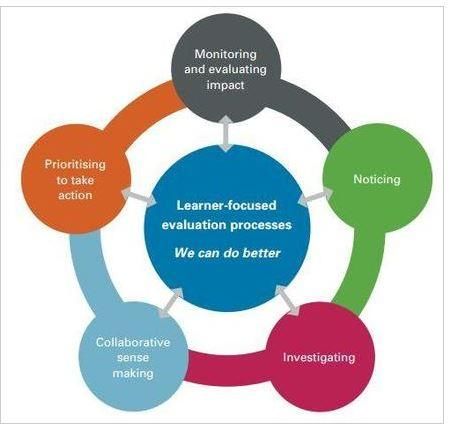
Purpose
This document outlines St Martins School’s strategic direction for the period 2019 – 2021. It details four key focus areas which will
support the school to establish a pathway for achieving equity and excellence: Wellbeing and pathways, Culture and identity,
Community engagement, and Ako.
This plan is a living document that will be revised as needed to address changing needs or priorities, comply with Ministry
requirements or incorporate national and international best practice. It is intended that this document will guide the Board’s decision
making, and ensure that both governance and operational decision advance the strategic goals outlined in this plan.
Consultation
This plan has been developed by the Board with input and information from a wide range of stakeholder groups. The School has
carried out consultation in the following areas:
   ●   Wellbeing – staff and student
   ●   Overall curriculum delivery
   ●   Caregiver Reporting - Goal setting conferences Year 3-8, Progress and Achievement Conferences
   ●   Engagement with the whānau group

We have used a variety of methods – surveys, SWOTs, workshops, and staff meetings to gather voice from teaching staff and
students. In considering consultation responses we use an internal self-review tool (refer to Appendix 1). Further consultation and
review on areas related to this document is scheduled during 2019 (refer to Appendix 2).

                                                                                                                                     3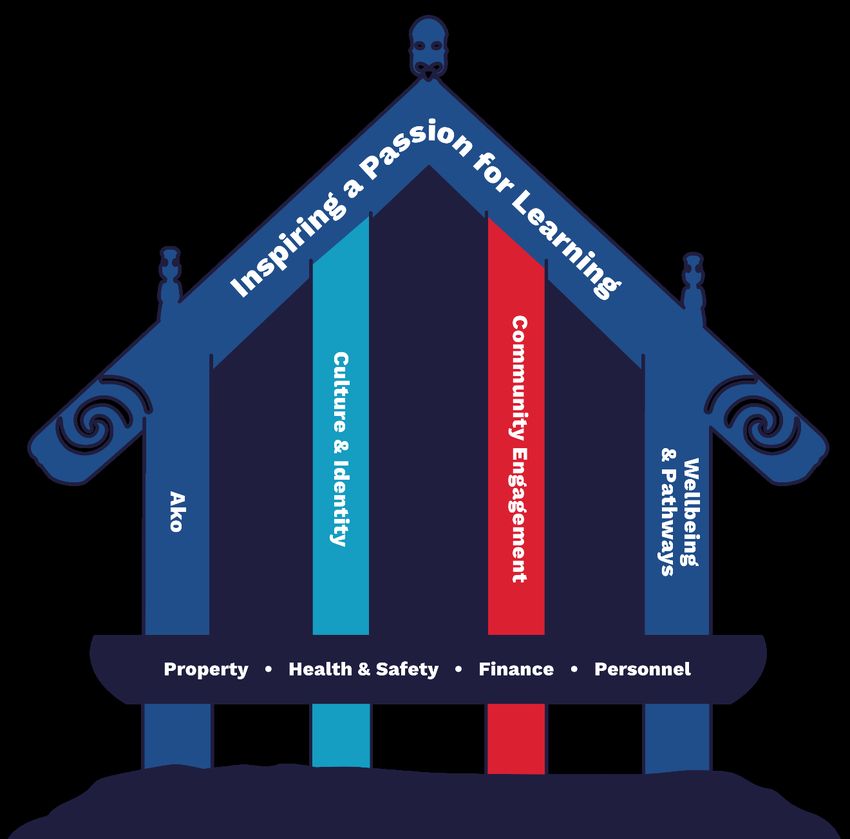
St Martins School Mission Statement           Kia Maiangi awe ake te Mātauranga.
                                               Inspiring a passion for learning.

 St Martins School Vision                      Our best always.

St Martins School values
These values are deeply held beliefs highlighting what our school community considers most important for our learners so that they
will thrive in diverse communities. These values will be reflected in all actions and interactions within the school.
“Our learning community is built on the foundation of RESPECT and CARING, providing opportunities to participate and contribute,
to be RESPONSIBLE actively involved global citizens. We aim high to achieve PERSONAL BEST in all areas of our LEARINING.”

                                               At St Martins all learners will show respect for others, the environment, and
 Whakaute - Respect
                                               ourselves.
                                               At St Martins we value caring as a way of relating to each other, our environment
 Manaaki tāngata - Caring
                                               and ourselves.

 Takohanga - Responsibility                    At St Martins we value learners who are responsible, active citizens.

 He tētēkura - Personal best                   At St Martins we value a community in which all learners strive for personal best.

                                               At St Martins we value learning. We believe learning is building on what we know
 Akoranga - Learning
                                               and moving forward.

                                                                                                                                    4
Diversity Statement
St Martins celebrates diversity in all its forms, including ethnicity, race, culture, gender, sexual orientation, religion, disability, and
socioeconomic status. St Martins has core values of respect and care, supporting students to be global citizens with a strong sense
of self, and who are respectful of others.
Our school community is increasingly diverse and multicultural, and we provide a welcoming and inclusive environment for students
of all backgrounds. We particularly emphasise valuing the identity, language and culture of our Māori, Pasifika and tauiwi (new
migrants) students and whānau/aiga.
St Martins School ensures both the articles and the principles of Te Tītiri o Waitangi are reflected within our curriculum delivery
programmes. The school further embraces its responsibility to ensure Māori success and upheld the cultural heritage of Aotearoa
and our partnership with Māori through te Tīriti o Waitangi by ensuring in both policy and practice that Māori learners achieve
educational success as Māori.
St Martins School recognises and celebrates the diversity of its students and community, particularly Aotearoa’s unique bicultural
heritage, through:
● Wherever possible, include whānau in the decision making of the school, particularly through consultation and collaboration
with our whānau group;
● Incorporating components of te reo me ona tikanga Māori into the development of long-term plans;
● Incorporating and celebrating aspects of students’ identity, culture and language in the classroom;
● Tuakana/teina roles included in teaching and learning for recognition of what students and staff are good at, and areas for
growth and development;
● Regularly reviewing policy documents and practices which highlight the unique position of Māori learners and their needs;
● Developing policies and practices which reflect the diversity of learners and whānau;
● Kaitiakitanga woven into the curriculum and physical school environment through community action;
● Hauora promoted as a framework of holistic wellbeing;
● Regularly reviewing policy documents and practices which highlight the unique position of Māori learners and their needs;
and
● Developing policies and practices which reflect the diversity of learners and whānau;
5The board will also respond to requests from parents/caregivers of full-time learners for instruction in te reo Māori by:
● Summarising the current level of te reo and Tikanga Māori available at St Martins School; and
● Aligning students, based on their current level of te reo and Tikanga Māori, with services including:
o In-house instruction from teachers with Māori expertise;
o Dual enrolment with a correspondence school; and
o Consultation with Māori school advisors.
6Strategic goals
St Martins School views its mission as being
achieved or upheld through focusing on its four
key strategic areas.
This is depicted through the whare model
shown to the left, in which the four strategic
areas form the four pou (supporting pillars),
which support the roof which is the school’s
mission statement.
At the base of the whare are the board’s
enabling mechanisms, through which these
objectives are achieved. These are: property,
health and safety, finance, and personnel.
7Strategic goals and objectives
Area of focus Strategic goal Strategic objectives
Wellbeing and pathways The holistic wellbeing of students and 2019 - 2020
whānau is nurtured and grown as ● Tamariki and parents will transition effectively to St
students transition into, through, and out
Martins through strong ECE, school,
of St Martins School. parent/caregiver, and student relationships.
This includes emotional, spiritual, ● Students’ wellbeing and resilience will be nurtured
physical and mental wellbeing. through pastoral care programmes and networks,
teaching and learning programmes, and relevant
learning opportunities for parents/caregivers.
● Staff will role model self-care by leading or engaging
in opportunities and initiatives that focus on
enhancing and protecting their own holistic
wellbeing.
2020 - 2021
● Students leaving St Martins for secondary school will
have a strong sense of self and are guided by their
values.
Community engagement Parents, whānau, community, and iwi 2019 - 2021
feel a sense of welcome, belonging, and ● St Martins School will develop a culture of
connection with the school, and engage community action which encourages participation
in supporting both the learning of their and engagement in school events and community
tamariki and wider activities of the action.
school.
8● St Martins School will be leaders of action in the
community on issues relevant and topical to the
community.
Culture and Identity St Martins School recognises, values, 2019 - 2020
and celebrates the diversity that ● St Martins School culture will celebrate the diversity
constitutes culture and identity in its of all learners.
various forms, and encourages students
to have a strong sense of who they are ● St Martins School will develop a culturally rich and
and what they value. responsive environment built on the principles of Te
Ao Māori.
2021
● Students will demonstrate a strong understanding of
the St Martins School values through their own
actions and their interactions with others.
Ako – Everyone is a Students receive high quality 2019
learner collaborative teaching and learning that Growing students
promote both equity and excellence, with
a focus on students who are not currently • Students will have quality, effective, evidence based
achieving or are at risk of not achieving, literacy and numeracy (mathematics) school wide
as well as supporting all students to learning experiences.
achieve their personal best. ● Levels of student achievement in numeracy will be
increased through embedding and enhancing
mathematical community inquiries.
● Levels of student achievement in literacy will be
increased through students developing an
9Growing students understanding of languages, texts and literacy
All learners have agency and practices across the curriculum.1
personalised learning opportunities to
experience success in their learning. Kaitiakitanga (caring for ourselves, others and the
Students benefit from high expectations environment) will be embedded in teaching and learning
in a supportive, safe and inclusive programmes, co-curricular opportunities, and the physical
environment. school environment.
● To serve the school and the wider community.
Growing staff/people ● To develop an understanding of environmental
All staff commit to leading innovative sustainability through active, engaging, inquiry
teaching methods and to develop based, environmental learning experiences.
learning communities, social capacity ● To be responsive to the bi-cultural and multi-cultural
and to contribute as a whole to the wider nature of the school, environment and local
Kāhui Ako. community and contribute to the richness that brings
to our school.
2020
Digital Technologies
● Students have the technological capability for
learning and to enhance their learning.
1
The aim is to enable students to use texts (texts being digital, printed or multimodal) in the following ways: read and understand texts, construct texts appropriate to the area of study and think about,
discuss, interact with, and use texts in subject specific ways.
10● Students develop an understanding of digital literacy
and global citizenship.
● Students use technology, navigate the internet and
digital communication tools with understanding,
integrity and safely.
● Ensure the school and staff/people have the
technological capability for learning and to enhance
learning.
2021
Learning to Learn – St Martins School Inquiry Based
Learning Model will be embedded across all learning
programmes:
● To ensure students have quality effective evidence
based student centred authentic learning
experiences across the curriculum.
● To enable students to make informed choices when
engaging in their own learning inquiry regardless of
the curriculum context.
2019
Growing staff/people:
● Teachers lead their own learning.
11● Teachers professional learning programmes will
continued to be aligned with teacher appraisal.
● Teachers engage with our ‘within school lead’ to
continue to build innovative effective teaching
programmes in literacy.
● Teachers participate and make contribution to the
DMIC professional develop programme.
2020
● Teachers work collaboratively through planned and
professional coaching and mentoring opportunities
to develop innovative teaching methods within the
context of Kaitiakitanga.
2021
● Teachers work collaboratively to ensure inquiry
based learning programmes have deep, rich, cross
curricular learning opportunities.
12Enabling functions
The Board gives effect to these strategic goals through its enabling functions of property, health and safety, finance and personnel.
The following table outlines the Board’s short to medium term direction in each of these functional areas.
Property Health and safety Finance Personnel
Ensure the school’s rebuild Meet the legal requirements Work closely with the MOE, Continue to recruit, employ
continues as planned and per implicit in the new Health and Architect, Project Manager and and retain high quality,
the rebuild schedule and in Safety Act. BOT to ensure the build budget effective teachers, staff and
line with the BOTs, Senior is effectively used to meet the leaders.
brief outline and ensure a
Management and Improve the structure,
successful build outcome.
Communities fundamental organisation and actions of the Ensure ongoing professional
values and beliefs as Health and Safety Team. Ensure budget prioritises the learning and attestation
represented in the original purchase of equipment and programmes that enhance
design brief. Improve personnel’s capacity furniture for the new learning learning.
and understanding of spaces.
Source and purchase procedures to ensure the Provide a high quality
functional and aesthetic safety of all. Ensure budget prioritises the ICT induction programme for new
equipment and furniture to infrastructure and hardware of staff to ensure ongoing
meet the needs of the new Continue to regularly meet the whole school. effective learning programmes
learning environments. with key stakeholders to and student outcomes.
Locally raised funds/SMART
ensure a highly effective
Community prioritised towards
Explore options for Health and Safety programme. landscaping and outdoor play Introduce leadership coaching
landscaping and outdoor play areas and courts as part of the for new emerging leaders.
areas and courts as part of the school rebuild.
school rebuild. Ensure a robust induction
Ensure effective use of the process is undertaken for
budget enhances learning and incoming BOT members.
the learning environment at St
Martins School.
13Annual Action Plan for 2019
Improvement Plan Domain: Wellbeing and Pathways
Strategic Objective:
Wellbeing:
● Students’ wellbeing and resilience will be nurtured through pastoral care programmes and networks, teaching and learning
programmes, and relevant learning opportunities for parents/caregivers.
● Staff will role model self-care by leading or engaging in opportunities and initiatives that focus on enhancing and protecting
their own holistic wellbeing.
Pathways:
● Tamariki and parents will transition effectively to St Martins through strong ECE, school, parent/caregiver, and student
relationships.
Annual Goal: Annual Target:
Wellbeing: Wellbeing:
Students and staff/people To increase the number of students having their wellbeing and
To better meet the wellbeing needs of all learners within the pastoral care needs met within the classroom programme – Tier
classroom wellbeing and mindfulness learning programmes. 1. (See appendix 3)
To ensure that the school is making effective use of the Mana To reduce the number of students accessing/needing the
Ake resources and developing structures through the Kāhui Ako Pastoral Care Programme at Tiers 2-5. (See appendix 3).
- Te Mana Raupō.
Pathways:
Pathways: To have all year 0-2 school teachers participate in at least two
To strengthening professional links with contributing ECEs and ECE Hui each year.
St Martins School.
All year 0-2 teachers will engage with Te Whāriki to support
To develop curriculum pathways that ensure a connection learning pathways from ECE into the first year of primary
between Te Whāriki and the New Zealand Curriculum. schooling.
14For students and their family/Whānau to develop a sense of To improve the number of students and families experiencing a
belonging and connection to St Martins School. positive transition from ECE to St Martins School.
Baseline Data:
Wellbeing:
St Martins School has developed a Pastoral Care structure that enable quick and easy access to wellbeing support. It consists of
a 5 tier system starting with the idea that the majority of our students should have their wellbeing needs meet and enhance within
the normal classroom wellbeing and mindfulness learning programmes (Health curriculum) – Tier 1through to high level access to
specialised mental health agencies.
Number of students accessing the Pastoral Care Programme:
Data collected at the end of 2018.
Tier 1: Within the classroom 77% (453 of 590)
Tier 2: Effective leadership support 6% (34 of 590)
Tier 3: School community development worker 11% (68 of 590)
Tier 4:In school social worker 3% (16 of 590)
Tier 5: Specialist support from external agencies 3% (19 of 590)
Pathways:
The data below is below is based purely on individual teacher judgement of children’s transition into school.
Data collected as part of the achievement challenge plan for Te Mana Raupō Community of Learning. (Data collected from Jan-
June 2018)
Number of students transitioned successfully to school: 75% (39 of 52)
Number of students experienced challenging transitions: 25% (13 of 52)
“Challenging” – defined as reluctant to leave parent, difficulty settling, reluctant to engage with learning or other students, parents
reported difficulty with encouraging their child to school.
See Appendix 3
15Key Improvement Strategies:
When: What: Who: Indicators of Progress:
Wellbeing Survey community of learners Deputy Principal Reduction in the number of
Term 1 to determine the perceived students being referred to the
Term 3 effectiveness of students level Wellbeing team high levels of pastoral care
of wellbeing, the schools ability support strategies – Tiers 2-5.
to support wellbeing within the Across School Lead Teacher
classroom, playground and
through pastoral care Principal Positive shift in Wellbeing
programmes. survey results.
Team Leaders
The Wellbeing Team to
Ongoing analyse the data to identify Classroom Teachers
ongoing needs of students.
Develop new and enhance
existing programmes to better
meet student wellbeing.
Identified needs addressed
Engage with the new ‘Across and programmes developed
Ongoing Schools” lead for Wellbeing to and implemented within
review current programmes classrooms.
and develop new programmes.
Develop and engage Mana Clear structures to refer and
Ake resources to support the access Mana Ake resource.
wellbeing of learners at St
Martins. (Also part of outcomes Clear understanding and
for the Stewardship Team for knowledge of the resources on
the offer by our Mana Ake team.
16Documentation of referral and
access to resources,
programmes and personnel.
Term 1 and Term 3 To survey the staff to Improvement in survey data
determine their perceived and job and wellbeing
ability to role model self-care satisfaction indicators.
by leading or engaging in
opportunities and initiatives
that focus on enhancing and
protecting their own holistic
wellbeing.
To identify ongoing needs of
staff to better develop their
needs through professional
development and
management of workload.
Ongoing Major focus for teacher inquiry Teachers are able to identify
and professional goals is wellbeing needs of students in
wellbeing and making a their PODs supported by
difference to students Leading Lights portal.
wellbeing.
Teachers have developed
effective classroom
29, 30 January TOD – focus on wellbeing and programmes to meets the
making a difference – students, needs of diverse learners.
self and community
1725 March TOD – Focus on Teachers develop a range of
understanding students skills to help support the needs
behaviour and how best to of diverse learners.
support wellbeing.
Term 2 and 3 Professional Development for Teachers can evidence the
new staff in Restorative changes in student wellbeing
Practices to ensure a over the year.
consistency approach to
behaviour and wellbeing Effective use of restorative
management. practices by new teachers and
support staff at St Martins
School.
Pathways To engage in professional Explorers Team Visible evidence of a positive
learning opportunities to transitions to school by new
improve our teachers Team Leader entrant students.
understanding of Te Whāriki.
New Entrant Liaison Person Increase in the number of
To develop opportunities for students experiencing a
ECE teachers, students and Across School Expert Teacher positive transition to school.
parents to visit St Martins – ECE Transitions.
School and participate in Teachers show clear learning
school activities prior to pathways in all year 0-2
enrolment. planning and assessments
from Te Whāriki to Level 1 of
Continue to enhance our the New Zealand Curriculum.
transition programme through
o The SMART start Teachers are analyse and
events make use of the information
o Classroom visits prior to coming out of the parent
starting school transition questionnaire to
o Mutukaroa Programme. improve transition
programmes.
18Introduce transition
questionnaire to parents at the
eight week milestone.
Teachers will attend ongoing
professional learning hui
organised our ‘Across School
Teacher – Transitions’.
Monitoring:
Senior Leadership to ensure the above actions, surveys and or questionnaires are completed and analysed as outlined above and
are used to inform and guide change.
At the end of each Term the Wellbeing Team will meet with our ‘In school social workers’ and Mane Ake Team to review students
outcomes and ongoing needs.
Resourcing:
2019 budget to prioritise the above.
o Funds for the engagement of the social workers from CCM
o Release for Wellbeing team to meet and plan actions.
o Purchase of resources for classroom use.
o Ongoing funding for Professional Learning programmes for teachers and parent workshops.
19Improvement Plan Domain: Community Engagement
Strategic Objective:
● St Martins School will develop a culture of community action which encourages participation and engagement in school
events and community action.
● St Martins School will be leaders of action in the community on issues relevant and topical to the community.
Annual Goal: Annual Target:
● To ensure parents, whānau, community, and iwi have an ● To increase understanding of our pedagogy and practices
understanding of the new buildings and how the teaching by scheduling regular walk throughs for family and
spaces will enhance learning for their children through whānau to go through the new buildings and have
collaborative learning practices. opportunities to view learning as it is happening and to
ask questions.
● To engage with the local iwi through the Whānau Group
to enable connection and understanding of our cultural
● To increase the community attendance numbers at
narrative is reflected in aspects of the new buildings and
information evenings and parent workshops.
planned landscaping.
● To hold regular parent workshops on relevant and topical ● To increase the engagement of our community in
issues – managing student behaviour at home, screen responding to surveys and questionnaires.
time, understanding our mathematics programmes and
collaborative teaching pedagogy.
Baseline Data:
Anecdotal evidences over the past 5 years has indicated only a small percentage of parents will respond to community engagement
events that are information or informative sharing strategies such as surveys or questionnaires.
20Key Improvement Strategies:
When: What: Who: Indicators of Progress:
Term 1, 2, 3 and 4 Build updates emailed to BOT Higher levels of community
community posted on website. Principal engagement and
participation/contribution to
Provided guided walk through Teachers key strategic goals.
of new learning spaces for
whanau and community
members.
Term 2, 3 and 4 Regular parent information All staff
giving and gathering around
current collaborative practices
and use of collaborative
learning spaces. (Emails,
workshops and information at
parent teacher gatherings.)
Term 1,2 3 and 4 Regular parent/Whanau Group BOT
information giving and Principal
gathering and iwi consultation Whānau Group
around current St Martins Local iwi and Kaumatua
cultural narrative and use of Community
Māori names. How this will be
expressed through signage
and manifestations within the
buildings and grounds.
(Emails, face to face meetings,
workshops and information at
parent teacher gatherings.)
21Term 1 and 3 Hold regular parent workshops Principal
on about digital citizenships, Deputy Principal
cyber safety and Screen time. Teaching staff
Outside providers
Term 2 and 4 Regular drop-in sessions with Principal
Mana Ake team to provide Deputy Principal
ongoing information around SENCO
‘Right time, Right Services’ Mana Ake Team
approach to wellbeing.
Monitoring: Monitor community engagement and analysis of data to ensure we are using efficient, effective and culturally
responsive strategies to engage our community.
Resourcing:
2019 budget to prioritise funds moneys for the following:
● Digital survey and questionnaire tools.
● Ongoing purchasing maintenance of school website and school links portal.
● Professional and parent information sharing initiatives such as workshops, drop-ins and information events.
● Locating, engaging and implementing our school and community connection and support of local Whānau Group, iwi and
kaumatua.
22Improvement Plan Domain: Culture and Identity
Strategic Objective:
● St Martins School will develop a culturally rich and responsive environment built on the principles of Te Ao Māori.
● St Martins School culture will celebrate the diversity of all learners.
Annual Goal: Annual Target:
● To incorporate tikanga, Māori values and Te Reo Māori ● All School signage, displays, names, manifestations and
across our range of Learning programmes. landscaping will include appropriate design aspects from
our local cultural narrative and in consultation with the
● To ensure people have an understanding of where they local families and whānau / iwi.
come from and an opportunity to celebrate the diversity
of our community. ● By the end of 2019 all inquiry based learning units,
environmental sustainability and health and wellbeing
● To develop an understanding of what ‘our place’ is about programmes will include:
and ensure everyone can connect and feel included.
o Aspects of tikanga and Māori values that reflect the
local tangata whenua.
o Opportunities for student to share and celebrate
diversity.
o Connections to school based values and
community.
Baseline Data:
Our Place:
• Signage around the school is limited to the naming of office areas, toilets and staffroom.
23• Translation of ‘The SMART Way’ is completed but has yet to be included on displays within classrooms and office areas.
• School song in Māori is used at cultural festivals or important events at school.
• School logo has Māori translations.
• Commissioned design for formal documents, displays and manifestations has been completed, but these have not yet been
constructed and installed
• Design of new build manifestations and Waharoa is underway.
Our People:
• All teachers develop and teach programmes that include learning opportunities from Level 1 of Te Aho Arataki Marau mo e
Ako i Te Reo Māori (Curriculum guidelines for Teaching and Learning Te Reo Māori in English-medium Schools).
• All teachers are able to use simple commands or sentences, however correct pronunciation varies across staff.
• All teachers have engaged with Tātaiako (Cultural Competencies for Teachers) as part of the school wide professional
learning programme.
• Cultural responsiveness goals are included within school wide appraisals.
• It is unknown how effectively our teachers understand tikanga and Māori values from a Ngāi Tahu perspective.
Our Curriculum:
• All learners experience learning opportunities from Level 1 of Te Aho Arataki Marau mo e Ako i Te Reo Māori (Curriculum
guidelines for Teaching and Learning Te Reo Māori in English-medium Schools).
• Te Reo Māori is reported on once yearly from Years 5-8.
Key Improvement Strategies:
When: What: Who: Indicators of Progress:
Our Curriculum: Develop curriculum delivery Senior Leadership Team School wide curriculum will
Ongoing that moves beyond Level 1 of include learning outcomes
Te Aho Arataki Marau mo e Curriculum Team beyond Level 1 of the
Ako i Te Reo Māori. curriculum.
All Staff
24To develop assessment and Planning, assessment and
reporting guidelines for Te Aho Whānau Group reporting formats and learning
Arataki Marau mo e Ako i Te programmes will show student
Reo Māori that include Years learning and achievement
1-4. beyond Level 1 of the
curriculum.
Our People: Develop and implement a Senior Leadership Team School Leaders and Teachers
Ongoing professional learning will be able to model correct
programme for staff that All Staff pronunciation of Te Reo
includes: Māori.
o understanding of Whānau Group
tikanga and Māori School Leaders and Teachers
values will be able to model tikanga
o correct use and and Māori values.
pronunciation of Te
Reo Māori
Students will demonstrate
correct pronunciation of Te
Continue to include within the Reo Māori.
Teacher Appraisal programme
professional goals for cultural Students demonstrate an
responsiveness in line with understanding of tikanga and
Tātaiako. Māori values.
Planning, assessment and
learning programmes will
reflect clear links to use of
cultural competencies from
Tātaiako.
25Our Place: Design and commissioning of Senior Leadership Team The environment will show:
Term 1 and 2 Waharoa for entrance to o design of key
school. BOT landscaping elements
that reflect our cultural
Design and commissioning of Whānau Group narrative.
Manifestations for new
buildings and signage around Build Team o Bilingual signage
the school.
throughout the school.
Local artists and contractors
Design and commissioning of
landscaping and playground. o Design and staging of
aspects of landscaping
Work with the SMART around the school will
community to raise funds to show key aspects of
create the landscaping and our cultural narrative,
playground of St Martins but also include Māori
School. values around respect
for and sustainability of
the environment.
Monitoring:
Quality of learning programmes, student achievement outcomes and teacher competencies will be monitored through the school
wide assessment and reporting evaluations and also the school wide professional learning and attestation programme.
Senior Leadership to ensure the above actions and outcomes for ‘Our Place’ are achieved through regular meetings and
consultation with Whānau Group and stakeholders.
Regular reporting to the Whānau Group and BOT will include updates of progress in achieving the above goals.
Resourcing:
2019 - 2021 budget to prioritise moneys for the following:
● Professional development costs and release for staff to attend.
26● Landscaping and building playgrounds
● The design and installation of the manifestations and bilingual signage.
27Improvement Plan Domain: Ako – Everyone is a learner (Part 1)
Strategic Objective:
Kaitiakitanga (caring for ourselves, others and the environment) will be embedded in teaching and learning programmes, co-
curricular opportunities, and the physical school environment.
To serve the school and the wider community.
To develop an understanding of environmental sustainability through active, engaging, inquiry based, environmental learning
experiences.
● To be responsive to the bi-cultural and multi-cultural nature of the school, environment and local community and contribute
to the richness that brings to our school.
●
Annual Goal: Annual Target:
To include in the all year 0-8 curriculum programmes ● All learning teams will develop and implement an
environmental sustainability learning opportunities that environmental sustainability programme that enable
enable students to successfully participate and make students to care for self, others and the environment.
contributions to others and the world around them. ● All environmental sustainability programmes will provide
authentic, hands on opportunities for students to actively
participate in and make positive contributions to local self,
others and the environment.
Baseline Data:
At present the only baseline data we have is anecdotal notes and reflections for the Environmental Programmes and the
tracking of the number of students accessing the Pastoral Care System Support Network. (see above data).
The capture of engagement, progress and achievement assessments and reflections will be a priority for development for these
programmes.
28Key Improvement Strategies:
When: What: Who: Indicators of Progress:
Term 1, 2, 3 and 4 Inquiry planning units of work Senior Leaders Reflection and evaluation of
will include social action learning programmes will show
component that could include Staff students development of the
students working within the NZCF key competencies and
community. SMART Learners attitudes and
dispositions.
(Service to community)
Terms 1,2,3,4 Implementation of the Reflection and evaluation of
Environment Sustainability learning programmes will show
programme in years 0-2, The students development of
Eco Explorers Programme. understanding toward
environmental sustainability
To continue to review, refine practices and Māori values in
and improve the following relation to care of our place.
programmes:
● Eco Explorers (Year 0- That students are actively
2) engaged in environment
programmes that make a
● Garden to Table (Year difference to self, others,
3-4) school and wider environment.
Eco Action Programme (year
5-6)
o Environmental
Challenge Programme
(Year 7-8)
(Service to the environment)
29Terms 1, 2, 3, 4 Teachers will continue to Senior Leadership Students will be able to discuss
develop and implement Health, and demonstrate an
Wellbeing and Mindfulness Wellbeing Team understanding of personal
learning programmes to meet health, wellbeing and
the needs of students within Staff mindfulness in relationship to
their POD and out to the wider what they do in their daily life at
Year group Team. school and home.
The wellbeing team to develop Students will be able to use a
an action plan to ensure variety of strategies to support
continued improvement of theirs and others health,
learning programmes, student wellbeing and mindfulness.
engagement and assessment
for learning practices.
(Service to Self)
Monitoring:
Ongoing review by Team Leaders of the Environmental Sustainability learning programme at the end each Term to ensure effective,
engaging learning programmes. (Eco Explorers (Year 0-2), Garden to Table (Year 3-4), Eco Action Programme (year 5-6),
Environmental Challenge Programme (Year 7-8)
Ongoing review by Wellbeing Team of the learning programme at the end each Term to ensure effective, engaging learning
programmes.
Resourcing:
2019-2021 budget to prioritise moneys for the following:
o Resources required to maintain the programmes – equipment, staffing, transport.
o Release for teachers to collaboratively plan the programmes
30Improvement Plan Domain: Ako – Everyone is a learner (Part 2) Student Achievement Targets
Strategic Objective:
Growing students:
Students will have quality, effective, evidence based literacy and numeracy (mathematics) school wide learning experiences.
● Levels of student achievement in numeracy will be increased through embedding and enhancing mathematical community
inquiries.
● Levels of student achievement in literacy will be increased through students developing an understanding of languages,
texts and literacy practices across the curriculum.
o The aim is to enable students to use texts (texts being - digital, printed or multimodal) in the following ways:
o read and understand texts
o construct texts appropriate to the area of study and
o think about, discuss, interact with, and use texts in subject specific ways.
Growing staff/people:
● Teachers work collaboratively through planned and professional coaching and mentoring opportunities to develop innovative
teaching methods.
● Teachers understand and develop literacy learning programmes across the curriculum to enable students to develop the
use of a range of texts, developing understanding of the language used in a given discipline.
● Teachers use effective analysis of student achievement information including individual, school wide and cohort tracking
overtime in order to meet the needs/accelerate learning of the diverse learners at St Martins School.
Annual Goals to support the Domain of Ako
● To further develop our understanding of differentiation of learning to meet the needs of diverse learners.
● To develop an understanding of the term ‘diverse’ learners.
● To focus on and gain an understanding of the gender differences at the year 1-2 age group.
31● To ensure there is wide and deep analysis of all variables that impact on learning – attendance, well, being and pastoral
care, relationships, gender, ethnicity, timetabling, authenticity of content and relevance of learning to learners.
● To gain a better understanding of wellbeing and the concept of “making a difference” to support learners and learning as a
guiding theme for 2019.
● To develop a deeper understanding of collaborative practices to support learning across the curriculum, whilst retaining a
focus on Literacy and Numeracy.
● Cross curricular literacy and numeracy demands to ensure equal access to content and process adapting delivery of
programme to support all learners – this includes inquiry-based learning, performance arts and sports and outdoor
education programmes.
32Reading – and literacy across the curriculum.
Student Achievement Targets 2019
Strategic goal: Student Focus Groups:
Students will have quality, effective, evidence based literacy – Year 1,2 and 3 students
reading school wide learning experiences.
● Levels of student achievement in literacy will be
increased through students developing an understanding
of languages, texts and literacy practices across the
curriculum. To enable students in the use of texts ( texts
being - digital, printed or multimodal) to:
o read and understand texts
o construct texts appropriate to the area of study and
o think about, discuss, interact with, and use texts in
subject specific ways.
Annual Target: To accelerate the progress of learners’ Who:
achievement in Reading to progress a minimum of two sublevels All staff within the classroom
within the New Zealand Curriculum. Student Achievement Team
Senior Management
BOT
How:
Actions to be taken - All Students – Diverse Learners
Actions to be continued during 2019 will include:
● Learning Support programmes reviewed and adapted to support ‘at risk’ learners.
● Continue to develop and support target students just below expected standard by each teacher developing an in class
acceleration programme.
● Team leaders to continue to identify and monitor students achieving below expected levels throughout the year and make
referrals for learning support through the St Martins School Curriculum Achievement Plan.
● Continue to hold regular fortnightly Student Achievement Team meetings to support student achievement, develop
33effective programmes and monitor progress.
● Literacy Learning Team / Within School COL leader to reviewing and developing school wide assessment tools and
teacher practice for reading.
● Continue regular meetings with the Student Achievement team to develop action plan for 2019 to meet the needs of our
diverse learners, to look beyond the achievement to other factors that also affect learning – attendance, wellbeing and
pastoral care register.
● Equality of access to across curriculum programmes - classroom programmes include the literacy demands required
across the curriculum and are include in all planning to ensure students can access and be successful regardless of
reading level.
● To ensure students who are above and well above needs are being meet through the GATE programme.
● Restructure of class descriptions to reflect our student and curriculum achievement plan – to better ensure consistent
criteria for support and differentiation across PODs.
Actions to improve the achievement of student in the Year 1, 2 and 3 Sub Group.
Actions to be continued during 2019 will include:
● More intensive classroom reading programmes to meet the needs of students on entry and over the first 80 weeks at
school.
● Students below and well below will receive Teacher Aide support in the classrooms to support literacy learning.
● Targeting reading programmes for individual students – peer tutoring, volunteer programmes, Reading Recovery, and parent reading
programme
● Continuation of the Mutukaroa programme to support and engage family and whānau to understand support their child’s
learning at home.
● Make use of the Community of Learning ‘Across the COL’ ECE Lead teacher to support transition to school and the new
Diverse Learners Across COL lead.
Actions to improve the achievement of students who are ‘well below’ Expected Curriculum Level.
Actions to be continued during 2019 will include:
34● Students achieving well below in Reading are referred to the SENCO, (Tier 3 Intervention Programme)
● Each student will receive a support package that includes: Teacher Aide in class support, ongoing monitoring of progress,
IEP development to better meet needs.
● Supported reading programme taken by voluntary parents trained by reading recovery teacher to provide reading mileage
and practice reading strategies.
● Reading Recovery Programme.
Actions – Māori and Pasifika
Actions to be continued during 2019 will include:
● Whānau Group to support student learning and complete the final work on School Strategic Plan to ensure Māori learn as
Māori.
● Activities that support and develop Māori culture and identity.
● Access of priority students to the targeted learning programmes.
● Mutukaroa programme to support parents at home.
● ILP (Independent Learning Plan) for students below and well below.
● Ensure culturally appropriate resources and contexts included with programme design.
● At classroom level teachers to ensure that selection, purchase and use of reading material that is appealing to individual
readers to ensure engagement, with specific focus of contexts and topics that are culturally responsive to all students,
including Maori and Pasifika students.
Actions – Gender difference
• At classroom level teachers to ensure that selection, purchase and use of reading material that is appealing to individual
readers to ensure engagement, with specific focus of contexts and topics of high interest to boys, boys topics, authors
while also balancing topics of high interest to girls and that are culturally responsive to all students.
35Writing – and literacy across the curriculum
Student Achievement Targets 2019
Strategic goal: Students will have quality, effective, evidence Student Focus Groups:
based literacy – writing school wide learning experiences. Year 1,2 and 3 students
Year 5,6 and 7 students
● Levels of student achievement in literacy will be Māori and Pasifika
increased through students developing an understanding Boys
of languages, texts and literacy practices across the
curriculum. To enable students in the use of texts ( texts
being - digital, printed or multimodal) to:
o read and understand texts
o construct texts appropriate to the area of study and
o think about, discuss, interact with, and use texts in
subject specific ways.
Annual Target 1: To accelerate the progress of learners’ Annual Target 2: To accelerate the progress of underachieving
achievement in Writing to progress a minimum of two sublevels Māori and Pasifika learners’ achievement in Writing to progress
within the New Zealand Curriculum. a minimum of two sublevels within the New Zealand Curriculum.
Annual Target 3:
Who:
All staff within the classroom
Student Achievement Team
Senior Management
BOT
How:
Actions - Our Diverse Learners
Continued actions to address the needs of all students include:
● Learning support programmes adjusted to support well below and well above achievers in order to provide appropriate
support.
● Set up support programmes targeting students just below the national curriculum for writing.
36● Provide continued professional development around effective teaching strategies for writing
● Classroom teacher’s focus on the deliberate teaching of writing skills as developed through the professional learning
programme.
● Team leaders to identify and monitor students achieving below expected levels throughout the year.
● Literacy Learning Team to develop school wide programme overview based on the Writing Learning Progressions /
National Standards to clarity expectations and effective teaching strategies.
● Continue to maintain Tier 2 Intervention Programmes through sustainable funding and systems.
● Continue regular meetings with the Student Achievement team to develop action plan for 2019 to meet the needs of our
diverse learners, to look beyond the achievement to other factors that also effect learning – attendance, wellbeing and
pastoral care register.
● Equality of access to across curriculum programmes - classroom programmes include the literacy demands required
across the curriculum and are include in all planning to ensure students can access and be successful regardless of
reading level.
● To ensure students who are above and well above needs are being meet through the GATE programme.
● Restructure of class descriptions to reflect our student and curriculum achievement plan – to better ensure consistent
criteria for support and differentiation across PODs.
Actions to improve the achievement of student in 1 -2 Year Sub Group.
Actions to be continued during 2019 will include:
● More intensive classroom Writing programmes to meet the needs of students on entry and over the first 80 weeks at
school.
● Students below and well below will receive Teacher Aide support in the classrooms to support literacy learning.
● Targeting reading programmes for individual students – peer tutoring
● Continuation of the Mutukaroa programme to support and engage family and whānau to understand support their child’s
learning at home.
● Make use of the Community of Learning ‘Across the COL’ ECE Lead teacher to support transition to school and the new
Diverse Learners Across COL lead.
37Actions to improve the achievement of student in Year 5, 6 and 7 Sub Group.
● More intensive classroom Writing programmes to meet the specific needs of the group.
● Students below and well below will receive Teacher Aide support in the classrooms to support literacy learning.
● Targeting writing programmes for individual students – peer tutoring
● Targeted writing programmes to support literacy across the curriculum
● Review of timetabling and hours spent on literacy at this year group.
Actions – Māori (Sustainability of achievement) and Pasifika (improvement of achievement)
Continued actions to address the needs of Maori and Pasifika students include:
● Whānau Group to support student learning and complete the final work on School Strategic Plan to ensure Māori learn as
Māori.
● Targeting resource purchases that reflect needs and is culturally inclusive.
● Māori and Pasifika students have priority access to the Target Students programmes.
● ILP (Independent Learning Plan) for students below and well below, with a specific focus on Pasifika students.
Actions – Gender (Sustainability of achievement)
Continued actions to address the needs of gender differences include:
● Target boys who are just underachieving standard through planned classroom interventions
● Boys have priority access to Tier 2 Intervention Programmes
Actions - Senior School Focus (Sustainability of achievement gains)
● Ensuring students have consistent timetabling of Reading and Writing while reducing interruptions to the learning
programmes.
● Literacy Team Leaders to work alongside the Senior school to support teaching learning programmes and student
engagement and achievement.
● Student Achievement Team to plan and implement ongoing monitoring systems for track students’ engagement, progress
and achievement in writing.
38Actions - Junior School (Sustainability of achievement gains)
● Continuation of the Mutukaroa programme to support and engage family and whānau to understand support their child’s
learning at home. (Tier 2 Intervention Programme).
● Make use of the Community of Learning (COL) across school ECE teacher to support transitions to school.
● Student Achievement Team to look at ways to support students over the first 40 weeks at school in line with the Mutukaroa
programme.
39Mathematics – and numeracy across the curriculum
Student Achievement Targets 2019
Strategic goal: Levels of student achievement in numeracy Student Focus Groups:
will be increased through embedding and enhancing Year 7 and 8 students
mathematical community inquiries. Māori and Pasifika
Annual Target 1: To accelerate the progress of learners’ Annual Target 2: To accelerate the progress of underachieving
achievement in Mathematics to progress a minimum of two Māori and Pasifika learners’ achievement in Mathematics to
sublevels within the New Zealand Curriculum. progress a minimum of two sublevels within the New Zealand
Curriculum.
Who:
All staff within the classroom
Student Achievement Team
Senior Management
BOT
How:
Whole School Action – for our Diverse Learners
Continued actions to address the needs of all students include:
● Continue to monitor and analyse school wide achievement data through the Student Achievement Team and Learning
Support. Continued identification and monitoring of students below curriculum level - development of ILP (Individual
Learning Plans for priority students)
● Implementation of short intensive learning programmes, specifically focusing raising student’s achievement in Mathematics
- delivered through Target Students Programme
● Strengthen parental engagement to support student learning - regular meetings with parents of students participating in the
Target Students programme.
● Ongoing mentoring form Bubby Hunter’s DMIC Mathematics Mentoring Team each term.
● Ongoing monitoring of target students at classroom level, team level and school level through the Student Achievement
Team.
● Use of Teacher Inquiry as monitoring tools for review of Target Student Programme and the introduction of the ‘Lesson
Study” process to develop the capacity of our teachers to mentor others in mathematics.
40● Community of Learning Across School and Within School leaders to support and review ongoing professional learning and
achievement challenges in Mathematics.
● Continue professional development focus for 2018 for Mathematics. – Teaching strategies, assessment tools and
moderation assessment practices, through engagement of Bobby Hunter and the DMIC Team.
● Ongoing review and redesign of mathematics delivery programme
● Team leaders facilitate ongoing monitoring of target students.
● Make ongoing use of the expertise of the COL Across School Mathematics Lead
● Make use of the new COL Across School Lead in Diverse Learners. – This may include looking wider to attendance,
wellbeing and pastoral care
Actions to improve the achievement of student in Year 7 and 8 Sub Group.
Actions to improve the achievement of student across the school who are well below (‘at risk’) National Standard.
Continued actions to address the needs of well below, ‘at risk’ students include:
● Students achieving well below in Mathematics are referred to Learning Support.
● Each student will receive a support package that includes: Teacher Aide in class support, ongoing monitoring of progress,
IEP development to better meet needs.
● Continue to strengthen the monitoring of students.
Actions – Māori and Pasifika
Continued actions to address the needs of Māori and Pasifika students include:
● Whānau Group to support student learning
● Activities that support and develop Māori culture and identity
● Access to learning support programmes – priority
● ILP (Independent Learning Plan) for students below and well below.
● Teacher pedagogy around cultural responsiveness with Bobby Hunter’s Team of Mentors
41Appendix 1
Internal Self Review Tool
The school will employ a self-review strategy that is learner focused, evidence based, evaluative and improvement driven. Woven
throughout the process will be ongoing capturing of learner and community voice. We have classified our review priorities in a similar
way as outlined in the ERO evaluation Indicators.
1. Strategic Evaluations – These reviews focus on activities related to the vision, values, goals and targets of the school community.
2. Regular Evaluations – These reviews are business-as-usual evaluations or inquiries, where boards leaders and teacher gather
data, monitor progress towards goals, and assess the effectiveness of programmes and interventions.
3. Emergent Evaluations – These evaluations are a response to an unforeseen event or an issue identified by routine scanning or
monitoring.
42Appendix 2
Schedule of consultation, review and reporting for 2019
Term 1 Term 2 Term 3 Term 4
2019 - Consult Wellbeing Caregiver Reporting Wellbeing Curriculum
Development
2019 – Review Environmental Culture and Identity Environmental Culture and Identity
Sustainability Strategic Objectives in Sustainability Strategic Objectives in
Programme. relation to learning Programme. relation to learning
programmes programmes
2019 – Report Variance Report Wellbeing and Pastoral Student Achievement Wellbeing and Pastoral
Student Achievement Care Programme Progress Report for Care Programme
2019
43You can also read


