Suffolk Rail Prospectus - Suffolk County Council
←
→
Page content transcription
If your browser does not render page correctly, please read the page content below
Suffolk Rail Prospectus
Cromer
Sheringham
West Runton Roughton Road
Gunton
East Anglia Passenger Rail Service North Walsham
Worstead
King’s Lynn Hoveton & Wroxham
Norwich Salhouse
Watlington Brundall Lingwood Acle
Wymondham
Downham Market Brundall Buckenham
Peterborough Spooner Row Gardens Great
Littleport Cantley Yarmouth
March Berney Arms
Lakenheath Thetford Attleborough Reedham
Whittlesea Eccles Road
Manea Shippea Brandon Harling Haddiscoe
Hill Road
Diss
Somerleyton
Ely
Regional Oulton Broad
North
Waterbeach Oulton Broad
Bury St.
Edmunds South
Lowestoft
Chesterton
(working name) Kennett Thurston Elmswell Beccles
Newmarket
Dullingham Stowmarket Brampton
Cambridge
Halesworth
Shelford
Darsham
Whittlesford Parkway
Saxmundham
Great Chesterford Needham Market
Wickham Market
Audley End
Melton
Newport
Great Eastern Westerfield Woodbridge
Elsenham
Stansted Airport Derby Road
Ipswich
Stansted
Express Stansted Mountfitchet Felixstowe
Sudbury
Hertford Bishop’s Stortford
Trimley
East
Sawbridgeworth
Bures Wrabness Dovercourt
Manningtree
Ware Harlow Mill Mistley Harwich Harwich
Chappel and International Town
St. Margarets Harlow Town Wakes Colne
Roydon Colchester Walton-on-the-Naze
Rye House Braintree
Broxbourne Hythe Frinton-on-Sea
Great
West Cheshunt Braintree Freeport Colchester
Wivenhoe Bentley Weeley
Anglia Waltham Cross Town
Alresford Kirby
Cressing Marks Tey Thorpe-le-Soken Cross
Enfield Lock
White Notley Kelvedon
Edmonton Brimsdown
Clacton-on-Sea
Green Ponders End Witham
Angel Road Chelmsford Hatfield Peverel
Northumberland Park Southminster
Seven South
Sisters Tottenham Hale
Woodham North Burnham-
Ingatestone Ferrers Fambridge on-Crouch
Hackney Billericay Althorne
Shenfield
Downs Battlesbridge
Brentwood Southend
Wickford Rochford
Airport
Harold Wood
Rayleigh Hockley
Gidea Park
Southend
Romford Prittlewell Victoria
London Stratford Seven
Liverpool St Kings
Contents

    Foreword                                  4
    Recent Progress                           6
    Summary                                   8
1   Introduction                             12
2   The East Anglian Rail Prospectus         13
3   The Challenges ahead for Suffolk
    and the Importance of Rail               14
4   Consultation on the Suffolk
    Rail Prospectus                          16
5   Suffolk Rail Conferences                 18
6   Rail Improvements for Suffolk            19
7   Rail Stations and Other Infrastructure   39   Suffolk Rail Prospectus

    Conclusion                               51

                                                         3
Suffolk Rail Prospectus

                          Foreword

                          Cllr Graham Newman,
                          Suffolk County Council, Cabinet Member for
                          Roads, Transport and Planning
                          This Suffolk Rail Prospectus sets out the county’s rail priorities for
                          the next 20 years. A decent rail service is vital to growing our
                          county’s economy, attracting investment, creating jobs and
                          supporting a growing population. It is our ambition to improve rail
                          services and infrastructure, and we will use the priorities contained within this document to
                          make our case to Government and the wider rail industry.

                          A better connected Suffolk will deliver many benefits for the county, strengthening existing
                          markets and opening new ones. The Centre for Cities Report identifies Suffolk’s largest
                          town, Ipswich, to be one of the ten fastest growing towns in the UK, and the fastest growing
                          town in the East of England. High levels of growth are also occurring in Lowestoft,
                          Felixstowe, Stowmarket, Bury St Edmunds and Haverhill. This potential needs to be
                          supported by Government investment in Suffolk’s railways and it is imperative that we
                          demonstrate the value for money that investment will deliver.

                          Now is the opportunity to really campaign for improvements on the county’s railways.
                          Through joint-working with partners, we have already secured Government commitment to
                          increase line speeds and improve frequency and rolling stock on the Great Eastern Mainline.
                          However, we must not forget the importance of all of Suffolk’s rail lines - they play a vital
                          role to serving the county’s economy and population. Our demands for improving passenger
                          rail frequencies, line speeds and rolling stock are balanced with the current and future rail
Suffolk Rail Prospectus

                          needs of the county’s ports, particularly Felixstowe - Britain’s largest container port.

                          Our desire to see rail enhancements that will benefit passenger and freight is also
                          contained in the East Anglia Rail Prospectus. This excellent document has been co-
                          produced by New Anglia Local Enterprise Partnership and Suffolk, Norfolk, Essex and
                          Cambridgeshire councils, supported by Greater Cambridgeshire and Peterborough Local
                          Enterprise Partnership. The prospectus highlights the importance of rail to the Suffolk and
                          wider East of England economies and the need for substantial investment if the economy is
                          to grow to its full potential over the next 20 years.

                          The Suffolk Rail Prospectus and the East Anglia Rail Prospectus are key documents in
                          helping to shape our demands for a new rail franchise. The franchise, a 7 or 10 year contract,
                          will commence in October 2016. We will make sure that the Department for Transport (DfT)
                          fully understands the county’s rail needs. In addition to the new rail franchise, we are also
                          engaging with Network Rail on its Long Term Planning Strategy, which identifies rail
                          investment priorities over the next 30 years.
    4
Foreword

We have a rare opportunity to achieve a step-change in rail improvements.
This prospectus sets out the case for the improvements that the county needs.
We can’t expect to achieve all of the county’s needs and wants immediately and so
we have set out the key improvements to services and infrastructure we think are
priorities for early delivery. These include:

l Commitment by Government for new rolling stock on intercity services between
  Norwich and London Liverpool Street and for faster and more reliable journeys on that
  route.

l The introduction of a direct hourly service between Ipswich and Peterborough.

l Capacity improvements and electrification of the line from Felixstowe through to
  Peterborough and on to Birmingham to improve freight and passenger services.

l Building on the introduction of an hourly service between Ipswich and Lowestoft by
  working towards shorter journey times and the restoration of direct services between
  Lowestoft and London.

l More capacity and better trains between Ipswich and Cambridge with a future aim of
  increasing the frequency to half-hourly.

l Working towards a fast and frequent rail service connecting the key centres of growth
  in the region: Ipswich, Cambridge and Norwich.
                                                                                                Suffolk Rail Prospectus

We cannot achieve these goals without the help and support of our key partners.
They have helped to shape this document and identify the rail priorities contained within it.
We look forward to continuing to work with our partners in addressing these priorities and
providing a railway that enables the county to realise its full potential.

Graham L. Newman (Cllr)
Member for Felixstowe Coastal Division
Cabinet Member for Roads, Transport and Planning

                                                                                                       5
Recent Progress
                                                            In winter 2014, three
                                                          key rail documents were
                                                       released. The Department for
                                                   Transport published the East Anglia
                                                  Rail Franchise consultation document,
       2012                                        and Network Rail issued their Anglia
                                                 Route Study and Improving Connectivity
                A draft of the                   study for consultation. The Suffolk Rail
           Suffolk Rail Prospectus                  Prospectus seeks to respond to all
          was published in 2012. At                  consultations, as well as set out
        the time of publication, there                   the wider rail priorities for
       were a number of uncertainties                            the future.
      about the timescales for the new
                                                                                          2014
        Greater Anglia franchise and
        Network Rail’s processes for
          future rail infrastructure
                  planning.

                Suffolk                                                   Great
           County Council           Partnership                          Eastern
     continues to work with its       working
   partners, including other local                                       Mainline
      authorities, Members of
    Parliament, Local Enterprise
Partnerships (LEP), the rail industry                      In November 2013, the
  and businesses to lobby on key                        Chancellor of the Exchequer
  priorities for rail. We have been                established the Great Eastern Mainline
                                            Taskforce, which has representation from Members
      successful in achieving
                                          of Parliament from Suffolk, Norfolk and Essex; the New
           a number of rail
                                          Anglia LEP; Network Rail; Abellio Greater Anglia and the
            improvements
                                             Department for Transport. The County Council has worked to
                                            support the taskforce by assisting with the development of a
                                           strong business case for improving rolling stock, frequency and
                                          line speeds on the Great Eastern Mainline (GEML). The business
                                          case has been welcomed by the Secretary of State for Transport
                                            and will inform both the Greater Anglia franchise and Network
                                            Rail’s long-term rail investment plan (the Anglia Route Study).

                                                Suffolk County Council is also working with Ipswich
                                                   Borough Council and Abellio Greater Anglia to
                                                 redevelop Ipswich Station building and forecourt,
                                                      providing a much improved gateway to
                                                              Suffolk’s largest town.
  6
Recent Progress

                          Work is ongoing to build
                    upon the hourly Ipswich to Lowestoft                    East
              passenger service, secured as part of the capacity
            infrastructure at Beccles. Meetings have taken place
                                                                           Suffolk
          with Network Rail to identify options for increasing line         Line
      speeds between Ipswich and Lowestoft. In addition to this, the
   County Council has worked with the franchise provider and the East
 Suffolk Line Community Rail Partnership to improve facilities at stations.
This includes building a new transport interchange hub at Lowestoft train
station, providing funding for new ticket vending machines and supporting
 better bus connections to stations. The County Council continues to work
with the East Suffolk Line Community Rail Partnership to improve stations
            and passenger rail services on the East Suffolk Line.

The County Council is also working with Network Rail, the Port of Felixstowe
    and Suffolk Coastal District Council to consider options for providing
     additional capacity on the line between Ipswich and Felixstowe. In
    addition to this work, discussions must take place between Suffolk
      County Council, Network Rail and EDF Energy to ensure that the
        construction of Sizewell C will not have a detrimental effect
          on rail capacity on the East Suffolk Line. The opportunity
              to achieve a passenger service for Leiston should
                   also be considered as a legacy from new
                           development at Sizewell.
                                                                        Suffolk County Council is
                                                                    assisting in the development of
                                                                   a business case for a new rail link
                                                               between Cambridge and Oxford. Suffolk
                                                            County Council is a member of the East West
                                                           Rail Consortium which commissioned research
                                                              to identify the economic value of services
                                                           between Cambridge and Oxford. The study has
                                  East                    enabled the project to progress, with Network Rail
                                 West Rail                   working closely with the consortium in the
                                                                 development of a business case. The
                                  Line                            business case will be presented to
                                                                 Government for inclusion in the next
                                                                       rail funding period, due to
                                                                           commence in 2019.

                                                                                                               7
Summary

                          Improvements to rail services and infrastructure are vital for the development
                          and growth of a modern economy. This prospectus sets out the rail
                          improvements necessary to support the economy of Suffolk over the next 20
                          years. These improvements are summarised below.

                            1     The Great Eastern Mainline (GEML)
                                An early commitment to high quality new trains from the start of the new franchise.
                                Re-modelling of Bow Junction (between Stratford and London Liverpool Street) to
                                make use of the capacity released by Crossrail – commitment has been made within
                                Network Rail’s Control Period 5 Enhancement Delivery Plan for delivery in 2019.
                                Provision of additional track on the GEML between Colchester and Shenfield.
                                This will improve reliability and reduce journey times. Our aspiration is to have a
                                service that can have average journey times from Norwich to London in 90 minutes
                                and Ipswich to London in 60 minutes.
                                A review to be undertaken by Network Rail into signalling infrastructure, power
                                supply, and platform clearance issues all along the GEML, to identify improvements
                                that can increase line speeds.
                                Consistent service 7 days a week with minimal need for Sunday bus replacement.
                                A more reliable and punctual service.
                                Improvements to Ipswich Station and forecourt and to Stowmarket Station.
Suffolk Rail Prospectus

                            2     The Ipswich – Peterborough Line
                                A direct hourly service between Ipswich and Peterborough from the start of the new
                                franchise.
                                High quality rolling stock with more seating capacity.
                                Capacity improvements and future electrification of the line between Felixstowe
                                and Peterborough/Birmingham to speed up services and reliability.
                                Capacity improvements to Ely junctions, between Ely and Soham, and south of Ely
                                station to support Suffolk’s aims.
                                Improvements to level crossings.

    8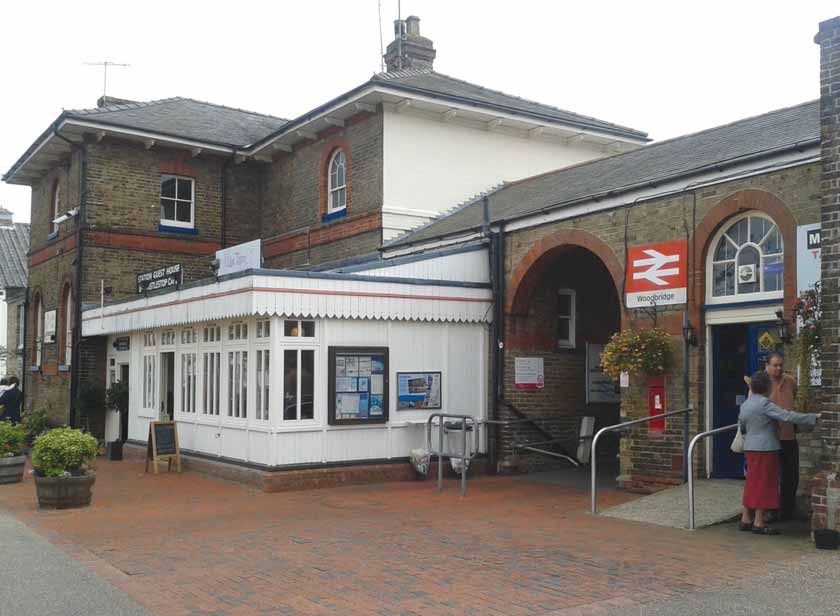
Summary

3    The East Suffolk Line
    A better than hourly service between Lowestoft and Ipswich.
    Improved journey times between Lowestoft and Ipswich with the longer term aim of
    achieving a 60-minute journey time.
    Future electrification of the East Suffolk Line.
    Improved line capacity between Woodbridge and Saxmundham, and Oulton Broad
    and Lowestoft.
    Renaming of Wickham Market Station to Campsea Ashe Station.
    Future aspiration of a direct passenger rail service between Lowestoft and London
    Liverpool Street.
    Improved bus connections at stations.
    High quality rolling stock with more seating capacity.
    Station improvements.

4    The Lowestoft – Norwich Line
    Increased frequency.
    High quality passenger rolling stock with more seating capacity.
    Faster journeys between Lowestoft and Norwich.
    Hourly Sunday frequency. Aspiration for 30-minute frequency.
    Direct rail service between Lowestoft and Great Yarmouth.

5    The Ipswich - Cambridge Line
    High quality rolling stock on all services with more seating capacity.
                                                                                          Suffolk Rail Prospectus

    Faster journeys between Ipswich and Cambridge.
    Future electrification of the line.
    Half-hourly frequency between Ipswich and Cambridge
    Hourly Sunday frequency.

6    The Cambridge – Norwich Line
    Increased frequency.
    Level crossing improvement at Brandon.
    Regular weekday and weekend trains stopping at Lakenheath.
    Norwich – Peterborough service stopping at Brandon.
    High quality rolling stock on all services with more seating capacity.
    A rail-bus link from Mildenhall to connect to trains between Cambridge and Norwich.
                                                                                                 9
Summary

                          7    Moving more Freight to Rail
                              Additional capacity on Felixstowe to Birmingham route.
                              Electrification of the Felixstowe to Peterborough / Birmingham route.
                              More freight trains to travel cross-country.
                              Line speed improvements.
                              Capacity improvement at Ely to support freight and passenger rail growth.
                              Capacity improvements to Felixstowe Branch Line.

                          8    Commitment from Government to
                               extend the East West rail link from
                               Oxford to Cambridge
                              The Government has already approved funding for the western section of the route
                              between Oxford and Bedford. Commitment is now sought for the development of
                              the central section between Cambridge and Bedford stations. This will better
                              connect people in Ipswich and Norwich to Oxford and the West of England.

                          9    Railway Stations and other
                               Infrastructure – Minimum standards
                          Urban Railway Stations – Ipswich, Lowestoft, Bury St. Edmunds
                          and Stowmarket
                          The minimum requirements for these stations should be:
Suffolk Rail Prospectus

                          l Improved security and perception of security, taking opportunities to increase staff
                            presence at these stations.
                          l High quality DDA compliant waiting facilities with additional seating on all
                            platforms.
                          l Refreshment facilities available on all platforms.
                          l Real Time Passenger Information, including bus information.
                          l DDA compliant toilets.
                          l Improved forecourts for pedestrian access.
                          l Additional ticket machines.
                          l More covered and secure cycle parking. Cycle hire.
                          l Improved accessibility to the station and platforms.
                          l Improved bus links and waiting facilities at stations.
                          l Improved signage to town centres.

10
Summary
Market Town Stations
l Part-time staff at some stations.
l Real Time Passenger Information, including bus information.
l High quality DDA compliant waiting facilities with additional seating on all
platforms.
l DDA compliant toilets.
l More cycle parking – covered and secure.
l Ticket machines.
l Tourist information and some commercial retail facilities available.
l Improved accessibility to the station and platforms.
l Improved bus links and waiting facilities at stations.
Rural Stations
l Improved sheltered waiting facilities.
l Adequate cycle parking – covered and secure.
l Additional car parking.
l Tourist information leaflets available.
l Safe accessibility to the station and platforms.
l Improved bus links and waiting facilities at stations.
l Real Time Passenger Information Systems.
10 Public Transport Links to Railway
Stations
A commitment within the franchise to provide virtual railways through the provision
of rail-bus connections from market towns without a railway station including
Haverhill and Mildenhall.
11 Ticket Purchasing Infrastructure and
Suffolk Rail Prospectus
Information
A commitment by the current and future train operating company to improve ticket
machines at some stations; address the cost of fares where discrepancies occur;
and improve the quality of information given to passengers concerning discounted
tickets.
111 Introduction
Major decisions on rail investment are taken nationally by central Government.
In summer 2012, the Government published its infrastructure requirements
(High Level Output Statement) and indicated how much money it wanted to
invest (Statement of Funds Available) for the 2014 – 2019 Network Rail
spending period. £38bn has been allocated for funding rail infrastructure across
the UK during the 2014 - 2019 five year funding period.
In March 2012 the Department for Transport published its rail command paper which sets
The Greater out the direction of government policy on rail for the next 15-20 years. The key points include:
Anglia franchise
is one of only l A move to encourage longer term strategic investment from train operating companies
two profitable (TOCs) and more collaborative working between TOCs and Network Rail.
franchises and l The rail industry as a whole delivering £3.5 billion of efficiency savings by 2019/20
it generates (about 30% of total government funding for the period 2014-19) without reducing the
revenue for coverage of the network.
the Treasury. l Increases in regulated rail fares to be limited to RPI + 1% for 2013 and 2014, with a
longer term objective of ending above-inflation increases in average regulated rail fares.
The command paper indicated the financial challenges faced by Government and the rail
industry. After the collapse of the re-franchising of the West Coast Mainline services, the
DfT commissioned a review (The Brown Review) of the department’s rail franchising
process. The key recommendations of The Brown Review of the Rail Franchising
Programme include:
l an initial 7 or 10 year rail franchise term with further terms of 3 to 5 years subject to
Suffolk Rail Prospectus
agreed franchise criteria being met
l emphasis should be placed on assessing the financial robustness and deliverability of
rail franchise bids
l bids should be scored on their proposals for improving service quality for passengers.
In response to The Brown Review of the Rail Franchising Programme, the Government
established the Rail Executive to manage the franchise process. Work to start the process
for the new East Anglia rail franchise began in early 2014.
The East Anglia region is only one of two net contributor regions to the treasury. Our view is
that investment into the East Anglian rail network to support the local economy (amongst
the most dynamic in the country) will generate substantial wider economic benefits through
growth of local businesses, as well as produce greater financial contributions to UKplc.
122 The East Anglian
Rail Prospectus
A Rail Prospectus was produced in July 2012 by Suffolk, Norfolk, Cambridgeshire and
Essex county councils together with all of the East Anglian MPs, district councils
and Local Enterprise Partnerships. The prospectus was recently updated to reflect
the changes in rail policies and take account of new studies and strategies.
The East Anglia Rail Prospectus contains the high level priorities for the regional rail
network. It identifies the importance of rail to helping the region’s economy grow and
connecting key cities and towns. For Suffolk, the East Anglia Rail Prospectus identifies the
following priorities:
l The introduction of a direct hourly service between Ipswich and Peterborough.
l Shorter journey times on the GEML.
l Better than hourly service between Lowestoft and Ipswich.
l Felixstowe to Birmingham rail line improvements.
l Electrification of line between Ipswich and Cambridge.
l Implementation of the East-West Rail Link.
l New rolling stock.
l Services that are more reliable and punctual.
l Refurbished stations.
l Smartcard ticketing.
l Increased parking capacity and accessibility to platforms at stations.
Suffolk Rail Prospectus
133 The Challenges ahead
for Suffolk and the
Importance of Rail
An improved rail service can help an economy to grow by:
l Improving the density and connectivity between businesses and workers.
l Providing a ‘mobile work space’ allowing workers the space and facilities to be
Our vision is
productive whilst travelling.
for a high
quality fast and l Making it cheaper and easier for a worker to commute to a job in a particular place,
frequent rail thereby increasing the number of potential workers in that area who are prepared to
service between work for a certain wage.
the three
dynamic and l Enabling people to commute to more productive jobs, thereby increasing the amount of
growing Gross Value Added in the economy.
regional centres
l Enabling people who are unemployed to find work in areas of the region they might not
of Ipswich,
have otherwise been able to travel to.
Cambridge
and Norwich. l Helping bring forward the development of residential and employment sites in
settlements containing a railway station.
l Facilitating uplift in house prices in settlements that contain a railway station.
Suffolk’s population is expected to increase significantly within the next 20 years with
Suffolk Rail Prospectus
around 60,000 new homes and a similar number of jobs. Much of this growth is expected to
take place within and around the main urban areas of Ipswich, Lowestoft, and Bury
St.Edmunds and other rail connected towns. Improved local rail services between these
towns and to regional centres such as Cambridge, Colchester, Norwich and Peterborough
will be important to increase the opportunities for business and employment across Suffolk.
Our vision is for a high quality fast and frequent rail service between the three dynamic and
growing regional centres of Ipswich, Cambridge and Norwich.
Improved rail services help relieve the burden on the main trunk roads that run through
Suffolk by enabling commuters and business users to take the train to work instead of
using the congested road network such as the A12 and A14.
Port and Logistics is a key sector of the Suffolk economy and improved facilities for rail
freight between Suffolk's ports, particularly Felixstowe, and its markets in the London and
Midlands area will help relieve traffic congestion caused by heavy goods vehicles on the
14 strategic road network.The Challenges ahead
Table 1: Suffolk’s Key Economic Sectors and How an Improved Rail
Service can Support Them
Sector Districts/Boroughs Rail requirements
Finance & Insurance Ipswich and Bury St. Frequent connections and faster
Edmunds. services to London connecting back
offices to corporate centres.
Food & Farming Food manufacturing is Freight connections to transport grain
mainly prominent in Bury St and food products to ports and rest of
Edmunds, Suffolk Coastal the UK.
and Waveney. However, crop
and livestock farming has a Passenger connections to rural
presence over all districts stations for tourism.
and boroughs.
Information & Ipswich, Suffolk Coastal (in Good passenger connections to
Communication particular Adastral Park – Cambridge, South East and London.
Technology home to BT) and Waveney.
Ports & Logistics Suffolk Coastal (Port of Good freight connections to
Felixstowe), Ipswich and Birmingham and London. Capacity for
Waveney. Businesses more freight cross-country services to
associated with logistics, reduce demand on passenger lines.
such as hauliers, are mostly
located in Mid Suffolk.
Energy Suffolk Coastal and Waveney. Passenger connections to towns
between Ipswich / Norwich and
Lowestoft. Freight access for Sizewell.
Advanced Bury St Edmunds and Freight to move commodities.
Manufacturing Babergh. Frequent passenger services to
transport commuting workforce.
Suffolk Rail Prospectus
Tourism Suffolk Coastal, Babergh, Passenger services linking to rural
Ipswich, Forest Heath, stations. Bus connections linking
Waveney and Bury St stations with tourist attractions and
Edmunds. events. Improved stations providing an
appropriate gateway to Suffolk’s
historic towns
Creative industries Suffolk Coastal, Ipswich and Passenger services linking to rural and
Babergh. urban stations.
Life Sciences & Suffolk Coastal, Forest Heath Frequent passenger services linking to
Biotechnology and St Edmundsbury. Cambridge.
154 Consultation on the
Suffolk Rail Prospectus
This prospectus has been produced following an intense period of stakeholder and
public consultation, culminating in the Suffolk Rail Conference on 26 October 2012.
Since that time, Suffolk County Council held two more rail conferences and has
continued to work with its partners to review and reaffirm the county’s rail
priorities. A passenger survey was undertaken in 2012, which has helped to inform
this prospectus. Despite changes being made to rail policy and the rail industry
since the County Council’s passenger survey in 2012,
responses to the survey are still consistent with rail
passenger priorities identified in Passenger Focus 36% of respondents
research undertaken in 2013. who usually
travelled from
Lowestoft rated
direct train services
to London as a
high priority.
Survey:
Headline Findings 36
PERCENT
Suffolk County Council surveyed passengers at
Ipswich, Lowestoft and Bury St. Edmunds
railway stations and invited response through
the Council’s website. There were 733 replies 33
Suffolk Rail Prospectus
and the results were as follows: PERCENT
33% of respondents
usually travelled
from Ipswich. For
them, London was
by far the most
popular destination.
About half of these
respondents rated
faster services as a
high priority.
16Consultation on the Suffolk Rail Prospectus
Concerning
improvements to
55% of respondents railway stations in
said they used the Suffolk, 58% of the
train for leisure total number of
purposes. For these respondents said
47% of respondents respondents, they need better
said they used the Ipswich is the usual waiting facilities at
train at peak times. journey starting stations. Suffolk
A high number of point and London County Council is
these said they the usual working with the
usually travelled destination. This current train
between Ipswich helps make the case operating company
and London but for improvements to identify station
many people also on the GEML and improvements for
travel to Cambridge, indicates that the Ipswich, Lowestoft
Bury St. Edmunds, commuter market is and Bury St.
Stowmarket and not the only Edmunds railway
Ipswich. important one. stations.
47
PERCENT
55
PERCENT
58
PERCENT
37 38 45
Suffolk Rail Prospectus
PERCENT PERCENT PERCENT
Overall, 37% of Norwich, London Over 45% of
respondents said and Ipswich were respondents overall
they rated more the most popular said they used the
punctual and destination for train once a month
reliable train passengers who or less. A frequent
services as a high said they usually complaint
priority. Of these, travelled from articulated
41% travelled from Lowestoft. 38% of nationally and
Ipswich and this group rated locally is that high
59% travelled to faster train services ticket prices act as a
London. as a high priority. disincentive to use
the train. 175 Suffolk Rail
Conferences
Annual rail conferences hosted by Suffolk County Council have allowed stakeholder
discussions about Suffolk’s rail service and infrastructure priorities. The events
brought together rail industry experts and delegates from Suffolk’s district and
borough councils, neighbouring councils, businesses, Members of Parliament, Rail
Ministers, Government representatives and user groups. Discussions that have
taken place at the rail conferences have identified the following:
l Planned improvements at Ely Junction must benefit services for passengers and freight
from Suffolk, as well as improving services from Norfolk to Cambridgeshire.
Government need to commit to delivering all promised infrastructure improvements at
The Rail Minister, Ely (in particular double tracking Ely to Soham) within the 2014 to 2019 period.
Claire Perry MP (centre), l Businesses should be more involved in local rail partnerships, both as lobbyists for
Suffolk Members of improvements to local services, and as tenants of commercial property in or close to
Parliament (far right) stations to help make them into local community and/or travel information hubs.
and the Chairman of the
l A rail-bus service could connect people in towns without a rail station to the rail
New Anglia Local
Enterprise Partnership network (e.g. Haverhill and Mildenhall).
(far left) were some of l Bus and rail operators should work together to take advantage of existing and
the many speakers that imminent technological improvements (e.g. real-time information and on-board
delivered presentations scanning devices on buses) so as to provide a multi-operator, multi-modal solution.
at the 2014 Suffolk Rail l There needs to be extra rolling stock and a minimum of an hourly service on local lines,
Conference hosted by
and a longer term consideration given to building a railway station at Leiston as a
Suffolk County Council
and chaired by legacy from the development of a proposed new power station at Sizewell.
Councillor Graham l Network Rail is examining the case for improved infrastructure in light of upcoming work
Newman. at Sizewell. This must include double-tracking between Woodbridge and Saxmundham.6 Rail Improvements
for Suffolk
This section of the prospectus considers each rail route serving Suffolk’s towns
and businesses and identifies the improvements that we need to see. It also
sets out minimum standards for stations that should be provided by
Government and the rail industry.
The Great Eastern Mainline (GEML)
The GEML is the intercity route connecting Norfolk, Suffolk and Essex with London Liverpool
Street. It is well used by passengers travelling for business purposes. The urban areas of
Norwich, Ipswich, Colchester and Chelmsford all contain companies in the financial services
sector that have their headquarters in the city of London and back office functions in these
4 towns. All of these towns are expected to see an increase in employment of 10-15% by
2028. This is without taking into account the employment growth that will
occur in London over the same period, which residents in East Anglia might
benefit from. A recent study has shown that £476m investment in improving Norwich
infrastructure on the GEML, outlined below, would result in up to £4.5bn
return in conventional and wider economic benefits for the East of England,
Diss
and more than £75bn in GVA. The study was overseen by the Great Eastern
Mainline Taskforce, established by the Chancellor of the Exchequer, and was
submitted in 2014 to the Secretary of State for Transport. The package of Stowmarket
improvements proposed for the Great Eastern Mainline will support the
provision of 184,000 homes and 205,000 new jobs (including 10,000 jobs in
Ipswich) in the East Anglia region.
Suffolk Rail Prospectus
Ipswich
What the Problems are Sudbury
Manningtree
and what needs to be done Colchester
Bures Marks Tey
The challenges affecting passenger services on the
GEML are laid out in the Great Eastern Mainline Chappel and
Wakes Colne
Taskforce Business Case. The issues identified echo Witham
the concerns of Suffolk passengers, which were
Chelmsford
recorded by the September 2012 passenger survey
conducted by SCC. Passenger concerns focus on the Shenfield
need to upgrade old rolling stock, provide more track
Stratford
capacity to improve line speeds and service frequency, and
that rolling stock and infrastructure provides a more
punctual and resilient service.
19
London Liverpool Street
(Great Eastern Mainline)Rail Improvements for Suffolk
In the survey SCC conducted in September 2012, 63% of passengers that used the GEML to
commute to work rated faster journey times as a high priority.
Rail passengers A study commissioned by the county councils of Suffolk, Norfolk and Essex, undertaken by
told us that Atkins Consultants, shows that rolling stock is capable of doing speeds of up to 110 mph on
punctual and the GEML. However, it is prevented by inappropriate infrastructure. Sixteen automatic half-
reliable services barrier level crossings need upgrading; train warning protection systems need to be
were priorities adjusted; and low-bridge train clearance issues need rectifying at the 114 bridges on the
for them. line. Network Rail is replacing the overhead electrical lines between London Liverpool Street
and Chelmsford within Control Period 5. However, this will not result in dramatic
improvements in line speed due to the sheer number of trains that use the Chelmsford –
London stretch of track.
The GEML operates with some of the lowest subsidies in the UK - Greater Anglia is the
second least subsidised service in the country, receiving only 1.5 pence per passenger mile,
against a national average of 12.5 pence per passenger mile. Alongside this, the GEML has
some of the oldest carriages (average age is 25 years) and is one of the slowest main lines
in the UK.
Fifty-eight per cent of peak-time passengers told us that punctual and reliable services
were priorities for them. The current public performance measure for Greater Anglia inter-
city services highlights the relative poor performance with only 84% of trains arriving at their
final destination within ten minutes of the advertised time against a target of 93%. This
reflects the issues associated with operating older carriages and infrastructure which is in
need of investment.
The line between Shenfield and Norwich is double-tracked and contains a high number of
short loops. This results in lack of flexibility in timetabling and limits the ability of the train
operating company and/or Network Rail to act quickly in the event of a train breaking down.
Suffolk County Council believes that the installation of additional tracking between
Colchester and Shenfield would help solve this problem and would help speed up journey
times by allowing faster intercity trains to pass slower local ones more easily. The
commercial and strategic benefits of this work means that this would represent very good
value for money. We want to see funding committed to the development of the scheme in
the period 2014 -19 with implementation to follow soon afterwards. The development of
Suffolk Rail Prospectus
the new Beaulieu Park Station, north of Chelmsford, will help to alleviate passenger
congestion at Chelmsford Station, as well as provide passing opportunities for faster trains
to overtake slower passenger and freight trains. The new station has been granted planning
permission; however, the scheme still needs additional track capacity which is not yet
agreed and requires additional funding.
Forty percent of GEML passengers told us that more seating capacity, particularly at peak
times, is required. It is estimated that there will be a shortfall of 3,000 seats at peak times
by 2031 if no action is taken to increase seating capacity. The remodelling of Bow Junction
to use the capacity released by Crossrail would allow 28 trains per hour out of Liverpool
Street Station. Although the remodelling of Bow Junction has secured development funding
within the 2014 -2019 funding period, we will continue to work with partners to ensure that
further funding for this project is allocated so that it can be delivered by the time Crossrail
opens in 2019. This will also help improve capacity on West-Anglia services travelling from
London Liverpool Street to Cambridge via Stratford.
20Rail Improvements for Suffolk
Although Crossrail will provide many opportunities for Suffolk, such as direct connections
via Stratford with London Heathrow Airport, Thames Valley towns and London’s West End,
it will also present many challenges. Crossrail trains will be required to use the line between
Shenfield and Bow Junction, meaning that rail services from Suffolk will be required to share
the already congested double tracked line with other passenger rail services. This issue
must be resolved to ensure that Crossrail services are not prioritised to the detriment of
Suffolk passengers.
Fifty percent of GEML passengers told us they would like to see improved train carriages. The
intercity services currently used on the GEML are Class 90 electric locomotives dating back to
1987/90. Passenger carriages consist of the Mark 3 units, which date back to the 1980s.
These have manual doors and are fitted with toilets that are not DDA-compliant. This creates
problems for people getting on or off the train who are disabled, or for those that have heavy
luggage, or are travelling with small children. All trains are required to be DDA compliant after
2019; trains that do not meet this standard must be modified or replaced.
Total InterCity revenue growth between London Liverpool Street and Norwich has averaged
4.6% over the seven years to 2013. This is significantly below average UK InterCity sector
revenue growth of 5.3% over the same period.
21Rail Improvements for Suffolk
Suffolk County Council is supportive of the GEML Taskforce’s campaign to see new and
improved rolling stock; faster line speeds; and half-hourly passenger rail service frequencies
between Norfolk, Suffolk, Essex and London. A list of analysed recommendations for
achieving the Taskforce’s vision is set out in the GEML Taskforce Business Case. New trains
Journey time
will be essential to achieving faster journey times, making Suffolk more accessible and
improvements on
competitive. The financial benefit of journey time savings alone are estimated at £8.9m
the GEML are are
annually, making the investment in rolling stock and infrastructure very high value for
estimated at
money. New and improved trains should be made available early in the next franchise. This
delivering annual
would enable faster line speeds and would significantly improve passenger comfort.
financial benefits
of £8.9m. The County Council also agrees with the recommendation in the GEML Taskforce Business Case
that improving track capacity and electrifying the Felixstowe to Birmingham line is a priority for
supporting additional freight growth from Suffolk’s ports and reducing the need for further
freight demand on the GEML.
Suffolk Rail Prospectus
Network Rail should also investigate the availability of passenger capacity and facilities at
Stratford, as the station becomes a major interchange between Crossrail, the Great Eastern
Mainline and other rail routes. Such investigation would also ensure that capacity is
available for international services. This would offer improved connectivity between Suffolk
and the rest of Europe. A later train from London Liverpool Street to Ipswich (than the
current 22:30 departure) would enable passengers to take advantage of Stratford as an
international interchange, as well as enjoy the London evening economy.
Suffolk County Council has been working in collaboration with Ipswich Borough Council to
support the current franchise holder and part fund its £1.9m project to renovate Ipswich
Station. The project includes redevelopment of Ipswich station and the station forecourt to
improve passenger facilities and make the station safer and more accessible.
Stowmarket Rail Station requires better DDA access between platforms. A steep stepped
bridge provides access between the two platforms, meaning that cyclists, disabled people,
22 and passengers with pushchairs or heavy luggage must walk along the main road to access
the other platform.Rail Improvements for Suffolk
The Sudbury Branch Line
Sudbury station provides a key role connecting residents with Essex and London via a
platform change at Marks Tey. Passenger footfall shows that 329,000 passengers used the
stations between 2013 – 2014 (a growth of 50% over 16 years).
Sudbury is a growth location, and will be experiencing high levels of housing and jobs over
the next 20 years. This includes the Chilton Woods development, expected to be one of the
largest housing schemes in Suffolk, which will deliver 1,250 homes alongside employment
(2,500 jobs). Sudbury also plays a significant role in Suffolk’s tourism sector.
Connecting rail services at Marks Tey can be unreliable, leaving passengers stranded if A direct
connecting trains are cancelled. Marks Tey station is in desperate need of a new or service between
improved footbridge with lifts or an underpass to enable disabled passengers, cyclists and Sudbury and
those travelling with small children or heavy bags to cross between platforms to catch London would
connecting trains to Sudbury. open the town
to further
A direct service between Sudbury and London would open the town to further investment, as
investment,
well as encourage more visitors to come to Sudbury’s historic villages and town. An aspiration
as well as
is for electrification of the Sudbury branch line to be included in CP6. A direct service to London
encourage
should be considered as soon as capacity becomes available on the Great Eastern Mainline.
more visitors
GEML Key priorities
l A commitment to provide new and improved trains early in the new franchise.
l Government committed funding for the re-modelling of Bow Junction to be
delivered within the CP5 period to make use of the capacity released by
Crossrail. Additional track capacity will be needed between Colchester and
Shenfield to improve reliability and reduce journey times. Our aspiration is to
have a service that can have average journey times from Norwich to London in
90 minutes and Ipswich to London in 60 minutes.
l Capacity improvements and electrification of the Felixstowe – Birmingham
Suffolk Rail Prospectus
freight route to help reduce freight use of GEML.
l Future provision of a direct service between Sudbury and London.
l Electrification of the Sudbury branch line in CP6.
l Lifts installed at Marks Tey Station.
l A review to be undertaken by Network Rail into signalling infrastructure, power
supply, and platform clearance issues all along the GEML, with a view to
improving line speeds.
l Half-hourly passenger service frequency, consistent service 7 days a week with
minimum need for Sunday bus replacement.
l Improved waiting facilities, toilets, ticketing foyer and redevelopment of the
station forecourt at Ipswich Station. Improvements should also be made at
Stowmarket Station to make platform crossing more DDA compliant and
improve bus waiting facilities and the forecourt.
l A more reliable and punctual passenger rail service.
23Rail Improvements for Suffolk
The Ipswich – Peterborough Line
Whittlesea Ely
This line provides access to Bury St. Edmunds
Peterborough
Peterborough on a current March
two-hour frequency. It has
Stowmarket
connections at Ely to Cambridge and Stansted
Airport, and at Peterborough to the East Coast Mainline
(linking Suffolk to the Midlands, the North East, North
West and Scotland). The route is also a strategic freight
route for goods being transported between Felixstowe, Ipswich
the East Coast Mainline and the West Coast Mainline at
Birmingham. Both passenger and freight services travel through Ely.
Work to improve capacity at Ely North Junction is scheduled for delivery in May 2017. Plans
to provide additional track capacity between Soham and Ely is also included in the CP5
period, however no fixed dates have been committed. In addition to this, further capacity
improvements are required at Ely if it is to support more passenger and freight services. It is
vital that this work is comprehensive; delivered within Control Period 5 and makes possible
all of the required improvements for passenger and freight movements from Suffolk.
The route shares a corridor with the A14 trunk road through Suffolk. Increasing the use of
the line for passengers and freight will help to reduce traffic growth on the congested A14.
The economic significance of the line
In its economic assessment of 2011, Cambridgeshire County Council concluded that,
although it has a resilient economy, and that Cambridge city is a centre for skilled
employment, there are disparities in skills and earnings between the north and south of the
county which are exacerbated by transport links. A study commissioned by Suffolk, Norfolk
24Rail Improvements for Suffolk
and Cambridgeshire county councils concluded that improvements to the rail services for
passengers and freight passing through Ely would generate some £220 million in wider
economic benefits in addition to rail revenue. Some of this would be generated by the
creation of additional jobs in Peterborough, Bury St. Edmunds, Stowmarket and Ipswich.
Spatial inequalities between different parts of these localities would be reduced. The study
also forecasts that the rail improvements would help bring forward the construction of new
housing and increase the value of housing in settlements along this line. For Suffolk, the
passenger service provides a critical link between the county’s towns. Ipswich, Stowmarket
... improvements
and Bury St Edmunds are areas that will be experiencing high levels of economic and
to the rail
housing growth. Good transport links to and between the towns will support the growing
services for
economies and attract investors.
passengers and
freight passing
through Ely
What are the problems and what needs to be done? would generate
some £220
Of the respondents who travelled to Peterborough from stations within Suffolk, 50% said
million in wider
they would like more frequent services to Peterborough and more available seating. The
economic
Ipswich to Peterborough service is the only service in the region to run at such a poor
benefits in
frequency. This is unacceptable and we want a commitment from Government to provide a
addition to rail
direct hourly service as early as possible. This will provide a step change in the economic
revenue.
opportunities for communities and businesses along the line, and add to the attractiveness
of this service to business users an leisure users alike.
The HLOS also commits to improving the rolling stock, capacity and speed of the East Coast
Mainline Service. The remodelling of Peterborough station has created more capacity, and
an opportunity for increased frequencies between Ipswich and Peterborough, and from
Suffolk to the Midlands and the North. It is important that more and higher quality rolling
stock is procured for the Ipswich to Peterborough service when it becomes available. The
Rail Executive’s consultation on the new East Anglia rail franchise, sets out options which
could potentially limit the current two hourly service to Ely, with changes for onward
journeys to Peterborough. This would be completely unacceptable. A direct service
between Ipswich and Peterborough is required to support population growth and the
expanding economy. Proposals within the Anglia Route Study for the Ipswich to
Peterborough rail service also includes an option for the service to split and join at Ely.
This raises concerns about how the service will operate if connecting services are late or
Suffolk Rail Prospectus
cancelled, and, ultimately, the impact this will have on passengers and the future travel
choices they will make.
Key priorities
l Hourly direct service between Ipswich and Peterborough from the start of the
new franchise.
l High quality rolling stock (air conditioning, automatic doors, Wi-Fi, and power
sockets) with more seating capacity.
l Electrification of the line between Ipswich and Birmingham to speed up services
and improve reliability.
l Capacity improvements between Ely and Soham within CP5.
l Capacity improvements to Ely junctions to support Suffolk’s aims.
25Rail Improvements for Suffolk
Freight
This line is critically important for the Port of Felixstowe – it is the link to the port’s markets
in the North, Midlands and North West. We want to see a commitment to electrify the route
between Felixstowe and Peterborough / Birmingham as early as possible to accommodate
the ambitions of rail passengers and get more freight on to rail.
The Port of Felixstowe is the largest container port in the UK. In 2014, it handled in excess of
4 million TEU (twenty foot equivalent units). It is also the country’s largest intermodal rail
Suffolk Rail Prospectus
freight terminal. 41% of the UK container rail freight is transported from the Port of
Felixstowe.
Over 30,000 people in Suffolk rely on Ports and transport for their livelihoods. The Port of
Felixstowe is a key driver of economic growth and vital to the Suffolk, East Anglian and UK
economy. Rail connectivity is a fundamental element in ensuring the Port’s continued
success. Investment in the Strategic Freight Network is welcomed, in particular continued
investment in the strategically important Felixstowe to Birmingham route (to include
additional capacity works between Felixstowe and Peterborough and early electrification).
We are pleased that the Government is supporting the improvement of the line between
Felixstowe and Birmingham through the Strategic Freight Network Fund. This has previously
helped to fund the development of the Ipswich Northern Chord and re-signalling at Kennett.
However, other short term improvements are desperately needed. They include capacity
improvements to the east of Ely and improvements at Bury St. Edmunds. The opportunity to
26 move the freight sidings out of the town centre should also be considered to reduce HGV
impacts in the town. Serious concerns have arisen for Felixstowe to Birmingham projects notRail Improvements for Suffolk
just in Suffolk but in other counties, such as Leicestershire – which forms part of the
Strategic Freight Network. Work at Leicester, which is being developed as part of the Midland
Mainline electrification programme, cannot be completed within CP5. Although ‘stop gap’
solutions are being sought, the full outputs for freight will not be delivered until CP6.
We also understand that work at Ely is slipping into CP6, and there are significant costs to
upgrade level crossings which are presently entirely unfunded. It is unclear whether any
enhanced capacity can be delivered without the full scheme in place. There are also
concerns over the plans for the necessary re-signalling between Peterborough and
Helpston, which is deferred pending European Rail Traffic Management System (ERTMS)
fitment. And finally, there is little or no progress on the future development plans for
electrification of the route. Such infrastructure is critical to support growth at the Port of
Felixstowe, which will increase the number of freight trains to 48 trains per day by 2019, and
60 trains per day by 2024.
The Port of
The intention to increase freight trains from Felixstowe will deliver £49 million to the county Felixstowe
and the expansion of the port will deliver £44 million to the local economy. Significant is also the
enhancement of the Felixstowe to Birmingham freight route is essential. country’s largest
intermodal rail
The rail network around Ely junction is an important constraint to our aspirations for freight terminal.
additional freight capacity and for enhanced passenger services. An improvement scheme is 41% of the UK
included in the Government’s HLOS for the 2014 - 2019 period. It is important that the container rail
improvement is comprehensive and allows for growth of both freight and passenger freight is
services through the area and along the Felixstowe to Birmingham route. transported
Proposals for capacity improvements to the Felixstowe branch line are being considered by from the port.
Network Rail. It is important that these improvements are sufficient to support planned
freight growth and to support better and more reliable passenger services.
At the same time it should be recognised that given forecast demand and the need to access
electrified routes, existing freight paths on the Great Eastern Mainline will need to be retained.
For the most part, passenger and freight services share the same lines, so increasing
frequencies for passenger services has to be balanced with increasing frequencies for
freight, unless further capacity is provided. In particular the line between Felixstowe and
Ipswich is single-tracked, which causes capacity issues for the hourly passenger service.
Suffolk Rail Prospectus
Electrification of the line to Peterborough would provide a short-term solution to capacity
issues, as well as provide economic benefits.
Key priorities
l Significant capacity improvements on the Felixstowe branch line.
l Ely infrastructure improvements.
l Additional capacity on Felixstowe to Peterborough.
l Electrification of the Felixstowe to Peterborough line to support freight growth.
l Line speed improvements.
l Upgrades at Leicester and between Peterborough and Helpston to be delivered
within CP5.
27Rail Improvements for Suffolk
Oulton
The East Suffolk Line Brampton
Broad
South
Lowestoft
Halesworth
Beccles
The East Suffolk Line runs between Lowestoft Saxmundham
Darsham
and Ipswich. A passenger service currently Melton
Wickham
Woodbridge Market
operates hourly, and connects 10 Suffolk
stations. Westerfield
Felixstowe
Derby Trimley
In December 2012, the service frequency Road
Ipswich
increased from two hourly to hourly. This step
change in the level of service presents a
unique opportunity to develop the economic potential
of the railway to serve tourism and other businesses in East Suffolk. Working with the
Community Rail Partnership, local communities and bus operators, we will promote the use
of rail, work towards improving bus/rail connectivity and encourage more commercial use of
station buildings.
Our aim is now
to ensure that The line has seen much increased usage, with passenger numbers at
the additional Woodbridge up 52% to over 200,000 over the past four years, and at
frequency is Oulton Broad South a 101% increase in numbers to nearly 43,000
supported by over the same period.
improvements to
the journey time Our aim is now to ensure that the additional frequency is supported by improvements to
between Ipswich the journey time between Ipswich and Lowestoft with a long term target of a 60-minute
and Lowestoft journey. Meeting that objective will require significant improvements to track infrastructure
and rolling stock, and the modernisation of the level crossings along the route. We will work
with Network Rail and the franchise operator to ensure that the necessary improvements
are made, without local resident’s access to routes being compromised.
The Felixstowe branch line connects at Westerfield and provides an hourly passenger
service between Felixstowe and Ipswich. The line is part of the key national rail freight route
from the Port of Felixstowe to the East Coast and West Coast mainlines.
Suffolk Rail Prospectus
The economic significance of the line
Ipswich to Lowestoft
The line between Ipswich and Lowestoft contains a number of stations that are within walking
distance from residential areas and centres of employment. A study commissioned by the
Council in 2006 found that the residential population of the Oulton Broad – Lowestoft rail
corridor is expected to increase by 6.2% and the number of jobs by 5.2%. We anticipate that
Lowestoft will become a key centre for energy-related employment, and a centre for education
and training linked to the energy industry in the future. Good rail connections to and from
Lowestoft will help to ensure that the town can make the most of its economic opportunities.
The residential population of the Woodbridge – Melton corridor is expected to increase by
14% by 2021 and the number of jobs by 9% so it is likely that commuting pressures will
increase. The improved connectivity offered by the increase in frequency will help to reduce
traffic growth on the A12.
28Rail Improvements for Suffolk
Rail services can also help alleviate deprivation by helping to widen access to more highly
paid, productive jobs for residents of a certain area. For example, in 2011, full-time
equivalent median annual earnings in the Suffolk Coastal district were nearly £3,500 more
than in the Waveney district. Waveney residents can only benefit from the opportunities
improved rail services will give them to commute to take up better paid jobs.
The line also plays a key role in assisting Suffolk’s tourism industry. Lowestoft Station is
within fairly easy walking distance of the sea-front with its wide range of accommodation
and leisure. The line also has a number of stations that act as important public transport
interchanges for tourist destinations. For example, trains stop at Halesworth to enable
tourists to catch a bus to Southwold. Woodbridge and Saxmundham operate as public
transport interchanges where tourists can catch bus services to Aldeburgh and Thorpeness.
The increase in frequency gives the opportunity to also improve connecting bus services so
that the overall public transport offer for passengers to the coastal resorts can be made far
more attractive.
Fifty-four per
What are the problems and what needs to be done? cent of people in
Fifty-four per cent of people in Suffolk County Council’s survey who said they used this line Suffolk County
said they wanted more frequent services. The £4 million Beccles Loop (partly funded by Council’s survey
Suffolk County Council) provides a passing track for trains between Halesworth and Oulton who said they
Broad. The installation of the track has enabled the two-hourly frequency to be changed to used this line said
hourly. Suffolk County Council aims to use this step-change in service provision in order to they wanted
achieve additional growth in the passenger market and ensure that rail travel is given more more frequent
prominence as a means of people travelling for leisure and tourism to Suffolk. services.
Double tracking between Woodbridge and Saxmundham will be required for the movement
of construction materials to the proposed new nuclear power station at Sizewell and this
will also help to improve journey times. Wickham Market Station is located in Campsea
Ashe, two-miles away from Wickham Market. The route between the two villages consists
of narrow roads, without adequate footpaths, and no taxis or buses are located within close
proximity to the station. The station name causes confusion amongst passengers who
want to get to Wickham Market, only to discover their mistake when they arrive at the
station in Campsea Ashe. Suffolk County Council expects the station to be renamed to
Suffolk Rail Prospectus
29
The £4m Beccles Loop opened in December 2012You can also read


