Sustainable Forestry Practices for Landowners - International ...
←
→
Page content transcription
If your browser does not render page correctly, please read the page content below
Sustainable Forestry Practices for Landowners
Table of Contents
03   Doing what’s right
03   Programme for the Endorsement of Forest Certification (PEFC)
03   The Sustainable Forestry Initiative® (SFI)
05   Forest Stewardship Council® (FSC® )
05   American Tree Farm System®
05   Certification program principles and standards

09   Giving you the support to succeed
09   Some of the basic features of your plan

11   Let the pros do it
11   Some of the expertise you should expect in a trained or certified logging
     professional

13   Planning for the future
13   Reforestation and afforestation
15   Some methods to consider for your reforestation goals

15   Best Management Practices
17   Find out more about Best Management Practices in your state

17   Forest biomass utilization

19   Invasive exotic plants and animals
19   Control measures

21   Enhancing wildlife habitats
23   Keys to making this happen
23   Assistance you may expect from natural resource professionals
23   Where can you go to find assistance from a natural resource professional?
23   Threatened and endangered species
25   Maintaining biological diversity

25   Forests with Exceptional Conservation Value
25   What are Forests with Exceptional Conservation Value (FECV)?
25   How do you know if you have rare species inhabiting your land?
27   What do you have to do if you have rare species inhabiting your land?
27   Definitions
27   Characteristics of special sites

29   Appearance is important
29   Considerations in visual quality management

31   Climate change and carbon sequestration
31   Forests play a role in sequestering carbon

31   Why sustainable forestry?
33   Leading by example

34   Natural Heritage Program contacts

                      Sustainable Forestry Practices for Landowners       01
02 Sustainable Forestry Practices for Landowners
Doing what’s right
Your forestland provides you with many benefits. It may supply income for your
family today or for your retirement tomorrow. Responsibly managed forests
reduce greenhouse gases, provide wildlife habitat, clean water, aesthetic
benefits and recreation opportunities. Your forestland also helps provide your
community and our nation with the forest products needed for a growing
economy. Together, these points capture the essence of sustainable forest
management – managing and conserving our forest resources to meet the
needs of society today without compromising the needs of tomorrow.

As one of more than 10 million family forest landowners in the United States,
who own about 50 percent of the nation’s timberland, your management
decisions have an important impact on the forests of tomorrow. Putting
sustainable forestry into practice on your land will help protect your investment
while conserving its valuable resources. There are several credible forest
certification programs available to landowners that can assist you in meeting
your management objectives and the recommendations in this booklet. Four
of these are discussed below and additional information on each program is
available on their websites.
   Programme for the Endorsement of Forest Certification (PEFC) – www.pefc.org
   Sustainable Forestry Initiative ® (SFI) – sfiprogram.org
   Forest Stewardship Council ® (FSC® ) – us.fsc.org
   American Tree Farm System® (ATFS) – treefarmsystem.org

The Programme for the Endorsement of
Forest Certification (PEFC)
Founded in 1999, PEFC is an independent non-profit global umbrella
organization. PEFC promotes sustainable forest management through
independent third-party certification. It assesses and endorses national land
management standards that align with its principles. In the United States, both
SFI® and ATFS discussed below are endorsed by PEFC.

The Sustainable Forestry Initiative (SFI)
The Sustainable Forestry Initiative, Inc founded in 1994, is an independent
non-profit organization dedicated to promoting sustainable forest management
in the United States and Canada. The SFI program was developed to safeguard
our forests through land stewardship in such a manner that they would meet
the needs of our society today without compromising the ability of future
generations to meet their own needs.
SFI guides the forest management of the majority of industrial forestland in the
United States as well as some privately and publically held lands. SFI Program
Participants demonstrate their SFI commitment by improving forestry practices
on their forestland and by promoting sustainable forestry practices with private
forest landowners, foresters and loggers.

                        Sustainable Forestry Practices for Landowners        03
04 Sustainable Forestry Practices for Landowners
The Forest Stewardship Council (FSC)
The Forest Stewardship Council founded in 1994, is a global non-profit
organization dedicated to the promotion of responsible forest management
on industrial, private and public forestland. The FSC mission is to promote
environmentally sound, socially beneficial and economically prosperous
management of the world’s forests. The program’s vision is to meet current
needs for forest products without compromising the health of the world’s
forests for future generations.

The American Tree Farm System (ATFS)
An organization that can make all the difference in your success as a responsible
landowner is the American Tree Farm System (ATFS). ATFS was created in 1941
to promote the growing of renewable forest resources on private lands, while
protecting environmental benefits and increasing public understanding of the
benefits of productive forestry.
The American Tree Farm System has over 70,000 family forest owners totaling
more than 20 million acres of non-industrial private forestland certified in
the program in 46 states. Since 1941, the American Tree Farm System has
recognized landowners for their commitment to sustainable forest management.
One of the program’s main features is providing information, education and
assistance to family forest landowners regarding forest management practices
that will sustain or enhance forest productivity, wildlife habitat, water quality
and outdoor recreation. Participating landowners, foresters and government
representatives can help you find the assistance you need to accomplish your
land management goals, develop and implement a land management plan and
certify your land as a Tree Farm.
When becoming a member of the American Tree Farm System, you must
show that you follow BMPs when harvesting, take measures to provide wildlife
habitat and protect biodiversity whenever possible. You reap not only the
rewards of good management, but also the benefits of belonging to a strong
and knowledgeable group that’s committed to protecting the environment.
Another consideration is a growing preference among forest product customers
for certified wood.
As a program endorsed by PEFC, the American Tree Farm System has a mutual
recognition agreement with the SFI program, which will promote and expand
the practice of sustainable forest management on small and large ownerships.
Under this agreement, as an American Tree Farm System member, you will
have the potential for greater access to certified wood markets both in the
United States and abroad.

Certification Program Principles and Standards
Each of the certification programs discussed above is based on principles and
standards. Although there are differences among them, they cover all or most of
the following components:

                       Sustainable Forestry Practices for Landowners       05
06 Sustainable Forestry Practices for Landowners
1. Sustainable Forestry
   To practice sustainable forestry to meet the needs of the present without
   compromising the ability of future generations to meet their own needs
   by practicing a land stewardship ethic that integrates reforestation and the
   managing, growing, nurturing and harvesting of trees for useful products
   and ecosystem services such as the conservation of soil, air and water
   quality, carbon, biological diversity, wildlife and aquatic habitats, recreation
   and aesthetics.

2. Forest Productivity and Health
   To provide for regeneration after harvest and maintain the productive
   capacity of the forest land base, and to protect and maintain long-term
   forest and soil productivity. In addition, to protect forests from economically
   or environmentally undesirable levels of wildfire, pests, diseases, invasive
   exotic plants and animals, and other damaging agents and thus maintain and
   improve long-term forest health and productivity.

3. Protection of Water Resources
   To protect water bodies and riparian areas, and to conform with forestry
   Best Management Practices to protect water quality.

4. Protection of Biological Diversity
   To manage forests in ways that protect and promote biological diversity,
   including animal and plant species, wildlife habitats, and ecological or natural
   community types.

5. Aesthetics and Recreation
   To manage the visual impacts of forest operations, and to provide
   recreational opportunities for the public.

6. Protection of Special Sites
   To manage lands that are ecologically, geologically or culturally important in
   a manner that takes into account their unique qualities.

7. Responsible Fiber Sourcing Practices in North America
   To use and promote among other forest landowners sustainable forestry
   practices that are both scientifically credible and economically,
   environmentally and socially responsible.

8. Legal Compliance
   To comply with applicable federal, provincial, state, and local forestry and
   related environmental laws, statutes, and regulations.

9. Research
   To support advances in sustainable forest management through forestry
   research, science and technology.

10. Training and Education
    To improve the practice of sustainable forestry through training and
    education programs.

                        Sustainable Forestry Practices for Landowners        07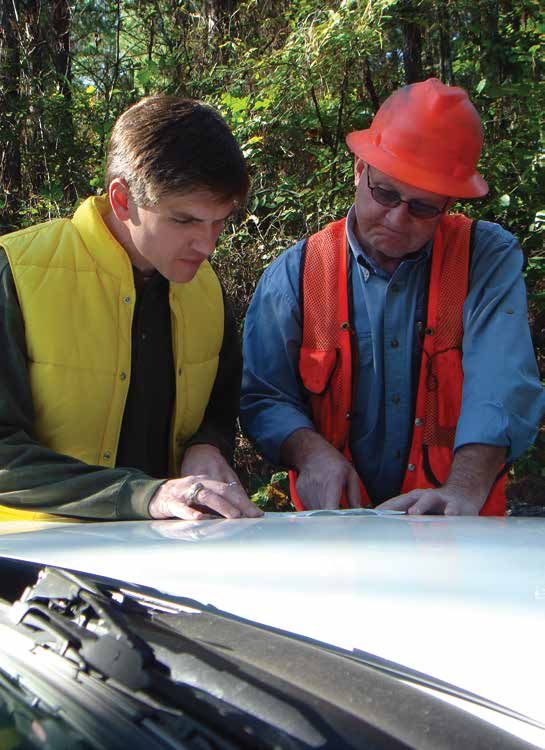
08 Sustainable Forestry Practices for Landowners
11. Community Involvement and Social Responsibility
    To broaden the practice of sustainable forestry on all lands through
    community involvement, socially responsible practices, and through
    recognition and respect of indigenous peoples’ rights and traditional
    forest-related knowledge.
12. Transparency
    To broaden the understanding of forest certification to the SFI standards by
    documenting certification audits and making the findings publicly available.
13. Continual Improvement
    To continually improve the practice of forest management, and to monitor,
    measure and report performance in achieving the commitment to
    sustainable forestry.
14. Avoidance of Controversial Sources including Illegal Logging in
    Offshore Fiber Sourcing
    To avoid wood fiber from illegally logged forests and to avoid sourcing fiber
    from countries without effective social laws.

 Giving you the support to succeed
State forestry and wildlife conservation agencies, your state forestry
association and programs like the ATFS, FSC and SFI will assist you in getting
professional assistance for developing an effective forest management plan. To
realize your land stewardship goals, your plan should be based on sustainable
forestry principles.

Some of the basic features of your plan:
1. Identify your specific goals and objectives. Do you want to manage your
   forestland primarily for timber? Wildlife? Recreation? There are many more
   possibilities. Once you decide what is most important to you, it is then
   possible to develop a plan targeting your personal goals for your land.
2. Take inventory of forest resources and property. Determine exactly what you
   have to manage by identifying your land’s features: timber types, wildlife
   habitat types, streams and special sites.
3. Evaluate your objectives and decide on alternatives. Begin by listing your
   objectives along with their benefits, the cost to implement them and how
   they will affect future decisions. This is an important step in preparing your
   final forest management plan.
4. Make your plan. Put it in writing: what your goals are for the land, the
   timetable to meet those goals, a list of forest management activities
   and their itemized expenses. Input and advice from a professional forester at
   this stage in the development of your plan will help assure that your goals
   are successfully achieved.

                        Sustainable Forestry Practices for Landowners        09
10 Sustainable Forestry Practices for Landowners
5. Make plans for the reduction of wildfire risk on your forestland. Typically the
   state forestry office is the agency responsible for the detection, suppression
   and prevention of wildfires, but there are steps landowners can include in
   their plans such as:
 • Determining the risk to your forestland by using tools found at
		www.southernwildfirerisk.com.
    • Using gates, etc. to control access to your property.
  • If you do not live on or visit your property regularly, know your neighbors,
		 your forester or hunt club members that can notify you of anything out of
		 the ordinary.
  • Installing firebreaks to help protect your property from wildfires and to
		 halt the spread of wildfires.
  • Scheduling prescribed burns to reduce hazardous fuels. Check with your
		 forester or the state forestry office before conducting a prescribed burn.
  • Along roadways and property entrances where arson fires may be an
		 issue, work to reduce hazardous fuels.

6. Implement your plan. Now is when you put theory into action. Most
   plans will need some modification when implemented. Using a forestry
   professional or state forestry representative to assist you with
   implementation may be beneficial in helping you meet your objectives
   effectively and efficiently.

 Let the pros do it
Professional foresters and loggers are trained to handle a complex and wide
range of situations safely, economically and conscientiously. When it comes
time to harvest, using the services of professional foresters and qualified
logging professionals will go a long way toward successfully applying the
principles of sustainable forest management to your lands.

Some of the expertise you should expect in a trained or
certified logging professional:
•   Knowledge and experience in applying forestry Best Management
    Practices (BMPs)

•   Knowledge and compliance with federal, state and local laws regarding
    timber harvesting

In addition, loggers must be up-to-date on technology and safety measures,
understand and implement the variety of regulations designed to protect natural
resources and be able to manage people effectively. In short, a professional
logger needs to be a good business-person and a good steward of the land.

                        Sustainable Forestry Practices for Landowners        11
12 Sustainable Forestry Practices for Landowners
Most states offer training programs for loggers and some states have a certified
logger program. A typical program covers a variety of skills and safety training, as
well as Best Management Practices, Occupational Safety and Health Administration
regulations, forest renewal or regeneration practices, first aid and business
management. A certified logger program requires a third-party on-site audit.

Call your state forestry agency, state forestry association or county extension
agent and ask for a list of loggers who are participating in certified logger, logger
training and continuing education programs in your state.

 Planning for the future
Reforestation and afforestation
In planning for the future, you should consider both reforestation and
afforestation as ways to enhance the productivity of your land. Reforestation
is the restocking of a forest after removal of trees through harvesting, wildfire
or other causes by planting or natural regeneration. Afforestation is the
establishment of a forest or stand in an area where the preceding vegetation or
land use was not forest (e.g., pasture, crop land, etc.).
Over the years, if your objectives for your land change from agriculture or other
activities, think about planting these lands to improve your future income,
decrease the potential for erosion, and improve wildlife habitat and biodiversity.
In areas where appropriate, you may want to consider transitioning land toward
more historical species such as longleaf pine or mixed hardwoods.
Planning your reforestation method is best done before you harvest. Reforesting
promptly is key to providing a sustainable supply of forest products, maximizing
future income from the land, and guaranteeing our beautiful forests for all the
generations which come after us.

Landowners should make a plan with their professional forester or logger,
addressing harvesting techniques and expected products before a harvest
is begun. This will ensure that the appropriate forest harvesting technology
and other best practices are used to minimize waste and prepare the site for
efficient reforestation.

State and federal cost-share programs can help off-set the costs associated with
site preparation and replanting. Check with your professional forester or state
forestry agency to learn what cost-share incentives may be available.
Reforestation costs (site preparation, seedling costs, planting costs, etc.)
up to $10,000 per year may be deducted from income in the year incurred for
federal tax purposes. Additionally, reforestation costs in excess of the $10,000
may be deducted from annual income over an 84-month period. Special
rules may apply to lands held in trusts and estates. Check with your forestry

                         Sustainable Forestry Practices for Landowners         13
14 Sustainable Forestry Practices for Landowners
professional or tax advisor to learn more about this and other tax incentives for
growing timber.

Some methods to consider for your reforestation goals:
•    Advanced natural regeneration: in some areas, harvesting practices typically
     encourage abundant regeneration and planting is not necessary. Planning for
     the protection of existing softwood or hardwood tree seedlings or sprouts
     in the forest understory during and after the harvest is critical.

•    Natural regeneration after the harvest: this happens when seeds in the ground
     or from nearby trees germinate after the harvest. Most hardwood species can
     also reestablish themselves through sprouting from the roots or stump.

•    Replanting: planting of softwood or hardwood tree seedlings, either by hand
     or machine. This method gives you more control of your forest composition
     and is often more compatible with your business management goals.

If you want to pass on your land to the next generation in better shape than you
received it, while meeting any goals you may have, implementing a reforestation
plan is a must.

                                        United States Timberland
                                        The United States currently supports in
                                        excess of 766 million acres of forestland,
      National                          which represents approximately 34
     Forests and        Private
     Other Public    Non-Corporate      percent of the land area in the United
       42%                39%           States. More than 521 million of these
                                        acres are capable of productively
                 Private                growing trees and are not prohibited by
                Corporate               laws or regulation from commercial use.
                    19%                 Private non-corporate landowners control
                                        about 39 percent of this timberland.
Graph source: Oswalt, Sonja N. and others. 2014. Forest Resources of the United States,
2012: a technical document supporting the Forest Service 2015 update of the RPA
Assessment. Gen. Tech. Rep. WO-91. Washington, DC: U.S. Department of Agriculture,
Forest Service, Washington Office. 218 p.

    Best Management Practices
Determining when, where and how to implement forestry Best Management
Practices (BMPs) is an important part of any effective forest management plan.
The Clean Water Act, originally enacted in 1972 and amended in 1977 and 1987,
requires forestry operations to be conducted in a manner that does not impact
water quality. To meet this requirement, most states adopted or reemphasized
the use of state Best Management Practices.

                            Sustainable Forestry Practices for Landowners         15
16 Sustainable Forestry Practices for Landowners
Forestry BMPs are forestry practices used to protect water quality, with
additional benefits for wildlife habitat, forest aesthetics and soil productivity.
As a forest landowner, you know what resources need to be protected on your
land, and using BMPs in all forest management activities will help you meet
this goal. Implementing BMPs may incur actual expenditures, such as road
improvements, and costs can also result from lost revenue, such as leaving
vegetated buffer strips along streams. The price of failing to implement BMPs,
however, may result in much larger expenditures for a landowner. For example,
an improperly designed and constructed road that has failed can cost as much
to fix as building it right the first time. Not to mention the potential fines that
may result if the failure results in a negative impact to water quality.
Many state forestry agencies have collected data over time to monitor the use
of BMPs and evaluate the results of promotion and use of BMPs. SFI member
companies have also developed verifiable monitoring systems to measure
the effectiveness of BMP implementation and to identify steps to take for
the improvement of BMP compliance. Key areas for improvement for BMPs
identified in these programs include the following:
• Removal and stabilization of stream crossings following use
• Erosion control measures on skid trails and roads
• Identification and protection of streamside or riparian management zones
    along streams

Contracts for timber harvesting or other forestry activities should stipulate
the use of applicable BMPs. You should also implement BMPs as part of your
routine forestland maintenance activities.

Most states have developed manuals for implementing the recommended or
required BMPs for that state.

To find out more about Best Management Practices in your
state contact:
•   The professional forester who assisted you with your management plan
    and/or is buying your timber
•   The logging professional who harvested your timber
•   Your state forestry agency or association
•   Your local office of the Cooperative Extension Service
•   The person who gave you this booklet

 Forest biomass utilization
As the demand for renewable energy sources continues to grow, landowners
should weigh the benefits and costs of biomass utilization from their forestland.
One such consideration is residue harvesting following a sawtimber/pulpwood
harvest. With careful planning and by following your state’s BMPs, this can be

                         Sustainable Forestry Practices for Landowners        17
Cogongrass Tallowtree (popcorntree) White pine blister rust Gypsy moth Emerald ash borer 18 Sustainable Forestry Practices for Landowners
accomplished using the same landing and road systems with very little impact
to the site. Additionally, residue harvesting should have little impact on site
productivity since the high-nutrient portions of the trees (stumps, leaves, roots
and limbs) will remain, and such harvests are spread over time.

Benefits of biomass utilization following harvests or through other
operations include:

•   Reduction in dependency on fossil fuels while satisfying growing energy needs

•   Creation of jobs and business opportunities

•   Income for landowners from biomass sales

•   Decreased site preparation costs as harvested sites are left cleaner

•   Opportunities for low to no cost timber stand improvement

•   Increased forest health by reducing threats and/or restoration costs from
    fire, disease/pest infestations, invasive species and storm damage

Landowners should work closely with their resource professionals to ensure
that this type of harvest is right for their property and that the activities follow
the state’s BMPs.

 Invasive exotic plants and animals
Invasive exotic plants and animals are those that are found outside their native
range; they can potentially have negative ecological, financial and social impacts.
Invasive species pose a threat to the survival and reproduction of native species
and can decrease forest productivity, complicate forest management and
degrade biodiversity, wildlife habitat and the visual value of your forest.

Invasive species are typically able to thrive due to geographic and climatic
conditions being similar to those of their native range and to the lack of natural
predators and diseases. Effective control can only be accomplished when you
know what species to be on the lookout for and how to identify the species
or their impacts. There are hundreds, maybe even thousands, of invasive
species across the U.S. Some of the more common ones are listed here.
Plants – cogongrass, kudzu, Japanese climbing fern, tallowtree (popcorntree),
non-native privets, water hyacinth. Animals – gypsy moth, emerald ash borer,
Asian longhorned beetle, hemlock woolly adelgid, sirex woodwasp, feral hogs.
Microorganisms – white pine blister rust, sudden oak death, Dutch elm
disease, American chestnut blight.

Control measures
An integrated pest management program is the best approach for control, and
may involve the following:

                         Sustainable Forestry Practices for Landowners           19
Bald eagle Red-cockaded woodpecker Gopher tortoise Spotted owl 20 Sustainable Forestry Practices for Landowners
•   Prevent introduction

•   Early detection and rapid response

•   Surveillance, control and management

•   For plants – rehabilitation and restoration

•   Maintain forest health and vigor

•   Using resource professionals

Preventing the introduction of non-native species is by far the most effective and
economical control measure, therefore you should have an effective, ongoing
surveillance program in place. If an invasive species should get established, the
second most important control measure is a rapid response to prevent its spread
and eradicate the unwelcome competitor. Depending on the invasive species
and particular circumstances, control measures can involve one or a combination
of methods – mechanical (e.g., hand-picking, traps, tillage), biological (e.g.,
promoting beneficial predators), chemical (e.g., pesticides). Following this, it may
be beneficial to establish and/or release fast-growing native plants that can out-
compete any surviving invasive plants while preventing soil erosion. Maintaining
a healthy forest through sound forest management practices will increase your
forest’s ability to combat invasive species.

Contact a resource professional to assist you in learning more about invasive
species, their identification and control. Listed below are some resources:

•   Your state forestry agency or association

•   Your local office of the Cooperative Extension Service

•   invasive.org

•   fs.fed.us/foresthealth/management/fhm-invasives.shtml

•   Publication – Invasive Plants in Southern Forests available at
    http://www.srs.fs.usda.gov/pubs/gtr/gtr_srs062/

 Enhancing wildlife habitats
Many landowners are committed to growing forests to ensure that future
generations of Americans may experience the same abundant forests and
wildlife we enjoy today.

Because forestry practices can be tailored to improve a wide variety of wildlife
habitats while providing a continuous source of revenue, including timber
production, many forest owners have successfully integrated mutually beneficial
timber and wildlife habitat management on their lands.

                           Sustainable Forestry Practices for Landowners        21
Prothonotary warbler Brown-headed nuthatch Wild turkey Black bear White-tailed deer 22 Sustainable Forestry Practices for Landowners
Keys to making this happen:
•   Understanding the habitat(s) needed by the wildlife species you are interested
    in attracting to, or protecting on, your land
•   Providing these habitats through forest management practices
Who is there to help you? With careful planning and the assistance of natural
resource professionals, management practices can be implemented to meet
both timber production and wildlife enhancement objectives.

Assistance you may expect from natural
resource professionals:
•   Help determine, refine, or modify your forest management plan to include
    objectives for wildlife and timber
•   Supply you with technical guidance to provide or protect habitat for the
    wildlife you are interested in attracting to your land
•   Tailor forest management activities to meet your wildlife habitat goals
•   Provide access to cost-sharing programs that enhance wildlife

Where can you go to find assistance from a natural
resource professional?
•   Your state wildlife / natural resources agency
•   USDA’s Natural Resource Conservation Service (NRCS)
•   Private natural resource consultants
•   Your state forestry agency or association
•   Your local office of the Cooperative Extension Service

Threatened and endangered species
There are over 1,600 federally listed threatened or endangered species in
the United States today. Threatened and endangered species can thrive in
managed forests. In fact, active management is necessary for the survival of
some species. It is up to landowners to take the steps necessary to identify and
conserve the habitat that these species need.

As with the red-cockaded woodpecker pictured in this booklet, being able to
recognize habitat characteristics can be as important or even more important than
being able to identify the threatened or endangered plant or animal. The red-cockaded
woodpecker cavity tree with its characteristic sap surrounding the entrance hole
can be seen easily in the forest while the bird itself can be quite elusive.

To find out about which species may occur on your land, contact the Natural
Heritage Program office listed for your state at the back of this booklet, or visit
NatureServe at natureserve.org.

                         Sustainable Forestry Practices for Landowners          23
24 Sustainable Forestry Practices for Landowners
Maintaining biological diversity
Among other benefits, maintaining biological diversity is another means of
enhancing wildlife habitats on your land. The SFI standard defines biodiversity as:
“The variety and abundance of life forms, processes, functions, and structures
of plants, animals and other living organisms, including the relative complexity of
species, communities, gene pools and ecosystems at spatial scales that range
from local to regional to global.” While many believe that biodiversity is most
effectively addressed at the watershed or larger level, there are opportunities
to manage and contribute to biodiversity at all levels – stand, forest, watershed,
landscape and global. Landowners can influence compositional and structural
diversity at the stand and forest levels through management choices. Techniques
landowners can use to ensure biodiversity involve maintaining:

•   A mix of habitat and cover types – both terrestrial and aquatic
•   A mix of species – both flora and fauna

•   A distribution of age classes within and between stands

•   Forests with Exceptional Conservation Value (FECV)

•   Special sites and other unique stand features such as snags, low-value trees, etc.

 Forests with Exceptional Conservation Value
What are Forests with Exceptional Conservation Value (FECV)?
Certain places in the more than 766 million acres of U.S. forestland are valuable
for reasons other than their potential to give us paper, packaging and wood
products. These forests might be home to a globally rare plant, animal or
community. If a plant, animal or community is found to be very rare in the world
and especially vulnerable to extinction, then it may be classified as imperiled or
critically imperiled. This designation is similar to the threatened and endangered
designations afforded to species protected under the U.S. Endangered Species Act
(ESA). It is not unusual for imperiled or critically imperiled species and communities
with no protection under the ESA to be rarer than some of the species that are
protected under the ESA. For example, the red-cockaded woodpecker is listed as
a federally endangered species protected under the ESA, but is not classified as
globally imperiled or critically imperiled. On the other hand, the Florida bog frog is
globally imperiled, but is not protected under the ESA.

How do you know if you have rare species inhabiting your land?
If you are interested in knowing if you have threatened or endangered species
or imperiled or critically imperiled species and communities inhabiting your land,
contact the Natural Heritage Program office listed for your state at the back of
this booklet or visit NatureServe at natureserve.org.

                         Sustainable Forestry Practices for Landowners          25
26 Sustainable Forestry Practices for Landowners
What do you have to do if you have rare species inhabiting
your land?
You are not required by law to do anything for imperiled or critically imperiled
species and communities unless that species is listed under the U.S.
Endangered Species Act, and/or listed under applicable state laws requiring
protection. For these species, contact your state department of environment
and conservation or natural resources to learn more about threatened and
endangered species that may occur on your land. Many times, threatened
and endangered species and imperiled or critically imperiled species and
communities can thrive in managed forests with no special considerations.
Other species, however may require specific management actions. At a
minimum, when planning a harvest or other forest management activity where
imperiled or critically imperiled species and communities occur, you should
consider communicating the location and protection measures associated with
these sites to your logger or contractor.

Definitions
Conservation – 1. Protection of plant and animal habitat. 2. The management of
a renewable natural resource with the objective of sustaining its productivity in
perpetuity while providing for human use compatible with sustainability of
the resource.

Critically Imperiled (G1) – A plant or animal or community that is globally
extremely rare or, because of some factor(s), especially vulnerable to extinction
or elimination.

Imperiled (G2) – A plant or animal or community that is globally rare or,
because of some factor(s), is very vulnerable to extinction or elimination.

Threatened and Endangered – Listed under the U.S. Endangered Species Act,
and/or listed under applicable state laws requiring protection.

Characteristics of special sites
Your land may hold sites that have ecological, geological, cultural or historical
significance and which should be protected for future generations. Such
sites may include cemeteries, waterfalls, Indian mounds and unusual plant
communities or habitats. By preserving these special sites you can enhance
the biodiversity of your property for all who enjoy it, including humans, plants
and animals, while ensuring these sites will not disappear from the landscape.
Your resource professionals can assist you in identifying and protecting these
special sites.

Some examples of non-forested sites that you may want to consider protecting
as special sites are caves, seepage slopes, rock outcrops, riparian areas, water
bodies (creeks, rivers, pools and ponds), and natural openings in the forest such

                        Sustainable Forestry Practices for Landowners         27
28 Sustainable Forestry Practices for Landowners
as prairies, glades and dry sandhills. These sensitive sites harbor many of the
critically imperiled and imperiled aquatic and terrestrial species. Temporary pools
that fill up with water in the spring are especially important features that contain
rare, threatened and endangered species. All of these areas are important and
are often very easy to work around.

 Appearance is important
The aesthetic appeal of your management activities can make an impact on
the face of forestry in your community and across the landscape. Managing
aesthetically can also benefit such things as wildlife habitat, threatened and
endangered species, biological diversity, FECV and special sites.

Considerations in visual quality management
Forestry operations are highly visible and subject to the perceptions and
opinions of an environmentally aware public. Careful planning is recommended
as a proactive approach to improving forest aesthetics. Conducting forestry
operations of all types in an aesthetically acceptable manner is important to the
future of forestry. Though it is impossible to list everything a landowner might
do to manage the visual quality of management activities, here are some of the
more significant potential actions for consideration:

•   Do not allow trash to be left by contractors or visitors

•   During a harvest, use all fiber designated for removal that is economically
    and operationally feasible

•   Do not allow appreciable amounts of mud on public paved roads

•   Keep logging slash at least 50 feet away from lakes, recreational waterways
    and public roads

•   In aesthetically sensitive locations, minimize rutting or churning of the soil
    even if there are no water quality concerns

•   A permanent vegetative buffer may be needed in sensitive high-visibility areas

•   Locate loading decks out of public view

•   Configure harvests with irregular shapes to break up the impact and match
    existing terrain

•   Consider alternative harvesting systems and vegetative screens in highly
    sensitive areas

                         Sustainable Forestry Practices for Landowners         29
30 Sustainable Forestry Practices for Landowners
Climate change and carbon sequestration
Climate change is a topic of much discussion these days. Greenhouse gases,
including carbon dioxide (CO2 ), are thought to be a significant cause. Climate
change may be caused by natural factors or processes, such as changes in the
sun’s intensity, changes in ocean circulation or by human activities that affect
the composition of the earth’s atmosphere (burning fossil fuels which release
greenhouse gases, etc.).

Your carbon footprint, put simply, is the amount of CO2 your activities generate.
To reduce your carbon footprint you must reduce emissions both direct and
indirect, promote storage or sequestration, and when possible, avoid emissions
altogether.

Forests play a role in sequestering carbon
Forests and forest products are a store of carbon as trees absorb CO2 through
photosynthesis as they grow. Since the amount of carbon in the world is a
constant, when there is more carbon sequestered in long-term sinks such as
trees and forest products, there is less carbon going into the atmosphere.

When wood is burned for energy, or when trees die and decay, or when wood
products reach the end of their useful life and are disposed of, stored carbon is
recycled to the environment. Since these products are not adding new carbon to
the atmosphere, they are considered carbon-neutral compared to burning fossil
fuel which adds new carbon to the atmosphere.

Landowners are encouraged to check with their state forestry associations and
County Extension Services to learn more about the developing carbon trading
markets that support sustainable forest management and recognize the role
forests can play in mitigating climate change.

 Why sustainable forestry?
You can have a positive impact on the forests of the future. Development and
other pressures threaten the nation’s forests. Implementing sustainable forest
management practices on your land is a potential solution to combating this
threat. Sustainable forest management can also protect and enhance the water
quality, aesthetics, special sites or wildlife habitat on your land. Reforestation,
one of the main objectives of sustainable forest management, ensures that your
investment in forestland will create a valuable return in the future for you, your
children and for generations to come. Following laws, regulations and your
state’s BMPs for forestry is a critical component of implementing sustainable

                        Sustainable Forestry Practices for Landowners        31
32 Sustainable Forestry Practices for Landowners
forestry practices. Using professional foresters, trained professional loggers, or
becoming a certified Tree Farmer can help you implement BMPs and reach your
management objectives.

Sustainable forest management ensures forests for the future. It also helps
to protect our forests, and in turn, our livelihood, wildlife, water quality and
recreation. Managing your land for timber production and sustainable forestry go
hand in hand. It is a business practice that is at the absolute core of managing
for today and the future. Sustainable forestry management is the foundation and
road map for a profitable forestry business.

Leading by example
Perhaps most importantly, however, your dedication to sustainable forest
management on your land promotes responsible forestry to others. With the
world population expected to approach 10 billion by 2050, sustainable forestry
is not just a company ideal. It’s a business, social and global ideal. And it’s one
more thing – It’s the right thing to do.

                         Sustainable Forestry Practices for Landowners         33
National Heritage Program contacts Alabama Natural Heritage Program 1090 South Donahue Drive, Auburn University, AL 36849 334-844-4132 alnhp.org Arkansas Natural Heritage Commission 110 North Street, Little Rock, AR 72201 501-324-9619 naturalheritage.com Florida Natural Areas Inventory 1018 Thomasville Road, Suite 200-C, Tallahassee, FL 32303 850-224-8207 fnai.org Georgia Department of Natural Resources Nongame Conservation Section 2065 U.S. Highway 278 SE, Social Circle, GA 30025 770-761-3035 georgiawildlife.com Kentucky State Nature Preserves Commission Natural Heritage Program 801 Teton Trail, Frankfort, KY 40601 502-573-2355 naturepreserves.ky.gov/naturalheritage Louisiana Natural Heritage Program 2000 Quail Drive, Baton Rouge, LA 70898 225-765-2800 wlf.louisiana.gov/wildlife/louisiana-natural-heritage-program Mississippi Natural Heritage Program 2148 Riverside Drive, Jackson, MS 39202-1353 601-576-6000 mdwfp.com New Hampshire Natural Heritage Bureau 172 Pembroke Road, Concord, NH 03301 603-271-2214 nhdfl.org/natural-heritage-and-habitats/ New York Natural Heritage Program 625 Broadway, 5th Floor, Albany, NY 12233-4757 518-402-8949 nynhp.org 34 Sustainable Forestry Practices for Landowners
National Heritage Program contacts
North Carolina Natural Heritage Program
121 West Jones Street 1651 Mail Service Center, Raleigh, NC 27699-1601
919-715-4151
ncnhp.org

Oklahoma Natural Heritage Inventory
111 East Chesapeake Street, Norman, OK 73019
405-325-4034
oknaturalheritage.ou.edu

Oregon Biodiversity Information Center
P.O. Box 751, Portland, OR 97207-0751
503-725-9950
inr.oregon.state.edu/orbic

South Carolina Heritage Trust Program
1000 Assembly Street, Columbia, SC 29201
803-734-3893
https://www2.dnr.sc.gov/ManagedLands/ManagedLand/Preserve

Tennessee Division of Natural Heritage
401 Church Street, Nashville, TN 37243-0447
615-532-0439
tn.gov/environment/topic/na-na-natural-areas-program

The Nature Conservancy of Texas
318 Congress Avenue, Austin, TX 78701
512-623-7240
nature.org/ourinitiatives/regions/northamerica/unitedstates/texas/index.htm

Vermont Nongame and Natural Heritage Program
1 National Life Drive, Montpelier, VT 05620
802-271-0733
vtfishandwildlife.com/about_us/wildlife_division/

Virginia Natural Heritage Program
600 East Main Street, Richmond, VA 23219
804-786-7951
dcr.virginia.gov/natural-heritage

                       Sustainable Forestry Practices for Landowners     35
Notes 36 Sustainable Forestry Practices for Landowners
Notes

        Sustainable Forestry Practices for Landowners   37
SFI-00006 internationalpaper.com
A publication of International Paper, committed to sustaining our future
by broadening the practice of sustainable forestry.
Printed on Accent® Opaque Warm White Smooth.
©2016 International Paper Company. All rights reserved. Printed in U.S.A.
Accent is a registered trademark of International Paper Company. Forest Stewardship Council,
FSC and the FSC logo are trademarks of Forest Stewardship Council. PEFC and the PEFC logo
are registered trademarks of the PEFC Council. SFI marks are registered marks owned by
Sustainable Forestry Initiative Inc. American Tree Farm System is a
registered trademark of the American Forest Foundation.
Images on the front cover, pages 8, 10, and 30 © Beth Maynor Young and Cahaba River Publishing, Inc.
Cogongrass and tallowtree images on page 18 © Chris Evans, River to River CWMA, Bugwood.org.
White pine blister rust image on page 18 © Susan K. Hagle, USDA Forest Service, Bugwood.org.
Emerald ash borer image on page 18 © David Cappaert, Michigan State University, Bugwood.org
Gypsy moth image on page 18 © Hannes Lemme, Bugwood.org.
All other images © International Paper Company.You can also read


