Telemedicine and the Use of Korean Medicine for Patients With COVID-19 in South Korea: Observational Study
←
→
Page content transcription
If your browser does not render page correctly, please read the page content below
JMIR PUBLIC HEALTH AND SURVEILLANCE                                                                                                                Jang et al

     Original Paper

     Telemedicine and the Use of Korean Medicine for Patients With
     COVID-19 in South Korea: Observational Study

     Soobin Jang1*, PhD; Dongsu Kim2,3*, PhD, MPH; Eunhee Yi2, MPA; Gunhee Choi4; Mideok Song5, PhD; Eun-Kyoung
     Lee6, PhD
     1
      Clinical Medicine Division, Korea Institute of Oriental Medicine, Daejeon, Republic of Korea
     2
      KM Policy Research Center, Korea Institute of Oriental Medicine, Daejeon, Republic of Korea
     3
      College of Oriental Medicine, Dongshin University, Jeollanam-do, Republic of Korea
     4
      Medical/Information and Communications Affairs, The Association of Korean Medicine, Seoul, Republic of Korea
     5
      Department of Academic Affairs, The Association of Korean Medicine, Seoul, Republic of Korea
     6
      Research Institute of Korean Medicine Policy, The Association of Korean Medicine, Seoul, Republic of Korea
     *
      these authors contributed equally

     Corresponding Author:
     Eun-Kyoung Lee, PhD
     Research Institute of Korean Medicine Policy
     The Association of Korean Medicine
     91 Heojun-ro, Gangseo-go
     Seoul, 07525
     Republic of Korea
     Phone: 82 2 5657 5000
     Email: eundust@hotmail.com

     Abstract
     Background: COVID-19 was first reported in Wuhan, China, in December 2019, and it has since spread worldwide. The
     Association of Korean Medicine (AKOM) established the COVID-19 telemedicine center of Korean medicine (KM telemedicine
     center) in Daegu and Seoul.
     Objective: The aim of this study was to describe the results of the KM telemedicine center and the clinical possibility of using
     herbal medicines for COVID-19.
     Methods: All procedures were conducted by voice call following standardized guidelines. The students in the reception group
     obtained informed consent from participants and they collected basic information. Subsequently, Korean Medicine doctors
     assessed COVID-19–related symptoms and prescribed the appropriate herbal medicine according to the KM telemedicine
     guidelines. The data of patients who completed the program by June 30, 2020, were analyzed.
     Results: From March 9 to June 30, 2020, 2324 patients participated in and completed the KM telemedicine program. Kyung-Ok-Ko
     (n=2285) was the most prescribed herbal medicine, and Qingfei Paidu decoction (I and II, n=2053) was the second most prescribed.
     All COVID-19–related symptoms (headache, chills, sputum, dry cough, sore throat, fatigue, muscle pain, rhinorrhea, nasal
     congestion, dyspnea, chest tightness, diarrhea, and loss of appetite) improved after treatment (P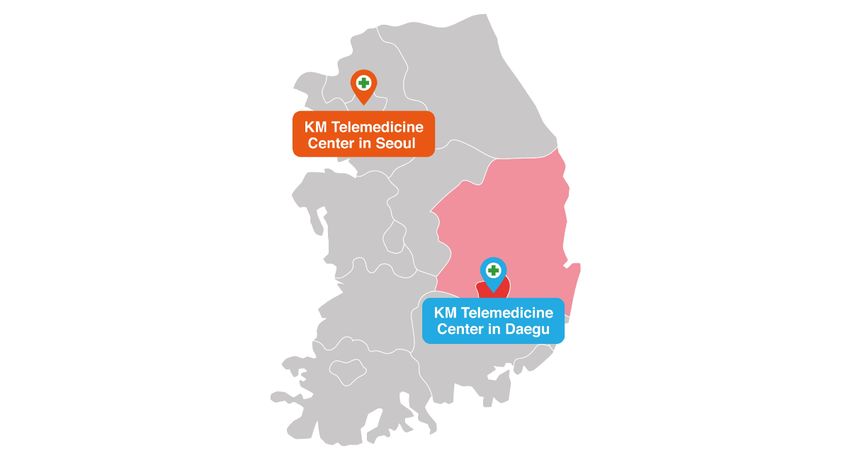
JMIR PUBLIC HEALTH AND SURVEILLANCE                                                                                                          Jang et al

                                                                           telemedicine center) at the Daegu Korean Medicine Hospital
     Introduction                                                          to provide medical services via telephone to marginalized
     Declared a pandemic in early 2020, COVID-19 has spread                patients, on March 9, 2020. After the outbreak in
     beyond China, reaching all around the world. The World Health         Daegu-Gyeongbuk was stabilized, AKOM also established an
     Organization (WHO) increased its assessment of the risk of            additional telemedicine center in Seoul (Figures 1 and 2).
     spread and impact of COVID-19 to “very high” at the global            Telemedicine, in principal, is prohibited in South Korea;
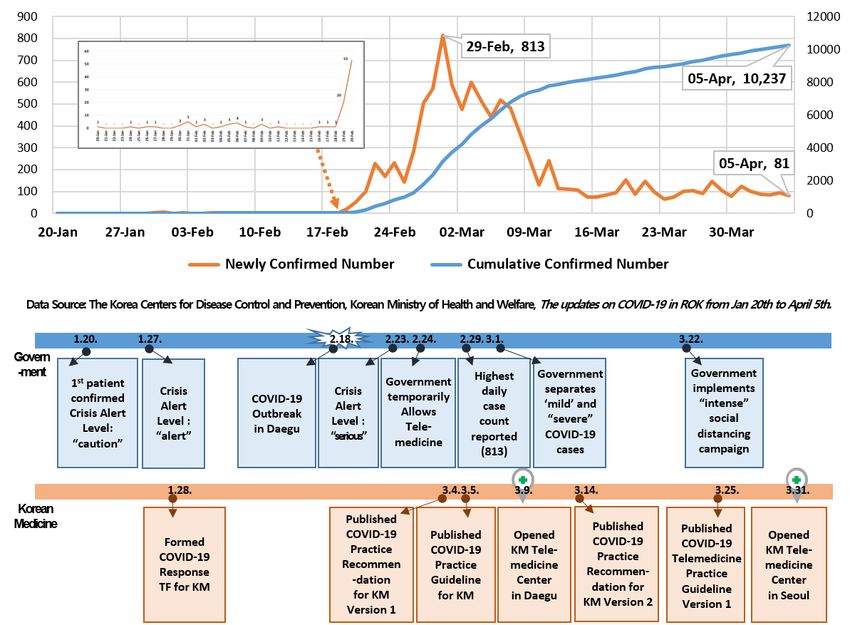
     level on February 28 [1]. On November 15, 2020, the number            however, the government temporarily allowed telephone
     of confirmed cases of COVID-19 exceeded 53.7 million, and             counseling or prescriptions due to COVID-19. At the KM
     the death toll was approximately 1.3 million [2]. In South Korea,     telemedicine center, herbal medicines were provided to patients
     since the day the first patient was confirmed on January 20,          with suspected and confirmed COVID-19 for the management
     2020, the total number of confirmed cases on September 1              of COVID-19–related symptoms following the guideline on
     exceeded 20,000. There was an outbreak of COVID-19 in Daegu           COVID-19 telemedicine service of Korean Medicine (KM
     and Gyeongbuk (Daegu-Gyeongbuk) due to religious gatherings           telemedicine guideline). The KM telemedicine guideline was
     attended by many people; consequently, the total number of            based on three previously published guidelines in South Korea
     cases rapidly increased from 30 on February 17 to 8086 on             and China, “Recommendations on COVID-19 Korean Medicine
     March 14. This health care surge led to a shortage of hospital        (AKOM)” [3], “Clinical Guidelines on COVID-19 Korean
     beds, medical institutions, and medical personnel, as well as a       Medicine” (the KM Professor Council of Internal Medicine of
     gap in the management of patients.                                    the Respiratory System) [4], and the Chinese government
                                                                           guidelines titled “Notice on the Issuance of the New 7th Version
     The Association of Korean Medicine (AKOM) created a                   of the COVID-19 Diagnosis and Treatment Guidelines” [5].
     COVID-19 telemedicine center of Korean Medicine (KM
     Figure 1. Locations of the COVID-19 telemedicine centers of Korean Medicine. KM: Korean Medicine.

     http://publichealth.jmir.org/2021/1/e20236/                                               JMIR Public Health Surveill 2021 | vol. 7 | iss. 1 | e20236 | p. 2
                                                                                                                    (page number not for citation purposes)
XSL• FO
RenderX
JMIR PUBLIC HEALTH AND SURVEILLANCE Jang et al
Figure 2. COVID-19 confirmed cases in South Korea over time. KM: Korean Medicine; ROK: Republic of Korea; TF: task force.
It has been reported that herbal medicines have been effective group consisted of professors from colleges of Korean Medicine,
in reducing COVID-19 symptoms [6,7] in patients with mild experts from academic societies, and experienced clinicians. In
symptoms and may be an alternative method to prevent the addition, several herbal pharmaceutical companies provided
worsening of COVID-19 symptoms [8]. In particular, Qingfei herbal medicines to the KM telemedicine center, and the rest
Paidu decoction, which has been used for fever in Traditional of the expenditures, including delivery, meals, and electronic
Chinese Medicine (TCM), is strongly recommended for patients devices, were fundraised by KMDs.
with confirmed COVID-19 [5,9]. This is the first study to report
clinical cases of using herbal medicines for the treatment of
KM Telemedicine Center Procedures
COVID-19 in South Korea. This study aimed to describe patient All KM telemedicine procedures are conducted by voice call
symptoms and the use of medication provided by the KM following standardized guidelines. Patients who want to receive
telemedicine center and examine the clinical possibility of herbal KM telemedicine service voluntarily call the representative
medicines for COVID-19. number +82-1688-1075. The students in the reception group
explain the overall process and obtain the informed consent of
Methods those participating in the KM telemedicine program. They
collect basic information, including the patient’s name, sex,
KM Telemedicine Center Operations age, address, smoking habits, date of positive COVID-19 test,
The KM telemedicine center consisted of an operation group, infection route, and quarantine start/end date. They then
reception group, medical group, and advisory group. The schedule a telephone consultation with a KMD. KMDs then
operation group included AKOM executives and staff who call the patients to investigate their medical history, medications,
managed the overall operation of the telephone medical center, and underlying diseases, and instruct them to measure their
including financial arrangements, the publicization of the KM body temperature and pulse rate. The KMDs assess
telemedicine program, the recruitment of volunteers, and the COVID-19–related symptoms including pyrexia, rhinorrhea,
delivery of herbal medicines. The reception group consisted of headache, sputum, sore throat, and diarrhea, and consider pattern
students from colleges of Korean Medicine; the medical group identification of Korean Medicine theory. They then prescribe
included Korean Medicine doctors (KMDs). Both groups were the appropriate herbal medicine according to those presented
recruited voluntarily. KMDs who worked at the telemedicine in the KM telemedicine guidelines.
center were educated in advance on how to make diagnoses,
prescribe medicines, and write electronic charts. The advisory
http://publichealth.jmir.org/2021/1/e20236/ JMIR Public Health Surveill 2021 | vol. 7 | iss. 1 | e20236 | p. 3
(page number not for citation purposes)
XSL• FO
RenderXJMIR PUBLIC HEALTH AND SURVEILLANCE Jang et al
According to the guidelines, patients with COVID-19 were first suspected patients and confirmed patients are provided with a
classified as uncertain suspected patients, confirmed patients 3-day supply of herbal medicine by contactless shipping, and
(mild), asymptomatic patients, and recovery patients. When the recovering patients receive a 5-day supply of herbal medicine.
KM telemedicine center first began operating, confirmed The advisory group reviews every medical record and identifies
patients who were not hospitalized because of mild symptoms critical patients who need intensive care, recommending transfer
and suspected patients who had been in close contact with to advanced hospitals if necessary. In addition, the advisory
patients with confirmed COVID-19 were targeted by the group may intervene during telephone consultation in real time
program. As the number of cured people has gradually increased, to discuss treatment directions with the medical team. When a
recovering patients who are within 14 days of having tested patient has recovered from COVID-19 and has no other
negative for COVID-19 have been included. After the first symptoms, the telemedicine ends following a decision by the
telephone consultation, follow-up telemedicine consultations KMDs (Figure 3).
take place every 4-5 days until patients are fully recovered. The
Figure 3. Flow diagram of steps undertaken by the COVID-19 telemedicine center of Korean Medicine.
decoction: I is the original, and its components are the same as
KM Telemedicine Center Interventions the Chinese Qingfei Baidu decoction, while II is the same as I
For patients who have tested positive for COVID-19, the basic but without Ephedra Herba. Qingfei Baidu decoction (II) is
herbal medicine provided at the KM telemedicine center is prescribed to those with high potential for palpitation, a side
Qingfei Baidu decoction. There are two kinds of Qingfei Baidu effect of Ephedra Herba. Yu Ping Feng San and Yin Qiao San
http://publichealth.jmir.org/2021/1/e20236/ JMIR Public Health Surveill 2021 | vol. 7 | iss. 1 | e20236 | p. 4
(page number not for citation purposes)
XSL• FO
RenderXJMIR PUBLIC HEALTH AND SURVEILLANCE Jang et al
have antiviral effects; therefore, they are provided to patients Statistical Analyses
with suspected COVID-19. Yin Qiao San (instead of Qingfei A statistician performed the statistical analyses for intention to
Baidu decoction) can be considered for confirmed patients with treat (ITT) using SAS software (Version 9.4, SAS Institute).
sore throats and headaches. Data of patients who completed the program by June 30 were
Since many patients with COVID-19 complain of digestive analyzed. Continuous variables (patient satisfaction) were
symptoms such as diarrhea and lack of appetite, Huo Xiang displayed as mean (SD), median, and interquartile range.
Zheng Qi San, Bu-Zhong-Yi-Qi-Tang, and Buhuanjin Zhengqi Categorical variables (sex, age, region, diagnosis, number of
San are included in the herbal medicine list for the treatment of calls, residence of patients, underlying disease, prescriptions,
COVID-19. KM doctors may consider other herbal medicines and COVID-19 symptom severity) were shown as frequencies.
according to patients’ accompanying symptoms, such as Xiao The Wilcoxon signed-rank test was used for 13 COVID-19
Qing Long Tang for rhinorrhea and Jiawei Quipi Tang for symptoms to examine significant differences before and after
anxiety. In particular, even if the respiratory symptoms are mild, treatment.
many cases of emotional problems have been reported due to
Ethics Approval
isolation or anxiety about the disease’s exacerbation. It has been
reported that quarantined patients with COVID-19 suffer from This study could not receive original individual medical charts.
insomnia, anxiety, anger, overthinking, decreased concentration, However, we did receive the medical activities data reported
and a loss of energy [10]. Emotional symptoms such as insomnia by AKOM. An institutional review board at the Korea Institute
and anxiety can continue after quarantine release; therefore, of Oriental Medicine permitted this study’s use of medical
Jiawei Quipi Tang and a meditation audio file are provided in records (Number I-2006/005-001-02).
those cases. If patients have lost their sense of smell or taste, a
sachet consisting of 7 herbs is delivered along with the herbal Results
medicine. In the KM telemedicine program, managing
recovering patients is important because many patients still Basic Information About the KM Telemedicine
complain about physical or emotional problems even after Center’s Operation and Patient Characteristics
testing negative for COVID-19. We found that Kyung-Ok-Ko The KM telemedicine center for COVID-19 was set up in Daegu
is the second most frequently prescribed medicine. Yiqi Bufei on March 9, 2020, to provide medical services, and another
Tang is for patients with digestive symptoms, and Ziyin Bufei center was opened in Seoul on March 31. By June 30, the total
Tang is for patients with respiratory symptoms. Saeng-Maek number of patients was 2324. The number of confirmed cases
San targets those who have dry mouth and sweating. (excluding the suspected cases) was 1392, which was 10.9% of
Kyung-Ok-Ko and Mokhyang Gongjin-Dan are used to enhance the nationwide confirmed cases of COVID-19 as of June 30.
stamina after the onset of viral infection. The formulation of The number of participating KMDs and students was 546 and
the herbal medicines has varied because they were donated by 332, respectively. Detailed information about patients is
herbal pharmaceutical companies and KMDs (Multimedia described in Table 1.
Appendix 1).
http://publichealth.jmir.org/2021/1/e20236/ JMIR Public Health Surveill 2021 | vol. 7 | iss. 1 | e20236 | p. 5
(page number not for citation purposes)
XSL• FO
RenderXJMIR PUBLIC HEALTH AND SURVEILLANCE Jang et al
Table 1. Characteristics of patients enrolled in the Korean Medicine telemedicine program for COVID-19 (N=2324).
Characteristics Patients, n (%)
Sex
Male 569 (24.5)
Female 1755 (75.5)
Age (years)
0-19 97 (4.2)
20-39 555 (23.9)
40-59 1121 (48.2)
≥60 550 (23.7)
Unknown 1 (0.0)
Region
Daegu and Gyeongbuk 2196 (94.5)
Seoul 32 (1.4)
Other 94 (4.1)
Diagnosis (based on first consultation)
Suspected cases 45 (1.9)
Confirmed cases 211 (9.1)
Recovering cases after discharge 2009 (86.4)
Other, unknown 59 (2.6)
Number of calls (per patient)
1 166 (7.1)
2 329 (14.2)
3 432 (18.6)
4 338 (14.5)
≥5 1059 (45.6)
Residence of patients (based on first consultation)
Home 2165 (93.2)
Facility 69 (2.9)
Hospital 43 (1.9)
Other, unknown 47 (2.0)
Underlying diseases
Hypertension (n=1912)
No 1548 (81.0)
Yes, not taking medication 44 (2.3)
Yes, taking medication 320 (16.7)
Diabetes mellitus (n=1859)
No 1690 (90.9)
Yes, not taking medication 25 (1.3)
Yes, taking medication 144 (7.7)
Hyperlipidemia (n=1844)
No 1626 (88.2)
Yes, not taking medication 72 (3.9)
Yes, taking medication 146 (7.9)
http://publichealth.jmir.org/2021/1/e20236/ JMIR Public Health Surveill 2021 | vol. 7 | iss. 1 | e20236 | p. 6
(page number not for citation purposes)
XSL• FO
RenderXJMIR PUBLIC HEALTH AND SURVEILLANCE Jang et al
Characteristics Patients, n (%)
Cancer (n=1734)
No 1661 (95.8)
Yes, not taking medication 49 (2.8)
Yes, taking medication 24 (1.4)
Chronic respiratory diseases (n=1726)
No 1611 (93.3)
Yes, not taking medication 82 (4.8)
Yes, taking medication 33 (1.9)
following as the second most prescribed medicine. Ziyin Bufei
Results of the KM Telemedicine Center’s Operation Tang (n=1780) and Yiqi Bufei Tang (n=1499), which are herbal
Kyung-Ok-Ko (n=2285) was the most prescribed herbal medicines for the recovery stage, were the third and fourth most
medicine, with Qingfei Paidu decoction (I and II, n=2053) prescribed medicines (Table 2).
Table 2. Frequency of prescriptions by the Korean Medicine telemedicine program for COVID-19.
Prescription Uses First call, n (%) Others, n (%) Total, n (%)
Qingfei Paidu decoction I Exogenous fever and influenza 448 (13.4) 758 (6.9) 1206 (8.4)
Kyung-Ok-Ko Fatigue, weak condition, and dry cough 439 (13.2) 1846 (16.7) 2285 (15.9)
Ziyin Bufei Tang Short breath, fatigue, decreased appetite, dry 369 (11.1) 1411 (12.8) 1780 (12.4)
mouth, and dry cough
Yiqi Bufei Tang Short breath, fatigue, decreased appetite, and 348 (10.4) 1151 (10.4) 1499 (10.4)
loose stool
Qingfei Paidu decoction II Exogenous fever and influenza 263 (7.9) 584 (5.3) 847 (5.9)
Jiawei Quipi Tang Anxiety, overthinking, and insomnia 234 (7.0) 840 (7.6) 1074 (7.5)
Mokhyang Gongjin-Dan Fatigue and weak condition 176 (5.3) 747 (6.8) 923 (6.4)
Huo Xiang Zheng Qi San Loose stool or diarrhea, chest tightness, and lack 139 (4.2) 420 (3.8) 559 (3.9)
of vigor
Saeng-Maek-San Thirst, dry mouth, cold sweat, and weak condi- 82 (2.5) 259 (2.3) 341 (2.4)
tion
Xiao Qing Long Tang Nasal symptoms, watery rhinorrhea, and allergic 94 (2.8) 347 (3.1) 441 (3.1)
rhinitis
Yin Qiao San Sore throats and headaches with inner heat 89 (2.7) 348 (3.2) 437 (3.0)
Yu Ping Feng San Cold, influenza, and sweating 40 (1.2) 71 (0.6) 111 (0.8)
Buhuanjin Zhengqi San Cold, headache, and fatigue 26 (0.8) 124 (1.1) 150 (1.0)
Other N/Aa 584 (17.5) 2129 (19.3) 2713 (18.9)
Totalb N/A 3331 (100.0) 11,035 (100.0) 14,366 (100.0)
a
N/A: not applicable.
b
Due to duplicate medication orders, the total number of prescriptions exceeded the number of patients.
All variables were analyzed with data from the patients who differences in the analyzed numbers between the first and last
completed the KM telemedicine center’s program by June 30. call. The patient satisfaction score for treatment was 8.3 (SD
The difference in clinical symptoms related to COVID-19 before 1.78) out of 10 and the convenience of the KM telemedicine
and after treatment are presented in Table 3. All 13 symptoms center system was rated 9.3 (SD 1.27) out of 10. Patients gave
(headache, chills, sputum, dry cough, sore throat, fatigue, muscle high scores when asked about their willingness to recommend
pain, rhinorrhea, nasal congestion, dyspnea, chest tightness, the KM telemedicine center to acquaintances (9.2, SD 1.58)
diarrhea, and loss of appetite) improved after treatment (all and use Korean Medicine treatments (9.1, SD 1.54; Table 4).
PJMIR PUBLIC HEALTH AND SURVEILLANCE Jang et al
Table 3. Changes in COVID-19 symptoms before and after accessing the Korean Medicine telemedicine program.
COVID-19 symptoms and severity At first call, n (%) At last call, n (%) P valuea
HeadacheJMIR PUBLIC HEALTH AND SURVEILLANCE Jang et al
COVID-19 symptoms and severity At first call, n (%) At last call, n (%) P valuea
Total 2062 (100.0) 1182 (100.0) N/A
RhinorrheaJMIR PUBLIC HEALTH AND SURVEILLANCE Jang et al
Table 4. Patient satisfaction with Korean Medicine telemedicine program for COVID-19.
Category Patients, n Mean score (SD) out of 10 Median score (IQR) out of 10
Satisfaction in terms of treatment 1570 8.3 (1.78) 8.0 (7.0-10.0)
Convenience of KM telemedicine center system 1568 9.3 (1.27) 10.0 (9.0-10.0)
Satisfaction with using telephone 1570 8.7 (1.59) 9.0 (8.0-10.0)
Willingness to recommend to acquaintances 1570 9.2 (1.58) 10.0 (9.0-10.0)
Willingness to use Korean Medicine treatments 1569 9.1 (1.54) 10.0 (8.0-10.0)
symptoms. In South Korea, there were a large number of
Discussion confirmed patients in Daegu-Gyeongbuk, such that the health
Principal Findings system’s capacity was exceeded. Patients with mild COVID-19
cases were not provided with medical management, and 5
This study introduced the KM telemedicine center, which used self-quarantined patients in South Korea died at home [15]. The
Korean Medicine treatments for COVID-19 and reported the KM telemedicine center was established to fill the gap in health
clinical symptoms of patients with COVID-19 before and after care that arises from these health care surges for patients with
treatment. Among the confirmed cases enrolled in the KM mild cases. However, patients gave lower scores for treatment
telemedicine center, 75.5% (n=1755) Table 1) were women, satisfaction at the KM telemedicine center, compared with the
while 60% of the total cumulative patients with confirmed results of other satisfaction score criteria. Although patients
COVID-19 in South Korea were women [11]. This difference indicated it was convenient to use the KM telemedicine center
may be because COVID-19 spread rapidly through certain (9.3), their satisfaction with telemedicine treatment (8.7) and
religious groups that had a higher proportion of women. In satisfaction in terms of treatment were relatively low (8.3). This
addition, women's preferences regarding health care services is because non–face-to-face treatments such as telephone
and Korean Medicine treatment may have had an impact. The treatment are limited compared to face-to-face treatment, which
majority of patients that visited the KM telemedicine center may lead to less satisfaction from patients. This shows that there
were in Daegu-Gyeongbuk because the number of patients in are many challenges to solve in telemedicine, such as patient
that region was high until June 2020. Patients with mild illness access to technology, the possibility of missing test results, and
could not be hospitalized and were isolated in their homes or the lack of technology to replace medical devices [16,17].
other facilities; therefore, the demand for telemedicine increased.
There are several limitations in this study. First, only
Of the total 2324 cases, Qingfei Paidu decoction, Yiqi Bufei patient-reported outcomes were evaluated at the KM
Tang, Ziyin Bufei Tang, and Kyung-Ok-Ko were most telemedicine center. Temperature and pulse rate were also
frequently provided to patients. As 86.4% (n=2009) of patients self-measured; however, these could not be reported because
were in the recovery stage, Kyung-Ok-Ko, Yiqi Bufei Tang, of missing data and errors. In addition, there were a lot of
and Ziyin Bufei Tang may be prescribed in large proportions missing data points regarding each symptom because this
(Figure 3). It has recently been elucidated that Qingfei Paidu telemedicine center had not been designed for a study and this
decoction, which is the most recommended herbal medicine for research is based on retrospective chart review. Second, this
treating COVID-19, regulates cytokine storms during the viral study showed the results of the entire program, so it could not
infection [12,13]. In addition, a clinical study in China of show the effect of individual herbal medicines. Since the
Qingfei Paidu decoction in addition to Western medicine was prescription was changed according to the clinical situation of
recently published [14]. This study showed that in addition to the patients, we could not compare clinical symptoms before
respiratory symptoms, protocols of herbal medicines have been and after each herbal medicine was administered. Third, it was
prepared for digestive symptoms, muscle pain, and loss of taste, difficult to coordinate care with conventional treatment methods
which are all known clinical symptoms of COVID-19. Although to manage patients with underlying diseases because the KM
the results showed a statistical difference before and after telemedicine center did not officially belong to the national
treatment, it is hard to guarantee the effectiveness of herbal quarantine system. Fourth, it was not possible to determine the
medicines for COVID-19 symptoms because many patients did color and shape of the tongue or face color over the telephone,
not have symptoms at baseline. Any patient currently positive all of which are meaningful in Korean Medicine theory.
for, recovering from, or suspected of having COVID-19 could
be enrolled in this study, whether symptoms were present or Nonetheless, the KM telemedicine center attempted to test the
not. For that reason, there were many patients that responded weaknesses of telemedicine and improve the quality of medical
“No” to each symptom, but many others noted having more care offered via telemedicine. It has developed guidelines to
than one symptom. It is significant that patient satisfaction with help medical staff perform standardized health care. The second
the KM telemedicine center was high. This may be because the edition of the guideline was published on April 1, 2020, and
center treated patients’ symptoms and provided emotional was complemented with feedback from the medical and advisory
support through counselling. groups, containing considerations from real telemedicine cases.
Above all, Korean Medicine is traditionally compatible with
The average score for patient satisfaction at the KM telemedicine telemedicine because it collects information for diagnosis by
center was 8.3. The reason the score was high may be because listening to the patient's overall symptoms. In addition, an
the center supported the treatment of patients with acute
http://publichealth.jmir.org/2021/1/e20236/ JMIR Public Health Surveill 2021 | vol. 7 | iss. 1 | e20236 | p. 10
(page number not for citation purposes)
XSL• FO
RenderXJMIR PUBLIC HEALTH AND SURVEILLANCE Jang et al
advisory committee composed of professors and experienced Conclusion
clinicians reviewed all patients' medical charts to verify This study described the background and operational result of
telephone consultations of KMDs. These may have led people the KM telemedicine center for COVID-19 in South Korea. The
to feel more satisfied with the KM telemedicine center system KM telemedicine center attempted to overcome the limitations
despite the limitations of non–face-to-face treatment. of telemedicine by providing standardized guidelines and expert
advice. We hope that this study will help to establish a better
health care system to overcome COVID-19.
Acknowledgments
The authors thank all patients who voluntarily called for telemedicine, and we sincerely hope for their full recovery. The authors
are grateful to all participating Korean Medicine doctors, students, and staff, and the advisory group. The authors are also grateful
for the support and cooperation between the COVID-19 telemedicine center of Korean Medicine and The Association of Korean
Medicine. This article was supported by the Korea Institute of Oriental Medicine (KSN2021210 and KSN2021220).
Conflicts of Interest
None declared.
Multimedia Appendix 1
Composition of herbal medicines provided by the COVID-19 telemedicine center of Korean Medicine.
[DOCX File , 19 KB-Multimedia Appendix 1]
References
1. Coronavirus disease 2019 (COVID-19) Situation Report - 39. World Health Organization. URL: https://www.who.int/
emergencies/diseases/novel-coronavirus-2019/situation-reports [accessed 2020-12-30]
2. Coronavirus disease 2019 (COVID-19) Weekly Epidemiological Update and Weekly Operational Update. World Health
Organization. URL: https://reliefweb.int/report/world/
coronavirus-disease-covid-19-weekly-epidemiological-update-17-november-2020 [accessed 2020-12-30]
3. The Association of Korean medicine. Recommendations on COVID-19 Korean medicine. 2020. URL: https://tinyurl.com/
y55fde97 [accessed 2020-12-30]
4. The KM Professor Council of Internal Medicine of the Respiratory System. Clinical Guidelines on COVID-19 Korean
Medicine. 2020. URL: https://tinyurl.com/y4yv8j7u [accessed 2020-12-30]
5. National Health Commission of the People's Republic of China. [Notice on the Issuance of the New 7th Version of the
COVID-19 Diagnosis and Treatment Guidelines]. 2020. URL: http://www.nhc.gov.cn/yzygj/s7653p/202003/
46c9294a7dfe4cef80dc7f5912eb1989.shtml [accessed 2020-12-30]
6. Shen A, Zhang W, We Z, Wang W, Hua J. [TCM Theory Analysis of Qingfei Paidu Decoction Treating COVID-19].
Liaoning Journal of Traditional Chinese Medicine 2020;47(3):106-108.
7. Lu ZZ, Lu XS. [Qingfei Paidu Decoction Demonstrates the Anti-Epidemic Effects and Self-Confidence of Traditional
Chinese Medicine]. Journal of Traditional Chinese Medicine 2020;61(10):833-834.
8. Ang L, Lee HW, Choi JY, Zhang J, Soo Lee M. Herbal medicine and pattern identification for treating COVID-19: a rapid
review of guidelines. Integr Med Res 2020 Jun;9(2):100407 [FREE Full text] [doi: 10.1016/j.imr.2020.100407] [Medline:
32289016]
9. National Health Commission of the People's Republic of China. [Novel Coronavirus Pneumonia Diagnosis and Treatment
Plan, provisional 6th Edition]. 2020. URL: http://www.nhc.gov.cn/yzygj/s7653p/202002/
8334a8326dd94d329df351d7da8aefc2.shtml [accessed 2020-12-30]
10. Park S, Park YC. Mental Health Care Measures in Response to the 2019 Novel Coronavirus Outbreak in Korea. Psychiatry
Investig 2020 Feb;17(2):85-86 [FREE Full text] [doi: 10.30773/pi.2020.0058] [Medline: 32093458]
11. Korea Centers for Disease Control Prevention. [COVID-19 Response Guideline (for local governments), 9th edition]. 2020.
URL: http://www.kdca.go.kr/board/board.es?mid=a20507020000&bid=0019 [accessed 2020-12-30]
12. Chen J, Wang Y, Gao Y, Hu L, Yang J, Wang J, et al. Protection against COVID-19 injury by qingfei paidu decoction via
anti-viral, anti-inflammatory activity and metabolic programming. Biomed Pharmacother 2020 Oct;129:110281 [FREE
Full text] [doi: 10.1016/j.biopha.2020.110281] [Medline: 32554251]
13. Yang R, Liu H, Bai C, Wang Y, Zhang X, Guo R, et al. Chemical composition and pharmacological mechanism of Qingfei
Paidu Decoction and Ma Xing Shi Gan Decoction against Coronavirus Disease 2019 (COVID-19): In silico and experimental
study. Pharmacol Res 2020 Jul;157:104820 [FREE Full text] [doi: 10.1016/j.phrs.2020.104820] [Medline: 32360484]
14. Xin S, Cheng X, Zhu B, Liao X, Yang F, Song L, et al. Clinical retrospective study on the efficacy of Qingfei Paidu decoction
combined with Western medicine for COVID-19 treatment. Biomed Pharmacother 2020 Sep;129:110500 [FREE Full text]
[doi: 10.1016/j.biopha.2020.110500] [Medline: 32768975]
http://publichealth.jmir.org/2021/1/e20236/ JMIR Public Health Surveill 2021 | vol. 7 | iss. 1 | e20236 | p. 11
(page number not for citation purposes)
XSL• FO
RenderXJMIR PUBLIC HEALTH AND SURVEILLANCE Jang et al
15. Press Release. SBS News. 2020. URL: https://news.sbs.co.kr/news/endPage.do?news_id=N1005681219 [accessed
2020-12-30]
16. Elkbuli A, Ehrlich H, McKenney M. The effective use of telemedicine to save lives and maintain structure in a healthcare
system: Current response to COVID-19. Am J Emerg Med 2020 Apr 07 [FREE Full text] [doi: 10.1016/j.ajem.2020.04.003]
[Medline: 32303410]
17. Greenhalgh T, Koh GCH, Car J. Covid-19: a remote assessment in primary care. BMJ 2020 Mar 25;368:m1182. [doi:
10.1136/bmj.m1182] [Medline: 32213507]
Abbreviations
AKOM: The Association of Korean Medicine
KM: Korean Medicine
KMD: Korean Medicine doctor
TCM: Traditional Chinese Medicine
WHO: World Health Organization
Edited by G Eysenbach, R Kukafka; submitted 14.05.20; peer-reviewed by SG Ko, B Lim, B Smith; comments to author 19.08.20;
revised version received 24.09.20; accepted 16.12.20; published 19.01.21
Please cite as:
Jang S, Kim D, Yi E, Choi G, Song M, Lee EK
Telemedicine and the Use of Korean Medicine for Patients With COVID-19 in South Korea: Observational Study
JMIR Public Health Surveill 2021;7(1):e20236
URL: http://publichealth.jmir.org/2021/1/e20236/
doi: 10.2196/20236
PMID: 33342765
©Soobin Jang, Dongsu Kim, Eunhee Yi, Gunhee Choi, Mideok Song, Eun-Kyoung Lee. Originally published in JMIR Public
Health and Surveillance (http://publichealth.jmir.org), 19.01.2021. This is an open-access article distributed under the terms of
the Creative Commons Attribution License (https://creativecommons.org/licenses/by/4.0/), which permits unrestricted use,
distribution, and reproduction in any medium, provided the original work, first published in JMIR Public Health and Surveillance,
is properly cited. The complete bibliographic information, a link to the original publication on http://publichealth.jmir.org, as
well as this copyright and license information must be included.
http://publichealth.jmir.org/2021/1/e20236/ JMIR Public Health Surveill 2021 | vol. 7 | iss. 1 | e20236 | p. 12
(page number not for citation purposes)
XSL• FO
RenderXYou can also read


