Texas A&M University A detailed account of how one university is improving its energy efficiency and campus environment through effective ...
←
→
Page content transcription
If your browser does not render page correctly, please read the page content below

Texas A&M University
                  A detailed account of how one university
                  is improving its energy efficiency and
                  campus environment through effective
                  management and performance contracting

usa.siemens.com/tamu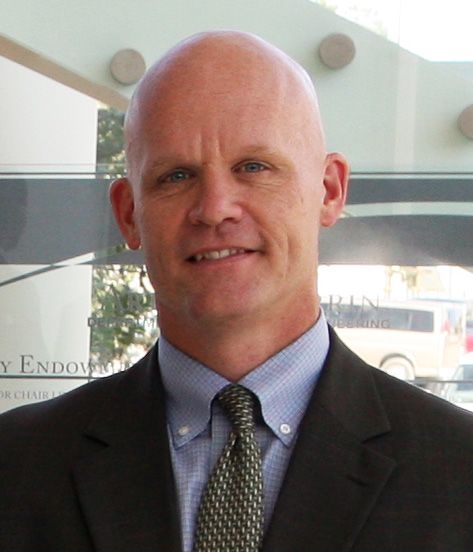
One of the largest universities in the United States,          Proactive Utilities and Energy
Texas A&M University is well-known as the home of the
Aggies, the first public institution of higher education in
                                                               Management
Texas, and one of the top American research institutions.      On-Campus Power Generation
While energy management and water conservation on              Since 1893, Texas A&M has been generating a significant
campus might not be top of mind when people think              portion of its own electricity. Outside markets are used
of Texas A&M, the proactive approach taken by                  to supply the balance of what isn’t produced on campus.
professionals in the institution’s Utilities & Energy          “We’re not just a net consumer of electricity, we’re also a
Management Department, referred to as UEM, is                  producer,” says Williams. A $73.25 million combined heat
certainly noteworthy.                                          and power (CHP) upgrade is currently underway and slated
                                                               for completion by the end of 2011. The CHP project will:
The university’s main campus, located in College Station,      • Replace older equipment with more efficient,
has grown significantly in recent years and now serves           reliable generation equipment
50,000 students, including 9,000 graduate students.
                                                               • Increase capacity to serve a growing campus
During this growth, utilities and energy management
professionals at Texas A&M have provided leadership            • Improve power generation efficiency an
and expertise to more efficiently use energy and water           additional 20 percent
resources at the campus’ 750 buildings which are spread        • Decrease greenhouse gas emissions associated
over 5,200 acres. “It’s not that we woke up one day and          with energy consumption by 30 percent
decided to get in the energy conservation business;
we’ve been working on it for quite some time,” says            Building Automation
Les Williams, Associate Director for UEM. In line with         In order to manage such an expansive campus, UEM relies
the university’s utilities and energy management               on an extensive building automation system (BAS) that
goals, Texas A&M has recently initiated a two-phase            includes energy management and controls capabilities. In
performance contract with the Building Technologies            fact, Texas A&M has one of the largest building automation
Division of Siemens Industry, Inc. This new contract,          systems in the world with nearly 200,000 monitoring and
which provides funding for building improvements that          control points in over 200 buildings. The campus BAS
increase energy efficiency, is the latest stage in a long-     monitors and controls close to 14 million gross square feet.
term partnership between the two organizations.

Performance Contracting Defined                                         How Performance Contracting Works
Performance contracting is a means of financing a multi-
faceted capital improvement project. An energy services
company (ESCO) identifies facility improvement measures
(FIMs) that will reduce water, sewage, electricity, steam,                               Savings       Utility
natural gas, etc. and guarantees the predicted savings.                                               Savings     Savings
                                                                                          Project
The ESCO provides single-source accountability, acting as
                                                                                         Payment
project manager, executing the work and/or hiring local
contractors.
                                                                        Utility           Utility                  Utility
The contractee gets a loan to pay for the improvements.                  Bill              Bill                     Bill
The cost of the project is divided by the guaranteed annual
savings to determine the length of the contract. Project
payment is based on the guaranteed annual savings.
Once the project is implemented, the savings resulting                   Before            During                    After
from increased efficiencies are used to make loan payments            Performance       Performance              Performance
to the capital leasing company. If the actual savings are in            Contract          Contract                 Contract
excess of the guaranteed savings, the contractee keeps the
amount above the guarantee. If they are lower, the ESCO must
pay the contractee the difference. Beyond the term of the
contract, the contractee receives the entire energy savings.
Metering                                                    15 percent. “We have individual energy stewards assigned
The university started installing a new generation of       to 40 buildings (or about 7 million square feet) who work
revenue-quality meters in 2002 and by 2009 the goal         with occupants to raise overall awareness and support for
of becoming a fully metered campus, for all buildings       energy conservation and sustainability,” explains Williams.
larger than 5,000 GSF, was realized. Today, Texas A&M
operates 1,500 revenue-quality utility meters in over       This overall strategy has paid off. Jim Riley is the director
500 buildings, allowing accurate billing and verification   for UEM and since his arrival at Texas A&M in 2002, the
of energy efficiency improvements. The meters measure       UEM Team has led the effort to reduce total campus energy
consumption of electricity, chilled water, heating hot      consumption by almost 25 percent. Over the same time
water, domestic cold water, domestic hot water, and         the campus square footage increased by 18 percent.
steam. “We have a large database of information             “Texas A&M has been very successful with our energy
allowing us to track the performance of buildings based     management program. While serving a growing campus,
upon a number of different baselines,” says Williams.       energy consumption has been reduced by 35 percent in
The meter data is used to:                                  eight years on a per square foot basis,” explains Riley.
• Troubleshoot problems in the buildings and
                                                            Since 2002, overall utility plant operating efficiency has
  measure energy efficiency
                                                            improved by 40 percent and Texas A&M’s energy efficiency
• Generate monthly customer statements to raise             initiatives have yielded $106 million in avoided costs.
  awareness among campus customers                          The result of ongoing water conservation efforts is equally
• Demonstrate the results of conservation and               impressive, with total campus water consumption reduced
  efficiency improvement initiatives                        by 33 percent since 2000. “Our UEM Team is proud to
• Produce accurate cost estimates for budgeting             be able to report these kinds of results as we continue to
  purposes                                                  identify and implement new ways to improve service
                                                            levels and efficiency,” says Riley.
• Allow for accurate billing and cost recovery

Building Retro-commissioning                                Partnering with Siemens
For more than a decade, UEM has managed an extensive        As the university began launching various utilities and
building retro-commissioning program on campus in           energy management initiatives over time, it became
partnership with the Energy Systems Laboratory (ESL).       important to partner with vendors that could supply both
The purpose of the program is to optimize mechanical        expertise and superior building systems and equipment.
and electrical system performance within campus             Texas A&M has repeatedly turned to Siemens.
buildings, especially the HVAC systems that control
environment and consume significant energy.                 The university began installing Siemens BAS in
“At times we have up to four teams performing               its buildings in 1983. Just five years later, in 1988, the
retro-commissioning with a goal of completing               university began standardizing on the Siemens APOGEE®
a million square feet annually,” says Williams.             Building Automation System for all campus buildings.
                                                            “Texas A&M has a longstanding relationship with Siemens
Engaging the Campus Community                               for the BAS and has sole-sourced with Siemens for the
By both raising awareness and reaching out to the campus    automation systems in all new buildings and all retrofits
community, the university takes its conservation efforts    performed to precise direct digital control standards,”
beyond ensuring efficient operation to also positively      says Riley. Over the past 25 years, the APOGEE system
influence behavior. If students, faculty and staff want     has grown in size to monitor and control close to 200
to know how much energy and water are consumed by           campus facilities.
campus facilities, they need look no further than the
Texas A&M UEM website where there is a link to utility      In addition to the BAS, Texas A&M has standardized on
consumption profiles. If customers or stakeholders notice   Siemens fire monitoring system for the last 10 years. They
wasteful practices, a hotline is provided where issues      also use Siemens security system to monitor and control
can be reported.                                            access to the utility plants on campus. Riley states, “We
                                                            have a lot of confidence in Siemens, and they have done
In 2009, the university launched a grassroots energy        a good overall job at Texas A&M. The ‘guaranteed pricing’
stewardship initiative, called the Energy Stewardship       package that Siemens has offered, together with quality
Program (ESP), with a goal of reducing energy               service, has made it attractive for Texas A&M to continue
consumption in existing campus facilities by at least       an ongoing partnership with a sole-source arrangement.”
The Performance Contract “We looked at a number of opportunities with different
vendors and felt that Siemens best met our requirements.
After performing commissioning and energy audits We called around and talked to other folks, and concluded
with support from ESL in 30 high profile buildings, that people really liked the work that Siemens did. People
UEM identified opportunities for system retrofits and really appreciated the follow-through and attention to
operational improvements in a number of the campus detail, and that really resonated with us,” says Williams.
facilities. These initiatives were identified to improve
services and energy efficiency, resulting in significant With Siemens chosen, the assessment phase began. The
energy savings. The question was how to fund them. company’s engineers performed energy audits of their own
and calculated exact consumption reduction amounts. A list
Through the American Recovery and Reinvestment Act of projects to be performed under the 10-year contract was
(ARRA) of 2009, stimulus dollars were designated to the firmed up and the guaranteed savings were finalized.
state for disbursement to state agencies with qualifying “The simple payback has to be less than the 10-year loan
energy conservation projects through a performance repayment period so the savings from the energy projects
contract. “The university applied for and was successfully will cover repayment of the debt service,” explains Riley.
granted two low-interest loans from the Texas State
Energy Conservation Office (SECO),” says Riley. The The total contract amount is $15.1 million, with $10 million
low-interest loans are at two percent – the first for of the work being performed as Phase I and the remainder
$10 million and the second loan for an additional completed under Phase II. “There are 24 buildings slated for
$5.1 million. upgrades or retrofits in these two upcoming performance
contracts; 17 in Phase I and another seven in Phase II,”
The timing couldn’t have been better. “Through our says Riley.
partnership with ESL and our ongoing retro-commissioning
program, UEM had identified a list of things that needed In September, the projects were presented to the Texas
to be completed and were looking for the capital to fund A&M Board of Regents for final approval. Design began
them. So, when this opportunity presented itself, it was the following month with both Phases I and II slated for
a perfect fit,” says Williams. The ARRA funding with a completion by December 2011. “All construction has to be
performance contract will allow the university completed before the end of 2011, which is a commitment
to get all of the projects underway promptly and that the university and Siemens have made to SECO as a
benefit sooner from the efficiency improvements. condition of getting the loan,” explains Riley. The projects
will be fast-tracked to meet an aggressive 12-month
Texas A&M issued its request for qualifications (RFQ) construction schedule.
in January 2010 and began its search for an energy
services company (ESCO) to complete the work under Reducing energy consumption isn’t the only goal for
the required performance contract. From the submittals, the projects. “The net result is that Texas A&M will have
three companies were interviewed and after thorough buildings that are better able to meet the requirements
review, Siemens was chosen as Texas A&M’s ESCO partner. of the occupants,” says Williams. Building occupants and
the budget will both benefit, and so will the environment.
While it was an open competition for the contract, the “The project is one more step in a direction of improving
university’s positive experience and long history with customer service, reducing our carbon footprint, and being
both the professionals and products at Siemens were as sustainable a campus as possible,” adds Riley.
considered when it came time to make a decision.The Projects temperature and static pressure reset programming in
order to minimize unnecessary reheating and fan power.
Siemens has guaranteed $1.1 million annual energy
and operational savings over the contract’s 10-year Installing variable frequency drives (VFDs) will
term for Phase I projects, a description of which follows. optimize space conditions and provide additional
savings. On constant-speed air-handling unit fans,
BAS Building Optimization the VFDs will reduce fan motor energy use and improve
Optimization of the building automation system will dehumidification capability. Installing VFDs on constant-
impact 1.6 million square feet, improve energy efficiency speed pumps and airflow equipment, together with
and enable better control of the HVAC equipment in programed differential pressure setpoint schedules,
certain buildings. Occupancy sensors, either existing or will also minimize energy consumption.
to be installed, will be tied into the terminal equipment
controllers (TECs) in specific buildings, minimizing or Control systems at air-handling unit and zone levels
shutting down air flow during unoccupied periods. will be converted from pneumatic to DDC. Heat recovery
Building reset and setback schedules, including the Annual
systems that had previously Utility
been out Cost
of service willSavings
be
following, will be implemented: re-commissioned.
• When the occupancy sensors indicate that a non-lab Annual Cost Savings
area (e.g. an office, classroom or conference room) Occupancy Sensors $1,080,604
is unoccupied, the room temperature setpoint will be Occupancy sensors will be installed in offices, classrooms
(16% savings)
reset to 65°F. in heating mode and 80°F. in cooling and common areas to reduce energy consumption and
mode during the daytime; the minimum airflow for eliminate the wasteful practice of conditioning and
VAV boxes will also be reset to zero percent. lighting spaces when not occupied. “Texas A&M is going
• In lab areas served by 100-percent outside air units, to get greater room control by tying lighting occupancy
the ventilation setpoint will be reset to four ACH (air sensors into not just the lighting, but the variable air
changes per hour) when the system is in ‘night’ volume boxes in the buildings,” explains Jacob Richardson,
mode and the occupancy sensor indicates the room Account Executive, Siemens Industry, Inc., Building
Costs is unoccupied. Technologies Division,Utility
Annual Houston.Costs Future Utility Cos
46 • In zones that were previously pneumatically controlled $6,734,950 $5,654,346
Lighting Retrofits
with a single setpoint, heating/cooling and day/night
Replacing older inefficient lamps will reduce energy
temperature setback will be implemented.
consumption dramatically. T-12 lamps with magnetic
Projects such as these that prevent HVAC equipment ballasts will be replaced by T-8 lamps and electronic
ect from operating unnecessarily will result in significant ballasts, 28W lampsPriorwill
to Project
be substituted for 4-foot 32W After Project
ation savings at Texas A&M. Other improvements include Implementation
fluorescent lamps, and 400W metal halide fixtures will be Implementation
connecting exhaust fans into the BAS to schedule retrofitted with 3-lamp T-5 fixtures. Texas A&M’s 700,000
them off at night and optimizing discharge air square foot library will directly benefit from updated
lighting technologies.
Texas A&M Annual Utility Annual Savings by Project Component
Cost Savings
O&M Savings O&M Savings O&M Savings
7
Savings 16% 8% 7% 13%
Utility Costs Savings
6 $1,080,604
$6,734,950
5 Utility Costs
$5,654,346
4
3
Energy Energy Energy
Savings Savings Savings
2 92% 93% 87%
1
0 Building Automation Building Lighting Parking Garage
Before After $744,047 Retrofits Lighting Retrofits
Performance Performance Annual Savings $183,842 $198,210
Contract Contract Annual Savings Annual SavingsLighting projects aren’t relegated exclusively to building the project short of funding; however, Siemens was able
interiors. In campus parking garages, where lights remain to deliver much of the equipment at a discount allowing
on 24/7/365, new lamps and fixtures will provide energy more work scope to be completed. Because the university
efficient lighting without compromising safety. Highly has standardized on Siemens’ control systems, Texas
efficient induction fixtures will replace slow start-up high A&M can take advantage of preferred customer pricing
pressure sodium (HPS) fixtures. Stairwell and area lighting for all BAS upgrades. And because Siemens owns
will be retrofitted with LED shoeboxes and T-8 compact Danvers, MA-based OSRAM SYLVANIA, high quality,
fluorescents. Lighting quality and color rendition will also cost-effective solutions can be delivered for the lighting
be upgraded with the efficiency improvements. retrofit projects. “It kept costs down so Texas A&M could
get more bang for their buck,” says Richardson.
Phase II of the performance contract will see additional
BAS optimization and lighting upgrades completed on As a condition of the ARRA funding, all materials have to
campus. These improvements will impact seven buildings, comply with ‘Buy American’ provisions. A smaller ESCO
including a 700,000 square foot library, and deliver an with limited resources may have struggled with the work
additional $575,000 in annual savings for Texas A&M. required to meet this requirement. Siemens, however,
is happy to support American-based companies and
Measurement & Verification meet the Buy American requirement. The company’s
procurement team made sure that both large and
During construction, as a stipulation of the ARRA small equipment conformed to ARRA requirements.
funding, quarterly reports must be submitted to the
State Energy Conservation Office. For four years after The stimulus funding brought an extra level of
construction is completed, every annual reconciliation complexity to the performance contract by adding
report, which shows actual vs. guaranteed savings, requirements, including completion by December 2011,
submitted by Siemens to Texas A&M, will be reviewed which shortened the construction cycle and accelerated
by an independent third-party identified by the state. the timeline. Siemens enlisted many internal resources,
“There will be a measurement and verification phase including energy engineers, controls technicians, and
after the project is completed,” says Williams. “A vendor support from other Siemens operating companies.
is going to be selected from SECO to make sure that the “We have the necessary resources to meet the required
projects actually deliver what is expected.” For extra timeline,” states Richardson. “We brought out a team of
assurance, Texas A&M will use its own resources to verify two engineers and had them dedicated full-time, along
project results. “We will use our partnership with ESL to with a full-time project manager.” The energy solutions
monitor these facilities and make sure that we get the team made this project a top priority and Siemens gave
performance that we expect,” he adds. Texas A&M the promise that whatever resources were
necessary to complete the projects on time would
Project Challenges be applied.
The performance contract and upgrades to be completed
“When you work with a company like Siemens on a
present some steep challenges, all of which validated
performance contract, you get a certain level of
why Siemens was the best ESCO partner for Texas A&M.
guaranteed support that raises your level of confidence.
You get a combination of things: a competent provider,
While $15.1 million is a substantial amount of money,
a low-interest loan, and guaranteed payback,”
the list of projects Texas A&M identified, together with
says Williams.
other opportunities Siemens identified, could have left
The Texas A&M Team
Jim Riley has been Director for Utilities & Energy Management at Texas A&M
University since 2002. He earned a Marine Engineering degree from Texas A&M
in 1979 and has worked since then in the field of utilities, energy, and industrial
plant management, including over 16 years managing utilities and facilities
in higher education and several years as owner/manager of a contracting
company. Jim is a Certified Energy Manager (CEM) and has been acknowledged
by the Association of Energy Engineers for outstanding accomplishment in the
field of energy management.
Les Williams has more than 20 years experience in the utilities and facilities
business and has held many management positions including Director for
Jim Riley Les Williams Project Management and Chief Operating Officer. Les earned a Bachelor’s
Director, Associate Director, in Mechanical Engineering from Texas A&M University, an MBA from Baylor
Utilities and Energy Management, Utilities and Energy Management, University and is a Certified Energy Manager.
Texas A&M University Texas A&M UniversitySiemens is a proud member of the U.S. Green Building Council, ENERGY STAR, AASHE and a sponsor of the American College & University Presidents Climate Commitment.
Replace magenta box with
   appropriate FSC logo and
   language. Please fit logo
   within dimensions of the
   magenta box - aligning FSC
   logo to the bottom of the
   box first.

Siemens Industry, Inc.
Building Technologies Division
1000 Deerfield Parkway
Buffalo Grove, IL 60089
Tel: (847) 215-1000
Fax: (847) 215-1093

Copyright 2011
Siemens Industry, Inc.
All rights reserved.
(3/11)

usa.siemens.com/tamu
You can also read


