The All-New 2022 Mitsubishi - Press information i s cor r ect as of February 16, 2021 - AutoEvolution
←
→
Page content transcription
If your browser does not render page correctly, please read the page content below
North American specification

       Press information is correct as of

                    February 16, 2021.

     Specif ications and standard/optional

   e q u i p me n t s u b j e c t t o c h a n g e a t a n y t i me

The All-New 2022 Mitsubishi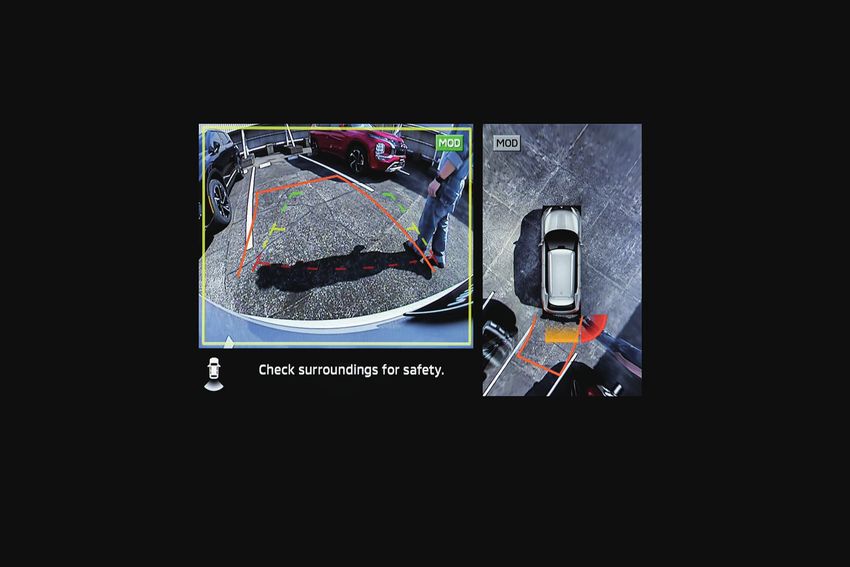
Press information

Message

 The all-new OUTLANDER
 pioneers a new path for the SUV
 under the product concept

 “I-Fu-Do-Do”
 or Authentic and Majestic.

   The long-standing flagship of MITSUBISHI MOTORS, OUTLANDER is a crossover SUV that is loved by a
   wide range of customers in about 50 countries around the world. Crossover SUVs up to now
   have focused on eco-friendliness and economy in addition to utility. But today, as values
   diversify, consumers are focusing more on the advanced safety and reliability this brings, as well as
   the emotional values delivered through new experiences. Consumers are looking for not only a safe
   and secure family-friendly car, but also one that is tough enough to get them where they want to
   go regardless of the weather or road conditions.

   We planned the all-new OUTLANDER to meet these needs. The technology and expertise of MITSUBISHI
   MOTORS were brought together under the product concept “I-Fu-Do-Do”, which means authentic
   and majestic. Working together, we took extra care to give the all-new OUTLANDER
   strength, driving confidence, and high quality.

   To embody the product concept “I-Fu-Do-Do”, we named the design concept as “Bold Stride”.
   We created a unique design that expresses a sense of presence as a flagship with an aura of
   powerful reliability, and gives form to performance and function backed by MITSUBISHI MOTORS’ SUV
   heritage. The exterior was made to express strength and reliability, allowing the driver to
   confidently pursue new paths. The next-generation Dynamic Shield concept was employed for
   the front face to express power and a feeling of security, achieving a fearless expression with a
   notable presence, and the raised hood produces front styling with a bold thickness.
   Furthermore, the 20-inch large-diameter wheels are a symbol of strength and occupy a large
   percentage of the side body, giving them a formidable presence. The new Hexaguard Horizon
   concept was used for the rear. This hexagon motif of the tailgate evokes the image of the spare
   tire mounted on the back of SUVs in the past and expresses the stability and robustness of an
   SUV, while the horizontal-themed T-shaped signature taillights emphasize the wide image and
   reinforce the look of stability.
                                                                                                             1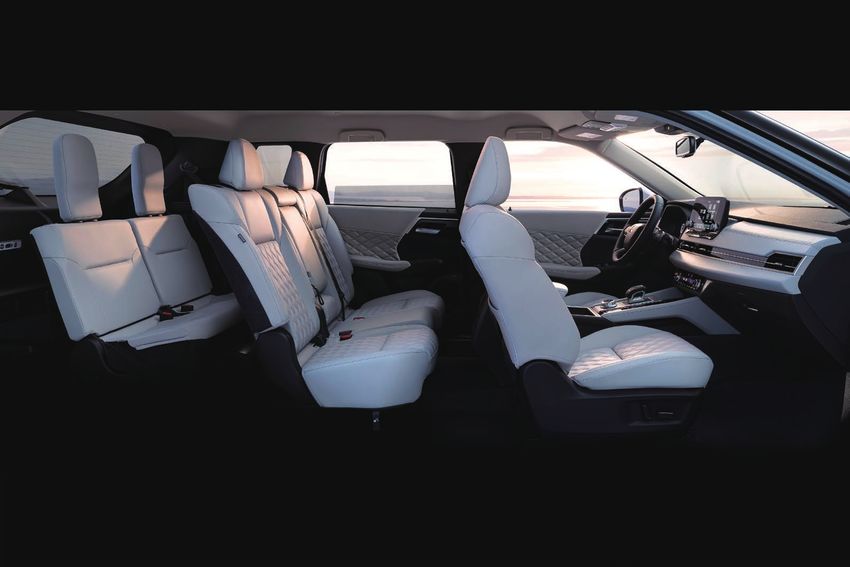
Press information

Message

   Underlying MITSUBISHI MOTORS’ uniqueness is the driving confidence forged in the brand's
   motorsport history. The experience and technology that achieved victories in the Dakar and
   other rallies allows the OUTLANDER to provide a sense of security that it can be driven as desired,
   no matter how severe the environment, immediately responding to changing conditions. To
   ensure driving confidence, the all-new OUTLANDER now utilizes an electronically-controlled
   Super All-Wheel Control 4WD 1 system with drive modes to ensure optimum operation and
   driving force on a variety of road conditions. The body was given high rigidity and the
   suspension tuned to achieve maximum road performance. In addition to road handling,
   secure and confident driving was made possible by reducing NVH at all times, but especially
   when driving on rough roads.

   Driving stability, vibration damping, and quietness also were improved by combining the newly
   developed platform and suspension as a strong and stiff foundation for confident and
   predictable driving. The all-new OUTLANDER also is equipped with the latest active safety
   systems.         For     example,          the     newly        developed           MI-PILOT              Assist 2     suite      of     systems           can
   automatically set the vehicle speed to match speed signs, as well as automatically stop and
   start the vehicle when operated in traffic. This reduces the burden on the driver and supports safe
   and secure driving.

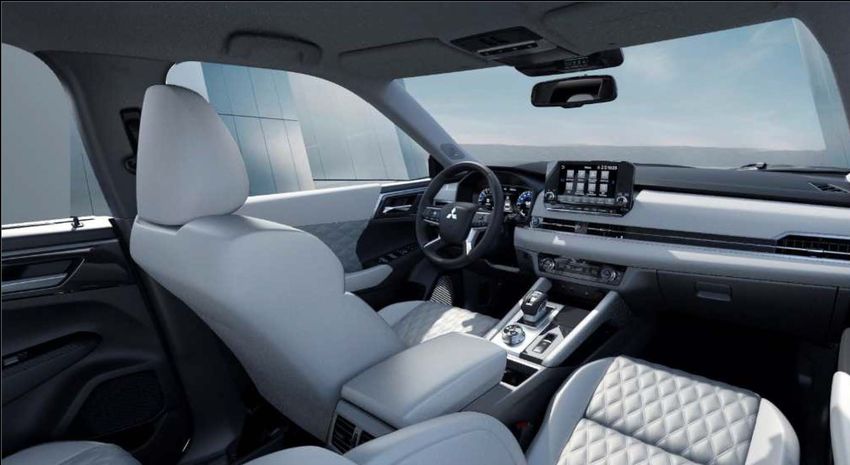
   The cabin was upgraded to increase the high quality feel by making it wider and increasing
   spaciousness. The cabin space, made roomier by the wide body, creates a more open feel by
   increasing the distance between passengers. A strong high-quality feel and comfortable
   and secure feel were also produced by the space developed through the adoption of a
   wide center            console.       To      provide        more        leg     room,       the         seat    slide       amount        was increased,
   and the front               and       second-row              seats        can      be      moved           to       flexibly     adjust        the      space.
   The front seats contribute greatly to increasing the feel of quality. Slab urethane and stiff urethane
   are combined in a                  two-layer          structure          to     achieve         a        seat    that     provides         a     soft      initial
   touch while preventing fatigue                           when        sitting        for     long          periods       of    time.       Attention          was
   paid      to the switches                 and selectors to make                        them         easy        to    grasp       and      give       them         a
   just-right switching operation feel. The comfort, appearance, and superior feel were all
   improved by                employing             sound        insulation            glass           in      both        front        doors         and           the
   windshield,            three-zone              automatic              climate control,                    semi-aniline          leather         seats,       and
   generous           use      of     real aluminum               panels.         Furthermore, the large displays of the 9-inch
   center       display        screen         and 12.3-inch            Digital       Driver       Display          in the instrument panel add to
   the immediate feeling of class-above fittings.

   The all-new OUTLANDER has been built without compromise in many ways, from major areas to the
   fine details. There is no greater joy for MITSUBISHI MOTORS than to exceed the expectations of our
   customers by seeing it, feeling it, and riding in it.

                                                  From the engineers of the all-new OUTLANDER
                                                                                                                                                                          2
   1. Available feature. S-AWC is an integrated vehicle dynamics control system manages the driving forces and braking forces of the four wheels to help realize
   vehicle behavior that is faithful to the operation by the driver under a variety of driving conditions. S-AWC is not a substitute for safe and careful driving
   2. MI-PILOT Assist is a driver aid only and is not a substitute for safe and careful driving. See Owner’s Manual for further information.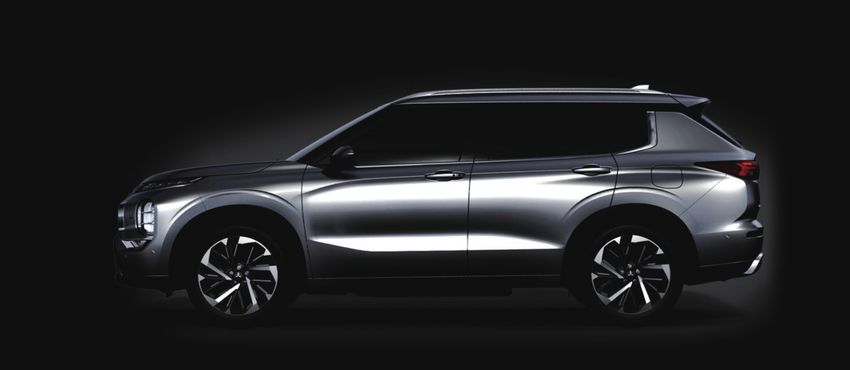
Press information

Product Overview

     Features to Achieve the Product Concept

    “I-Fu-Do-Do”
     *In Japanese, authentic and majestic
                                                                               *

 1           Powerful styling
The 255/45R20 tires on 20" diameter wheels and overhanging
fenders emphasize the wide body, and the character line in the
high belt line position gives the impression of a thick body to
create a powerfully profound form. Furthermore, the modeling of
the jet tail fin pillar expresses a sense of forward motion. The styling
creates a bold aura with a notable presence while also evoking powerful

2
yet comfortable driving.

             Safe and secure
             road performance
Electronically-controlled Super All-Wheel Control is integrated into the
vehicle dynamics control system, and easy-to-use drive modes provide
all drivers with safe and secure driving in a variety of weather and road
conditions. Additionally, a full range of functions for supporting safe
driving are provided, including the latest active safety systems, a
12.3-inch     Digital       Driver          Display   with   excellent visibility, and a

3
10.8-inch Head-Up Display.

             Higher quality
A higher class of cabin space is achieved by clearly showing a variety
of information on high-definition displays, and employing selector
switches and soft pads that feel great to the touch. High-quality ride
comfort was also pursued by improving the feel of areas that the
driver comes into contact with, such as comfortable front
seats with a two-layer urethane construction and a steering
wheel that suppresses vibration typically transmitted to the hands.
Added amenities, such as an easy-to-use smartphone holder
with wireless charging add to the feeling of hospitality built into the
vehicle, further increasing the joy of ownership.

                                                                                                          3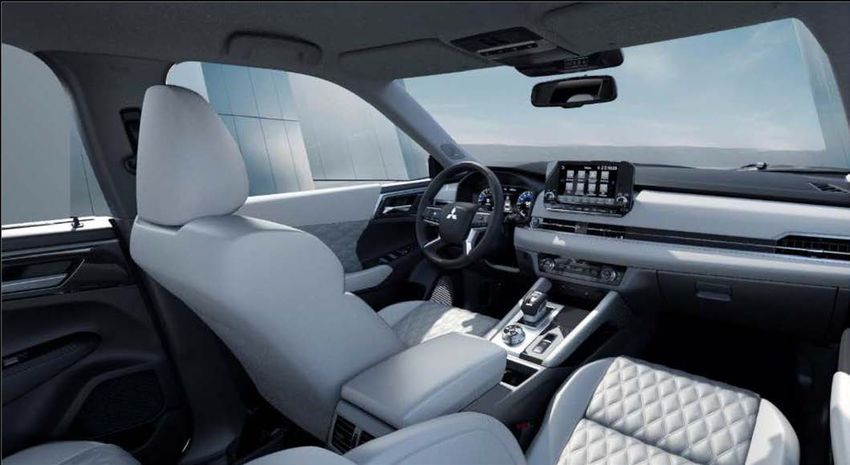
Press information

Design
Message

   ■ The design concept “Bold Stride”
   Based on the experience and commitment that MITSUBISHI MOTORS has cultivated over the
   years, we have renewed everything in the all-new OUTLANDER to embody                       SUV values.
   The design concept of the all-new OUTLANDER is “Bold Stride”. The unique and MITSUBISHI-
   specific exterior and interior design expresses a powerful and dependable presence, as well
   as the functionality and high performance backed by the brand's proven SUV heritage, so that
   drivers can take a new step forward with confidence.

   ■ Powerful front face achieved by the evolved Dynamic Shield
   The front grille, which symbolizes performance, and the Dynamic Shield front face, which wraps
   around the grille from both sides and below and expresses a sense of security, have moved into
   the next generation, making a high-quality, powerful expression as an SUV. The lights are
   separated vertically in a functional arrangement. The daytime running lights and turn signals were
   positioned in the upper half and given a thin, sharp shape to improve their visibility to oncoming
   vehicles and pedestrians. The headlights were placed beneath them, as far to the outside as
   possible, to illuminate the road more brightly and emphasize the wide body. The headlight unit
   consists of three vertically arranged lights, with two low beams at the top and a high beam at the
   bottom, and all front illumination utilizes LEDs to project an innovative spirit.

                           Front side marker light
                           Front turn signal light
                                                                               Form Follows
                           Daytime running light
                                                                                 Function
                           Position light
                           Headlight(Lo beam: 4-lights)
                           Headlight(Hi beam: 2-lights)        PROTECTION                       PERFORMANCE
                           Front fog light

                                                                                                              4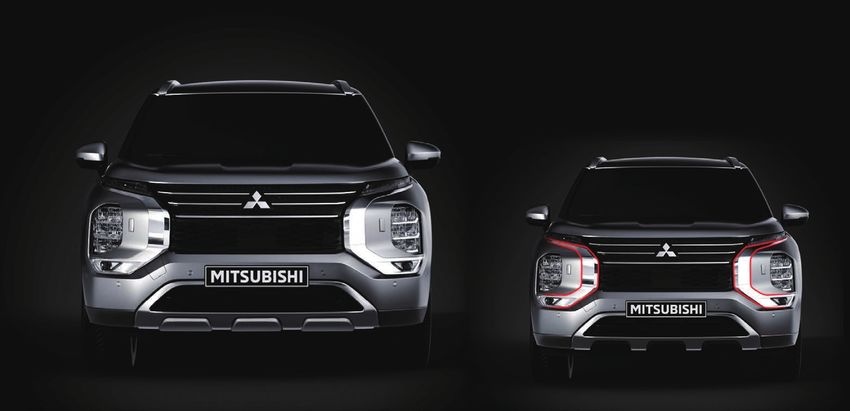
Press information

Design

   ■ Horizontal-themed character lines, large-diameter wheels
     and overhanging fenders project a feeling of stability

   Everything started from designing the proportion. A styling that expresses confidence and
   stability is achieved through a strong, horizontal-themed proportion and muscular
   fender flares that cover the available 20-inch large-diameter wheels. A touch of forward
   motion was expressed by adopting a jet tail fin pillar. The cross-section of the body
   balances a rich surface and sharply sculpted, edgy character lines to express a sense of the
   generous attitude appropriate to an SUV.

                                                                                                   5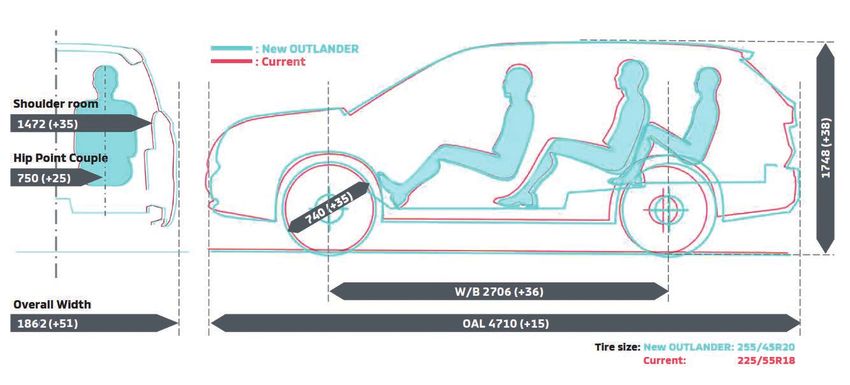
Press information

Design

   ■ “Hexaguard Horizon” tailgate design
     and rear combination lights project refined individuality

    A    new   rear   design   identity w e ca l l “Hexaguard   Horizon”   has   been   adopted   to
    support the wide and sophisticated SUV styling. The tailgate is stamped with a sharp
    hexagon motif like that cut from a single surface, and was inspired by the rear style of the
    PAJERO/MONTERO with a spare tire mounted on its rear. This shape expresses stability,
    strength and reliability befitting an SUV, as well as high levels of on- and off-road
    performance. Furthermore, the horizontal-themed T-shaped taillights enhance the wide
    look of the body and suggest high-levels of stability.

                                                                                                        6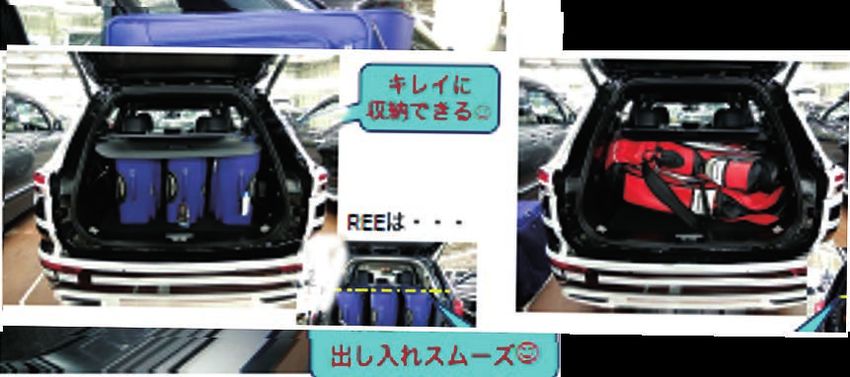
Press information

Design

   ■ High-quality body color highlights the beautiful styling
   Following Red Diamond and White Diamond, Black Diamond is newly offered as an addition
   to the the brand's unique Diamond Color series. Black Diamond is a special color
   consisting of three coats: a high-density gloss layer containing glass is added to produce
   the impression the vehicle appears jet black when not lit, but then emits a radiant shine
   when struck by light to express the power that is hidden within. A total of eight body colors
   including five basic colors are available.

   (Note: color availability will vary by market; U.S. specifications and availability will be announced separately).

      Diamond colors

                   Red Diamond                             White Diamond                              Black Diamond           NEW

      Basic colors

                      White                                       Sterling Silver                                       Titanium Gray
                      *Not available in U.S.

                    Black                                        Cosmic Blue                                            Deep Bronze

                                                                                                                                                       7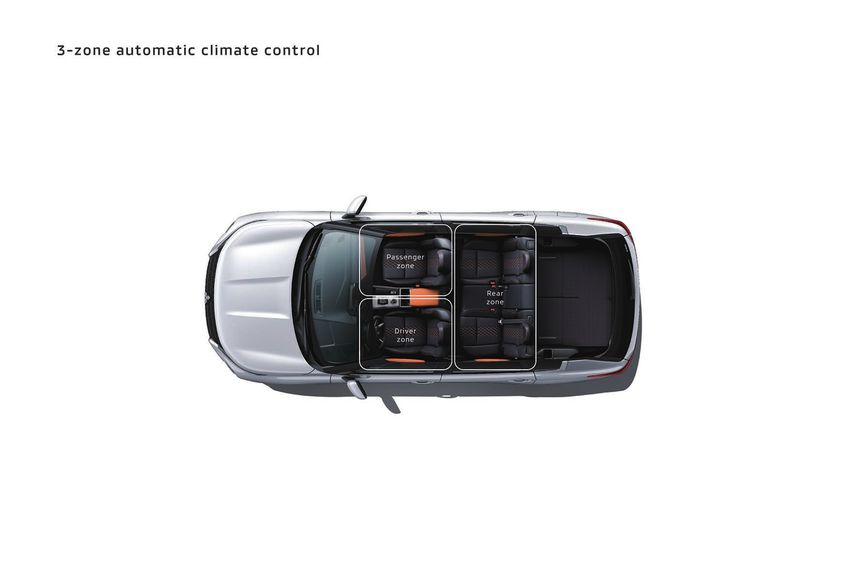
Press information

Design

   ■ Interior design with functionality and comfort
    A powerful horizontal linear design “Horizontal Axis” that runs through the instrument
    panel was developed and employed for the interior design.
    This functional modeling gives the vehicle a spacious and roomy look, while making it easy
    to see the changes in the vehicle position and attitude during off-highway driving. Further,
    the center console uses a design that allows it to appear to float from the instrument
    panel. For the door panel, door trim is laid out over a wide area and soft padding is used on
    the instrument panel and center console sides for added occupant comfort. All of the
    padding is stitched to project a high-quality feel.

   ■ Items with a high-quality look and feel
    The interior is equipped with items that give the vehicle a high-quality feel that surpasses
    its class. L-shaped illumination is used to make the door handles easier to find and operate,
    even in the dark. The thickness of the steering wheel is shaped to naturally fit the palms
    to make it easy to grasp, and the same consideration is incorporated into the shift selector.
    The feel and operation of the drive mode selector, air conditioner and audio controls were
    improved using a diamond cut with a wide contact area. All of these were adopted to
    deliver a sense of clarity and sturdiness, what we call “Mitsubishi Touch”, and all have a
    consistency of operation feel. Attention to detail and the feeling of hospitality are also
    evident by such amenities as each seat being provided with a smartphone holder.

                                                                                                       8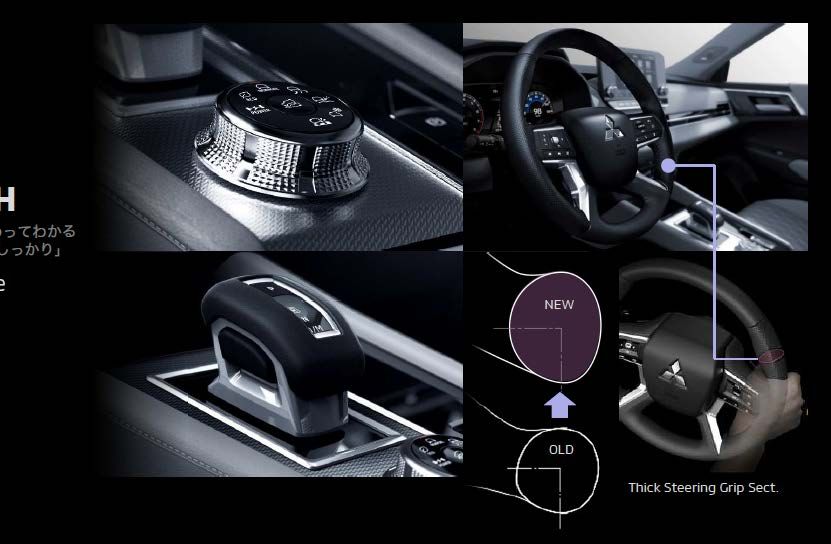
Press information

Design

      ■ Refined color coordination gives
        an even greater high-class appearance
      Seating surfaces for the U.S.-market SEL trim are genuine leather, available in light gray
      and black. The instrument panel and door trim are matched to the seating color, and for the
      interior material, real aluminum is used to trim around the shift panel. Saddle tan
      accent color for the trim and stitching, and semi-aniline leather seats are optionally
      available for the SEL model as well. The U.S.-market SE trim features black suede
      combination seats and piano black interior material, while the U.S.-market ES trim offers
      light gray or black fabric seats and piano black interior material.

                                  Seat                                      Interior material

              Genuine
              Leather
            (Light Gray)

SEL                                                       +         Real
                                                                 Aluminum

              Genuine
              Leather
               (Black)

                                                          +
SEL
            Semi-aniline                                            Real
Touring       Leather                                            Aluminum

                                                          +
              Suede                                               Piano
SE          Combination                                           Black
              (Black)

               Fabric
            (Light Gray)

                                                          +
                                                                  Piano
ES                                                                Black

               Fabric
               (Black)

                                                                                                         9
Press information
Packaging
■ Wide body cabin space and seats comfortable for long drives
At 2.0 inches wider than the previous model, the space between all seats was increased to
provide roomy cabin space. Lengthening the wheelbase increased the leg space for the front
seats by 1.0 inches and for the 2nd-row seats by 1.1 inches, ensuring OUTLANDER is a
comfortable place to spend time for all occupants.
New OUTLANDER Previous OUTLANDER
Length/width/height (in) 185.4/73.3/68.8 184.8/71.3/67.3
Wheelbase (in) 106.5 105.1
Tread front/rear (in) 62.7/63.1 60.6/60.6
Interior length/width/height (in) 96.7/59.2/48.8 112.2/58.9/49.8
The front seats have a two-layer urethane structure that has a soft initial touch and an
optimized shape to ensure the seats are comfortable and reduce fatigue during long trips.
The ability of the seats to support passengers' posture during cornering was also greatly
increased. The driver’s seat is an eight-way power seat with power lumbar support and seat
memory (linked to each key fob, the system saves the seat position and door mirror
position) that increases the premium feel. In the second-row seats, high-quality ride
comfort was achieved by optimizing the firmness, shape, and thickness of the urethane
pads as well as the arrangement of the support wires. The seat back length was also
extended to disperse the pressure applied to the back and support the shoulders. The
front and second-row seats are equipped with seat heaters with three temperature settings
to provide even greater comfort.
■ Front seat ■ 2nd-row seats
Slab urethane
for the main parts
23.50 in
Slab urethane
for the side parts
Optimization of urethane pads (hardness and shape)
Optimization of frame layout
8-way power seat Optimization of support wire positioning 10Press information
Packaging
■ Optimum driving posture, good visibility,
and excellent ingress and egress
Compared to the previous model, the front
seat slide length was increased by 1.6 in. to
10.2 in., the steering tilt amount was
increased by 0.4 in. and the telescope amount by
0.8 in. This increase in the adjustment range allows
the driver to adjust the relationship between the
seat and steering wheel to the optimum driving
position.
To improve visibility, the field of view between the A pillar and the door mirror was
increased to make it easier to do a safety check when turning right or left. The washer nozzle
has also been built into the wiper arm to spray the windshield cleaner at the optimum
time in conjunction with the wiper movement, reducing visual obstruction when
spraying. By improving efficiency, consumption of windshield washer fluid is reduced.
Better visibility Wiper arm with washer nozzle
Garnish has been installed on the door side to
reduce the distance from the center of the front hip
Front hip point
point to the side sill area, improving passenger ease
of ingress and egress. The garnish installed on
the door- side covers the side- sill area to
prevent clothing from getting dirty when
Side sill
getting in and out of the vehicle.
17.4 in
11Press information
Packaging
■ Easier seat arrangement and improved ease of cargo loading
The second-row seats have a folding mechanism so they can be folded up with one
action. Furthermore, a lever on the quarter trim provides remote operation from the luggage
space, eliminating the hassle of having to go and open the rear door to fold down the
seats. A 40:20:40 split is used for the second-row seats so that long items can be loaded in,
while still leaving room for two adult passengers. By changing the folding mechanism from
the previous model, the luggage space length when the second-row and third-row
seats are folded up has been increased to a maximum of 80.3 in. (66.4 in. in the
previous model).
*Maximum value when the front seats are slid to the forward most position.
Furthermore, the luggage space opening’s floor width was expanded to 37.4 in. (from 31.5
in. in the previous model) while the opening’s floor level difference was eliminated to make
the cargo area flat and allow the smooth loading and unloading of large and heavy objects.
The tonneau cover is attached in a high position and the wheel arch rear-trim shape was
improved to allow up to three large suitcases (11.8 x 19.1 x 27.6 in.) or four 9.5-inch golf
bags to be stowed under the tonneau cover. In addition, an easy-to-use luggage under-
box and two side boxes are provided under the luggage space floor for hidden storage.
12Press information
Platform,
Body and Collision Safety
■ High-rigidity body aids in safety and driving stability
The platform of the all-new OUTLANDER was developed through the Renault-Nissan-Mitsubishi
Alliance. It is a high-level next-generation platform that satisfies the quality requirements of the three
companies. A cyclic structure was used to connect the engine compartment suspension members to
the spring house and cowl top, and a cyclic structure was also used for the cabin windshield and
from the rear door back-floor member to the rear pillar and roof. Adding a cyclic structure that is
connected in three locations, one to the engine compartment and two around the cabin, increased
the front body rigidity by 26% and the vehicle torsional rigidity by 33% over the previous model
and contributed to significantly increasing the driving stability. Weight was also reduced by using
an aluminum hood, which saved approximately 13.2 pounds compared to a steel hood, and by
using plastic front fenders, which saved about 4 pounds compared to steel fenders.
MITSUBISHI MOTORS' original RISE (Reinforced Impact Safety Evolution) collision safety vehicle body,
which combines a high-performance collision energy absorption design with a deformation-resistant
passenger compartment, is also used. For the first time, MITSUBISHI MOTORS has used ultra-high tensile
strength steel sheet with hot stamping, which is stronger than regular steel sheet, around the cabin to
create a cabin structure that is highly resistant to deformation while also saving about 50 pounds in
white body compared to conventional steel sheet. To achieve a high energy absorbing structure for the
front area, the suspension member cross section was increased to give the suspension the required
strength while driving, and together with the front side members, the energy absorption rate during a
collision was also increased. The six floor members under the body are designed to disperse the impact
during a collision. Optimizing the arrangement suppresses floor vibration and contributes to greater ride
comfort. For the airbags*, a front center airbag for the driver's seat and side airbags for the second-
row seats were newly added. The front center airbag deploys between the driver's seat and front
passenger seat during a side collision to minimize the chance of passengers contacting each other. An
effort was made to reduce the size of the driver’s seat airbag stowage space to increase the degree of
freedom for the steering wheel design. These measures provide greater safety and will comply with
each country’s’ NCAP safety evaluations, which are becoming stricter each time the evaluation
standards are reviewed.
*Airbags are part of a Supplemental Restraint System (SRS). To decrease the risk of injury from a deploying airbag, always wear your seat belt, keep feet on floorboard,
sit upright in the middle of the seat and do not lean against the door. Always place children 12 and under in the rear seat and use appropriate child restraints .
Never place a rear-facing infant restraint in the front seat. See your owner's manual and the instructions provided with your child restraint for additional information.
13Press information
Engine and
Transmission
■ Power performance for smooth driving and agile acceleration
while achieving high fuel efficiency
The all-new OUTLANDER is equipped with a 2.5L
gasoline engine newly developed by the Alliance.
This inline four-cylinder PR25DD engine is a
naturally aspirated engine with excellent total
balance, strong maximum output and higher
fuel efficiency than the previous model3. Torqueful
at low to medium rpm, the output ramps
smoothly at high rpm, making for easy handling and
confident and predictable drivability.
This new engine produces 181 hp at 6,000 rpm and 181
ft./lb. of torque at 3,600 rpm.
3. Specifications are preliminary and subject to change. Fuel efficiency claims are preliminary and based on European WLTC.
Three improvements made possible 1. Improved engine output by 8.9%
with technologies newly adopted by 2. Minimized engine fuel consumption rate by 2.6%
MITSUBISHI MOTORS 3. Met SULEV30 requirements in emission level (2WD)
Mirror bore coating : Mirror bore coating is used to give the cylinder a mirror finish, which
contributes to higher fuel efficiency by reducing friction.
Variable tumble control valve : Using a variable tumble control valve to optimize the
air-fuel mixture by varying the amount of tumble improves direct injection
efficiency, lowers CO2 emissions, and increases fuel efficiency. This also
provides excellent acceleration and improves acceleration performance.
Electric VVT : A continuously variable electric intake MIVEC is used to control the intake valve opening
and closing timing to reduce the effects of oil temperature and engine speed. Furthermore, a MIVEC with
intermediate lock is used on the exhaust side to respectively set the valve timing for low emissions and for
high fuel efficiency.
Variable capacity oil pump : This reduces friction and contributes to fuel efficiency.
Other high fuel efficiency and low emissions technologies : Using a cooled external EGR reduces the
temperature increase of recirculating exhaust gas to both improve combustion efficiency and lower
emissions. Furthermore, using plastic for the port directly before entering the cylinder on the intake side
suppresses the temperature increase of the intake air to increase intake density, improve output, and achieve
high fuel efficiency.
■ Eight-speed sport mode CVT
The transmission is matched with a 2.5L gasoline engine and is equipped
with an 8-speed sport mode CVT with optimized torque converter
characteristics and differential ratio. The 8-speed sport mode enables
rapid speed change response to provide a sporty drive feeling. Step-shift
control is used in the D range to provide responsive speed change like that of a
multistage automatic transmission. Rapid throttle opening achieves a strong and agile
acceleration feeling that smooths expressway merging and similar actions. Conversely, in
normal driving the system is smooth and unobtrusive .
■ Shift-by-Wire System (a first for MITSUBISHI MOTORS)
This system is used in the shift selector to control the shift operation using electric
signals. This improves operability because shift operation is possible using a very small
stroke. This system provides a feeling of innovation and quality, and is simple and intuitive 14
to operate.Press information
Drivetrain
■ Front- and rear-wheel brake control for greater driver confidence
For S-AWC models, electronically-controlled 4WD incorporating a hydraulic clutch driven by
an electric motor is used in the center coupling that directs front and rear torque
distribution. Because the front and rear wheel drive can be directly controlled when
the vehicle is stopped, a rear wheel drive force is generated at the moment of start-off
to provide a powerful sensation befitting a 4WD. This system minimizes wheel
slip, generates power under severe conditions such as starting off uphill on frozen roads,
and adds to the driver's sense of confidence.
The all-new OUTLANDER is also equipped with an improved S-AWC integrated vehicle
dynamics control system. The Brake AYC (Active Yaw Control) with brake control added for
the rear wheels is added, leading to distributed control for the front and rear wheels. It
allows a wide range of control as a 4WD and delivers an effect similar to the function of
differential lock in scenes such as when two wheels are off the ground.
S-AWC uses sensors to detect the steering angle, yaw rate, driving torque, brake pressure,
wheel speed, and other factors to continuously and correctly identify driver operation and
vehicle status. The Brake AYC optimizes the difference in drive force and braking force
between the front/rear and right/left wheels to maximize the tire grip potential
during cornering, increasing the driver's ability to steer as desired.
For the 2WD model, the Brake AYC developed for front and rear wheel distribution control has
also been incorporated and provides integrated control with ASC (Active Stability Control
system) and ABS (Anti-lock Braking system). Not only does this maintain driving stability on a
variety of road surfaces, but it also conducts four-wheel brake control during cornering to
allow drivers to corner as intended.
15Press information
Drivetrain
■ Drive modes that bring out the potential to handle
a variety of road surfaces
The all-new OUTLANDER is equipped with drive modes that allow the driver to select the
vehicle driving characteristics that are optimal for a variety of operation styles and driving
situations. There are six modes for 4WD models and five modes for 2WD models. The drive
mode selector in the center console can be used to choose from Eco mode (set on the left side)
and the drive modes for various road conditions (set on the right side). Each drive mode is
tuned according to various road surfaces so that the optimum mode can be
found immediately. The set modes are Normal for normal driving, Tarmac for driving on
paved roads, Gravel for high traction performance and stability on unpaved roads, Snow
for snowy and other slippery roads, and Mud for increasing road handling ability on muddy
roads, in deep snow, and similar conditions (only available in 4WD models). The drive modes
bring out the road performance of 4WD vehicles and also enhance the potential of 2WD
vehicles, increasing the sense of security and reliability while driving (Mud mode is not
available in 2WD models). When a mode is selected, an image representing the driving
situation is displayed in the Digital Driver Display to allow the driver to intuitively select a
mode without taking their eyes off the road even when the road conditions suddenly change.
ECO Drive mode NORMAL
For environmentally- For normal driving
friendly,
fuel-efficient driving
This mode balances driving
This mode sets engine and performance with fuel
4WD efficiency and supports efficiency for a variety of road
fuel-efficient driving. conditions and driving styles.
TARMAC GRAVEL SNOW MUD
For dry pavement For unpaved For slippery roads For muddy roads
and wet roads and deep snow
This mode provides This mode improves traction This mode increases This mode optimizes the tire
rapid acceleration response performance and stability on control for snowy and slip ratio for improved
and increases cornering gravel and other unpaved other slippery roads to performance in particularly
performance on mountain roads. minimize wheel slip. low-traction situations.
and other winding roads.
16Press information
Chassis
■ Steering with stable operability, suspension for smooth driving
Dual-pinion type power steering with the electric motors placed close to the tires is adopted
in the all-new OUTLANDER. It provides linear responsiveness without a time lag for more
accurate steering and minimizes driver fatigue during long drives. It also provides
consistent feedback on rough roads and aids driver confidence. Furthermore, the steering
wheel turns from lock-to-lock have been reduced to 2.6 turns from the 3.3 turns in the
previous model. This makes steering easier when turning or parking, and provides steady
steering with good response when driving.
For the suspension, aluminum is used for the front and rear knuckles, a first for
MITSUBISHI MOTORS. Both weight reduction and high rigidity were achieved by using forged
aluminum for the front lower arms and rear upper arms. Hollow stabilizers were also
employed for the front and rear to reduce weight while also improving roll rigidity by
increasing the bar diameter. With this, the roll angle during cornering is decreased by
14% compared to the previous model. Also compared to the previous model, the overall
suspension rigidity is increased by 17% for toe rigidity (tire direction) and 5% for camber
rigidity (tire tilting) at the front, and by 40% for toe rigidity and 14% for camber rigidity at the
rear. Along with decreasing the roll angle, giving the suspension high rigidity contributes
greatly to linear stability and improved traceability during cornering. The suspension stroke
was increased by .8 in. over the previous model on the extension side for both the front
and rear to provide flat and smooth, secure and high-quality ride comfort.
Furthermore, the tire vibration that in the end is transmitted to the steering wheel as a specific
frequency is attenuated by liquid seal bushings that are used on the front lower arm to
suppress the tingling sensation and enhance the impression of smoothness. Liquid seal
bushings are also used on the front side of the rear cross members to attenuate vibration
in order to provide high-quality ride comfort for rear seat occupants.
■ Braking performance enhanced by the adoption of large-diameter brake discs
Large-diameter brake discs are used to match the large-
diameter and wide tires. These were increased to 13.8 in. for the
front (previous model 11.7 in.) and 13.0 in. for the rear (previous
model 11.9 in.), and ventilated discs with excellent cooling
are used for both the front and rear brakes. This provides
excellent braking performance and a secure braking feeling in
a variety of situations from city driving to expressway travel. 17Press information
Chassis
■ A high-quality ride achieved by suppressing vibrations
through the steering wheel
To improve quietness, the rear suspension cross members were connected to the body via
bushings to reduce the noise from the tires, which are a major path of noise infiltration.
The anti-vibration structure was combined with the link elastic supports for minimial road-
noise and to provide a comfortable ride.
The sound insulation was further improved by closing the service hole opening in the
inner door panel with a plastic cover, closing gaps around the weather stripping, and applying
weather stripping to the gap between the front and back door. Special attention was
paid to the sounds close to the occupants' ears, resulting in the use of sound insulting film
that is laminated in the glass used for the windshield and both front door roll-down
windows. The A-pillar garnish shape was optimized to create a stepped shape to keep
out rain water while reducing wind noise. The noise generated inside the cabin was
reduced by tuning the resonance of roof, back door, floor, panels, and other areas to minimize
the low frequency humming sound that makes driving tiring.
In another first for MITSUBISHI MOTORS, the driver's seat airbag module is equipped with
a dynamic damper that uses the airbag module’s own mass as a dampener. Together with
the increased rigidity of the steering column, this minimizes the unpleasant vibration
transmitted to the hands from the steering wheel and improves the class-above feeling
and comfort of the driving operation.
The all-new OUTLANDER is equipped with a wide body, wide tread, large-diameter and
wide tires, quicker and dual pinion steering, a body with increased end-rigidity, and a
tuned suspension that achieves both high rigidity and a smooth stroke. With these
features, high-quality ride comfort is maintained while greatly improving the direct feeling
of the linear response to steering operation and linear stability and traceability during
cornering. Combined with greatly improved braking performance, the new OUTLANDER
delivers a driving feel that makes every trip fun and confidence inspiring.
18Press information
Driver Assistance
Technologies
Advanced technology for lane keeping and maintaining speed
to support pleasant driving
■ MI-PILOT Assist*
MI-PILOT Assist integrates Adaptive Cruise Control (ACC) and Lane Keep Assist (LKA) and
supports driving ease and confidence by maintaining the distance between vehicles and keeping
the vehicle in the center of the lane. Furthermore, vehicles equipped with navigation link
can read the speed signs to automatically change the set speed and utilize the navigation
map information to automatically adjust the vehicle speed as appropriate for curves and forks
in expressways and other situations. While driving in heavy traffic on expressways, the vehicle
can automatically move forward if less than about 30 seconds have passed since the
vehicle stopped.
*MI-PILOT Assist in the U.S. and Canada.
■ Adaptive Cruise Control (ACC)
The system supports driving by responding to the accelerations, decelerations, and stopping of
the vehicle in front that are detected by millimeter-wave radar and camera. In addition
to maintaining a set speed, it also maintains the distance between vehicles, which can be
selected from three levels, while driving with a preset speed as the upper limit. The vehicle
also stops when the car in front stops and remains stopped, and when the car in front moves
forward within a set amount of time, the vehicle moves forward when the driver depresses the
accelerator or operates a switch, and drives behind that vehicle ahead again (MI-PILOT Assist
specification. In ACC specification, the ACC is canceled after the vehicle has been stationary for
three seconds).
■ Lane Keep Assist (LKA)
The camera installed at the top of the front windshield continuously monitors the vehicle's side-
to-side position in the lane. Through steering control, the system supports the steering
operation to keep the vehicle in the center of the same lane
■ Traffic Sign Recognition (TSR)
(A first for MITSUBISHI MOTORS’ North American model)
The camera installed at the top of the front windshield recognizes speed signs and displays the
speed limit in the speedometer.
■ Automatic High Beam (AHB)
The system automatically switches from low beam to high beam, and from high beam to low
beam. Whether or not to turn on high beam is determined based on the existence of
on-coming vehicles, vehicles out in front, the brightness around the road, and other
factors. AHB enhances distant visibility while reducing instances of forgetting to switch to
low beam through manual operation.
19Press information
Driver Assistance
Technologies
■ Hill Descent Control (HDC)
The system detects steep slopes and automatically controls the braking to keep the
vehicle speed at 12.5 mph or less. The driver can concentrate on steering without depressing
the brake pedal when going downhill.
■ Trailer Stability Assist (TSA)
The system assists stable driving while towing a trailer by controlling the right and left
front wheel braking when swaying is detected. The engine output is also controlled to assist
the stable travel of the trailer and tow vehicle.
20Press information
Preventive Safety
Minimize collision risk and support safe driving
■ Forward Collision Mitigation system (FCM)
The camera and millimeter-wave radar continuously monitor the distance to, and
relative speed with, vehicles to the front, as well as pedestrians. When the distance to a
vehicle in front or pedestrian closes and presents a risk of collision, a visual and audible
warning is issued, and the brakes are automatically applied to minimize the chance of a
collision.
■ Predictive Forward Collision Warning (PFCW)
The millimeter-wave radar monitors the distance between and relative speed of the vehicle
in front, and the vehicle in front of that. It detects changes to the front that cannot be seen
from the vehicle and then warns the driver using a warning buzzer and information screen
display when it determines vehicle speed must be reduced.
Rear Safety
■ Active Blind Spot Assist (ABSA) &
Blind Spot Warning (BSW) / Lane Change Assist (LCA)
When the millimeter-wave radar installed in the rear bumper detects a vehicle diagonally
to the rear or a vehicle approaching from the rear, which may be in the driver's blind spot,
the system turns on a door mirror indicator to warn the driver. If the turn signal is
activated with a vehicle detected by the BSW, the door mirror indicator flashes and the
warning buzzer sounds to alert the driver (BSW/LCA). If the driver continues to attempt to
change lanes, slight braking is applied to assist in returning the vehicle to the inside of
the lane (ABSA). The system assists the driver’s operation to return to the original lane.
Prevention of Lane Departure
■ Lane Departure Warning (LDW) & Lane Departure Prevention (LDP)
The camera installed at the top of the front windshield continuously monitors the lane to the
front. The driver is warned by steering wheel vibration and the information screen display when
there is unconscious lane departure or the driver attempts to change lanes without
signaling (LDW). In this case, slight braking is applied to return the vehicle to the inside of
the lane (LDP) and avoid crossing over the lane divider.
■ Driver Attention Alert (DAA)
The system monitors the driver's steering operation. When it detects a decrease in
concentration from an operation status change - a lack of steering input over a certain
amount of time, for example - the information display advises the driver to take a break.
21Press information
Preventive Safety
Prevent oversights when backing up and reduce driver burden
■ Rear Automatic Emergency Brake (Rear AEB)
When the vehicle is shifted to Reverse, the ultrasonic sensor installed in the rear bumper
detects obstacles to the rear. When there is an obstacle and the distance to that
obstacle closes due to sudden accelerator operation or other cause, and presents a risk of
collision, the brakes are automatically applied to minimize the chance of a rear collisision
or reducing the damage of a collision (below 10 mph).
■ Rear Cross Traffic Alert (RCTA)
When moving in reverse, such as when backing out of a parking space, the millimeter-wave
radar installed in the rear bumper detects vehicles to the diagonal rear or approaching
from the rear, which may be in the driver’s blind spot. If this occurs, the door mirror indicator
flashes and a warning buzzer sounds to alert the driver.
■ Reverse auto tilt door mirrors
When the vehicle is shifted to Reverse, the door mirror angle is lowered accordingly to allow the
driver to see behind and check the parking space line when backing up, supporting
parking maneuvering. When the vehicle is shifted to Drive or Park, the mirror returns to its
normal angle.
■ Multiview Camera System
Images to the front and back, right
and left of the vehicle are taken by
four cameras and displayed in the
center display screen. Blind spots
that cannot be seen from the driver's
seat can be checked as if they are being
seen from above the vehicle. A zone
display function that detects the
sudden approach of children or
animals has been newly added. This
supports safe driving during parking
and other situations.
22Press information
Standard and Optional Features
■ Bright, large-screen Digital Driver Display that can also
display navigation information
The all-new OUTLANDER can be equipped with two types of instrument meters
depending on the trim level. Meters equipped with MITSUBISHI MOTORS’ first full-screen,
full-color LCD (12.3-inch full Digital Driver Display) shows a variety of contents on a
large screen with clarity in an easy-to-view manner without appearing cluttered. The
display can also be switched between the familiar binocular display (classic mode) and an
advanced display (enhanced mode). The display is also equipped with a customization
function that allows a variety of information, such as fuel consumption and gear position,
to be combined and displayed at the driver's choice.
The other high-contrast meter can show simple turn-by-turn navigation in the central
information display (7-inch multi-information display). It utilizes the high recognition
advantage of an analog display while producing a high-quality look with a stereoscopic
dial and decorated indicator needle.
■ 12.3-inch full digital driver display ■ 7-inch multi-information display
Instruments shown in km/h operation
Common Functions:
Both meters are equipped with a special speaker in the cabin that gives notifications using
original sound effects that are not simple sounds like buzzers. These sound effects were jointly
developed with BANDAI NAMCO Research Inc., and sounds befitting the image of MITSUBISHI
MOTORS were created. Also, the meters can display a wide range of information, such as
images that match the driving situations selected using drive modes, navigation and map
information linked with the center display, and audio information. Wiper and light operation
information is displayed in pop-up displays in the meters, allowing the driver to check what
positions they are in without having to look at the column switches.
23Press information
Standard and Optional Features
■ Large screen display makes it easier to see and
use a variety of functions
The all-new OUTLANDER is equipped with two types of large center displays depending on the
trim level. These were laid out at the center top of the instrument panel where there is little
line of sight movement for safe viewing of information and entertainment. The displays have
been treated with bonding that reflects little light to improve visibility, and they can be viewed
even while wearing sunglasses with polarized lenses. Touch operability was increased by
positioning the displays where the driver can naturally reach out to touch them.
■ Two types of center displays
The Smartphone-link Display Audio navigation system features a large 9-inch screen and
provides highly accurate route information using internal maps and navigation functions. A
variety of functions, such as navigation and audio, can be easily selected with one touch of
the launch menu icon that is always displayed at the bottom of the screen. Android
Auto™4 and Apple CarPlay®5 applications may be accessed by connecting* to Android™
smartphone or iPhone®. Functions for receiving the latest traffic information or
updating software online are also planned for the near future.
The other Smartphone-link Display Audio 9-inch Smartphone-link Display Audio navigation system
system features an 8-inch screen. It does
not have navigation functions, but by
connecting to smartphone, navigation
functions can be accessed through
Google Maps™ or Apple Maps®. A wide
range of contents are also supported,
such as using applications to play music.
4. Android Auto, Android and Google Maps are trademarks of
Google LLC.
5. Apple CarPlay, iPhone and Apple Maps are trademarks of Apple
Inc. registered in the United States and other countries.
■ Head-Up Display (HUD)
To provide drivers with driving information safely
and quickly, for the first time MITSUBISHI MOTORS has
installed a windshield-type 10.8-inch Head-Up
Display (HUD) to project information onto the
windshield in full color. The display focal distance
was set at 6.6 feet to match the driver's forward-
looking focal point to allow the HUD information to be
seen clearly with little movement of the line of sight.
The driver can switch it on/off manually and
customize the displayed contents. In addition to
driving information and warnings such as lane
departure, the displayed contents include
navigation and audio information linked with the
center display. These can also be displayed at the
24
same time.Press information
Standard and Optional Features
■ Safe and pleasant driving supported by
connecting the driver to the call center and the vehicle
Mitsubishi Connect is a connected vehicle system that allows users to enjoy a more comfortable
car life as well as a safe driving experience. To protect the safety of the driver, it can request
assistance from the call center at the press of a button in case of breakdown or accident, and it
automatically reports when an airbag is deployed. It also handles a variety of other incidents,
such as generating a vehicle theft warning and reporting vehicle position information to
the user if the vehicle is stolen.
From the My Mitsubishi Connect app, the vehicle’s parked position can be located, and the
vehicle’s lights can be flashed to show where it is parked. Many convenient functions are
provided, such as remote operation that can be used to start the engine and operate the air
conditioner before getting in to make the cabin comfortable during cold winters and hot
summers, as well as unlocking the doors from a remote location. The user can also receive
notifications when the vehicle is driven outside of a set time period, above a set speed, or
outside a set area.
■ Sound system provides the realism and power of a live performance
The all-new OUTLANDER is equipped with a BOSE6 premium sound system that provides
sounds like that of a live performance. Bose Corporation was founded by Dr. Amar G. Bose, a
professor at Massachusetts Institute of Technology (MIT), to commercialize his research.
Their car audio is developed using a monitoring system called a dummy head that mimics the
human ear, and it is recognized around the world for its natural sound inside the vehicle cabin.
The all-new OUTLANDER is equipped with a sound system consisting of 10 speakers born
from the technology of Bose Corporation. The front three-way system is optimally laid out,
such as setting the mid-range speakers high close to the ears, to reproduce the sound of
actually being in front of an artist. The large door woofers are installed in door panels with a
damping structure and sealed to prevent sound leaking. Combining these with BOSE's
proprietary Acoustimass dual subwoofers provides excellent reproduction of powerful deep
bass to achieve the high-quality sound expected in MITSUBISHI MOTORS' flagship vehicle .
6. The Bose name is a registered
trademark of Bose Corporation in the
United States and/or other countries.
25Press information
Standard and Optional Features
Easy-to-use storage space, amenities
■ Easy-to-use storage space
The shift selector structure was simplified to provide a large amount of storage in the center
console box. Cup holders abound by providing holder space in the center console,
second-row seat center armrest, and quarter trim. The bottle holder in the door pocket holds
larger bottles and is tilted for easy insertion and removal.
■ Smartphone storage space
Space for storing smartphones is provided in the center console tray, center console side
pocket, driver's seat back pocket, and quarter trim pockets. An opening size for easy storage
and drop prevention has been employed to increase the convenience for each seat.
The center console tray also has a wireless phone charging function (15W) that
charges smartphones when they are placed on it. This supports phone sizes up to 17.8 in. ×
4.6 in. USB charging through both Types C and A are provided on the front and back of the
center console respectively. The ports on the front of the center console are illuminated so
they can be easily found at night.
26Press information
Standard and Optional Features
■ Three-zone automatic climate control (a first for MITSUBISHI MOTORS)
Three-zone automatic climate control is provided
for the driver's seat, front passenger seat, and rear
seats to maintain a comfortable temperature. The
rear seat discharge vents are located in the back
side of the center console.
■ Power panoramic sunroof
The all-new OUTLANDER can be equipped with a
large 36.5 × 27.6 in. glass sunroof. The width of the
support pillar was kept to 5.1 in. to not detract
from the feeling of openness.
■ Rear door sunshade
The all-new OUTLANDER is equipped with a sunshade that pulls out from the rear door trim.
This blocks direct sunlight to increase rear seat comfort.
■ Electric tailgate
A kick-motion sensor has been installed in the bottom center of the rear bumper. The user
can open and close the tailgate by holding their foot under the bumper, and the opening/
closing time has been decreased to 4.5 seconds (from 8 seconds for the previous
model) to further improve convenience. The height of the tailgate when opened can be
adjusted to accommodate use in such areas as parking garages with a low ceiling.
27You can also read


