The Canadian AI Ecosystem: A 2018 Profile - Green Technology Asia Pte Ltd - Green Technology Asia ...
←
→
Page content transcription
If your browser does not render page correctly, please read the page content below
The Canadian
AI Ecosystem:
A 2018 Profile
   Green Technology Asia Pte Ltd

Green Technology Asia Pte Ltd

Introduction
Profiling the Canadian AI Ecosystem                          Our Team and Acknowledgements

The following report has been prepared by the                We extend our deepest gratitude to the many busy
research team of Green Technology Asia Pte Ltd.              and kind individuals we interviewed over the course
The research was carried out over several months in          of producing this report.
late 2017, and represents the most recently available
snapshot of AI activity in Canada.                           Researched and written by GTAsia team Brady
                                                             William Fox (lead researcher), Denea Bascombe,
The research included interviews and in depth analysis       Sonia Takhar, with contributions from Chad Rickaby.
of 297 of Canada’s AI companies, researchers and
research institutes. It will provide industry, policy        D. Wynne editor.
makers, investors, and researchers with valuable
insights and details on Canada’s AI sector.                  Copyright Green Technology Asia Pte Ltd 2018

The report outline and summary are available for
download free of charge. More detail, including
databases, competitive analyses, as well as
opportunities for bespoke studies are available for
sale. For further interest and inquiries on pricing
please contact us as info@greentechasia.com.

A second report ‘Opportunities for AI in Asia’ is
currently in preparation. This will include details on the
state of play of AI and the major players in key Asian
markets, as well as strategies for market entry. This is
largely aimed at participants in the Canadian AI sector,
but should be of interest to any AI player. To receive
updates on the report please register your interest
through our website at info@greentechasia.com

1                                                                           The Canadian AI Ecosystem: A 2018 Profile
Green Technology Asia Pte Ltd

Contents

Profiling the Canadian AI Ecosystem                                   4

Executive Summary                                                     4

Canada’s National Profile                                             5

International Hubs: Toronto and Montreal                              6

Specialized Hubs: Vancouver, Waterloo, Edmonton                       7

Regional Hubs: Kelowna, Halifax, Ottawa, Others                       8

National Themes                                                       9

The AI Market for Canada                                              9

Canadian Public Sector Developments                                   10

Canadian Firms by Industry                                            10

Reflections on Interviews with Canadian AI                            11

A SWOT Analysis of Canadian AI                                        12

Canadian AI in International Context                                  14

International Market and Potential for Canadian AI                    14

2                                                    The Canadian AI Ecosystem: A 2018 Profile
Green Technology Asia Pte Ltd

Executive Summary
Canada’s artificial intelligence revolution presents         Canada also benefits from its international reputation
tremendous opportunity to translate an early lead into       and culture. A sense of social consience is a common
a key 21st century industry. It is primed to make major      thread among AI entrepeneurs and researchers, who
contributions to an international fourth industrial revo-    are building technology to change the world. Canada
lution and create significant economic rewards.              offers both professional opportunity and a like-minded
                                                             community.
The value proposition for Canada’s emergent research
hubs and private firms largely comes from the talent         Risks abound, however; as resources are concentrat-
attached to them. These experts form the connective          ed in Montreal and Toronto, it will be an ongoing
tissue of innovation across the country. This is also        challenge to support second-tier centres such as
what ensures the sustainability of Canada’s ecosys-          Vancouver or Edmonton. More remote regions face
tem; Canada’s leading experts in artificial intelligence,    even more challenges. Public dialogue on artificial
including Yoshua Bengio, Geoffrey Hinton, Richard            intelligence is limited and often filled with misconcep-
Sutton and their teams, are invested in translating their    tions. AI solutions will bring signficant job displace-
local network into a lasting innovation ecosystem.           ment, which disproportionately affects on women, on
                                                             low and medium-skilled wage-earners, and on certain
The recent boom in AI in Canada was facilitated by a         communities. Codes of conduct for AI development
critical mass of research and entrepreneurship by these      and application are still largely informal; little progress
and other experts. Much of this was built over decades       has been made on the regulatory front at either the
through support from government institutions such            national or international level.
as the Canada Institute For Advanced Research and
collaboration between universities. A core strength of       But the landscape in Canada provides ample opportu-
Canada’s AI ecosystem is its highly collaborative nature     nity to explore solutions to these problems alongside
across academia and the private sector.                      supporting the artificial intelligence boom. Early suc-
                                                             cess has presented to opportunity to cement its place
The challenges to this nascent industry tell a familiar      as a global artifical intelligence leader for decades to
story in Canada; fear of brain drain, difficulty acquiring   come.
late-stage venture capital, and disparate opportunities
across the country are some of the major concerns. But
the commitment of Canada’s top talent to building AI
hubs in Canada and the collegial nature of the indus-
try present an opportunity to avoid these pitfalls with
adequate public and private partnerships.

3                                                                             The Canadian AI Ecosystem: A 2018 Profile
Green Technology Asia Pte Ltd

Canada’s National Profile
Building a National Profile                                                        Distribution of Firms Across Canada

The artificial intelligence industry in Canada is con-                             The distribution of firms active in AI across Canada
centrated in a few urban centres. We focus on the 5                                mirrors the respective strength of parallel industries
centres of Montreal, Toronto, Edmonton, Waterloo,                                  such as information technology, film and television,
and Vancouver. Approximately 10% firms examined                                    and academic research. Vancouver has a large con-
operated outside of these cities.                                                  centration of private firms relative to research, while
                                                                                   others such as Edmonton and Waterloo are primarily
Montreal and Toronto are the most important cities.                                research centres with less private enterprise. Toronto
Edmonton is a significant research centre but faces                                and Montreal emerge as truly international-quality cen-
difficulties due to isolation relative to Canada’s larg-                           tres for AI development; we predict that their share of
est cities. Vancouver is home to a significant number                              total firms will increase significantly in from 2018-22.
of firms and has deep connections to Silicon Valley,
Seattle, and East Asia, but lacks in research support.
Waterloo is a major research centre in its own right but
relies on its proximity to Toronto and other centres.

 City             Research           Concentration   Start-up      International

                  Support            of Experts      Environment   Connections

        Toronto
     Montreal
     Waterloo
    Edmonton
    Vancouver                                                                      International Hubs, Specialized Hubs, and Regional
            Figure 1: Rating the fundamentals of Canada’s AI centres. 		           Hubs
            A darker hue indicates a higher score.

                                                                                   International Hubs refer to the cities that will emerge
Strengths vary by region. The Pan-Canadian Artificial                              as leaders in the international AI network. Specialized
Intelligence Strategy will provide additional assistance                           Hubs are current leaders in Canadian AI that, while not
to each of these regions but is unlikely to cause any                              at the same scale as international hubs, nonetheless
fundamental change in the current dynamic; regional                                will make major contributions to the development of
differences remain significant. The Canadian AI ecosys-                            the Canadian AI ecosystem. Regional Hubs are leaders
tem is better understood through regional profiling.                               within their province or geographic area and operate
                                                                                   as a window into the regional economy.

4                                                                                                 The Canadian AI Ecosystem: A 2018 Profile
Green Technology Asia Pte Ltd
International Hubs:
Toronto and Montreal
Toronto Montreal
Toronto has the largest concentration of AI firms in Montreal is a major hub for artificial intelligence re-
Canada. We estimate at least 150 startups and es- search, boasting the world’s largest concentration of
tablished firms exploring applications for AI across a AI researchers, with a large and growiing commercial
broad range of industries. Of the 297 firms we exam- scene. In addition to 80+ startups and already estab-
ined closely, 115 had their headquarters in Toronto. lished AI firms, including the preeminent Element AI,
Toronto’s AI sector is buoyed by a strong academic Montreal has several notable research hubs. It is home
history, an established tech industry, proximity to key to some of Canada’s most well-known figures such as
industries such as finance, and government support for Yoshua Bengio.
development of AI as an industry.
Toronto’s AI Ecosystem Montreal’s AI Ecosystem
Firms 115+ Firms 57+
Notable Firms Integrate.ai, Crowdcare, Cyclica, Ideal, Notable Firms Element AI, Fluent AI, Automat, Facebook,
Naborly, Iceberg, Layer 6, Deep Genomics, Imagia, Nuance, Google, Keatext
Blue J Legal, Mindbridge.AI Top 5 Industries for AI Marketing, Customer Service, AI-as-a-ser-
Top 5 Industries for AI Marketing, Health/Pharmaceuticals, Hu- vice, Social Media, Health/Pharma
man Resources, Customer Service, Fintech Research Labs and Support Montreal Institute for Learning Algorithms,
Research Labs and Support Vector Institute, Borealis AI (RBC), Canada Deepmind, CortAIx, FAIR Montreal,
Institute for Advanced Research (CIFAR), Borealis AI
Toronto Department of Computer Scienve Key Individuals Yoshua Bengio, Jean Francois Gagne,
Innovation Lab (DCSIL) Pierre Boivin, Guy Breton, Doina Precup,
Key Individuals Geoffrey Hinton, Brendan Frey, Steve Guy Lapalme
Irvine, Russ Salukhitinov, Fahiem Bacchus, Key Government Programs $100 million CDN, 2017 to 2022 to create
Alan Bernstein, Elissa Strome, Graeme AI cluster (Quebec Government), $213
Hirst, Hector Levesque million CAD, big data and AI research
Key Government Programs 100 million CDN, Vector Institute, (Ontario across 4 Montreal Universities (Ottawa) $97
+ Federal) + $80 million from private firms million CAD to IVADO, 2017-2024, to make
Other Notable Programs NextAI, AI Toronto Montreal AI hub (Ottawa)
Other Notable Programs IVADO, AI Forum, Blue-Chip Committee,
Montreal.ai, Montreal Declaration for a
Responsible Development of Artificial
Intelligence
5 The Canadian AI Ecosystem: A 2018 ProfileGreen Technology Asia Pte Ltd
Specialized Hubs:
Edmonton and Vancouver
Edmonton Vancouver
Edmonton is valuable for its connection to Canada’s While central Canada’s AI ecosystem is characterized
natural resource industries and for the reputation of by both competition and overlap between Toronto
the University of Alberta, a leader in artificial intel- and Montreal, Vancouver is emerging as a unique
ligence research. Dr. Richard Sutton is one of the West Coast centre for artificial intelligence. Buoyed by
fathers of AI in Canada, known primarily for his work in parallel industries such as film, IT, and gaming, as well
computational reinforcement learning, and his essen- as Seattle, Silicon Valley, and Pacific Rim connections,
tial role in the development of Google’s AlphaGo! Vancouver provides unique opportunities and is devel-
Program. oping more independently than central Canada.
Edmonton has both a smaller market and a smaller Vancouver is an entrepreneurial centre first and does
startup ecosystem than other major Canadian cities, not have the concentration of research resources or
but has impressive research credentials and partner- expertise that characterize other AI hubs in Canada.
ships with major firms. In 2017 Google announced the It nonetheless has a strong start-up ecosystem and
opening of Deepmind Alberta, its first international AI significant international connections.
research centre.
Edmonton’s AI Ecosystem Vancouver’s AI Ecosystem
Firms 8+ Firms 64+
Notable Firms ATB Financial, Granify, Engineering Be- Notable Firms Cloudburst , Pathful(Mobify), Kindred,
yond, Onebridge, Promethean Labs. Avgilon
Top 5 Industries for AI Energy, Agriculture, Fintech, E-Commerce,
Marketing Top 5 Industries for AI Fintech, Marketing, Media, Human
Research Labs and Support Alberta Machine Intelligence Institute, Resources, Health/Pharma
Reinforcement Learning & Artificial Research Labs and Support SFU Big Data Centre, UBC Department of
Intelligence Lab, Bionic LimbAlexands for Computer Science, Expa Labs, Vanedge
Improved Natural Control Lab, DeepMind Capital, Creative Destruction Labs
Alberta, Borealis AI (RBC)
Key Individuals Richard Sutton, Michael Bowling, Patrick Key Individuals Alan Mackworth, Suzanne Gildret, Geordie
Pilarski, Jonathan Schaeffer Rose, Fred Popowich, David Poole
Key Support Programs $1.6 million Servus Credit Union and Uni-
versity of Alberta Partnership, Deepmind Key Support Programs BC Tech Fund, BC Tech Strategy, $2
Research Chair million Scotiabank Cybersecurity and Risk
Other Notable Programs NextAI, AI Toronto Analytics Initiative
6 The Canadian AI Ecosystem: A 2018 ProfileGreen Technology Asia Pte Ltd
Waterloo and the
Rest of Canada
Waterloo Rest of Canada: Ottawa, Halifax, Kelowna and more
Waterloo benefits from its proximity to Toronto, Mon- Canada’s AI ecosystem expands beyond its largest
treal, as well as major AI research centres in the United metropolitan centres to include regional tech hubs.
States such as MIT and the University of Chicago. Most notable among these are Halifax, Ottawa, Cal-
While a smaller market, The University of Waterloo gary and Kelowna, but AI firms and experts can be
(UoW) boasts a strong research centre in its own right. found as well in Winnipeg, Regina, and Quebec.
UoW has built strong industry partnerships which 31 out of the 297 firms we examined had their head-
feature a robust research in applied AI. Waterloo quarters outside of the major hubs discussed above.
Artificial Intelligence Institute has partnerships with Despite the benefits of concentrated industries,
over a dozen research labs and has produced products artificial intelligence products of such firms face little
and services actively used by many AI firms, such as barriers to market entry, and so success stories appear
MioVision (traffic data collection), Clearpath Robotics throughout the country.
(autonomous mobile robots), and Kik Interactive (chat
application.)
Waterloo’s AI Ecosystem Rest of Canada
Firms 23+ Firms 31+
Notable Firms Clearpath Robotics, Opentext, Viv, Mio- Notable Firms Invenia (Winnipeg), MindBridge (Ottawa),
vision, InsightNG , Elucid Labs, Acerta, TwoHat Security (Kelowna), Fundmetric
Emagin (Halifax), Symend (Calgary)
Top 5 Industries for AI Marketing, Home Management, Transpor- Top 5 Industries for AI Fintech, Infrastructure, Cybersecurity,
tation, Human Resources, Social Media Media, Marketing
Research Labs and Support Communitech, University of Waterloo; Research Labs and Support Data Analytics Centre (Ottawa), Dalhousie
William G. Davis Computer Research Faculty of Computer Science, Canada
Centre, Artificial Intelligence Group, Vision Artificial Intelligence Association
and Image Processing Lab, Centre for Key Individuals Mohamed Cheriet, Teresa Scassa, Sandra
Pattern Analysis and Machine Intelligence, Zilles, Howard Hamilton, NIck Cercone,
WAVELab Stan Matwin, Gord McCalla, Robert Mer-
cer, Daniel Silver
Key Individuals Alexander Wong, Dr. Ming Li, Thouheed
Abdul Gaffoor, Farnoud Kazemzadeh, Key Support Programs Canada National AI Research Strategy,
Ning Jiang, Robin Gras, $150 million, NextAI, $5.15 million
Key Support Programs $1.6 million Servus Credit Union and Uni-
versity of Alberta Partnership, Deepmind
Research Chair
7 The Canadian AI Ecosystem: A 2018 ProfileGreen Technology Asia Pte Ltd
Dominant National Themes
Investment Trends In Canada
At least 50 per cent of all active investors in Canadi-
an companies are based in Canada. This highlights a
homegrown investor appetite across seed, early and
expansionary stages of investments. Later-stage deals
are the exception. U.S. investors accounted for 33 per
cent at start-up stages, but participate more actively
in later stage deals where U.S. based firms accounted
for 58 percent of investors. In the first half of 2017,
AI attracted $162M in investments according to PwC
Canada. This was the highest amount of funding in
Canada in the past 5 years. Global venture capital
funding in 2016 grew by $5 billion. A total of 22 deals
were made in the first three quarters of 2017, totalling
$191-million. In Canada, the most notable application for AI is
healthcare. Canada has its own niche for social health
Estimated Market Growth by 2025 care data and is able to take advantage of opportuni-
ties featuring AI application in this industry particularly.
By 2025 the market for AI related products is expect-
ed to reach $127 billion. The market is ever-evolving Other sectors which are likely to fuel AI demand over
and contains multiple applications. Findings through the short-term are customer service, marketing, human
stakeholder engagement reveal that the greatest chal- resources, fintech, transportation and logistics, manu-
lenge facing Canadian start-ups is the ability to scale. facturing, social media and energy.
Investment strategies focus on hatching start-ups and
growing them to small and medium sized businesses Human Resources are a large potential market for AI
with early market validations and exponential growth services. In 2016 Deloitte survey of Canadian CEOs,
revenue. There is a large disconnect between both only 28% reported using data analytics to find, devel-
private and public sector funding once an SME has op and keep employees versus a 50% average report-
chosen to scale. In Canada, capital is also exception- ed from their global counterparts. At the same time,
ally impatient. Projects that require large infrastructure only 21% reported that they were considering the
and incremental elongated capital are less likely to be impact of artificial intelligence on future skills needs,
realized in Canada. The most popular AI application compared with a 39% of their global counterparts A
start-ups in Canada are in the fintech, social and real significant portion of the firms we examined were fo-
estate, business analytics, and cyber security sectors. cused on human resources and they absorbed a large
portion of 2017 funding. These firms will continue to
Canadian firms benefit from privileged access to North fuel much of the early industry growth.
American firms and researchers. The west coast of
Canada is also strategically placed to access growing
8 The Canadian AI Ecosystem: A 2018 ProfileGreen Technology Asia Pte Ltd
Public Sector Developments
The largest development in helping shape Canada as This distribution reflects the current market for artificial
an international AI powerhouse has been cooperation intelligence solutions; machine-assisted mass text
between the public and private sectors. In addition to and big data analysis drove adoption in 2016/17 and
a more stable political climate and immigration rules, continue to drive the current boom. But we also found
one of Canada’s competitive advantages in AI is the Canadian AI firms active in dozens of fields ranging
ease of access to medium-sized federal and provincial from education to agriculture.
grants.
Top 15 Industries for Canadian AI by Number of Firms
In the 2017 Federal Budget, the Government Marketing 38
committed $125 million to develop the Canadian Fintech 20
AI industry through the ‘Pan-Canadian Artificial Health/Pharmaceuticals 18
Intelligence Strategy’ . This funding is broadly based Human Resources 14
and open to sectors across the board from agriculture Social Media 11
to financial services and open to companies of all Customer Service 10
sizes. Lifestyle 9
Media 9
The AI Strategy has four major goals:
AI-as-a-Service 8
Cyber Security 7
1. Increase the number of outstanding artificial
Energy 6
intelligence researchers and skilled graduates
Law 5
in Canada;
Manufacturing 5
2. Establish interconnected nodes of scientific
excellence in Canada’s three major centres for Sports 5
artificial intelligence in Edmonton, Montreal Other (less than 4 firms reporting) 112
and Toronto-Waterloo;
3. Develop global thought leadership on While the impact of artificial intelligence is well
economic, ethical, policy and legal implications covered in the largest markets, there are firms seeking
of advances in artificial intelligence; and, to sell solutions across the economy. Of particular
4. Support a national research community on note is the emergence of AI-as-a-service firms, of
artificial intelligence.’ which Element AI is most famous for raising over
$100 million in funding in the summer of 2017. The
Canadian AI Firms by Industry value proposition of “AI-as-a-service” firms is their
concentration of talent rather than a specific product.
Of the 297 firms we examined, the leading industries This model will likely increase in popularity over the
for Canadian AI are marketing, Fintech, health/ coming years, and Canada’s firms serve as a model for
pharmaceuticals, human resources, and social media. the world.
34% (101) of firms profiled were building AI solutions
for these industries.
101 Canadian firms are concentrated in these 5
industries.
9 The Canadian AI Ecosystem: A 2018 ProfileGreen Technology Asia Pte Ltd
Reflections on Interviews with Canadian AI Leaders Importance of Overlapping Private-Academic
Cooperation
We conducted anonymous interviews with leaders
from major Canadian AI research centres and firms. There is a strong overlap between academic and
From these interviews numerous dominant themes professional networks within the Canadian AI
emerged: ecosystem. The majority of entrepreneurs are also
students or professors at Canadian universities, or
Cautious Optimism contribute to academia in some other fashion such as
the Canada Research Council. AI leaders are reliant
Recent breakthroughs in AI are exciting and new. on these connections for recruiting talent, developing
However, for many researchers, it represents the end product, and building their professional networks.
of decades struggle to acquire funding and support for
research. Senior experts lived through the ‘AI Winter’, Regional Disparity
a long period of disillusionment and lack of resources
for AI research from the 1960s onward. As such the The influx of investment and interest in Canada
current advancements, while sound, are met with is largely concentrated in Toronto and Montreal.
some caution from academics, who have for decades Outside of these centres, Canadian academics and
faced difficulty finding resources and support. entrepreneurs face more difficulties in securing
resources. There is also a significant domestic brain
Codes of Conduct and Ethics drain, with top talent from places like Vancouver or
Edmonton often moving to Toronto or Montreal for
Codes of conduct and ethical questions were central work. This is in addition to the traditional challenges
to the discussion with many experts. These discussions in scaling and brain-drain created by proximity to the
are currently low priority for policymakers, despite United States.
their importance. There was a near-universal message
that development of regulations and codes of conduct Social Conscience
need input from those inside and outside of the
artificial intelligence community. This also provides an A constant theme among those interviewed was their
opportunity to educate on artificial intelligence. goal of using artificial intelligence to improve society.
Some of these beliefs included a commitment to open
Public Education science, improving our ability to care for individuals
facing physical and mental challenges, improving late-
Education on the practical implications of AI on society stage-of-life care, and decreasing our impact on the
was seen as important to all experts interviewed. environment.
Misunderstanding among the public about the
nature and capabilities of artificial intelligence was a
consistent concern. This extends to misunderstandings
over the risks AI presents and its likely social impacts.
10 The Canadian AI Ecosystem: A 2018 ProfileGreen Technology Asia Pte Ltd
Strengths and Weaknesses
Overview
Canada maintains similar challenges with AI as
experienced by their international counterparts, such
as labour displacement, transparency, and privacy
concerns, research and development (R&D), and
increased funding. However, Canada is unique in that
its challenges result not of capability, but of capacity.
Canada was initially the global leader in AI, but will
struggle to compete with emerging AI superpowers
such as the U.S. and China.
Strengths Weaknesses
Research & Development Business Development Funding
Canada is known to have a sophisticated research As Canadian researchers and scientists are offered
and development system underway for artificial more lucrative opportunities abroad, particularly in the
intelligence technology. The government hopes to U.S., Canada loses human capital as a result of a lack
use Canada’s position as a world leader in this area of financial capital. There is also the networking and
of innovation to better Canada’s economic outlook, mentorship factor, where Canadian graduates perceive
moving slowly away from an economy that relies hot spots like San Francisco to have more professional
heavily on its natural resources. It will be able do this development opportunity.
by attracting investment and creating jobs.
Canada has a favourable startup atmosphere, but
has difficulties in producing mature companies. Our
Education accelerator programs, though promising, are not doing
enough to push companies past the startup phase.
Canada maintains an accessible and affordable Additionally, the criteria for startups to gain domestic
education system, with the second-highest rate of investment are quite demanding and competitive.
high school completion and the highest rate of college As such, there is some reliance on investors from the
completion among its peers. This suggests that the U.S. in Canadian startups, suggesting that national
first phase of education is favourable for information efforts to improve Canadian technology ecosystem are
and communications technology skills development insufficient.
and other topics associated with AI.
Commercialization
Industries
Canada realizes that it must not only maintain
Canadian emerging technologies complement sound R&D initiatives, but also have the ability to
our natural resource and export-based economy, commercialize the outcomes - something that the
particularly in the area of green technology country needs to prioritize in order to see gains in
development. For example, between 2007-2012, innovation and productivity. There are few programs
Canada’s Advanced Research and Innovation Network available for building domestic and international
funded $2.4 million for Green IT projects aimed at markets for Canadian artificial intelligence products.
reducing the ICT carbon footprint.
Outgoing Talent
11 The Canadian AI Ecosystem: A 2018 ProfileGreen Technology Asia Pte Ltd
Threats and Opportunities
Opportunities Threats
Institutional Support Labour
The Vector Institute received $150 million investment Technology may lead to major occupational
from the Canadian government and businesses. In restructuring relatively soon, incurring employee
addition, the Pan-Canadian Artificial Intelligence retraining and retainment costs at the business level,
Strategy is a $125 million initiative to attract and as well as public unemployment program costs. Up
retain top academic talent in Canada, increase the to 42% of the currently employed Canadian labour
number of post-graduate trainees and researchers force has a high probability (70% or more) of being
studying artificial intelligence, and promote affected by automation in coming 10-20 years, while
collaboration between Canada’s main centres approximately 42% of work activities that Canadians
of expertise in Montreal, Toronto-Waterloo and are currently being paid for can already be automated
Edmonton. These measures are an active illustration of using existing technologies.
support of the AI field within high level institutions.
Post-Secondary Education Gender Inequality
Canada’s educational strengths begin to dull at higher Canada’s women are underrepresented in STEM.
levels of skills development, producing few graduates Women maintain only 30% of positions on the Canada
with PhDs and graduates in math, science, computer Research Chairs Program. More PhDs in science in
science and engineering. Because Canada’s university Canada are earned by men, ranking less favourably
completion statistics are average, financial return from than the instance of female PhDs in the U.K. and U.S..
post-secondary education investment is also average. Canada’s ranking has steadily fallen in the Gender
The Conference Board of Canada reports that other Inequality Index from the top spot in 1995, to 25th
countries see higher returns on respective investments. today. This poses a threat to Canada’s AI outlook
in the form of missed economic and innovation
Immigration opportunities.
Due to ongoing innovation-negative geopolitical In addition, women are set to be the ones most
conditions in major AI superpowers, Canada may affected by AI job displacement. Human resources,
prove to be a safe, depoliticized realm for researchers for example, is one of the fields set to face the most
and scientists to conduct AI developments. The need immediate impacts. 71% of AI-related job loss is
for Canada, as a mature economy, to encourage expected to be in jobs held by women.
foreign talent and immigration plays into the
advantage served by the reputation of our open
borders. Alongside efforts to encourage incoming
foreign talent, Canada would benefit from easier
recognition of international credentials held by
immigrants.
12 The Canadian AI Ecosystem: A 2018 ProfileGreen Technology Asia Pte Ltd
Canadian AI Internationally
Upcoming Report:
Our report ‘Opportunities in Asia for Canadian
AI’ is scheduled for release in Q2 2018. For more
information and pricing, please contact us through our
website, www.greentechasia.com.
The research included interviews and in depth analysis
of 297 of Canada’s AI companies, researchers and
research institutes. It will provide industry, policy
makers, investors, and researchers with valuable
insights and details on Canada’s AI sector.
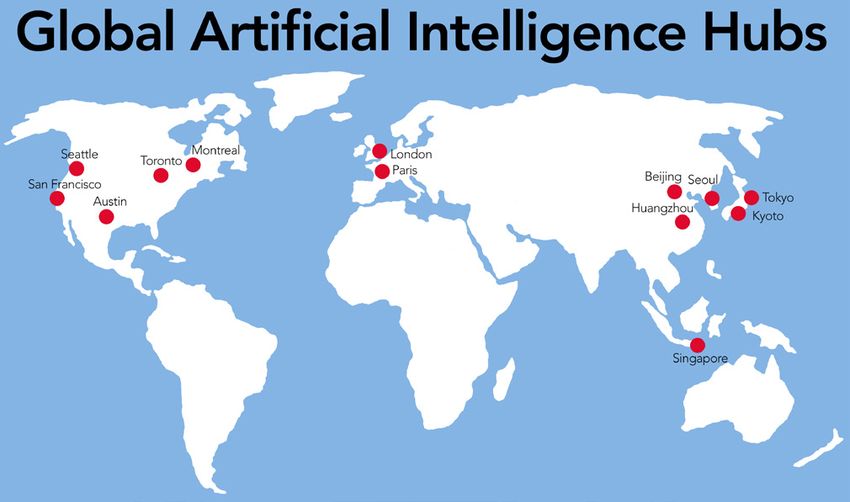
A cursory examination of AI hubs around the world The report outline and summary are available for
reveals that Toronto and Montreal are well-positioned download free of charge. More detail, including
to emerge as international leaders. Already impressive databases, competitive analyses, as well as
in concentration of talent, funding, and enterprise - the opportunities for bespoke studies are available for
two cities are well positioned to form central nodes in sale. For further interest and inquiries on pricing please
the emerging global AI network between East Asia, contact us as info@greentechasia.com.
Western Europe, and North America.
Copyright Green Technology Asia Pte Ltd
Four cities are likely to become the hubs of the
artificial intelligence revolution in North America: San
Francisco, Seattle, Toronto, and Montreal. While more
generally Montreal and Toronto do not challenge
their American counterparts in terms of opportunity in
tech, they currently possess a significant advantage in
artificial intelligence research, driven primarily by two
factors: the concentration of AI experts in Canada, and
the desire of those experts to stay in Canada.
International Market and Potential for Canadian AI
The worldwide market for artificial intelligence
grew from approximately 1.37 billion dollars to
2.42 billion USD in 2017. It is projected to eclipse 4
billion USD in 2018. Current major uses of artificial
intelligence include image recognition, object
identification, detection, and classification, as well as
automated geophysical feature detection. Over the
next 10 years, major growth with be concentrated
in human resources, financial tech, transportation,
manufacturing. energy and health sectors.
Canada’s immediate-term competitive advantage is
important, as the AI boom has already peaked in terms
of annual market percentage growth. It will continue to
expand by approximately 50% or more for the next 4
years.
14 The Canadian AI Ecosystem: A 2018 ProfileYou can also read


