The food industry in North Rhine-Westphalia Quality and enjoyment from the regions
←
→
Page content transcription
If your browser does not render page correctly, please read the page content below
The food industry in
North Rhine-Westphalia
Quality and enjoyment
from the regions

                         www.umwelt.nrw.de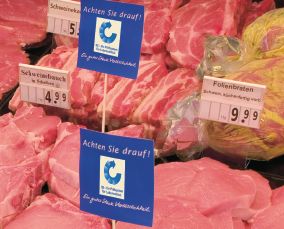
2

    Contents

    Preface                                                 4

    1   Introduction                                         7

    2   Regional diversity                                   7

    2.1 Regional initiatives throughout NRW                 8

    2.2 Direct marketing                                    10

    2.3 Highly diversified food industry                    11
        with strong skilled crafts

    2.4 Strong location for high-quality food products      17

    3   Quality communities                                 19

    3.1 Protection associations for regional specialities   19

    3.2 Organic products in great demand                    22

    3.3 More consumer confidence through                    23
        quality assurance

    4   Creating synergies with industry networks           25

    4.1 Cluster Ernährung.NRW                               25

    4.2 An association beyond industries                    25
        and production stages

    4.3 Advantage through science                           26
7 1 Introduction Agriculture and the food industry in North Rhine-West- phalia have a great deal to offer: Along with Bavaria and Lower Saxony, North Rhine-Westphalia is one of the three most important agricultural regions in Germany. Efficient agriculture thus forms the basis for a diversified and high- grossing food industry. North Rhine-Westphalia generates around one fifth of total food sales in Germany. Agri- culture is therefore also a mainstay of the rural regions: Taken together, agriculture, the food industry and the food skilled crafts provide jobs for a total of approx. 400,000 people, putting them among the most import- ant economic factors and biggest employers in the state. The competitive position of the food industry in North Rhine-Westphalia is already outstanding: Quality, variety and sales figures are impressive. With around 30 billion euros (position as at 2010) the North Rhine-Westphalian food industry is the highest-grossing in Germany and occupies fifth place among the various economic sectors of the manufacturing industry. At the same time, the focus is also shifting to other criteria as social and eco- logical aspects of food production and processing are becoming increasingly important. 2 Regional diversity The focuses of agriculture and the food industry are oriented to the diversity of the landscapes and natural regions in North Rhine-Westphalia: Münsterland has always been a strong region for animal husbandry. The Rhineland is dominated by arable farming, the growing of fruit and vegetables, as well as ornamental plants. The focus in the Lower Rhine is on dairy produce and horti- culture. In the Bergisches Land, Eifel, Sauerland and Siegerland regions, the emphasis is on dairy and beef cattle, with forestry also playing an important role.
8                                                                9

Primary production of key agricultural products
in North Rhine-Westphalia 2010

Product                                         Production
Cereals                                         3.8 million t
Wheat                                           2.2 million t
Barley                                           1.1 million t
Potatoes                                        1.5 million t
Sugar beet                                      3.7 million t
Milk                                            2.9 million t
Beef                                            0.2 million t
Pork                                            1.9 million t

Given the current production figures, North Rhine-West-          Farmers and foodstuff producers are looking for new
phalia can therefore rightly describe itself as a major          ways of exploiting previously untapped market potential
state of origin for high-quality, diverse and specialized        and of obtaining reasonable prices for their high-quality
foodstuffs. By merging to form production and marketing          products. Meanwhile, numerous initiatives have been
initiatives, agricultural enterprises are strengthening their    established throughout NRW for the joint processing and
market position vis-à-vis the trade. They are able to put a      marketing of regional products in cooperation with other
much larger and more varied range of regional products           business partners. These include product and advertising
on the market than would be possible for individual pro-         associations such as Genussregion Niederrhein e. V.,
ducers. The accomplishments of the regional marketing            Spargelstraße NRW, bergisch pur e. V., Nordrhein-West-
initiatives go far beyond the development of market              fälische Werbegemeinschaft Ei e. V., BIOlokal e. V., the
niches and securing the sales of their own products.             traveling market "Feines vom Land", and many more
They also serve to enhance the image of the state of             besides. In addition, there are gastronomic associations
North Rhine-Westphalia as a livable and highly diversified       such as NRW kulinarisch Marketing e. V., "Regionale Spei-
enjoyment location                                               sekarte – So schmeckt das Münsterland" and "Bergische
                                                                 Gastlichkeit".

2.1 Regional initiatives throughout NRW                          There are also cross-industry organizations which focus
                                                                 on the development of rural regions in general. These in-
Demand for regional products is rising constantly. More          clude Regionalinitiative Nord and LEADER-Region Süd-
and more consumers want to know how and where their              liches Paderborner Land which see regional produce and
food has been produced, and they take pains to ensure            food as key elements of the regional development con-
that only safe, high-quality products land in their shop-        cept. The regional marketing initiatives frequently cover
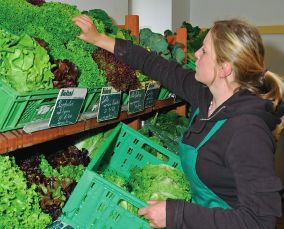
ping baskets. Regional products already enjoy a higher           the entire product range, from fruit and vegetables
degree of confidence. And the producers and manufac-             through ornamental plants, honey, eggs and cheese to
turers in North Rhine-Westphalia want to be judged by            meat and sausage products, beer, spirits and liqueurs.
this additional trust.
10 11
At the Internet portal www.landservice.de the Chamber
of Agriculture presents regional suppliers to draw the
attention of consumers and tourists to their extensive
product ranges. Farm shops and farm cafés are to be
found here, as well as the dates of farmers' markets and
farmyard parties, and recommendations for excursions.
The regional initiatives in North Rhine-Westphalia are also
presented at this portal.
2.3 Highly diversified food industry
2.2 Direct marketing with strong skilled crafts
In order to market their products jointly in the region and The food industry in North Rhine-Westphalia is characte-
to further strengthen the trust of their customers, nume- rized by small and medium-sized enterprises. The food
rous producers in North Rhine-Westphalia have teamed up producers score particularly high points in Germany and
to form direct marketing initiatives. For example, farmers abroad with meat and meat products, baked goods, con-
and horticulturalists in the Rhineland have founded the fectionery, milk and dairy products, as well as processed
association "Rheinische Bauernmärkte e .V.". Farmers' fruit and vegetables. North Rhine-Westphalia is also a
markets are held in different towns and cities on the Lower major beer producer.
Rhine – in Hamminkeln, Krefeld, Neukirchen-Vluyn, Düs-
seldorf and its surroundings. The farmers and horticult- Meat and sausage products –
uralists in the association offer an extensive and fresh appreciated beyond the state's
range of regional products. The high quality on offer is borders
guaranteed continuously by neutral inspectors. Meat and sausage products
from Westphalia or the Rhenish
The Vereinigung der Direktvermarkter NRW (VDNRW) regions are very popular far
supports its members in their marketing activities and beyond the borders of the state.
negotiates with the trade as a single body. As the point of Ham on the bone, smoked meat, bratwurst and mett-
contact for producers and the trade, the association wurst from these areas are very popular outside the state
makes sure that suppliers and buyers find each other. and efforts are even currently underway to obtain recog-
Both sides benefit from the negotiated conditions becau- nition from the European Union for Westphalian ham as a
se – unlike central listing – the delivery terms are oriented regional specialty. The subsector "butchering and meat
to the production conditions of the mostly small produ- processing" is by far the highest-grossing segment in the
cers. The formation of an association of direct marketers North Rhine-Westphalian food industry. At 9.7 billion
has enabled around 50 agricultural businesses from North euros in 2010, it generated almost one third of total sales
Rhine-Westphalia to offer a range of different products in the NRW food sector.
jointly and all year round which are aimed at the custo-
mers "directly from farms in your region" – with success.12 13
When it comes to the milling of grain – a key raw material
Sales and export revenue of the food industry in 2010*
(in billion euros) for producers of baked goods – North Rhine-Westphalia
Miscellaneous food occupies first place in Germany. In 2009, the state's 26
products
mills accounted for an almost 20 percent share of total
Beverage production
(excluding alcohol) German production. The city of Neuss and its surroun-
Production of oils and fats dings are regarded as a competence region for milling.
Grain milling
Brewing trade
Milk and dairy products from
Dairy processing
(excluding ice-cream) the milk state of NRW
Fruit and vegetable In many rural regions of North Rhine-
processing
Westphalia, dairy farmers contribute to
Confectionery production
Production of baked goods retaining the biodiversity of our land-
Butchery and meat scapes. Keeping dairy cattle facilitates
processing
0 2 4 6 8 10 12
the comprehensive agricultural land
use of our grassland regions. Divers-
*Since 2008 including animal feed production. ified cultural landscapes resulting from
Sources: NEW.S; Information und Technik NRW
centuries of development have sur-
The export share of the meat industry in North Rhine- vived thanks to agricultural cultivation.
Westphalia has increased to more than 16 percent. With
nearly 20,000 employees, the meat sector is the second- North Rhine-Westphalia is the third-largest "milk state" in
biggest employer in the North Rhine-Westphalian food Germany. In 2010, some 3 million tons of milk were pro-
industry. The sometimes very large production facilities duced here. Only Bavaria and Lower Saxony produced
are an expression of the increasing concentration which more. At the same time, milk processing including the
is also taking place in North Rhine-Westphalia. The but- production of ice-cream is the fifth-strongest segment
cher's trade in the state has also asserted itself success- of the food industry in North Rhine-Westphalia in terms
fully in the face of large processors and foreign compe- of sales, which amounted to approx. 2.1 billion euros in
tition. Many specialty shops are now outfitted as modern 2010.
food and service providers.
Münsterland, the Cologne area and the Lower Rhine have
Baked goods especially for the a relatively high regional concentration of milk proces-
domestic market sing. Besides small and medium-sized firms, international
In terms of the number of jobs, industry giants are also represented here. In addition,
the manufacture of baked goods there are over 100 farm-based cheese dairies in North
with around 30,000 employees Rhine-Westphalia offering a remarkable assortment of
is the most important subsector tasty cheeses. The cheese specialities can be tried and
in North Rhine-Westphalia, ahead purchased on the producers' premises: 25 qualified
of the meat segment. In 2010, the companies generated farm-based cheese dairies have joined forces along the
sales of approx. 4.5 billion euros with baked goods – pri- "Cheese Route NRW", where typical regional specialities
marily in the domestic market. such as "Der Schwatte" (black cheese) from Sauerland14 15
are made. This is a carrot cheese with an edible pepper Particularly in the climatically favored Rhine regions,
crust. The East-Westphalian cheese specialty "Nieheimer" carrots, spinach, French beans, garden peas and white
succeeded in obtaining a protected designation of origin cabbage are grown outdoors. In 2010, the area used for
from the EU and is now officially a product with a protec- cultivating vegetables totaled approx. 20,000 hectares.
ted geographical indication. Greenhouses serve mainly to grow cucumbers and
tomatoes.
Confectionery in all variations
Every year, delicacies from North Asparagus is also grown in many parts of North Rhine-
Rhine-Westphalia make a major Westphalia. The so-called "white gold" can also be savor-
appearance in front of professio- ed and purchased directly on the producer's premises
nals from all over the world at along the North Rhine-Westphalian "Asparagus Road".
the international confectionery The history of asparagus cultivation in our state, which
trade fair ISM in Cologne. At this has a long tradition, is depicted in the "Vestisch Aspara-
industry highlight, which always attracts thousands of gus Museum" in Herten. In 2010, around 500 farms grew
visitors, it regularly becomes apparent that the range asparagus on a total of more than 3,000 hectares.
offered by the confectionery industry in North Rhine-
Westphalia is enormous. Numerous companies produce Potatoes also play an important role in a national compa-
chocolate, chocolate candies, hard candies and spreads rison. In terms of cultivation area, North Rhine-Westphalia
in all variations. (32,000 hectares in 2010) is the third-largest potato-
growing state following Lower Saxony and Bavaria. This
Aachener Printen, for example, which also possess EU is attributable not least to a doubling of the cultivation
protected geographical status, are known all around the area since the middle of the 1990s.
world. In Cologne, an important location for chocolate
production, the chocolate museum bears witness to this Due to the mild climate, fruit growing is widespread in the
importance. The popularity of North Rhine-Westphalian Cologne-Bonn region – especially Meckenheim – and on
confectionery is also reflected in the high export share. the Lower Rhine. There is an extensive range of fruits and
With a quota of over one quarter of total sales it is one of berries on offer here. The juice producers in North Rhine-
the leading export sectors in the state's food industry. Westphalia also play an important role: In the production
Taken together with foreign sales, the confectionery of fruit juice, the state is one of the top three in Germany.
sector in NRW generated sales of over 2.6 billion euros
in 2010. NRW – the heartland of beer
and mineral water
Fruit and vegetables: The North Rhine-Westphalian
variety in abundance brewery landscape produces
Fruit and vegetable production many different types of beer and
makes a very considerable beer specialities: Kölsch from
contribution to the wide range Cologne, Altbier from the lower
of products available in North Rhine, Pils and Export from Dortmund and the numerous
Rhine-Westphalia's food industry. Münsterland beers are only the highest-grossing varie-16 17
ties. With an output of around 23 million hectoliters,
North Rhine-Westphalia can rightly be described as
Germany's beer heartland – ahead of Bavaria. About one
third of the beer produced in Germany comes from the
130 breweries in North Rhine-Westphalia.
Also with regard to mineral water and soft drinks, North
Rhine-Westphalia is the leading state in Germany with a
sales share of more than a quarter of the nation's total.
Approx. 3.8 billion liters of mineral water and soft drinks
were produced here in 2009. The mineral waters differ,
for example, in terms of their mineral and trace element
content. Each mineral water, whether from the Eifel or
East Westphalia-Lippe, thus reflects the region of origin
and its geological conditions. North Rhine-Westphalia is
therefore a first-class mineral spring.
bread museum, ham museum, beer museum) of the
Food skilled crafts with a long tradition "Westfalen Culinarium" in Nieheim, East Westphalia.
According to the figures released by the chambers of Old rural and artisan traditions such as pasture pig
skilled crafts, there were around 5,200 skilled crafts husbandry, pumpernickel cooking, sour milk curdling,
businesses in the food sector in 2010. With a total of ham salting and smoking and "hand-brewing" are culti-
approx. 116,000 employees they generated total sales of vated here.
some 9.6 billion euros. Butchers and confectioners/
bakers each accounted for almost half of this figure. As a
local supplier of fresh, high-quality foodstuffs, the food 2.4 Strong location for high-quality food products
skilled crafts also offer many products which are typical
of the region. With the "Landesehrenpreis für Lebensmittel NRW"
(NRW food prize) the state of North Westphalia honors
the commitment of companies to exceptional quality. The
prize is awarded to food producers from the state which
succeeded in winning a gold medal in the most recent
quality evaluation conducted by the DLG (German Agri-
cultural Society). The criteria include the careful choice
of raw materials, optimal processing and preparation,
and outstanding flavor. In 2010, over 200 award winners
An understanding of the great importance of the artisan received the state prize in the categories "Baked Goods
production of bread, ham, cheese and beer for everyday and Confectionery", "Organic Products", "Beer", "Fish",
and cultural history can be gained, for example, by visit- "Fresh Meat", "Fruit Drinks", "Dairy Products", "Spirits",
ing the four "participation museums" (cheese museum, and "Water".19 3 Quality communities The market is becoming more and more differentiated. Besides the price, other criteria are increasingly influenc- ing purchasing decisions: Consumers are paying greater attention to foodstuffs of exceptional quality. This quality is provided in particular by regional specialities, products of protected origin, organic products and products certi- fied by quality assurance systems such as the QS system. The offerings of the agricultural and food industry in North Rhine-Westphalia are oriented to the high stan- dards of the consumers and thus satisfy various quality requirements. 3.1 Protection associations for regional specialities Various regional specialities are offered in North Rhine- Westphalia – from Aachener Printen to asparagus from Walbeck. This has led to the establishment of numerous protection associations which have recognized the value of their local produce and seek to have it protected by the Regional specialities and protection associations seeking EU protection • Rhenish sugar beet molasses • Westphalian ham on the bone • Märkische Hotte cheese • Walbeck asparagus • Bornheim asparagus • Aachen Karlswurst sausage • Meat from the Bunter Bentheimer (pork) • Lower Rhenish goose egg • Stromberg plum • Westphalian pumpernickel • Kölsche Flönz (blood sausage)
21

EU. Six products have already received protected: The                        Protected Designation of Origin (PDO):
two beers Kölsch and Dortmunder, as well as Aachener                         The requirements for this category are
Printen and, just recently, Nieheim cheese, rhenish apple                    higher than for PGI. The entire manu-
Kraut and Düsseldorf mustard.                                                facture of the product (production,
                                                                             processing and preparation) must take
The approval procedure is still pending for twelve further                   place in the defined region according to a
North Rhine-Westphalian specialities. And many more                          determined procedure.
specialities from the state have earned this protection.
                                                                             Traditional Specialty Guaranteed (TSG):
For a regional foodstuff to be protected by the EU, both                     This category does not refer to a specific
its ingredients and its manufacturing process must be                        geographical area, but highlights the
precisely defined. This ensures that consumers can be                        traditional composition of the product
sure of receiving consistently high quality. The system                      or a traditional manufacturing and/or
provides for three protection categories with different                      processing method.
standards:
                                                             By means of the protection system of the special agri-
                 Protected Geographical Indication (PGI):    cultural products and foodstuffs with geographical indi-
                 This registration provides information      cations the European Commission wants to promote the
                 on the special properties of the product.   diversification of agricultural produce, protect product
                 At least one specializing manufacturing     descriptions from misuse and imitation, and provide
                 step (production, processing or prepara-    consumers with an instantly recognizable sign of quality.
tion) must take place in the determined area of origin.
However, this does not mean that all of the ingredients
must come from this area.
22 23
When buying organically produced foods, people expect
verifiable information and confirmation by a trustworthy
control system. The Demeter, Bioland, Naturland and Bio-
kreis associations organize a number of events jointly
with the Chamber of Agriculture to provide information
on organic farming and organically produced products.
3.3 More consumer confidence through
quality assurance
One of the strengths of foodstuffs from North Rhine
Westphalia is that they meet the highest quality stand-
ards and are distinguished by the use of high-quality raw
materials which are processed in an ecologically sound
and gentle way using state-of-the-art technology. The
strict statutory provisions for production, processing
and marketing as well as corresponding inspections
strengthen the confidence of consumers in the safety
3.2 Organic products in great demand and quality of local produce.
The market for organically produced foods has grown
significantly in NRW. The main reason for this is the sub-
stantial increase in sales areas for organic foods. The de-
mand for some products exceeded production capacity,
causing imports to rise as a consequence. In the mean-
time, supply and demand have come back in line with
each other. For the future, market experts expect further
continuous, demand-oriented growth.
In North Rhine-Westphalia there are now 67,756 hectares
of organically farmed land. This corresponds to 4.6 per-
cent of NRW's agricultural area. Nearly 3,300 enterprises
produce, process and trade organic foods (position as
2010). These include 1,800 agricultural enterprises of
which about 250 process their own produce to create a
variety of products. In addition, there are approx. 1,000
specialized producers. These include bakers, butchers,
mills and dairies, as well as breweries and confectioners.24 25
Furthermore, many companies proactively pursue the 4 Creating synergies
goal of standing out through high quality and document with industry networks
this by means of various recognized quality assurance
systems. By consistently applying the principle "from 4.1 Cluster Ernährung.NRW
stable to table" the entire production chain is involved.
The companies' internal quality management teams Cluster Ernährung.NRW is an economic initiative of the
work together with the authorities and private-sector federal state government of North Rhine-Westphalia and
organizations to guarantee the highest possible food one the state's currently 16 industry-specific clusters.
safety for consumers. In regional and transregional networks, various actors
from different industries, production and marketing
This tried and tested interaction ensures that not only stages cooperate along the value added chain of the food
national and EU-wide regulations on, for example, animal sector. The scientific community is also involved.
health and hygiene, are observed, but also the in some
cases even stricter criteria of non-governmental quality
assurance systems. The internationally recognized, 4.2 An association beyond industries
private-sector quality assurance systems for food pro- and production stages
ducts cover the entire value added chain and facilitate
cross-stage traceability. These include the QS-System, An important milestone in cluster policy was the found-
GLOBALG.A.P., and International Food Standards (IFS). ation of the new state association Ernährung.NRW e. V.
70 companies, organizations and associations from all
areas of the North Rhine-Westphalian agricultural and
food industry have joined forces under the umbrella of
this organization.26
4.3 Advantage through science
Particularly for the small and medium-sized enterprises
in the agricultural and food industry, the wide-ranging
science and research environment in North Rhine-West-
phalia is advantageous. This provides them with an out-
standing basis from which to extend their quality lead in
international competition. The state offers a dense and
dynamic research and education landscape: Around
70 universities, more than 50 non-university research
institutes and about 100 university-affiliated research
institutes work in a close scientific exchange with the
companies' research and development departments.
The research areas agricultural sciences, nutrition and
food sciences are covered widely by the universities in Issued by:
Ministerium für Klimaschutz, Umwelt, Landwirtschaft,
North Rhine-Westphalia. This is where the groundwork is Natur- und Verbraucherschutz des Landes Nordrhein-Westfalen
done for products and processes with which the state's (North Rhine-Westphalia Government “Ministry of Climate Protection,
agricultural and food industry can continue to remain Environment, Agriculture, Conservation and Consumer Affairs“)
Referat Öffentlichkeitsarbeit, 40190 Düsseldorf
competitive in the future. The following universities in
Edited by:
North Rhine-Westphalia provide corresponding study
Referat II-2
focuses: Agrarmarkt, Ernährungswirtschaft, Tierproduktion, Agrartechnik
Content editing:
• University of Bonn Klaus Knippertz
• South Westphalia University of Applied Sciences Design:
in Soest Projekt-PR Gesellschaft für Öffentlichkeitsarbeit mbH, www.projekt-pr.de
• University of Münster Photo credits:
• University of Applied Sciences East Westphalia-Lippe ClipDealer (Titel, S. 8, 12, 20, 28); DBB (Titel, S. 31); schinkenland-west-
falen (Titel); Fotolia (S. 6, 8, 18, 21, 27, 28, 39, 50, 54, R.); Schmörkes (S.10);
in Lemgo Rainer Hackenberg/Visum (S. 15); Thomas Willemsen (S. 22); Westfalen-
• Rhine-Waal University of Applied Sciences Culinarium (S. 23); Jürgen Christ (S. 23); Ost/foodzentrale Hamburg
(S. 24); Zentralverband des Deutschen Bäckerhandwerks e. V. (S. 26);
in Cleves
• University of Applied Sciences Lower Rhine
R. Schmitz/Stockfood (S. 28); Ela2007 (S. 30); Martina Urban/Stockfood
(S. 32); vario images (S. 35, 44); Bioland e. V. (S. 36); photothek.net (S. 38);
in Mönchengladbach Thomas Pflaum/Visum (S. 45); Seite 46: Kreis Wesel, Jo Becker, Franz-
Josef Schulze Zumkley, Nordrhein-Westfälische Werbegemeinschaft Ei e.V.,
Schutzgemeinschaft Westfälischer Schinken- und Wurstspezialitäten e.V.;
Axelle Schinski (S. 50); Linus Morgen (S. 50)
Printed by:
Moser Druck
Current to:
November 2011Ministerium für Klimaschutz, Umwelt, Landwirtschaft, Natur- und Verbraucher- schutz des Landes Nordrhein-Westfalen 40190 Düsseldorf Telefon 0211 4566-666 Telefax 0211 4566-388 infoservice@mkulnv.nrw.de www.umwelt.nrw.de
You can also read


