The Future of Remote Work - Overview of issues relating to remote working across countries - Bird & Bird
←
→
Page content transcription
If your browser does not render page correctly, please read the page content below

The Future of Remote Work
Overview of issues relating to remote working across countries

                                             Last updated 30 November 2020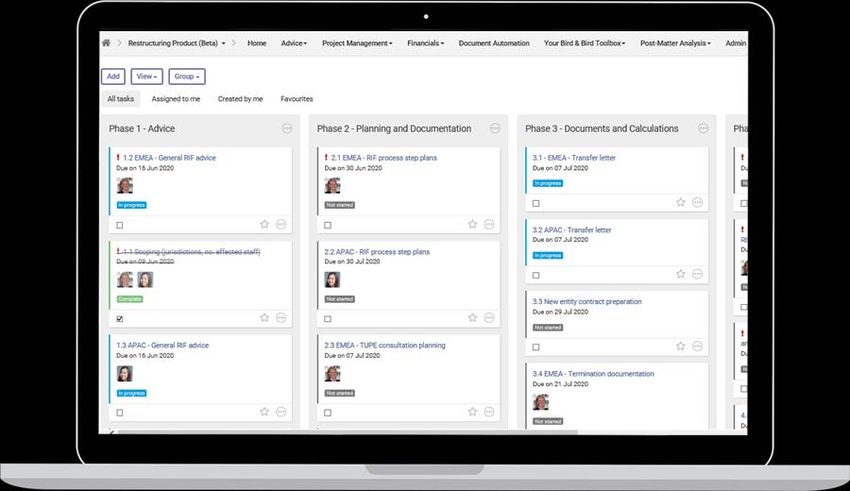
Introduction
2020 has seen one of the most dramatic transformations of the global workforce imaginable. With minimal notice, tens of millions of office-based workers have been
sent home to set up remote workplaces from kitchen dining tables and home offices on a scale never seen before.

Businesses around the world have adapted surprisingly well. It is also clear that this global remote working ‘experiment’ presents significant opportunities for
employers longer term, to reduce costs on expensive city centre office space and to embrace more flexible and agile working practices which in turn may help attract
and retain key talent. This latter point about talent is particularly relevant given that there appears to be an emerging consensus that employees around the world
want to maintain a degree of flexibility moving forward.

At the same time, many employers are mindful of the benefits that being in the same physical space brings, from collaboration and innovation to knowledge sharing
and social cohesion, and are looking at the practicalities of how to transition staff back to office-based working, at least to some degree, once it is safe to do so.

So what does all this mean for the future of work and the workplace? Unsurprisingly, employers are approaching this question differently, informed by their own
strategic and commercial objectives, industry norms and organisational culture. At one end of the spectrum, there are those organisations that are keen to get
employees back to ‘normal’ in the workplace as soon as possible. At the other end, there have been well-publicised examples of employers already informing their
global teams that they can work remotely into 2021, and beyond.

Whilst these new and evolving ways of working present a myriad of options for employers, what is clear is that this topic goes to the very root of the employment
relationship, and the meaning of work and the workplace. Any future solution therefore requires employers to navigate complex local legal considerations traversing
not only employment laws and human resources topics but also tax, data privacy and immigration laws.

While working on this overview, it became apparent that there were basically always two subtypes of work outside the office: work from the employee's home and
work from anywhere else outside the employer’s workplace. However, there are many different nuances in each country and the terms could not be standardized
without losing at least some of these nuances, which we have therefore kept and defined.

In the first part of this guide, we look at the practical questions employers should be asking when considering remote working longer term, as well as what we think
are the key themes emerging for the future of remote working. In the second part, we have included a country-by-country overview of issues relating to remote work.

This is a vast topic and in this brief guide we can only identify some key insights for employers based on our extensive experience advising international clients on
these issues. We do hope you find our guide useful and we would be delighted to discuss any of the topics raised with you in more detail.

 Thomas Hey                                 Ian Hunter                                 Pattie Walsh
 Partner, Germany                           Partner, UK                                Partner, Hong Kong

 Tel: +4921120056313                        Tel: +44 20 7415 6140                      Tel: +852 2248 6088
 thomas.hey@twobirds.com                    ian.hunter@twobirds.com                    pattie.walsh@twobirds.com

© 2020 Bird & Bird All Rights Reserved                                                                                                                                   2

twoBirds Access
    Coordinating and delivering global projects through effective project management

Large-scale international projects can be challenging to manage, particularly when
multiple time zones are involved and even more so when working remotely.

Our twoBirds Access platform enables us to effectively manage tasks and deadlines
on large projects, reduces email traffic and gives clients visibility on progress. This
cloud-based solution incorporates workflow and global project timeline mapping,
giving all users access 24/7 to relevant information, irrespective of location. The
interactive nature of portal means individuals get email alerts when tasks are
assigned and reminders when deadlines due, so the project stays on track.

All Access sites are hosted by HighQ, an ISO 27001 certified and industry leading
collaboration portal. The encrypted security portal ensures that all uploaded
documents are safe and can only be accessed by pre-approved individuals.
Permissions can be set at different levels, so project members only see information
that is relevant to their workstream(s). In addition, multiple log-ins can be issued,
giving you control over which parts of the site can be accessed by different team
members.

Key benefits:
•   Access to key documentation 24/7
•   Visibility on project progress and milestones
•   Reduction in email traffic
•   Tailored views for different teams

© 2020 Bird & Bird All Rights Reserved                                                    3
The Future of Remote Work
 What practical questions should employers be asking?

  Global or local approach?                     Implementation strategy             Employee monitoring                  Ethical workplace
  Benefits of consistent global approach vs     Are there notice, employee          Will employee working time,          How will the working
  need to navigate local legal considerations   consent or consultation             productivity and performance be      arrangements impact
                                                requirements to be observed?        monitored? How will data             workplace diversity and issues
                                                How will the changes be             protection compliance aspects of     such as mental health? Does
                                                communicated and                    any monitoring be managed?           this align with your policy
                                                implemented?                                                             aims? How can the impact be
                                                                                                                         measured longer term?
                                                Health and safety
                                                Who is responsible for risk
                                                                                                                         Governance framework
                                                assessments? Can the employer
  Responsibility                                                                                                         What types of flexible or
                                                enter the employee’s home (see
  Given the interdisciplinary nature of the                                                                              remote working arrangements
                                                further below)? Is the employer
  issues, who will have oversight and                                                                                    will be available and who will
                                                obliged to appoint a health and     Disciplinary issues
  responsibility? A team of key                                                                                          be eligible? Will a trial period
                                                safety officer? What mental         Will there be specific
  stakeholders? A new ‘Head of Remote                                                                                    apply? Can the arrangements
                                                health support will be available?   rules/expectations for remote
  Work’?                                                                                                                 be terminated?
                                                                                    workers e.g. prohibition on using
  Business protection                                                               work time for domestic, family or    Working abroad
  How will you protect confidential                                                 other commitments such as            What systems will be in place
  information and data security in a remote                                         another business interest or         to track overseas working?
  setting? Do you need new policies,                                                childcare?                           Have local employment laws,
  training and contingency plans? Who is                                                                                 payroll tax obligations,
  responsible for insurance?                    Expenses                            Hours/ place of work                 corporate tax and
                                                What will be covered and by         Will there be any                    immigration/right to work
  Documentation                                 whom? Will the employer             obligations/restrictions on where    compliance issues all been
  Do employment contracts or                    reimburse expenses or provide       and when employees work e.g.         considered?
  policies/work rules need to be modified?      an allowance? Does the              public spaces, hours of
  Should there be a specific remote work        employer have any local legal       availability? How will rest breaks
  policy covering the key issues?               obligations (see further below)?    me managed?

© 2020 Bird & Bird All Rights Reserved                                                                                                                      4
8 key themes emerging for the future
of remote work                                                                                                                    Additional resources
                                                                                                                                  Article: Data protection and
Workplace culture: Flexible and remote working models inevitably give rise to wider concerns about how to maintain                workplace monitoring
trust and generate an engaged, collaborative and productive workplace culture necessary to ensure the success of the          1
organisation. These concerns will underpin how organisations approach their longer-term working arrangements.

     Talent attraction and retention: More innovative and flexible working arrangements may be key to attracting and
2    retaining talent. Remote working also opens up a wider, potentially global, talent pool. In some cases this has led to a
     reconsideration of pay and whether this should be linked to where the employee lives, rather than the office location.

                                                                                                                                       Recent Webinars
Job design and contingent labour: New technologies and ways of working may require new skills and
reconsideration of roles and responsibilities within organisations. We are also seeing a trend towards increased use of       3   An employer’s response to
contingent working arrangements giving employers increased workforce management flexibility going forwards.                       domestic violence in the
                                                                                                                                  workplace

4     Performance and reward: Traditional employee performance evaluations, goal setting and reward frameworks may
      need to be adapted to assess and motivate employees in a remote context.

 Ethical workplace: There are fears remote work may exacerbate diversity and inclusion challenges requiring
 organisations to work harder to foster a culture of inclusivity and belonging where all employees have equal opportunity.    5

      Technology: COVID-19 has accelerated the rate of digital transformation and many organisations have gained                  Getting your mobile
6     efficiencies investing in and embracing new technologies during the pandemic. The focus is now shifting towards finding
      ways to harness these benefits longer term, including by upskilling and retraining staff.
                                                                                                                                  workforce in the right
                                                                                                                                  place: employment law,
                                                                                                                                  immigration and tax issues
Mental health and psychological safety: There is growing evidence that employees are working longer hours at
home and the blurring of professional and domestic is leading to rising levels of stress and ‘remote work burnout’. A
holistic approach to employee well-being, promoting mental as well as physical health, will be a key component of any         7
longer term remote working strategy.

      Employee monitoring: Many employers are considering new ways of monitoring staff and remote monitoring
8     technologies, such as those that track keystrokes, measure active and idle time and even facial recognition software,
      have seen a surge in popularity. These pose inherent challenges from a privacy and data protection standpoint.

© 2020 Bird & Bird All Rights Reserved                                                                                                                 5
Current issues in remote working – key takeaways
This is intended to give a brief high level summary, please refer to the specific country pages and seek local advice from your regular
Bird & Bird contact, or one the contacts listed at the conclusion of this document in relation to your specific circumstances.
Can an employee
Basis for enabling Forms of remote Tax incentives for
demand to work from
remote working working remote working
home?
• None of the in-focus • The basis for enabling • Different jurisdictions will • Australia, Belgium,
jurisdictions give employees remote working in almost all have different locally used Denmark (and Germany and
a unilateral right to insist on in-focus jurisdictions is an terms, but the general Sweden subject to certain
working from home. agreement between the forms of remote working criteria) provide for
employer and the employee. are: employee tax deductions
• In Germany and the Russian that can be claimed for time
– Working full time from home
Federation, there is a • A remote-working policy or spent and/or professional/
(Full-time remote working/
proposal law in the pipeline. internal rules could also equipment costs incurred
home office)
form the basis for enabling whilst working from home.
• In Australia, the
remote working in most in- – Teleworking (form of remote
Netherlands, UK and certain • Czech Republic and the UK
focus countries. working reliant on
individuals in the UAE, allow for employer tax
information technologies and deductions for expenditure
employees have a right to • For Singapore, Slovakia and
such devices) on reimbursement of home
request flexible/remote Spain, special COVID-19
working. pandemic provisions enable working costs made to
– Working part time from
working from home without employees. The UK further
In Singapore, Slovakia and home/in the office (partial/
• provides for tax relief in
Spain, due to the current the need for specific occasional/ alternating remote
relation to work expenses.
Covid-19 pandemic, there agreement. working)
• Netherlands has expanded
are special remote working • In Australia certain – Working wherever necessary tax-free allowances and
permissions in place which categories of employees can (agile/mobile/ flexible benefits in kind for the
are time-barred. make a flexible work working, working from COVID-19 crisis period.
request. anywhere)
© 2020 Bird & Bird All Rights Reserved 6Current issues in remote working – key takeaways
This is intended to give a brief high level summary, please refer to the specific country pages and seek local advice from your regular
Bird & Bird contact, or one the contacts listed at the conclusion of this document in relation to your specific circumstances.
Claims for
Employer's right to
Rules to be observed Bringing employees reimbursement/
inspect the home
when remote working back into the office compensation for
working place
remote working
• Generally speaking, for all • Generally, if the home • In Hungary and certain • Belgium, China, Czech
in-focus jurisdictions: working arrangement was situations in Italy, Republic, France, Germany,
made via agreement, employers have a legal right Italy, Netherlands, Poland,
Statutory requirements
bringing the employee back to inspect the home Russian Federation,
Contractual requirements to work will require: workplace (to be arranged Singapore and Spain require
reimbursement of certain
– notice (as agreed); with the employee). In all
Company home working costs incurred during remote
other in-focus jurisdictions,
policies/ work rules/ working (such as home office
– consent to cancel the there is no right to inspect equipment, internet
internal regulations/
arrangement; or an employee's home subscription, meal costs etc.
guidelines/ directives
working place without depending on the
Guidelines/ Codes of – expiry of the fixed term for specific consent from the jurisdiction).
remote working. employee.
Practices issued by
• France provides for home
governmental labour
• Of course, any governmental • All such employers still have office allowance to
authorities employees if there are no
mandates (as a result of a duty of care to ensure an
COVID-19 special measures employee's workplace is company premises available.
or otherwise like in safe (often including the • In other jurisdictions it is
Singapore) would take homeworking space). This more common that the
precedence over any may be achieved by employer provides the
agreement or notice to requesting the employee to requisite equipment to allow
return to the office. complete a workstation and the employee to work from
health and safety checklist. home.
© 2020 Bird & Bird All Rights Reserved 7Overview of employment law issues relating
to remote working
View resources by country – click on country name
Australia Italy
Belgium Netherlands
China Poland
Russian
Czech Republic
Federation
Denmark Singapore
Finland Slovak Republic
France Spain
Germany Sweden
Hong Kong UAE
Hungary UK
Bird & Bird has extensive contacts with preferred firms in countries where our firm does not have offices.
© 2020 Bird & Bird All Rights Reserved 8Australia
The future of remote work: Overview
1. Do employees have a legal Yes, though only in limited circumstances, as set out in question 2. Certain categories of employees can make a 'flexible
right to insist on working work request' of their employer, which might include a request to work flexibly from home for some or all hours of work.
from home or remotely? An employer is not obliged to agree to a flexible work request, but can only refuse on 'reasonable business grounds'
which include:
a The new working arrangements are too costly (unlikely to apply to home working);
b There is no capacity to change the working arrangements of other employees to accommodate the new working
arrangements requested by the employee;
c It would be impractical to change the working arrangements of other employees to accommodate the new working
arrangements requested by the employee;
d The new working arrangements requested would likely result in a significant loss of productivity or efficiency; or
e The new working arrangements requested would likely have a significant negative impact on customer service.
2. On what basis can the Employees who fall into one of the below categories can make a flexible work request:
employee work from a An employee who is a parent or has responsibility for the care of a child who is school age or younger;
home/outside the office?
b An employer who is a carer;
c An employee who has a disability;
d An employee who is 55 or older; or
e An employee who is experiencing domestic violence, or who provides care/support to an immediately family member
who is experiencing domestic violence.
Furthermore, the parties can agree on flexible work.
a Telework/home office = working full time from home
3. Forms of working outside
the "regular working b Alternating telework = working part time from home/in the office
space/office" c Mobile work = working wherever necessary
© 2020 Bird & Bird All Rights Reserved 9Australia
The future of remote work: Overview
4. Tax treatment for working Tax deductions can be claimed for time spent working from home based on a fixed hourly rate deduction or an actual
outside the office? costs method.
For the period 1 March to 31 December 2020, employees may claim for tax deductions using the 'shortcut method'
applying a deduction of 80 cents per hour for time spent working from home.
a Statutory requirements e.g. compliance with the Fair Work Act and the National Employment Standards, workplace
5. What rules need to be health and safety laws, the Privacy Act and Australian Privacy Principles;
observed when working
b Contractual requirements; and
outside the office?
c Company policies.
6. How to bring employees This can be done as a matter of policy after assessing each arrangement on a case by case basis. We recommend that at the
back to the office? approval stage, employers approve flexible work requests on a trial basis initially, to allow each party to assess the
suitability of the arrangement. Employers can then reassess after the trial and if the arrangement is not working, decline
the arrangement on an ongoing basis on 'reasonable business grounds'.
7. Co-determination rights to Australia does not recognise co-determination or a work council model.
be acknowledged? Unions are still entitled to engage with employees and employers and continue to actively work with and represent
employees.
Certain unions have indicated they will continue to advocate for flexible work measures post COVID-19.
a The Privacy Act 1988 (Cth) incorporating the Australian Privacy Principles must still be observed.
8. Which data protection
aspects have to be b The Office of the Australian Information Commissioner is encouraging employers to consider undertaking a threshold
assessment to determine if a Privacy Impact Assessment is necessary with regards to employees working from home.
observed?
c Employers are also asked to consider if they need to implement additional security measures and mitigation strategies.
a The employer cannot force an employee to submit to a physical inspection of the home workplace. Employers should
9. Does the employer have a
consult with workers where necessary.
right to inspect the remote
workplace? b Employers still have a duty of care and must ensure the home workplace is safe; this may be achieved by requesting the
employee to complete a workstation and health and safety checklist.
© 2020 Bird & Bird All Rights Reserved 10Australia
The future of remote work: Overview
10. Can employees claim Employers are not required to compensate workers for equipment costs; however, many companies choose to voluntarily
additional compensation reimburse the cost of equipment and increased internet/electricity costs etc.
when working outside the Employees may claim tax deductions for equipment costs.
office? Can they make
additional claims for office
furniture, etc.?
11. Special regulations during Regulations differ depending on the State or Territory.
the pandemic? Currently in New South Wales and Victoria employers cannot require employees to attend work where the work can
reasonably be completed from home.
Nationally, employers may direct employees to work from home under work, health and safety laws, where they have
shown symptoms of COVID-19 or it is reasonably necessary to ensure health and safety in the workplace.
© 2020 Bird & Bird All Rights Reserved 11Belgium
The future of remote work: Overview
1. Do employees have a legal Generally, no, but at the current stage of the spread of the COVID-19 pandemic, it is mandatory whenever the employees’
right to insist on working functions allow it (the mandatory character of homeworking is regularly reassessed by the authorities depending on the
from home or remotely? state of urgency, ranging from “highly recommended” to “mandatory”, which is the current status until 13 December 2020
– date expected to be extended). If their functions can be performed remotely, employees may refuse to come to the
premises and decide to work from home. Employers cannot impose on employees to come to the premises, if no adequate
health and safety rules are in force at the workplace.
a Written agreement between employer and each employee teleworking (i.e. performing work at home using information-
2. On what basis can the
technology that could also be done at the company premises) on a regular basis.
employee work from
b Agreement (not necessarily written) between employer and employee where the employee is occasionally teleworking.
home/outside the office?
c Current COVID-19 rules imposing homeworking wherever the functions allow it.
a Occasional telework (in force majeure cases (e.g. an unforeseen railway strike, really bad weather conditions) or for
3. Forms of working outside
personal reasons (e.g. a doctor's appointment that could only be planned during working hours)
the "regular working
b Regular telework (not occasional)
space/office"
c Regular home working (i.e. not using information-technology for work that could not otherwise be performed at the
company premises.) This form of home work has nearly vanished
d COVID-19 telework
e Mobile work = working wherever necessary
a Tax and social security deductibility of duly evidenced professional costs incurred by the employee and reimbursed by the
4. Tax treatment for working
employer.
outside the office?
b Certain net lump sum reimbursements of costs are accepted by the authorities e.g. for the home office, the internet
subscription or the professional use of a private computer by the teleworker, or for the road and meal costs incurred by a
mobile worker.
a Statutory requirements e.g. compliance with the Employment Contracts Act and other occupational health and safety
5. What rules need to be
rules (incl. having a first aid kit), data protection etc.
observed when working
b Contractual requirements
outside the office?
c Company regulations (e.g. works agreement)
© 2020 Bird & Bird All Rights Reserved 12Belgium
The future of remote work: Overview
6. How to bring employees Depends on relevant provisions of the agreement on telework concluded between the parties (i.e. usually one month prior
back to the office? written notice from the employer).
a Works council has information and consultation rights regarding any envisioned change likely to affect the work
7. Co-determination rights to
organisation.
be acknowledged?
b Occasional telework terms and conditions can be settled in a company’s Collective Bargaining Agreements (negotiated
with the unions) or in the company Work Rules (amended by the work council if any).
a Compliance with the EU General Data Protection Regulation (“GDPR”) and implementing domestic laws
8. Which data protection
aspects have to be b Employer is responsible for ensuring compliance
observed? c Employer needs to take appropriate technical and organisational measures to protect the data
d Advisable to address this in the general employee privacy notice
a The employer's internal or external prevention services can at any time access the workplace to check if the occupational
9. Does the employer have a
health and safety rules are observed (with which the employees must comply).
right to inspect the remote
b When the workplace is at the employee's residence, the employer and the prevention services may only inspect it with the
workplace?
employee's consent.
10. Can employees claim a Employers must provide and maintain the tools necessary to perform the agreed work (e.g. phone, computer, software
additional compensation and internet connection for telework).
when working outside the b Employees using their own tools are entitled to receive compensation which must be addressed in the agreement on
office? Can they make telework between the parties.
additional claims for office c Teleworkers cannot legally claim compensation for office furniture, electricity, heating, etc. but this is often agreed
furniture, etc.? contractually (can be tax and social security deductible).
11. Special regulations during Whenever possible, employers must encourage employees to work from home, particularly when observing the social
the pandemic? distancing rules at the workplace is not possible. Employees who cannot safely work at the workplace nor telework can
apply for unemployment benefits.
© 2020 Bird & Bird All Rights Reserved 13China
The future of remote work: Overview
1. Do employees have a legal No, the employee has no right to insist on working from home, unless the workplace is in a High-Risk Area (as defined by
right to insist on working the local policy) and the company is required by the COVID-19 prevention policies to arrange employees to work from
from home? home.
a COVID-19 prevention policies
2. On what basis can the
employee work from b Agreement between employer and employee in the employment contract or in a subsequent agreement
home/outside the office? c Defined rules for working outside the office in the company’s internal policies
3. Forms of working outside The legislation does not define other forms of working outside the "regular working space/office.” In practice, working
the "regular working outside the office should be acceptable if the company internally classifies working outside the office into the following
space/office" categories:
a Telework/Home office = working full time from home
b Alternating telework = working part time from home/in the office
c Mobile work = working wherever necessary
4. Tax treatment for working Not applicable
outside the office?
a Statutory requirements e.g. compliance with the occupational health and safety rules, data protection etc.
5. What rules need to be
observed when working b Contractual requirements
outside the office? c Company regulations e.g. staff handbook
6. How to bring employees Provided that the employer and the employee have agreed in the employment contract or subsequent contract that the
back to the office? workplace is the company office, the company can exercise its managerial authority to bring employees back to the office,
unless the COVID-19 prevention policy states otherwise.
7. Co-determination rights to Not applicable
be acknowledged?
© 2020 Bird & Bird All Rights Reserved 14China
The future of remote work: Overview
a Application of the Cyber Security Law and its supporting policies.
8. Which data protection
aspects have to be b Employer is responsible for ensuring compliance
observed? c Employer needs to take appropriate technical and organisational measures to protect the data
d Advisable to conclude an agreement on data protection measures with the employee
a The employer has no legal right to inspect the home workplace, but needs to ensure the workplace is in compliance with
9. Does the employer have a
occupational health and safety rules
right to inspect the remote
workplace? b Possibility to conclude an individual agreement regulating the right to inspect the home workplace under certain
conditions.
10. Can employees claim Strictly speaking, the employer is responsible for providing work equipment to the employees. If working outside the office
additional compensation will notably increase the employee's cost for work (for example, printing fees, office equipment costs, telephone fees,
when working outside the network fees, etc.), the employer should compensate the employee. However, it is rare to see such claims in practice.
office? Can they make
additional claims for office
furniture, etc.?
11. Special regulations during An employer can unilaterally direct the employee to work from home, if it is a special situation and the health of employees
the pandemic? is at risk.
“We have offices across Europe and frequently work with Bird & Bird on multi-jurisdictional matters. They
are true subject matter experts and are able to support on even the most complex of matters.”
Chambers, 2020
© 2020 Bird & Bird All Rights Reserved 15Czech Republic
The future of remote work: Overview
1. Do employees have a legal Under the Czech Labour Code, employees cannot generally demand to work from home. However, due to the COVID-19
right to insist on working pandemic, the Czech Government recommends that, where possible, employers should allow their employees to work from
from home? home.
2. On what basis can the By agreement between the employer and employee made in the employment contract itself or its addendum.
employee work from Please note that there is no comprehensive legislation regarding working from home in the Czech Republic and, therefore, it
home/outside the office? is important to properly address the particular terms for the work from home arrangement in an agreement.
a The Czech Labour Code specifically recognizes and regulates only one form of remote working. This arises where an
3. Forms of working outside employee does not work at the workplace of the employer and performs for their employer the agreed type of work within
the "regular working working hours which the employee determines themselves. These employees are exempt from certain Labour Code
space/office" provisions (e.g. compensation for overtime work or work on public holidays).
b Employees who work outside the workplace of their employer (whether fully or partially), but whose working hours are
assigned by their employer, are subject to all the provisions of the Labour Code and the exemption above does not apply to
them.
4. Tax treatment for working The employer is obliged to reimburse employees working from home for the costs that they demonstrably incur in
outside the office? connection with the performance of their work, e.g. expenditure on telephone, internet, electricity, heating consumption, IT
equipment etc.
These costs are tax deductible for the employer.
a Statutory requirements under the Czech Labour Code and related legislation, e.g. occupational health and safety rules, data
5. What rules need to be
protection etc.
observed when working
b Contractual requirements agreed between the parties
outside the office?
c Company internal policies and work rules
a Based on an agreement between the parties
6. How to bring employees
back to the office? b Unilaterally, if such possibility has been agreed between the parties (this should be addressed in the work from home
agreement or addendum).
c Upon the lapse of the time limit specified in the work from home agreement or addendum.
© 2020 Bird & Bird All Rights Reserved 16Czech Republic
The future of remote work: Overview
7. Co-determination rights to Under the Czech Labour Code, an employer should inform employees/works council/trade union organisation of
be acknowledged? the basic terms of the employees' working conditions and their changes. In addition, an employer should consult with the
employees' representatives of any measures adopted for the purposes of occupational health and safety protection.
8. Which data protection Compliance with the GDPR and local data protection legislation must be ensured by the employer.
aspects have to be Appropriate technical and organisational security measures must be put in place to protect personal data. Employees
observed? should be trained on how to treat personal data and other confidential information when working from home.
9. Does the employer have a The employer is not entitled to inspect the employee's home workplace without the employee's consent. However, the
right to inspect the employer must ensure the protection of health and safety of its employees even when they work from home. The work from
workplace? home agreement should therefore allow the employer to inspect the home workplace upon prior notification to the
employee and whilst respecting the employee's privacy.
10. Can employees claim Employees can claim compensation when working outside the office and buying equipment for their work. If an employee
additional compensation uses their own equipment (based on an agreement with the employer), then they are entitled to reimbursement of the
when working outside the incurred costs.
office? Can they make
additional claims for office
furniture, etc.?
11. Special regulations during No, there are no special regulations regarding work from home during the pandemic. It has only been recommended that
the pandemic? employees work from home where the nature of their work allows them to do so.
“Bird & Bird provides a 'responsive and client-focused service' across the spectrum of employment issues
impacting local and multinational employers.”
Legal 500, 2020
© 2020 Bird & Bird All Rights Reserved 17Denmark
The future of remote work: Overview
1. Do employees have a legal No, unless this is agreed in the employment contract.
right to insist on working
from home?
2. On what basis can the Agreement between employer and employee in the employment contract, in an addendum to the employment contract or
employee work from on a time-to-time basis.
home/outside the office?
3. Forms of working outside It is up to the employee and the employer to agree on the extent to which the employee should be available. This could
the "regular working include:
space/office" a working full time outside the office; or
b working part time outside the office and part time in the office.
4. Tax treatment for working Employees should not incur any additional expenses because they are working from home. It is therefore common in
outside the office? Denmark for the employee to be provided with internet, laptop, mobile etc. by the employer. It has been decided that the
free internet, mobile and other electronic devices have a total value of DKK 2.900,00 per year. As a consequence, the
employee needs to pay taxes on this amount in addition to “normal” income tax, if she/he is allowed to use the equipment
provided by the employer for private purposes. The Danish payroll provider will state this on the monthly payslip, and it
will be calculated automatically on a monthly basis by the Danish Tax Authorities.
5. What rules need to be The Danish Work Environment Act also applies when employees are working from home. This requires the employer to
observed when working ensure the workplace is safe and healthy and the employee must take part in this process.
outside the office? Among other things, this includes ensuring the employee has the appropriate equipment to do the job, i.e. computer,
screen, keyboard etc. The employee could also be entitled to an appropriate chair, appropriate light, glasses etc.
6. How to bring employees Depends on the consequences of the change for the employee.
back to the office? Danish labour law distinguishes between insignificant changes and significant changes. It is always an individual
assessment whether a change in the employment terms is deemed significant or not. But the absolute main rule is that if the
change will have negative economic consequences for the employee, the change is significant. A change in the employee’s
traveling hours to and from work could also be considered a significant change.
© 2020 Bird & Bird All Rights Reserved 18Denmark
The future of remote work: Overview
a If insignificant: The changes can come into force with reasonable notice (approx. 10 days).
b If significant: A unilateral change will be considered a termination of employment by the employer accompanied by an
offer to the employee to continue on the new conditions. The change can therefore only be implemented with the
individual notice of termination.
If the employee refuses, the employee must then cease employment at the end of the notice (and the original terms and
conditions will apply until expiry of the notice).
c If agreed with the employee (recommended): If the employee agrees to the changes, the changes can become effective
immediately or with retroactive effect (if also agreed) and will not constitute termination by the employer.
7. Co-determination rights to It is always recommended to have an open dialogue with the employee regarding the arrangement of the workplace.
be acknowledged? There are no general requirements of participation by work councils unless this is stated in a collective bargaining
agreement.
a Application of the GDPR
8. Which data protection
aspects have to be b Employer is responsible for ensuring compliance
observed? c Employer needs to take appropriate technical and organisational measures to protect the data
9. Does the employer have a The employer has no legal right to inspect the workplace at home. However, to ensure compliance with the Danish Work
right to inspect the remote Environment Act, the employee must either inform the employer of the necessary actions or the employer should be
workplace? allowed to inspect the employee’s home to commence the required actions.
10. Can employees claim Employees should not have any additional expenses because they are working from home. It is therefore common practice
additional compensation in Denmark that the employee is provided with internet, laptop, mobile etc. To provide the employee with internet access,
when working outside the the employer may either engage with the internet provider to have it installed at the home address of the employee with the
office? Can they make invoice to be sent directly to the employer or the employee continues to use her/his internet provider and the employer
additional claims for office reimburses any expenses in relation hereto.
furniture, etc.?
11. Special regulations during Employers are encouraged to let their employees work from home to the greatest extent possible.
the pandemic?
© 2020 Bird & Bird All Rights Reserved 19Finland
The future of remote work: Overview
1. Do employees have a legal No, an employee cannot work remotely only by his/her own decision. Equal treatment of employees is necessary even when
right to insist on working deciding who can or cannot work remotely.
from home?
a Agreement between employer and employee in the employment contract or in a subsequent agreement
2. On what basis can the
employee work from b Defined rules for working outside the office in a separate agreement or in a works agreement
home/outside the office?
3. Forms of working outside Remote work refers to a model of work that can be performed outside the actual place of work. Employees can work:
the "regular working a regularly or irregularly;
space/office" b all or a part of their hours; or
c remotely at home or in a place chosen by the employee.
4. Tax treatment for working Tax deductible expenses include e.g. workspace costs, furniture expenses and data connection fees. If an employee receives
outside the office? wage income, he/she is automatically granted a EUR 750 deduction for the production of income. If an employee has more
expenses than EUR 750, he/she can report them as expenses for the production of income on his/her tax return.
5. What rules need to be The same provisions of:
observed when working a labor law, e.g. Employment Contracts Act;
outside the office? b collective agreements;
c applicable agreements between the employer and the employee, such as the employment agreement and possible
separate remote work agreement; and
d employer's guidelines
apply equally to remote work as to similar work performed on the employer's premises.
6. How to bring employees Unless otherwise agreed, the employee does not have an independent right to work remotely and, in principle, the employer
back to the office? can oblige the employee to return to the workplace.
© 2020 Bird & Bird All Rights Reserved 20Finland
The future of remote work: Overview
7. Co-determination rights to The employer must annually prepare a personnel and training plan in the co-operation negotiations. The plan must include
be acknowledged? the principles of the various forms of employment relationship including remote work (e.g. who can work remotely and how
often, how remote work is organized, etc.)
a The employer is responsible for ensuring that the GDPR and other relevant legislation concerning data protection is
8. Which data protection
complied with.
aspects have to be
observed? b Employees must follow the data protection instructions issued by the employer.
9. Does the employer have a The employer has no right to inspect the workplace at home. The provisions of the Occupational Safety and Health Act are
right to inspect the remote of limited application to remote work, as the employer has limited ability to monitor working conditions or monitor
workplace? workload.
10. Can employees claim Usually, the employer acquires the equipment and tools needed for remote work and is responsible for their installation,
additional compensation maintenance and technical support. The employee and the employer may also agree that the employee will use his/her own
when working outside the work equipment, in which case any compensation paid by the employer will be agreed between the parties.
office? Can they make
additional claims for office
furniture, etc.?
11. Special regulations during In a situation where the health authorities state that the COVID-19 epidemic is growing regionally, the Finnish Government
the pandemic? recommends that workplaces in the region shift to remote work when possible. Correspondingly, in a situation where the
health authorities state that, despite preventive measures, the epidemic is increasing nationally, public and private sector
workers should shift to remote work as extensively as possible where their duties allow.
“Clients highlight the team's “timely, responsive service and superb value for money,” and praise the firm's
"expertise and collaborative nature."”
Chambers, 2020
© 2020 Bird & Bird All Rights Reserved 21France
The future of remote work: Overview
1. Do employees have a legal No, but working from home is common practice, and even more so since the beginning of the COVID-19 pandemic.
right to insist on working
from home?
a Either by implementing a home office policy (i.e. a collective agreement, or failing that, a charter defined by the employer
2. On what basis can the after consultation of the staff representative bodies, if any)
employee work from
b Or by signing an individual amendment for each employee
home/outside the office?
a Permanent work from home = working full time from home;
3. Forms of working outside
b Alternating work from home = working part time from home/in the office;
the "regular working
space/office" c Telework in co-working spaces = the employee performs his/her duties in professional spaces with computer and
telecommunications equipment managed by a private operator;
d Mobile telework = working wherever necessary (e.g. employees who travel regularly).
4. Tax treatment for working Same tax treatment as employees working on the company's premises (i.e. the remuneration is subject to social
outside the office? contributions and income tax and professional expenses are deductible under usual conditions).
a Statutory requirements:
5. What rules need to be
– Expenses coverage;
observed when working
– Home office allowance;
outside the office?
– Rules regarding working time, mandatory time off, monitoring the workload;
– Time slots during which the employer can contact home-based employees;
– Conditions of access for disabled workers (if any).
b Other applicable rules (e.g. the employer provides, installs and maintains necessary equipment; ensures that the
employee's home is suitable for telework and each employee has insurance cover; that working time regulations are
complied with).
6. How to bring employees Depends on how home office working was implemented:
back to the office? a Unilateral decision by the employer in case of exceptional home office work (pandemic);
© 2020 Bird & Bird All Rights Reserved 22France
The future of remote work: Overview
b With the employee's agreement if they have a home office contract;
c At the company's discretion with reasonable notice in the event of "flexible" home office working implemented by a
company policy or in-house agreement.
7. Co-determination rights to Prior consultation of the works council if telework is implemented by a policy.
be acknowledged?
a Application of the GDPR;
8. Which data protection
aspects have to be b Employers need to take necessary measures to ensure the protection of the data used and processed by the employee for
observed? professional purposes;
c Employers need to inform the employee of the following:
– any restrictions regarding the use of IT equipment or tools such as the Internet; and
– sanctions in the event of non-compliance with the applicable rules.
9. Does the employer have a The employer has no legal right to inspect the work place at home but has obligations which may require the employer to
right to inspect the remote attend the employee's home with the employee's consent (e.g. install, provide and maintain necessary equipment and
workplace? ensure that the employee's home is suitable for telework).
a The employer pays for professional expenses linked to the home office and provides the necessary equipment for telework.
10. Can employees claim
additional compensation b In addition, employees are entitled to a home office allowance (between EUR 60 and EUR 100 / month) if there is no office
when working outside the available for them in the company premises.
office? Can they make
additional claims for office
furniture, etc.?
11. Special regulations during Yes, during the pandemic, the French Government recommends employers implement work from home arrangements in
the pandemic? order to limit the spread of the virus. In this context, the employer can impose telework unilaterally without having to
comply with any particular prior consultation or consent and without having to pay the home office allowance (except for
employees who are usually full remote workers).
© 2020 Bird & Bird All Rights Reserved 23Germany
The future of remote work: Overview
1. Do employees have a legal Not yet, but there is a proposal from the Federal Employment Ministry for a new law giving employees a right to work from
right to insist on working home. It is doubtful whether such a law will come into force under the current government.
from home?
a Agreement between employer and employee in the employment contract or in a subsequent agreement
2. On what basis can the
employee work from b Defined rules for working outside the office in a separate agreement or in a works agreement
home/outside the office?
a Telework/home office = working full time from home
3. Forms of working outside
the "regular working b Alternating telework = working part time from home/in the office
space/office" c Mobile work = working wherever necessary
4. Tax treatment for working The costs for a study/office at home are tax deductible where:
outside the office? a The employer has no other workplace available for the employee,
b The study at home is a closed room
c The room is used almost exclusively for work.
a Statutory requirements, e.g. compliance with the Working Conditions Act and other occupational health and safety rules,
5. What rules need to be
data protection etc.
observed when working
b Contractual requirements
outside the office?
c Company regulations (e.g. works agreement)
6. How to bring employees Depends on the basis for working outside the office:
back to the office? a to a limited extent: managerial authority
b agreement of the parties
c unilateral, if contractual requirements are valid and met
d time limitation pursuant to a contractual agreement (e.g. the agreement stipulates a permitted duration for the working
from home arrangement, after which employees will return to work at the office)
© 2020 Bird & Bird All Rights Reserved 24Germany
The future of remote work: Overview
a There are no co-determination rights regarding the question of whether home office/mobile work should be introduced
7. Co-determination rights to
generally.
be acknowledged?
b However, if the employer has decided to introduce home it, the works council has information and negotiation rights
regarding the design of home office/remote work in the company, e.g. the amount of days each employee may spend
working from home per week etc. Usually the parties conclude a works agreement specifying the details.
a Application of the GDPR
8. Which data protection
aspects have to be b Employer is responsible for ensuring compliance
observed? c Employer needs to take appropriate technical and organisational measures to protect the data
d Advisable to conclude an agreement on data protection measures with the employee
a The employer has no legal right to inspect the home workplace but needs to ensure compliance with occupational health
9. Does the employer have a
and safety rules.
right to inspect the remote
workplace? b It is possible to conclude a collective or individual agreement regulating the right to inspect the home workplace under
certain conditions.
10. Can employees claim Depends on the form of working outside the office:
additional compensation a Telework/Home office: The employer generally needs to equip the workplace and pay the related expenses.
when working outside the b Mobile work: Generally, no compensation, because the employee is able to use the fully equipped workplace at the office.
office? Can they make Mobile work aims to give the employee flexibility to work wherever necessary, e.g. while travelling. Therefore, there is no
additional claims for office need for another fully equipped workplace. The employee will, however, be provided with laptop, mobile etc.
furniture, etc.?
11. Special regulations during Employer can unilaterally direct the employee to work from home if it is a special situation and the health of the employee
the pandemic? is at risk.
© 2020 Bird & Bird All Rights Reserved 25Hong Kong
The future of remote work: Overview
1. Do employees have a legal No, currently employees do not have a legal right to work from home (unless provided otherwise in the employment
right to insist on working contract or other agreements). We are not aware of any government plans to introduce legislation giving employees the
from home? right to work from home.
2. On what basis can the Agreement between employer and employee in the employment contract or in another contractual document/company
employee work from policy.
home/outside the office?
a Remote working/telework/home office = working full time from home
3. Forms of working outside
the "regular working b Alternating remote working/flexible working = alternating periods of working from home and working from the office, or
employees have the option to work from home flexibly when the need arises
space/office"
c Mobile working = working wherever necessary
4. Tax treatment for working Unlikely that there is any special tax treatment in relation to the employer for implementing working from home
outside the office? arrangements in Hong Kong.
a Statutory requirements, e.g. compliance with the Occupational Health & Safety Ordinance and other occupational health
5. What rules need to be and safety regulations to provide a safe environment working from home, (Employees' Compensation Insurance to provide
observed when working compensation for injuries or death caused by accidents arising out of and in the course of employment, and the Minimum
outside the office? Wage Ordinance to track employees' working time if the wages payable in respect of that month are less than HK$15,300
etc.)
b Contractual requirements
c Company regulations (e.g. policies and handbooks)
6. How to bring employees Depends on the terms of agreement for working from home:
back to the office? a agreement of the parties
b unilateral, if the contractual requirements are clear, valid and met (e.g. the agreement gives the employer the right to
require employees to return to the office for work)
c time limitation pursuant to contractual agreement (e.g. the agreement stipulates a permitted duration for the working
from home arrangement, after which employees will return to work at the office)
© 2020 Bird & Bird All Rights Reserved 26Hong Kong
The future of remote work: Overview
7. Co-determination rights to Consultation is not legally required, unless it is stipulated in a collective bargaining agreement, which is uncommon in
be acknowledged? Hong Kong.
a Application of the Personal Data (Privacy) Ordinance
8. Which data protection
aspects have to be b The Office of the Privacy Commissioner for Personal Data advises employers to take all practicable steps in protecting data
from unauthorised/accidental access, processing, erasure, loss or use (e.g. incorporating security measures into the data
observed? storage equipment, ensuring the integrity of persons who have access to the data, redacting personal and confidential
information before transferring out of employer's premises etc.)
c Advisable to conclude an agreement on data protection measures with the employees
a The employer has no legal right to inspect the workplace at home, but needs to ensure compliance with the Occupational
9. Does the employer have a Health & Safety Ordinance and other occupational health and safety regulations
right to inspect the remote
b Advisable for the employer to perform a risk assessment of the workplace at home (with the consent of employees), or
workplace? require employees to carry out a self-assessment based on clear company guidelines
10. Can employees claim Generally, employees do not have a right to claim compensation for working outside the office (in the absence of any
additional compensation agreements/policies to the contrary).
when working outside the However, employers may consider providing reimbursement or a one-off allowance for employees to procure suitable office
office? Can they make furniture and laptops, or to cover additional expenses arising from the working from home arrangement incurred by the
employees.
additional claims for office
furniture, etc.?
11. Special regulations during There are no special regulations for working from home arrangements during the pandemic.
the pandemic? The government has encouraged employers to adopt flexible working arrangements particularly during surges in COVID-19
cases, although it is not mandatory to adopt such arrangements.
“The advice and support we get from the team is consistently of a very high quality,” one client comments,
adding: "They're very knowledgeable, flexible and hard-working."
Chambers, 2020
© 2020 Bird & Bird All Rights Reserved 27Hungary
The future of remote work: Overview
1. Do employees have a legal No, the employee does not have a legal right to work from home (except if a telework employment agreement is concluded
right to insist on working between the parties).
from home?
a Agreement between employer and employee in the employment contract or in a subsequent amendment to the
2. On what basis can the employment contract
employee work from b Based on employer's internal policy allowing home working
home/outside the office?
a Telework: working full time on a regular basis at a place other than the employer’s premises, using IT equipment, where
3. Forms of working outside the work product is delivered by way of electronic means.
the "regular working b Home office: working partly / irregularly from home.
space/office"
4. Tax treatment for working No specific rules on taxation regarding telework/home office.
outside the office?
a Statutory requirements (e.g. compliance with occupational health and safety rules, data protection laws etc.)
5. What rules need to be
b Contractual requirements (e.g. protection of trade secrets, use of company equipment)
observed when working
c Company regulations, internal policies (e.g. IT security, BYOD)
outside the office?
a Unilateral, unless (i) health and safety of employees cannot be ensured in the workplace or (ii) employment
6. How to bring employees agreement/internal policy provides otherwise
back to the office? b Based on agreement between the employer and the employee or employer's internal policy setting out home office
requirements
7. Co-determination rights to Opinion of the works council must be obtained before the introduction of home office/teleworking.
be acknowledged?
a Application of the GDPR and the Hungarian Info Act (if applicable)
8. Which data protection
b Employer is responsible for ensuring compliance
aspects have to be
c Employer needs to take appropriate technical and organisational measures to protect the data
observed?
d Employer needs to inform the employee on employer's data processing activities
© 2020 Bird & Bird All Rights Reserved 28You can also read


