The Great Wildebeest Migration - East Safaris Tours ...
←
→
Page content transcription
If your browser does not render page correctly, please read the page content below
East Safari Tours,
                                      P.O.Box 12063, Arusha , Tanzania
                                      E-mail: travel@eastsafaris.com
                                      Whatsapp chat/call: +255 752 544 582
                                      Web: www.eastsafaris.com

The Great Wildebeest Migration
Overview

The Great Wildebeest Migration in the Serengeti is the largest single movement of wild animals in the
world, deservedly listed as one of its eight Natural Wonders and an exceptional inspiration for a dream
nature tour of northern Tanzania with East Safaris.

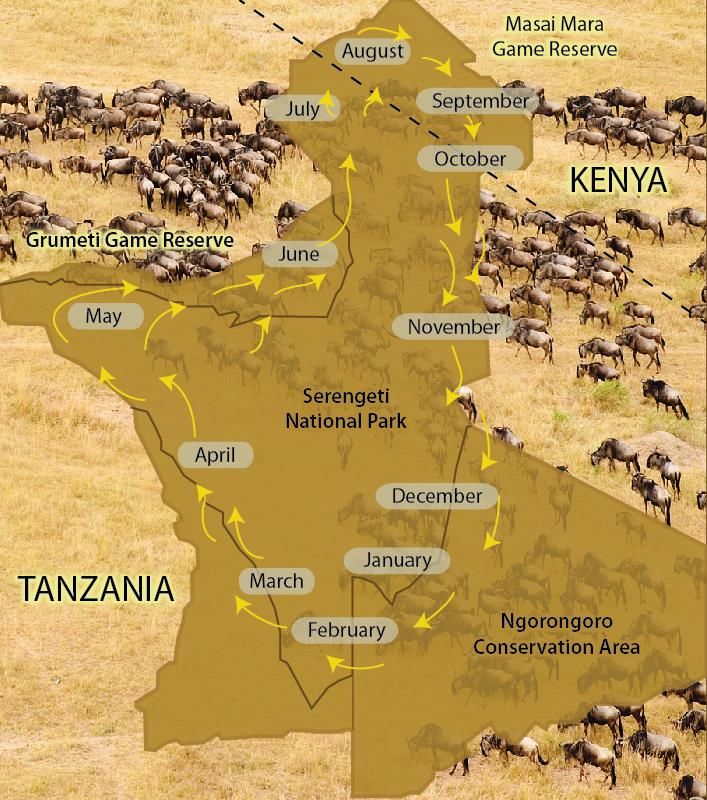
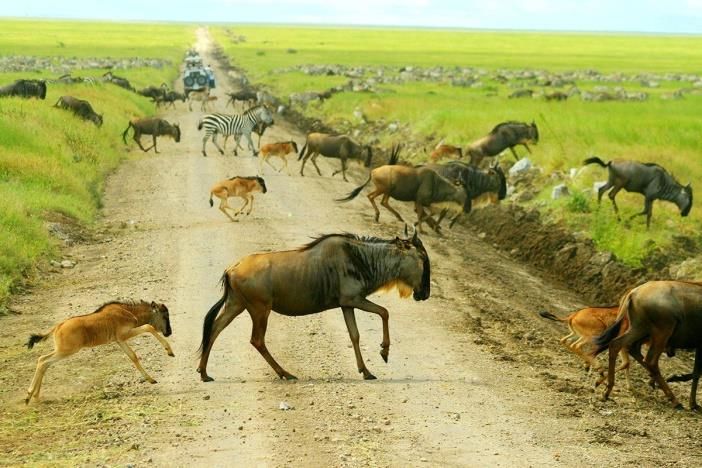
Around 1.5 million wildebeests, with hundreds of thousands of zebras, elands, gazelles along with a

                                                        trailing retinue of predators, leave their calving
                                                        grounds in southern Serengeti, around March
                                                        and April, heading for the next water source.
                                                        Trekking via the south-central Seronera
                                                        outskirts into the Western Corridor and
                                                        Grumeti River arriving during the month of April
                                                        to May and residing till June, and then finally
                                                        towards the Masai Mara National Reserve in
                                                        Kenya crossing the perilous Mara River around
                                                        July or August onwards with a return via the
                                                        same death-defying river, this time heading to
                                                        the bearing of Lobo and Loliondo in eastern
                                                        Serengeti around October to November. The
                                                        white bearded wildebeest journey continues
                                                        back to the southern Ndutu calving grounds
                                                        with arrivals starting around December with
                                                        temporary residence till March.

Month by Month Migration Safari

December to March

The Southern Serengeti's huge grass plains extend into the Ngorongoro Conservation Area.

From December to March the Serengeti Migration congregates around Lake Ndutu in the Ngorongoro
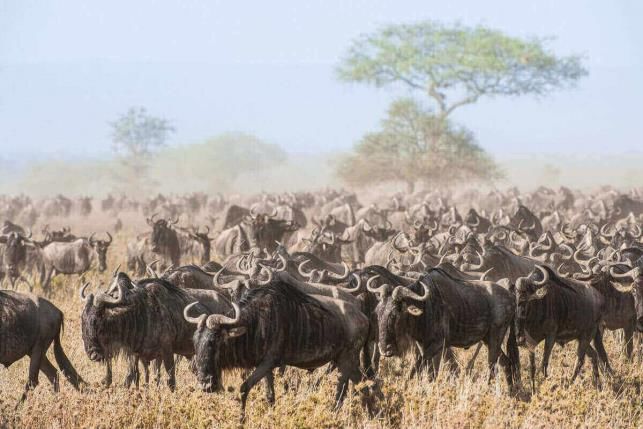
Conservation Area. When it reaches the area the herd splits up and spreads out leaving wildebeest
herds as far as the eye can see.

                                   Safaris at its luxurious best.
                    Website: www.eastsafaris.com | E-mail: travel@eastsafaris.com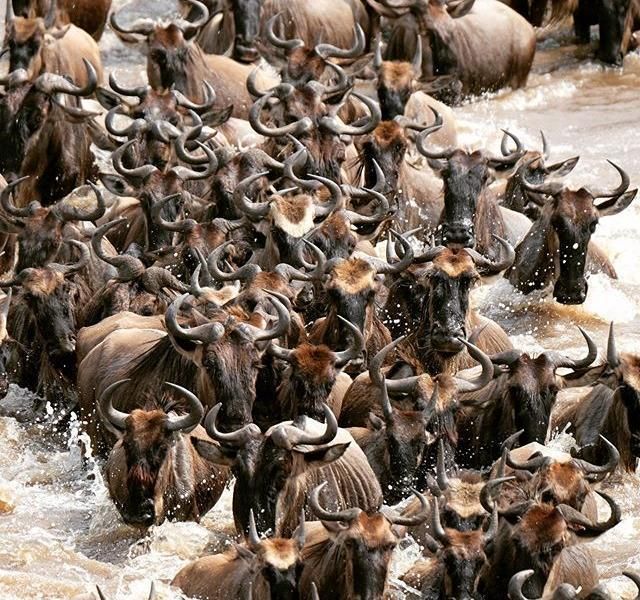
East Safari Tours,
                                      P.O.Box 12063, Arusha , Tanzania
                                      E-mail: travel@eastsafaris.com
                                      Whatsapp chat/call: +255 752 544 582
                                      Web: www.eastsafaris.com

April to May

The Wildebeest migration moves north into the plains of the southern Serengeti with front runners
stretching out to the Western Corridor and center of the park at Seronera.

June to July

By June there are wildebeest herds spread from the Western corridor through the heart of the park.
One group tends to head west into the Western Corridor and crosses the Grumeti River before leaving
the park and entering the exclusive Singita Grumeti Reserves. This herd will then head up through the
Ikorongo game reserve on the Serengeti's Western corridor before the front runners arrive into the
Kogatende area in July. The other herds head directly to the north of the Serengeti, passing straight up
the middle through Seronera, Lobo and up to the Bologonja river area near the Eastern border with the
Loliondo reserve at Kleins. It is true to say that at this time herds can be anywhere from the Western
corridor through to the Eastern side of the park. Splinter herds will break from the main herds, covering
huge areas in their search for fresh grasses.

                                   Safaris at its luxurious best.
                    Website: www.eastsafaris.com | E-mail: travel@eastsafaris.com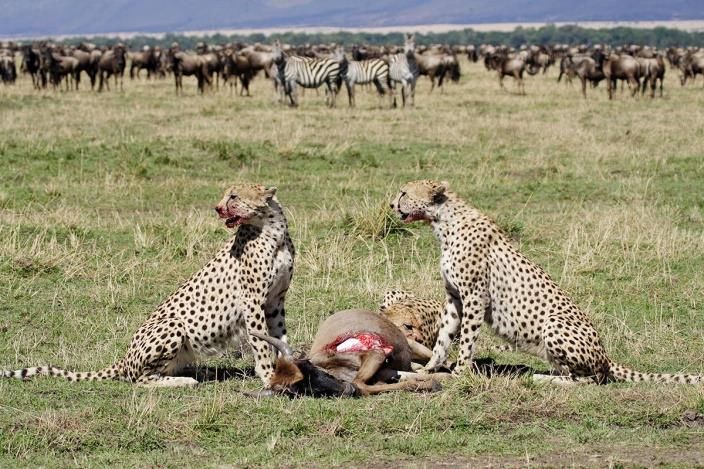
East Safari Tours,
                                       P.O.Box 12063, Arusha , Tanzania
                                       E-mail: travel@eastsafaris.com
                                       Whatsapp chat/call: +255 752 544 582
                                       Web: www.eastsafaris.com

August through to October

From August through to October the herds are in the Northern Serengeti at Kogatende as well as in
Kenya’s Masai Mara. River crossings often happen daily here. With only a fraction of the visitor numbers
that flock to the Mara, Kogatende is an exceptional destination. Given that the herds are simply
following local rainfall, some move north, some move south, and many moves in both directions in the
same day. The sprawling mass moves in a circular fashion throughout these months and as a result this
is a fantastic time of year to see the herds.

November

In late October and November the herds start their second Great Migration south towards the fertile
lands of the Ndutu plains where the rains will have rejuvenated the grasses since the herds were last
there earlier in the year. This can be a tricky time to catch the mega herd, as it covers vast distances
every day.

By the beginning of December, the herds are returning to Ndutu to calve, and the whole process is ready
to start all over again. However, we must reiterate, wildebeest are not the most predictable of animals!
The Migration is also entirely dependent upon rain, with the herds constantly searching for fresh
grasses. As a result, it is a challenge to predict with any confidence where the herds will be during any

                                   Safaris at its luxurious best.
                    Website: www.eastsafaris.com | E-mail: travel@eastsafaris.com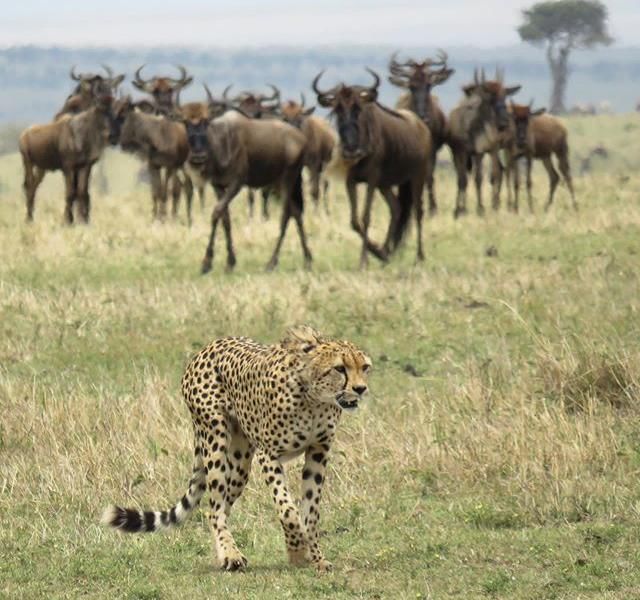
East Safari Tours,
                                      P.O.Box 12063, Arusha , Tanzania
                                      E-mail: travel@eastsafaris.com
                                      Whatsapp chat/call: +255 752 544 582
                                      Web: www.eastsafaris.com

particular week and therefore to decide where best to stay.

       Key Points to Remember

       Fixed camps or Mobile Camps: Choosing a permanent camp for your Tanzania safari that is
       located in the 'right' area for the time of year will clearly increase your chances, but there are no
       guarantees. Once again, the very best way to catch the herds is to stay in one of the Serengeti’s
       famous mobile camps, which move with the herds. Don’t worry we will help you with that.
       Best time: Joining the Great Migration and its circuitous survival dance is a spectacle unrivaled
       anywhere on Earth. Your best chances to experience big populations and big drama are during
       the northern migrations, anywhere between August and October. But calving season is a sight
       to behold too, between January and February.
       Rainfall varies: No one can predict exactly when, where or how much rain will fall. The
       migration is a complex natural phenomenon and its timing varies from year to year.
       Wildlife movements: Not all plains game participate in the migration so don’t believe that if you
       visit these areas outside of the migration season you won’t see any wildlife. You may not see the
       hundreds of thousands of grazing animals but you will see plenty, as well as the more territorial
       species.
       Tanzania or Kenya for the Migration?: Most of the year the migrating wildlife are in Tanzania
       with only 2-3 months in Kenya’s Masai Mara. So if you are going on safari specifically to see the
       migration, your best bet is Tanzania. Unless you are choosing Kenya for scenic variety. It offers
       the Laikipia, the Great Rift Valley and Lamu as well as the migration. If so, visiting the Masai
       Mara in August to September is a fair plan.
                          Prepared by East Safari Team | #Migrationupdate2019_2020

                                  Safaris at its luxurious best.
                   Website: www.eastsafaris.com | E-mail: travel@eastsafaris.com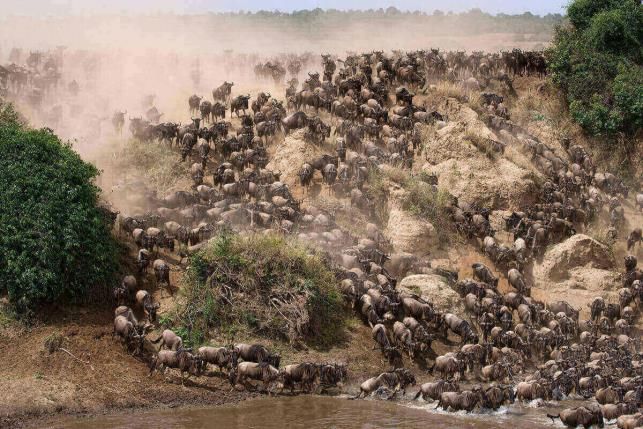


You can also read


