The Mozambique Climate Resilience Program - Activities and lessons learned from the first pilot year. 1 July 2017 - 30 June 2018 - Sustainable ...
←
→
Page content transcription
If your browser does not render page correctly, please read the page content below
Annual Report 2018

The Mozambique
Climate Resilience
Program
Activities and lessons learned
from the first pilot year.
1 July 2017 – 30 June 2018

                                 The Mozambique Climate Resilience Program | 1
Contents
   Introduction                                                    4

   Timelines                                                        7

   The year that was (2017-18)                                     8

   Improving access to water and minimizing the effects            10
   weather-related shocks and stresses

   Providing alternative livelihood opportunities for increasing   13
   income and food security

   Increasing productivity in cotton                               17

   Providing solar energy capacity and access to technology        19

   Institutionalizing community-based cooperation                  21

   Bringing engineering know-how from India                        22

   Building the business case for holistic community engagement    23

   Conclusion                                                      24

   Annexure 1: The Programme KPIs                                  25
Annual Report 2018

Introduction
The importance of climate resilience in
Mozambique
Mozambique’s agricultural sector accounts for 22% of
the national Gross Domestic Product (GDP). This sector
gives employment to 73% of the country’s workforce1 and
approximately 95% of the total agricultural workforce
consists of smallholder farmers.2

Due to Mozambique’s geographic position and predominant
dependence upon rain-fed agriculture, smallholders are
increasingly becoming more vulnerable to the effects of
anthropogenic climate changes, especially as most of the
country’s agricultural production is subjected to large floods
and droughts3. In the next 10 years, average temperatures are
expected to increase between 1 and 5 degrees Celsius, with a
prolonged dry season (June to November) and higher annual
rainfalls in the northern areas of Mozambique (December to
February).

When scrutinizing average rainfall data beyond the annual
and monthly averages, the effects of climate change is
evident. There is a dramatic decrease in consistent rainfall
with high proportion to the monthly rain occurring in single
days. The impact can be destructive – houses and roads are
impacted and top fertile soil for agriculture is dislodged.

                                  Rainfall Data Ribaue

              450
              400               391

              350
Rainfall mm

              300                     298 293     300

              250
              200
              150         141
                                                                 115
              100   76                                    67
               50                                                          41
                0
                    Nov    Dec          Jan         Feb          March      April

                                  2016/17       2017/18

 28-29 Dec 2017                                                       22 Feb 2018
 37% of the month’s                                            27% of the month’s
 rainfall in 2 days                                                rainfall in 1 day

4 | The Mozambique Climate Resilience Program
Annual Report 2018

An average smallholder cotton farmer that farms 0.8
hectares of cotton produces approximately 500 kg yield
per hectare, from which he is able to earn about 70 USD.
The impacts of climate change and extreme weather events
like droughts, floods, and cyclones significantly affect their
livelihood and food security making them increasingly
more susceptible to external shocks. This is the reality for
a large majority of Mozambique’s rural population that is
dependent upon agricultural production for their source
of income with 25% of the population currently vulnerable
to natural hazards and 35% suffering from chronic food
insecurity.

Ensuring resiliency of smallholder farmers against volatile
weather patterns is essential to secure the agricultural
productivity and, in turn, health and well-being of
Mozambique and its people. It requires mitigating the
impact of climate change by de-risking farmer livelihoods
by maximizing all possible and existing assets. This starts
with developing the household and community as a reliable
safety net and requiring a holistic livelihood approach for
robust ‘asset’ development and risk mitigation.

The Mozambique Climate Resilience
Program
Since 2016, IDH has partnered with four private sector
organizations: Olam, San JFS, Plexus, and SANAM,
with additional technical support from Action for Food
Production (AFPRO) to convene a program providing
smallholder farmers with access to inputs, knowledge
training on sustainable cotton cultivation, and technology
and information for multiple food cropping and animal
husbandry. The program is designed to increase farmers’
resilience against extreme conditions and poverty by
employing a coordinated approach to provide farmers
with diversified income, improved food intake, and training
on sustainable agriculture production. Pilot projects are
now running to support villages in the provinces of Niassa,
Nampula, and Cabo Delgado.

Through the IDH cotton program and the existing
collaborations between IDH and the public and private
sectors with different sector-specific expertise, this
program was developed as an alternative approach to
development and inclusive growth.

1
 Agriculture percentage of total GDP: https://www.cia.gov/library/publications/
the-world-factbook/geos/mz.html
Agricultural employment statistic: https://idea.usaid.gov/cd/
2

mozambique?comparisonGroup=region
3
 http://www.fao.org/mozambique/fao-in-mozambique/mozambique-at-a-
glance/en/

                              The Mozambique Climate Resilience Program | 5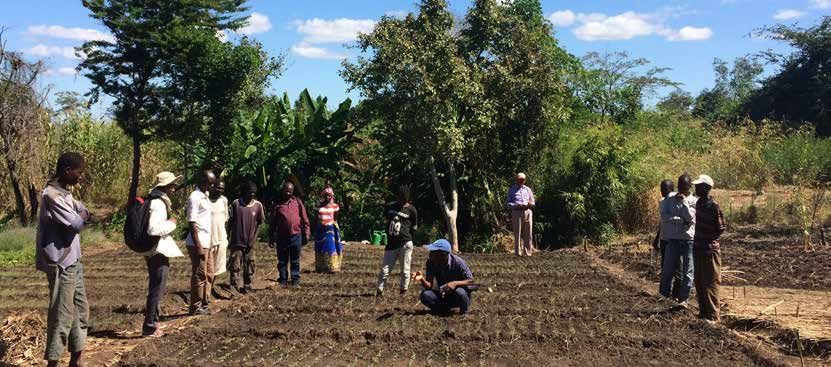
Annual Report 2018

Working towards a holistic solution, the           The funding structure for this program and the
Mozambique Climate Resilience Program              implementation of the field-level projects is based
promotes and builds on the need to empower         upon matched funded support between public
farming communities with the ability to make       funders, (the Dutch Embassy of Mozambique
informed decisions as entrepreneurs and            and IDH), and the private partners of the
community members. By promoting governance         program. Due to such public-private partnerships,
mechanisms and sensitizing communities on          innovative approaches like these can be de-risked
the power of a group, it offers a greater chance   and tested. Additionally, to achieve impact at field
to institutionalize a system change and achieve    level, IDH supports the program in its three roles
long-lasting impact.                               of convening, piloting, and co-funding.

6 | The Mozambique Climate Resilience Program
Annual Report 2018

Timelines

              August 2016
         Dalberg consultancy
         validates the project
    design against the objec-
        tives of impact at the
                  farmer level
                                              September 2016
                                               AFPRO is hired to provide
                                               capacity building support
                                               and know-how to private
                                               sector partners

          December 2016
Plans of implementation with
 three private sector partners
are drafted and agreed upon;
       implementation begins
                                              April 2017
                                               IDH convenes the first
                                               platform meeting in
                                               Maputo

                   July 2017
      The Dutch embassy of
      Mozambique joins the
  program as a public-sector
                      funder

                                              November 2017
                                               SANAM joins the program
                                               as the fourth private sector
                                               partner and implementer
                                               of the project in the
                                               Nampula region

            December 2017
       First Service Delivery
    Analysis carried out with
   Plexus to understand the
   profitability of the pilot in
                  its first year

                                              February 2018
                                               IDH convenes the second
                                               platform meeting in
                                               Maputo

                                   The Mozambique Climate Resilience Program | 7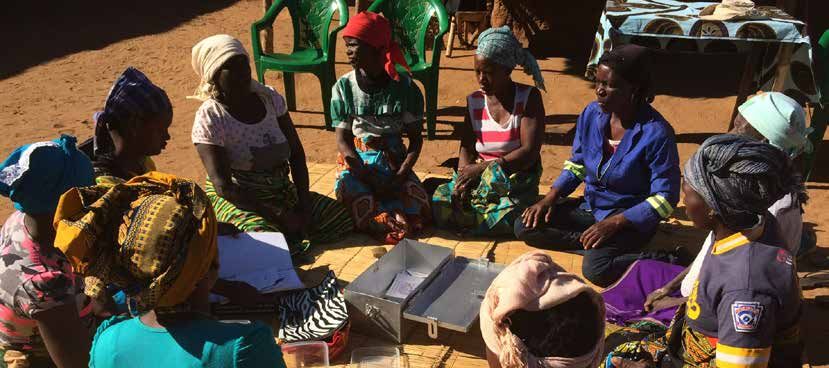
Annual Report 2018

The year that
was (2017-18)

In an exciting first year, the Mozambique Climate
Resilience Program delivered the implementation of four
pilot projects in northern Mozambique. Olam, Plexus, and
San JFS joined the project in 2017 as private partners
and project implementers. The number of project sites
expanded to include a fourth private sector partner
- SANAM - at the end of 2018, who demonstrated
an interest in joining the program. Capacity building
support coming from AFPRO and IDH since 2017 has also
expanded to ensure the needs of the program were met
as a result of this expansion.

Working across four sites and with different partners has
proven to be a very effective way of testing the program’s
theory of change and understanding the common
denominators for maximizing the impact at the farmer and
business levels. While the pillars of our work remain the
same, the local conditions and organizational approach of
each of our partners vary. These differences have enriched
our experiences, yielding the best practices that can be
shared with and applied by others.

As a result, in 2017, nearly 219 farming households have
been reached through the Program, as per the present
outcome level indicators. In 2018, we project the figure to
double.

The investment in the 2017-18 season reached a total of
approximately €470,000, combining both public and
private sector contributions. As each site is unique, slightly
different investments from each are required. However,
as a rule of thumb, the program ensures that principles
of fairness and equality apply. As a result, the differences
between partners’ individual projects remained almost
identical.

8 | The Mozambique Climate Resilience Program
Annual Report 2018

             29%

                     Funding structure
                        % share of
                       investments

                                       71%

             Public sector      Private sector

This first year of the implementation has been essential
for determining the basis of our engagement with the
communities and with the concessionaire partners for the
upcoming season. Overall, the progress has been positive,
especially at the community level, as water availability
improved living conditions and brought new opportunities.

We were also able to identify areas for improvements while
remaining faithful to the project design and concept. Such
reflection has helped drive the implementation plan for the
upcoming season.

        2%      0%        8%
                     3%
           2%

             6%
      2%              Total investments
                        in 2017-18 per
                      project activities
             11%
                                             65%

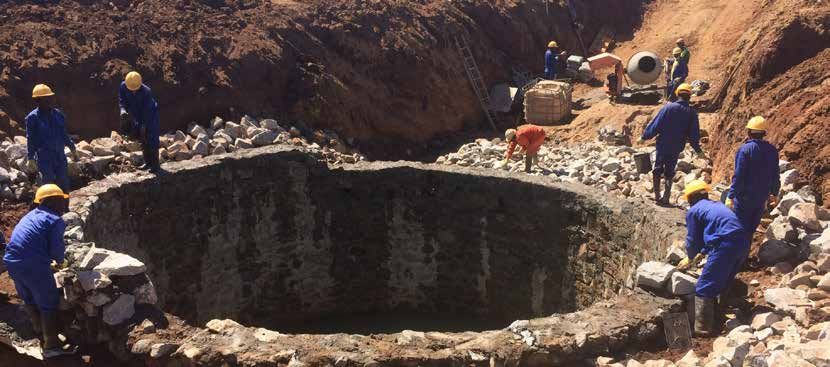
      Creating water sources structures
      Building soil conservation & land management
      structures
      Establishing water irrigation infrastructures
      Provision of service for crop production (cotton)
      Provision of service for crop diversification
      Provision of service for animal husbandry
      Generating access to energy
      Service Delivery model Analysis

                             The Mozambique Climate Resilience Program | 9
Annual Report 2018

Improving access to water and
minimizing the effects of weather-
related shocks and stresses
Establishing community-based watershed
structures
What are the differences                         IDH supports the development of water structures including
between water harvesting                         water management techniques (e.g.: community water
structures and soil                              harvesting, dug wells, and dams) and water storage techniques
conservation structures?                         (e.g.: soil conservation and land development through bunds
                                                 and furrows). Additionally, IDH supports the creation of water
Water harvesting structures.                     catchment areas (e.g.: open wells, ponds, and reservoirs) to allow
Water structures in catchment                    water to be utilized for longer periods throughout the season.
areas such as open wells,
ponds, and reservoirs allow                      Unlike other water-based technology, such as large-scale
water to be utilized for longer                  drip irrigation, water intervention can be implemented and
periods throughout the season.                   maintained at a relatively low cost since it does not require high
                                                 technology inputs and can be maintained by the communities
Soil and land conservation.                      themselves once ownership is established. In addition, it is highly
Structures like water                            adaptable to the hilly topography of northern Mozambique as
absorption trenches, farm                        it is designed to take advantage of the landscape’s features to
bunds/trenches, and gully                        capture and channel rainfall.
plugs are very useful to control
land erosion and the loss of                     Creating water structures at the village level is a key intervention
fertile soil especially with                     to enable communities to:
heavy rainfall. Additionally, it
                                                 Increase access to additional water. Depending on the capacity
increases soil moisture as it
                                                 of the water harvesting infrastructure, communities can access
allows water to penetrate the
                                                 water for 3-4 months after the rainy season to support additional
soil deeper.
                                                 cultivation.

10 | The Mozambique Climate Resilience Program
Annual Report 2018
Increase soil moisture and soil health. Soil and land for protective irrigation for crop production and
conservation structures help maintain topsoil and, adjacent industrial requirements.
in the case of excessive rainfall, avoid destructive
For soil conservation, gully plugs (or loose boulders)
landslides. Water can penetrate the deeper strata of
and farm bunds (or contour bunds) can be used.
the soil, replenish underground water reserves, and
Gully plugs control soil erosion and farm bunds
increase moisture for additional cultivation.
improve soil moisture during periods of drought.
Improve health and sanitation. Refurbishing water
To make use of the additional capacity, lift irrigation
tanks and wells decreases health and sanitation
pumps are installed and water is shared amongst
issues and reduces exposure to associated diseases
community user groups. Across the project sites,
via appropriate coverages, materials used, and
user groups have been asked to plan, design, and
methods for harvesting water.
contribute to a lift irrigation scheme to establish
Key activities in 2017-18 responsibility for operating and maintaining the
system. In one of the project sites, an irrigation
Beginning in 2017, a key priority has been to
scheme was established that charged users MZN
ensure supporting infrastructures were built
2,000 and in total, they were able to collect a total
across different project sites. In total, 38 different
of MZN 10,000.
structures were built in four villages with a capacity
of more than 55,000 m2 of water. Investment strategy
A wide range of structures was built for Investing and building the water structures
water conservation and water harvesting, soil accounts for a significant portion of the total cost
conservation, and irrigation to gain a better in the project’s annual budget. To help de-risk the
understanding of the associated costs and benefits investments made by the private sector partners,
at the field level. we matched their contribution with public sector
funding. This investment approach has been crucial
For water conservation and water harvesting,
in securing their involvement and developing a
designs such as earthen embankments, rubble
business case for the private sector.
masonry work, farm ponds, bore wells, and open
wells have been applied. Earthen embankments In 2017-18, the total investments for creating
are used to support and recharge open wells while water source structures, soil conservation and
creating catchment areas for water to be stored. land management structures, and water irrigation
Rubble masonry work usually increases the yield infrastructures accounted for 78% of the total costs
of bore wells and improve water quality. Farm (at an aggregate level). In the upcoming season,
ponds and bore wells help recharge supplies of understanding how we can normalize the capital
groundwater and improve soil moisture. Finally, costs will be essential to the cost-benefit analysis
open wells provide a sustainable source of water for replicating the model across other villages.
% share of investments by structures
25%
20%
15%
10%
5%
0%
mp
h B ge
me ce
s)
)
gs
nt
nw t
n t ter
ell
nd
nd
AT
tio men
s
nt
all
k
m(
W
me
lop ur
Plu
W
ug ar
an
Po
Bu
tio Wa
pu
(W
ve so
ro ch
da
en
nk
ten nk
lly
rm
rm
el
de r Re
th al re
ing
ba
Re ba
Op
ck
es
Gu
Fa
Fa
e
m
ch
Di
ec
ate
em
ici
Ch
wi en e
n
ll
tif
W
co
Tre
en
Ar
th
rth
rth
Ea
Ea
The Mozambique Climate Resilience Program | 11Annual Report 2018
Ownership and involvement of Highlights from our partners
communities
Achievements
Sustainable and consistent
maintenance of these structures Across the four project sites, our partners have
is vital. The objective has been to reported improvement in soil moisture, structure, and
involve and incentivize communities to fertility, resulting in minimized erosion. Farmers are
participate in construction activities as acquiring technical knowledge and water structures
much as possible. Not only does this have demonstrated success in water harvesting. There
reduce the labor cost but, by providing is now an increased availability of potable water in the
in-kind support, communities have communities for domestic consumption.
increased ownership. Ultimately, it
Challenges
helps build their capacity for future
maintenance. Approximately 240 Finding reliable and skilled contractors for some of
individuals from the villages have the machine-related work has been challenging as
been involved in the activities with these structures are relatively innovative in the region.
the support of the engineers brought Working with inexperienced constructors meant building
by AFPRO. When machinery and their capacity from scratch to help foster the precise
more specialized assistance was enabling environment for the future. Another implication
required, local agents were selected of building the capacity of the local contractors from
based upon their capacity and price scratch, meant that additional repair work was needed
competitiveness. in 2018 to mitigate the small mistakes and operational
failures of the first year of work.
Story from the field
“My name is Vincent Mario Sauje, village leader of Muape. Honestly, at the beginning I had my doubt
about the impact of this project for Muape village, but today, after almost one year I am very happy
because the activities done by the project is bringing very good impact.
The well which was constructed and rehabilitated by the project. It is providing safe water for
2,845 families (Muape village and surrounding). Earlier, families were collecting drinking water from
traditional wells, in which the water was not clean, and they were suffering a lot from diseases such as
stomach pain and cholera. But this year, even by the end of the rainy season we didn’t have any case
of cholera at our community.
In addition, the water harvest and soil management structures, have helped protect the houses near
to the mountain. All water coming from there is being captured and collected in the dams, avoiding
destruction of houses. Last year, 7 families lost their house, but this year all houses are safe.”
12 | The Mozambique Climate Resilience ProgramAnnual Report 2018
Providing alternative livelihood
opportunities for increasing income
and food security
Diversification of crop production
Crop diversification provides farmers with both income
Within a short time that the diversity and food security to ensure resilience against external
group was involved in the shocks. This is essential given that one-third of Mozambique’s
production of vegetables population is already food insecure due to low returns in
has aroused interest of more agriculture that do not provide enough income to maintain
villagers to explore the land, entire households.
which was considered as
infertile, for horticulture. The By enabling farmers to grow secondary crops through the
two dams that were installed provision of agricultural inputs, fertilizers, pesticides, and
under the Program, brought farmer training in modern agricultural practices, farmers can
added value in terms of water grow additional crops for self-sustenance and added income.
conservation for different The additional income generated allows farmers to save and
household tasks, such as develop buffers in case of poor harvest seasons and it allows
bathing, washing clothes and them to purchase additional goods and services to support
watering animals. their needs and long-term vision (e.g.: sending their children
to school). While the benefits of increased food security to the
–Plexus Mozambique. communities’ health is undeniable, it also allows them to make
better decisions on their cash crop production during the rainy
season. Decisions that are less driven by hunger and starvation
are more based on financial understanding.
Key activities 2017-18
IDH hired a local agronomist to help plan and execute second
cropping in all villages and to provide on-site training and
demonstrations at each of the project sites. In addition, the
program partners provided farmers with seeds, fertilizers, and
pesticides.
The Mozambique Climate Resilience Program | 13Annual Report 2018
Groups ranging in size from 10 to 25 farmers were in the project as social income is increasing amongst
created to support them with inputs and training existing beneficiaries. Production of vegetables by
on nursery raising, transplantation, irrigation, and the front-runners of the pilot has sparked increasing
application of fertilizers and pesticides. Monthly interest amongst villagers to explore the land that
visits were also made by the agronomist to the field was previously considered infertile for horticulture.
sites.
The availability of more fresh produce is allowing
In total, 16 farmers across five villages and covering families to consume more proteins and minerals,
an area of 15 hectares have started cultivating helping them fulfill food and nutritional needs.
second crops including cabbage, tomato, onion, Partners report the general perception amongst
lettuce and sweet pepper. farmers of the project was a great deal more positive
in comparison to last season when the project
Investment strategy started.
In 2017, 2% of the total budget was invested
Challenges
in providing services for alternative livelihood
opportunities. Demonstrating the potential of The planning of area and crops for cultivation around
secondary crop agriculture with small groups of the water structures is a key challenge, along with
front- runners has been the rationale behind a expectation-setting within the farming communities.
cost-effective investment strategy. Consultations While additional agriculture during the dry season
with all farmers at the beginning of the season is now possible as a result of the water structures
were carried out to allow the most interested and installed, they neither provide unlimited supply nor
motivated individuals to come forward. Training and can they all be sustained for the full year. Consistent
inputs were provided to each of them, in exchange and repeated messages are important and preparing
for their perseverance and motivated engagement. the groups to work through water-sharing principles
These motivated farmers are results-driven and are is vital to avoid conflict in the future.
inspiring others to follow.
It is in the interest of the partners to invest and
1% support the development of secondary crops.
5%
8% Farmers are more likely to be in better health due
to their nutritional needs being met and therefore
Investment in less susceptible to diseases. This, in turn, leads to
provision of their additional capability to improve yields across
services for crop various crops. However, results are not yet detectable
diversification for the first year of implementation. Support for
2017-18 secondary crop activities is seen as going beyond
86% the mandate and capacity of the private partners
and their team on the ground. As such, additional
support in organizing farmers and providing guidance
for planning in the first years of implementation is
Agricultural Farmer Training
Inputs and Capacity Building needed.
Fertiliser Pesticides
Story from the field
Highlights from our partners My name is Disciplo Victor. I am 39 years old and
I am member of this community since 1999. Last
Achievements year, I joined second crop group with 10 other
farmers from the village.
Due to the additional water availability, project
villages have started to successfully cultivate By selling my produce, I gained 9,000.00 MT. In
vegetable crops including cabbage, onion, addition, I could provide some vegetables for my
tomato, lettuce and sweetpeper. Partners have own family consumption. With the money earned,
reported that farmers are already able to start I could pay my children’s fees, buy uniform for
selling their harvest, which is adding to their them and others material needed at school. In
income. This additional income is also reported 2018, I further increased my vegetable area so
as being used to make long-term investments; that next year my children can continue to go to
increasingly more farmers are becoming involved school.
14 | The Mozambique Climate Resilience ProgramAnnual Report 2018
Providing alternative livelihood
opportunities for income diversity
and food security
Animal husbandry
Diversification of income and dietary options is Key activities in 2017-18
enabled further by providing animal husbandry
services as an additional activity to second crop Throughout the season, the program
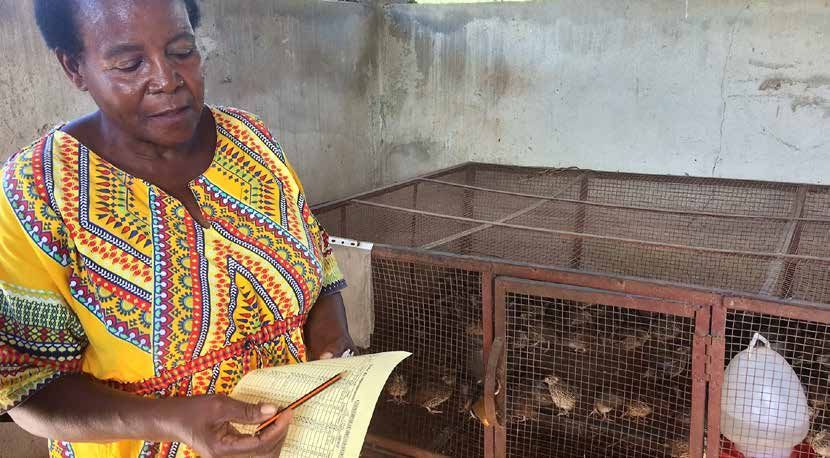
cultivation. Poultry and goat farming can be good provided animals to 94 selected
supplementary opportunities emerging from access beneficiaries. 10 Self-help groups have
to additional water as communities’ report that the been formed and advised on governance
prolonged dry season renders the survival of the structures, roles, and routines. Accountability
animals risky. mechanisms were provided to help carry out
the management of animals in more cost-
As a result, the intervention focuses on providing effective ways.
services at three complementary levels to promote
effective and sustainable impact. Firstly, by In addition, training was provided at all sites
providing animals to a selected group of voluntary by local consultants and refresher training
beneficiaries (self-promoted and identified based sessions provided at regular intervals. Based
on motivation). Self-help groups (SHG) were on the knowledge gaps identified, these
created to promote group-based management sessions would focus on animal health
models as they can spur better and faster results management, housing, and feeding practices.
with an increased scale. Secondly, by training This was coupled with the provision of
the group on good management and providing vaccinations and de-worming operations.
an advanced veterinary capacity building of 1-3 In total, 17 community veterinarians were
members elected as community veterinarians. trained by AFPRO’s expert in 2017, to
Finally, by assisting the groups in the procurement ensure at least one individual at each site
and provision of vaccines, feed, and housing can be available to advise the rest of the
materials for the animals. beneficiaries on animal health management.
The Mozambique Climate Resilience Program | 15Annual Report 2018
Investment strategy A year later, the additional work on animal
husbandry is gaining increasingly more support
In 2017, 2% of total costs was spent on the from local government agencies with adequate
provision of services for animal husbandry. Cost linkages and outreach. Additional and more
of the activities was driven by procurement of consistent support by local public agencies could be
animals and inputs such as vaccines and the explored further.
hiring of a veterinarian for training and refreshers.
Challenges
The remaining costs for building the houses and
supplementing inputs given by the partners were Lack of cohesion and trust amongst farmer groups
invested directly by the beneficiaries themselves. has been a critical bottleneck, which has resulted in
confusion of responsibilities and ownership amongst
1% the communities. It also made organizing and
mobilizing the farmers more difficult than expected.
In some cases, short-termism of farmers led to lack
of motivation as they only see incremental benefits
28% in comparison to the additional work required.
There is also an overall lack of interest in collective
Investment in
management. It has been observed that, in most
provision of
56% cases, individual beneficiaries of animal husbandry
services for animal
services are managing this activity much better
husbandry 2017-18
independently than under a collective management
5%
arrangement.
5% Finally, prevention and a high response speed in
case of diseases are key when managing animals
as an infection can spread rapidly and bad timing
Procurement of Goat Units (Members) can easily become deadly for the animals. The first
Procurement of Chicken (Members) year of implementation led to some severe losses
ProcurementChicken Feed (No of projects) of chickens, as capacity building of beneficiaries
requires more time and effort to ensure adequate
Technical assistance of Barefoot Veterinary
Technician risk mitigation and crisis management.
General Assistance and Health Care costs
Highlights from our partners Story from the field
Achievements “My name is Sabau Chaumane. Last year,
Poultry activities were generally well received my group and I received 26 sheeps to start
developing animal husbandry activities. I, along
by communities, especially by women, as
with other members, were trained in animal
consumption of chicken is accepted and carried
care.
out by most households. Yet, the knowledge
required for taking care of the animals was clearly I am very happy because I can advise other
members of the group and the community
not sufficient to ensure successful management
on how to take care of animals. I wish to see
of their survival in the long-term. As a result,
increased of number of sheeps. However, due
advisory and training activities have been
to some organizational reasons, the number of
reported as helpful and needed at most sites
animals received didn’t increase.
where the interest was high.
I am happy for the opportunity given by the
Establishing training of trainer activities for project, I hope this organizational issue will be
individuals at village level have benefited broader solved and we will have good result by end of
communities and are demonstrating a long- this year.
lasting potential. In most cases, a high impact was
achieved with relatively few resources.
16 | The Mozambique Climate Resilience ProgramAnnual Report 2018
Increasing productivity in cotton
Providing GAP training, access to inputs and to
markets
Cotton is a major agricultural crop in Mozambique, The Better Cotton Standard System and
ranking sixth in total export value. It is the CmiA are holistic approaches to sustainable
main source of income for more than 300,000 cotton production that covers all three pillars
smallholder households in central and northern of sustainability - environmental, social, and
Mozambique. Ultimately, the cotton sector has the economic. Each of the elements – from the
potential to drive a household poverty reduction Principles and Criteria to the monitoring
in the target villages. However, this potential mechanisms that show results and impact –
is currently clouded by low productivity, low work together to support the Better Cotton
utilization of inputs and technology (less than 3% Standard System, the credibility of Better
of farmers use fertilizers), and limited connectivity Cotton, and BCI. The system is designed to
and commercialization (8 in 10 farmers are ensure the exchange of good practices and
disconnected from reliable all-weather road continuous learning for improving farmers’
networks and do not sell their production). knowledge.
Good Agricultural Practices (GAP) are the most In addition to training good practices, cotton
important determinants of cotton yields4. As a companies provide packages of inputs and
result, the program builds on the existing work credit to all smallholders at key stages of the
for the promotion of the Better Cotton Initiative production cycle.
(BCI) and Cotton made in Africa (CmiA). In 2013,
BCI signed an agreement with the Mozambique
Key activities 2017-18
Cotton Institute (IAM), which saw BCI’s Minimum The 2017-18 season started with high
Production Criteria embedded in the country’s expectations from farmers and cotton
cotton legislation and national guidelines of the concessionaires as prices of cotton against
farmer extension services. The latter is carried out competing crops were high and consistent,
by cotton concessionaires, who in turn provide as compared to last season. Farmers’
training as per the BCI principles to the farmers. appetite and commitment to grow cotton
increased and partners were able to service
168 farmers in each village.
Dalberg, Business validation for climate resilience in Mozambique, 2016 report.
4
The Mozambique Climate Resilience Program | 17Annual Report 2018
In some cases, partners chose to invest in improved Highlights from our partners
input packages to take advantage of the growing
momentum in the communities. Capacity building Successes
on Good Agriculture Practices followed the
By working with cotton concessionaires, farming
production principles of BCI: minimize harmful
communities have a secure market to sell their
impact of crop protection practices, promote water
products and are guaranteed support to improve
stewardship, care for health and soil, enhance
their yield. No other market agency in the region
biodiversity, preserve fiber quality, promote decent
is currently promising top-level support to these
work, and operate an effective management system.
communities and enabling them to develop a reliable
Investment strategy income stream.
In 2017, 6% of total costs) was invested in the In return of purchasing power security and almost
provision of services for cotton production. Not all zero risks of side selling, cotton companies can also
costs of implementation are accounted for in this make upfront investments to support farmers in their
project because partners are providing accounting efforts to drive productivity. This is one of only two
services on a much larger scale than this project. industries in the country that is regulated in such a
The investments are accounted beyond specific way that both sides should theoretically be more
villages at the regional level, which makes it difficult comfortable with making long-term and upfront
for partners to segregate for this program. investments.
Challenges.
17%
Despite its strength, increasing the cotton yields
continues to be an ongoing concern for the industry.
Yield data for this year indicates progression and the
Investment in
11% increasing area under cotton cultivation is a good
provision of
sign of growth. For improved results, a good deal
services for cotton
more work must be done on capacitating farmers
production 2017-18
with input supply and training on good agriculture
practices. Moreover, price competition continues to
72%
cause fluctuations in the number of farmers planting
cotton; this has significant ramifications on the return
on investment for private companies.
The 2017-18 climatic conditions and extreme
Farm implements (L/s - No of projects)
rainfall patterns did not ease the case for yield
Farmer's training & capacity building improvements. Despite a stronger appetite from the
on the modern agricultural practices
(Covered under BCI prog) companies to invest in farmers based on projections
of increasing acreage and productivity, the result of
Provision of Input (seeds, fertilizers,
the harvest did not meet expectations with volumes
pesticides)
not high enough for it to be considered a successful
season.
18 | The Mozambique Climate Resilience ProgramAnnual Report 2018
Photograph by F H Mira, License: https://creativecommons.org/licenses/by-sa/2.0/legalcode
Providing solar energy capacity
and access to technology
Training village level entrepreneurs in solar
energy business models
Access to energy and information technologies Key activities in 2017
is fundamental to building resilience. Technology
is growing rapidly and the cost of procurement is As a starting point for this intervention, 3
getting lower and more affordable. By harnessing individuals received solar panels during the
low-cost technologies, the projects provide first year. Guidelines were also discussed
solar panels at the community level along with with entrepreneurs for the maintenance of
appropriate implementation schemes to ensure the solar kit and expansion of activities in the
they can be credited and reimbursed through village.
viable financial models.
Partners and beneficiaries worked jointly on
Access to solar energy will be rooted on the development of business models and
the provision of solar energy panels and the repayment mechanisms of the technology
development of community-level entrepreneurs as to ensure ownership and accomplishment of
service providers. By combining access to energy the long-term vision. Entrepreneurs agreed
with other types of energy-based services that to pay between 30% and 50% of the cost for
can be serviced at a fee, such entrepreneurs would the solar panel and equipment, which was
receive enough funding to support the business. match-funded by the project investments.
In addition, it will enable the development of As a result, the total investments that were
products that typically require a power supply. needed to cover this activity during the
These products will be given to the selected season have been close to zero.
entrepreneur in each village, supplying him/her
information for providing additional services to
communities.
The Mozambique Climate Resilience Program | 19Annual Report 2018
Key highlights of partners
Story from the field
Achievements
“My name is Ramalho Estefano. My
Developing simple repayment models based upon
family was one the beneficiaries of the
mobile charging units available to the community has
solar panel model for implementation.
initially proven effective for encouraging investment in
I am very happy because I can use the
solar energy panels by communities. There is a need
solar panel to produce light to illuminate
to develop this further next year to gradually build
houses during the night, recharge cell
a stronger business model that can benefit larger
phones, listen to radio and music and
communities. Moreover, if done correctly, this activity
provide services of cell phone recharge
can be leveraged to provide light, ICT tools, and crop-
to my neighbours.
related rechargeable tools.
To recharge one cell phone, it cost 10.00
Challenges
MT. Since I have just started the service
Providing inclusive and sustainable models on solar and most of my neighbours do not have
energy has been one of the more challenging activities cell phones because of lack cell phone
to implement due to the lack of adequate supply and recharge services, I am recharging about
maintenance services in the regions and limitations of 2-3 cell phones every day, collecting
the model for including more household beneficiaries. 20.00 to 30.00 MT per day. I believe
that in the coming month the number of
In some cases, the lighting kit, consisting of the solar families with cell phone will increase due
panel, battery, and lamps is seen as too expensive recharge services now available.
for replication. The beneficiary family currently
does not have enough customers for recharging To maximize the utility of the solar
phones and viewing movies to be able to encourage panel, I bought a DVD and television to
other members of the community to make similar project cinema during the weekend at
investments. It was reported that further investments my home. The cost to watch the cinema
are needed to see an impact. will be 10 MT per person.”
20 | The Mozambique Climate Resilience ProgramAnnual Report 2018
The women’s saving group successfully
completed the year, with the group
saving MZN 22,000 during the first
year. The women’s group has been
more efficient in all the activities they
participated in, such as, saving and
raising chickens. Now the men of
the association, have also convinced
themselves that they should follow the
same path. In the village, other women
have already approached the project
team and shown interest in being part of
the savings group.
–Plexus Mozambique.
Institutionalizing community-based
cooperation
Setting up Self Help Group
Defining our cooperation with the communities is relevant for opportunities (or challenges) that
vital for ensuring that implementation is delivered cannot be carried out alone or when working
in an effective and inclusive way and builds the together will be much more efficient and
foundation for ownership by the communities. effective. One example is the maintenance of
Therefore, the overarching objective is to develop water structures. The project is aimed at helping
an appropriate engagement strategy for all the communities (the same group of front-runners)
additional activities that are provided. establish self-help groups by providing knowledge
on how to work together, the accountability
To answer this need, the approach taken in the
protocols and governing rules that can be
program is two-fold.
followed and, facilitating resolutions of issues
Firstly, the program works with community when and if they arrive.
members that are demonstrating an interest to
In Muape, Plexus helped establish a women’s
join and to invest themselves in the opportunities
saving group including 13 women. The program
offered through the program as they see their own
advised them on setting various rules for
benefit in driving results. Ultimately, the choice of
collaboration such as meeting schedules,
each community member to join the program’s
establishing roles and responsibilities, principles
activities is voluntary. As this is an innovative
for saving, borrowing and repaying, security,
approach, testing it with the front-runners and
accountability, etc. In one year, they were able to
enthusiasts will increase the likelihood of success.
save a total of MZN 22,000 with each member
In time, when results with the front-runners will
contributing MZN 50 per week. The women were
be demonstrated, others will be inspired to join
able to use these savings to buy clothes, home
and replicate the model, until it becomes a critical
coverage, ID processing, and small business start-
mass.
ups such as selling dumplings and other snacks.
Additionally, the program seeks to create self- The women also utilized the chickens as a form of
governed models with communities in order savings; selling them for cash if needed. The men
to reduce dependencies and strengthen the in the village have observed this success and have
potential through collaboration, risk sharing, and now set up a saving group with 11 members. Their
accountability mechanisms. This is especially aim is to save MZN 220 per week to purchase
petrol for the irrigation pump.
The Mozambique Climate Resilience Program | 21Annual Report 2018 Bringing engineering know-how from India IDH’s capacity to develop innovative models for delivering services to farmers depends, to a large extent, on its partners and the solutions they can bring to the table. In the context of the Mozambique Climate Resilience Program, bringing solutions such as watershed development and food security might not have been possible without the inclusion of expert partners such as AFPRO in the global ecosystem of IDH’s operations. AFPRO is a not-for-profit organization registered in 1967. It provides short- and long- term institutional and technical support linked to water, sanitation and hygiene, watershed development and food security, and sustainable livelihoods. The organization consists of hydro- geologists, hydrologists, geologists, geophysicists, civil engineers, sociologists, and specialists in agriculture, fisheries, forestry, and livestock. IDH has worked with AFPRO since 2011 and under the IDH cotton program, AFPRO has been a long-term partner to deliver farming services to more than 64,500 farmers in different parts of India. Once IDH’s concept was developed and the intervention logic was validated by a third-party consultancy, AFPRO agreed to deploy itself in Mozambique for this specific project. Its role was first to support the sharpening of the design of the intervention and then to transfer their knowledge to the local implementing partners. This, in turn, has helped build their internal capacity for managing the field level project. In practice, this means AFPRO has been actively engaged with the field level partners to coordinate and provide technical guidance on the implementation of project activities linked to land and resource management, crop production and food security, access to energy, and community capacity building. Additionally, they have provided support in developing a framework to help monitor and evaluate the pilot’s overall progress. 22 | The Mozambique Climate Resilience Program
Annual Report 2018

Building the business case for
holistic community engagement
Demonstrating tangible business benefits for the       case for service delivery to investors, service
service provider (implementer) of our intervention     providers, and farmers.
is also essential. There is an obvious negative
                                                       In 2017, a Service Delivery Analysis was
impact on production when farmers are unable
                                                       carried out with Plexus. While the program
to cope with poverty, food insecurity, and the
                                                       implementation was just starting, the results
adverse effect of climate change. By providing the
                                                       show a positive return on investment after a few
project services and making these investments,
                                                       years. Higher cotton yields are expected with the
partners should see an impact on their bottom line
                                                       construction of additional water source structures
(independent of grant support).
                                                       and soil conservation and land management
In this context, the intention of the pilot is also    structures, as soil degradation will be minimized
to understand whether private service providers        and soil moisture will increase.
can see their business improving when engaging
                                                       The analysis also demonstrated the impact on
with the farmer holistically. In theory, the program
                                                       cotton production (higher yield) from the water
should see an increase in loyalty from the farmers,
                                                       structures is still to be seen due to other variables
improved yields, and increased sustainable
                                                       which fall outside the scope of this program. It
production. In essence, a stable and secured
                                                       showed that cotton planting is not high enough
supply. Additionally, depending on the appetite
                                                       to cover the cost of infrastructure development
of the private partners to deepen its engagement
                                                       at the village level, especially when there is no
in other markets, such a program presents the
                                                       appetite for the cotton business to diversify by
opportunity for increased business growth in other
                                                       entering into new markets (e.g. animal farming or
value chains.
                                                       large-scale production of a second crop).
To accelerate the learning process, IDH developed
                                                       As the pilot implementation enters its second
a systematic, data-driven approach to understand
                                                       year, the intention is to carry out other Service
and improve these models. The approach is based
                                                       Delivery Model (SDM) analysis to realize the
on an analysis of the ranges of services provided
                                                       benefits of our private partner over the course of
through the program: the relationship between
                                                       the project and see whether changes have to be
the cost of providing them and the revenue they
                                                       made to increase the farmers and their benefits in
generate at the level of the community and the
                                                       this enterprise.
service provider. Ultimately, it makes the business

                                                                 The Mozambique Climate Resilience Program | 23
Annual Report 2018
Conclusion
2017-18 has been an eventful year for the Additionally, other activities related to solar energy
farming communities, our implementing teams, and ICT development continue to develop with
our funding partners, and for IDH – setting up a balanced and steady approach that works on
the path for a journey of delivering impact, continuous improvements without over-burdening
increasing the farming communities’ resilience, our teams and communities. Finally, IDH and its
and changing the way the private sector does partners will continue to sharpen their understanding
business with them. of the local realities through their engagement with
communities – both the successes and the failures. In
As the program enters its second year of
2018, a gender analysis and additional service delivery
implementation, the focus will be on further
model analysis will be carried out to create learning
leveraging the water structures for cotton,
loops and help us improve towards the final year.
second crop, and animal husbandry activities.
24 | The Mozambique Climate Resilience ProgramAnnual Report 2018
Annexure 1: The Programme KPIs
Output indicators 2017
Number of structures 38
Volume of water harvested – in Metric Cubes 55,700 M3
Irrigated by additional sources of water – in Hectares 32 Ha
Number of individuals involved in building and maintenance of infrastructures 240
10 Men
Number of farmers trained in food crop production (tomato, onion, cabbage)
6 Women
Hectares where sustainable production/sustainable intensification interventions are
1.5Ha
implemented (Tomato, Onion, Cabbage)
KG of sustainable production resulting from trainings (Tomato, Onion, Cabbage) 20.5 KG
Number of women groups formed in poultry farming 4
Number of women trained in animal husbandry 44
Number of male groups formed in sheep and goat farming 4
Number of men trained in animal husbandry 85
142 Male
Number farmers trained in Better Cotton and Cotton made in Africa Standards 26 Female
Hectares where sustainable production/sustainable intensification interventions are
137 Ha
implemented (Better Cotton & Cotton made in Africa)—in Hectares
MT of sustainable production resulting from trainings (Cotton) 27 MT
Number of households that have been provide solar energy panels 3
The Mozambique Climate Resilience Program | 25[In] Palacua, more and more
farmers want to be involved in the
project due to the benefits they
are seeing every day. [There is]
improvement of social income,
availability of fresh produce that is
source of proteins and minerals for
the farmer families, availability of
potable water in the communities
for domestic consumption (wells),
and improvement of the soil health
and fertility, which is minimizing
soil erosion. There is also increased
trust and engagement between
farmers and Olam.
-Olam MozambiqueAuthors
Colophon Elea Papaemmanuel (IDH, the Sustainable Trade
Initiative), Mrinalini Prasad (IDH, the Sustainable
Trade Initiative), Amy Ching (IDH, the Sustainable
Trade Initiative)
Editing
Laura Jacobs Mathes (Americanize.Me)
Design
MKM Creatives
mkmcreative@gmail.com
Disclaimer:
Although every effort has been made to ensure that
the content of this report is up to date and accurate,
errors and omissions may occur.
Contact Details:
Elea Papaemmanuel, Program Manager
IDH the sustainable trade initiative
papaemmanuel@idhtrade.orgAnnual Report 2018 28 | The Mozambique Climate Resilience Program
You can also read


