THE NON-TRADITIONAL INSTRUCTION PROGRAM - Guidance Document - Kentucky Department of ...
←
→
Page content transcription
If your browser does not render page correctly, please read the page content below
THE
NON-TRADITIONAL
   INSTRUCTION
      PROGRAM
                                                   Guidance Document

              Kentucky Department of Education
   Division of Innovation and Partner Engagement
                          Updated January 2019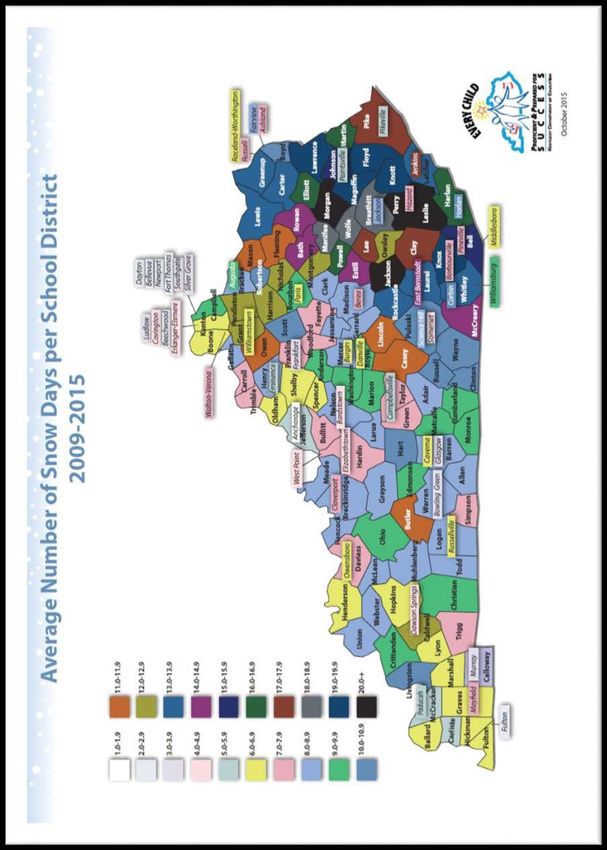
Table of Contents

Table of Contents .......................................................................................................................................... 1
General Information about the Non-Traditional Instruction Program...................................................4
History of the Non-Traditional Instruction Program ..................................................................................... 4
Statutory Authority ....................................................................................................................................... 5
Regulatory Authority..................................................................................................................................... 5
Program Data ................................................................................................................................................ 6
   Year One (2014-2015) ............................................................................................................................... 6
   Year Two (2015-2016) ............................................................................................................................... 6
   Year Three (2016-2017) ............................................................................................................................ 6
   Year Four (2017-2018) .............................................................................................................................. 6
   Year Five (2018-2019) ............................................................................................................................... 6
Specific Information about the Non-Traditional Instruction Program ...................................................7
Application Process ....................................................................................................................................... 7
   Application for New Districts .................................................................................................................... 7
   Application for Returning Districts............................................................................................................ 7
   Scoring of Application ............................................................................................................................... 7
   Notification of Participation ...................................................................................................................... 7
   Amendments to the Initial Application ..................................................................................................... 8
Approval of NTI Days..................................................................................................................................... 8
Area Technology Centers (ATC) and Other Shared Services ......................................................................... 8
Attendance.................................................................................................................................................... 8
   Student Participation ................................................................................................................................ 8
   Teacher Participation ................................................................................................................................ 9
   Staff Participation ..................................................................................................................................... 9
   ADA for NTI Days ....................................................................................................................................... 9
   Extra-Curricular Activities ......................................................................................................................... 9
Attendance Codes in Infinite Campus ........................................................................................................... 9
   N: Non-Traditional Instruction .................................................................................................................. 9
   January Growth Factor - NTI Day(s) ........................................................................................................ 10
   Help ......................................................................................................................................................... 10
Certified Staff Duties ................................................................................................................................... 10

                                                                                                                                                                1
Teachers .................................................................................................................................................. 10
   Counselors............................................................................................................................................... 10
   Related Services Staff.............................................................................................................................. 10
   Administrators ........................................................................................................................................ 10
Classified Staff Duties .................................................................................................................................. 10
   Instructional Assistants ........................................................................................................................... 10
   Clerical Staff ............................................................................................................................................ 11
   Transportation Personnel ....................................................................................................................... 11
   Food Service Personnel ........................................................................................................................... 11
   Custodial Staff ......................................................................................................................................... 11
Community Partners ................................................................................................................................... 11
Copyright ..................................................................................................................................................... 11
Day Counts .................................................................................................................................................. 12
Documentation ........................................................................................................................................... 12
   Documentation Submitted to KDE .......................................................................................................... 12
   SharePoint Site ........................................................................................................................................ 12
   Submitting Documentation..................................................................................................................... 12
Funding ....................................................................................................................................................... 17
   Federal Food Reimbursement ................................................................................................................ 17
   Transportation Reimbursement ............................................................................................................. 17
Home and Hospital...................................................................................................................................... 17
Informing the Community........................................................................................................................... 17
   Before the Snow Falls ............................................................................................................................. 17
   During Non-Traditional Instruction Days ................................................................................................ 17
Instruction ................................................................................................................................................... 17
   Approaches ............................................................................................................................................. 17
   New Material .......................................................................................................................................... 18
Internet Accessibility................................................................................................................................... 18
   What about the students without internet? .......................................................................................... 18
   What if the internet or electricity goes out? .......................................................................................... 19
One Hundredth Day of School .................................................................................................................... 19
Preschool..................................................................................................................................................... 19
Private Schools ............................................................................................................................................ 19

                                                                                                                                                              2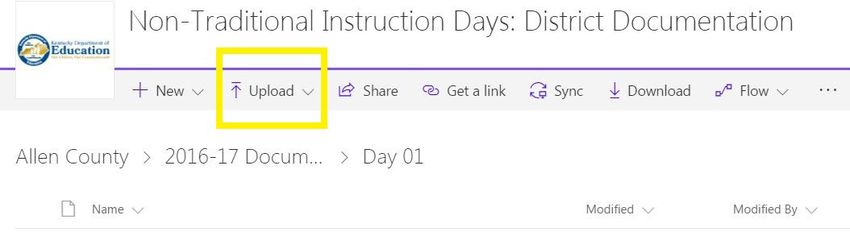
Can private schools participate in NTI? .................................................................................................. 19
   Agreement with Public District ............................................................................................................... 19
Professional Development .......................................................................................................................... 20
Social Media ................................................................................................................................................ 20
Stakeholder Engagement ............................................................................................................................ 20
Student-Specific Plans ................................................................................................................................. 20
   Special Education Students ..................................................................................................................... 20
       FMD Students...................................................................................................................................... 21
       Related Services .................................................................................................................................. 21
       Special Education Timelines ................................................................................................................ 21
   Students with 504 Plans .......................................................................................................................... 21
   Gifted Students ....................................................................................................................................... 21
   Migrant Students .................................................................................................................................... 22
   English Learners ...................................................................................................................................... 22
Suspended Students ................................................................................................................................... 22
Testing Window .......................................................................................................................................... 22
Timeline....................................................................................................................................................... 22
   Applying .................................................................................................................................................. 22
   Documentation ....................................................................................................................................... 23
   NTI Day Approval .................................................................................................................................... 23
When to Use NTI Days ................................................................................................................................ 23
   Weather Impacting Safety ...................................................................................................................... 23
   Illness ...................................................................................................................................................... 23
   Other Closings ......................................................................................................................................... 23
       Individual School Closings ................................................................................................................... 23
       Closings Not Related to Health and Safety ......................................................................................... 24
   No Extra-Curricular Activities .................................................................................................................. 24
Contacts for Additional Information ........................................................................................................... 25
District Contacts .......................................................................................................................................... 25
KDE Contacts ............................................................................................................................................... 28
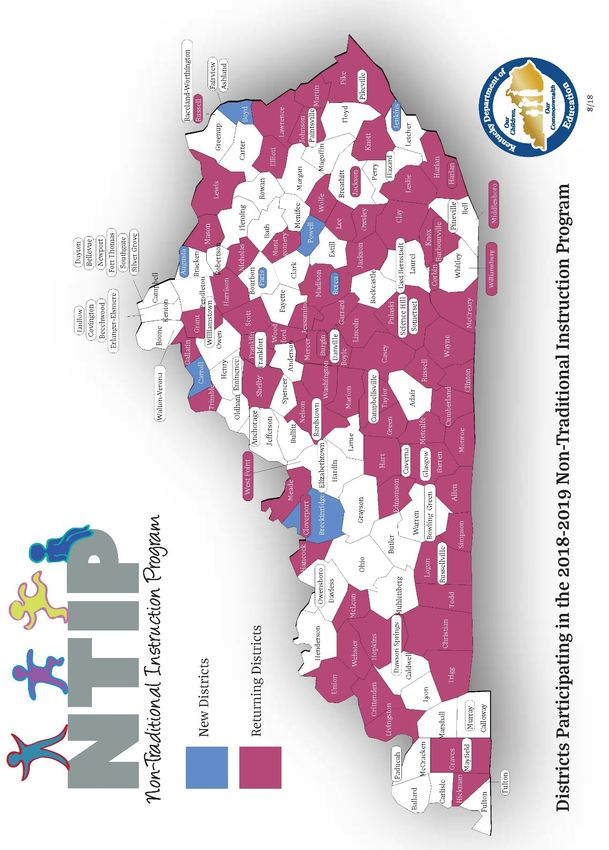
Map: Average Number of Snow Days across the State .............................................................................. 29
Map: Districts Participating in the 2018-2019 NTI Program ....................................................................... 30

                                                                                                                                                                3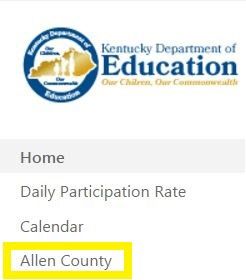
General Information about the Non-Traditional Instruction Program

History of the Non-Traditional Instruction Program
Prior to 2011, school districts across the Commonwealth had a shared problem: students were missing
too much school due to health or safety-related school cancellations. In some cases, school districts
were closed for 20 or more days a year, which is the equivalent of over a month of instructional time.
Missing this much school resulted in significant disruption of instruction and learning loss similar to
“summer slide.”

As a potential solution for the disruption of instruction, Dr. Terry Holiday, former Commissioner of
Education (Commissioner) proposed a plan that would allow school districts to continue to provide
instruction to students when it was necessary for school to be cancelled due to health or safety reasons.
This solution was the Non-Traditional Instruction Pilot, also known as the Snow Bound Pilot. In this pilot,
which began in 2011, the legislature allowed districts the opportunity to conduct school through virtual
or other non-traditional means on days that the district would have normally had to call school off. The
district would then submit a request showing evidence of student participation and learning to the
Commissioner to consider approving those specialized school days as regular instructional days. If
approved, the district would not have to make up those non-traditional instructional days.

The primary criteria a district had to meet to submit an application for participation in the Non-
Traditional Instruction Pilot was to have missed an average of 20 school days the previous three
years. Due to the mild winters in the two previous years (i.e. 2011-12 and 2012-13), most districts had
not missed enough days and, accordingly, were not eligible to apply to the Non-Traditional Instruction
Pilot. There were, though, 2-3 school districts that were able to participate in the program, which lasted
for three years.

During the 2014 Regular Session of the Kentucky General Assembly, the Non-Traditional Instruction Pilot
program was expanded to a full-time program called the Non-Traditional Instruction Program.
Specifically, House Bill 211 (2014) removed the language requiring school districts to miss 20 or more
school days in order to participate in the program, which opened eligibility up to all 173 Kentucky school
districts.

In 2018, the Non-Traditional Instruction Program was again revised by the legislature. Senate Bill 73
(2018) revised the language of KRS 158.070 and also mandated regulations for the Non-Traditional
Instruction Program be promulgated by the Kentucky Board of Education and implemented for the
2019-2020 school year.

Since 2014, the Non-Traditional Instruction Program has grown significantly in the number of districts
participating. In the first year of state-wide eligibility, 13 school districts implemented non-traditional
instruction (NTI). Now, in the fifth year of state-wide implementation, 83 school districts are
participating in the Non-Traditional Instruction Program during the 2018-2019 school year.

                                                                                                              4
Statutory Authority

KRS 158.070(9) states:

        Notwithstanding any other statute, each school term shall include no less than the equivalent of
        the student instructional year in subsection (1)(f) of this section, or a variable student
        instructional year in subsection (1)(h) of this section, except that the commissioner of education
        may grant up to the equivalent of ten (10) student attendance days for school districts that have
        a nontraditional instruction plan approved by the commissioner of education on days when the
        school district is closed for health or safety reasons. The district's plan shall indicate how the
        nontraditional instruction process shall be a continuation of learning that is occurring on regular
        student attendance days. Instructional delivery methods, including the use of technology, shall
        be clearly delineated in the plan. Average daily attendance for purposes of Support Education
        Excellence in Kentucky program funding during the student attendance days granted shall be
        calculated in compliance with administrative regulations promulgated by the Kentucky Board of
        Education.

Regulatory Authority

KRS 158.070(10) states:

        By December 31, 2018, the Kentucky Board of Education shall promulgate administrative
        regulations to be effective beginning with the 2019-2020 school year to prescribe the conditions
        and procedures for districts to be approved for the nontraditional instruction program.
        Administrative regulations promulgated by the board under this section shall specify:

                (a) The application, plan review, approval, and amendment process;
                (b) Reporting requirements for districts approved for the program, which may include
                but are not limited to examples of student work, lesson plans, teacher work logs, and
                student and teacher participation on nontraditional instruction days. Documentation to
                support the use of nontraditional instruction days shall include clear evidence of learning
                continuation;
                (c) Timelines for initial approval as a nontraditional instruction district, length of
                approval, the renewal process, and ongoing evaluative procedures required of the
                district;
                (d) Reporting and oversight responsibilities of the district and the Kentucky Department
                of Education, including the documentation required to show clear evidence of learning
                continuation during nontraditional instruction days; and
                (e) Other components deemed necessary to implement this section.

In compliance with KRS 159.070(10), the Kentucky Board of Education promulgated 701 KAR 5:150,
which is expected to be in effect in early 2019 and will impact Non-Traditional Instruction Programs in
the 2019-2020 school year.

                                                                                                          5
Program Data
Year One (2014-2015)
• Number of participating school districts: 13
• School district size range: 724- 8,982 students
• Average school district size: 3,229 students
• Average number of NTI days used per school district: 7.7
• Participation rates across all participating districts:
o Student participation: 91%
o Teacher participation: 98%
Year Two (2015-2016)
• Number of participating school districts: 44
• School district size range: 420- 11,402 students
• Average school district size: 3,367 students
• Average number of NTI days used per school district: 5.7
• Participation rates across all participating districts:
o Student participation: 94%
o Teacher participation: 99%
Year Three (2016-2017)
• Number of participating school districts: 72
• School district size range: 131- 39,670 students
• Average school district size: 3,485 students
• Average number of NTI days used per school district: 2.7
• Participation rates across all participating districts:
o Student participation: 94%
o Teacher participation: 99%
Year Four (2017-2018)
• Number of participating school districts: 75
• School district size range: 131- 11,412 students
• Average school district size: 2,971 students
• Average number of NTI days used per school district: 7.1
• Participation rates across all participating districts:
o Student participation: 93%
o Teacher participation: 99%
Year Five (2018-2019)
• Number of participating school districts: 83
• School district size range: 131- 11,412 students
• Average school district size: 2,860 students
• Average number of NTI days used per school district: In progress
• Participation rates across all participating districts:
o Student participation: In progress
o Teacher participation: In progress
6Specific Information about the Non-Traditional Instruction Program
Application Process
Application for New Districts
The Non-Traditional Instruction Program application for new districts asks questions related to:
• Delivery method of instruction;
• Student access to the internet and/or devices;
• Fulfilling student-specific plans, such as Individual Education Programs (IEP), 504 Plans,
Gifted Student Services Plans (GSSP), and Program Services Plans (PSP);
• Gathering student and teacher participation data;
• Gathering evidence of learning;
• Professional learning for staff;
• Duties of certified and classified staff;
• Shared service agreements with other districts;
• Stakeholder involvement;
• Community partner engagement; and
• Informing the public about the program
To have an application considered for implementation at the beginning of the upcoming school
term, the application must be submitted to the Kentucky Department of Education (KDE) at
least one hundred and twenty (120) days prior to the beginning of the school term.
Application for Returning Districts
School districts interested in participating in the Non-Traditional Instruction Program for
another year must re-apply. The application for returning districts is considerably shorter than
the application for new districts, and returning districts are asked to reflect on the effectiveness
of their NTI program and describe changes being proposed in order for the program to grow in
rigor and efficacy. As with new district applications, returning districts must submit the
application to KDE at least one hundred and twenty (120) days prior to the beginning of the
school term in order to have an application considered for implementation at the beginning of
the upcoming school term.
Scoring of Application
There is a committee of cross-agency KDE personnel that scores all new and returning district
applications. Each committee member uses a leveled rubric that assess application responses
for thoroughness and details. The rubric measures responses with categories of Unsatisfactory,
Emerging, Proficient, and Exemplary. Each application is scored by more than one scorer and the
separate scores are averaged into a final score. District applications must receive an overall
Proficient rating in order to be recommended for approval into the NTI program. The scoring
rubric is placed on the Non-Traditional Instruction Program website in order for districts to
better understand how applications will be assessed.
Notification of Participation
The review committee must score all new and returning district applications and make a
recommendation of approval or denial to the Commissioner within 45 days of receipt.
7Thereafter, the Commissioner approves or denies each application within 30 days from receipt
of the review committee’s recommendation. After formal approval is granted by the
Commissioner, districts are notified of acceptance into the program. Districts who were not
approved are also notified of the status and are given feedback on the application in order to aid
in re-applying for the program in the future.
Amendments to the Initial Application
Districts that have been granted approval to participate in the Non-Traditional Instruction
Program may make minor changes to the NTI plan as the year progresses. Resubmission or re-
approval of the application is not necessary. Minor changes include using a different Learning
Management System (LMS) than originally planned, refining staff duties, collecting
documentation using a different method, etc. Major changes to the NTI plan, such as a drastic
change in the instructional delivery method, must be approved by KDE before implementation.
Approval of NTI Days
Districts whose plans have been approved by the Commissioner may choose to participate in the Non-
Traditional Instruction Program. In order for an NTI day to be approved as an instructional day, districts
must submit documentation to the Commissioner for each NTI day, including student and teacher
participation rates along with evidence of student learning. After the Commissioner has approved one or
more NTI days, the district will be notified that their NTI day(s) can be counted as instructional days.
Documentation is generally due to KDE at the beginning of April and approval is granted for NTI days
later in April.
Area Technology Centers (ATC) and Other Shared Services
Some districts may have agreements with other districts that involve sharing students or facilities. Such
agreements could include preschool services, a state operated area technology center, or private
schools. Before the first Non-Traditional Instruction day, the cooperating districts should come to an
agreement about what students from NTI districts should be doing on NTI days. Possibilities for students
from NTI districts could include completing online coursework or working on a long-term project.
Creating a plan for students on NTI days is especially important if not all the cooperating districts have a
Non-Traditional Instruction Program, as school schedules will be altered due to the instructional day
designation of NTI days.
Attendance
Student Participation
As Non-Traditional Instruction days are considered instructional days, all K-12 students are
expected to participate. Districts may determine what participation is for students, whether it
be accessing online course work, completing a project or paper assignment, or other method of
participating in instructional activities. Districts track and report to KDE the overall district
student participation rate for each NTI day. There is no minimum percentage of student
participation that is necessary for a Non-Traditional Instruction day to be approved by the
Commissioner; however, a low student participation number may result in an NTI day not being
approved.
8Teacher Participation
Non-Traditional Instruction days are considered teacher work days and count towards fulfilling
the number of work days required by contract. As such, teachers are required to work on NTI
days, though each district decides the work location and duties of the teachers on NTI days. If a
teacher decides not to work, or is unable to work on an NTI day, leave time must be used
according to district policies. Teachers on pre-arranged leave are not required to work on NTI
days. Districts track and report to KDE the percentage of teachers working on Non-Traditional
Instruction days. There is no minimum percentage of teacher participation that is necessary for
a Non-Traditional Instruction day to be approved; however, a low teacher participation number
may result in an NTI day not being approved.
Staff Participation
It is each district’s prerogative whether classified staff, including those that offer instructional
support, work on Non-Traditional Instruction days. Classified staff (e.g. instructional assistants,
clerical staff, food service personnel, transportation personnel, etc.) may work on NTI days or
the district can assign work-related tasks at other times in order for classified staff to meet
contract days. Depending on the category of staff, examples of work-related tasks could include
driving to sporting events, working in the summer feeding program, conducting inventory at the
end of the school year, or assisting with afterschool tutoring sessions. Districts should keep in
mind that there is no transportation reimbursement or federal food reimbursement on NTI days
and, if staff salaries are paid out of those funds, the district should have a plan to cover those
costs.
ADA for NTI Days
After the Non-Traditional Instruction days are approved by the Commissioner, districts will
receive the previous year’s average daily attendance (ADA) for each NTI day. The coding of an
NTI day in Infinite Campus should be done at the district level, and the attendance personnel at
KDE will make the appropriate changes to the master calendar in order to ensure receipt of ADA
allocation.
Extra-Curricular Activities
It is advised to not hold extra-curricular activities on Non-Traditional Instruction days. The NTI
days do count as instructional days; however, if school is closed due to travel hazards, rampant
illness, or another NTI-eligible reason, it is not recommended for students to gather for extra-
curricular activities after school hours.
Attendance Codes in Infinite Campus
N: Non-Traditional Instruction
If a district is not submitting a January Growth Factor report, please set up the Non-Traditional
Instruction (NTI) days as follows, so there will be no issues with Assessment Accountability or
Student Voice reports:
Day Event: N: Non-Traditional Instruction
School Day: Checked
Instruction: Checked
Attendance: Unchecked
9Again, NTI days in months that are not used for January Growth Factor should be set up
as above.
January Growth Factor - NTI Day(s)
If you have NTI day(s) in month 5 or 6 and plan to submit a January Growth Factor, please
contact Ronda Devine at 502-564-5279, Ext. 4444, for additional information on setting up these
days.
Help
For help with coding, Infinite Campus, or attendance-related questions, it is recommended to
contact your district’s attendance field staff representative.
Certified Staff Duties
Teachers
Teachers are required to work on Non-Traditional Instruction days. It is a district decision as to
the work location of the teachers, either working virtually from home or community location, or
reporting to the school building. Work duties are also decided at the district level. Teachers
should be accessible to the students virtually or via phone in case of questions about the
coursework, however other tasks such as calling students, participating in PLCs, or conducting
record-keeping tasks may also be assigned at the discretion of the district.
Counselors
Similar to teachers, school counselors are required to work on Non-Traditional Instruction days.
It is the district’s discretion as to the work location and duties.
Related Services Staff
Related services staff such as speech and language pathologists, physical therapists,
occupational therapists, etc. that are certified employees of the district are required to work on
Non-Traditional Instruction days. Work location and duties are at the discretion of the district.
Administrators
Administrators are required to work on Non-Traditional Instruction days. It is the district’s
discretion as to the work location and duties.
Classified Staff Duties
Classified staff are not required to work on Non-Traditional Instruction days. It is at the discretion of the
district to determine whether classified personnel or certain categories of classified personnel, including
those that that offer instructional support, work on Non-Traditional Instruction days and, if so, the
location of the work as well as the work duties.
Instructional Assistants
If working, instructional assistants may help teachers monitor the virtual classroom, make
“check-in” calls with students, answer student questions virtually or via phone, assist with
grading, perform classroom clerical duties, participate in a Professional Learning Community
(PLC), or perform any number of tasks related to typical duties. If not working on Non-
10Traditional Instruction days, school districts should have a plan for instructional assistants to
meet the contracted work day agreement.
Clerical Staff
If working, clerical staff duties may include answering parent and student calls and routing them
to the appropriate teacher, performing typical office tasks, or assisting the administrators as
needed. If not working on Non-Traditional Instruction days, school districts should have a plan
for clerical staff to meet the contracted work day agreement.
Transportation Personnel
If working, transportation personnel may participate in professional development opportunities,
perform maintenance work, or complete other tasks. Districts should keep in mind that there is
no transportation reimbursement on NTI days and, if salaries derive from that funding, a plan
should be in place to cover the associated costs. If not working on Non-Traditional Instruction
days, school districts should have a plan for transportation personnel to meet the contracted
work day agreement.
Food Service Personnel
If working, food service personnel may participate in professional development opportunities,
clean or conduct inventory, or complete other tasks. Districts should keep in mind that there is
no federal food reimbursement on NTI days and, if salaries derive from that funding, a plan
should be in place to cover the associated costs. If not working on Non-Traditional Instruction
days, school districts should have a plan for food service personnel to meet the contracted work
day agreement.
Custodial Staff
If working, custodial staff may conduct regular work activities or special assignments from the
building administrators. If not working on Non-Traditional Instruction days, school districts
should have a plan for custodial staff to meet the contracted work day agreement.
Community Partners
It is recommended to involve community partners in the Non-Traditional Instruction program planning
process as well as in the implementation stage. Community partners could assist the school district by
providing locations with internet or device access to students, funding or materials for costs associated
with continuing education on cancellation days, or publicity for the successes in learning occurring on
NTI days. Involving community partners in the NTI planning and implementation process promotes
cooperation and involvement and increases positive perception and smooth implementation of the
program.
Copyright
Before uploading copyrighted material (reading passages, worksheets, tests, etc.) to a publically-
accessible classroom, school, or district website, it is recommended that the school district consult with
its board attorney to review the license to determine what types of use are permitted.
11Day Counts
Non-Traditional Instruction days are considered instructional days and should be included when
counting school days for purposes of determining and complying with legally required timelines . For
example, Non-Traditional Instruction days would be included in the following counts: the First 100 Days
of School, student suspensions, Home and Hospital schedules, and special education timelines (e.g. Child
Find).
Documentation
Documentation Submitted to KDE
Districts submit documentation to KDE after using Non-Traditional Instruction days. The
documentation for each NTI day includes:
• District-wide student participation rates;
• District-wide teacher participation rates; and
• At least one lesson plan and/or student work sample from each grade span (i.e. one
elementary, one middle, and one high).
o If submitting documentation for more than one NTI day, please submit
documents that reflect a variety of grade levels in each span and subject
matter. For example, if Day 1 elementary documentation is 1st grade reading,
Day 2 documentation could/should be 4th grade social studies.
It is encouraged that school districts retain other forms of documentation relevant to Non-
Traditional Instruction days, such as staff sign-in sheets, student contact logs, PLC agendas, etc.
While this documentation is not required to be submitted to KDE, failure to adequately
document evidence of learning may result in an NTI day not being approved by the
Commissioner.
SharePoint Site
District documentation of NTI days is submitted via the Non-Traditional Instruction SharePoint
site. This is a closed site accessible to the district NTI contact. Please contact Steven Kissinger
for access or click the “request access” button on the site.
Submitting Documentation
Below are step-by-step directions about submitting documentation of NTI days. There is a
recorded webinar on the NTI SharePoint site that also explains the process. For questions or
problems, please contact Steven Kissinger.
121. Click “Daily Participation Rate” in the pane on the left side of the screen.
2. On the next screen, click “New” located along the top menu bar.
3. On the next screen, enter the requested information for one NTI day at a time. Then, hit
“Save.”
To enter information for another NTI day, repeat the process above. Information for
each NTI day must be entered separately.
134. To upload the documentation for evidence of learning on NTI days, click on the district
name located on the pane at the left-hand side of NTI SharePoint site home screen.
5. On the next screen, click on the folder for the current school year.
146. Inside that folder will be folders labeled “Day 1, Day 2, Day 3, etc.”
7. Click on the folder of the NTI day for which documentation is being submitted.
158. Once in a “Day” folder, either drag-and-drop evidence into the folder or click “Upload”
in the menu bar. Keep in mind that no student identifiers should be included in the
documentation. Please redact student names.
After clicking “Upload” select “Files” or “Folder” depending on that type of evidence
being submitted. Select the document or documents being submitted and hit “Open.”
The documents should appear in the folder.
9. Repeat the process of submitting documentation for each NTI day the district used. If
the district used six NTI days, there should be documentation in the “Day 1, Day 2, Day
3, Day 4, Day 5, and Day 6” folders.
16Funding
Federal Food Reimbursement
There is no federal food reimbursement on Non-Traditional Instruction days. If the district is
requiring food service personnel to work on NTI days, it is recommended that the NTI planning
committee from the district consult the food service director when developing the NTI plan, as
no reimbursement will be received to cover personnel costs. The district should have a plan to
cover any lost funds in the food service budget.
Transportation Reimbursement
There is no transportation reimbursement on Non-Traditional Instruction days. If the district is
requiring transportation personnel to work on NTI days, it is recommended that the NTI
planning committee consult the transportation director when developing the NTI plan, as no
reimbursement will be received to cover personnel costs. The district should have a plan to
cover any lost funds in the transportation budget.
Home and Hospital
As Non-Traditional Instruction days are considered instructional days, the schedule for home and
hospital visits should be maintained as normal. Unless the district has received a waiver from the
Kentucky Board of Education for the attendance regulation and the home and hospital regulation,
districts should proceed as usual with home and hospital programs.
Informing the Community
Before the Snow Falls
It is recommended that school districts begin informing parents about the Non-Traditional
Instruction program in the fall, before the snow even begins to fall. Beginning of the year open
house sessions, parent-teacher conferences, and fall newsletters are excellent opportunities to
introduce the program to parents and explain the process the students will complete on NTI
days. Districts that inform parents and the community early and often tend to have better buy-
in and understanding when NTI days are implemented.
During Non-Traditional Instruction Days
Social media is a valuable resource for informing parents and the community about the
instruction that is occurring on Non-Traditional Instruction days. Administrators and teachers
can use social media platforms such as Facebook, Twitter, Remind 101, etc. to communicate
with parents and teachers as well as highlight the valuable instruction that is occurring. Social
media campaigns promoting the Non-Traditional Instruction Program allow the community to
better understand that an NTI day is not a “free day” for teachers or students but, instead, is an
instructional day where teaching and learning occurs.
Instruction
Approaches
School districts determine the method of instruction on Non-Traditional Instruction days. This
flexibility allows districts to choose the instructional approach most appropriate for their
17teachers and students. Below are the three most popular instructional delivery methods, but
districts may mix-and-match approaches, depending on grade level or content matter, or may
create another delivery method appropriate for students.
• Digital: Districts that use a digital approach tend to use a Learning Management System
(LMS) to outline coursework for students. Examples of popular LMSs are Google
Classroom, Edmodo, Blackboard, Edgenuity, and Canvas. Other educational sites, apps,
or platforms can be incorporated into lessons posted in an LMS. Examples include Study
Island, Khan Academy, ABC Mouse, YouTube, and Lexia. An LMS is not required for a
digital approach; teachers could create classroom websites with posted lessons.
Using a digital approach provides the most in-time content as digital lessons can be
created, updated, and revised and shared with students instantaneously. If using a
digital approach, it is recommended that teachers incorporate the platform into lessons
before Non-Traditional Instruction days. The first NTI day should not be the first time a
student logs into the online classroom.
• Project: A project approach can be done digitally or through physical materials. Some
districts have used an LMS to create an online elective or intersession-type course in
which the students complete lessons on snow days, resulting in completion of the
course by the end of the winter. Other districts have created long-term projects for the
students to work towards completing on snow days, with the components and final
product either in digital or physical format.
• Packet: A packet approach uses physical copies of lessons that are sent home with
students before Non-Traditional Instruction days. If using this approach, it is
recommended that teachers use curriculum maps to determine relevant content for the
winter months or that the packets be used to review essential skills or for enrichment
activities. Packets should not be created too far in advance of the winter months, as the
packets should contain relevant lessons and content.
New Material
Unless the students are accustomed to using an online classroom (or other method) to learn
material, it is not recommended that new material be introduced on Non-Traditional Instruction
days. The exception for this recommendation is Advanced Placement courses, in which case the
students are likely able to learn new material with little direct instruction. However, if the
normal class routine is self-paced or individual learning, new material can be introduced.
Internet Accessibility
What about the students without internet?
If an electronic device or internet access is necessary for instruction, districts should have a plan
for students who do not have these resources. Methods that districts have implemented in
order to provide a device or internet access to students include:
• Allowing students to “check-out” a device;
• Pre-loading content onto a device or jump drive;
• Parking a Wi-Fi bus in the community;
• Using an internet “switch” than can be activated at the district;
18• Opening school buildings for computer lab use;
• Sending staff to community locations that have internet/devices;
• Having agreements with a local utility company or internet service provider;
• Assigning project-based work; or
• Alternating assignments/paper packets.
What if the internet or electricity goes out?
It is not recommended to implement a Non-Traditional Instruction day on a day when there is
widespread power outages. If an NTI day is used and individual students do not have electricity
or internet access, districts may allow students additional time or opportunities to complete
assignments once school resumes.
One Hundredth Day of School
As Non-Traditional Instruction days are considered instructional days, districts should include NTI days in
the 100 day count.
Preschool
It is not required for preschool students and teachers to participate in the Non-Traditional Instruction
Program. However, districts are welcome to include preschool in NTI plans. One note of consideration: If
including preschool in NTI plans, consider any reciprocal agreement with another district that includes
sharing preschool students, teachers, or facilities. Districts should discuss plans for NTI days and agree
on processes and procedures.
Private Schools
Can private schools participate in NTI?
Private schools may continue instruction on snow days or other days when school is cancelled.
However, as the Kentucky Department of Education does not approve the calendar of private
institutions, KDE does not have the authority to approve snow days as instructional days. If
interested in pursuing the Non-Traditional Instruction Program, and the private institution has
reciprocal agreements with the county district, please see “Agreement with Public District”
below. If the private institution has no agreement or ties to the county district, the private
institution’s governing board has the authority to set and amend the calendar and approve work
on snow days as instructional days.
Agreement with Public District
Where a private school has reciprocal agreements with the county district, the private school
receives funding distributed by the county district, or the county district approves the calendar
of the private school, private schools may be eligible to participate in the Non-Traditional
Instruction Program. In these cases, the county district, rather than KDE, can approve the private
school’s NTI days as instructional days. The private institution and the county district should
reach an agreement on calendar requirements, amendments to the calendar, and approval of
NTI days.
19Professional Development
School districts should provide professional development to teachers regarding the chosen method of
instruction. For a digital instruction approach, training could include using an LMS, creating digital
lessons, incorporating outside platforms and applications into lessons, and using social media as an
instructional strategy. For a project-based approach, professional development could include research-
based methods of project-based learning and creating engaging lessons to culminate in a final product.
Social Media
School districts may consider using social media not only to notify parents and students of a Non-
Traditional Instruction day but also as a method of promoting the teaching and learning that is occurring
on NTI days. Several districts have held successful social media campaigns in which teachers send out
pictures and messages of what they are doing on NTI days and parents and students reply with what
they are doing. Other possibilities include: a website dedicated to NTI days with photos of students
working or of student projects, a Twitter challenge to the community, or a trivia competition to engage
all stakeholders in the local school district. Using more than one social media platform helps reach a
wider audience. It is recommended that school districts review their Acceptable Use Policy and desired
social media etiquette with teachers and other personnel before using social media tools for
instructional purposes.
Stakeholder Engagement
Any party interested in the local school district should be included in the NTI planning and
implementation processes. These interested parties could include administrators, teachers, classified
employees, students, parents, local businesses, and community members. By involving all stakeholders
in the planning process, there is increased buy-in and a more comprehensive NTI plan can be developed.
Involving all stakeholders in the implementation of NTI will lead to a smoother roll-out, a more engaged
community, and amplified benefits for students.
Student-Specific Plans
School districts need to have plans to educate all students on Non-Traditional Instruction days. Guidance
on meeting the educational needs of students with student-specific plans on NTI days follows for your
information and consideration.
Special Education Students
Accommodations for students with Individual Education Programs (IEPs) need to continue to be
met on NTI days. In each student’s Admission and Release Committee (ARC) meeting, a plan
should be created relating specifically to how IEP accommodations will be met on NTI days. It is
especially important to understand what type or level of parental support the student will have
at home on NTI days before deciding on an educational plan for NTI days. It is recommended
that the NTI day procedures be recorded in the conference summary section of the IEP. Non-
Traditional Instruction day procedures would vary depending on a student’s individual needs but
could include, for example, the regular classroom teacher adjusting the lesson to meet
accommodations, the special education teacher creating student specific lessons, or the regular
education and special education teachers working together to adjust or create lessons.
Procedures for NTI days could also include, for example, sending familiar manipulatives home
with the students, downloading lessons or educational games onto a tablet and sending it
home, creating lessons focusing on life skills, or using technology to create face-to-face learning
20experiences. The regular education and special education teachers must be available to students
on NTI days.
FMD Students
For information related to FMD students, please consult the information in the section
dedicated to “Special Education Students” above.
Related Services
In addition to the information in the section dedicated to “Special Education Students”
above, please note that Non-Traditional Instruction day procedures would vary
depending on a student’s individual needs but could include, for example, using
technology to create face-to-face learning experiences, sending manipulatives or
practice activities home, or calling students on the telephone to work through exercises.
Therapists should be available to students to NTI days.
Special Education Timelines
Non-Traditional Instruction days are considered instructional days and should be
included when counting school days for purposes of determining and complying with
legally required timelines, including those related to special education and outlined in
707 KAR 1:320 and 707 KAR 1:340. For example, a district is legally required to ensure
that, within 60 school days following the receipt of parental consent, a child is evaluated
for services and, if eligible, receives specially designed instruction and related services in
accordance with the IEP. An NTI day occurring within this 60-day timeline would count
as a school day for purposes of complying with this legal mandate.
Students with 504 Plans
Implementation of a student’s 504 Plan should continue on NTI days. If your district’s 504 Plan
form has a conference summary section, it is recommended that the NTI day procedures be
recorded there. Non-Traditional Instruction day procedures would vary depending on a
student’s individual needs but could include, for example, adjusting the classroom teacher’s
lessons, creating student-specific lessons, downloading lessons or educational games onto a
device and sending it home, using technology to create face-to-face learning experiences, or
calling the students at home to work through lessons. Teachers must be available to students on
NTI days.
Gifted Students
Implementation of Gifted Student Service Plans (GSSPs) should continue on NTI days. If your
district’s GSSP form has a conference summary section, it is recommended that the NTI day
procedures be recorded there. Non-Traditional Instruction day procedures would vary
depending on a student’s individual needs but could include, for example, the gifted and
talented teacher creating enrichment lessons and activities or the creation of a long-term
project related to the goals in the GSSP. Gifted and talented teachers must be available to
students on NTI days.
21Migrant Students
Districts should be cognizant of the specialized needs of migrant students, especially if those
students are also considered English Learners and have a Program Services Plan.
Implementation of Program Services Plans (PSPs) should continue on NTI days. If your district’s
PSP has a conference summary section, it is recommended that the NTI day procedures be
recorded there. Non-Traditional Instruction day procedures would vary depending on a
student’s individual needs but could include, for example, adjusting the classroom teacher’s
lessons, creating student-specific lessons, or downloading lessons or educational games onto a
device and sending it home. Regardless of having a PSP, it is recommended that information
relating to NTI days be sent home in the student’s native or home language. Teachers who work
with migrant students must be available to students on NTI days.
English Learners
Implementation of Program Services Plans (PSPs) should continue on NTI days. If your district’s
PSP has a conference summary section, it is recommended that the NTI day procedures be
recorded there. Non-Traditional Instruction day procedures would vary depending on a
student’s individual needs but could include, for example, adjusting the classroom teacher’s
lessons, creating student-specific lessons, downloading lessons or educational games onto a
device and sending it home, using technology to create face-to- face learning experiences, or
calling the students at home to work through lessons. It is recommended that information
relating to NTI days be sent home in the student’s native or home language. English Learner
teachers must be available to students on NTI days.
Suspended Students
With regard to suspended students, Non-Traditional Instruction days are considered instructional days
and, accordingly, an NTI day counts in the total days out of school. For specific information about coding
a suspension on an NTI day in Infinite Campus, please contact the district’s attendance field staff
representative.
Testing Window
Non-Traditional Instruction days are considered instructional days and, accordingly, districts should
include NTI days when determining the end-of-year testing window. It is permissible to use an NTI day
after the testing window dates have been submitted, but please contact the Division of Innovation at
(504) 564-4201 or the Division of Accountability Data and Analysis at (502) 564-9853 for details about
any changes that may be necessary.
Timeline
Applying
To have an application considered for implementation at the beginning of the upcoming school
term, the application must be submitted to the Kentucky Department of Education (KDE) at
least one hundred and twenty (120) days prior to the beginning of the school term. A review
committee must score all new and returning district applications and make a recommendation
of approval or denial to the Commissioner within 45 days of receipt. Thereafter, the
Commissioner approves or denies each application within 30 days from receipt of the review
committee’s recommendation.
22You can also read


