The Periodic Table of Elements - 2015 catalogue version 1.0 displays, sets & samples
←
→
Page content transcription
If your browser does not render page correctly, please read the page content below
The Periodic Table
of Elements
2015 catalogue version 1.0
displays, sets & samples
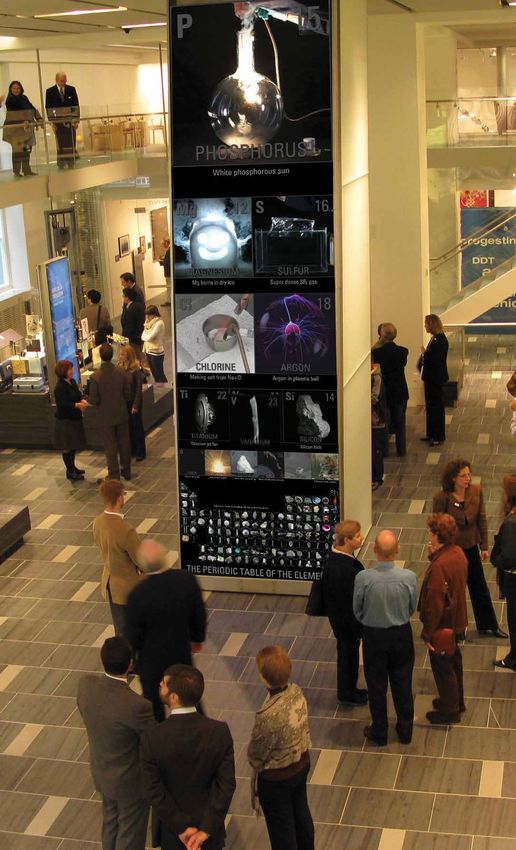
The largest periodic table display we have created to date is
located at the Chemical Heritage Foundation in Philadelphia, USA.
This 6 metre (18 feet) tall video column presents a spectacular 8
minute looping “fountain of the elements” featuring experiments
and demonstrations showing all the natural chemical elements.
The Most Beautiful Periodic Table
Displays in the World

We offer a range of physical periodic table installations, engaging
educational displays and boxed sets all featuring real element
samples. Our company has been creating beautiful periodic tables for
over a decade. We have now installed more than fifty displays around
the world.
                                       Large periodic table displays (pages 2-3)
                                       Our large displays measure approximately 3 metres (10 feet)
                                       across and 1.8 metres (6 feet) in height. They make an impressive
                                       feature in any science building, attracting and engaging visitors. A
                                       range of options is available for cabinet materials and finishes to
                                       harmonise with any interior. Working discharge tubes in the shape
                                       of the chemical symbols are used to present the five noble gases.
                                       We also offer a package of enhanced samples/exhibits and an
Large display at Dow Chemical          interactive touchscreen with beautifully filmed videos of experiments
headquarters, USA.
                                       and demonstrations for most elements. The cost ranges from UK
                                       £40,000 up to £75,000.

                                       Mid-range periodic table displays (pages 4-5)
                                       Medium displays are based around 120 x 120 x 120mm (4 x 4 x 4 inch)
                                       compartments which. like our large displays, also present both
                                       element samples and a selection of artefacts. The range of samples
                                       and objects is somewhat smaller than for the large displays. The
                                       overall cabinet is approximately 2.3 metres (8 feet) across and 1.7
                                       metres (5.5 feet) in height. Enhanced samples and interactive options
                                       are also available with this version. Materials, cabinet design and
Medium size display at Latymer Upper
                                       finish can be customised to match your interior. Cost is in the range
School, UK.
                                       £25,000 to £45,000.

                                       Other designs: smaller periodic table displays (pages 6-7)
                                       For those with more restricted budgets, we offer a range of attractive
                                       wall-mounted or free-standing frames to present the periodic table
                                       while still retaining the magic of including real element samples. The
                                       lowest cost displays are approximately 1m (3 ft) across and 0.7m (2 ft)
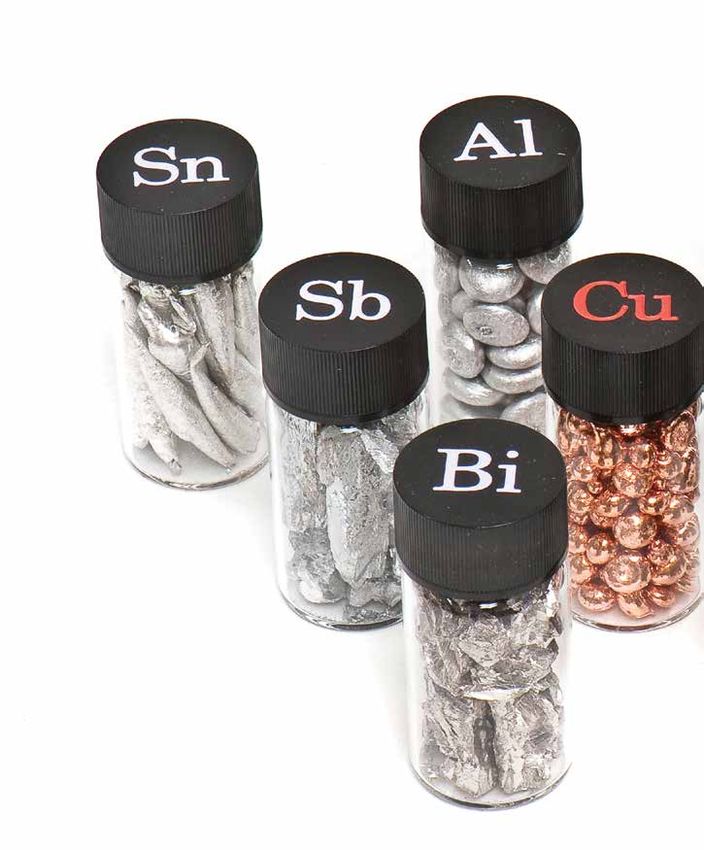
                                       tall. The element samples in these small displays can be presented
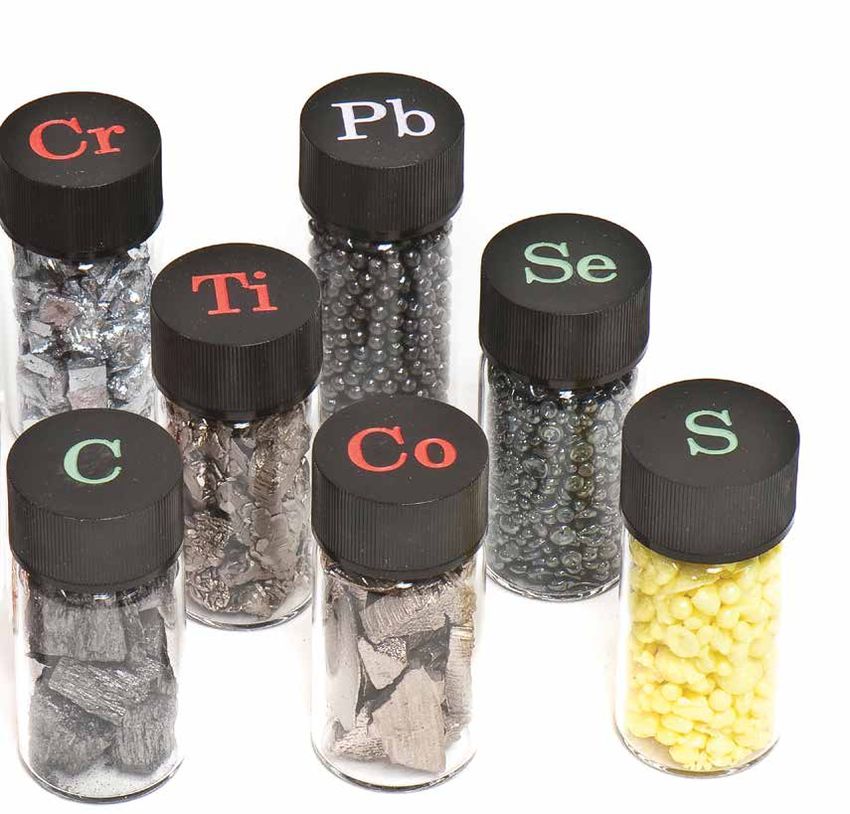
                                       in engraved 7ml vials (the same ones provided in our Element
                                       Collection Boxed Set) or permanently embedded in solid clear
Small display, private collector.      acrylic blocks (50 x 50 x 30mm). Element samples are also available
                                       in larger size acrylic blocks (100 x 100 x 30mm) and in this case the
                                       resulting display is approximately 2m across and 1.5m tall. The cost
                                       of these smaller 1m and 2m wide displays ranges from £7,500 to
                                       £20,000.

                                       Boxed Sets (pages 8-9) & Element Samples (pages 10-12)
                                       Our high-quality boxed sets and museum-grade individual element
                                       samples are intended for anyone interested in owning a collection of
                                       the elements. Safety and beautiful presentation are the key design
                                       considerations.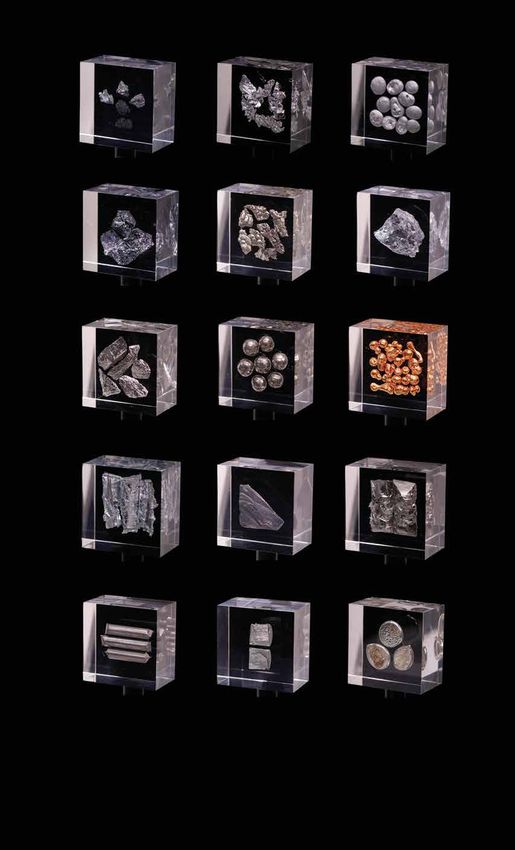
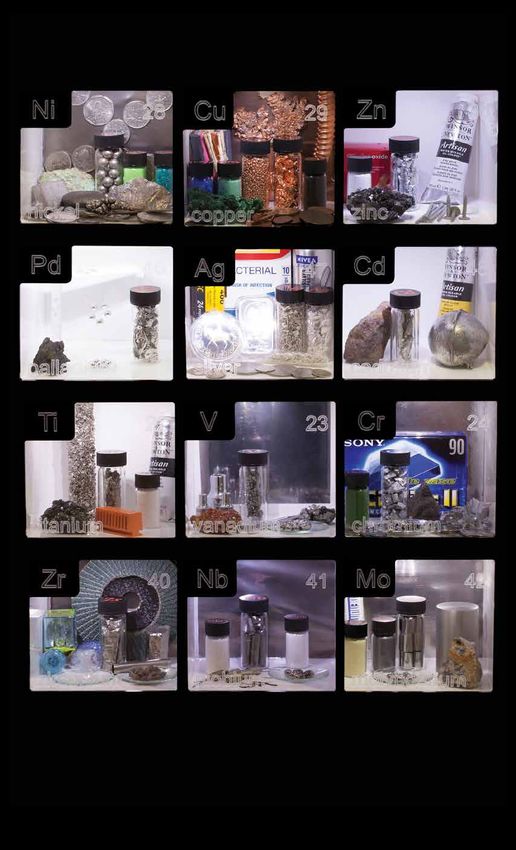
Both our large and medium displays present each element in its
own carefully curated compartment. As well as containing museum-
grade samples of the elements themselves, the individually
illuminated cubes in these displays are filled with exciting tableaux
of objects and artefacts showing how each element is used in our
civilisation as well as relevant minerals and ores.
Large Periodic Table Displays
Case Study

Questacon Science Centre
     “The best thing about it is that it is so engaging for the people
      who visit. It’s one of the stars of our social media feed.”

The Q Lab at Questacon, The National Science and Technology Centre in Canberra, Australia, is a hands-
on gallery that encourages visitors to explore the world of science. The centrepiece is the display of the
periodic table of the elements. Jared Wilkins, manager of learning experience at the Centre, says he
often watches people as they explore the display.
“Yesterday afternoon there was a young couple who were just contemplating it, like people would a
painting on the gallery wall,” he says. “It’s a wonderfully instructive art piece so you can appreciate it that
way. ”Mr Wilkins says that Questacon had looked at building a periodic table display by themselves but
felt that it was more of a challenge than they wanted to take on. Instead they opted to go with RGB. The
process was straightforward, says Mr Wilkins. There were a few things to resolve with Australian customs
because the display contains potentially hazardous materials and the Centre had to satisfy authorities
that the samples, once in place, would be safe. “RGB Research helped us with the risk assessment and it
was fine,” says Mr Wilkins.

                                                                               Questacon’s large display in solid oak
                                                                               cabinet and (above) tableau for the
                                                                               element iron.

Engaging visitors
The display manages to engage visitors regardless of their age or
level of scientific knowledge. Those who don’t know very much
about chemistry can cast a curious eye over the collection of
examples, while those who really understand the logic behind the
periodic table can enjoy exploring how each element is explained.
Those who want a little more information often turn to the
touchscreen display. But what keeps people engaged the longest,”
Mr Wilkins says, “is peering through the different windows to look at
the individual elements.”

A constantly rewarding exhibit
Overall, Mr Wilkins says Questacon is delighted with their periodic
table. “It’s a wonderfully attractive piece. It looks terrific in there. And
visitors love taking selfies in front of it.” He concludes: “It encourages
and repays close exploration. You can have a superficial look and it’s
rewarding, and you can have a really deep look and it’s rewarding. It’s
pretty hard to come up with interactive exhibits that achieve that.”                                                    3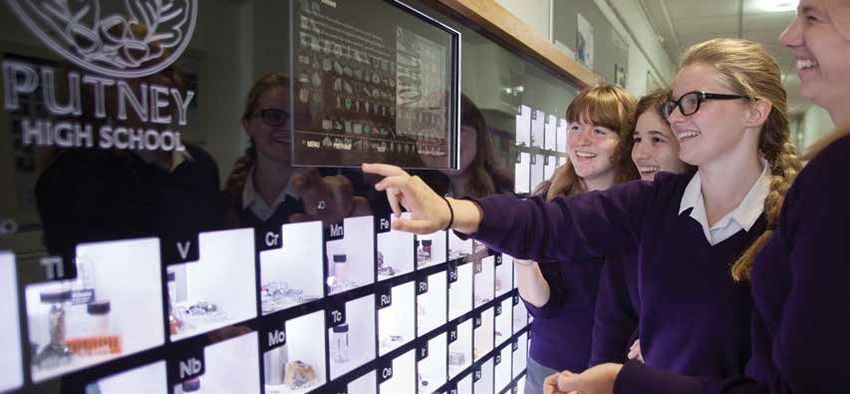
Large & Medium Periodic Table Displays
Case Studies

                                          California Polytechnic State University
                                            “Even before I meet the students I ask
                                             them to take a picture of their favourite
                                             element in the display and share it.”
                                          The Warren J Baker Center for Science and Mathematics has just
                                          opened on the Cal Poly campus in San Luis Obispo, California, USA.
                                          Every student will take a class in the building at some point. During
                                          the planning stage, the staff decided to include a periodic table
                                          display. “It was a unanimous decision,” says Professor Gragson “We
                                          wanted something for the community to enjoy.” RGB proposed a
                                          bamboo finish to match the wood used throughout the Center. The
                                          result is an impressive display that has become an essential stop on
                                          every campus tour.
                                          Professor Gragson says that in addition to thousands of Cal Poly
                                          students, the display is seen by schoolchildren on summer camps,
                                          teachers attending workshops and prospective students and their
                                          parents. He says: “The number of people who have seen the periodic
                                          table is already in the tens of thousands.” He adds “We also use the
The Cabinet for CalPoly’s large display   display in our classes. Before I even meet the students I message
was designed with materials that match
the interior of the University’s new      them ‘go take a picture of your favourite element in the display and
building. Below are element tableaux      post it on our Moodle site explaining why you like it.’”
presenting nickel and copper.

                                          The Artefacts
                                          Professor Gragson’s students have plenty of fascinating samples and
                                          objects to choose from. There are around 600 artefacts, including
                                          some that were added by Cal Poly faculty. RGB selected artefacts
                                          to demonstrate interesting applications of each element; others are
                                          selected simply because they look beautiful: for example the jar of
                                          oddly shaped nickel-chromium nodules that are a waste product
                                          from chrome plating car bumpers. Asked about his favourite,
                                          Professor Gragson says: “I’m partial to the aluminum display. I just
                                          think it’s really colourful. A lot of students say they like the copper
                                          display and, of course, people are always fond of the gold.”

                                          A discussion starter
                                          Installation was straightforward and took just a few days, Professor
                                          Gragson says. “I’m sure it involved many weeks of preparation, but
                                          from our perspective it was a simple process.” The Cal Poly display
                                          has a big job to do: it’s in a high-traffic area and the people who see
                                          it range widely in age and scientific knowledge. Professor Gragson
                                          says that it offers something for all of them - managing to be
                                          intriguing for non-scientists while offering intellectual engagement
                                          for those with some chemistry expertise and rewarding deeper
                                          inspection by all. “It gets all kinds of reactions,” says Professor
                                          Gragson, “from ‘oh, that’s neat’ to ‘Wow! That’s really cool’. It starts the
                                          discussion oftentimes, which is really nice.”

                                          All case studies by Shane Richmond, former Technology Editor
                                          of the Daily Telegraph.
4
Putney High School
  “The periodic table display creates a buzz in the science
   department - and the girls really enjoy it.”
The periodic table display at Putney High School in London, UK stands by the library. Its imposing oak
case matches the interior design and is filled with brightly lit samples and topped by an interactive
touchscreen display as well as the School Crest. The display catches the eye of passing pupils and
teachers alike. “There’s some jealousy from other departments!” says Dr Will Dixon, head of science
at the school, with a laugh.
It was Dr Denise Lodge, the Headmistress, who had the idea of getting a periodic table for Putney
High School. She saw one at Oxford High School and, being a scientist by background, she immediately
wanted one for her own school. Alistair Gray, the school’s director of finance and operations, says: “She
took some photos, came back here, put the photos on my desk and said ‘find out where this came from’.”
Having traced the Oxford display to RGB Research, Mr Gray got in touch to find out what options were
available. “Dr Max Whitby from RGB came and we took a walk round the school to look at potential sites.
Max offered the benefit of his experience,” says Mr Gray.

                                    A single information resource
                                    Putney High School uses both the Element Collection boxed set
                                    and the main periodic table display in teaching chemistry. “The box
                                    works well with Sixth Form,” says Dr Dixon. He says that the box adds
                                    a layer of authenticity because the children are able to hold the
                                    elements. He says: “Just the fact that you know that what’s in your
                                    hand is real adds immediacy and has significance.”
                                    The display, says Dr Dixon, offers a valuable opportunity to get the
                                    girls out of the classroom and talking about science. According to
                                    Dr Dixon, teaching the periodic table previously involved spending
                                    a long time explaining the concept of the table. Now, he says,
                                    “there’s a single highly engaging resource that they can get all the
                                    information from.”

                                    A powerful idea
                                    As well as teaching, the display has an important role in impressing
                                    parents of potential pupils as they tour the school. “We’ve got Open
                                    Week coming up,” says Mr Gray, “and the display is something we
                                    will certainly showcase. That’s part of why it is where it is. It’s on the
                                    tour route that we take new girls around so that’s an external market-
                                    ing piece.”
                                    Another benefit of the display is the message it sends about science
                                    in the school. “Basically, it gives a buzz to the science department -
                                    the girls enjoy it,” says Dr Dixon. “By having it in a more central part of
                                    the school we can spread a bit of a science ethos, which pervades
                                    everything we do.”
                                                                                                                  5
This is a selection of real element samples permanently embedded
in robust, clear acrylic blocks. They are available in two standard
sizes: 50 x 50 x 30mm (2 x 2 x 1.25 inches) and 100 x 100 x 30mm
(4 x 4 x 1.25 inches). They combine excellent safety with strong visual
appeal, the elements apparently floating in space. The samples
are securely protected yet presented in a way that allows close
inspection from all sides.
Other Designs
smaller periodic table displays

Periodic Coffee Table opposite.

For those on more restricted budgets, we offer a range of attractive wall-mounted or free-standing
frames to present the periodic table while still retaining the magic of including real element samples.
These lower-cost displays are approximately 1m (3 ft) across. One unusual option here is a Periodic
Coffee Table.
The element samples in these displays can be presented in engraved 7ml vials (the same ones provided
in our Element Collection Boxed Set) or permanently embedded in solid clear acrylic blocks (50 x 50 x
30 mm). Element samples are also available in larger size acrylic blocks (100 x 100 x 30 mm) and in this
case the resulting display is approximately 2m across and 1.5m tall. The cost of these smaller 1m and 2m
wide displays ranges from £7,500 to £20,000.

Framed 1m wide acrylic block display produced for                Detail Sigma Aldrich display.
Sigma Aldrich.

2m wide periodic table display based around real element samples embedded in
100 x 100 x 30 mm clear acrylic blocks installed at Kirkeparken Skole, Moss, Norway.

                                                                                                           7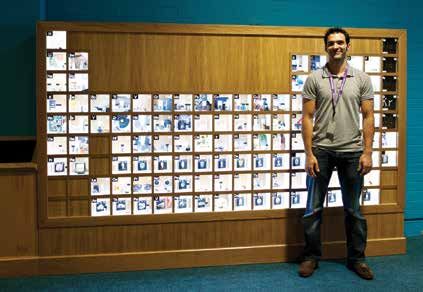
The samples in our boxed set are carefully chosen and prepared
to present each element to best effect. We avoid powders and
prefer natural formats that clearly show characteristics such as
colour, reflectivity and, where possible, crystal structure.
The Element Collection
boxed set

This beautiful boxed set contains real samples of        The high-quality box that houses the element
all the natural elements in the periodic table. It was   samples is available in a range of hardwoods.
the first product that we created when we started        One example of the care that cabinet-maker
the business more than a decade ago. Our latest          Marcos Palomo has put into the design is the
design features many enhancements, making this           chemical symbol engraved at the bottom of
truly a “super-deluxe” set.                              each well to facilitate replacing sample vials
                                                         in the correct position.

                                                         Samples
                                                         We avoid powders and prefer natural formats
                                                         that clearly show characteristics such as colour,
                                                         reflectivity and, where possible, crystal structure.
                                                         Each sample is contained in an individual 7ml
                                                         glass vial 45mm (1.75 inches) tall and 20mm
                                                         (0.75 inches) diameter. The chemical symbol
                                                         is engraved on the lid.

                                                         Pricing
                                                         The Element Collection Boxed Set is priced at
                                                         £3,275 (plus delivery and plus VAT in the EU).
                                                         We also offer an instalment plan, allowing the
                                                         collection to be built up 10 elements at time,
                                                         spreading the cost over 12 months.

                                                                                                                9
Elements Samples (atomic number 1-43)
012 Magnesium 017 Chlorine 020 Calcium
Magnesium is one of the The distinctive yellow-green It is surprising how few scientists
lightest metals with a density colour of this chlorine sample have ever seen the element
4.5 times less than iron or steel. is clearly apparent. The gas is calcium as the un-oxidised shiny
It gradually tarnishes in air. permanently sealed inside a metal. This exquisite sample
This sparkling fresh sample of dry glass sphere. Chlorine is a of distilled calcium, clearly
distilled magnesium, showing reactive member of the halogen showing its crystal structure, is
the element’s beautiful crystal family, widely used in the permanently sealed under inert
structure, is protected under an chemical industry. argon in a quartz dome for long-
atmosphere of inert argon inside term display.
a sealed quartz dome.
029 Copper 035 Bromine 038 Strontium
Copper is positioned above Bromine is one of only three Shiny distilled strontium metal
silver and gold in the periodic elements that are liquid at like this will turn into a white
table. It certainly shares those room temperature (or at least powder within a few minutes
elements’ beautiful appearance, body temperature in the case of being exposed to oxygen in
as this sample demonstrates. of caesium). Bromine is also the air. This sample is protected
All three elements are excellent unpleasantly corrosive and under an inert argon atmosphere
electrical conductors, which remarkably difficult to contain. in a sealed inner ampoule. The
makes them valuable industrial This sample is safely imprisoned crystal structure of the metal is
raw materials. in an acrylic block attractively revealed.
10Elements Samples 44-75
044 Ruthenium 047 Silver 054 Xenon
This large sample of crystalline We love the look of these This is a sample of high purity
metal ruthenium has been silver droplets that we prepare xenon contained in a glass tube
prepared using a high- from solid silver ingots in our in the shape of that element’s
temperature vapour-transport laboratory. This is a good chemical symbol. Pass a few
method. Ruthenium is one example of our approach: thousand volts through the gas
of the platinum group of seeking to present not only and xenon produces a beautiful
precious metals. the physical characteristics of violet glow. This is how we
an element, but also to bring present all the noble gases.
out its aesthetic qualities.
055 Caesium 063 Europium 067 Holmium
The alkali metal caesium, which The element europium is one Holmium is one of the
becomes liquid if warmed in the of the most difficult to prepare lanthanides, sometimes known
hand, is one of the most reactive as a stable shiny metal sample. as the rare earth elements
elements and explodes violently It darkens in seconds on (although they are not especially
on contact with water. Here the exposure to the air. We are rare in the Earth’s crust). This
sample is safely contained in therefore delighted to have attractive sample is comprised
a solid block of clear acrylic, found a way to manufacture of long crystals that appear
which allows you to appreciate these europium metal crystal almost fibrous. Holmium has
caesium’s beautiful pale golden samples permanently sealed few industrial applications and
colour. under inert argon. is relatively stable in air.
11Elements Samples 76-92
076 Osmium 077 Iridium 079 Gold
Osmium is another rare member Iridium and osmium vie with one This is the gold sample from the
of the platinum metal group another for the distinction of Element Collection boxed set.
and not easy to obtain. It is being the most dense element. It is in the form of high-purity
usually supplied in the form of Both have a density close to gold foil that has been shaped
finely divided “sponge”, which 22.5 grams per cubic centimetre. to visually fill the vial. We would
oxidises in air to produce the Compared to the osmium love to supply solid gold pieces
toxic tetroxide. We transform sample, you can see that iridium instead, which would weigh
the osmium by melting into has a slightly warm yellow hue. a surprisingly heavy 100g to
solid pearls, which are safe to completely fill the 7ml vial. But
handle and show the element’s the cost of this single sample
distinctive blue hue. would then be over $4,000.
081 Thallium 088 Radium 092 Uranium
Highly toxic thallium is rarely The longest-lived isotope of the We are able to supply metallic
seen in this form as a shiny element radium has a half life of samples of two radioactive
silvery metal. It is another only 1,600 years, which means elements: thorium and uranium.
reactive element that swiftly that it is highly radioactive. It was This one is uranium. A special
tarnishes when exposed to the once used as an ingredient in export licence is required for
air. This sample is permanently luminous paint for watch hands shipments outside the EU and
sealed in a glass ampoule both and aircraft instrument dials. we can help with the application
for its protection and ours. process.
12Ordering Information
contact details
To order
To order or enquire about periodic table displays To order or enquire about elements sets and
please contact: samples and for shipping quotes please contact:
Dr Max Whitby Andrew Goodall
max.whitby@rgbco.com andrew.goodall@rgbco.com
UK telephone: 020 8749 3354 UK telephone: 020 8749 3354
international: +44 (0)20 8749 3354 international: +44 (0)20 8749 3354
Company background
RGB Research Ltd is a subsidiary of The Red Green & Blue Company Ltd which was founded by
Max Whitby in 1987. For the past decade we have worked in close partnership with Theodore Gray
(periodictable.com) author of The Elements with over a million copies in print and a further million copies
downloaded for the iPad and iPhone. In 2010 Max and Theo co-founded the app development company
Touchpress (touchpress.com). RGB has delivered large projects for a range of international clients
including Apple, the BBC, Cambridge University, The Chemical Heritage Foundation, Dow Chemical,
Harvard University and the Howard Hughes Medical Institute. We have installed more than 50 periodic
table displays around the world.
For further information please visit our website periodictable.co.uk.
Dr. Max Whitby, CEO & Founder, RGB Research Ltd. Theodore Gray, www.periodictable.com and author of the
best-selling book and app The Elements.
Please read the Frequently Asked Questions page on our website
periodictable.co.uk where you will also find our terms and conditions.
RGB Research Ltd, 3 Warple Mews, Warple Way,
London W3 0RF, UK.RGB Research Ltd, 3 Warple Mews Warple Way London W3 0RF, UK UK telephone 020 8749 3354 International +44 (0)20 8749 3354
You can also read


