The School Places Challenge 2019 - Scape Group
←
→
Page content transcription
If your browser does not render page correctly, please read the page content below
The School Places
Challenge 2019
The School Places Challenge 2019

    Contents                                                      “Good schools are
    Executive summary                                     4
                                                                  the bedrock of our
    The UK’s school places challenge                      6   society, and there can
                                                                 be no room for error ”
    England’s challenge                                   8
      Local authorities feel the school places squeeze   10
      Spotlight on Birmingham                            12
      Spotlight on London                                14
                                                                                        Mark Robinson,
                                                                               Scape Group chief executive
    Scotland’s challenge                                 16
    Wales’ challenge                                     18
    Northern Ireland’s challenge                         20
    Case study: North Uist                               22
    Case study: Kineton High School Science Faculty      24
    Our recommendations                                  28
    Summary from Scape Group chief executive             30
    Comments from the industry                           32
    Methodology                                          34
    About Scape Group                                    35

2                                                                                                                       3
Executive summary

    This report provides an up to date                                                                                                                          Mark Robinson

                                                                                                                         385,031
    assessment of the school places                                                                                                                             Scape Group chief executive:

    challenge across the United Kingdom.
    This is the fourth edition of this analysis                                                                                                                 “As with many critical issues that desperately need
                                                                                                                         more pupils in England by 2021/22
    from Scape Group.                                                                                                                                           political attention, education has dropped down
                                                                                                                                                                the agenda as government bodies focus on Brexit
    This year, we analysed publicly available primary and
                                                                                                                                                                and our future position with the rest of the world.

                                                                                                                         33,179
    secondary school pupil projection numbers1 to identify how
    many additional schools and classrooms would be needed                                                                                                      Every part of the UK needs to build more schools, and
    across the UK, to allow enough school places to be created
                                                                                                                                                                local authorities nationwide will be feeling the strain.
    to meet the growing population of school-age children.
    Our findings show that, despite efforts to increase                                                                  more pupils in Scotland, Northern
    school building over recent years, local authorities still                                                           Ireland and Wales by 2020/21
                                                                                                                                                                We must collectively focus on delivering
    face an uphill battle. The stark reality is that the number
    of children needing a school place will continue to                                                                                                         a strategy and solutions which not
                                                                                                                                                                only provide high-quality, modern

                                                                                                                                     4.6%
    increase across the whole of the UK. England will have
    385,031 more pupils by 2021/22, with Scotland,
    Northern Ireland and Wales expecting to have an
    additional 33,179 pupils between them by 2020/21.
                                                                                                                                                                spaces for teaching and learning
    At the same time, despite ex-Chancellor George
                                                                                                                                                                but also offer our colleagues in local
    Osborne ring-fencing funding for schools, funding for
    the education sector has declined by 4.6 per cent
                                                                                                                                                                authorities cost certainty, value
                                                                                                                         decline in funding for the education
    between 2015 and 20202. Existing schools are feeling
                                                                                                                         sector between 2015 and 2020           for money and timely delivery.
    the pressure. Some Multi-Academy Trusts have issued
    warnings, as funding fails to keep pace with costs and
    inflation, and thousands of children now face a 4.5 day week                                                                                                Technologies such as offsite construction
    as some schools close their doors early to save money3.                                                                                                     will play an essential part in that.
    Against the backdrop of Brexit, school funding has                                                                                                          In March, record numbers of children missed out on
    slipped down the agenda. Building new schools
    must be a top priority for the government, and                                                                                                              their first choice of secondary school4, and appeals
    greater efforts should be made to unlock finance                                                                                                            against secondary school offers have doubled in
    which can enable local authorities to deliver new                                                                                                           six years. This issue is likely to be exacerbated in
    schools and classrooms to meet demand in time.
                                                                                                                                                                the coming years if we do not think and act more
    However, with 640 new schools needed across                                                                                                                 creatively now. Good schools are the bedrock of
    the UK over the next couple of years to meet current
                                                                                                                                                                our society, and there can be no room for error.”
    projections, government, local authorities and developers
    need to make a concerted effort to work innovatively
    and collaboratively. If a step change does not take place
    quickly, the effect on education standards and the
    wider economy will be felt for generations to come.

    Please see methodology
    1

    2
        Time for Change – the end of austerity, Trades Union Congress, March 2018
    3
        School announces plan to close at lunchtime every Friday to save money, The Telegraph, June 2017
4   4
        National Offer Day: Record numbers to miss out on first choice for secondary school places, The Telegraph, Victoria Ward, March 2019                                                                               5
The School Places Challenge 2019

    The UK’s                                                                                                                                          Scotland
    school places challenge                                                                                                                               13,600 extra school places
                                                                                                                                                          4.8% all pupil growth
    The UK faces a major task when it comes to
                                                                                                                                                          435 new school
    making sure there are enough school places                                                                                                                     classrooms needed
    to meet the growing demand.
                                                                                                                                                          13 new schools needed
    Although the bulk of the demand for additional school places comes from
    England, for both primary and secondary schools, the issue affects the                                                                            By 2020/21
    whole of the UK.
    Education represents the second largest element of public service spending
    in the UK behind health and is equivalent to around 4.3 per cent of national
    income. The level of UK education spending has risen significantly in real
    terms during the 21st century, growing particularly fast from the late 1990s
    through to the late 2000s, before falling from 2010 onwards5.

    Local authorities across the UK
    are acutely aware of the challenge
    that they face. But in an age of
    continued austerity – faced with                                                                    Northern Ireland

    inflation and rising costs beyond                                                                       7,332 extra school places
    their control – local authorities’                                                                      9.4% all pupil growth
                                                                                                                                                                                                            t

    ability to deliver more with less                                                                       293 n ew school
    is close to breaking point.                                                                                      classrooms needed
                                                                                                            8 new schools needed
                                                                                                        By 2020/21

                                                                                                        Wales

                                                                                                            12,247 extra school places
                                                                                                            7.8% all pupil growth

                                                                                                            408 n ew school             England
                                                                                                                     classrooms needed
                                                                                                                                             385,031 extra school places
                                                                                                            12 new schools needed
                                                                                                                                             5.5% all pupil growth
                                                                                                        By 2020/21

                                                                                                                                             12,835 new school
                                                                                                                                                         classrooms needed
                                                                                                                                             640 new schools needed
                                                                                                                                         By 2021/22
6   2018 annual report on education spending in England, Institute for Fiscal Studies, September 2018
    5
                                                                                                                                                                                                        7
The School Places Challenge 2019
England’s challenge North East Yorkshire
10,744 extra school places needed and the Humber
3% all pupil growth 28,162 extra school places needed
0 new primary school 3.5% all pupil growth
classrooms needed
100 new primary school
England faces a significant challenge as the 365 n ew secondary school classrooms needed
The growth in both primary and secondary
pupil numbers across the country is high,
school-age population is set to increase by classrooms needed
839 new secondary school but the projected increase will be felt more
10 new primary and classrooms needed
5.5 per cent over the next two years. There will secondary schools needed
strongly in some regions than in others.
38 new primary and
be 385,031 more school-age pupils in the UK secondary schools needed Although all regions will experience an
increase in pupil growth above 3 per cent
by 2021/22, which equates to 12,835 additional over the next two years, London, the
primary and secondary school classrooms, South East and the South West can all
the equivalent of 640 new schools. East Midlands expect to see the largest increases. Local
authorities in the South East will have to
31,772 extra school places needed build the most primary school classrooms
But the shift in demand has changed. Local authorities have made great
strides in increasing the number of primary schools over the last couple of North West 4.7% all pupil growth (568), but local authorities in London will
have to build the most secondary school
years, mainly by making sure that developers build new schools through 175 new primary school
46,289 extra school places needed classrooms needed classrooms (1,872). Overall, London needs
Section 106 agreements. When Scape conducted this research in 2016,
to build the equivalent of 89 schools.
the UK was experiencing annual growth of 2.4 per cent. The expected 4.4% all pupil growth 884 new secondary school
number of additional primary school pupils has slowed to 0.8 per cent classrooms needed The number of primary school classrooms
296 n ew primary school
growth per year, with 342 new primary schools required by 2021/22. classrooms needed 50 new primary and needed in each region has reduced since
secondary schools needed our last report in 2017, but every region
However, as these children progress from primary to secondary education, 1,247 n ew secondary school (except for the North East) will still have to
we must now turn our attention to building new secondary schools. There classrooms needed
build more than 100 primary schools in the
will be 313,164 additional secondary school pupils looking for places 78 new primary and next two years to accommodate projected
in the next two years, then there are today. This is an increase of over secondary schools needed
pupil increases. The secondary school
9 per cent on the current number. To meet demand, local authorities will
crisis, however, is much starker, with every
have to build 10,439 new classrooms or 298 new secondary schools.
local authority in England facing a very
However, to deliver extra school places in the necessary timeframe, West Midlands real challenge. On average, each region
local authorities must be given a toolkit to succeed. Crucially, additional in England will need to build 1,100 new
funding, support and resources are needed.
44,824 extra school places needed secondary school classrooms to meet
5% all pupil growth the projected demand.
326 new primary school Increased devolution of power to English
classrooms needed
5.5%
regions and cities could offer a huge
1,169 n ew secondary school opportunity to introduce greater local
classrooms needed influence in the way school estates are
80 n ew primary and managed. Unlike Scotland, Wales and
secondary schools needed Northern Ireland, England has a centralised
East of England system and the decision about how much
education funding local authorities receive
increase in school-age 46,369 extra school places needed is made directly by the government.
South West
population in next two years 4.2% all pupil growth Greater consultation between local
39,474 extra school places needed authorities and central government about
252 n ew primary school the allocation of funding to meet local
5.3% all pupil growth classrooms needed
640
demand is crucial in making sure the right
283 n ew primary school South East 1,294 new secondary school amount of school places are created.
classrooms needed classrooms needed
69,137 extra school places needed
1,033 n ew secondary school 73 new primary and
classrooms needed 5.5% all pupil growth secondary schools needed
70 n ew primary and 568 n ew primary school
secondary schools needed classrooms needed London
new primary and secondary schools 1,737 new secondary school
required in England by 2021/22 classrooms needed 66,260 extra school places needed 1,872 n ew secondary school
classrooms needed
131 n ew primary and 6.6% all pupil growth
secondary schools needed 89 n ew primary and
404 n ew primary school secondary schools needed
classrooms needed
8 By 2021/22 9
The School Places Challenge 2019

     Local authorities
     are feeling the squeeze
     Local authorities hold the unique responsibility                                Some local authorities believe that the government is delivering free schools in areas where
                                                                                     demand is lower, while other areas face crippling shortages6. Taxpayers’ money could be
     of providing enough school places for                                           better-used refurbishing and extending existing schools in order to meet demand in the
     residents. No other body in England shares                                      right places.
     this duty. At a local level, faced with an                                      While central government is making funding available for building free schools7,
                                                                                     local authorities are reporting a shortfall in their own education funding and schools’
     impending boom in pupil numbers, many local                                     spending per capita has fallen by eight per cent since 2010. The Local Government
     authorities are feeling significant pressure.                                   Association recently reported that some local authorities are even borrowing tens of millions
                                                                                     of pounds to make sure their children have places in permanent school buildings8.
     Birmingham City Council is faced with the most substantial projected            On the other hand, a number of local authorities will see very limited school-age population
     increase, with Manchester City Council coming in a close second.                growth, and for some, the number of primary and secondary school pupils under their
     Both cities can expect more than 12,000 extra secondary school pupils           jurisdiction will actually decline. As we have seen in previous years, remote locations such
     by 2021/22. Between them, they will need to build the equivalent of             as the Isles of Scilly, Isle of Wight and Cumbria all fall within the top ten local authorities with
     53 new schools by 2021/22.                                                      enough school places to meet current demand.
     It is not just densely populated cities which are affected. London’s commuter
     belt is also experiencing a significant strain. Essex, Kent, Surrey and
     Hertfordshire all rank within the top ten areas which will be most impacted                                                                                 New              New                New
     by the growth of the school-age population.                                                                            Number of                            primary          secondary          primary and
                                                                                                                            extra school                         school           school             secondary
     Even though councils are legally responsible for making sure that the                                                  places              All pupil        classrooms       classrooms         schools
     demand for school places is met, the process for establishing and funding                                              required by         growth %         required by      required by        required by
     schools is often outside councils’ control. Local authorities have no direct        English local authority            2021/22             by 2021/22       2021/22          2021/22            2021/22
     control of free schools, grammar schools or academy places, despite the             Isle of Wight                      -309                -1.9             -14              3                  0
     fact these types of schools make up the bulk of the current government’s
     school places strategy.                                                             Haringey                           -155                -0.4             -31              25                 1

                                                                                         Blackburn with Darwen              -109                -0.4             -20              17                 0

                                                                                         Cumbria                            -64                 -0.1             -29              26                 1

                     53
                                                                                         Isles of Scilly                    8                   3.4              0                0                  0

                                                                                         Bury                               31                  0.1              -17              18                 1

                                                                                         Hartlepool                         59                  0.4              -10              12                 0

                                                                                         Darlington                         105                 0.7              -10              13                 0
                     new schools required in Birmingham                                  Kensington and Chelsea             132                 1.1              -10              15                 0
                     and Manchester by 2021/22                                           Brighton and Hove                  137                 0.4              -34              39                 0

                   12,000
                     more than
                                                                                     If local authorities could play a greater role in judging and
                                                                                     approving free school proposals, they could ensure that
                                                                                     new schools are established where there is the greatest
                                                                                     need, in a way that supports local population growth.
                     extra secondary school pupils in
                     Birmingham and Manchester by 2021/22

                                                                                     6
                                                                                         The council role in school place planning, Local Government Association, March 2014

                                                                                     Government spending billions on free schools while existing schools crumble, The Guardian, Rajeev Syal, February 2017
                                                                                     7

                                                                                     8
                                                                                         The council role in school place planning, Local Government Association, March 2014

10                                                                                                                                                                                                                  11
The School Places Challenge 2019

     Spotlight on Birmingham

     Birmingham City Council will see the largest increase in pupils by
     2021/22. They will need to build 111 new primary school classrooms,                                            In the coming
     319 new secondary school classrooms, or a total of 25 new schools
     to meet demand from the additional 12,904 school-age children                                                  years, thousands
     expected to be living in Birmingham.                                                                           of primary and
     Birmingham is the second largest city in the country                                                           secondary school

                                                                         11.7%
     by population, with over 1.1m residents, 23 per cent
     of whom are children. In the coming years, thousands
     of primary and secondary school pupils are likely to be
                                                                                                                    pupils are likely
     affected by the shortfall of places, as the city struggles
     to keep pace with demand.
                                                                                                                    to be affected
     In a bid to tackle the current demand for additional
     school places, as of March 2018, Birmingham
                                                                         secondary school pupil
                                                                         growth by 2021/22                          by the shortfall
     City Council plans to deliver 1,035 new school
     places by the next academic year (2020/21). In
                                                                                                                    of places, as the

                                                                         2.9%                                       city struggles
     addition to this, school building in Birmingham is being
     bolstered by plans to build facilities for the upcoming
     Commonwealth Games, which is being held in the city
     in 2022. Alongside the desire to transform the Athlete’s                                                       to keep pace
     Village into 1,400 homes after the games, contractor
     Lendlease will also be building a new secondary school
                                                                         primary school pupil
                                                                         growth by 2021/22
                                                                                                                    with demand.
     for 1,260 pupils, which is due to open in 2021.
     Birmingham also benefits from being part of the

                                                                         12,904
     West Midlands Combined Authority. This offers
     significant opportunity for a more collaborative
     approach to school building across all local authorities
     that make up the combined authority. Devolving
     further powers and allocating fairer funding to the
     combined authority could help make sure there are                   additional school places
     enough school places across the whole region.                       required by 2021/22

                              Number of extra                             New school
      Birmingham City         school places         All pupil growth %    classrooms            New schools
      Council                 required by 2021/22   by 2021/22            required by 2021/22   needed by 2021/22

      Primary schools         3,342                 2.9%                  111                   16

      Secondary schools       9,562                 11.7%                 319                   9

      All school-age pupils   12,904                6.5%                  430                   25

12                                                                                                                                                       13
The School Places Challenge 2019
Spotlight on London London boroughs facing the biggest challenge
Barking and
Havering Dagenham Greenwich Newham Redbridge
Extra school places needed 4,564 4,943 3,968 4,727 4,035
The pressure on school places in the capital has been a long-standing All pupil growth 11.3% 11.1% 9.6% 7.9% 7.2%
issue for the city’s residents, and parents are finding it increasingly New primary school
93 56 40 54 50
difficult to get their children into their first, second or even third choice classrooms needed
New secondary
of school. In March 2019, a record 33,000 children missed out on their school classrooms 59 109 92 103 85
first choice of secondary school in London9. New primary and
secondary schools 15 11 8 11 10
Overall, London will have an extra 68,260 primary On the other hand, the London Borough of Haringey will
and secondary school pupils in the next two experience the smallest rate of growth of all London’s
years, a 6.6 per cent increase on the current number. boroughs. In fact, it is projected that there will be 155 fewer
This breaks down to 7,550 new primary school school-age pupils living in the borough in two years’ time.
children and 56,149 new secondary school children. This breaks down to a 4.3 per cent fall in primary school
Secondary schools in particular will feel the strain as pupils (962 fewer), but a 5.4 per cent increase in secondary
they try to cope with increasing pupil numbers. school pupils (712 extra). On balance, this means that only
one new school will need to be built.
The London Borough of Havering will face the biggest
challenge, with pupil numbers due to increase 11.3 per The London boroughs of Kensington and Chelsea,
cent by 2021/22. This equates to the need for 93 new Lambeth, Merton and Islington are among the top
primary school classrooms and 59 new secondary places to live for the availability of school places in
school classrooms by 2021/22, or 15 extra schools. the capital. If they do have to build any new schools,
this would only be one in each borough.
33,000
children missed out on their
first choice of secondary London boroughs facing the smallest challenge
school in London during this
March 2019’s intake
Kensington
Haringey and Chelsea Lambeth Merton Islington
Extra school places needed -155 132 311 413 498
All pupil growth 0% 1% 1% 2% 2%
New primary school
classrooms needed 0 0 0 0 0
New secondary
school classrooms needed 25 15 48 29 19
New primary and
secondary schools needed 1 0 1 1 0
By 2021/22
14 9
Secondary school places 2019: ‘Record numbers to miss out on first choice on National Offer Day, Evening Standard, Sophia Sleigh, February 2019 15
The School Places Challenge 2019

     Scotland’s challenge

     The number of primary school pupils entering the
     education system in Scotland is set to fall. With 19,700
     fewer primary school pupils by 2020/21, there is no
     requirement for new primary schools.
     However, the primary school pupils that entered into the system five years ago
     are due to progress to secondary school in the next couple of years, putting pressure
     on S1 (the equivalent of KS3 in the English education system) across the country.
     By 2020/21 there will be an additional 13,600 secondary school pupils,
     a 4.8 per cent increase on current numbers, which will require the equivalent
     of 453 extra classrooms or an additional 13 schools to accommodate them.
     Aberdeen City Council will experience the biggest increase in secondary school
     pupils in the next two years – with an additional 1,400 pupils (a 17.5 per cent increase),
     equating to the need for an additional 47 classrooms.
     Edinburgh City Council also needs an additional 47 classrooms as pupil numbers
     will climb by 7.5 per cent by 2020/21. The council has agreed on a £1bn package of
     spending as part of a four-year Change Strategy. This includes a £66.7m investment
     in new or refurbished primary or secondary schools to help meet current need.
     Education and training in Scotland are devolved to Scottish Parliament, with Holyrood
     providing funding to local authorities across the country. The Scottish government’s
     Schools for the Future programme, which began in 2009, is investing more than £1bn
     into the delivery of 117 new schools to help meet the growing demand for
     secondary school places in Scotland.

                                                                                                  The Scottish
                                                                                                  government’s Schools
                                                                                                  for Future programme,
                                                                                                  which began in 2009,

     13,600 17.5%
     additional secondary school                       increase in secondary school
                                                                                                  is investing more
                                                                                                  than £1bn into the
     pupils in Scotland by 2020/21                     pupils for Aberdeen City Council           delivery of 117 new
                                                       in the next two years                      schools to help meet
                                                                                                  the growing demand
                                                                                                  for secondary school
                                                                                                  places in Scotland.

16                                                                                                                                        17
The School Places Challenge 2019

     Wales’ challenge

     Wales is not expected to experience any
     growth in primary school pupils in the
     next year, so the projections suggest
     no new primary schools are needed.
     However, the country will see 12,248 more pupils enter the
     secondary school system by 2020/21. This represents an eight
     per cent increase on the current number of pupils attending
     secondary school and will place a huge strain on education providers.
     To alleviate this problem, 408 secondary school classrooms,
     or 12 new secondary schools will need to be built.
     As well as fighting with a growing secondary school population,
     Wales is also battling school closures. Nearly 200 schools have
     closed in Wales (and only 69 have opened) since 2013 as the
     education landscape changes and local authorities struggle with
     budget cuts. All but two of Wales’ 22 local authorities – Swansea and
     Newport – have closed schools in the past five years. Although it is
     currently projected that Wales will need 12 new schools, if schools
     continue to close, this figure could become much higher.
     Meanwhile, new schools and improvements to existing school
     buildings are being financed through the 21st Century Schools
     Programme, an initiative that is jointly funded by the Welsh
     government and local authorities. This is a long-term strategy
     for Wales’ educational estate. The second phase of investment
     announced in 2017 dedicated £2.3bn to rebuilding or updating
     more than 100 schools and college buildings which are deemed
     to be reaching the ‘end of their life’.
     Despite the Welsh Government actively encouraging local authorities
     to embrace Modern Methods of Construction (MMC), such as offsite
     techniques, the uptake has been very limited.

                    12,248                                                   Nearly 200 schools have closed in Wales
                                                                             (and only 69 have opened) since 2013 as
                    additional secondary school
                    pupils by 2020/21                                        the education landscape changes and
                                                                             local authorities struggle with budget cuts.

18                                                                                                                                         19
The School Places Challenge 2019
Northern Ireland’s challenge
Northern Ireland is also not expecting to experience an increase in its
primary school-age pupils, but it is expected to see a 9.4 per cent uplift in the
number of secondary school pupils looking for a school place by 2020/21.
This equates to the need for 7,332 school places – the equivalent
of 293 new school classrooms or eight new schools.
Meanwhile, current schools are struggling. The cost of
9.4%
maintaining school buildings has skyrocketed and schools in
Northern Ireland are set to overspend their budgets by about
£33m in 2018/19.
Due to the reduced capital available to the Department of
Education in the coming years, we can no longer presume
that whenever a new school is needed, one will be built.
But it’s not all doom and gloom. Northern Ireland’s increase in secondary school
Department of Education announced in May 2018 that up pupils by 2020/21
to £60m would be made available to 25 existing schools
for much-needed accommodation upgrades. Funding of
between £500,000 and £4m is available through the current
£60m
School Enhancement Programme for projects aimed at
refurbishing or extending existing buildings.
While more school places are needed in some areas, one in
three rural primary schools do not have enough pupils to
be sustainable, and the Department for Education has plans
for a number of mergers to improve sustainability within
the existing school network. Taking a combined approach of funding available for upgrades
which integrates both primary and secondary schools, to 25 existing schools
is one solution for tackling the peaks and troughs in school
numbers, especially in rural areas.
Combining primary and secondary schools creates holistic,
multi-functional facilities and classroom spaces that can be
adapted to meet the demands of different age groups at
The cost of maintaining
different times.
school buildings has
skyrocketed and schools
in Northern Ireland are set
to overspend their budgets
by about £33m in 2018/19.
20 21The School Places Challenge 2019
Case study
North Uist
Improved education facilities for a close-knit community
Client Solution
Western Isles Council Working collaboratively with the school, Robertson’s local
Gaelic-speaking site team applied their extensive knowledge
Project value of what makes a successful school to create a beautiful,
£8.6m fit-for-purpose building. With its bright, spacious and modern
interior design, the new school provides a pleasant, inspiring
Region learning environment for children, staff and visitors.
Scotland
Outcomes
Framework partner Despite its remote location, over 73% of the project labour
force lived within 20 miles of the site, securing vital jobs for
the local island community. Throughout the project,
students and staff at the school were encouraged to
get involved and we supported the upskilling of the local
community through a range of work experience and
apprenticeship opportunities.
Requirements “As headteacher, I can say that
North Uist is an island in the Outer Hebrides,
on the north west of Scotland and at the
working with Robertson’s staff
edge of the Atlantic Ocean. With three
separate, remote primary schools, Western
has been a positive and anxiety
Isles Council wanted to create a new free experience for me and for all
school, merging all three existing schools
on the island into one centralised 100-pupil involved in the life of the school.
school with integrated nursery facilities.
This has been a job well done!”
Sarah Jane MacSween
Headteacher, North Uist Primary School
22 23The School Places Challenge 2019
Case study
Kineton High School Science Faculty
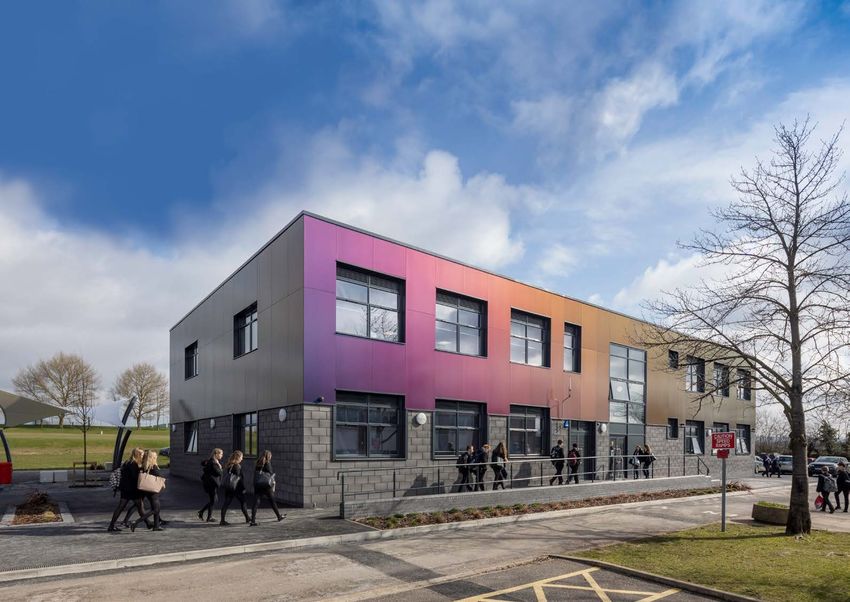
Striking, beautiful and unusual – a real focal point for the whole school
At Kineton High School, Requirements Client
Warwickshire County Council Dramatically improving its educational Warwickshire County Council
asked Lungfish Architects facilities and attracting new sixth-form
to replace seven dilapidated students are Kineton High School’s top Project value
mobile classrooms with a priorities. So, in addition to the new science £3.25m
faculty and in preparation for the school’s
specialist science block for future growth, Lungfish designed the Completion
the whole school to use. whole site so that this phase can be easily
mirrored, creating even more inspiring August 2017
Delivered in partnership with
learning spaces. The school hopes to
Jeakins Weir and Scape add a further eight-classroom building Architect Framework partner
Group, Lungfish designed once additional funding is secured.
this project with the school’s
aspirations in mind - to
engage pupils and lay the Solution
foundations for future growth. Providing seven specialist labs and one
multi-use classroom, the new science block
is an incredibly practical building – with
one big difference. The upper floors have “At Lungfish, we believe that
been given iridescent cladding that catches an education-first approach to
the light and changes colour during the
day. As well as including a canopied plaza
designing schools is essential. We
where students can meet, the designs all have a responsibility to challenge
also allowed for extensive refurbishment
to parts of the existing school buildings
ourselves for better, more efficient,
- converting old labs, improving access innovative and smarter schemes.
and making circulation spaces brighter. Good engagement, collaboration
and ongoing conversations help us
Outcomes to do just that. By understanding
The iconic new science block has become the challenges for each client early
a real talking point for the whole school and in the process and maintaining
community. The most significant development
at Kineton High for 40 years, this modern communication throughout,
learning environment has given the school we can collaboratively achieve
state of the art STEM (Science, Maths,
Engineering and Technology) facilities, fully a successful outcome.”
supporting the school’s aspirations and
expectations of learning and achievement Richard Daw
in these subjects. Following the project, the Associate director, Lungfish Architects
school recorded their best science results ever.
24 25The School Places Challenge 2019
“It has provided a modern environment for the
teaching of science, one of our most successful
curriculum areas of the school… The building
itself is inspirational, changing colour during
the day as the sun moves around the sky.”
Siona Robinson
Headteacher
26 27The School Places Challenge 2019
Our recommendations
1
Offsite construction
The adoption of offsite construction as the main method of building
for all new schools and extensions would mean that they are built
quicker than by using traditional methods. If modular can grow in scale,
building schools will become more efficient and cost-effective.
2
Fairer funding for local authorities
A fairer education funding model for local authorities, which ensures
that they can work with central government to set budgets that
reflect local need. In particular, local authorities should play a part
in judging and approving free school proposals to make sure that
new schools are established where they are most needed.
3
Collaboration
Greater collaboration between councils and developers to ensure
that secondary schools are built in major urban extensions and
developments first, through agreements between developers seeking
planning permission and the local planning authority (Section 106
agreements), so that the area is prepared to meet increased demand.
28 29The School Places Challenge 2019
Summary
Mark Robinson
Scape Group chief executive:
“Although the growth of our pupil population has begun to slow down in
recent years, we still have a big issue on our hands and the government
must treat the UK’s school places challenge as a top priority. While the
Brexit fallout has created a vast amount of uncertainty, knowing your child
will be able to get a local primary or secondary school place should be
a constant.
The current government believes free schools are the answer, but I would
argue that this standpoint has been born out of ideological stubbornness,
rather than a genuine effort to tackle the school places crisis. Deploying
government resources to existing school structures instead would enable
local authorities to refurbish and extend current schools. Not only would this
provide additional school places, but it would be a much more efficient use
of taxpayers’ money.
England will have 385,031 more pupils by 2021/22, and Scotland,
Northern Ireland and Wales can expect to have 33,179 more pupils
between them by 2020/21. With demand continuing to grow, it is vital
that we focus on solutions that will allow us to create additional school
places quickly and resourcefully, without compromising on quality.
Offsite technology is one answer.
While the Education and Skills Funding Agency (ESFA) started its push
for modular four years ago, only 70 schools have been built using offsite
construction so far. Modern Methods of Construction not only allow
quick construction but can also cost local authorities significantly less.
Until the government takes more pragmatic action, they cannot claim
to be safeguarding the futures of the UK’s young people.
A cohesive national strategy for the
use of modular to build new schools While the Brexit fallout has
could significantly reduce the amount of
time it would take to provide areas with
created a vast amount of
much-needed school places, making sure
our school estates are fit for the future.”
uncertainty, knowing your
child will be able to get a local
primary or secondary school
place should be a constant.
30 31Comments from the industry
Neil Pates Victoria Brambini Derek Shewan Leanne Day
Managing director of strategic Managing director Chief executive officer National framework manager
frameworks and alliances, Kier Perfect Circle Robertson Willmott Dixon
“Rising pupil numbers, as well as budget cuts across the UK “It’s common sense that investing in future generations is the “In Scotland we are seeing a significant amount of “Willmott Dixon feels it has a huge responsibility when it
have placed significant strain on our schools up and down best policy for safeguarding our economy, yet the reality is construction activity across the education sector. Local comes to supporting children and families on a national level
the country. In these challenging times, we are committed to that education funding continues to be cut. It’s crucial that authorities are putting substantial effort into tackling the to provide not only suitable education environments but
collaborating with councils in providing the best education the public and private sectors take a collaborative approach school places challenge, one that we are committed to excellent learning establishments for the future generations
possible and ensuring that every child should be educated to protect the future of our country through the education supporting them with. in England, Ireland and Scotland. It is in our interests to
in outstanding quality teaching and learning spaces. of our children. ensure that they receive the best education available in
As this report states, local authorities will benefit
the best built environment possible.
To achieve this, we have used innovative build methods to The challenge is for councils to provide cost-effective, significantly by engaging with organisations such as
create spaces for the next generation to learn across the UK. high quality schools, often within short timescales, while still Scape to find a faster route to market. That has been the We have made a commitment to Scape Group and our
This includes modern methods of construction (MMC), and meeting full compliance, not compromising on standards case in Tayside, where the client worked with Scape on partners across the UK to work with local authorities to
offsite construction. For a number of our education projects of education and demonstrating long-term social value. the delivery of North East Campus and Coldside Campus provide the most suitable options of buildings sustainably
we have used modular buildings for a range of elements of Perfect Circle continues to provide solutions to the – two state-of-the-art facilities built by Robertson which available. Understanding the pressure on budgets, we
the build, including the classrooms. This method means that challenge, supporting the drive for better school places will truly stand the test of time. Collaboration of this type is believe that by using modern methods of construction we
the rooms can be built offsite, while other elements of the as an integral part of Scape Group’s innovative hugely effective, with a joined-up approach required if we can provide what schools and communities are looking
build are taking place. This saves time as well as money framework procurement. are to ensure a brighter future for school pupils.” for; be it brand new school designs or expansion of
and allows us to provide vital learning spaces as efficiently existing school buildings. Willmott Dixon will work with local
At Perfect Circle, our design teams embrace the adoption
as possible.” authorities exploring the best solution and by doing this
of a ‘kit of parts’ approach utilising repeatable, standardised,
we will be able to work to eradicate the growing epidemic
offsite manufactured structural and building service
components, many of which are pre-assembled.
Collaboration of this type is regarding the lack of school spaces for our children. We
We have used innovative build This allows some customisation to accommodate hugely effective, with a joined-up need to act now.”
constrained sites, individual teaching pedagogies and
methods to create spaces for space utilisation. Standardisation also permits national approach required if we are to
supply chains for bulk discounted procurement.
the next generation to learn ensure a brighter future for We will be able to work to
In order to continuously improve, contractors and
across the UK. consultants are constantly looking to drive up cost efficiency school pupils. eradicate the growing epidemic
through increased collaboration, BIM pre-coordination and
project performance feedback to seek out further cost regarding the lack of school
savings and value realisation.”
spaces for our children.
It’s crucial that the public and We need to act now.
private sectors take a collaborative
approach to protect the future of
our country through the education
of our children.
32 33The School Places Challenge 2019
Methodology About Scape Group
Data for the England-based research was Scape Group is a public sector organisation,
£13bn
obtained through the Department for Education’s dedicated to creating ongoing efficiency and
2018 School Capacity and forecast tables social value via the built environment. Scape
statistics, available through GOV.UK. and its subsidiaries offer fully managed
Data for the Scotland-based research was obtained through
frameworks, property services, innovative
The Scottish Government’s website; Local authority design solutions, community investment buying capacity
level pupil projections: primary and secondary school opportunities and joint ventures.
12,000
pupil numbers by local authority; 2015 to 2021.
Data for the Welsh-based research was obtained through Stat Wales, By bringing together the strongest teams from the public and private
Pupil Projections, available through the Welsh Government’s website. sectors, Scape’s rapidly deployed, highly measurable and collaborative
approach delivers value for money and quality buildings while
Data for the Northern Ireland-based research was obtained through stimulating local economic growth and community enrichment.
Department of Education’s Schools and pupils by District Council 2017/18 Scape operates with a buying capacity of £13bn and has helped
and School population – projections (2017/18 version) statistics. to deliver over 12,000 public sector projects with more than public sector projects delivered
1,800
The number of extra classrooms and schools predicted in this research 1,800 currently in progress. For the past three years, Scape Group
is based on there being 30 pupils in both a primary and secondary was named the ‘Best Client to Work With’ at the annual
class, seven classrooms in a one-form entry (1FE) primary school and Construction Enquirer Awards.
35 classrooms in a secondary school. This equates to a total of 210
pupils per primary school and 1,050 pupils per secondary school.
This data does not take into account current capacity in individual
schools or current school building plans in individual areas. live commissions
34 35For more information visit:
scapegroup.co.uk
For press enquiries, please contact:
Instinctif Partners: 0207 457 2020
Laura Taylor
laura.taylor@instinctif.com
0207 866 7854
Emma Marshall
emma.marshall@instinctif.com
0207 457 1403
Scape Group: 0115 958 3200
Matt Carrington-Moore
Chief Marketing Officer
mattcm@scapegroup.co.uk
2nd Floor, City Gate West, Tollhouse Hill,
Nottingham, NG1 5AT
+44 (0)115 958 3200
general@scapegroup.co.uk
scapegroup.co.uk
@Scape_Group /scape_groupYou can also read


