The value we create - Sustainable Business Report 2017 - Syngenta
←
→
Page content transcription
If your browser does not render page correctly, please read the page content below
Sustainable Business Report 2017

The value
we create
i    Syngenta
     Sustainable Business Report 2017

Contents                                                                             Our ambition

                                                                                     We play a vital role in the
Overview                                Our operations

1 2017 in numbers                       28 Working today with tomorrow in mind
2 Chief Executive Officer’s statement   29 People
                                        31 Sustainable operations
                                                                                     food chain to safely feed
The future of food

4	Doing more with less
                                        33 Business integrity                        the world and take care
   – and doing it faster

Our business model
                                        Corporate information

                                        36 Board of Directors
                                                                                     of our planet.
                                        38 Executive Team

                                                                                     We will be the most
10 C
    reating value now and for the
   long term
                                        Non-financial performance
Our offer

12 Innovating for growers
                                        40 Non-financial information
                                        41 Non-financial performance summary
                                                                                     collaborative and trusted
   – and for society
13 Crop Protection
                                        45 Independent Assurance Report on the
                                            Syngenta Non-financial Reporting 2017
                                                                                     team in agriculture,
16 Seeds
                                                                                     providing leading seeds
The Good Growth Plan

18 Measuring our contribution
                                                                                     and crop protection
19	Supporting the UN Sustainable
    Development Goals
                                                                                     innovations to enhance
20 Make crops more efficient
21 Rescue more farmland
                                        Syngenta’s Sustainable Business Report
                                                                                     the prosperity of farmers,
22 Help biodiversity flourish
24 Empower smallholders
                                        includes quantitative and qualitative
                                        information on policies and actions taken
                                        regarding our business and corporate
                                                                                     wherever they are.
                                        responsibility goals.
25 Help people stay safe
                                        It also serves as our annual Communication
26 Look after every worker              on Progress (COP) for the United Nations
                                        Global Compact.
                                        For further information and a section
                                        with answers to many “Questions about
                                        Syngenta”, visit our corporate website:
                                        www.syngenta.com
Syngenta       1
                                                                                                                                                                              Sustainable Business Report 2017

2017 in numbers

Group sales
                                                                                                                                                                                 90+
$12.65bn                                                                                                                                                                         Countries

Crop Protection sales1

$9.2bn                                                                                                                                                                           27,669
                                                                                                                                                                                 Employees5
                                                       North                                                       Europe, Africa
                                                      America                                                     and Middle East
Seeds2

$2.8bn                                                                                                                                  Asia
                                                                                                                                       Pacific
                                                                                                                                                                                 111
                                                                                                                                                                                 Research and
                                                                                                                                                                                 Development sites
People trained
on safe use

8.2m                                                                       Latin
                                                                                                                                                                                 100
                                                                          America                                                                                                Production and
Suppliers included                                                                                                                                                               Supply sites7
in fair labor programs

86%
Recordable injury
and illness rate3

0.37
1 Excluding Controls, including sales
  to Seeds
2 Excluding Flowers
                                                        North                                     Latin                                    Europe, Africa                                 Asia
3 Per 200,000 hours, according                         America                                   America                                  and Middle East                                Pacific
  to US OSHA definition
4 Excluding Controls and Flowers         Sales4 $m                         3,361    Sales4 $m                         2,884         Sales4 $m                       3,870   Sales4 $m                      1,853
5 Permanent full-time equivalent (FTE)
  as of September 30, 2017               Employees5                        4,092    Employees5                        4,907         Employees5,6                   12,372   Employees5                     6,298
6 Including headquarters (Switzerland)
7 Including 4 multi-functional
                                         Research and Development sites       30    Research and Development sites       12         Research and Development sites     44   Research and Development sites    25
  production sites                       Production and Supply sites          31    Production and Supply sites          14         Production and Supply sites        35   Production and Supply sites       20
2   Syngenta
    Sustainable Business Report 2017

Chief Executive Officer’s statement

Helping farmers
                                                                     In a challenging landscape, the world’s          In 2017, our reference farms showed
                                                                     population depends on farmers sustainably        substantial improvements in yield, while
                                                                     increasing their production, ensuring the        the efficiency with which these farms use

to sustainably
                                                                     supply of safe and affordable food while         resources, including pesticides, has also
                                                                     minimizing agriculture’s impact on the           improved substantially. These strong results
                                                                     environment. Syngenta is well placed             have been achieved while delivering a

feed the world
                                                                     to help farmers meet this challenge.             significant reduction in greenhouse gas
                                                                                                                      emissions, which shows that productivity
                                                                     Over the last year – as I traveled to            and efficiency – the key components of a
                                                                     many parts of the world and met with             sustainable system - can go hand in hand.
                                                                     our customers, farmers and our people
                                                                     – it was clear that 2017 was extremely           Transparency and partnerships
                                                                     challenging with yet another year of low         drive accountability
                                       “I have great confidence      commodity prices. But despite tough              We are committed to transparency and so
                                                                     market conditions, we have continued to
                                       that we can continue          build on the foundations we laid in 2016, for
                                                                                                                      the results of The Good Growth Plan, which
                                                                                                                      have been independently audited - are
                                       to grow our business          a more sustainable business which makes          available to anyone through our website
                                                                     a significant contribution to safely feeding
                                       and make a lasting            the world while taking care of the planet.
                                                                                                                      www.data.syngenta.com.

                                       contribution to safely        The passion that our people have for this        Along with The Good Growth Plan, the
                                                                                                                      appointment of the Chief Sustainability
                                       feeding the world while       challenge is tangible, and it makes me
                                                                     extremely proud to be part of the Syngenta       Officer, Alexandra Brand, will also bring
                                       taking care of the planet.”   team. With the closing of the ChemChina          a sharper focus to our work and support
                                                                     transaction, we now also have an owner who       our commitment to work more closely
                                                                     understands the importance of taking the         and transparently with governments,
                                                                     long view in support of this direction.          NGOs and society to find the solutions
                                                                                                                      we collectively need.
                                                                     The Good Growth Plan delivering real
                                                                     impact for sustainability                        We continue to build new partnerships
                                                                     We made great progress in 2017 towards           with key partners – including academics,
                                                                     our Good Growth Plan commitments.                entrepreneurs, policymakers, associations,
                                                                     The Plan – now in its fifth year – puts          NGOs and other private-sector partners – to
                                                                     sustainability center stage in the way we        build programs that will help farmers to upskill
                                                                     do business and aligns closely with the UN       themselves and make their businesses more
                                                                     Sustainable Development Goals. In the last       resilient. As these partnerships develop, they
                                                                     year, we have seen it deliver real, measurable   will improve food value chains, provide food
                                                                     value both for growers and society at large.     security for local populations and support
                                                                                                                      farmer livelihoods.
Syngenta     3
Chief Executive Officer’s statement                                                                                                                                    Sustainable Business Report 2017

                                                                                                    Investing for the future                          Our work matters
                                                                                                    In addition to the acquisition of Nidera Seeds,   A key element of our ambition is to be the
                                                                                                    we strengthened the leadership of our Seeds       most collaborative and trusted team in
                                                                                                    business, recruiting key talent from across the   agriculture. To support this ambition, we
                                                                                                    industry to provide the leadership necessary      have continued to invest in our people with
                                                                                                    to capture opportunities in the sector.           new training and development programs
                                                                                                    We were also pleased to obtain Chinese            for all employees and extensive leadership
                                                                                                    import approval for AGRISURE DURACADE®,           programs for managers. Almost one in three
                                                                                                    ensuring that US farmers can use this class-      people participated in some form of training,
                                                                                                    leading technology for the control of corn        leadership or development programs.
                                                                                                    rootworm without incurring export restrictions.
                                                                                                                                                      In 2017, I was also delighted to lead the
                                                                                                    In 2017, we also saw continued success in         renewal of our ambition and values, known
                                                                                                    North America with new crop protection            internally as our “Backbone”. Our Backbone
                                                                                                    products including TRIVAPRO™, the first           goes to the core of who we are as a
                                                                                                    three-mode-of-action foliar fungicide;            company, setting out the cultural values that
                                                                                                    TALINOR™, a post-emergence herbicide              guide our behavior as individuals and as an
                                                                                                    developed to control broadleaf weeds in           organization, as well as the qualities and
                                                                                                    wheat and barley; MINECTO® PRO, a new             commitments we expect from our leaders.
                                                                                                    insecticide for vegetable and specialty
                                                                                                    crops; and BESIEGE™, a broad-spectrum             Looking ahead
                                                                                                    foliar insecticide.                               I would like to thank everyone in Syngenta
                                                                                                                                                      for their ongoing energy and enthusiasm.
                                                                                                    The Argentine registration of MIRAVIS™ DUO        Their dedication to helping our customers and
                                                                                                    for peanuts and MIRAVIS™ TOP for tomatoes,        farmers succeed gives me great confidence
                                                                                                    peppers and squash marked the launch of           that we can continue to grow our business
                                                                                                    a new brand with broad market potential for       and make a lasting contribution to safely
                                                                                                    this broad-spectrum fungicide. Growers in         feeding the world while taking care of the
Record free cash flow despite                    Total sales were down 1 percent.                   Brazil and Argentina have also benefitted from    planet. Achieving these two objectives
challenging market conditions                    Crop Protection sales fell 3 percent to            the first full-year sales of our leading seed     goes to the heart of our commitment to
In 2017, we achieved record free cash flow       $9.2 billion – and measures to resolve             treatment, FORTENZA®.                             sustainability and performance over the
despite a challenging year in which we           channel inventory issues in Brazil more than                                                         long term.
                                                                                                    We began the European roll out of
saw continuing pressure on grower and            offset growth in other parts of the world.
                                                                                                    VIBRANCE™ DUO, which controls a range of
supplier profitability. Unfortunately, we were   Driven by strong sales of corn and soybean
                                                                                                    soil-borne cereal diseases, and we saw the
not able to overcome these challenges to         in North America, our Seeds business grew
                                                                                                    successful introduction of ELATUS™ in France,
revenue and Crop Protection sales declined.      sales by 6 percent to $2.8 billion for the year.
                                                                                                    Germany and the UK to help farmers fight
Addressing this challenge in 2018 will require   We continue to strengthen the business,
                                                                                                    fungal disease in cereals.
us to drive short-term performance while         announcing the purchase of Nidera Seeds
                                                                                                                                                      J. Erik Fyrwald
focusing on longer-term direction.               from COFCO International in December 2017.                                                           Chief Executive Officer
                                                 Flowers and Controls sales were 3 percent
                                                 higher at $0.7 billion.
4   Syngenta
    Sustainable Business Report 2017

The future of food

    Doing more
    with less –
    and doing
    it faster
    Once, the task for farmers was simply to grow
    enough food. Today, it’s more complex. The world
    expects its farmers to feed a growing – and
    increasingly demanding – population, while also
    taking good care of the planet. Achieving either
    of those goals is hard, and increasingly so.
    Achieving both at once will require the entire food
    supply chain to rethink the way it works, in order
    to drive faster innovation and change.
Syngenta     5
The future of food                                                                                                                                      Sustainable Business Report 2017

                                                                                              But as well as delivering more calories,
    NOT JUST MORE BUT
  BETTER, MORE EFFICIENT,
                                                                                            the food system must also adjust to meet
                                                                                               changing consumer aspirations and                    GROWING
                                                                                                                                                   AFFLUENCE,
                                                                                            preferences. Worldwide, rising prosperity
      LOWER IMPACT                                                                            drives demand for higher quality, wider
                                                                                             choice, bigger meals and a dietary shift
                                                                                             towards eating more meat. There’s also
                                                                                             growing demand for organic produce –
                                                                                                                                                    GROWING
      The challenges are well known and
     understood. The fundamental drivers
                                                                                           spurred largely by societal concerns around
                                                                                          the perceived impacts of modern agriculture.
                                                                                                                                                   APPETITES
   are population growth, pressure on land                                                                                                      In 1995, there were an estimated
   resources – from soil degradation, urban                                                                                                   200 million obese adults worldwide.3
   sprawl and the need to conserve earth’s                                                   So the challenge is not just to grow more,       By 2016, there were over 650 million.4
   remaining unfarmed land – and pressure                                                    but to grow it differently: with fewer inputs,     The average US restaurant meal
      on other resources such as water.                                                    lower impacts and higher quality. If humanity         is four times bigger than it was
                                                                                          is to be sustainable, its food supply has to be                  in the 1950s.5
  But those “need to grow more with less”                                                                  sustainable too.
challenges are just the start. These are some
                                                                                              But the idea of “sustainable food” is itself
      of the many complicating factors:
                                                                                                complicated. Do we mean economic
                                                                                            sustainability, ensuring the financial returns
   Climate change is adding to the pressure.                                                  are sufficient to sustain rural livelihoods?
As well as adapting to growing conditions that                                                 Or environmental sustainability, avoiding
 are often becoming more difficult and volatile,                                          depletion of scarce resources and minimizing
farmers themselves must help to mitigate their                                             impacts on wildlife habitats, biodiversity and
      own contribution to global warming.                                                     the environment? Or social sustainability,
                                                                                               producing food in ways that consumers
                                                                                            find acceptable? The reality is that the food
                                                         “The disproportionate                  system must address all these issues.
Societal concerns may limit farmers’ options.          impact of climate change
   Potential solutions may be resisted by
  people concerned about the impacts of
                                                         on the world’s poorest              Efficiency improvements can pay multiple
                                                        people means that there             dividends. The “Green Revolution” that has
 new technology – particularly the possibility                                              boosted crop yields since the 1960s didn’t
  of residues in food or adverse effects on          is a more urgent need than            only help to feed the planet. By reducing the
      biodiversity and the environment.                 ever to help the poorest          need to clear forest and grassland for farming,
                                                         farmers improve their             scientists calculate that it avoided 590 billion
   Further improvement in crop yields is vital
                                                   productivity in the increasingly            tonnes of greenhouse gas emissions.
     – especially for smallholders, who play          tough conditions that they               That’s equivalent to a third of all global
                                                                                             emissions since the Industrial Revolution
   a crucial role in feeding the world but lack            continue to face.”                           began in the 1850s.2
         the productivity of larger farms.             Bill & Melinda Gates Foundation1
6      Syngenta
       Sustainable Business Report 2017

The future of food

       THE FUTURE DEPENDS
          ON INNOVATION
   Today, another efficiency step change is
  needed. If farmers are to successfully and
sustainably feed the world, they need access
to new solutions, delivered at pace and scale.
 Traditional farming and distribution methods
 won’t be enough – the whole industry needs
   to change and come up with new ideas.

  Innovation is needed across the board,
   because there are no simple answers.            “Modern technologies, by
 Farmers face multi-faceted challenges that
  need multi-faceted solutions, tailored to         using natural ecosystem
                                                    flows and services more
local needs and opportunities. There will be
many different perspectives to reconcile and
        contributions to incorporate.

  In agrochemicals, R&D teams are looking             efficiently, offer a real
beyond efficacy – developing tightly targeted
molecules that are safer for the environment         chance of reducing the
   and effective against evolving pests and
diseases. Advanced breeding techniques are         totality of human impacts
                                                        on the biosphere.”
  producing seeds that are more resilient to
          climate change and pests.

    Advances in other branches of science and             An Ecomodernist Manifesto, 20156
      technology are helping to enhance farm
    productivity and sustainability. More pests
      and diseases can be controlled through
    effective use of natural predators and other
    biological solutions. The combination of big
     data with precision agriculture technology
      is enabling farmers to better understand
         and manage the land, field by field.
       And by combining digital and biological
     techniques, breeders are accelerating the
       development of new crop varieties with
              desirable characteristics.
Syngenta     7
The future of food                                                                                                                     Sustainable Business Report 2017

                                                                              Technological advances like these are
                                                                              enhancing food quality as well as input
                                                                               productivity: the world needs not only
                                                                             more calories, but also foods that deliver
                                                                            better nutrition. This is especially important
                                                                                for children in developing countries.

            LAND UNDER                                                          Better nutrition makes them not only
                                                                            healthier, but also more attentive in school –

              THREAT                                                       contributing to communities’ future prosperity.

                                                                                  Changing social attitudes to food can
          Urban sprawl threatens land                                          make big differences, for better or worse.
       resources: over 60 percent of the                                   For example, the impact of resource‑intensive
       world’s cropland lies on the edges                                      animal farming could be reduced by new
         of cities.7 And over 60 percent                                   lab‑grown cultured meat products, increased
             of farmland is affected                                          consumption of insect protein, or by a shift
              by soil degradation.8                                             to lower-meat, vegetarian or vegan diets.
                                                                               In some of the wealthiest nations, there is
                                                                           evidence that meat consumption may already
                                                                              have peaked.10 Conversely, rising demand
                                                                             for organic crops, with their inherently lower
                                             “Satisfying the world’s        yields, could increase pressure on resources
                                                                            such as land.11 Innovation is needed here to
                                               increasing demand                 make organic farming more productive.
                                               for food will require       A third of all food production is lost or wasted      MEAT IS A
                                            innovative, cross-sector         along the supply chain.12 So innovation to

                                               global partnerships.
                                                                             reduce these losses could be as valuable
                                                                                     as big uplifts in crop yields.
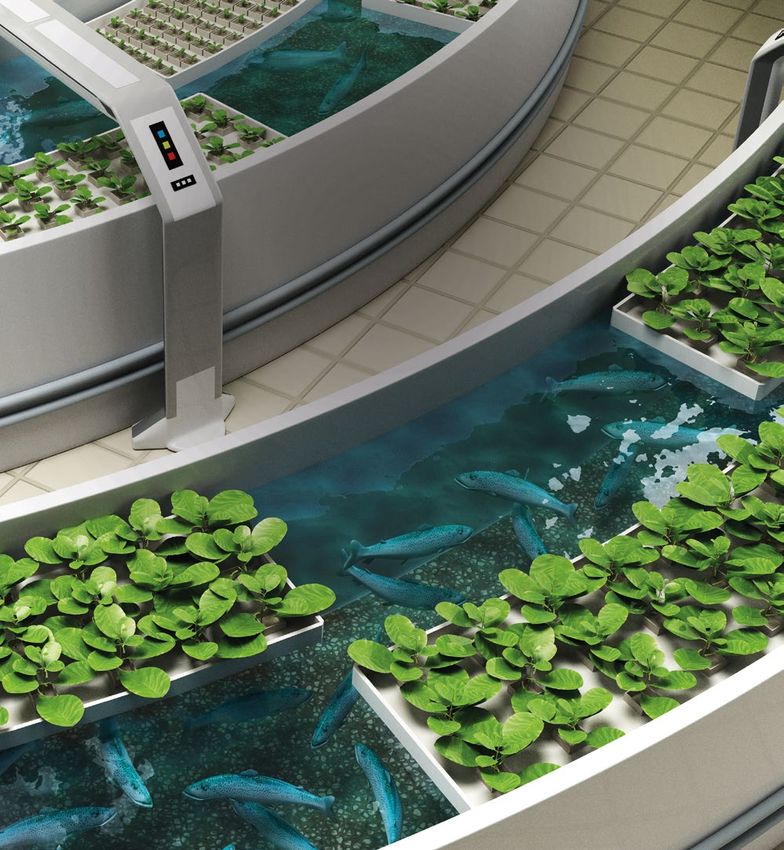
                                                                                                                               THIRSTY FOOD
                                            We believe it is possible        Significant improvements could come from
                                                                                                                              Liters of water required to produce
                                                                                                                                     one gram of protein15:
                                              to meet the needs of          bringing production closer to consumption,
                                                                                which also reduces the environmental                          Beef
                                              people and nature by
                                             driving improvements
                                                                            impacts of excessive “food miles”. Over half
                                                                               the global population now lives in cities,
                                                                              and that proportion is expected to reach
                                                                                                                                            112
                                              in soil health, habitat         two-thirds by 2050.13 Urban sprawl eats                     Vegetables

                                                conservation and             up existing farmland – but technologies for
                                                                              urban farming are beginning to offset this                      26
                                              resource efficiency.”           impact: production from “vertical farms”                      Cereals
                                                                           in buildings is forecast to grow by 25 percent
                                                 The Nature Conservancy9
                                                                                           a year to 2022.14                                  21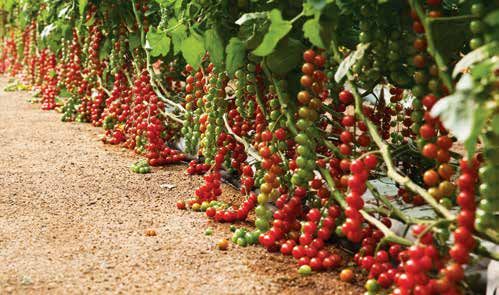
8 Syngenta
Sustainable Business Report 2017
The future of food
All participants in food production and
distribution need to take a more holistic
“Shifting the food system towards a INNOVATION DEPENDS view – to think in terms of “food systems”
more sustainable future requires a better ON COLLABORATION where they work in synergy, rather than
seeing themselves in separate silos such as
understanding of the interdependencies of “farming” or “manufacturing” or “distribution”.
the system and a deeper recognition that the The scope for improvement in agricultural
production is significant, and there’s no
The future of food – safe, sustainable,
food system is not the exclusive domain of any shortage of opportunities for innovation.
plentiful, nourishing, satisfying food –
depends on unprecedented cooperation that
given sector or public agency.” But the challenge to produce more with
less is an urgent one. While demand growth
brings together all the players with relevant
knowledge and resources.
Global Alliance for the Future of Food16 continues to outpace improvements
in production, humanity is consuming So for suppliers of agricultural products
renewable resources 50 percent faster and services like Syngenta – and equally
than nature can replace them.17 for academia, governments and NGOs,
The pace of change needs to accelerate. agricultural equipment companies,
farmers’ customers in the value chain, and
That’s not just a matter of developing providers of finance and insurance – the
new techniques and technologies faster. challenge is a shared one. The pace of
They don’t start making a difference until innovation depends ultimately on how
they’re widely applied. And putting innovation successfully we all work together.
into practice in the field isn’t always a quick The future of food depends on us all.
or easy process – especially when so much
of the world’s food is produced by some
500 million18 smallholders, many in isolated
rural areas.
Traditionally, advances in agriculture have
been fragmented and piecemeal. That has to
change. No one company or organization can
make enough difference on its own. But they
can take positive steps to be part of a bigger
picture, in which many organizations make
many different contributions – both individually
and in collaboration with others.
1 Bill & Melinda Gates Foundation (December 12, 2017). Bill & Melinda Gates Foundation Commits $300M (€255M) to Help Farmers in Africa 7 Brent d’Amour et al. (2016). Future urban land expansion and implications for global croplands. Proceedings of the National
and Asia Cope with Climate Change Academy of Sciences of the United States of America, vol. 114 no. 34, p. 1
2 Louis Bergeron (June 14, 2010). High-yielding agriculture slows pace of global warming, say Stanford researchers. Stanford News 8 UNCCD (n.d.). Desertification Land Degradation and Drought – Some Global Facts and Figures. Retrieved January 31, 2018
3 WHO (n.d.). Nutrition: Controlling the global obesity epidemic. Retrieved January 31, 2018 9 The Nature Conservancy (n.d.). Global Agriculture: The Global Agricultural Toolkit. Retrieved March 15, 2018
4 WHO (October 2017). Obesity and overweight/Fact sheet 10 Ecomodernist Manifesto, 2015, p. 14
5 American Heart Association (March 9, 2016). Understanding the American Obesity Epidemic 11 Lynas, M. (July 7, 2017). The Ecomodernist argument for modern agriculture. Successful Farming at Agriculture.com
6 Ecomodernist Manifesto, 2015, p. 17 12 Food and Agriculture Organization (n.d.). Food loss and waste reduction/Key facts. Retrieved January 31, 2018
13 UN DESA (July 10, 2014). World’s population increasingly urban with more than half living in urban areasSyngenta 9
The future of food Sustainable Business Report 2017
“Family farms are also the custodians of about SYNGENTA’S ROLE IN THE FUTURE:
75 percent of all agricultural resources in the world, COLLABORATIVE AND INNOVATIVE
and are therefore key to improved ecological and
resource sustainability.”
Over recent years, Syngenta’s vision of The Syngenta Foundation for
Food and Agriculture Organization19 the future has placed increasing emphasis Sustainable Agriculture builds and
on collaboration with organizations in the supports partnerships to improve
public, private and nonprofit sectors. their production and livelihoods
through services, technology and
Partnerships and collaborations amplify links to markets. For more on this, visit
the value of the assets we have, leveraging www.syngentafoundation.org
our innovation, capabilities and networks.
By sharing information and data openly, Successful collaboration, whether
we leverage what we know and enable internal or external, depends on trust.
others to progress agriculture. Openness, transparency and a willingness
to debate your position honestly are
This philosophy informs our relationships essential. These attributes are at the
with farmers, our customers. Increasingly, heart of our culture and values – for
we see them as our partners in driving more on this, see page 29. Our principal
innovation and promoting adoption of new relationships and interactions are set out
solutions. We’ve made this explicit in in the business model on pages 10-11.
The Good Growth Plan – for more
on this, see pages 18-27.
We see the developing world’s hundreds
of millions of smallholders as crucial to
meeting the world’s growing food needs.
“We are passionate about helping farmers
around the world, and we will continue to work
with others and invest our resources to make
14 Market Research Engine (January 2017). Vertical Farming Market by Growth Mechanism, Functional Mechanism and
by Geography – Global Forecast to 2022/Description
15 Water Footprint Network (n.d.). Water footprint of crop and animal products: a comparison. Retrieved January 31, 2018
agriculture ever more sustainable.”
16 Global Alliance for the Future of Food (2017). The Future of Food in a Climate Changing World. 2nd International Dialogue J. Erik Fyrwald
Summary Report. p. iii
17 WWF (n.d.). The Human Footprint. Retrieved January 31, 2018 CEO, Syngenta
18 IFAD (February 2011). viewpoint: Smallholders can feed the world. p. 2
19 Food and Agriculture Organization (October 16, 2014). Putting family farmers first to eradicate hunger10 Syngenta
Sustainable Business Report 2017
Our business model
Creating value now
That’s why our Good Growth Plan
commitments are integral to our business
strategy. They put sustainability center stage The resources
and for the long term
in the way we do business and align closely
with the UN’s Sustainable Development
we depend on
Goals – see page 19 for details.
Financial capital
If we succeed, we will achieve not only growth
Syngenta plays a vital role in enabling the food chain to feed the world for our business but also growth for all – People and the intellectual
creating value that benefits our employees, property they create
safely and take care of our planet. Our ambition is to be the most
customers, communities and food chain
collaborative and trusted team in agriculture, providing leading seeds partners. But in a sector as challenging as Chemical, biological, genetic
and crop protection innovations to enhance the prosperity of farmers, agriculture, success is not a given. It will and computational sciences
wherever they are. require determined execution. We will
Natural resources
need to collaborate with many partners to
Our strategy is to grow through customer- All this innovation has one focus: a passion achieve better outcomes and to earn trust Facilities and services
focused innovation – not just in product for our customers, the farmers who grow by delivering on our commitments.
research and development, but in every the world’s food. To make our business work, Local communities
aspect of our business model. We seek we have to understand their needs and deliver That trust depends not just on what we do:
new and better ways to use resources, to products and services that they value. And the “how” matters, too. So transparency, Laws and regulations
develop and deliver products and services, to make our business sustainable, we have ethics, safety and compliance are core
and to create value for our many stakeholders to take the long view: ensuring that what to the way we work. In operating our
– including employees, the communities we do today strengthens Syngenta and the business model, we’re determined to live
where they live and society at large. food chain for tomorrow – economically, by the values we have set ourselves – the
environmentally and socially. words in bold above.Syngenta 11
Our business model Sustainable Business Report 2017
What What The value
we do we create we provide
Research and development Commercial Products, services and solutions Return on investments for growers
What we do What we do Food, feed, fuel and fiber
3 Crop protection
3 Crop protection discovery and innovation 3 Product management
3 Advanced seed breeding 3M arketing and sales – Herbicides
Sustainable agriculture solutions
3 Addressing insect, disease, weed and 3 Distribution – Insecticides
environmental stress on crops for small- to large-scale farms
Who we work with – Fungicides
Who we work with 3 Growers
3 Research institutions and universities – Seed treatment Grower and customer satisfaction
3 Distributors
3 Farmers and suppliers 3 Demonstration farms – Biologicals
3 Agricultural extension services Sustainable production
3 Processors and the food chain – Crop enhancement
3 NGOs 3 Agronomists
3 Seeds Development of our people and
3 Agricultural extension services
Production 3 Technology providers – Seeds partners along the value chain
What we do
– Traits
Supporting activities 3 Grower programs Economic value shared with
3 Production of active ingredients and intermediate
chemicals production employees, suppliers, governments
3 Formulation, fill and packaging
What we do 3 Digital agriculture and communities
3 Safe and sustainable use of our products
3 Production of seeds 3 Product registration
3 Production of flowers Collective well-being of communities
3 Health, safety and environment
Who we work with 3 Multi-stakeholder engagement
3 Suppliers Stimulating research, sharing data
Who we work with
3 Toll manufacturers 3 Industry associations and knowledge
3 Government and regulatory authorities
3 NGOs and IGOs
3 Communities12 Syngenta
Sustainable Business Report 2017
Our offer
Innovating for
growers – and
for society
Our strategy for both crop protection and seeds is
“Growth through customer-focused innovation”.
Farmers want us to help them work profitably, safely
and sustainably. They face constantly evolving
climatic, agronomic and commercial challenges while
meeting the expectations of their own customers: food
processors, retailers, consumers and society as a whole.
These demands are constantly evolving, too. So our
customer-focused innovation has to be continuous,
multilayered and responsive to local conditions
wherever we operate.Syngenta 13
Our offer Sustainable Business Report 2017
concerns over issues such as potential to establish strategic partnerships and against risks including climate change and
Crop Protection residues in food, as regulation becomes
more restrictive – and politicized.
alliances with organizations such as the
World Business Council for Sustainable
increasingly volatile weather. In 2017, we saw
continued success in North America with new
Syngenta is the world market leader in Development, the International Rice Research products including TRIVAPRO™, the first three-
One example is our Fruit Quality Contract Institute, The Nature Conservancy, USAID mode-of-action foliar fungicide; TALINOR™,
crop protection products, with broad in Europe, the US and Latin America.
coverage of an extremely diverse market. and value chain companies and organizations a post-emergence herbicide developed to
This grower program is designed to help such as IDH – The Sustainable Trade Initiative. control broadleaf weeds in wheat and barley;
We develop and produce herbicides, farmers meet stringent food chain standards,
insecticides, fungicides and seed And we share good agronomy practices, MINECTO® PRO, a new insecticide for difficult
with a unique combination of products combined with safe-use and environmental to control pests in vegetable and specialty
treatments that promote strong and and services enabling them to achieve
healthy plant growth. stewardship, through initiatives such as crops; and BESIEGE™, a broad-spectrum
and document compliance in critical areas locally-tailored Syngenta Learning Centers foliar insecticide.
In addition to protecting plants from such as residue levels. Another example is on demonstration farms.
pests and diseases, we provide crop the introduction of digital track-and-trace The Argentine registration of MIRAVIS™ DUO
enhancement products that help them technology for all our products to provide full Delivering the products and services for peanuts and MIRAVIS™ TOP for tomatoes,
tolerate environmental stresses such as documentation and traceability for the food customers need peppers and squash marked the launch of
heat, cold and drought. We also offer value chain, with easy access to application Growing populations and changing diets a new brand with broad market potential.
products that boost nutrient uptake in and safe-use information. create new opportunities for growers. MIRAVIS™ features our ADEPIDYN™ broad-
crops – helping growers to use fertilizers Demand for grain has increased by almost spectrum fungicide, which is highly effective
We accept our responsibility to develop against damaging and hard-to-control
more efficiently, increasing yields while safe and sustainable products and steward 90 percent since 1980 and will continue
improving sustainability. to increase at an average rate of around diseases such as fusarium head blight,
them carefully, investing approximately botrytis, sclerotinia and corynespora.
30 percent of the cost of a new active 1.4 percent per year. In 2020, one hectare
While our principal customers are will need to feed more than five people
farmers, our Controls business adapts our ingredient on product safety. We’ve also Further MIRAVIS™ launches will follow globally
made the commitment to train 20 million farm compared to 1960 when it had to feed two in 2018 as work continues on products for
agricultural technologies to meet the needs people. These changing demands lead to
of professionals in turf, tree and landscape workers on labor safety by 2020. For more on canola, cereals, corn, soybean, specialty
this – see “Help people stay safe” on page 25. intensification, a primary driver for the global crops, vegetables and the Controls markets.
care, residential and commercial pest market for crop protection products.
management, disease vector control, Latin America also saw the launch of our
We continue to promote the case for realistic, FORTENZA® insecticide seed treatment
commercial flower production and science-based regulation – and transnational As farmers pursue higher crop yields and
consumer garden care. productivity levels, a second driver is pest for corn.
consistency on standards such as maximum
residue levels (MRLs), so that crops meeting and disease resistance. We give farmers We continued the European roll out of
Meeting society’s expectations regulatory requirements in the country where advice and training on the best ways to inhibit ELATUS™ fungicides for treating the most
they are grown are not barred from sale in resistance; but over time new modes of action important and damaging cereal diseases,
Across the world, consumers want access to will always be needed, as pests evolve to
a wide variety of healthy and affordable food another. At the same time, we work to develop including septoria and rust. In 2017, we
solutions like our MIRAVIS™ DUO fungicide resist existing solutions. Both intensification launched ELATUS™ products for cereal crops
choices while being increasingly interested and resistance demand a steady stream of
in the safety and sustainability of food that meet the strictest MRL regulations, so in France, Germany and the UK. The key
that treated crops can be exported anywhere. innovation through investment in research active ingredient, SOLATENOL™, is already
production. We see an opportunity for dialog and development (R&D).
in addressing societal concerns about the role And we have now committed to make our used on soybean in Latin America and on
of agricultural technology in food production. safety data publically accessible. In developing and marketing our products a wide range of crops in the US and Canada.
Working with all players in the highly regulated and services, we have a strong focus on We also began the European roll out of
We strive to build constructive and open VIBRANCE™ DUO, which controls a range
crop protection industry – regulators, growers’ return on investment, helping
relationships with governments, regulators, of soil-borne cereal diseases.
policymakers and the value chain, particularly them to maximize yields and build resilience
NGOs and food processors. We continue
retailers – we seek to allay consumer14 Syngenta
Sustainable Business Report 2017
Our offer
We also launched PLENARIS™ seed treatment Increasingly, we are also supplementing our Stepping up the pace of innovation We also invest in smaller innovation
fungicide for controlling downy mildew in products with agronomic advice and services Over the next decade, we will be bringing companies through Syngenta Ventures.
sunflower and other crops. It incorporates that help to enhance farm performance, forward new crop protection approaches that Current investments include Agbiome, novel
a novel chemistry that now gives us four mitigate risks and improve access to markets. help growers address many of their agronomic crop protection biocontrols; Phytech, decision
different modes of action to combat this key Our presence in local farming communities challenges. Innovative formulation technology support based on plant monitoring; and
seedling disease. The first sales were in the ensures that we can meet growers’ needs that includes how we combine chemistries Asilomar Bio, products to enhance crops’
US, with Argentina to follow in 2018. with greater agility, local knowledge will also have a role to play. We are working drought resilience.
and insight. on ways to optimize the performance of our
Extending the grower’s toolbox Biocontrols
Our grower programs combine best-in-class products in conventional agriculture systems
Insects, weeds and diseases are constantly and with precision application, which allows Biocontrols are expected to record double-
evolving threats. To provide the best available Syngenta products with agronomic protocols, digit growth: by 2030, they could represent
data and other services, accurately tailored for us to target specific areas on a plant, therefore
solutions and tools, we apply our world-class reducing the amount of product applied. up to 10 percent of the global crop protection
science and facilities to develop new active local needs and conditions. Exceptionally high market. We have been complementing our
customer loyalty rates testify to their success. To help us increase the pace of innovation over
ingredients (AIs), formulations and biocontrols. the next few years, we will make increasing use chemistry portfolio with biocontrol products
We add value by sharing our agronomic In the US corn market, for example, for many years to add modes of action
AGRIEDGE EXCELSIOR® brings together of partnerships, biocontrols and digitalization.
expertise, providing advice and support with that enhance resistance management.
use protocols, precision application and other selected seeds, seed treatment, crop Partnerships We continually scout for new early-stage
technologies – and by developing holistic protection and post-harvest products with risk biocontrol technologies, where we can
Partnerships and collaborations have been
solutions such as our grower program offers. mitigation measures and farm management apply our crop knowledge and product
key to our innovation model for many years.
services, to address yield-limiting factors development capabilities to bring new
Product life cycle management ensures we Through partnerships we can gain access to
throughout the year. For barley growers in commercial solutions to market.
make the best possible use of our broad existing technologies or jointly develop entirely
Germany, France and the UK, the HYVIDO®
portfolio of around 70 AIs to deliver new new classes of chemistry. In 2012, we acquired Pasteuria Bioscience
Cashback Yield Guarantee offers a similar
products to market. Every year, label and approach, with insurance that guarantees In the public health field, our partnership which enabled us to develop CLARIVA™,
formulation extensions enable us to bring return on investment. AGRICLIME™ protects with the Bill & Melinda Gates Foundation a breakthrough seed treatment to combat
farmers hundreds of new applications for Australian farmers by combining best-in-class and Innovative Vector Control Consortium soybean cyst nematodes, and to scale
our AIs. Many of these are tailored for minor inputs with a financial guarantee against (IVCC) to develop insecticides with a novel up cost-effective production. In 2017, we
crops, greatly enhancing the viability of pre-agreed heat or drought conditions. mode of action for controlling resistant launched a combination of CLARIVA™ with
growers whose options are often limited. We continue to develop programs like these, mosquitoes, is currently progressing several CRUISERMAXX® VIBRANCE™ as CLARIVA™
to offer more growers an optimized, locally- highly promising leads. Collaborating with Elite Beans. This next-generation seed
Not all solutions are chemical-based. treatment is uniquely able to provide season-
tailored toolbox of solutions. the IVCC, we developed ACTELLIC® 300CS,
Syngenta is extending the grower’s toolbox long activity against soybean cyst nematodes,
with products that use naturally occurring which is highly effective against resistant
Grower programs not only help growers which today cause annual losses for growers
organisms – bacteria, fungi or viruses – to mosquitoes. In 2017, it was used in 32
increase yield and profitability, they contribute of around $1.5 billion in the US alone.
protect or stimulate crops. These biocontrols countries across sub-Saharan Africa, and is
greatly to the sustainability of farming as
offer new modes of action to combat estimated to have protected around 34 million
well. For example, our soybean fungicide
resistance, address previously unresolved people from malaria. Its use has seen malaria
program in Brazil has products with four
challenges, complement traditional chemical transmission reduced by almost 40 percent
different modes of action to help growers
methods or provide more sustainable in Eastern Zimbabwe and up to 60 percent in
manage soybean rust resistance, which can
alternatives. They will play a growing role Northern Ghana. In Central-West Senegal, the
devastate yields.
as the regulatory landscape changes. risk of malaria transmission was 14 times lower
following applications of ACTELLIC® 300CS.Syngenta 15
Our offer Sustainable Business Report 2017
Digitalization Robust biocontrols that can replace
Digital technologies are rapidly transforming chemicals are in increasing demand, to
agriculture. Farmers are gathering increasing broaden growers’ crop protection options.
amounts of data about their land, soil and To meet the needs of European fruit and
crops from monitoring devices, drones vegetable farmers seeking to enhance the
and satellite imaging. In combination with marketability of their products, we have
predictive software and artificial intelligence, scheduled the European launch of TAEGRO®
this will aid decisions that save time in 2018. This broad-spectrum biofungicide
and money, and enable unprecedented protects against diseases such as powdery
precision and efficiency in applying our mildew and botrytis. Its biological origin and
products – increasing both sustainability low application rates have strong appeal to
and effectiveness. the food chain, and it has an important future
as a key building block in fruit and vegetable
We are developing a growing portfolio of grower programs worldwide.
digital solutions and capabilities to support our
customers, improve their experience with us, In the coming years, farmers must continue to
optimize results from our products, document meet the evolving expectations of society and
sustainability and compliance for food their food-chain customers while sustainably
processors, and increase the effectiveness of meeting the challenges posed by climate
Healthy wheat Wheat infected with septoria
our stewardship and loyalty programs. change and pests. We are well positioned
to help, by offering them a holistic – and
Innovating for the future expanding – toolbox of solutions to address With resistance proving a challenge for
Better control, higher yield many fungicides currently on the market,
Over the next few years, we will be bringing their challenges and maximize the potential
of their businesses. finding new solutions for septoria control
an exciting pipeline of chemical and biological When a fungus strikes a grower’s crop,
has been at the forefront of our research.
crop protection products to market. the consequences can be very severe.
We are committed to meeting growers’ Thanks to our focused team of experts,
One of the most damaging fungal
In 2018, this will include the launch of new and consumers’ needs in increasingly Syngenta has found an innovative solution
diseases in Europe is septoria, which can
MIRAVIS™ products for potatoes and canola challenging and dynamic environments. with a series of fungicides based on the
cause yield losses as high as 40 percent.
in Australia, and potatoes and grapes in We deliver sustainable innovation and will active ingredient SOLATENOL™.
A field infected with septoria is visible to
New Zealand. SOLVIGO®, a best-in-class continue to collaborate through global and
even the casual observer. SOLATENOL™ is an active ingredient in the
insecticide, will launch for bananas in our local partnerships. We are strengthening
our focus on delivering safer products with ELATUS™ family of products. They provide
Latin America North territory. In wheat, the fungus appears as brown
a smaller environmental footprint, and most long-lasting control of the most important
spots on the leaves that over time expand
Our ORONDIS® fungicide is scheduled for importantly we actively encourage dialogue and damaging diseases of cereals, including
to consume the healthy green leaf
2018 launch in Australia, Guatemala, Mexico with stakeholders, customers and the septoria and rust. The range of mixtures and
area. Warm, damp conditions provide
and North-East Asia. Applied on vegetables communities in which we operate. co-packs available for ELATUS™ makes it a
the perfect environment for septoria to
and specialty crops, ORONDIS® offers a new flexible and adaptable option for growers in
develop. Once present, it can rapidly
level of control over diseases such as downy their disease control program.
spread and destroy fields of healthy crop.
mildew and late blight. It can be used at
Treating septoria early with an effective
significantly lower rates than other fungicides,
fungicide is critical to maintaining a healthy
and its new mode of action expands our
crop and ensuring a good yield for growers.
market-leading fungicide portfolio.16 Syngenta
Sustainable Business Report 2017
Our offer
A market with complex customer needs Delivering what our customers need on standards so that crops meeting
Seeds Choosing what seed to plant, and where
to plant it, is a complex decision. It is
Given the complexity of our customers’
needs, we need to deliver constant innovation
regulatory requirements in one country are
not prevented from sale in another.
Syngenta is one of the world’s three largest further complicated by the weather and and performance improvement, and we apply At the end of 2017, we concluded a
developers and producers of seed for pest pressures that arise after the seed is our breeding and biotechnology skills to find deal with Dow AgroSciences LLC and
farmers and commercial growers. We offer planted. Farmers need products that will the best genetic opportunities and present M.S. Technologies, L.L.C to license its
a broad portfolio of crops, with particular reduce the risk of their investment and them in seed form. We have to produce those Enlist™ and Conkesta™ traits. This further
strengths in soybean, corn, vegetables, provide a predictable outcome. They look seeds efficiently and get them to customers strengthened our soybean trait portfolios in
sunflower, barley, wheat, oilseed rape for the assurance of higher yields from lower in the right quality and quantities at the herbicide resistance for the US and insect
and rice. inputs as they strive to control their costs in right time. And, importantly, we also have resistance for Latin America. It gives us the
markets where commodity prices have been to support our customers with agronomic most trait options in the market, enabling
Our Vegetables business alone offers depressed for some years. In more developed advice and expertise to ensure that they plant us to respond to customer preferences and
around 2,500 varieties across more than markets, farmers are also increasingly the right seed for their soil type and weather needs in these key territories.
30 crop species. And Syngenta Flowers – focused on sustainability, and their ability conditions, and provide the right care to
one of the few global players – is a market to demonstrate this to their customers in maximize performance and yield. In all these A major milestone for the Seeds business
leader in mass-market and value-added the value chain. areas, our ability to be the best possible was the signing of a deal in November to
plants, ranking in the top two in most key partner depends on putting our customers acquire Nidera Seeds, a market leader in
market segments. In the vegetables market, growers must at the center of our strategy, and working Latin America. The deal, which completed
respond to the increasingly stringent closely with them to understand and meet in February 2018, significantly strengthens
demands of processors, retailers and end- their needs. our business in this region. With over 1,000
A dynamic and growing market
consumers. Processors want characteristics employees at 18 sites and annual sales of
The global seed market is worth some that simplify and maximize processing For corn growers in the US – our largest about $330 million, Nidera is a major force
$40 billion a year and has doubled over the outcomes – for example, seedless peppers single market and growth opportunity – the in soybean with strong offers in corn and
last decade. At present, the commercial or lettuce that doesn’t brown when cut. most important development of 2017 was sunflower. Its products, germplasm pool and
seed market is dominated by relatively few Key considerations for retailers include China’s import approval for AGRISURE R&D complement Syngenta’s, and will enable
countries and crops. Over half its value uniformity, shelf life, product safety and DURACADE®, our trait for effective control us together to bring more innovation and
comes from corn and soybean alone, and year-round supply, while consumers are of corn rootworm. This enables us to offer value to Latin American growers.
57 percent of all sales are made in just three particularly concerned with aspects such growers more choice with new hybrids that
markets: North America, Brazil and China. as flavor, color, shape, convenience and combine top-quality genetics with the most Innovating to meet emerging needs
In the coming years, the market is expected less food waste. advanced rootworm control technology. Investment in research and development
to grow substantially, particularly in Brazil, This destructive pest currently costs US
The demands of the flowers market are (R&D) and new technologies is essential – not
China and India. growers more than $1 billion annually in yield
similar, as growers have to address the only to maintain improvement in crop yields
losses and control costs. and input productivity, but also because
We have ambitious plans to grow Syngenta’s practical requirements of the retail channel
share of the global seed market. In 2017, we while meeting consumer demands for AGRISURE DURACADE® has been fully market needs are constantly changing.
strengthened the leadership of our Seeds innovation and aesthetic performance. approved in the US since 2013, but growers’ Farmers have to address evolving challenges
business, recruiting key talent from other Ease of care is also important, as markets access to export markets depends on local such as climate change, pests and emerging
leading seeds companies, and significantly are increasingly driven by consumers buying import approvals. In a global economy, resistance to existing forms of control; they
restructured the organization to ensure we plants in retail outlets to immediately decorate asynchronous registrations across different must also respond to the changing demands
have the focus and capabilities to execute their homes, rather than experienced countries can increase complexity for of the food value chain from food processors
our growth strategy. gardeners shopping in garden centers. farmers. We promote realistic, science-based to retailers and consumers.
regulation and transnational consistencySyngenta 17
Our offer Sustainable Business Report 2017
To help them meet these challenges, we We will continue to put forward science-
invested more than $0.5 billion in breeding based views on these issues, to be
and R&D in 2017. We have been working to transparent in demonstrating the safety
accelerate our rate of innovation, applying and efficacy of our innovations, and to
new technologies, data, analytics and digital publish data that supports open dialogue
tools to bring better products to market faster. with stakeholders.
Techniques such as molecular markers and
molecular breeding are transforming the way As we develop a deeper understanding
we work, and we continue to invest heavily of growers’ needs, we see the increasing
in data and digital technology to extend our need for new technologies that will bring
IMAGE TO COME game-changing innovation for growers.
capability and shorten development timelines.
Past examples include a novel range of
The technification of China’s seed market is different cauliflower colors that delight
a major growth opportunity for us. So while consumers, and ENOGEN® corn enzyme
we maintain our R&D effort in existing areas technology that enhances ethanol production
of strength, we will invest additional resources from corn. Our scientists are now deploying
in areas important to the Chinese market. new breeding technologies such as genome
Technological innovation is at the heart of editing and mathematical modeling to bring
China’s agriculture modernization agenda, plant potential to life with unprecedented
and we are strengthening our capabilities at speed and precision.
Syngenta’s Beijing Innovation Center (SBIC). Syngenta celebrated its 150th anniversary as a leader in vegetable seeds. Launched in 2017, Lullaby delights
The SBIC is at the forefront of biotechnology On the horizon is an accelerated pipeline
consumers with its bright red cherry tomatoes on fishbone-shaped clusters.
adoption in the country and is leading our for resistance against insects and diseases,
global genome editing program. The center For example, a significant development in fruit supply chain and marketing teams resulted in breakthrough yield improvements, better
is also driving important collaborations with and vegetable retailing has been the rapid a complete product and branding package, climate-change adaptation and tolerance
Chinese institutes. growth of fresh-cut fruit as a convenient and which was designed to add value along the against abiotic stresses and differentiating
healthy snack. In response, we developed whole chain: from plug producers to brokers, product quality. By working with partners
An important strategic priority for the the Crisp Fresh line of seedless watermelon growers, retailers and consumers. in academia, start-ups, and institutes, we
Seeds business is to focus on crops and varieties, featuring crisp flesh that reduces are poised to translate the newest scientific
markets where we have the greatest growth post-processing liquid loss and extends shelf Innovating for the future achievements into winning products
opportunity, where we can get to scale life. Since the successful launch in the US of We now have the tools and opportunity to for growers.
and invest in sustainable innovation. As a Crisp Delight – the first variety in this line – we address far-reaching social concerns: to feed
consequence, in 2017, we sold our global have rapidly scaled up production and rolled growing populations and nourish them better,
sugar beet seeds business to a more out in markets across the world. to enable crops to withstand climate change,
specialized operator. and to do so sustainably, with less reliance
Our flowers business scored an immediate on chemical pesticides. The key issues will
Our vegetables business – which celebrated hit with its award-winning new SUNFINITY™
150 years in 2017 and introduced 160 new be timely regulatory approval, enabling new
sunflower, launched in 2017. It took almost products to be grown and marketed, and the
varieties that year – has built a strong track a decade to develop this innovative variety,
record in innovation at its 36 R&D centers. adequate protection of intellectual property
designed to extend the retail sales season of new plant varieties, enabling investment in
Innovation that adds value depends on working as a premium product for gardens and patio
closely with customers to understand emerging innovation to earn fair returns.
pots. Close collaboration between R&D,
needs and deliver new products in response.18 Syngenta
Sustainable Business Report 2017
The Good Growth Plan
Measuring our
contribution
Sustainability is at the heart of our drive to help
farmers feed a fast-growing world population.
Humanity now depends on farmers increasing their
production substantially, rapidly and sustainably.
And we can only play our part if our business, too,
is sustainable. The Good Growth Plan is informing
the way our products and services contribute
to a sustainable agricultural system.You can also read


