Towards an HIV Cure: Taking Stock, 2015 - IAS 2015 Towards an HIV Cure symposium Vancouver
←
→
Page content transcription
If your browser does not render page correctly, please read the page content below
IAS 2015 Towards an HIV Cure symposium
Vancouver

            Towards an HIV Cure:
             Taking Stock, 2015

                           Daniel R. Kuritzkes, MD
                       Division of Infectious Diseases
                       Brigham and Women’s Hospital
                           Harvard Medical School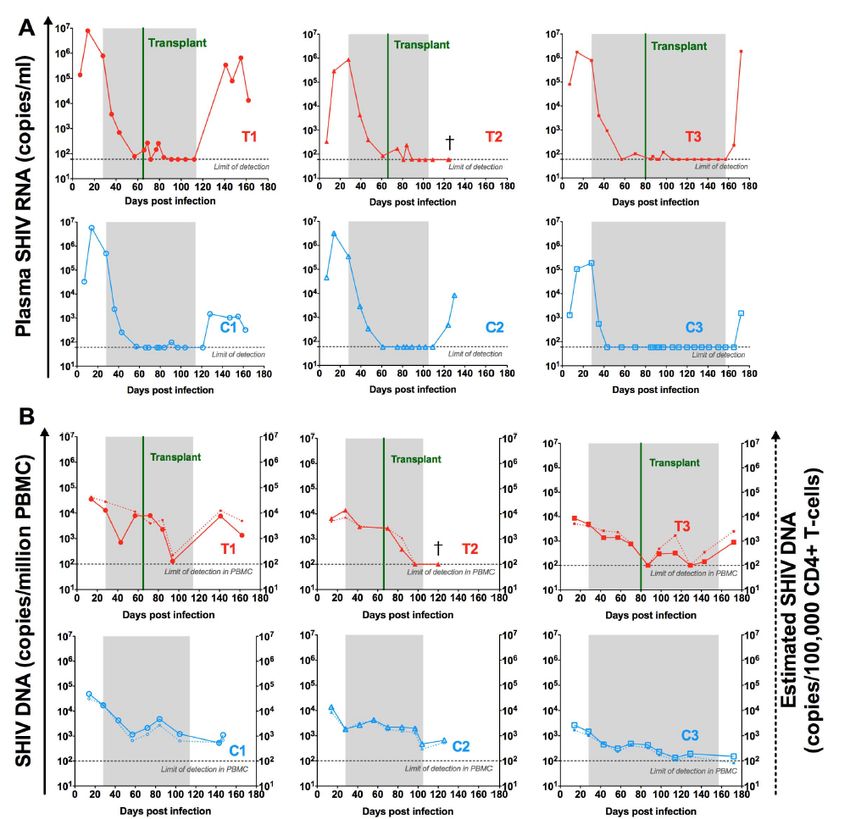
Disclosures
The speaker is a consultant and/or has received
speaking honoraria and/or grant support from the
following companies relevant to this talk:
– Bristol-Myers Squibb
– Bionor
– Gilead
– GlaxoSmithKline
– InnaVirVax
– Merck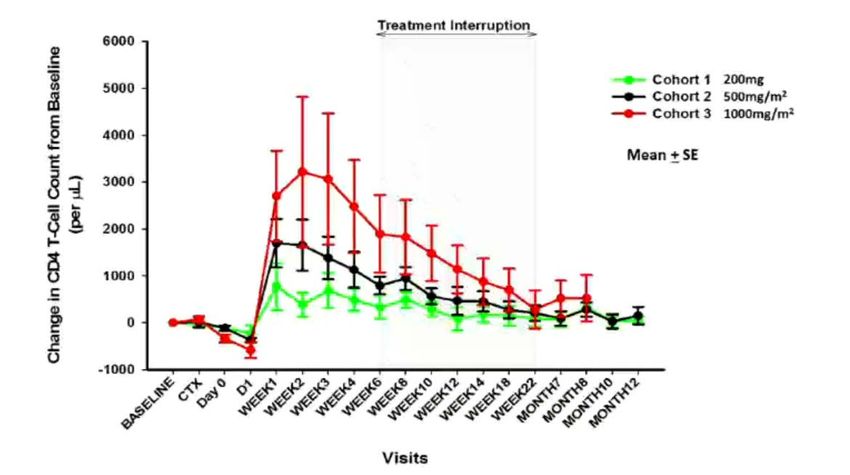
The search for an HIV cure
The field was galvanized by the report of the
“Berlin” patient (Timothy Ray Brown)
Established as a research priority by IAS, NIH,
ANRS, amfAR and other funding agencies
First “Towards an HIV Cure” Symposium
– Vienna, 2010
Substantial additional resources have been made
available for cure-related research
– Martin Delaney Collaboratories
– $100 M commitment by President Obama (December, 2014)
– amfAR HIV Cure Institute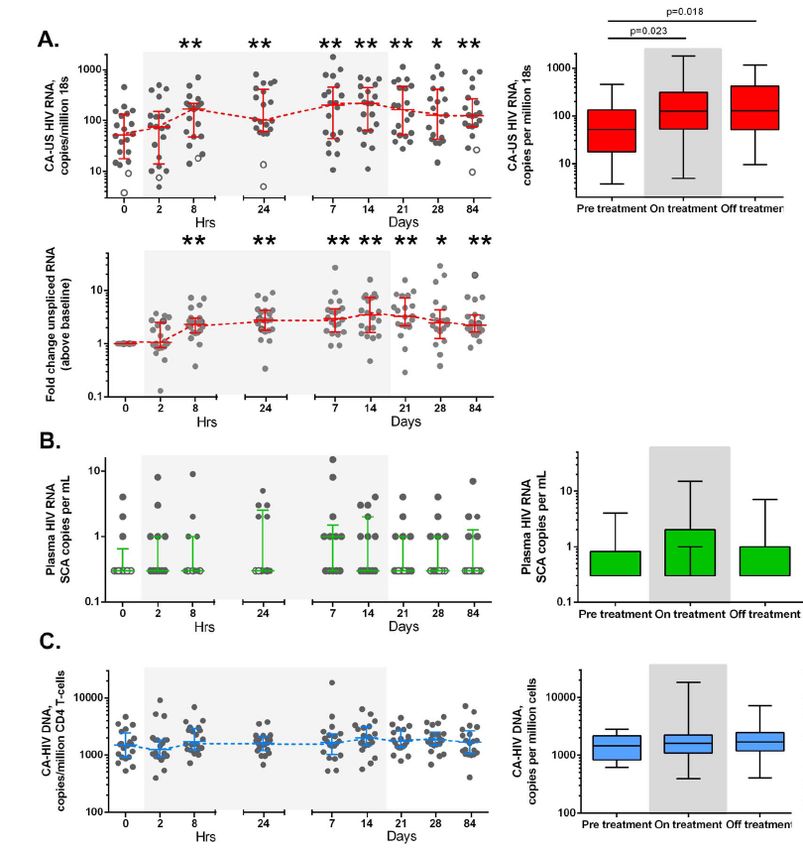
What have we accomplished?
Successes The Berlin patient Hütter et al N Engl J Med 2009; 360:692-8.
Can this outcome be replicated?

Hütter N Engl J Med 2014; 371:2437-8 (letter).
Moving forward
Does the high mortality reflect underlying
malignancy or a consequence of transplanting
ccr5Δ32/ccr5Δ32 HSC?
What are the implications for approaches to
block CCR5 expression in genetically modified
HSC or peripheral CD4+ T cells?
Should potential participants be screened using
deep sequencing to identify minority variant X4
viruses?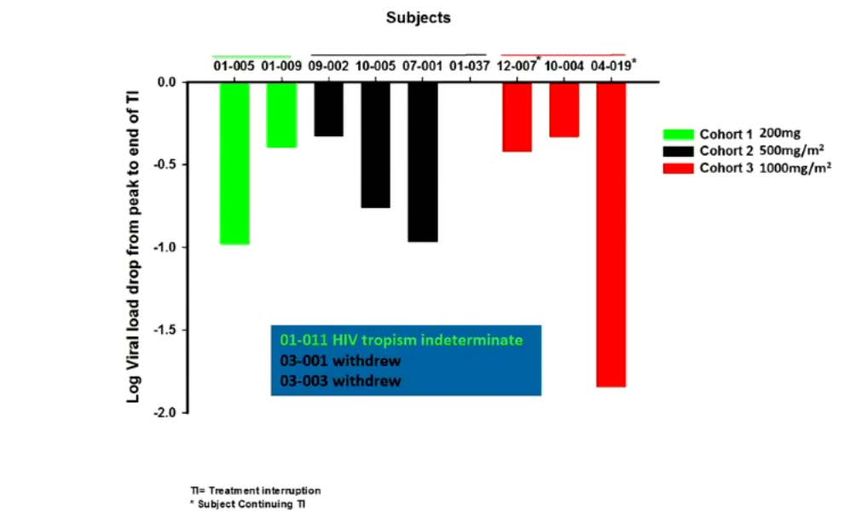
Partial successes
Vorinostat
– Archin et al Nature 2012; Archin et al J Infect Dis 2014
– Elliott et al PLoS Pathogens 2014
Panobinostat
– Rasumussen et al Lancet HIV 2014
Romidepsin
– Søgaard et al 20th Intl AIDS Conf, Melbourne, 2014.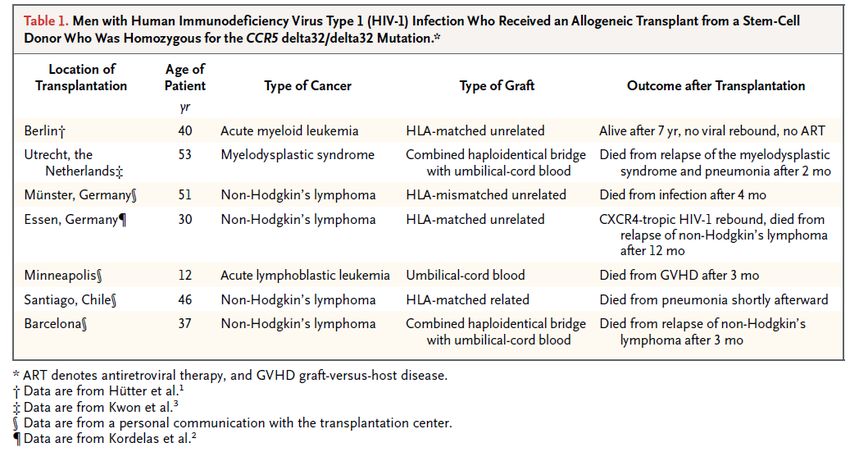
Effect of vorinostat on HIV transcription

Archin et al Nature 2012

Archin et al J Infect Dis 2014

Effect of vorinostat on HIV transcription (2)

Elliott et al PLoS Pathogens 2014
Panobinostat

Rasmussen TA et al Lancet HIV 2014
Romidepsin (HDAC Inhibitor):
        Reactivation of Latent HIV-1 in Vivo

Søgaard OS, et al. 20th IAC. Melbourne, 2014. Abstract TUAA0106LB.
Moving forward
Latency reversal necessary but not sufficient
Do LRAs increase the level of HIV expression
from transcriptionally active cells or increase the
number of cells producing HIV RNA?
What agents are synergistic with LRAs?
How to choose among combinations to test in
clinical trials?Partial successes (2)
VISCONTI
– Saéz-Cirión et al PLoS Pathogens 2013
RV 254
– Ananworanich et al 20th CROI, March, 2013
Pediatric HIV/AIDS Cohort Study
– Persaud et al JAMA Pediatrics 2014VISCONTI Saéz-Cirión et al PLoS Pathogens 2013
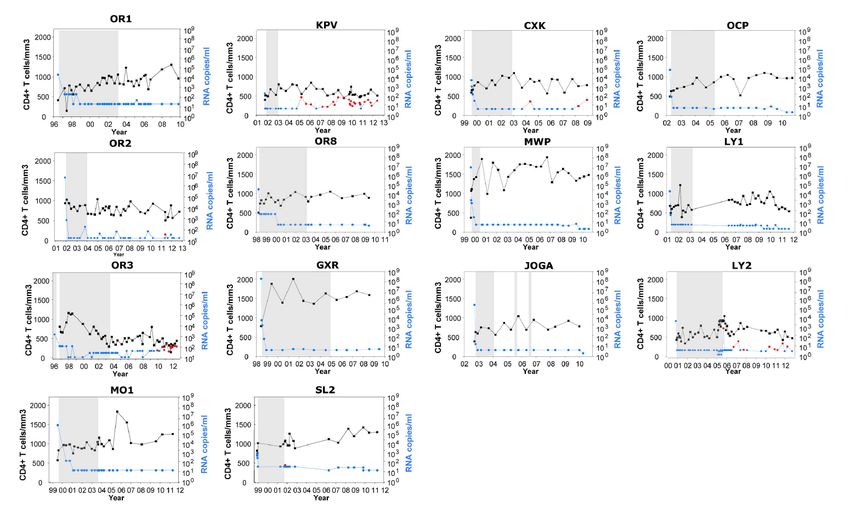
Age at virologic control predicts reservoir
size in perinatally infected adolescents

Persaud D et al JAMA Pediatrics 2014
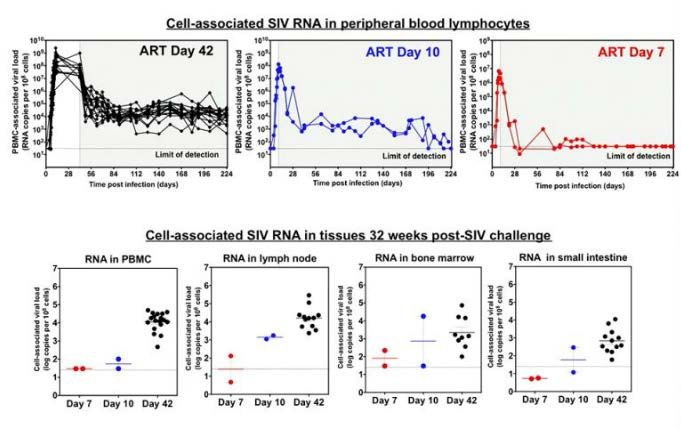
Cell-associated SIV RNA in ART-
treated macaques

Okoye AA et al 21st CROI , March 2014
Effect of early ART on SIV reservoir

Whitney et al Nature 2013
SIV rebound after stopping ART

Whitney et al Nature 2013
Moving forward
Should treatment interruptions be performed in
patients treated during early HIV infection
without additional interventions?
Which interventions might be tested?
Is there a greater risk of severe primary infection
syndrome during ATI in these patients?Partial successes (3)
Genetically modified T-cells
– Tebas et al N Engl J Med 2014
– Blick et al 22nd CROI, Seattle, WA 2015Persistence of modified CD4+ T-cells
Tebas et al N Engl J Med 2014
DRK/3.5.13/PerthPlasma HIV-1 RNA trajectory during ATI
Tebas et al N Engl J Med 2014
DRK/3.5.13/PerthChange in CD4 cell count after
infusion of Zn-finger modified T cells
Participants received single infusion of SB-728-
modified CD4+ T cells and cyclophosphamide
Blick et al 22nd CROI, Seattle, WA 2015Decrease in HIV-1-RNA from peak during ATI Blick et al 22nd CROI, Seattle, WA 2015
Moving forward
Are therapies that aim to create HIV-resistant T cells better
achieved by engineering T cells themselves, or the
precursor HSC that give rise to these cells in vivo?
Do engineered cells or their progeny have a selective
advantage? Is a period of viremia going to be required to
select for modified CD4+ T-cells?
Can gene therapy produce an ‘immune boosting’ effect? If
so, how (by what mechanism)?
Can gene/cell therapies be effective against reservoirs?
Are conditioning regimens justified in otherwise healthy
patients?
How will we identify the best patients for these therapies?
IAS Towards an HIV Cure Gene and Cell Therapies Working GroupNear misses
Mississippi baby
– Persaud et al N Engl J Med 2013; Luzuriaga et al N Engl J
Med 2015
The “Boston” patients
– Henrich et al J Infect Dis 2013; Ann Intern Med 2014The Mississippi baby Persaud D et al N Engl J Med 2013
Update on the Mississippi baby
Plasma HIV-1 RNA and proviral DNA had been
negative (The Boston patients: Patient B ATI
CSF VL 269 copies/ml
HIV-1 DNA
Copies/106 PBMC
1100 318
Henrich et al Ann Intern Med 2014Plasma and cellular measures of HIV after autologous HSCT Cillo et al PLoS One 2014
Autologous HSCT in SIV-infected
rhesus macaques

Mavigner et al PLoS Pathogens 2014
What have we learned?
Long-lived latently infected cells persist at levels
or in compartments that are undetectable by
current assays
HIV-specific immunity does not appear to play a
role in limiting replication of these latent
proviruses
Long-term follow-up during ATI is essential to
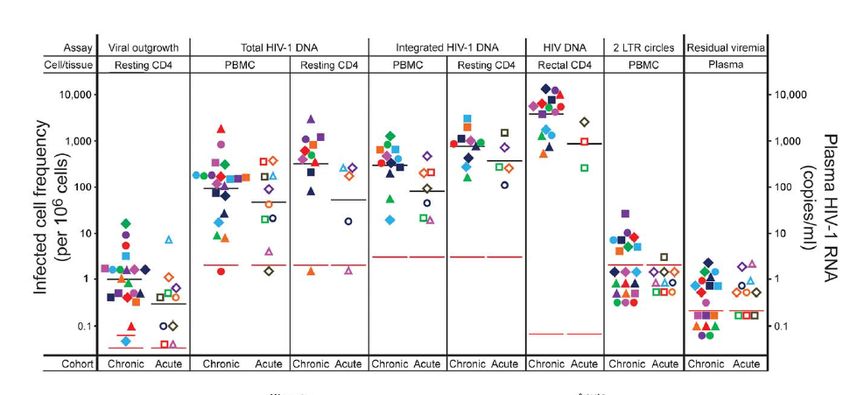
demonstrate HIV remissionMeasuring the reservoir Eriksson et al PLoS Pathogens 2013
Challenges in measuring the reservoir

Ho et al Cell 2013
                                     DRK/3.5.13/Perth
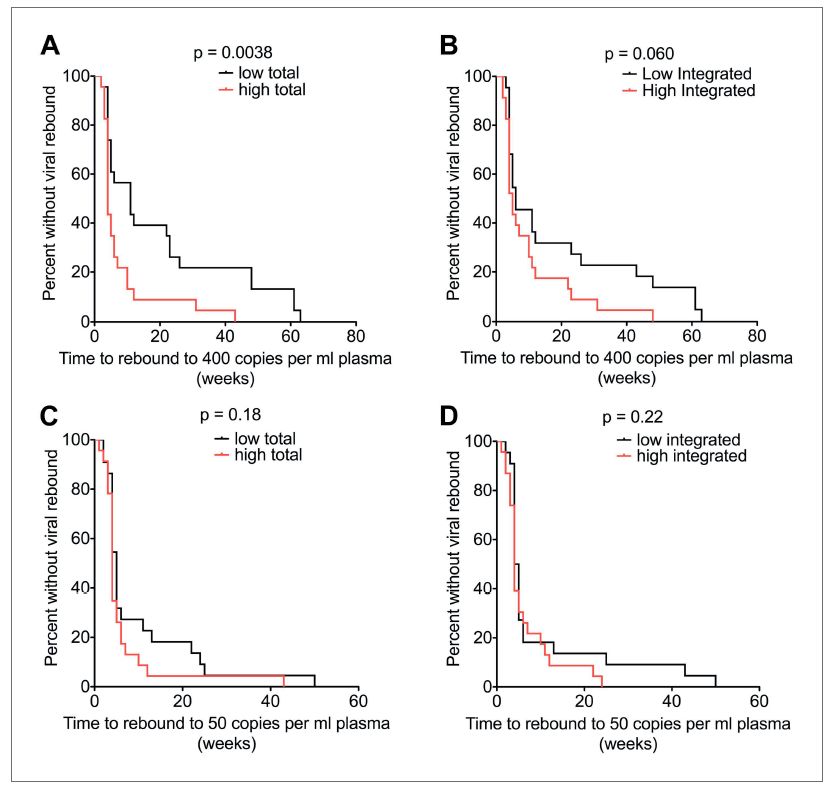
SPARTAC Williams et al eLife 2014
HIV-1 CA-RNA and CA-DNA Predict
 Viral Load Set Point

Li JZ et al AIDS 2014
Baseline Reservoir Size and Timing of
Viral Rebound

                                              CA-RNA                                                         CA-DNA

                                                                   CA-DNA (log10 copies/106 cells)
CA-RNA (log10 copies/106 cells)

                                               P = 0.001

                                  4                     P = 0.04                                     4

                                  3                                                                  3

                                  2
                                                                                                     2
                                  1
                                                                                                     1
                                  0

                                  -1                                                                 0

                                                                                                                    ks
                                                                                                         k

                                                                                                                           ks
                                                   ks
                                         k

                                                             ks

                                                                                                       4w
                                        w

                                                                                                                          w
                                                                                                                w
                                                            w
                                               w
                                       8

                                                                                                                8
                                               8

                                                                                                              5-
                                             5-

                                        Timing of Viral Rebound                                          Timing of Viral Rebound

       Li JZ et al CROI 2015
What’s next? Limits of surrogacy
Is the “reservoir” in dynamic equilibrium with
circulating PBMC?
Is this equilibrium different for cells with
integrated proviral DNA, CA-RNA, inducible HIV?
Absent an effective intervention, how likely are
we to identify useful surrogate markers?
When in doubt, measure everything.Acknowledgements
BWH BWH-DFCI
Timothy Henrich Francisco Marty
Hayat Ahmed Robert Soiffer
Emily Hanhauser Philippe Armand
Jonathan Li Jerome Ritz
Andrea Heisey Ann LaCasce
Zixin Hu Funding / Support:
Athe Tsibris BSRI/UCSF amfAR (Foundation for AIDS Research: ARCHE)
Michael Busch
Ragon Institute Sheila Keating NIH/NIAID
Marcus Altfeld Tzong-Hae Lee (grants 1K23AI098480; K08 AI100699; UM1 AI068636 [to the
AIDS Clinical Trials Group], P30 AI060354 [to the Harvard CFAR
Michael Sirignano Mila Lebadeva
Program in Therapeutics], U19 AI096109 [to the DARE
Collaboratory])
MGH Harvard University
Benjamin Davis Alison Hill The Bill and Melinda Gates Foundation
Jeremy Abrams Ed Goldberg (global health grant OPP1017716)
Mathias Lichterfeld
Maria Buzon
DRK/3.14.14/NIAIDYou can also read


