Travelling with Cryptocurrency - A guide for Queensland tourism stakeholders - NET
←
→
Page content transcription
If your browser does not render page correctly, please read the page content below
Travelling with Cryptocurrency

A guide for Queensland tourism
         stakeholders

                           Emilie Fossier
                                Yuxin Bai
                                 Jingyi Li
                                 Yang Liu
                            Ryo Ogihara
                             Xueqi Wan
                                 Jiayi Wu
                             Isabella Ye
TABLE OF CONTENT

                   1
TABLE OF CONTENT

                   2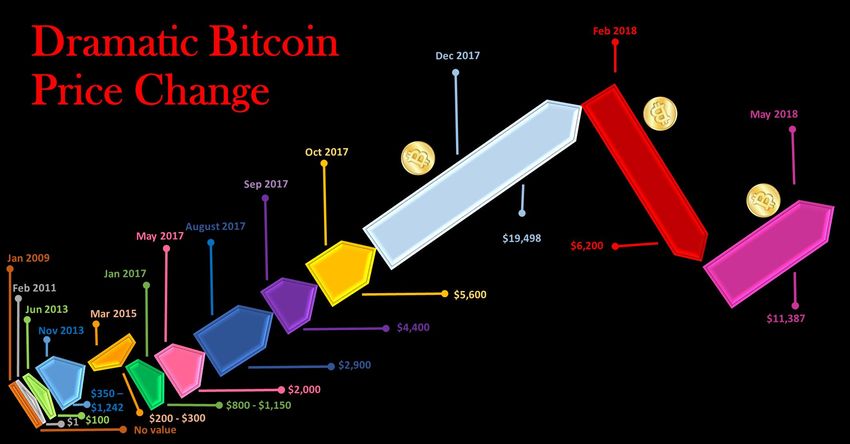
Level 1
The basics of cryptocurrency

                               3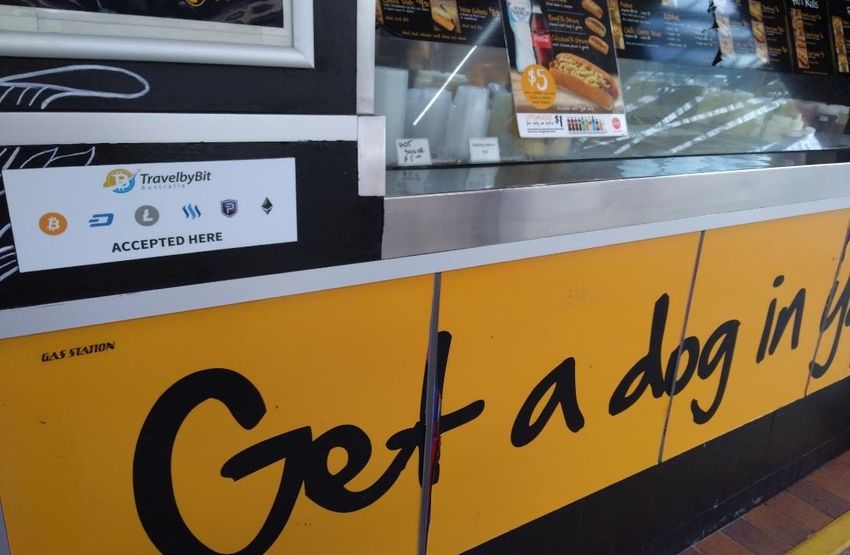
What is cryptocurrency?

A cryptocurrency is an electronic currency, and more specifically, a decentralised
distributed currency meaning that it is not controlled by central authority (Baur, Bühler,
Bick & Bonorden, 2015). Cryptocurrency is also supported by a peer-to-peer system
which enables direct payment transaction (Baur et al, 2015). Furthermore, it uses
Internet which makes it fast and efficient. It also relies on cryptography to make its
transactions very secure (Baur et al, 2015).

The graph below shows the significant growth of cryptocurrency since 2013. Even though
the value still fluctuates, it is undeniable that cryptocurrency has exponentially
increased year-over-year. For example, in 2013, 1 Bitcoin was worth AUD$ 15.32 while
in 2018, 1 BTC worth AUD$ 12,845. Bitcoin has reached its highest point in 2017 with 1
Bitcoin = 24,540.73. This confirms the growing interest of people in cryptocurrency as
well as its increased popularity over the years.

                       Figure 1. Cryptocurrency growth from 2013 to 2018
                              Source: Cryptocurrency Chart (n.d.).

                                                                                        4
Cryptocurrency overview

2.1 Where does the idea come from?

                                     5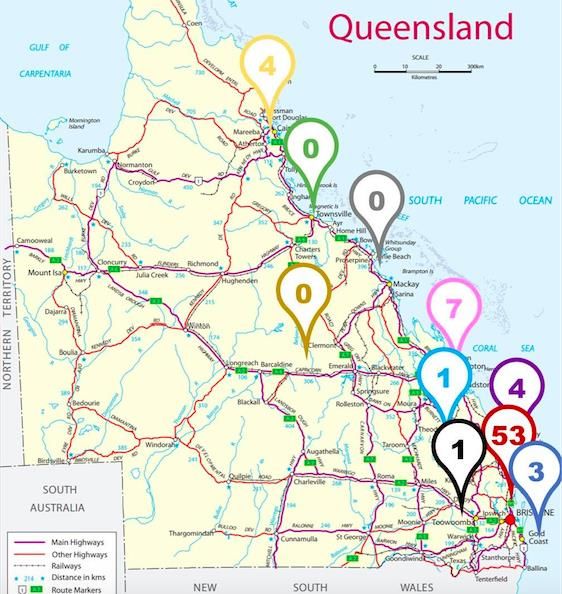
2.2 The functions of cryptocurrency

What exactly are the differences between fiat currencies and cryptocurrencies?

Fiat currency has the form of a paper or coin that can be represented electronically
whereas cryptocurrency is a decentralised and global digital currency. Fiat currency
is controlled by the government and is used to pay taxes while cryptocurrency is not
controlled by central authority, it is an algorithm that manages its supply
(Cryptocurrency Facts, n.d.).

                  Fiat currency                                   Cryptocurrency

      Put into circulation by the government                    Produced by computers

      Unlimited supply as the government can        Limited supply which means cryptocurrency
             produce more if necessary                    will reach a maximum number

              Form of a paper or coin                                 Digital form

    Centralized system: law and banks control it      Decentralized system: not controlled by
                                                      institutions such as government or bank

         The market determines its value                                    /

                             Figure 2. Cryptocurrency vs fiat currency
                         Source: adapted from Cryptocurrency Facts (n.d.).

What’s really remarkable with this technology is that Satoshi found a way to achieve
consensus without the need of any authority (Rosic, 2017). Indeed, cryptocurrency
uses cryptography for producing and transferring money.
It is also important to know that the underlying technology of cryptocurrency is
“Blockchain” as it makes possible the decentralized trade of these digital
currencies. Blockchain1 is a database system in which data is managed by multiple
computers all over the world (Rosic, 2017) (please refer to the level 3 of this
handbook for more details).

1
 With blockchain, third party is replaced by thousands of computers that are responsible for verifying
transactions. In order to process a transaction, the computer needs to find the correct mathematical
key. Once the computer has solved the algorithm, the transaction is added on a public ledger also
called the blockchain. Blockchain keeps a permanent record of every single transaction.

                                                                                                    6
2.3 The characteristics of cryptocurrency

These are the transactional properties of cryptocurrency:

                        IRREVERSIBLE

  1                     Once a transaction is confirmed and sent to somebody else,
                        it is impossible to undo it (Cryptocurrency Army, n.d.).

                        PSEUDONYMOUS

  2                     Transactions and accounts cannot be traced to real world
                        identities which means people don’t know who is spending
                        or sending cryptocurrencies (Cryptocurrency Army, n.d.).

                         FAST & GLOBAL

  3                      A transfer is instantaneous and it doesn’t take into account
                         the physical location therefore people can send money to
                         someone else on the other side of the world and can see it
                         happens almost immediately (Cryptocurrency Army, n.d.).

                         SECURE

  4                      The cryptography system on which cryptocurrency relies
                         only allows the owner of the account to send money
                         therefore nobody else has access to it (Cryptocurrency
                         Army, n.d.).

                         PERMISSIONLESS

  5                      Everyone is free to use, buy, exchange and send
                         cryptocurrency (Cryptocurrency Army, n.d.).

                                                                                     7
The monetary properties are the following:

                                             CONTROLLED SUPPLY
                                             Cryptocurrencies have a limited
                                             supply, their numbers will reach a
                                             maximum unlike physical currency
                                             for which it is possible to produce

                          1                  more if necessary (Cryptocurrency
                                             Army, n.d.).

NO DEBT
Cryptocurrencies do not represent
debt, they just represent themselves
                                             2
and   worth   exactly   the    amount
belonged while the amount of fiat
currency can be redeemed at any time
(Cryptocurrency Army, n.d.).

                                                                                   8
2.4 The global context of cryptocurrency

The chart below states the global environment and advancement in technology in
order to understand the factors that have contributed to the emergence of
cryptocurrency.

 After the release of the first cryptocurrency (Bitcoin) in 2009, the
     digital currency market has evolved very fast (Farell, 2015).

The graph below shows the market capitalisation of cryptocurrency which represents
the amount of demand for digital currency. The market capitalisation increases as
soon as more people buy cryptocurrency (Marshall, 2018). On the graph, it is possible
to notice that the market capitalisation has increased three times since 2016,
reaching almost $800,000M end of 2017 (CoinMarketCap, n.d.). This growth means
that the value of cryptocurrency increases and that its popularity is also on the rise
(Marshall, 2018).

                                                                                    9
Figure 3. Cryptocurrency total market capitalisation
Source: CoinMarketCap (n.d.).
In total, the cryptocurrency market is composed of more than 1,000
cryptocurrencies (Frankel, 2018).
It is Bitcoin that has inspired the creation of many other ones. Cryptocurrencies can
be divided into two categories (Hileman & Rauchs, 2017):
102.5 The main types of cryptocurrencies
Among these thousand cryptocurrencies,
which ones are the most popular? Let’s
look at the main types of cryptocurrency.
The chart below displays the main types of cryptocurrencies in terms of market
capitalisation:
18%
Bitcoin
1% Ethereum
2%
Ripple
2%
47% Bitcoin Cash
3% Litecoin
4% EOS
Cardano
Stellar
8%
Other
15%
Figure 4. Cryptocurrencies by market capitalisation
Source: Adapted from CoinDance (n.d.).
11The table below lists the predominant cryptocurrencies with their main
characteristics:
Name Developer(s) Release Year Total Coin Price
Supply (15/05/18)
Bitcoin (BIT) Satoshi Nakamoto 2009 21 million max US$ 8,713.58
Ethereum Vitalik Buterin 2015 Do not have a US$ 729.03
(ETH) limited number
Litecoin (LTC) Charlie Lee 2011 84 million max US$ 145.20
Dash (DASH) Evan Duffield 2014 18 million max US$ 436.98
Ripple (XPR) Ryan Fugger 2012 100 billion US$ 0.742220
Figure 4. The main types of cryptocurrency
- Bitcoin was the first cryptocurrency to be produced
(Empirica, n.d.). Bitcoin is the most popular and reliable
cryptocurrency and takes over 40% of the cryptocurrency
market (King, 2018);
- Bitcoin is a peer-to-peer system allowing online payments;
- Bitcoin is divisible: it is possible to break the number down
into very small units. A satoshi refers to the smallest unit of
bitcoin (1 satoshi = 0.00000001 BTC).
10 minutes 9 to 12 thousand dollars
It’s the time required to create one Bitcoin That’s what 1 Bitcoin worth today
21 million coins
Bitcoin will reach this final number by 2140
12- Ethereum has a decentralized system allowing people to do
online payments with its currency (Ether) (Martindale, 2018);
- Ethereum extends the possibility of the blockchain
technology by enabling people to use the platform to create
decentralized applications (more details are given in the
third level) allowing businesses to remove intermediaries
thus reducing expenses (Coin Telegraph, n.d.).
- Transaction and confirmation done with Litecoin are much
faster than the one with Bitcoin as Litecoin was designed to be
a better version of Bitcoin (Coindesk, 2014).
84 million coins
That’s the maximum of Litecoin
- Dash shares similarities with Bitcoin such as online purchases
however, its speed is faster (Bitcoin beginner, 2017);
- Dash also has a decentralized governance which makes possible
for users to implement changes in the network (Bitcoin
beginner, 2017);
- The anonymity with Dash is reinforced: it is impossible to know
where someone send money or where it comes from (Bitcoin
beginner, 2017).
4 seconds
That’s the time Dash confirms transactions
13- Ripple displays the most differences with the other digital
currencies as it is not a decentralized system (Rutnik, 2018);
- Ripple works with financial institutions (banks) to help them
increased the speed of transfers and reduce fees for cross-
border payments (Rutnik, 2018);
- Ripple has been backed by many banks (Rutnik, 2018).
After learning about the different
types of cryptocurrency, let’s see
how countries around the world
perceive this technology.
14Cryptocurrencies around the world
UK Germany SOUTH KOREA
CANADA While the government puts
Canada accepts UK has massively adopted Bitcoin is a legal tender.
USA cryptocurrencies in 2017, some restrictions on the use
cryptocurrencies and Recently, the German ESTONIA
Even tough The United there are many startups of cryptocurrency such as
sees it as legal. There National Tourist Board Estonia is the leading country
States has a positive about blockchain and crypto-crackdown measures,
are many (GNTB) has declared in both cryptocurrency and
attitude towards cryptocurrency in London South Korean citizens
cryptocurrency accepting cryptocurrencies blockchain, this is the place
cryptocurrencies, the continue to support
businesses in as a payment method, the where there is the higher
country hasn’t adopted cryptocurrency and the
Vancouver and Toronto. organisation is also number of citizens owing
a very clear position on blockchain technology. The
interested to see what initiation coin offering.
the subject yet. government is finally not
they can do with the
blockchain technology. banning cryptocurrency.
In South Korea, there is now
FRANCE a travel website accepting
The government is not customers to pay with 12
in favor of different cryptocurrencies in
cryptocurrency, it has more than 50,000
even started to blacklist accommodation facilities
some websites related (hotels, motels, guest houses,
to cryptocurrencies inns etc)
VENEZUELA
As the spirit of RUSSIA
cryptocurrency is in Vladimir Putin is a big fan of
contraction with the cryptocurrency and supports
government type of completely this new JAPAN
Venezuela, the country technology. The World Cup Leading Asian country
has banned the use of 2018 will be hosted by Russia for cryptocurrency.
digital currencies. and for this event, Indeed, the government
COLOMBIA cryptocurrencies will be allows cryptocurrencies
The government has accepted in various for payments and
been changing very accommodations in trading activities.
often its position on the Kaliningrad for tourists.
cryptocurrency status.
Currently, even tough it THAILAND
INDIA The cryptocurrency
is not really accepted,
India remains unsure situation in Thailand is
some cryptocurrencies
about cryptocurrency a little bit difficult as the
are still in circulation.
and have currently CHINA government banned it
made no decision KYRGYZSTAN China is caught in the middle. On the
Cryptocurrencies are in 2013 but reversed its
BOLIVIA about it. one hand, its oppressive regime decision one year later.
strongly prohibited and makes it want to keep control over the
The government The government has
anyone using it will be currency. On the other hand, China
declares that dealing NEPAL recently regulated the
prosecuted. might miss opportunities by not taking
with any other currency Strongly against the use of cryptocurrency
than the official one is on board the cryptocurrency by requiring investors
emergence of technology. The government doesn’t
illegal, it is even cryptocurrency. Police to pay 7% taxes of the
mentioned that people seem to have a permanent approach cryptocurrency value as
officers were arresting on this phenomenon as they go from
using cryptocurrency investors and well as 15% in capital
can be prosecuted. prohibition to flexibility in the space of
cryptocurrency owners gains annually on tax
Since May 2017, many few months. However, the latest
before the country had returns
regulation on banning initiation coin
Bitcoin owners have
been arrested. Friendly any regulation in place. offering (ICO) is maintained and
approved, this has made some of
Undecided Chinese citizens moving physically to
Against more friendly crypto countries such as
Japan and Singapore.
153.1 Australia as a case study
In order to better understand Australia’s situation regarding cryptocurrency, it is
important to analyze its political and social environment towards the technology.
Politically
st
Since the 1 July 2017, Australia is officially treated Bitcoin as
money (ATO, 2018). Indeed, the government has removed the double
taxation on cryptocurrency which means that sales and purchases
with digital currency are no subject to Goods and Services Tax (GST)
anymore (ATO, 2018). However, this regulation doesn’t apply to
businesses that accept cryptocurrency as a payment (ATO, 2018).
Additionally, Australia wants to position itself as a leading global
financial technology country (Australian Government, 2017).
Therefore, the government is facilitating the integration of
cryptocurrency as it believes the country should take advantage of
the economic opportunities this innovation can drive, thus increasing
productivity (Australian Government, 2017).
Socially
From a social perspective, the motivation behind cryptocurrency
usage result from technology curiosity and personal beliefs. Indeed,
many people use cryptocurrency because they believe it values
privacy and personal liberty as there is no central authority
controlling it (Yeoh, 2018).
16Australian citizens show
significant interests towards
cryptocurrencies and several
businesses have already
adopted them (Hubble, 2018).
Let’s look at an example!
Hunter Labour Hire is the first Australian recruiting enterprise for construction
companies, to accept cryptocurrency (Hunter Labour hire, n.d.). The company
adopts digital currency in order to stay technologically current and also, to
provide cryptocurrencies’ benefits to its customers such as low fees, rapid
payments and high security (Hunter labour hire, n.d.).
Local Australian companies are not many in numbers to accept cryptocurrency
however, there is a young start-up, called TravelbyBit located in Brisbane that
does some very important work regarding cryptocurrency expansion across Australia.
17TravelbyBit’s goal is to create a cryptocurrency community travel in Australia and
to support tourism operators that are willing to accept and use cryptocurrency
(TravelbyBit, n.d.).
In order to facilitate the use of cryptocurrency in tourism industry, TravelbyBit
provides solution to both the demand and supply side.
The way TravelbyBit assists tourism businesses in accepting cryptocurrency payments
lie in removing the price volatility:
18During the transaction process, travelers can pay with their choice of digital
currency, and the merchant can either keep the payment in cryptocurrency or
convert it into Australia dollars (Yeoh, 2018). As the system is peer-to-peer, it
doesn’t involve any fee unlike Visa Mastercard that usually charges 2-3% fees (Yeoh,
2018).
TravelbyBit is currently working on different projects:
“Crypto Valley” which consists of a network gathering more than 20
merchants in Fortitude Valley, accepting cryptocurrency payments. It
01 involves restaurants, coffee shops, bars, hotels, retailers, real estate,
car dealership, travel agency, tour provider etc… (TravelbyBit, n.d.).
TravelbyBit is also facilitating digital currency payments for the
retailers of Brisbane Airport (Yeoh, 2018). This makes Brisbane
02 Airport the first cryptocurrency airport in the world and puts
Queensland as the leader in terms of digital innovation in Australia
(Crozier, 2018).
In the future, TravelbyBit would like to expand its activities widely in Australia and
not only in Queensland (Yeoh, 2018).
Currently, TravelbyBit has already some partnerships in:
Melbourne
Barber of Seville World Computer Centre Sensu Spa
19The Kraken Squid Delhi Streets
Sydney
Le Saigon Fire & Food Urban Pizza Bar
Darwin
Flight Path Golf & Outdoor Recreation Thrive
20Perth
Eco Spa & Wellness Flicking Road Brewing Co
Adelaide Tasmania
Talunga Winery, Café & Functions Maple Café
21Cryptocurrency on the tourism industry
The graph below shows that travel represents a considerable part in cryptocurrency’s
spending. Indeed, people use cryptocurrency to pay their travel bills (Coindance,
n.d.).
Figure 5. The use of cryptocurrency to pay bills
Source: The living room of Satoshi. (2018).
Furthermore, international visitors’ expenditure rose about 3.6% in 2017 (Tourism
and Events Queensland, 2017). The graph below exhibits the expenditures per
international traveler in Queensland which was about $2,000 in 2017 which is twice
more than the one of domestic travelers. This growth can potentially open up to a
higher demand of cryptocurrency as the technology considerably facilitates
overseas travels (no need to carry cash, no credit card fraud, no need to change
currency, no subjection to high commission etc).
22Figure 6. Spendings per visitors in Queensland 2017
Source: Adapted from Tourism and Events Queensland. (2017).
Additionally, the graph below presents the number of international tourists in
Queensland. It shows that the number of international travelers has risen in the
past six years: 2.7 million international visitors was recorded in 2017 with a 4.3%
growth rate (Tourism and Events Queensland, 2017).
Figure 7. Growth of international tourists in Queensland
Source: Tourism and Events Queensland. (2017).
23Besides, one of cryptocurrency’s benefit is that people can use it as
a payment method anywhere without the need to worry of the
currency exchange rate. Therefore, cryptocurrency and international
tourism form a logic connection of compatibility.
From this level, these are the most important elements to remember:
Benefits on the tourism industry
Facilitates tourists’ travel: no need to carry cash, to think
of the currency conversion, to think of the cost of
international transfers and to be afraid of fraud.
It is convenient, safe and no bank fee.
24To make sure you are ready to
move on to the next level, it is
time to test your knowledge!
1 Cryptocurrency is….
An electronic currency
A digital currency that is decentralized and distributed
Another form of a fiat currency
2 What elements define cryptocurrency?
Centralised system that is controlled by authority like bank
and government and that has a value determined by the
market
Decentralised system that is produced by computers and that
has a limited supply
253 What are the characteristics of cryptocurrency?
Irreversible
Pseudonymous
Fast & global
Secure
Permissionless
All of the above
4 What are the benefits of cryptocurrency on the tourism industry?
Convenient
Safe
No bank fees
No fraud
All of the above
26Level 2
The implications of cryptocurrencies
on the tourism industry
27Analysis of the largest cryptocurrency in the
world: Bitcoin
In the level 1, the main types of cryptocurrencies have been listed and summarized.
In this section, the focus will be placed on the most well-known cryptocurrency –
Bitcoin. Bitcoin is the most used digital currency in the world and occupies the
largest share of market capitalisation (King, 2018). Now, let us dive into the world
of Bitcoin!
1.1 Bitcoin
In 2009, Bitcoin was released as the first decentralised digital currency (Brito &
Castillo, 2013). Today, Bitcoin is the most recognized and used cryptocurrency in the
world (CBinsights, 2018).
281.2 How Bitcoin works
Bitcoin is generated, traded and circulated online without any trusted third party,
such as Government and central bank.
When a system is governed and controlled by central
authority, it is called a Centralized system.
A system where each part connects with another and without
any governance mechanism is called a Decentralized
Bitcoin is independent as it uses a decentralized
Distributed system. distributed system called
Bitcoin is independent as it uses a decentralized distributed system called
Blockchain that records every single transaction thus ensuring the transaction
transparency (Cannucciari, 2016).
Blockchain operation relies on thousands of computers (called Nodes) (Linus, 2018).
The nodes role is to verify Bitcoin transactions by solving algorithm (Linus, 2018).
The most important process of Blockchain is the recording of transaction which is
called “Mining” and individuals who perform this task are called “Miners”
(Judmayer et al, 2017). When people make a transfer to someone else with Bitcoin,
the transaction cannot be completed until it is recorded on the blockchain. This
process includes a large amount of calculation and requires vast amount of
processing capacity and electricity (Linus, 2018). This is why Bitcoin system has
miners to facilitate this work. In return of processing Bitcoins, the miners get
rewarded with Bitcoins (Linus, 2018). The more users join the network, the more
difficult it becomes to mine Bitcoins as it requires individuals (miners) to be
equipped with very expensive and specialised appliances (Linus, 2018).
29Once the nodes (computers) have authorized the transaction, the miners
(individuals) can record the transaction and complete it.
What makes this system trustworthy is that every computer involved in the
network has to find identical numerical values and authorize it to be able to
complete the transaction (Linus, 2018). As the process of verification involves a
large number of nodes, this prevents the risk of transaction falsification and keeps
the transaction’s authenticity (Judmayer et al, 2017) (detailed explanations are
given in level 3).
In summary, this process is all about authorizing Bitcoin transaction:
30Concretely, Bitcoin’s transaction is very simple as Bitcoins can easily
be bought and sold from currency exchanges via the use of digital
wallets (CBInsights, 2018). These wallets allow people to keep their
Bitcoins on their computer or on their smartphones (CBInsights,
2018).
Bitcoin transaction processes are illustrated below:
Figure 8. Bitcoin’s transaction process
31Once a transaction occurs, the blockchain encrypts people identities therefore, it
is impossible to link real world identities (Cannucciari, 2016). Blockchain only keeps
a permanent record of every Bitcoin transaction allowing to know where the money
has been and from where it went to (Cannucciari, 2016).
The graph below illustrates the transaction of data with Bitcoin. Each transaction
is allocated a unique ID. Payer ID and Payee ID are encoded so that no one can detect
the identity of the person involved in the transaction however, the paid and received
amount of Bitcoin can be seen.
Figure 9. Description of Bitcoin transaction
Fun fact
A couple, Austin & Beccy, decided after their marriage
and for a period of 90 days, to only use Bitcoin as a
payment method. They even decided to turn the idea
in a documentary called “Life on Bitcoin”.
WOW !
321.3 Bitcoin from a global perspective
Bitcoin has experienced a very fast evolution throughout the years (Yeoh, 2018). The two timelines below show Bitcoin’s history
with its most important events and the growth of Bitcoin in terms of price.
Figure 10. Bitcoin’s history
Source: Adapted from Futurism. (n.d).
33What will happen to Bitcoin?
Some experts forecast that Bitcoin’s price will rise between
2018 and 2022 announcing different values, ranging from
$20,000 to $1,000,000 (Woo, 2018).
On the other hand, Edward Snowden think that Bitcoin will
Figure 11. Bitcoin’s price evolution not last because better version of Bitcoin has been created
Source: Adapted from Netflix documentary. (2017). that has an improved security system (Harry, 2018).
34Fun fact
James Howells, an IT worker from Newport
mined 7,500 Bitcoins however, as Bitcoin’s
value was low in 2009, he ended up by
throwing away the hard drive on which he
stored them.
Few years later, the Bitcoins that he mined
were worth $600,000 USD and today, there are
worth more than $8 million USD.
WOW !
1.4 Applications of Bitcoin
It was necessary to gain a good
understanding of Bitcoin and its
global context before looking at its
application in various industries as
well as in the tourism sector.
351.4.1 In various industries
The adoption of cryptocurrency is noticeable in various industries:
1.4.2 In tourism industry
Information technology has always played an important role in
tourism. Throughout the years, we have seen the tourism industry
adapting to new technologies.
Travel operators have integrated the Computer Reservations
1970 Systems (CRSs) to retrieve information and make bookings
(Koo, Gretzel, Hunter & Chung, 2015).
361980 Tourism has adopted the Global Distribution Systems (GDSs)
1990 It was the massive adoption of Internet (Koo, Gretzel, Hunter
& Chung, 2015).
2010 Finally, the year 2010 has seen the emergence of smart
technologies reshaping the tourism experience (Koo, Gretzel,
Hunter & Chung, 2015).
As the tourism industry changes, the travelers’ need evolve and the competition
increases, it has become crucial for tourism operators to incorporate new
technologies in their operations thus providing tailored experiences and
customized services (Neuhofer, Buhalis & Ladkin, 2015). To provide more value to
their customers and increase competitive advantage, the tourism industry has to be
innovative (Neuhofer, Buhalis & Ladkin, 2015). Recently, the tourism industry has
been marked by the emergence of cryptocurrency. This phenomenon already
appeals travelers as it involves no bank fees, no currency exchange rate, no fraud
and ease of sending and receiving money (Önder & Treiblmaier, 2018). Therefore,
it is not surprising that some of the industry players have already embraced and
adopted this technology (Önder & Treiblmaier, 2018).
Since 2013, the use of cryptocurrency has taken off and numerous tourism
companies have adopted the technology around the world.
37Let’s look at some industry players’ examples:
Fun fact
For his 14th birthday, Eric Finnman received
$1000 from his grandmother and at that
time, he decided to invest this money in
Bitcoins. Only a year and half later, he sold
them for $100,000. He also used some of it
to create an online tutoring service called
Botangle.com.
WOW !
381.5 Bitcoin from a regional perspective
Even though cryptocurrency is a world-wide emerging phenomenon, it is important
to consider that its adoption might be different from a region to another within the
same state. Indeed, Queensland is the second largest state of Australia
(Queensland government, n.d.) therefore the use of cryptocurrency may be different
within the seven regions that formed Queensland.
Figure 12. Map showing the adoption of cryptocurrency in Queensland
From the above map, we can notice that Brisbane is the early adopter of
cryptocurrency in Queensland. Indeed, Brisbane currently accommodates 53 places
where cryptocurrency payments are accepted (TravelbyBit, n.d.). Out of these 53
places, 43 of them are the result of a partnership with TravelbyBit while the 10 other
ones are independent (BitFinder Plus, n.d.). In total, 36 of these places are tourism-
related (hotels, leisure activity, airport’s retail shops, restaurants, bars, coffee
shops).
39However, in Gold Coast, only 3 places are using digital currency (BitFinder Plus,
n.d.).
This difference can be explained by the fact that
TravelbyBit has mainly concentrated its efforts on
building a cryptocurrency community and network
in Brisbane first (TravelbyBit, n.d.). In the future,
the company wants to widely extend the use of
digital currency across Australia (TravelbyBit, n.d.).
Due to limited researches on the topic, we primarily pulled out
information from TravelbyBit as they are the pioneer in the
creation of a cryptocurrency ecosystem in Australia.
TravelbyBit’s data have allowed us to create the map below providing
a brief description of Queensland regions situation regarding
cryptocurrency adoption. The places listed accept Bitcoin payment as
well as other types of cryptocurrency such as Litecoin, Ethereum,
Dash etc.
40Figure 13. Map showing the number of places accepting cryptocurrency in
Queensland
Far North Queensland (Cairns)
In Cairns, 4 places have been found to use cryptocurrency
whose one of them is a travel agency which also results
from a partnership with TravelbyBit (TravelbyBit, n.d.).
41Mackay, Isaac, Whitsundays
Same result as North Queensland, no business has adopted
cryptocurrency yet in Mackay, Isaac and Whitsundays
(BitFinder Plus, n.d.).
Central Queensland
(Agnes Water, Rockhampton, Gladstone, Emerald and Yeppoon)
In Central Queensland, Agnes Water is the only place that has adopted
digital currency (TravelbyBit, n.d.). Indeed, 7 companies are using
cryptocurrency whose 5 of them are tourism business-related (hostel,
travel agency, leisure activity, rental vacation, and restaurant).
Central West Queensland
(from Rockhampton to the Northern Territory border)
There is no business using cryptocurrency in Central West
Queensland (BitFinder Plus, n.d.).
42Wide Bay Burnett
(Gympie, Bundaberg, and North and South Burnett)
In this region, only Gympie accepts cryptocurrency and it is limited to
only one hospitality operator which is a restaurant (TravelbyBit, n.d.).
South West Queensland & Darling Downs (Toowoomba)
In Toowoomba, only one coffee shop accepts cryptocurrency
payments (Gettler, 2017).
South East Queensland (Sunshine Coast)
In this region, 4 places have adopted cryptocurrency (BitFinder
Plus, n.d.).
Two of them are related to TravelbyBit however, none concerns
the tourism industry (TravelbyBit, n.d.).
43Based on the above research, it is possible to notice that most of Queensland regions
have not adopted cryptocurrency. However, it doesn’t mean that these places will
not change their mind-set in the future.
These regions’ first challenge results from
the difficulty of attracting tourists due to
their remoteness, lack of infrastructure
and the few activity offered (Tilma Group,
2018).
As mentioned in level 1, the number of international tourists in Queensland keeps
increasing (Tourism and Events Queensland, 2017) while the adoption of
cryptocurrency keeps gaining ground. Therefore, there is an interrelated
relationship between the two as the more tourists Queensland can attract in its rural
regions, the more chances cryptocurrency will have to be adopted by tourism
operators.
In addition, during the interview with TravelbyBit, Caleb Yeoh (2018) mentioned that
cryptocurrency adoption is very easy. The acceptance of cryptocurrency payment
requires only the installation of an application on a tablet device, such as an iPad,
and to continuously keep this device online and connected. The cryptocurrency
payers read the QR code and send the money to the store’s account. Therefore,
there is no barrier of cost keeping them from introducing this new technology (Yeoh,
2018). For example, even the tourism operators of the small town of seventeen-
seventy located in Gladstone region, are coming on board with TravelbyBit’s system
and are going to adopt cryptocurrency (Yeoh, 2018).
According to Yeoh (2018), the reason why many
regions in Queensland have no current adoption
of cryptocurrency is because there is a lack of
education and awareness from both industry and
consumer perspective as well as a lack of
branding and advertisement from institution.
44The implications of cryptocurrency on the
tourism industry
A SWOT analysis is necessary to identify the internal and external factors that can
affect the adoption of cryptocurrency for tourism businesses in Queensland. This
provides considerable insights about the current situation of cryptocurrency in
Australia.
2.1 SWOT Analysis
In order to have a better understanding of the implication of cryptocurrency on the
tourism industry, a SWOT analysis has been undertaken to determine the strengths,
weaknesses, opportunities and threats of adopting cryptocurrency for tourism
operators in Queensland.
4546
2.2 Implications of cryptocurrency on the tourism industry
     from a supplier perspective

From a supplier perspective, the emerging phenomenon of cryptocurrency
represents both opportunities and challenges on the tourism industry.

                                 Firstly, cryptocurrency removes the need of a
                                 third party. Thus, tourism operators can transfer
                                 money without the help of a bank (Murison, 2017).
                                 Although cryptocurrency transactions are not free,
                                 the fee is still lower than the commission charged
                                 by payment service providers (Murison, 2017).
                                 Additionally, the security is higher due to fact that
                                 they are encrypted in cryptographic algorithm thus
                                 avoiding counterfeit and fraud (Murison, 2017).

Secondly, cryptocurrency can lower the risk of fraud.
This is particularly interesting for tourism operators in
developing countries where credit card fraud is high such
as Thailand and Indonesia (Murison, 2017). In fact, this
can reassure people to travel in these countries as
cryptocurrency provides them with an alternative and
secure form of payment (Yeoh, 2018).

Thirdly, it is beneficial for tourists to use cryptocurrency comparing to the use of
fiat currency as there is low transaction fee, no currency exchange rate and not
bound by borders. Thus, it could facilitate their journey, especially when it comes
to international travel (Yeoh, 2018). Therefore, as the number of international
tourists increase in Queensland (Tourism and Events Queensland, 2017) and the
adoption of cryptocurrency becomes more popular, it seems important for tourism

                                                                                    47
operators to take into account this trend in order to be able to meet travelers’ new
demand.
Furthermore, tourism businesses will gain
a competitive advantage against their
competitors by becoming early adopters
of cryptocurrency because tourists will
have flexible and better payment options
benefiting them with low transaction fee
and no currency exchange rate. It is
expected that tourists who want to pay by
cryptocurrency will prefer the operators
that accept digital currency compared to
those who don’t due to the advantages of
this payment method (Lipovsky, 2017).
Finally, one would think that future regulations represent a threat on cryptocurrency
adoption, however, the Australian government plans to implement regulations in a
way that would benefit the integration of digital currency in the country (Pollock,
2018). In September 2017, the Australian government ceased its law on the double
taxation of cryptocurrency (Pollock, 2018). Since then, the government has been
taking a more positive look on cryptocurrency as the institution simply wants to
avoid the illegal use of digital currency (Pollock, 2018). Indeed, since April 2018, the
Australian government obliged businesses using cryptocurrency to register with
AUSTRAC (Australian Transaction Reports and Analysis Centre) in order to make sure
digital currencies are not used for money laundering and terrorism financing
(Pollock, 2018). Furthermore, the ATO (Australian Tax Office) is using data to gain
more information on cryptocurrency growth and market (Pollock, 2018). It seems
that Australia is one of the first country to understand that cryptocurrency
phenomenon will not be a temporary phenomenon and that there is the need for a
fair and active legislation allowing their incorporation in the system (Pollock, 2018).
48Regarding the challenges, one of the
biggest challenge of cryptocurrency
adoption for tourism operators is the
price volatility. For instance, Bitcoin’s
value has fluctuated a lot throughout
the years. At the start of 2017, Bitcoin
value was less than $1,000, however, by
the end of December, Bitcoin was worth
more than $16,000 (Agrawal, 2018).
Therefore, the more the value fluctuates, the more reluctant businesses are to
accept cryptocurrency as a payment method (Agrawal, 2018). This instability is
partly due to the fact that people prefer to invest in cryptocurrency to make more
money by reselling them at the highest price (Haran, 2017).
Secondly, the cryptocurrency technology is
difficult to understand, especially for the
beginners who struggle to figure out how it
works and what’s the use of digital wallet
for sending money (Brownlie, 2018).
Furthermore, this is linked to the fact that
it takes time for people to change their
mind-set when a new technology emerges.
In general, people are wary and afraid to change their habits and this new technology
requires willingness to do things differently. Thus, the adoption of cryptocurrency
will take time before to be trusted. As a result, tourism businesses may find it too
difficult to integrate it in their operations thus keeping the same way of doing things
(Brownlie, 2018).
49These challenges prevent tourism operators
from accepting cryptocurrency. However, the
reason why businesses find these two aspects
challenging is due to the lack of knowledge and
awareness. Due to cryptocurrency’s novelty,
their education on the topic is very limited.
Therefore, a better knowledge and awareness
on the topic would greatly enhance
cryptocurrency adoption (Agrawal, 2018).
If tourism operators can realise the various advantages of the use of cryptocurrency
and that its price will become more stable in the future, the adoption of digital
currency will spread largely (Brownlie, 2018). In order for tourism operators in
Queensland to adopt cryptocurrency, Queensland Government needs to support and
help in the creation of a cryptocurrency ecosystem. However, there is currently no
real push from them (Brownlie, 2018).
50Level 3
Blockchain Technology & The
Tourism Industry
511. Blockchain Technology
1.1 The difference between Bitcoin & Blockchain
Bitcoin & Blockchain Are Two Different Things.
Indeed, Bitcoin is a digital currency However, regarding Bitcoin
operating on a peer-to-peer network Blockchain, this one is only
to facilitate transactions without designed for conducting
having the government controlling the transactions and operates on an
currency. Bitcoin is not the blockchain open system which means that
however, it is the blockchain that anyone can join the network and
allows and supports bitcoins view the transactions done
transactions (Matt, 2017). Therefore, (Aantonop, 2018). Bitcoin
blockchain is the system supporting blockchain is also anonymous as it
cryptocurrency while Bitcoin is one doesn’t let anyone know the
application among many others to run identity of the person involved in a
on this system (IBMBlockchain, 2017). transaction (Aantonop, 2018).
521.2 What exactly is Blockchain technology?
Blockchain is a distributed database composed of multiple computers (or nodes) to
record transactions that are not controlled by a central point of authority (Winding
Tree, 2018).
As mentioned above, there are centralised and decentralised blockchain, both of
which need to achieve consensus to be able to trust different parties (Grass,
2017).
A Decentralised Blockchain example is the
bitcoin blockchain as there is no single computer
that is in charge of the network. Instead, every
computer has the same level of participation.
Furthermore, the system is fair because if one
computer doesn’t respect the rules imposed by
the network, it will be permanently excluded
from it (Records Keeper, 2018).
A Centralised Blockchain means that the network
is only accessible to a selected group of persons
therefore, it is not a public and open ledger
anymore but a private one. With this system,
because all the parties participating in the
network are known, they are all trusted therefore,
this centralised system doesn’t use the same
measures as Bitcoin in terms of security (Records
Keeper, 2018).
Today, many businesses are using blockchain technology because it can be used to
decentralize many things, not just currency but it can also improve the way
companies do business (CBInsights, 2018). Indeed, any transactions involving value
such as goods, property, work or even votes can use the blockchain technology
53(World Economic Forum, 2016). For example, blockchain can be used to establish
ownership over a variety of assets (house, cars…), track ownership of products
(where do they come from?) and can verify identity on an open ledger that is not
controlled by anybody (CBInsights, 2018).
1.3 How does Blockchain technology work?
As its name suggests it, a blockchain is a chain of blocks and each block contains
information. Every block is composed of three key elements: data, the hash of the
block and the hash of the previous block (Savjee, 2017).
Figure 14. The composition of a block
Regarding the data aspect, it is important to understand that depending of the
type of blockchain used, the data of a block can vary (Savjee, 2017). For instance,
the bitcoin blockchain has data about the transaction details including sender,
receiver and amount of coins (Savjee, 2017).
Then, there is the has function that allows to turn text into numbers and letters.
54Figure 15. Transaction without the hash
function
Figure 16. Transaction with the hash function
As you can see on the pictures above, this mathematical function (hash) makes the
hacking difficult because the hash (string of numbers and letters) is comparable to
a fingerprint, it allows the identification of a block with all its content (Savjee, 2017).
Therefore, a hash verifies that a file hasn’t been tampered with (Rabbani, 2018).
55Blockchain even adds a third element to make the security higher and this is the
hash of the previous block. This means that every new transaction (block)
depends on the previous one therefore, if someone wants to modify the record, the
hash from all the previous transactions will also have to be changed.
Figure 17. Interrelated relationship between all the blocks
When someone tries to modify the block, what will happen?
Figure 18. Difficulty of changing a block
56The mechanism used by blockchain is called proof of work (computer calculation)
and it is this system that allows the creation of new blocks (transactions) (Savjee,
2017). For example, it takes 10min for bitcoin to process and add a new transaction
to the chain as it needs to calculate the proof of work (Savjee, 2017).
Figure 19. Proof-of-work system
This leads to the following question: when someone creates a new
transaction, what happens?
This transaction or block is sent to every participant nodes (computers) in the
blockchain network in order to verify that the transaction is not a fraud (Coin
Telegraph, n.d.). The way nodes can confirm the validity of a transaction lies in the
fact that these computers all have the original copy of the blockchain record
therefore, if someone tries to change this, the nodes will not allow it to occur due
to their possession of the original hash (Coin Telegraph, n.d). Once every computer
has validated the new block, it is added on their own blockchain (Savjee, 2017).
57Figure 20. Original copy is needed to achieve
consensus
582. Blockchain technology on the tourism industry
Blockchain technology is on the rise as multiple companies have been invested $1.8
billion in total towards blockchain startups in 2017 (Amadeus, 2017). This results
from the realisation that blockchain can bring advantages and innovation to certain
industries and the tourism sector is no exception (Amadeus, 2017). Indeed, it is
argued that blockchain technology can benefit both tourism operators
and travelers (Bjorøy, 2017).
2.1 The unique features of Blockchain
The information distributed on blockchain is highly secure due
1 firstly to the cryptographic method and then by the consensus
mechanism used like the proof-of-work system of bitcoin blockchain
Security (Murison, 2017). The consensus mechanism authorises the
transaction by verifying the encrypted code. This is what allows
multiple parties to safely send and exchange sensible information
and transaction around the world (Murison, 2017).
Transparency
2 The data that is displayed on the blockchain can be seen by anyone
and cannot be altered (Murison, 2017).
Data integrity
For a transaction to be accepted, all computers or nodes need to
3 reach consensus about the validity of that transaction (Murison,
2017).
Efficiency & cost reduction
A company can become more efficient and reduces its costs if it
4
automates its records through blockchain (Murison, 2017).
592.2 What kind of innovation will Blockchain bring to the tourism
industry?
Currently, there is no real application of blockchain technology in tourism
however, the technology is still in its early development therefore, it is possible
that tourism businesses will start by applying it in the future (Amadeus, 2017).
In the travel industry, blockchain is mainly used to facilitate
reservation systems, data sharing and payment processing (Cross,
2018).
Simplify identification
Blockchain could facilitate the identification of travelers. Indeed,
passport and other IDs control punctuates travels and tourists
usually find it exhausting and stressful (Murison, 2017). In this area,
blockchain could considerably make travelers’ journey easier and
faster if some of these IDs control points would be reduced
(Amadeus, 2017). For instance, a traveler would only need to use
his fingerprint to pass every airport security (Amadeus, 2017).
Baggage tracking
One of travelers’ greatest fear is to lose their baggage when
traveling by plane (Murison, 2017). As Blockchain offers a distributed
ledger, this technology could be used here to record a traveler’s
detail and its luggage (Amadeus, 2017). For example, once a traveler
drops off his bagages at the counter, the bag ID as well as the owner
ID could be registered on blockchain (Mcmahon, 2018). This would
allow every single person that is, at some point, responsible for the
transfer of baggage, to have access to these information thus
facilitating the tracking of travelers’ items (Amadeus, 2017).
60Figure 21. Baggage tracking in airport
Blockchain is not limited to baggage tracking, it can also do it for any other kind of
products including the hospitality industry. For example, restaurants could use
blockchain to track food which will ensure a better quality control and food safety
of their supply chain (Dogru, Mody, Leonardi, 2018). Furthermore, it could enhance
the relationship with customers. In fact, with blockchain tracking goods, guests
would be able to check the provenance of the food which could better their
experience as more trust would be established (Dogru, Mody, Leonardi, 2018).
What else?
In terms of innovation, blockchain’s capability has been expanded with Ethereum.
Ethereum is a software that runs on blockchain technology and which offers the
possibility for companies to build any kind of decentralised applications (Rosic,
2017). One of Ethereum’s decentralised application is smart contract also called
blockchain or digital contracts (Rosic, 2017). This automated working contract is
set with specific condition that is recorded on the Blockchain and that cannot be
changed (El Manawy, 2018). This digital contract is managed by a computer program
that gives the permission to directly transfer digital currencies when different
conditions between parties are met (El Manawy, n.d.). This means that two
enterprises can draw up a contract and decide that it will be operated on blockchain
technology thus allowing certain conditions of the contract to be automatically
executed (El Manawy, n.d.).
61Let’s see an example:
An hotel supplier sets a room at $80, it is then recorded on the platform based on
blockchain technology. When an accommodation distributor orders the room at
$80, the condition is met, and the transaction is automatically executed without
any action of the hotel. Therefore, if smart contract becomes a common practice
in tourism industry, the customer will be able to find cheaper accommodation
without travel agent, and the hotel supplier will be able to sell rooms with zero
or less commission rate to intermediaries, which means that smart contract can
have a significant impact on the purchasing and negotiation power of each party
(Cross, 2018).
Figure 22. Example of smart contract in the hotel sector
62Let’s see in what cases smart contract can be used for:
Loyalty Schemes
Loyalty programs are a great way to reward travelers however, they often have
restrictions on the way to redeem points which leads to unspent points and
customers’ frustration (Amadeus, 2017). A company called Loyyal in California has
already integrated the blockchain and smart contract technology to improve
loyalty programs (Murison, 2017). This company encourages airlines in the same
alliance to work together thus allowing travelers to transfer their points easily
(Loyyal, n.d.). In this way, travelers would only have one loyalty card gathering
various travel providers such as airline, hotel, rental car company etc… (Amadeus,
2017). Concretely, it means that loyalty schemes are built on the blockchain and
that loyalty tokens are given to guests (Dogru, Mody, Leonardi, 2018). Therefore,
customers are able to buy and sell these loyalty tokens or to exchange them with
others (Dogru, Mody, Leonardi, 2018). This way of using loyalty point gives more
freedom to customers thus increasing the service quality (Dogru, Mody, Leonardi,
2018).
Loyyal is also using smart contract in order to automatically execute payments and
real-time invoicing between the partners (Loyyal, n.d.). Besides, the start-up is
looking at providing points to travelers instantly which means customers do not need
to wait before to get rewarded by points therefore, they will be able to redeem their
points straight away if they want (Loyyal, n.d.). Finally, Loyyal can collect important
data on their customers as the points are recorded on the blockchain. This means
that the company can send customized offers on which travelers will be more
inclined to use their points (Amadeus, 2017).
Simplify Settlements
The tourism industry involves many actors such as operators, service providers and
OTAs which leads to complex relationships (Murison, 2017). For example, when a
traveler books an hotel room, he might calls directly the establishment or he might
63uses on online travel agent. If this person uses an OTA, the hotel will have to pay a
commission therefore, the use of blockchain and smart contract would help in the
way that, commissions and payments can be automatically executed (Murison, 2017).
This automated settlement between tourism operators and intermediaries will not
only reduce costs and increase efficiency but also, develop better working
relationships (Amadeus, 2017).
More power to small companies
Blockchain technology and smart contract can be used to give more power to small
companies (The startup, 2017). It is well-known that the tourism industry is mainly
monopolised by big intermediaries thus making it difficult for smaller businesses
to enter the market (Winding Tree, 2018). Winding Tree is a company that uses
blockchain to decentralise the travel distribution by allowing anyone to directly
access inventory from the suppliers. By doing so, travelers can book and pay without
intermediaries (Winding Tree, 2018). This company is revitalising the
tourism sector by making it a fairer competitive market (Winding
Tree, 2018).
Give power back to hotels
When hotels pay commission to travel intermediaries, those rates are not negotiated
and hotels are subjected to it. However, with the smart contract technology, hotels
will have the possibility to set the commission as no upfront agreements will need to
be signed and commission payments will be automated (El Manawy, n.d.). This
enables hotels to manage the commission rate based on their forecasting (El
Manawy, n.d.). For example, during busy periods, the hotel can set up a lower
commission rate while during slower times of the year, the hotel can set up a higher
rate in order to get more bookings and increase its occupancy rate (El Manawy, n.d.).
642.3 The hospitality industry as a case study
According to Ron Galloway (2017), blockchain is an innovation that has the potential
to disrupt the hotel industry. The way blockchain will do this is by enabling B2B
relationships and by cutting out the middleman, known in the tourism industry,
as travel intermediaries (Backer,2017).
The statement below states the current situation of hotels:
For a boutique hotel it is extremely hard to distribute their
inventory. They have to negotiate a contract to do so, while the
intermediaries add their commission fee, usually 10-25%, very often
forcing the hotel into a rate-parity agreement. That is why you see
major hotel chains heavily advertising direct bookings by providing
additional amenities, but not a better price (Galloway, 2017).
The CEO of TUI, one of the world largest tourism company, believes blockchain can
reshape the travel management as the technology lowers the barrier to entry the
market (TUI Group Corporate, 2017). He even adds that blockchain poses a threat
to intermediaries such as Sabre, Expedia, Airbnb because these businesses do not
own any physical products such as an hotel room or an airplane, they only own their
technology and brands (Galloway, 2017).
So how useful would those brands be if a better form of
distribution technology came along? (Galloway, 2017).
65Figure 23. Travel distribution with intermediaries
Reference: Winding Tree. (n.d).
Figure 24. Decentralised travel distribution
Reference: Winding Tree. (n.d).
66Besides, blockchain technology is cheap to implement, it doesn’t require big
investment (Galloway, 2017). TUI is currently working on an application called
BedSwap in order to move its hotel inventory according to the demand between
different points of sale thus managing it more efficiently (Revfine, n.d.).
There are other examples of emerging start-up using blockchain in hospitality
industry:
673. Will Blockchain revolutionise the travel industry?
In 2009, Bitcoin has drawn a lot of attention however, less focus is given to it today.
Indeed, blockchain has gained a lot more interest as it has been recognized that the
underlying technology of cryptocurrency is the real innovation and that it will have
the potential to worldwide impact many industries (Kaufman, 2018).
Figure 25. Blockchain Search Volume (Google Trends)
Source: Google trends. (n.d).
In the tourism industry, above examples have demonstrated that blockchain could
be used to enhance the experience delivered to customers by improving the
quality of touristic products and services (Medium, 2017). Furthermore, blockchain
is also used to secure financial transactions as well as sensitive information shared
between companies (Medium, 2017). Additionally, blockchain can reshape the
travel management by cutting out the middleman thus lowering barriers to entry
of smaller tourism businesses making it a fairer competitive marketplace (Medium,
2017). Of course, this also allows tourism operators to save costs and to deliver a
more customised experience to their customers (Medium, 2017).
68You can also read


