U.S. CONTRACT SECURITY INDUSTRY - White Paper ROBERT H. PERRY August 2021
←
→
Page content transcription
If your browser does not render page correctly, please read the page content below

U.S. CONTRACT SECURITY
       INDUSTRY

      White Paper
             August 2021

      R OBERT H . P ER RY
      & Associates, Incorporated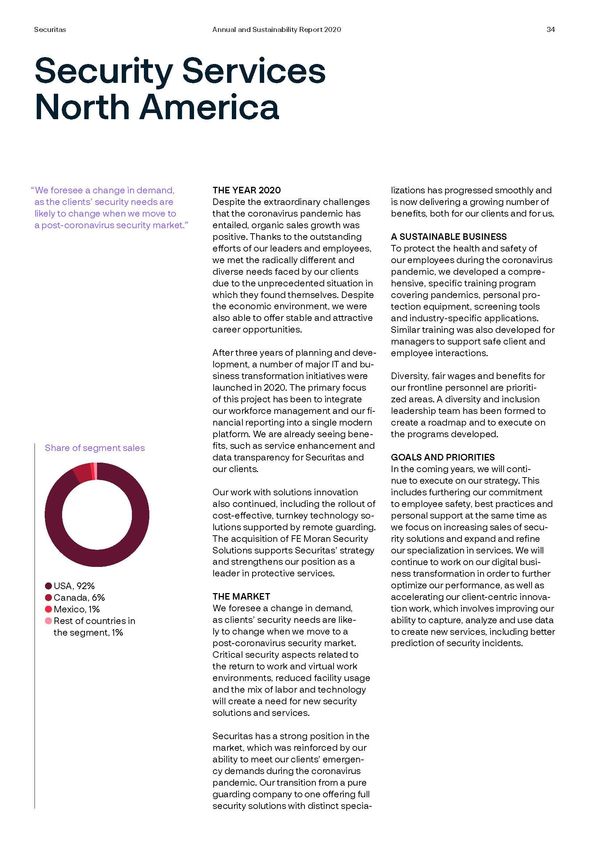
OVERVIEW OF THE 2021 WHITE PAPER

                          The current state of the security market cannot be told without starting with what the
                          COVID-19 pandemic has done to our country and our world. In just a few words, a
                          June 20, 2021 article in The Washington Post said it best: “The U.S. economy is
                          emerging from the coronavirus pandemic with considerable speed but markedly
                          transformed, as businesses and consumers struggle to adapt to a new
                          landscape with higher prices, fewer workers, new innovations and a range of
                          inconveniences. In late February 2020, the unemployment rate was 3.5 percent,
                          inflation was tame, wages were rising and American companies were attempting
                          to recover from a multiyear trade war. The pandemic disrupted everything,
                          damaging some parts of the economy much more than others. But a mass
                          vaccination effort and the virus’s steady retreat this year has allowed many
                          businesses and communities to reopen.”

                          The contract security industry was not as scathed by the pandemic as most industries,
                          underscoring, again, its resilience and importance it plays in our everyday lives. In
                          fact, some security companies are still experiencing increased profits resulting from
                          the extra high margin COVID-19 services. The path forward for those companies, and
                          the industry as a whole, remains very uncertain - especially in light of what may
                          happen as the new Delta variant of COVID-19 (sometimes referred to as COVID-21)
                          continues its rapid spread threatening a new shutdown. Here’s a brief overview of
                          what happened to the security industry over the past 19 or so months – some events
                          as a direct result of the pandemic, others politically or socially initiated:

              The Five World Leaders (See pages 11-47)

                          For purposes of reporting the information on the world leaders, we considered G4S as a
                          separate company in the chart on page 11. For the companies that reported their financials
                          publically, we found that Securitas had a “real” increase in sales globally of 3% when compared
                          to the 2019 year. It reported 2% organic growth in North America for the 2020 year. Prosegur,
                          reported a global decrease in sales of 15% of which 10.1% was the effect of the foreign
                          exchange rates and not a decrease in billable hours.

              The Industry - Revenues and Number of Employees (See pages 48-51)

                          The industry lost approximately $1 billion of revenue at the beginning of the pandemic from
                          customers in the “affected industries”. However, it gained a similar amount through extra, high
                          margin, COVID work such as temperature screening and distance monitoring. Therefore, we
                          estimated the total market size to remain at $28 billion – no change from the 2019 year. We
                          estimate a slight decrease in the number of employees, from 830,000 to 810,000, due to the
                          replacement of security officers with remote video monitoring and the number of employees still
                          in the unemployment lines receiving the $300 per week in Federal pandemic relief monies. The
                          extra high margin COVID work allowed the revenues to stay the same as the 2019 year, even
                          though the total number of employees decreased by approximately 20,000.

U.S. Contract Security Market White Paper
August 2021
                                                                                                                Page 2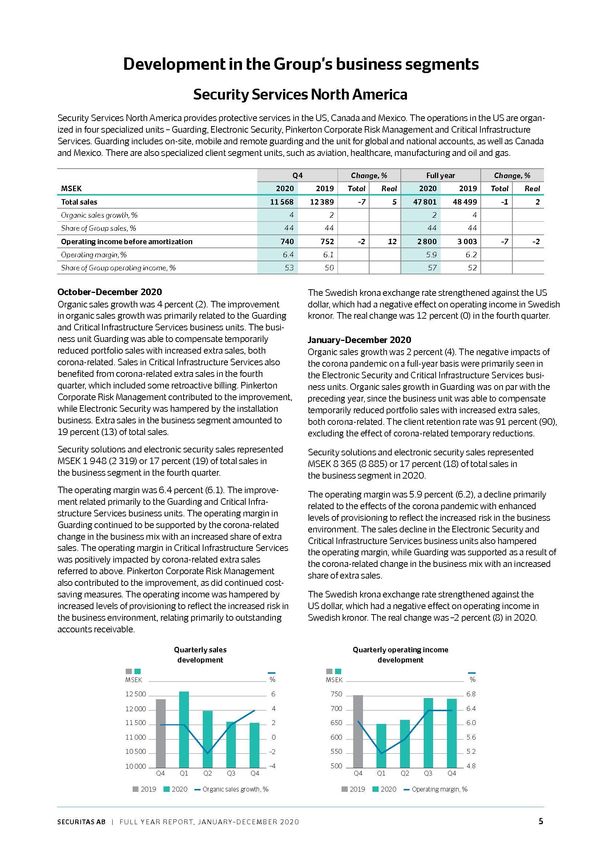
OVERVIEW OF THE 2021 WHITE PAPER

              Opportunities and Challenges (See pages 53 - 60)

                          Going forward, the security companies will see growth through: In-house security converting to
                          outsourced security, governmental agencies outsourcing the security function, increasing the
                          electronics security offering, and the possible legalization of Cannabis at the Federal level.
                          Security companies will also face challenges: reducing the billable manned guarding hours
                          and replacing it with electronics, predictive scheduling laws expanding into more states and
                          cities, a possible continuing shortage of labor, banks tightening lending standards, expansion of
                          the $15 per hour minimum wage into more municipalities, restoration of the full benefits of the
                          Affordable Care Act, dramatic increase in state unemployment taxes and increases in taxes on
                          income.

              Margins (Gross Profit) (See pages 62 - 67)

                          During the 2020 year, the margins, for most companies, stayed relatively unaffected as the
                          high margin COVID work offset some of the non-billable over time premium pay. However,
                          looking at the first half of the 2021 year, the margins are starting to deteriorate as the COVID
                          work has subsided and the companies are having to deal with the high overtime rates.
                          Typically the gross margin for small to medium sized companies operating in the U.S. has been
                          in the 15% – 16% range, but has fallen a couple percentage points in the past few months due
                          to the shortage of labor. Ironically, the margins for the large international companies are in the
                          18% – 20% range for two reasons: they have a lot of revenues coming from the emerging
                          markets where the customers will accept a higher billing rate and - they have a larger
                          percentage of their revenue coming from the “integrated” security offering which typically
                          carries 20% or higher margins.

              Mergers (See pages 68 - 73)

                          Allied Universal was the most active in buying companies during the reporting period; buying
                          Summit Security and SecurAmerica, having revenues of $225 million and $467 million,
                          respectively. However, by far, the one that dominated the headlines from December 2020
                          through April 2021 was the G4S acquisition. The deal was finalized on April 06, 2021 and, at
                          $18 billion in total worldwide revenues, created the largest security company in the world.
                          Private Equity increased its presence in the contract security industry during the reporting
                          period. New entrants bought “flagship” companies as small as $10 million in revenue and
                          several others are still looking for just the right company to buy, then build to become a major
                          force in the industry.

U.S. Contract Security Market White Paper
August 2021
                                                                                                                   Page 3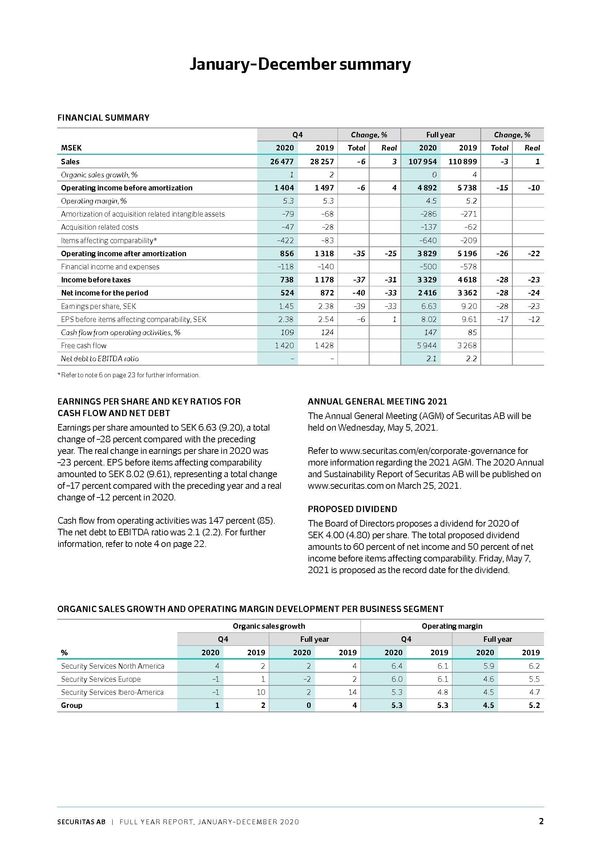
OVERVIEW OF THE 2021 WHITE PAPER

              Multiples (See pages 75 - 77)

                          The very large companies, with revenues exceeding $500 million, were (and still are) valued at
                          11 – 12 times the seller’s EBITDA. The smaller companies, which are usually bought by their
                          larger competitors, are still valued at a multiple of gross profits (instead of multiples of EBITDA)
                          since the buyers usually give the seller credit for the redundant overhead cost that goes away
                          after the acquisition is transitioned. However, since the recent increase in non-billable overtime
                          premium pay and the increase in the new hire starting pay rate has eroded the gross profits,
                          many owners have found that their company is worth less in the present market than it might
                          have been as recent as a year ago, even though the gross revenue may have increased

              The Dilemma Facing Sellers of Companies in Today’s Market (See page 78)

                          The dilemma the owners, who are wanting to sell now, are facing is whether to sell now at a
                          possible lower valuation when the transaction is taxed at 23.8% or sell at the new higher
                          rate of 42.8%, which is presently being considered by Congress. In effect, the seller would
                          have to receive about 30% more in gross selling price dollars after the new rate goes into effect
                          in order to receive the same net proceeds as it would get by selling under the present tax
                          structure.

U.S. Contract Security Market White Paper
August 2021
                                                                                                                    Page 4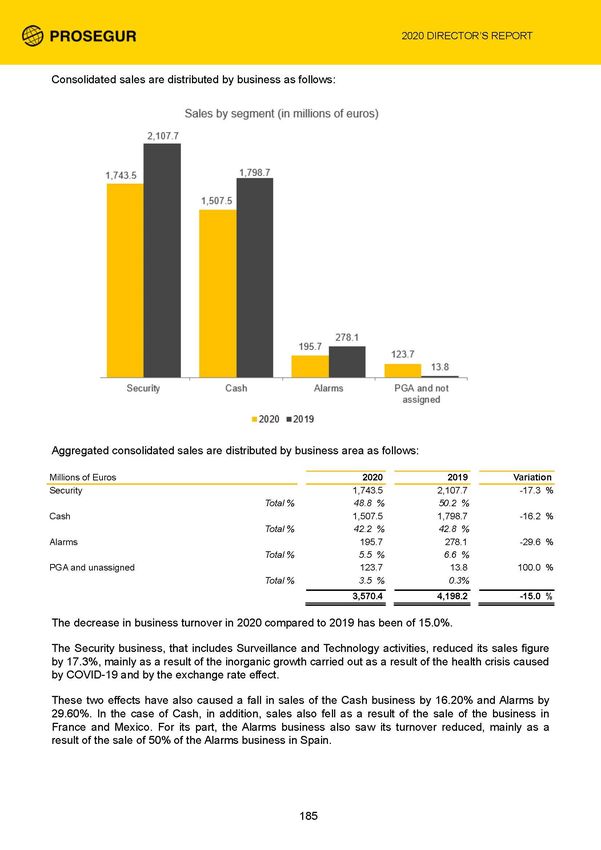
ABOUT THIS EDITION

                          This annual White Paper marks our 13th year of reporting on the status and direction of
                          the U.S. Contract Security Industry. Although the topic headlines remain relatively
                          unchanged from year to year, the information within the headings are updated to reflect
                          the current status of the industry. As with all annual white papers, some information is
                          inherent to the ongoing activities of the industry, therefore will not change, or will have
                          insignificant changes from year to year. Some information will be duplicated if it applies
                          to multiple topics.

              Our Qualifications to Publish This White Paper on the U.S. Contract Security Market

                          ● We have completed over 250 sell-side engagements for publicly and privately-held
                             sellers located in 8 countries, and having revenues ranging from $2m - $250m.
                          ● We have consulted on sales for several companies with revenues exceeding $2bn.
                          ● We constantly search the internet and news sources for information on global
                             acquisitions, mergers, and joint ventures.
                          ● We have proprietary files on over 3,000 mostly privately-held security companies, not
                             available in public lists or files.

              Primary Sources of Information for this Report

                          ● Annual Reports on the public security companies
                          ● Discussions with the large consulting firms doing research on the manned guarding
                            market
                          ● Global news releases
                          ● Federal government reporting agencies
                          ● Our private, confidential files on over 3,000 manned guarding companies operating
                            primarily in North America
                          ● Interviews with the owners of many of the U.S. and international manned guarding
                            companies

U.S. Contract Security Market White Paper
August 2021
                                                                                                           Page 5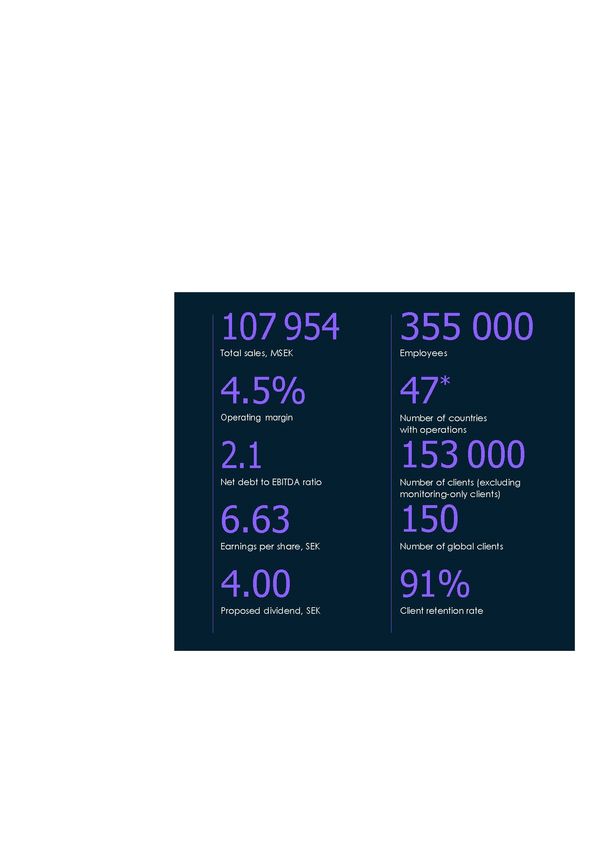
MARKET                                   MARKET BY THE NUMBERS

                                               OUTSOURCED AND IN-HOUSE
                                                     SECURITY MARKET

                                                    $43bn
                                                                                           OUTSOURCED CONTRACT
                                                                                               SECURITY MARKET

                                                                                            $28bn

                                               $18bn
                                                REVENUES FOR THE 5
                                                    MARKET LEADERS

                                                                               $5.5bn
                                                                                REVENUES FOR THE 2
                                                                               MAJORITY FOREIGN-OWNED
                                                                                INDUSTRY LEADERS (1)

                                  OUTSOURCED                 COMPANIES IN       TOTAL REVENUE GROWTH     ORGANIC GROWTH FOR
                                SECURITY OFFICERS          THE UNITED STATES      FOR THE U.S. MARKET       THE U.S. MARKET

                                 810k 8k                                               0%                        0%
                             (1) Includes Securitas and Prosegur since GardaWorld, and now G4S, are headquartered in North
                             America.

 U.S. Contract Security Market White Paper
 August 2021
                                                                                                                   Page 6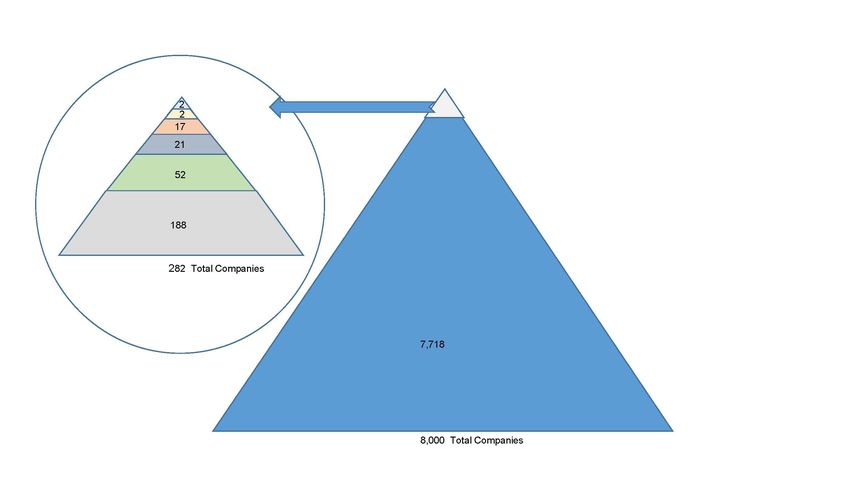
TABLE OF CONTENTS

                          13TH EDITION ANNUAL WHITE PAPER
                             OVERVIEW OF THE 2021 WHITE PAPER                             2
                                5 WORLD LEADERS                                           2
                                THE INDUSTRY - REVENUES & NUMBER OF EMPLOYEES             2
                                OPPORTUNITIES AND CHALLENGES                              3
                                MARGINS (GROSS PROFIT)                                    3
                                MERGERS                                                   3
                                MULTIPLES                                                 4
                                THE DILEMMA FACING SELLERS OF COMAPNIES IN TODAY’S MARKET 4

                              ABOUT THIS EDITION                                              5
                                OUR QUALIFICATIONS                                            2
                                PRIMARY SOURCES OF INFORMATION                                3

                          MARKET
                            BY THE NUMBERS                                                    6

                              DEFINING THE U.S. “CONTRACT SECURITY” MARKET                10
                                PERTINENT STATISTICS ON THE FIVE WORLD LEADERS            11
                                OVERVIEW OF WORLD LEADERS                                 12

                              ALLIED UNIVERSAL                                            13
                              SECURITAS                                                   23
                              PROSEGUR                                                    33
                              GARDAWORLD                                                  42

                              SIZE OF THE MARKET                                          48
                                 REVENUES AND NUMBER OF COMPANIES                         48
                                 CHALLENGES DETERMINING MARKET SIZE                       50
                                 NUMBER OF EMPLOYEES                                      51
                                 OUTSOURCED SECURITY PERSONNEL VS. PUBLIC POLICE FORCE    51
                                 EMPLOYEE COMPENSATION                                    52
                                 ARMED EMPLOYEES                                          52

                              OPPORTUNITIES                                               53
                                GOVERNMENTAL AGENCIES OUTSOURCING                         54
                                ENHANCING MANNED GUARDING WITH ELECTRONICS                54
                                LEGALIZING CANNABIS AT THE FEDERAL LEVEL                  55

                          (CONTINUED)

U.S. Contract Security Market White Paper
August 2021
                                                                                     Page 7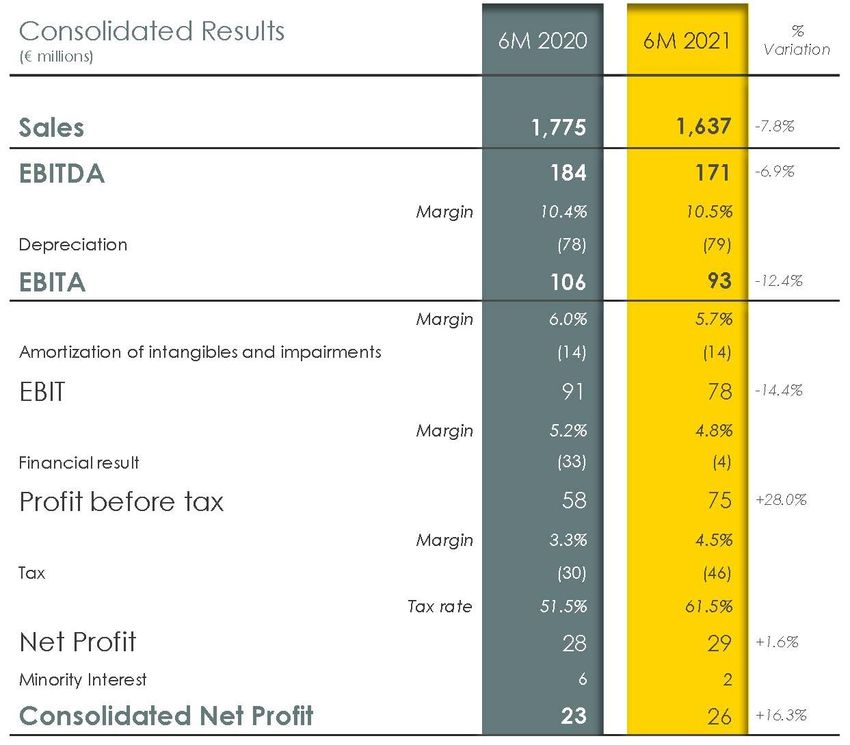
TABLE OF CONTENTS
                          CHALLENGES                                                      56
                               ELECTRONIC SECURITY REDUCING OR REPLACING THE
                                  MANNED GUARDING FUNCTION                                56
                               PREDICTIVE SCHEDULING RESULTING IN SHORTAGE OF LABOR       56
                               SHORTAGE OF LABOR RESULTING IN INCREASE IN
                                  NON-BILLABLE OVERTIME PREMIUM                           57
                               BANKS TIGHTENING LENDING STANDARDS                         58
                               POSSIBLE $15 PER HOUR MINIMUM WAGE                         58
                               RESTORES THE FULL PROVISIONS OF THE AFFORDABLE CARE ACT    59
                               INCREASE IN STATE UNEMPLOYMENT INSURANCE RATES             59
                               PROBABLE CORPORATE TAX INCREASES                           59
                               OWNERS SELLING UNVER THE PROPOSED NEW TAX RATE             60

                          MARGINS
                            IMPACT OF THE PANDEMIC                                        62

                              MARGIN TREND                                                64
                                SITE LEVEL AND BRANCH LEVEL                               65
                                EBITDA TREND                                              66
                                DEFINING TERMS ON THE PREVIOUS CHARTS                     58

                          MERGERS
                            SIGNIFICANT TRANSACTIONS                                      68

                              PRIVATE EQUITY                                              71
                                 DEFINING PRIVATE EQUITY                                  71
                                 PRIVATE EQUITY GROUPS INVESTING IN THE CONTRACT
                                    SECURITY MARKET                                       71
                                 PRIAVATE EQUITY HAS BEEN A SOURCE OF RETIREMENT FOR
                                    OWNERS OF WELL-RUN COMPANIES                          72
                                 PRIVATE EQUITY INVESTS IN THE CONTRACT SECURITY MARKET   73

                          MULTIPLES
                            LARGE TRANSACTIONS BEING DRIVEN BY PRIVATE EQUITY             75

                              SELLING PRICES FOR SMALL COMPANIES IN TODAY’S MARKET        77

                              THE DILEMMA FACING SELLERS OF COMPANIES IN TODAY’S MARKET 78

                          GLOSSARY
                             GLOSSARY OF TERMS                                            80

                          ABOUT US
                             ROBERT H. PERRY & ASSOCIATES                                 81

U.S. Contract Security Market White Paper
August 2021
                                                                                     Page 8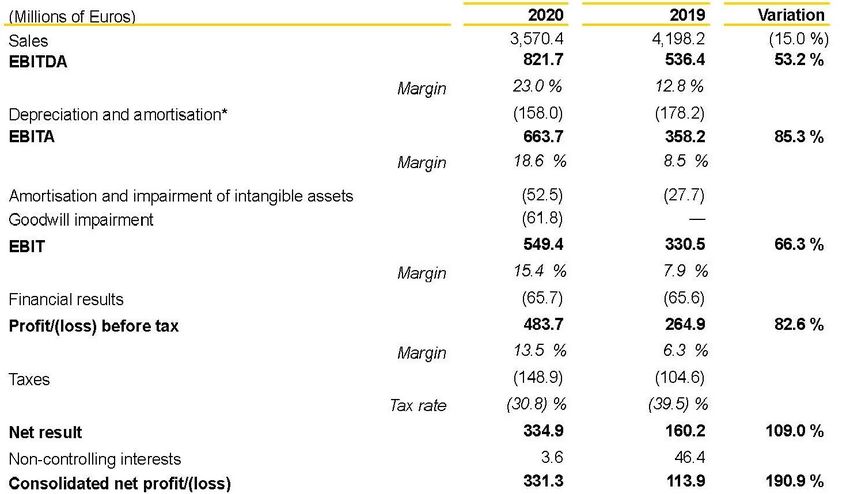
MARKET

U.S. Contract Security Market White Paper
August 2021
                                                     Page 9
MARKET
DEFINING THE US CONTRACT SECURITY MARKET
Today, many of the smaller companies that provide only traditional standing security
officer services continue to use the terms “security guard” or “contract security” as a way
to describe their company and the limited menu of services they can afford to provide.
These are the terms the general public are still the most familiar with as they search
listings to find a company that may provide only a standing security officer for primarily
temporary assignments.
However, the larger companies that still derive a significant portion of their revenues
from traditional standing security officer services have moved away from describing their
company in the above terms; instead use terms such as, “security solutions”, or
“integrated security solutions” (or other combinations of similar terms) as a way to define
their company and services offered. In fact, Securitas made a bold move at the end of
2020, by redesigning its logo ( the first redesign since 1972 ) headlined by the tagline
’See a different world’. The news release on this announcement went on to report that
the new brand highlights the company’s human and progressive approach to security,
and the positive impact of its innovation and technology—in effect, Securitas further
distancing itself from its smaller competitors and the long standing labeling that
highlighted its manned guarding services over its more technologically advanced
offerings.
As pointed out throughout this white paper report, this year saw more and more smaller
companies turn to some sort of “integrated guarding” as a way to deal with the serious
labor shortage. We expect this trend to continue past the end of the crisis as the
technology, coupled with the manned guarding component, becomes a lot more efficient
and the customers become more demanding to receive it.
Below is a description of most of the service offerings by the traditional manned guarding
companies (although now describing themselves according to the terms identified
above):
Traditional on-site standing security officers (often enhanced by a roving vehicle
patrol function)
Remote video monitoring
Robots
Drones
K-9 security
Systems integration - Integrated with artificial intelligence platforms
Roving vehicle patrol
Traditional concierge services
Executive protection
Investigation services
Cash-In-Transit (armored car services) - although only to a limited extent, if any,
provided by a traditional manned guarding company.
COVID-19 temperature checks, distance and mask monitoring (as of the publishing
of this white paper report, much of the COVID services have been terminated, but
may return if the new Delta variant proves to be the fourth round of the pandemic).
Cyber security—although offered on a limited basis by the traditional contract
security companies.
U.S. Contract Security Market White Paper
August 2021
Page 10MARKET 5 WORLD LEADERS
Revenues (1)
Globally
Approximate
Country Local
Company in U.S. $ (2) U.S.
Headquarters Currency
Revenue
MSEK 107,954 $11.9bn $5.2bn (6)
Sweden
£7.0bn $9bn $3.0bn (3) (6)
United Kingdom
$9.0bn $9.0bn $8.9bn (6) (7) (8)
United States
€3.6bn $4.1bn $0.3bn (4)
Spain
CN$3.7bn $2.8bn $0.6bn (5)
Canada
(1) All revenues are for the 2020 year, except GardaWorld, which ends its year January 31, 2021.
(2) Local currency to U.S. dollar conversion rates (based on average rates for the 2020 year)
MSEK = million Swedish Krona 9.16 SEK = $1
£ = British Pound £ 1 = $1.28
€ = Euro € 1 = $1.14
CN = Canadian Dollar CN1 = $0.7568
(3) Over the past 4 years G4S has divested non-core businesses generating revenues of approximately $1.7bn.
(4) Prosegur entered the U.S. market in early 2019 and presently has approximately $300M in revenue from U.S.
operations.
(5) Additionally, Garda has approximately $600M in cash-in-transit revenue services in the U.S.
(6) Represents total revenues for North America; with significant amount coming from U.S. sources, and an insig-
nificant international portion
(7) Estimated Run Rate Revenues as of December 31, 2020.
(8) Amounts estimated since financial are not released as public information.
U.S. Contract Security Market White Paper
August 2021
Page 11MARKET
OVERVIEW OF WORLD LEADERS
Highlighting the World Leaders
The five World Leaders highlighted in this report have at least $1 billion in revenues from
manned guarding services globally, with the largest portion of their revenues coming from the
U.S. market (except Prosegur) - the largest security market in the world.
These companies are large enough and have sufficient financial resources to lead the charge in
changing the way the next generation of security companies will meet the ever increasing
demands of its customers and general public. As indicated in the section on the World Leaders,
each is expanding its menu of services to incorporate the use of technology. They have been
pouring huge amounts of capital in developing this technology over the past few years and are
now using it as a way to meet this ramped up demand and move farther away from some of
their smaller manned guarding competitors - ones without the resources for the large investment
in technology and perceived as a provider of commoditized, low-margin services.
Important Note to Reader
The information on the five leaders presented on pages 13 to 47 was gathered from market
sources and primarily the annual reports (in the case of Securitas, G4S, and Prosegur - the
three publicly-owned companies). The companies do not follow a uniform format (from one
company to the other) in reporting their revenues, market statistics, identifying services offered,
etc. Therefore, the information presented on these pages should not be used to compare one
company’s performance against any of the other companies, but should only be used to
evaluate the performance of the individual company. It is suggested that the reader visit the
company’s website to obtain further information on the company’s performance, especially in
conjunction with the footnotes accompanying the information being presented.
U.S. Contract Security Market White Paper
August 2021
Page 12MARKET OVERVIEW OF WORLD LEADERS
Key Performance Indicators
On April 6, 2021 Allied Universal
acquired G4S creating the largest
security company in the World
Worldwide
Revenues Employees Countries
Over
90
Over
$18 800,000
billion
(1)
Customer Revenues from Gross Profit
Retention Rate Technology Offerings Margins
Over Over Over
92% 25% 14%
(1) $18.5 billion considering Allied Universal’s run rate at the date of the G4S acquisition.
● Blue print is information inserted by Robert H. Perry & Associates
Source: Websites for Allied Universal and G4S and News releases
U.S. Contract Security Market White Paper
August 2021
Page 13MARKET OVERVIEW OF WORLD LEADERS
Allied Universal was formed in 2016 with the coming together of two security company
giants – Allied Security at approximately $2.5 billion of revenue and Universal
Protection at approximately $2.3 billion.
Allied’s History
The company was originally formed when two seasoned security executives partnered
with a small California Private Equity Group to buy Spectaguard – a local company
based in Philadelphia primarily providing security for local sporting events. The newly
formed company went on to buy Allied Security (established in 1957) in 2000; and
rebranded to Allied Security. It continued to purchase additional large companies,
such as Barton Protective with approximately $350 million in revenue (and renamed
itself AlliedBarton), and Initial Security with approximately $225 million in revenue. In
total, AlliedBarton made approximately 10 acquisitions. AlliedBarton’s first Private
Equity Group owner was MacAndrews & Forbes, then the Blackstone Group (one of
the largest Private Equity Groups in the world) until its sale to the Wendel Group in
December, 2015. AlliedBarton merged with Universal Protection in April of 2016 and
the newly formed company took on the name of Allied Universal. At the time of the
merger, Allied Security had grown to a run rate of approximately $2.5 billion. Wendel
retained a significant ownership in the merged company until all its shares were bought
by the remaining shareholders in late 2020.
Universal’s History
At the time the merger with AlliedBarton was announced in April of 2016, Universal
Protection had a run rate revenue of approximately $2.3 billion, but had grown to $2.5
billion by the time the merger became effective August 1st. Universal was established
in 1965 and had revenues of about $15 million 20 years ago when it was bought by
Brian Cescolini and Steve Jones through a management led buy-out. Universal grew
organically and reached a volume of around $350 million in 2008 when it teamed with a
mezzanine fund in California to provide short-term acquisition funding. Universal later
teamed with the Partners Group, headquartered in Europe, for an expanded acquisition
line; then with Warburg Pincus for the financial backing it needed for the acquisition of
industry giants such as Guardsmark (about $500 million in revenue) and the contract
security division of ABM (revenues of around $400 million). In 2018, in order to buy the
$1.5 billion US Security Associates company, Allied brought in Caisse de dépôt et
placement du Québec, a very large investment funds management firm headquartered
in Montreal, Canada and most recently, the J. Safra Group.
Source: : Websites for Allied Universal and G4S and news releases
U.S. Contract Security Market White Paper
August 2021
Page 14MARKET OVERVIEW OF WORLD LEADERS
G4S’s History
G4S began as a “night watchmen” company in Copenhagen, Denmark in 1901. In
1968 it became a part of Group 4, a security company owned by the Philip-Sørensen
group of companies. In 2000, Group 4 merged with Falck (Falcon) – a nationwide
security company established in Denmark in 1930 - and rebranded as Group 4 Falck.
In 2002 Group 4 Falck purchased the Wackenhut Corporation; then a $2.8 billion
company headquartered in the U.S. and founded by George Wackenhut in 1954. In
2004, Group 4 Falck merged with Securicor, a very large security company
headquartered in London, at which time it rebranded itself again as Group 4 Securicor.
The combined revenues of the 2 companies at the time of the merger was
approximately $5 billion. In2006, the new brand and logo, G4S, is rolled out worldwide.
G4S went on to expand, domestically and in emerging markets organically and
through select acquisitions while divesting non-core and underperforming operating
businesses with revenues of approximately $2 billion. At the time of the sale to Allied
Universal, G4S had revenues of approximately $9 billion.
Source: Websites for Allied Universal and G4S and news releases
U.S. Contract Security Market White Paper
August 2021
Page 15MARKET OVERVIEW OF WORLD LEADERS
On April 6th, with all the approval hurdles finally cleared, Allied Universal bought
G4S, putting an end to almost nine months of speculation over whether G4S would in
fact be taken over and just who would be the successful suitor. The acquisition was
historic: creating the largest security company in the world with sales over $18
billion coming from 90 countries making it almost twice as large as Securitas, its
nearest competitor. Its 800,000 employees make Allied the 3 rd largest employer in
North America and the 7th largest employer in the world.
The Pandemic was One of the Largest Factors Contributing to the Buyout
It all started around June of 2020 when the share price of G4S was depressed by the
global pandemic; as were the prices of the stocks of most of the UK public
companies. An October article in The Financial Times reported that “[UK equities] are
now trading on the greatest discount to global equities for 50 years”. This low share
price made G4S a prime take-over target by a financial group or one of its
competitors. Garda World, a $3 billion Montreal based international privately held
security company, recognized this opportunity and made its first formal offer of $4.2
billion to G4S’s Board of Directors in October. Although the offer was a 31% premium
over G4S’s depressed share price, the Board rejected the offer as being “highly
opportunistic and significantly undervaluing the G4S business”. Garda eventually
increased its bid, but not enough to win the Board’s approval; which instead supported
an offer by Allied Universal at $5.3 billion (approximately $8.3 billion on an enterprise
value basis) and over 11 times EBITDA.
The Acquisition Rationale
Initially, the G4S North America business (U.S., Canada and Mexico) will be run by the
current Allied Universal structure in Santa Ana, California reporting to Steve Jones,
Allied’s CEO. The international businesses – all operations outside of North America –
will be headquartered in London and will be led by Ashley Almanza, G4S’s current
CEO, for the first year of the transition and Tim Weller, G4S’s CFO, will continue in his
financial role for the International Business of the combined group for at least six
months after closing.
Source: Websites for Allied Universal and G4S and news releases
U.S. Contract Security Market White Paper
August 2021
Page 16MARKET OVERVIEW OF WORLD LEADERS
The Strength in Numbers
Before the acquisition almost all of Allied’s approximately $9 billion revenues came
from customer locations in the United States. With offices now in 90 countries, Allied
can service many of its international customers globally without having to sacrifice
profits through outsourcing contract work in these areas.
Almost 50% of G4S’s revenue comes from some level of technology offerings
enhanced over the past 10 years through large financial investments; whereas less
than 5% of Allied’s revenues are from this service. The legacy Allied customers can
now be offered more advanced technology that carries higher profit margins than
traditional manned guarding services; while at the same time enhancing the service
delivery to the customer.
With over 800,000 employees worldwide, Allied now has more bargaining power to
negotiate better rates on health insurance, uniforms and, to a certain extent, workers
compensation and liability insurances – even though Allied may be self-insured in
some of these areas. In the U.S., where Allied is large and shares a footprint with
G4S, it is estimated that $140 million of redundant cost will be eliminated through
merging the two operations. The redundant cost eliminations for operations outside
the U.S. become insignificant, since the legacy Allied company does not presently
have operations in areas outside the U.S. (except a minimal amount in Canada,
England and Mexico).
What the Purchase Means to Allied’s Smaller Competitors
It’s obvious that the creation of this mega company will be a game changer for the
global security industry – especially its smaller competitors. Many of the competitors
are already talking about the possibility of growing their company through the fall- out of
some of Allied’s and G4S’s legacy customers that just don’t want to be a part of such a
large company where largeness usually means a diminishing of service levels. This will
be true to a certain extent, but many of the owners we talked with reported losing
customers to the larger Allied. And some reported having to reduce the billing rate to
keep a current customer that Allied approached with a lesser cost structure. Allied,
through the purchase of G4S, can now offer the service at lesser rates per hour since
their service delivery cost is less, in most instances, or they are offering integrated
guarding services to include technology, resulting in the larger Allied making more
Source: Websites for Allied Universal and G4S and News Releases
U.S. Contract Security Market White Paper
August 2021
Page 17MARKET OVERVIEW OF WORLD LEADERS
money on a lesser bill rate than the smaller competitors in many cases. Some customers
had rather sacrifice some personal attention (provided by the smaller competitor) in
exchange for a break in the total cost for their security.
How much revenue will hit the streets? It will be a lot in the case of an $18 billion
company. If Allied does everything right in transitioning the customers and employees
and hits the industry average attrition rate of 8% - 10%, almost $1 billion of Allied’s
revenue will go away in the U.S. alone. An additional $800 million - $1 billion of
revenue will be leaving Allied in the foreign markets. AND adding to the challenge ahead
for the Allied management; in total, Allied has to add about $3 billion of new revenue just
to show a modest 5% growth – the estimated conservative growth for the industry. Some
of this growth will come from existing customers increasing their security menu to
include the additional services Allied is now able to offer. Some will come from Allied
getting heavier in the municipal and governmental sector by replacing local police forces
and other governmental employees. Some will come from in-house converting to
outsourced security and, as mentioned above, some of the new revenue will be coming
from Allied’s smaller competitors that can’t offer the menu of services Allied can now
offer coming primarily from the G4S’ technology divisions.
Allied’s End Game
Allied’s end game is to go public. G4S has already started the process of delisting its
stock from the London exchange and, when completed, the new private company will
save millions of dollars it cost G4S to adhere to the reporting requirements of a public
company. Allied has already started positioning itself for a successful public offering. At
$18 billion, it already has enough revenue. Now, it has to maintain a better than average
growth trajectory - a daunting task, given it has to bring in new revenue, globally, of over
$3 billion just to maintain a 5% net growth rate (assuming an industry average retention
rate of 10%).
On March 24, 2021, Allied announced the newly hired Global CFO, Tim Brandt, who will
focus on the integration of G4S, as well as get Allied prepared for the eventual Initial
Public Offering. Tim comes to Allied with a vast amount of experience in mergers and
acquisitions and IPO’s in his 30 years spent with Deloitte where he was the managing
partner in the Orange County, California office.
In addition to entering new markets and introducing new products, Allied intends to
maintain its momentum of making acquisitions in select markets – especially in the
systems integration side of the business. Also, to better position Allied for a successful
transition of G4S and continuing its commitment to growth, especially now, in the foreign
markets, Allied hired Mike Beregovsky as Chief Merger & Acquisition Officer and Co-
Head of Strategy & Investor Relations. Mike, who comes from Warburg Pincus, one of
Source: Websites for Allied Universal and G4S and news releases
U.S. Contract Security Market White Paper
August 2021
Page 18MARKET OVERVIEW OF WORLD LEADERS
Allied’s major shareholders, will also be leading Allied’s global mergers and acquisition
activities. Danette Perkins, previously VP of Acquisitions, was promoted to President of
Mergers & Acquisitions for North America.
Allied Universal has a Large Financial Commitment from Its Investors - Having a lot
of Experience in the Public Markets
As with all large acquisitions, most of the price being paid comes from debt instruments.
In the case of this transaction, unverified sources have estimated that over $4 billion of
the price is coming from borrowed money rather than outright cash from the equity
group owners. This additional debt added to Allied’s existing debt load makes Allied
highly leveraged. But the two majority financial group owners are used to running
leveraged companies and are no strangers to the public markets. Allied’s private equity
investors own collectively 90% of the company and include: Caisse de dépôt et
placement du Québec, Warburg Pincus, Partners Group and J. Safra Group –
collectively managing almost $500 billion (one half a trillion U.S. dollars) of investor
funds. Additionally, Tim Geithner, the Treasury secretary under the Obama
administration, is now the president of Warburg Pincus. He comes to the transaction
with a vast amount of experience in advising companies with a high debt leverage with
plans for a public offering.
Source: Websites for Allied Universal and G4S and News Releases
U.S. Contract Security Market White Paper
August 2021
Page 19MARKET OVERVIEW OF WORLD LEADERS
Allied Universal and G4S Combined Footprint
Europe & UK
$3.1bn
North America
12% technology
$12.3bn
8% cash
5% technology
APAC
Middle East $1.2bn
$.4bn 4% technology
15% technology (Includes Australia,
Thailand, Hong Kong)
South America
$0.7bn
7% technology
Africa
$0.6bn
14% technology
21% cash
Source: Websites for Allied Universal and G4S and News Releases
U.S. Contract Security Market White Paper
August 2021
Page 20MARKET OVERVIEW OF WORLD LEADERS
Revenue by Customer Types
(Combined Companies)
Source: Websites for Allied Universal and G4S and News Releases
U.S. Contract Security Market White Paper
August 2021
Page 21MARKET OVERVIEW OF WORLD LEADERS
Financial Performance - Statutory Basis
$9.0bn $9.9bn
$3.4bn $3.3bn
1 Group underlying results for 2019 are presented on a constant currency basis
● Blue print is information inserted by Robert H. Perry & Associates
See page 11 for foreign monetary conversion rates.
See Page 12 for “Important Note to Reader”
Source: G4S Annual Report and Accounts 2021
U.S. Contract Security Market White Paper
August 2021
Page 22MARKET OVERVIEW OF WORLD LEADERS
Key Performance Indicators
Revenues in U.S. Dollars $11.9billion
Source: Securitas Annual and Sustainability Report 2021
U.S. Contract Security Market White Paper
August 2021
Page 23MARKET OVERVIEW OF WORLD LEADERS
Key Performance Indicators
Source: Securitas Annual and Sustainability Report 2021
U.S. Contract Security Market White Paper
August 2021
Page 24MARKET OVERVIEW OF WORLD LEADERS
Financial Summary - Around the World
Full Year 2020 Compared to 2019
Fourth Quarter 2020 Compared to 2019
$2.9 bn $3.0 bn $11.9 bn $11.7 bn
MSEK to U.S. Dollar Conversion Ratios
Year 2020 - Average Rate - 9.16 SEK to $1
Year 2019 - Average Rate - 9.47 SEK to $1
● Blue print is information inserted by Robert H. Perry & Associates
See page 11 for foreign monetary conversion rates.
See Page 12 for “Important Note to Reader”
Source: G4S Annual Report and Accounts 2020
U.S. Contract Security Market White Paper
August 2021
Page 25MARKET OVERVIEW OF WORLD LEADERS
Financial Performance Explained
Around the World
Full Year 2020 Compared to 2019
Full Year - 2020 vs. (2019)
Organic Sales were flat in 2020 (4%).
All business segments were negatively impacted by the corona pandemic, but to
some extent offset by increased extra sales, which amounted to 16 percent (14)
of total sales.
Real sales growth, including acquisitions and adjusted for changes in exchange
rates, was 1 percent (6).
Sales of security solutions and electronic security sales amounted to MSEK 23
478 (23 290) or 22 percent (21) of total sales for the full year. Real sales growth,
including acquisitions and adjusted for changes in exchange rates, was 5 percent
(10).
Operating income before amortization was MSEK 4 892 (5 738) which, when
adjusted for changes in exchange rates, represented a real change of -10
percent (3). The operating income was supported by corona-related government
grants and support measures of MSEK 780 in 2020, mostly within Security
Services Europe.
The Group’s operating margin was 4.5 percent (5.2). While the corona pandemic
impacted all business segments to varying degrees, the main negative impact
occurred in Security Services Europe.
See Page 12 for “Important Note to Reader”
Source: Securitas Full Year Report 2020
U.S. Contract Security Market White Paper
August 2021
Page 26MARKET OVERVIEW OF WORLD LEADERS
Financial Performance Explained
Around the World
Fourth Quarter 2020 Compared to 2019
Fourth Quarter - 2020 vs. (2019)
The 1 percent reduction in organic sales is due to the negative impacts of the
corona pandemic through reduced service levels, mainly in the aviation segment,
and lower installation sales. Increased extra sales which amounted to 17
percent (14) of total sales offset most of this decline. Security Services North
America delivered organic sales growth of 4 percent (2) with positive impacts
from the Guarding and Critical Infrastructure Services business units.
Real sales growth, including acquisitions and adjusted for changes in exchange
rates was 3 percent (3).
Sales of security solutions and electronic security sales amounted to MSEK 5
883 (6 145) or 22 percent (22) of total sales for the fourth quarter. Real sales
growth, including acquisitions and adjusted for changes in exchange rates, was 4
percent (7).
Operating income before amortization was MSEK 1 404 (1 497) which, when
adjusted for changes in exchange rates, represented a real change of 4 percent
(-2). The operating income was supported by corona-related government grants
and support measures of MSEK 230 in the quarter.
The Group’s operating margin was 5.3 percent (5.3). Security Services North
America and Security Services Ibero-America contributed to the operating
margin, while Security Services Europe and the other segments hampered the
development.
See page 12 for “Important Note to Reader”
Source: Securitas Annual and Sustainability Report 2020
U.S. Contract Security Market White Paper
August 2021
Page 27MARKET OVERVIEW OF WORLD LEADERS
Financial Summary - North America
Full Years 2020 Compared to 2019
Fourth Quarter 2020 Compared to 2019
Security Services North America provides protective services in the U.S.,
Canada, and Mexico. The operations in the U.S. are organized in four
specialized units - Guarding, Electronic Security, Pinkerton Corporate Risk
Management, and Critical Infrastructure Services. Guarding includes on-site,
mobile and remote guarding and the unit for global and national accounts, as well
as Canada and Mexico. There are also specialized client segment units, such as
aviation, healthcare, manufacturing and oil and gas.
$1.3 bn $1.3 bn $5.2 bn $5.1 bn
● Blue print is information inserted by Robert H. Perry & Associates
See page 11 for foreign monetary conversion rates.
See Page 12 for “Important Note to Reader”
Source: Securitas Full Year Report 2020, and Annual and Sustainability Report 2020
U.S. Contract Security Market White Paper
August 2021
Page 28MARKET OVERVIEW OF WORLD LEADERS
Financial Performance Explained - North America
Full Year 2020 Compared to 2019
Full Year - 2020 vs. (2019)
Organic Sales growth was 2 percent (4). The negative impacts of the corona
pandemic on a full-year basis were primarily seen in the Electronic Security and
Critical Infrastructure Services business units. Organic sales growth in Guarding
was on par with the preceding year, since the business unit was able to compensate
temporarily reduced portfolio sales with increased extra sale, both corona-related.
The client retention rate was 91 percent (90), excluding the effect of corona-related
temporary reductions.
Security solutions and electronic security sales represented MSEK 8 365 (8 885) or
17 percent (18) of total sales in the business segment in 2020
The operating margin was 5.9 percent (6.2), a decline primarily related to the effects
of the corona pandemic with enhanced levels of provisioning to reflect the increased
risk in the business environment. The sales decline in the Electronic Security and
Critical Infrastructure Services business units also hampered the operating margin,
while Guarding was supported as a result of the corona-related change in the
business mix with an increased share of extra sales.
The Swedish krona exchange rate strengthened against the U.S. dollar, which had a
negative effect on operating income in Swedish kronor. The real change was -2
percent (8) in 2020.
See Page 12 for “Important Note to Reader”
Source: Securitas Full Year Report 2020
U.S. Contract Security Market White Paper
August 2021
Page 29MARKET OVERVIEW OF WORLD LEADERS
Financial Performance Explained - North America
Fourth Quarter 2020 Compared to 2019
Fourth Quarter - 2020 vs. (2019)
Organic Sales growth was 4 percent (2). The improvement in organic sales growth
was primarily related to the Guarding and Critical Infrastructure Services business
units. The business unit Guarding was able to compensate temporarily reduced
portfolio sales with increased extra sales, both corona-related. Sales in Critical
Infrastructure Services also benefited from corona-related extra sales in the fourth
quarter, which included some retroactive billing. Pinkerton Corporate Risk
management contributed to the improvement, while Electronic Security was
hampered by the installation business. Extra sales in the business segment
amounted to 19 percent (13) of total sales.
Security solutions and electronic security sales represented MSEK 1 948 (2 319) or
17 percent (19) of total sales in the business segment in the fourth quarter.
The operating margin was 6.4 percent (6.1). The improvement related primarily to
the Guarding and Critical Infrastructure Services business units. The operating
margin in Guarding continued to be supported by the corona-related change in the
business mix with an increased share of extra sales. The operating margin Critical
Infrastructure Services was positively impacted by corona-related extra sales
referred to above. Pinkerton Corporate Risk management also contributed to the
improvement, as did continued cost saving measures. The operating income was
hampered by the increased levels of provisioning to reflect the increased risk in the
business environment, relating primarily to outstanding accounts receivable.
The Swedish krona exchange rate strengthened against the U.S. dollar, which had a
negative effect on operating income in Swedish kronor. The real change was 12
percent (0) in the fourth quarter.
See Page 12 for “Important Note to Reader”
Source: Securitas Annual and Sustainability Report 2020
U.S. Contract Security Market White Paper
August 2021
Page 30MARKET OVERVIEW OF WORLD LEADERS
Revenue Performance by Service Offering
North America
Full Year 2020 Compared to 2019
$5.2 bn $5.1 bn
● Blue print is information inserted by Robert H. Perry & Associates
See page 11 for foreign monetary conversion rates.
See Page 12 for “Important Note to Reader”
Source: Securitas Full Year Report 2020
U.S. Contract Security Market White Paper
August 2021
Page 31MARKET OVERVIEW OF WORLD LEADERS
Financial Performance H1 and Q2
North America
2021 Compared to 2020
$1.3 bn $2.5 bn
January - June 2021
Organic sales growth was 5 percent (0), supported by all business units. The first half
last year was negatively impacted by the corona pandemic, primarily in the business
units Electronic Security and Critical Infrastructure Services. The level of corona-
related extra sales within Guarding supported organic sales growth in the first half year
and Pinkerton had a strong development across the business. The client retention rate
was 90 percent (92), excluding the effect of corona-related temporary reductions.
Security solutions and electronic security sales represented MSEK 4 029 (4 339) or 18
percent (18) of total sales in the business segment in the first half year.
The operation margin was 6.5 percent (5.4), an improvement driven by all business
units. The first half year last year was hampered by the corona pandemic, including an
increased level of provisioning. The operating margin in Guarding was strong.
Electronic Security improved compared to the first half last year helped by the recovery
of the installation business, and the acquisition of FE Moran Security Solutions. Critical
Infrastructure Services also improved as corona-related restrictions and lock-downs
have eased. The strong performance in Pinkerton was primarily driven from leverage
from the sales growth.
The Swedish krona exchange rate strengthened against the U.S. dollar, which had a
negative effect on operating income in Swedish kronor. The real change was 28
percent (-9) in the first half year.
●Blue print is information inserted by Robert H. Perry & Associates
See page 11 for foreign monetary conversion rates.
See Page 12 for “Important Note to Reader
Source: Securitas Interim report Jan-June 2021
U.S. Contract Security Market White Paper
August 2021
Page 32MARKET OVERVIEW OF WORLD LEADERS
Key Performance Indicators
Revenues in U.S. Dollars: $4.1 billion
●Blue print is information inserted by Robert H. Perry & Associates
See page 11 for foreign monetary conversion rates.
See Page 12 for “Important Note to Reader
Source: Prosegur.com
U.S. Contract Security Market White Paper
August 2021
Page 33MARKET OVERVIEW OF WORLD LEADERS
Prosegur’s Business Lines
See Page 12 for “Important Note to Reader
Source: Prosegur.com - Business Lines Page
U.S. Contract Security Market White Paper
August 2021
Page 34MARKET OVERVIEW OF WORLD LEADERS
Prosegur’s Footprint and Revenue Growth
Around the World
Footprint and Financial Performance
2020 2019 (Decrease)
in million Euros
Europe 1,551 € 1,770 € -12.4%
Latin America 1,686 € 2,087 € -19.2%
Rest of the World 333 € 341 € -2.3%
Total $4.1 bn 3,570 € 4,198 € -15.0%
Sales Decrease Analyzed:
Real decrease in sales .4%
Decrease due to divestitures 1.7%
Application of IAS 29 and 21.42 2.8%
Exchange rate effect 10.1%
Total sales decrease 15.0%
●Blue print is information inserted by Robert H. Perry & Associates
See page 11 for foreign monetary conversion rates.
See Page 12 for “Important Note to Reader
Source: Prosegur’s 2020 Consolidated Annual Accounts
U.S. Contract Security Market White Paper
August 2021
Page 35MARKET OVERVIEW OF WORLD LEADERS
Financial Results - 2020 Compared to 2019
Around the World
$4.1 bn
Note:
Prosegur’s total sales - Around The World - for 2020 converts to $4.1 billion.
The U.S. portion is approximately $300M
(1) See page 35 for sales decreases analyzed
●Blue print is information inserted by Robert H. Perry & Associates
See page 11 for foreign monetary conversion rates.
See Page 12 for “Important Note to Reader
Source: Prosegur’s 2020 Director’s Report
U.S. Contract Security Market White Paper
August 2021
Page 36MARKET OVERVIEW OF WORLD LEADERS
Sales Performance by Business Line
2020 Compared to 2019 Around the World
(1)
$4.1 bn
The decrease in business turnover in 2020 compared to 2019 has been of 15.0% (see
page 35 for sales decrease analyzed).
The Security business, that includes Surveillance and Technology activities, reduced its
sales figure by 17.3%, mainly as a result of the inorganic growth carried out as a result
of the health crisis caused by COVID-19 and by the exchange rate effect.
These two effects have also caused a fall in sales of the Cash business by 16.20% and
Alarms by 29.60%. In the case of Cash, in addition, sales also fell as a result of the sale
of the business in France and Mexico. For its part, the Alarms business also saw its
turnover reduced, mainly as a result of the sale of 50% of the Alarms business in Spain.
(1) PGA is “Prosegur Asset Management” and includes the cybersecurity business line
and AVOS (Added-Value Outsourcing Services).
●Blue print is information inserted by Robert H. Perry & Associates
See page 11 for foreign monetary conversion rates.
See Page 12 for “Important Note to Reader
Source: Prosegur’s 2020 Director’s Report
U.S. Contract Security Market White Paper
August 2021
Page 37MARKET OVERVIEW OF WORLD LEADERS
Managements’ Analysis of 2020 Results
(Taken verbatim from the 2020 Annual Report)
2020 was a year marked by the social, economic and health effects of the pandemic caused
by COVID-19. From its start, and in anticipation of a much more intense duration and force than
what the first estimates indicated, Prosegur activated a series of measures based on three
fundamental axes: protecting and guaranteeing employee health, ensuring the continuity of the
clients' economic activity within the maximum health and safety parameters and, lastly, ensuring
liquidity and capacity to generate cash.
In this sense, and in record time, the company deployed a series of measures to ensure the
well- being and protection of employees. Fundamentally, of particular note is the promotion of
telework in all positions where it is viable and the deployment of the communication and security
infrastructure necessary for employees to carry out their work with the best possible guarantees.
Likewise, the company adopted the necessary health and safety measures to prepare the
work centres and protect employees whose activities could not be carried out remotely. Of
special note is the deployment of a digital passport that allows employees to manage access to
the facilities from their mobile phone and that establishes mechanisms and protocols for
monitoring positive cases.
These measures, along with others such as the use of technology for temperature
measurement, verification of the use of masks or control of social distancing, were also
introduced in the premises of the company's clients in order to guarantee the safety of their own
employees and workspaces.
Finally, in the financial and operational sphere, Prosegur activated receipt management and
working capital protection protocols. The company undertook workforce adjustments in line with the
decline in demand as a result of the measures taken to contain the pandemic. These actions,
together with financial policies of cash repatriation, offer to pay dividend in shares and reduction
of non-strategic investments, ensured the company excellent cash generation during the period
and a liquidity profile that guarantees the financial stability of the group for the years to come.
In any case, the consequences of the health crisis have affected each of the business lines
with varying degrees of intensity. Despite having demonstrated a remarkable degree of
resistance and adaptability, it has not been enough to counteract the fall in volume due to the
temporary closures and business interruptions of the vast majority of clients.
Prosegur Cash, despite offering an essential service, has been affected by the impact of the
health crisis and the subsequent containment measures introduced by governments to combat
it, which resulted in a fall in activity and a reduction in the volumes operated.
The high penetration of cash payments in emerging countries, the lower incidence during the
first phase of the pandemic and the development of extraordinary services allowed this negative
effect to be mitigated.
See Page 12 for “Important Note to Reader
Source: Prosegur’s 2020 Director’s Report
U.S. Contract Security Market White Paper
August 2021
Page 38MARKET OVERVIEW OF WORLD LEADERS
Managements’ Analysis of 2020 Results
(Taken verbatim from the 2020 Annual Report)
For its part, Prosegur Security has also suffered the effects of the pandemic with a decrease
in activity, but more attenuated due to the specific needs of client services and the
maintenance of certain levels of security.
Prosegur Security's dependence on the airport sector in the United States and the total
suppression of large events, combined with the general decline in economic activity in
almost all countries, caused Prosegur Security's billing in the period to turn negative.
Together with the deconsolidation due to the sale of the business in France and the negative
effect of currencies in Latin America, the business unit totals a volume loss in 2020 of more
than 17%.
In compensation, the high demand for more specialised services to guarantee secure access
to client facilities, and their combination with high added value technological elements gave a
strong push to the market penetration of new solutions, which already represent more than
36% of turnover. The health crisis has been a boost for this type of product due to the
speed of its implementation, the economic efficiency and the versatility of the service to be
able to control elements such as workers’ temperature in real time, the use of sanitary
masks or the adherence to recommended social distancing guidelines.
This allowed a structural improvement in Prosegur Security's profitability margins, which
in 2020 closed with an increase of 500 basis points over the previous year.
Lastly, Prosegur Alarms also suffered a negative impact due to the fall in the number of
additions due to the home confinements decreed in most regions. These measures
prevented the normal commercial operation and installation of new connections. To this
situation, an increase in the churn rate of small business clients is added.
Despite this, the total contract base of Prosegur Alarms added more than 26,000 new
connections, supported by the strong growth experienced in Spain by the Movistar Prosegur
Alarmas joint venture. The company, created jointly by Telefónica and Prosegur, began its
operations in early 2020 to jointly target the Spanish residential market.
In short, no structural deterioration in the demand and potential of the alarms market due
to the pandemic has been observed, except for the specific situation of access to the homes
of new clients during the periods of lockdown. Prosegur remains confident that the alarm
business will be one of the fastest growing in the coming years.
It is worth highlighting the performance of the group's financial indicators, due to the good
results of the cash generation and debt containment carried out during the year. Thanks
to the efficiencies obtained by digital transformation projects in the client management and
receipts processes, Prosegur has improved its procedures for receipts and credit
calculation. This has allowed the company to achieve a significant improvement in working
See Page 12 for “Important Note to Reader
Source: Prosegur’s 2020 Director’s Report
U.S. Contract Security Market White Paper
August 2021
Page 39MARKET OVERVIEW OF WORLD LEADERS
Managements’ Analysis of 2020 Results
(Taken verbatim from the 2020 Annual Report)
Furthermore, Prosegur placed an extraordinary focus on the containment of internal spending
and the control of non-strategic investments, which has resulted in a more than 30% reduction
in the group's Capex.
Additionally, and as a cash outflow containment measure, the company offered shareholders
the possibility of receiving a part of the company's annual dividend in shares. This initiative was
accepted by more than 50% of the group's shareholders and resulted in cash savings of more
than EUR 36 million.
Lastly, Prosegur’s rigorous financial discipline and its excellent management of currency risk
and repatriation of profits has kept corporate debt below the agreed banking limits. And also
within the limits self-imposed by the company's Board of Directors.
See Page 12 for “Important Note to Reader
Source: Prosegur’s 2020 Director’s Report
U.S. Contract Security Market White Paper
August 2021
Page 40MARKET OVERVIEW OF WORLD LEADERS
Financial Performance
6 Months 2021 and 6 Months 2020
Around the World
$1.9 bn
Prosegur had a decline in revenues (6 months 2021 vs. 6 months 2020) of 7.8%
detailed as follows:
Organic Growth 2.9%
Divestiture Revenue -.4%
Exchange Rate Fluctuation -10.3%
NET CHANGE (Decrease) -7.8%
●Blue print is information inserted by Robert H. Perry & Associates
See page 11 for foreign monetary conversion rates.
See Page 12 for “Important Note to Reader
Source: Prosegur’s 2020 Director’s Report
U.S. Contract Security Market White Paper
August 2021
Page 41MARKET OVERVIEW OF WORLD LEADERS
Key Performance Indicators
(Information as of 01/31/2021)
Total Sales Main Business Lines
US$2.8 billion Cash Services 26%
3,746 (in CN$1000) Protective Services 74%
Employees Operations
102,000 North America, Europe,
Middle East, Africa
C C C C C C
●Blue print is information inserted by Robert H. Perry & Associates
See page 11 for foreign monetary conversion rates.
See Page 12 for “Important Note to Reader
GardaWorld is a privately-held company owned in the majority by a Private Equity Group
Source: GardaWorld Year-end Reports - January 31, 2021
U.S. Contract Security Market White Paper
August 2021
Page 42You can also read


