UCD SOCIAL SCIENCES UNDERGRADUATE PROSPECTUS 2020 - SOCIAL SCIENCES DN700 ECONOMICS DN710 PSYCHOLOGY DN720 SOCIAL POLICY & SOCIOLOGY DN750 - UCD ...
←
→
Page content transcription
If your browser does not render page correctly, please read the page content below
Soci
                                 al
                            Ope Scienc
                        19th    n  Eve     es
                             Nov       ning
                        Reg       emb
                            ister     er 20
                                  myu       19
                                       cd.ie

UCD SOCIAL
SCIENCES
UNDERGRADUATE PROSPECTUS 2020

                SOCIAL SCIENCES DN700
                    ECONOMICS DN710
                   PSYCHOLOGY DN720
     SOCIAL POLICY & SOCIOLOGY DN750

                University College Dublin
                Ireland's Global University
Contents
Why UCD................................................................................... 1
What are Social Sciences?...................................................... 2
Why Social Sciences in UCD................................................... 3
Research.................................................................................... 4
Study Abroad........................................................................... 5
Graduate Study and Careers.................................................. 6
Social Sciences Undergraduate Degree Options................. 8
BSc Social Sciences.................................................................. 9
Internships............................................................................... 10
Studying Social Sciences with a Language......................... 11

 DN700                   BSc Social Sciences
Archaeology, Geography and History................................... 12
Computational Social Science............................................... 14
Economics, Mathematics and Statistics............................... 16
Philosophy, Politics and Economics...................................... 18

Archaeology............................................................................. 20
Economics Joint Major............................................................ 22
Geography................................................................................ 24
Information and Communication Studies............................ 26
Mathematics............................................................................. 28
Philosophy................................................................................ 30
Politics and International Relations..................................... 32
Social Justice............................................................................ 34
Sociology................................................................................... 36
Statistics................................................................................... 38

 DN750                  BSocSc Social Policy & Sociology
Social Policy and Sociology.................................................... 40

 DN720                  BSc Psychology
Psychology............................................................................... 45

 DN710                 BSc Economics
Economics Single Major.......................................................... 46

How to Apply........................................................................... 48
Scholarships and Grants......................................................... 48
Events Calendar....................................................................... 49

Why UCD?
Ireland’s Global University                                            Research in Applied Geosciences (iCRAG), Bioeconomy Research
The international standing of UCD has grown in recent years;           Centre (BEACON) and I-Form Advanced Manufacturing Research
it is currently ranked within the top 1% of institutions world-        Centre.
wide. UCD is also Ireland’s most globally engaged university           UCD has had nationally-leading success in many of the most
with over 33,000 students drawn from over 139 countries, and           prestigious European awards, including European Research Council
includes 4,847 students based at locations outside of Ireland. The     and Marie Sklodowska-Curie schemes.
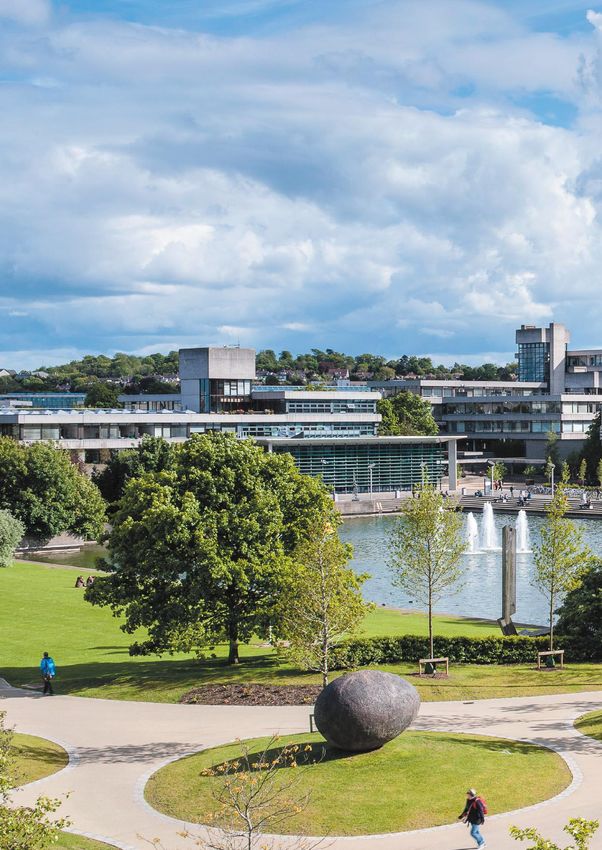
University’s main Dublin campus occupies an extensive parkland
                                                                       Over the last decade UCD researchers have increased their annual
estate of more than 133 hectares and offers world-leading
                                                                       number of papers in the international literature by 50% and have
facilities including the UCD Sutherland School of Law, UCD
                                                                       co-authored more than 15,000 papers with researchers from more
O’Brien Centre for Science, UCD Lochlan Quinn School of Business
                                                                       than 130 countries. These papers are cited by other researchers at
and UCD Student Centre.
                                                                       a rate that is 73% above the world average.
As Ireland’s largest university, with its great strength and
diversity of disciplines, UCD embraces its role to contribute to the
flourishing of Ireland; through the study and discussion of people,
                                                                       Defining educational excellence:
society, business, economy, culture, languages and the creative        Teaching and Learning at UCD
arts, as well as through research and innovation.                      UCD is globally recognised for its excellence in teaching and
                                                                       learning- the university has 6 subjects ranked in the top 50 in the
                                                                       world and has 14 subjects in the top 100 (QS World Ranking by
Tackling global challenges: Research                                   subject 2019). This quality of teaching is complemented by a high
& Innovation at UCD                                                    standard of support. Every incoming first year is assigned a peer
Research and innovation are essential drivers of a dynamic             mentor and there are student advisers for every programme.
economy, an informed society and a vibrant culture. The spectrum
                                                                       UCD is Ireland’s leader in graduate education with over 9,000
of research and innovation at UCD encompasses individual
                                                                       graduate students, almost a quarter of whom are graduate
scholars, small, medium and large research groups, start-up
                                                                       research students; 1,571 PhD students benefit from a structured
companies and large-scale collaborations with industry and other
                                                                       PhD programme, as well as the research-led education culture at
partners. Research is conducted within each of the University’s
                                                                       UCD.
extensive range of disciplines, and in multidisciplinary research
programmes addressing challenges of global scale.
In 2017/18 UCD researchers secured €122.4 million in research
grants from national and international funding agencies,
companies and foundations. Since 2008 UCD researchers have
secured over €1 billion in such grants. Their research underpins
national research and technology institutes and centres, including
the SFI funded Insight Centre for Data Analytics, Irish Centre for

                                                                                                                  UCD Social Sciences        1
What are
  Social Sciences?
                                                              Why do people
  How do social, cultural,                                    behave the way
  political and economic                                      they do?
  forces shape our lives and
  the world in which we live?

Research and education in the social sciences directly impacts the way we in
Ireland, and further afield in Europe and the rest of the world, view, interpret
and make decisions towards a better society.

When you study social sciences, you learn to ask questions about      The major social sciences subjects at undergraduate level in UCD
society and social relationships. Why do people vote the way          include:
they do? What precipitates economic growth? What behaviours             • Archaeology
mitigate climate change? Social sciences explore the nature of
                                                                        • Economics
our society and examine many issues impacting humanity such as
crime and violence, social and economic inequality, gender justice      • Geography
and sustainable cities.                                                 • Information & Communication Studies
Social sciences students explore how people behave as individuals       • Philosophy
and in human groups - from families and teams to companies and          • Politics and International Relations
government agencies. Social sciences investigate the development        • Psychology
of societies - past, present and future by combining quantitative
                                                                        • Social Justice
data, such as social and economic statistics, with qualitative
methods, such as interviews and focus groups. Social sciences           • Social Policy
research has transformed our understanding of how societies             • Sociology
function, how they are governed, how we work, how and where           Analysing data is a key skill for social scientists and Mathematics
we live, how we communicate and how we learn. Studying social         and Statistics are available to combine with social sciences
sciences at UCD, you will learn to analyse, criticise and challenge   subjects as part of UCD's social sciences degree.
beliefs and assumptions - including your own.

  2   UCD Social Sciences
Why
Social Sciences
in UCD?
UCD leads the way with the broadest and most diverse Social Sciences
programmes in Ireland offering innovative social sciences education and
research to address the critical, social, political, cultural and economic concerns
of our time.
The social sciences at UCD have an established international         UCD is highly ranked for social sciences in all the main
reputation – attracting students from all over the world to social   international rankings of universities.
sciences undergraduate and graduate programmes.
                                                                                   UCD is among the top 50 universities in the world
  • Internationally renowned academics                                  TOP        for the following subject:
  • Real-world professional experience with an optional                 50           • Library and Information Management
    internship
  • Research skills modules                                                        UCD is among the top 100 universities in the world
                                                                        TOP        for the following subjects:
  • Opportunities to study abroad in leading universities in the
    UK, US, Europe and Asia
                                                                       100           • Archaeology
  • Student support with academic advisers, student advisers                         • Politics and International Relations
    and peer mentors
                                                                                     • Philosophy
  • Alumni network of Irish and global leaders
                                                                                     • Social Policy & Administration
  • Global reputation with high university rankings across diverse
    subjects

                                                                                                                UCD Social Sciences     3
Hong Kong

                                                                                                  Malta

Social Sciences
                                                                                                  Switzerland

Research
Social sciences research has transformed our understanding of how societies
function. UCD Social sciences research directly impacts the way we view,
interpret and make decisions towards a better society.
The scope of social sciences research addresses questions           youth well-being; migration; sustainable development and
relating to Ireland, the EU and other international regions.        behavioural sciences. Students will have opportunity to work
Areas of research expertise within UCD social sciences include      with internationally renowned academics by completing research
regulation and governance; leadership; identity; conflict and       skills modules and research projects over the duration of their
inclusion; ethical public policy; human development; child and      undergraduate studies.

Undergraduate Research and Enquiry
WHAT WILL I LEARN?                                                CURRENT UNDERGRADUATE RESEARCH PROJECTS
Students studying social sciences at UCD will develop strong       • Impact of wealth and population on Olympic success
research skills and will:                                          • What factors influence feelings of personal safety?
  • Work with leading Irish researchers                            • World Bank development projects and internal
  • Work with data to understand social and economic                 displacement
     problems                                                      • Economic development and obesity
  • Critically evaluate others’ research work                      • Effect of Brexit on Ireland-UK trade
  • Present and communicate research results.                      • Media & quality of US democracy in Trump era
  • Undertake independent research on a local, national or         • One parent households and child educational performance
     global issue of interest to them.
                                                                   • Has quality of life in Ireland declined since 2008?
                                                                   • Human Computer Interaction
                                                                   • Information and digital literacy

                                                               What our Students Say
                                                                 The sociology component of my degree has allowed
                                                                  me to develop practical research skills and a critical,
                                                                    analytical and informed world-view. I have studied
                                                                     gender, crime, migration, housing inequalities,
                                                                       work, culture, masculinities, social stratification
                                                                         and classical and contemporary theory.
                                                                             Jake Ryan
                                                                               Sociology Student

  4   UCD Social Sciences
Did
    UCD has more than
                                                                            you know?
    400
    exchange partners
                                                                        You can study abroad even if you
                                                                         don't speak a foreign language.
                                                                       UCD has exchanges with Australia,
       worldwide                                                         Canada, New Zealand, the UK
                                                                          and the US as well as English-
                                                                         speaking opportunities in Asia
                                                                                   and Europe.

Study Abroad
Study Abroad                                                          What our Students Say
UCD encourages all undergraduate students to experience                                  I met friends for life on my year abroad in
studying abroad. In an increasingly complex global age, UCD                              Singapore who I speak to daily. I learned
provides an international context for your studies, giving you the                       how to be more independent and I feel like
opportunity to benefit from a transformational experience in the                         there's nothing I can't do now. I could not
wider world.                                                                             recommend doing a year abroad enough!
All UCD social sciences degrees support students to apply for                            Niamh Simmons
study abroad opportunities. Students of BSc Psychology, BSc                              Psychology Major - studied for a year
Economics and BSocSc Social Policy and Sociology may apply                               abroad at Nanyang Technological University,
for a year abroad in a partner university, extending their degree                        Singapore
from 3 to 4 years and leading to the award of a BSc or BSocSc
International degree.                                                                    Having the opportunity to study in an
Students of BSc Social Sciences may apply for a semester or a year                       international and diverse university for my
study abroad opportunity depending on their subject or pathway                           year abroad, while also being immersed in
choices as one of the third year options offered in their 4 year                         a very different culture, has enhanced my
degree. Check subject pages for more information available for                           understanding of international societies and
each subject.                                                                            policies. This has deepened my knowledge of
                                                                                         my field of study at UCD, as well as helped
                                                                                         in shaping my career prospects for the
How do I apply?                                                                          future.
You apply for study abroad the year before you go. You will be                           Rebecca Westman
invited to an information session in Year 2 and receive guidance on                      Economics & Social Policy Major
how to apply.                                                                            Year spent at KU Leuven, Belgium

                                                                                                             UCD Social Sciences       5
Social Sciences
Graduate Study
There is no limit to where a social sciences degree can take you         You may also choose to convert your undergraduate degree with
in your future career. You may undertake a Masters related to            a Higher Diploma or Master's in a brand new discipline. Graduates
a discipline you studied in your undergraduate degree, such as           in social sciences subjects can apply directly to selected Master's
international relations, experimental archaeology or behavioural         degrees in Law, Business and Computer Science as well as many
economics. A social sciences degree also allows you to progress to       other disciplines.
a range of interdisciplinary Master's degrees in fields such as public
                                                                         See below for a sample of Master’s degrees open to Social
policy, cognitive science, criminology, human rights, geopolitics,
                                                                         Sciences students in UCD. Visit subjects pages to find out how to
development studies, equality studies, digital information
                                                                         specialise in your chosen social sciences subject area and to find
management, urban environment, world heritage management
                                                                         out more about your subject-specific graduate study and career
and more.
                                                                         options.
Civil and Public Service                                                 Business and Finance
Master of Public Policy                                                  MSc Management
MSc European Governance                                                  MSc Project Management
MA/MSc Politics & International Relations                                MSc Strategic Management & Planning
MSocSc Crime, Violence & Conflict                                        MSc Supply Chain Management
MSocSc Race, Migration & Decolonial Studies                              MSc Human Resource Management
MSocSc Health, Wellbeing & Society                                       MSc Marketing Practice
MSc World Heritage Management & Conservation                             MSc Marketing
                                                                         MSc Behavioural Economics
Non-Governmental Organisations/Not-for-Profit Sector
MA Geopolitics & the Global Economy                                      Law and Society
MA/MSc International Development                                         Masters in Common Law
MSc Equality Studies                                                     LLM European Law & Public affairs
MSc Environmental Policy                                                 MSc International Business & Law
MSc Geographies of the Global South                                      MSc Human Rights
MSc Sustainable Agriculture & Rural Development                          MSc Criminology & Criminal Justice

Technology
MSc Computer Science
MSc Data Analytics
MSc Digital Information Management
MSc Information Systems
MSc Digital Innovation
MSc Social Data Analytics

   6    UCD Social Sciences
Social Sciences
Careers
Graduates of UCD social sciences progress to careers in             You'll find more detailed information relevant to each discipline
government, NGOs, the media and businesses as economists,           on the subject pages in this prospectus.
policymakers, environmentalists, activists, information managers,
                                                                    UCD provides career support to students throughout their time
HR managers, entrepreneurs, journalists, statisticians, urban
                                                                    in UCD including career coaching and opportunities for personal
planners, archaeologists, librarians, secondary school teachers,
                                                                    and professional development through the University's Career
social workers, researchers and many more professions across the
                                                                    Development Centre. Find out more at www.ucd.ie/careers
public and private sectors.

Politics and Policy                                                 Non-Governmental Organisations/Not-for-Profit Sector
Politician                                                          Corporate Social Responsibility
Lobbyist                                                            Human Rights Lawyer
Policy Analysis                                                     International Agencies
Diplomatic Service                                                  Humanitarian NGOs
Public Affairs Consultant                                           Environmental Policymaking
Government Social Researcher                                        International NGOs
Media Strategist                                                    Policy and Environmental Consultancy
Campaign Manager                                                    Charity Sector

Media and Communications                                            Public and Civil Service
Journalism                                                          Foreign Affairs
Communications                                                      Public Sector Management
Broadcasting                                                        Health Service Management
Print and Online Media                                              Semi-State Bodies
Public Relations                                                    Government Agencies
Public Affairs                                                      Heritage Management
Publishing
                                                                    Business and Finance/Human Resources
Knowledge Management Analysis
                                                                    Management Consultancy
Information Management
                                                                    Marketing and Advertising
Education and Research                                              Recruitment
Secondary School Teacher                                            Business Analytics
University Lecturer                                                 Banking and Finance
Academia                                                            Insurance
Social Researcher                                                   Corporate Social Responsibility
Research Analyst                                                    Market Research Analyst
Data Analyst

                                                                                                               UCD Social Sciences      7
Social Sciences
Undergraduate Degree Options
September 2020 entry
Making the Right Choice
There are four degrees in social sciences in UCD. Each degree has a separate CAO code.
BSc BSocSc BSc BSc
SOCIAL SCIENCES SOCIAL POLICY & PSYCHOLOGY ECONOMICS
SOCIOLOGY
4 years 3 years 3 years 3 years
DN700 DN750 DN720 DN710
The four-year BSc in Social This three-year BSocSc Social The three-year BSc in The three-year BSc in Economics
Sciences is a new social sciences Policy & Sociology degree is Psychology is a professional is a Single-Major degree for
degree developed for students a Joint Major in Social Policy degree accredited by the students who are focused on
who want to explore a diverse and Sociology. This degree was Psychological Society of Ireland. studying only economics as a
array of social sciences subjects. previously named the BSocSc You study Psychology in UCD single subject. Graduates often
Throughout your degree, you in Social Science. Graduates as a single subject degree only. progress to further study to
study core modules in your often progress to further study Graduates often progress to become Economists. When you
chosen subjects along with to become social workers and further study to become Clinical apply for this degree via the
optional modules in a variety related professions. When you Psychologists. When you apply CAO, you choose DN710 BSc
of social sciences subjects. apply for this degree via the for this degree via the CAO, you Economics.
There are options to change CAO, you choose DN750 BSocSc choose DN720 BSc Psychology.
your subject choices at the end Social Policy and Sociology.
of first year if you wish. The
course map overleaf shows what
subject combinations you can
choose.
Leaving Certificate Minimum Leaving Certificate Minimum Leaving Certificate Minimum Leaving Certificate Minimum
Entry Requirements Entry Requirements Entry Requirements Entry Requirements
Grade H5 in two subjects and Grade H5 in two subjects and Grade H5 in two subjects and Grade H5 in two subjects and
a minimum of Grade O6/H7 a minimum of Grade O6/H7 a minimum of Grade O6/H7 a minimum of Grade O6/H7
in the remaining four subjects. in the remaining four subjects. in the remaining four subjects. in the remaining four subjects.
06/H7 in English, Irish and 06/H7 in English, Irish and 06/H7 in English, Irish and 06/H7 in English and Irish, H5
Mathematics. Mathematics. Mathematics. in Mathematics.
Go to page 50 to view all entry routes into these degrees.
8 UCD Social SciencesBSc Social Sciences DN700
With the four-year Social Sciences degree, you choose DN700 at CAO and then select
your preferred option below. Your subject choices are guaranteed. There are options to BSc Social Sciences
change subject choices at the end of first year if you wish.
Choose one of these five options
Two Subject
Archaeology, Geography Computational Economics, Mathematics Philosophy, Politics
Combination
& History Social Science & Statistics & Economics
TWO SUBJECT COMBINATION
MAJOR/MINOR
JOINT MAJOR
With a Major/Minor degree, such as
You study an equal number of modules
Archaeology with Art History, you study
in both subjects, such as Archaeology
substantially more modules in your
and Economics.
Major subject, that is, Archaeology.
Studying Archaeology Studying Economics Studying Geography Studying Information &
Communication Studies
as a Joint Major with one as a Joint Major with one as a Joint Major with one as a Joint Major with one
of the below: of the below: of the below: of the below:
Economics Sociology Archaeology Sociology Archaeology Sociology
Archaeology Sociology
Geography Mathematics Geography Mathematics Economics Mathematics
Economics Mathematics
Information & Information & Information &
Communication Social Justice Communication Social Justice Communication Social Justice
Geography Social Justice
Studies Studies Studies
Philosophy Statistics Philosophy Statistics Philosophy Statistics Philosophy Statistics
Politics & Politics & Politics &
International International International Politics &
Relations Relations Relations International
Relations
OR with one Minor subject OR with one Minor subject OR with one Minor subject
OR with one Minor subject
Art History Irish Folklore History German English History
Music Irish
Celtic Civilisation Chinese Chinese Irish Geology Irish
Greek & Roman Greek & Roman
Irish Linguistics
Civilisation Civilisation
Geology
Studying Politics and
Studying Philosophy Studying Sociology Studying Social Justice
International Relations
as a Joint Major with one as a Joint Major with one as a Joint Major with one as a Joint Major with one
of the below: of the below: of the below: of the below:
Archaeology Sociology Archaeology Philosophy Politics & Archaeology Philosophy
Archaeology International
Economics Mathematics Economics Sociology Relations Politics &
Economics International
Geography Social Justice Geography Social Justice Economics Mathematics Relations
Information & Information & Geography Social Justice Geography Sociology
Communication Statistics Communication Statistics
Information & Information &
Studies Studies
Communication Statistics Communication
Politics & Mathematics Studies Studies
International
Relations OR with one Minor subject Philosophy
You can also study
OR with one Minor subject Linguistics Irish OR with one Minor subject selected social sciences
Chinese Irish Chinese Italian Art History German subjects as part of a
degree in Law or a degree
Greek Linguistics French Spanish English Irish
in Arts and Humanities.
German Linguistics Italian Visit www.myucd.ie to
find out more.
UCD Social Sciences 9Years 3 & 4 Opportunities DN700
There are many opportunities and benefits available to students within the structure of
BSc Social Sciences to explore their interests and develop valuable skills depending on BSc Social Sciences
their subject or pathway choices.
INTERNSHIP STUDY ABROAD RESEARCH-BASED LEARNING EXPERIENTIAL LEARNING
Students have the opportunity Students can apply Students will be introduced to a Students will have the
to apply for an optional to study abroad for a range of approaches to learning opportunity to participate in
internship over a semester semester or a year in Year that are driven by a process of an engaged learning process
in Year 3 depending on their 3. This transformative inquiry including problem-based where they “learn by doing”
subject choices. Students who experience enhances learning, project work, field-work and then reflect on the
remain on campus will also have awareness of cultural and case studies. experience to develop new
opportunities to become world differences and global skills, attitudes or new ways of
and work ready. citizenship. thinking
Internship Programme
Social Sciences Internship Programme Why Internships?
The Social Sciences Internship Programme provides students An internship is an experiential learning experience that provides
with the opportunity to apply for an optional internship with a lifelong academic, personal and professional benefits. With an
government agency, not-for-profit organisation or business to internship you can:
gain valuable work experience related to their field of study. A
• apply your skills and knowledge in the real world of work
professional placement enables you to put the knowledge and
skills you acquire in Year 1 and Year 2 into practice and helps • increase your understanding about a particular role or
inform your future career choices. industry sector
• enhance your confidence in a workplace context to ease your
What is an Internship? future transition to professional life
In an internship, you take up a role in an organisation to gain • try out roles and organisations to see what suits you and
work experience for a fixed period of time. Employers value the whether you suit that particular industry or job type
skills and experience gained by graduates who have completed
internships. • increase your awareness of possible roles you may not have
considered
How long is an Internship? • grow your network providing you with opportunities when
you are seeking employment as a graduate and throughout
Internships are offered in Year 3 and involve a one semester
your future career
placement.
• gain experience in the world of professional work and real-
world organisational dynamics
• demonstrate your skills, ability and attitude to future
employers
What our Students Say
I benefited from the opportunity to meet and learn from
professionals working in my chosen field of study. I gained
invaluable knowledge of what to expect on a day-to-
day basis at the very intersection where theory meets
practical application. This opportunity answered many
of my questions and helped cement my decision
about the career I would pursue after college.
Anthony Byrne
Social Sciences Student
10 UCD Social SciencesStudying Social Sciences
with a Language
Studying Social Sciences with languages on the BSc Social Sciences degree
programme, you will spend Year 3 at one of our partner Universities across the
globe including in France, Germany, Italy, Spain, Mexico, Chile and China.
This exciting pathway combines study in a social sciences discipline In Year 3, you will live and study in another city, immersing yourself in
with the opportunity to study a language. Along with developing a the culture of another country, exploring your social sciences subject in
high standard of language competency, you will enjoy a transformative another environment. You will usually take social sciences modules in the
educational experience that will inform you about the world around you. host language (except Chinese where you will study the Chinese language
In addition to building your proficiency in speaking, writing and listening, along with social sciences modules through English). In your final year,
you will develop greater awareness of the cultures and societies in which you return to UCD and take advanced modules in both your social
the language you are studying is embedded. With the exception of sciences and language subject.
French (H4 in Leaving Certificate or equivalent) and Irish (H3 in Leaving
Optional modules for this pathway will allow students explore social
Certificate or equivalent), you have the option to study these languages
sciences in a global context, gaining insight into comparative social
from beginner level.
science questions and key global issues.
During your first two years, you will take modules in your chosen social
As a social sciences student, you will be introduced to research methods
science discipline (Archaeology, Economics, Geography, Information and
from your first year. Throughout your degree, you will develop your
Communication Studies, Philosophy, Politics and International Relations
research skills and learn to analyse, evaluate and present your knowledge
or Sociology) and in your chosen language (French, German, Spanish,
in a compelling and useful way, with advanced training and research
Italian, Irish or Chinese).
opportunities available during your final year.
MINOR SUBJECT
MAJOR SUBJECT
Chinese French German Irish Italian Spanish
Archaeology ü ü
Economics ü ü ü
Geography ü
Information & Communication Studies ü
Philosophy ü ü
Politics and International Relations ü ü ü ü ü ü
Sociology ü ü ü
Careers
The combination of a social sciences discipline and a language opens the Many relevant graduate study opportunities are available at UCD
door to a range of different careers across the public, private and not-for- including Human Rights, European Public Affairs and Law, Modern
profit sectors, including the Irish Civil Service, the European Commission, Languages, Development Practice, European Politics & Policy,
International Agencies such as the UN, IMF and World Bank, NGOs, Nationalism & Ethnic Conflict, Philosophy & Public Affairs, Social Data
tourism, teaching and multinational and Irish companies. Analytics and Race, Migration & Decolonial Studies.
UCD Social Sciences 11DN700
Archaeology, Geography
and History
Archaeology
This pathway brings together the archival Students will study modules in Archaeology,
strengths of History, the spatial expertise Geography and History as well as
of Geography, and the material analytical interdisciplinary modules designed specifically
approaches of Archaeology to develop for this programme. This will include key
understandings of how the landscape shaped methods and principles of the three disciplines,
humans at the same time as humans shape drawing on Irish and international case studies
the landscape. It is a unique interdisciplinary and standards. Teaching will include classroom
combination of natural and cultural based learning, laboratory, archive and field
perspectives on the formation, cultural components, with an emphasis on high levels of
significance and management of the landscape. student engagement, culminating in a student-
The programme has clear links to the led interdisciplinary research project in the final
expanding Heritage sector and students will year of the programme. A range of assessment
develop a range of transferable skills. types including essays, reviews, portfolios,
lab reports, projects, exams and substantial University of Vienna in Austria is one of many
independent research will be undertaken. possible study abroad destinations.
Study Abroad
Careers with Archaeology, Geography & History
You can apply to study abroad for a semester
As well as developing a deeper understanding Graduates of this programme will be well or a year in partner universities worldwide.
of the relationships between humans and their placed for employment in a range of careers Previous Students have studied abroad in:
environments through space and time, there or for further study. The emphasis on
is a strong emphasis within this programme understanding dynamic human-environment Austria Spain
on developing the documentary, archival, interactions is relevant to careers in planning, Cyprus Sweden
cartographic and fieldwork skills of students. heritage management, sustainability or Denmark UK
This range of skills relevant to Archaeology, to postgraduate work in any of the three
France US
Geography and History are relevant to a range disciplines. Other potential careers include:
of careers, and are complemented by the core secondary school teaching, the archaeology Germany China
transferable skills of writing, research, analysis, profession, the museum sector, Geographic Italy Australia
critical thinking and oral communication that Information systems, research careers, Norway
are key elements of this programme. surveying, cartography, archive and library
work, as well as consultancy roles in both the
public and private sector.
Internships
In Year 3, you can apply for an optional
What our Students Say internship in a range of organisations in the
Studying this combination of subjects was not only academically public and private sectors, for example:
beneficial but very exciting. Although each discipline has its own unique
GIS Tourism
characteristics, they perfectly complemented each other, which meant
that studying one subject strongly promoted my development in the Planning NGO's
others. As a result of the great variety of modules offered, I could always Heritage Museums
find the ones that matched my interests and I could gain and develop Conservation Charities
strong critical and analytical skills through courses that I truly enjoyed.
During my time as a student, I received incredible support from the
teaching and technical staff, who went far beyond my expectations.
I would recommend this combination of courses to anyone who is Contact Us
interested in both environmental and social sciences.
www.ucd.ie/socialsciences
Csaba Horvath
Archaeology and Geography Graduate +353 1 716 8179 / 8312
landscapesandsociety@ucd.ie
12 UCD Social SciencesArchaeology, Geography and History DN700
Year 1 Engage with the Principles
Introduction to the
Creating History Mapping a Sustainable World Making the Irish Landscape
Archaeology of Ireland
Anthropology Exploring Archaeology The Making of Modern Europe Peoples, Places, Regions
Year 2 Deepen Your Understanding
Archaeology of Landscapes History Today Fieldstudies in Ireland Global Historical Geographies
Intro to GIS for
Cultural Heritage Early Medieval Ireland Islam & Christianity
the Social Sciences
Many additional specialist options are available in Year 3 and Year 4 and options are reviewed and updated regularly.
Year 3 Refine your Knowledge
Florence: The making of a
Optional Internship The Irish Revolution Environment and Sustainability
medieval city-state
Environmental Archaeology
Optional Study Abroad Overseas Geography fieldcourse The Age of Stonehenge
in Practice
Year 4 Further
Further Specialisation
Specialisation
Living on the Edge: Ireland History of the British
Dissertation The Urban Environment Heritage Management
and Empire AD 400–700 Atlantic, 1607–1776
Historical Geography of Ireland
River Catchment Management Public Archaeology The Archaeology of Collapse
in the 19th century
BSc Archaeology, Geography & History
UCD Graduate Study and Career Opportunities
Specialise in Archaeology, History Complementary/Conversion Shape your Career
or Geography with UCD Master’s Degrees
MA Archaeology | MSc Urban Environment MSc Environmental Policy GIS Technician/ Consultant
MSc Experimental Archaeology MSc Information Systems Archaeologist
MSc World Heritage Management MSc Sustainable Agriculture & Rural Cartographer/Surveyor
MA History | MA Geography Development Archivist/Libraries
MA European History | MA in Public History Master of Business Studies Secondary School Teacher
MSc Geographies of the Global South MSc International Management Planning
MA Geopolitics and the Global Economy MSc Marketing Management Consultancy
MSc Applied Geospatial Analysis PME Professional Masters in Education Researcher in the public or private sector
Master of Public Policy Corporate Environmental Responsibility
MSc Digital Curation Arts and Education Policymaking
MLitt | PhD MSc Computer Science Environmental Policymaking
Masters in Common Law
Research & Academia
UCD Social Sciences 13DN700
Computational Social
Science
Archaeology
Do you want to explore what big data can social phenomena and individual behaviour.
uncover about individuals, social networks The new BSc degree in Computational Social
and social groups? Big data insights about Science is at the forefront of this development
how people behave are critical, not only for in Europe. It provides a unique combination of
organisations such as Facebook, Google and training in social sciences subjects. You learn
Twitter, but increasingly all organisations in how to understand human social behaviour
both the private and public sector. The new through data analysis, social simulation, and
BSc degree in Computational Social Science mathematical modelling, providing crucial skills
provides excellent employment opportunities for a competitive job market. Students usually
for social media companies, but also for attend lectures and participate in seminar
traditional sectors where the analysis of social discussions and lab tutorials. Assessment
and consumer data is ever more important. is based on assignments throughout the
Strong analytical skills are combined with solid semester, small group work, individual
training in social sciences subjects, such as reports, traditional exams and other forms of University of Copenhagen in Denmark is one
Sociology, Politics, Economics or Geography. assessment. of many possible study abroad destinations.
Our social world is dramatically changing. We
If you do not achieve a H4 or higher in Leaving
are all connected and leave digital footprints
Certificate Mathematics (or equivalent), Study Abroad
behind.
then you must complete an introductory
Computational Social Science is about Mathematics module in Semester 1 of your first Semester-long study opportunities will
leveraging the power of big data, computer year. be offered in a number of European
simulations and social networks to understand destinations, Canada and Australia.
Careers with Computational Social Science Internships
This degree is designed to prepare students There is also increasing demand for graduates In Year 3, you can apply for an optional
for employment related to the analysis of who can combine social sciences training with internship in a range of organisations in the
social data. Big data related expertise is in analytical and programming skills in Healthcare, public and private sectors, for example:
high demand in Information Technology Government, Education, Entertainment and
companies including social media giants such Media. The degree leads to a range of graduate Social Data Analytics
as Google, Twitter and Facebook as well as study opportunities in social sciences, social Data Driven Analytics
traditional sectors such as Finance, Insurance, data analytics, statistics or computer science. Social Networks
Manufacturing, Retail and Energy.
Telecommunications
Finance
What our Students Say Healthcare
Computational Social Science allows me to study areas I’m interested Travel
in, ranging from political and sociological studies to the mathematical Government
aspects of research. I feel computational social science is an important,
emerging field which combines social sciences and computer science by Manufacturing
creating a link between the two and thereby providing an understanding
of how to interpret social data. This degree will provide me with the skills
and competencies to understand the ever-increasing world of big data,
and how to accurately analyse vast amounts of information that is being
Contact Us
driven by a more connected digital space. I know that this will provide me
UCD School of Sociology
with many interesting and unique opportunities and pave the way for a
rewarding career. www.ucd.ie/sociology
Saoirse McKenna thomas.grund@ucd..ie
Computational Social Science student
14 UCD Social SciencesComputational Social Science DN700
Year 1 Engage with the Principles
Introduction to Introduction to Plus core modules in any two of
Statistical Modelling the following subjects:
Computational Social Science Programming 1
Sociology
Geography
Economics
Linear Algebra 1 Digital Judgement Information and Social Media
Politics
Year 2 Deepen Your Understanding
Introduction to Continue with core and option
Calculus 1 Probability Theory modules in your two subjects:
Programming 2
Sociology
Geography
Economics
Politics
Many additional specialist options are available in Year 3 and Year 4 and options are reviewed and updated regularly.
Year 3 Refine Your Knowledge
Statistical Data Mining Social Dynamics and Networks Web Multimedia Continue with your two subjects:
Sociology
Geography
Economics
Relational Databases and
Optional Study Abroad Optional Internship Politics
Information Systems
Year 4 Further Specialisation
Workshop and Research Project Law Ethics and Data Data Programming with R Continue with your subjects:
Sociology
Geography
Economics
Data Mining Introduction to InformationSpatial
Spatial SystemsInformation AdvancedAdvanced
PredictivePredictive
Analytics
Data Mining Politics
Creative Thinking Systems Analytics
BSc Computational Social Science
UCD Graduate Study and Career Opportunities
Specialise with Complementary/Conversion Shape your Career
UCD School of Sociology Master’s Degrees
MSc in Computer Science Data Analyst
MSc in Social Data Analytics
MSc Quantitative Finance Researcher
MSc in Sociology
MSc Digital Information Management Journalist
MSc Management Programmer
MSc Digital Marketing Consultant
MLitt Sociology | PhD Sociology Masters in Common Law Civil Servant
PhD Complex Systems and Computational MSc in Data Analytics
Social Science
MSc in Business Analytics
PhD Quantitative Social Science
Research & Academia optional
UCD Social Sciences 15Economics, Mathematics DN700
and Statistics
Archaeology
If you are interested in Mathematics, Statistics Through your study you will develop skills
and Economics, then this programme enables in data analysis, and be supported in the
you to shed light on these areas in depth while development of your analytical and problem-
also emphasising how they complement each solving skills, as well as in the application of
other. Economists employ mathematics to these skills to understanding real economic
design theoretical models and use statistics issues. The degree will provide a structured
to test these models and to explore the approach to developing skills of analysis,
tremendous amount of data that is generated problem design and resolution using
by the economy. In turn, the models and mathematics, economic theory, data analysis
data that are part of the study of Economics and statistical methods. Assessment will be
provide an interesting source of applications through a combination of end-of-semester University of New South Wales in Sydney,
for students that have learned mathematical written examinations, projects and continuous Australia, is one of many possible study
and statistical skills. You will study Economics, assessment. abroad destinations.
Mathematics and Statistics, providing you with
In order to study this degree, we strongly
a solid foundation in all three subjects. You will
recommend that you have at least a Grade
Study Abroad
also be given the opportunity to specialise in
H4 in Leaving Certificate Mathematics or Students may apply to study abroad at
the latter stages of your degree, for example,
equivalent. If you do not achieve this grade
in applied economics, advanced statistics, international partner universities in third
or higher, then you must complete an
mathematical modelling of complex processes, year.
introductory Level 0 UCD Mathematics module
or developing “Big Data” skills.
in Semester 1 of your first year. US Netherlands
Italy Belgium
Careers with Germany Australia
Economics, Mathematics & Statistics
Many students pursue graduate study in further developing analytical and professional Internships
Economics, Mathematics or Statistics leading skills. Postgraduate qualifications are necessary
to Masters and PhD degrees. Both the School of to work as a professional economist. In Year 3, you can apply for an optional
Economics and the School of Mathematics and internship in a range of organisations in the
Statistics offer Masters programmes aimed at public and private sectors, for example:
Broadcasting Finance
Communications Business
What our Students Say Banking Journalism
I have always enjoyed studying Economics
and Mathematics and so I had an interest
in pursuing this subject combination in my
degree. I chose Economics, Mathematics Contact Us
and Statistics as my degree to gain a solid
foundation in all three subjects as I am UCD School of Mathematics and
interested in pursuing a career in quantitative Statistics
research in the Financial Sector. I enjoy
the practical and theoretical elements to www.ucd.ie/mathstat
the degree and the teaching staff are very mathsandstats@maths.ucd.ie
supportive.
Thomas Johnston
Student
16 UCD Social SciencesEconomics, Mathematics and Statistics DN700
Year 1 Engage with the Principles
Introduction to Economics Calculus Principles of Microeconomics Practical Statistics
Combinatorics & Number Theory Principles of Macroeconomics Statistical Modelling Linear Algebra 1
Introduction to Programming
Year 2 Deepen Your Understanding
Intermediate Microeconomics
Probability Theory Multivariable Calculus Intermediate Macroeconomics
1&2
Algebraic Structures Linear Algebra 2 Analysis Predictive Analytics
Many additional specialist options are available in Year 3 and Year 4 and options are reviewed and updated regularly.
Year 3 Refine Your Knowledge
Econometrics Complex Analysis Time Series Analysis Specialist Economics Options
Stochastic Models Financial Mathematics Optional Study Abroad Optional Internship
Year 4 Further Specialisation
Multivariate Statistics Monte Carlo Inference Statistical Machine Learning Optiminisation in Finance
Specialist Economics Options Cryptography Game Theory Research Project
BSc Economics, Mathematics and Statistics
UCD Graduate Study and Career Opportunities
Complementary/Conversion
Specialise with UCD Shape your Career
Master’s Degrees
MSc in Applied Economics GradDip Actuarial Science Economist
MA Statistics PME Professional Masters in Education Financial Consultant
MSc Data and Computational Science MSc Computer Science (Conversion) Trainee Accountant
MSc Data Analytics MSc Business Analytics Trainee Actuary
MSc Quantitative Finance Journalist
MSc Actuarial Science Teacher
MLitt Statistician
PhD Civil Servant
optional
Research & Academia
UCD Social Sciences 17DN700
Philosophy, Politics
and Economics
Archaeology
Philosophy, Politics and Economics (PPE) This programme provides both a well-
provides a broad and deep understanding rounded education in Philosophy, Politics
of how a society works, and indeed how and Economics, and every opportunity for
international society works. It examines the you to determine for yourself which subject
complex economic and political forces in play, or combination of subjects you would like to
the problems of measuring and assessing the specialise in. Generally, assessment will be by
health of society, and the principles of justice take-home essay and by exam-based essay
that should guide political decision-making in Philosophy and Politics, and by project
to improve society. PPE will teach students and mathematical assignment in Economics.
how to read beyond media headlines, and Continuous online assessment may also be
University of Connecticut in Mansfield, US, is one
where to find more information about the hot used. There will be an optional final-year
of many possible study abroad destinations.
policy questions of the day, in national and research project.
international contexts. PPE provides a thorough
grounding in all three disciplines that are core
If you do not achieve a O3/H7 or higher Study Abroad
in Leaving Certificate Mathematics (or
to the social sciences.
equivalent), you must complete an You can apply to study abroad for a
The programme is quite structured at first, but introductory Mathematics module during semester in partner universities offering PPE
allows more choice and more specialisation Semester 1 of your first year. programmes across the globe including:
with each successive year.
Belgium Germany
Careers with Netherlands Canada
Switzerland US
Philosophy, Politics and Economics
The PPE degree combines three disciplines that skills in research, analysis, written expression
share a commitment to rigour and problem- and interpreting data.
solving that make it an ideal programme
There are considerable national and
of education for politicians, civil servants,
international employment opportunities in
journalists and managers. You will develop
the public sector and in industry. Graduates
essential skills for any career that requires
may pursue a specialist Master’s degree in
analysis, communication and problem solving.
Philosophy, Politics or Economics or progress
You will take a multidisciplinary approach to
to various interdisciplinary Master’s degrees in
a wide range of policy issues to practice your
related subjects.
What our Students Say
I chose to study Politics, Philosophy and Economics (PPE) because
I really enjoyed studying Economics in school and always knew
that it was an area that I wanted to pursue. I also had an interest
in current affairs. The skills I am learning will be beneficial to future
employers who will be interested in employing critical thinkers
Contact Us
and graduates who can apply their knowledge to many fields. I am www.ucd.ie/socialsciences
learning how to form a sound argument and developing research
skills from Philosophy, while gaining analytical and problem-solving +353 1 716 8267
skills from Economics and the study of Politics is expanding my
ppe@ucd.ie
communication and teamwork abilities.
Rebecca Troy
Student
18 UCD Social SciencesPhilosophy, Politics and Economics (PPE) DN700
Year 1 Engage with the Principles
Foundations of
Introducing PPE Introduction to Economics Introduction to Ethics
Contemporary Politics
Foundations of Political Theory
Introduction to Microeconomics Critical Thinking Principles of Macroeconomics
and International Relations
Introduction to
Foundations of Political research Problems of Philosophy Additional Option
Quantitative Economics
Year 2 Deepen Your Understanding
Philosophy of Social Knowledge and Intermediate
Individuals and the State One Philosophy Option
Science Scepticism Microeconomics 1
Either Additional option from
Research Methods in Intermediate
Statistics for Economists Comparative Politics either Philosophy, Politics
Political Science Macroeconomics
or International Relations or Economics
Many specialist options are available in Year 3 and Year 4 and options are reviewed and updated regularly.
Year 3 Refine Your Knowledge
Either Comparative Politics Intermediate Statistics for International
Economists Political Two additional
Critical Theory
or International Relations Microeconomics 2 Economy Philosophy Options
Additional option from
International Political Economy Intermediate Microeconomics 2 Additional Politics option Economics option
Optional Study Abroad Additional Politics Option Economics Option either Philosophy, Politics
or Economics
Year 4 Further Specialisation
Choose two from the following:
Philosophy or Politics or Economics Option
5 Philosophy Options | 5 Politics Options Optional Research Project
+ 3 options from each discipline
OR 5 Economics Options
BSc Philosophy, Politics and Economics
UCD Graduate Study and Career Opportunities
Specialise with UCD Philosophy, Complementary/Conversion
Shape your Career
Politics or Economics Master’s Degrees
MA in Philosophy MSc Equality Studies Media & Broadcasting
MA in Contemporary European Philosophy MSc Humanitarian Action Public-Sector Management
MA in Philosophy & Public Affairs MSc in Management Marketing & Advertising
MA/MSc in International Relations MSc Information Systems Politics | Education
MA/MSc International Development MSc in Marketing Practice Humanitarian NGOs
MSc in European Politics & Policy MSc Environmental Policy Management Consultancy
MEconSc in European Public Affairs & Law Master of Public Policy Business/Finance | Civil Service
MSc in Applied Economics Masters in Common Law Recruitment & Human Resources
MSc in Behavioural Economics Higher Diploma in Social Policy Research
MA in Political Theory Higher Diploma in Psychology Foreign Affairs | International NGOs
optional UCD Social Sciences 19DN700
Archaeology
Archaeology
If you study Archaeology, we can promise the past, from ancient manuscripts to the University of Oslo in Norway is one of many
you that you will see the world, time and the scientific analysis of plants, animals and possible study abroad destinations.
human condition in an entirely new way. materials. The blend of arts and sciences means
Archaeology is the investigation of societies
that, whatever your interests, there will be Study Abroad
something for you to discover by studying
from their material remains. It is an exciting
archaeology. You can apply to study abroad for a semester
discipline that investigates the full span of
or year in partner universities worldwide.
human existence across the world from the A variety of assessment methods are used, for
Previous students have studied abroad in:
distant past to the modern day. This uniquely example continuous assessment in the form of
enables us to reveal the astonishing diversity of essays, projects, group work, oral presentations Austria Spain
human culture and societies. and reports. Each mode of assessment is Cyprus Sweden
designed to support your learning through the
Archaeology is a uniquely multidisciplinary Denmark Switzerland
programme and to build life skills that will be of
subject, using all sources of evidence from France UK
benefit beyond the programme.
Germany US
Italy China
Norway Australia
Careers with Archaeology
Studying Archaeology provides a flexibility policymakers in arts and education, journalists Internships
of thought and a range of practical skills and cultural critics and tourism leaders.
that make graduates highly employable in In Year 3, you can apply for an optional
Graduate study opportunities in UCD internship in a range of organisations in the
a number of areas, including the varied and
include the MA in Archaeology, MSc in public and private sectors, for example:
expanding heritage sector. Graduates have also
Experimental Archaeology, the MSc in World
found employment within the archaeological Heritage Tourism
Heritage Management and the MLitt/PhD in
profession, in consultancy, professional
Archaeology. Conservation Media
contract work, museums and education.
Others have used their transferable skills to Museums Arts
become business and industry entrepreneurs, Archives Education
What our Students Say Other Archaeology
degrees
I always had an interest in Archaeology, so when I came
to UCD, I decided to try it. I really enjoyed the diversity it You can also study Archaeology as a joint
offered, the great field trips and the lifelong friends I made. honours with History or English through
My initial interest grew into something more than that and DN520. You can also study Archaeology
I decided to make a career of it. The fact that staff were so through DN530 Humanities- Classics, Art
approachable helped enormously. History and Archaeology.
I have now completed a PhD in UCD School of
Archaeology, researching childhood in early medieval
Ireland. Contact Us
Denise Keating UCD School of Archaeology
Archaeology PhD Graduate
www.ucd.ie/archaeology
@ucdarchaeology
ucdarchaeology
20 UCD Social SciencesArchaeology DN700
Year 1 Engage with the Principles
Introduction to the Archaeology
Exploring Archaeology The Human Past Introduction to Anthropology
of Ireland
Year 2 Deepen Your Understanding
Archaeology Archaeology of
People in Prehistory Historical Archaeology Archaeological Science
of Things Landscapes
Many additional specialist options are available in Year 3 and Year 4 and options are reviewed and updated regularly.
Year 3 Refine Your Knowledge
Archaeology of Food Ancient Technologies Age of Stonehenge Optional Internship
How Archaeologists Think Environmental Archaeology Early Medieval Europe Optional Study Abroad
You may apply to study a single-subject Archaeology Degree from Year 3.
Year 4 Further Specialisation
Archaeology & the Public Southeast Asian Archaeology Farming and Agriculture Research Project
Medieval Buildings:
The Archaeology of Collapse Minoan Archaeology
An archaeology
BSc Social Sciences
Graduate Study and Career Opportunities
Specialise with Complementary/Conversion Shape your Career
UCD School of Archaeology Master’s Degrees
MA Geography Heritage Sector
MSc Environmental Policy Archaeologist
MA Archaeology
MSc Information Systems Museum Sector
MSc Experimental Archaeology
MSc World Heritage Management MSc Sustainable Agriculture & Rural Cartographer/Surveyor
Development Archivist/Libraries
MSc Geographies of the Global South Researcher
MSc Management Journalist
MSc International Management Tourism
MLitt Archaeology
MSc Marketing Policy & Environmental Consultancy
PhD Archaeology
MSc Marketing Practice Media & Communications
MSc Digital Information Management Teaching
MSc Computer Science Arts & Education
Research & Academia Masters in Common Law Public Sector Management
optional
UCD Social Sciences 21You can also read


