UK Retail Banking and Wealth Management - Stuart Haire, Head of RBWM, UK 09 March, 2018 - HSBC Group
←
→
Page content transcription
If your browser does not render page correctly, please read the page content below

UK Retail Banking and Wealth Management

                                          Stuart Haire, Head of RBWM, UK
                                          09 March, 2018
                                                                           1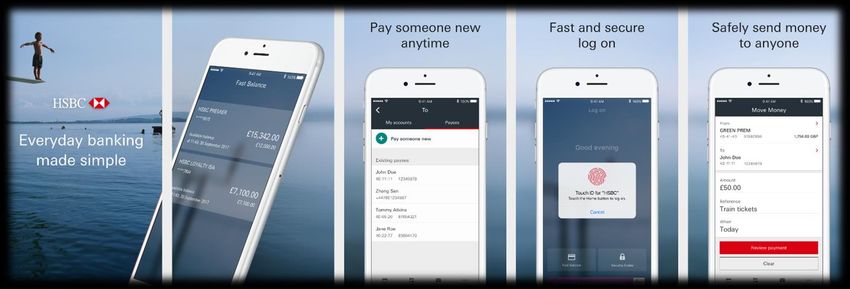
Important notice and forward-looking statements

Important notice
The information, statements and opinions set out in this presentation and subsequent discussion do not constitute a public offer for the purposes of any applicable law or an offer to
sell or solicitation of any offer to purchase any securities or other financial instruments or any advice or recommendation in respect of such securities or other financial instruments.
The information contained in this presentation and subsequent discussion, which does not purport to be comprehensive nor render any form of financial or other advice, has been
provided by the Group and has not been independently verified by any person. No responsibility, liability or obligation (whether in tort, contract or otherwise) is accepted by the Group
or any member of the Group or any of their affiliates or any of its or their officers, employees, agents or advisers (each an “Identified Person”) as to or in relation to this presentation
and any subsequent discussions (including the accuracy, completeness or sufficiency thereof) or any other written or oral information made available or any errors contained therein
or omissions therefrom, and any such liability is expressly disclaimed.
No representations or warranties, express or implied, are given by any Identified Person as to, and no reliance should be placed on the accuracy or completeness of any information
contained in this presentation, any other written or oral information provided in connection therewith or any data which such information generates. No Identified Person undertakes, or
is under any obligation, to provide the recipient with access to any additional information, to update, revise or supplement this presentation or any additional information or to remedy
any inaccuracies in or omissions from this presentation.

Forward-looking statements

This presentation and subsequent discussion may contain projections, estimates, forecasts, targets, opinions, prospects, results, returns and forward-looking statements with respect
to the financial condition, results of operations, capital position and business of the Group (together, “forward-looking statements”). Any such forward-looking statements are not a
reliable indicator of future performance, as they may involve significant assumptions and subjective judgements which may or may not prove to be correct and there can be no
assurance that any of the matters set out in forward-looking statements are attainable, will actually occur or will be realised or are complete or accurate. Forward-looking statements
are statements about the future and are inherently uncertain and generally based on stated or implied assumptions. The assumptions may prove to be incorrect and involve known
and unknown risks, uncertainties, contingencies and other important factors, many of which are outside the control of the Group. Actual achievements, results, performance or other
future events or conditions may differ materially from those stated, implied and/or reflected in any forward-looking statements due to a variety of risks, uncertainties and other factors
(including without limitation those which are referable to general market conditions or regulatory changes). Any such forward-looking statements are based on the beliefs, expectations
and opinions of the Group at the date the statements are made, and the Group does not assume, and hereby disclaims, any obligation or duty to update, revise or supplement them if
circumstances or management’s beliefs, expectations or opinions should change. For these reasons, recipients should not place reliance on, and are cautioned about relying on, any
forward-looking statements. No representations or warranties, expressed or implied, are given by or on behalf of the Group as to the achievement or reasonableness of any
projections, estimates, forecasts, targets, prospects or returns contained herein. Additional detailed information concerning important factors that could cause actual results to differ
materially is available in our Annual Report and Accounts for the fiscal year ended 31 December 2017.
This presentation contains non-GAAP financial information. The primary non-GAAP financial measure we use is ‘adjusted performance’ which is computed by adjusting reported
results for the period-on-period effects of foreign currency translation differences and significant items which distort period-on-period comparisons. Significant items are those items
which management and investors would ordinarily identify and consider separately when assessing performance in order to better understand the underlying trends in the business.
Reconciliations between non-GAAP financial measurements and the most directly comparable measures under GAAP are provided in our Annual Report and Accounts 2017 and the
Reconciliations of Non-GAAP Financial Measures document which are both available at www.hsbc.com.
Information in this presentation was prepared as 9 March 2018.

                                                                                                                                                                                               2
HSBC RBWM in the UK
Balance sheet highlights1                                                                                                                                 Customer relationships

FY17 Balances                                                                                                                                                 ~13 Million customers… 4

•     Customer advances                                                                                       $134.3bn                                             Served by 627 branches5 and digital
•     Customer deposits                                                                                       $181.6bn                                             customer experiences

A/D Ratio                                                                                                       74%

    Market share2 (%) of YE17 balances                                                                                                                       Sales mix of new business volume6

             Owner occupied
             mortgages                                           7%                                                                                                                                46%                                     Digital

                                Loans3                                                           15%                                                                                                                                       Non Digital

                                Cards                                     10%                                        Assets

              Current accounts                                                               14%                     Deposits

                             Savings
                                                                        9%                                                                                                                           54%

       1.   UK RBWM balances as at 31Dec17. Advances to deposit ratio (A/D) is loans and advances to customers divided by customer accounts.
       2.   Loans/current accounts/savings sourced from Consolidated Analysis Centre Incorporated (CACI) (scaled) as at 31 Dec 2017. Cards sourced from UK Finance (unscaled). Mortgages sourced from Council of Mortgage Lenders (CML).
       3.   Loans market share excludes car finance, payday lending, Personal contract purchase. If included total market share ~4%.
       4.
       5.
            All customer numbers quoted are existing active customers as at 31 Dec 2017. Not unique across brands.
            Branch numbers as at 31 Dec 2017 exclude branches in the Channel Islands and Isle of Man, relationship management centres and M&S Bank branches.                                                                                         3
       6.   Sales mix 2017FY for current accounts, savings, credit cards and loans, excludes John Lewis Partnership.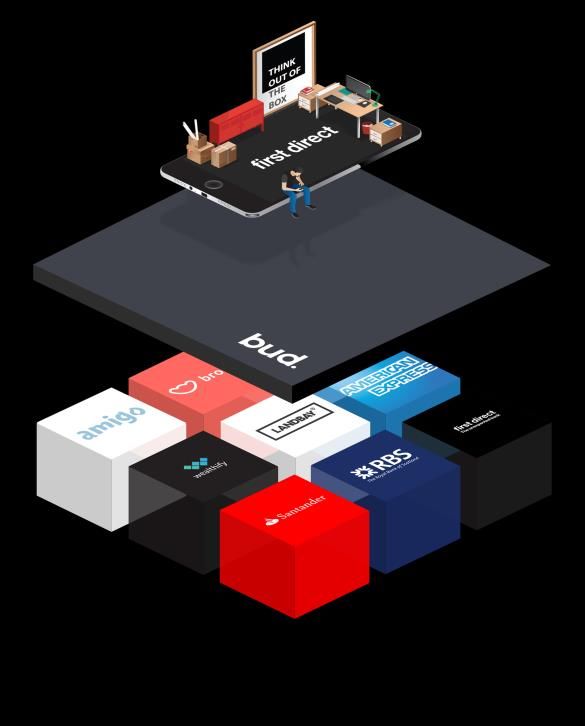
Brands

Four market leading brands deliver:
                                                                                                                ~8m customers
Diversified revenue streams
                                                                                                                Full banking relationships, innovative
~13m1 customer relationships                                                                                    proposition improvements

% share of UK RBWM revenue 2017FY
                                                                                                                ~1m customers
                                                                                                                Full banking relationships, leading on
                                                                                                                customer service entirely through online
                                                                                                                and telephone channels

                    75                                     25
                                                                                                                ~3m customers
                                                                                                                Unsecured lending, general insurance
                                                                                                                and a recently-launched mortgage
                                                                                                                offering

                                                                                                                ~1m customers
                                                                                                                Unsecured lending, recent launch of
                                                                                                                John Lewis loans

  1.   All customer numbers quoted are existing active customers as at 31 Dec 2017. Not unique across brands.

                                                                                                                                                         4
Propositions
Jade by HSBC Premier is an exclusive
membership programme that caters for
Relationship balance1 Average product holding its members’ complex financial needs
(Multiple of Personal Banking) per customer2 and high expectations
For customers holding balances of
£500k & above
110x Jade
4.0
Premium banking services for affluent
customers with more complex /
13x Premier Premier international financial needs
Must have £50k or more in investable
assets or annual income of £100k
2x 3.6 Supporting emerging affluent, digitally
Advance
savvy professionals looking to achieve
their personal and professional goals
Advance Requirement to pay at least £1,750 a
month into the account (or £10.5k every
six months)
Personal Banking 1.5
For customers who want access to
simple transactional banking
products, often including access to
Personal Banking
credit for the first time
1. Average relationship balance divided by number of active customers, period end Oct-17. Personal banking includes first direct (fd), M&S, JLP. Relationship balance is defined as the sum of deposits and wealth balances.
2. Average product holding per customer is total number of products held divided by number of active customers, as at 31Oct-17. Personal banking includes fd, M&S. Jade not reported separately.
5
UK RBWM investment portfolio
Delivering UK RBWM’s strategic priorities

                Priorities                                   Examples                                       Outcomes

                     Digitise journeys and   Open Banking apps for HSBC and first direct
                                                                                                  Increased digital channel sales and
     Digital           build immersive       brands, website journey improvements and
                                                                                                          customer activity
                          experiences                     digital coaches

                     Optimise our unique     Broker platform expansion, improved customer      Mortgage intermediary sales growth and
    Mortgages
                     mortgage opportunity         journeys and M&S Mortgage launch                     reduced time to offer

                                                                                                Sustainable Wealth investment income
                     Deliver a sustainable   Services extended to meet customers’ online
     Wealth                                                                                    streams and year-on-year Premier client
                      Wealth proposition        and ongoing investment advice needs
                                                                                                              growth

                     Enable and empower      Branch staff trained to resolve most problems
    People/          our people to deliver    at first point of contact and equipped to help   Improvement in customer satisfaction and
   Customers           better customer           customers make the most of our digital             first point of contact resolution
                           service                                services

      “Ensuring customers are treated fairly, whilst acting within the spirit of regulatory and compliance frameworks”

                                                                                                                                          6
Digital journeys, immersive experiences and innovation
We have built the foundations to drive further digital growth and support our strategic ambition

                                        Making it easier for customers, keeping people in the online
                                          channel, growing customer satisfaction and retention

                                            Digitising processes to remove manual intervention

                                        Harnessing the power of data to deliver a more personalised
                                                         and relevant experience

                                          Responding to Open Banking to deliver new commercial
                                                             opportunities

                                                                                                       7
Making it easier for customers
A brand new, faster and simpler mobile app that dramatically improves customer experience

Where we were:                 Where we are today:

                                   Mobile X
    Mobile 1.5

           1.9
                                          4.8

                                                     * App store rating as per January 2018 and may be subject to change.
                                                                                                                            8
Digitising processes
Significantly improving journeys, making them easier and faster, and removing the need for manual activity
Key initiatives delivered: What’s next?
Account opening time reduced to 10
All core journeys STP
Advance customer onboarding mins compared to 3-4 days in 2016
.>25% accounts opened STP via
mobile Ability to prove identity
without being referred to a
Reduction in online form completion branch
Online student journey time and a 60%+ increase in
submissions
Instant account access for
new to bank customers
Digital share of total sales increased1
All core sales journeys
>50%
Credit card journey available on the mobile
app
+500%
New to bank loans journey
8.8%
2016 2018
1. Advance sales penetration figures for January 2016 to mid-January 2018. 9
Digitising processes
Significantly improving journeys, making them easier and faster, and removing the need for manual activity
Key initiatives delivered – account servicing: What’s next?
Made more information available online
and improved main servicing features
Push notifications to
(e.g. change of details), reducing the
need for customers to call provide real time
information on events,
Call volumes reduced by spending and balances
>1 million reduction per
Provided card servicing features on annum Ability to activate your
mobile such as reporting a card lost or card via a mobile app
stolen and temporary block
Ability to change personal
We have saved more than
details on the mobile app
$28.4 million since 2016
Improved security process to make it by reducing paper sent to
customers
View and change PIN
easier for customers who forget their
online
details
Immediate addition of a
card to a digital wallet on
Moved customers from paper to online account opening
10Harnessing the power of data
Developing a best-in-class technology foundation that will allow us to deliver a timely, relevant and
personalised experience to customers
Key initiatives: Initiative outcomes
We can better segment and target
Personalised content customers to provide a more Enabling a superior understanding
personalised, relevant and meaningful of the customer and increasing
experience customer engagement by acting on
data in real time
Allows
Digital acquisition
customisation of
website content Improving return on marketing
depending on investment by increasing relevance
users’ actions (right message, right person, right
time)
Digital messaging
Timely and
relevant push Providing personalised and relevant
notifications experiences to customers
Digital data
Showcasing
branded and Increasing journey conversion
targeted
through incremental improvements
advertisements
with tailored
Optimisation landing pages
Driving incremental lead growth and
sales
11Responding to Open Banking
From January 2018, Open Banking came into effect, enabling customers to share their current account information
securely with other third party providers. This creates a number of commercial opportunities. We are responding to this
with a number of initiatives
Connected Money from HSBC:
Ready to launch in H1 2018, it will show customers their complete financial position across multiple providers, including
features that allow customers to better manage their financial well-being.
Joined up banking Balance after bills Spend analysis Alerts Savings tools
Launch Launch Coming
Launch Launch
soon
View UK current Find out how much Uncover and track Receive alerts and Save more in different
accounts, savings you’ve got left until spending habits nudges to help keep ways with round ups,
accounts, credit cards, payday after bills track of spending and guilty pleasures and
mortgages and loans goals savings pots
together in one place
12Responding to Open Banking
HSBC is partnering with fintech start-up Bud to create Artha, a financial marketplace app, for first direct
customers
What?
Like Connected Money, Artha will allow customers
to connect accounts from different providers. Artha
will also make personalised product
recommendations based on customer data
In addition, the marketplace feature means
customers can:
- manage their finances on a single dashboard
- easily browse and acquire new products across
a number of sectors such as investments,
pensions, utilities and insurance
Why?
Allows us to test and learn a new business model in response to Open Banking
Has the potential to provide insights into customer behaviour
Marketplace banking will keep primary customer relationships within first direct
13Residential mortgages
HSBC is a deposit-led lender with a conservative approach to credit
1 HSBC market share1 of total YE17 balances by buyer type 2 HSBC market share2 of owner occupier total YE17 balances
by LTV
7.3% HSBC’s average LTV
6.3% ratios: 10.4%
9.4%
2016 2017
Total book 40% 7.0% 7.3% 83.9
5.4% 5.5%
2017 originations 59% 78.0
1.2%
Total Owner occupier Buy to Let
All =50% LTV
HSBC outstanding drawings on Bank of England funding
3 UK RBWM YE17 deposit surplus3 4
schemes against the UK peer group average4
Outstanding drawings on BoE
• Customer deposits $181.6bn Total
lending schemes
• Customer advances $134.3bn
UK Peer Group Average £20.9bn
• Deposit surplus $47.3bn
• A/D ratio 74% HSBC £0.0
1. Source: Council of Mortgage Lenders (CML) as at 31 Dec 2017
2. Source: Consolidated Analysis Centre Incorporated (CACI), CML and HSBC estimates as at 31 Dec 2017
3. Deposit surplus defined as customer deposits less customer loans
4. Funding for Lending Scheme (FLS) and Term Funding Scheme (TFS) outstanding drawings provided by Bank of England (BoE) as at 31 Dec. Peer group total outstanding drawings as at 31 Dec 2017 (mn): Lloyds (FLS) £23,100, (TFS) £19,927; Barclays (FLS) £0, (TFS) 14
£10,000; RBS (FLS) £0, (TFS) £19,000; Santander (FLS) £3,175, (TFS) £8,500. Converted to USD at 1.351/GBPMortgage broker channel
Our opportunity to grow balances by continued expansion into the broker channel
HSBC mortgage balances grew 7.4% during 2017, vs 3.4%1 … driven largely by HSBC’s expansion into the broker
1 2
for the overall market… market…
+7.4% Broker
8% 43% 70%
coverage2
85.6
c. £19bn
83.8 c. £16bn
£bn c. £13bn
x4
81.8 Gross
mortgage
80.7
lending
79.7
Q416 Q117 Q217 Q317 Q417 2015 2016 2017
Broker channel Direct channel
3 … with the opportunity for further expansion in 2018 4 Strategic actions
In Q417 HSBC launched Omiga, a scalable, broker-centric 1. Expand broker market coverage
mortgage platform, integrated with core HSBC platforms.
2. Customer journey improvements
The new software drives greater automation, uploads digital
documents, and readily tracks and informs customers of the 3. Increase M&S mortgage penetration
key process stages.
1. Source: CML as at 31 Dec 2017
2. Brokers able to originate HSBC mortgages, weighted by broker market share of new origination volumes
15Wealth
Building new, low-cost channels to make wealth advice available to all our customers
2017 Building into 2018 Completing by 2022
Circa 11% of our
customers currently
have access to financial Online advice: Advice hubs:
advice with HSBC low-cost, available simple advice by
to all phone / video
Relationship Relationship
managers by managers in
The remaining 89% cannot currently phone:
obtain financial advice from HSBC branches:
transactional
banking and able criteria to qualify
to refer to the right for face-to-face
channel for advice, fees
financial advice payable
16Customer satisfaction
In 2018, we will continue to deliver initiatives which will embed a customer centric culture
Customers want… Examples of what we are doing
…staff to be knowledgeable Giving branch staff tablets, and
Empowering our training, to answer most customer
people to deliver the person they speak with to own queries straight away
and resolve their issues
better customer
solving problems and helping
service help with new technology customers get the most out of our
digital services
…simple ways to speak to us Introduced Voice ID, bringing the
Making it simpler for customer’s needs to the forefront of
customers to speak to difficult moments to be stress free the conversation
us at moments that
us to care when things go wrong, 1m customers enrolled in Voice ID
matter removing the need to remember
and to fix them quickly and properly
passwords
…timely access to specialists Providing access through 240 in-
branch mortgage video booths
Customer-centric simple, clear and error free
processes and processes Face-to-face access to a real person in
journeys areas without a mortgage adviser
to be kept informed
17Summary
HSBC has a solid platform to build on:
– UK ring fenced bank in final delivery phase
– Investment in digital to improve customer experience, meet the strategic ambition to digitise our key
customer journeys, and create new immersive digital experiences
– Strong balance sheet growth driven by growth in mortgages due to controlled expansion in broker
channel, continued direct journey improvements and great value products
– HSBC’s prime lending strategy and portfolio quality means that the bank is well-positioned to deal
with macro-economic challenges
18Appendix
19PRA stress test
… maintaining strong credit discipline relative to peers
PRA stress tests: Projected cumulative five-year PRA stress tests: Projected cumulative five-year
impairment charge rates on UK individuals – mortgage impairment charge rates on UK individuals – non-
lending1,2 (%) mortgage lending1,2 (%)
4% 40%
3% 30%
2% 20%
20152
1% 10%
0% 0%
LBG San UK RBS Nation- HSBC Barclays Barclays LBG Nation- RBS San UK HSBC
wide wide
4% 40% NB. 2016 reflects a methodology change from a judgemental to statistical approach
on historical correlation between economic variances and credit risk metrics,
3% 30% following agreement with the PRA to develop a common stress test methodology.
2% 20%
20162
1% 10%
0% 0%
LBG San UK RBS Barclays Nation- HSBC Barclays Nation- LBG RBS HSBC San UK
wide wide
4% 40%
3% 30%
2% 20%
20172
1% 10%
0% 0%
LBG San UK Nation- RBS Barclays HSBC Barclays Nation- LBG RBS San UK HSBC
wide wide
Source: “Stress testing the UK banking system: 2017 results”, Bank of England , Dec 2015, Nov 2016 and Nov 2017, respective pages 46, 49 and 62
1. Data sources: Participating banks’ FDSF data submissions, Bank of England analysis and calculations
2. Cumulative impairment charge rates = (five-year total impairment charge) / (average gross on balance sheet exposure), where the denominator is a simple
average using year end balance sheet positions. This calculation may result in a lower impairment rate for those banks that expand balances significantly in the 20
later years of the scenario as the economy recoversYou can also read


