UK retail warehousing - Savills
←
→
Page content transcription
If your browser does not render page correctly, please read the page content below
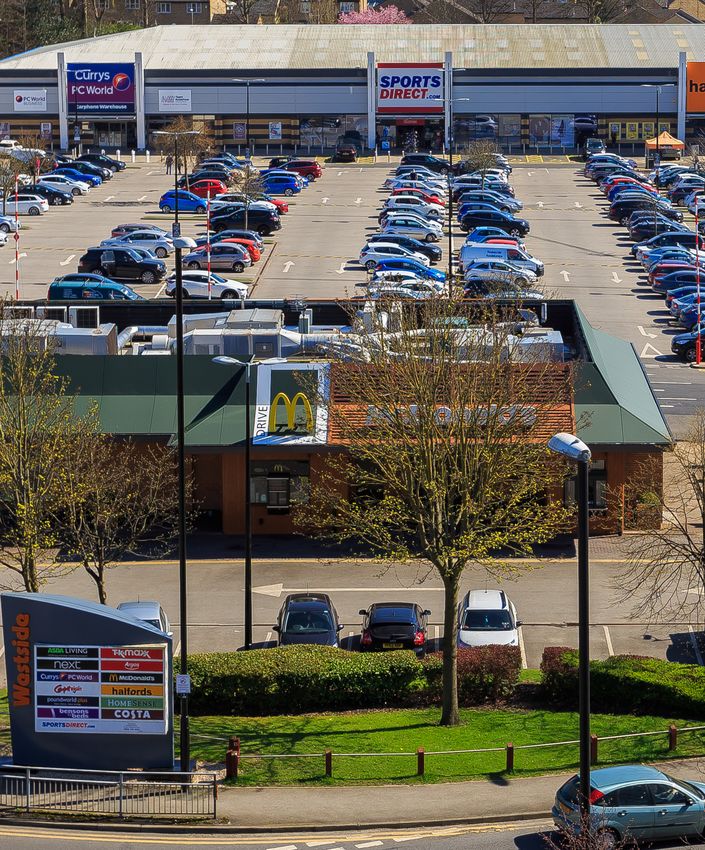
UK Commercial – Spring 2019

   S P OT L I G H T
                                UK retail
   Savills Research
                               warehousing

Precautionary saving risks   Impact of CVAs on vacancy           Investment risks and opportunities
UK Retail Warehouse Spotlight - March 2019
Retail warehousing is arguably the most defensive part of UK
retailing against the rise of online retail. This is true for the
goods sold, and the flexibility of the space that is available
Caution was the watchword Consumer confidence has weakened in recent months, but people remain positive
in the UK retail property about their own financial future, and the environment for major purchases. The
sector in 2018, both around latter trend supports continued spending growth on bulky parks in particular
the continuing impact of 40
online and the impending General Economic Outlook Outlook for Personal Finances Climate for Major Purchases
impact of Brexit. This led to a 30
sharp fall in investment
20
activity, rising yields across all
subsectors, retailer failures, 10
CVAs, and limited
0
occupational demand.
Index
-10
A degree more rationality has
-20
entered the market in early
2019, with canny investors -30
starting to look more
-40
forensically at UK retail.
-50
Retail warehousing is
-60
definitely attracting more
07/2000
01/2001
07/2001
01/2000
01/2002
07/2002
01/2003
07/2003
07/2008
01/2004
07/2004
01/2005
07/2005
01/2006
07/2006
01/2007
07/2007
01/2008
01/2009
07/2009
07/1996
07/1997
07/1998
07/1999
01/2010
07/2010
01/2011
07/2011
01/2012
07/2012
01/2013
07/2013
07/2014
01/2015
07/2015
07/2016
01/2014
01/2016
01/2017
07/2017
01/2018
07/2018
01/2019
01/1996
01/1997
01/1998
01/1999
investor interest this year, and
we believe that this reflects a
Source GfK
wider understanding of not
only the defensiveness of
some parts of retail Consumer trends
warehousing to internet
retailing, but also the fact Solid consumer fundamentals continue, but Brexit uncertainty
that the best assets have could drag on retail sales growth.
perhaps repriced more than
they should have done.
The outlook for the UK While consumer confidence has is really no direct comparative
The last 12 months have seen economy remains undeniably weakened in the early part of 2019, event in the UK’s recent past.
prime retail warehouse yields weak, with the latest consensus there is little sign in the official While the Global Financial Crisis
soften by up to 100 basis forecast suggesting that GDP data that this is feeding through was a very different situation for
points, and this combined growth will average only 1.5% per into slowing retail sales, and the UK consumer, the one
with a number of willing annum over the next five years. Christmas trading was generally similarity between that and a
sellers will mean that The fact that this is in line with the up year-on-year both in terms of disorderly Brexit might be that
transactional activity will rise projected growth for both France like-for-like and total sales. both affect consumer sentiment
in 2019. and Germany suggests that it fairly quickly.
perhaps has less to do with Brexit Brexit uncertainty and In early 2008 the household
Significant questions remain
than a wider variety of factors that consumer behaviour savings ratio was at a fairly low
about the outlook for this
are slowing the global economy. With the Brexit clock at five level of just under 7%, but as the
sector, but we believe that
dominant bulky goods parks, However, slower GDP growth minutes to midnight we have to ripples of the GFC spread this
where overrenting is limited inevitably means weaker wage indulge in some speculation about quickly rose to 12%. While the
(or can be remedied by growth, with a corresponding drag possible outcomes and what they direct effects of the GFC were
buying the asset cheaply), will on retail sales. might mean for consumer fairly limited at that stage on the
outperform the wider retail On the face of it however the spending. Most opinion polls UK population, the unremittingly
sector. British consumer should be feeling seem to indicate that when people negative newsflow drove this
reasonably happy. Unemployment are not questioned specifically on sharp rise in precautionary saving.
As ever, the key to bucking remains close to its lowest ever Brexit it is a minor concern. This in turn led to an almost
the wider trends will be the level at 4%, and consumer price However, it is the question of a immediate fall in retail sales
ability to look behind the
inflation has eased downwards disorderly or hard Brexit that growth, and then the swing into
headlines and assess the
from its recent spike. This means probably has the most significant recession.
retailer and customer
attractiveness of a particular that real earnings have grown by implications for consumer The last three years have been a
scheme or location. 1.1% over the 12 months to the end sentiment and behaviour. period of very low savings ratios in
of December 2018, the fastest rate The biggest problem in the UK, primarily due to the
of growth since November 2016. assessing the impacts is that there equally low interest rates on offer
savills.com/research 3UK Retail Warehouse Spotlight - March 2019
0.9%
of units experienced a
rent reduction due to
CVA in 2018
to savers. Consumers have not just been spending the BRC retail sales data and the SMMT data on new car
balance, some of what they previously might have saved has registrations support a more optimistic view of marginal
been used to pay down other types of debt. However, the positive growth, even as the stopwatch counts down on
lurking question around Brexit remains whether consumers Brexit.
would swing back into precautionary saving mode if Assuming that a full disorderly exit from the EU does not
uncertainty intensifies. happen at the end of March 2019 leaves us with a modestly
At the moment there are no signs that this is happening, positive view for the UK economy this year and next. There
indicating that perhaps Brexit is still seen as ‘someone else’s are few reasons to suggest that interest rates will move up
problem’, but if a spike in savings ratios were to happen then sharply in the short term, and this combined with low savings
we believe that it would lead to a short, sharp slowdown in rates will support average annual growth in both real
retail sales growth. disposable incomes and consumer spending of around 1.8%
While the latest CIPS surveys are pointing to the economy per annum over the next five years.
flat-lining in Q1 2019, they generally tend to undershoot in
times of heightened uncertainty. Other surveys, such as the
Occupational market
Putting CVAs and failures in context and combining them with
36%
of OOT units
data on new openings tells a very different story for the sector
affected by CVA
Recent failures and closures in an historic market in 2019.
context or
2018 was a year in which CVAs, failures and Out-of-town store openings were above
administration
administrations dominated the headlines. average in 2018
However, as with any happening context is The headlines of last year might also lead were closed
everything. Last year 3.3% of out-of-town one to believe that no retailers were
retail units were affected by some kind of expanding, but once again the real story is
negative corporate news. By comparison just somewhat different. Over the last seven years
the loss of Comet, JJB and Focus alone in 2011
resulted in the same proportion of the market
the sector has seen an average of 819 new
openings per annum, and 2018’s total was 148
being affected. These three combined with 868. While this was sharply down on 2017’s
OOT units
the subsequent failures of MFI, Allied level, it is still 53% up on the post GFC
Carpets and Brantano had a far more doldrums. affected by CVA
dramatic impact on vacancy rates in the Expansion has predominantly been driven
sector, driving it up to 10% in 2012. by value-orientated retailers such as Aldi, or
Furthermore, while the post GFC failures Lidl, The Food Warehouse, Home Bargains,
administration
resulted in all the affected units being closed, The Range and B&M. This trend looks likely
only 36% of the units that were affected last to continue into 2019, as around 250 stores were closed
year were earmarked for closure. This is less were under offer to such retailers at the end of
than 1.2% of the UK market as a whole. last year.
Indeed, by far the largest change last year What is clear from these statistics is that
was the number of units that were switched
to a monthly rent (497 units, 38% of all
retail warehousing remains an attractive
proposition for a variety of retailers and
33
affected stores), which means there was no leisure operators, due to its accessibility, unit of these units
loss of revenue to the landlord. sizes, car parking, and lower occupational
This means that while the overall headlines costs. Also, while the proportion of retail had been re-let
were grim for the sector, the reality was that sales that take place online is still rising, the
by the end of
only 0.9% of the UK out-of-town retail type of goods sold from many retail
market experienced a rent reduction. warehouse parks are being cannibalised less 2018
While none of this is particularly good than goods that are traditionally more high
news for retail warehousing as an asset class, street biased.
the difference between the headlines and the Furthermore, the large units and ample car
reality should inject some rationality into the parking on offer at a typical retail warehouse
4UK Retail Warehouse Spotlight - March 2019
Rising housing turnover, particularly amongst first-time
buyers, will stimulate spending on DIY and bulky goods.
Store openings in the retail warehouse sector were above average in
scheme lend themselves to click and collect and returns, the
2018
latter of which we expect to be the next battleground between
1,200
retailers and customers over who pays for what.
The acquisitiveness of the value retailers has also helped to Openings Average
soak up some of the vacancies that have arisen due to last 1,000
year’s CVAs and administrations. Our data suggests that 11 of
the 69 units vacated by Toys R Us have already been re-
800
occupied, as have 11 of the 110 Maplin units, five of the
Poundworld units, two of the Carpetright, four of the
Homebase, and one of the three Mattressman units following 600
a similar path.
Experienced retail property investors should not be
surprised that retailer’s fortunes ebb and flow, and this is 400
particularly true in the relatively tight retail warehouse sector.
A high level comparison of the top 25 out-of-town retailers in 200
2009 and 2019 makes this case very effectively. For example,
back in 2009 Comet, Allied Carpets and Brantano collectively
occupied 572 stores, and now none of these retailers exist. 0
2011 2012 2013 2014 2015 2016 2017 2018
However, over the same period some retailers have
Source Savills
dramatically increased their out-of-town footprint, with Lidl
growing from 121 stores to 708 - making it the largest occupier pundits have suggested that millennials don’t do DIY, more
by number of of out-of-town stores from its position in 2009 first homes should mean higher spend on softer DIY, as well as
as #22 in the ranking. the inevitable need for carpets, couches and washing
None of Aldi, Iceland or Home Bargains were even in the machines!
top 25 back in 2009, and now all three are in the top 10 and Stronger house price growth also tends to stimulate home
occupy 1,095 stores between them. Other retailers who have moves, so long as prices don’t hit the ceiling of affordability.
moved up the top tenant rankings over the last decade include Savills latest regional residential price growth forecasts that
Pets At Home, McDonalds, Halfords, KFC, Argos, Wickes, the North West and Yorkshire & Humberside are expected to
Matalan, TK Maxx, Frankie & Benny, Next and Sports Direct. see house price growth of over 20% over the next five years.
Anecdotal evidence is already pointing to a corresponding
Where will occupational demand go from here? pick up in turnover in these regions, with Wales, East
Whichever way the Brexit pendulum swings, 2019 will be a Midlands, West Midlands and Scotland following close
challenging year for retailers, and this will continue to affect behind.
occupational demand. However, the immediate post-GFC While the overall retail warehouse vacancy rate will tick up
period showed that if consumers swing into belt-tightening this year, we do not expect it to hit the double digit levels that
mode then it is the value end of the spectrum that benefits. it reached in 2008-2010. This will reduce some of the
This suggests that whatever the political and economic downward pressure on rents that we are currently
outcome, the recent strong growth in demand from the value experiencing, but by no means eliminate it.
retailers will be sustained. Those retailers who are expanding, or indeed renegotiating
As we have already discussed, we believe that bulky goods their lease, will generally feel confident that they have the
retailers in particular are better insulated against the rise of upper hand in most negotiations, and also that the majority of
online shopping than other goods categories, and that retail UK retail warehousing remains over-rented. This will keep
warehouses are generally better suited to service online sales. average retail warehouse rental growth under gentle
There is also a strong linkage between DIY and bulky goods downward pressure through 2019 and 2020. The latest rental
sales and the state of the housing market, which while it might growth forecasts from Real Estate Forecasting for the next
worry those with a portfolio that is overly biased towards five years now stands at 0.4% per annum, with retail parks
London and the South East, should excite those with a more slightly out-performing this with growth of 0.5% per annum.
Midlands or Northern bias. However, most of this growth is towards the end of the period,
While housing turnover volumes (generally the key event with falling rents over the next two years.
that drives people to spend on DIY, white or brown goods) These rates of growth, while pretty insipid, will be in excess
remain low, some buyer groups have started to become more of those being experienced across most other retail segments
active. Most interestingly the number of mortgaged first-time - a testament to the defensive and affordable nature of the
buyer transactions rose from 359,000 in 2017 to 370,000 in subsector.
2018, and is forecast to reach 380,000 this year. While many
savills.com/research 5UK Retail Warehouse Spotlight - March 2019
Yields Dec 2016 Dec 2017 Dec 2018
Shopping Park 5.00% 5.25% 6.25%
Prime Open A1 5.25% 5.00% 6.00%
Prime Restricted 6.00% 5.50% 6.25%
Secondary Open A1 6.00% 6.50% 7.75%
Secondary Restricted 7.00% 7.25% 8.50%
Investment market Outlook
The investor caution of 2018 is likely to give way to selective Key themes for 2019
opportunistic buying in 2019
Brexit uncertainty will be the
Just over £2bn of retail warehouse assets were and hence enhanced lettability major factor hanging over the
traded in 2018, making last year the weakest year The other group of investors that are consumer economy in the short
since the nadir of the global financial crisis in 2012. currently running their slide rule over the term, though there is little
While the first three quarters of 2018 were on a par sector are the trader-developers. Their evidence that is has affected
with the same period of both 2016 and 2017, only interest is in the low occupational density of spending or saving behaviour to
£294m was transacted in the final quarter of the year. retail warehouse parks, and the ability to date. We expect a slight
Investor caution also had an impact on pricing last deliver alternative uses such as residential or acceleration in sales growth in
year, with the spread between prime and secondary logistics either on the same site as retail line with the improving real
yields continuing to widen. For example, while warehousing, or in place of it.
income story.
Prime Open A1 and Prime Restricted park yields have Given a degree of valuation lag we expect
Retailers will remain cautious,
softened by 100bps, their secondary equivalents have that capital values, at least on the MSCI
particularly in relation to a
softened by 125bps over the last 12 months. metrics, will continue to fall this year. This potential slump in the pound if
The big question for 2019 is whether these will probably inhibit some purchasers from Brexit becomes disorderly.
corrections are enough, or whether a lack of acting, as well as meaning that some vendors However, vacancy rates remain
transactional evidence has delayed further repricing. will delay. However, we do not expect as low in relation to previous weak
One thing that the repricing has done is stimulate much yield softening at the prime end of the points in the cycle, and tenant
investor interest in the sector, both from non- market this year as we saw in 2018. demand from discounters will
domestic and domestic investors. Not only are these If, as we suspect they will, some major remain steady.
new entrants to the market speculating that the opportunistic investors enter the market this
fundamentals of the sector are comparatively solid, year then they will probably foreshadow the
Discount retailers will continue
to be the most expansionary
but they are also attracted by the wider variety of bottom of the cycle, both in terms of pricing
retailers in the retail warehouse
willing sellers that are present in retail warehousing and investment turnover.
space, and their performance
compared to some other asset classes. The rationale While risk-adjusted returns are starting to could be boosted if shoppers
of these largely opportunistic investors is simple, the look tempting there is still a wide gap swing towards a more cautious
ability to deploy comparatively large volumes of between vendors and purchasers stance.
capital into a sector where values have either fallen expectations. Delivering deals will depend on
too far, or have fallen far enough to support rent cuts squaring this circle. We expect that rental growth
will be negative in 2019 and
2020, before starting to recover
Retail warehouse investment volume was 28% down on 2017, but proved more in 2021. Overall we predict that
resilient to investor caution than shopping centres and high street shops which were retail warehouse rental growth
down 33% and 31% respectively will be more resilient than some
5,000 other parts of the retail market.
4,500 Investment activity will be
4,000 swelled this year by an increasing
number of opportunistic or
3,500 repurposing buyers in the
3,000 Q4 market. While further yield rises
are inevitable, the attractions of
2,500 Q3 the sector are becoming
£m
Q2 increasingly well understood. In
2,000
Q1 particular we expect a
1,500 resurgence in investor demand
1,000 for rack-rented assets, or those
where the rents can be re-based
500 as a result of a lower entry price.
0
2000
2001
2002
2003
2004
2005
2006
2007
2008
2009
2010
2011
2012
2013
2014
2015
2016
2017
2018
Source Savills
6Savills Commercial
We provide bespoke services for landowners, developers, occupiers and investors across the
lifecycle of residential, commercial or mixed-use projects. We add value by providing our clients
with research-backed advice and consultancy through our market-leading global research team
Retail warehouse services
Dominic Rodbourne Jaime Dunster Charlie Mocatta Matthew Whiteley
Leasing Investment Professional Management
+44(0)20 7409 9945 +44(0)20 7409 9929 +44(0)20 7409 8726 +44(0)161 277 7232
drodbourne@savills.com jdunster@savills.com cmocatta@savills.com mwhiteley@savills.com
Research
Mat Oakley Sam Arrowsmith
Research Research
+44(0)20 7409 8781 +44(0)161 277 7273
moakley@savills.com sarrowsmith@savills.com
Savills plc: Savills plc is a global real estate services provider listed on the London Stock Exchange. We have an international network of more than 600 offices and associates throughout the Americas, the UK,
continental Europe, Asia Pacific, Africa and the Middle East, offering a broad range of specialist advisory, management and transactional services to clients all over the world. This report is for general informative
purposes only. It may not be published, reproduced or quoted in part or in whole, nor may it be used as a basis for any contract, prospectus, agreement or other document without prior consent. While every effort has
been made to ensure its accuracy, Savills accepts no liability whatsoever for any direct or consequential loss arising from its use. The content is strictly copyright and reproduction of the whole or part of it in any form
is prohibited without written permission from Savills Research.You can also read


