Ultra Fast Broadband - Post 2020 - Presented by Brendan Ritchie NZ UFB network post 2020 - AusNOG
←
→
Page content transcription
If your browser does not render page correctly, please read the page content below

NZ UFB network post 2020

Ultra Fast
Broadband
- Post 2020
Presented by Brendan
Ritchie

UFB kicks off

Crown fibre established in 2009 to manage the Government’s $1.5 billion
investment in Ultra-Fast Broadband infrastructure (now CIP).

                                  UFB2 (and      UFB2 to give
   UFB (and       75% of NZ      RBI2) added
     RBI)         with access                     87% of NZ
                                  in 2017 for     access to
  Launched in     to FTTP by
                                 completion         FTTP
     2011            2019
                                    in 2022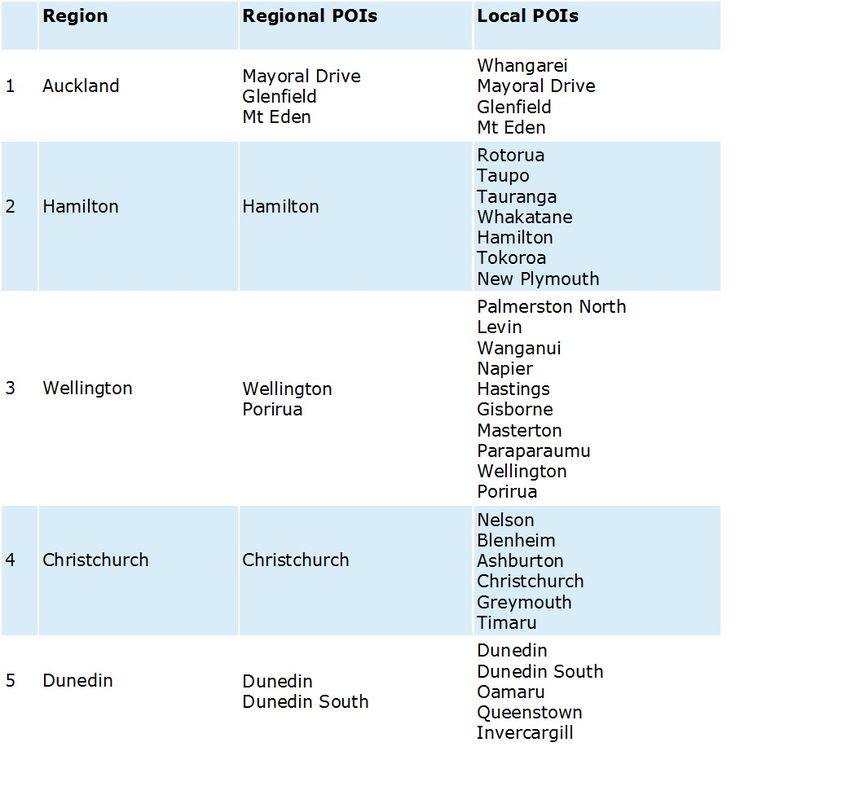
Who got what?

Speeds and design
           BS2                               BS3
  GPON/fast best effort             GPON/fast best effort
 speeds, cheap with low             speeds, not as cheap,
 quality SLAs. Residential         business grade SLA and
        work horse.                  Multi VLAN capable

                             UFB

         BS4/HSNS
 P2P, 100% CIR, expensive                  DFAS
(by NZ standards), business    Dark fibre, same SLA as BS4,
 grade SLA and Multi VLAN         well priced, scalable
          capable
Service download speed at 50%
            Year
                                      increase per year
            2011                              30Mbps*
           2012                               45Mbps
           2013                               68Mbps
           2014                              101Mbps
           2015                              152Mbps
           2016                              228Mbps
           2017                              342Mbps
           2018                              513Mbps
           2019                              769Mbps
           2020                              1153Mbps
           2021                              1730Mbps
*slowest available option when UFB was initially deployed
Purchasing trends
                         Residential Product Mix
     90.00%

     80.00%

     70.00%

     60.00%

     50.00%

     40.00%

     30.00%

     20.00%

     10.00%

      0.00%
                 FY18       FY19     FY20     FY21     FY22     FY23
    BS2 30/10   26.14%     7.66%    4.20%    2.80%    2.15%    1.54%
    BS2 50/20   5.20%      2.15%    1.40%    0.20%    0.10%    0.10%
    BS2 100/x   61.11%     76.67%   74.40%   69.70%   62.75%   52.76%
    BS2 200/x   3.32%      3.72%    3.59%    3.60%    3.60%    3.60%
    BS2 1Gig    4.20%      9.80%    16.40%   23.70%   31.40%   42.00%

100/20Mbps anchor product - 200/X largely ‘leap-frogged’ - Gig
emerging as the mainstay - Unbundled?
UFB service specifications
                                                          Multi VLAN capable

Attribute             Bitstream2             Bitstream3             Bitstream3a              Bitstream4
Bitstream             E-AVPL                 E-APL                  E-APL                    E-APL
High Priority         Yes                    Yes                    Yes                      Yes
Low Priority          Yes                    No                     Yes                      No
MTU                   2000                   2000                   2000                     9100
MAC Addresses         16                     64                     64                       128
Number of             4 standard             4 standard             4 standard               1 with a second UNI
Available UNI’s                                                                              available on request
L2CP Support          No                     No                     No                       Limited
Diversity             On request with        On request with        On request with          Available to priority
                      limited availability   limited availability   limited availability     users in selected
                                                                                             areas

Traffic component           Frame Delay                  Frame Delay Variation        Frame Loss
CIR                         ≤ 5ms                        ≤ 3ms                        ≤ 0.1%
EIR                         N/A                          N/A                          ≤ 2%

Service Level Type          Restoration Target           ONT** Faults Included        Additional Charge?
                                                         in Target?
Default – Chorus            ≤ 48 hours                   NO                           NO
Default - other providers   ≤ 12 hours                   NO                           NO
Enhanced SLA Level 1        ≤ 12 hours                   YES                          YES
Enhanced SLA Level 2        ≤ 8 hours                    YES                          YES
Enterprise SLA^             ≤ 6 hours                    YES                          NO^*
Wholesale price points
                           Handovers
    1Gbps = $100 p/month                10Gbps = $355 p/month

                                BS2
   Business Max/500 = $75 p/          Residential Max/500 = $60 p/
             month                                month

                                BS3
  100/100 (2.5 CIR) = $175 p/         Business Max/Max = $275 p/
            month                               month

DFAS priced at $355 p/month and $710 install by Chorus p/month (less
by LFCs) for leg to exchange from same candidate area.
UFB1 Roll out progress

            Chorus
         Auckland - 75%
           Wellington –        Ultra Fast Fibre
               75%                  100%
           On track for
              2019

              Enable             Northpower
               100%                 100%

     As at March 2018 - http://www.mbie.govt.nz/info-
     services/sectors-industries/technology-
     communications/fast-broadband/documents-
     image-library/03-mar-quarterly-broadband-
     update.pdf
UFB Uptake rates
The Commerce
                                Commission
Telecommunications (New Regulatory Framework) Amendment Bill - purpose of this bill
is to amend the Telecommunications Act 2001 to establish a regulatory framework for
fibre fixed line access services; remove unnecessary copper fixed line access service
regulation; streamline regulatory processes; and provide more regulatory oversight of
retail service quality.
Chorus innovation Regulated price points pushing Chorus to look for unregulated revenue streams: • 2014 - Chorus seeks to increase copper revenue with services that fall outside regulation • 2015 - Chorus CRT, an inter-metro backhaul product released that forces market prices down overnight in that product category. • 2017 - Further backhaul play with tail extensions released • 2018 – Chorus pushes for Commerce Commission to allow it to add WiFi and CPE to its product offering, but is unsuccessful.
Recent changes
Unbundling – regulation
What we know from select committee 80 page report:
• “it” has to be provided from 2020, but priced at providers
  discretion
• 5 year review process means price wont be regulated until at
  2023 at the earliest
• Vodafone/Vocus have issued RFP to fibre companies asking for
  proposal to deliver an unbundled service
• Revenue cap for Chorus from 2020 – “Under price-quality
  regulation an annual ‘maximum allowable revenue’ (otherwise
  known as a ‘revenue cap’) will be set for Chorus. This will be
  calculated as a sum of various network and financial ‘building
  blocks’ of costs. This revenue cap should be sufficient to cover all
  of Chorus’ efficiently incurred costs without putting it in a position
  to earn excessive profits. -
  http://www.mbie.govt.nz/info-services/sectors-industries/
  technology-communications/communications/regulating-the-
  telecommunications-sector/review-of-the-telecommunications-
  act-2001/further-consultation-on-fixed-line-communications-
  services/discussion-paper.pdf
Unbundling – regulation
What we don’t know:
• Price each provider will set
• Service design. Design and delivery still being worked out.
• What the revenue cap set for Chorus will be, and therefore
  what impact it will have.
   • In any case, will drive lean operation and focus on high
      margin services.
   • Will revenue cap be ramped up as UFB uptake is
      forecast to increase, or static with generous head room
      in early years?
Unbundling – Pricing •Vodafone/Vocus kicked off the public pressure re price with press conference announcing partnership and assumed benefits for consumers •UFF appear to see unbundling as a challenge rather than an opportunity Will Chorus seek to deter uptake through higher unbundled price points in order to deter churn of existing connections to lower cost unbundled subs? •Other carriers don’t look to be subject to a price cap, how will that impact their approach?
Unbundling
– what’s at stake?
Well, that depends. How much will it cost?

                                     •Big 3 (Spark, Vodafone, Vocus)
    •Let’s assume it is priced
                                      can afford universal rollout if
attractively, key markets will be
                                    they choose, others will need to
   prioritised, creating divide
                                    be more selective. Goes against
between high/low return areas,
                                        initial UFB aim of creating
    which UFB was created to
                                       competitive and even retail
               avoid.
                                                  market?

    •Potential for wholesale
  competition against Chorus
                                       •Could LFCs use Chorus
using Chorus unbundled fibre,
                                     unbundled access to compete
or wholesale access may not be
                                    against Chorus in new regions?
 possible at all via unbundled
      providers networks
Unbundling - Churn conundrum Without unbundling we have a fully intact network upon completion. Customers will be able to choose/change their provider in near real-time. Enter unbundling – fully intact is now gone so the advantages above are gone but advantages of innovation (?) and price (?) can be realised. New client – unbundled provider 1 – truck roll to fusion splice the premise to the RSP splitter – Higher install cost (assumed) but offset by lower monthly charges. Same client - non-unbundled provider 2 wins the client – why should they pay high transfer cost when their monthly charge will be higher? And down the rabbit hole we go… Essentially – why should ISPs that haven’t unbundled face higher install costs that wouldn’t have existed without other providers unbundling?
Many unknowns, it is early days, but 2020 will come around
quickly.

More questions than answers, but big changes looming.
You can also read


