UNCT FIJI COVID-19 MULTI-SECTORAL RESPONSE PLAN - for Federated States of Micronesia, Fiji, Kiribati, Marshall Islands, Nauru, Palau, Solomon ...
←
→
Page content transcription
If your browser does not render page correctly, please read the page content below

UNCT FIJI COVID-19 MULTI-
SECTORAL RESPONSE PLAN

for Federated States of Micronesia,
Fiji, Kiribati, Marshall Islands, Nauru,
Palau, Solomon Islands, Tonga,
Tuvalu, Vanuatu

VERSION 1.0 – AUGUST 2020

                                           1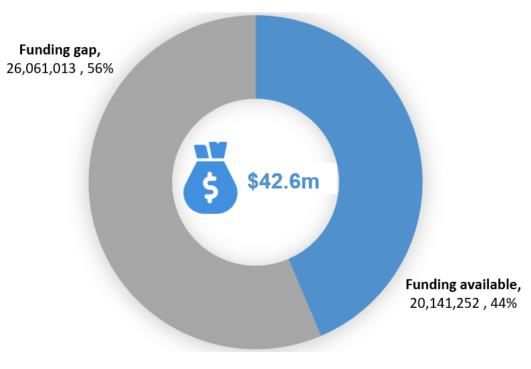
Plan at a glance
UNCT Fiji COVID-19 Multi-Sectoral Response Plan is a preliminary plan given the protracted and evolving nature of the COVID-19 crisis in
the region, focused on the ten countries under the purview of the Fiji MCO (Fiji, Federated States of Micronesia, Kiribati, Nauru, Palau,
Marshall Islands, Solomon Islands, Tonga, Tuvalu and Vanuatu). The Plan has been developed under the leadership of the United Nations
Country Team in Fiji. The Plan has been informed by the JIMT COVID-19 Health Sector Support Plan – Phase 2, Pacific Humanitarian
Response Plan, and reprogrammed 2020 Joint Country Action Plans. The plan will be updated as policy options are defined as the evolving
nature of the impacts of this crisis unfold.

 PACIFIC COVID-19 MULTI-SECTORAL RESPONSE PLAN

        Objectives                UN agencies             Requirements (US$)            Available (US$)               Gap (US$)
            52                         24                       132.8m                       47m                        85.8m

                                                                                                                                       2
Socio-economic response: address immediate social and economic
Contents                                                                                                            impact ............................................................................................ 13
Plan at a glance ......................................................................... 2                     UNCT Fiji COVID-19 Multi-Sectoral Response Plan: Five
                                                                                                                 pillars ....................................................................................... 17
Contents .................................................................................... 3
                                                                                                                 Partnerships and Resource Mobilisation .............................. 43
Acronyms .................................................................................. 4
                                                                                                                    Joint Incident Management Team .................................................. 43
Introduction to the Pacific region ............................................ 5
                                                                                                                    Pacific Humanitarian Response Team ........................................... 44
   Context analysis ............................................................................... 5
                                                                                                                    UN Central Emergency Response Fund ........................................ 44
   UN presence in the Pacific ............................................................... 6
                                                                                                                    UN COVID-19 Response and Recovery Fund ............................... 45
UN Framework for the Immediate Socio-Economic Response
to COVID-19 ............................................................................... 7                       India-UN Development Partnership Fund ...................................... 45

COVID-19 in the Pacific ............................................................ 7                              Strategic collaboration with international financial institutions ........ 46

   Development of the Pacific COVID-19 Multi-Sectoral Response Plan                                                 Joint UN-ADB Roundtable Discussions on Safely Reopening Points
   ......................................................................................................... 8      of Entries in the Pacific .................................................................. 47
                                                                                                                    Joint UN-Multi Partner Reference Group for the Socio-Economic
COVID-19 Preparedness and Response: Pacific Island
                                                                                                                    Impact Assessment ....................................................................... 47
governments ............................................................................. 8
                                                                                                                 Governance and accountability ............................................. 48
   Emergency measures ...................................................................... 8
                                                                                                                    Pacific Joint UN Country Team ...................................................... 48
   Non-pharmaceutical interventions .................................................... 9
                                                                                                                    UN Resident Coordinator ............................................................... 48
   Restrictions on travel and international points of entry ..................... 9
                                                                                                                    UN Pacific Strategy........................................................................ 48
   National coordination mechanisms................................................... 9
                                                                                                                    UN Pacific Strategy Coordination Group ........................................ 48
   Pacific Humanitarian Pathway on COVID-19.................................. 10
                                                                                                                    Results framework ......................................................................... 48
   National COVID-19 preparedness and response plans .................. 10
   Overview of national policy and fiscal measures ............................ 10                               Next steps for Socio-Economic Impact Assessments and
                                                                                                                 Response Plan ........................................................................ 49
COVID-19 Preparedness and Response: UN in the Pacific . 12
                                                                                                                 Annex 1: Mapping of Monitoring Framework indicators ..... 50
   Health response: stop virus transmission and care for affected
   people ............................................................................................ 12
   Humanitarian response: address immediate multi-sectoral needs .. 13

                                                                                                                                                                                                                        3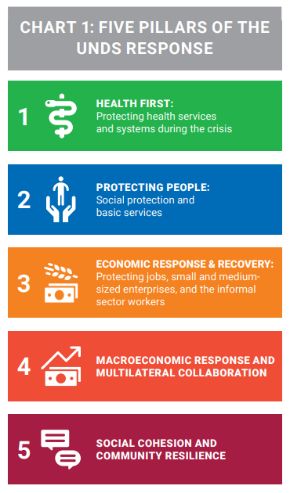
NCD       Non-communicable disease
Acronyms
                                                                    ODA       Overseas development assistance
ADB       Asian Development Bank
                                                                    PHP-C     Pacific Humanitarian Pathway on COVID-19
CERF      Central Emergency Response Fund
                                                                    PHRP      Pacific Humanitarian Response Plan
CROP      Council of Regional Organisations in the Pacific
                                                                    PHT       Pacific Humanitarian Team
DMEG      Data, Monitoring and Evaluation Group
                                                                    PICs      Pacific Island countries
EU        European Union
                                                                    PICTs     Pacific Island countries and territories
FLE       Family life education
                                                                    PIFS      Pacific Islands Forum Secretariat
FSM       Federated States of Micronesia
                                                                    PPE       Personal protective equipment
GBV       Gender-based violence
                                                                    RMI       Republic of the Marshall Islands
GDP       Gross Domestic Product
                                                                    SAM       Severe acute malnutrition
HEOC      Health Emergency Operations Centre
                                                                    SDGs      Sustainable Development Goals
HFPM      High frequency phone monitoring
                                                                    SPC       Pacific Community
IASC      Inter-Agency Standing Committee
                                                                    SPTO      South Pacific Tourism Organisation
IFC       International Finance Corporation
                                                                    UN        United Nations
IFI       International financial institution
                                                                    UNCT      United Nations Country Team
IMF       International Monetary Fund
                                                                    UNCCS     United Nations Country Coordination Specialists
IPC       Infection prevention control
                                                                    UNPS      United Nations Pacific Strategy 2018-22
IYCF      Infant young child feeding
                                                                    UNPS CG   United Nations Pacific Strategy Coordination Group
JCAPs     Joint Country Action Plans
                                                                    UNRCO     United Nations Resident Coordinator’s Office
JIMT      Joint Incident Management Team
                                                                    USP       University of the South Pacific
LDC       Least Developed Country
                                                                    WASH      Water, sanitation and hygiene
LGBTQI+   Lesbian, gay, bisexual, transgender, queer and intersex
                                                                    WB        World Bank
MSME      Micro, small and medium enterprise

                                                                                                                                   4
Introduction to the Pacific region
Context analysis traditional family ties are now less reliable as social safety nets, which
requires alternate long-term solutions to the provision of equitable basic
The ten large ocean island states in the Pacific under the purview of the
services.
United Nations Multi-Country Office (MCO) in Fiji have a total population
of 2.2 million people in a region that covers an area of around 85 million Vulnerable and marginalised groups – defined as those living in hardship
square kilometres. There are key differences in geography, size, history, and those marginalised socially and politically, as well as through
culture, economies, and political systems across the region. inadequate economic opportunities – include the poorest 20 percent of
the population, vulnerable migrants, the lesbian, gay, bisexual,
Wide ranging economic, social, environmental, and political challenges
transgender, queer and intersex (LGBTQI+) community, persons with
present threats to the region’s development, including the achievement
disabilities, children, and older persons, with women and girls being the
of Agenda 2030 and the Sustainable Development Goals (SDGs).
most marginalized ones among these marginalized groups.
Gross Domestic Product (GDP) in the Pacific is amongst the lowest in
Legal provisions have not been blended or harmonised with customary
the world. Only eight of the countries are ranked in the Human
law practices in all countries, and national legal and policy frameworks
Development Index, and there are significant differences in classification
and institutions across the Pacific lack the capacity and other resources
across the region. For example, Palau and Fiji are in the high human
to be fully operational, effective, and inclusive in a way that is compatible
development category; while Kiribati, Tuvalu, Solomon Islands, and
with governments’ existing human rights obligations.
Vanuatu are classified as Least Developed Countries (LDCs).
Located on the south-western part of the Pacific Rim of Fire and close
Most Pacific Island countries (PICs) remain heavily reliant on official
to the equator, the Pacific region is among the most vulnerable in the
development assistance, overseas remittances, and imported goods.
world to the effects of climate change, extreme weather events, and
Levels of hardship and poverty differ widely across the PICs; with
natural disasters. As coastal dwellers, Pacific Islanders are highly
particular vulnerabilities for women and persons with disabilities (17
susceptible to sea level rise, threatening the existence of atoll nations –
percent of the population).
Kiribati, Marshall Islands (RMI), Tokelau, and Tuvalu.
The key challenges facing the labour market in the Pacific are informal
The Pacific has the highest fossil fuel dependency of any region. Policy
and subsistence economies, high youth unemployment rates, and
coordination, public engagement, and legal enforcement to ensure
strong gender inequalities. Migration and labour mobility are
environmental protection and natural resource management are not
increasingly important to the development of the region with Pacific
consistent across the region, making evident the need for greater
Islanders described as one of the most mobile groups anywhere in the
awareness of the contribution of natural resources and environmental
world.
health to the region’s prosperity.
The monetisation of PIC societies, linked to the pursuit of economic
Although all countries elect their governments through democratic
growth industries such as mining, tourism, agricultural production, and
elections, reliance on chiefly systems and religious structures remains
manufacturing, has led to a more individualistic culture whereby
widespread. Challenges include political instability, weak or non-existent
5local governance structures, and poor delivery of government services UN presence in the Pacific
outside of urban areas.
UN multi-country engagement in the Pacific is led by two Resident
Despite modest progress over recent years, the Pacific continues to Coordinators and a Joint UN Country Team (UNCT) linked across two
have high rates of child and maternal mortality and malnutrition; and high regional hubs, operating regionally out of Fiji and Samoa. There are 10
unmet needs for family planning and sexual and reproductive health PICs under the leadership of the Fiji MCO including Fiji, the Federated
services. The prevalence of non-communicable diseases (NCDs) States of Micronesia (FSM), Kiribati, Nauru, Palau, RMI, Solomon
across the Pacific is amongst the highest in the world. Islands, Tonga, Tuvalu and Vanuatu; and four PICs under the leadership
of the Samoa MCO including Cook Islands, Niue, Samoa and Tokelau.
Household level data shows large inequalities in water, sanitation and
hygiene (WASH) with improved levels of sanitation directly related to There are 26 UN resident agencies in the Pacific; with 16 agencies
household income. The majority of primary school aged children are based in Fiji and 10 agencies based in Samoa. UN agencies such as
enrolled in school; however, learning attainment, survival, and UNHCR are based outside the region, but collaborate with in-country
completion rates remain low. agencies and Joint Presence Offices and Country Coordination
Specialists (CCSs) to meet their country level obligations. Non-resident
While there is progress toward gender equality and women’s agencies include IAEA (Geneva), UNCDF, UN Environment, UN-Habitat
empowerment, discrimination towards women and girls in the Pacific (Fukuoka), UNIDO, UNCTAD, and UNODC (Bangkok). These agencies
remains a key development challenge. Progress to achieving gender implement projects and programs in the region in partnership with
equality in the region has been slowed by structural and underlying resident agencies.
social, cultural and economic barriers, including harmful social norms
and exclusionary practices; lack of gender perspective integration into
legal and policy frameworks; limited resourcing for addressing gender
inequality issues combined with limited capacity within governments to
develop and implement gender-responsive policies and programs,
added to the weak leadership in terms of mercurial political will to
address gender equality beyond rhetoric.
The Pacific region has the world’s lowest levels of women in parliament,
and the highest rates of gender-based violence (GBV). Women typically
perform a greater share of unpaid care and domestic work and have a
much more restrained access to the labour market and to social
protection.
6UN Framework for the Immediate Socio- COVID-19 in the Pacific
Economic Response to COVID-19 The outbreak of coronavirus (COVID-19) in Wuhan, China in December
2019 has rapidly morphed into an unprecedented health, economic and
The UN in the Pacific’s socio-economic response is guided by the UN geopolitical crisis. With over 22 million confirmed COVID-19 cases and
Framework for the Immediate Socio-Economic Response to COVID-19, more than 792,000 deaths worldwide, the global pandemic is wreaking
which operationalises the UN Secretary-General’s report Shared havoc on the global economy; triggering severe economic downturns,
responsibility, global solidarity; responding to the socio-economic impact sending shockwaves through stock markets, and leaving millions across
of COVID-19, and sets out the framework for the UN’s urgent socio- the globe without jobs. The World Bank estimates that the impacts of
economic support to countries and societies in the face of COVID-19. COVID-19 could push 500 million people further into poverty, and the
The framework consists of five streams of work connected by a strong pandemic threatens to reverse many of the development gains achieved
environmental sustainability and gender equality imperative to build over recent decades.
back better. The five pillars are: As of 27 August 2020, 1,640 confirmed cases of COVID-19 including 14
Pillar 1: Health First – Protecting health services deaths have been reported across five PICs including Fiji, French
and systems during the crisis; Polynesia, Guam, New Caledonia and the Commonwealth of the
Northern Mariana Islands. Although PICs have recorded a smaller
Pillar 2: Protecting People – Social protection and number of COVID-19 cases, national governments have rapidly
basic services; implemented public health emergency measures including lockdowns,
Pillar 3: Economic Response and Recovery – curfews, physical distancing, travel restrictions, and international border
Protecting jobs, small and medium sized closures to prevent imported cases of COVID-19.
enterprises and the informal sector workers;
Brief timeline of COVID-19 in the Pacific
Pillar 4: Macroeconomic response and multilateral
‘Pneumonia of unknown cause’ reported in
collaboration; and 31 December 2019
China
Pillar 5: Social cohesion and community resilience. WHO declared COVID-19 a ‘pandemic’ and
11 March 2020 first confirmed case of COVID-19 in Pacific
The framework is one of three critical components of the UN in the
(French Polynesia)
Pacific’s efforts to save lives, protect people, and rebuild better;
First COVID-19 death reported in Pacific
alongside the health response led by the Pacific Joint Incident 22 March 2020
(Guam)
Management Team (JIMT), and the humanitarian response led by the
First GeneXpert COVID-19 test kits arrive in
Pacific Humanitarian Team (PHT). 01 May 2020
Pacific
First Pacific Humanitarian Air Service flight to
06 August 2020
PNG
7The Pacific region, characterised by a strong dependence on tourism
revenues, has suffered immensely from border closures and lockdowns,
COVID-19 Preparedness and Response:
with knock on effects for overall economic growth, supply chain Pacific Island governments
disruptions and job losses. The detrimental economic impacts of
COVID-19 threaten to exacerbate poverty and inequality, particularly The limited number of confirmed COVID-19 cases in the Pacific is in
gender inequality, in PICs and compromise the region’s ability to sustain large part due to the rapid response of Pacific Island governments to
progress towards the SDGs. restrict travel in the region and enforce international border closures, as
well as implementing a range of comprehensive non-pharmaceutical
The COVID-19 pandemic will disproportionately impact the most
interventions to limit opportunities for transmission of the virus within
vulnerable and marginalised groups in the Pacific, particularly women
communities.
within every vulnerable group and also other vulnerable groups such as
older persons; adolescents, children and young people, especially girls Emergency measures
and young women; persons with disabilities; LGBTQI+ communities;
homeless people and informal settlement dwellers; people living with Of the countries under the purview of the Fiji MCO, all ten have declared
HIV/AIDs and pre-existing medical conditions; subsistence fishers and national states of emergency and/or public health emergency
farmers; informal workers; domestic workers; single and women headed declarations; often with increased powers granted to government
households; and poor households. departments and police forces. In Fiji, Vanuatu and Tonga concurrent
national states of emergency were implemented to manage the dual
Development of the Pacific COVID-19 Multi-Sectoral response to COVID-19 and Tropical Cyclone (TC) Harold.
Response Plan
Many of these declarations were for an initial period of 30 days, however
The nature and scale of the COVID-19 pandemic warrants an immediate
countries have continued to extend and adapt these emergency
response to contain the spread of the COVID-19 virus and stabilise PIC
measures multiple times to respond to the ongoing nature of the
economies in a resilient and sustainable manner. The Pacific COVID-19
pandemic. For example, the Solomon Islands government recently
Multi-Sectoral Response Plan (MSRP), a joint effort between UN
extended the State of Emergency until November 2020, and the
agencies and development partners, will serve as the operational
Vanuatu government has extended the State of Emergency for COVID-
framework for UN agencies in the Pacific to support an urgent response;
19 until 31 December 2020.
informing targeted interventions and resource mobilisation by UN
agencies, governments and development partners to ensure we “leave There has been no state of emergency announced in Palau. However,
no one behind” and “build back better”. on 17 March 2020 the Ministry of Health issued a certification of COVID-
19 as an ‘unavoidable emergency’. The certification alerted the
The UNCT Fiji COVID-19 MSRP is a preliminary plan focused on the
government, allowed the Ministry of Health to access the Hospital Trust
ten countries under the purview of the Fiji MCO and developed
Fund, and enabled the Ministry of Health to expedite procurement of
under the leadership of the UNCT Fiji. The Plan has been informed
medical equipment through bypassing the normal procurement process.
by the JIMT COVID-19 Health Sector Support Plan – Phase II,
Pacific Humanitarian Response Plan, and reprogrammed 2020
Joint Country Action Plans.
8Non-pharmaceutical interventions On 15 March 2020, the Nauru government announced a two-week travel
restriction for all government officials, however, there was no official
Across the Pacific there have been widespread time-bound restrictions
border closure. Flights to and from Nauru are continuing, albeit on a
on movement and non-essential businesses and services as a means
reduced schedule. The economic downturn has impacted the viability of
of limiting the transmission of the virus. In many countries, schools and
several Pacific airlines including Fiji Airways, and in some cases,
non-essential businesses were closed for several weeks or months and
governments have provided additional financial support. There have
government staff were requested to work from home. Social and
also been disruptions to domestic travel in some countries, which has
community activities were limited or restricted altogether; including
caused delays in supply chains and the delivery of food and other
cinemas, nightclubs, sporting events, gyms and fitness clubs, youth
essential items, particularly to rural and outer island areas.
groups and church services. Large public gatherings in many countries
have been, or continue to be, banned and a number of restrictions As some travel restrictions begin to ease and PICs commence
remain on the number of people permitted at indoor and outdoor events. repatriation flights for citizens stranded overseas, all countries are
implementing a range of travel health and hygiene measures including
In some PICs, more severe restrictions such as lockdowns and curfews
restricted countries of origin for passengers; COVID-19 testing and
have been implemented. For example, in Fiji there were several
quarantine requirements; additional health provisions during departure,
lockdowns in parts of the Greater Suva area and Vanua Levu, and a
transit and arrival, such as requirements for face coverings and hand
curfew from 11pm to 4am. In FSM’s Yap State, a nightly curfew was
sanitiser; and track and trace measures such as Fiji’s ‘careFiji’ digital
imposed from 7pm to 6am; and in Tonga a national curfew continues to
mobile app, or hardcopy arrival forms to be completed at the airport. A
be enforced between 12am and 5am. In Vanuatu, the first State of
range of travel bubbles such as Fiji’s ‘Bula Bubble’ and Vanuatu’s ‘Tam
Emergency imposed a curfew between 9pm to 4am except for
Tam travel bubble’ have been touted, but no PICs have proceeded with
emergency and health reasons or for performing essential services, and
implementation as yet.
prohibits businesses from trading after 7.30pm. These measures
ceased on 11 April 2020. National coordination mechanisms
Restrictions on travel and international points of entry Pacific Island governments have established and activated a range of
national coordination structures to support COVID-19 preparedness and
All PICs except for Nauru have implemented a range of restrictions on
response. Typically, PICs have established COVID-19 taskforces and
international points of entry, border closures, and suspensions on
working groups that are embedded within national government
international commercial flights and in some cases shipping routes. In
structures and led by the line ministry for health, with other line ministries
many PICs, international borders remain closed and flights are limited
included as active members. For example, the Fiji government has
to those granted exemptions for humanitarian purposes, or to deliver
appointed a ‘Coronavirus Taskforce’ to oversee the Ministry of Health
essential food and non-food items such as fuel. Generally commercial
and Medical Service’s response to the global COVID-19 outbreak; the
shipping routes remain operational, although many ports are enforcing
President of FSM has set up a ‘COVID-19 Taskforce’ chaired by the
additional health, hygiene and quarantine requirements and crew may
Department of Health; and the Nauru government stood up a ‘National
not be permitted to disembark. Yachts and cruise ships have been
Coronavirus Taskforce’ led by the Minister for Health to implement the
restricted entry from a number of PICs.
country’s “capture and contain” strategy.
9Many of these taskforces and working groups are collaborating closely FSM has developed a COVID-19 Contingency Plan that provides a
with the relevant national disaster management authority, and in some standardised framework for national and state governments in their
cases with other emergency services such as police and fire services. collective and coordinated response to the pandemic, including a
Some PICs have also established National Emergency Operations USD20 million response budget. In Kiribati, the government has recently
Centres, with the support of the World Health Organization (WHO), to released a National COVID-19 Preparedness and Response Plan which
manage the day-to-day operations of the response. For example, in identifies 11 priority areas to be supported through ongoing government
Kiribati the government has activated a Health Emergency Operations resources and additional assistance from development partners.
Centre; in RMI the National Emergency Operations Centre is managing Vanuatu has released a Recovery Strategy that covers the response to
the humanitarian clusters; and in Tonga the National Emergency both COVID-19 and TC Harold.
Operations Centre is overseeing the response to both COVID-19 and
TC Harold. Overview of national policy and fiscal measures
PIC governments have employed a range of national policy and fiscal
Pacific Humanitarian Pathway on COVID-19
measures to address the socio-economic impacts of the COVID-19
On 07 April 2020, Pacific Islands Forum Foreign Ministers met virtually response. These include economic stimulus packages, targeted social
to establish a Pacific Humanitarian Pathway on COVID-19. The Pacific protection and cash transfer programs, tax reductions and loan support
Humanitarian Pathway on COVID-19 (PHP-C), under the Biketawa including deferral of payments, and waivers for utilities such as piped
Declaration, is the region’s mechanism to expedite assistance and water services and school fees.
cooperation between member countries in preparing for and responding
On 27 March and 17 July 2020, the Fiji government announced two
to COVID-19. This includes supporting the procurement of medical
major fiscal stimulus packages in response to the COVID-19 pandemic.
assistance, expediting customs clearance of medical supplies, and
The first package valued at FJD1 billion is focused on protecting public
facilitating diplomatic clearances for chartered flights and commercial
health, supporting the economy and ensuring food security; while the
shipping. The PHP-C is overseen by Forum Foreign Ministers,
second fiscal package announced as part of the 2020-21 budget
supported by a Regional Taskforce of Forum Members, the Pacific
includes tax cuts, unemployment assistance and an FJD60 million
Community (SPC), the Forum Secretariat, Council of Regional
subsidy for Fiji Airways.
Organisations in the Pacific (CROP), WHO and other relevant UN
agencies, and regional law enforcement and legal agencies. The FSM government has announced a USD15 million Economic
Stimulus Package, a Pandemic Unemployment Assistance Package,
National COVID-19 preparedness and response plans
and the establishment of a temporary Tourism Sector Mitigation Relief
Most PICs have worked closely with line ministries, development Fund to offset economic losses in the tourism industry and support
partners, UN agencies, regional organisations and civil society to individuals who have lost jobs.
develop national COVID-19 preparedness and response plans. The
structure and content of these plans vary greatly, with some focused on The Kiribati government’s National COVID-19 Preparedness and
the criteria and response actions for different ‘alert’ levels; while others Response Plan has budgeted AUD32.3 million to finance the country’s
take a more long-term view of the response, outlining a range of policy COVID-19 response including an AUD12 million economic rescue and
and budgetary measures in response to the pandemic. For example, stimulus package for affected individuals and businesses. The fund will
10be provided to individuals who lost their jobs due to the COVID-19 measures include a relief fund for eligible tourism businesses, liquidity
pandemic, both in-country and overseas (e.g. seafarers and fruit support to the banking system, increased pensions for retirees, and
pickers) for an initial three months. waivers for secondary school fees.
The Nauru government has approved a USD2.5 million redundancy The Tuvalu government has approved the first supplementary budget
package for Nauru Airlines staff in Brisbane, and the government has for 2020 totalling AUD18.9 million and the Tuvalu National COVID-19
made a number of investments in health preparedness and response. Economic and Financial Relief Package valued at AUD9.96 million. This
includes cash payouts to citizens for the duration of the State of
The Palau government has passed the ‘Coronavirus Relief One Stop
Emergency, financial assistance for students studying overseas and
Shop’ Act, providing temporary measures to address the hardship
public servants affected by the lockdown, and a risk allowance for
experienced by individuals, communities and businesses. Some USD20
frontline workers such as healthcare workers, police and airport staff.
million has been mobilised from national reserves and the disaster loan
facility to fund private sector relief measures, and USD21 million will The Vanuatu government has approved an Economic Stimulus Package
cover local revenue shortfalls and maintain government services. A total valued at VT4.2 billion; including provisions for tax relief, tuition fee
of USD60 million has been authorised for borrowing to mitigate the exemptions, employment stabilisation payments to help businesses
socio-economic impacts of COVID-19 for fiscal year 2020-21. keep workers employed, grants for micro, small and medium enterprises
(MSMEs), and commodity support grants for farmers and agricultural
The RMI government has approved USD42 million for the COVID-19
businesses with a focus on kava, cocoa, coffee and copra exports.
National Preparedness Plan including a USD6 million Economic Relief
Package which will be disbursed to businesses in Majuro and Kwajalein,
with priority given to the tourism sector impacted by COVID-19.
The Solomon Islands government has launched a COVID-19 Economic
Stimulus Package of SID309 million which aims to provide social
assistance to vulnerable households and firms, as well as to support
economic recovery. This includes ongoing payroll support for non-
essential public servants; employment support for women and youth;
subsidies for copra and cocoa; capital grants to businesses to support
investment in productive and resource sectors; tax and utility relief for
affected businesses in specific sectors; equity injection to government
owned companies; and advancing planned infrastructure investment.
The Tonga government has approved an Economic and Social Stimulus
Package valued at TOP60 million for 2019-20, which is intended to
provide short-term assistance to people affected by COVID-19. The
package includes one third of funds to the health sector, with other
support for tourism, transport, agriculture, education and security. Other
11The JIMT’s plans are aligned with the WHO Global Response Strategy
COVID-19 Preparedness and Response: for COVID-19 and the WHO Western Pacific Regional Action Plan for
UN in the Pacific Response to Large-scale Community Outbreaks for COVID-19. The
JIMT’s strategic approach for the Pacific is outlined in the WHO Pacific
The UN’s system-wide and multi-sectoral approach provides a Action Plan for 2019 Novel Coronavirus (2019-nCoV) Preparedness and
coordinated and comprehensive response that complements national Response Plan (January to July 2020) and the JIMT COVID-19 Pacific
COVID-19 preparedness and response plans in the Pacific through Health Sector Support Plan – Phase 2 (April to December 2020).
three targeted components: Response activities have been tailored to reflect the contextualised
needs of health needs and systems across the Pacific.
Health response: stop virus transmission and care for affected
people; The aim of the phase 1 plan was to mitigate the risk of COVID-19
Humanitarian response: address immediate multi-sectoral importation in PICs; support the rapid identification, containment and
needs; and management of imported cases; and support health system
Socio-economic response: address immediate social and preparedness for an escalation of the situation. The aim of the phase 2
economic impact. plan is containment of the outbreak by slowing and stopping COVID-19
transmission, and preventing outbreaks and spread; and mitigation of
The UN in the Pacific recognise that the COVID-19 pandemic is a the effects of an outbreak by reducing preventable morbidity and
protracted and evolving crisis, and responses must continue to adapt mortality, minimising negative health, social and economic impacts, and
and evolve within this context. Therefore, ongoing analysis for further facilitating early recovery.
targeting of critical entry points will be incorporated in the next version
of this living document. The JIMT is providing PICs with the following support:
Health response: stop virus transmission and care for Training and technical guidance on critical preparedness,
affected people readiness and response actions for COVID-19 including: incident
management and Health Emergency Operations Centres
Joint Incident Management Team (HEOCs); clinical and public health system strengthening;
The Western Pacific Joint Incident Management Team (JIMT) for enhancing disease surveillance; laboratory and response
COVID-19, under the technical leadership of WHO, was launched in systems; strengthening case and contact management and
January 2020 by humanitarian and development partners including UN establishing case isolation and quarantine facilities; and
agencies, governments and regional organisations to support COVID- supporting infection prevention and control (IPC) in health
19 preparedness and response in the health sector in PICs. The JIMT facilities and the community.
leverages the capacities and resources of its partners through an Continuity of essential health services, including sexual and
incident management team structure and 24-hour operational reproductive health services and GBV.
management across six pillars: planning and information, Working with government and community sectors, to ensure that
communication, administration and finance, operations, logistics, and a whole-of-government, whole-of-society response is planned
partner coordination. and implemented.
12 Procuring critical laboratory and medical supplies needed to test contain and prepare for potential future outbreaks. The Pacific HRP in
and treat cases, and personal protective equipment (PPE) turn addresses the multi-sectoral humanitarian needs across the
needed to protect healthcare workers. region. Importantly, the plans have been worked on and developed
Supporting strengthened Mental Health and Psychosocial together. The Pacific HRP brings together 14 countries and 10 regional
Support responses for health systems and community clusters, that in turn supports national sectors/clusters or committees
stakeholders (in partnership with PHT coordination structures). depending on the country.
Communicating with the public and engaging with
In line with the Global Humanitarian Response Plan for COVID-19, the
communities on how to protect themselves and others,
PHRP is focused on supporting PICs with COVID-19 preparedness and
especially the vulnerable and those at highest risk.
response; including securing critical supply chains, and complementing
Humanitarian response: address immediate multi-sectoral the work of the Pacific Islands Forum on the recently established Pacific
needs Humanitarian Pathway on COVID-19 (PHP-C). The PHRP also
considers the longer-term requirements created by the socio-economic
Pacific Humanitarian Team impact of COVID-19 in various sectors. The PHRP will be updated on a
The Pacific Humanitarian Team (PHT), under the technical leadership regular basis as countries develop their national response plans and
of OCHA, is a network of humanitarian organisations that work together new information emerges, and priorities will be adjusted to reflect the
to assist PICs in preparing for and responding to disasters. In support of evolving situation.
the COVID-19 response, OCHA have mobilised an expanded PHT Socio-economic response: address immediate social and
comprised of government representatives, UN agencies, regional and economic impact
multilateral organisations, NGOs, donors and development partners in
the region to harness collective resources and assist PICs in line with Pacific COVID-19 Multi-Sectoral Response Plan
their national priorities.
As an immediate support offer, and in line with the UN Framework for
The activation of the PHT for the COVID-19 response is in line with the the Immediate Socio-Economic Response to COVID-19, the UN in the
system-wide scale-up protocols of the Inter-Agency Standing Pacific has developed this preliminary Pacific COVID-19 Multi-
Committee (IASC) which guides humanitarian response. Given the Sectoral Response Plan (the COVID-19 MSRP) which covers the 10
scale of the PHT membership, the PHT is grouped into three key bodies. PICs under the Fiji MCO. The COVID-19 MSRP has a 24-month horizon,
These are the PHT Principals, the PHT Inter-Cluster Coordination Group with proposed programs and interventions categorised under three
and the PHT Clusters. For the COVID-19 response, PHT Clusters different timeframes: short-term (3-6 months), medium-term (6-12
include representatives from government, donors, international financial months), and long-term (12-24 months). The COVID-19 MSRP is
institutions (IFIs), regional organisations, and civil society. informed by, and seeks to consolidate and promote cross-pillar linkages
with, the COVID-19 Pacific Health Sector Support Plan – Phase 2,
Launched in May 2020, the COVID-19 Pacific Humanitarian Response Pacific HRP, and reprogrammed 2020 Joint Country Action Plans. The
Plan (HRP) was created to fit together with the COVID-19 Pacific Health Plan also aligns with and complements Agenda 2030 and the SDGs, the
Sector Support Plan – Phase 2, which articulates and addresses the UN Pacific Strategy (UNPS) 2018-22, and national development plans
immediate and ongoing health sector needs related to the need to and priorities.
13The COVID-19 MSRP is the first step in a longer-term cycle of planning Socio-Economic Impact Assessment
and programming, which will inform the UN’s socio-economic response
The Socio-Economic Impact Assessment of COVID-19 in the Pacific, a
to the impacts of the COVID-19 pandemic in the Pacific region.
joint effort of UN agencies and other development partners under the
Underpinning this process is the UN in the Pacific’s commitment to
technical leadership of UNDP, seeks to present evidence of the impact
sustaining progress towards the SDGs and “leaving no one behind”;
of COVID-19 on the lives and livelihoods of people in PICs with a view
which will drive targeted assessments and interventions that aim to
to informing interventions by UN agencies, governments and
address the needs and priorities of those populations with the least
development partners. Assessments will be undertaken in a portfolio
resources (both social and economic) who have been disproportionately
approach, with the first comprehensive analysis completed for Fiji in July
impacted; including women, persons with disabilities, LGBTQI+
persons, youth, and older persons. 2020. Assessments for the remaining nine countries will be completed
by September 2020. All assessments will be guided by the UN
In subsequent iterations of the COVID-19 MSRP, the UN in the Pacific Framework for the Immediate Socio-Economic Response to COVID-19;
will seek to promote transformational approaches that aim to address while remaining agile, flexible and adaptive to the context and country
the root causes of poverty and inequality in the Pacific region, rather needs, allowing for a range of entry points and methodologies to be
than the symptoms or immediate humanitarian needs. Recognising the used.
Pacific region’s vulnerability to the devastating impacts of natural
The intended audience, as well as contributors, for the assessments is
disasters and climate change, it is essential that the COVID-19 response
broad. Due to the all-encompassing nature of the COVID-19 pandemic,
and recovery strives to “build back better” and promotes sustainable
the assessment will be a useful tool and mapping exercise for UN
approaches to economic development and natural resource
agencies in partnership with governments, IFIs, development partners,
management, for example through “green economy” initiatives.
donors, regional bodies such as members of CROP, civil society, non-
The COVID-19 MSRP was led by the UN Resident Coordinator’s Office government organisations, faith-based organisations, communities,
(UNRCO) in Fiji and developed under the ‘One UN approach’; in close academics, think-tanks, researchers, and other key stakeholders.
collaboration with UNCTs through the UNPS Outcome Groups to
Meanwhile, ESCAP, in collaboration with SPC have organised a
promote a coherent and coordinated response. During the development
capacity building exercise for National Statistical Officers in preparation
of the COVID-19 MSRP, the UN in the Pacific has continued to facilitate
for upcoming surveys. Both ESCAP and SPC are working closely with
strong and meaningful engagement with key stakeholders across the
World Bank on the trial runs of the High Frequency Phone Monitoring
region including governments, development partners, IFIs, regional
(HFPM) surveys which will be conducted in both Papua New Guinea and
organisations, and civil society to ensure their perspectives and
Solomon Islands.
contributions are reflected in planning and programming. Since the
beginning of the COVID-19 pandemic, the UN in the Pacific has A Socio-Economic Impact Assessment of COVID-19 in the Pacific
facilitated a range of briefings, dialogues and roundtables to create Taskforce was established with UN agency leads for each of the five
space for these engagements. pillars, and a range of UN agencies providing technical contributions to
the data and analysis, including both resident and non-resident UN
agencies. Comprehensive assessments will be informed by a range of
quantitative and qualitative data, formal and informal sources, and
14scenario and forecasting tools to analyse the magnitude and nature of The UN in the Pacific, in discussion with PICTs, have adapted strategic
impact on selected sectors and population groups which are frameworks and plans, including 2020 Joint Country Action Plans
disproportionately impacted by the pandemic and recommends the most (JCAPs), to respond to the immediate needs created by COVID-19;
effective policy interventions to address the impact of COVID-19. while paying attention to the longer-term risks and vulnerabilities which
drive fragility, including climate change, poverty and governance issues.
Reprogramming 2020 Joint Country Action Plans
The aim for this exercise is to allow governments in the region, with UN
The United Nations Pacific Strategy (UNPS) 2018-2022 supports the 14
support, to agree on priority development investments needed to enable
governments and peoples in the Pacific to advance a localised response
them to better absorb the direct and indirect consequences of the
to the global 2030 Agenda for Sustainable Development. This response
COVID-19 pandemic over the medium and long term. Reprogramming
is tailored to each country’s national priorities, and responds to the
the 2020 JCAPs will also enable UN agencies to revise planned
Pacific Leaders’ call to the UN system to “align its work programmes and
programs and interventions to be more responsive to the COVID-19
operations to support internationally agreed outcomes, including the context and redeploy funding and personnel resources as required.
Small Islands Developing States (SIDS) Accelerated Modalities of
Action (SAMOA) Pathway, the Addis Ababa Action Agenda and the The 2020 JCAPs for the Pacific currently have a budgetary provision of
2030 Agenda for Sustainable Development, in the Pacific region” (2015 USD161.5 million. Of this, USD47.9 million (30 percent) has been
GA res. 69/318). reprogrammed for the COVID-19 response. This figure is also inclusive
of new funding secured including the UN Central Emergency Response
The UNPS is a multi-country, outcome level, strategic framework that
Fund (CERF), UN Secretary General’s COVID-19 Response and
presents a coordinated approach to support the 14 PICTs across the
Recovery Fund; and additional provisions through agencies such as
Pacific. The six outcomes address strategic priorities that promote
UNICEF, UNOPS, UNDP, UNFPA, FAO and IOM, along with many
mutual accountability for development results in the Pacific, further others.
Pacific to Pacific cooperation and enable the targeting of valuable UN
resources to areas where they are most needed. With regards to the UNPS’s six Outcome Groups, the highest level of
reprogramming was made against Outcome 4: Equitable Basic Services
UN Pacific Strategy 2018-22 Outcomes (45 percent); followed by Outcome 1: Climate Change, Disaster
Climate Change, Disaster Resilience and Resilience and Environmental Protection (26 percent), and Outcome 5:
Outcome 1
Environmental Protection Governance and Community Engagement (17 percent), with other
Outcome 2 Gender Equality Outcome Groups accounting for the balance. At the country level, the
highest rates of reprogramming were undertaken for FSM, Fiji, RMI and
Outcome 3 Sustainable and Inclusive Economic Empowerment Vanuatu, each accounting for approximately 40 percent of their overall
Outcome 4 Equitable Basic Services 2020 JCAP budgets.
Outcome 5 Governance and Community Engagement
Outcome 6 Human Rights
152020 JCAP reprogramming by country To date, COVID-19 has not caused a major increase in immediate and
life-threatening humanitarian needs in the Pacific region, and national
Value of JCAP Reprogrammed efforts to respond to immediate health needs are predominantly focused
Country on containment and mitigation. However, the socio-economic impacts of
USD $ Value USD $ Percentage
the COVID-19 crisis for the Pacific will be profound in the medium to
Fiji 27,406,688 10,560,993 39% long-term, with real risks that the development gains attained over years
FSM 21,462,308 9,109,219 42% of engagement might be negated. The situation can deteriorate fast with
many currently marginalised propelled into economic and social
Kiribati 11,628,733 2,316,498 20% distress.
Nauru 2,729,235 140,592 5%
In practice, this means that PICs are highly vulnerable to the direct
Palau 14,874,161 1,480,884 10% consequences of the pandemic, i.e. a full-scale outbreak in the region,
RMI 15,574,984 6,367,662 41% and to the indirect impacts, including extended isolation taking a heavy
socio-economic toll. These changes in the operating context provide an
Solomon Islands 20,822,463 5,880,565 28% opportunity to address key risks and vulnerabilities across the
Tonga 5,746,173 475,926 8% humanitarian-development spectrum and address gaps through a
joined-up Nexus approach.
Tuvalu 6,986,027 882,228 13%
The principles of the Nexus are embedded in global COVID-19
Vanuatu 28,555,190 10,753,316 38%
strategies such as the Global Humanitarian Response Plan for COVID-
Regional 5,787,611 In progress 0% 19, the IASC System-Wide Scale-Up Protocols Adapted to the Global
Total 161,573,573 47,967,883 30% COVID-19 Pandemic, and the UN Framework for the Immediate Socio-
Economic Response to COVID-19. These principles are similarly
reflected in the strategies put in place for the Pacific, including the
Bridging the Humanitarian/Development Nexus
UNPS, PHRP, and by undertaking reprogramming of the 2020 JCAPs.
Measures undertaken to support COVID-19 preparedness and They will also be reflected in future Common Country Analyses.
response in the Pacific have been strengthened by embedding Collectively, these plans offer a complementary approach to assisting in
principles of the Humanitarian/Development Nexus to promote greater prevention and recovery from the impacts of COVID-19, reducing the
synergies between the immediate humanitarian response to COVID-19 economic losses of PICs due to COVID-19, and supporting attainment
and TC Harold, and longer-term sustainable development priorities. of the SDGs.
16UNCT Fiji COVID-19 Multi-Sectoral Response Plan: Five pillars
HEALTH FIRST:
Protecting health services and systems during the crisis
Objectives UN agencies Requirements (US$) Available (US$) Gap (US$)
4 4 $21.7m $9.6m $12.1m
While the number of confirmed COVID-19 cases and deaths have been including increased rates of depression, suicide and severe mental
limited across the Pacific region, the pandemic threatens to overwhelm disorders, leading to a surge in the need for mental health services.
fragile healthcare systems in PICs. As of 27 August 2020, Fiji is the only
The COVID-19 pandemic will place further pressures on PIC health
Fiji MCO country that has confirmed the presence of the COVID-19
services; increasing care demands for COVID-19 patients, and requiring
virus, with 28 cases and two deaths. Health service delivery across the
additional medical equipment and supplies such as intensive care
Pacific is already challenging due to geographic isolation, limited
facilities, medicines, testing equipment and PPE. There will be a need
resources and infrastructure, and high costs of service delivery,
for additional resources, and there will be additional pressures on
particularly in rural and outer island areas. While some progress has
healthcare and frontline workers during the response, the majority of
been made against the SDGs on health, the Pacific continues to
whom are women.
experience high rates of child and maternal mortality, malnutrition,
adolescent birth rates, and non-communicable diseases such as There may be changes in the health-seeking behaviours of populations
diabetes, alongside persistent communicable diseases such as due to direct (e.g. reduction in household income available to pay for
tuberculosis and dengue. user fees) and indirect barriers (e.g. emergency measures that restrict
mobility such as lockdowns and curfews); and deferred health impacts
PICs are likely to experience disruptions to essential health services
if people delay seeking treatment. It is also likely that some PICs may
including maternal, newborn, child and adolescent health services;
experience backlogs and delays to planned and elective surgeries.
sexual and reproductive health services; non-communicable disease
care management; and vaccinations and community outreach There are likely to be overall reductions in government health revenues
programs. This may lead to a variety of impacts on morbidity and due to decreased economic activity and user fees, and repurposing of
mortality, including for example increases in child and maternal death funding for the COVID-19 response may create gaps in non-COVID-19
rates and unintended pregnancies. PICs are also likely to experience health programs. It is also expected that PICs will see an increase in
disruptions to sexual and reproductive health services including family operational costs of healthcare delivery due to adaptations required for
planning services and access to supplies and commodities such as COVID-19 prevention and response measures in health facilities
contraceptives, which will have a particular and devastating impact on including physical distancing, and higher demand for IPC measures (e.g.
adolescents and young people. Adverse impacts on mental health handwashing stations and sanitisers).
17Joint Work Plan1
Funding
Lead UN Budget Funding
Objectives Countries Timeframe available
agencies (USD) gap (USD)
(USD)
Fiji, FSM, Kiribati, Nauru,
PICs are supported to prepare for and
Palau, RMI, Solomon Medium-term WHO, UNICEF,
respond to COVID-19 containment and 5,458,065 2,739,402 2,718,663
Islands, Tonga, Tuvalu, (6-12 months) IOM
mitigation.
Vanuatu
PICs have access to the latest science,
technical guidance, clinical care, Fiji, FSM, Kiribati, Nauru,
equipment and supplies to reduce Palau, RMI, Solomon Medium-term WHO, UNICEF,
9,696,313 5,357,673 4,338,640
preventable morbidity, mortality and the Islands, Tonga, Tuvalu, (6-12 months) IOM, UNFPA
adverse social and economic impacts of Vanuatu
COVID-19.
Pacific healthcare workers and frontline
Fiji, FSM, Kiribati, Nauru,
responders are kept safe through access
Palau, RMI, Solomon Medium-term WHO, UNICEF,
to the knowledge, skills and resources 4,066,890 328,795 3,738,095
Islands, Tonga, Tuvalu, (6-12 months) IOM, UNFPA
need for safe practice, including access
Vanuatu
to PPE and optimal IPC practices.
Transmission of COVID-19 in PICs is Fiji, FSM, Kiribati, Nauru,
reduced through non-pharmaceutical Palau, RMI, Solomon Medium-term WHO, UNICEF,
2,494,095 1,165,202 1,328,893
interventions, risk communication and Islands, Tonga, Tuvalu, (6-12 months) IOM
community engagement. Vanuatu
TOTAL 21,715,363 9,591,072 12,124,291
1The JIMT COVID-19 Pacific Health Sector Support Plan – Phase 2 covers 21 PICs and budgets have been developed at the regional level. For the purposes of this Pacific COVID-19 Multi-Sectoral
Support Plan budgets, funding available and funding gaps have been pro-rated evenly to determine the indicative values for the 10 countries under the purview of the Fiji MCO.
18Monitoring Framework
Indicators: UN framework for the immediate Socio-Economic Response to COVID-19 Lead UN agencies
1.1. Number of people accessing essential (non-COVID-19 related) health services, disaggregated by sex, age group WHO / UNICEF (a),
and at-risk populations a) Vaccination programs b) Sexual and reproductive health c) Nutrition program. UNFPA (b), FAO (c)
1.2. Number of health facilities that received UN support to maintain essential immunisation services since COVID-19
UNICEF
disruptions, disaggregated by type of support.
1.3. Number of health service plans formulated (and funded) that include measures to provide continued essential
WHO
services a) National level b) Sub-national level.
1.4 Number of community health workers receiving UN support to maintain essential services since COVID-19
UNICEF
disruptions, disaggregated by sex and type of support.
19PROTECTING PEOPLE:
Social protection and basic services
Objectives UN agencies Requirements (US$) Available (US$) Gap (US$)
23 10 $45.1 $19.1m $25m
The world is experiencing the worst crisis in recent history. Far more programs. Young people are disproportionately affected by COVID-
than a health crisis, the COVID-19 pandemic is affecting all aspects 19, including through reduced access to reliable information and
of societies and their economies, exposing prevailing structural health services in and out of school. Comprehensive sexuality
fragilities and deepening pre-existing levels of poverty and inequality. education/ family life education (FLE) empowers young people with
The nature and scale of the pandemic has imposed unprecedented agency to reduce their vulnerability to unsafe sexual practices, GBV,
strain on the social and economic response mechanisms of PICs with sexual abuse, early marriages, and unintended pregnancies.
many struggling to provide adequate support and social protection Consideration should be made for those participating in remote
mechanisms, particularly for vulnerable groups disproportionately learning programs, as many girls and boys may lack appropriate safe
affected by the crisis including women and girls, poor and women- spaces and technology to learn effectively.
headed households, persons with disabilities, children, and those in
Emergency measures such as lockdowns and quarantine, financial
urban areas who depend on cash to purchase food and basic items.
stresses and limited contact with family and friends are exacerbating
People living in informal settlements, or inadequate and overcrowded rates of domestic, gender-based and sexual violence for women and
housing, generally have poor access to safe water and sanitation and children. Curfews and restrictions on movement can impact on the
face increased COVID-19 health risks. Those living in densely ability of response services to operate, and for women to be able to
populated and urban areas also face difficulties in being able to follow access these services. There is a risk poor households may resort to
physical distancing and lockdown requirements. Informal settlements early and child marriage, child labour and child sexual exploitation as
are often located in areas highly vulnerable to climate-related a coping mechanism to support the purchase of food or other basic
disasters such as flooding and cyclones, which combined with lower needs. School closures could also act as a disincentive for children
access to basic services and quality housing, further reduces the to remain in school.
capacity to adapt to COVID-19, as witnessed during TC Harold.
The vast amount of unpaid and poorly paid care and domestic work
Loss or reduction of household income and higher import prices where women are disproportionately represented in homes and
further impact access to safe water and sanitation, including the communities is exacerbated by COVID-19. Rising demands for care
ability to pay for water utilities and access to menstrual health will likely deepen already existing inequalities in the gender division
products. Loss or reduction of household income and disruptions to of labour, placing a disproportionate burden on women and girls.
supply chains impact purchasing capacity, food availability and Ensuring childcare services are accessible and affordable for families
pricing, and dietary diversity; and are likely to lead to increased rates will remove barriers for parents, and women and those with caring
of wasting and under-nutrition, particularly in children. This may be roles in particular, to remain in or re-enter the workforce and ease
exacerbated by school closures and interruptions to school feeding financial difficulties.
20You can also read


