Understanding Smart Cities and the Potential Role of OOH Advertising - By Gordon Feller - OAAA
←
→
Page content transcription
If your browser does not render page correctly, please read the page content below

Understanding Smart Cities and the Potential
         Role of OOH Advertising
                  By Gordon Feller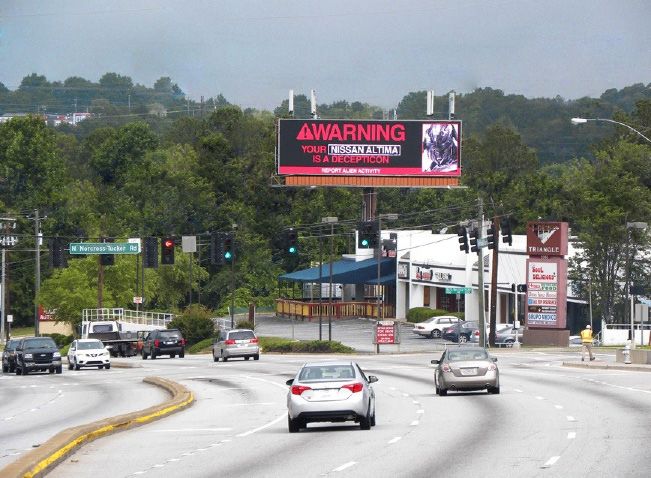
The ongoing avalanche of technology transformation       These types of connections are growing at an
has resulted in big changes to nearly every aspect       astounding rate. As more advanced connections
of city living. This list includes how visitors and      are added, the strategic value will become
residents communicate, consume, connect, and             clearer for the OOH industry. Consider wherein
work – and most of it has come at a relatively low-      all three connections are combined: M2M, P2P,
cost to the users of such technology. Those basic        and M2P. This sharpens the focus on competitive
economics are driving cities to invest in ambitious      differentiation and the creation of new business
smart city initiatives.                                  models.

Dr. Peter Williams (Chief Technology Officer for
Big Green Innovations at IBM) suggests a smart
city “is where the Internet of Things and analytics
are applied to public infrastructure, services, and
participation in the community.”

It is the new tech-powered connections that matter
most. For out of home (OOH) media companies, the
vital connections that matter can be divided into
three types:

Machine-to-Machine (M2M) Connections:
Information transferred from one machine or
“thing” to another over a network. Machines include
sensors, robots, computers, and mobile devices.
Often called the Internet of Things (IoT).

Machine-to-People (M2P) Connections:
Information transferred from a machine (such as a
computer, mobile device, digital sign) to a person, or
vice versa. Whether a person gets information from
a database or conducts a complex analysis, this is
an M2P connection. Often called Data & Analytics.

People-to-People (P2P) Connections:
Information transferred from one person to another.
Increasingly, P2P connections happen virtually,
through video, mobile devices, and social networks.
Often called Collaboration.
                                                         Digital billboards promoting the release of the film Transformers: The Last Knight
                                                         used optic recognition technology to identify the model of passing vehicles.

                                                         Despite the opportunities, several hurdles stand
                                                         in the way of an OOH company’s ability to fully
                                                         capitalize on connected technologies:
                                                         • Although possible, it may be difficult to tap into
                                                             the full potential of connected infrastructure
                                                             until digital OOH is more widely dispersed.
                                                             Digitized assets can have the effect of improving
                                                             operating efficiencies and reducing costs.
                                                         • OOH companies must continue to gain insights
                                                             from the vast amount of data now becoming
                                                                                                                                Page | 2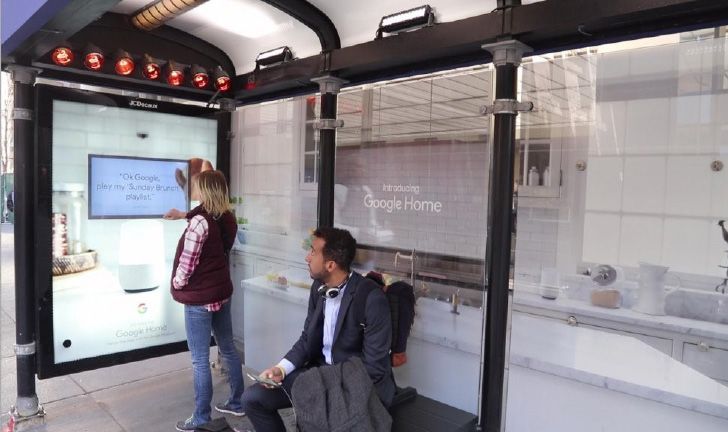
available. The aim is to use it for anticipating                    Researchers at Gartner Group call it the Nexus
  new behaviors, speed new initiatives, and avoid                     of Forces and others call it The Third Platform.
  potentially negative outcomes.                                      Regardless of the term, the bottom line is that
• OOH companies need to keep pace with rapid                          knitting together multiple technology-driven
  changes, such as new business requirements                          disruptions will create great opportunities for cities
  and the mandate to roll out new services                            and the people who live in them. At its essence,
• Proactive initiatives are needed to deal with                       the smart city revolution is all about the networked
  data security threats that come with increasing                     connections linking up people, process, data, and
  connectedness.                                                      things.
• OOH companies responding to the smart city
  challenge with legacy systems often find existing
  assets lack the scale, flexibility, and operational
  simplicity needed to compete in new cityscapes.

               Google Home bus shelters featured touchscreen panels
                                                                      A starting point for the OOH industry to begin
                                                                      thinking about smart cities integration is with
The Third Platform                                                    the four elements of people, process, data, and
                                                                      things. Taken together, they comprise the core of a
Leading analyst companies perceive a sea of                           smart city system:
change is occurring within cities. Many agree
converging digital disruptions give rise to                           •   People: Connecting people in more relevant,
exponential change.                                                       valuable ways. Today, most people connect to
                                                                          the Internet through devices like PCs, tablets,
                                                                          TVs, and smartphones. In the future, people will
                                                                          be much more comfortable with different kinds
                                                                          of devices, such as a pill that’s swallowed to
                                                                          sense and report health concerns to a doctor
                                                                          using a secure Internet connection. Sensors
                                                                          placed on the skin or sewn into clothing will
                                                                          provide information about a person’s vital
                                                                          signs. It’s possible people themselves will
                                                                          become nodes on the Internet, with both static
                                                                          information and a constantly emitting activity
                                                                          system. For OOH, this could mean changing
                                                                          the current attitudes about new technologies,
                                                                          shifting the emphasis of OOH asset by making
                                                                          them more adept at integrating data from
                                                                          multiple sources.

                                                                                                                        Page | 3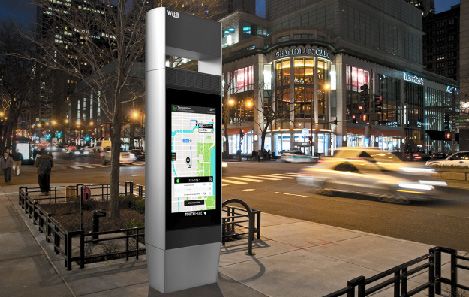
•   Process: Delivering the right information to            context-aware, and provide more experiential
    the right place, person, or machine at the right        information to help people and machines make
    time. Processes play an important role in how           more relevant and valuable decisions. Imagine
    people, data, and things work with one another          smart sensors built into structures like street
    to deliver value in the connected world. With the       furniture or disposable sensors that are placed
    correct process, connections become relevant            on every OOH poster substrate.
    and add value, because the right information
    is delivered to the right person at the right time   At a minimum, cities want to become smarter in
    in the appropriate way. The good news for the        ways that make themselves a more attractive place
    OOH industry is there are potent new methods,        to live and work. To achieve this goal, city planners
    powered by digital tools, which enable the           and leaders are looking for partners to provide
    presentation of more meaningful information to       valuable expertise or knowledge.
    consumers, especially geo-located information
    that becomes more relevant to interactions with      Recognizing the potential of new technologies, city
    an OOH asset.                                        governments are busy launching various kinds of
                                                         smart city programs. Most of these cities have built
•   Data: Leveraging data into more useful               their smart initiatives with two complementary
    information for decision making. With IoT,           aims in mind: to lower total cost of operations while
    devices typically gather data and stream it over     increasing revenues. City leaders are mindful that
    the Internet to a central source, where it is        one consequence of rapid technology innovation is
    analyzed and processed. As the capabilities of       reducing budgets. Computing costs, storage costs,
    things connected to the Internet advance, they       and connectivity costs are each far less expensive
    will become more intelligent by combining data       now than they were just a few years ago.
    into more useful information stacks. Rather
    than just reporting raw data,
    connected things will send
    higher-level information back to
    machines and people for further
    evaluation and decision-making.
    The transformation from data
    to information is important,
    because it will allow people to
    make faster, more intelligent
    decisions, as well as control
    environments more effectively.

•   Things: Physical devices
    and objects connected to the
    internet and to each other,
    in ways that encourage more intelligent day-         How and why are cities making the move towards
    to-day decision-making. Physical items that          the smart city? Some of the top challenges city
    will be critical for OOH include: sensors (e.g.      leaders face are evident; some are less apparent.
    pressure, radio activity, image, temperature,        The OOH industry has an opportunity to participate
    vibration); consumer devices; enterprise assets      in the transformation of conventional cities into
    that are connected to both the Internet and          smart cities. It involves something quite complex
    each other through easy-to-use tools like RFID       which is turning data into wisdom.
    (wherein a simple tag is useful for identifying an
    object); and actuators (an object that makes an
    action, such as turning-off an engine or light).
    Today, things now sense more data, become
                                                                                                         Page | 4
not sure if these vehicles would make roads
                                                           safer or more dangerous. Of those surveyed,
                                                           87 percent favored requiring a person always
                                                           be behind the wheel, ready to take control if
                                                           something goes awry.

                                                           According to experts at Meeting of the Minds,
                                                           smart-cities “embrace emerging technologies
                                                           in ways that improve quality of life for urban
                                                           inhabitants while also making that city’s
                                                           economy and development more sustainable.”
                                                           Advocates for smart cities investments point to
                                                           these goals as they assess technologies. They
                                                           argue that smart cities technology innovations
                                                           will play a vital role in addressing big urban
                                                       challenges, such as:
Important Questions About OOH and
the Smart City                                         • Crumbling infrastructure in one or more of
                                                         the key categories of energy, water, transport,
What do smart city technologies offer OOH                sewage, and other waste streams.
companies? There are three key benefits.               • Growing urban migration, which stretches
                                                               resources beyond a city’s capacity to
                                                               function.
                                                               •     Traffic and parking congestion, which
                                                               reduces productivity, increases stress
                                                               levels, and adds harmful pollutants into
                                                               the environment.
                                                               •     Rising demand for better public
                                                               services from citizens and visitors. Meeting
                                                               these demands escalates expenses, both
                                                               the capital costs and the operating costs.
                                                               Funding constraints are often exacerbated
                                                               by an inadequate tax base.
                                                               •     The aging of the urban population,
Understanding the opportunities associated with          which requires the provision of specialized
data, services, and security is a foundation on          services and staff.
which the OOH industry can build momentum to
keep pace with the smart cities phenomenon. There      What goals have cities adopted to measure
are many other questions OOH companies should          smart city investments and initiatives?
consider to determine which opportunities might        Sustainability is the long-term goal of many of
align best with future business objectives.            the most interesting smart city projects. The word
                                                       sustainability, in this sense, refers to any state in
Why are a growing number of cities purchasing          which the needs of the present are met without
smart city technologies while also encouraging         compromising the ability of future generations to
private sector investment?                             meet their own needs. The concept of sustainability
It’s not obvious why cities would embrace smart city   seems to be continually evolving. As such,
technologies when the public remains a bit hesitant.   sustainable urban development powered by smart
In a 2017 survey about the arrival of driverless       technology has become a strategic goal which
cars, the Pew Research Center found most of            includes environmental, social, and economic
those surveyed didn’t want to ride in autonomous       aspects.
vehicles. A total of 39 percent respondents were                                                       Page | 5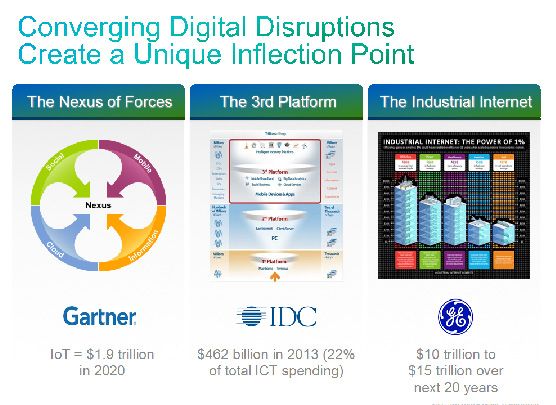
Resilience implies an adaptive capacity of any           3. Transparent in communications and operations
organization operating in a complex and changing         4. Enabling of the security of personal information
environment. As such, it’s also a strategic goal for     5. Supported by integrated services and
city-focused organizations, best addressed by a             infrastructure; and
program of continual improvement. City leaders           6. Proactive in learning and developing
seem to be increasingly interested in finding an
optimal mix of tools and technologies. In keeping        Every city is currently at a different stage of
with this trend, the Rockefeller Foundation              development. Smart- city initiatives are tailored to
committed to spend $100 million for its100               suit local context and priorities. Where significant
Resilient Cities program, and each identified city       investments are being made on smart city
undertook a multi-year program.                          infrastructure, the city leaders are typically aiming
                                                         to advance a set of goals, including at least one of
A growing list of cities, including those 100, are       the following:
trying to distinguish themselves through smart city
initiatives. Several of the approaches taken by cities   • Increase the pace at which it improves its
are discussed in a 2017 in-depth report published          sustainability and resilience.
by The National League of Cities, “Trends in Smart       • Improve how a city engages citizens; how it uses
City Development”. One approach, which seems to            collaborative leadership methods; how it works
be working, is to open some city datasets to third         across disciplines and city systems; how it uses
parties. In turn, the third parties can analyze data,      data with integrated technologies.
share insights they discover, publicize the trends       • Provides better services and quality of life to
they detect, and suggest innovative urban solutions.       those who live in a city and to all involved with
                                                           the city (e.g., residents, businesses, visitors).
The open-data approach has become prevalent
today. It represents a real opportunity for the OOH      Do smart cities create new opportunities
advertising industry, since many datasets may            specifically for the OOH advertising industry?
be of direct interest to various OOH advertising         Smart city technology deployments involve more
companies. For instance, analysis of real-time traffic   sensors generating more data about a growing
data can be used in dynamic ways to show changing        number of “urban facts.” For instance, a specific
demographics in different locations within each city,    passenger might be moving on a specific bus
translating into the delivery of different messages      route, towards a specified final destination. This
at different times of day. OOH leaders are already       “urban fact” provides important insights to a list of
imagining the possibilities of sharing geo-location      organizations – including government agencies and
data, and thereby not being dependent on quasi-          businesses -- which might desire to deliver hyper-
monopolists who sell similar data.                       targeted messages. The information might include:
                                                         an upcoming destination; reminders about previous
But, embracing the power of information involves a       purchases; points-of-interest along the way; delivery
bewildering array of options. Countless technology       of special event information final destination details;
companies – small and large; startups and                and more. Some OOH companies are already
established firms -- are keen to supply cities with      tapping into real-time information about travelers,
their own custom solutions, providing hardware,          especially those who’ve opted into a smart city
software and services.                                   infrastructure.

What do city leaders think are the ideal                 The logic is simple. More details translate into more
characteristics of a smart city?                         effective messages that are often personalized in
Surveys of city leaders have pointed to these            ways that ensure greater response rates. Even if
six characteristics to define the ideal smart city       the attention of a city resident or visitor is focused
construct:                                               elsewhere, OOH ads will want to have the ability to
1. People-centric programs                               effectively communicate and interact with people in
2. Inclusive, and open to new ideas                      customized ways.
                                                                                                          Page | 6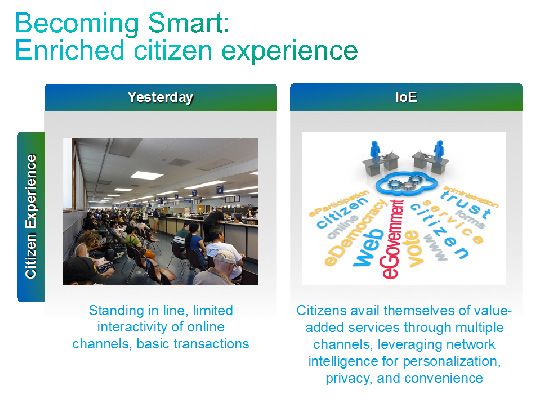
Can smart cities open up new revenue streams              Early indications suggest cities are slow to monetize
for the OOH industry?                                     the data they possess and control through the
Some smart city designers believe advertising will        franchises, at least by actions taken on their
have a crucial role in formulating urban business         own. One reason is the city government’s pool
models with ad revenue funding development.               of employees lack sufficient talent to quickly
Additionally, the owners of billboards or street          analyze such large volumes of data flowing into
furniture inventory will certainly focus on capturing     the city at a high velocity. The avalanche of raw
relevant data. But, OOH companies may quickly             data is overwhelming many cities, which means
discover the “street value” of raw data is                the “jewels” contained therein (little insights
substantially smaller than expected. The end              garnered from the Big Data) are effectively being
users of data, whether private companies or public        lost. Capturing those insights through the use
agencies, will place a premium on data that has           of advanced cloud-based analytics is precisely
been analyzed in some meaningful way: sorted,             how modern companies like Mastercard have
sifted, assessed, compared, contrasted, and so            created fortunes, and it’s precisely how they’re
on. This fact has led to the growth of data-centric       position themselves to maximize the opportunities
companies, like Mastercard, with dedicated smart          presented by smart cities. OOH companies could
city data business units.                                 provide similar insights.

How can governments engaged with building                 What are the data-privacy and data-security
smart cities consider working in new ways with            concerns?
the OOH industry?                                         The rising importance of digital security, for city
A challenge for OOH companies, working within             governments and for citizens, might make the
smart cities, will be developing profitable               collection of data more challenging in the future.
relationships that link advertising assets with           Security has become a concern for many leaders
technology partners (e.g., analytics providers).          engaged in organizing smart city projects. One
Some advertisers will be anxious to participate in        important survey by Dimensional Research
the new opportunities created by an abundance of          disclosed that 55 percent of the survey respondents
smart city data streams. The same can be said for         thought their cities were insufficiently addressing
the city government itself. But, credible voices are      digital security.
warning city leaders about the potential declines in
city revenues resulting from smart technology. An         Consider what happened in Dallas, Texas. A
often-cited concern are autonomous vehicles, which        malicious prankster turned on all the city’s 156
will reduce parking meter income and parking ticket       tornado sirens. More than 4,000 alarmed residents
fines.                                                    called 911. Interestingly, sirens weren’t linked to the
                                                          internet and the vulnerability was located inside the
Cities seeking new revenue streams to replace             system’s radio communications software.
lost income will look more closely at advertising
channels already controlled and may start                 That same Dimensional survey found 27 percent of
examining new channels. All with an eye toward            respondents considered public Wi-Fi networks the
replacement income. Over time, city governments           highest risk city asset. Meanwhile, 18.6 percent of
are likely to attach a higher priority to joint efforts   respondents considered smart urban energy grids
aimed at new uses of OOH advertising that employs         as the targets most likely to show vulnerability.
smart city data.                                          Another 12.7 percent thought the biggest threats
                                                          were located inside public lighting infrastructures.
How might city governments seek to exert                  Will the demand for greater security become a
greater control and influence?                            major impediment for smart city development?
Local governments control key OOH advertising             Scott McLeod, associate professor of educational
franchises, such as bus shelters, information             leadership at University of Colorado, Denver,
kiosks, and transit systems. These franchises             argues “there will be all kinds of hiccups, horror
produce income through fees. But, there are other         stories, accidents, deliberate acts of sabotage
opportunities.
                                                                                                           Page | 7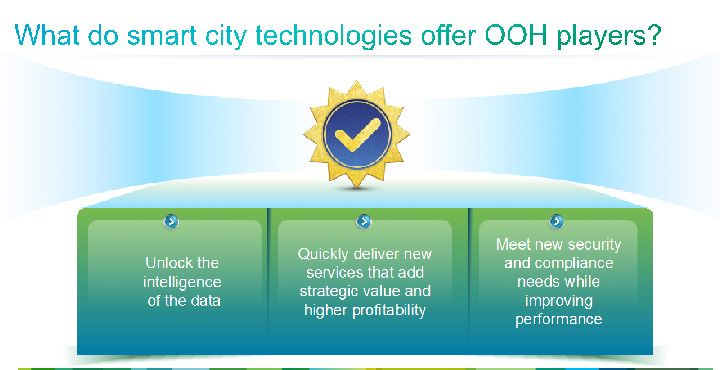
and other bumps along the road that will slow but provision of real-time data about public transit has
not stop our greater connectivity. Convenience been a notable success because it often increases
and empowerment always seem to win for most ridership. In those cities, transit vehicles have
people, even at some loss of privacy, control or been connected with high-speed communication
transparency.” networks. These networks are almost always
equipped with other capabilities, such as sensors
Are cities making real progress on becoming that monitor road health, or deliver precision-
smarter? targeted communications based on time and
There are a wide variety of annual lists published location. Equipping transit (buses, in particular)
about the smartest of the smart cities. Some of with real-time location reporting has had the effect
these lists are produced by notable sources. A of supporting the development of real-time transit
Meetings of the Minds summary helps sort out applications. Furthermore, on-board communication
which cities are getting it right. infrastructure has opened up new opportunities
to add other services including: road-quality
Growing public enthusiasm for smart cities has monitoring, parking infringement management, and
pushed city leaders to become more aggressive location-based advertising as a service.
about city initiatives. One report from CompTIA,
“Building Smarter Cities and Communities”, Expanding communication infrastructure doesn’t
surveyed both private citizens and US government necessarily require sizable investment. Consider
officials. It showed that six out of ten Americans are some of the small tweaks that make a big different
interested in living in a smart city. in public transit: adding real-time location reporting
to buses provides riders with surety about the
Which organizations are leading the effort timing of their next bus. It allows riders to make
to help cities and their partners to develop definite plans, in case of delays. The availability
successful and secure smart cities? of real-time transit information had the effect of
Numerous organizations are working fast to bring increasing ridership, too.
together leaders from three distinct realms – public
sector, private sector, and independent sector. Real-time transit data also provides software
One new initiative, World Smart City Forum, is a developers with an opportunity to incorporate route-
knowledge platform launched in January 2016 by planning capabilities into their applications. This
the International Electrotechnical Commission, in can have the effect of fostering the development
partnership with two UN agencies, the International of advanced tools that governments are unable or
Organization for Standardization and the unwilling to make on their own. T his can open-up
International Telecommunication Union. As foremost new revenue opportunities with services like: public
standard development organizations, these safety cameras, mobile WIFI hotspots, and location-
institutions have jointly convened a core group of based advertising platforms.
several hundred leaders to participate in a rich
debate about smart cities, and the role that global What is the importance of real-time data?
open standards will play. Among those participating As citizens benefit from technology trends, they
are investors, utility and technology executives, demand the same technology experience in their
consultants, city planners and designers, and cities as they have in their personal lives (e.g., on-
providers of safety and security solutions. demand shopping, online banking, Uber) and in
Collectively, these groups have been working to their workplace (e.g., Slack, Salesforce). Citizens
solve some of the most complex problems facing want the ability to access any application, at any
smart cities. time, from anywhere, from the device of their own
choosing.
How and why is public transit part of the smart
city model?
What are the signposts of full digitization?
Among the many breakthrough that have happened The OOH industry has embarked upon a journey
with the introduction of smart city technologies, the from the physical world to the digital world. The
Page | 8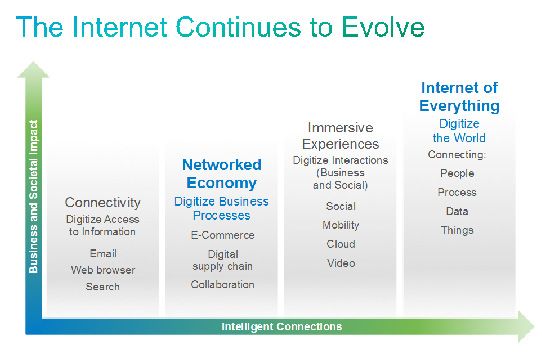
good news is this is not an “all or none” proposition.   division of Verizon, is developing programs in Austin,
The smart OOH companies are now busy leveraging          TX and New Rochelle, NY, among other cities.
their physical assets, harnessing the power of
whatever data they already generate and own, to
take advantage of their position in the marketplace.

At this stage, whoever enters the OOH ecosystem
with a digital-only approach, however compelling
the value proposition, must connect to the physical
world, too. This is where legacy OOH companies
have an upper hand. In the real world, drivers
(and their passengers) pass billboards, hungry
commuters stand at bus shelters, and people
actually live, work, play and learn in real places.
                                                         LinkNYC kiosk in Manhattan.

For some time, OOH companies with physical assets        The core concept can certainly be developed for
have digitized them, in many different and varied        other place-based OOIH formats, whether inside
ways. Sometimes they’ve taken on partners that           airports, rail terminals and subways, bus depots,
bring with them digital solutions.                       city buildings, and shopping malls. The common
                                                         objective for all such OOH innovations is to deliver
Why are smart public kiosks at the cutting edge          valuable services to citizens and visitors, in multiple
of the smart-city?                                       formats, that include: wayfinding, Wi-Fi, multimodal
A growing interest in smart public kiosks coincides      transit information, city information (including
with rising demand for higher quality city               points of interest and current events), or emergency
information, public enthusiasm for “direct” city         notifications. LinkNYC delivers a network that, when
experiences, and the push by city governments to         fully configured, will provide an interconnected
deliver urban services.                                  physical and digital platform that allows for the
                                                         integration of IoT and communications technologies,
Through the deployment of innovative hardware,           including some very important ones which are
software, and services, woven together by an             only now emerging. This includes: LTE small cells,
integrated solution, smart public kiosk providers        IoT gateways, traffic sensors, and environmental
have demonstrated that any municipality, large or        sensors.
small, can use technology to create smarter, safer,
and more efficient cities.

Consider the deployment of LinkNYC, the largest
smart city network in the world. Spanning all five
New York City boroughs, with expansion happening
in London and Philadelphia, the network is unlike
other OOH formats, insofar as it provides up-to-date
interactive public communication hubs. In this case,
it is replacing obsolete public payphone booths with
street-hardened kiosks, bringing high speed internet
to the one in five New Yorkers who currently don’t
                                                         WayPoint X kiosk in Chicago.
have broadband connectivity at home.
                                                         Creating a seamless canopy of connectivity in
New start-up companies, some with legacy partners,       a city means working both above ground and
have unveiled new variation of smart public kiosks.      below ground. Connecting a wide range of urban
Smart City Media have developed programs in              infrastructure is necessary, and not just a kiosk.
Washington, DC and Kansas City, MO. Oath, a              The term “kiosk” may be inadequate because
                                                                                                          Page | 9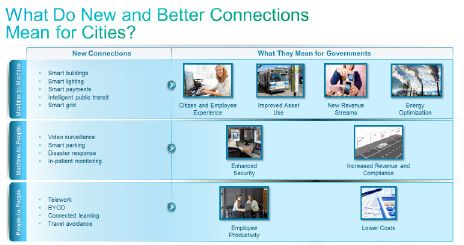
it minimizes the utility and the capability of a            can be used to reduce noise pollution. Critical
connected device. Public kiosk providers may just           insights can be gleaned from audio data.
be scratching the surface of the different use              Imagine there’s a gunshot. Different kiosks
cases. Without question, there will be a full range of      located in the vicinity can capture sensing data
capabilities made possible by networking connected          and pass it onto the cloud. In the cloud, a
end points.                                                 gunshot detection application (like ShotSpotter)
                                                            triangulates the source of the gunshot, at which
Perhaps the major challenge facing cities hoping            point emergency services are deployed.
to deploy smart public kiosks is funding. Only by
developing a workable business model can cities          • Connectivity. At the core of the smart public
bring this technology onto their streets. There            kiosk is connectivity. Consider the gunshot
are various revenue models to consider, including          detection use case. Once the gunshot is
advertising. The core concept is to make any system        noted by the sensors, location information is
viable insofar as it is economically self-sufficient       transmitted to the cloud quickly. For that to
and financially sustainable.                               happen, fast and reliable connectivity is needed.
                                                           The city could can use fiber today, with 5G
Almost certainly, companies providing smart public         wireless coming in a few years.
kiosks will need to consider public safety and
security. At a minimum, this means providing real        • Small Cell. An emerging technology that will
time emergency notification capabilities. The goal         be vital for connectivity is small cell. Service
should always be to make people aware and safe in          providers, such as AT&T and Verizon, are
a city environment.                                        investing heavily in small cell to provide a
                                                           better experience for cellular customers. The
Security cameras are one way to improve safety.            main advantage, at least in cities where large
Cameras can be embedded into public kiosks.                buildings stand, is eliminating persistent
Obviously, privacy issues must be considered in            coverage gaps. These modules help fill coverage
these cases. But, the technology does support              gaps. Service providers can rent small cell
the use of video surveillance devices. Most of the         modules, thereby providing alternative revenue
cities using cameras have made the case, to both           streams for both cities and kiosk operators.
the press and the public, that this enhances public
safety. The argument runs parallel to the case for       These three additional tools have potential but,
providing battery backup power inside many public        have not yet been proven in practical application,
kiosks, making cities more resilient in the event of     are difficult to achieve with crowds, and have
an emergency, whenever power is discontinued.            significant legal and privacy hurdles to overcome:

Elevating connectivity is a key differentiator smart     • Audience Analytics. As citizens interact with a
public kiosk. The idea is to provide a platform            kiosk, he audience analytics software makes
that allows for connected services, providing              certain that any ads shown are relevant. Beyond
communications between these devices and a                 making advertisements more relevant, audience
network. The best of smart public kiosks will provide      analytics software collects data about audience
connectivity to people in the form of broadband            demographics. Audience analytics software
internet, LTE small cells, iBeacon technology, and in      records how long the ad is being viewed and it
some cases VIOP telephony.                                 can also enable gaze tracking.

There are a growing number of useful tools that can      • Gaze Tracking. 3D cameras can be used for
be found inside smart public kiosks:                       ‘gaze tracking’. Any kiosk screen could have
                                                           different zones assigned, and each one of the
• Audio Devices. An audio sensor records noises            zones might show different content. One zone
  around a kiosk. A city’s agencies can use the            might show ads, and another zone could provide
  data to assess noise levels, in real-time, which         public service announcements. With the help
                                                                                                        Page | 10
of a 3D counter, a kiosk operator can calculate orchestration, and visibility across previously
where the viewer is looking some or most of the disparate systems. IoT is a subset of the broader
time. As different visitors view particular ads, Internet of Everything (IoE) and is a gateway to
the information is captured and inserted into a reach the full potential connected lives. IoE brings
campaign report for ad agencies and clients. together people, processes, data, and things to
make networked connections more relevant and
• Emotion Detection. 3D cameras can also be valuable, turning information into actions that
used to detect emotions when a person is create new capabilities, richer experiences, and
standing in front of a screen. Are they happy? better decisions.
Are they confused by the content that’s being
shown? 3D cameras help with the analysis. Cisco estimates that 50 billion objects will be
Understanding emotional responses to ads connected to the Internet by 2020. (Cisco’s study
can improve the quality and effectiveness of on this was first published in conjunction with MIT in
advertising. 2012).
As cities search for new way to engage citizens, With the explosion of devices and new applications,
devices provide a location-based communications there is a drive to leverage the reach and power of
platform between citizen and the city itself. Ideally, the Internet to enable new intelligent interactions
it is a two-way communication conduit where a between those things. IoT is increasing the
city presents current issues, and where citizens connectedness of people and things on a scale that
can notify the city about specific situations within once seemed unimaginable. In fact, devices already
communities, where citizens ask questions and outnumber the number of human beings on the
gather information. planet by a scale of 1.5 to 1.
The Internet of Things In response, organizations across all industries
and vertical markets are cresting an expanded,
A vigorous debate is underway about the future adaptable network infrastructure that can grow
of urban communities and the potential value of along with evolving connectivity demands from
the Internet of Things (IoT) to cities. What value inside and outside their organizations. At the same
does IoT add to a city’s key institutions, including time, they are ensuring the vulnerabilities inherent
city government agencies, private enterprises, in more complex, interconnected infrastructures are
educational organizations, and medical institutions? secured.
IoT is defined as “the intelligent connectivity of Several factors are shaping the IoT phenomenon:
smart devices” and it’s already seen as a driver of
massive efficiency gains, sustainable growth, and • The explosion of data and data analytics
improved quality of life. When objects sense each enabled by cloud computing.
other and communicate, this fact changes how and • The growing interconnectivity across industrial/
where and who makes decisions about the physical operational devices and growth in the number of
world. This is especially meaningful for growth- smart mobile devices.
oriented private enterprises and public institutions, • The convergence of networks that enable
which find more operating efficiencies, deliver applications such as video surveillance,
greater value to customers, employees, and citizens smart meters, asset/package tracking, fleet
in general, and enable new business models. management, digital monitors and a host of
other next-generation connected services.
IoT has its roots in industrial automation, noticeable
in the convergence of Operational Technology Better efficiencies are a byproduct of the IoT which
(OT) and Information Technology (IT). Network can produce significant cost savings for cities and
intelligence, which is the “smarts” behind all businesses. For example, a 1 percent reduction in
of the connective tissue, allows convergence, capital expenditures from IoT-related efficiencies
Page | 11could save the oil and gas industry $90 billion over To meet these challenges, businesses are learning
15 years. (Source: GE report, “Industrial Internet: how to become more agile, to stay ahead of their
Pushing the Boundaries of Minds and Machines”, competition and quickly respond to market and
2012). technology changes. An IoT platform (across
an enterprise) can help businesses meet these
Analyzing data provides an even more sophisticated challenges and can support organizations
way to redesign entire processes and create working to become more innovative, efficient, and
new opportunities. Smarter decision-making competitive.
separates control systems from machines. Already,
smartphones can remotely manage a number of However, the implementation of an IoT platform
physical objects like security cameras, thermostats, does bring challenges of its own. Disparate systems,
and lights. machines, and proprietary protocols need to be
managed, integrated, and secured. Connecting
Capabilities to connect to more things is growing sensors, objects, machines, and devices with a
every year. By 2020, it is estimated that 4.5 billion simple, end-to-end infrastructure can be challenging
new people and 50 billion new things will be joined without the right strategy and planning, and the
the Internet. Over time, this will make networked right business partners. In addition, networking
connections more relevant and valuable than ever machines that have never been connected will
before, creating unprecedented opportunities for generate vast amounts of data that will only be
countries, industries and individuals by supporting useful if harnessed effectively with a reliable
billions of context-aware devices. network that can scale massively, offer high
resiliency, and provide near real-time access as well
How can cities capture the value of the IoT? With as end-to-end security.
access to cutting-edge technology and innovative
solutions, cities are finding ways to leverage The opportunities can far outweigh the challenges
technological power to transform the way they do if managed with the right partners. The connection
business, the way citizens connect to services of devices, machines, and things will provide the
and to government agencies, the way that urban opportunity to dynamically generate, power new
communities create lasting bonds between and and greatly improved business models. With the
amongst residents and visitors. A city’s ability to IoT, businesses will discover new ways to innovate
build, manage, and secure end-to-end IP-based throughout the business value chain.
platforms translates into the connections between
things, people, and information. All of this is fueling Partnerships Depend Upon
the growth of the IoT. Cooperation and Collaboration
Today’s urban leaders know the future is coming When it comes to the build-out of smart cities,
fast. They recognize technology disrupts the market government leaders are not just looking for
and creates new opportunities. They are asking technology providers. They’re looking for strategic
simple questions with complex answers. Business partners who understands their needs and can
are asking important questions, too. help transform their communities. They want
partners who can help guide them through change,
Many businesses are facing increased competitive help them solve complex data problems, and help
pressures, in nearly every industry, to get products shape their communities for the future. They want
to market more quickly, meet changing regulatory intelligent connectivity that can help cities generate
requirements, and at the same time innovate sustainable value and will work with partners who
while obtaining greater operational efficiencies. can deliver on that promise.
The growth in the number and types of devices
as the result of mobile workforces, supply chain What can new and better connections do for cities?
partners, and the “consumerization” of business Cities have the opportunity to create new types of
tools are presenting network coverage and security data connections between different parts of the
challenges for many organization. Page | 12city, including connections between citizens to rapid speed with which decisions need to be
governments. As technology continues to evolve, made, requires computing capability reside
and new connections become available, new closer to the source of data. This makes it
sources of value will emerge. possible for real-time data to be quickly filtered
and analyzed, and then transformed into
The lasting benefits are derived from the actionable intelligence. Placing the computing
compounded impact of connecting people, data, functions closer to the “edge” is what’s referred
processes, and things. The true value of increased to as the “fog” layer, and is distinct from the
connectedness happens when “everything” cloud.
comes online. In light of technology changes, OOH
companies can stay competitive by moving quickly • Application enablement. An open, standard-
to gain a leadership position. based platform is essential for enabling third
parties to quickly create robust and useful
These are the components which have become the applications that are capable of analyzing,
keys to successful city digitization: using, and adapting to intelligence resulting
from data flowing from city assets.
• Security and privacy. City
leaders are thinking about
security in new ways. For
instance, a layered approach
to data helps to achieve a
comprehensive solution, with no
single point of failure. Robust
security must be a priority. Within
existing security protocols, a
user can simply quarantine an
unknown or suspicious device.
But in more advanced networks
being deployed inside smart
• Converged Management Network. Networks city projects, every device may serve a critical
within any modern city operate with a patchwork function. For example, if a connected device
of disparate systems and processes that don’t manages a city system or a municipal operation
communicate very well with one another. (such as a bus fleet) the cost of a quarantine
That can lead to delays in the transfer of procedure would be great. What’s needed is a
critical information and an incomplete picture deeper understanding of every device touching a
of the challenges that prevent cities from network, identifying (and controlling) everything
realizing their full potential. By converging related to the enterprise.
those systems into one, cities are gaining the The private sector is investing a huge amount of
ability to share information on top of a more time and money, many billions of dollars every year,
reliable, transparent, and scalable technology to develop the technologies that make connected
foundation. cities possible. These investments have focused in
several core areas:
• Resilience at scale. Connecting devices that
produce and communicate data, requires that • Technologies that empower people to
networks be capable of scaling exponentially, all collaborate anywhere, across voice, video,
the while remaining manageable and stable. messaging, and social applications, to work
more productively and deliver higher-quality
• Distributed intelligence. The sheer amount of services.
data that must be analyzed, coupled with the
Page | 13• Network infrastructure solutions that make it to do so. The array of different technologies that go
easy to connect people and things, anywhere into a smart city is vast, with complexities that are
and everywhere. beyond the technological knowledge of many city
leaders. Finding trusted partners with the needed
• Data centers and virtualization technologies experience is critical for successful deployment of
ensuring faster and lower-risk development, smart city initiatives.
testing, and deployment of innovative
applications. Explore available funding options: Although
government bonds and similar options may be a
• Security solutions allowing organizations to common option historically, many innovative and
take advantage of new connections with greater relatively new financing mechanisms are available
visibility, control, and threat-defense. today. With different procurement options, for
instance, cities can shift to a business model
All of these capabilities have been integrated by that defines smart city projects as operating
leading technology companies into complete, expenditures versus capital expenses.
ready-to-deploy solutions that extend across local
government and city operations. They are applied Improve internal support: To alleviate internal
across city services such as public safety, law barriers and lack of cross-vertical governance, it’s
enforcement, the courts, and education. important to create a cross-departmental team
to help pool funding sources and align priorities
Building a smart city requires thoughtful planning in tackling strategic projects. For instance, during
and a clear strategy. There are common steps a smart city evolution, cities will have many
municipalities are taking to build smart city opportunities to create an ecosystem to solve
infrastructures. individual departmental problems collectively, and
these opportunities can help create significant
Find a visionary leader: A champion is the catalyst efficiencies on many levels.
to overcome hurdles in the complex evolution of a
smart city. Explore technology options: Software-as-a-
service (SaaS), delivered via the cloud, offers a
Move beyond planning: City planning initiatives format for smart city solutions that can create
are moving out of planning departments and into meaningful economic efficiencies. Here too, these
wider city programs. The process includes cutting solutions also create staffing efficiencies, because
through city bureaucracy and gaining greater external experts can become extensions of internal
visibility through inputs from citizens, businesses, IT departments for little additional investment.
and smart city technology partners. Wherever possible, cities are incorporating smart
regulations and open architectures to help mitigate
Begin pilots proving the value of larger interoperability concerns.
efforts: Planning efforts help a city to initially think
big. Starting with a holistic citywide evaluation, Start mobilizing technology: New applications
cities are engaging stakeholders to get buy-in. designed for mobile communications are making it
Thoughtful pilot programs – with clear estimates of possible for cities to adapt quickly. Mobile usage is
costs, benefits, and a simple ROI analysis for each skyrocketing and businesses, residents, and visitors
project – identifies successful results for wider-scale expect a city’s mobile communications platform to
efforts. meet their needs.
Understand the costs and benefits: Cities Learn from peers: Cities around the world are
understand the benefits of a smart city, but they already undertaking massive smart city initiatives,
sometimes do not quickly translate benefits and they are willing to share their stories.
into specific metrics that apply to their own
communities. Nor do they have the models or tools
Page | 14Find the right partners: The right tools,
resources, and expertise can help thrive.
With the right partnership, officials can
gain the support they need to evolve
quickly and realize the smart city benefits
that are available for them.
How can OOH companies be involved?
The Third Era
To better understand the underpinnings
of the smart city phenomenon, it helps
to look back to previous waves of digital
innovation. Why? Because technology, and
especially the Internet, continues to evolve. characterized by connected objects in city, such
as street furniture, parking meters, traffic lights,
The Internet’s “First Era” was about the basics: and streetlights. Each object can emit data about
email, enabling better communication, changing the operational conditions, providing opportunities for
way we do things. The Internet’s “Second Era” was monitoring and management, and remote control.
focused on e-commerce. During the Internet’s “Third
Era” two conditions co-exist at the same time. The When the tech industry built out the first Internet,
first is how immersive social media surrounds us the primary objective was to achieve the best
all, at all time. The second is how billions of physical price and performance ratio possible. Issues
objects and systems are getting smarter through such as energy cost, power consumption, cooling
stronger connections, powered by a wave of new requirements, and emissions were an afterthought.
technologies.
The new Internet is delivering a much richer
user experience, which is becoming more
transparent to users. In this next phase of the
Internet, the experience will be increasingly
mobile and global in scale. Relevant content
finds individuals, based on an understanding
about location, preferences, and other
contextual factors.
The underlying architecture of the new
Internet is highly distributed and virtualized.
This factor has laid the foundation for a
shift to Cloud Computing, which enables
IT functions that are far more agile and
cost-efficient. The essence of smart cities
Residents and visitors of cities now connect is gathering and analyzing data streaming from
with others in ways that were impossible just a intelligent and connected urban objects. The aim is
few short years ago. More affordable and hyper- to generate insights that make things work better
efficient communications is just the beginning. and faster.
As e-commerce changes daily life, consumers
recognize the potential for something on a bigger
scale. To date, the Internet’s Third Era has been
Page | 15Cities investing in smart city solutions are seeking era. The forces unleashed by earlier innovations
concrete benefits. created opportunities for leaders who became
• Reduced Costs railroad tycoons, steel barons, and bankers. Many
• Improved employee productivity of them were keenly interested in connecting the US
• Enriched citizen experience Western frontiers, using an extensive network that
linked railways, enabled unprecedented commerce,
Partnerships formed by public agencies and private communications, and settlement. Railroads
companies aim to extract actionable insights dramatically altered America’s economic and
from massive smart city datasets. For example, political geography, changing how people thought
Mastercard executives are actively developing about the distant frontiers. Before railroads, sailing
public-private-partnerships (P3s) with major cities ships connected continents. After the railroads
on multiple continents. Hundreds, maybe even came roads. It is a continuous transformation
thousands of companies, are busy building the process with humans remaking their planet through
analytical tools that enable big data to become innovation. Connected data is the next evolution.
little insights, each being actionable. Some cities
in Asia, Europe, and North America are making What Comes Next?
real headway. These are cities that have formed
P3s with tech companies, often making small but There’s a long and growing technology wish-list
meaningful investments in big data analytics. for cities: driverless vehicles; flying cars and flying
drone delivery, hyper-loops and high-speed rail,
Technology developers and investors have come hover-boards and electric bikes, supersonic jets
to understand how cities are more than just and commercial space travel, augmented reality
valuable test-beds for evaluating new technologies. and virtual reality, additive manufacturing and 3D
Cities may hold the key to the next economy. A printing.
fast-growing number of city governments have
concluded, by making cities more efficient and For some cities, tomorrow has already arrived. But
equitable, the human future is guaranteed. with a Pandora’s Box of amazing tools come big
implications for how people organize cities.
According to Gillian Tett, the author of The
Silo Effect, “we live in a world that’s hyper-
connected, but incredibly fragmented.” The IoT
is going to accelerate these trends, unless and
until common platforms are used to enable
multiple technologies.
As much as the Internet had already changed
the world, the next phase might bring about
even more lucrative business opportunities.
Technology has become pervasive, changing
virtually every industry. With this change has
come a convergence of four types of digital
technology: mobile-tech, social-media, data-
analytics, and cloud-tech. These technologies
have disrupted key sectors of the world
Leaders around the world are working hard to make economy, and more change is inevitable.
their cities smarter. A growing number of cities are
betting that the next wave of smart city technology What making all of this possible? The answer is
will change city systems, perhaps in profound a combination of powerful technology that can
ways. For some guidance, they can look back dramatic increase processing power, storage, and
to the technology revolutions of the pre-Internet bandwidth at very low costs, the rapid growth of the
Page | 16cloud, social media and mobile computing, and the ‘Fog computing’ complements ‘Cloud computing’’
ability to analyze Big Data and turn it into actionable in ways which have a material effect on the
information. OOH industry. Fog computing is a system-level
architecture that distributes resources and services
Ed Vaizey, a UK Member of Parliament and former of computing, storage, control, and networking
UK Minister of State at Digital, Culture, Media & anywhere along the continuum from Cloud to
Sport, has said “making better cities is the next Things. Fog computing can function in several
stage of digital transformation.” Cities are pushing configurations:
forward quickly, but they do need to speed their
adoption of smart applications of advanced • Horizontal architecture: Support multiple
technology in ways that enable better outcomes industry verticals and application domains,
for citizens. In that regard, some city leaders are delivering intelligence and services to users and
critical of vendors. According to George Ferguson, business.
the Mayor of Bristol, technology provides need to
remember “don’t come to us with solutions, ask us • Cloud-to-Thing continuum of services: Enable
what we want to do.” services and applications to be distributed
closer to Things, and anywhere along the
Two emerging technologies may have enormous continuum between Cloud and Things;
potential for advancing smart cities initiatives over
the next several years: • System-level: Extend from the Things, over
the network edges, through the Cloud, and
• Artificial Intelligence. Advanced data-analytics across multiple protocol layers crating a system
data is evolving very quickly, in part because spanning between Things and the Cloud”.
of an increasingly affordable suite of Artificial
Intelligence (AI) tools. Breakthroughs in Conclusion
machine-learning are coming quickly. When
combined with AI, it will be possible to perform As cities strive to more efficiently provide core
analytics in which are more meaningful for services (e.g., transit, connectivity, security, and
smart city residents and visitors who will want information), city leaders are increasingly being
relevant information presented in real-time, challenged to deliver services on-time, with access
whether standing in front of a bus shelter or to information in-real-time.
Kiosk.
A city’s connectivity, and especially the condition of
• Fog Computing. The quickening pace of a city’s high-speed mobility networks, has become
development for distributed processing, at the critical to a city’s economic growth and competitive
edge, will power IoT. The Silicon Valley–based positioning. Smart city assets that include public
OpenFog Consortium is busy making the kiosks, and traditional OOH assets, provide cities
case that many smart city solutions, such as with an infrastructure that offers compelling
surveillance, are generating massive amounts applications for city functions, such as transit or
of data. Powerful new tools are being built to vibrant commercial environments.
extract meaningful insights from edge data. For A growing number of start-up companies are
example, a single camera generates more than working with larger, established companies, to
one terabyte of data every day. Surveillance pioneer business models that combine scalable
devices generate data that must be analyzed smart-city services with innovative partnership
in real-time in order to ensure public safety. financing. They are each working to make it easier
Traditional cloud-based models used to analyze for cities to choose from a list of options that can
data are no longer adequate due to latency produce an intelligent urban infrastructure.
challenges.
Page | 17Benefits derived from smart city technologies
are accessible to city government today. Benefits
includes:
• Data-driven insights about real-world activities
happening on city streets
• Reduced Op-Ex costs for maintaining a city’s
core operations
• Enhanced citizen safety and privacy
• Ad revenue generation
The smart cities phenomenon is creating real
opportunities for the OOH industry. As cities
Four pillars of opportunity within smart cities.
embrace for big changes wrought by the digital
wave, city leaders are making investments in
“commonplace” physical assets: streetlights, Appendix
traffic lights, parking meters, bus stops, and more. Expert Perspectives on Smart Cities
A consequence of becoming smarter creates
business opportunities for the OOH industry. #1 - Insights from INTEL
What are the biggest technology companies
What started a few decades ago with simple thinking about the future of the smart city?
connectivity, has morphed into vast new commercial Here’s an answer from INTEL’s OOH team at their
opportunities created by the emergence of an headquarters in Silicon Valley:
economy fully networked and data-powered. In the
realm of social interactions, digital connectivity The future of the Digital Out of Home (OOH) will be
offers opportunities for shared human experiences. predicated on our ability to help brands reach their
targeted audiences. It is more than just connectivity,
Digitally interconnected objects spread across intelligence, and interactivity. We expect the DOOH
cities make possible many new services screens to become autonomous. Screens will be
including: parking space optimization, traffic light able to sense the world around them. They will
management, data to facilitate vehicle interaction become audience and contextual aware. They will
with roadways, and much more. The aim of each be secure and remotely managed. This will require
smart city initiative is to connect people to mission- a number of foundational technologies including
critical information, which in turn helps enhance the data analytics, software defined networks, artificial
quality of city living. intelligence and coupled with investments in deep
learning and computer vision. As an example, smart
cities are effectively using Digital OOH Advertising
to fund new infrastructure projects like the Public
Kiosks.
Maroun Ishac is the Director of Business
Development, Visual Retail, in INTEL’s Internet
of Things Group. He says that “digital signage
technology is a great example of IOT. It has helped
transform a number of business models in the
world of retail, transportation and education. We’ve
seen the rise of interactive public kiosks, intelligent
vending, interactive white boards, intelligent
shelves, smart mirrors and so on...and as we blend
digital signage technology with analytics, you will
see accelerated innovation and growth.” Page | 18You can also read


