UNICEF Vaccine Supply Overview: Priorities, status and way forward - Vaccine Industry Consultation 1 October 2018
←
→
Page content transcription
If your browser does not render page correctly, please read the page content below
UNICEF Vaccine Supply Overview:
Priorities, status and way forward

                                     Vaccine Industry Consultation
                                     1 October 2018
                                     UNICEF Supply Division, Copenhagen
                                                       © UNICEF/UN074431
UNICEF procures vaccines & vaccine related supplies for
around 100 countries annually
                                                                                                          2.44                                               2,504
2017                             Vaccines: US$ 1.32 billion                                         billion doses                                          shipments

Full Schedule
Partial Schedule
2018 Forecast Target
Countries

Immunization Supplies:

Vaccines
BCG, DTP, TT/Td, OPV, HepB,
YF, Penta, MCV, Meningococcal,
PCV, IPV, HPV, JE, OCV, Rota,
TCV, Hep A, Rabies

Safe Injection equipment

Cold Chain Equipment
                                                        This map does not reflect a position by UNICEF on the legal status of any country or territory or the delimitation of any frontiers.
UNICEF Annual Vaccine Procurement $

                                         PCV

                          OPV

                                 Penta

                                               Source: UNICEF Supply Division
OPV Remains Main Volume Driver (in doses)

                                            Source: UNIICEF Supply Division
Funding sources for procurement (in doses)
$1,400,000,000

$1,200,000,000

$1,000,000,000

 $800,000,000
                                                                    Co-Finance
                                                                    GAVI
                                                                    PROG
 $600,000,000
                                                                    PS

 $400,000,000

 $200,000,000

           $0
                 2013   2014   2015   2016   2017
                                                Source: UNIICEF Supply Division
Emerging Market Country Manufacturers
2017: 1.3 billion doses with a value of $400m sourced from developing countries

                                                                  Source: UNIICEF Supply Division
Vaccine

                     Overview
                     Procurement

© UNICEF/UNI155431
© UNICEF/UNI196303/Georgiev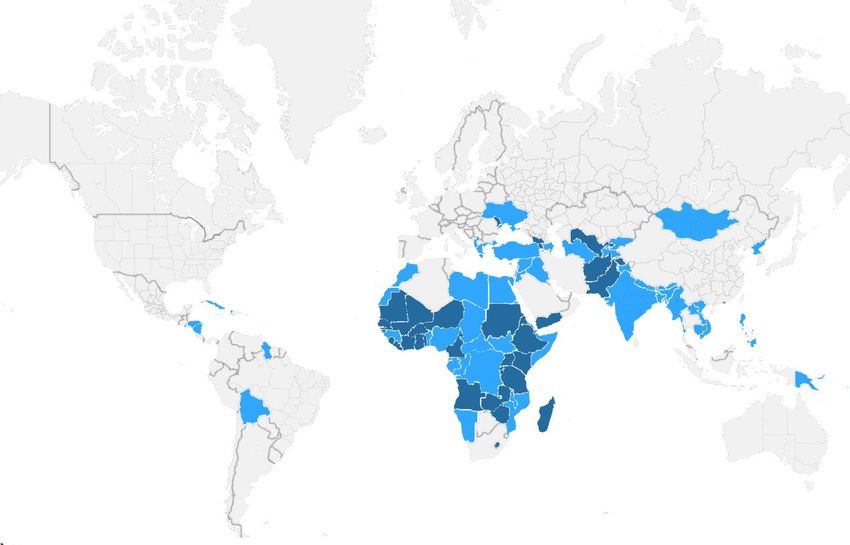
UNICEF’s procurement is focused on achieving Vaccine
Security – the sustained, uninterrupted supply of affordable,
vaccines of assured quality.
       • To achieve value for money and access to vaccines for children in need
2014                                                            2.79           2,555
                   Vaccines Supplies: US$ 1,48 million
                                                          billion doses      shipments
       • Achieving healthy markets through the Vaccine Security approach
         (forecasting, funding and appropriate contracting) and specific vaccine
         procurement principles

       • Vaccines as biological products – requiring a specific approach for vaccine
         procurement

       • Quality of vaccines through prequalification by WHO – ensuring
         acceptability, in principle, as well as quality, safety and efficacy in target
         population of procured vaccines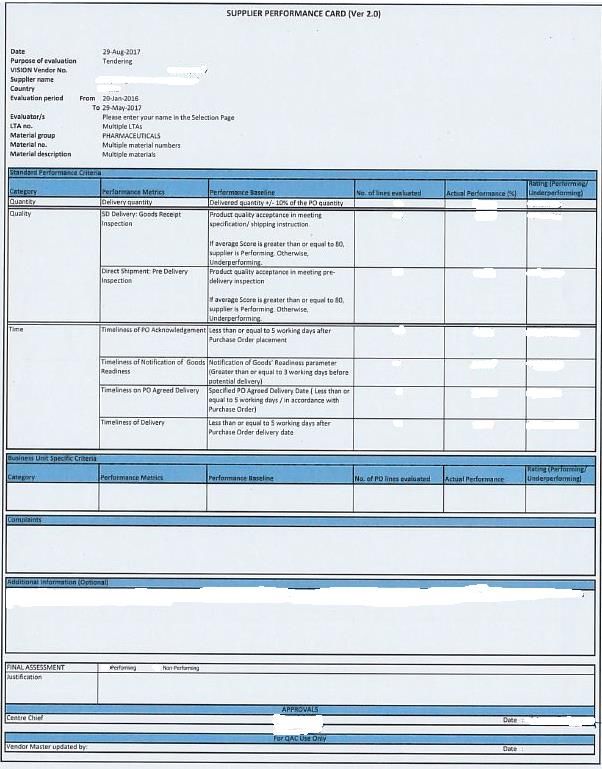
UNICEF Vaccine Procurement Principles

 1. A healthy industry is vital to ensure uninterrupted and sustainable supply of vaccines

 2. Procurement Vaccines
                from multiple                              2.79
                              suppliers for each vaccine presentation         2,555
                         Supplies: US$ 1,48 million
                                                         billion doses      shipments
 3. Procurement from manufacturers in developing countries and industrialized countries

 4. Paying a price that is affordable to Governments and Donors and a price that
    reasonably covers manufacturers minimum requirements

 5. UNICEF should provide manufacturers with accurate and long-term forecasts;
    Manufactures should provide UNICEF with accurate and long-term production plans

 6. As a public buyer, providing grants to manufacturers is not the most effective method of
    obtaining capacity increases

 7. The option to quote tiered pricing should be given to manufacturers.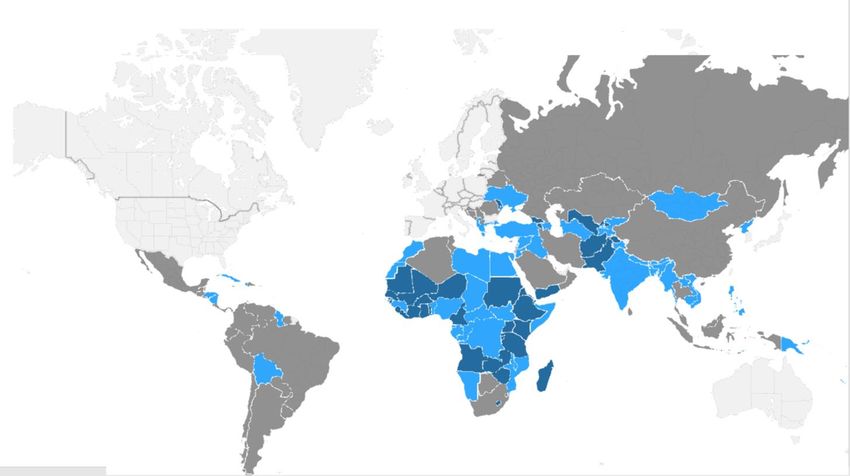
UNICEF guiding procurement principles
                        • Fairness, integrity and transparency through
                          competition
                          (clear & appropriate regulations/rules applied to all suppliers,
 Each UN organization
                          fair process, equal treatment of suppliers, transparent system)
         has a
  different mandate     • Economy and effectiveness
                          (meet requirement in terms of quantity, quality, timeliness at the
         but              right place. Economy=minimize cost, Effectiveness=meet end-
                          user interest)
 all UN organizations
       share the        • Best value for money
 same procurement         (Consider the optimum combination of factors in meeting the
      principles          end user needs; BVM does not mean lowest cost but best ROI)

                        • Promotion of objectives of UNICEF
                          (fulfilling the mandate, goals and objectives)
UN Supplier Code of Conduct
UN Supplier Code of Conduct
Children’s Rights and All UN and UNICEF registered suppliers acknowledge the UN Code of Conduct. (rev. Sept
Business Principles 2013).
No Child Labor, No Landmines • Based on the UN charter, the principles of the Global Compact and ILO standards;
✓ The UN expects that these principles apply to suppliers and their employees,
UNICEF’s Policy on Conduct parent, subsidiary or affiliate entities, and subcontractors; that they are seen as
Promoting the Protection and minimum standards that suppliers strive to meet and exceed them.
Safeguarding of Children
• The code addresses:
UN Supplier Code of
Conduct – Labour conditions: Freedom of Association, no force or compulsory, no child labour,
discrimination, standards for working conditions.
Zero-tolerance for all forms of
fraud and corruption – Human Rights: No Harassment, Harsh or Inhumane Treatment, no manufacture or
sale of mines.
Information disclosure policy
– Environment: Compliance with regulations, manage chemical and hazardous
Zero tolerance policy on gifts materials; waste and air emissions, Minimize Waste, Maximize Recycling.
and hospitality from suppliers
– Ethical conduct: No corruption, conflict of interest declaration, no gift and hospitality,
post employment restrictions.UNICEF’s GTCs: Ethical standards overview
UNICEF’s General
Terms and
Conditions (GTC)
of Contract
• Anti-fraud
• Anti-corruption
Article 7 • Sexual Exploitation and Abuse
(Ethical Standards) • Post-employment restrictions
• Conflict of Interest Disclosure
• Sanctions and suspension
UNICEF may terminate a contract with immediate effect
and no liability in case of breach of Article 7 of the GTCGTCs para 7.2 (b) post employment restrictions
7.2 (b) The Supplier represents and warrants that the following requirements with
regard to former UNICEF officials have been complied with and will be complied
with:
I. During the one (1) year period after an official has separated from UNICEF,
the Supplier may not make a direct or indirect offer of employment to that
former UNICEF official if that former UNICEF official was, during the three
years prior to separating from UNICEF, involved in any aspect of a UNICEF
procurement process in which the Supplier has participated.
II. During the two (2) year period after an official has separated from UNICEF,
that former official may not, directly or indirectly on behalf of the
Supplier, communicate with UNICEF, or present to UNICEF, about any
matters that were within such former official's responsibilities while at UNICEF.
13GTCs para 7.2 (c) duty to declare any conflict of interest
7.2 (c) The Supplier represents that, in respect of all aspects of the
Contract (including the award of the Contract by UNICEF to the Supplier
and the selection and awarding of sub-contracts by the Supplier), it has
disclosed to UNICEF any situation that may constitute an actual or
potential conflict of interest or could reasonably be perceived as a
conflict of interest.
14GTCs para 7.7 prevention of sexual exploitation or abuse
7.7 The Supplier represents and warrants that it has taken and will take all appropriate
measures to prevent sexual exploitation or abuse of anyone by its Personnel including its
employees or any persons engaged by the Supplier to perform any services under the
Contract. For these purposes, sexual activity with any person less than eighteen years of
age, regardless of any laws relating to consent, will constitute the sexual exploitation and
abuse of such person. In addition, the Supplier represents and warrants that it has taken
and will take all appropriate measures to prohibit its Personnel including its employees or
other persons engaged by the Supplier, from exchanging any money, goods, services, or
other things of value, for sexual favours or activities or from engaging in any sexual activities
that are exploitive or degrading to any person. This provision constitutes an essential term
of the Contract and any breach of this representation and warranty will entitle UNICEF to
terminate the Contract immediately upon notice to the Supplier, without any liability for
termination charges or any other liability of any kind.
15UNICEF’s Policy on Conduct Promoting the Protection
and Safeguarding of Children
• UNICEF’s Policy on Conduct Promoting the Protection and Safeguarding
of Children re-affirms UNICEF’s long-standing commitment to promote the
protection and safeguarding of all children, and to promote the universal
understanding that the best interests of the child must be a paramount
consideration in all actions affecting children.
• The policy is available at UNICEF’s procurement policies webpage:
https://www.unicef.org/supply/index_procurement_policies.html
16Good UNICEF practices when working with suppliers
Avoid Conflicts of Conduct business Make an agenda and
Interest during working minutes for all
hours meetings
Zero-Tolerance Bring a colleague Ensure sufficient
Policy towards to all meetings distance – especially
unethical if relationship of
behaviour many years
Do not accept gifts Use a meeting Intention: Protect the
and gratuities room, not your supplier and staff!
officeUNICEF’s procurement policies webpage
• Webpage address: https://www.unicef.org/supply/index_procurement_policies.html
• Makes publicly available UNICEF’s General Terms and Conditions, Long Term Arrangement
standard Contractual Provisions and UNICEF’s PO/service contract standard Contractual
Provisions
• Provides information/links to all the key UNICEF (and UN) policy documents including the UN
Supplier Code of Conduct, the Global Compact, UNICEF’s Policy Prohibiting and Combatting
Fraud and Corruption, UNICEF’s Policy on Conduct Promoting the Protection and Safeguarding
of Children, UNICEF’s Information Disclosure Policy and UNICEF Procedure on Sustainable
Procurement.
• Supplier feedback/complaints: Your views are important to us and your feedback and
complaints are taken seriously in Supply Division. If you have any complaint, please contact
Quality Assurance Centre: sd.complaints@unicef.org
18UNICEF’s standard contractual texts
UNICEF standard contracts, Long Term Agreements (LTA) & solicitation
documents are made up of various elements, notably:
Vaccines Supplies: US$ 1,48 million
• Description of goods or Terms of Reference for services
• Contractual provisions
• Invoicing & shipping (in the case of goods) instructions
• General Terms and Conditions (GTCs)
• (including information on delivery; inspection; risk of loss; price; invoicing;
insurance; confidentiality; termination; etc.)Opening and publication of elements of
proposal
• Due to the nature of the RFP, there typically is no public opening of
proposals
• Supplier name, vaccine, price, quantity, duration of award, and total award
value
• Annual awarded Weighted Average Prices for each vaccine presentationConfidentiality
• Except for the elements specifically mentioned to become publicly
accessible, information in proposals will be treated as confidential
• WHO technical assessor will have access to technical aspects of the
proposal
• UNICEF will share aggregate information related to proposals and award
recommendations with a Procurement Advisory Group under confidentiality
and provided declaration of any conflicts of interests
• UNICEF will share general principles offered for supply risk mitigation and
related costs, including special contracting terms requiring financial backing.Proposals for Products not yet pre-qualified
Detailed plan on timeline to obtain WHO pre-qualification, product and
plans for manufacturing and licensing required
• Product Development: Status and plans, including source of bulk antigens
to be used;
• Clinical Trials: Trials conducted so far and planned, with timelines;
• National Regulatory Registration: Status and plans for registration,
including NRA that would be responsible for release of finished product
and planned product presentations; and
• File submission to WHO: Status and plansDoes UNICEF procure vaccines without WHO pre-
qualification?
Availability of quality assured vaccines:
UNICEF procures WHO prequalified vaccine.
If there is limited or no supply of prequalified vaccine, UNICEF has established criteria to ensure the
quality of the product including:
A) The manufacturer must be WHO pre-qualified for supply of at least one other vaccine.
B) The vaccine must be licensed by the NRA in the country of origin, and this NRA must be
functional (as assessed by WHO/RSS)
C) The vaccine must be registered in at least two additional countries with functional NRAs (as
assessed by WHO/RSS).
In emergency situation where there are no options that meet the criteria, we will procure with the
approval of the recipient country and WHO endorsement
Product registration in country:
Approval is required by country to permit the vaccine into country if there are no other options
available; we must respect the NRAs; support from WHO if/as needed
23Vaccine
Procurement:
Priorities
© UNICEF/PFPG2015-2253/LynchMove towards a more sustainable procurement
approach – more to come for vaccines
UNICEF shipped over 30,000m3 (5,500 tons) of Safe Injection Equipment in 2016, generating
contaminated waste, requiring disposal
UNICEF Tenders will focus on multiple elements crossing the 3 pillars (Environmental, Economic, Social)
of sustainable procurement and extending along the supply chain, including:
• Influencing Industry’s Sustainable Procurement (SP) Policy: Continue driving for green manufacturing
(QMS) and address social SP elements through requiring industry to report on such
• Implementing Sustainable Procurement Criteria: Implementation within the Tender activity, including SP
elements in the tender evaluation (Weight, Volume, Local manufacturing); GTC requirements
• Internal process: Introduce step one of e-tendering through switching from paper based to electronic
bid submissions
• Leveraging procurement functions: Reducing the resultant waste generatedClick to edit Master subtitle style
Vaccine Introductions
 Global PCV Introduction Status 2018                          Global HPV Introduction Status 2018

                                                                No decision
                                                                71 countries
                                                                    36%                Introduced into
                                                                                      National Program
                                                                                         90 countries
                                                                                             46%

                                                                        Planning
                                                                      Introduction
 Click to edit Master subtitle style                                 by end of 2021
                                                                      34 countries
                                                                           18%

    Source: IVAC Global Vaccine and Introduction March 2018     Source: PATH August 2018
Supporting Countries
Forecasting and shipment planning
• Annual forecasting with all countries, review and analysis of forecast submissions from countries with
inputs from SD (historical forecast, existing stock levels, etc) (MSDEU)
• Regular communications and guidance to country offices on shipment plans, stock levels and CEs
• ViVa support, mobile VAR
Gavi co-financing support
• Co-financing monitoring and identification of countries at risk
• Cost Estimates issuance and coordination of procurement
• Financing support through VII or other pre-financing options (PSC)
Procurement capacity building
• Procurement TA through:
• Vaccine Procurement Practitioners Exchange Forum (VPPEF) – both global and regional
• Vaccine Procurement Practitioners Network (VPPN)
• Ad-hoc in-country missions
Knowledge management
• Market Notes / Market Dashboard
• Pricing tool / Gavi Product Menu and Gavi Shipment Plan (monthly) / Stockpile Visibility
• ViVa – online tool for EPI managers to assess stock levelsRegulatory Systems Strengthening
• Favorable regulatory environment e.g. advance
notice on imminent changes in requirements
• Provision of temporary waivers of licensure
28%
requirements to allow transition period for
registration
• Acceptance of collaborative procedure 54%
• Clarity on regulatory requirement for vaccines at
Click to edit Master subtitle style
country level 18%
• Improved coordination between Country Office,
UNICEF SD and in-country coordination between
Accepts WHO PQ Collaborative procedure
EPI/MOH and NRA
Full national licensureUNICEFs role in vaccines for emergency response
Scientific leadership Push funders Vaccine developers Vaccine Manufacturers Emergency response
- WHO - CEPI - Universities - Small & Midsized Entities - WHO
- CEPI - BMGF - Institutes (SMEs) - MSF
- Supported by scientific - BARDA - Small & Midsized Entities - MNC - UNICEF
community (KOLs) - NIH (SMEs) - Developing Country Vaccine - Governments
- EU - MNC Manufacturers (DCVMNs)
- Welcome Trust - Developing Country Vaccine - …
- Venture capital Manufacturers (DCVMN) Emergency response
- Industry (+ merger & acquisition)
funders
- Governments
- GAVI
- WB
- ….?
Experimental phase Development Phase Registration Production phase
Phase
Preclinical Phase I Phase II Phase III
Research phase Regulatory approval Bulk production Packaging/ batch
testing safety/ POC Dose/ safety Efficacy/ Safety
filling release
QC/ cGMP Scale up manufacturing
Emergency response
Emergency response Post licensure
Prelicensure
NOTE: Certain emergency
vaccines may be never licensed,
while access is requiredExchange
Knowledge
Translation &
© UNICEF/UN077198
© UNICEF/UNI196303/GeorgievKey Market Updates Visit UNICEF’s website on market updates here: https://www.unicef.org/supply/
Transparency Prices
 Visit UNICEF’s webpage on vaccine price data:
 https://www.unicef.org/supply/index_102225.html

                                                   Source: UNIICEF Supply Division
Visibility on Stockpile Levels: Vaccines in
Constrained Supply
https://www.unicef.org/supply/index_94563.htmlOperations © UNICEF/UNI196303/Georgiev
2018 VIC tender updates – planned and actual
 Product                                                         2017   2018                  2019   Current Award       Next Award Period
                                                                                                     Period
                                                                         Q1    Q2   Q3   Q4

Bivalent Oral Polio Vaccine (bOPV)                                                                   2018-to cessation

Rabies Vaccine                                                                                       2017-2019           TBD

Seasonal Flu                                                                                         No LTAs, PO basis   No LTAs, PO basis

Pneumococcal conjugate vaccine (PCV)                                                                 2018-2027           2018-2027

PCV for MICS                                                                                         TBD                 TBD

Measles Containing Vaccine (MCV)                                                                     2018-2020           TBD

Yellow Fever Vaccine (YFV)                                                                           2018-2020           TBD

Meningococcal emergency stockpile                                                                    2018-2021           TBD

Diphteria and Tetanus toxicoid (DT) vaccines                                                         2018-2019           TBD

Inactivated Polio Vaccine (IPV)                                                                      2019-2022           2019-2022

Meningococcal A Vaccine (MenA)                                                                       2018-2019           TBD
                                                                                                                                             Tender Closed

Hepatitis B Vaccine - pediatric (Hep B)                                                              2016-2018           2019-2021           Tentative timing of issuance of
                                                                                                                                             tender

        Click to edit Master subtitle style
Japanese Encephalitis (JE)                                                                           2019-2022           TBD                 Tender issued – not closed

Human Papilloma Virus Vaccines (HPV)                                                                 2013-2019           TBD

Rota Vaccine for India (RV)                                                                          2017-2021

Oral Cholera Vaccine (OCV)                                                                           2019                TBD

Diphtheria, Tetanus and Pertusis vaccine (DTP)                                                       2016-2018           2019-2021

Bacillus Calmette-Guerin vaccine (BCG)                                                               2016-2018           2019-2023

Adult Tetanus Toxoid (TT) and Tetanus-Diphtheria (Td) Vaccines                                       TBD                 TBD

Pentavalent vaccine (Penta)                                                                          2017-2019           TBD

Typhoid Conjugate Vaccine                                                                            2019-2020           TBD
Supplier Performance
• Improved Supplier Performance card
format
• Qualitative indicators and quantitative
metrics
• ScoreCard covers all purchase orders
that had deliveries in the current
Click to edit Master subtitle style calendar year vs. KPI 4 that monitors the
deliveries only under orders issued in
the current year
• In context of new SP 2018-2021 focus
on scorecards and results monitoringShipping and Logistics
592 455 50 6 1,590 25 78 6.5m
shipments POs critical charter MT suppliers destination (USD)
shipments flights countries freight $
Measurable achievements - VARTHANK YOU © UNICEF/SUDA2014-XX228/Noorani
You can also read


