Univie: summer school International and European Studies - European Studies Austrian Arbitration Academy & German Language Courses in an ...
←
→
Page content transcription
If your browser does not render page correctly, please read the page content below

univie: summer school
International and European Studies

European Studies                  July 18 – August 15, 2020
Austrian Arbitration Academy      Lake Wolfgang – Austria
& German Language Courses
in an intercultural environment
Contents

 1        Go Europe via Austria

          Academic Program
 2        Introduction, Course Selection
 3        Admission
 4        ECTS Credits and Contact Hours, Exams and Grading System
 5        Transcripts and Diplomas, Classroom Attendance,
          Cancellation of Courses

 6 – 7    Schedule

 8 – 19   Course Descriptions

20 – 21   Austrian Arbitration Academy

          German Language Program
22 – 23   Teaching Approach, Class Sizes, Tutorials, Levels,
          Student Placement

          General Information
24        Program Overview, Campus, Accommodation, Meals
25        Service and Facilities, Medical Treatment, Climate, Clothing,
          Internationality
26        Travel Arrangements, Visa Applications, Sports and Recreation
27        Cultural Program

          Fees and Application
28 – 29   Fees, Application, Application Procedure
30        Scholarships
31        Cancellations and Refunds

32 – 39   Faculty

41 – 42   Photos of the summer school 2019

43 – 44   Application Form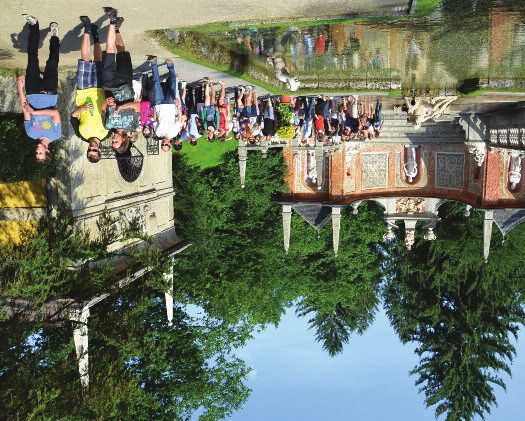
Go Europe via Austria

Ever since the University of Vienna
Sommerhochschule (SHS) was
established in 1949, an international
summer school has been offered
every year. Apart from its educational
mission, one of the summer pro-
gram’s most important aims has
been restoring and promoting
mutual understanding between
Austrians and Americans that World
War II had done so much to destroy.

Today the program provides a multi-
dimensional survey of the present
development of Europe and the            The intercultural dimension provided by the summer
European Union (EU). Participants        program’s internationally diverse student population
will study both the decision-making      has become one of the most rewarding features of
processes within the EU institutions     students’ learning experience. Today, more than 30
as well as various aspects of Euro-      different nationalities are represented in the student
pean political culture. The program      body, up to 100 students accepted into the program,
aims at contributing to an increased     creating the conditions most conducive to intercultural
understanding of the EU and its          and social interaction.
possible future shape.
                                         The Sommerhochschule operates under the academic
Students from all over the world         and administrative supervision of the Rector of the
have been drawn to the program,          University of Vienna. The organizers, faculty and
not only because of the outstan-         sponsors believe that the Sommerhochschule’s formula
ding academic reputation of its          of holistic learning – intellectual pursuit and physical
European Studies courses and the         exercise in a setting of intercultural and social exchange –
excellent opportunities it offers        helps reinforce mutual respect and tolerance among
students to learn German, but also       participants.
because of its location directly on
the shores of one of Austria’s most      We would like to invite you to study at the
scenic lakes, Lake Wolfgang, in the      University of Vienna’s summer campus in Strobl
Salzkammergut region, and because        and, like thousands have done before you,
of the area’s excellent sports and       experience an unforgettable summer.
recreational facilities.

                                                                                                    1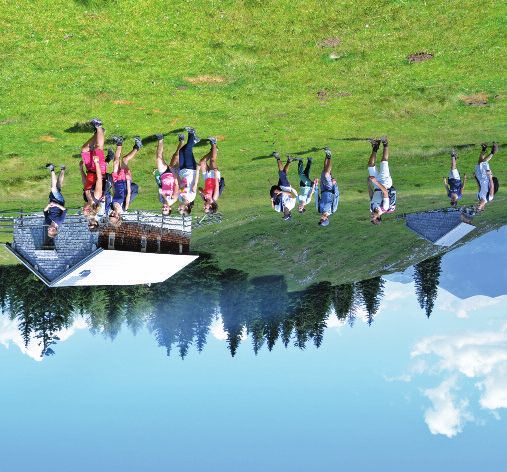
Academic Program
Introduction                           qualifications for their future professional work.
The univie: summer school is           The academic courses are taught by distinguished
located in the picturesque village     scholars with international teaching experience. The
of Strobl in the Salzkammergut         faculty consists of tenured professors from the University
region, one of Austria’s most          of Vienna as well as professors from other renowned
attractive summer vacation areas.      universities and leading experts from institutions such
Students and faculty are accommo-      as the Austrian Central Bank and the European Commis-
dated in high standard single and      sion (faculty profiles p. 32–39).
double rooms at the program’s
beautiful summer campus on the
shore of Lake Wolfgang (accommo-
dation p. 24).
The four week program offers high
level European Studies courses and
the Austrian Arbitration Academy in
the morning and German language
courses in the afternoon.

The European Studies courses are
held in English and focus on Europe
and the European Union. They
cover political, economic and legal,
but also historical and cultural       In addition to the academic program, German language
aspects of the multiple transforma-    courses are offered at four different levels of proficiency
tions the continent is currently       (German Language Program p. 22–23).
undergoing.
The Austrian Arbitration Academy       The unique Strobl experience is enhanced by an
focuses on international dispute       extensive extracurricular program including sports
settlement by arbitral tribunals.      courses (windsurfing and tennis), mountain hiking, and
(Course descriptions p. 8–21).         excursions to Salzburg, St. Wolfgang, and the Ebensee
                                       Concentration Camp Memorial.
                                       (Sports and recreation, cultural program p. 26–27).

                                       The campus life creates an environment which en-
                                       courages intercultural and social exchange and favors
                                       mutual understanding within the international student
                                       population. Participants thus broaden their horizon,
                                       meet colleagues from different fields of study, make
                                       friends for life and build connections for their future
                                       professional careers. The alumni network of former
                                       Sommerhochschule participants enables students to
The program offers a concise and       stay in touch even long after their stay in Strobl.
up to date introduction to recent
developments in Europe which will      Course Selection
provide students from different        The univie: summer school lasts four weeks and consists
fields of study with additional key    of two two-week sessions.

2
13 European Studies courses, the       The Austrian Arbitration Academy lasts two weeks and
Arbitration Academy course, and        can also be attended as an independent program.
German Languages courses on four       (See p. 20–21).
levels are offered.
• European Studies courses last        Before making their course selection on the application
  two weeks (4 ECTS each).             form students should make sure that the selected
• The Arbitration Academy course       courses do not correlate in time. For details regarding
  lasts two weeks (8 ECTS).            the schedule please see p. 6–7.
• German language courses last
  four weeks (6 ECTS each).            While students have to fulfill the Sommerhochschule
                                       requirements, course selection should also be made
In the course of the four week         according to the requirements of the respective home
program students are required to       university. It is recommended to discuss course selections
attend courses amounting to 10         with representatives of the home universities to ensure
ECTS credits. In order to meet this    or simplify accreditation after the program.
requirement one of the following
options is possible:                   Admission
1. three European Studies courses      Applicants have to be at least 18 years old and must
   or                                  have completed two years of studies at college or uni-
2. the Arbitration Academy course      versity level in their countries of residence or have an
   plus one European Studies           educational background equivalent to one year at a
   course or                           European university before the beginning of the program.
3. one German course plus one          Applicants must be in attendance for the whole period
   European Studies course.            of the summer school, be able to take part in the number

Students may also enroll in or audit   of required courses, have an adequate command of the
additional courses. The maximum        English language and be in good health.
number of courses students may
attend during the summer program       In order to ensure that students can prepare all materials
is four. (This includes German         needed for the application in time, it is advisable to read
courses and/or courses taken for       the information given in the application chapter (p. 28–29)
audit).                                carefully before starting the application process.

                                                                                                    3
ECTS Credits and Contact Hours          the DA may also be exempt from attending certain core
The Sommerhochschule grants             courses covering the same material as the courses they
credits according to the European       took at the summer school. The decision on such exemp-
Credit Transfer System (ECTS). The      tions can only be made by the respective department
allocation of the ECTS credits to the   chair in economics, law, history and political science
Sommerhochschule courses is             during the individual advisory sessions at the beginning
based on the amount of work ne-         of the academic year at the DA.
cessary for a course.                   For information concerning the DA please visit:
• Each European Studies course          www.da-vienna.ac.at
   corresponds to 4 ECTS credits.
• The Arbitration Academy course
   corresponds to 8 ECTS credits.
• Each German language course
   corresponds to 6 ECTS credits.
The lecture time per course is re-
presented by contact hours. (Each
contact hour consists of 45 minutes
class time.)
• Each European Studies course
   consists of 32 contact hours.
• The Arbitration Academy course
   consists of 64 contact hours.
• Each German language course
   consists of 64 contact hours.        Exams and Grading System
                                        Final examinations are given in all courses. Courses are
                                        graded using the Austrian grading system: 1 (very good);
                                        2 (good); 3 (satisfactory); 4 (sufficient); 5 (failed). Addi-
                                        tional final grades are: W (withdrew from the course
                                        with permission), AU (audit) and NG (not graded).
                                        The grade points given in the transcript provide an
                                        opportunity to differentiate performance within each
                                        of the stated grades.

                                        Grade and grade points are as follows:

                                     Austrian Grade Grade Points
Cooperation with the Diplomatic             1          89 – 100
Academy of Vienna: Attending the            2          76 – 88
summer school increases the                 3          63 – 75
chances of admission within the             4          51 – 62
highly competitive application              5           0 – 50
process at the Diplomatic Academy
(DA). Students who proceed to study The Sommerhochschule reserves the right to exclude
in the Master of Advanced Interna-   students from the summer school in case of improper
tional Studies Program (M.A.I.S.) at behavior.

4
Transcripts and Diplomas               active participation by the students. Therefore regular
Transcripts of grades will be given    classroom attendance is mandatory for all courses.
to those students who attend           Students absent from classes without leave will not be
classes regularly and who pass the     graded.
exams in the required number of
courses.

Students who successfully attend
and complete four courses will re-
ceive the SHS Diploma in European
Studies.
Those who have a GPA of 1.25 on
the basis of Austrian grading for
their diploma courses will receive a
diploma with highest distinction.

Classroom Attendance
Classroom attendance is vitally
important for a successful comple-     Cancellation of Courses
tion of each course, particularly in   The Sommerhochschule reserves the right to cancel any
those classes which rely on class-     course for which the number of registered students is
room discussion or other forms of      deemed insufficient, or for other compelling reasons.

                                                                                                 5
Schedule
    July 18 – August 15, 2020
    1st Session – first two weeks of lectures

    Time            Lecturer                    Course
    7:30 – 9:00                                 Breakfasf
    8:30 –10:30     Oberhammer                  Austrian Arbitration Academy – Unit 1
    8:30 –10:30     Gnan/Kwapil                 European Monetary Union
                    Neuhold                     The Institutional Framework of the EU
                    Vocelka                     European History since 1815
    10:30–10:50                                 Break
    10:50–12:50     Oberhammer                  Austrian Arbitration Academy – Unit 2
    10:50–12:50     Meissel                     European Private Law – The Civilian Tradition
                    Schloenhardt                International Refugee Law and Policy
                    Schwärzler- Brodesser       European Identities – Aspects of European
                                                Visual Culture

    13:00–13:45                                 Lunch
    14:00–17:00     Peroutka                    Sports
    17:00–19:00     Guest lecturer              Austrian Arbitration Academy
                                                afternoon session (three times per week)
    16:20–18:20     Serdar                      German A1
                    N.N.                        German A2
                    Freudenberger               German B1
                    N.N.                        German B2
    18:20–18:30                                 Break
    18:30–19:00                                 Tutorials
    19:00–19:45                                 Dinner
    20:00–22:00                                 Interdisciplinary Seminar (twice per week)

    Sem: Seminarraum           (Bürglhaus)
    Gru: Gruppenraum           (Bürglhaus)
    BÜ Saal: Bürglsaal         (Bürglhaus)
    SH Saal 1: Seehaussaal 1   (Seehaus)
    SH Saal 2: Seehaussaal 2   (Seehaus)

6
2nd Session – second two weeks of lectures

Time           Lecturer                  Course
7:30 – 9:00                              Breakfast
8:30 –10:30    Kriebaum                  International Investment Law and Arbitration
               Rathkolb                  Contemporary European History
               Schima                    European Union Law

10:30–10:50                              Break
10:50–12:50    Forgó                     Law and Information Society in Europe
               Kritzinger                European Political Systems in a Comparative
                                         Perspective

               Neudeck                   Principles of International Economics

13:00–13:45                              Lunch

14:00–17:00    Siostrzonek               Sports
16:20–18:20    Serdar                    German A1
               N.N.                      German A2
               Freudenberger             German B1
               N.N.                      German B2
18:20–18:30                              Break
18:30–19:00                              Tutorials
19:00–19:45                              Dinner
20:00–22:00                              Interdisciplinary Seminar (twice per week)

                                                                                        7
Course Descriptions
European Monetary Union
Ernest Gnan/Claudia Kwapil           July 20 – July 31      4 ECTS credits

In no other area has European integration advanced as much as in the mo-
netary sphere. By joining the European Economic and Monetary Union
(EMU), 19 countries of the European Union have given up their national cur-
rencies and their monetary sovereignty and have created a common mone-
tary area with a joint central banking system (Eurosystem) and a common
European currency (Euro). On the one hand, the Euro – in form of notes and
coins – provides a strong common European symbol. On the other hand, it
is a powerful policy instrument.
                                                                               E. Gnan
The financial, economic and debt crisis that has shaken up euro area
countries revealed the power of monetary policy. Starting in 2008 the Euro-
system has implemented a series of unconventional monetary policy
measures ranging from negative policy rates to asset purchase programs.

After having successfully completed the course, you will be able to answer
the following questions:

• How did it all start?                                                        C. Kwapil
• Is the European Monetary Union beneficial for all 19 countries forming it,
  or more so for some than for others, and why?
• What are the necessary preconditions to make membership in a mone-
  tary union a success for a country?
• What role does monetary policy play in the teamwork between fiscal policy,
  structural polices as well as (micro- and macro-) prudential polices?
• How do negative policy interest rates work? Do banks really receive inte-
  rests for borrowing money?
• How does monetary policy influence my daily life?
• Will the enormous asset purchase programme, which is run by the ECB,
  create inflation?
• What are future challenges for the ECB and for central banks at large?

Requirements: Active class participation (20%), mid-term exam (40%), and
final exam (40%).
This course is regularly organized with the support of the Oesterreichische
Nationalbank (Austrian Central Bank).

8
The Institutional Framework of the European Union
Contrasting Theory and Practice
Christine Neuhold July 20 – July 31 4 ECTS credits
The course will focus on the unique political system of the European Union.
Students will be introduced to the main institutions playing a role in the de-
cision-making process and to some of the main decision-making procedures.
The course very much builds on the active participation of participants.
Group work, debates and a simulation exercise form an integral part of the
program.
The first part of the course will focus on the Institutional Framework of C. Neuhold
the EU by examining:
• The main sources of EU Law and where relevant their repercussions on
the institutional framework.
• The role of the European Commission, the European Parliament, the
Council of Ministers and the Court of Justice of the European Union
within the EU’s institutional framework (and where relevant their evolu-
tion during the process of European integration).
This section will be based on lectures, class discussions and debates on
such critical questions as the quality of democracy in the EU and the rise of
Euroscepticism.
The second part will concentrate on policy making within the European
system by looking at:
• Some of the main decision making procedures (with a focus on the
ordinary legislative procedure, formerly co-decision)
• The role of non-institutional actors such as interest groups and NGOs in
the EU’s decision making process
This part will close with a simulation of a Council Working Party about an
EU regulation (using authentic material), where students will either take on
the role of an EU Member State or represent one of the EU institutions.
Requirements: Class participation, participation in the simulation as well
as participation in joint seminars (30%), a 30 minute mid-term exam at the
end of the first week (20%) and a final exam (50%). The final exam will con-
sist of essay questions.
It is recommended to take this course in conjunction with Prof. Schima’s
course: European Union Law.
9European History since 1815
Political, Economic, Social, and Cultural Trends
Karl Vocelka July 20 – July 31 4 ECTS credits
Europe changed in the last 200 years dramatically: borderlines moved, eco-
nomy and society changed, there were breaks and continuations in the de-
velopment of all countries. Without looking to the long history of the
European continent one cannot understand Europe of today.
Many phenomena of the 19th and 20th century had a large impact on the
identity constructions of European countries. Discussions about pheno-
mena like former political structures, multi-nationalism, national identity,
minorities etc. between participants of different countries and cultures will K. Vocelka
allow comparisons and connect this class to problems of the present. The
course attaches great importance to culture, as this topic is – talking about
Europe – often neglected.
The course deals in a broad way with all European countries, but has a clear
focus on Central Europe and will cover the following topics:
• What is Europe? Antique heritage, Christianity, Enlightenment
• European Countries 1815 – 1918 – 1945 – 1989
• Political systems in Europe including Fascism and Communism
• Demographic development – urbanization – migration – genocide
• Nationalism – national states versus multinational giants
• The East West conflict and the Iron Curtain
• The building of the European Union
• Economic development (industrialization, mechanization of agriculture,
colonialism, globalization)
• Social changes (from a class society to modern society)
• Selected examples of cultural changes (e.g. The birth of modernity
around 1900 scientific progress and ecological ideas, the impact of
digitalization and modern media)
Requirements: Attendance and participation in class discussion constitute
30%, a short paper 30% and a written final (essay-type) 40% of the grade.
The summer program allowed
me ample opportunities for
academic achievements, and
enjoying the surrounding
beauty either on campus, or
at the lake.
Rania El Razzaz, Egypt
10European Private Law – The Civilian Tradition
Franz-Stefan Meissel July 20 – July 31 4 ECTS credits
The course offers a historical and comparative introduction to European
Private Law.
Today’s variety of legal systems in Europe cannot be properly understood
without reference to European Legal History. Thus, one part of the course
will be devoted to the development of European Private Law and the
specific contribution of the Civilian Tradition. Particular attention is given to
the dominant forces of law making in the different legal systems: magistrates
and legal experts in Ancient Roman Law, professors and clergymen in
Medieval Law, judges in the Common Law and legislators in Modern F.-S. Meissel
Continental Law.
Furthermore, basic concepts of Private Law such as property, good faith in
contractual dealings and the role of fairness in extra contractual obligations
will be dealt with in this course in a comparative perspective. This will be
done mainly in form of discussions about specific cases. Special emphasis
will be placed on the discussion of possible solutions, the analysis of court
decisions and the evaluation of legislative choices.
A guest lecture by former Advocate General of the European Court of Ju- V. Trstenjak
stice (ECJ) Prof. Verica Trstenjak will treat current issues of EU Private Law,
outlining the pertinent legislation in the area of EU Consumer Protection
Law and Copyrights, and presenting selected Case Law of the ECJ.
I. The Landscape of European Private Law: Diversity and Common
Traditions
• The various meanings of "European Private Law" and the Legal Tradi-
tions in Europe
• Variations of a Theme: Transfer of Property in European Legal Systems
• The Scope of Information Duties in Civil Law and in Common Law
• Good Faith in European Contract Law
• Extra contractual Obligations: the Witty Genealogist’s Case
II. Lawyers, Judges, Legislators. The Making of European Law
• Roman and Medieval Law: The Jurists’ Role in the Development of
Law as a Science
• Differences in Style and Substance: Codification(s) of Private Law in
Continental Europe
• Common Law and Civil Law: The Role of Judges as Law Makers
III. EU Private Law: Guest Lecture by Prof. Verica Trstenjak
• The Impact of the ECJ on the Evolution of EU Private Law
Requirements: Regular attendance and active participation in class discus-
sions (25%), an open-book essay exam (50%), and a quiz exam (25%).
11International Refugee Law and Policy
Andreas Schloenhardt July 20 – July 31 4 ECTS credits
This course explores international refugee law and policy in theory and
practice. It provides an introduction to the concepts and causes of refugee
flows, the key features of international refugee law, its history, and explores
the refugee situation and systems in a range of countries. The course
examines the international obligations under the Convention and Protocol
relating to the Status of Refugees and outlines the present laws and policies
in relation to asylum seekers. The course also looks at irregular migration
and forced migration more broadly with a special emphasis on smuggling
of migrants and trafficking in persons. A. Schloenhardt
The discussions, exercises, and working-group sessions during the course
invite students to critically reflect on the situation of refugees and displaced
persons, on the nature and objectives of international refugee law, and to
understand the rationale of international, regional, and domestic policies in
this field. Moreover, the course seeks to improve communication, team-
work, argumentative, presentation, and research skills. The course enhances
students’ abilities to research relevant material, critically analyze policy
documents and legislation, case studies and scholarly writing, and elaborate
practical recommendations for law reform and policy change.
Assessment: Seminar exercises and participation (30% of final grade),
mid-course examination (20%), group project with oral presentation (50%).
Participating in Sommerhochschule
was a challenging and rewarding
experience. A key element in active
learning process was the communica-
tion with so many different people.
Meeting all those experts and key
players in that field was a great ex-
perience. With all faculty members at
Sommerhochschule I had the oppor-
tunity to acquire the most advanced
knowledge and to develop the
necessary skills and attitudes so vital
for me in the future.
Ivana Premerl, Croatia
12European Identities - Aspects of European Visual Culture
Monika Schwärzler-Brodesser July 20 – July 31 4 ECTS credits
The course will deal with images and visual culture phenomena specifically
developed in and for the European context. It will familiarize students with
a number of strategies and concepts for delivering messages that come in
visual form. The corresponding visuals will be mostly drawn from the field
of art, but also from popular culture and the media. While the aesthetic
parameters of the presented visuals will be important, the main focus will
be on the social practices reflected in these images. Priority will be given to
visualizations that are daring, subversive, and play on common and already
familiar pictorial codes. M. Schwärzler-Brodesser
Course objectives:
• To train and enhance students’ visual literacy and turn them into critical
readers of visual information, which is becoming increasingly important
in today’s communication
• To make them aware of the codes and genres on which most of today’s
visuals are based
• To familiarize them with some of the most influential European players in
the field of photography and art
Specific course topics:
• Staged and digitally enhanced photography and the realities these
photos create
• Visual concepts of commemoration and of dealing with the past
• Visuals and gender codes / picturing femininity and masculinity
• Artistic interventions and subversive re-definitions of public space
• Visual narratives and their parameters
• Bodies, sculptures, 3-D hybrids as carriers of meaning
• The design of social activities and engagement
For this course, no specific prior background in art or visual culture is needed.
Students with a strong interest in visuals, their aesthetic qualities, and their
analytic appeal will find this course stimulating.
Requirements: Attendance and active participation (30% of the grade),
final exam on the course material (40%), project (30%).
13International Investment Law and Arbitration Ursula Kriebaum August 3 – August 14 4 ECTS credits The legal environment for international foreign investment has changed dramatically since the end of the Cold War. International investment dispute resolution, in particular through international arbitration has become increasingly common. Foreign investors are much more willing to pursue claims against host states than their home states (e.g. for alleged expropriation or unfair treatment). This course will focus on international investment disputes and their reso- lution through arbitration and is attractive to students interested in public international law and international arbitration. The course will address the dispute settlement mechanism as well as the substantive standards of in- U. Kriebaum vestment protection. Teaching will vary between interactive lectures en- couraging student participation, traditional lectures and case studies. Student presentations are required. The following topics will be covered: 1. Introduction • The conflicting interests of the host state and the investor • Historical development of international investment protection 2. The Sources of International Investment Law 3. The Concept of Investment (Who is an Investor? What is an Investment?) 4. Standards of Treatment • Fair and equitable treatment • Full protection and security • The Umbrella Clause • Access to justice, denial of justice, fair trial • National treatment • Arbitrary and discriminatory • Most favored nation clause 5. Expropriation 6. State Responsibility and Attribution • Attribution • Responsibility for illegal acts • Necessity 7. Dispute Settlement, ICSID • Methods of dispute settlement • Treaty arbitration • Jurisdiction • Applicable law • Annulment • Enforcement of Awards Requirements: Regular attendance and participation in class discussion as well as a presentation (40%) and a final exam (60%). 14
Contemporary European History
Milestones of European History 1945-2019
Oliver Rathkolb          August 3 – August 14                4 ECTS credits
In order to understand the decision making of the European Union in 2020
it is necessary to analyze the milestones of European history after the end
of World War II in 1945 in a much broader geopolitical context. The Super
Power confrontation, the “Cold War”, between the US leading the Western
Bloc and the Soviet Union dominating the Communist Bloc system shaped
the development of the “West”. This development of superpower confron-
tation was influenced by fears of Atomic Warfare in the 1950s and 1960s but
contained by efforts of Détente in the 1970s. The formation of the western
alliance of NATO and the European integration with the Council of Europe         O. Rathkolb
and the European Coal and Steel Community are a result of the Cold War.
Simultaneously the Soviet Union changes the economic and political
structure of the Communist East and Southeast in Europe establishing the
military system of the Warsaw Pact and the economic socialist counterpart
of the European Economic Community, the Comecon.

In this course, we shall analyze and discuss the reasons for the first major
integration step, the foundation of the European Economic Community
(EEC) in Rome in 1957 with six member states. Still the US plays a major role
as a hidden hand mediator helping to overcome the still strong resent-
ments between France and Western Germany. Individual European decision
makers like Jean Monnet, Robert Schuman, Konrad Adenauer and others
played an important role to overcome deep routed prejudices and hatred.

After Brexit and the UK leaving the European Community the EU is facing a
major and deep crisis with an open end in the growing geostrategic and
economic struggles between the US, China, Russia and the EU. By analyzing
the soft but very important emotional basis of Europeanism like identity,
value systems and culture after 1945 as well as the integrative impacts of
institutions like the European Court of Justice and the European Court for
Human Rights options for the future of the EU will be presented and debated.

Requirements: Participation in class room discussions (20%), oral pre-
sentation of a short paper on a topic of the course based on provided lite-
rature and supported research (3-4 pages) (40%), and writing an individual
final essay on a broad general topic of the course written in class during the
final exam (40%).

                                                                                               15
European Union Law
The Court of Justice of the EU and the Internal Market
Bernhard Schima August 3 – August 14 4 ECTS credits
This course is designed to help students understand the system of judicial
protection in European Union (EU) law and the importance of the contribu-
tion of the Court of Justice of the EU to the development of the Internal
Market.
This course will:
• discuss the various judicial remedies in the EU legal order with particular
emphasis on the infringement procedure and the preliminary reference
procedure; B. Schima
• explain the concept of an internal market;
• explore how the Court of Justice in its case-law has contributed to
making the free movement of goods, persons, services and capitals
operational, and
• look at the interplay between the Court's case-law and secondary Union
legislation establishing the Internal Market.
Requirements: Performance will be assessed on the basis of a short quiz
(30% of the grade) at the end of the first week and a written final exam
(60%). Class participation will be taken into account (10%).
This course, which looks at European integration from a legal perspective,
is recommended for students with prior knowledge of the institutions of
the European Union or who have taken Christine Neuhold’s course:
The Institutional Framework of the European Union.
I had an amazing time studying at the
Sommerhochschule and will always hold
the faculty, staff, and students in the
highest regard. It was an experience I
will never forget and always cherish.
Dara Hrytzak, Canada
16Law and Information Society in Europe
Nikolaus Forgó August 3 – August 14 4 ECTS credits
This course will focus on European and global trends in the legal regulation
of information and communication. Specific attention will be attributed to
access to information, copyright, identity management and privacy in a glo-
balized information society. We will work on the relevant European regula-
tions, directives and case law and will compare them with other legal,
technical and social approaches.
Topics:
• Law as Code and Code as Law? The relations between technical, social, N. Forgó
economical and legal forms of regulation
• Regulation of Information: The European approach
• Transparency, Privacy, and Data Protection: outdated concepts in an in-
formation society?
• Identity, Authenticity, and Security in a globalized network-environment
Recommended Reading: Lawrence Lessig, Code and other Laws of Cyber-
space; additional texts and cases will be distributed throughout the course.
Requirements: Regular attendance and active participation in class
discussions (40%) and an open-book essay exam (60%).
Strobl is a unique place for learning
together and from one another about
origins, interests, and institutions in a
relaxed atmosphere of loyalty and
equality where all sorts of borders and
prejudices fade away, horizons are
expanded, common outlook is
broadened, new countries and cultures
are discovered.
Yevgenia Gaber, Ukraine
17European Political Systems in a Comparative Perspective
Sylvia Kritzinger August 3 – August 14 4 ECTS credits
This course familiarizes students with the major theoretical, empirical and
substantive issues in contemporary European politics. First, the course
examines the different governmental institutions, electoral systems and
party systems across the member states of the European Union and their
impact on political processes and the society. Second, it focuses on the
different social cleavages in these political systems and their changes over
time. Third, the course analyzes the recent electoral behavior of the Euro-
pean electorate both in national and European Parliament elections and its
repercussions on European party systems. The course aims at deepening S. Kritzinger
the understanding of the main debates in contemporary European politics
using a comparative approach.
Requirements: Performance will be assessed on the basis of attendance
and participation in class discussions (20%), a role play taking different
party positions and government negotiations into account (40%), and a
written final exam (40%).
Without any doubts it is a great opportunity
to combine both: studies and entertainment.
The knowledge I received at the Sommer-
hochschule was really useful and helped me
to better understand the European Union’s
structures and functioning. In addition, I
built a network of friends throughout the
world and learnt a lot about different count-
ries and cultures.
Irina Guban, Moldova
18Principles of International Economics –
A European Perspective
Werner Neudeck August 3 – August 14 4 ECTS credits
This course covers both the (microeconomic) trade and the (macro-
economic) monetary aspects of international economics with European
applications.
In the first part we examine standard trade theories (Ricardo, Heckscher-
Ohlin, Krugman) and explain the gains from trade, the distributional impact
of trade (internationally and among groups within countries), and the
pattern of trade. The arguments for free trade and for trade restrictions are
evaluated and different trade policies are discussed. EU trade policy serves W. Neudeck
as an example. We also discuss the conflicts between trade creation and
trade diversion. Finally, we look into the economics of the internal market
of the EU and the economic consequences of migration and factor move-
ments.
The second part opens with a discussion of balance of payments accoun-
ting and analyses the determination of exchange rates and the develop-
ment of international financial markets. Stabilization policies and their
impact on output, employment, and prices in different exchange rate
regimes are examined in the final part of the course.
In short workshop sessions students will be invited to answer questions
and discuss various economic problems in short presentations.
Requirements: The final grade will primarily be based on two short written
examinations (together 80%) at the end of each week. Participation in
class and at least one presentation in the workshop (20%) are also required.
I have never experienced such an
intellectually inspiring environment.
Complementary to the academic
program I was pleasantly surprised
by the international and social
stimuli.
Philippe Brems, Belgium
19Austrian Arbitration Academy
Unit 1 & Unit 2
Paul Oberhammer July 19 – July 31 8 ECTS credits
The Austrian Arbitration Academy is an intensive two-week program on
international commercial arbitration for both regular students of the
univie: summer school and participants who only take part in this spe-
cial arbitration course.
It addresses the following groups of participants:
• Students and law school graduates interested in the world of inter-
national dispute resolution. P. Oberhammer
• Young practitioners looking for a comprehensive course giving them
firsthand insights into international arbitration.
The Austrian Arbitration Academy program takes place from July 18 to
August 1, 2020 and consists of 64 contact hours. (Each contact hour con-
sists of 45 minutes class time).
After an introductory session on the first Sunday, July 19, classes will be
held Monday to Friday mornings. In additional afternoon workshops the
participants will discuss salient issues of international arbitration with M. Glassman Bock
special guests from the international arbitration community.
On July 31 a written exam will take place. On the day before the exam, a
Q&A session will help the participants to prepare for the exam.
Successful participants will receive the University of Vienna Austrian Arbi-
tration Academy Diploma.
Professor Paul Oberhammer (Vienna/London/St. Gallen) acts as course C. Koller
director.
First class international arbitration practitioners from both the bar and
academia will teach the classes:
• Michelle Glassman Bock, Counsel, Wilmer Cutler Pickering Hale and
Dorr (Frankfurt/Washington DC)
• Christian Koller, Professor, University of Innsbruck
• Christian W. Konrad, Partner, Konrad & Partners (Vienna)
C. W. Konrad
• Helmut Ortner, Counsel, Wilmer Cutler Pickering Hale and Dorr
(London)
• Friederike Schäfer, Counsel, International Chamber of Commerce
(Paris)
• Patricia Shaughnessy, Professor, Stockholm University
• Michael Waibel, Professor, University of Vienna
20The course covers all aspects of arbitral proceedings, starting with an in-
troduction on the prerequisites of arbitration. Further modules will focus
on the constitution of the arbitral tribunal, the conduct of the proceedings,
the arbitral award as well as the challenge and enforcement of said award.
Students will be introduced to the legal framework of international arbitra-
tion rules and relevant case law. The last module is entirely dedicated to
investment arbitration. H. Ortner
The classes will cover the following issues:
• Introduction to International Arbitration
• The Arbitration Clause
• The Arbitral Tribunal
• The Arbitral Proceedings
• The Arbitral Award
• The Challenge of the Award
• The Enforcement of the Award F. Schäfer
• Introduction to Investment Arbitration
In addition to these morning classes, specific issues will be discussed in
interactive afternoon sessions. Topics in these afternoon modules have
included sports arbitration, construction disputes and the issue of calcu-
lating damages. Furthermore, participants will have the possibility to train
their advocacy skills in a mock hearing (Mini Moot Court) by arguing a
fictitious case. P. Shaughnessy
Requirements: Attendance is mandatory. Performance will be assessed on
the basis of active participation in class (40% of the grade) and a written
final exam (60%).
The Austrian Arbitration Academy is recommended for advanced law
students (pursuing their Bachelor’s, Master’s or PhD degree), law school
graduates and young practitioners. Prior experience in arbitration and/or
M. Waibel
civil procedure law is not required.
We had the incredible opportunity to meet
some of the most important arbitration
lawyers and professors from all over the
world.
Paloma Castro Hernandez, Spain
21German Language Program The success of the German language program of the Sommerhochschule is Teaching based on careful student placement, teachers well-trained in methodology Approach and with a special training in teaching German as a foreign language, as well as balanced communicative teaching methods. These methods help you to learn quickly and gain confidence in your communicative skills while having fun at the same time. Our teaching approach for effective language learning: • German will be the only language spoken in class. • You will be actively involved all the time. • Pair work and role play will be used to simulate real life situations. Students will learn German in small groups. If the number of students in a Class Sizes German class exceeds 16, this class will be split up into two smaller sections. The minimum number of students per class is ten. The Sommerhochschule reserves the right to cancel a class should there not be enough participants. Ample opportunity for informal conversation and discussion in German will Tutorials be provided by tutorials conducted by fellow Austrian students. The tutorial groups will consist of three to five students. The tutorials are part of the German language courses and attendance is obligatory. The German courses are available on four levels: A1, A2, B1 and B2 according Levels to the Common European Framework of Reference for Languages (CEFR). Each German course corresponds to 6 ECTS credits (64 contact hours). One contact hour consists of 45 minutes class time. 22
For participants with little or no previous competence in the German               German A1
language. This course leads up to Level A1 according to the CEFR.
Content: classes focus on pronunciation; reading and listening comprehen-
sion of simple texts; giving basic personal information; establishing contacts
with others; taking part in simple conversations; acquiring fundamental
vocabulary and learning basic grammar structures that enable unsophisti-
cated spoken and written communication in everyday situations.

This course leads up to Level A2 according to the CEFR.                            German A2
Content: communication in familiar, everyday situations; reading and
listening comprehension of the core message of texts involving topics and
requirements of everyday life and familiar situations; writing simple texts
about familiar topics and personal interests.

This course leads up to Level B1 according to the CEFR.                            German B1
Content: communication on general topics; means of verbal expression for
more complex conversation; writing of unsophisticated official documents;
comprehension of core statements of general interest; radio or television
broad-casts; command of basic vocabulary on general topics.

This course leads up to Level B2 according to the CEFR.                            German B2
Content: further development of reading and listening strategies for en-
hanced comprehension of complex texts on abstract and concrete topics;
boosting vocabulary for clear and adequate action and reaction in written
and spoken communication on a wide variety of themes.

Please make sure you have read the definition of the levels A1 to B2 within        Student
the CEFR before selecting your German level on the application form. The           Placement
following website might help you to evaluate your language proficiency:
http://europass.cedefop.europa.eu/LanguageSelfAssessmentGrid/en

Although students are advised to select their German level before applying,
the final placement will be done on site.
There will be a placement test on Sunday before the beginning of classes.
The test will assess the student’s language proficiency and help place the
student in the level that best suits his/her needs.

             The German language course was a true inspiration for me and in
             Strobl I actually got an impetus to continue learning the language.
             The lectures were very good, the group was small so the teacher had
             the opportunity to teach us almost individually.

                  Ljubica Djordjevic, Serbia

                                                                                               23
General Information
Program Overview
The Summer School will take place
from July 18 to August 15, 2020.
On Saturday evening, July 18, an
orientation session given by the
Program Coordinator will introduce
the participants to the program and
the campus.
The official opening ceremony will
be held on Sunday morning, July 19.
Students enrolling in German
language courses will be given a
placement test that afternoon.
Afterwards the faculty will briefly
introduce their courses.
In the evening a welcome party will
give students the opportunity to Accommodation
meet informally with faculty and The standard of the houses on campus can be com-
staff. pared to *** hotels. Students are accommodated in
On Saturday August 15, a closing comfortable single or double rooms with private baths.
ceremony, which will officially end All rooms are equipped with a desk. Sheets, towels, and
around 12 noon that day, will for- hairdryers will be provided.
mally end the summer school. Rooms will be distributed according to availability.
Attendance of the opening and Room reservations for double rooms will be considered
closing ceremony is mandatory. in order of arrival, as long as double rooms are available.
Students are asked to make their Students arriving before July 18 will have to find
travel arrangements accordingly. accommodation themselves until they can move into
the campus dormitories. Rooms have to be vacated on
Campus August 15, 2020. If the number of students exceeds the
The summer school takes place at number of beds available on campus, we reserve the
our summer campus located in the right to accomodate students in adequate double
picturesque village of Strobl. Strobl rooms off-campus nearby.
is part of the Salzkammergut region,
one of Austria's most attractive Meals
summer vacation areas. All meals are served in the dining hall. The breakfast
The campus consists of 156 acres of buffet normally consists of a wide variety of breads,
meadows and woods with a specta- jams and other spreads, honey, eggs, cheese, ham,
cular mountain view, located directly sausages, cereals, and muesli. Coffee, tea, milk, and
on the shore of Lake Wolfgang. orange juice are available during breakfast. Brunch is
Living together at the campus is an served on weekends.
integral part of the summer program. Lunch and dinner meals include a variety of Austrian
The engaging campus life stimulates dishes. Vegetarian dishes are also available. Please
joint activities and intercultural and note that the Sommerhochschule cannot guarantee
social exchange. that all dietary needs students may have can be met.
24Service and Facilities paid for by the students themselves. Students can
The on-campus office of the retrieve the sum with the invoice from the doctor/
Sommerhochschule will be at hospital from their insurance companies.
student’s service Monday to Friday
9:00 am to 4:00 pm. The Sommer-
hochschule staff will be available
for questions and support.
There is a basic library where stu-
dents can select books and readers
with the assistance of staff.
All readers and copies needed for
the courses will be provided by the
Sommerhochschule without addi-
tional costs. Books, readers and
texts for reading assignments will
be available in the office.
Copying machines are provided on
campus. Climate
A study room will be available for In Austria, the summer climate is generally mild and
students to study alone or in groups. comfortable with temperatures around 28 degrees
Students have free use of the Celsius (83 degrees Fahrenheit). Due to the summer
computer lab on campus, which program’s location, nestled in the mountains of the
also features printing facilities. Salzkammergut, the weather can change rather rapidly,
Wireless internet connection is and there might be rain and temperatures around 16
available on campus free of charge degrees Celsius (60 degrees Fahrenheit) as well.
for those who bring their own
laptop. Clothing
Casual wear will suffice for most activities. Students are,
Medical Treatment however, requested to have suitable attire for formal
Students must provide their own occasions like the opening ceremony, the closing
medical insurance. A local general ceremony, and the Midsummer Night’s Ball. Dark suits
practitioner will provide medical for men and evening or cocktail dresses for ladies are
care in minor cases, for medical highly recommended.
emergencies a nearby hospital is Rain wear, warm clothes, and sturdy shoes are strongly
available. Every appointment with recommended.
the doctor or the hospital has to be
Internationality
Since participants traditionally come from over 30
different nations, students are encouraged to bring
with them information about their home countries
(e. g. photographs, music, etc.) in order to promote
international understanding. Likewise, particularly in
view of extracurricular activities such as folk dancing
and students’ performances on the final evening, it
might be fun for students to bring along their national
costumes or other relevant utensils.
25Travel Arrangements Sports and Recreation
The Sommerhochschule campus is All extracurricular activities on campus are free of
located at Strobl, approximately charge.
300 km west of Vienna and 45 km from
Salzburg. Students are responsible Two thirds of the campus is surrounded by Lake Wolf-
for their transportation to Strobl. gang and forest. A romantic serpentine footpath winds
its way through the forest along the lake and is ideal
Directions: Students arriving by
plane should fly into one of the
following airports: Salzburg (Aus-
tria), Vienna (Austria), and Munich
(Germany). Students arriving in
Vienna or Munich have to take a
train to Salzburg before changing
to the bus to Strobl. The bus station
is situated opposite the Salzburg
train station. On Saturday, July 18,
a Sommerhochschule shuttle-bus
will meet all incoming busses at the
Strobl bus stop.
Please note that the last reasonable
bus to Strobl leaves Salzburg
around 7:15 pm.
Visa Applications
Citizens from certain countries
must apply for a visa before travel-
ling to Austria. Students are advised
to contact the Austrian embassy in
their respective home countries for
detailed information regarding the for walks and runs. Hiking trails in the surrounding
visa application process. mountains are well marked and safe, and two weekend
Visa applications should be made days are reserved for hiking tours.
well in advance because visa appli-
cation procedures may require well The campus area is large enough for various sport acti-
over one month. Austrian embassies vities, such as frisbee, badminton, soccer, etc. The pier
in certain countries ask for a pay- and boathouse are not only available for sports activi-
ment confirmation or an invitation ties, but also to relax, sun bathe, and for meeting up
letter from the Sommerhochschule, with other students.
before the applicant is issued a visa. The campus also features a poolroom, a sauna, a table
Students can obtain such documen- tennis room, and windsurfing facilities. Our sports trainer
tation from the Sommerhochschule offers windsurfing courses throughout the duration of
after having paid the complete pro- the summer program.
gram fee. It is the student’s respon-
sibility to apply and obtain a visa in Indoor facilities for volleyball, basketball, soccer, and
time for the summer school. other sports are available in the local sports hall.
26Cultural Program dances and practice, of course, the cherished Viennese
All events of the cultural program waltz. Traditionally, the dance course has been one of
are free of charge. the highlights of the program.
Excursion to Salzburg: The birth- Midsummer Night’s Ball: The summer program will
place of Wolfgang Amadeus Mozart close with a festive Candle Light Dinner followed by the
is one of the most beautiful cities in Midsummer Night's ball where students are welcome to
Europe. With its spectacular buil- practice the dances learned in the dance course.
dings and charming cafes it is the
perfect place to stroll around, go
shopping, visit Mozart’s birthplace
or just enjoy the excellent sweets
for which Salzburg is famous.
Among other sights we will visit
Schloss Hellbrunn during our Salz-
burg excursion.
Excursion to St. Wolfgang: After a
boat trip students can take a walk
through the lovely village of St.
Wolfgang, where they have an
opportunity to see the impressive
Pacher Altar and visit the well-
known White Horse Inn.
Excursion to Ebensee: A guided tour
through the Museum of Contem-
porary History and the Ebensee
Concentration Camp Memorial in
the village Ebensee will be organi-
zed for the students. The Memorial
includes the only remnants that
were not destroyed after the camp’s
liberation. In one of the huge tunnels
an exhibit provides a detailed des-
cription of the camp's history.
Chamber Concert: One evening a
chamber concert with a string
quartet of the Vienna Philharmonic
Orchestra will take place.
Dance course: There will be a dance
course once a week, at which stu-
dents will have an opportunity to
learn local and international folk
27Fees and Application
Fees For AAA students a limited number of rooms is available
Sommerhochschule fees are € 1,970 on campus. Students applying for on-campus accommo-
which include registration, tuition, dation have to pay an additional fee for room and board
use of all sports and recreational which will be collected by the Sommerhochschule for the
facilities (including tennis and wind- host institution. This fee includes accommodation and
surfing lessons), and all planned full board (breakfast, lunch, dinner) for the two-week
excursions. academy program.
External students have to pay the Accommodation in a single room: € 926
Austrian students’ union fee of Accommodation in a double room: € 779
€ 20.20 to be admitted to the Univer- (Prices include local tax.)
sity of Vienna and to enjoy in- su- The nearby village of Strobl features a variety of guest
rance coverage (general accident houses and hotels to accommodate participants. It is
and liability insurance). An additional highly recommended to book accommodation well in
fee for room and board on campus advance.
will be collected by the Sommer-
hochschule for the host institution Application
(Bundesinstitut für Erwachsenen- Students are advised to read these instructions carefully
bildung). This fee includes accommo- before completing the application material.
dation and full board (breakfast, Applicants have to submit the following documents:
lunch, dinner) for the four week 1. Application form: Applicants must complete the
program. application form (inserted at the end of this brochure).
Accommodation in a single room: 2. Statement of Purpose: Applicants have to submit a
€ 1,849. Accommodation in a written statement of motivation (maximum length
double room: € 1,555. one page).
(Prices include local tax.) 3. Recommendation Letter: Applicants are required to
Rooms will be distributed according submit a recommendation letter. The letter has to
to availability. Room reservations for include a paragraph about the student's ability to
double rooms will be considered in study abroad. The letter has to be submitted in original,
order of arrival. All additional costs bearing the referees signature. Preferably it should be
for travel arrangements as well as written on official letter paper and placed in a sealed
health insurance and medical care are envelope.
the responsibility of the participants. The recommendation letter can be written by a person
from your academic field or by a person from the pro-
The two-week Austrian Arbitration fessional field. If the applicant is a student, the letter
Academy can also be booked as an should be written by a person from his/her academic area.
independent program. In this case 4. Transcript of Grades: The application must include an
the fees are € 1,320 which include official, certified transcript showing courses and grades
registration, tuition, use of all sports from the university the applicant is currently attending.
and recreational facilities, all planned Applicants who have already completed their studies
excursions. External students have should submit a copy of their diploma. All transcripts
to pay the Austrian students’ union and diplomas must include an explanation of the
fee of € 20.20 to be admitted to the grading system used.
University of Vienna and to enjoy in- 5. Official proof of proficiency level in English: Applicants
surance coverage (general accident whose native language is not English must submit
and liability insurance). proof of their proficient command of English. This
can be a TOEFL Test Score Report, an IELTS Test
28You can also read


