Virtual Reality for the Web: Oculus Rift
←
→
Page content transcription
If your browser does not render page correctly, please read the page content below
Virtual Reality for the Web: Oculus Rift
         Marjolijn Ruyg                             Carolien Teunisse                         Sabrina Verhage
        Media Technology                             Media Technology                         Media Technology
          MSc Student                                  MSc Student                              MSc Student
        Leiden University                            Leiden University                        Leiden University
         ruyg@xs4all.nl                            lucidlien@gmail.com                   sabrinaverhage@gmail.com

ABSTRACT                                                         Facebook earlier this year, this gave the large VR content
Virtual Reality (VR) is a technology for experiencing three      developers the confidence to invest in the upcoming
dimensional computer graphics, since September 2012 the          medium according to Oculus’ CEO Brendan Iribe. Mark
Oculus Rift gave VR a new boost. Through open source             Zuckerberg posted on Facebook in March when he
development and an enthusiastic active community many            announced the acquisition: “Imagine enjoying a courtside
new opportunities have arisen, for example graphic               seat at a game, studying in a classroom of students and
interfaces aimed for browser based immersive experiences.        teachers all over the world, or consulting with a doctor
We introduce VR for the web using the Oculus Rift with           face-to-face—just by putting on goggles in your home.” [3]
Oculus Bridge.
                                                                 Some people think of the Oculus Rift as a hype that will
1. PURPOSE, CONTEXT AND HISTORY                                  pass by like other VR systems have done in the past, others
                                                                 believe this device is the breakthrough for consumer Virtual
1.1 Purpose                                                      Reality. But the fact that an influential company such as
Virtual Reality has been defined as an “interactive              Facebook is willing to invest in this device and Sony is
immersive experience generated by a computer” [1] and            working on a similar VR HMD called project Morpheus,
provides and natural, intuitive way of human-computer            are signs of the technology finally having reached a level
interaction. Most web pages and applications already have        that allows comfortable, exciting VR experiences at home.
two of these three properties and only miss the immersive        Next to new immersive games, VR applications beyond our
quality or sense of presence in a virtual space. To              imagination for many different industries ranging from art
accomplish this, a total field of view in the Virtual Reality    to healthcare and military to education could come into
(VR) world is needed, and sensor data on head behavior           being in the next few years. And because the level of our
and body movements are desirable.                                inseparability with the internet will only increase in years to
We browse the World Wide Web today in two dimensions,            come, it is important that online content can handle these
we click through pages and create bookmarks and taps as if       new VR technology devices or are even coded intended for
we are handling physical books. Not all digital web content      this medium. We think browsers in the future will be
is meant to experience as flat two dimensional pages, and        programmed to support VR devices, but for now we can use
loose impact or important information due to the 3D to 2D        software like Oculus Bridge for experiencing virtual worlds
conversion. The Oculus Rift is a head mounted device that        and applications in our browsers.
enables a user to interact with 3D virtual environments in a
natural way, and is for this reason suitable for experiencing
virtual reality content in a web browser.
Oculus Bridge is a WebSocket based plugin to access
tracking data provided by the Oculus Rift and manage the
display configuration to view virtual reality online content.
It is easy to install and implement in your own JavaScript
code. [2]

1.2 Context
The Oculus Rift is a head mounted display (HMD) (see
Figure 1) for experiencing virtual reality environments. It is
founded by Palmer Luckey. He is moderator of Meant to Be
Seen 3D forum and developed, with the help of this forum
the first inexpensive Virtual Reality headset. The first                Figure 1. Person wearing the Oculus Rift HMD
Oculus Rift developers kit was financed by Kickstarter,
backers of 300 dollar or more received this developers kit.      1.3 History of Virtual Reality Technology
The campaign raised 2.4 million dollar, and was bought by        Virtual Reality Technology has a rich history with the first
                                                                 head mounted display experiments dating from the 1960’s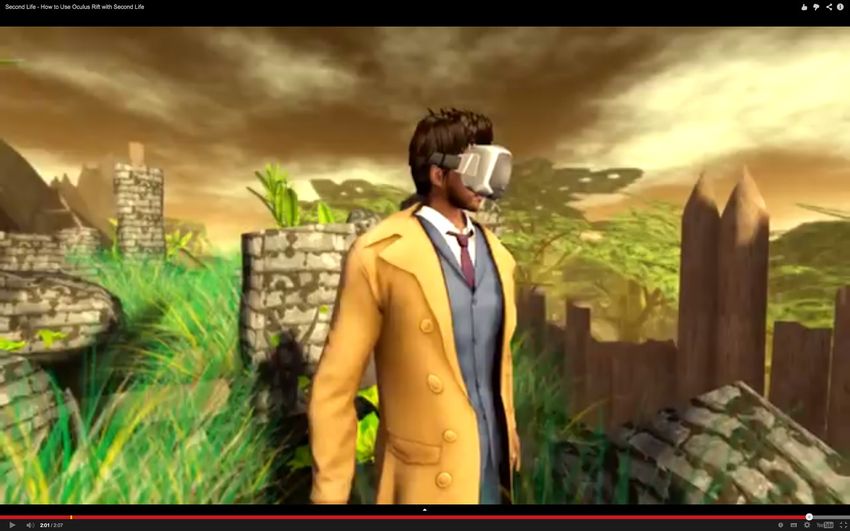
and the first immersive virtual CAVE environments in the
1990’s. A lot of these seemingly promising inventions
failed on not being good enough to fool our senses in being
present in a simulated world [4]. Fortunately, the extensive
research done in this field has brought the medium to the
point of today where the technology has become affordable
for consumers and thus attractive for developers to design
applications for.
Below are some important milestones for the development
of VR technology:
●   David Brewster invented the lenticular stereoscope in
    1849
●   Evans and Sutherland demonstrated the first head-
    mounted stereo display in 1985
●   The term 'Virtual Reality' (VR) was initially coined by
    Jaron Lanier 1989
                                                                                 Figure 2. Barrel Distortion
●   VPL Research introduced a commercially available
    HMD, the famous “EyePhone” system 1989                     2. OPERATING PRINCIPLES
●   The first CAVE was built at the University of Illinois     This section provides an overview of the hardware,
    at Chicago and demonstrated in 1992                        software and networking principles of VR for the web.

●   September 2012: The Oculus Rift was successfully           2.1 Oculus Rift
    kickstarted through crowdfunding                           The Oculus Rift is today’s most popular VR HMD. It is
●   March 2012: Facebook acquired Oculus Rift                  available to developers in the form of a developer kit (it is
                                                               unclear when the consumer version will be available) [6].
1.4 History of Virtual Reality for the Web                     The Oculus Rift uses stereoscopic vision technology,
Development of VR for the web actually coincides with the      rendering a slightly different perspective of the 3D image
development of three dimensional graphics for the web.         for each eye. For this it uses AMOLED screens which can
One of the first attempts was VRML (Virtual Reality            switch color 15 times faster than today’s best LED screens
Modeling Language). VRML was a file format for three           in less than a millisecond. For a complete wide field of
dimensional graphics designed specifically for the web. In     view the Oculus Rift uses optical lenses. The software
order to view VRML files, you need a VRML viewer in the        running the image pre distorts the image to look natural to
form of a plugin [5]. VRML did not contain any link to VR      the user (see Figure 2) [7]. To track head movements the
hardware but it was a tool to view, share and collaborate on   headset is integrated with a high-speed gyroscope,
three dimensional graphics in the browser. The main reason     accelerometer, and magnetometer that take 1,000 readings a
why almost no one is using VRML today, is probably             second, allowing it to predict motion and pre-render images
because it could not run on Mac OS [6].                        to eliminate latency that caused motion sickness in previous
                                                               VR HMD’s. This enables the natural interaction of looking
Below are some important milestones for the development        around while exploring a virtual three dimensional world.
of VR for the web:                                             To ‘predict’ the user’s motion the software makes use of
●   The first 3D graphical Massive Multiplayer Online          ‘Time warping’, a technique developed to shorten the time
    Game (MMOG) was Air Warrior by Kesmai [], which            between moving your head, and seeing the display update
    first appeared in 1986.                                    to the correct position [8]. The Oculus Rift has more pixels
                                                               per eye and a wider field of view than most VR HMD’s on
●   1994: release of VRML (Virtual Reality Markup              the market today [9]. However, the current version still
    Language)                                                  makes seeing details such as text difficult. The next
●   Vladimir Vukićević first demonstrated a WebGL              generation (still in the form of a developer kit) will be
    Canvas 3D prototype in 2006                                equipped with a twin 1080p AMOLED display. The weight
                                                               of the next generation is approximately 379 g, which is an
●   April 2010: Three.js was first released by Ricardo         increase of about 90 g in weight due to the increased screen
    Cabello to GitHub                                          size [10]. The Oculus Rift comes with DVI and HDMI
●   February 2014: Ben Purdy releases Oculus Bridge            input ports and does not include headphones.
●   Janus VR releases FireBox in 2014, a VR browser
    supporting the Oculus Rift.
connections are useful for games or websites that need to
                                                                  display live information with very low latency. This makes
                                                                  it ideal to use with the Oculus Rift because the web content
                                                                  can change real time according to the changing values of
                                                                  the the sensor data [16].
                                                                  To communicate Oculus Rift data through WebSockets the
                                                                  computer needs to recognize the hardware. ‘Oculus Bridge’
                                                                  is an application that recognizes the Oculus Rift hardware
                                                                  and sends its data to the browser via WebSockets [2]. A
                                                                  similar application is ‘Webrift’. Where Oculus Bridge can
                                                                  run on all platforms, Webrift can only be used with a
                                                                  Windows or Linux Operating System [17]. Ben Vanik
       Figure 3. Example of barrel distorted rendering            however proposes an alternative for communication
                                                                  between the Oculus Rift hardware and the browser namely
                                                                  with the use of an experimental NPAPI (Netscape Plugin
The Oculus Software Development Kit (SDK) is provided             Application Programming Interface) plugin [18]. Although
by Oculus to help developers start building VR content for        this method promises even lower latencies than the Oculus
the Oculus Rift using the development kit. The Oculus             Bridge, NPAPI support for Google Chrome will be phased
Developer Center has everything they need to get going            out during 2014 because "NPAPI’s 90s-era architecture has
including official Unreal and Unity engine integrations,          become a leading cause of hangs, crashes, security
samples, documentation, videos, developer wiki and                incidents, and code complexity." [19]
community forums. However, all software that can read and
interpret the Oculus Rift’s sensor data can be used to            For the purpose of this paper we focus on the Oculus
programme for the device. This means many other                   Bridge. Apart from acting as a bridge between the Oculus
applications are possible, for instance VR for the web.           Rift hardware and the browser it is also a very simple
                                                                  javascript object that manages the WebSocket connection
2.2 Oculus Rift for the Web: Client-based Applications            and messaging. The result is a simple solution to make use
In the case of a client-based application the Oculus Rift         of the Oculus Rift head tracking data for any web based
communicates with an application that is running on the           experience. One way to develop three dimensional graphics
computer (the client-side). The application in turn               for the browser is with the use of the aforementioned
communicates with the web.                                        JavaScript library ‘Three.js’. Most of the example code of
                                                                  Bridge is based on Three.js, however the library has no
VR HMD’s can be used in networked interactive                     dependencies and can be used with any other javascript
multiplayer experiences such as Massively Multiplayer             framework just as easily.
Online Games (MMOG). Most interactive multiplayer
experiences are based on client-server architecture, this         3. STRENGTHS AND WEAKNESSES
means the game runs on the server and the client sends
inputs e.g. key events and Oculus Rift viewing angles [13].       3.1 Browser-based VR applications versus Client-based
To connect to the internet the application communicates to        VR Applications
the server through internet sockets [14]. Recommended             This section assesses the strengths and weaknesses of
protocol for real time data is UDP.                               browser-based VR applications compared to client-based
                                                                  VR applications.
2.3 O cu l u s Ri ft fo r the W eb : Bro w ser-based
Applications                                                      Strenghts
In the case of a browser-based application the Oculus Rift        ●   Browser-based applications run in the browser and, in
communicates with an application that is running in the               case of the Oculus Bridge, with the use of WebSockets.
browser, thus working on the base of the HTTP application             WebSockets are supported by all major browsers;
protocol.                                                             Google Chrome, Firefox, Safari, Internet Explorer and
                                                                      Opera [16]. Additionally WebGL is supported by all
Communication between the Oculus Rift and the browser                 major browsers.
can be reached with the use of a WebSocket. Since HTML
is a request/response protocol with no persistent connection,     ●   Applications running in the browser do not need extra
the WebSocket creates a permanent, bi-directional                     extensions or custom drivers.
communication channel between a client and the server             ●   Browser-based applications are easily updated; updates
[15]. Benefit of this is that it takes place in the application       are pushed from the server side, thus no patches or
layer via HTML, this way the vast existing HTML                       expansions are required and all updates happen
infrastructure working with existing browsers can be                  unnoticed.
maintained. A WebSocket connection remains available
until one of the parties disconnects from it. WebSocket           ●   A browser-based application requires only a single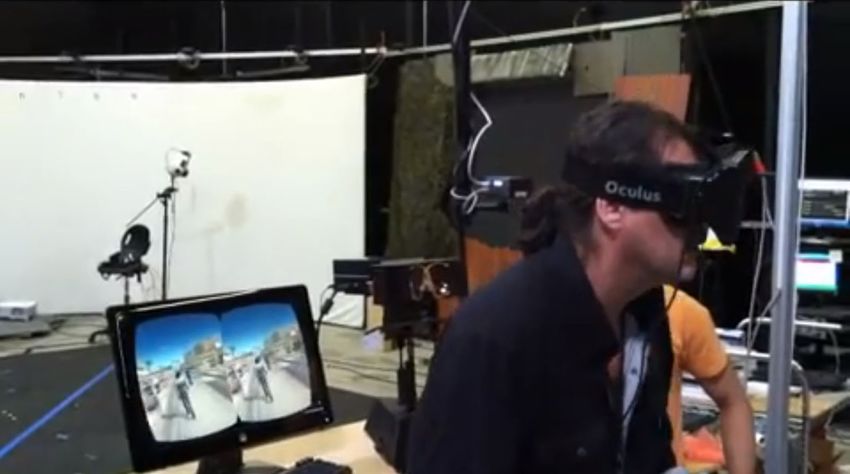
code base for all operating systems e.g. HTML and           infinite number of possible applications in a wide variety of
    JavaScript.                                                 fields. This section discusses some of the typical
●   Applications running in the browser are not fixed to        applications of the Rift and possible future applications.
    one machine, this way they can be run in any location.
                                                                4.1 Entertainment
●   The same browser functions as platform for many             The Oculus Rift got his roots in the Game Industry.
    different applications (games, social networking etc.).     Therefor is not a surprise that the first applications for the
                                                                Oculus Rift were designed in this field.
Weaknesses
●   The Oculus Bridge still requires a client-based             ‘Team Fortress 2’, developed by Valve Corporation, was
    application.                                                announced in March 2013 to be the first game to officially
                                                                support the Oculus Rift. It’s a team-based first-person
●   The Oculus Bridge only works if other applications          shooter multiplayer video game, and is available to play
    using the Oculus Rift are turned off. This seems to be a    with the Oculus Rift dev kit by use of a command line
    problem of the Oculus Rift SDK [18].                        option. A patch is made to the client to include a "VR
●   In general applications tend to run faster on the client-   Mode" that can be used with the headset on any public
    side. Although JavaScript, with its possibility to run on   server. In this case the game is only adding Rift support to
    the client-side, has some benefits, a client-based          an existing game.
    application will perform better.                            Many existing games use features that do not translate well
●   Browsers will still need updates and browsers will not      to VR, such as a HUD, cutscenes, menus, third person
    provide support                                             sections, fast movement speeds, not being able to see one's
                                                                own body, etc.
3.2 Natural browsing versus VR browsing
                                                                The first announced game being designed specifically for
This section assesses the strengths and weaknesses of
                                                                the Oculus Rift and Virtual Reality, rather than adding Rift
natural browsing (the way we are used to ‘browse’ today)
                                                                support to an existing game is The Gallery: Six Elements.
compared to VR browsing. VR browsing being the use of a
                                                                I t ’ s a first-person adventure game developed by Cloud
HMD and VR for internet browsing.
                                                                Head Games. Special attention is given to the so-called VR
                                                                Comfort Mode. The VR comfort mode solves several
Strengths
                                                                fundamental issues with virtual reality locomotion and a
●   ‘Browsing’ the web is one of the main activities of the
                                                                system is created that probably will be adopted by other
    internet today. This activity however is completely two     games in this space. Another special issue in this game is
    dimensional and screen based, also three dimensional        the experience of Body Persistence, the ability to ground
    information is communicated through this two                ones self within a virtual body. This grounding will make
    dimensional medium. The advent of VR for the web            the user feels a part of the world, gives a stable orientation
    enables this activity to become three dimensional; it       and a sense of context to the experience. Next to this
    enables three dimensional information to be                 another feature is an important aspect of the game, namely
    communicated in three dimensions                            the Sense of Presence. A broad number of perceptual cues
●   Websites become three dimensional environments              are needed to deliver an immersive experience and
    instead of two dimensional pages.                           understand what drives that sense of truly being there. The
●   VR browsing enables the viewer to see connections           environmental design, sound design, GFX design and
                                                                locomotive design all work together to create the sense of
    between information sources in 3D which could make
                                                                presence which is so crucial to the VR experience.
    the connections more clear [20].

Weaknesses
●   Naturally, VR for the web will require getting used to.
    We are not used to three dimensional web pages.
    Information is always displayed on a two dimensional
    display.
●   Particularly the positioning of text will need some
    consideration since we are used to reading from two
    dimensional surfaces.
●   We are not used to wearing a HMD while interacting
    with computers. Will we have to wear this all the time?
                                                                             Figure 4. The Gallery: Six Elements
4. TYPICAL APPLICATIONS
Head mounted displays such as Oculus Rift offer an almost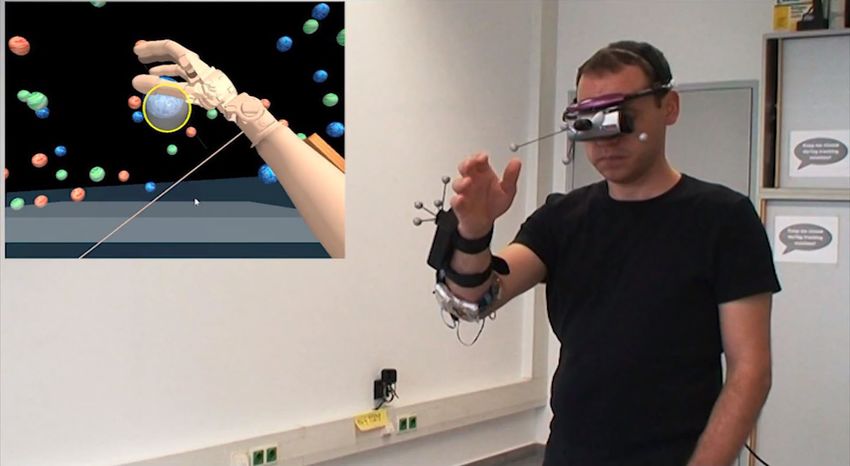
Notch, developer of Minecraft, while initially stating that
their games would likely support the Rift, announced soon
after the company's acquisition by Facebook that those
plans were cancelled. But the fan-made mod “Minecraft,”
lets you play Minecraft on the Rift. Created by modders
known as “mabrowning” and “StellaArtois,” the mod
supports Minecraft version 1.6.4, and is compatible with
Minecraft Forge, a popular mod-loader that is useful and
often required for running other mods for the game. The
base mod tracks your head’s rotation via the Oculus Rift
headset. [21]

4.2 Informational Purposes
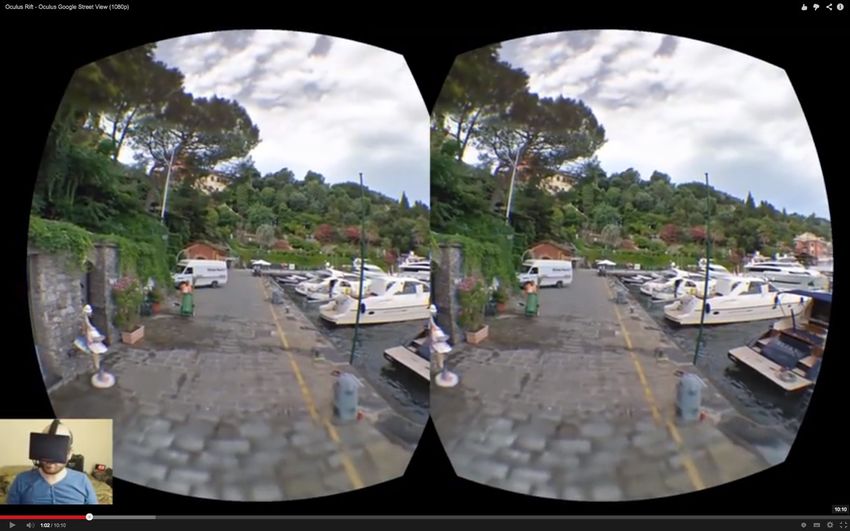
The Oculus Rift can be used to travel around the world and                        Figure 6. Second Life Viewer
experience known and unknown places in Google Street
View. Oculus Google Street View is using the plug-in vr.js       4.3 Communication
for Chrome or Firefox, Google unveiled a totally new             In April 2014, Linden Lab developed a limited beta test of a
version of Maps in May 2013. It has become a platform            version of the Second Life Viewer that made it easy to use
capable of evolving into a virtual reality version of the real   an Oculus Rift headset with Second Life for a fully
world. The visible part of Maps is augmented by invisible        immersive, VR experience. A few weeks later Linden Lab
data. For instance, it includes information about posted         announced that the Oculus Rift integration is available as a
speed limits, which streets are one-way and where the stops      Project Viewer, the first step toward becoming a part of the
signs are. These kinds of data can be used for accurate turn-    default Second Life Viewer.
by-turn directions, estimating trip times and other uses. The
                                                                 One of the features of The Project Viewer is the Full
head-tracking is working due to the plug-in, but experience
                                                                 Oculus Rift Hardware Support, including automatic
mostly depends on how good the captured images from
                                                                 hardware detection and display calibration for quick and
Google are. Most big cities around the world looks
                                                                 easy setup. Another important aspect is the Avatar Head
stunning, like New York and London. This really enhances
                                                                 Motion, in which the Oculus Rift head-tracking data is
the Street View experience exponentially.
                                                                 mapped to the avatar, and enables that users’ avatars look
Firebox is a 3D VR internet browser supporting the Oculus        where they do.
Rift, developed by Janus VR. In this browser webpages are
represented as boxy rooms and links connect rooms as             5. SURPRISING APPLICATIONS
doorways. Pictures embedded in the webpages hang on the          Some more unexpected use of the Oculus Rift is described
room's walls. The environment is dynamically generated,          in this section.
using a portal-based system. The project is still young, but
is under very active development. Additionally, Firebox          5.1 Healthcare
Room HTML has been created, which allows website                 Virtual Reality Exposure Therapy is a therapy in which a
owners to add special markup to their websites in order to       patient – guided by a trained therapist – is confronted by
create an optimized Firebox experience. [22]                     their trauma memories through a retelling of the experience.
                                                                 This kind of therapy is now endorsed as an “evidence-
                                                                 based” treatment for post-traumatic stress (PTS). ICT
                                                                 researchers added to this therapy by leveraging virtual art
                                                                 assets that were originally built for the commercially
                                                                 successful X-Box game. With the Rift, it can become even
                                                                 more effective, and be provided at a lower cost.
                                                                 ‘Virtual Iraque’ developed by Virtually Better, is a program
                                                                 to treat soldiers with PTSD (post-traumatic stress disorder).
                                                                 It has been adopted by several military medical centers and
                                                                 veterans affairs clinics in the United States. Having real-
                                                                 time control over every aspect of the simulation, from time
                                                                 of day, weather conditions, and even ambient sound, allows
                                                                 clinicians to o create simulations for a variety of
                                                                 experiences be it driving a Humvee down a desert road or
                                                                 mountain pass or even re-creating an IED explosion or
             Figure 5. Oculus Google Street View                 insurgent attack. By pacing the exposure in a much more
                                                                 controlled fashion and in a way that engages the user,
                                                                 clinicians can control the progression of therapy. [23]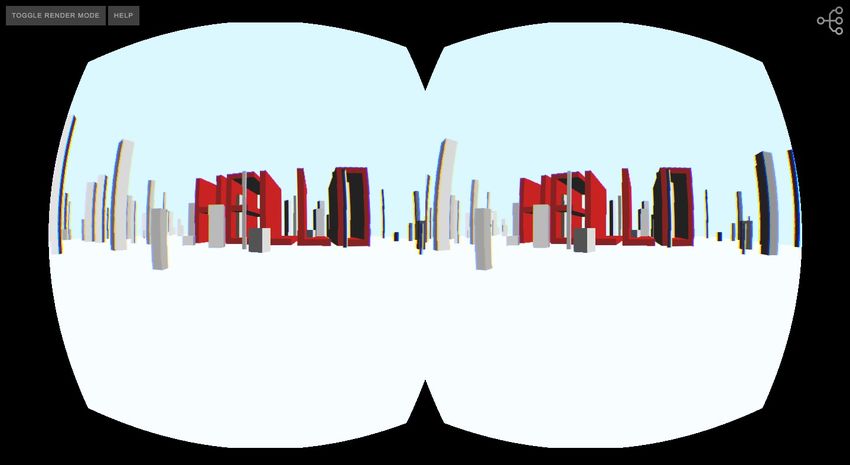
beneficial effect. [25]

                                                                 5.2 Education
                                                                 Virtual Labs, developed by Labster is an application to
                                                                 teach life science and medicine. In the laboratory, students
                                                                 get to perform experiments that are otherwise too
                                                                 expensive, time consuming, need sophisticated equipment
                                                                 and are unsafe to perform in the school environment. To
                                                                 overcome the above problems, the application has been
                                                                 introduced to enable users to perform experiments.

                                                                 6. GETTING STARTED
                                                                 This section illustrates how to get started with VR for the
                   Figure 6. Virtual Iraque                      web in 10 minutes. Through a series of simple steps you
                                                                 will be able to set up a three dimensional environment for a
                                                                 webpage in which you can load three dimensional geometry
                                                                 to show the world via the Oculus Rift HMD. We assume a
                                                                 basic understanding of HTML and JavaScript.

                                                                 6.1 Test the 'Oculus Bridge'
                                                                 First, download the full Oculus Bridge package through:
                                                                 https://github.com/Instrument/oculus-bridge ( D o w n l o a d
                                                                 ZIP). Unzip the files to a desired location and run the
                                                                 Oculus Bridge applications corresponding to your system
                                                                 found at oculus-bridge-master/app/build. The app shows a
                                                                 window with two squares, one for the WebSocket and one
                                                                 for the Oculus (see Figure 8). The squares show the
Figure 7. Virtual Reality Training for Upper Limb Prosthesis
                           Patients                              connection status; filled means connected. Next run the
                                                                 ‘First Person’ example found at oculus-bridge-
Annette Mossel, a PhD candidate, research assistant, and         master/examples/first_person.html. This is just a normal
lecturer at the Interactive Media Systems (IMS) Group at         HTML file so when double clicked it should automatically
Vienna University of Technology in Vienna, Austria works         run in your preferred browser. Now connect the Oculus Rift
extensively in VR and augmented reality (AR) research. In        to your computer through HDMI or DVI and be amazed!
2012, her research group published a paper, "Virtual
Reality Training for Upper Limb Prosthesis Patients” [24]        Although we could entirely script this three dimensional
which explains how VR/AR technology can be used to train         world ourselves, parts of this example are very valuable and
and rehabilitate amputee patients receiving prosthesis. IMS      highly recommended for re-use i.e. the OrbitControls and
developed a motion capture system that tracks an amputee's       RiftCamera JavaScript libraries. For this reason we
arm and head movement in three dimensions within a               continue with this example and add the model loader on top
virtual environment. By combining this tracking data with        of it.
electromyography to generate input for grasping controls
for a virtual prosthesis, researchers can create a realistic
training simulating for familiarizing patients with their
prosthesis.
Another VR application is the virtual classroom project,
developed by the University of Southern California's
Institute for Creative Technologies (a research group
Palmer Luckey was once a member of). This project creates
a simulated classroom experience for testing children with
ADHD and monitoring how well they can pay attention.
Phantom Limb Syndrom Rehabilitation is an application                     Figure 8. Oculus Bridge application window
developed by the University of Manchester and a small
company named Section 9. The general idea is simple. The
patient places their remaining limb (their left arm, say) into
the mirror box. They can then see a reflection of their arm
where their missing right arm should be. By performing a
set of exercises, studies have shown this can have a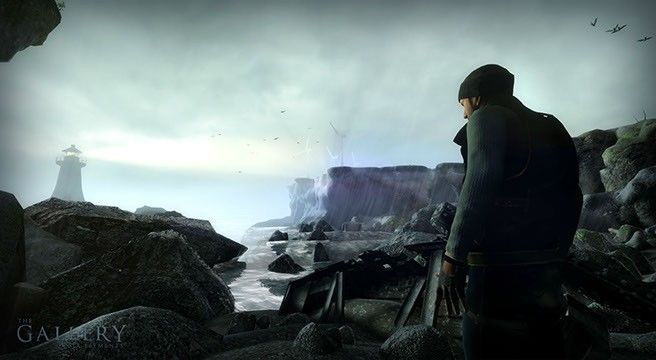
6.2 Add an OBJ importer                                         The future of VR will be literally limited by our
Three.js offers many ways of generating and importing           imagination, what the implications of this new medium will
three dimensional geometry. One way is by importing .obj        exactly be for our (social) lives is uncertain at this point, but
files. OBJ is a for the most part universally accepted 3D       the least we can do is see how it can improve our current
geometry file format; you can export .obj files out of most     communication technology and media use.
3D modeling software. In order for the OBJ import to work
we will need to add the OBJLoader library to the HTML           REFERENCES
file. This library can be found here:                           1.Pimentel K. and Teixeira K. 1993, Virtual Reality through
http://threejs.org/examples/js/loaders/OBJLoader.js. S a v e         the New Looking Glass, Windcrest, NY
OBJLoader.js to the oculus-bridge-master/examples/lib/          2.Oculus Bridge, A utility and javascript library to link the
folder and add this line to first_person.html:                      Oculus Rift with the web.
                            https://github.com/Instrument/oculus-bridge
Next we will need to add a ‘models’ folder to oculus-           3. Rubin, Peter. “The Inside Story of Oculus Rift and How
bridge-master/examples/ and add a .obj file (in this case            Virtual Reality Became Reality“, blog post on
name it: “helloOBJLoader.obj”). Finally we will need to              wired.com. May 20th 2014.
add a couple of lines to the first_person.js JavaScript file         http://www.wired.com/2014/05/oculus-rift-4/?
found at oculus-bridge-master/examples/js/first_person.js.           mbid=social_fb
Inside the initGeometry() function add these lines:             4.Mazuryk, Tomasz, and Michael Gervautz. "Virtual
         var loader = new THREE.OBJLoader();                        reality-history, applications, technology and future."
                                                                    (1996).
         loader.load( 'models/helloOBJLoader.obj',              5.VRML (Virtual Reality Markup Language), WhatIs.com.
function ( object ) {                                               http://whatis.techtarget.com/definition/VRML-Virtual-
              object.traverse( function ( child ) {                 Reality-Modeling-Language
                   if ( child instanceof THREE.Mesh ) {         6.“Why VRML Failed and What That Means for
                       child.material.color.setRGB (1, 0, 0);       OpenOffice” http://cafe.elharo.com/ui/why-vrml-
                   }                                                failed-and-what-that-means-for-openoffice/
              } );                                              7.Kesmai, Wikipedia. http://en.wikipedia.org/wiki/Kesmai
              scene.add( object );
                                                                8.Oculus VR. http://www.oculusvr.com/
         } );
                                                                9.Whiting, Nick. “Integrating the Oculus Rift into Unreal
                                                                    Engine 4”, blog post on gamasutra.com. June 11th
This imports a red colored version of your OBJ model!               2013.
Now you can import any object file into your browser-               http://gamasutra.com/blogs/NickWhiting/20130611/19
based three dimensional world.                                      4007/Integrating_the_Oculus_Rift_into_Unreal_Engin
                                                                    e_4.php
7. FINAL THOUGHTS
Since the advent of the Oculus Rift, Virtual Reality is         10.Brunner, Grant. “Oculus Rift’s time warping feature will
popular again. The open and very active community behind            make VR easier on your stomach”, blog post on
the Oculus Rift have ensured many new application                   extremetech.com. April 23rd 2014.
opportunities, among which the development of three                 http://www.extremetech.com/gaming/181093-oculus-
dimensional graphics for the browser and special                    rifts-time-warping-feature-will-make-vr-easier-on-
applications for healthcare. According to Mark Zuckerberg,          your-stomach
founder and CEO of Facebook after the acquisition in            11.“HMD Specs Comparison: Oculus Rift vs. Silicon Micro
March 2014: “Oculus has the chance to create the most                Display ST1080 vs. Sony HMZ-T1”. August 11th
social platform ever, and change the way we work, play and           2012. http://www.roadtovr.com/hmd-specs-
communicate.” [26] A critic is Jaron Lanier, who founded             comparison-oculus-rift-vs-silicon-micro-display-
the first VR company, VPL Research, in 1983. Lanier                  st1080-vs-sony-hmz-t1/
warned that the acquisition could have a stultifying effect:    12.Hollister, Sean. “Inside Oculus: a tour of virtual reality's
“I have seen a lot of cases where big ticket acquisitions           would-be savior“, blog post on theverge.com. March
seem to actually slow innovative startups down”. [27]               19th 2013.
We are looking forward to experience applications using             http://www.theverge.com/2013/3/19/4122388/can-
the Oculus Rift together with other intuitive input devices         oculus-rift-save-virtual-reality
such as the Microsoft Kinect and the Motion Leap, we think      13.Massively Multiplayer Online Role Playing Game,
this will make a big difference for the ease of use and             Wikipedia.
enjoyability of VR systems.                                         http://en.wikipedia.org/wiki/Massively_multiplayer_o
                                                                    nline_role-playing_game
14.Network Socket, Wikipedia. for-oculus-rift/#sthash.t5sT341G.dpuf
http://en.wikipedia.org/wiki/Network_socket 23.Wiltz, Chris. “The Oculus Rift – Changing Virtual
15.Lubbers, P and Greco, F. HTML5 Web Sockets: A Reality for Healthcare”. July 17th 2013.
Quantum Leap in Scalability for the Web. http://www.mddionline.com/article/oculus-rift-–-
http://blog.chinaunix.net/attachment/attach/24/78/92/5 changing-virtual-reality-healthcare?page=1
524789255ee40d274b8cf0a98fa6d470b73a945ee.doc 24.Mossel, Annette. “Virtual Reality Training for Upper
16.WebSocket, Wikipedia. Limb Prosthesis Patients”
http://en.wikipedia.org/wiki/WebSocket https://www.ims.tuwien.ac.at/publications/tuw-210234
17.Webrift. http://wwwtyro.github.io/webrift/ 25.Proceedings of the 6th international conference on
18.VR.js. https://github.com/benvanik/vr.js/tree/master disability, virtual reality and associated technologies,
2006.
19.Protalinski, Emil. “Google looks to drop Netscape http://centaur.reading.ac.uk/15050/1/ICDVRAT2006_
Plugin API support in Chrome, starting with blocking Full_Proceedings_6th_Conf.pdf
most plugins in January 2014”, blog post on
thenextweb.com. September 23rd 2013. 26.“Facebook to Acquire Oculus” March 25 2014.
http://thenextweb.com/google/2013/09/23/google- http://newsroom.fb.com/news/2014/03/facebook-to-
chrome-drops-netscape-plugin-api-support-to- acquire-oculus/
improve-stability-will-block-most-plugins-in-january- 27.Strange, Adario. “Virtual Reality Pioneer Jaron Lanier
2014/ Talks Facebook's Oculus Deal”, blog post on
20.Semantic Web. http://www.ebremer.com/semantic_web mashable.com. March 28 2014.
http://mashable.com/2014/03/27/virtual-reality-
21.Moore, Bo. “Minecraft for Oculus Is Dead. Here’s How pioneer-jaron-lanier-reacts-to-facebooks-oculus-
to Play It Anyway”, blog post on wired.com. March acquisition/
31st 2014. http://www.wired.com/2014/03/minecraft-
oculus/
22.“Firebox: A 3D Internet Browser for Oculus Rift”
http://vrmonkey.com/firebox-a-3d-internet-browser-You can also read


