WEALTH REPORT THAILAND 2019 - Julius Baer
←
→
Page content transcription
If your browser does not render page correctly, please read the page content below

WEALTH REPORT THAILAND 2019
2   WEALTH REPORT THAILAND 2019                                                                                                                            WEALTH REPORT THAILAND 2019   3

                                    EDITORIAL

                                                                                                                             CONTENTS
                                  The global economy appears to be defying doomsayers of late.
                                  The three largest economic blocs in the world – the US, European
                                  Union and China, which comprise almost half of global output –
                                  have reported stronger-than-expected first-quarter gross domestic
                                  product (GDP) growth estimates. Thailand is primed to benefit from
                                                                                                                                       2
                                  the general positive momentum in emerging Asia.
                                                                                                                                   EDITIORAL

                                  In recognition of the rising tide of Thai wealth, our inaugural edition of
                                                                                                                                        4
                                  the Wealth Report Thailand examines the issues that are significant to              SECTION 1: THAILAND BY THE NUMBERS
                                  Thai high net worth individuals (HNWI). These include the domestic
                                  macroeconomic environment and outlook, the Thai luxury market and                                  6
                                  price trends of luxury goods and services in the Julius Baer Lifestyle         SECTION 2: MACROECONOMIC REVIEW & OUTLOOK
                                  Index, as well as the burgeoning local wealth market.
                                                                                                                                        18
                                                                                                                       SECTION 3: THE THAI WEALTH MARKET

                                         THAI HNWIS ARE MORE INCLINED                                                                  32
                                      TOWARDS WEALTH CREATION COMPARED                                                    SECTION 4: SURVEY FINDINGS

                                           TO WEALTH PRESERVATION.                                                                    38
                                                                                                                         SECTION 5: THAI HNWI PROFILES

                                  Within the Asia Pacific region, the Thai HNWI segment bears close                                     43
                                                                                                               SECTION 6: THAILAND’S LUXURY MARKET & INTRODUCING
                                  watching for its growth promise. Central to the report are our survey
                                                                                                                          THE JULIUS BAER LIFESTYLE INDEX
                                  findings concerning clients’ attitudes towards wealth and investing.
                                  In particular, Thai HNWIs indicate a greater inclination towards wealth
                                                                                                                                     58
                                  creation compared to wealth preservation. This underscores the                                 CONCLUSION
                                  substantial demand potential for offshore investment opportunities,
                                  which SCB Julius Baer offers.

                                  We invite you to read more of our insights in the Wealth Report
                                  Thailand 2019 and we thank you for your support.

                                  Jiralawan Tangitvet
                                  Chief Executive Officer
                                  SCB Julius Baer
4     WEALTH REPORT THAILAND 2019                                                                                                                                                                                            WEALTH REPORT THAILAND 2019   5

SECTION 1:

THAILAND BY
THE NUMBERS
1. The Stock Exchange of
   Thailand (SET) Index is                                                                                                                           6. Thai HNWIs in our survey have a
   forecast to hit 1,800                                                                                                                                55% allocation to liquid assets
   points by the third                                                                                                                                  (stocks, bonds and funds) vs 47%
   quarter of this year.1                                                                     2. The baht is likely to remain                           for Global HNWIs and 46% for
                                                                                                 in the 31 – 32 THB/USD                                 Asian HNWIs.5 However, the
                                                                                                 range by the end of 2019,                              majority of their liquid assets are
                                                                                                 which is stronger than the                             in onshore products.
3. The kingdom saw a record 38.3 m                                                               average of 32.3 THB/USD                                                                                      7. The Julius Baer
   tourists in 2018, up 7.5% from 2017.                                                          in 2018.2                                                                                                       Lifestyle Index shows that
   Chinese visitors remain                                                                                                                                                                                       Bangkok remains the 7th most
   the top driver of foreign                                                                                                                                                                                     expensive city out of 11 cities in
   receipts in an industry                                                                                                                                                                                       Asia. Luxury goods are pricier
   that makes up 12% of                                                         4. Thai HNWI wealth is estimated to                                                                                              in Thailand due to excise taxes,
   Thailand’s GDP.3                                                                grow at a five-year compounded               8. Thai spending on luxury goods is                                              whereas luxury services are
                                                                                   average growth rate (CAGR) of 9.9%              expected to reach a retail value of USD                                       generally well-priced due to
                                                                                   from 2015-2020E to USD 401.2 bn.                2.2 bn in 2019.7 Bangkok’s wealthy are                                        lower operating costs.6
                                                                                   The drivers behind this growth are              certainly not shying away from big-ticket
                                                                                   steadily growing household                      purchases, snagging up a
                                                                                   wealth, economic                                record 250 Aston Martin
5. The top advisor for
                                                                                   development and a                               supercars, priced at over
   clients when making
                                                                                   buoyant property                                USD 475,000 each in 2018.                                            9. A Shoe-In – men rejoice. The Ferragamo
   investment decisions is
                                                                                   and stock market.4                                                                                                      cap-toe Oxford is the most affordable in
   Family and Friends
                                                                                                                                                                                                           Bangkok at USD 755. In contrast, the
   (43%) followed by their
                                                                                                                                                                                                           same shoe model is sold
   Private Banker (27%).
                                                                                                                                                                                                           in Taipei for USD 976.

1
    Siam Commercial Bank (SCB)
2                                                                                                                                  5
    SCB                                                                                                                                Scorpio, Capgemini - World Wealth Report 2018
3                                                                                                                                  6
    Department of Tourism, World Travel & Tourism Council 2017 & Deloitte Thailand estimate                                            Julius Baer
4                                                                                                                                  7
    Julius Baer                                                                                                                        EOS Intelligence - Thailand: Endeavoring to Become Asia’s Next Luxury Shopping Stop
6   WEALTH REPORT THAILAND 2019                                                                                                                                         WEALTH REPORT THAILAND 2019      7

SECTION 2:

MACROECONOMIC                                                                                     IT IS ARGUABLE THAT THE LATEST RISK-ON CYCLE
                                                                                                        CAN CARRY ON FOR THE REST OF 2019.

REVIEW & OUTLOOK
                                                                                       The risk-off sentiment in 2018 reflected then             Markets may have priced in the above positive

CALM AFTER
                                  Following the sell-off in global financial markets
                                                                                       concerns about a global recession, Sino-US trade          factors, but other causes could trigger capital
                                  in late 2018, the dovish policy stance adopted by
                                                                                       tensions and the expectation that the US Federal          outflows. At the time of writing, Sino-US trade
                                  major central banks, together with other positive
OR BEFORE                         developments, has revived investor confidence.
                                  But with simmering financial and political risks,
                                                                                       Reserve (Fed) would continue its path of quantitative
                                                                                       tightening. In 2019, however, markets did a volte-
                                                                                                                                                 tensions have escalated after President Trump
                                                                                                                                                 raised tariffs on USD 200 bn of Chinese imports to

A STORM?
                                                                                       face and rallied so much that valuations are now          25% and initiated the process to introduce tariffs on
                                  it remains to be seen if the positive momentum
                                                                                       looking rich. For the year to date8, the MSCI World       the remaining goods imported from China. China
                                  can be sustained throughout the year.
                                                                                       has delivered an above-average return of 12.6%,           has retaliated by hiking tariffs on US imports, as well
                                                                                       with a price-to-earnings ratio of approximately 15.3      as by increasing the administrative pressure on
                                                                                       times 2019 earnings.                                      doing business in China. If the parties do not reach
                                                                                                                                                 an agreement in the short term, China, as well as
                                                                                       It is arguable that the latest risk-on cycle can carry    the rest of emerging markets assets, will come
                                                                                       on for the rest of 2019. Proponents of this view          under pressure. This shocking development makes
                                                                                       point to stabilising growth in China, supported by        it difficult for investors to navigate. Nevertheless, we
                                                                                       another round of stimulus measures there, easing          see the recent move as part of President Trump’s
                                                                                       fears of a hard landing. A ‘hard Brexit’ has been         tactics to negotiate for a good deal. The stakes are
                                                                                       averted, with the European Union extending the            too high for Trump as a delay and an intensification
                                                                                       deadline for the United Kingdom’s departure to 31         would trigger a recession before the presidential
                                                                                       October 2019.                                             elections in 2020.

                                                                                       Further spurring investors’ risk appetites were           At present, the global economy appears to be on
                                                                                       relatively sedate market conditions during the first      the mend, as evident in improved manufacturing
                                                                                       quarter of 2019. Volatility indices of UK, European,      activity. That has rekindled investors’ appetite
                                                                                       Chinese and Japanese stocks have gone down to             for riskier assets, such as emerging markets.
                                                                                       last year’s lows, while currency and bond volatility      In particular, Thailand is primed to benefit from the
                                                                                       gauges are placid.                                        general positive momentum in emerging Asia.

                                                                                       8
                                                                                           Year to 24 May 2019, Source: Bloomberg Finance L.P.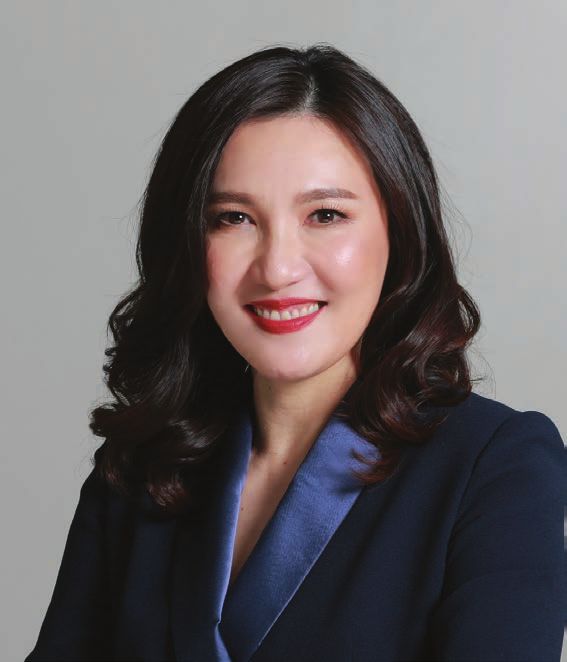
8       WEALTH REPORT THAILAND 2019                                                                                                                                                                      WEALTH REPORT THAILAND 2019         9

SETTING
THE TONE
IN 2019

The global forecast for Asian markets is generally            Current foreign ownership of Thai stocks is less        CHART 2: THAI GDP GROWTH IS EXPECTED TO SLOW IN 2019
decent following the encouraging outlook for                  than average, which implies there is room for
                                                                                                                        %                                                                                                                %
interest rates and the global investment climate. We          foreign capital inflows to increase. As such, the SET
                                                                                                                      20.0
remain positive on the Thai stock market on the               Index could see more upside ahead.
                                                                                                                                                                                                                                         5.0
back of decent economic activity, healthy domestic
demand and easing macroeconomic pressure. As                  On the economic front, we expect Thai GDP growth        15.0
well, the rise in oil prices is particularly beneficial for   to slow down to 3.6% in 2019, on the back of lower-
                                                                                                                                                                                                                                         4.0
the SET Index, which is heavily skewed to the                 than-expected exports coupled with a slight delay
energy sector. The SET Index is forecast to reach             in government spending. Concerns over an ageing         10.0

1,800 points by the third quarter of this year.9 The          population and household debt also linger as
                                                                                                                                                                                                                                         3.0
outlook for earnings per share growth is also                 longer-term hurdles to growth. In view of the
                                                                                                                       5.0
constructive (Chart 1).                                       potential risks, as well as weak inflation and the
                                                              baht’s strength, the Bank of Thailand (BoT) left the                                                                                                                       2.0
CHART 1: THAILAND EARNINGS GROWTH EXPECTATIONS
                                                              key interest rate unchanged at 1.75% in May and is       0.0
                                                              likely to keep monetary policy accommodative for
%
                                               8.9            the rest of the year. Inflation is forecast to reach                                                                                                                       1.0
10
                                                              around 0.9%, which is at the lower end of the BoT       -5.0
                               6.8                            inflation target band.10
                                                                                                                                                                                                                                         0.0
    5                                                                                                                 -10.0
                                                                                                                               Jun          Dec          Jun         Dec    Jun     Dec        Jun       Dec       Jun       Dec
                                                                                                                               2014         2014         2015        2015   2016    2016       2017      2017      2018      2018
                                                                                                                         GDP Growth (RHS)          Export Growth (LHS)
    0                                                                                                                 Source: Bloomberg

              -2.2
                                                                                                                      Nevertheless, the 2019 growth forecast still                 likely to be the main driver of GDP growth. In
-5
              2018            2019E           2020E
                                                                                                                      outpaces the average growth over the past five               particular, public and private investment is set to
                                                                                                                      years, which is less than 3% per year. Public debt           pick up as the government awards tenders for
   Expected earnings per share growth, y/y                                                                            levels are still healthy and domestic spending is            public infrastructure projects.
E = Expected

Source: Bloomberg Finance L.P., Julius Baer

9
     SCB
10
     SCB
10 WEALTH REPORT THAILAND 2019 WEALTH REPORT THAILAND 2019 11
CHART 3: THAILAND'S PUBLIC DEBT REMAINS HEALTHY CHART 4: YEAR TO DATE RETURNS FOR ASIAN CURRENCIES VS USD
THB trn % Spot Returns (%)
20.0 45
1 Chinese Renminbi CNY 2.43
2 Thai Baht THB 2.37
18.0 44
3 Offshore Chinese Renminbi CNH 2.23
16.0 43 4 Indonesian Rupiah IDR 1.63
5 Philippine Peso PHP 1.42
14.0 42
6 India Rupee INR 0.90
12.0 41 7 Singapore Dollar SGD 0.70
8 Malaysian Ringgit MYR 0.39
10.0 40
9 Hong Kong Dollar HKD -0.15
10 Taiwanese Dollar TWD -0.47
8.0 39
11 Japanese Yen JPY -1.23
6.0 38 12 South Korean Won KRW -2.17
4.0 37 -3% -2% -1% 0% 1% 2% 3%
As of 11 April 2019
2.0 36
Source: Bloomberg Finance L.P.
-0.0 35
2010 2011 2012 2013 2014 2015 2016 2017 2018
Public Debt (LHS) Estimated GDP (LHS) Public Debt/GDP (RHS)
Source: Ministry of Finance, Thailand
WELL
BAHTRESSED
In politics, the election aftermath appears to pose ongoing political ambiguity. It is worth noting that The THB has been one of the top-performing Asian remain substantial in 2019 at about 6.3% of GDP,
some risks. At the time of writing, political uncertainty the country has weathered political upheaval of currencies for the year to date. We estimate that the due to continued export growth and a rebound in
persists, as forming a government has been a greater intensity in the past decade and its baht could appreciate slightly against the USD by Chinese tourist arrivals. In addition, the baht should
drawn-out process. Yet contrary to expectations, economy has remained resilient. the end of 2019, mainly due to a possible weakening benefit from the potential return of capital flows to
investors remain relatively unperturbed by the in the USD. The dollar could depreciate as a result emerging countries, on the back of increased risk
of the Fed’s adoption of a more dovish tone, as well appetite and a more inexpensive valuation of
as a slowdown in the US economy. emerging markets assets. The baht is likely to
remain in the 31-32 THB/USD range, which is
Other factors driving the baht’s appreciation include stronger than the average of 32.3 THB/USD in the
the current account surplus, which is expected to previous year.11
11
SCB12 WEALTH REPORT THAILAND 2019 WEALTH REPORT THAILAND 2019 13
AMAZING THAILAND THE GLOBAL LUXURY TRAVEL MARKET IS FORECAST
TO GENERATE USD 1.54 TRN BY 2022.
Tourism is a significant pillar of the economy. The global luxury travel market is forecast to be Local authorities have established a five-year plan government’s Thailand 4.0 strategy to shift Thailand
Thailand saw a record 38.3 m tourists in 2018, up worth USD 1.54 trn by 2022.13 The high-end market to establish Thailand as a preferred destination for from a production-based to a service-based
7.5% from 2017. Chinese visitors remain the top has been growing, thanks to targeted campaigns. meetings, incentives, conventions and exhibitions economy.
driver of foreign receipts in an industry that makes In 2017, the revenue per room and occupancy rates (MICE) tourism. This could also benefit from the
up 12% of Thailand’s GDP.12 For 2019, authorities at Bangkok’s luxury hotels grew by 8.5% and 3.1%
expect 41.1 m tourists to spend THB 2.21 trn, respectively, at significantly higher rates compared
providing further fillip to GDP growth. to the total Bangkok market.14 In addition, the
government is focused on courting tourist dollars
To enhance Thailand’s tourism appeal, authorities for high-value segments such as medical and
have been keen to reposition the country from a wellness tourism, destination weddings, and
budget destination to one that attracts high-end upscale leisure activities such as golf. More
visitors. Businesses operating in such an information about the trends in domestic luxury
environment will inevitably face both opportunities consumption will be covered in the chapter on
and challenges. To maintain their competitive edge, the Julius Baer Lifestyle Index.
firms within Thailand will have to differentiate
themselves from competitor tourist hotspots by LOOKING EASTWARDS –
upgrading their offerings. THE EASTERN ECONOMIC
CORRIDOR:
CHART 6: FOREIGN TOURIST REVENUES ARE GROWING
CHART 5: TOURISM ARRIVALS ROSE 9.8% IN 2018 TO 38.3 M STRONGLY
Foreign Tourists 2010 - 2018 Revenue from Foreign Tourists (2009 - 2018)
m THB trn CAGR 2009 - 2018 = 16.5%
A key component of the Thailand 4.0
45.0 2.5 initiative is the Eastern Economic Corridor
40.0 (EEC), a USD 45 bn project aimed at making
2.0
35.0 2.0 Thailand’s eastern provinces a leading
Political 1.8
Incident 1.6 Association of Southeast Asian Nations
30.0
25.0
MERS 1.5
1.4
ABOUT THAILAND 4.0: (ASEAN) economic zone. It targets 10
Coup
d'etat
1.2 1.2 industries, among which include high-end
Euro Debt
20.0 1.0
Crisis Political
1.0 travel and medical tourism. The apparent
Flooding Unrest
15.0 Political Euro Debt 0.7 benefits are manifold: the government
Political Unrest Crisis 0.5
0.6 A 20-year economic model that heralds
10.0 Unrest 0.5 predicts the EEC could lead to the creation
a new era for Thailand’s economy. It aims
Subprime
5.0 Crisis of 100,000 jobs a year in the manufacturing
to transform the nation from a production-
0.0 0.0 and service industry by 2020, while
based to a service-based economy.
2010 2011 2012 2013 2014 2015 2016 2017 2018 2009 2010 2011 2012 2013 2014 2015 2016 2017 2018 boosting infrastructure development
The focus will be on innovation, driven
Source: Department of Tourism, TAT, The Royal Thai Government, and tourist arrivals. The government also
Hotel Occupancy (%) by upgrading technology and improving
Deloitte Thailand aims to create new cities through smart
49% 50% 58% 61% 65% 56% 62% 69% 71% creativity to create new start-ups.
urban planning.
Source: Department of Tourism, World Travel & Tourism Council
2017 & Deloitte Thailand estimate
12
Department of Tourism, World Travel & Tourism Council 2017 & Deloitte Thailand estimate
13
Allied Market Research
14
Horwarth HTL14 WEALTH REPORT THAILAND 2019 WEALTH REPORT THAILAND 2019 15
GREY LINING
IN BANGKOK’S
SKYLINE?
Bangkok’s skyline is likely to see further changes
on the back of the upcoming Bangkok City Plan.
Yet, some downward pressures to the property
market could be forthcoming, with slower growth in
many sectors and an incoming wave of new supply.15
Residential
New regulations on the horizon include a more Overall, property developers are likely to be more
stringent Loan-to-Value (LTV) requirement to raise cautious about launching new projects and
the quality of lending and curb speculative acquiring sites in 2019. This is due to the combined
purchases. Condominium presales are likely to effects of weaker domestic demand, rising land BANGKOK CITY PLAN: ABOUT FAR:
suffer the most from the LTV adjustment. prices and new supply. More details on the luxury
residential market will be covered in the property
While there is still demand for prime freehold sites section of the Julius Baer Lifestyle Index. The Bangkok City Plan, which will be
in Bangkok, property developers are adopting a The FAR is the ratio of total built area
implemented in 2020, aims to improve
wait-and-see stance to assess the situation of a building permitted to be constructed
connectivity between the city centre
following the implementation of the Bangkok on a site to the total plot area. A higher
with midtown and suburban areas.
City Plan. FAR allows for more saleable space
Key proposed changes include increased
and will increase the value of a site.
floor area ratios (FAR) in some areas
Real estate sellers are likely to wait until
and the implementation of new measures
details are confirmed in anticipation
to support development near major mass
of higher prices.
transit stations. All these changes
will have a significant impact on the
property market.
15
CBRE Thailand - Bangkok Overall MarketView Q4 201816 WEALTH REPORT THAILAND 2019 WEALTH REPORT THAILAND 2019 17
Retail Office
The retail market is expected to see high At the end of 2018, the total office supply in
occupancy rates on the back of an economic Bangkok increased by 0.9% y/y to 8.86 m sqm. An
recovery. The construction of electric train routes additional 1.5 m sqm of office space is being
in several areas in Bangkok and surrounding planned, which will increase the projection of
areas is likely to boost the potential location for future supply to be completed between 2021 and
retail projects. Prime freehold sites in Bangkok, 2022. As the new supply comes to market, rental
CONCLUSION
especially along mass-transit lines, will continue rates could face downward pressure.
to see high demand, while the scarcity of prime
sites in the central business district will drive up
costs further. Overall, the retail property market is
expected to experience healthy growth over the
next three years. The outlook for global growth momentum remains a key driver of
asset classes. In Thailand, investors can take comfort that the
economy remains fiscally strong. Thailand’s healthy foreign exchange
reserves should continue to provide a bulwark against market
volatility. Firm domestic demand is a key factor, while key industries
are expected to continue their moderate growth momentum. Overall,
the country’s long-term economic potential is promising as it stands to
benefit from its EEC development project.
CHART 7: BANGKOK RETAIL MARKET STATISTICS
Emerging economies, including Thailand, are set to outpace the
sqm %
developed world in terms of wealth growth. The nation’s wealth
8,000,000 100
management is at the nascent stage compared to more mature
7,000,000 markets in the region, which translates to future opportunities for a
98
comprehensive range of financial and investment solutions. This will be
6,000,000 expanded in greater detail in the section on the Thai wealth market.
96
5,000,000
94
4,000,000
92
3,000,000
90
2,000,000
1,000,000 88
0 86
2011 2012 2013 2014 2015 2016 2017 Q1 2018 Q2 2018 Q3 2018 Q4 2018
Total Supply (LHS) Total Take-up (LHS) Occupancy Rate (RHS)
Source: CBRE Research18 WEALTH REPORT THAILAND 2019 WEALTH REPORT THAILAND 2019 19
SECTION 3:
THE THAI
WEALTH MARKET
OUTLOOK FOR
THE THAILAND
WEALTH MARKET
Asia’s pool of investable assets held by HNWIs It is estimated that Thai HNWI wealth will grow at
is on track to reach USD 14.5 trn by 2020, a five-year CAGR of 9.9% from 2015-2020E to USD
representing growth of 160% in the current 401.2 bn. Over a ten-year period, this translates
decade.16 into a CAGR of 6.5%. The drivers behind this growth
are steadily growing household wealth, economic
Within the Asia Pacific region, the Thai HNWI development and a buoyant property and
segment bears watching for its growth potential. stock market.
CHART 8: THAILAND NOMINAL GDP AND HNWI WEALTH GROWTH
2010 2015 2016 2017 2018 2019E 2020E
THAI HNWI WEALTH IS PROJECTED Nominal GDP in USD bn 341.3 401.8 412.5 456.0 505.0 535.3 565.0
TO GROW AT A FIVE-YEAR CAGR OF 9.9% Nominal GDP growth in USD -1.4% 2.7% 10.5% 10.8% 6.0% 5.6%
FROM 2015-2020E TO USD 401.2 BN. MSCI Thailand IMI (Annual Return) in USD -26.0% 23.2% 25.5% -10.4% 14.7% 9.8%
Growth in HNWI Wealth -6.6% 7.4% 16.1% 9.1% 9.2% 7.7%
HNWI Wealth 214.0 250.8 269.4 312.7 341.1 372.4 401.2
HNWI Wealth/ Nominal GDP 62.7% 62.4% 65.3% 68.6% 67.6% 69.6% 71.0%
Source: Bloomberg Finance L.P., MSCI, Julius Baer estimates
16
Julius Baer - Wealth Report Asia 201820 WEALTH REPORT THAILAND 2019 WEALTH REPORT THAILAND 2019 21
In tandem with global trends, growth is expected to CHART 9: THAILAND HOUSING INDEX
be fastest at the top wealth segments. The ratio for
HNWI Wealth to Nominal GDP in Thailand is 150
expected to rise steadily as the population grows 140
wealthier. HNWI Wealth/Nominal GDP ratio in
130
Thailand is projected to increase from 62.7% in
2010 to 71.0% in 2020E. 120
The increased concentration of wealth amongst 110
HNWI is corroborated by deposit data from BoT 100
which shows that around half of total system
90
deposits is represented by the high net worth 2010 2012 2014 2016 2018
(HNW) segment even as this segment represents
Source: BoT
less than 0.5% of total deposit accounts.
CHART 10: SHARE OF TOTAL SYSTEM DEPOSITS IN THAILAND BY CLIENT SEGMENT
%
60
50
40
30
20
10
0
2010 2012 2014 2016
High Net Worth (> USD 10 m) Middle class Bottom 90%
Source: Citi Research, BoT22 WEALTH REPORT THAILAND 2019 WEALTH REPORT THAILAND 2019 23
RISE OF THE
ELITE MIDDLE CLASS
IN BANGKOK Since the early 2000s, intra-regional and CHART 11: INCOME GROWTH BY INCOME GROUP IN THAILAND
FROM 2001 TO 2015
inter-citizen differences have decreased. During
2001-2015 period, the bottom 50% earners saw Total income growth (%)
their average incomes doubling while that of the 280
Bottom 50% income Top 10% income
top 10% increased by 30%. These rises were the 260
grew by 135% grew by 30%
240
direct consequence of social policies implemented 220
between 2001 and 2014. 200
180
160
140
120
Since 1982, the Thai economy began to change (professional and technical jobs, administrative and 100
from an agrarian-based to a manufacturing-based managerial jobs) were concentrated in Bangkok 80
60
one. This set the stage for the development of an even as the city housed just 10% of the population.
40
affluent urban “middle class” helped by the advent 20
of globalisation. Wealth, income and GDP in Thailand remain highly 0
10 20 30 40 50 60 70 80 90 99 99.9 99.9999.999
focused within Bangkok. By 2016, the gross
Income growth (percentile)
During the period of rapid growth from the late provincial product of Bangkok accounted for
1980s to the mid-1990s, Bangkok profited from a less than 15% of the Thai population but for more Source: Jenmana, T. (2018), Julius Baer
growing concentration of industrial investment, than 30% of the national GDP. By contrast, the
educational and employment opportunities.17 About Northeastern region concentrated more than a
a third of “middle class” jobs with rising incomes quarter of the population but only 10% of GDP.
SINCE THE EARLY 2000S, INTRA-REGIONAL AND
INTER-CITIZEN INCOME DIFFERENCES HAVE DECREASED
AS A RESULT OF SOCIAL POLICIES.
17
Akira, S. (1989) - Capital Accumulation in Thailand24 WEALTH REPORT THAILAND 2019 WEALTH REPORT THAILAND 2019 25
DEVELOPMENT
OF THE
THAI HNWI
MARKET
Thailand’s economy is predominantly driven by its Several big family businesses developed
private sector. The majority of companies are family connections with major banks and the government
owned or managed by entrepreneurs, with the rest after Thailand launched its first National Economic
large public groups. Research suggests that the Development plan in the 1960s to 1970s. A few
majority of Thai HNWIs earned their wealth through started to expand into the manufacturing sector, Family-run businesses in Thailand play an important Affluent Middle Class
business/entrepreneurship while others acquired benefitting from financial liberalisation of the late role in the Thai economy and are amongst the
their wealth through inheritance or through their 1980s. This period also birthed new opportunities nation’s biggest employers. Studies have shown Within Southeast Asia, the affluent middle class is a
professions. This is corroborated by our survey in real estate, tourism and telecommunication, that many family-run businesses in Thailand have critical income segment, which controls up to 40%
findings where the majority of respondents are allowing new family businesses to develop thrived and coped with rapid changes in the of the region’s household wealth despite comprising
business owners (55%) as compared to employees and grow.19 economy by diversifying their businesses and only 10% of its population.23 Affluent individuals in
(22%) and professionals (9%). establishing corporate reforms that have enhanced emerging economies are expected to double in
Family-run businesses in Thailand have a combined their competitiveness and ability to react.21 number by next year.24
net worth of THB 30 trn and ~80% of all businesses
Family-run Businesses in Thailand are family owned or controlled. In As these family businesses mature (22% of Within this segment, the majority would have
addition, three-fourths of all businesses listed on business owners in our survey are >60 years of acquired their wealth as salaried professionals or
According to Forbes Magazine, 90% of Thailand’s through entrepreneurship. The majority are in the
the Stock Exchange of Thailand are family-run age), they will need to understand and implement
businesspeople are members of the families doing process of upgrading to premium goods and
businesses.20 effective succession planning for the next
businesses under concession in the past.18 This is services within the same categories, across the
generation. Research on succession indicates that
partly because modern economic development is a product spectrum including financial services.
30% of business families can pass and maintain
relatively new occurrence to Thailand, with many
FAMILY-RUN BUSINESSES IN their prosperity and competitive advantage to the
firms founded relatively recently. Steady economic growth since the 1960s has
second generation, and only 15% can maintain and
THAILAND PLAY AN IMPORTANT transfer to the third.22 The challenge for family helped the Thai middle class of entrepreneurs,
business people, professionals and white-collar
ROLE IN THE THAI ECONOMY AND businesses lies in balancing the need to maximise
the full potential of the business whilst meeting the workers expand and become a significant slice of
ARE AMONGST THE NATION’S expectations of the family members. the Thai population. The Thai middle class is
BIGGEST EMPLOYERS. concentrated mainly in Bangkok and other urban
areas. The majority were born in Bangkok, where
they received a relatively high level of education.25
21
Akira, S. and Wailerdsak, N. (2004) - Family Business in Thailand: Its Management, Governance and Future Challenges
22
Obrahim et al., 2001; Le Breton-Miller et al., 2004
18
Forbes (2017) – Forbes Magazine Thailand Edition 23
Boston Consulting Group - Beyond the “Crazy Rich”: The Mass Affluent of SE Asia
19
Bertrand et al (2008) - Mixing Family with Business: A Study of Thai Business Groups and the Families Behind Them 24
Euromonitor International (2014) – Market Research Blog
20
PwC Thailand, Credit Suisse 25
Shiraishi, T. (2006), Yomiuri Shimbun26 WEALTH REPORT THAILAND 2019 WEALTH REPORT THAILAND 2019 27
HOW DO
THAIS INVEST
THEIR
WEALTH?
Broadly speaking, there has been a historical CHART 12: THAILAND ASSETS UNDER MANAGEMENT (AUM) CHART 13: FUND PENETRATION HAS RISEN SIGNIFICANTLY IN THAILAND
BY HOLDINGS
preference for the majority of Thai consumers to
% Last Update: 3 April 2019
keep their wealth in simple financial products such 16
as deposits and insurance. In recent years, this is 15.0
25%
slowly changing as investors have shifted away 14
from deposits into mutual funds post the local 37%
12
banks’ peak deposit competition phase in 2010-
2014. This is reflected in the rising ratio of fund unit 10.0
10
holders to population and to bank accounts. The
assets of the mutual funds industry rose by 59% 8
between 2013 and August 2017 (from THB 3.08 trn 8% 6
to THB 4.91 trn).
4
8%
2
22%
0
1997 1998 1999 2000 2001 2002 2003 2004 2005 2006 2007 2008 2009 2010 2011 2012 2013 2014 2015 2016 2017 2018
Mutual Funds Deposits Insurance
Provident Funds Private Funds Fund Unit Holders to Population Fund Unit Holders to Bank Deposit Accounts
Source: Citi Research, BoT Note: Fund Unit Holder in Asset Management Industry - Summation of No. of Mutual Fund Accounts, Provident Fund Members and
Private Funds
Source: Association of Investment Management Companies, BoT, Department of Provincial Administration,
National Statistical Office of Thailand
THAI INVESTORS HAVE BEEN SHIFTING AWAY FROM
DEPOSITS INTO MUTUAL FUNDS IN RECENT YEARS.28 WEALTH REPORT THAILAND 2019 WEALTH REPORT THAILAND 2019 29
As a proportion of mutual fund assets in Thailand,
the majority (58%) are in fixed income or yield
and global bond funds reflecting investor demand
for higher yields against the low rates offered by WEALTH MANAGEMENT
OPERATING MODELS
products while around a fifth (21%) are in equity bank deposits.
funds. Investors in Thailand are also showing
greater preferences for a wide range of asset Investors have also been encouraged by the
classes to achieve outperformance in a still low government’s easing of regulations (elaborated in
interest rate environment. Specifically, income- the next section on Wealth Management operating
oriented strategies as well as solutions, which models), which have made it easier for them to
reduce portfolio volatility have featured strongly diversify their portfolios. FIFs could make further
in portfolios in recent years. inroads into the mutual funds industry in the next
Wealth managers have taken different approaches a) Offshore jurisdictions
to tapping the wealth potential in Thailand,
For HNWIs globally, investing in offshore
choosing to operationalise their business onshore,
CHART 14: TYPES OF FUNDS AS A PROPORTION OF MUTUAL FUNDS jurisdictions is attractive due to political stability,
offshore or through a partnership.
property rights and offerings of high-quality,
reliable financial services. There are also other
Money Market Fund THB 0.3 trn (5%)
21% idiosyncratic aspects like tax neutrality and
Daily Fixed Income Offshore Wealth Management personal preferences. Global wealth managers
THB 1.7 trn
(36%) Offshore investing in the HNWI context may be with offshore hubs at the same time tend to
defined by where one keeps their money (in a have the economies of scale to develop a more
jurisdiction other than one's country of residence) affordable and more sophisticated digital
8% 58% offering for their clients.
or where one invests (in overseas investment
products).
Proximity is a key factor for investors in
Term fund determining locations for offshore financial
THB 0.6 trn
13% services. Southeast Asia constitutes the largest
(13%)
Others THB 0.3 trn (5%) source of offshore inflows for Singapore, the
third-largest offshore wealth centre with USD
Fixed income fund THB 2.7 trn Equity fund THB 1.0 trn 900 bn in offshore assets, closely trailing
Mixed fund THB 0.4 trn Alternative fund THB 0.6 trn Hong Kong in second with USD 1.1 trn.
Source: SEC Annual Report 2017
CHART 15: LARGEST OFFSHORE WEALTH CENTRES GLOBALLY
Channel
Hong Islands and UK
Foreign investment funds (FIFs) have been few years when the market regulator allows foreign Switzerland Kong Singapore US Isle of Man UAE Luxembourg Mainland Monaco Bahrain
particularly successful and account for around a asset management firms to directly offer investment
quarter of Thailand’s THB 4.9 trn mutual fund products for Thais through the FundConnext
industry.26 Capital flows into FIFs have been system.27 Offshore wealth
concentrated in global multi-asset allocation funds (USD trn)
2.3 1.1 0.9 0.7 0.5 0.5 0.3 0.3 0.2 0.2
CAGR
3% 11% 10% 5% 5% 4% 2% 2% 1% 5%
2012-2017
Germany China China Mexico UK KSA Germany China France KSA
Top three
France Taiwan Indonesia China Russia Iraq France KSA Italy Iran
sources
KSA Japan Malaysia Argentina KSA Iran UK Russia UK Iraq
Note: Offshore wealth in USD trn. KSA = Kingdom of Saudi Arabia; UAE = United Arab Emirates
26
BoT - Financial Stability Report 2017
Source: Global Wealth Report 2018 - BCG Global Wealth Marketing Sizing Database
27
FundConnext is a platform that aims to optimise the mutual fund selling process by linking selling agents and asset management
firms more effectively30 WEALTH REPORT THAILAND 2019 WEALTH REPORT THAILAND 2019 31
b) Offshore investments Onshore Wealth Management Partnerships / Joint Ventures (JVs) • In 2019, Siam Commercial Bank (SCB), the first
commercial bank in Thailand, and Julius Baer,
As compared to more mature markets, the Onshore wealth management is becoming an In order to develop financial literacy and the leading Swiss wealth management group
access for Thai HNWIs to overseas investment increasingly attractive proposition to HNWIs sophistication onshore, local banks have been and one of the four largest private banks in Asia,
products has been limited though this is slowly worldwide with the globalisation of regulations forging partnerships with foreign banks to expand announced that their joint venture company,
liberalising. In addition, Thailand’s financial- (Common Reporting Standards or CRS) and their products and services offering. SCB Julius Baer, received the necessary
literacy scores are below the global average, subsequent repatriation of assets. While Thailand approvals and licenses to operate in Thailand,
ranking 17th of 30 surveyed economies, behind has yet to implement CRS,29 it was announced that Developing partnerships provide mutual benefits. beginning with over 50 dedicated professionals.
Hong Kong (5th) and South Korea (7th).28 the country will begin its transition in 2019 and fully Foreign firms gain better access to the opportunities
implement the global data exchange by 2022.30 in Thailand and reduce spending on business
In a bid to develop the nascent financial sector,
infrastructure. They also enrich their market
Thai regulators have been gradually easing Challenges and Opportunities
Onshore wealth management services in Thailand knowledge and capabilities, and boost their brand
regulations to allow investors in Thailand to
are currently dominated by domestic financial presence onshore. On the other side, local firms The opportunities are tremendous for the fast
invest offshore:
banks and asset managers. Several Thai financial gain from the value added services of training and growing Thai wealth market. Changing customer
institutions have instituted wealth management education which helps to raise their overall behaviour towards investment, low penetration of
• In 2015, the limit on overseas property
services to high-end customers as a strategic investment service standards. investment products (especially offshore) and tax
investments was increased to USD 50 m each
response to the needs of HNWI. Yet many Thai and regulatory changes will underpin this
year while the ceiling on foreign currency
HNWIs (as reflected in system holdings data and opportunity.
allowed to be held by Thais in domestic banks
our survey) predominantly hold basic financial
was also lifted.
products onshore.
• In 2016, the Securities and Exchange Commission
allowed qualified Thai investors to buy offshore
products directly, a departure from the old ONSHORE WEALTH MANAGEMENT
practice of using local intermediaries.
IS BECOMING AN INCREASINGLY
• Another regulation in early 2017 opened the ATTRACTIVE PROPOSITION TO
pathway for direct distribution of ‘hedge-fund
HNWIS WORLDWIDE.
like’ products to qualified investors by foreign
asset managers. OPPORTUNITIES ARE TREMENDOUS
• It also increased the upper limit for overseas
Cognisant of this, the regulator is encouraging
foreign firms to consider expansion in Thailand,
IN THE THAI WEALTH MARKET UNDERPINNED
foreign investment to USD 100 bn from USD 75
bn in September 2018, to encourage global fund
while also pushing for more open architecture at
local banks. The intention is to bring the product
BY CHANGING CUSTOMER BEHAVIOUR,
firms to offer their products to domestic
investors.
and service offerings in the country closer to global LOW PRODUCT PENETRATION AND TAX AND
standards and to allow local investors to diversify
their investments. REGULATORY DEVELOPMENTS.
28
Organization for Economic Cooperation and Development
29
According to CRS regulations, CRS jurisdictions must satisfy data security standards and identify each citizen of other CRS countries
who hold accounts in that region. Data on such individuals must be given to the local tax authorities to forward to the tax authorities
in the relevant country
30
Baker McKenzie - Common Reporting Standard: Potential Impacts on Financial Institutions in Thailand and Residents32 WEALTH REPORT THAILAND 2019 WEALTH REPORT THAILAND 2019 33
SECTION 4: Thai HNWIs are more invested in liquid assets
(stocks, bonds and funds) than Global and Hong
for Hong Kong and Singapore HNWIs.31 However,
the majority of their liquid assets are in onshore
SURVEY
Kong and Singapore HNWIs. They have the largest investment products.
exposure to Cash (21.5%), followed by Fixed Income
(20.4%), Stocks (19.5%) and Funds (15.3%). In Interestingly, Thai HNWIs are under-invested
aggregate, Thai HNWIs have a 55% allocation to compared to their Global counterparts in Real
FINDINGS
liquid assets vs 47% for Global HNWIs and 42% Estate and Alternatives.
Background and objective
With recent regulatory changes and the easing of to serve Thailand’s fast-growing HNW market and
Thailand’s capital controls, investors previously offer clients the best of both worlds.
unexposed to offshore investments are now faced
So what is the profile of the Thai HNWI? How do
with unprecedented investment opportunities.
they make investment decisions? What are their
The awakening of the Thai wealth management
attitudes towards offshore investments?
is in its early days, but the estimated USD 341 m
(as of 2018) industry has shown robust growth
To find out, Julius Baer and SCB conducted a
in recent years.
comprehensive client survey with over 350 Thai
On 25 April 2019, SCB and Julius Baer proudly private banking clients to gain tangible insights
announced their establishment of Asia’s first private into the Thai onshore wealth market. The survey
banking joint venture. This partnership between successfully concluded in February 2019.
Thailand’s first commercial bank and Switzerland’s
leading pure private banking institution seeks
CHART 16: THAI HNWIS - PORTFOLIO ALLOCATION
Average
portfolio
allocation Cash
(%) to an (Including Funds Direct Private
asset class Savings/ Fixed (e.g. Real Real
(sum to Fixed Income Stocks / Mutual Estate Philanthropy / Private Hedge Currency Estate
100%) Deposits) (e.g. bonds) Equities Funds) Insurance Assets Donations Equity Funds Investments Funds Others
21.5% 20.4% 19.5% 15.3% 7.8% 6.7% 2.6% 2.3% 1.9% 1.1% 0.5% 0.4%
Source: SCB, Julius Baer
31
Scorpio, Capgemini - World Wealth Report 201834 WEALTH REPORT THAILAND 2019 WEALTH REPORT THAILAND 2019 35
Global HNWIs hold 17% of their portfolios in Real
Estate and Hong Kong and Singapore HNWIs have
their Private Banker (27%). It was also revealing that
13% of clients (across age groups) indicated that OFFSHORE
INVESTMENTS
an even higher interest with an 18% allocation. Both their top source for advice when making a decision
are well above the holdings of Thai HNWIs’ (7%) was online research demonstrating high digital
representing an untapped opportunity. A similar savviness. This is in alignment with studies showing
pattern exists for Alternatives, with Thai HNWIs high digital usage in the nation. There are 92 m
owning 6% in the asset class, against 11% for mobile subscribers (133% penetration) with 55 m Swiss, Asian and US firms have made forays into CHART 18: SURVEY QUESTION: WHEN YOU THINK OF
Hong Kong and Singapore HNWIs and 9% for active mobile internet users. Thailand is also the Thailand through tie-ups or through direct onshore OFFSHORE INVESTMENT PROVIDERS, WHAT BRANDS
COME TO MIND?
Global HNWIs. highest ranked globally for internet banking expansions with differing levels of success.
services (74% penetration).32 % of Front of Mind
% of Total
Given the above, Thai clients are invested in To gain an understanding of Thai HNWIs’ offshore
Headquarters
Mentions
(as % of Total
Mentions)
proportion to their risk appetite as they are more Lastly, Thai clients have high return expectations, investment provider brand awareness, we put this
geared towards wealth creation than wealth with only 27% of clients indicating they are satisfied US 25.5% 13.4%
question to our respondents: when you think of
preservation (56% vs 41%). This is augmented for with their current returns matching their expectation, offshore investment providers, what brands come
Swiss 19.9% 10.6%
the up to 40 age group (71% vs 27%). whereas 13% indicated, “not-at-all satisfied”. The to mind? Domestic 18.5% 4.2%
underperformance of Thai equities to Global European 17.1% 7.4%
As is expected for a closely knit society, the top markets over the past few years could have
Asian (Singapore) 14.8% 3.2%
advisor for clients when making investment contributed to this perception.
decisions is Family and Friends (43%) followed by US FIRMS WERE THE Asian (Malaysia) 3.2% 0.9%
Asian (Japan) 1.0% 0.5%
MOST CITED FOR PROVIDING
THAI HNWIS ARE UNDER-INVESTED COMPARED
Source: SCB, Julius Baer
OFFSHORE INVESTMENT
TO THEIR GLOBAL COUNTERPARTS WHEN IT COMES OPPORTUNITIES, FOLLOWED
TO REAL ESTATE AND ALTERNATIVES. BY SWISS FIRMS AND Offshore Investment Usage & Experience
LOCAL FIRMS. Of the respondents, 40% currently hold at least one
offshore investment, which was within our range of
CHART 17: THAI EQUITIES HAVE UNDERPERFORMED GLOBAL EQUITIES expectations. Of these, equities and fixed income
are most widely held in investment portfolios (80%)
%
60 Awareness amongst our survey respondents is followed by funds (75%) and direct real estate (51%).
relatively low with 74% unable to name an offshore Naturally, a high number of non-users (73%)
50
investment provider. Those (26%) that did cited US indicated no familiarity with the concept of offshore
S&P 500
40 firms the highest number of times (25% of investments, while 65% of these individuals
mentions), followed by Swiss firms (20%), and indicated a lack of understanding when it came to
30
Domestic firms (19%). accessing offshore investments.
MSCI World
20
SET Index Asian firms were well-featured especially Singapore Our survey showed that 52% of Thai clients first
10
firms, which received 15% of the mentions. This is held offshore investments because it was a unique
0 congruent with our finding that Singapore is the opportunity found offshore. However, since then
-10
most popular offshore investment destination for their driver (50%) has shifted to looking for an
Thai HNWIs. investment return to match their expectation for
-20 future offshore investments as their key motivator,
-30 reinforcing the importance of investment
May 2014 May 2015 May 2016 May 2017 May 2018 May 2019 performance to onshore Thai HNWIs.
SET Index MSCI World S&P 500
Source: Bloomberg Finance L.P, Julius Baer
32
We are Social - Global Digital Report 201936 WEALTH REPORT THAILAND 2019 WEALTH REPORT THAILAND 2019 37
THE ALLURE The United States is one of the largest global
offshore markets and provides a rising portion of
and streamlined tax system.34 It has gained market
share in recent years driven largely by its strategic
OF THE
the world's offshore financial services.33 In contrast geographical location for attracting Chinese clients
to most other international wealth management and its prime position for brokering renminbi
centres, the US does not participate in the Automatic transactions.
LION CITY Exchange of Information (AEOI), making the US
more attractive for certain international assets. While Switzerland remains the world’s largest
wealth management centre, it has experienced
Hong Kong continues to gain favour among wealthy significant outflows in recent years following tax
individuals due to its status as a leading financial disputes and increasing regulation that promote
CHART 19: SINGAPORE IS THE MOST POPULAR OFFSHORE DESTINATION FOR THAI HNWIS centre and its exceptionally favourable tax policies transparency and tax control.
Percentage implies the following: "23% of clients who hold Stocks / Equities offshore, has a product or investment currently held
offshore in Hong Kong – it may or may not be Stocks".
Percentage of respondents holding and
Hong
offshore asset class X who have offshore Singapore US Germany Switzerland UK France
Kong
investment in country Y
Funds (e.g. Mutual Funds) 42% 36% 20% 10% 9% 6% 1%
Stocks / Equities 58% 30% 23% 0% 10% 3% 0%
Fixed Income (e.g. Bonds) 69% 28% 25% 3% 8% 6% 0%
Cash (including Savings / Fixed Deposits) 65% 13% 26% 0% 3% 10% 0%
Hedge Funds 44% 56% 33% 11% 11% 0% 0%
Direct Real Estate Assets 33% 33% 11% 0% 0% 56% 0%
Insurance 75% 0% 25% 0% 0% 25% 0%
Currency Investments 75% 50% 50% 0% 0% 25% 0%
Private Equity 67% 0% 33% 0% 0% 0% 0% THE LION CITY’S ATTRACTIVENESS RESTS
Source: SCB, Julius Baer ON ITS REPUTATION AS A WEALTH MANAGEMENT HUB,
POLITICAL STABILITY AND LOW TAX BURDEN.
When it comes to investing offshore, our Thai HNWI Singapore has its reputation as Asia’s most
survey group reported Singapore as their premier established and respected wealth management
offshore destination, followed by the US then centre, benefitting from international clients.
Hong Kong. The lion city’s attractiveness rests on its reputation
as a wealth management hub, political stability and
According to The Deloitte International Wealth low tax burden. The city-state is often preferred as
Management Centre Ranking 2018, Singapore an offshore base for Southeast Asian HNWIs due
ranks ahead of Hong Kong, albeit behind to its proximity within the region.
Switzerland in terms of competitiveness. The US
ranks 6th on the list.
33 The Deloitte International Wealth Management Centre Ranking 2018
34 Wolters Kluwer - A Guide to the Top 20 Offshore Fund Locations38 WEALTH REPORT THAILAND 2019 WEALTH REPORT THAILAND 2019 39
SECTION 5:
THAI HNWI GENERAL FINDINGS
PROFILES
OFFSHORE INVESTMENTS TOP ADVISORS
As a nascent wealth management market, most As most Thai HNWIs made their money through
Thai HNWI respondents indicated that they do not family businesses, they naturally seek advice from
hold offshore investments. The majority are Family and Friends first when it comes to making
unfamiliar with the concept of offshore investments, financial decisions. They also highly value their
We surveyed over 350 HNWIs within Thailand to universe - the Millennial Entrepreneur (up to 40 and are unsure of how to access these products. Relationship Manager, and oftentimes will
prepare this report. Through our analysis, we years old), the Mature Investor (41-60 years old) and They would consider offshore investments as supplement all the advice they received with online
identified three distinct profiles that represent key the Techie Retiree (61 years old and above). means of diversifying portfolio returns, and also for research they do themselves.
target groups within the Thai onshore HNWI client their potential for greater alpha.
CHART 20: SURVEY METHODOLOGY OFFSHORE FINANCIAL PRODUCTS ATTITUDE TOWARDS WEALTH
Advisory Mandates, Financial Planning, and Across all profiles, they all enjoy the financial
Tax Planning were the most relevant services, security and wider range of opportunities that
ON AVERAGE
especially when it comes to offshore investments. having wealth affords them and their families.
MEDIAN AGE 51 This comes as no surprise given that the majority Having wealth was not seen as a badge of
MALE FEMALE
of respondents seek professional investment honour, nor do they seek wealth to boost their
RISK PROFILE
CAREER
MEDIUM
BUSINESS OWNER
50% 50% advice but prefer to retain autonomy over
decision-making.
social and professional status.
DIGITAL ATTITUDES PORTFOLIO REVIEW
TOTAL SAMPLE & BUSINESS OWNER PROFILES
The Thai HNWI is a digitally competent individual. When it comes to a portfolio review, our
Millennial Mature Techie
Entrepreneur Investor Retiree Close to a third of all respondents perform online respondents are most concerned with the
Age (up to 40 years old) (41-60 years old) (61 years old and above) research when it comes to making investment performance of their portfolios, followed
decisions, and almost 40% of respondents were by the alignment of their portfolios with
Number of respondents 19% 59% 22% informed of the joint venture between SCB and their financial plans.
Julius Baer through social media.
NUMBER OF USERS OF OFFSHORE INVESTMENTS
40%
Users
Top 5 holdings for offshore
investment users
• Cash
• Stocks
• Fixed Income 60%
• Funds Non-users
• Direct Real Estate Assets
Source: SCB, Julius Baer40 WEALTH REPORT THAILAND 2019
MILLENNIAL ENTREPRENEUR MATURE INVESTOR
POPULATION 67 (19% of total sample) POPULATION 208 (59% of total sample)
MEDIAN AGE 35 years old MEDIAN AGE 51 years old
RISK PROFILE Mid-high RISK PROFILE Mid-high
OFFSHORE INVESTMENT RANKING (% OF TOTAL OFFSHORE INVESTMENT RANKING (% OF TOTAL
KEY FINDINGS RESPONDENTS INVESTED) KEY FINDINGS RESPONDENTS INVESTED)
• She is well educated with 87% holding a Funds (e.g. Mutual Funds) 20.9% • The Mature Investor is the most highly educated, Funds (e.g. Mutual Funds) 20.2%
Bachelor’s degree or higher. Cash (including Savings / Fixed Deposits) 9.0% with 96% holding at least a Bachelor’s degree. Stocks / Equities 12.5%
• 51% of Millennial Entrepreneurs are business Stocks / Equities 7.5% • The Mature Investor has a rather balanced Fixed income (e.g. Bonds) 11.1%
owners. Fixed income (e.g. Bonds) 6.0% attitude towards Wealth Creation (55%) and Cash (including Savings / Fixed Deposits) 10.6%
Hedge Funds 3.0% Wealth Preservation (39%), recognising the need Others 3.4%
• Owing to their growth-oriented mindset, 71% of
to stay protected.
Millennial Entrepreneurs prioritise Wealth Insurance 3.0% Direct Real Estate Assets 2.9%
Creation over Wealth Preservation. Direct Real Estate Assets 3.0% • He heavily prioritises the growth of his Hedge Funds 2.4%
investments (70%) over the growth of his
• The Millennial Entrepreneur prefers a provider Private Equity 1.5% Private Equity 1.0%
business/ career.
with good performance, and understands her Currency Investments 1.5% Insurance 1.0%
personal requirements. • He takes a holistic approach to selecting a
Others 1.5% Currency Investments 1.0%
financial provider: he wants a provider with a
• Similar to the other profiles, she would like
good track record of returns, good reputation,
guidance when it comes to investments, but
PORTFOLIO ALLOCATION and can provide tailored solutions. PORTFOLIO ALLOCATION
prefers to have the autonomy to make
decisions. • Compared to our other profiles, he has a slightly
Cash (including Savings / Fixed Deposits) 23.7% better understanding of how to access offshore Fixed income (e.g. Bonds) 20.3%
• She relies primarily on Family and Friends when
Stocks / Equities 21.2% investments and currently has exposure to a Cash (including Savings / Fixed Deposits) 20.2%
it comes to making investment decisions.
Fixed income (e.g. Bonds) 15.4% more diverse range of offshore assets. Stocks / Equities 19.7%
• She holds a diversified portfolio of investments,
Funds (e.g. Mutual Funds) 15.4% • He is an investor who values advice not just Funds (e.g. Mutual Funds) 15.2%
but is currently underinvested for Wealth
Insurance 8.6% from Family and Friends, but also his RM. Insurance 7.7%
Creation needs. She is also digitally savvy (45%
found out about the JV from social media), yet Direct Real Estate Assets 7.4% • Stability and security are greatly prized when Direct Real Estate Assets 6.6%
has a good relationship with her Relationship Hedge Funds 2.3% choosing an offshore investment provider and Private Equity 2.8%
Manager (RM) (55% found out through RM). they see offshore investments as a means to
Private Equity 2.3% Philanthropy / Donations 2.8%
diversify their portfolio.
• Digital financial services are relatively more Philanthropy / Donations 1.4% Hedge funds 2.4%
important to her than to our comparative • Portfolio review once every quarter is ideal.
Currency Investments 1.4% Currency Investments 1.3%
profiles.
Others 0.5% • The Mature Investor has a higher capital Private Real Estate Funds 0.5%
• She is a highly-engaged client, seeking monthly allocation rate than the other age groups (79.8%).
Private Real Estate Funds 0.4% Others 0.5%
reviews of her portfolio.
WEALTH MANAGER CHARACTERISTICS WEALTH MANAGER CHARACTERISTICS
40%
37%
1%
If they have a track record of returns 26% If they have a track record of returns
If they can understand my personal requirements
2% If they have a good reputation
30% If they have a good reputation If they can understand my personal requirements
9% 10%
If they have global investment access If they have global investment access
If they have a local presence (local branches, offices If they have a local presence (local branches, offices
or a local brand) or a local brand)
20% 25%42 WEALTH REPORT THAILAND 2019 WEALTH REPORT THAILAND 2019 43
TECHIE RETIREE
POPULATION 76 (22% of total sample)
SECTION 6:
THAILAND’S
MEDIAN AGE 66 years old
RISK PROFILE Low-mid risk
OFFSHORE INVESTMENT RANKING (% OF TOTAL
LUXURY MARKET
KEY FINDINGS RESPONDENTS INVESTED)
• 17% of Techie Retirees hold Doctorates, the Funds (e.g. Mutual Funds) 17.1%
highest proportion amongst our profiles. In total Cash (including Savings / Fixed Deposits) 11.8%
89% hold Bachelor’s degrees or higher.
& INTRODUCING
Stocks / Equities 11.8%
• 50% of Techie Retirees found out about the
JV through social media, and 30% make Fixed income (e.g. Bonds) 3.9%
investment decisions based on online research Hedge Funds 2.6%
that he does himself.
Direct Real Estate Assets 1.3%
THE JULIUS BAER
• The Techie Retiree prefers Wealth Preservation
(58%) over Wealth Creation (39%). Currency Investments 1.3%
• Like the Mature Investor, the Techie Retiree Others 1.3%
prioritises the growth of his investments (68%)
over the growth of his business/career (32%).
LIFESTYLE INDEX
• He takes a holistic approach to selecting a PORTFOLIO ALLOCATION
financial provider and wants a provider with a
good track record of returns, good reputation, Fixed income (e.g. Bonds) 24.7%
and can provide tailored solutions.
Cash (including Savings / Fixed Deposits) 23.1%
• The Techie Retiree is the group least familiar
with offshore investments, with 73% stating they Stocks / Equities 17.9%
are unfamiliar. Funds (e.g. Mutual Funds) 15.5%
• Amongst the different profiles, the Techie Retiree Insurance 7.4%
expresses the greatest desire to have his money
THAILAND’S INSATIABLE
professionally managed (26%). Direct Real Estate Assets 6.4%
Philanthropy / Donations 2.4%
• Like the Mature Investor, the Techie Retiree
APPETITE FOR LUXURY
values advice from Family and Friends and Hedge Funds 1.0%
his RM.
Private Equity 0.9%
• When considering offshore investments, the
Private Real Estate Funds 0.4%
Techie Retiree prefers to a greater extent
investments that align with his risk profile than Currency Investments 0.3% Thai consumers across the socioeconomic Thai spending in luxury goods is also expected to
the other age groups. spectrum (but especially the well-to-do) are reach a retail value of USD 2.2 bn in 2019.36
• The Techie Retiree wishes to have portfolio increasingly opening their wallets to spend on Bangkok’s wealthy are certainly not shying away
reviews once a month or whenever he wants. luxury such as dining out, travel, watches, jewellery, from big-ticket purchases, snagging up a record
and smartphones.35 Compared with other consumers 250 Aston Martin supercars, priced at over USD
WEALTH MANAGER CHARACTERISTICS in the Southeast Asia, Thai consumers also more 475,000 each in 2018. In addition, domestic tourism
likely to indulge in luxury retail therapy. They are is expected to take off in the coming years, as the
37% also very loyal to their favourite brands, contrary to purchasing power of the average Thai grows.
their counterparts in the rest of Southeast Asia.
If they have a track record of returns
26% 3% If they can understand my personal requirements
If they have a good reputation
9% If they have global investment access
If they have a local presence (local branches, offices 35 Boston Consulting Group - Thailand Consumer Survey 2017
or a local brand) 36 EOS Intelligence - Thailand: Endeavoring to Become Asia's Next Luxury Shopping Stop
25%You can also read


