Wellington 2020 Setting out a vision for the future of Wellington centre - Report to Wellington Town Council
←
→
Page content transcription
If your browser does not render page correctly, please read the page content below
Wellington 2020
Setting out a vision for the future
of Wellington centre

Report to Wellington Town Council
January 2014
OPM                    WELLINGTON 2020: SETTING OUT A VISION FOR THE CENTRE OF WELLINGTON

                       CLIENT                                 WELLINGTON TOWN COUNCIL

                       TITLE                                  WELLINGTON 2020

                       DATE MODIFIED                          DECEMBER 2013

                       STATUS                                 FINAL

                       CLASSIFICATION                         OPEN

                       OPM PROJECT CODE                       9559

                       AUTHOR                                 ROB FRANCIS

                       QUALITY ASSURANCE BY                   EWAN KING, DIRECTOR

                       MAIN POINT OF CONTACT                  ROB FRANCIS

                       OPM
                       252b Gray’s Inn Road
                       London
                       WC1X 8XG

                       Tel:     0845 055 3900
                       Fax:     0845 055 1700
                       Web:     www.opm.co.uk
                       Email:   info@opm.co.uk

                       If you would like a large text version of this
                       document, please contact us

CLASSIFICATION: OPEN                                                                        2
OPM                    WELLINGTON 2020: SETTING OUT A VISION FOR THE CENTRE OF WELLINGTON

                       Contents

                       Introduction ............................................................................................................... 5
                       About this study ........................................................................................................... 5
                       What’s the national context? ....................................................................................... 6
                       What’s the local context? ............................................................................................ 7
                       Key messages from this study .................................................................................... 8

                       Survey data: main messages ................................................................................. 10
                       Background ............................................................................................................... 11
                       Who responded to the survey? ................................................................................. 11
                       Shopping habits......................................................................................................... 12
                       Comparisons with other towns .................................................................................. 13
                           Town visits ............................................................................................................ 13
                           Town shops .......................................................................................................... 14
                           Town pubs, cafes and restaurants ....................................................................... 15
                           Meeting friends ..................................................................................................... 16
                           Useful services ..................................................................................................... 17
                           Leisure and cultural activities ............................................................................... 18
                           Ease of parking .................................................................................................... 19
                           Pleasant environment........................................................................................... 20
                       Views about Wellington ............................................................................................. 21
                       Events........................................................................................................................ 22
                       Wellington in 2020 ..................................................................................................... 23
                       Main messages from the survey ............................................................................... 24
                       ................................................................................................................................... 25

                       Research & debate .................................................................................................. 25
                       Over-supply of physical retail space ......................................................................... 26
                           Town centre vacancy rates and changing nature of occupancy ......................... 26
                           Retail polarisation ................................................................................................. 27
                       The march of online shopping ................................................................................... 28
                       The expansion of supermarkets into the convenience sector .................................. 30
                       Local forces, drivers and trends ................................................................................ 30
                           The Southwater Development and Telford Town Centre .................................... 30
                           Housing and population growth in Telford & Wrekin............................................ 31
                           The growth of residential development in the centre of Wellington ..................... 32

CLASSIFICATION: OPEN                                                                                                                                            3
OPM                    WELLINGTON 2020: SETTING OUT A VISION FOR THE CENTRE OF WELLINGTON

                       Learning from other areas ......................................................................................... 35
                           Example One: Incredible Edible ........................................................................... 36
                           Example Two: Bedale Community Bakery........................................................... 37
                           Example Three: Arts and Crafts Community Gallery, Colwyn Bay ..................... 38
                           Example Four: West Norwood FEAST ................................................................ 38

                       The vision and achieving it .................................................................................... 40
                       Retail in 2020 ............................................................................................................ 41
                       Eating, drinking and socialising in 2020 .................................................................... 42
                       Arts, culture and events in 2020 ............................................................................... 43
                       Streetscape and design in 2020 ............................................................................... 44
                       Living in the town in 2020.......................................................................................... 45
                       Community spirit, energy and action in 2020............................................................ 45
                       Practical actions the town council and its partners can take .................................... 46
                           Retail: practical actions ........................................................................................ 47
                           Wellington as a place to spend leisure time and socialise: practical actions ...... 49
                           Streetscape and design: practical actions ........................................................... 50
                           Arts, culture and events in Wellington: practical actions ..................................... 50
                           Encouraging appropriate housing development in the centre: practical actions . 51
                           Building community spirit, energy and actions: practical actions......................... 51
                       Concluding thoughts ................................................................................................. 52

                       Appendix 1 ............................................................................................................... 53
                       Workshop with Wellington Town Councillors: 6th August 2013 ................................ 53

                       Appendix 2 ............................................................................................................... 56
                       ‘Future Farm’ workshop: 12th October 2013 ............................................................. 56

CLASSIFICATION: OPEN                                                                                                                                    4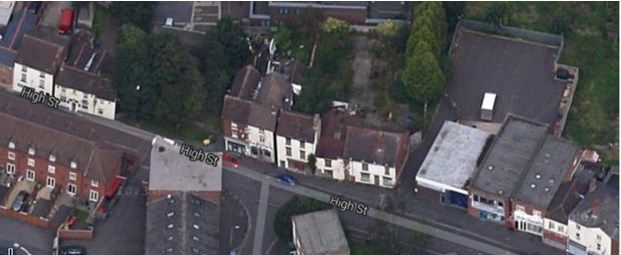
OPM                    WELLINGTON 2020: SETTING OUT A VISION FOR THE CENTRE OF WELLINGTON

  1                      Introduction

                         ‘High streets and town centres that are fit for
                         the 21st century need to be multifunctional
                         social centres, not just competitors for
                         stretched consumers. They must offer
                         irresistible opportunities and experiences
                         that do not exist elsewhere. They need to be
                         rooted in the interests and needs of local
                         people, and able to meet the demands of a
                         rapidly changing world.’
                                                      st
                                                   21 Century Town Centres, Action for Market Towns, 2013

CLASSIFICATION: OPEN                                                                                        5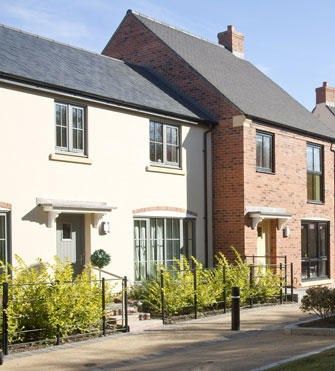
OPM WELLINGTON 2020: SETTING OUT A VISION FOR THE CENTRE OF WELLINGTON
About this study
What is this document for?
This document sets out a vision for Wellington centre in 2020. It focuses
specifically on the future functions and prosperity of the centre of Wellington,
defined here as the area within and just outside the ring road. As such, it does
not purport to be a comprehensive vision for life in Wellington – important issues
such as education and skills, health and wellbeing are outside its remit. Rather it
is concerned with how the centre of Wellington can respond to local and national
trends and pressures in the years ahead.
As important as the vision statements are the proposed actions to help make
this vision a reality. The intention is that this report at least serves as a starting
point for conversations which lead quickly to practical actions.
As such, the aim of this document is to move beyond warm words and wish lists
towards a vision for Wellington centre which is not only positive but realistic and
achievable.
What informed the creation of this document?
A review of key national studies relating to the future of town centres, including
reports by Mary Portas, Bill Grimsey, Beyond Retail and Action for Market
Towns;
Depth interviews with professionals working locally in retail, housing, economic
development and urban design;
An online survey of 213 responses, all of whom either lived, worked or studied in
the TF1, TF5 or TF6 areas. This survey explored residents current habits,
preferences, perceptions and ambitions relating to Wellington and in contrast to
other local towns;
Workshops and further semi-structured interviews with town council members,
local residents and local businesses.
What’s the national context?
Nationwide, town centres continue to suffer not only the effects of the current
economic climate, but also of longer term, systemic challenges relating to
changing shopping habits, most importantly out-of-town shopping and
increasingly internet shopping. There is an on-going debate about the future of the
high street. The Portas Report and other recent studies talk about the need for
traditional centres to look beyond retail and embrace other social and cultural
functions to remain relevant and vibrant. Some commentators also talk about the
need to turn our smaller town centres back into places which feel more like ‘urban
villages’, relying less on retail and which encourage more mixed development
including housing and small venues for socialising.
There are also some exciting and inspiring small business and community-led
responses to these challenges. One example is the growth of pop-up shops which
can kick-start more sustained revival of high town centres through creative,
temporary use of vacant space. As illustrated in the examples cited from other towns
later in this report, there are also ways in which local people are increasingly at the
CLASSIFICATION: OPEN 6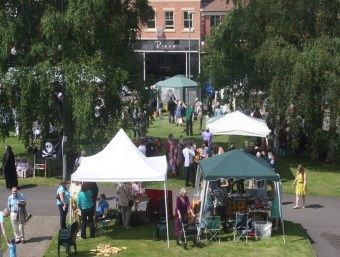
OPM WELLINGTON 2020: SETTING OUT A VISION FOR THE CENTRE OF WELLINGTON
forefront of new forms of regeneration through collective positive action to improve a
town. Flashes of this activity is already evident in Wellington – the pop-up shop in
New Street, for instance, and from the community, the Peace Garden, H2A events
and Clifton projects.
What’s the local context?
Wellington is experiencing challenges similar to those of many smaller towns,
compounded here by the proximity of the regionally-significant shopping
destination of Telford Centre. Wellington’s location, population diversity and retail
offer makes it better placed to survive and thrive than some other borough towns.
Wellington Market is as seen by most people as an asset, although some question
whether it fulfils its potential, and likewise we have several independent shops of the
sort that a successful market town would expect to host, but as the online survey
indicates, local people
Wellington has a population larger than any Shropshire town after Telford as a
whole and Shrewsbury. The town council area and its neighbouring parishes
comprise nearly 20,000 households and 50,000 people. Wellington centre is well-
connected by road and rail, and has a large daytime catchment thanks to two large
FE colleges. Average incomes in Wellington are lower than in other market towns in
the region, but taking its larger population into account, it is clear that the actual
number of people with middle and higher incomes is often equal to or greater than in
towns such as Newport and Much Wenlock. This message needs conveying to
potential business start-ups.
The new Civic Centre
Wellington’s buildings and street layout give it the potential to be an attractive,
development on Larkin Way welcoming town centre where people enjoy spending time with friends and family
– at cafes and coffee shops, pubs and restaurants, and small-scale leisure and
cultural venues.
There is a general sense amongst businesses and local people that quality
shops in Wellington are being replaced by less desirable alternatives. The loss
of quality independents like Number Eight Books, Wrekin Rambler and Telford
Musical Instruments in the last 12 months compounds a feeling of uncertainty, as
does the pattern of replacement businesses in some vacant units (e.g. a wallpaper
shop to betting shop / a card shop to Cash Converters / Dorothy Perkins to charity
shop etc.). There are also positive signs, however, such as the success of the New
Street pop-up shop, and also of Francis James, both of which prove there is a
sustainable market for a more individual, quality retail offer in Wellington.
Perception, appearance and ‘brand’ are topics that have been discussed at
length by previous reports, and there have been improvements on several fronts,
but too many local people still view Wellington negatively, as the About Town survey
results show.
Recent developments have laid the foundations for future success and raise
questions about how we build on those successes: the new library and civic
offices have brought new life to part of the town, but are there ways to maximise its
impact? Repaving and shop front restoration programmes have improved the
appearance of the town centre, but what more could we do to better present the
CLASSIFICATION: OPEN 7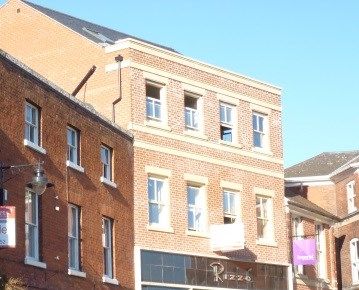
OPM WELLINGTON 2020: SETTING OUT A VISION FOR THE CENTRE OF WELLINGTON
town? Residential conversions of upper floors within the principle shopping area
were encouraged under the HTI scheme, and we are now seeing more of this
development at sites like The Bank on Church Street – should we be wary of this or
supportive?
Current opportunities need to be seized: Some large sites are currently for sale in
the centre of the town (much of Walker Street and the former Arrive depot). These
offer significant opportunities to enhance the town both in terms of appearance and
function. At present, all the town council or residents can do is react to the plans
submitted by others, so what can we do to influence those plans upstream? Should
we be talking to the borough council, to architects and developers about these sites’
potential?
Key messages from this study
There will be no ‘magic bullet’ that can solve Wellington’s challenges.
Progress on some fronts will demand large scale, strategic action led by Telford
& Wrekin Council, such as interventions to actively promote certain types of
development on key sites.
Potentially just as important, however, will be a series of smaller actions rooted
in the ideas, skills and energy of Wellington’s residents and businesses – a
more bottom-up approach.
Wellington Town Council will need to a lead on both types of activity, proactively
working with the borough on strategic issues at one end, and at the other end
working to foster new networks amongst residents and businesses, helping to
identify and bring together the opportunities and the individuals which lead to
new enterprises starting up and new community projects getting off the ground.
It is tempting to look at towns like Ludlow with its food offer or Hay with its bookshops
and ask ‘what should be Wellington’s one unique selling point?’ But that would be
misplaced. Wellington does certainly need to differentiate itself from Telford Centre and
from other local towns, but that differentiation is more likely to come from a range of
characteristics which make up the whole – rather than one star attraction.
Moreover, whilst a stronger, more diverse retail offer will need to part of the mix, retail
can only be part of what sustains Wellington centre into the future. Buildings and open
spaces need to be maximised to meet other demands as well – demands for other sorts
of business activity beyond traditional retailing; for places to eat, drink and socialise; for
cultural and leisure time experiences; and for well-designed housing.
There is demand and support for more quality independent shops in Wellington
centre. The online survey commissioned for this project is evidence of that, as is the
success of the Wellington Pop-Up Shop, which has been providing shoppers with a
quality, handmade offer that is otherwise under-represented in Wellington today. In the
future, decreasing numbers of people will be using Wellington centre to do the bulk of
their weekly shopping. It can nonetheless be a popular ‘top-up’ destination, based on a
good core of quality independent retailers, as well as continued provision of budget
CLASSIFICATION: OPEN 8
OPM WELLINGTON 2020: SETTING OUT A VISION FOR THE CENTRE OF WELLINGTON
shopping options. Wellington’s retail brand will have ‘homemade and well-made’ at its
core – from bakers to brewers, butchers to market gardeners – and as such, marking it
out as distinctive to the Telford Centre offer.
A successful Wellington in 2020 will not be one built solely on a revival in retail. A
series of recent national reports agree that there is too much retail floor space in the UK,
with retailers focusing their attention on the already strong centres (such as Telford and
Shrewsbury). Changing consumer shopping habits, most recently online shopping,
mean that large sections of our town and city centres will be increasingly unfit for
purpose in their current state. As such Wellington, along with many other small and mid-
sized town centres, should be prepared to shrink and consolidate its dedicated retail
space in the years ahead. The consequences of not doing this may be more empty
shops and more low quality shops, which will in turn impact on the attractiveness and
viability of the whole town centre.
Leisure and hospitality will need to be an important part of a revived Wellington in
2020. The centre of the town will need to be a place for socialising, for spending free
time with friends and family. The popularity of the Wetherspoons pub in Wellington has
proved the demand for daytime eating and drinking in a comfortable environment, and a
fuller range of coffee shops, pubs and restaurants need to be encouraged to make the
town centre more attractive to more people.
Wellington should also seek opportunities to fill gaps in Telford’s arts and cultural
offer as a form of differentiation. The ambitious Clifton project would be a major asset
in that respect, and the Mythstories Museum proposed for the old library site also has
the potential to make a significant contribution to Wellington’s wider cultural offer.
Smaller projects to make more creative use of space in the town should also be
promoted – from gallery sections within existing shops and cafes to high profile outdoor
market events.
Residential development should be encouraged in the centre of Wellington. This
must be sensitively designed and site-appropriate, contributing to the town centre’s
character rather than undermining it. Many Wellington centre buildings have the
potential for conversion to residential use:
around the fringes of the town centre (as is already happening) in what has
previously been commercial or public agency space;
on upper floors above shops;
on some larger sites within and near to the ring road (e.g. Walker Street,
Charlton Street, the former Charlton Arms, High Street).
A combination of older people’s housing and apartments aimed at young single people
and couples would allow the town to grow a mixed community within the central area of
the Wellington. These will mostly be small scale developments – including sensitive
renovations of old buildings – with one or two significant developments on larger,
previously vacant sites. This growth of residential space would help to make Wellington
centre a place that’s busy for more hours of the day and more days of the week.
CLASSIFICATION: OPEN 9
OPM                    WELLINGTON 2020: SETTING OUT A VISION FOR THE CENTRE OF WELLINGTON

      2                     Survey data:
                            main messages

                            Over two hundred people responded to an
                            online survey about their views and experiences
                            of Wellington as it is today. What does that
                            survey tell us?
                            It’s clear from the survey results that there is a huge appetite for more quality
                            independent shops, better cafes, pubs and restaurants, and more events, leisure and
                            cultural facilities / activities in the centre of Wellington. This demand comes from
                            across people of different ages and income levels.

                            As it stands, the town’s offer is viewed less positively than Shrewsbury and Ironbridge
                            on all fronts except the accessibility of ‘useful services’ and ease of parking.

                            Comparison with Telford Centre gives more of a mixed picture – most survey
                            respondents see Telford Centre as stronger on retail offer, but on other fronts it
                            scored similarly to Wellington or worse.

CLASSIFICATION: OPEN                                                                                             10
OPM WELLINGTON 2020: SETTING OUT A VISION FOR THE CENTRE OF WELLINGTON
Background
An online survey was designed and launched as part of the visioning exercise. The
survey was online-only in order to minimise administration and make it possible to
conduct within the agreed budget for the work.
The survey was open to anyone living, working or studying in either the TF1, TF5 or
TF6 areas. For all those responding to the survey, therefore, Wellington centre is the
nearest centre to where they live or work/study.
The survey was live for three weeks, during which time it was promoted through the
local press, social media including Twitter and Facebook, and the town council
website.
Who responded to the survey?
213 responses were received. All survey respondents either lived, worked or studied
in the TF1, TF5 or TF6 areas. Almost three quarters (72%) lived in the TF1 area, just
over half (53%) in the main part of Wellington itself. Dothill, Shawbirch and
Admaston were the areas next-best represented, with 8% of respondents living in
each.
A quarter of respondents were aged 18-34, a fifth are 35-44, a quarter are 45-54, and
a fifth are aged 55-64. Over-65s accounted for 14% of respondents.
Over a third of respondents (36%) had household incomes under £30,000. Just over
a quarter (29%) had household incomes of between £30-50,000. A fifth (19%) had
household incomes over £50,000. 14% said they didn’t know.
Nearly half of respondents (48%) had a degree, whilst a further fifth (19%) had higher
education qualifications.
CLASSIFICATION: OPEN 11OPM WELLINGTON 2020: SETTING OUT A VISION FOR THE CENTRE OF WELLINGTON
Shopping habits
More respondents shop online every week than use independent town centre
shops.
Over a third of respondents use small supermarkets (36%), local convenience stores
(35%) and large out-of-town supermarkets (34%) every week. That compares to less
than a quarter (23%) report using independent shops every week – fewer than the
proportion which shops online every week (29%).
This is a stark reminder of the continued growth of online shopping, and the need for
independent town centre businesses to harness that power themselves, rather than
losing ground to other businesses with a digital profile.
Very rarely or 100
never 90
Once a year or 80
more
70
Once every six
months or more 60
Once every three 50
months or more
40
Once a month or
more 30
Once a fortnight or 20
more
10
Once a week or
more 0
CLASSIFICATION: OPEN 12OPM WELLINGTON 2020: SETTING OUT A VISION FOR THE CENTRE OF WELLINGTON
Comparisons with other towns
Town visits
Wellington is the most visited town of those listed, followed by Telford,
Shrewsbury and Ironbridge.
Over two thirds of survey respondents spend time in Wellington centre every week,
either because they live or work there (39%) or because they make a visit (30%).
These figures were much lower for other local towns: only a minority visit Telford or
Shrewsbury weekly or even fortnightly. It is more common for respondents to visit
Shrewsbury and Telford Centre between once a month and once every three
months (52% and 50% respectively).
Most respondents report hardly ever or never visiting Oakengates (53%), Shifnal
(71%), Madeley (78%) and Dawley (86%).
100.0
I visit very rarely or never
90.0
80.0
I visit once a year or more
70.0
60.0 I visit once every 6 months
50.0 or more
40.0 I visit once every 3 months
30.0 or more
20.0 I visit once a month or more
10.0
I visit once a fort-night or
0.0 more
I visit once a week or more
I live or work in this town
centre
CLASSIFICATION: OPEN 13OPM WELLINGTON 2020: SETTING OUT A VISION FOR THE CENTRE OF WELLINGTON
Town shops
The great majority of respondents are positive about the shopping offer in
Shrewsbury (91%) and in Telford Centre (77%).
Of those familiar with Ironbridge and Newport, over half are positive about the
shopping offer in those towns.
Only a quarter of respondents are positive about the shopping offer in Wellington.
100
90
80
70
60
50
40
Don't know
30
Negative total
20
Positive total
10
0
CLASSIFICATION: OPEN 14OPM WELLINGTON 2020: SETTING OUT A VISION FOR THE CENTRE OF WELLINGTON
Town pubs, cafes and restaurants
Wellington is seen more favourably than Telford Centre, but less favourably
than Shrewsbury and Ironbridge.
The great majority of respondents are positive about the cafes, pubs and restaurants
on offer in the centre of Shrewsbury (87%) and Ironbridge (71%).
A narrow majority of respondents (57%) are negative about the cafes, pubs and
restaurants in Wellington, compared to 39% who are positive. This is a better
response than for Telford Centre, which only 29% of respondents consider to have a
very good or quite good food & drink offer.
Most respondents were not familiar enough with the other towns to comment. Of
those who were, however, majorities were positive about cafes, pubs and
restaurants in Shifnal and Newport, and negative about those in Oakengates,
Madeley and Dawley.
100
90
80
70
60
50
40
30 Don't know
20 Negative total
10 Positive total
0
CLASSIFICATION: OPEN 15OPM WELLINGTON 2020: SETTING OUT A VISION FOR THE CENTRE OF WELLINGTON
Meeting friends
The great majority of respondents are positive about Shrewsbury as a place to meet
up with friends (88%). Around two thirds of respondents were positive about
Ironbridge (64%), with almost a third not knowing enough to comment.
Wellington and Telford Centre scored very similarly to each other, with a near even
split between positive and negative responses in both cases.
Fewer than half of respondents knew the other towns well enough to comment. Of
those who did, majorities were positive about Shifnal and Newport, whilst majorities
were negative about Oakengates, Dawley and Madeley.
100
90
80
70
60
50
40 Don't know
30 Total negative
20 Total positive
10
0
CLASSIFICATION: OPEN 16OPM WELLINGTON 2020: SETTING OUT A VISION FOR THE CENTRE OF WELLINGTON
Useful services
Wellington scores well as a place to find useful services
Almost all respondents (95%) were positive about Wellington as a place to find
‘useful services’ (indicated in the survey as referring to banks, post offices etc).
Telford (84%) and Shrewsbury (83%) also scored highly.
Ironbridge received the most negative response, 43% judging it not very good or
poor, against just 4% who were positive.
100
90
80
70
60
50
40 Don't know
30 Negative total
20 Positive total
10
0
CLASSIFICATION: OPEN 17OPM WELLINGTON 2020: SETTING OUT A VISION FOR THE CENTRE OF WELLINGTON
Leisure and cultural activities
Over three quarters of respondents (77%) were positive about Shrewsbury’s leisure
and cultural offer, and almost half (48%) were positive about Ironbridge. In both
cases, these proportions are much higher when the ‘don’t know’ responses are
taken out of the equation.
A slim majority of respondents were positive about Wellington rather than negative.
For Telford Centre, there were more negative than positive responses – 62%
compared to 28%.The same was true of the other towns.
Some respondents objected to the conflation of ‘leisure and culture’, as they felt that
whilst Wellington has a relatively good record on leisure, it has much less to offer
around culture, which they felt this question masked.
100
90
80
70
60
50
40 Don't know
30 Negative total
20 Positive total
10
0
CLASSIFICATION: OPEN 18OPM WELLINGTON 2020: SETTING OUT A VISION FOR THE CENTRE OF WELLINGTON
Ease of parking
Eight out of ten respondents are positive about ease of parking in Wellington
The great majority of respondents were positive about the ease of parking in
Wellington centre (83%). Of those who were familiar with Oakengates (almost two
thirds of respondents), a similar proportion were positive about ease of parking in
that town centre.
The response was slightly less positive for Telford Centre, at 76%.
In the case of Shrewsbury, Shifnal and Ironbridge, there were more negative than
positive responses amongst respondents who knew those towns.
100
90
80
70
60
50
40 Don't know
30 Negative total
20 Positive total
10
0
CLASSIFICATION: OPEN 19OPM WELLINGTON 2020: SETTING OUT A VISION FOR THE CENTRE OF WELLINGTON
Pleasant environment
Most respondents do not feel that Wellington has a pleasant environment.
Respondents are much more positive about Shrewsbury, Ironbridge and
Newport, but fewer are positive about Telford Centre.
Over 90% of respondents were positive about Shrewsbury as a pleasant place to
spend time, and over 80% were positive about Ironbridge.
Only around half of respondents felt familiar enough with Newport and Shifnal to give
answers, but of those who did, strong majorities were positive about those centres
as places to spend time.
A slim majority of respondents were negative about Wellington (58% compared to
42%).
Telford Centre scored less well than Wellington; two thirds (66%) were negative
about how pleasant it felt to spend time there, compared to a third (32%) who were
positive.
Of those who knew Oakengates, Madeley and Dawley, strong majorities were
negative about how pleasant those centres felt.
100
90
80
70
60
50
40 Don't know
30 Negative total
20 Positive total
10
0
CLASSIFICATION: OPEN 20OPM WELLINGTON 2020: SETTING OUT A VISION FOR THE CENTRE OF WELLINGTON
Views about Wellington
Respondents were asked about the extent to which they agreed or disagreed with a
series of ten statements about Wellington.
The majority of respondents (71%) agreed with the statements that ‘Wellington
Market is a great place to wander round’; that Wellington’s shopkeepers are friendly
and helpful (63%); and that Wellington is a good town for shopping on a budget
(60%).
Opinion was much more divided on the statements that Wellington has a good
community feel (45% agree, 33% disagree); that is has lots of character (44%
agree, 30% disagree); and that the town hosts some great events (40% agree, 30%
disagree). In each case, between a fifth and a third of respondents were not sure or
had mixed views.
To the statement ‘it’s a great place to meet up with friends’, there were more negative
responses (41%) than positive responses (27%), and again, a large minority did not
answer either way (29%).
The lowest level of agreement was with the statements that Wellington is a great
place to shop for quality food and drink (23% agreed); that it’s a great place to shop
for gifts (11% agreed) and that it ‘has everything I’d expect from a market town’
(20% agreed). This demonstrates that for most respondents, Wellington is failing to
live up to its market town brand.
Don't know 100
90
80
70
Disagree total 60
50
40
Neither agree 30
nor disagree 20
10
0
Agree total
CLASSIFICATION: OPEN 21OPM WELLINGTON 2020: SETTING OUT A VISION FOR THE CENTRE OF WELLINGTON
Events
Respondents were asked what sort of events they would like to see more of in
Wellington, what sort they thought there were already enough of, and which wouldn’t
interest them.
Over 80% of respondents wanted to see more specialist markets and fairs (86%),
and film screenings (82%). In both cases, about half of those respondents wanted to
see a lot more.
Between two thirds and three quarters of respondents wanted to see more concerts
(74%); more heritage events (72%) and more theatre performances (69%). Half
(51%) wanted to see more guest talks and lectures.
Don’t know / 100
don’t have an
90
opinion
80
These wouldn't
really interest me 70
60
I think it’s fine as 50
it is 40
30
I would like to see 20
some more
10
0
I would like to see
a lot more
CLASSIFICATION: OPEN 22OPM WELLINGTON 2020: SETTING OUT A VISION FOR THE CENTRE OF WELLINGTON
Wellington in 2020
Respondents were asked to imagine Wellington as it might be in the year 2020, and to
indicate what they personally would like to see more or less of in Wellington town centre,
compared to how things are today.
100
90
80
70
60
50
40
Don’t know / don’t have an
30 opinion
20 I would like to see fewer /
less
10
I think it’s fine as it is
0
Shops & stalls selling local produce…
Attractive, well-maintained buildings…
Well-designed housing above shops…
Charity shops
Discount stores
Good quality events
Car parking
Hotel accomodation
Good pubs and restaurants
Betting shops
Big name supermarkets
Good quality independent shops
Nice cafes and coffee shops
Places to socialise and meet friends
Outdoor markets, fairs and festivals
Good quality leisure / cultural facilities
I would like to see some
more
I would like to see a lot
more
The vast majority of respondents wanted to see more quality independent shops
(98%), more shops and stalls selling locally-made products (95%), more nice cafes
and coffee shops (90%), and more good pubs and restaurants (85%). In each case,
most respondents wanted to see ‘a lot more’.
Respondents also demonstrated a strong desire for an increase in attractive
buildings and public spaces (94%), more good quality events (92%), more places to
socialise and meet friends (90%), more outdoor markets, fairs and festivals (90%),
and more good quality leisure and cultural facilities (82%).
Almost three quarters of respondents (73%) wanted to see more well-designed
housing above shops or on vacant town centre sites. Over two thirds of respondents
(68%) wanted to see more hotel accommodation in the town.
CLASSIFICATION: OPEN 23OPM WELLINGTON 2020: SETTING OUT A VISION FOR THE CENTRE OF WELLINGTON
When it came to big name supermarkets, most respondents (59%) thought the
current provision was ‘fine as it is’. A fifth (21%) wanted to see more in the centre –
the same proportion that wanted to see fewer (19%), demonstrating the divided
opinions that exist on this issue.
There was a relatively small difference between the proportion of respondents who
wanted to see more car parking (53%) and those who thought current provision was
fine as it is (44%).
Around half of respondents (54%) wanted to see fewer discount stores, whilst a third
(34%) thought it was fine as it is.
There was a strong preference against charity shops and betting shops; in both
cases, 80% of respondents wanted to see fewer in the centre of Wellington in future.
Main messages from the survey
Against most of the measures given, Shrewsbury and Ironbridge scored more highly
than Wellington, the key exceptions being ease of parking and access to ‘useful
services’, where Wellington was viewed more favourably. Comparison with Telford
Centre is more variable – as a place to spend time, and a place to visit pubs, cafes and
restaurants, Telford Centre scores similarly to Wellington or lower. A large proportion of
respondents did not know the other local towns well enough to give views on them, but
where they did, Shifnal and Newport generally scored more favourably whilst
Oakengates, Madeley and Dawley scored less favourably.
Most respondents held a low opinion of the shopping, eating and drinking offers in
Wellington, compared to Shrewsbury and Ironbridge in particular. Opinion was more
divided over the leisure and cultural offer in Wellington, and its events. Looking ahead to
Wellington in 2020, there is an overwhelming desire for these things to be improved,
with more quality independent shops, better cafes, pubs and restaurants, and more
events, leisure and cultural facilities / activities. Respondents showed a big appetite for
more events in the centre of the town. There was overwhelming support for more
specialist markets, fairs and festivals, and more film screenings, which more than 8 out
of 10 people wanted to see.
Respondents do not have expectations of Wellington as a solely commercial centre in
the future – there is high support for more (good quality) housing to be built in the centre,
either above shops or on vacant sites. Most people would also like to see hotel
accommodation in the town.
Car parking is an area where Wellington already scores highly with respondents,
compared to other towns. When asked about desires for the future, the majority in favour
of more parking was much slimmer than for the other local features listed – almost as
many thought it was ‘fine as it is’.
CLASSIFICATION: OPEN 24OPM WELLINGTON 2020: SETTING OUT A VISION FOR THE CENTRE OF WELLINGTON
3 Research &
debate
CHAPTER SUMMARY
The future of Britain’s traditional town centres
has been a hot topic in recent years. The
Government-commissioned report by Mary
Portas has been followed by reviews from retail
expert Bill Grimsey, Beyond Retail and Action
for Market Towns, amongst others. What do
those reports tell us about the trends that
Wellington has to be prepared for and what the
town might do to respond?
CLASSIFICATION: OPEN 25OPM WELLINGTON 2020: SETTING OUT A VISION FOR THE CENTRE OF WELLINGTON
Over-supply of physical retail space
Commentators agree that existing levels of physical retail space cannot be sustained
into the future. The economic downturn has only served to expose what is a longer term
issue, caused by changing shopping habits and the response of big retailers to focus
their energy on the strongest centres.
Town centre vacancy rates and changing nature of occupancy
Data collected nationwide during the first half of 2013 found that town centre vacancy
rates are running at an average of 14% in England. The figure is generally lower in the
South, and higher in the North and Midlands. The picture in Wellington closely reflects
the national average – as of Autumn 2013, approximately 13% of ground floor
commercial premises in the central area of Wellington (i.e. within the ring road) were
vacant.
As the Grimsey Review highlights, however, relatively stable vacancy rates in many
towns can mask a more serious issue, which is the occupational change in churn,
business type and perceived quality. The table below shows the highest ‘risers and
fallers’ in the top 500 British town centres 2012.
1
Example occupational net changes in top 500 GB town centres in 2012
RISERS UNITS FALLERS UNITS
Charity Shops +174 Women’s clothing - 264
Pawnbrokers +128 Recruitment agencies - 210
Convenience stores +113 Computer games - 187
Cheque cashing +64 Card and poster shops - 184
Nail salons +106 Toy shops - 119
1
The Grimsey Review, 2013, p9
CLASSIFICATION: OPEN 26OPM WELLINGTON 2020: SETTING OUT A VISION FOR THE CENTRE OF WELLINGTON
What does this mean for Wellington?
Grimsey’s analysis resonates in Wellington. Whilst the town has more vacant properties
than would historically have been the case, Wellington is performing slightly better
than the national average, and slightly better than the regional average. An arguably
bigger issue impacting negatively on business and customer perceptions of the town is
the reduced range and quality of the offer across those units which are occupied.
Like most other town centres, Wellington should be prepared to reduce the level of
retails space and proactively plan for alternative uses to be extended. Specifically, this
could mean:
Encouraging a concentration of retail in the very centre of the town (e.g. New Street,
Market Square & off-shoot streets, Market Street)
Encouraging outlying retail businesses into this central area
Proactively planning for other commercial functions (hospitality, workshop space,
office space etc.) in other parts of the centre
Retail polarisation
As highlighted in the Beyond Retail report, multiple retailers are increasingly selective
about where they locate. This means that ‘the strong centres are getting stronger,
providing a complete retail and leisure experience for today’s consumer’. Equally, at the
other end of the retail spectrum, many local and neighbourhood centres have fared well,
providing a convenience offer and satisfying the day to day retail needs of very local
populations, often anchored by a major supermarket convenience store (e.g.
Sainsbury’s Local or Tesco Express). Against this backdrop, it is medium sized towns
that are hit hardest.
‘The middle ground towns are being squeezed —
often leaking trade to the more dominant centres
and having lost a number of multiples and anchor
units during the recession… Historically, such towns
have had a reasonably large comparison shopping
function. Now, demand from multiples is weak and
the space offered is often of the wrong size and
configuration, and in the wrong location to meet
today’s retailer requirements.’2
2
Beyond Retail: redefining the shape and purpose of town centres, November 2013, p18
CLASSIFICATION: OPEN 27OPM WELLINGTON 2020: SETTING OUT A VISION FOR THE CENTRE OF WELLINGTON
What does this mean for Wellington?
This process described above has been very visible in Wellington, beginning in the
80s and 90s as stores like Comet closed their Wellington branches and relocated to
new Telford Centre units, but it has accelerated in recent years. This is not merely a
short term impact of the economic downturn – the likes of Dunelm and WHSmith are
unlikely ever to return, at least in large premises.
This national trend reminds us, should we be in any doubt, that a revival in
Wellington’s fortunes will not come from attracting major national brands into large
units.
The growth of the convenience sector and ‘click and collect’ in the years ahead may
provide a route for some of national brands to establish a foothold in the town, but in
smaller units than would have been expected in the past.
This suggests that some of Wellington’s biggest post-war retail units (e.g. the former
WHSmith building) will be increasingly difficult to let in future, at least for retail uses.
The march of online shopping
One of the recent Local Data Company reports on retail patterns summed up one
major trend in its title: ‘From bricks to clicks’. Online shopping is growing a pace, and
will continue to do so in the next decade, inevitably reducing the need for (and
commercial viability of) physical shopping space.
This will impact on larger city centres and retail parks, as well as smaller centres like
Wellington. Already, we are seeing the impact on big retailers like Tesco, who are
now building very few out-of-town ‘mega stores’ like Tesco Extra on the Wrekin
Retail Park – as they know these will become less and less cost effective in the
years ahead.
‘Soon the physical store will be only one of the
channels that a retailer will deploy. The size of
physical retail will shrink considerably over the next
Amongst Wellington Online
10 -20 years. Online shopping will account for 25-
Survey respondents, more 35% share of the wallet by 2020, with predicted loss
people shopped online once a
week than shopped at town of 4000 retail stores by 2015’ 3
centre independents.
3
ConLumino study on high street sales, cited in The Grimsey Review 2013, p17
CLASSIFICATION: OPEN 28OPM WELLINGTON 2020: SETTING OUT A VISION FOR THE CENTRE OF WELLINGTON
What does this mean for Wellington?
Like the growth of out-of-town retail, online shopping presents new forms of
competition for town centre businesses to cope with. The key difference,
however, is that online shopping can also be harnessed as an opportunity. The
internet is allowing thousands of small businesses in the UK to raise their profile and
build a local consumer following. Moreover, increasing numbers of those businesses
are building online shopping components into their websites, so that they can benefit
from internet sales just as larger businesses do.
‘Town centres must adapt and take advantage of
technology to market the town to drive footfall, and
to assist independents and SMEs which might not
have the resources or capabilities required to take
advantage of ever advancing technological
capabilities.’4
Within Wellington there are some examples of small retail businesses which
are already harnessing the power of online shopping. The Fancy Dress
Company and Jayne’s Fishing Tackle, for instance, both have very professional
websites where customers can buy from a wide range of stock online. This means
that their town centre premises act both as traditional shops at the front and packing
/ mailing units at the back.
‘Why just go for Wellington when you can go for whole country? If people are local they’ll
still come to the shop, and try things on, but the internet widens your catchment. It’s
definitely lucrative – I’d say early on our trade was 90% shop and 10% online. Now it’s
more like 50/50. We’ve grown both sides the business – if you invest more in the
internet then you get carried through your quiet times, like January.’ (Fancy Dress
Company, Wellington)
In the short term, more small businesses in Wellington need to make better use of
social media (Twitter, blogging etc.) to raise their profile and communicate with
potential customers. Short to medium term, more also need to invest in building
websites which enable online shopping. Most ambitious of all, and longer term,
Wellington’s businesses, public services, community groups and individual
residents will need to be better networked via the sort of digital infrastructure
proposed by the Grimsey Reviews. This would comprise a bottom-up set of Web
based, cloud-hosted tools that are standard and easy to use. This will enable
retail, services and customers to see each other in real-time, respond to mutual
needs fast and become an adaptive, reactive network.
4
Beyond Retail: redefining the shape and purpose of town centres, November 2013, p10
CLASSIFICATION: OPEN 29OPM WELLINGTON 2020: SETTING OUT A VISION FOR THE CENTRE OF WELLINGTON
The expansion of supermarkets into the convenience sector
Since the 1990s, one of the biggest developments in retail has been the expansion of
large out of town supermarkets (such as Tesco Extra at Wrekin Retail Park).
This growth has now ended, however, and the big supermarket chains have turned
their attention to opening new convenience store outlets (Tesco Express,
Sainsbury’s Local etc).
This reflects changing shopping habits since 2008, with the average ‘weekly shop’
shrinking as people retrench to a core grocery shop then top-up as they need do
during the week. The convenience store market is expected to grow from £35 billion
in 2013 to £46 billion in 2018.
The economic downturn aside, there is also likely to be a longer term shift away from
big supermarkets as more people shop online and have their ‘big shop’ delivered.
What does this mean for Wellington?
In common with many towns, Wellington’s shoppers are taken away from the centre by
supermarkets. Tesco and Sainsbury’s are located on retail park sites, one in Telford
Centre, and whilst Morrisons is more helpfully within walking distance of Wellington’s
main shopping streets, it is nonetheless set apart from the main retail area and thus
Whilst out-of-town does not have a necessarily symbiotic relationship with shops in the centre.
supermarket development
has slowed dramatically, the In this context, the growth of smaller convenience stores in high streets can be seen as
convenience sector is
an opportunity for Wellington centre. A small branch of Tesco or Sainsbury’s, making
growing.
use of a relatively large unit and located alongside other retailers in Wellington centre
could serve to secure footfall and enable shoppers to do more of their grocery shopping
within the centre. This would benefit other nearby businesses in the process.
An alternative view is that such a development would negatively impact independent
businesses in the centre, absorbing some of their existing custom, whilst not bringing in
sufficient levels of additional footfall to make an overall net contribution to those
businesses.
Local forces, drivers and trends
The Southwater Development and Telford Town Centre
The redevelopment of Southwater represents a major investment by Telford &
Wrekin Council, and will radically alter the appearance and functions of Telford
Centre.
The aim is to introduce bars and restaurants to generate a new evening economy,
and also to bring housing into the centre. Taken together, these developments will
help to make Telford Centre more mixed in its use, beyond 9-5 shopping.
As such, Telford Centre in 2020 is likely to be an attractive choice for local people
looking for somewhere to go for an evening out, particularly families with children.
CLASSIFICATION: OPEN 30OPM WELLINGTON 2020: SETTING OUT A VISION FOR THE CENTRE OF WELLINGTON
What does this mean for Wellington?
In a borough which does not have a strong evening economy offer, Wellington
currently benefits from the comparative lack of competition. Whilst the town’s
retailers are competing on several fronts (most notably with out of town stores and
Telford Centre) our pubs and restaurants are competing with other small centres
such as Ironbridge and Shifnal.
The Southwater Development
has the potential to radically
The Southwater Development will change that, providing local people with a new set
improve the offer at Telford of mid-range hospitality choices in a pleasant environment. So, whilst potentially
Centre. Wellington centre can very beneficial for the wider borough and its longer term economic future, the
offer an attractive and immediate impact on Wellington may be negative.
distinctive alternative, but
only if it raises its game.
‘Before Southwater was announced, I’d have said Wellington can do well on night time
economy. Southwater may change that, with the new restaurants it will bring, but it still
won’t offer anything on the independent side of things. There is definitely a gap in the
market in Telford & Wrekin which Wellington can fill.’ (economic development
professional)
Wellington’s evening economy offer will need to emphasise its quality, its
character and its distinctiveness if it is to stand up to that competition. We should
actively encourage new hospitality businesses into Wellington.
Housing and population growth in Telford & Wrekin
Telford & Wrekin’s Shaping Places document sets out potential plans for the
development of the borough up to 2030. Telford is identified as a major growth point
within the West Midlands region.
Significant housing growth is planned, although the volume and main locations are
yet to be decided. The middle range figure suggested in Telford & Wrekin’s recent
Shaping Places document would see 26,000 new homes built over the next decade
and a half.
What does this mean for Wellington?
On the one hand, this can be seen as a threat to the character of certain areas within
the borough, including Wellington and its surroundings. In terms of Wellington
centre, however, it presents opportunities, as it will result in thousands of additional
residents to use local businesses, start businesses, and contribute to the life of the
town in other ways.
Wellington businesses need to be ready to attract those new residents into the
town. Already at Ketley, Lawley and Lightmoor, there are thousands of new homes
being built – are those people coming into Wellington? Do they have a positive
perception of the town? Businesses and others need to be proactive in making sure
Telford is set for significant
they do.
housing growth in the next
two decades.
CLASSIFICATION: OPEN 31OPM WELLINGTON 2020: SETTING OUT A VISION FOR THE CENTRE OF WELLINGTON
The growth of residential development in the centre of Wellington
Traditionally, market towns have always included a mix of functions beyond retail.
Look up at many of the older buildings in the centre of Wellington and it’s clear that
they were indeed built to house people – either tradesmen above their businesses,
or as houses in their entirety. In most market towns, houses remain within the centre
and close to businesses – indeed they exist in all Shropshire’s historic towns,
including Shrewsbury.
It is only in Wellington where we have lost the habit of living in the town, due to the
th th
town’s rapid and relatively late growth in the 19 / early 20 centuries, when retail
(and some other functions) expanded to fill all the available space in what was a
limited central area.
As the need for traditional retail space contracts in the years ahead, it should be seen
as natural and desirable that some of that space is reclaimed for residential use.
Several recent reports on the future of high streets support this point.
What does this mean for Wellington?
This is an opportunity to rebuild a residential community within the centre of
The Bank on Church Street is the town. This can offer a range of benefits:
the latest town centre
residential development , with
o Commercially viable means of improving existing period buildings and
others on the horizon. redeveloping existing sites
o Increased ‘guaranteed’ footfall for centrally located businesses, and for more
hours of the day – including parents at home with children, professional people
working from home etc.
o Increased evening and night time activity, enhancing surveillance of streets and
sense of safety
o Increased number of people who will treat Wellington centre as their
‘neighbourhood’ and feel a greater sense of ownership and involvement in the
town
We are already seeing redevelopment around the fringes of the centre, either side of
the ring road, which points to this trend.
o Portway House was redeveloped in 2011 after the hospice relocated to Apley.
o Former TWC properties The Mount (Haygate Road), Wrekin Road School
(Wrekin Road) and Highfield House (Wrekin Road) have all been granted
planning permission for conversion into private apartments, and with additional
new housing in the grounds.
o Further along Church Street, and therefore significant for being more central, is
The Bank development opposite All Saints Church. This development of 24
apartments further points towards the future of housing provision within central
Wellington.
This trend must not go unchecked, however. The town and borough councils
need to ensure that all new residential development is of a high quality design and
contributes to the character and distinctiveness of its location. In architectural style
and tightness of form, development should be expected to make a positive
contribution to the appearance of the town more widely.
CLASSIFICATION: OPEN 32OPM WELLINGTON 2020: SETTING OUT A VISION FOR THE CENTRE OF WELLINGTON
Current opportunities for significant residential development
Opportunities for residential development in Wellington will often by small-scale and
involve rebuilds of individual sites, or conversions of existing property (as at Edgbaston
House on Walker Street, for instance). There are, however, some opportunities for
significantly sized developments as well. At present, three such sites are apparent and
on the market.
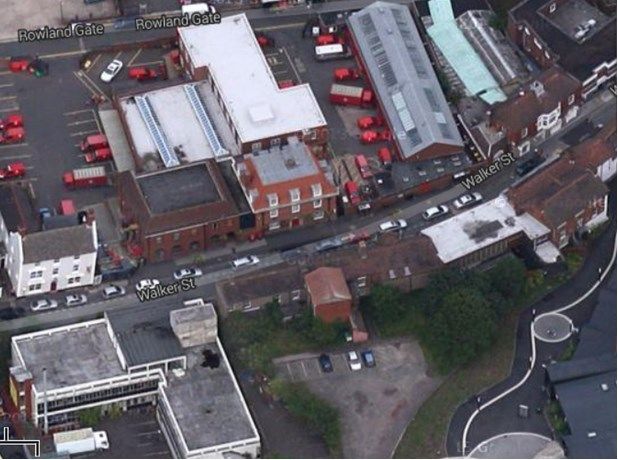
1. Walker Street: south side and north side
The availability of the former library buildings, the former tax office and the large Royal
Mail site creates a substantial redevelopment opportunity in Walker Street. The
Mythstories Museum plans to move into the library buildings, but the majority of the
street has a less certain future. As this image illustrates, the Royal Mail and tax office
sites will leave a significant footprint, able to accommodate a large number of homes.
Other valuable uses may be proposed, but housing could be one of the most appropriate
for this site.
Character of the street: as it stands today, Walker Street is fragmented and
incomplete, with substantial period buildings (Mid Counties Brokers, Post Office,
Edgbaston House, the west portion of the old library) interspersed with the inactive
frontages of brick walls and buildings which make less of a contribution to the
streetscape. Redevelopment would provide an opportunity to undo existing poor
design (such as the tax office), ‘fill in the gaps’ and create a street with a much more
coherent, much tighter and more visually appealing urban form.
Location of the street: Walker Street lies within the ringroad, a short distance from
the shops and amenities, but is itself a quiet street with relatively little traffic or
CLASSIFICATION: OPEN 33You can also read


