West Coast District - District Health Plan 2018/19 to 2020/21 - Department of Health
←
→
Page content transcription
If your browser does not render page correctly, please read the page content below
West Coast District

     Western Cape

              District Health Plan
                    2018/19 to 2020/21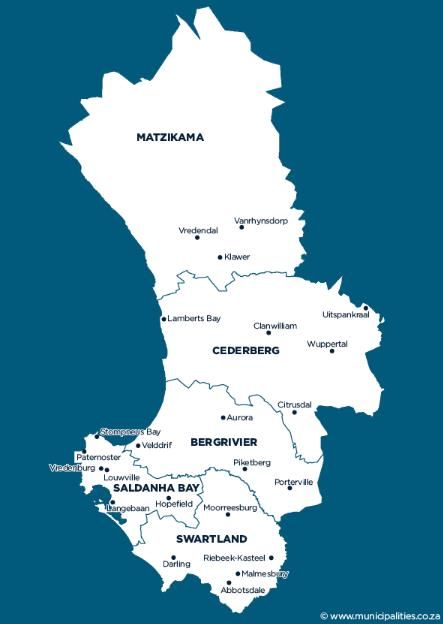
1. EXECUTIVE SUMMARY BY THE DISTRICT MANAGER
Towards Health Care 2030 a significant principle relates to a people-centred health care
approach. The Department has adopted the Whole of Society Approach where the community
will increasingly become an equal active stakeholder during the inter-sectoral planning towards
the improvement of services. Furthermore, the Health Facility Boards Act instruction for Clinic
Committees is also reaching fruition in 2018/19! A highlight to really give full effect to the integrated
Community/Health Care model, was the visit of the Provincial Minister of Health to engage with
Hospital Boards, Municipal Boards and also do oversight at some of our facilities, together with
street meetings. Valuable feedback was given by the end users of our services, being the
communities and a number of recommendations will be implemented in 2018/19. For the next
MTEF period, the Department of Health will be challenged to provide essential health care services
due to budgetary constraints. The Department has therefore embarked upon the Management
Efficiency Alignment Programme (MEAP) in order to gain efficiencies with savings. There will also be
an impact upon the Meso Operational level (District Office), more so in 1819. In addition to these
constraints, the Western Cape is experiencing a dire drought and all efforts are being made to
ensure that health care services at our hospitals and PHC facilities will continue throughout.
Our main priorities for 1819 based upon the provincial ones are:
The separation of cross border sub district management in Matzikama, Cederberg, Bergrivier
and Swartland SDs must be prioritised and funded to ensure management efficiency
alignment
The Operational MESO structure needs to be finalized to create synergy and to address the
scarcity of resources at Micro level
Mental health services must be strengthened and policy directions expected to be finalized
and supported by the Strategic MESO
Full implementation of COPC site interventions in all sub districts
Supply chain must be geared to support services
The improvement of QA will be enhanced through the appointment of two Quality
Assurance Coordinators
With reference to PHC Services important priorities are to:
Achieve ideal clinic status though there are a number of challenges beyond our control
that impact upon this ideal;
Reduce morbidity (or increase coverage indicators) through the identification of the COPC
pilot sites, commencing with strategies to address social ills and focusing on the WOSA for
positive spin-offs over time with improved health outcomes in future. Prevention needs to
start within the 1st 1000 days strategy, continue into primary and secondary education and
the DOE needs to be influenced into curriculum changes and development.
Reduce mortality: The 1st 1000 days strategy remains a key programmatic focus.
2Towards improved District Hospital Services, we need to achieve higher levels of compliance with
National Core Standards, namely to:
Ensure that QIP’s are in place and Implemented.
Maintain and appraise strengths of facilities
Continue training and Support iro the National Core Standards domains
We also need to reduce mortality. Secondly we have to lower morbidity through amongst others:
Mental health screening and ESMOE
Strengthening the PMTCT care in hospitals
Mental health services iro 72 hour assessments and full support from psychiatrists.
Clinical governance and holistic management of chronic disease of lifestyle with seamless
referrals to PHC level
A large number of maintenance and Engineering Infrastructure projects were completed boasting
improved facilities for higher quality health care and staff satisfaction. The Way Finding Signage
project is nearly complete and it will ease the finding of our facilities by patients. A major
achievement was the creation of the Eye Care Centre in Vredendal, being a Public-Private and
community partnership.
With regard to our People Management, the following foci will be important in 2018/19:
Over the next MTEF period, there will be an impact upon the constant filling of all of our
posts
Improving sick leave management will remain a priority.
2 wellness posts were added to our establishment.
Since Quality of Care is such an important priority leading to 2030, two Quality Coordinator
posts have been added to our establishment
The concept of less than 50-bed hospitals is an ongoing challenge to manage since a
critical mass of staff is required to provide the package of care. Citrusdal and Clanwilliam
Hospital will form a cluster to promote service delivery inclusive of all support services as of
the 1st of April 2017.
As far as Finances and Supply Chain are concerned the department had a shortfall of R143 million
for the 2017/18 financial year and the West Coast District contribution to the budget cuts was R5.1
million. The budget for the department therefore decreased in real terms while patient numbers
increased. Measures are in place, but the services will obviously be affected though we try to
ameliorate the impact by working smarter and more efficiently. Measures were put in place in
2017/18 and will be during 2018/19 to mitigate the challenges.
32. ACKNOWLEDGEMENTS
Alderman Cleophas is the Chairperson of our District Health Committee, and his involvement
in our District Health planning processes is appreciated, as well as his ongoing contribution
to the District Health Council being joint partners in our District Health Services to the
communities in the West Coast.
The following District Office staff members are once again commended for their
contribution to the District Health Plan:
Mrs C. Bester
Dr. D. Schoeman
Mrs A. Campbell
Mr R. Layman
Adv. W. Small
Mrs R. Muller
Mrs L. Lötter
43. OFFICIAL SIGN OFF
It is hereby certified that this District Health Plan:
Was developed by the district management team of West Coast District with the technical
support from the Chief Directorate: Rural District Health Services and the Strategic Planning
unit at the provincial head office.
Was prepared in line with the current Strategic Plan and Annual Performance Plan of the
Western Cape Department of Health.
Dr R Crous
Chief Director: Rural District Health Services SIGNATURE
DATE
Dr K Cloete
Chief of Operations SIGNATURE
DATE
Dr B Engelbrecht
Accounting officer (Head of Department) SIGNATURE
DATE
54. TABLE OF CONTENTS
1. EXECUTIVE SUMMARY BY THE DISTRICT MANAGER ............................................................. 2
2. ACKNOWLEDGEMENTS .......................................................................................................... 4
3. OFFICIAL SIGN OFF................................................................................................................. 5
4. TABLE OF CONTENTS ............................................................................................................... 6
5. LIST OF ACRONYMS ................................................................................................................ 7
6. EPIDEMIOLOGICAL PROFILE ................................................................................................ 10
6.1 GEOGRAPHIC OVERVIEW .................................................................................................... 10
6.2 DEMOGRAPHIC OVERVIEW ................................................................................................. 11
6.3 SOCIAL DETERMINANTS OF HEALTH .................................................................................... 14
6.4 CAUSES OF MORTALITY ........................................................................................................ 16
6.5 BURDEN OF DISEASE ............................................................................................................. 18
7. SERVICE DELIVERY PLATFORM AND MANAGEMENT ......................................................... 19
7.1 HEALTH FACILITIES PER SUB-DISTRICT .................................................................................. 19
7.2 HUMAN RESOURCES FOR HEALTH (FILLED POSTS) ............................................................. 20
7.3 BASELINE DATA 2016/17 ...................................................................................................... 23
8. QUALITY OF CARE ................................................................................................................. 30
9. ORGANISATIONAL STRUCTURE OF THE DISTRICT MANAGEMENT TEAM .......................... 32
10. DISTRICT HEALTH EXPENDITURE ............................................................................................ 33
11. DISTRICT PERFORMANCE INDICATORS ............................................................................... 34
11.1 DISTRICT HEALTH SERVICES .................................................................................................. 34
11.2 DISTRICT HOSPITALS .............................................................................................................. 37
11.3 HIV AND AIDS, STIs AND TB CONTROL (HAST) ................................................................... 40
11.4 MATERNAL, CHILD AND WOMEN’S HEALTH (MCWH) AND NUTRITION............................ 44
11.5 DISEASE PREVENTION AND CONTROL ................................................................................ 50
12. DISTRICT FOCUS FOR THE YEAR ........................................................................................... 52
ANNEXURE A: WEST COAST DISTRICT POPULATION ESTIMATES BY AGE ..................................... 53
ANNEXURE B: TARGETS FOR SDG 3 – “GOOD HEALTH AND WELL-BEING” ................................. 54
ANNEXURE C: FACILITY LIST ............................................................................................................. 55
ANNEXURE D: TECHNICAL INDICATOR DESCRIPTIONS ................................................................. 58
ANNEXURE E: COMMUNICATION PLAN FOR DISTRICT HEALTH PLAN.......................................... 70
65. LIST OF ACRONYMS
AIDS Acquired immune deficiency syndrome
ALOS Average length of stay
APL Approved post list
APP Annual Performance Plan
ART Anti-retroviral treatment
BANC Basic antenatal care
BUR Bed utilisation rate
CBS Community-based services
CDC Community day centre
CDU Chronic dispensing unit
CHC Community health centre
CHW Community health worker
COPC Community oriented primary care
COPD Chronic obstructive pulmonary disease
DHC District Health Council
DHER District Health Expenditure Review
DHP District Health Plan
DHS District Health Services/Systems
DR TB Drug resistant TB
EC Emergency centre
eCCR Electronic Continuity of Care
EDR Electronic drug-resistant TB register
EMS Emergency medical services
EPWP Expanded Public Works Programme
ESMOE Essential Steps in the Management of Obstetric Emergencies
ETR.net Electronic TB register
GSA Geographic service area
HAST HIV and AIDS, STIs and TB control
HCBC Home and community based care
HCT HIV counselling and testing
HIV Human immunodeficiency virus
HPV Human papillomavirus
HR Human resource
ICD-10 International classification of disease coding
ICT Information and communication technology
ID Infectious diseases
JAC Electronic Pharmacy Management Inventory System
LG Local government
7M&E Monitoring and evaluation
MDG Millennium development goal
MDR-TB Multi-drug resistant tuberculosis
MHS Municipal Health Services
MMC Medical male circumcision
MOU Midwife obstetric unit
MTEF Medium-term expenditure framework
MTSF Medium-term strategic framework
NCS National core standards
NDP National Development Plan
NHLS National Health Laboratory Services
NIMART Nurse Initiated Management of Anti-retroviral Therapy
NPO Non-profit organisation
OPD Outpatient department
OSD Occupational specific dispensation
PACK Practical Approach to Care Kit
PCE Patient centred experience
PCR Polymerase chain reaction
PCV Pneumococcal conjugate vaccine
PDE Patient day equivalent
PHC Primary health care
PHCIS Primary Health Care Information Systems
PMTCT Prevention of mother-to-child transmission
PPIP Perinatal problem identification programme
PTB Pulmonary tuberculosis
QA Quality Assurance
QIP Quality improvement plan
RCS Rural clinical school
RDHS Rural District Health Services
RIC Retention in care
SAM Severe acute malnutrition
SCM Supply chain management
SD Sub-district
SDG Sustainable development goal
STI Sexually transmitted infection
TB Tuberculosis
TBSAP TB South African Projection USAID
TIER.net HIV electronic register
VPUU Violence Prevention through Urban Upgrading
WCG Western Cape Government
8WCGH Western Cape Government Health
WCCN Western Cape College of Nursing
WHO World Health Organisation
WoW Western Cape on wellness
XDR-TB Extreme drug resistant tuberculosis
YTD Year to date
96. EPIDEMIOLOGICAL PROFILE
6.1 GEOGRAPHIC OVERVIEW
The West Coast is one of five rural district municipalities in the Western Cape Province and
includes several coastal holiday resorts and an ore-export harbour at Saldanha Bay.
The district consists of five local municipalities, namely Bergrivier, Cederberg, Matzikama,
Saldanha Bay and Swartland.
The district office for Western Cape Government: Health (WCG: Health) is situated in Malmesbury
in the Swartland Sub-district. There are 66 primary health care (PHC) facilities in the district of
which 26 are fixed facilities. There are seven district hospitals and two TB hospitals: Malmesbury
Infectious Diseases Hospital (located in Swartland Sub-district) and Sonstraal Hospital (located in
Drakenstein Sub-district in the Cape Winelands District, but managed as part of a TB complex
with Malmesbury ID Hospital). Swartland Hospital burnt down on the18th of March 2017 and the
services have been reorganised into an Interim Service Delivery Platform.
10Figure 1: Map of West Coast District
[Source: https://municipalities.co.za/map/147/west-coast-district-municipality]
6.2 DEMOGRAPHIC OVERVIEW
The National Department of Health distributed revised population estimates during 2017,
based on the mid-year population estimates received from Stats SA for 2002 to 2016 and the
short term projections for 2017 to 2021.
The revised population estimates reflect financial years rather than calendar years as was
previously the case. These estimates will be implemented from 2018/19 going forward and is
reflected in the tables below.
11Table 1: Sub-district population size and density 2016/17
Sub-district Town(s) Total Geographic area Population
population(A) (per km²)(B) density
Bergrivier - Aurora 69 262 4 407 16
- Eendekuil
- Piketberg
- Porterville
- Redelinghuys
- Velddrif
Cederberg - Citrusdal 55 301 8 007 7
- Clanwilliam
- Elands Bay
- Graafwater
- Lamberts Bay
- Leipoldtville
- Wupperthal
Matzikama - Bitterfontein 73 387 12 981 6
- Doring Bay
- Ebenhaezer
- Klawer
- Kliprand
- Koekenaap
- Lutzville
- Molsvlei
- Nuwerus
- Putsekloof
- Rietpoort
- Stofkraal
- Strandfontein
- Vanrhynsdorp
- Vredendal
Saldanha Bay - Hopefield 113 479 2 015 56
- Jacobs Bay
- Langebaan
- Paternoster
- Saldanha
- St Helena Bay
- Vredenburg
Swartland - Abbotsdale 127 573 3 707 34
- Chatsworth
- Darling
- Grotto Bay
- Kalbaskraal
- Koringberg
- Malmesbury
- Moorreesburg
- Riebeeck Kasteel
- Riebeeck West
- Riverlands
- Yzerfontein
District total 439 003 31 119 14
[Source A: Circular H11/2018: Population data]
[Source B: https://municipalities.co.za/overview/147/west-coast-district-municipality ]
12West Coast District is the rural district with the second lowest population density after the
Central Karoo. The sub-districts consist of several towns and small dwellings that are spread
out over a large surface area which pose its own service delivery challenges.
Figure 2: Sub-district population distribution in West Coast District 2016/17
Bergrivier
15.8%
Swartland
29.1%
Cederberg
12.6%
Matzikama
16.7%
Saldanha
25.8%
[Source: https://municipalities.co.za/overview/147/west-coast-district-municipality ]
Although there is a 1.6% decrease between the total population estimates for 2018/19 (i.e.
all age groups) that were release in 2014 and 2017 respectively, there is a 24.6% increase in
the population under 1 year. This will have a significant impact on the district’s performance
for indicators that use the population under 1 year as denominator, e.g. the immunisation
coverage.
For more detailed information on the population breakdown per age group for the district,
refer to Annexure A.
13Figure 3: West Coast District population pyramid for 2016/17
80 years and older
75 - 79 years
70 - 74 years
65 - 69 years
60 - 64 years
55 - 59 years
50 - 54 years
45 - 49 years
40 - 44 years
35 - 39 years
30 - 34 years
25 - 29 years
20 - 24 years
15 - 19 years
10 - 14 years
5 - 9 years
Under 5 years
-25 000 -20 000 -15 000 -10 000 -5 000 0 5 000 10 000 15 000 20 000 25 000
Male Female
[Source: Circular H11/2018: Population data]
6.3 SOCIAL DETERMINANTS OF HEALTH
Social determinants may have an impact on the health status outcomes of the district
population.
Table 3: Household dynamics in the West Coast District 2016
Age groups Ceder- Matzi- Saldanha
Bergrivier Swartland District
berg kama Bay
Households 19 072 15 279 20 821 35 550 39 139 129 862
Average household size 3.5 3.5 3.4 3.1 3.4 3.4
Female headed households 35.4% 35.0% 33.1% 32.9% 30.4% 32.8%
Formal dwellings 91.7% 78.1% 88.1% 74.8% 94.6% 85.8%
Housing owned 60.9% 56.8% 51.5% 72.4% 65.0% 63.3%
[Source: https://municipalities.co.za/overview/147/west-coast-district-municipality ]
Note: The highest and lowest value for each item is coloured orange and green respectively.
14Figure 4: West Coast District education levels 2016
Education levels by sub-district
32.2%
35.0%
30.0%
29.1%
28.9%
26.3%
30.0%
23.2%
25.0%
20.0%
15.0%
9.6%
8.9%
7.6%
7.6%
10.0%
6.3%
5.7%
5.5%
4.9%
3.8%
3.3%
3.1%
2.5%
5.0%
0.0%
Bergrivier Cederberg Matzikama Saldanha Bay Swartland District
No schooling Matric Higher education
[Source: https://municipalities.co.za/overview/147/west-coast-district-municipality ]
Figure 5: West Coast District household services 2016
Household services by sub-district
120.0%
98.7%
97.7%
97.0%
93.8%
91.5%
90.3%
88.7%
86.5%
86.2%
85.9%
85.3%
85.2%
84.0%
100.0%
83.6%
83.5%
83.4%
83.0%
82.8%
82.6%
80.3%
79.9%
74.8%
74.3%
68.6%
80.0%
60.0%
40.0%
20.0%
0.0%
Bergrivier Cederberg Matzikama Saldanha Bay Swartland District
Flush toilet connected to sewerage Weekly refuse removal
Piped water inside dwelling Electricity for lighting
[Source: https://municipalities.co.za/overview/147/west-coast-district-municipality ]
.
15Figure 6: Main economic sectors in West Coast District
Community, social Other, 1.0%
and personal
services, 4.0%
Construction, 5.0%
Finance, insurance,
real estate and
business services,
Transport, storage 24.0%
and communication,
9.0%
General
government, 11.0%
Manufacturing,
Wholesale and retail
18.0%
trade, catering and
accommodation,
13.0%
Agriculture, forestry
and fishing, 15.0%
[Source: https://municipalities.co.za/overview/147/west-coast-district-municipality ]
6.4 CAUSES OF MORTALITY
Table 4: Leading underlying natural causes of death, Western Cape, 2015
Cape Western
Rank Central Karoo Cape Town Eden Overberg West Coast
Winelands Cape
Chronic lower Ischaemic
Diabetes Diabetes
HIV disease respiratory Tuberculosis heart Tuberculosis
1 mellitus mellitus
(7.2%) diseases (7.0%) diseases (7.9%)
(7.5%) (7.2%)
(9.1%) (7.1%)
Cerebrovasc Cerebrovasc Diabetes
Tuberculosis HIV disease HIV disease HIV disease
2 ular diseases ular diseases mellitus
(6.7%) (6.3%) (6.7%) (6.1%)
(6.9%) (6.6%) (7.4%)
Malignant
Ischaemic Ischaemic
Diabetes Cerebrovasc Cerebrovasc neoplasms of Cerebrovasc
heart heart
3 mellitus ular diseases ular diseases resp & ular diseases
diseases diseases
(6.7%) (6.2%) (6.6%) intrathoracic (7.2%)
(5.7%) (5.8%)
organs (6.5%)
Ischaemic Chronic lower
Cerebrovasc Diabetes Cerebrovasc
Tuberculosis HIV disease heart respiratory
4 ular diseases mellitus ular diseases
(6.6%) (5.2%) diseases diseases
(4.9%) (6.1%) (5.6%)
(6.4%) (6.6%)
Chronic lower Chronic lower Ischaemic
Diabetes Diabetes
respiratory Tuberculosis respiratory heart Tuberculosis
5 mellitus mellitus
diseases (4.5%) diseases diseases (5.3%)
(5.2%) (6.2%)
(6.2%) (5.6%) (5.8%)
16Cape Western
Rank Central Karoo Cape Town Eden Overberg West Coast
Winelands Cape
Ischaemic Chronic lower Chronic lower Chronic lower
Hypertensive Hypertensive
heart respiratory respiratory Tuberculosis respiratory
6 diseases diseases
diseases diseases diseases (5.0%) diseases
(5.2%) (4.6%)
(5.5%) (4.4%) (5.8%) (5.1%)
Malignant
Malignant Malignant Malignant neoplasms of Malignant Malignant
HIV disease
7 neoplasms neoplasms neoplasms resp & neoplasms neoplasms
(4.6%)
(5.0%) (4.1%) (4.2%) intrathoracic (4.9%) (4.5%)
organs (4.9%)
Malignant Malignant Malignant Malignant
neoplasms of neoplasms of neoplasms of Malignant Hypertensive Malignant neoplasms of
8 resp & resp & resp & neoplasms diseases neoplasms resp &
intrathoracic intrathoracic intrathoracic (4.6%) (4.0%) (4.4%) intrathoracic
organs (5.0%) organs (4.0%) organs (4.2%) organs (4.5%)
Malignant
Ischaemic Other forms Other forms
Hypertensive Hypertensive neoplasms of Hypertensive
heart of heart of heart
9 diseases diseases resp & diseases
diseases disease disease
(3.3%) (4.1%) intrathoracic (4.0%)
(4.0%) (3.7%) (3.3%)
organs (3.7%)
Other forms Other forms Other forms Other forms Other forms
Hypertensive Influenza and
of heart of heart of heart of heart of heart
10 diseases pneumonia
disease disease disease disease disease
(3.4%) (2.8%)
(3.2%) (3.8%) (3.1%) (2.5%) (3.2%)
[Source: Mortality and causes of death in South Africa, 2015: Findings from death notification, Statistical Release
P0309.3]
A sub-district breakdown of the underlying natural causes of death was not included in the
above publication.
Table 5: Institutional maternal mortality rate (iMMR) in West Coast District
2011 2012 2013 2014
Deaths during pregnancy, 1 5 4 3
childbirth and puerperium
iMMR 19.2 101.3 81.1 57.6
[Source: Saving Mothers, 2014]
Note: The source listed above is the latest published Saving Mothers Report.
Noting the decrease in mortality rates can be contributed to concerted efforts in training of
clinical staff iro ESMOE, BANC, and registration of pregnant women in the Mom-Connect
program. The monthly morbidity and mortality meetings play an important role in case
discussions and to mitigate future risks and plans for improving services and care.
17Table 6: Infant and child mortality in West Coast District
District Infant mortality rate (< 1 year) Child mortality rate (< 5 years)
2011 2012 2013 2011 2012 2013
West Coast 22.4 20.8 22.5 28.1 26.1 25.5
[Source: Western Cape Mortality Profile 2013]
Note: The source listed above is the latest published Western Cape Mortality Profile.
The infant and child mortality remains on average in 20-25%. Possible reasons for not
significantly decreasing can be contributed by the influx of seasonal workers, in-migration
and settling into established communities or new informal settlements with poor housing
infrastructure and services. Health seeking behaviour by migrants is delayed due to
requirements for home affairs and legality of being in our borders of the country.
6.5 BURDEN OF DISEASE
DISTRICT HIV AND AIDS PROFILE
Figure 7: Antenatal Survey HIV prevalence: South Africa vs Western Cape; 1990 - 2015
35.0
30.0
25.0
HIV prevalence (%)
20.0
15.0
10.0
5.0
0.0
1990
1991
1992
1993
1994
1995
1996
1997
1998
1999
2000
2001
2002
2003
2004
2005
2006
2007
2008
2009
2010
2011
2012
2013
2014
2015
Western Cape South Africa
[Source: National Antenatal Sentinel HIV & Syphilis Survey Report, 2015]
18Figure 8: HIV prevalence among antenatal women, 2010 - 2015
HIV prevalence among antenatal women
35
30
25
HIV prevalence (%)
20
15
10
5
0
2010 2011 2012 2013 2014 2015
South Africa Western Cape West Coast
[Source: National Antenatal Sentinel HIV & Syphilis Survey Report, 2015]
DISTRICT TB PROFILE
The HIV prevalence has always reflected figures below the norm in the province. The
increase in 2014 can be attributed to the fact that the 90/90/90 strategy was implemented
as a National department of health initiative to test more people for HIV to ensure early
enrolment and initiation of treatment within the PMTCT programme. The district has done
well iro blood sample collection during the survey thus we had good coverage to be able
to reflect reliable data.
7. SERVICE DELIVERY PLATFORM AND MANAGEMENT
7.1 HEALTH FACILITIES PER SUB-DISTRICT
Table 7: Health facilities per sub-district as at 31 March 2017
Sub-district
Central/tertiary
District hospital
outreach team
Ward based
TB hospital
Regional
hospital
hospital
Satellite
Mobile
Clinic
CDC
CHC
Bergrivier 0 2 5 3 0 0 2 0 0 0
Cederberg 0 3 1 6 0 0 2 0 0 0
Matzikama 0 4 9 5 0 0 1 0 0 0
19Sub-district
Central/tertiary
District hospital
outreach team
Ward based
TB hospital
Regional
hospital
hospital
Satellite
Mobile
Clinic
CDC
CHC
Saldanha 0 1 2 8 0 0 1 0 0 0
Swartland 0 3 6 3 1 0 1 0 0 2
District total 0 13 23 25 1 0 7 0 0 2
[Source: Sinjani]
The district strives towards improving access of services to the population we serve. The
number of satellite clinic services bears testimony to take services to where people live to
ensure that all pockets of society receive the correct level of care with strong referral links to
the next platform of services. Mobile clinics, attached to fixed PHC facilities provide a 6
weekly rotational service to persons on far outlying areas. The staff complement of the fixed
facility renders the services on mobiles and at satellites, depleting the full staff complement
at fixed facilities. It must be noted that access to public transport remains a big hindrance to
access for services in remote areas.
For a complete list of health facilities in the district, refer to Annexure C.
7.2 HUMAN RESOURCES FOR HEALTH (FILLED POSTS)
Table 7: Filled posts as at 31 March 2017
Sub-district
Physiotherapist
Enrolled nurse
Occupational
health worker
Professional
Community
Audiologist
Pharmacist
therapist
therapist
assistant
Speech
Nursing
Dentist
Doctor
Admin
nurse
Bergrivier 14 14 15 29 5 3 1 0 1 0 0
Cederberg 33 23 19 40 3 3 1 1 0 1 0
Matzikama 40 16 25 50 4 3 1 1 1 0 0
Saldanha Bay 55 33 34 70 13 3 1 2 1 0 0
Swartland 54 26 34 69 15 4 2 1 1 1 1
District total 196 112 127 258 40 16 6 5 4 2 1
[Source: PERSAL]
20 Following a year where austerity measures dictated the pace against which posts was
to be filled, one has to realise and admire the vast resilience of our current staff, as
even against the backdrop of this challenge service delivery requirements were still
met.
Given the fact that the Approved Post List were closely monitored and managed in
conjunction with the office of the Chief Director: Rural DHS, little leeway was given for
deviation and the staff establishment managed appropriately.
Taking into account the influx of farm workers as well as the exacerbated workload
and the austerity measures one have to be careful not to overexert our current staff.
Recruitment and retention of staff is a variable that must be aptly managed.
The Management Efficiency and Alignment Project will undoubtedly change the
landscape of people management in the District as well as how we conduct our
business going forward.
Analysis of staff patterns: Sick Leave
2015
Salary Levels Total days Number of % of Average Total
employees employees days per Estimated
using sick using sick employee Cost (R’000)
leave leave
(9-13) 1738 219 82.95% 7.94 3102
(6-8) 2739 309 88.03% 8.86 2446
(4-5) 2235 238 84.39% 9.39 1377
(3) 650 83 83.84% 7.83 297
(1-2) 963 126 88.73% 7.64 373
2016
Salary Levels Total days Number of % of Average Total
employees employees days per Estimated
using sick using sick employee Cost (R’000)
leave leave
(9-13) 1450 216 79.12% 6.71 2803
(6-8) 2451 315 89.49% 7.78 2365
(4-5) 1874 242 79.34% 7.74 1240
(3) 678 91 79.13% 7.45 337
(1-2) 996 121 88.97% 8.23 403
2017
Salary Levels Total days Number of % of Average Total
employees employees days per Estimated
using sick using sick employee Cost (R’000)
leave leave
(9-13) 1383 225 82.12% 6.15 2835
(6-8) 2091 306 89.73% 6.83 2207
(4-5) 1868 254 80.38% 7.35 1320
(3) 658 97 83.62% 6.78 349
(1-2) 711 112 75.17% 6.35 306
212018 (projected total days)
Salary Levels Total days Number of % of Average Total
employees employees days per Estimated
using sick using sick employee Cost (R’000)
leave leave
(9-13) 1594 182 66.91% 8.76 2028
(6-8) 2076 223 63.35% 9.31 1422
(4-5) 2888 316 96.51% 9.14 986
(3) 665 72 62.61% 9.23 224
1) Analysis
The profile indicates that the highest level of in the use of sick leave in terms of
average days per employee is found within salary levels 1-8.
The highest number of employees utilising sick leave can be found within salary
levels 3-8.
2) Implications
The loss of man hours through absenteeism has a negative impact on service
delivery as well as a negative financial impact.
The cost factor related to employees taking sick leave is much higher for the
department in the higher salary levels (9-13) even though less staff utilise sick
leave when compared to other salary levels.
Additional workload is placed on other employees.
3) Challenges
Managers and supervisors must manage employees’ sick leave utilization
effectively.
Sick leave utilisation rates should be improved across all salary levels due to the
cost factor and the negative implications for first-line supervision and managerial
functions.
4) Recommendations
Employees must be kept informed about the sick leave provisions and the
negative implications of high levels of sick leave use.
A tool was established and implemented in order to empower managers and
supervisors to identify trends and address sick leave abuse.
Sick leave is monitored through the regular distribution of sick leave profiles.
227.3 BASELINE DATA 2016/17
Table 9: Performance indicators for District Health Services
District wide Province wide
Programme performance indicator Data source Type Bergrivier Cederberg Matzikama Saldanha Swartland
Frequency value value
/ Element ID
2016/17 2016/17 2016/17 2016/17 2016/17 2016/17 2016/17
SECTOR SPECIFIC INDICATORS
1. Ideal clinic (IC) status rate Annual % 14.8% 66.7% 16.7% 20.0% 0.0% 0.0% 17.2%
Numerator 3 4 2 1 1 0 0 47
Denominator 2 27 3 6 5 8 5 273
2. PHC utilisation rate (annualised) Quarterly No 1.8 1.6 2.3 2.2 1.8 1.6 2.3
Numerator 6 803 161 113 396 124 505 159 568 198 952 206 740 14 413 350
Denominator 7 439 003 69 262 55 301 73 387 113 479 127 573 6 318 281
3. Complaint resolution within 25 Quarterly % 96.2% 100.0% 87.5% 100.0% 93.9% 97.4% 95.6%
working days rate (PHC facilities)
Numerator 10 128 13 14 33 31 37 3 175
Denominator 8 133 13 16 33 33 38 3 320
23Table 10: Performance indicators for District Hospitals
Data District wide Province wide
Programme performance indicator Type Bergrivier Cederberg Matzikama Saldanha Swartland
Frequency source / value value
Element ID
2016/17 2016/17 2016/17 2016/17 2016/17 2016/17 2016/17
SECTOR SPECIFIC INDICATORS
1. Hospital achieved 75% and more Quarterly % 57.1% 0.0% 100.0% 100.0% 0.0% 100.0% 69.7%
on National Core Standards (NCS)
self-assessment rate (district
hospitals)
Numerator 3 4 0 2 1 0 1 23
Denominator 4 7 2 2 1 1 1 33
2. Average length of stay (district Quarterly Days 2.7 2.6 2.7 2.5 2.7 3.1 3.2
hospitals)
Numerator 7 103 430 11 223 18 840 23 907 27 404 22 058 909 893
Denominator 8 38 124 4 239 7 096 9 469 10 313 7 007 280 580
3. Inpatient bed utilisation rate (district Quarterly % 77.4% 75.0% 61.4% 87.3% 92.7% 71.1% 84.8%
hospitals)
Numerator 7 103 430 11 223 18 840 23 907 27 404 22 058 909 893
Denominator 9 133 605 14 967 30 663 27 378 29 568 31 028 1 072 731
4. Expenditure per PDE (district Quarterly R R 1 930 R 1 566 R 1 911 R 1 620 R 1 906 R 2 493 R 2 139
hospitals)
Numerator 10 300 723 962 26 897 499 48 966 864 51 880 365 94 021 184 78 958 049 2 923 677 427
Denominator 16 155 836 17 176 25 629 32 025 49 339 31 668 1 366 831
5. Complaint resolution within 25 Quarterly % 67.3% 72.0% 87.5% 82.4% 100.0% 41.3% 90.4%
working days rate (district hospitals)
Numerator 19 101 18 14 14 29 26 1 501
Denominator 17 150 25 16 17 29 63 1 661
24Table 11: Performance indicators for HIV and AIDS, STIs and TB control (HAST)
Data District wide Province wide
Programme performance indicator Type Bergrivier Cederberg Matzikama Saldanha Swartland
Frequency source / value value
Element ID
2016/17 2016/17 2016/17 2016/17 2016/17 2016/17 2016/17
STRATEGIC GOAL: Promote health and wellness.
1.1.1 TB programme success rate Quarterly % 80.9% 77.1% 76.0% 83.5% 81.4% 84.0% 80.4%
Numerator 1 3 054 378 535 794 640 707 34 651
Denominator 2 3 773 490 704 951 786 842 43 099
2.1.1 ART retention in care after 12 Quarterly % 57.8% 64.7% 56.2% 48.9% 61.2% 56.8% 72.2%
months
Numerator 3 1 075 123 199 139 376 238 33 307
Denominator 4 1 861 190 354 284 614 419 46 120
2.1.2 ART retention in care after 48 Quarterly % 41.4% 54.4% 46.9% 39.3% 33.3% 45.5% 60.7%
months
Numerator 5 549 62 115 46 166 160 19 700
Denominator 6 1 326 114 245 117 498 352 32 455
SECTOR SPECIFIC INDICATORS
1. ART client remain on ART end of Quarterly No 8 910 1 062 1 643 1 161 2 958 2 086 230 931
month - total
Element 7
2. TB/HIV co-infected client on ART Quarterly % 75.4% 66.7% 96.0% 87.5% 74.4% 81.4% 82.2%
rate
Numerator 8 688 66 192 182 195 193 896
Denominator 9 912 99 200 208 262 237 1 090
3. HIV test done – total Quarterly No 107 918 16 690 15 891 17 805 23 692 33 840 1 379 375
Element 10
4. Male condoms distributed Quarterly No 8 967 800 1 375 600 1 268 600 1 422 800 2 611 200 2 289 600 113 913 868
Element 12
5. Medical male circumcision – total Quarterly No 856 183 52 131 219 271 11 687
Element 16
25Data District wide Province wide
Programme performance indicator Type Bergrivier Cederberg Matzikama Saldanha Swartland
Frequency source / value value
Element ID
2016/17 2016/17 2016/17 2016/17 2016/17 2016/17 2016/17
6. TB client 5 years and older start on Quarterly % 95.9% 92.3% 111.9% 94.0% 94.3% 88.4% 92.9%
treatment rate
Numerator 19 1 932 253 452 405 350 472 21 007
Denominator 20 2 014 274 404 431 371 534 22 612
7. TB client treatment success rate Quarterly % 80.9% 77.1% 76.0% 83.5% 81.4% 84.0% 80.4%
Numerator 21 3 054 378 535 794 640 707 34 651
Denominator 22 3 773 490 704 951 786 842 43 099
8. TB client defaulter / lost to follow up Quarterly % 10.4% 11.2% 12.9% 10.0% 12.5% 6.3% 10.5%
rate
Numerator 23 392 55 91 95 98 53 4 514
Denominator 22 3 773 490 704 951 786 842 43 099
9. TB client death rate Annual % 4.7% 6.1% 4.5% 4.4% 3.7% 5.3% 3.9%
Numerator 24 178 30 32 42 29 45 1 693
Denominator 22 3 773 490 704 951 786 842 43 099
10. TB MDR treatment success rate Annual % 54.6% 60.0% 57.1% 58.0% 43.3% 60.0% 44.6%
Numerator 25 65 9 8 29 13 6 738
Denominator 26 119 15 14 50 30 10 1 653
26Table 12: Performance indicators for MCWH and Nutrition
District wide Province
Programme performance indicator Data source Type Bergrivier Cederberg Matzikama Saldanha Swartland
Frequency value wide value
/ Element ID
2016/17 2016/17 2016/17 2016/17 2016/17 2016/17 2016/17
SECTOR SPECIFIC INDICATORS
1. Antenatal 1st visit before 20 weeks Quarterly % 73.1% 77.3% 70.0% 78.7% 67.2% 75.6% 69.6%
rate
Numerator 1 4 484 645 665 759 1 146 1 269 63 901
Denominator 2 6 133 834 950 964 1 706 1 679 91 849
2. Mother postnatal visit within 6 days Quarterly % 56.1% 65.5% 54.2% 52.2% 48.3% 65.1% 60.0%
rate
Numerator 3 2 610 328 371 422 687 802 54 816
Denominator 4 4 649 501 685 809 1 422 1 232 91 322
3. Antenatal client start on ART rate Annual % 91.2% 91.1% 83.8% 107.7% 93.3% 86.7% 90.8%
Numerator 5 330 41 57 42 112 78 7 009
Denominator 6 362 45 68 39 120 90 7 715
4. Infant 1st PCR test positive around Quarterly % 0.6% 0.0% 1.2% 1.8% 0.0% 1.0% 0.8%
10 weeks rate
Numerator 7 3 0 1 1 0 1 95
Denominator 8 471 21 82 57 206 105 12 013
5. Immunisation coverage under 1 Quarterly % 70.5% 58.2% 81.8% 70.0% 69.5% 73.2% 75.1%
year
Numerator 9 5 673 688 823 967 1 550 1 645 78 933
Denominator 10 8 048 1 182 1 007 1 381 2 231 2 248 105 108
6. Measles 2nd dose coverage Quarterly % 87.0% 77.6% 90.7% 87.5% 78.2% 98.8% 86.3%
Numerator 11 7 025 920 916 1 211 1 751 2 227 92 898
Denominator 12 8 072 1 185 1 010 1 384 2 238 2 255 107 596
7. Diarrhoea case fatality rate Quarterly % 0.0% 0.0% 0.0% 0.0% 0.0% 0.0% 0.2%
Numerator 16 0 0 0 0 0 0 17
Denominator 17 767 82 172 201 206 106 6 992
8. Pneumonia case fatality rate Quarterly % 0.6% 0.0% 2.3% 1.0% 0.0% 0.0% 0.4%
Numerator 18 2 0 1 1 0 0 29
Denominator 19 310 19 44 104 83 60 7 943
27District wide Province
Programme performance indicator Data source Type Bergrivier Cederberg Matzikama Saldanha Swartland
Frequency value wide value
/ Element ID
2016/17 2016/17 2016/17 2016/17 2016/17 2016/17 2016/17
9. Severe acute malnutrition case Quarterly % 0.0% 0.0% 0.0% 0.0% 0.0% 0.0% 0.6%
fatality rate
Numerator 20 0 0 0 0 0 0 5
Denominator 21 62 1 13 10 26 12 841
10. School Grade 1 - learners screened Quarterly No 0 233 477 520 256 673 0
Element 22
11. School Grade 8 - learners screened Quarterly No 0 0 0 0 0 0 0
Element 24
12. Delivery in 10 to 19 years in facility Quarterly % Not required Not required Not required Not required Not required Not required Not required
rate to report to report to report to report to report to report to report
Numerator 26 - - - - - - -
Denominator 4 4 649 501 685 809 1 422 1 232 91 322
13. Couple year protection rate (Int) Quarterly % 83.3% 76.8% 99.5% 84.0% 91.2% 72.4% 78.8%
Numerator 27 102 136 15 172 15 125 16 360 29 417 26 062 1 386 357
Denominator 28 122 676 19 747 15 201 19 474 32 254 36 000 1 760 154
14. Cervical cancer screening Quarterly % 48.4% 33.8% 56.8% 60.8% 44.1% 50.1% 55.7%
coverage 30 years and older
Numerator 29 5 064 596 765 1 025 1 165 1 513 90 454
Denominator 30 10 455 1 765 1 346 1 686 2 640 3 019 162 460
15. HPV 1st dose Annual No 0 378 263 493 716 764 0
Element 31
16. HPV 2nd dose Annual No 0 313 254 483 713 742 0
Element 33
17. Vitamin A 12 - 59 months coverage Quarterly % 42.4% 44.8% 44.5% 37.0% 36.4% 49.4% 48.8%
Numerator 34 27 178 4 221 3 567 4 071 6 477 8 842 425 757
Denominator 35 64 133 9 416 8 022 10 998 17 782 17 916 872 332
28District wide Province
Programme performance indicator Data source Type Bergrivier Cederberg Matzikama Saldanha Swartland
Frequency value wide value
/ Element ID
2016/17 2016/17 2016/17 2016/17 2016/17 2016/17 2016/17
18. Maternal mortality in facility ratio Annual No per 39 0 0 0 117 0 57
100 000
Numerator 37 2 0 0 0 2 0 54
Denominator / 100 000 40 0.051 0.005 0.007 0.009 0.017 0.013 0.954
19. Neonatal death in facility rate Annual No per 1 7 4 16 5 9 1 9
000
Numerator 43 33 2 11 4 15 1 783
Denominator / 1 000 38 4.828 0.489 0.674 0.800 1.644 1.221 91.798
Table 13: Performance Indicators for District Health Services
District wide Province wide
Programme performance indicator Data source Type Bergrivier Cederberg Matzikama Saldanha Swartland
Frequency value value
/ Element ID
2016/17 2016/17 2016/17 2016/17 2016/17 2016/17 2016/17
SECTOR SPECIFIC INDICATORS
1. Cataract surgery rate (in uninsured Quarterly No per 149 0 0 870 0 0 1 692
population) million
Numerator 1 40 0 0 40 0 0 8 050
Denominator / 1 000 000 2 0.268 0.043 0.034 0.046 0.068 0.078 4.759
2. Malaria case fatality rate Quarterly % 0.0% 0.0% 0.0% 0.7%
Numerator 3 0 0 0 0 0 0 1
Denominator 4 13 0 0 0 11 2 139
298. QUALITY OF CARE
Table 14: Top 20 worst performing Ideal Clinic elements in PHC facilities 2016/17
Nr Worst performing elements
1. Patient record content adheres to ICSM prescripts
2. Adolescent and youth friendly services are provided
3. Staffing needs have been determined in line with WISN
4. Staffing is in line with WISN
5. Building is compliant with safety regulations
6. There is a functional clinic committee
7. Contact details of clinic committee members are visibly displayed
8. All external signage in place
9. Disinfectant, cleaning materials and equipment are available
10. Restore the emergency trolley daily or after every time it was used
11. There is an official memorandum of understanding between the district management and
Cooperative Governance and Traditional Affairs (CoGTA)
12. Facility information board reflecting the facility name, service hours, physical address, contact
details for facility and emergency service and service package details is visibly displayed at the
entrance of the premises
13. All staff has received in-service training on infection control standard precautions that is in-line
with the Standard Operating Procedure in the last two years.
14. Electronic networked system for monitoring the availability of medicines is used effectively
15. Clinic space accommodates all services and staff
16. The guideline for accessing, tracking, filing, archiving and disposal of patient records is adhered
to
17. Resuscitation room is equipped with functional basic equipment for resuscitation
18. 80% of professional nurses have been trained on Basic Life Support
19. Essential equipment is available and functional in consulting areas
20. There is an official memorandum of understanding between the PDOH and the Department of
Social Development
[Source: Ideal Clinic Quality Improvement Plan 2017/18]
Table 15: Top 20 worst performing National Core Standards in district hospitals 2016/17
Nr Worst performing elements
1.
2.
3.
4.
5.
6.
7.
8.
9.
10.
11.
30Nr Worst performing elements
12.
13.
14.
15.
16.
17.
18.
19.
20.
[Source: WebDHIS National Core Standards]
Table 16: Top 5 challenges reported by patients in patient surveys and patient complaints
2016/17
Nr Challenges reported in patient surveys Patient complaints
1. I was very bored at the hospital Care and professional treatment
2. I had to wait a long time to get my folder Staff attitudes
3. I did not feel safe at night at the hospital Waiting times
4. It takes longer than 30 minutes to get to the hospital Other
5. Visiting hours were not long enough Cleanliness
[Source: Sinjani]
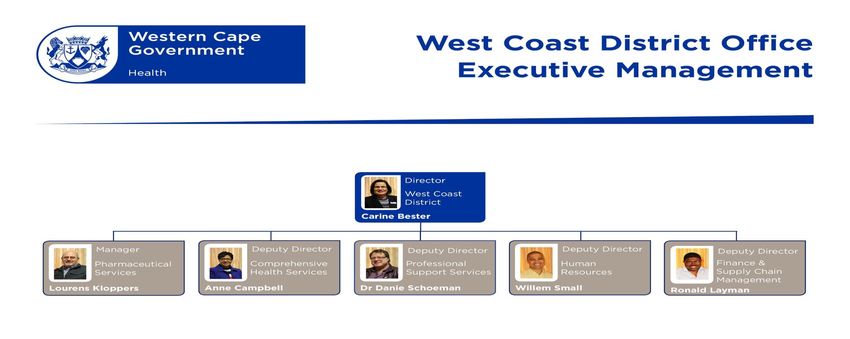
319. ORGANISATIONAL STRUCTURE OF THE DISTRICT MANAGEMENT TEAM
3210. DISTRICT HEALTH EXPENDITURE
Table 17: Summary of district health expenditure 2016/17
Sub-programme Budget: Adjusted Expenditure TOTAL
Appropriation
Province LG Province LG Budget Expen- % Overspent
Trans Own Transf Own diture (Underspent)
fer to er to
LG * LG
2.1 District
23,002,000 22,931,254 23,002,000 22,931,254 (70,745.92)
Management
2.2 Clinics 141,938,000 149,478,130 141,938,000 149,478,130 7,540,130
2.3 Community
33,961,000 29,942,528 33,961,000 29,942,528 (4,018,472)
Health Centres
2.4 Community
Services (incl. 11,343,000 12,375,017 11,343,000 12,375,017 1,032,017
PAH)
2.5 Other
Community - - - - -
Services
2.6 HIV/AIDS 89,175,000 91,308,502 89,175,000 91,308,502 2,133,502
2.7 Nutrition 3,155,000 3,078,515 3,155,000 3,078,515 (76,485.00)
2.9 District Hospitals 290,258,000 300,723,962 290,258,000 300,723,962 10,465,962
2.12 Other Donor
Funding
TOTAL DISTRICT
609,837,908 592,832,000 609,837,908 17,005,908
592,832,000
[Source: District Health Expenditure Review (2016/17) or BAS]
Note:
*LG - Local government
The adjusted Management 2016/17 budget was used as a basis for 2017/18 financial year. The budget
increased on Personnel for APL; the ICS/Inflation was 8.37% and for Non-APL 8.39%. The Inflation on Goods and
Services received was 7.2% excluding the following items in Goods & Services:
Blood (8%)
Fleet Services (GMT) (6.2%)
Financial Leases (6.2%)
Transport equipment (6.2%). Inflation on Transfers and Subsidies estimated at 7 per cent was added.
Inflation on Capital equipment was estimated at 0 per cent except for financial leases.
The department has a shortfall of R143 million for 2017/18 financial year and the West Coast District contribution
to the budget cuts was R5.1 million. The budget for the department therefore decreased in real terms while
patient numbers increased. Measures were put in place in 2016/17 and will continue during 2017/18 to mitigate
the challenges.
3311. DISTRICT PERFORMANCE INDICATORS
11.1 DISTRICT HEALTH SERVICES
Table 18: Performance indicators for District Health Services
Provincial
Data Estimated
Programme performance indicator Type Audited / Actual performance Medium term targets actual
Frequency source / performance
performance
Element ID
2014/15 2015/16 2016/17 2017/18 2018/19 2019/20 2020/21 2016/17
SECTOR SPECIFIC INDICATORS
1. Ideal clinic (IC) status rate Annual % 0.0% 0.0% 14.8% 25.9% 44.4% 66.7% 100.0% 17.2%
Numerator 3 0 0 4 7 12 18 27 47
Denominator 2 27 27 27 27 27 27 27 273
2. PHC utilisation rate (annualised) Quarterly No 1.9 1.9 1.8 1.8 1.8 1.8 1.8 2.3
Numerator 6 809 841 796 986 803 161 804 285 822 490 840 817 859 226 14 413 350
Denominator 7 419 201 428 914 439 003 449 287 459 683 470 159 480 692 6 318 281
3. Complaint resolution within 25 Quarterly % 96.4% 99.4% 96.2% 95.5% 98.6% 98.4% 98.1% 95.6%
working days rate (PHC
facilities)
Numerator 10 107 160 128 150 140 125 105 3 175
Denominator 8 111 161 133 157 142 127 107 3 320
34Table 19: Quarterly targets for District Health Services
Programme performance indicator Data source Frequency Annual target Quarterly targets
/ Element ID 2018/19 Quarter 1 Quarter 2 Quarter 3 Quarter 4
SECTOR SPECIFIC INDICATORS
1. Ideal clinic (IC) status rate Annual 44.4% - - - 44.4%
Numerator 3 12 - - - 12
Denominator 2 27 - - - 27
2. PHC utilisation rate (annualised) Quarterly 1.8 1.8 1.9 1.7 1.8
Numerator 6 822 490 207 549 216 250 192 518 206 173
Denominator 7 459 683 114 921 114 921 114 921 114 920
3. Complaint resolution within 25 working days rate Quarterly 98.6% 97.2% 100.0% 100.0% 97.2%
(PHC facilities)
Numerator 10 140 35 37 33 35
Denominator 8 142 36 37 33 36
(a) Achieve ideal clinic status;
The district has over the past year adhered to all requirements with regards to all levels of the prescribed assessments that had to be done
towards achieving silver status. Each sub district manager and facility operational managers has been involved with focused on and off-site
informal training sessions to re-emphasize and re-train staff to understand the importance and benefits towards improved quality health care
services and contributing towards person centered care. Each sub district received 3 well-organized Ideal clinic master files that are organized in
a way that the prescribed manual dictates to ensure standardization of source documents and to assist with standardized interpretation of what
is required. The planning, coordination and provision of services are geared towards all the inclusion of all categories of the community requiring
health care services. Although no dedicated youth health services facilities are operational, this category receives care and services as in
specific timeslots later in the afternoon or as they prefer to attend during any time of the day. Processes for sorting of patients in the waiting area
with specific emphasis on children, the disabled, elderly and acutely ill clients is being addressed and streaming patients to the appropriate
areas for services are fast tracked. This can only be sustainable considering the activities scheduled for the day and the available staff. Efficient
patient flow and waiting times are key indicators and are routinely monitored by the OPMs. Patient communication in facilities is crucial. The
district has an additional two posts for quality assurance coordinators which will certainly assist with improving quality of services.
35It is suggested that the broader system could assist in down-sizing the frequency and intervals in the same year when IC assessments must be
conducted by the various levels. This is extremely cumbersome for operational managers who are also functioning as production clinical services
providers on a daily basis. The frequency and approach of peer reviews in the PPTICRM must be reviewed as there appears to be inconsistencies
across district assessors and an unhealthy competition with some generalized punitive attitude in some instances.
(b) Reduce morbidity (or increase coverage indicators);
The integrated management of chronic conditions has been a concern from a patient and clinician perspective. Some of the concerns to note
are the lack of self-care management, taking ownership, compliance, ignorance and socio-economic conditions. The district has regular
integrated wellness days in all sub districts and it is planned and coordinated with all relevant stakeholders working in a specific area. The
strategies that are implemented include assessments of clients at home with referral to PHC clinics, health talks and open days where screening
is done with referrals to clinics. PACK training is well on track and various modalities of training interventions are applied, eg on-site and e-version
access for training. The identification of the COPC pilot sites, commencing with strategies to address social ills and focusing on the WOSA will
give positive spin-offs over time with improved health outcomes in future. The wellness program requires dedicated persons per sub district to
ensure that the focus is kept and driven with purpose if we want to turn down or close the tap. Prevention needs to start within the 1st 1000 days
strategy, continue into primary and secondary education and the DOE needs to be influenced into curriculum changes and development.
(c) Reduce mortality.
The 1st 1000 days strategy remains a key programmatic focus. Roadshows have been conducted in all sub districts. Specific events are
continuing with support from all staff and NPOs active in the area. The full package for this strategy is being implemented and is monitored by
quarterly M&E sessions at sub district and district levels of engagements. The dedication and commitment of staff, NPOs and environmental
health practitioners in the PSS season has shown a remarkable improvement in awareness of improved wellness and reducing preventable
childhood diseases and death. No in-facility deaths have been reported for the past year during this time period.
BANC services are available at all PHC facilities and early bookings are encouraged from a HCBC services platform and in PHC facility settings.
Monthly M&M meetings remain mandatory and are monitored closely. It has been reported by the managers that the quality of such meetings
has had positive spin-offs for staff in the management of our patients.
3611.2 DISTRICT HOSPITALS
Table 20: Performance indicators for District Hospitals
Provincial
Data Estimated
Programme performance indicator Type Audited / Actual performance Medium term targets actual
Frequency source / performance
performance
Element ID
2014/15 2015/16 2016/17 2017/18 2018/19 2019/20 2020/21 2016/17
SECTOR SPECIFIC INDICATORS
1. Hospital achieved 75% and more Quarterly % 28.6% 42.9% 57.1% 71.4% 85.7% 100.0% 100.0% 69.7%
on National Core Standards
(NCS) self-assessment rate
(district hospitals)
Numerator 3 2 3 4 5 6 7 7 23
Denominator 4 7 7 7 7 7 7 7 33
2. Average length of stay (district Quarterly Days 2.7 2.7 2.7 2.7 2.7 2.7 2.7 3.2
hospitals)
Numerator 7 108 694 106 066 103 430 100 533 102 739 104 957 107 180 909 893
Denominator 8 40 404 38 972 38 124 36 603 37 398 38 196 38 997 280 580
3. Inpatient bed utilisation rate Quarterly % 81.4% 79.4% 77.4% 85.5% 87.4% 89.3% 91.2% 84.8%
(district hospitals)
Numerator 7 108 694 106 066 103 430 100 533 102 739 104 957 107 180 909 893
Denominator 9 133 605 133 605 133 605 117 543 117 543 117 543 117 543 1 072 731
4. Expenditure per PDE (district Quarterly R R 1 561 R 1 746 R 1 930 R 2 080 R 2 140 R 2 193 R 2 271 R 2 139
hospitals)
Numerator 10 253 555 557 280 147 269 300 723 962 315 193 000 331 512 000 347 165 000 367 322 000 2 923 677 427
Denominator 16 162 395 160 442 155 836 151 528 154 915 158 324 161 744 1 366 831
5. Complaint resolution within 25 Quarterly % 54.1% 91.1% 67.3% 78.2% 81.6% 86.8% 90.7% 90.4%
working days rate (district
hospitals)
Numerator 19 46 82 101 86 84 79 68 1 501
Denominator 17 85 90 150 110 103 91 75 1 661
37Table 21: Quarterly targets for District Hospitals
Programme performance indicator Data source Frequency Annual target Quarterly targets
/ Element ID 2018/19 Quarter 1 Quarter 2 Quarter 3 Quarter 4
SECTOR SPECIFIC INDICATORS
1. Hospital achieved 75% and more on National Quarterly 85.7% - - - 85.7%
Core Standards (NCS) self-assessment rate (district
hospitals)
Numerator 3 6 - - - 6
Denominator 4 7 - - - 7
2. Average length of stay (district hospitals) Quarterly 2.7 2.8 2.6 2.8 2.7
Numerator 7 102 739 26 405 25 045 25 819 25 470
Denominator 8 37 398 9 323 9 503 9 286 9 286
3. Inpatient bed utilisation rate (district hospitals) Quarterly 87.4% 89.9% 85.2% 87.9% 86.7%
Numerator 7 102 739 26 405 25 045 25 819 25 470
Denominator 9 117 543 29 386 29 386 29 386 29 385
4. Expenditure per PDE (district hospitals) Quarterly R 2 140 R 1 962 R 2 215 R 2 101 R 2 286
Numerator 10 331 512 000 76 594 936 85 374 646 82 230 761 87 311 657
Denominator 16 154 915 39 049 38 537 39 135 38 194
5. Complaint resolution within 25 working days rate Quarterly 81.6% 84.6% 80.0% 80.8% 80.8%
(district hospitals)
Numerator 19 84 22 20 21 21
Denominator 17 103 26 25 26 26
List and summarise the key interventions that will be implemented by the district in their district hospitals to:
(a) Achieve higher levels of compliance with National Core Standards
Ensure that QIP’s are in place and Implemented.
Maintain and appraise strengths of facilities
Strengthen support to the sub district Management iro of National Core Standards
Ensure that minimum required resources are in place at facilities that enable them to comply and maintain good Quality.
Continue training and Support iro the National Core Standards domains .
38(b) Reduce morbidity (or increase coverage indicators); and
Full implementation and strengthening of maternal and child health services, 1st 1000 days, including mental health screening and ESMOE
Strengthening the PMTCT care in hospitals
Mental health services iro 72 hour assessments and full support from psychiatrists.
Clinical governance and holistic management of chronic disease of lifestyle with seamless referrals to PHC level
Quality improvement in M&M meetings
HAST: fast tracking TB patients to TB complex and referral to PHC level
eCCR is being rolled out to improve continuity and quality of care of the patient
(c) Reduce mortality (reduce the number of deaths – specifically maternal, neonatal and child).
1st 1000 days strategy fully implemented and monitored for outcomes
Referral and follow up of high risk ante-natal clients
ESMOE program implementation
Staff competence and training
3911.3 HIV AND AIDS, STIs AND TB CONTROL (HAST)
Table 22: Performance indicators for HIV and AIDS, STIs and TB control (HAST)
Provincial
Data Estimated
Programme performance indicator Type Audited / Actual performance Medium term targets actual
Frequency source / performance
performance
Element ID
2014/15 2015/16 2016/17 2017/18 2018/19 2019/20 2020/21 2016/17
STRATEGIC GOAL: Promote health and wellness.
1.1.1 TB programme success rate Quarterly % 81.9% 68.9% 80.9% 81.3% 81.9% 82.8% 83.8% 80.4%
Numerator 1 2 904 2 608 3 054 3 096 3 154 3 216 3 273 34 651
Denominator 2 3 546 3 787 3 773 3 809 3 849 3 882 3 906 43 099
2.1.1 ART retention in care after 12 Quarterly % 63.4% 57.0% 57.8% 59.7% 72.8% 73.6% 74.4% 72.2%
months
Numerator 3 881 859 1 075 1 130 1 354 1 391 1 419 33 307
Denominator 4 1 389 1 507 1 861 1 893 1 861 1 890 1 907 46 120
2.1.2 ART retention in care after 48 Quarterly % 51.0% 45.9% 41.4% 49.9% 57.2% 58.0% 59.0% 60.7%
months
Numerator 5 426 433 549 503 699 723 751 19 700
Denominator 6 836 943 1 326 1 008 1 223 1 247 1 273 32 455
SECTOR SPECIFIC INDICATORS
1. ART client remain on ART end of Quarterly No 6 521 7 651 8 910 9 802 11 831 12 100 12 370 230 931
month - total
Element 7
2. TB/HIV co-infected client on ART Quarterly % 75.4% 78.7% 82.3% 82.3% 82.3% 82.2% 82.2% 89.6%
rate
Numerator 8 688 789 828 841 859 877 896 14 902
Denominator 9 912 1 003 1 006 1 022 1 044 1 067 1 090 16 637
3. HIV test done – total Quarterly No 84 723 100 721 107 918 106 968 109 435 111 921 114 422 1 379 375
Element 10
4. Male condoms distributed Quarterly No 7 020 742 8 070 750 8 967 800 9 245 400 9 458 529 9 673 256 9 889 070 113 913 868
Element 12
5. Medical male circumcision – Quarterly No 1 709 1 412 856 1 325 1 331 1 361 1 391 11 687
total
Element 16
40Provincial
Data Estimated
Programme performance indicator Type Audited / Actual performance Medium term targets actual
Frequency source / performance
performance
Element ID
2014/15 2015/16 2016/17 2017/18 2018/19 2019/20 2020/21 2016/17
6. TB client 5 years and older start Quarterly % 99.3% 98.5% 95.9% 95.8% 95.8% 95.8% 95.8% 92.9%
on treatment rate
Numerator 19 2 109 2 346 1 932 2 121 2 168 2 216 2 263 21 007
Denominator 20 2 123 2 381 2 014 2 215 2 263 2 312 2 361 22 612
7. TB client treatment success rate Quarterly % 81.9% 68.9% 80.9% 81.3% 81.9% 82.8% 83.8% 80.4%
Numerator 21 2 904 2 608 3 054 3 096 3 154 3 216 3 273 34 651
Denominator 22 3 546 3 787 3 773 3 809 3 849 3 882 3 906 43 099
8. TB client defaulter / lost to follow Quarterly % 8.4% 9.1% 10.4% 10.3% 9.6% 9.5% 9.4% 10.5%
up rate
Numerator 23 297 345 392 393 368 369 366 4 514
Denominator 22 3 546 3 787 3 773 3 809 3 849 3 882 3 906 43 099
9. TB client death rate Annual % 4.2% 4.5% 4.7% 4.6% 4.5% 4.4% 4.3% 3.9%
Numerator 24 148 169 178 174 173 170 167 1 693
Denominator 22 3 546 3 787 3 773 3 809 3 849 3 882 3 906 43 099
10. TB MDR treatment success rate Annual % 54.8% 54.6% 42.9% 47.6% 47.4% 49.0% 44.6%
Numerator 25 0 40 65 48 59 64 71 738
Denominator 26 0 73 119 112 124 135 145 1 653
Table 23: Quarterly targets for HIV and AIDS, STIs and TB control (HAST)
Programme performance indicator Data source Frequency Annual target Quarterly targets
/ Element ID 2018/19 Quarter 1 Quarter 2 Quarter 3 Quarter 4
PROVINCIAL STRATEGIC OBJECTIVE INDICATORS
1.1.1 TB programme success rate Quarterly 81.9% 82.0% 81.9% 81.9% 82.0%
Numerator 1 3 154 796 829 738 791
Denominator 2 3 849 971 1 012 901 965
2.1.1 ART retention in care after 12 months Quarterly 72.8% 72.8% 72.8% 72.7% 72.7%
Numerator 3 1 354 342 356 317 339
Denominator 4 1 861 470 489 436 466
41You can also read


