Wheat Disease Identification - UT Crops
←
→
Page content transcription
If your browser does not render page correctly, please read the page content below
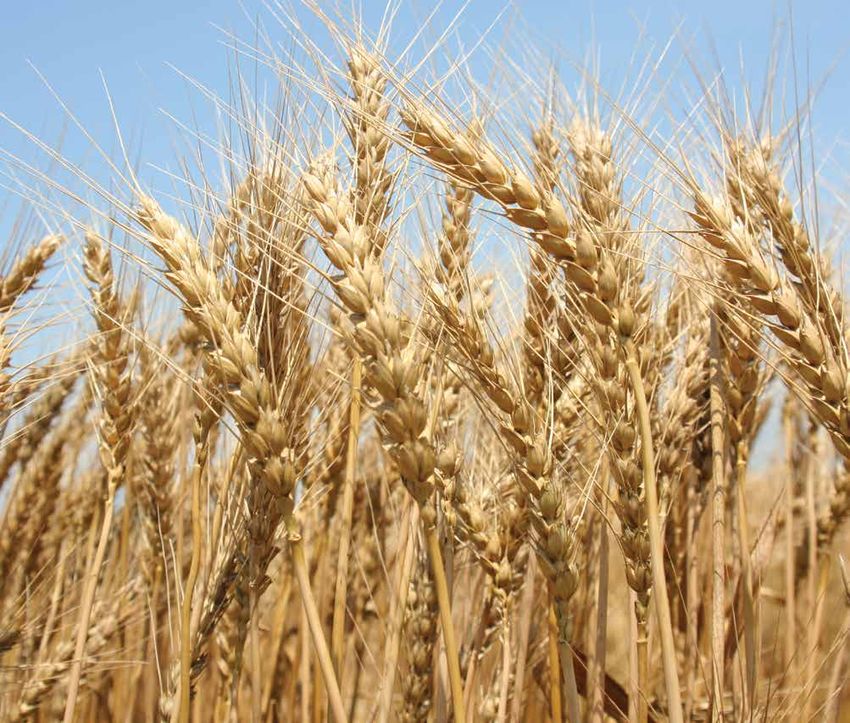
Wheat Disease Identification

                                                         Fusarium root, crown, and foot rots

Stripe rust                                   Tan spot                                         Leaf rust

                      Cephalosporium stripe

                                                         Stagonospora nodorum blotch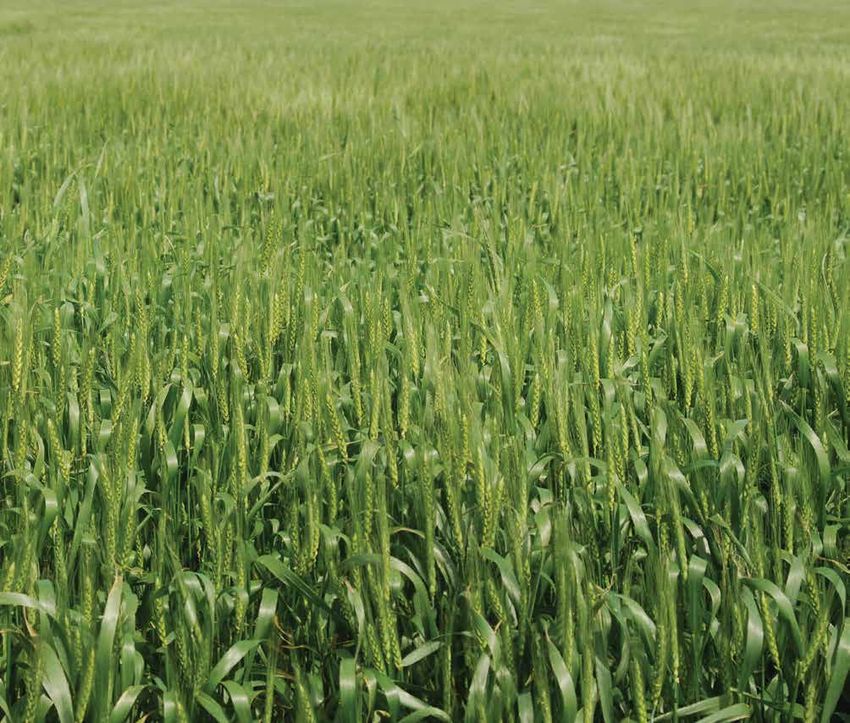
Contents
Diseases affecting heads and grain
Black chaff............................................................................... 1
Common bunt.......................................................................... 2
Ergot........................................................................................ 3
Fusarium head blight................................................................ 4
Loose smut............................................................................... 5
Sooty head molds...................................................................... 6
Stagonospora nodorum blotch.................................................. 7
Diseases affecting leaves
Bacterial streak......................................................................... 8
Barley yellow dwarf................................................................... 9
Leaf rust..................................................................................10
Powdery mildew......................................................................11
Septoria tritici blotch.............................................................. 12
Stagonospora nodorum blotch................................................ 13
Stem rust.................................................................................14
Stripe rust.............................................................................. 15
Tan spot..................................................................................16
Wheat soilborne mosaic...........................................................17
Wheat spindle streak mosaic....................................................18
Wheat streak mosaic...............................................................19
Diseases affecting lower stems and roots
Cephalosporium stripe........................................................... 20
Common root rot.................................................................... 21
Eyespot.................................................................................. 22
Fusarium root, crown, and foot rots........................................ 23
Rhizoctonia root rot............................................................... 24
Take-all................................................................................. 25
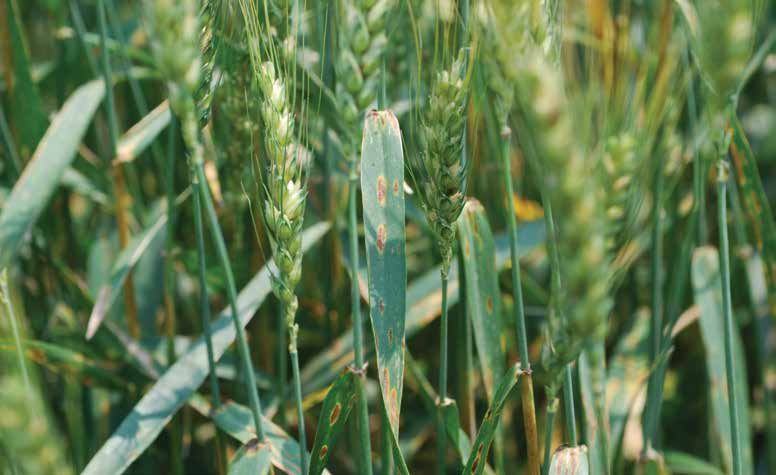
Black chaff

                                                          Diseases affecting heads and grain
Black chaff causes dark-brown or black lesions on the
glumes of infected wheat heads. The stem below the
head and the awns also can be infected. Infected awns
often have alternating bands of diseased and healthy
green tissue. The bacteria that cause black chaff also
cause bacterial streak on leaves. Black chaff is often
confused with Stagonospora nodorum blotch on heads or
a physiological disorder of the plant known as “pseudo-
black chaff.”
Management: Avoid highly susceptible varieties.

                                                                     1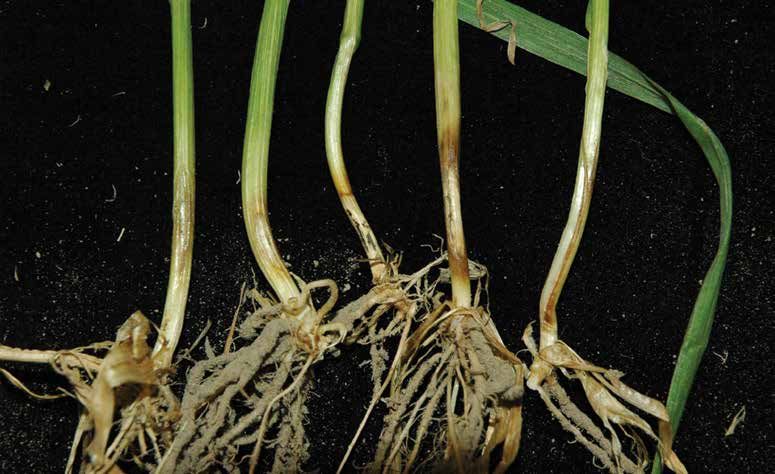
Common bunt
Diseases affecting heads and grain   Wheat kernels infected by common bunt have a gray-
                                     green color and are wider than healthy kernels. Diseased
                                     kernels can be seen in developing wheat heads but are often
                                     not detected until harvest. The outer layers of diseased
                                     kernels remain intact initially but are easily broken during
                                     grain harvest, releasing masses of black, powdery spores.
                                     The fungus produces chemicals with a fishy odor, which
                                     sometimes causes this disease to be referred to as “stinking
                                     smut.” Symptoms of common bunt resemble dwarf bunt;
                                     however, plants infected with dwarf bunt are stunted.
                                     Management: Fungicide seed treatment, disease-free
                                     seed sources.

           2
Ergot

                                                              Diseases affecting heads and grain
Wheat heads infected with ergot have large, dark-purple
or black fungal structures that replace individual kernels.
These fungal structures or “ergots” may be 5 to 10 times
larger than normal wheat kernels and are often first
detected in harvested grain. The ergots have a white
interior, which distinguishes them from other types of
foreign matter found in grain.
Management: Generally impractical or not needed.

                                                                         3
Fusarium head blight
Diseases affecting heads and grain   Symptoms of Fusarium head blight include tan or light
                                     brown lesions encompassing one or more spikelets. Some
                                     diseased spikelets may have a dark brown discoloration
                                     at the base and an orange fungal mass along the lower
                                     portion of the glume. Grain from plants infected by
                                     Fusarium head blight is often shriveled and has a white
                                     chalky appearance. Some kernels may have a pink
                                     discoloration.
                                     Management: Avoid the most susceptible varieties
                                     and planting into corn residue; suppress with foliar
                                     fungicides.

           4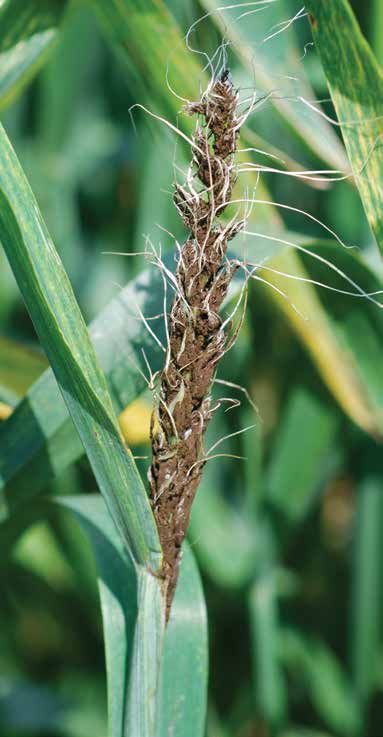
Loose smut

                                                             Diseases affecting heads and grain
The normal head tissue of plants infected by loose
smut is completely replaced with dark masses of fungal
spores, giving the heads a black powdery appearance.
It is possible to see heads damaged by loose smut while
much of the head is still inside the boot. Infected heads
normally appear lower in the crop canopy than healthy
heads. Only the central stem of the head is left after the
spores are released.
Management: Fungicide seed treatment, disease-free
seed sources.

                                                                        5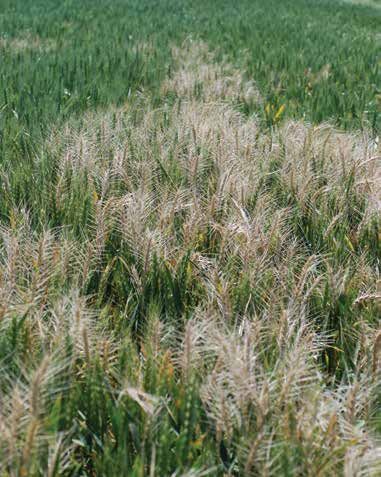
Sooty head molds
Diseases affecting heads and grain   Sooty head molds are characterized by a dark green or
                                     black mold growth on the surface of mature wheat heads.
                                     These molds are part of a naturally occurring complex of
                                     organisms that help to decay plant debris. Sooty molds
                                     are most common when mature wheat is subjected to
                                     repeated rains and delayed harvest. This fungus also may
                                     grow on plants that were prematurely killed by root rot.
                                     The sooty head mold growth is normally superficial. Its
                                     affect on grain is thought to be minor, but it can make
                                     for dusty harvest operations. Sooty molds can contribute
                                     to a discoloration of the grain called “black point.”
                                     Management: Generally impractical or not needed.

           6
Stagonospora nodorum blotch

                                                           Diseases affecting heads and grain
This disease causes dark brown or purple lesions on
heads. Lesions are often more intense at the top of the
glume, with brown streaks or blotches extending down
toward the base of the spikelet. The presence of tiny
fungal reproductive structures embedded in the tissue
can confirm the diagnosis but will require significant
magnification. The disease may spread to the head from
leaf infections initiated earlier in the growing season.
Management: Genetic resistance, foliar fungicides, crop
rotation, fungicide seed treatment.

                                                                      7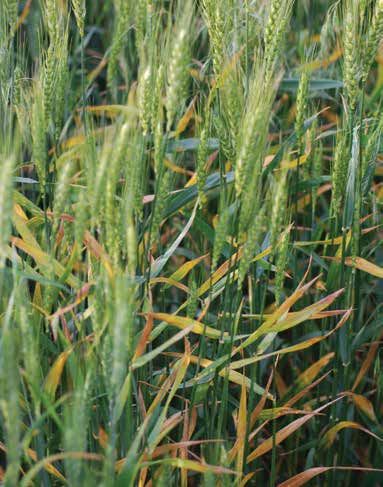
Bacterial streak
Diseases affecting leaves   Early symptoms of bacterial streak include small, water-
                            soaked areas between leaf veins. These water-soaked
                            areas become tan streaks within a few days. When
                            the disease is severe, streaks may merge to form large,
                            irregular areas of dead tissue. When dew is present, the
                            bacteria causing this disease may ooze from the lesions
                            and dry to form a clear, thin film. This film flakes easily
                            and is visible when the leaf is viewed from different
                            angles.
                            Management: Avoid highly susceptible varieties and
                            contaminated seed.

        8
Barley yellow dwarf
Diseases affecting leaves
This viral disease causes wheat leaves to have a yellow or
red discoloration. The discoloration is often more intense
near the tip of affected leaves, giving them a flame-like
appearance. Barley yellow dwarf often occurs in patches
within a field. The size and distribution of these patches
depends on the feeding activity of aphids, which spread
barley yellow dwarf virus. Infected plants within these
patches may be shorter than neighboring healthy plants.
Management: Genetic resistance, delayed planting date,
insecticide seed treatment.
9Leaf rust
Diseases affecting leaves Small, orangish-brown lesions are key features of leaf
rust infections. These blister-like lesions are most
common on leaves but can occur on the leaf sheath,
which extends from the base of the leaf blade to the stem
node. Lesions caused by leaf rust are normally smaller,
more round, and cause less tearing of the leaf tissue than
those caused by stem rust.
Management: Genetic resistance, foliar fungicides.
10Powdery mildew
Diseases affecting leaves
Signs of powdery mildew include white fungal growths
on leaves and leaf sheaths. Glumes and awns also can
be infected when the disease is severe. Fungal growth
is largely limited to outer plant surfaces and can be
easily wiped away by rubbing a finger across affected
areas. Mature areas of fungal growth may have dark,
reproductive structures mixed with the white, cottony
growth of the fungus.
Management: Genetic resistance, foliar fungicides.
11Septoria tritici blotch
Diseases affecting leaves This fungal disease causes tan, elongated lesions on
wheat leaves. Lesions may have a yellow margin, but
the degree of yellowing varies among varieties. Rows of
dark, reproductive structures produced by the fungus are
key diagnostic features and can often be seen without
magnification. This disease is also known as speckled
leaf blotch.
Management: Genetic resistance, foliar fungicides, crop
rotation.
12Stagonospora nodorum blotch
Diseases affecting leaves
The lesions of Stagonospora leaf blotch are normally
brown or tan, surrounded by a thin, yellow halo. Lesions
caused by Stagonospora leaf blotch are more irregular
in shape and often have a darker color than those of
tan spot. The presence of small, honey-colored fungal
reproductive structures is diagnostic for Stagonospora
nodorum blotch; however, these reproductive structures
are only visible with considerable magnification. This
disease also may affect heads late in the growing season.
Management: Genetic resistance, foliar fungicides, crop
rotation, fungicide seed treatment.
13Stem rust
Diseases affecting leaves Stem rust causes blister-like lesions on leaves, leaf
sheaths, and stems. Infection of glumes and awns is
also possible. The reddish-brown spores of the fungus
cause considerable tearing as they burst through the
outer layers of the plant tissues. Mature stem rust lesions
are more elongated than those of leaf rust. Stem rust is
typically most severe on later-maturing wheat varieties.
Management: Genetic resistance, foliar fungicides,
select early-maturing varieties.
14Stripe rust
Diseases affecting leaves
Stripe rust causes yellow, blister-like lesions that are
arranged in stripes. The disease is most common on
leaves, but head tissue also can develop symptoms when
disease is severe. Outside the United States, this disease
is sometimes referred to as yellow rust.
Management: Genetic resistance, foliar fungicides.
15Tan spot
Diseases affecting leaves The key diagnostic feature of tan spot is tan lesions
with a yellow margin. Mature tan spot lesions often
have a dark area in the center. Lesions may merge as
they expand, resulting in large sections of diseased leaf
tissue. The fungus that causes tan spot survives in the
debris of previous wheat crops and produces small, black
reproductive structures in the spring.
Management: Avoid planting into wheat residue, tillage
where appropriate, genetic resistance, foliar fungicides.
16Wheat soilborne mosaic
Diseases affecting leaves
Winter wheat infected by wheat soilborne mosaic
develops a pale-yellow discoloration shortly after breaking
dormancy in the spring. The incidence of wheat soilborne
mosaic is often greater in low areas of a field, where
moist soil conditions favor growth of the protozoa that
spread this viral disease. Leaves of infected plants often
have a mosaic pattern of dark green blotches on a pale-
yellow background. Symptoms normally fade when warm
weather slows the viral activity within infected plants.
Management: Genetic resistance.
17Wheat spindle streak mosaic
Diseases affecting leaves Wheat spindle streak mosaic causes a yellow
discoloration to wheat seedlings. This yellow
discoloration is often most intense in the wettest areas
of a field. Leaves of infected plants have long, yellow
streaks that are slightly wider in the middle than at
their ends. Symptoms are similar to wheat soilborne
mosaic, and plants often are infected with both diseases.
Symptoms fade when higher temperatures reduce viral
activity within infected plants.
Management: Genetic resistance.
18Wheat streak mosaic
Diseases affecting leaves
Leaves of plants infected with wheat streak mosaic have
a bright yellow streaking. Symptoms are often most
severe near the leaf tip. The virus that causes wheat
streak mosaic survives in volunteer wheat and is spread
by wheat curl mites. The disease is often most severe
in areas of a field that are closest to these sources of
the disease and mites. Commonly, plants infected with
wheat streak mosaic also are infected with High Plains
disease and Triticum mosaic. The symptoms of these
diseases are nearly identical. Disease severity is greater
when plants are infected by more than one virus.
Management: Control volunteer wheat, delayed
planting date, genetic resistance, avoid planting near
maturing corn.
19Cephalosporium stripe
Diseases affecting lower stems and roots Plants infected with Cephalosporium stripe have
pronounced yellow stripes running the full length of
the leaf blade. The center of the yellow stripe may have
a long, brown streak that extends onto the leaf sheath.
Splitting the stem of infected plants often reveals small,
brown streaks within the node tissue. Cephalosporium
stripe also can cause areas of stunted, irregular growth
within a field. Often, infected plants die prematurely,
causing patches of white heads within a field.
Management: Genetic resistance, crop rotation, control
grassy weeds.
20Common root rot
Diseases affecting lower stems and roots
Common root rot causes premature death of wheat,
resulting in patches of white heads scattered throughout
a field. Infected plants are often dark at the base and
have poor root development. A key diagnostic feature
of common root rot, however, is dark-brown lesions on
the thin stem extending from the base of the plant to
the remnant of the seed. This thin stem is known as the
“subcrown internode.” Healthy subcrown internodes
should be cream colored and firm.
Management: Crop rotation, control grassy weeds.
21Eyespot
Diseases affecting lower stems and roots Symptoms of eyespot, also called strawbreaker foot rot,
include small lesions on the lower stem. Well-developed
lesions have yellow-brown margins and a black fungal
growth near the center. Most lesions occur on the lower
2 inches of the stem. Lesions may merge, causing the
lower stem to collapse. Stems damaged by eyespot often
die prematurely, resulting in white heads. Areas of the
field with many infected stems are more likely to lodge.
Management: Genetic resistance, foliar fungicides,
avoid planting into wheat residues.
22Fusarium root, crown, and foot rots
Diseases affecting lower stems and roots
Fusarium root, crown, and foot rots cause patches of
wheat to die prematurely, resulting in areas of white
heads within a field. Infected plants are typically brown
at the base and have poor root development. During
advanced stages of the disease, the Fusarium fungus
often produces a pink, cottony growth inside the lower
portions of the stem. Often, the disease is most severe
after prolonged periods of dry weather.
Management: Crop rotation, control grassy weeds.
23Rhizoctonia root rot
Diseases affecting lower stems and roots Seedlings infected with Rhizoctonia root rot are often
killed before emergence. Plants that are not killed by the
disease may be stunted to different degrees, resulting
an uneven crop canopy. Individual roots infected by
Rhizoctonia have small, reddish-brown lesions. The
diseased roots break off easily when plants are removed
from the soil, leaving their tapered, reddish-brown ends
exposed.
Management: Crop rotation, control grassy weeds two
weeks before planting.
24Take-all
Diseases affecting lower stems and roots
This fungal disease causes wheat to die prematurely,
resulting in patches of white heads in otherwise green
fields of wheat. Plants infected by take-all normally have
a shiny, black discoloration of the lower stem and roots.
Frequently, the disease is most severe in wet areas of a
field and near field edges where the fungus survives in
association with grassy weeds.
Management: Crop rotation, control grassy weeds.
25Acknowledgements For additional assistance identifying diseases
This publication was developed by the multi-state of wheat contact:
extension and research committees for small grain
diseases, NCERA-184 and WERA-97. Publication Heather Young-Kelly
authors: Erick De Wolf, and James P. Shroyer, Kansas Entomology and Plant Pathology
State University. Photo credits: Erick De Wolf, Bill 605 Airways Blvd.
Bockus, Robert L. Bowden, James P. Shroyer, and Jackson, TN 38301
Bill Willis, Kansas State University; Mary Burrows, Phone: (731) 425-4713
Montana State University; Juliet Marshall, University youngkelly@utk.edu
of Idaho; Marcia McMullen, North Dakota State
University; Tim Murray, Washington State University;
and Stephen Wegulo, University of Nebraska. The
USDA-NIFA Extension Integrated Pest Management
program award 2009-41533-05331 sponsored develop-
ment and distribution of this publication.
This publication was developed and distributed with the assistance of the U.S. Department of
Agriculture (USDA). The USDA prohibits discrimination in all its programs and activities on the
basis of race, color, national origin, age, disability, and where applicable, sex, marital status,
familial status, parental status, religion, sexual orientation, genetic information, political
beliefs, reprisal, or because all or part of an individual’s income is derived from any public
assistance program.
February 2014You can also read


