WORLD SUSTAINABLE DEVELOPMENT SUMMIT 2020 - TOWARDS 2030 GOALS MAKING THE DECADE COUNT
←
→
Page content transcription
If your browser does not render page correctly, please read the page content below
WORLD SUSTAINABLE
DEVELOPMENT SUMMIT 2020
   TOWARDS 2030 GOALS
 MAKING THE DECADE COUNT

                January 29-31, 2020
 India Habitat Centre, Lodhi Road, New Delhi, India

                SUMMIT OVERVIEW

                                                      i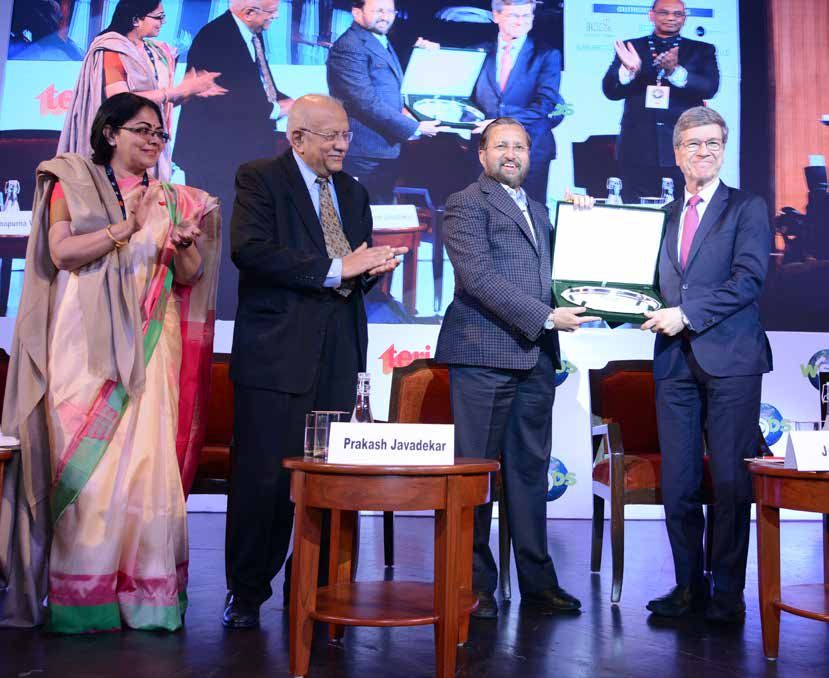
The year 2020 is significant because it marks the completion
of 20 years of the Summit series. In its journey since 2001, the
platform has become a focal point for global thought leaders
and practitioners to congregate and address climatic issues
of universal importance. The Summit series has emerged
as the premier international event on sustainability which
focuses on the global future, but with an eye on the actions in
     the present which could bend our common future.
CONTENTS
From the Director General’s Desk...............................................................................1

Acknowledgements...................................................................................................... 2

Summit Timeline 2001–2020..................................................................................... 3

Inaugural Ceremony..................................................................................................... 6

Inaugural Address.......................................................................................................... 8

Sustainable Development Leadership Award........................................................ 12

Making Words Count.................................................................................................. 14

Youth Climate Conclave............................................................................................. 25

Thematic Tracks........................................................................................................... 26

Tracing the Summit Days........................................................................................... 28

IFAT Delhi 2020............................................................................................................40

Prominent Publications.............................................................................................. 41

Summit Pre-Events......................................................................................................42

Glimpses from WSDS 2020........................................................................................44

WSDS International Steering Committee...............................................................46

WSDS SUMMIT OVERVIEW 2020

Background
Note
Sustainable development is a widely and an equally valued concept across countries, governments, and
industries.
The year 2015 went down in the annals of sustainability for inking two remarkable global agreements
promoting green growth. The adoption of the 17 Sustainable Development Goals (SDGs) by the United Nations
General Assembly (UNGA) and the Paris Agreement through the Nationally Determined Contributions (NDCs),
embodies efforts of the parties to reduce national carbon emissions and promulgate the realization of the
‘goals of sustainability’.
A total of 193 member-states undertook a mission to improve the quality of land, air, and water through
sustainable measures while not hindering the economic growth and progression of an inclusive society.
Within the context of sustainability, the year 2020 marks two milestones. First, it commences the final decade
towards the realization of the 2030 Agenda, and second – it aims to work towards the climate ambition
mechanism by encouraging the international communities to enhance their respective NDCs. It is also an
important crossroad as 2021 marks the beginning of the ‘UN Decade on Ecosystem Restoration’, as declared by
the UNGA. Restoring our ecosystems is fundamental to achieving the SDGs. Much of the coming decade also
happens to coincide with the ongoing ‘International Decade for Action on Water for Sustainable Development,
2018–2028’. Clearly, the coming decade will draw global attention and resources towards realizing the
initiatives already in motion.
The 2020 edition of The Energy and Resources Institute’s (TERI) annual flagship event – the World Sustainable
Development Summit (WSDS) – focused on the need to assess the global contributions made towards the
realization of the goals of sustainability, and analysed further steps that ought to be undertaken by the world
communities to meet the targets of the 17 SDGs. Under the broad theme of ‘Towards 2030 Goals: Making the
Decade Count’, the Summit series established the terms of the discourse for making the most of the remaining
decade. This was done by weaving together the many strands of climate action through myriad, high-level
discussions.
The WSDS is an essential meeting point for stakeholders representing various sections of our society to
deliberate, strategize, and execute a unified agenda underlined by indicators of universal sustainable growth
and development, which would serve the overall long-term interest of the world community. With leading
policymakers and senior government officials in attendance, the Summit series does not stop at deliberations
alone but it also commits to the translation of these dialogues into responsible action. It will only be through
the combined efforts of state policies and industrial support that the transition to a largely renewable power
system will become a thriving reality in India.
In the words of the Hon’ble Secretary General of the United Nations Mr António Guterres, “Sustainable
development is more than a goal. It is our responsibility to our planet and future generations.”

 iv
From the Director
General’s Desk
                         It gave me immense pleasure to welcome you all to The Energy and
                         Resources Institute (TERI’s) flagship event – the World Sustainable
                         Development Summit (WSDS) 2020. This marked the 20th year
                         since the Summit’s inception, and I am proud to note that WSDS has
                         established itself as a responsible platform for mobilizing opinion-
                         makers to identify and advance pioneering actions to address the
                         most relevant issues concerning sustainable development.
                         Countries today, not just represent different ideas of inclusivity but also
                         demonstrate distinct levels of development and social inclusion. The
                         year 2020 is a crucial one, as it marks the last decade for action towards
                         achieving the Sustainable Development Goals (SDGs). This edition of
                         WSDS 2020, titled – ‘Towards 2030 Goals: Making the Decade Count’,
                         was devoted to facilitate solution-driven talks and guide us towards
                         fulfilling our earlier promises.
                         Topics that dominated the discussions over the course of the Summit
Dr Ajay Mathur           include some of the biggest challenges we face today. Arguably, these
Director General, TERI   are: Air Pollution, Green Finance, Water, Industry and Energy Transition,
                         Blue Economy and Mobility. The Summit strived to understand these
                         broad areas across twenty thematic tracks and focused plenaries. At
                         WSDS 2020, we were delighted to launch the Delhi chapter of IFAT, the
                         leading trade show of Messe München India (MMI). In its inaugural year,
                         IFAT Delhi showcased a global exhibit of upcoming clean technologies,
                         which included – Water, Sewage, Solid Waste and Recycling.
                         The Summit witnessed a host of distinguished speakers comprising
                         senior government officials, representatives of major global
                         corporations, leading thinkers and researchers, who deliberated on
                         matters of urgent concern. I thank you all for your involvement in the
                         three days of the Summit. I do hope that through these discussions, we
                         are all collectively led to arrive at a consensus that guides us to make
                         the decade count.

                                                                                                1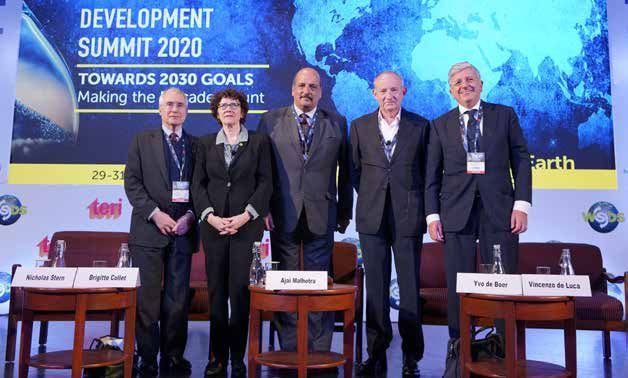
WSDS SUMMIT OVERVIEW 2020

Acknowledgements
                            In 2001, The Energy and Resources Institute (TERI) launched its
                            annual flagship event – The World Sustainable Development
                            Summit (WSDS) – which was inaugurated by the then Hon’ble Prime
                            Minister of India, (Late) Mr Atal Bihari Vajpayee. Over the past years,
                            the platform has emerged as one of the foremost fora bringing
                            together various heads of state and government, thought leaders,
                            policymakers, and champions of industry and academia to deliberate
                            on myriad issues of sustainability. The Summit provides an enabling
                            atmosphere that encourages people-to-people dialogue, fosters
                            understanding, cooperation, and collective action to achieve goals of
                            sustainable development. Three chief priorities of the Summit have
                            been the exchange of knowledge, ideas and best practices, building
                            partnerships across sectors and encouraging initiatives and efforts
                            which are continuous and collective.
                            Over the years, the Summit series has provided not only the Indian
Dr Annapurna                national and subnational governments but the global community
Vancheswaran                as a whole – comprising international governments, institutions,
                            industries, and individuals – an opportunity to share with a high-level
Senior Director,
                            and diverse audience, their future plans, policies, and priorities on
Communication
                            sustainable development and climate change.
Outreach & Advocacy         It is heartening to note that the Summit series, to date, has hosted 49
Unit, TERI                  heads of state and government, ministers from over 77 countries, 13
                            Nobel laureates, over 2500 corporate delegates, and participants from
                            across continents, in addition to many subnational leaders from across
                            the world.
                            This journey of two decades, which I have had the privilege of being
                            part of each and every single year, though arduous and challenging,
                            has surprisingly been exceedingly rewarding and gratifying. This
                            would have been impossible without the support of our inspiring
                            partners, distinguished speakers, and imposing delegates. I express
                            my heartfelt gratitude and sincere thanks to each one of you.
                            TERI and the Summit secretariat look forward to working with you
                            in the years to come, to accelerate the pace of climate action and to
                            achieve a world of prosperity and security for our future generations.
                            Let’s #Act4Earth together.

 2
Summit Timeline
2001–2020
2001
Poverty: The Global Challenge for
Governments, Industry, Scientists and
the Civil Society
• Mr Atal Bihari Vajpayee,                   2002
  Hon’ble Prime Minister of India            Ensuring Sustainable Livelihoods:
                                             Challenges for Governments,
                                             Corporates and the Civil Society
2003                                         • Mr Atal Bihari Vajpayee, Hon’ble
                                               Prime Minister of India
Beyond Johannesburg: Translating
Resolve into Action for a Sustainable
Future
• Dr A P J Abdul Kalam,                      2004
  Hon’ble President of India                 Partnerships for Sustainable
                                             Development: Addressing the
                                             WEHAB Agenda

2005                                         • Mr Yashwant Sinha, Hon’ble Minister
                                               for External Affairs,
Beyond Universal Goals: Steering               Government of India
Development Towards Global
Sustainability
Sustainable Development Leadership
Award (SDLA) instituted
• Mr Ólafur Ragnar Grímsson,
  Hon’ble President of Republic of Iceland
                                             2006
                                             Linking across MDGs: Towards
                                             Innovative Partnerships and
                                             Governance
2007                                         • Mr A Raja, Hon'ble Minister for
                                               Environment and Forests, Ministry
Meeting the MDGs: Exploring the
Natural Resources Dimensions                   of Environment and Forests,
• Ms Sheila Dikshit, Hon’ble Chief             Government of India
  Minister of Delhi, India
• Mr A Raja, Hon'ble Minister for
  Environment and Forests, Ministry
  of Environment and Forests,
  Government of India

                                                                                   3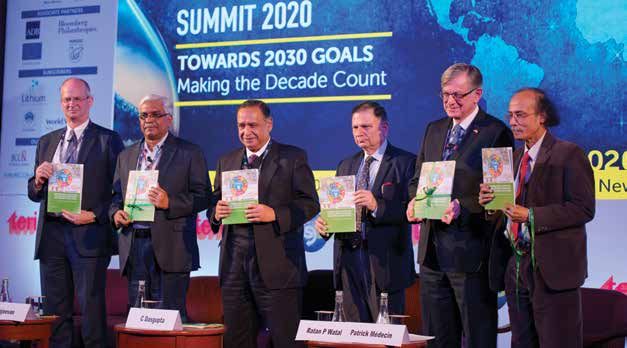
WSDS SUMMIT OVERVIEW 2020

2008
Sustainable Development and Climate
Change
• Dr Manmohan Singh, Hon'ble Prime
  Minister of India
                                               2009
                                               Towards Copenhagen: An Equitable
                                               and Ethical Approach
                                               • Mr Pranab Mukherjee, Hon’ble
                                                 President of India
2010
Beyond Copenhagen: New Pathways to
Sustainable Development
• Dr Manmohan Singh, Hon'ble Prime
  Minister of India

                                               2011
                                               Tapping Local Initiatives and Tackling
                                               Global Inertia
                                               • Dr Manmohan Singh, Hon'ble Prime
2012                                             Minister of India
Protecting the Global Commons: 20
Years Post Rio
• Dr Manmohan Singh, Hon'ble Prime
  Minister of India

                                               2013
                                               The Global Challenge of Resource-
                                               Efficient Growth and Development
                                               • Dr Manmohan Singh, Hon'ble Prime
2014                                              Minister of India
Attaining Energy, Water and Food Security
for All
• Dr Farooq Abdullah, Hon’ble Minister of
  New and Renewable Energy, Government
  of India
• HE Mr Danny Faure, Hon’ble Vice President,
  Seychelles
• Mr Kofi Annan, Chairman, Kofi Annan
  Foundation and Former Secretary General,
  United Nations
• Mr Salman Khurshid, Hon’ble Minister of
  External Affairs, Government of India

 4
2015
Sustainable Development Goals and
Dealing with Climate Change
• HE Mr Laurent Fabius, Hon’ble Minister
  of Foreign Affairs and International
  Development, France and Former Prime
  Minister, France and President, COP21
• Mr Arnold Schwarzenegger, Former
  Governor, California and Founding Chair,
  R20: Regions of Climate Action
• Mr Suresh Prabhu, Hon’ble Minister of
  Railways, Government of India
• Mr Prakash Javadekar, Hon’ble Minister
  of State (IC) for Environment, Forest and
  Climate Change, Government of India
                                              2016
                                              Beyond 2015: People, Planet, and
                                              Progress
                                              • Mr Pranab Mukherjee, Hon’ble
                                                President of India

2018
Creating Partnerships for a Resilient
Planet
• Mr Narendra Modi, Hon’ble Prime
  Minister of India
                                              2019
                                              Attaining the 2030 Agenda:
                                              Delivering on Our Promise
                                              • Mr M. Venkaiah Naidu, Hon'ble Vice
                                                President
2020
Towards 2030 Goals: Making the
Decade Count
• Mr Prakash Javadekar, Hon’ble
  Minister of Environment, Forest and
  Climate Change, Government of
  India

                                                                                     5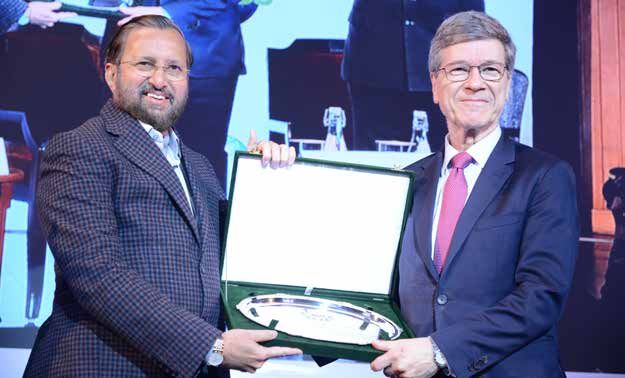
WSDS SUMMIT OVERVIEW 2020

  Inaugural Ceremony

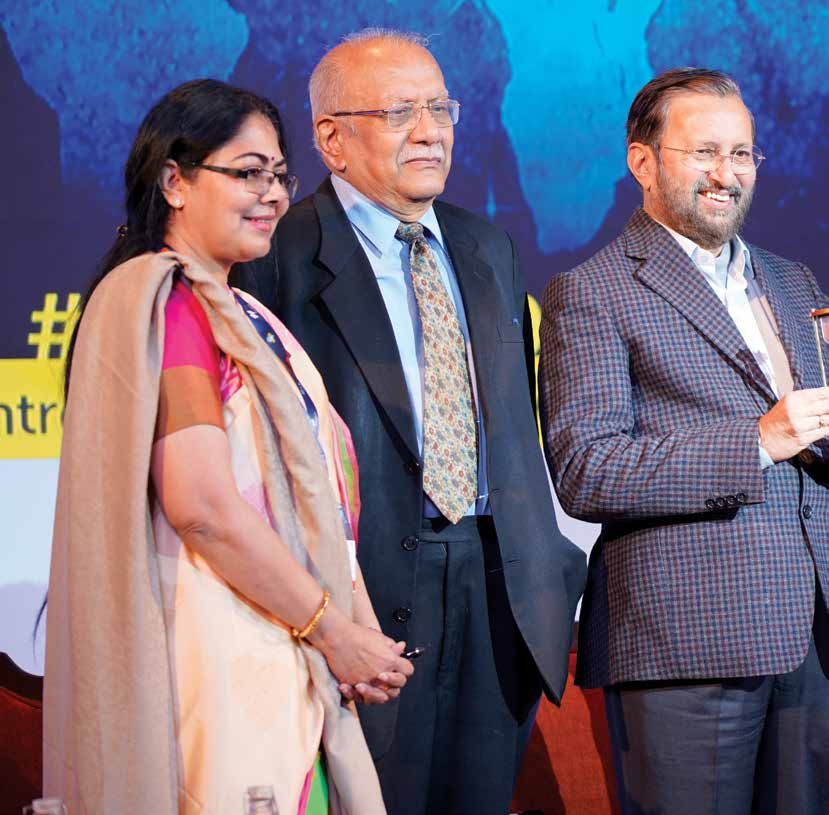
»» L–R: Dr Annapurna Vancheswaran, Senior Director, TERI; Mr Nitin Desai, Chairman, TERI; Mr Prakash Javadekar, Honourable Minister of Environment, Forest and C
   University; Dr Ajay Mathur, Director General, TERI

    6
Climate Change, Government of India; Prof. Jeffrey Sachs, University Professor and Director, Center for Sustainable Development, Columbia
7WSDS SUMMIT OVERVIEW 2020
Inaugural Address
MR PRAKASH JAVADEKAR
Honourable Minister of Environment,
Forest and Climate Change, Government
of India at the World Sustainable
Development Summit (WSDS) 2020
“Professor (Jeffrey) Sachs, whom we have rewarded It is important to ask: How does one look at the
for his selfless service in the sector, Mr Nitin Desai, climate change scenario? Ten years ago, there were
Dr Ajay Mathur, Dr Annapurna Vancheswaran, and many who believed that by 2012, the world would
friends, I am delighted to be here as WSDS marks end. Interestingly, there was a movie made, based
its 20th year. What I recall is that when TERI started, on this precise theme, titled – 2012. The world surely
it soon became a global name of repute. I must did not end but the film did a roaring business! The
congratulate TERI for addressing both national and
reason I say this is because I am not a pessimist. I
global environment-related issues with zeal and for
recognize myself as an optimist.
spreading the message of environment sustainability
by bringing core environmental and climatic issues I saw the IFAT Delhi 2020 Exhibition, which is being
to the fore very effectively for the knowledge and held alongside WSDS, and I would recommend that
benefit of all stakeholders. everyone present should visit it. Seeing it would
8make us realize that if human actions have caused taken on the part of the developed world. Countries
climate change, the same human acts driven instead simply do not wish to change their old habits. It is
by intelligence and intent could provide us with a common but differentiated responsibility which is
necessary solutions that will allow us to overcome important. In 2009, in Copenhagen, a financial aid of
our existing problems. This is really a fight for the 100 billion dollars was announced, and voluntarily,
betterment of the world. nobody compelled. Jump to 10 years ahead, and
the figure stands at one trillion dollars. Unless we
Sustainable consumption and sustainable
address the main issues of finance and technology,
production are closely interlinked, though I believe
we cannot have a world order where everybody
that sustainable consumption is a precursor to
practises sustainability because every climate action
sustainable production since consumption begins
has a related cost. And unless somebody foots the
with us. When I reviewed India’s annual per head
bill, the poor will continue to bear the impositions
consumption of electricity, I noted that it stood at
of heavier taxes despite their least contribution to
just 1200 kilowatt (kW) per annum. In America, it
the problem. Those who became rich on the basis of
is 12,000 kW per annum. We have just 25 cars per
more emissions and those who reaped the benefits
1000. Many countries range between 600, 400, and
out of it are sadly not the ones who foot the taxes.
800 per 1000. This brings us to the idea that one
This cannot continue to happen. And therefore, the
needs to think about sustainable consumption
other aspect of technology transfer is also important.
before anything else – a prevailing dictum often
Technology with innovation is a useful solution.
quoted by the Honourable Indian Prime Minister,
But unless it becomes affordable, the developing
who emphasizes on the role our lifestyles play in
countries of the world will be unable to utilize it
maintaining environmental balance.
to their benefit. This demands more joint research
The question is, are we ready to change our lifestyles and collaborations, and an accessible source of all
by even a little bit? Perhaps, for symbolic reasons climate change innovations. We need this kind of
or perhaps, as mere commitments to ourselves? approach so that if we are tackling the disaster, we
The reality though stands that people do not wish should also be able to make profits from this disaster.
to change their lifestyles even minutely. They wish I appreciate that there is a cost to innovation but that
science and technology to offer solutions without cost-based price is a real price for such innovations.
them compromising on their unsustainable And therefore, technology is an important aspect of
consumption levels. With our population threatening how the world can move towards the Sustainable
to reach figures of 8 and 9 billion, the pressure on a Development Goals and make them achievable.
planet like ours is going to be huge. It is imperative
We, in India, have done tremendously well. In the film
that we take necessary efforts to care for our planet.
screened right before my address, there were shots
It was for this reason that a ‘sustainable’ consumption
of the savage Australian bushfires, which destroyed
lifestyle was included in the preamble of the Paris
22 million hectares of land. In Canada too, the
Agreement. And I think that was essential because
destruction was huge. California witnessed a similar
unless we achieve sustainability in our consumption,
destruction. Despite the best technologies at hand,
we will not be able to achieve the Sustainable
none could stop or curtail the fires. Do you identify
Development Goals (SDGs).
this as climate change or the natural occurrence
The SDGs are not merely mathematics. What of extreme events? Whatever it may be, this does
happened after 30 years of the Rio Conference? evidently have close linkages with the changing
Today, the world has reduced its annual emissions by weather patterns across the world. My thoughts
only half per cent. It is shocking but also true, which move to Australia, which has decided to cull 300 or
makes us realize that we have much to do and achieve. 30,000 camels. In my country, farmers were troubled
And this responsibility rests with the developed by red bull because they were eating their crops. So
world first. However, I do not see great action being we decided to have population control over which
9WSDS SUMMIT OVERVIEW 2020 there was much hue and cry. Culling however, does India continues to reduce its energy and emission not evoke that kind of response from animal lovers. intensity very swiftly. We are using energy-efficient We must have one yardstick to judge everybody. technology for all kinds of activities, industrial or And therefore, we have taken many things in our otherwise. We are also pushing the usage of electric stride and have progressed well. We have taken the mobility. Probably, I am the first minister to use an ambitious target of creating an additional 2.5 billion electric vehicle since its launch and I enjoy using it tonnes of carbon equivalent by growing India’s forest every day. Efforts like these show our commitment. cover. In the last four years, India is probably the only The clean air programme and city-specific clean country which has grown its tree cover within forest air programmes are also part of the effort. We have and outside forest by 13,000 square kilometres. This revised the waste management solutions, whilst is huge and we will continue to make such efforts. coming out with construction demolition waste Since then, the Centre has released nearly 7 billion management manuals for the first time in India dollars to all the states for aggressive afforestation, after independence. Our solar target – which when whilst making it a public-driven movement. Public- declared by the Prime Minister was an impossible private partnerships work well in such movements. target – is set at 175 GW of renewable sources. Grow forests, use forests, and grow more forests. However, against odds, we have already achieved Moreover, India has a thriving ecology. The world’s (the target of ) 35 GW and an additional 35 GW is largest tiger population at 2967 along with 3000 under completion while the target is set at achieving rhinos, 30,000 elephants, more than 500 lions, and 100 GW before 2022. That’s a huge contribution from with tremendous amount of other wildlife, India now India where, now, our Prime Minister has upscaled has nearly 780 protected areas in the country. This the target to 450 GW. is all credited to massive conservation efforts across We have not exploited more onshore wind governance levels. India has achieved this despite energy and that is a direction India aims to look at having only about 2.5% of landmass; only 4% of deploying. India is marching ahead on its SDGs, our natural rainfall; and that too with 17% of human biodiversity is rich, which we continue to extensively population and 18% of cattle population. Both map, and will ensure that our biodiversity is not lost. require land, water, and food. In India, we worship As far as reversing land degradation is concerned, our forests and our animals. Oneness with nature is the Honourable Prime Minister has revised our the basic ethos of the Indian lifestyle. This is perhaps target to have an additional 26 million hectares one of the reasons for the success in our forest cover restored by next year (2021). And therefore, we are growth, and we will ensure that this continues in the working towards restoring our land, using our water next few years. (resources) efficiently, using all our scarce natural As far as emissions are concerned, we have promised resources efficiently, along with efforts towards 30% to 35% reduction in emission intensity and sustainable consumption, through a sustainable India remains on track to achieve this target. We production path, treading which India will present aim to achieve more. Reducing emission intensity itself as a new example of how a multilateral treaty is not a cheap solution because one requires new needs to be followed and met. technologies to be used in industrial production and Another concern for me is the usage of all kinds of therefore, India needs to revise its emissions norms. I gases for cooling purposes such as refrigerators, offer a simple solution to this. We call all stakeholders, air conditioners, and others. Fearing the depletion cement industries. Today, we are at 50. The best of of the ozone, there was a sudden adoption of the world is at 100. How much you are ready to move hydrochlorofluorocarbons (HCFCs). However, HCFCs ahead is the question. If they say 60, we fix it at 70. Now were shortly replaced by hydrofluorocarbons (HFCs). that becomes viable in two tranches and we could Now people are saying that HFCs are very bad, achieve the best-case scenario with these figures. hydrofluoroolefins (HFO) is the way forward. And I 10
recollect our own industrialist – Mr Godrej, about 20   24 is going to have a huge impact when it comes
years back, earmarked HFO as the way forward but        to energy reduction. India, thus, is following a
he had no takers for his research-backed alternative    sustainable trajectory of progression to achieve its
then. Converting to HFO now, without any foreign        Sustainable Development Goals.
aid, is going to impose a heavy challenge to the
developing countries of the world.                      I hope that today’s seminar, and the Summit in its
                                                        entirety with the participation of 21 countries, will
However, India’s Energy Ministry has already issued a
                                                        definitely brainstorm on ideas of how countries can
circular that cites minimum default temperatures in
                                                        be tactfully driven to make sustainable choices and
new air conditioners to be set at 24 degrees. This is
important as it would save energy tremendously. In      ensure a sustainable lifestyle for all their citizens. If
many parts of India, we get 17 degrees temperature      we can do this, this Summit will guarantee for itself
from ACs across all kinds of venues. I have often       tremendous success and to that end, I wish TERI all
enquired why the temperature does not go below          the best for the Summit, and I thank you all for being
17, which is why setting the default temperature at     present today.”

                                                                                                             11
WSDS SUMMIT OVERVIEW 2020 Sustainable Development Leadership Award »» TERI felicitates Prof. Sachs with the Sustainable Development Leadership Award 12
A significant feature of the Summit is the Sustainable
Development Leadership Award (SDLA) which was
instituted by TERI in 2005.
This award felicitates global leaders for their
contributions in the field of sustainable development
and environment protection.

                     Acceptance Speech by Professor Jeffrey Sachs, Director, Center
                     for Sustainable Development, Columbia University
                     “Honourable Minister, Ajay Mathur, Nitin Desai – dear colleague and a great
                     leader,-ladies and gentlemen, it’s been a profound honour for me to be part of this
                     wonderful and unique Summit for 20 years. Time flies! And it seems really like a
                     blink of an eye that this Summit began and that we have been debating, learning,
                     and discussing this challenge each year in Delhi. I am afraid we have not solved the
                     problems yet. Indeed, I am sorry to say we haven’t even turned the curve in 20 years.
                     We are all over the world and in every way still coming closer to dire environmental
                     crisis. Now we have a new emerging disease that is terrifying the world – mega
                     forest fires in many parts of the world that are devastating, air pollution beyond
                     belief in this country even with the struggles to control it but absolutely dramatic
                     – but you have in this Summit the perseverance, the knowledge, the intelligence,
                     the leadership of TERI, which is a world renowned and great institution that is
                     keeping up the fight, the challenge and most importantly, the knowledge that
                     we are going to need. So I am going to have the pleasure to offer some thoughts
                     about geopolitics of this challenge tomorrow. I would say, unfortunately, we are
                     stuck in politics rather than solutions, politics of the struggle-to-power kind rather
                     than politics of problem-solving kind. Until we move to politics of problem solving,
                     we are going to face ever-growing dangers in the world. It’s a profound honour,
                     but also a challenge for me and for all of us here today to rededicate on the 20th
                     anniversary of this Summit for the fight ahead. We are going to be here for years
                     to come, I look forward to attending, I think I had been here probably 19 of the 20
                     Summits and I am committed to being here every year until we get the jobs done.
                     So thank you so much for this great honour.”

                                                                                                       13
WSDS SUMMIT OVERVIEW 2020
Making Words Count
Mr Prakash
Javadekar
Hon’ble Minister of
Environment, Forest
and Climate Change ,
Government of India
If human actions have
caused climate change,
the same human acts,
intelligence and intent
can provide solutions.
Prof. Kazuhiko Takeuchi, President, Institute for
Global Environmental Strategies
I had the privilege of representing the Institute for Global
Environmental Strategies (IGES) at the WSDS, where renowned
global leaders gather every year to deliberate on shaping a
sustainable future for the planet. Innovation and transformation
being the key pillars of sustainability, WSDS has made a
tremendous contribution in sharing and strengthening the
knowledge in this direction. I wish WSDS continued success in
contributing to humanity the objective of achieving a sustainable
world.
14Mr Nicholas Stern, Professor of Economics and
Government, Chair, Grantham Research Institute
on Climate Change and the Environment, London
School of Economics and Political Science
The next decade is vital in shaping the future well-being of the
inhabitants of the planet. If we go on in the next decade investing,
consuming, and producing in the same manner as in the past, the
consequences for the future climate will be profoundly damaging
to lives and livelihoods across the world. On the other hand, the
transition to the low-carbon economy can be the driver of strong,
inclusive, and sustainable growth. Indeed, it can be the growth
story of the 21st century.
Mr Manjeev Puri, Former Ambassador, Embassy of
India, Nepal
WSDS is an excellent platform for taking forward the interests of
developing countries in sustainable development.
Mr Ashvin Dayal, Senior Vice President, Power
Initiative, The Rockefeller Foundation
The WSDS forum provides a critical opportunity for the global
community to reflect and act with greater urgency, especially with
only 10 years to go to achieve the SDGs.
15WSDS SUMMIT OVERVIEW 2020
Making Words Count
Mr Dharmendra
Pradhan
Hon’ble Minister of Steel,
Petroleum and Natural Gas,
Government of India
In our pursuit to end energy
poverty in the country, we
will remain cognizant of the
need to route economic
development firmly to achieve
the 2030 UN Sustainable
Development Goals (SDGs)
and commitments made at
COP21.
Prof. Jeffrey D. Sachs, Director at Center for
Sustainable Development, Columbia University
We have not turned the curve in 20 years. The world is stuck in
politics of power rather than in solutions. Until we move to the
politics of problem solving, we will continue to face challenges.
16Ms Brigitte Collet, French Ambassador for Climate
Change Negotiations, Renewable Energy and
Prevention of Climate Risk, Ministry of Europe and
Foreign Affairs of France
Success at COP26 is vital and possible if we join forces to face
the common threat that climate change is and cooperate in the
spirit of urgency and solidarity which made the Paris Agreement
possible.
Mr Jairam Ramesh, Hon’ble Member of Parliament,
Government of India
Commitments can never be top-down; they are necessarily
dictated by domestic political economy, which means it has to be
bottom-up. If we can achieve technological disruption to the scale
of mobile telephony, only then we can expect the zero carbon
goals to be achieved in this decade.
Mr Parameswaran Iyer, Secretary, Ministry of
Jal Shakti, Department of Drinking Water and
Sanitation, Government of India
Despite adequate water availability, only about 18% of rural
households in India have pipe-water supply today. By 2024 (in the
next five years), the National Jal Jeevan Mission has an ambitious
goal to provide Functional Household Tap Connection (FHTC) to
every household in the country.
17WSDS SUMMIT OVERVIEW 2020
Making Words Count
Mr C K Mishra, Secretary, Ministry of Environment,
Forest and Climate Change, Government of India
The National Clean Air Programme (NCAP) approach to air
pollution action in 122 intervention cities is not generic. It takes
into consideration unique city-specific pollution factors. I am
confident that city-specific planning will enable India to achieve
cleaner air.
Mr Yvo de Boer, Advisor and Consultant on
International Environmental Policy and former
Executive Secretary of the United Nations
Framework Convention on Climate Change
The saying, ‘Where there’s a will, there’s a way’ was mis-drafted at
UNFCCC. A more accurate way to frame it in the climate change
context would be: ‘Where there’s a way, there’s a will’. There’s
recognition of urgency but there’s no understanding on how to
deliver.
Lord Adair Turner, Chair, Energy Transitions
Commission
We can’t deny the US pulling out of the Paris Agreement is a
tragedy, but it just creates a bigger role for India and China.
18Mr Gaurav Gogoi, Hon’ble Member of Parliament,
Government of India
India’s Air Act must seek to link air pollution with health, and make
health a priority focus. India also needs an immediate 10-year-
roadmap to address air pollution.
Mr Amitabh Kant, CEO, NITI Aayog
Indian industry must be the biggest driver of change to make us
the centre of manufacturing electric vehicles (EVs). There are two
challenges to address – to ensure new form of urbanization which
is based on public transportation, and to ensure India doesn’t lose
out among global manufacturers of tomorrow.
Dr Rajiv Kumar, Vice Chairman, NITI Aayog
Cooperative and competitive federalism, where Indian states learn
best practices from each and also compete with each other, will
fast-track the 2030 Agenda. If India does not achieve the SDGs by
2030, the world will not too.
19WSDS SUMMIT OVERVIEW 2020
Making Words Count
Dr Adonai Herrera-Martinez, Director,
Environmental Funds, European Bank for
Reconstruction and Development
This will be a critical decade to steer the global economies towards
low-carbon pathways compliant with the 1.5°C objectives. The
challenge is titanic, and so is the determination of millions of
people that see climate change as the challenge of our generation.
The World Sustainable Development Summit brings together
experts from multiple sectors across the world to share their ideas
and find synergies to achieve such a collective goal.
Mr Swayandipta Pal Chaudhuri, Managing Director
and CEO, Imagine Panaji Smart City Development
Limited
The world shall look towards the World Sustainable Development
Summit (WSDS) 2020 for causing a profound and meaningful
impact on the collective future and direction of development
of the world with India playing a key leadership role in fostering
dialogues and deliberations towards concrete, constructive, and
collaborative actions for sustainable development.
Mr Sadhan Ghosh, Dean, Faculty of Engineering and
Technology and Professor, Mechanical Engineering,
Jadavpur University
The World Sustainable Development Summit, a most vibrant
event, helps to bring together the policymakers, researchers,
implementers including industries, NGOs, and other stakeholders
to think about sustainable development.
20Mr Ashwin Shroff, Executive Chairman, Excel
Industries Limited
Waste isn’t waste until we waste it. We at Excel Industries Ltd also
believe in a similar philosophy, and from the very beginning, we
have focused on innovations to create sustainable value. Excel is
a pioneer in municipal solid waste management. Over the years,
the company has designed and developed several path-breaking
innovations in composting as a technology for solid waste
treatment.
Mr Atul Bagai, Head of Country Office (India), United
Nations Environment Programme
Unless they are considered Indian goals, and not UN Goals, we will
not succeed in achieving the SDGs.
Mr Nitin Desai, Chairman, TERI
Having participated in practically all the WSDS editions for 20
years now, I have come to appreciate the role that it (the Summit)
has played in raising consciousness about the challenges
of sustainable development among decision-makers in the
government, industry, research bodies, and media.
21WSDS SUMMIT OVERVIEW 2020
Making Words Count
Ms Shoko Noda, Resident Representative, United
Nations Development Programme
Platforms like the World Sustainable Development Summit offer
an incredible opportunity for communities, leaders, policymakers
to come together to take stock of our commitments to build a
cleaner, greener, and more resilient future for our planet. Initiatives
like this will be crucial as we enter the #DecadeForAction to
accelerate progress on the Sustainable Development Goals (SDGs).
Mr Hans Jacob Frydenlund, Ambassador, Royal
Norwegian Embassy
We at ’Norway in India’ are proud to be the country partner at
WSDS 2020 organized by TERI. I do look forward to attending the
plenary session on blue economy in particular. Norway is an ocean
nation and the topic, Blue Economy, is of high priority. The world
would need more resources and services from the ocean in the
coming future. We must, therefore, join hands and take measures
for oceans that are healthy and productive. I wish the event great
success!
Dr Surendra Babu, Deputy General Manager,
National Bank for Agriculture and Rural
Development
Avoidance of the depletion of natural resources in order to maintain
an ecological balance is the pursuit of global environmental
sustainability. I look forward to the World Sustainable Development
Summit to finalize an effective action plan to address the agenda
of mobilizing the financial resources for implementing measures
towards gender equality and agro waste management in India.
22Dr Haraprasad Vaddiparthi, Advisor (Projects),
South East Constructions Company Private Limited
In the light of the CAG’s concerns regarding India’s preparedness
to achieve the SDGs, I hope WSDS 2020 will throw light on the way
forward to achieve the SDGs by 2030.
Mr Vincenzo de Luca, Ambassador of Italy to India,
Embassy of Italy
I am looking forward to the Youth Conclave for the COP event in
Milan. Environmental education at school and an inclusive process
giving voice to the younger generations are top priority for Italy
ahead of COP26.
Mr Vikram Gulati, Country Head and Senior Vice
President, Toyota Kirloskar Motor Private Limited
WSDS is an enriching experience through participation during
various sessions. There was an interesting and thought-provoking
panel discussion on e-mobility, which I enjoyed thoroughly.
Mr Jayant Sinha, Hon’ble Member of Parliament,
Government of India
Modern companies with sustainable footprints are our economic
green frontier. Our youth want formal jobs in these companies that
form the green frontier. We need to unleash market forces that
result in jobs and sustained economic development.
23WSDS SUMMIT OVERVIEW 2020
Making Words Count
Mr Vijay Gavarraju, Programme Manager, US India
Clean Energy Finance, Climate Policy Initiative
I am eager to understand the technical and financial barriers for
the upcoming climate sectors, especially e-mobility and industrial
decarbonization.
Mr Vikash Mishra, Head, External Relations, Lithium
Urban Technology
The World Sustainable Development Summit 2020 is a great
collaborative platform for sustainability champions to learn and
share from each other.
Mr Anand Kumar, Secretary, Ministry of New and
Renewable Energy, India
Every rupee is important, every way to raise finance is important
and every way to save the expenditure made is important.
Mr Rajeev Chaba, Managing Director, MG
For E-Mobility the 5% GST is the cake. The Faster Adoption and
Manufacturing of (Hybrid) &Electric Vehicles (FAME) incentive is
the cherry on top.
24Youth Climate
Conclave
The ‘Youth Climate Conclave’ was envisaged as a competitive and an educative mode of action, where youngsters
from across the country were invited to join hands to address the issues of climate change. As part of the EU-
funded Strategic Partnership for Implementation of the Paris Agreement (SPIPA) project, the programme
concluded on 31 January 2020. The Conclave involved a series of activities such as photography and blogging
competitions for youth. The winners were awarded during the presentation of the Youth Declaration on Climate
Action as part of the Summit valedictory.
The two-day deliberations encompassed capacity building sessions on the science of climate change,international
response to climate change, and India's position on climate policy. The inaugural session was attended by Dr J. R.
Bhatt, Advisor, Climate Change, MoEFCC, GOI, Ms Henriette Faergemann, First Counsellor, Environment, Climate
and Energy Counsellor, EU Delegation to India, Dr Arunabha Ghosh, CEO, CEEW, Dr Ashish Chaturvedi, Director,
Climate Change, GIZ, and Dr Livleen K Kahlon, Associate Director, TERI. The Italian Deputy Head of Mission in India,
Mr Pietro Sferra Carini presented the Italian initiative related to the upcoming COP26.
Moreover, all the students participated in a simulation exercise and shared their viewpoints on mitigation
and adaptation strategies within their respective negotiation groups. The outcome of the deliberations
was the Youth Declaration on Climate Action, which was presented by the students at the ‘Special Session
for Youth’ on 31 January 2020 as part of the World Sustainable Development Summit in the presence
of Mr Nitin Desai, Chairman, TERI, Dr J. R. Bhatt, Advisor, Climate Change, MoEFCC, GOI, Mr Atul Bagai,
Head of Country Office (India), UNEP, Mr Raimund Magis, Deputy Head, Delegation of EU to India, and
Dr Ajay Mathur, Director General, TERI.
The Conclave engaged with 85 students from across the country. These students were selected after a rigorous
application process and the winners of photography and blogging contests were rewarded at the Summit. The
winning photograph featured in the 2020 annual calendar and the winning blog entries were included in a
monograph titled Young Voices of the Planet.
25WSDS SUMMIT OVERVIEW 2020
Thematic Tracks
The thematic tracks held as part of the Summit are designed as parallel break-away sessions which allow for
discussions of considerable depth on niche topics. The tracks are held simultaneously on themes in sync with
the overall Summit theme and sub-themes. The thematic tracks serve as a curtain-raiser to the Summit, setting
the tone for the succeeding days. These thematic tracks are populated by experts and key practitioners from
respective fields.
This year, WSDS hosted 20 distinct thematic tracks, deliberating on an array of sustainable development issues
and solutions.
PARTNERS
GROUP-A
Educate, Inspire and
Empower: Teachers for a
Greener Tomorrow
Energy Management
Solutions For SMEs
Mainstreaming Development and THE ENERGY AND
Enhancing Climate Resilience: New RESOURCES INSTITUTE
Opportunities for States in India Creating Innovative Solutions for a Sustainable Future
Entrepreneurial Solutions for the
Challenges of Climate Change
De-risking Investments in
Decentralised Solar Solutions
Forest: A Tool for Adaptation and
Mitigation of Climate Change
Managing Intermittency of Demand and
Supply at Electricity Distribution-level
Multi-level Actions
to Strengthen NCAP
Tracking India’s NDCs: Methodologies and
Tools for Tracking Progress on Mitigation
and Adaptation Policies/Actions in India
26GROUP-B
Implementation of NAMA: Improving
Waste Management in India
Clean Air Project: A SDC Initiative
Transparency and Accountability in Global
Climate Governance: Needs, Challenges
and Opportunities for India
Inclusive and Integrated
Mobility Systems for Cities
Finance Mechanisms for Accelerating
Industry Decarbonization
SMART Policy Levers for
Achieving Sustainable Cooling
Pilot Implementation of India’s
Forestry NAMA in Assam
Alternativism: Give Paris a Chance
Battery Energy Storage at Distribution
Downstream - Investment Opportunities
and the Way Forward
The Green Business
Opportunity – EU
Excellence in India
Achieving SDG 6 Goals: The
Need for Circular Economy
Approaches
27WSDS SUMMIT OVERVIEW 2020
Tracing the
Summit Days
DAY–1
The 2020 edition of TERI’s annual flagship event, for climate change innovations. He enumerated
the World Sustainable Development Summit India’s accomplishments in the field of sustainable
(WSDS) was inaugurated on 29 January 2020 by development including an increase in the green cover
Mr Prakash Javadekar, Honourable Minister, Ministry and implementation of aggressive afforestation.
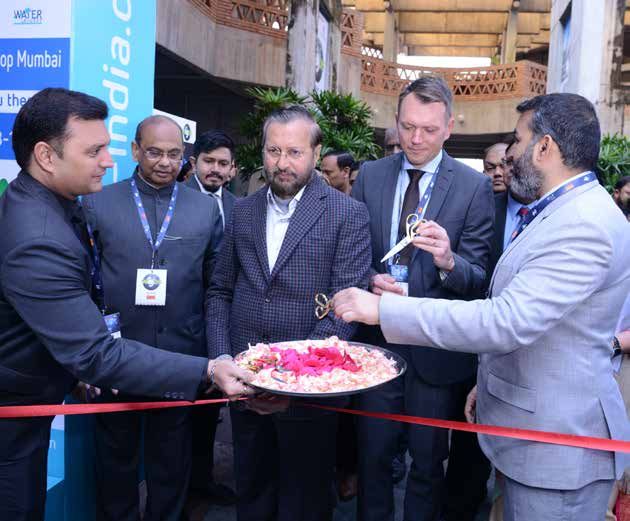
of Environment, Forest and Climate Change (MoEFCC). Mr Javadekar also inaugurated the first edition of
In his inaugural address, Mr Prakash Javadekar IFAT Delhi – North India’s trade fair for water, sewage,
expressed his satisfaction on India’s role in sustainable
solid waste and recycling. Additionally, WSDS ‘20 years’
consumption and emphasized on the urgent need
logo was also unveiled at the inaugural ceremony.
to change lifestyles as stated in the preamble of the
Paris Agreement. He highlighted that India realizes In his welcome address, Mr Nitin Desai, Chairman, TERI
that climate action has a cost and thus, there is emphasized on the need for practical expression of
an emerging need for open-source technology the term ‘sustainable development’ in order
»» Mr Prakash Javadekar presents the Sustainable Development Leadership Award to Professor Jeffrey D. Sachs at WSDS 2020.
28»» L-R: Lord Adair Turner, Chair, Energy Transitions Commission, Dr Ajay Mathur, Director General, TERI, and Mr Jairam Ramesh,
Honourable Member of Parliament, Government of India
to integrate the agendas of development and remarks thanked the Summit partners and delegates
environmental protection. across sectors for their presence and participation in
the deliberations.
TERI was honoured to felicitate Professor Jeffrey D.
Sachs with the Sustainable Development Leadership Over 20 thematic tracks covered a variety of topics
Award (SDLA) 2020 for his contribution in the field of through in-depth discussions with experts from
sustainable development. In his acceptance address, various fields. This was followed by plenary sessions, a
Professor Sachs stated the importance of shifting the key one being with Dr Ajay Mathur, Lord Adair Turner,
geopolitics of tomorrow from the current politics of Chair, Energy Transitions Commission, and Mr Jairam
power and crime to politics of problem solving. Ramesh, Honourable Member of Parliament, on the
overarching theme – ‘Towards 2030 Goals: Making the
In his welcome address, Dr Ajay Mathur, Director Decade Count’. Lord Turner asserted that while United
General, TERI stressed on the need to assess the States of America leaving the Paris Agreement was
present situation and take necessary steps to restore a tragedy, it also meant that China and India would
our ecosystems to achieve the 17 SDGs and honour the need to play a bigger role. Mr Ramesh foregrounded
Paris Agreement. He also highlighted the importance how a ground-up framework was the need of the
of fostering new partnerships and strengthening hour for a zero-carbon economy, which would include
the existing ones. Dr Mathur welcomed the Summit domestic, economic, and political policies.
delegates to the first edition of a joint venture with
The finale session was titled ‘Fireside Chat: Status
IFAT Delhi, focusing on technological innovations in
Check on Renewable Energy Financing for C&I Clients
the sector of water and waste management solutions.
in India: The Year That Was: Key Challenges, Desired
Enumerating the Summit sessions that will set a Regulatory Framework and Sectoral Outlook’. This
path for action and ‘make the decade count’ for a thought-provoking discussion presented many
brighter future for the next generation, Dr Annapurna takeaways on efficient use and management of
Vancheswaran, Senior Director, TERI in her concluding sources of renewable energy.
29WSDS SUMMIT OVERVIEW 2020
DAY–2
The second day set the ball rolling for the plenary
discussions and special sessions. These discussions
Special Session: Energy
revolved around the major themes of the Summit Future Map
that included – Mobility, Water, Industry and Energy
During the Special Session, a keynote address was
Transition, Air Pollution, Green Finance, and Blue
delivered by Mr Dharmendra Pradhan, Honourable
Economy.
Minister of Petroleum & Natural Gas and Steel,
Government of India; and, the ensuing session was
chaired by Dr Ajay Mathur, Director General, TERI.
Special Session:
The Honourable Minister discussed the urgent need
Geopolitics of the SDGs to understand and act on the issues that are creating
and India’s Leadership obstacles on the path of achieving the 2030 Goals
and commitments made at COP. He was pleased to
in the World note that the Summit focused on energy and global
attempts in moving towards green and clean energy
The day began with a keynote address by Professor
systems. He also asserted that the objectives set for
Jeffrey D. Sachs, Director, Center for Sustainable
2050 have unleashed a new paradigm in the energy
Development, Columbia University, on‘Geopolitics
sector. “The trajectory to end energy poverty in India
of the SDGs and India’s Leadership in the World’.
in comparison to the rest of the world is based on
In his address, Professor Sachs discussed the global
special national circumstances,” he said. Additionally,
dynamics of climate change and the role of India in
a report by TERI titled – Towards a Low Carbon Steel
sustainable development. He also emphasized that
Sector: An Overview of the Changing Market,Technology
India is one of the most vulnerable countries with
and Policy Context for Indian Steel was also launched
huge stakes in the success of the global venture of
during the session. Sponsored by Shakti Sustainable
sustainability. The session was chaired by former
Energy Foundation, this report is one of the first steps
Ambassador Mr Manjeev Puri, Member, Advisory
in the Indian steel industry towards developing a road
Board, TERI. Within the paradigm of the Sustainable
map for a long-term decarbonization pathway.
Development Goals (SDGs), Mr Puri pointed out the
importance of sustainability in the United Nations
agenda, which introduced the idea to the ‘global
minds’.
»» Mr Dharmendra Pradhan, Honourable Minister of
Petroleum and Natural Gas and Steel, Government of India,
»» Geo-politics of the SDGs and India’s Leadership in the World delivering the keynote address at WSDS 2020
30»» WSDS 2020 Corporate Conclave’s Opening Session underway
Corporate Conclave I: of 28% on combustion vehicles. Additionally, there is
also a provision of a subsidy of up to 1.5 lakh rupees. In
Mobility Talks his opinion, the biggest transformation in the coming
decade could be the rapid fall in the cost of battery
Setting the context of the opening session, Dr Ajay
storage. Once that is achieved, much of the power
Mathur, Director General, TERI threw light on electric
across the world would not be based on or derived
mobility as the ‘future of mobility’. He further stated
from fossil fuels, but rather rely on renewable energy.
that there have been many initiatives taken up by the
Such a development could lead to a decentralized,
government, particularly related to introducing the
digitized, and decarbonized world.
concept of electric mobility in the country and the
subsidies that are provided as part of Faster Adoption
and Manufacturing of (Hybrid &) Electric Vehicle Session 1: Need for Clean Mobility:
(FAME) India I and II schemes. He suggested that we Exploring the Options Available Towards
need to look into decarbonization in key sectors such Cleaner Future
as road economy and in the process, push a transition
As the transport sector is one of the key emission-
to 100% green electricity-based mobility. Mr Amitabh
generating sectors, the discussion focused on the need
Kant, CEO, NITI Aayog, emphasized that 70% of the
for transition towards clean mobility solutions. The
diesel and 99.6% of the petrol in India are consumed
by the transportation sector, which is why the shift to
clean fuels is absolutely imperative to our country. He
added that in three years’ time, electric vehicles (EVs) In order to move towards a
will be much cheaper than combustion vehicles, and shared, connected, and zero-
emission world, it is important that
hence, the initial cost of buying these vehicles will be
the battery is charged with clean
considerably affordable. This would ultimately mean
power and not fossil power.
that we would be able to move from 200 packs in
- Mr Amitabh Kant,
combustion vehicles to 20 packs in EVs. Significantly, CEO, NITI Aayog
for boosting the sale of EVs, the government of India
levies a minimal GST of 5% on EVs as opposed to a GST
31WSDS SUMMIT OVERVIEW 2020
Corporate Conclave
II: Addressing Climate
Change through Waste
Management Initiatives
This session broadly focused on various elements
of climate change and plausible ways to reverse the
effects of climate change. Mr Sanjay Mitra, Professor
of Practice, IIT Delhi stated that waste management
deliberations focused on facilitating such a transition is a matter of serious concern for India, where
in a holistic manner. The transition to cleaner and urbanization has led to an excessive generation of
sustainable mobility future should ideally encompass municipal waste that must be categorized into solid
multiple objectives of improving liveability, reducing waste and waste water. Dr S. K. Ghosh, Professor and
air pollution at the city level, and enhancing national Former Head Mechanical Engineering Department,
trade security, and energy security. Jadavpur University said that climate change and
resource consumption are correlated, and the risks
can only be addressed by using a multipronged
Session 2: Inroads into E-Mobility –
approach.
Enabling Environment to Encourage EV
Penetration
The session began with a discussion on the key
challenges in the adoption of e-mobility in India. The
future adoption of EVs is dependent on the consumers’
trust in them.This trust could be strengthened through
awareness based on experience and exposure to EVs.
Dignitaries shared their insights on how the cases of
EV adoption differed drastically between multiple
countries. The panel further discussed the aspects
of EV industry and the infrastructural charging
requirements that would vary for both rural and
urban sectors. As a consequence, it is important that
India develops specific solutions that could rely on Plenary Session:
and be compatible with the models of ‘Make in India’,
‘Design in India’, and ‘Develop Skills in India’. Beyond Connections
– Sustaining Universal
Energy Access in India
The framework of energy access set the theme of the
discussion on achieving the targets of the Sustainable
Development Goals (SDGs). Unlocking the
transformative potential of an electricity connection
is crucial for both India and the international
community. The panelists deliberated on the success
of energy provisioning till date, along with the
32Change), TERI said that the developing world should
look towards securing sustainable development and
tackling climate change. Mr Yvo de Boer, Advisor and
Consultant on International Environmental Policy and
former Executive Secretary, UNFCCC expressed hope
that all countries would strike a mutual agreement
on an increased ambition at COP26 since the climate
change challenge has reached a level of massive
global action. Ms Brigitte Collet, French Ambassador
for Climate, mentioned that in order to achieve success
at COP26, there is an urgent need to consolidate the
four pillars of the Paris Agreement architecture and
integrate the youth into the process. HE Mr Vincenzo
significant challenges that such a developmental goal de Luca, Ambassador of Italy to India, Embassy of Italy,
must overcome. The experts were in agreement that mentioned that the UK and Italy are doing their best
while the reach of energy connections in India has for COP26 and acknowledged that the inclusion of
expanded exponentially, the reliability of this energy every stakeholder to tackle the challenges of climate
input and the productivity of the output are pertinent change is extremely crucial. In his address, Professor
aspects for improving developmental outcomes. Nicholas Stern, Member–COP26 Advisory Board,
highlighted five essential strands that feed into the
Nationally Determined Contributions (NDCs) and the
Plenary Session: Success long-term strategy that fundamentally underlines
at COP26? the narrative of aiming for a zero carbon economy
through a sustainable and an inclusive growth.
In his opening remarks, Ambassador Ajai Malhotra,
Distinguished Fellow and Senior Advisor (Climate
»» Plenary Session: Success at COP26?
33You can also read


