Xpert Ebola Assay GXEBOLA-10 - IVD - Cepheid
←
→
Page content transcription
If your browser does not render page correctly, please read the page content below
y
                                                                         op
Xpert® Ebola Assay

                                                                    C
                                                                d
                                                              lle
Instructions for Use
For Use Under an Emergency Use Authorization (EUA) Only

                                                      tro
       GXEBOLA-10

                                                    on
                                                   C
                                                  A
                                      ot
                                    -N
                               y
                            nl
                        O
                    n
                 io
             at
          m
      or
   nf
rI
Fo

                 For use under an Emergency Use
                 Authorization (EUA) Only         IVD   EUA   301-4732, Rev. D April 2020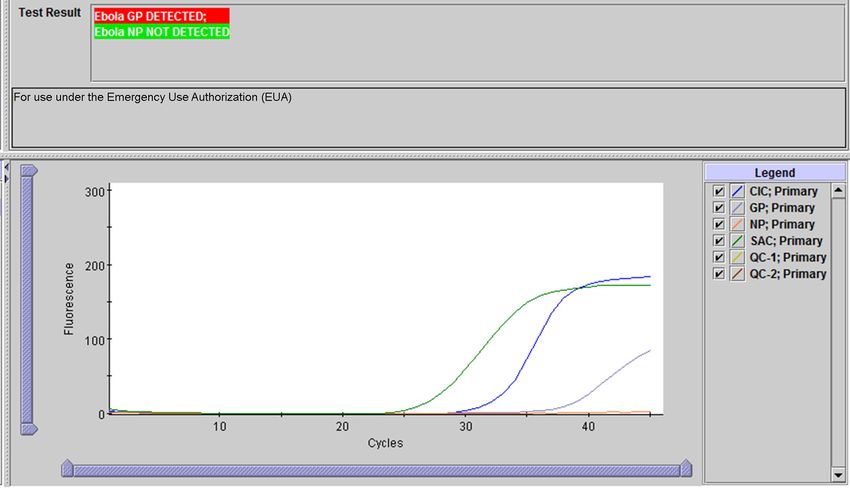
Trademark, Patents and Copyright Statements

Cepheid®, the Cepheid logo, GeneXpert®, Xpert®, and Xpertise™ are trademarks of Cepheid.
Windows® is a trademark of Microsoft Corporation.
Armored RNA® is a registered trademark of Asuragen, Inc.
THE PURCHASE OF THIS PRODUCT CONVEYS TO THE BUYER THE NON-TRANSFERABLE RIGHT TO USE IT IN
ACCORDANCE WITH THIS PACKAGE INSERT. NO OTHER RIGHTS ARE CONVEYED EXPRESSLY, BY IMPLICATION OR

                                                                                               y
BY ESTOPPEL. FURTHERMORE, NO RIGHTS FOR RESALE ARE CONFERRED WITH THE PURCHASE OF THIS

                                                                                            op
PRODUCT.

                                                                                           C
Copyright © Cepheid 2020. All rights reserved.

                                                                                           d
                                                                                      lle
                                                                        tro
                                                                      on
                                                                     C
                                                              A
                                                           ot
                                                    -N
                                           y
                                         nl
                                    O
                              n
                           io
                      at
                  m
             or
       nf
 rI
Fo

Cepheid AB
Röntgenvägen 5
SE-171 54 Solna
Sweden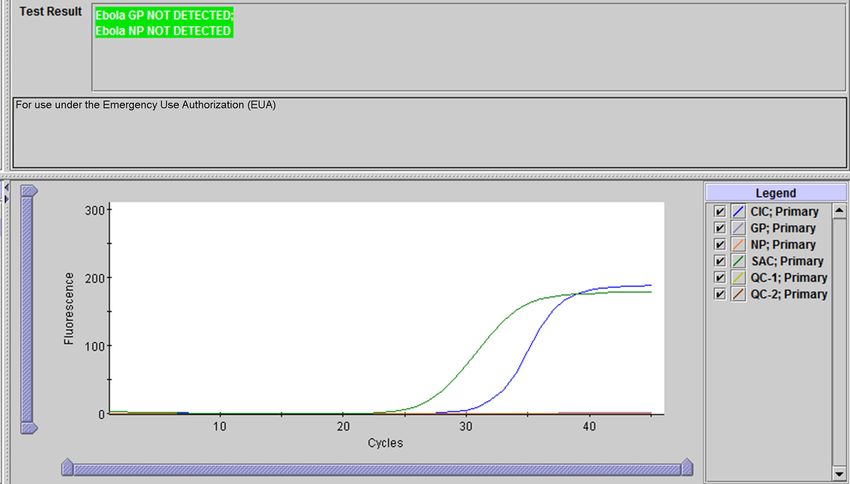
Xpert® Ebola Assay

                                                                                                                                y
         For use under the Emergency Use Authorization (EUA) only.

                                                                                                                    op
    1    Proprietary Name
         Xpert® Ebola

                                                                                                                   C
    2    Common or Usual Name

                                                                                                             d
         Xpert Ebola Assay

                                                                                                      lle
    3    Intended Use
         The Xpert Ebola Assay is a real-time reverse transcription polymerase chain reaction (RT-PCR) test intended for the qualitative

                                                                                    tro
         detection of RNA from the Ebola Zaire virus (detected in the West Africa outbreak in 2014) in EDTA venous whole blood from
         individuals with signs and symptoms of Ebola virus infection in conjunction with epidemiological risk factors.

                                                                                  on
         Testing with the Xpert Ebola Assay should not be performed unless the individual meets clinical and epidemiological criteria for
         testing of suspected cases.

                                                                                 C
         Results are for the presumptive identification of Ebola Zaire virus. The definitive identification of Ebola Zaire virus infection
         requires additional testing and confirmation procedures in consultation with public health or other authorities for whom

                                                                      A
         reporting is required. The diagnosis of Ebola Zaire virus infection must be made based on history, signs, symptoms, exposure
         likelihood, and other laboratory evidence in addition to the identification of the Ebola Zaire virus.
                                                                   ot
         Negative results do not preclude Ebola Zaire or other Ebola virus infections and should not be used as the sole basis for patient
         management decisions.
                                                          -N

         The level of Ebola virus present in blood from individuals with early systemic infection is unknown. Due to the difficulty in
         obtaining clinical specimens positive for Ebola, the Xpert Ebola Assay was evaluated with limited numbers of contrived
         specimens spiked with live Ebola Zaire virus or Ebola Zaire virus RNA. The assay has not been evaluated with blood from
                                                 y

         individuals with Ebola Zaire virus infection.
                                               nl

         The Xpert Ebola Assay is for use only under Emergency use Authorization (EUA) in U.S. laboratories certified under the
         Clinical Laboratory Improvement Amendments of 1988 (CLIA), 42 U.S.C. §263a, to perform moderate complexity tests, and in
                                         O

         U.S. laboratories certified under CLIA to perform high complexity tests, or in similarly qualified non-U.S. laboratories, by
         clinical laboratory personnel who have received specific training on the use of the Xpert Ebola Assay on the GeneXpert
                                 n

         Instrument Systems.
                              io

         Notification of Public Health authorities: Local, state and national public health agencies (for example, county and state health
         departments or the U.S. Centers for Disease Control and Prevention (CDC)) should be notified of any patient suspected to have
                        at

         Ebola Virus Disease (EVD). Confirmatory testing at the state/local public health laboratory or at CDC is necessary for positive
                   m

         detection results and may be necessary for negative detection results. Laboratories should consult with local, state or national
         public health officials on any positive or negative Xpert Ebola test result on the need for additional testing and appropriate
            or

         transportation of specimens.
    4    Summary and Explanation
        nf

         Ebola virus disease (EVD) has occurred sporadically throughout West Africa for decades of outbreaks, but the current epidemic
  rI

         is the largest to date. As of February 15, 2015, over 23,000 individuals have been infected and over 9,000 have died as a result.
         EVD has now spread to six countries including Guinea, Liberia, Sierra Leone, Mali, USA and Spain. The burden on healthcare
Fo

         workers in endemic areas is also significant; to date, a total of 833 health-care workers (HCW) were infected, with over 50%
         mortality. Since the first discovery of Ebola virus in 1976, five Ebola species have been described: Zaire, Sudan, Côte d'lvoire
         (Tai Forest), Bundibugyo and Reston Ebola virus. Among these Ebola virus species, Zaire Ebola virus has affected the widest
         geographic regions and is the cause of the current outbreak.
         The Xpert Ebola Assay uses reverse transcription polymerase chain reaction (RT-PCR) technology to achieve high sensitivity for
         the qualitative detection of Zaire Ebola virus total nucleic acids in whole blood specimen.

Xpert® Ebola Assay                                                                                                                           1
301-4732, Rev. D April 2020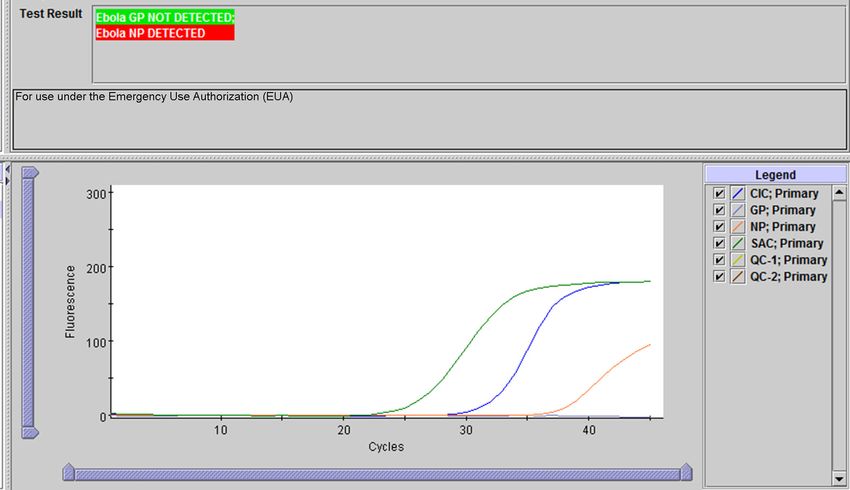
Xpert® Ebola Assay

         5         Principle of the Procedure
                   The Xpert Ebola Assay is a rapid, automated test for qualitative detection of the Zaire strain of the Ebola virus. The assay is
                   performed on the Cepheid GeneXpert Instrument Systems.
                   The GeneXpert Instrument Systems automate and integrate sample purification, nucleic acid amplification, and detection of the
                   target sequence in simple or complex samples using real-time reverse transcription PCR. The systems consist of an instrument,
                   personal computer, and preloaded software for running tests and viewing the results. The systems require the use of single-use
                   disposable GeneXpert cartridges that hold the real-time reverse transcription PCR reagents and host the real-time reverse

                                                                                                                                             y
                   transcription processes. Because the cartridges are self-contained, cross-contamination between samples is minimized. For a full

                                                                                                                                   op
                   description of the systems, refer to the appropriate GeneXpert Dx Operator Manual or GeneXpert Infinity Operator Manual.
                   The Xpert Ebola Assay includes reagents for the detection of Zaire Ebola virus total nucleic acids in specimens as well as a

                                                                                                                                  C
                   sample adequacy control and an internal control and to ensure adequate addition of sample, processing of the target and to
                   monitor presence of inhibitor(s) in the RT and PCR reactions. The Probe Check Control (PCC) verifies reagent rehydration,

                                                                                                                          d
                   PCR tube filling in the cartridge, probe integrity and dye stability.

                                                                                                                   lle
         6         Reagents and Instruments
     6.1           Materials Provided

                                                                                                 tro
                   The Xpert Ebola Assay kit contains sufficient reagents to process 10 specimens or quality control samples. The kit contains the
         ∑
                   following:

                                                                                               on
                       GeneXpert Ebola Assay Cartridges with Integrated Reaction Tubes                               10 per kit

                                                                                              C
                       • Bead 1, Bead 2, and Bead 3 (freeze-dried)                                                   1 of each per cartridge
                       • Rinse Reagent
                       • Elution Reagent
                                                                                   A                                 0.5 mL per cartridge
                                                                                                                     2.0 mL per cartridge
                                                                                ot
                       • Binding Reagent                                                                             2.0 mL per cartridge
                                                                       -N

                       Ebola Sample Reagent (Sample Reagent)                                                         10 bottles per kit
                       • Lysis Reagent (Guanidinium Thiocyanate)                                                     10 x 2.5 mL per bottle
                       Disposable 1 mL Transfer Pipettes                                                             10 per kit
                                                              y

                       CD
                                                            nl
                                                       O

     Note Safety Data Sheets (SDS) are available at www.cepheidinternational.com under the SUPPORT tab.
                                              n

                   The bovine serum albumin (BSA) in the beads within this product was produced and manufactured exclusively from bovine plasma
                                           io

     Note sourced in the United States. No ruminant protein or other animal protein was fed to the animals; the animals passed ante- and
                   postmortem testing. During processing, there was no mixing of the material with other animal materials.
                                     at

         7         Storage and Handling
                                m

    +2
             +28
                   •        Store the Xpert Ebola Assay cartridges and reagents at 2–28 °C.
                        or

                   •        Do not use any reagents that have become cloudy or discolored.
                   •        Do not use a cartridge that has leaked.
                   nf

         8         Materials Required but Not Provided
    rI

                   •        GeneXpert Dx System or GeneXpert Infinity Systems (catalog number varies by configuration): GeneXpert Instrument,
                            computer with proprietary GeneXpert Software Version 4.4a or higher, Xpertise 6.2 or higher, barcode scanner, and operator
Fo

                            manual
                   •        Printer: If a printer is required, contact Cepheid Technical support to arrange for the purchase of a recommended printer.
                   •        Disposable Swabs (catalog # SWAB/E-50)
                   •        Vortex
                   •        Chlorine Bleach

2                                                                                                                                  Xpert® Ebola Assay
                                                                                                                            301-4732, Rev. D April 2020
Xpert® Ebola Assay

      9     Warnings and Precautions
            •     For in vitro diagnostic use under Emergency Use Authorization only.
            •     Local, state, and national public health agencies (for example, county and state health departments or the U.S. Centers for
                  Disease Control and Prevention (CDC)) should be notified of any patient suspected to have Ebola Virus Disease (EVD).
                  Confirmatory testing at the state/local public health laboratory or at CDC is necessary for positive detection results and may
                  be necessary for negative detection results. Laboratories should consult with local, state or national public health officials on
                  any positive detection OR no detection (negative) EVD test result on the need for additional testing and appropriate

                                                                                                                                         y
                  transportation of specimens.

                                                                                                                             op
            •     All results should be interpreted by a trained professional in conjunction with review of the patient’s clinical signs and
                  symptoms and history.

                                                                                                                            C
            •     Use of this assay should only be for trained personnel.
            •     Treat all biological specimens, including used cartridges, as if capable of transmitting infectious agents. Because it is often

                                                                                                                      d
                  impossible to know which might be infectious, all biological specimens should be treated with standard precautions.

                                                                                                              lle
                  Guidelines for specimen handling are available from the U.S. Centers for Disease Control and Prevention and the Clinical
                  and Laboratory Standards Institute.

                                                                                           tro
            •     When processing more than one sample at a time, open only one cartridge; add the Sample Reagent-treated sample and close
                  the cartridge before processing the next sample. Change gloves between samples

                                                                                         on
            •     Wear protective disposable gloves, laboratory coats and eye protection when handling specimens and reagents. Wash hands
                  thoroughly after handling specimens and test reagents.

                                                                                        C
            •     Follow your institution's safety procedures for working with chemicals and handling biological samples.
            •     Do not substitute Xpert Ebola Assay reagents with other reagents.
            •                                                               A
                  Do not open the Xpert Ebola Assay cartridge lid except when adding the Sample Reagent-treated sample.
                                                                         ot
            •     Do not use a cartridge if it appears wet or if the lid seal appears to have been broken.
            •     Do not use a cartridge that has been dropped after removing it from the packaging.
                                                               -N

            •     Do not shake the cartridge. Shaking or dropping the cartridge after opening the cartridge lid may yield invalid results.
            •     Do not use a cartridge that has a damaged reaction tube.
      2
                                                      y

            •     Each single-use Xpert Ebola Assay cartridge is used to process one test. Do not reuse spent cartridges.
                                                    nl

            •     The single-use disposable pipette is used to transfer one specimen. Do not reuse spent disposable pipettes.
            •     The single-use disposable swab is used to collect and/or transfer one specimen. Do not reuse spent disposable swabs.
                                              O

            •     Biological specimens, transfer devices, and used cartridges should be considered capable of transmitting infectious agents
                  requiring standard precautions. Follow your institution’s environmental waste procedures for proper disposal of used
                                     n

                  cartridges and unused reagents. These materials may exhibit characteristics of chemical hazardous waste requiring specific
                                  io

                  national or regional disposal procedures. If national or regional regulations do not provide clear direction on proper disposal,
                  biological specimens and used cartridges should be disposed per WHO (World Health Organization) medical waste handling
                            at

                  and disposal guidelines.
                      m

 +2
      +28
            •     Store the Xpert Ebola Assay kit at 2–28 °C.
                or

            Before starting, remove the bottle containing the Sample Reagent from the kit and allow to adjust to room temperature. See Figure 1.
  Note
            If the bottle has not been stored in an upright position, make sure the buffer is settled in the bottom by giving the bottle a firm shake.
            nf

  Note Wear disposable gloves. Label the Sample Reagent vial with the specimen identification.
  rI
Fo

Xpert® Ebola Assay                                                                                                                                   3
301-4732, Rev. D April 2020
Xpert® Ebola Assay
10 Chemical Hazards1,2
• Signal Word: WARNING
• UN GHS Hazard Statements
• Harmful if swallowed
• May be harmful in contact with skin
• Causes eye irritation
y
op
• UN GHS Precautionary Statements
• Prevention
C
• Wash thoroughly after handling.
• Response
d
• Call a POISON CENTER or doctor/physician if you feel unwell.
lle
• If skin irritation occurs: Get medical advice/attention.
tro
• IF IN EYES: Rinse cautiously with water for several minutes. Remove contact lenses, if present and easy to do.
Continue rinsing.
• If eye irritation persists: Get medical advice/attention.
on
11 Specimen Collection, Transport, and Storage
C
11.1 Whole Blood
Collection
A
Collect whole blood specimens by venipuncture in EDTA tubes per the manufacturer’s instructions for use. A minimum of
100 µL of whole blood is required for the Xpert Ebola Assay.
ot
Important Immediately proceed with the sample preparation step to ensure that the Ebola virus gets inactivated.
-N
Sample Preparation
Venous Whole Blood collected in EDTA-tubes: Open the lid of the Sample Reagent bottle. Transfer 0.1 ml blood by placing the
swab (SWAB/E-50) in the EDTA tube and allow it to absorb blood for at least 30 seconds, transfer the sample by inserting the
y
prepared swab into the Sample Reagent bottle (see Figure 1). Hold the swab by the stem and align the small groove against the
nl
rim of the tube. Break off the swab by bending to one side.
O
Note Use sterile gauze to minimize risk of contamination.
n
Close the lid of the Sample Reagent bottle and mix the sample by vortex for 10 seconds. Let it incubate at room temperature for
io
20 minutes.
at
m
or
nf
rI
Fo
4 Xpert® Ebola Assay
301-4732, Rev. D April 2020Xpert® Ebola Assay
Breakpoint
y
op
C
d
lle
tro
on
C
Figure 1. Xpert Ebola Assay Sample Reagent Bottle and Ebola Sample Collection Swab
11.2
+2
+8
Sample Transport and Storage
A
Transport Sample Reagent-treated samples to the testing laboratories for further processing in individual resealable bags
ot
+30
according to WHO guidelines for transport of Ebola specimens, “How to safely collect blood samples from persons suspected to
+8
be infected with highly infectious blood-borne pathogens (e.g. Ebola)”. The Sample Reagent-treated blood samples may be
-N
+28
+35
stored for up to 72 hours at 2-8 °C and for up to 48 hours at 8-30 °C or for up to 24 hours at 28-35 °C.
12 Procedure
12.1 Preparing the Cartridge
y
nl
Note There is a thin plastic film that covers the inner ring of the ports of the test cartridge. This film should not be removed.
O
Important Start the test within 30 minutes of adding the sample to the cartridge.
n
1. Wear protective disposable gloves.
io
2. Label the Sample Reagent vial with the specimen identification.
at
3. Inspect the test cartridge for damage. If damaged, do not use.
4. Open the cartridge lid.
m
5. Use the 1 mL transfer pipette (see Figure 2) or an automatic pipette to transfer 1 mL of the sample reagent-treated specimen
or
into the sample chamber of the cartridge (see Figure 3). Do NOT pour the specimen into the chamber.
nf
rI
Fo
Xpert® Ebola Assay 5
301-4732, Rev. D April 2020Xpert® Ebola Assay
Bulb
Fill specimen to just below
the bulb and above the mark
y
on the pipette
op
C
d
lle
tro
Figure 2. Xpert Ebola Assay 1 mL Transfer Pipette
on
C
A
ot
Sample Chamber
(Large Opening)
-N
Figure 3. Xpert Ebola Assay Cartridge (Top View)
y
12.2 Starting the Test
nl
Important Before starting the test, make sure the Xpert Ebola Assay Definition File is imported into the software.
O
This section lists the basic steps for running the test. For detailed instructions, see the GeneXpert Dx System Operator Manual
or the GeneXpert Infinity System Operator Manual, depending on the model that is being used.
n
1. Turn on the GeneXpert instrument system:
io
• If using the GeneXpert Dx instrument, first turn on the instrument and then turn on the computer. The GeneXpert
at
software will launch automatically or may require double-clicking the GeneXpert Dx software shortcut icon on the
Windows® desktop.
m
or
or
• If using the GeneXpert Infinity instrument, power up the instrument. The Xpertise software will launch automatically
or may require double clicking the Xpertise software shortcut icon on the Windows desktop.
nf
2. Log on to the GeneXpert Instrument System software using your user name and password.
rI
3. In the GeneXpert System window, click Create Test (GeneXpert Dx) or click Orders and Order Test (Infinity).
4. Scan in the Patient ID (optional). If typing the Patient ID, make sure the Patient ID is typed correctly. The Patient ID is
Fo
associated with the test results and is shown in the View Results window.
5. Scan or type in the Sample ID. If typing the Sample ID, make sure the Sample ID is typed correctly. The Sample ID is
associated with the test results and is shown in the View Results window and all reports. The Scan Cartridge dialog box
appears.
6. Scan the barcode on the Xpert Ebola Assay cartridge. The Create Test window appears. Using the barcode information, the
software automatically fills the boxes for the following fields: Select Assay, Reagent Lot ID, Cartridge SN.
6 Xpert® Ebola Assay
301-4732, Rev. D April 2020Xpert® Ebola Assay
7. Click Start Test (GeneXpert Dx) or Submit (Infinity). Enter your password, if requested.
8. For the GeneXpert Infinity System, place the cartridge on the conveyor belt. The cartridge will be automatically loaded, the
test will run, and the used cartridge will be placed into the waste container.
or
For the GeneXpert Dx Instrument:
A. Open the instrument module door with the blinking green light and load the cartridge.
y
B. Close the door. The test starts and the green light stops blinking. When the test is finished, the light turns off.
op
C. Wait until the system releases the door lock before opening the module door. Then remove the cartridge.
D. The used cartridges should be disposed in the appropriate specimen waste containers according to your institution's
C
standard practices.
13 Viewing and Printing Results
d
lle
This section lists the basic steps for viewing and printing results. For more detailed instructions on how to view and print the
results, see the GeneXpert Dx System Operator Manual or the GeneXpert Infinity System Operator Manual, depending on the
instrument used.
tro
1. Click the View Results icon to view results.
Upon completion of the test, click the Report button of the View Results window to view and/or generate a PDF report file.
on
2.
14 Quality Control
C
Each test includes a Sample Adequacy Control (SAC), a Sample Processing Control (SPC) and Probe Check Control (PCC).
• Sample Adequacy Control (SAC): Ensures that the sample was correctly added to the cartridge. The SAC verifies that the
A
correct in-volume of sample has been added in the sample chamber. The SAC passes if it meets the validated acceptance
criteria.
ot
• Sample Processing Control (SPC): Ensures the sample was correctly processed. The SPC is an Armored RNA® control in
the form of a dry bead that is included in each cartridge to verify adequate processing of the sample virus. The SPC verifies
-N
that lysis of Ebola has occurred if the organism is present and verifies that the specimen processing is adequate. Additionally
this control detects specimen-associated inhibition of the RT-PCR reaction. The SPC should be positive in a negative sample
and can be negative or positive in a positive sample. The SPC passes if it meets the validated acceptance criteria.
y
• Probe Check Control (PCC): Before the start of the PCR reaction, the GeneXpert Instrument System measures the
nl
fluorescence signal from the probes to monitor bead rehydration, reaction tube filling, probe integrity, and dye stability. The
PCC passes if it meets the validated acceptance criteria.
O
• External Controls: External controls should be used in accordance with local, state, and federal accrediting organizations’
requirements as applicable.
n
• Negative venous whole blood specimens can be used as External Negative Controls to be run as patient specimens. For
io
information on how to obtain optional external control materials, contact Technical Support at TechSupport@cepheid.com
at
or www.cepheid.com under the SUPPORT tab.
15 Interpretation of Results
m
The results are interpreted automatically by the GeneXpert Instrument System from measured fluorescent signals and embedded
or
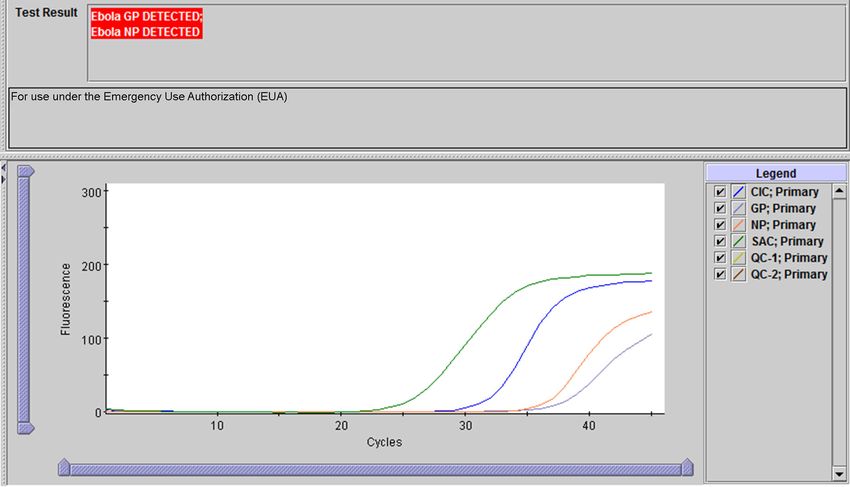
calculation algorithms and are clearly shown in the View Results window (see Figure 4, Figure 5, Figure 6 and Figure 7).
Possible results are shown in Table 1.
nf
rI
Fo
Xpert® Ebola Assay 7
301-4732, Rev. D April 2020Xpert® Ebola Assay
Table 1. Xpert Ebola Assay Results and Interpretation
Result Interpretation
Ebola GP DETECTED, Ebola NP DETECTED The EBOLA target nucleic acids are detected.
or • The EBOLA signal for both or one of the two nucleic acids
Ebola GP DETECTED, Ebola GP NOT DETECTED target have a Ct within the valid range and endpoint
y
or above the minimum setting.
op
Ebola GP NOT DETECTED, Ebola NP DETECTED
• SAC: NA (not applicable); SAC is ignored because the
See Figure 4, Figure 5 and Figure 6. EBOLA target amplification occurred.
C
• SPC: NA (not applicable); SPC is ignored because the
EBOLA target amplification occurred.
d
• Probe Check: PASS; all probe check results pass.
lle
Ebola GP NOT DETECTED, Ebola NP NOT DETECTED The EBOLA target nucleic acids are not detected. SPC
meets acceptance criteria.
tro
See Figure 7.
• SAC: PASS; SAC has a Ct within the valid range and
endpoint above the minimum setting.
on
• SPC: PASS; SPC has a Ct within the valid range and
endpoint above the minimum setting.
• Probe Check: PASS; all probe check results pass.
C
INVALID Presence of absence of the target nucleic acids cannot be
determined. Repeat test according to instructions in Retest
AProcedure.
ot
• SAC: FAIL; SAC Ct is not within the valid range and the
endpoint is below the minimum setting.
-N
• SPC: PASS; SPC has a Ct within the valid range and the
endpoint above the minimum setting.
• Probe Check: PASS; all probe check results pass.
y
Or
nl
• SAC: PASS; SAC has a Ct within the valid range and the
fluorescence endpoint above the minimum setting.
O
• SPC: FAIL; SPC Ct is not within the valid range and the
endpoint is below the minimum setting.
n
• Probe Check: PASS; all probe check results pass.
io
ERROR Presence or absence of EBOLA nucleic acids cannot be
determined. Repeat test according to the instructions in
at
Retest Procedure.
m
• EBOLA: NO RESULT
• SAC: NO RESULT
or
• SPC: NO RESULT
• Probe Check: FAIL, all or one of the probe checks fail.
nf
NO RESULT Presence or absence of EBOLA target nucleic acids cannot
rI
be determined. Repeat test according to the instructions in
Retest Procedure. A NO RESULT indicates that insufficient
Fo
data were collected. For example, the operator stopped a
test that was in progress.
• EBOLA: NO RESULT
• SAC: NO RESULT
• SPC: NO RESULT
• Probe Check: NA (not applicable)
8 Xpert® Ebola Assay
301-4732, Rev. D April 2020Xpert® Ebola Assay
Assay screenshots are for example only and may vary from screenshots shown in this package insert. QC1 and QC2 in legends of
Note Figure 4, Figure 5, Figure 6, and Figure 7 control for presence of probes (see Probe Check Control in Section 14, Quality Control);
amplification curves not generated.
y
op
C
d
lle
tro
on
C
A
ot
-N
Figure 4. Ebola GP DETECTED, Ebola NP DETECTED
y
nl
O
n
io
at
m
or
nf
rI
Fo
Figure 5. Ebola GP DETECTED, Ebola NP NOT DETECTED
Xpert® Ebola Assay 9
301-4732, Rev. D April 2020Xpert® Ebola Assay
y
op
C
d
lle
tro
on
C
A
Figure 6. Ebola GP NOT DETECTED, Ebola NP DETECTED
ot
-N
y
nl
O
n
io
at
m
or
nf
rI
Fo
Figure 7. Ebola GP NOT DETECTED, Ebola NP NOT DETECTED
10 Xpert® Ebola Assay
301-4732, Rev. D April 2020Xpert® Ebola Assay
16 Retests
16.1 Reasons to Repeat the Test
If any of the test results mentioned below occur, repeat the test according to the instructions in Section 15.2 Retest Procedure.
• An INVALID result indicates one or more of the following
• The control SPC failed.
• The sample was not properly processed or PCR is inhibited.
y
• The control SAC failed.
op
• The added sample volume was insufficient.
• An ERROR result indicates that the assay was aborted. Possible causes include: the reaction tube being filled improperly, a
C
reagent probe integrity problem was detected, because the maximum pressure limit was exceeded.
d
• A NO RESULT indicates that insufficient data were collected. For example, the operator stopped a test that was in progress,
or a power failure occurred.
lle
16.2 Retest Procedure
For retest of a NO RESULT, INVALID, or ERROR result, use a new cartridge (do not re-use the cartridge) and new reagents.
tro
1. Remove a new cartridge from the kit.
on
2. See Section 12.1, Preparing the Cartridge, and Section 12.2, Starting the Test.
17 Performance Characteristics
C
17.1 Limit of Detection
The limit of detection (LoD) of the Xpert Ebola Assay was estimated for Ebola Zaire RNA and for live Ebola Zaire virus.
A
Testing was performed with three dilution panels each tested using one reagent kit lot. Viral RNA purified from Ebola Zaire
Mayinga virus obtained from Public Health Agency of Sweden was diluted in a mixture of Sample Reagent and whole blood
ot
and the live Ebola virus 2014/Gueckedou-C05 and 2014/Gueckedou-C07 was each diluted in EDTA whole blood. In total, 20
RNA replicates and 4 live virus replicates per level and specimen were tested. The LoD using RNA was estimated as the lowest
-N
concentration of target Ebola Zaire RNA that could be reproducibly distinguished from negative samples with 95% probability
using Probit analysis. Verification of the estimated LoD of Ebola RNA was performed on one reagent lot with 25 replicates. All
25 replicates were positive. The estimated LoD of live virus was confirmed as the lowest concentration of plaque forming unit
(PFU) per mL EDTA whole blood at which at least 19 out of 20 replicates were positive. The results for Ebola Zaire RNA and
y
live virus are shown in Table 2 and Table 3.
nl
O
Table 2. Limit of Detection for Ebola Zaire RNA for Xpert Ebola Assay Using Probit Regression
n
Nominal Total Total Positivity LoD with 95% Probability
Concentration Replicates Positives Rate Estimated by Probit
io
Specimen (copies/mL) (N) (N) (%) (95% Confidence Interval)
at
700 20 20 100
300 20 20 100
m
Ebola Zaire 150 20 13 65 232.4 copies/mL
or
Mayinga RNA 75 20 12 60 (95% CI 163.1-301.6)
nf
30 20 9 45
15 20 5 25
rI
Fo
Xpert® Ebola Assay 11
301-4732, Rev. D April 2020Xpert® Ebola Assay
Table 3. Numbers of Positive Replicates Per Level for Ebola Zaire Makona-Gueckedou 07 and 05 Virus in EDTA-WB and
Confirmation of Limit of Detection
Confirmation of LoD
Nominal Total Total Positivity Nominal Total Total
Concentration Replicates Positives Rate Concentration Replicates Positives
y
Specimen (PFU/mL) (N) (N) (%) (PFU/mL) (N) (N)
op
50 4 4 100
25 4 4 100
C
Ebola Zaire
Makona- 12.5 4 4 100
1.0 20 20
Gueckedou 07
d
1 4 4 100
virus
lle
0.1 3 1 33
0.01 4 0 0
tro
Ebola Zaire 0.13 4 4 100
Makona- 0.065 4 4 100
on
Gueckedou 05 0.13 20 20
virus 0.0325 4 3 75
0.01625 4 1 25
C
17.2 Analytical Reactivity (Inclusivity)
A
The analytical reactivity (inclusivity) of the Xpert Ebola was determined for four Ebola Zaire strains other than Mayinga that
were available in the form of live Ebola virus or viral RNA. In addition, in silico analysis of all other, not tested, available
ot
sequences of Ebola Zaire strains was performed. The test samples were prepared by spiking each individual specimen into Ebola
negative EDTA whole blood, or if RNA prepared from virus was used, into Ebola negative EDTA whole blood mixed with
-N
Sample Reagent (SR). Each specimen was tested in replicates of 20 and a negative control specimen, comprised of Ebola
negative EDTA whole blood, was tested in replicates of three using one kit lot of reagents. The test results for Ebola positive
specimens are presented in Table 4. All Ebola negative control specimens were reported Ebola GP NOT DETECTED, Ebola NP
y
NOT DETECTED.
nl
Table 4. Analytical Reactivity for the Xpert Ebola Assay
O
Total Total Positivity
n
Specimen Testing Replicates Positives Rate
io
Ebola Zaire Strain Type Concentration (N) (N) (%)
Guinea Live virus 1x LoD 20 20 100%
at
Ekron Live virus 3x LoD 20 20 100%
m
Gabon Live virus 3x LoD 20 20 100%
or
Kikwit RNA 5x LoD 20 20 100%
nf
In silico analysis was performed to predict the performance of the Xpert Ebola Assay in detection of all Ebola Zaire variant
sequences available in GenBank; from the first Zaire sequence data published in 1976 to the sequences from the current West
rI
Africa outbreak. The two Xpert Ebola amplicon sequences derived from Zaire glycoprotein (GP) and nucleoprotein (NP) genes
were each submitted to BLAST (NCBI). Also, all six Xpert Ebola oligo sequences were checked individually against a local
Fo
database alignment containing all Ebola Zaire sequences available in GenBank. The analyses show that the Ebola Zaire NP and
GP oligonucleotides completely match all Zaire sequences present in GenBank.
12 Xpert® Ebola Assay
301-4732, Rev. D April 2020Xpert® Ebola Assay
17.3 Analytical Specificity (Exclusivity)
The analytical specificity of the Xpert Ebola Assay was evaluated by testing non-Ebola viruses and bacteria and non-Zaire Ebola
strains at clinically relevant levels. The specimens were prepared by spiking each individual organism into Ebola negative
EDTA whole blood or if genomic RNA/DNA of the organism was used, into Ebola negative EDTA whole blood mixed with
Sample Reagent. The analytical specificity test results are shown in Table 5 and Table 6. The analytical specificity of the Xpert
Ebola Assay for the evaluated organisms is 100%.
y
Table 5. Analytical Specificity Determination for Xpert Ebola Assay, non-Zaire Ebola Positive Specimens
op
Testing Conc.
(Particle
C
Unit
Conc. Positive Negative
Organism Specimen Type (ng or N
Used for Results Results
d
PFU/mL WB)
Nucleic Acid
lle
Isolation)
Ebola Ivory Coast Nucleic acids 546a ng/mL 3 0 3
tro
5
Ebola Reston Nucleic acids 3.0x10 PFU/mL 3 0 3
a. RNA concentration of the stock material
on
C
Table 6. Analytical Specificity Determination for Xpert Ebola Assay, non-Ebola Specimens
A
Testing Conc.
(Particle Conc. Unit
ot
Specimen Used for Nucleic (ng or Positive Negative
-N
Organism Type Acid Isolation) PFU/mL WB) N Results Results
Chikungunya Virus (181/25) Nucleic acids 2798a ng/mL 3 0 3
Coxiella burnetti Nucleic acids 50 ng/mL 3 0 3
y
Crimean Congo Hemorrhagic Nucleic acids 3.4x10⁶ PFU/mL 3 0 3
nl
Fever virus (Dubai)
2.7x10⁶
O
Dengue virus (Type 2) Nucleic acids PFU/mL 3 0 3
Hemophilus influenzae Nucleic acids 50 ng/mL 3 0 3
n
Influenza virus A (H9N2) Nucleic acids 1.0x10⁵ PFU/mL 3 0 3
io
Lassa virus (Pinneo) Nucleic acids 5.7X10³ PFU/mL 3 0 3
6
at
Marburg (Angola) Nucleic acids 2.6x10 PFU/mL 3 0 3
4b
Marburg (Angola) Live virus 5.0x10 PFU/mL 3 0 3
m
Marburg (Musoke) Nucleic acids 6.0x10⁴ PFU/mL 3 0 3
or
4b
Marburg (Musoke) Live virus 5.0x10 PFU/mL 3 0 3
5
Marburg (Ravn) Nucleic acids 4.8x10 PFU/mL 3 0 3
nf
Mosquito Nucleic acids 50 ng/mL 3 0 3
rI
Pseudomonas aeruginosa Nucleic acids 50 ng/mL 3 0 3
Fo
Rickettsia conorii Nucleic acids 50 ng/mL 3 0 3
Rickettsia prowazekii Nucleic acids 50 ng/mL 3 0 3
Rickettsia typhi Nucleic acids 50 ng/mL 3 0 3
Rift Valley Fever virus (SA51) Nucleic acids 7.5X10⁵ PFU/mL 3 0 3
Salmonella bongori Nucleic acids 50 ng/mL 3 0 3
Salmonella typhi Nucleic acids 50 ng/mL 3 0 3
Xpert® Ebola Assay 13
301-4732, Rev. D April 2020Xpert® Ebola Assay
Table 6. Analytical Specificity Determination for Xpert Ebola Assay, non-Ebola Specimens (Continued)
Testing Conc.
(Particle Conc. Unit
Specimen Used for Nucleic (ng or Positive Negative
Organism Type Acid Isolation) PFU/mL WB) N Results Results
Shigella flexneri Type2 Nucleic acids 50 ng/mL 3 0 3
y
Streptococcus pneumoniae Nucleic acids 50 ng/mL 3 0 3
op
Tick Nucleic acids 50 ng/mL 3 0 3
6
Yellow fever (OBS-6745) Nucleic acids 1.0x10 PFU/mL 3 0 3
C
Yersinia enterocolitica Nucleic acids 50 ng/mL 3 0 3
d
Yersinia pestis Nucleic acids 50 ng/mL 3 0 3
lle
a. RNA concentration of the stock material
b. Testing concentration of live virus.
tro
In silico analysis were performed to predict the risk of cross reactivity of the Xpert Ebola Assay Zaire target oligonucleotides
(GP and NP) to non-Zaire Ebola viruses, as well as towards all the exclusivity disease pathogens listed in Table 7. The analyses
on
show that the Xpert Ebola primer and probe sequences are specific and should not yield false positive Ebola Zaire results with
the evaluated organisms.
C
Table 7. Analytical Specificity In Silico Analysis Organisms
Organism
A
ot
Ebola Sudan-Boniface
-N
Ebola Sudan-Bunidbugyo
Ebola Sudan-Gulu
Adenovirus
y
Borrelia recurrentis
nl
Enterovirus
O
Influenza virus B
Leptospira genus
n
Marburg (Ci67)
io
Neisseria meningitidis
at
Plasmodium falciparum
m
Plasmodium malariae
Plasmodium ovale
or
Plasmodium vivax
nf
Rickettsia africae
rI
Rotavirus
RSV
Fo
Trypanosoma
Vibrio cholera
14 Xpert® Ebola Assay
301-4732, Rev. D April 2020Xpert® Ebola Assay
17.4 Potentially Interfering Substances
The susceptibility of the Xpert Ebola Assay to interference by elevated levels of endogenous substances encountered in whole
blood was evaluated. For endogenous substances, Ebola negative EDTA whole blood and Ebola positive EDTA whole blood
spiked with the substances were tested. To prepare Ebola positive specimens, Ebola Zaire Mayinga RNA (2,500 copies/mL) was
added to the Sample Reagent which then was mixed with EDTA whole blood spiked individually with each interfering substance. A
total of five substances were evaluated at concentrations shown in Table 8. Six replicates of each specimen were tested using one
reagent kit lot. Elevated levels of the endogenous substances listed in Table 8 were shown not to impact the assay specificity or
interfere with the Ebola detection.
y
op
Table 8. Endogenous Substances and Concentration Tested
C
Endogenous Substances Concentration Tested
Albumin 90.0 mg/mL
d
lle
Bilirubin 0.300 mg/mL
Human DNA 4.0 µg/mL
tro
Hemoglobin 5.0 mg/mL
Triglycerides 30.0 mg/mL
on
17.5 Contrived Clinical Specimens Testing
C
Performance characteristics of the Xpert Ebola Assay were evaluated using mock clinical specimens. Due to the difficulty of
obtaining clinical specimens from Ebola infected patients, mock specimens were prepared by spiking Ebola live virus or Ebola
viral RNA into EDTA-whole blood (WB) specimens obtained from different Ebola negative individuals. The WB was spiked
A
with Ebola virus or viral RNA in varying concentrations from near the LoD to high levels (up to 200x the limit of detection
[LoD]). In addition, un-spiked EDTA-WB specimens from different individual negative donors were also tested. Specimens
ot
were blinded when tested with the Xpert Ebola Assay.
-N
The positive percent agreement for EBOV Mayinga RNA was 100.0% (50/50, [95% CI: 92.9-100.0]), for Makona-Gueckedou
05 live virus was 100.0% (50/50, [95% CI: 92.9-100.0]), and for Makona-Gueckedou 07 live virus was 84.0% (42/50, [95% CI:
71.5-97.1]). The negative percent agreement was 100.0% (50/50 [97.5% CI 92.9-100.0]) for each study. Table 9, Table 10, and
Table 11 show the results for both the negative and the Ebola spiked specimens.
y
nl
Table 9. Numbers of Positive and Negative Test Results for Ebola Zaire Mayinga RNA Spiked Specimens and
O
Negative Control Specimens
Nominal Negative
n
Concentration N Positive Results Results
io
0 50 0 50
at
1xLoD 25 25 0
m
3xLoD 10 10 0
10xLoD 10 10 0
or
100xLoD 5 5 0
nf
95% CI
Positive Percent Agreement 50/50 100% 92.9%-100%
rI
Negative Percent Agreement 50/50 100% 92.9%-100%
Fo
Xpert® Ebola Assay 15
301-4732, Rev. D April 2020Xpert® Ebola Assay
Table 10. Numbers of Positive and Negative Test Results for Ebola Makona-Gueckedou 05 Virus Spiked
Specimens and Negative Control Specimens
Nominal Negative
Concentration N Positive Results Results
0 50 0 50
y
1xLoD 25 25 0
op
3xLoD 10 10 0
10xLoD 10 10 0
C
100xLoD 5 5 0
d
95% CI
lle
Positive Percent Agreement 50/50 100% 92.9%-100%
Negative Percent Agreement 50/50 100% 92.9%-100%
tro
Table 11. Numbers of Positive and Negative Test Results for Ebola Makona-Gueckedou 07 Virus Spiked
on
Specimens and Negative Control Specimens
Nominal Negative
C
Concentration N Positive Results Results
0 50 0 50
2xLoD 25 A 21 4
ot
6xLoD 10 10 0
20xLoD 10 6 4
-N
200xLoD 5 5 0
95% CI
y
Positive Percent Agreement 42/50 84.0% 71.5%-97.1%
nl
Negative Percent Agreement 50/50 100% 92.9%-100%
O
Investigation of the difference in the PPA results for the contrived Ebola Makona-Gueckedou 07 Virus spiked specimens
(Table 11) compared to the other two contrived sets (Table 9 and Table 10) of specimens showed inconsistencies in specimen
n
preparation. Swabs were not completely immersed in the specimens containing the whole blood specimens spiked with Ebola
io
Makona-Gueckedou 07 limiting the amount of sample available for testing. The testing for the contrived Ebola Makona-
Gueckedou 07 Virus spiked specimens was repeated using 50 individual WB specimens at the correct final concentrations and
at
volume for each specimen. Table 12 shows the summary results at each concentration tested and the positive and negative percent
agreement for the repeated study.
m
or
nf
rI
Fo
16 Xpert® Ebola Assay
301-4732, Rev. D April 2020Xpert® Ebola Assay
Table 12. Summary of Results and Positive and Negative Percent Agreement for Mock Clinical Specimens
Spiked with Ebola Makona-Gueckedou 07 virus—Texas
Nominal Negative
Concentration N Positive Results Results
0 6 0 6
y
1xLoD 25 20 5
op
3xLoD 10 10 0
10xLoD 10 10 0
C
100xLoD 5 5 0
d
95% CI
lle
Positive Percent Agreement 45/50 90.0% 78.6%-95.7%
Negative Percent Agreement 6/6 100% 61.0%-100%
tro
18 Assay Limitations
on
• Negative test results do not preclude Ebola virus infection and should not be used as the sole basis for treatment or other
patient management decisions
C
• All test results should be interpreted by a trained professional in conjunction with the patient’s history and clinical signs and
symptoms.
• A
This test has been evaluated for use with human venous whole blood only.
ot
• Specimens from patients who have received therapeutics or vaccines based on nucleic acid sequences derived from Ebola
Zaire virus may exhibit false positive or other confounding test results.
-N
• This test is a qualitative test and does not provide a quantitative value for the virus in the sample.
• Interpretation of results from the Xpert Ebola Assay must account for the possibility of false-positive and false-negative
results.
y
• False positive results may occur from cross-contamination by target organism, their nucleic acids, or from PCR amplicon.
nl
• Failure to follow assay procedures may lead to false results.
O
• Inhibitors present in the samples may lead to false-negative results.
• Erroneous test results might occur from improper specimen collection, handling, storage, sample mix-up, or because the
n
number of organisms in the specimen is too low to be detected by the test. Careful compliance to the instructions in this
io
package insert is necessary to avoid erroneous results.
• Mutations or polymorphisms in primer or probe binding regions may affect detection of new or unknown variants and may
at
result in a false negative result.
m
19 References
or
1. REGULATION (EC) No 1272/2008 OF THE EUROPEAN PARLIAMENT AND OF THE COUNCIL of 16 December
2008 on the classification labeling and packaging of substances and mixtures amending and repealing, List of Precautionary
nf
Statements, Directives 67/548/EEC and 1999/45/EC (amending Regulation (EC).
2. Occupational Safety and Health Standards, Hazard Communication, Toxic and Hazard Substances (March 26, 2012)
rI
(29 C.F.R., pt. 1910, subpt. Z)
Fo
Xpert® Ebola Assay 17
301-4732, Rev. D April 2020Xpert® Ebola Assay
20 Cepheid Headquarters Locations
Corporate Headquarters European Headquarters
Cepheid Cepheid Europe SAS
904 Caribbean Drive Vira Solelh
Sunnyvale, CA 94089 81470 Maurens-Scopont
USA France
y
Telephone: +1 408.541.4191 Telephone: +33 563 825 300
op
Fax: +1 408.541.4192 Fax: +33 563 825 301
C
www.cepheid.com www.cepheidinternational.com
21 Technical Assistance
d
lle
Before contacting Cepheid Technical Support, collect the following information:
• Product name
tro
• Lot number
• Serial number of the instrument
on
• Error messages (if any)
• Software version and, if applicable, Computer Service Tag number
C
Contact Information
United States A France
ot
Telephone: + 1 888 838 3222 Telephone: + 33 563 825 319
Email: techsupport@cepheid.com Email: support@cepheideurope.com
-N
Contact information for all Cepheid Technical Support offices is available on our website:
www.cepheid.com/en/CustomerSupport.
y
nl
O
n
io
at
m
or
nf
rI
Fo
18 Xpert® Ebola Assay
301-4732, Rev. D April 2020Xpert® Ebola Assay
22 Table of Symbols
Symbol Meaning
Catalog number
IVD For in vitro diagnostic use
y
op
For use under Emergency Use Authorization (EUA) Only/
EUA Emergency Use Authorization
C
Do not reuse
d
Batch code
lle
Consult instructions for use
tro
Caution
on
Manufacturer
Country of manufacture
C
Contains sufficient for tests
Control A
ot
Temperature limitation
-N
Biological risks
Expiration date
y
nl
O
n
Cepheid AB
io
Röntgenvägen 5
SE-171 54 Solna
at
Sweden
m
IVD
or
nf
For use under Emergency Use Authorization (EUA) Only
rI
Fo
Xpert® Ebola Assay 19
301-4732, Rev. D April 2020Xpert® Ebola Assay
y
op
C
d
lle
tro
on
C
A
ot
-N
y
nl
O
n
io
at
m
or
nf
rI
Fo
20 Xpert® Ebola Assay
301-4732, Rev. D April 2020You can also read


