Year 8 MIDDLE SCHOOL Subject Selection Course Guide 2021 - "The Place to Be: Educational Excellence for All"
←
→
Page content transcription
If your browser does not render page correctly, please read the page content below

Year 8
 MIDDLE SCHOOL

           Subject Selection
          Course Guide 2021
             “The Place to Be: Educational Excellence for All”

Department of Education
 1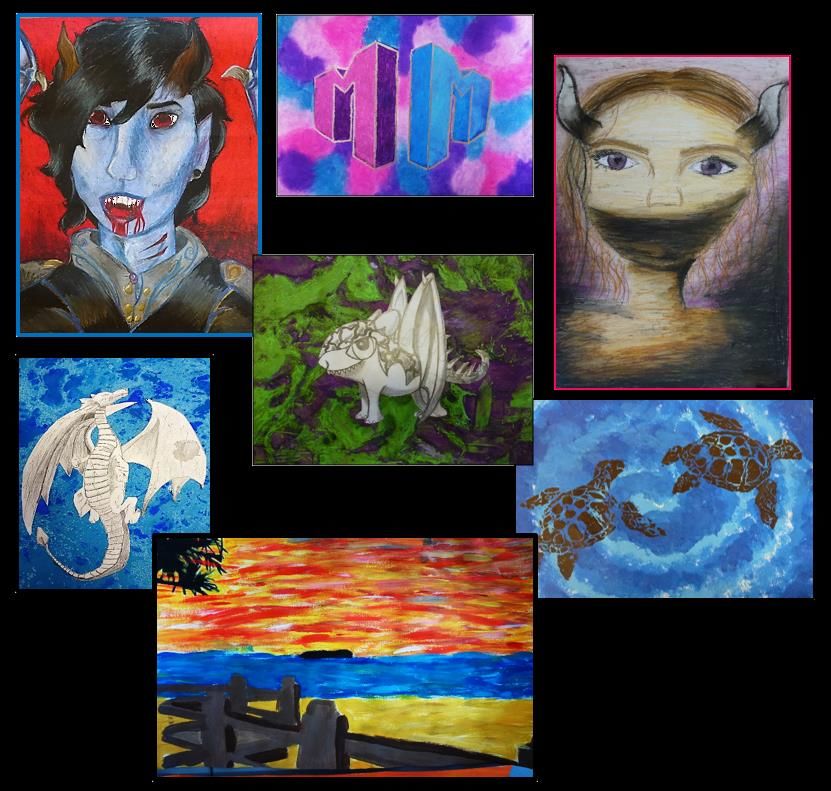
2

Welcome to Year 8 Educational Excellence for All is continued in Year 8 at Rose Bay High School. Students experience their core subjects in Home Groups which provides a continuity of support, both academically and pastorally. Students are also offered a wide selection of options subjects where passions can be honed and new friendships developed. Teamwork is a strong focus in Year 8, where effective communication strategies are explicitly taught to enhance learning and strengthen social connections with peers and staff. High expectations are paired with support to offer every chance of success for all students at Rose Bay High School. Using this Guide Subjects have been grouped according to the Australian Curriculum Learning Areas. Compulsory CORE ‘must do’ subjects are indicated by this symbol Subjects that students have the OPTION of choosing has the symbol 3
Contents
SECTION 1 – Important things to know
How does our timetable work? 1, 2
How can students choose subjects that are right for them? 3
How do students select subjects online? 4
SECTION 2 – Core Subjects and Options on Offer in 2021
English 5
Writers’ Workshop 5
Humanities and Social Sciences 6
Mathematics 7
Mathematics by Inquiry 7
Science 8
Health and Physical Education 8
All About Fitness 9
Athlete Development 9
Team Sports 10
Technologies 11
Applied Technology 11
Materials, Design and Technology 11
Digital Art 12
Digital Technology 12
STEM (Science, Technology, Engineering 13
and Mathematics)
4
Technologies continued
Café Culture 13
Dinner and Dessert 14
Food Studies 14
Textiles 15
The Arts
Ceramics and Sculpture 15
Dance 16
Drama 16
Ensemble Skills 17
Scripted Drama 17
Music 18
Visual Art Studio 18
Languages
French 19
Japanese 19
Across the Curricula
Great to Go! 20
SECTION 3 – Year 8
Competitions, Excursions and Extension 21
5
SECTION 1 – Important things to know
How does our timetable work?

In Year 8, students at Rose Bay High School choose three optional subjects and this is in addition to the core
learning program. We offer a range of full year and half year courses, which link to and are assessed against
the Australian Curriculum.

This is an example of the timetable and outlines where students have their Core subjects as well as their
selected Option subjects. It is important to remember that this is only an example and when the Core Subjects
and Options occur may change, however, the options will remain the same.

Student Options Timetable: Year 8

                Monday             Tuesday           Wednesday             Thursday             Friday

     1
                 CORE               CORE                CORE                CORE               CORE
               SUBJECTS           SUBJECTS            SUBJECTS            SUBJECTS           SUBJECTS
     2

                                                  Recess

                 CORE                                                       CORE
     3
               SUBJECTS                                                   SUBJECTS
                                     Line 2              Line 1                                 Line 3
     4            Line 3                                                  Grade Time

                                                   Lunch

     5            Line 1                                                     Line 2
                                    CORE                CORE                                   CORE
                                  SUBJECTS            SUBJECTS                               SUBJECTS
                 CORE                                                       CORE
     6
               SUBJECTS                                                   SUBJECTS

1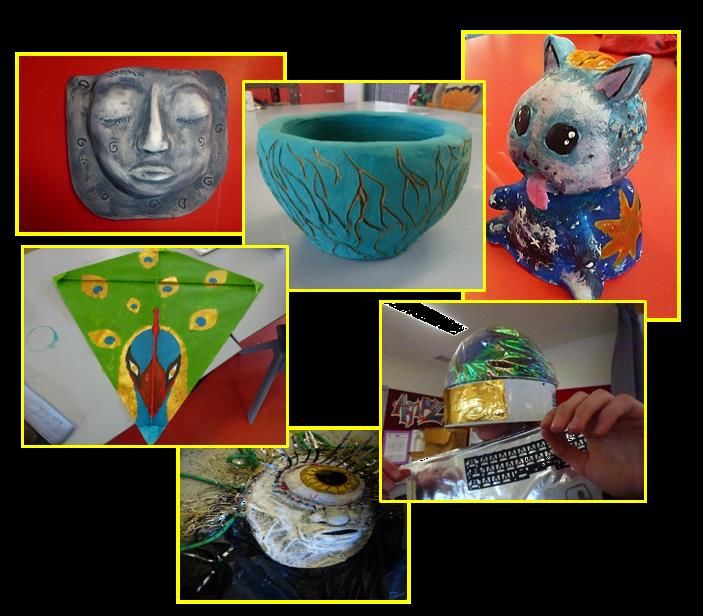
Middle School Year 8 Student Options

When completing the option selection online, students will be asked to select a first choice/s and a reserve
option. The reason for this is so that if, for example, a class is full or does not run as a result of too few students
opting for the subject, the second choice is considered. In the event that both the first preference and reserve
subjects are unavailable students will be approached individually to consider other options available to you.
For line 1 students will need to select two subjects to make up a year – one subject for Semester 1 and the
other for Semester 2. Students will also select a third reserve option.

Student Options on Lines: Year 8

It is important that you choose a range of subjects across the Health and Physical Education,
Arts, Technologies and Languages.

                          Line 1
                                                                    Line 2                         Line 3
         Semester 1                    Semester 2

      All About Fitness             Writers' Workshop                Drama                 Mathematics by Inquiry
        Team Sports                                                   Music
                                   Athlete Development              Visual Art                 Food Studies
    Materials, Design and                                                                   Materials, Design and
     Technology (MDT)           Ceramics and Sculpture
                                                                  Computing                  Technology (MDT)
        Café Culture                Scripted Drama
         Digital Art                                             Food Studies                       Music
           STEM                    Applied Technology         Materials, Design and               Visual Art
          Textiles                     Digital Art             Technology (MDT)
                                   Dinner and Dessert                                              Japanese
           Dance                          STEM
          Ensemble                                                Great to Go!
           French

2
How can students choose subjects that are right for them?
1. Pay attention to Subject Selection information in Year group assemblies
Subject teachers will give students information about the subjects on offer in year group assemblies prior to
subject selections. This will also give students the opportunity to ask questions and find out specific information
they may not yet know.
2. Speak to students who have already experienced the subject
Students are encouraged to speak to their peers in the year group who have already had the subject as an
option- what went well and what were the challenges. Talking about the topics and skills learned may help
students to understand what to expect.
3. Think about exploring your options as you prepare for your future pathways
This is the perfect opportunity to try out subjects that a student is uncertain about and whether it is really
something they want to continue with into their future. Students are encouraged to enjoy the experience of
being out of their learning comfort zone and being challenged to explore areas that they may know little about
or have limited experience in.
4. Ask the right questions, for example …
Which subjects do I like?
What will I learn in this subject?
Which subjects am I interested in?
What will I do in this subject?
Which subjects am I likely to do well in?
Which subject(s) may help my career choice?
Are there any new subjects I have not studied before?
Who might I ask to find out about the subject?
What methods of study does each subject use?
What special skills might I need for success in the subject?
What extra time commitment will I need to make?
How might this subject challenge me outside of my usual comfort zone?
Remember that you can always see your Year Coordinator, Home Group teacher or Subject
teacher to ask specific questions at any time. Make an appointment to go over your options.
3
How do students select subjects online?
This is a very easy process and is completed online using Web Preferences:

www.selectmysubjects.com.au/student

For quick access students will find the links on our Student Intranet page. Students will need your
unique code which will be provided by the home group teacher. Remember that the link will not
work until they go live. If there are any problems accessing the link please contact our admin team
who will be able to assist in resolving the matter.

Students should not select the same preference twice, even if it appears on multiple lines.

It is important to remember that some classes are capped with low student numbers for health and
safety reasons. Students who enter their subject preferences late may miss out.

Can students change an Option?

Once enrolled in a subject, students must attend class for two weeks before requesting a subject
change. To request a change to their Student Options classes, students need to fill out the
appropriate online form, which is sent to their Year Coordinators for approval. The link will be
available on our student Intranet page.

Changes to student option classes are not guaranteed and are dependent on a number of factors,
such as class size.

Students will receive notification of a class change via email. Where the change has been approved,
this notification must go home for the parents/carers approval and signature.

Final opportunity to make a subject changes for half year courses will be by the end of week 4 of
Term 1 and week 4 of Term 3. Full year course changes must be made by the end of week 4 in
Term 1 or through negotiation with the student, parents/carers, Year Coordinator and teachers.

4
SECTION 2 – Core Subjects and Options on Offer in 2021 English English Full Year What will students be doing? In Year 8 students will develop their understanding of how to write for a specific audience and purpose. Students will understand how to select and use vocabulary and language features to create and communicate their point of view when responding to ideas. Students will plan and craft a range of creative, informative and persuasive texts to include in a portfolio. The following list outlines units of work studied in Year 8: Living in Troubled Times - Exploring Perspectives in historical fiction and non-fiction texts Animal Connections - Friend or Foe? Australian Identity - Landscape, Diversity and Language Crime Fiction Genre - Crafting Clues Each unit of work is supported with a range of reading options. Students maintain reading records. Where can this take students? This subject will support your reading and writing in a range of subject areas. How will students be assessed? Students will be assessed against the Australian Curriculum for English. Writers’ Workshop Half Year What will students be doing? In this subject, you will have the opportunity to engage in a range of creative writing opportunities. Students will be working on some central ideas and themes, but will be able to independently choose the types of texts they produce. What are examples of topics/themes students will cover? Some of the topics covered in this class will include: writing about the environment and alternate futures. Where can this take students? This subject will support student’s writing in a range of subject areas, and will lead into Creative Writing in Year 9. How will students be assessed? Students will be assessed against Australian Curriculum for English, with a focus on the productive mode. 5
Humanities and Social Sciences History and Geography Full Year What will students be doing? In Year 8, students study History from the end of the ancient period to the beginning of the modern period. Students study the following units of work: The Vikings Japan under the Shoguns The Spanish conquests of the Americas Students also study two units of Geography: Landforms and landscapes Changing nations Where can this take students? Pathway to Years 11 and 12 and University. How will students be assessed? Students will be assessed against the Australian Curriculum for History and Geography. 6
Mathematics Mathematics Full Year What will students be doing? Mathematics is one of our core subjects, enabling students to develop the skills needed to become the problem-solvers of the future. There are many different jobs that require some knowledge of Mathematics and many practical applications in day-to-day life. Students may not want to be an engineer and design the next Tasman Bridge but will most certainly need to cook and adapt recipes or potentially secure a loan to buy their first car. What are examples of topics/themes students will cover? Number and Algebra Measurement and Geometry Statistics and Probability Where can this take students? This subject will support student’s numeracy in a range of contexts. How will students be assessed? Students will be assessed against the Australian Curriculum for Mathematics. Mathematics by Inquiry Full Year What will students be doing? This is an accelerated course for students who enjoy a challenge in mathematical problem solving and are keen to develop their higher order computational, thinking, reasoning and communication skills. This course offers the student the chance to explore mathematics through guided and open inquiry. Students will develop the confidence to draw upon a range of mathematical strategies and explore emerging technologies and mathematical software to investigate real-world problems. What are examples of topics/themes students will cover? In addition to computational thinking reasoning and communicating, students will be encouraged to enter the Australian Mathematics Competition, Mathematics Problem Solving Competition and to take part in the State Mathematics Relay. Where can this take students? This a pathway into the Engineering and Design option in Years 9/10 and Accelerated. How will students be assessed? Students will be assessed against Australian Curriculum for Mathematics. 7
Science
Science Full Year
What will students be doing? There is an emphasis on practical investigations and problem solving enabling students
to develop analytical and laboratory skills. Alongside this, students develop an understanding of the development of
accepted scientific theories, inquiry and knowledge.
What are examples of topics/themes students will cover?
Elements, Compounds and Mixtures From Cells to Body Systems
Chemical and Physical Change Earth, Rocks and Minerals
Energy Transformations
Where can this take students? Science provides a pathway to the following subjects in Year 9 and 10: Science by
Inquiry, Animal Studies, Landcare: Food, Fibre and Production, Engineering and Life Sciences 2 (Year 10 only). Science
provides a pathway to the following subjects in Years 11 and 12: Life Sciences 2 (can be undertaken in Year 10), Physical
Sciences - Foundation 2, Environmental Science 3, Physical Sciences 3, Biology 3.
How will students be assessed? Students will be assessed against the Australian Curriculum for Science.
Health and Physical Education
Health and Physical Education Full Year
What will students be doing? Students will develop the knowledge, understanding and skills needed to strengthen
their sense of self and manage satisfying relationships. They will investigate ways to enhance their own and others’
health, safety and wellbeing in a variety of different contexts. In the movement component, students will transfer and
refine movement skills and use feedback to improve learning. They will extend their knowledge of fitness concepts and
training methods.
What are examples of topics/themes students will cover?
Fitness Personal Identity and Self Esteem
Nutrition Water Safety
Drug Education – Alcohol Sexuality and Relationships
Rock and Water Program – Resilience Program
Where can this take students? Years 9 and10 Pathways: Sport Science, Sport and Recreation, Athlete Development,
Fitness for Life and/or Outdoor Education.
How will students be assessed? Students are assessed against the Australian Curriculum for Health and Physical
Education.
8 All about Fitness Half Year
What will students be doing? Students will participate in a broad range of fitness activities designed to develop their
knowledge and understanding of fitness training principles and training techniques. Students who choose this option
need to be prepared to embrace the work ethic of the course and push hard to achieve their fitness goals. This option
may also involve some minor excursions to local fitness providers and will include visiting instructors.
What are examples of topics/themes students will cover?
Warm Up/Cool Down Techniques Training Principles
Training Types (E.g. Interval, Circuit, Strength and Fitness Testing
Conditioning, Plyometric, Flexibility and Endurance
Training)
Where can this take students? All About Fitness provides a pathway to the Year 9 course ‘Fitness for Life’.
How will students be assessed? Students are assessed against the Australian Curriculum for Health and Physical
Education and the General Capabilities.
Athlete Development through Sport Half Year
What will students be doing? Students will participate in a range of sporting activities that aim to assist them to
become a better athlete. The focus of the course is around developing an understanding of what is required to improve
personal and team sporting performance.
What are examples of topics/themes students will cover?
Getting physically prepared for sport
Being a part of and making a contribution to a team
Practising and acquiring personal and physical skills
Applying skills in game situations and performing under pressure
Playing sport with others for enjoyment, fitness and fun
Working with others to improve performance and achieve a common goal
Where can this take students? This course provides a pathway to the Year 9 and 10 Athlete Development Course.
How will students be assessed? Students are assessed against the Australian Curriculum for Health and Physical
Education.
9 Team Sports Half Year What will students be doing? Students will have the opportunity to enhance and develop their organisational, leadership and physical skills in a variety of team sports. The course will involve training for various team sports, developing and running class competitions, learning about the rules, developing officiating skills and skill acquisition. There is a focus on working with others in a team setting and developing positive group social skills. The course may also involve travelling to nearby sporting facilities. What are examples of topics/themes students will cover? The qualities of leadership and fellowship The importance of positive sporting behaviour Working with others to achieve a common goal Practising to improve myself and the team The benefits of being involved in sport Where can this take students? Team Sports provides a pathway to the following subjects in Years 9 and 10: Sport and Recreation and/or Athlete Development. How will students be assessed? Students are assessed against the Australian Curriculum for Health and Physical Education and the General Capabilities. 10
Technologies Applied Technology Half Year What will students be doing? This course is about problem solving. Students will be working either independently or in small groups to research, solve and create proto types to design problems. There is a major component of this course completing computer based research, documenting and planning how the student is going to undertake the proto type before entering the workshop. Most materials will be provided, but students may need to supply some of their own project specific materials. Most of these briefs will last for about 10 weeks. What are examples of topics/themes students will cover? Marble mazes, mousetrap cars and impact zones. Where can this take students? This is a pathway into Applied Technology, Woodcraft and Design, Metalcraft and Design. How will students be assessed? Students will be assessed against the Australian Curriculum for Design and Technology. Materials, Design and Technology Half/Full Year What will students be doing? During this course students will work through a series of set projects to help develop their skills in using different tools, equipment, construction techniques project management and workshop safety. The course is designed to work on skills developed in Year 7 and prepare for senior classes. What are examples of topics/themes students will cover? Kitchen utensils and storage, treasure chests, joinery skills, small cabinets etc. Where can this take students? This a pathway into Woodcraft and Design, Metalcraft and Design and/or Applied Technology How will students be assessed? Students will be assessed against the Australian Curriculum for Design and Technology. 11
Digital Art Half Year
What will students be doing? As well as learning key skills in digital drawing and editing, students will have the
opportunity to develop their own art style with a large project of their choice. An individual project might be a comic
or graphic novel, a digitally illustrated book, a sequence of themed artworks, a series of game concept art or something
else entirely.
What are examples of topics/themes students will cover?
The digital art course will allow students to become familiar with:
Art programs such as GIMP, Open Canvas, Sculptris and Inkscape.
Using a tablet to draw and paint.
Important digital concepts such as layers, opacity, glow and screen.
Photo manipulation.
Digital sculpting and 3D printing.
Vector imaging for cartoons and logos.
Preparing artwork for publication.
Where can this take students? Almost all commercial artwork these days is done digitally,
even pieces that appear to have been painted by hand. Digital art offers a clean, modern, editable and striking visual
style and it is where most working artists will find their place.
Although there will be some overlap between the Year 8 and 9/10 courses, Digital Art can be taken over multiple
years to refine skills and explore new ideas. Either course will also lead into the Digital Art courses offered at most
colleges.
How will students be assessed? Students will be assessed against the Australian Curriculum for Digital
Technologies.
Digital Technologies Full Year
What will students be doing? This course is aimed to give students exposure to a variety of computer
applications, giving them the skills to work more productively and efficiently on computers, as well as developing and
understanding of networks, cyber security and current trends.
What are examples of topics/themes students will cover? Students will study a wide range of applications and
topics, covering:
Microsoft Office Coding language Python and C#.
2D image manipulations and 3D Modelling. How computers and networks work to share
Game creation using various modular based and move data,
programs such as Scratch and Game Maker. current and future trends in digital
Web page creations with an introduction to technologies
HTML5 and CSS. cyber security
Where can this take students? Senior Computing Classes: Digital Technologies, Coding and App development
and/or Digital Art
How will students be assessed? Students will be assessed against the Australian Curriculum for Digital
Technologies.
12 STEM (Science, Technology, Engineering and Mathematics) Half Year
What will students be doing? Students will be building projects that develop their understanding of how Science and
Maths support Engineering and Technology. Through projects and competitions students will develop knowledge of
the design process and why a standard approach is used. The projects are team based and help develop cooperative
problem solving skills. You will also have exposure to 3D design through the use of TinkerCad.
What are examples of topics/themes students will cover?
Set projects will consist of a marble run, earthquake tower building, a bridge and creating a
simulated hand. Each project has set materials. How students create these is completely up
to their imagination. The class will also participate in an excursion to the Marine Discovery
Centre where you will have an opportunity to build an underwater rover.
n
Where can this take students? This a pathway into the Engineering and Design option in Years 9 and 10.
How will students be assessed? Students will be assessed against the Australian Curriculum for Design and
Technology.
Café Culture Half Year
What will students be doing? Café Culture is largely practical in nature with an essential theoretical component.
Students cook most weeks, enabling them to consolidate and further develop their practical cookery skills and
techniques. Students make a range of contemporary café style products suitable for breakfasts, lunches, snacks, mains
and desserts. They will also have the opportunity to design and make their own recipes and will be required to work
independently and as part of a team.
What are examples of topics/themes students will cover?
Hygiene and safety
Nutrition
Equipment usage
Development and consolidation of cookery techniques
Sustainability and ethics in relation to food
Where can this take students?
9/10 Foods courses such as: 9/10 Food Studies, 9/10 Introduction to Hospitality, 9/10 Cooking for the Community
and Me and/or 9/10 Pâtisserie
How will students be assessed? Students will be assessed against the Australian Curriculum for Design and
Technology.
13 Dinner and Dessert Half Year
What will students be doing? Dinner and desserts is largely practical in nature with an essential theoretical
component. Students cook most weeks, enabling them to consolidate and further develop their practical cookery skills
and techniques. Students will prepare a variety of nutritious sweet and savoury dishes, designed to be easily
reproduced at home as a family meal or dessert. Students will have the opportunity to design and make their own
recipes and will be required to work independently and as part of a team.
What are examples of topics/themes students will cover?
Hygiene and safety
Investigating the benefits of preparing meals from scratch
Looking at the role of technology in preparing food
Learning ways in which to use local seasonal ingredients
Consideration of sustainable farming practices
Where can this take students? 9/10 Foods courses such as: Foods Studies, Patisserie, Introduction to Hospitality
and/or Cooking for the community and me
How will students be assessed? Students will be assessed against the Australian Curriculum for Design and
Technology.
Food Studies Full Year
What will students be doing? Food Studies is largely practical in nature with an essential theoretical component. The
practical component of the subjects aims to improve students’ skills in preparing and presenting food, develop
students’ ability to use kitchen equipment and appliances, encourage students to follow safe and hygienic working
procedures and develop students’ skills in the application of theoretical concepts. Students cook a wide variety of
dishes and have the opportunity to design and produce their own recipes.
What are examples of topics/themes students will cover?
Students will make a range of products suitable for breakfasts, lunches, snacks, mains and desserts.
The topics of hygiene and safety, nutrition, equipment usage and sustainability and ethics in relation to food will
be covered
Where can this take students? Food Studies and Introduction to Hospitality.
How will students be assessed? Students will be assessed against the Australian Curriculum for Design and
Technology.
14 Textiles Half Year What will students be doing? Year 8 Textiles is offered in Semesters 1 and 2. It is largely practical in nature with a focus on developing and consolidating machine sewing skills. Students will design a project, following design principles, which is stitched on the sewing machine and embellished by hand or machine, enabling creative development and expression. What are examples of topics/themes students will cover? Textiles safety and fabric cutting Applique Threading and using a sewing machine for basic stitching Tie dying Machine embroidery QuiltingQuilting Where can this take students? Lifestyle and Fashion in Years 9 and 10 How will students be assessed? Students will be assessed against the Australian Curriculum The Arts Ceramics and Sculpture Half Year What will students be doing? This course covers the theory and practice of visual art in 3 dimensional form. One part of the course is Ceramics, where students learn a variety of hand-building techniques using clay. These include: slab, coil, pinch pot and mould work. Students will make pots, mugs, plates, houses, light candle holders, and animals. The second part of the course is learning about Sculpture. Tasks include: paper mache figures, wire sculpture, kite making and card/paper craft. Students will build on existing skills taught in Year 7. Where can this take students? To further studies in the full year Art, Craft and Design course and the half year Ceramics course in Year 9 and 10. How will students be assessed? Students will be assessed against Australian Curriculum for Art. 15
Dance Half Year What will students be doing? Dance is divided into three areas – dance making, dance skills and dance appreciation. In dance making, students develop movement for particular ideas and learn ways to put them into a sequence. Students are encouraged to increase their repertoire of movement – this may involve studying a new or unfamiliar style, exploring ideas through improvisation or trying a related movement theory. What are examples of topics/themes students will cover? Dance safety Skills and techniques Dance appreciation and genre study Choreography and dance making Hip Hop workshops Dance history research study Where can this take students? Senior school subject pathways: 9/10 Dance and/or 9/10 Musical Theatre Performance. How will students be assessed? Students will be assessed against the Australian Curriculum Framework for Dance. Drama Full Year What will students be doing? This subject is for students who enjoy viewing, exploring and performing drama works. Students will develop communication and performance skills which will help to build your confidence as students work with others in practical workshops to create drama. Students will learn to use technical elements such as lighting and sound to enhance these works. Students will also explore different styles of drama from different times and cultures. There will be opportunities for individuals to refine and polish some pieces of work for presentation to small or large audiences. As audience members, you will have the opportunity to view and comment on professional and amateur productions in the community. What are examples of topics/themes students will cover? Script Writing Improvisation Performance Techniques Theatre Sports Monologues/duologues/small group performances Technical Theatre Live performance viewing and appreciation Stage production Where can this take students? Senior school subject pathways: 9/10 Drama, 9/10 Musical Theatre Performance and/or 9/10 Media Arts – Filmmaking How will students be assessed? Students will be assessed against the Australian Curriculum Framework for Drama 16
Ensemble Skills Half Year What will students be doing? This course enables students in Year 8 to develop as musicians through engagement and collaboration in the rehearsal process and in performance in various ensembles. What are topics/themes students will cover? Build your ensemble skills and develop the associated behaviours, attitudes and practices Work intensively on individual instrumental development and, if desired, may perform as a soloist Continue to explore the elements of music Be introduced to music software programs appropriate to the musical activities being undertaken Where can this take students? This course will greatly assist in preparing students for musical studies in Years 9 and 10, membership of school bands and community ensembles. How will students be assessed? Students will be assessed against the Australian Curriculum for Music. Scripted Drama Half Year What will students be doing? This subject is for students who enjoy writing and performing Drama works. With an emphasis on performing their own scripts and analysing scripted works by well-known script writers. What are examples of topics/themes students will cover? Script Writing Performance Techniques Live performance viewing and appreciation Technical Theatre Stage production Script analysis Where can this take students? Students will develop the confidence to present drama work to a broader audience and also gain the performance skills required for our senior drama and performance subjects. Senior school subject pathways: Drama, Musical Theatre Performance and/or Media Arts – Filmmaking. How will students be assessed? Students will be assessed against the Australian Curriculum Framework for Drama. 17
Music Full Year
What will students be doing? Music is a course in which students are able to develop as musicians through a
variety of integrated activities.
What are topics/themes students will cover?
Specialise in at least one instrument - developing technical skills in playing and reading music
Continue to explore the elements of music
Be introduced to music software programs appropriate to the musical activities being undertaken
Undertake listening, improvisation, composition and arrangement tasks
Be given opportunities to perform as a soloist, participate in ensemble work and become involved in various
musical activities available in and outside of the school
Where can this take students? Music provides a pathway to further studies in music in senior high school and
membership of school bands and community ensembles.
How will students be assessed? Students will be assessed against the Australian Curriculum for Music.
Visual Art Studio Full Year
What will students be doing? This course covers the theory and practice of visual art in both 2 dimensional and 3
dimensional form. Visual Art Studio focuses on a balanced mixture of tasks including: drawing, painting, mixed media,
printmaking, cartoon development, illustration, ceramics and sculpture. It aims to strengthen technical skills learnt in
Year 7 and extend understanding of the elements of art.
What are examples of topics/themes students will cover?
Students will learn how to draw realistically, understand perspective how to use paint confidently
Themes covered are: fantasy, popular culture (superheroes and rock horror)
Learn about various art styles such as Impressionism and Surrealism
Learn a variety of hand building techniques using clay
Where can this take students? To further studies in Art, Craft and Design in Year 9 and 10.
How will students be assessed? Students will be assessed against Australian Curriculum for Art.
18Languages French Half Year What will students be doing? Students in this class will be introduced to the French language. You will also have an opportunity to examine the geography of France and consider how this has impacted on French culture. What are examples of topics/themes students will cover? The units covered in this subject will include numbers and alphabet, salutations and family. Where can this take students? This subject will lead on to further study in French in Years 9 and 10. How will students be assessed? Students will be assessed against the Australian Curriculum for French. Japanese Full Year What will students be doing? Students of in this class will continue their study of the Japanese language. Students will also engage in Japanese cultural activities such as Japanese calligraphy, anime, sumo wrestling, food preparation, music and traditional toys and games and will be encouraged to participate in state and national level language competitions and activities. What are examples of topics/themes students will cover? The units covered in this subject include My Body, Clothing, Food, Transport and School subjects and stationery. Where can this take students? This subject will lead on to further study in Japanese in Years 9 and 10 and careers in business, trade, science, law, education, tourism, diplomacy, international relations, health and communications. How will students be assessed? Students will be assessed against the Australian Curriculum for Japanese. 19
Across the Curricula Great to Go! Full Year What will students be doing? This Option provides students with opportunities to develop their independence through highly supported and guided teaching and learning. Based from the Learning Centre the program targets functional communication and numeracy, self-direction and social skills to be your personal best. A key part of the program will be making connections beyond our school into the wider community. What are examples of topics/themes students will cover? Over the course of four 10 week modules students will cover: Functional Academics, Self-direction, Community Connections and Maximising independence. Where can this take students? This Option course supports students who are interested in a vocational and/or self- directed recreational pathway. How will students be assessed? Students will be assessed against personalised learning goals aligned to the Australian Curriculum Literacy, Numeracy and Personal and Social Capabilities. Where possible, learning goals will be negotiated with students. 20
SECTION 3 –
                  Year 8 Competitions, Excursions and Extension
Unfortunately, many of these opportunities did not run in 2020 as a consequence of COVID 19. We look forward to
enabling student participation and engagement in 2021 as these opportunities return and where we can participate
safely.
The list below is still in draft and will be finalised as we receive confirmation of events and opportunities that will go
ahead next year. Families are encouraged to keep an eye on the newsletter and our SkoolBag app for updates and
additional, specific information closer to the events. Should you have any questions at any stage, please don’t hesitate
to contact our admin team who will put families in touch with the relevant coordinator.

 What?                                                                    Who can register?          Term and dates

 Art from Trash: Salamanca Long Gallery- students work on their
                                                                           Year 8 Art Classes            April TBC
 entry in their double lessons

 Australian Mathematics Competition                                          Years 7 to 10                 TBC

                                                                        Years 7 to 10 students
 Bike’s Program                                                                                            TBC
                                                                        residing in Risdon Vale

 Community Garden                                                            Years 7 to 10            Terms 1 and 2

 Deadly Choices - empowering Aboriginal and Torres Strait Islander           Years 7 to 10
                                                                                                           TBC
 peoples to make healthy choices for themselves and their families         Invited Students

 RoboCup Junior Soccer Workshop                                              Years 7 to 10                Term 1

 RoboCup Junior Rescue Workshop                                              Years 7 to 10                Term 1

 RoboCup Junior On-Stage Workshop                                            Years 7 to 10                Term 1

 Regional RoboCup Junior                                                     Years 7 to 10                Term 1

 State RoboCup Junior                                                        Years 7 to 10                Term 3

 Mathematics Problem Solving Competition                                     Years 7 to 10                 TBC

 Mathematics Relay                                                           Years 7 to 10                 TBC

 Mud Run                                                                     Years 7 to 10               Term 3/4

 National RoboCup Junior                                                     Years 7 to 10                Term 4

 Rostrum Voice of Youth Public Speaking Competition JUNIOR                   Years 7 and 8                 TBC

 Tournament of Minds                                                         Years 7 to 10                Term 3

 The National History Challenge                                              Years 7 to 10            Terms 2 and 3

 Whitlam Institute What Matters Writing Competition                          Years 7 to 10                 TBC

 Writing House Competition                                                   Years 7 to 10              Term 4 TBC

 Young Archies                                                               Years 7 to 10                 TBC
                                         Sign up, make new friends and have fun!

21
Questions/Notes 22
Questions/Notes

23
You can also read


