Performance Report Lower Anthracite Transit System d.b.a., LATS - LATS Transit System Performance Review
←
→
Page content transcription
If your browser does not render page correctly, please read the page content below
LATS Transit System Performance Review   March 3, 2021

Performance Report
Lower Anthracite Transit System
d.b.a., LATS
This page is intentionally blank to allow for duplex printing.

CONTENTS
List of Exhibits ..................................................................................................... ii
Public Transportation Service Summary .............................................................. v
Executive Summary .............................................................................................vi
     Important Changes Since the 2015 Performance Review ................................................................. vii
     2015 Performance Review Determinations and Findings ................................................................viii
     2020 Performance Review Determinations and Findings .................................................................. ix
     2025 Performance Targets ....................................................................................................................... x
     Financial Review ........................................................................................................................................ x
     Next Steps ................................................................................................................................................... x
Introduction ........................................................................................................... 1
     Purpose........................................................................................................................................................ 1
     Agency Description ................................................................................................................................... 2
     Performance Review Process ................................................................................................................... 4
     Customer Satisfaction Survey .................................................................................................................. 4
2015 Act 44 Performance Assessment ................................................................... 6
     Prior Review Determinations and Findings........................................................................................... 6
     Action Plan and Performance Targets.................................................................................................... 6
     Assessment ................................................................................................................................................. 7
2020 Act 44 Performance Assessment ................................................................... 8
     Peer Agency Comparisons ....................................................................................................................... 8
     Assessment ................................................................................................................................................. 8
2025 Performance Targets..................................................................................... 9
Functional Review ............................................................................................... 10
     Opportunities to Increase Fixed-Route Ridership..............................................................................10
     Opportunities to Increase Fixed-Route Revenues..............................................................................11
     Opportunities to Control Operating Costs..........................................................................................11
     Other Opportunities to Improve Performance ..................................................................................12
Financial Review ................................................................................................. 13
     High-Level Indicators of Financial Health ..........................................................................................13
     Public Transportation Operational Expenditures and Funding .......................................................13
     Fixed-Route Funding ..............................................................................................................................17
     Balance Sheet Findings ...........................................................................................................................18
     Assessment ...............................................................................................................................................19
Appendix A: 2015 Performance Review Action Plan Assessment...................... 20
Appendix B: Peer Comparisons .......................................................................... 23
Appendix C: Action Plan Template .................................................................... 30
     Part 1 – Actions to Increase Passengers / Revenue-Hour ................................................................30
     Part 2 – Actions to Increase Operating Revenue / Revenue-Hour .................................................31
     Part 3 – Actions to Reduce or Contain Operating Cost / Revenue-Hour .....................................31
     Part 4 – Other Actions to Improve Overall Performance ................................................................32

Lower Anthracite Transit System (d.b.a. LATS) – Transit Performance Review                                                                                     Page i
LIST OF EXHIBITS
Exhibit 1: LATS Fixed-Route Bus Service Annual Performance Trends (2014–2019) .......................... 3
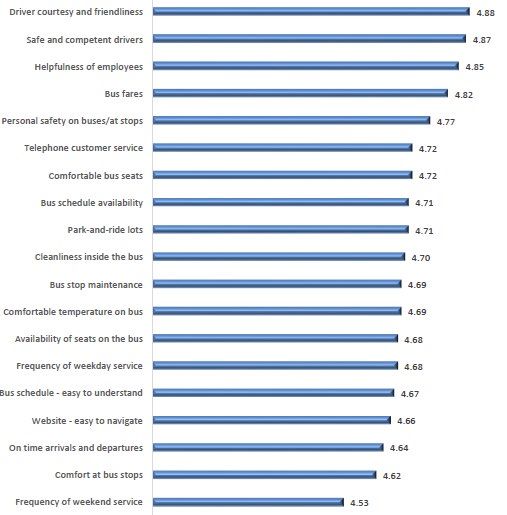
Exhibit 2: Average Customer Satisfaction Score by Performance Measure ............................................. 5
Exhibit 3: Previous LATS Performance Review Act 44 Comparison Summary ..................................... 6
Exhibit 4: 2019 LATS Performance Targets ................................................................................................. 7
Exhibit 5: Current Performance Review Act 44 Peer Comparison Summary .......................................... 8
Exhibit 6: FYE 2025 Act 44 Performance Targets....................................................................................... 9
Exhibit 7: High-Level Financial Indicators ..................................................................................................14
Exhibit 8: Public Transportation Operating Expense by Service Type (In Thousands) ......................14
Exhibit 9: Public Transportation Operating Expense Trends by Service Type .....................................15
Exhibit 10: Percentage of Public Transportation Operating Budget by Funding Source and Fiscal Year
............................................................................................................................................................................15
Exhibit 11: Total Public Transportation (Fixed-Route) Operating Budget and Funding Sources by
Fiscal Year .........................................................................................................................................................16
Exhibit 12: Fixed-Route Funding ..................................................................................................................17
Exhibit 13: Balance Sheet Summary (FYE 2015–FYE 2019) ...................................................................18
Exhibit 14: End-of-Year Cash Balance (FYE 2015–FYE 2019) ..............................................................19

Lower Anthracite Transit System (d.b.a. LATS) – Transit Performance Review                                                                                           Page ii
PREFACE
                                         Act 44 of 2007 and Act 89 of 2013 increased funding for public
          Pennsylvania law               transportation in Pennsylvania. The laws also required transit
    requires transit agency              agencies to improve the efficiency and effectiveness of service
      performance reviews                delivery through increased ridership, revenue, and cost
               and five-year             containment. PennDOT evaluates every fixed-route transit agency
    performance targets to               in the Commonwealth through a performance review at least once
    improve efficiency and               every five years to determine how well the agency satisfies these
    effectiveness of service             requirements. Act 44 also requires PennDOT to develop five-year
                                         performance targets for each agency as part of the performance
                                         review process.
                                         Beginning in February 2020, COVID-19 caused significant social
               COVID-19:                 and economic disruptions as people sheltered in place to limit the
       Transit-dependent                 spread of the disease. The adverse impacts throughout the
   populations are bearing               Commonwealth of Pennsylvania were profound. The health and
           a heavy burden                unemployment effects of COVID-19 disproportionately impacted
                                         senior, disabled, and low- income populations. These individuals
                                         also rely heavily on public transportation to meet their essential
                                         travel needs.
                                         The impacts of COVID-19 on the public transportation industry
       Transit agencies are              were also numerous. Ridership decreased by more than 90 percent
                 navigating              at some agencies during April 2020. Revenues dropped as agencies
            new demands,                 opted to waive fares to limit bus driver interactions and possible
     plummeting ridership,               disease transmission from the handling of tickets and currency.
          and higher costs               Agencies increased the frequency and extent of bus cleaning, which
                                         increased operating costs. Some agencies furloughed drivers as they
                                         reduced service in response to plummeting passenger demand.
                                         By late summer 2020 transit agencies had begun to stabilize from
             PennDOT will                the initial impacts of COVID-19, however the pandemic is ongoing
    reevaluate performance               and the long-term effects on transit remain unknown. Social
    targets when long-term               distancing guidelines could cause transit agencies to limit the
             impacts of the              number of passengers on buses and rail for years. Ridership,
       pandemic are known                revenue, and operating cost trends used to develop this transit
                                         performance review report, including five-year performance
                                         targets, rely on information that predates the pandemic. PennDOT
                                         will continue to monitor the impacts of COVID-19 and reassess
                                         the transit agency's five-year performance targets when the long-
                                         term effects of the pandemic become known. If the performance
                                         targets are revised, they will be published as an addendum to this
                                         report.

Lower Anthracite Transit System (d.b.a. LATS) – Transit Performance Review                              Page iii
This page is intentionally blank to allow for duplex printing.

Lower Anthracite Transit System (d.b.a. LATS) – Transit Performance Review             Page iv
PUBLIC TRANSPORTATION SERVICE SUMMARY
                                Fiscal Year 2019-20
                                                                        Lower Anthracite Transit System
Agency
                                                                                (d.b.a. LATS)
Year Founded                                                                         1982
Reporting Fiscal Year End (FYE)                                                      2020
Service Area (square miles)                                                           50
Service-Area Population                                                             29,713

Annual Operating Statistics*                                                     Fixed-Route

Vehicles in Maximum Service (VOMS)                                                     3
Operating Cost                                                                     $351,567
Operating Revenues                                                                  $13,800
Operating Subsidies                                                                $337,767
Total (Actual) Vehicle-Miles                                                        57,228
Revenue Miles of Service (RVM)                                                      48,300
Total Vehicle-Hours                                                                  5,208
Revenue Vehicle-Hours (RVH)                                                          4,584
Total Passenger Trips                                                               26,800
Senior Passenger (Lottery) Trips                                                    13,600
Act 44 Performance Statistics
Passengers / RVH                                                                     5.85
Operating Cost / RVH                                                                $76.69
Operating Revenue / RVH                                                              $3.01
Operating Cost / Passenger                                                          $13.12
Other Performance Statistics
Operating Revenue / Operating Cost                                                   3.93%
Operating Cost / Total Vehicle-Hours                                                $67.51
Operating Cost / Total Vehicle-Miles                                                 $6.14
Total Passengers / Total Vehicle-Hours                                                5.15
Operating Cost / RVM                                                                 $7.28
RVM / Total Vehicle-Miles                                                           84.40%
RVH / Total Vehicle-Hours                                                           88.02%
Operating Subsidy / Passenger Trip                                                  $12.60
Source: unaudited dotGrants 2020 reporting

Lower Anthracite Transit System (d.b.a. LATS) – Transit Performance Review                                Page v
EXECUTIVE SUMMARY
Pennsylvania Act 44 of 2007 increased state funding for public transportation operations by about 50
percent, from $535 million per year to $800 million in the first year of the legislation. The funding
addressed the dire financial needs of local public transportation organizations across Pennsylvania.
The public transportation organizations on the verge of major service cuts and significant fare
increases could maintain existing service and fares and, with a predictable and growing source of
operating assistance, plan service changes.
Act 44 also ushered in requirements for accountability, performance improvement, and maximizing
return on investment. It established a framework for PennDOT to work with local public
transportation organizations to:
• Assess efficiency and effectiveness of service, financial stability, and general
management/business practices;
• Agree to five-year targets for Act 44-mandated performance criteria;
• Develop an Action Plan for improvement and to achieve performance targets;
• Provide technical assistance to implement the plan at the request of the transportation
organization; and
• Reassess each organization on a five-year cycle.
The reassessment at the end of each five-year cycle is to evaluate:
• Whether the organization met the agreed-upon performance targets; and,
• The sufficiency and effectiveness of the organization's actions to improve performance and
management practices in its efforts to meet performance targets.
Act 44 regulations address PennDOT actions regarding performance reviews and the financial
penalties for public transportation organizations that fail to meet performance targets. Section 427.12,
Performance Reviews, states:
(E) The application of funding adjustment will be as follows:
1. Operating fund reductions in Section 1513(G) of the Act (relating to operating
program) may be implemented for grantees subject to this section that are not
satisfying the minimum performance standards, considering all other
provisions of Section 1513. A funding reduction may be assessed in cases when
a local transportation organization fails to report progress of, or fails to
implement, the agreed-upon strategic Action Plan, or both.
PennDOT conducted a transit performance review for Lower Anthracite Transit System (LATS) in
August 2015. Based on that review, PennDOT finalized a performance report in February 2016 that
established five-year performance targets and agreed to LATS's Action Plan to meet those targets. In
December 2020, PennDOT reassessed LATS to determine whether LATS met its targets and
evaluated the actions taken to improve the agency's performance and management practices to
maximize the return on investment of Commonwealth funding. This report summarizes PennDOT's
findings.
Lower Anthracite Transit System (d.b.a. LATS) – Transit Performance Review Page viExecutive Summary
IMPORTANT CHANGES SINCE THE 2015 PERFORMANCE REVIEW
PennDOT conducted the initial review of LATS in August 2015. Since finalizing the 2016
performance report, the following factors impacted LATS's operations and finances:
1. Management turnover at the Borough of Mount Carmel – The Borough has had two
different Borough Managers within the last five years. The LATS Executive Director has split
his time between LATS and other Borough responsibilities, which has reduced his time
available to oversee LATS.
2. Lack of operational oversight – LATS has an Executive Director, but the Borough of
Mount Carmel manages agency finances. A lack of internal controls for management and
financial oversight contributed to several unaddressed audit findings and the previous
contractor's misreported ridership. Without a Borough Manager, there is little independent
oversight of LATS aside from the Borough Council. Furthermore, this lack of oversight has
enabled the contractor to operate the service despite violating state and federal requirements
that would otherwise make LATS eligible for federal funds.
3. Lack of eligibility for 5311 federal funds – Currently, LATS is ineligible for Section 5311
federal funds due to several unaddressed findings that have been documented over the years.
For example, LATS does not offer ADA service despite operating a fixed-route bus service.
As of 2018, the Borough did not hold the contractor accountable for drug and alcohol testing,
maintenance, and Title VI. LATS has additional 5311 Compliance Review findings related to
financial management, procurement and DBE participation, and maintenance.
Lower Anthracite Transit System (d.b.a. LATS) – Transit Performance Review Page viiExecutive Summary
2015 PERFORMANCE REVIEW DETERMINATIONS AND FINDINGS
The 2015 performance review compared LATS to six peer agencies based on the four performance
criteria required by Act 44. The analysis determined that LATS was "In Compliance" for all eight
metrics and "At Risk" for none.
Relation
Rank Peer
Performance Criteria FYE Determination to Peer Value
(of 7) Average
Average
Passengers / Revenue- 2013 In Compliance 4 Worse 4.81 5.01
Hour Trend In Compliance 1 Better 2.58% -3.06%
Operating Cost / Revenue- 2013 In Compliance 2 Better $51.85 $65.15
Hour Trend In Compliance 1 Better -10.49% 0.43%
Operating Revenue / 2013 In Compliance 6 Worse $2.65 $5.35
Revenue-Hour Trend In Compliance 2 Better 9.09% 3.60%
Operating Cost / 2013 In Compliance 3 Better $10.77 $14.76
Passenger Trend In Compliance 1 Better -12.75% 4.12%
* The single-year and trend peer comparisons are based on the most current National Transit Database (NTD) information
available during the peer review.
LATS developed an Action Plan to address opportunities for improvement identified during the 2015
performance review and took the following steps to improve performance:
1. Developing a marketing strategy that targets local senior centers and high-rise apartment
buildings and fostered a relationship with local human services agencies.
2. Re-bidding the service contract in early 2018.
3. Including a provision in the service contract to notify the Borough of any service interruptions.
LATS has several actions from the 2015 Action Plan that are incomplete. These actions are still
relevant opportunities to improve ridership, increase revenue, and control operating costs. This
performance review recommends that LATS address incomplete action items as part of its 2020
Action Plan.
PennDOT, in consultation with LATS management, established the following performance targets in
2015 that the agency was to attain before its next performance review:
• Increase passengers per revenue vehicle-hour annually by 2.0 percent;
• Contain yearly increases in operating costs per revenue vehicle-hour by 3.0 percent;
• Increase annual operating revenue per revenue vehicle-hour by 2.0 percent; and
• Contain operating cost per passenger trip increases to no more than 1.0 percent per year on
average.
The performance targets established in 2015 used the most accurate data available at that time.
Performance Criteria 2019 Target 2019 Actual Met Target
Passengers / Revenue Vehicle-Hour 6.25 5.56 No
Operating Cost / Revenue Vehicle-Hour $64.61 $51.12 Yes
Operating Revenue / Revenue Vehicle-Hour $2.48 $3.45 Yes
Operating Cost / Passenger $10.35 $9.19 Yes
Lower Anthracite Transit System (d.b.a. LATS) – Transit Performance Review Page viiiExecutive Summary
LATS successfully met three out of four performance targets, including operating cost per revenue
vehicle-hour, operating revenue per revenue vehicle-hour, and operating cost per passenger. Although
LATS did not meet its 2.0 percent annual target increase for passengers per revenue vehicle-hour,
overall ridership has remained relatively stable since the 2015 performance review with no significant
declines. Passengers per revenue vehicle-hour remained at about 5.7 between FYE 2014 and FYE
2019.
2020 PERFORMANCE REVIEW DETERMINATIONS AND FINDINGS
The 2020 performance review compared LATS with six peer agencies based on the four Act 44
performance criteria. LATS was "In Compliance" with all eight performance metrics.
Peer Rank Relation to Peer
Performance Criteria FYE Determination Value
(of 7) Peer Average Average
Passengers / Revenue- 2018 In Compliance 4 Better 5.70 5.21
Hour Trend In Compliance 2 Better 3.46% -2.14%
Operating Cost / 2018 In Compliance 1 Better $49.84 $71.65
Revenue-Hour Trend In Compliance 3 Better -0.79% 1.35%
Operating Revenue / 2018 In Compliance 5 Worse $3.15 $3.96
Revenue-Hour Trend In Compliance 4 Better 3.49% 1.21%
Operating Cost / 2018 In Compliance 2 Better $8.74 $17.11
Passenger Trend In Compliance 1 Better -4.11% 3.85%
LATS performed better than the peer group in all metrics except for the FYE 2018 single-year
determination for operating revenue per revenue vehicle-hour. LATS had the lowest operating cost
per revenue hour of the peer group. Despite not meeting the performance target for passengers per
revenue vehicle-hour, LATS increased passengers per revenue-vehicle hour on average by 3.46 percent
between FYE 2013 and FYE 2018, compared to the metric for the peer group, which declined 2.14
percent annually.
The 2020 performance review also identified steps that LATS could take to improve overall agency
performance, including:
1. Participate in available Pennsylvania Public Transportation Association (PPTA) marketing
committee meetings to identify applicable best practices and brainstorm marketing solutions;
2. Updating the vehicle maintenance policy to include adherence with recommended
manufacturer specifications and on-time performance goals; and
3. Working with PennDOT to develop a plan to become compliant with FTA Section 5311
requirements so that it will be eligible to receive federal funding.
PennDOT also identified additional opportunities for improvement during the 2020 performance
review. The complete list will serve as the basis for LATS's Borough Council-approved Action Plan.
Lower Anthracite Transit System (d.b.a. LATS) – Transit Performance Review Page ixExecutive Summary
2025 PERFORMANCE TARGETS
As required by Act 44, PennDOT and LATS management developed new five-year performance
targets. PennDOT designs the performance targets to be aggressive yet achievable. PennDOT based
LATS's performance targets on data from the most recent audited financial year before the impacts
of the COVID-19 pandemic (FYE 2019). To ensure full Section 1513 funding, LATS should achieve
the targets shown in the table below.
Fiscal Year End (FYE) Target
Performance Criteria 2020 Annual
2019 Actual 2025 Target Increase
Unaudited
Passengers / Revenue Vehicle-Hour 5.56 5.85 5.73 0.5%
Operating Cost / Revenue Vehicle-Hour $51.12 $76.69 $61.04 3.0%
Operating Revenue / Revenue Vehicle-Hour $3.45 $3.01 $4.12 3.0%
Operating Cost / Passenger $9.19 $13.12 $10.66 2.5%
FINANCIAL REVIEW
LATS currently has a balanced operating budget. Its net current cash equivalent balance has increased
since 2015. Important elements of LATS's FYE 2019 financial condition are:
• LATS had $316,608 in state funds and $4,690 in local carryover funds.
• Combined carryover subsidies were equal to 106.5 percent of total operational funding.
• LATS had a cash balance equal to 102.8 percent of total annual operating expenses.
• Current liabilities exceeded current assets by $22,090 since 2015. LATS should work with
PennDOT to eliminate this liability from its books as part of the five-year action plan.
• LATS had no long-term debt and no credit line as of FYE 2019.
Management should continue taking appropriate actions to manage costs (i.e., containing annual
operating cost increases to 3.0 percent or less), achieve farebox recovery goals, increase ridership, and
maintain cash reserves to preserve LATS's overall financial health.
NEXT STEPS
LATS management and the Borough Council will develop an Action Plan in response to the complete
list of "Opportunities for Improvement" identified in this performance review report. Some actions
will be quickly implementable, while others may take several discrete steps to achieve over a more
extended period. LATS management must report to the Borough Council and PennDOT quarterly
on progress toward accomplishing the Action Plan and meeting its performance targets.
Lower Anthracite Transit System (d.b.a. LATS) – Transit Performance Review Page xINTRODUCTION
PURPOSE
Act 44 of 2007 addressed the dire financial needs of local public transportation organizations across
Pennsylvania by increasing state funding for public transportation operations by about 50 percent,
from $535 million per year to $800 million in the first year of the legislation. Public transportation
organizations that had been on the verge of significant service cuts and considerable fare increases
could maintain existing service and fares and, with a predictable and growing source of operating
assistance, plan service changes.
Act 44 also ushered in critical requirements for accountability, performance improvement, and
maximizing return on investment. It established a framework for PennDOT to work with local public
transportation organizations to:
• Assess efficiency and effectiveness of service, financial stability, and general
management/business practices;
• Agree to five-year targets for Act 44-mandated performance criteria;
• Develop an Action Plan for improvement and to achieve performance targets;
• Provide technical assistance to implement the plan at the request of the transportation
organization; and
• Reassess each organization on a five-year cycle.
The reassessment at the end of each five-year cycle is to evaluate:
• Whether the organization met the agreed-upon performance targets; and
• The sufficiency and effectiveness of the organization's actions to improve performance and
management practices in its efforts to meet performance targets.
Act 44 regulations address PennDOT actions regarding performance reviews and the financial
penalties for public transportation organizations that fail to meet performance targets. Section 427.12,
Performance Reviews, states:
(E) The application of funding adjustment will be as follows:
1. Operating fund reductions in Section 1513(G) of the Act (relating to
operating program) may be implemented for grantees subject to this section
that are not satisfying the minimum performance standards, considering all
other provisions of Section 1513. A funding reduction may be assessed in
cases when a local transportation organization fails to report progress of, or
fails to implement, the agreed-upon strategic Action Plan, or both.
PennDOT conducted a transit performance review for Lower Anthracite Transit System (LATS) in
August 2015. Based on that review, PennDOT finalized a performance report in February 2016 that
established five-year performance targets and agreed to LATS's Action Plan to meet those targets. In
December 2020, PennDOT reassessed LATS to determine whether it met its targets and evaluate the
actions taken to improve the agency's performance and management practices to maximize the return
on investment of Commonwealth funding. This report summarizes PennDOT's findings.
Lower Anthracite Transit System (d.b.a. LATS) – Transit Performance Review Page 1Introduction AGENCY DESCRIPTION The Lower Anthracite Transit System (d.b.a. LATS) was created in 1982 in Northumberland County, Pennsylvania, as the Borough of Mount Carmel's fixed-route transportation system. LATS provides rural fixed-route bus service in the Borough of Mount Carmel, the City of Shamokin, and Coal Township. LATS also provides summer transportation to the Knoebels Amusement Resort. LATS is governed by the seven-member Borough Council and the Mayor of Mount Carmel. LATS operates two regular fixed routes between 8:00 a.m. and 4:30 p.m. Mondays through Fridays. These routes operate on Saturdays with reduced hours. The summer service to Knoebels operates Mondays through Saturdays. LATS contracts with Catawese Coach Lines to operate and maintain fixed-route bus service. The Central Pennsylvania Transportation Authority (d.b.a. CPTA; rabbittransit) provides shared-ride service in Northumberland County. As of 2020, LATS offers no ADA service, which makes it ineligible for federal funding. LATS provided 32,821 fixed-route passenger trips as of FYE 2019, with four vehicles operating in maximum service (VOMS). Senior citizens, who ride for free, represent a large portion of LATSs' ridership, 13,920 passenger trips. Exhibit 1 presents fixed-route bus statistics for LATS from FYE 2014 through FYE 2019. Lower Anthracite Transit System (d.b.a. LATS) – Transit Performance Review Page 2
Introduction

Exhibit 1: LATS Fixed-Route Bus Service Annual Performance Trends (2014–2019)

           Annual Passengers (1,000s)                                        Fares and Other Revenues
   35.0                                                                              ($1,000s)
                                                                    $25
   30.0

   25.0                                                             $20

   20.0                                                             $15

   15.0
                                                                    $10
   10.0
                                                                     $5
    5.0

    0.0                                                              $0

                                                                             2014

                                                                                     2015

                                                                                             2016

                                                                                                    2017

                                                                                                           2018

                                                                                                                  2019
            2014

                     2015

                             2016

                                     2017

                                             2018

                                                      2019

              Revenue Hours (1,000s)                                         Operating Costs ($1,000s)
   7.0                                                              $350

   6.0                                                              $300

   5.0                                                              $250

   4.0                                                              $200

   3.0                                                              $150

   2.0                                                              $100

   1.0                                                               $50

   0.0                                                                 $0
           2014

                    2015

                            2016

                                     2017

                                             2018

                                                      2019

                                                                              2014

                                                                                      2015

                                                                                             2016

                                                                                                    2017

                                                                                                           2018

                                                                                                                  2019

Source: NTD and PennDOT legacy reporting system (dotGrants)

Lower Anthracite Transit System (d.b.a. LATS) – Transit Performance Review                                               Page 3
Introduction
PERFORMANCE REVIEW PROCESS
In November 2020, PennDOT initiated an Act 44-mandated performance review for LATS. The
following outlines the review process:
1. Notify LATS of performance review schedule and transmit a document request.
2. Review available data and request additional information.
3. Agree upon a set of peer agencies for comparison (LATS and PennDOT).
4. Review the most recent customer satisfaction survey.
5. Assess Act 44 variables, including current performance, targets from the 2015 review, and
Action Plan implementation.
6. Perform Act 44 performance criteria analysis.
7. Conduct onsite review, interviews, and supplementary data collection/reconciliation.
8. Evaluate performance, financial condition, and operations.
9. Report results and determine agency compliance with performance requirements.
10. Finalize the performance review report.
11. Develop, implement, and monitor a five-year Action Plan (LATS).
12. Provide technical assistance, if required, to help meet five-year performance targets.
These steps assess LATS's unique challenges, changes since the previous performance review, the
accuracy and reliability of reported data, implemented practices, additional opportunities for
improvement, and realistic goals to attain before the next performance review.
CUSTOMER SATISFACTION SURVEY
LATS conducted a customer satisfaction survey (CSS) between November 18, 2019, and November
26, 2019. The CSS consisted of 15 questions addressing customer satisfaction, rider characteristics,
and patterns in service usage. LATS collected 179 responses. Based on survey results, LATS has
between 179 and 250 unique passengers. The survey's margin of error is less than 3.0 percent. Results
from the survey show:
1. Ninety-nine (99) indicated they were "satisfied" or "very satisfied" with LATS service.
2. Ninety-nine (99) percent of respondents indicated they would continue to ride LATS.
3. Ninety-nine (99) percent of respondents indicated they would recommend LATS to others.
Riders rated a total of 19 performance measures addressing topics such as driver and staff
performance, safety, capacity, frequency of service, schedule adherence, and clarity of bus schedules
(Exhibit 2). The top-rated measures were:
1. Driver courtesy and friendliness;
2. Safe and competent drivers;
3. Helpfulness of employees;
4. Bus fares; and,
5. Personal safety on buses/at stops.
Measures that received the lowest average scores were:
1. Frequency of weekend service;
2. Comfort at bus stops;
3. On-time arrivals and departures;
Lower Anthracite Transit System (d.b.a. LATS) – Transit Performance Review Page 4Introduction
4. Website – easy to navigate 1; and,
5. Bus schedule – easy to understand.
A total of 84 respondents (47 percent) provided open-ended feedback. Favorable feedback included:
1. Compliments of LATS drivers and staff; and,
2. Compliments of LATS service.
Requests to improve service and concerns included:
1. Additional or modified routes, some specifically asked for Sunbury service;
2. A desire for evening service;
3. A need for weekend service;
4. More frequent service; and,
5. Bus stop enhancements.
Exhibit 2: Average Customer Satisfaction Score by Performance Measure
1 LATS has no website as of the 2020 performance review. The authority has an active social media account.
Lower Anthracite Transit System (d.b.a. LATS) – Transit Performance Review Page 52015 ACT 44 PERFORMANCE ASSESSMENT
PRIOR REVIEW DETERMINATIONS AND FINDINGS
The 2015 performance review compared LATS to six peer agencies based on the performance criteria
required by Act 44. The analysis determined that LATS was "In Compliance" for all eight metrics
(Exhibit 3). LATS performed better than the peer group in six of the eight and worse than the peer
group for two metrics- single-year FYE 2013 passengers per revenue hour and operating revenue per
revenue hour.
Exhibit 3: Previous LATS Performance Review Act 44 Comparison Summary
Relation
Rank Peer
Performance Criteria FYE Determination to Peer Value
(of 7) Average
Average
Passengers / Revenue- 2013 In Compliance 4 Worse 4.81 5.01
Hour Trend In Compliance 1 Better 2.58% -3.06%
Operating Cost / Revenue- 2013 In Compliance 2 Better $51.85 $65.15
Hour Trend In Compliance 1 Better -10.49% 0.43%
Operating Revenue / 2013 In Compliance 6 Worse $2.65 $5.35
Revenue-Hour Trend In Compliance 2 Better 9.09% 3.60%
Operating Cost / 2013 In Compliance 3 Better $10.77 $14.76
Passenger Trend In Compliance 1 Better -12.75% 4.12%
* The single-year and trend peer comparisons were based on the most current National Transit Database (NTD)
information available at the peer review time.
ACTION PLAN AND PERFORMANCE TARGETS
LATS developed an Action Plan to address opportunities for improvement identified during the 2015
performance review and took the following steps to improve performance:
1. Developing a marketing strategy that targets local senior centers and high-rise apartment
buildings and fostered a relationship with local human services agencies;
2. Rebidding the service contract in early 2018; and,
3. Including a provision in the service contract to notify the Borough of any service interruptions.
Appendix A: 2015 Performance Review Action Plan Assessment (p. 20) provides the complete
list of LATS's previous Action Plan items and progress in addressing the identified opportunities for
improvement. LATS has several actions from the 2015 Action Plan that are incomplete. These actions
are still relevant opportunities to improve ridership, increase revenue, and control operating costs.
This performance review requires that LATS address incomplete action items as part of the 2020
Action Plan.
PennDOT and LATS established the following five-year performance targets in 2015:
• Increase passengers per revenue vehicle-hour annually by 2.0 percent;
• Contain yearly increases in operating costs per revenue vehicle-hour by 3.0 percent;
• Increase annual operating revenue per revenue vehicle-hour by 2.0 percent; and
• Contain operating cost per passenger trip increases to no more than 1.0 percent per year on
average.
Lower Anthracite Transit System (d.b.a. LATS) – Transit Performance Review Page 62015 Act 44 Performance Assessment
As established during the 2015 performance review, LATS met the performance targets for operating
cost per revenue vehicle-hour, operating revenue per revenue vehicle-hour, and operating cost per
passenger. However, LATS did not meet its passengers per revenue vehicle-hour target (Exhibit 4).
Exhibit 4: 2019 LATS Performance Targets
Performance Criteria 2019 Target 2019 Actual Met Target
Passengers / Revenue Vehicle-Hour 6.25 5.56 No
Operating Cost / Revenue Vehicle-Hour $64.61 $51.12 Yes
Operating Revenue / Revenue Vehicle-Hour $2.48 $3.45 Yes
Operating Cost / Passenger $10.35 $9.19 Yes
ASSESSMENT
The following factors impacted LATS's operations and finances since the 2016 report was finalized:
1. Management turnover at the Borough of Mount Carmel – The Borough has had two
different Borough Managers within the last five years. The LATS Executive Director has split
his time between LATS and other Borough responsibilities, which has reduced his time
available to oversee LATS.
2. Lack of operational oversight – LATS has an Executive Director, but the Borough of
Mount Carmel manages agency finances. A lack of internal controls for management and
financial oversight contributed to several unaddressed audit findings and the previous
contractor's misreported ridership. Without a Borough Manager, there is little independent
oversight of LATS aside from the Borough Council. Furthermore, this lack of oversight has
enabled the contractor to operate the service despite violating state and federal requirements
that would otherwise make LATS eligible for federal funds.
3. Lack of eligibility for 5311 federal funds – Currently, LATS is ineligible for Section 5311
federal funds due to several unaddressed findings that have been documented over the years.
For example, LATS does not offer ADA service despite operating fixed-route bus service. As
of 2018, the Borough did not hold the contractor accountable for drug and alcohol testing,
maintenance, and Title VI. LATS has additional 5311 Compliance Review findings related to
financial management, procurement and DBE participation, and maintenance.
Despite not meeting its 2.0 percent annual target increase for passengers per revenue vehicle-hour,
LATS ridership has remained relatively stable since the 2015 performance review with no material
decreases. Passengers per revenue vehicle-hour remained at about 5.7 between FYE 2014 and FYE
2019. Management credited the decision to cut the unproductive 4:00 p.m. Knoebels run with
improving the LATS' passengers per revenue vehicle-hour metric. Compared to other Pennsylvania
transit systems, LATS performed well in meeting its Act 44 targets.
Lower Anthracite Transit System (d.b.a. LATS) – Transit Performance Review Page 72020 ACT 44 PERFORMANCE ASSESSMENT
The 2020 performance review compared LATS to six peer agencies based on the performance criteria
required by Act 44.
PEER AGENCY COMPARISONS
Six peer agencies were identified through a collaborative process between PennDOT and LATS using
criteria defined in Act 44 and data from the most recently available National Transit Database
(NTD)—FYE 2018. The systems identified for peer comparisons were:
1. Bristol Virginia Transit (Bristol, VA)
2. Liberty Transit (Hinesville, GA)
3. Mid-County Transit Authority* (Kittanning, PA)
4. Warren County Transit Authority* (Warren, PA)
5. County of Carbon* (Jim Thorpe, PA)
6. Shenango Valley Shuttle Service (Hermitage, PA)
* Denotes an agency that was also a peer in the previous performance review.
Exhibit 5 presents the results of the 2020 LATS analysis and peer comparison. LATS is "In
Compliance" for all measures. Appendix B: Peer Comparisons (p. 23) presents the detailed data
used to develop the peer comparison summary.
Exhibit 5: Current Performance Review Act 44 Peer Comparison Summary
Peer Rank Relation to Peer
Performance Criteria FYE* Determination Value
(of 7) Peer Average Average
Passengers / Revenue- 2018 In Compliance 4 Better 5.70 5.21
Hour Trend In Compliance 2 Better 3.46% -2.14%
Operating Cost / 2018 In Compliance 1 Better $49.84 $71.65
Revenue-Hour Trend In Compliance 3 Better -0.79% 1.35%
Operating Revenue / 2018 In Compliance 5 Worse $3.15 $3.96
Revenue-Hour Trend In Compliance 4 Better 3.49% 1.21%
Operating Cost / 2018 In Compliance 2 Better $8.74 $17.11
Passenger Trend In Compliance 1 Better -4.11% 3.85%
ASSESSMENT
The 2020 review found LATS to be "In Compliance" for all eight metrics. LATS performed better
than the peer group in all metrics except for the FYE 2018 single-year determination for operating
revenue per revenue vehicle-hour. Under state transit legislation, senior citizens ride fare-free, which
draws many seniors to use LATS' service and constitutes a large portion of total ridership. Unlike
other states, in Pennsylvania, seniors do not pay fares, contributing to this finding.
LATS has the lowest operating cost per passenger of the peer group. The Executive Director actively
represents LATS in the communities it serves, targeting senior centers, high-rise buildings, and human
services agencies to promote the service. Furthermore, seasonal service to Knoebels Amusement
Resort provides LATS with steady ridership in the summer months from workforce transportation to
the park.
Lower Anthracite Transit System (d.b.a. LATS) – Transit Performance Review Page 82025 PERFORMANCE TARGETS
Act 44 of 2007 requires PennDOT, in consultation with agency management, to establish five-year
performance targets for each of the four Act 44 metrics for fixed-route service. Setting performance
targets for these metrics and regularly reevaluating performance are practices intended to improve
service delivery effectiveness and efficiency. Furthermore, Act 89 of 2013 requires agencies to
maintain a policy to adjust fares for inflation to keep pace with increases in operating costs. PennDOT
uses the most recent audited and agency-verified pre-COVID-19 values for passengers, operating
costs, and operating revenues as the baseline for developing performance targets. Five-year targets
reflect aggressive yet achievable expectations of improvement.
The 2020 performance review noted that LATS's performance was relatively stable over the last five
years, outperforming the state and national trends of declining transit ridership and rising operating
costs. Management credited the decision to cut the unproductive 4:00 p.m. Knoebles run with
improving the LATS' passengers per revenue vehicle-hour metric. Management should take steps to
achieve the FYE 2025 performance targets, focusing on activities that increase ridership and contain
operating costs.
PennDOT established the following performance targets in consultation with LATS:
• Increase passengers per revenue vehicle-hour by at least 0.5 percent per year on average.
• Contain operating cost per revenue vehicle-hour increases to no more than 3.0 percent per
year on average.
• Increase revenue per revenue vehicle-hour by at least 3.0 percent per year on average.
• Contain operating cost per passenger trip increases to no more than 2.5 percent per year on
average.
PennDOT based LATS's performance targets on data from the most recent audited financial year
before the impacts of the COVID-19 pandemic (FYE 2019). LATS must achieve the targets listed in
Exhibit 6 to ensure continued eligibility for full Section 1513 funding.
Exhibit 6: FYE 2025 Act 44 Performance Targets
Fiscal Year End (FYE) Target
Performance Criteria 2020 Annual
2019 Actual 2025 Target Increase
Unaudited
Passengers / Revenue Vehicle-Hour 5.56 5.85 5.73 0.5%
Operating Cost / Revenue Vehicle-Hour $51.12 $76.69 $61.04 3.0%
Operating Revenue / Revenue Vehicle-Hour $3.45 $3.01 $4.12 3.0%
Operating Cost / Passenger $9.19 $13.12 $10.66 2.5%
Lower Anthracite Transit System (d.b.a. LATS) – Transit Performance Review Page 9FUNCTIONAL REVIEW
PennDOT uses functional reviews to determine the reasons behind performance results, document
best practices to share with other transit agencies, and identify opportunities for improvement to
address in the Action Plan (see Appendix C: Action Plan Template). This report organizes
functional review findings by the variables guiding the performance review: passengers, revenue, and
operating costs.
The following sections summarize ways for LATS to deliver service more efficiently and effectively.
Service must be responsive to the community's needs to achieve optimum service levels. Best Practices
are those exceptional current practices that are beneficial and should be continued or expanded.
Elements to Address in the Action Plan are recommendations that have the potential to maximize
productivity, control operating costs, and achieve optimum revenue levels, which will enhance the
system's future performance for one or more of Act 44's fixed-route performance factors.
Appendix D: Action Plan Template (p. 30) provides Action Plan templates for LATS's
convenience. Some actions will be quickly implementable, while others may take several incremental
steps to achieve over the five years leading up to the next performance review. The template provides
a simple-to-follow order of findings of this report that the Action Plan should address.
OPPORTUNITIES TO INCREASE FIXED-ROUTE RIDERSHIP
BEST PRACTICE
1. LATS maintains a loyal seasonal rider base by providing transportation to Knoebels
Amusement Resort during the summer months.
2. The Executive Director and the Borough Council President regularly ride LATS's buses to
engage customers and identify ways to improve service.
ELEMENTS TO ADDRESS IN PART 1 OF THE ACTION PLAN
1. LATS has a simple marketing approach that consists of public outreach by the Executive
Director to local senior centers and human services agencies and riding the bus to talk with
customers. PPTA’s marketing committee can serve as an excellent resource to help identify
cost-effective marketing approaches and applicable best practices. LATS should participate
in PPTA marketing committee roundtable meetings as an opportunity to brainstorm
solutions for common marketing issues and implement best practices appropriate for
the LATS service area.
2. The online presence for LATS consists of a Facebook page run by an employee of the
contractor. LATS should ensure that all official communication, including social media
messaging, originates from Borough of Mount Carmel employees.
3. LATS lacks online public information materials to assist and inform potential customers.
Respondents to the 2019 Customer Satisfaction Survey indicated dissatisfaction with the
current state of LATS' online web presence, which consists of scanned images of bus
schedules posted to a social media account. LATS should develop a website that includes:
a. A system map;
b. Route schedules and fares;
Lower Anthracite Transit System (d.b.a. LATS) – Transit Performance Review Page 10Functional Review
c. How-to-ride instructional information (i.e., a rider guide);
d. How to apply for a senior pass;
e. A link to rabbittransit for scheduling shared-ride trips;
f. Contact information for LATS customer service and the Borough;
g. Service announcements (e.g., weather disruptions, route changes, safety and security
alerts, COVID-19 protocols, etc.);
h. ADA passenger eligibility requirements and trip scheduling procedures (i.e.,
when LATS begins offering ADA service); and,
i. A notice of nondiscrimination that informs the public of their rights under Title VI
and ADA regulations, including how to file a complaint, the location of the complaint
form, and information how to request Title VI and ADA in another language if
required.
OPPORTUNITIES TO INCREASE FIXED-ROUTE REVENUES
BEST PRACTICES
1. None.
ELEMENTS TO ADDRESS IN PART 2 OF THE ACTION PLAN
1. LATS provides seasonal service to the Knoebels Amusement Resort. The 2015 performance
review recommended that LATS evaluate the potential of securing a route guarantee to
increase funding and promote greater service use. LATS should continue pursuing a
revenue agreement with Knoebels Amusement Resort to support the service.
OPPORTUNITIES TO CONTROL OPERATING COSTS
BEST PRACTICE
1. LATS negotiated provisions in its contracted service agreement to include liquidated damages
if the contractor fails to adhere to the preventative maintenance schedule or misses operating
data reporting requirements. LATS also can pursue liquidated damages if the contractor fails
to notify the Borough regarding service interruptions, improper driver conduct, and poor
vehicle appearance.
ELEMENTS TO ADDRESS IN PART 3 OF THE ACTION PLAN
1. The current preventative maintenance (PM) policy provides for PM service every 3,000 miles,
which is more frequent than the manufacturer's recommendation of 5,000 miles. Maintenance
records indicate that the contractor performs maintenance at about 4,000 miles. LATS should
update its vehicle maintenance policy to include the following:
a. Require the contractor to adhere to vehicle manufacturer's PM schedules for
each engine type, unless more frequent service is justified in writing;
b. Establish an on-time performance goal for routine preventative maintenance
(e.g., 100% of vehicles +/- 10% of PM interval); and,
c. An ongoing process (e.g., monthly) to review contractor compliance with the PM
policy that incorporates protocols to pursue liquidated damages when the contractor
repeatedly violates the policy.
Lower Anthracite Transit System (d.b.a. LATS) – Transit Performance Review Page 11Functional Review
OTHER OPPORTUNITIES TO IMPROVE PERFORMANCE
BEST PRACTICES
1. None.
ELEMENTS TO ADDRESS IN PART 4 OF THE ACTION PLAN
1. The 2015 performance review recommended that LATS develop and present a concise
monthly report for the Borough Council to inform council members on ridership, farebox
recovery, operating cost, and customer service trends. According to the service agreement, the
contractor is responsible for providing operating statistics to LATS. The Executive Director
should work with the contractor to develop a concise Borough Council report that
includes the following information:
a. Monthly ridership trends;
b. Farebox recovery;
c. Summary of maintenance expenses, including major repairs;
d. Scheduled preventative maintenance adherence;
e. Act 44 performance metrics and targets; and
f. Customer complaints and compliments.
2. Currently, LATS is ineligible for FTA Section 5311 rural formula federal funds due to several
unaddressed 5311 compliance findings documented over the years. For example, LATS
provides no ADA service despite operating fixed-route bus service. As of 2018, LATS was
not in compliance with drug and alcohol testing, maintenance, and Title VI. LATS has
additional findings related to financial management, procurement, DBE participation, and
maintenance. LATS should work with PennDOT to develop and execute a plan to
become 5311-compliant. When it meets FTA's requirements, LATS will be eligible to receive
federal funding, including CARES Act grants.
3. LATS has unaddressed findings reported in its FYE 2019 certified financial audit. LATS
should address the following prior audit findings:
a. Address incomplete and inaccurate accounting records by reviewing and
approving detailed reports of costs charged to the system; and,
b. Review the amount of unencumbered Section 1513 funds at the end of each
fiscal year and transfer this amount into a separate interest-bearing account to
ensure compliance with requirements set forth by the grant agreement.
4. LATS has limited staff and resources for transit planning activities such as studying service-
area demographics and analyzing route performance. Given the lack of planning staff at the
Borough of Mount Carmel, it may be cost-effective to collaborate with SEDA-COG. As
recommended from the 2015 performance review, LATS should reach out to SEDA-COG
for technical assistance to support necessary transit planning activities, such as creating
a system map, demographic analyses, and service development.
5. LATS has reported a negative net current asset value of $22,090 on its balance sheet since
2015. The basis for this amount is not documented in its audit reports. The value could be
attributed to uncollected local match or an overstatement of restricted cash assets. LATS
should work with PennDOT to identify the reason for the negative $22,090 net current
asset amount and identify the appropriate means to clear it from its balance sheet.
Lower Anthracite Transit System (d.b.a. LATS) – Transit Performance Review Page 12FINANCIAL REVIEW
The performance report's financial review presents high-level snapshot data and trend indicators to
determine whether additional follow-up by PennDOT is warranted. The findings result from the
examination of audit reports, other financial reports, and budgets and assess the agency based on:
• High-level indicators of financial health;
• Total public transportation operational expenditures and funding;
• Fixed-route funding; and,
• Balance sheet findings.
HIGH-LEVEL INDICATORS OF FINANCIAL HEALTH
As shown in Exhibit 7, LATS has carryover subsidies (i.e., cash reserves) equal to 106.5 percent of
total annual operating costs, which provide liquidity in case of unexpected cost increases. LATS had
$321,298 in total carryover subsidies available for Fiscal Year 2019-20. LATS does not maintain a
credit line.
LATS receives local matching funds from Northumberland County, the Borough of Kulpmont, the
Borough of Marion Heights, the Borough of Mount Carmel, the City of Shamokin, and Coal
Township. As a small contracted system, the Borough Council approves contractor payments. LATS
did not provide any accounts payable or accounts receivable aging reports for an assessment of cash
flow.
PUBLIC TRANSPORTATION OPERATIONAL EXPENDITURES AND FUNDING
LATS's total operating budget increased from $306,105 in FYE 2016 to $351,657 in FYE 2020
(Exhibit 8). A 16.6% year-on-year cost increase between FYE 2019 and FYE 2020 is attributable to
renegotiating the service contract terms with Catawese and reducing revenue hours from 5,900 to
4,584. However, the cost per revenue hour remains low compared to many transit systems (i.e., $76.69
FYE 2020 unaudited).
LATS does not provide ADA complementary, nor shared-ride paratransit service. Thus, 100 percent
of LATS's operating expenses were for fixed-route service as of FYE 2020 (Exhibit 9).
LATS's operating funds come from various sources, including passenger fares, local matching funds,
and state 1513 funds. State subsidies are the largest share of income for LATS, accounting for 87.7
percent of total operating income. Revenues and local subsidies constitute the remaining 12.3 percent
of operating income, as shown in Exhibit 10 and Exhibit 11. Currently, LATS is ineligible to receive
FTA Section 5311 rural formula funds due to outstanding and unaddressed non-compliance findings.
Over the last five years, LATS has received the required local match to its Section 1513 state operating
subsidy.
Lower Anthracite Transit System (d.b.a. LATS) – Transit Performance Review Page 13Financial Review
Exhibit 7: High-Level Financial Indicators
FYE 2019 Indicator Value Assessment Criteria / Rationale Source
Combined target ≥ 25%. This provides
Total Carryover Subsidies / liquidity to cover unexpected cost increases FYE 2019
106.5%
Annual Operating Cost or service changes without incurring Audit
interest fees from loans.
Only necessary if combined carryover
FYE 2019
subsidies are less than 25% of annual
Available Credit/ Annual Audit and
0.0% operating costs. This ensures that the
Payroll PennDOT
agency maintains sufficient cash flow and
dotGrants
liquidity to pay all current bills.
Target ≥ 100%. Local match that exceeds
required minimums gives a transit agency PennDOT
Actual Local Match /
100.0% flexibility to change service, accommodate dotGrants
Required Match
unexpected cost changes, and make capital 2019
investments.
LATS-
Accounts Payable (AP) 90+ Target is 0% over 90 days. Larger values
N/A reported
days indicate cash flow concerns.
value
LATS-
Accounts Receivable (AR) Target is 0% over 90 days. Larger values
N/A reported
90+ days can cause cash flow problems.
value
Debt / Annual Operating Target is 0%. Low debt amounts reduce FYE 2019
0.0%
Cost interest costs. Audit
Exhibit 8: Public Transportation Operating Expense by Service Type (In Thousands)
Service Type FYE 2016 FYE 2017 FYE 2018 FYE 2019 FYE 2020
Fixed-Route Total $306.1 $288.2 $285.3 $301.6 $351.6
Note: FYE 2020 data was unaudited at the time of this report.
Lower Anthracite Transit System (d.b.a. LATS) – Transit Performance Review Page 14You can also read


