Youth Exchange for Skills Development - A new tool for the Africa-EU Partnership - GIZ
←
→
Page content transcription
If your browser does not render page correctly, please read the page content below
Youth Exchange
for Skills Development
A new tool for the Africa-EU Partnership

Youth Exchange
for Skills Development
A new tool for the Africa-EU Partnership
Acronym list
AGYI     ������������������������ African-German Youth   Initiative         EG ������������������������������� Engagement Global
AU   ������������������������������ African   Union                         ENSA ����������������������� School Exchange Programme
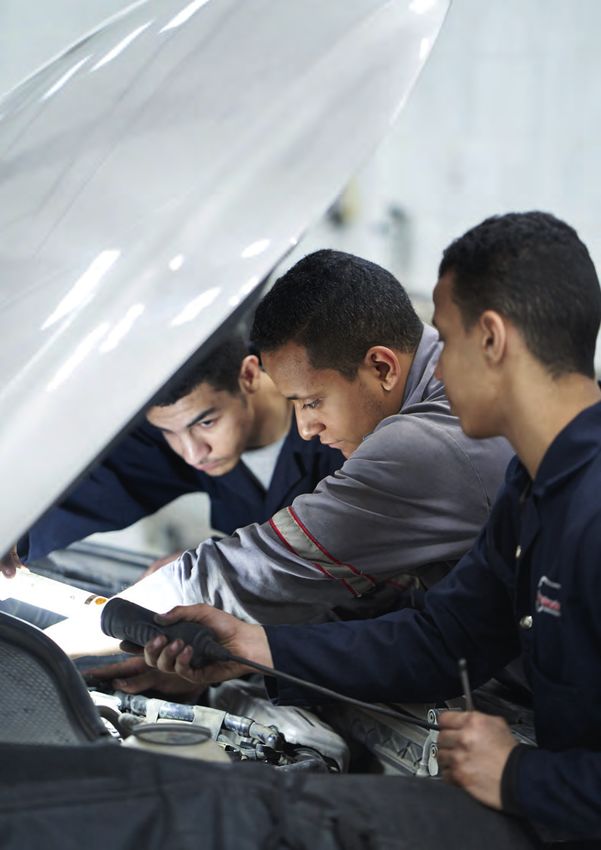
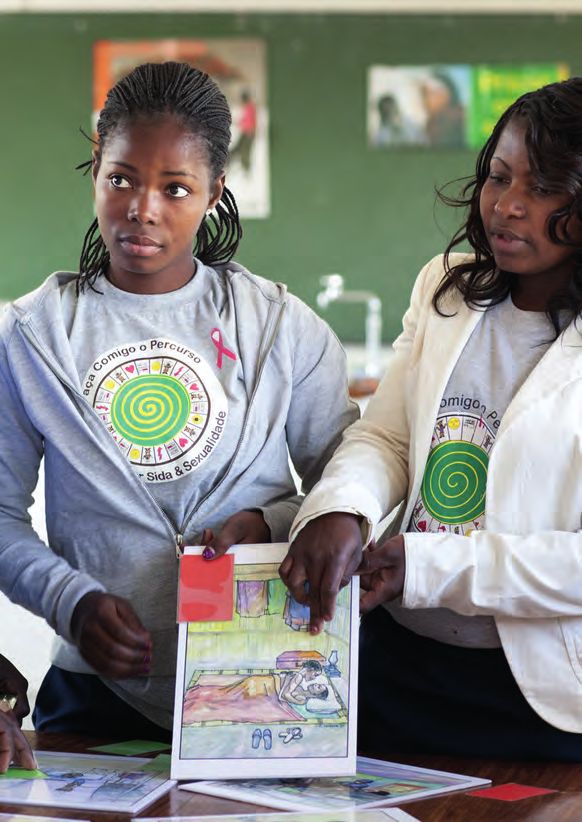
                                                                                                         for Development Education
BMBF ���������������������� German Federal Ministry of Education
                            and Research                                    GIZ    ���������������������������� Deutsche
                                                                                                             Gesellschaft für Internationale
                                                                                                      Zusammenarbeit (GIZ) GmbH
BMFSFJ ����������������� German Federal Ministry for Family Affairs,
                         Senior Citizens, Women and Youth                   KfW     �������������������������� Kreditanstalt   für Wiederaufbau
BMWi       ��������������������� German
                                    Federal Ministry for Economic Affairs   SDG     �������������������������� Sustainable   Development Goals
                            and Energy
                                                                            SIFA �������������������������� Initiative for Africa
BMZ     ������������������������� German
                                   Federal Ministry for Economic
                                                                            TYC    ��������������������������� Tanzanian Youth    Coalition
                            Cooperation and Development
                                                                            WESSA ������������������ Wildlife and Environment Society
BOG �������������������������� Berufsbildung ohne Grenzen
                                                                                                     of South Africa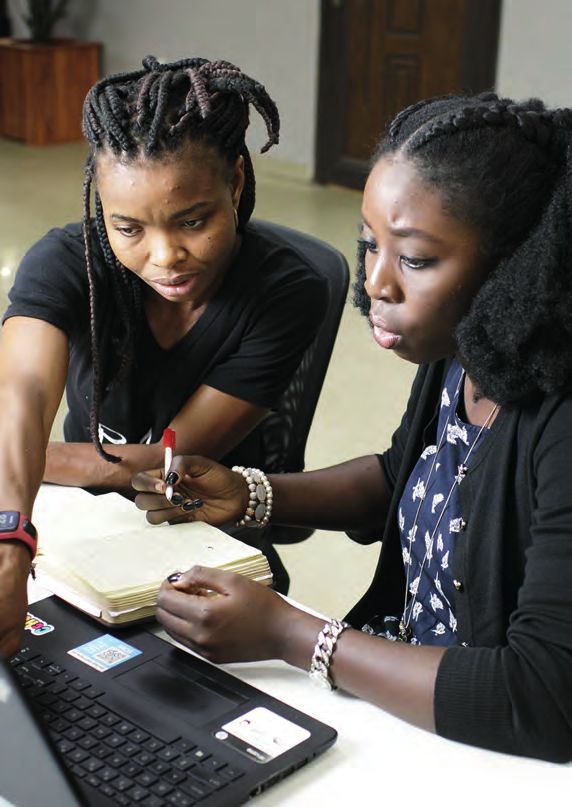
Contents
Acronym list ........................................................................................................................................................................................................................................................................             4

Contents .....................................................................................................................................................................................................................................................................................    5

Introduction .......................................................................................................................................................................................................................................................................              6
         Tackling the crisis with young people as strategic partners ..................................................................................................................................                                                                                           8

The potential of skills and employment-focused youth exchange ...................................................................................                                                                                                                                                10
         Africa needs skills for the future. Europe too. ........................................................................................................................................................................                                                                11
         Youth leadership for youth action .........................................................................................................................................................................................................                                             12

Existing mobility schemes for skills development and shortcomings .........................................................................                                                                                                                                                      14
         Potential entry points within other German private sector cooperation programmes ........................................................                                                                                                                                               18
         EU policies and programmes ........................................................................................................................................................................................................................                                     19
         AU policies and programmes .......................................................................................................................................................................................................................                                      20
         Success case 1: Drip Irrigation Skills Exchange Project in Tanzania..............................................................................................................                                                                                                       21
         Success case 2: Social worker brings experience to Germany...............................................................................................................................                                                                                               22

Policy options to support skills exchange ......................................................................................................................................................................                                                                                 24
         Opportunities arise in times of crisis ..................................................................................................................................................................................................                                               25
         Policy has already evolved ...............................................................................................................................................................................................................................                              26
         Success factors for skills exchange .......................................................................................................................................................................................................                                             26

Policy recommendations ..............................................................................................................................................................................................................................                                            28
         1      Restart youth exchange leading to skills ...............................................................................................................................................................................                                                         29
         2      Build a stronger European-African partnership ...........................................................................................................................................................                                                                        30
         3      Harness the potential of youth ..........................................................................................................................................................................................................                                        30
         4      Involve partners on an equal footing ........................................................................................................................................................................................                                                    31
         5      Build greater diversity ..................................................................................................................................................................................................................................                       31

Recommended options for skills-based youth exchange ...................................................................................................................                                                                                                                          32
         1 Virtual and blended learning formats .......................................................................................................................................................................................                                                          33
         2 Group exchange formats ...........................................................................................................................................................................................................................                                    33

Endnotes ...................................................................................................................................................................................................................................................................................     34
Introduction
Introduction   |   7

This policy paper suggests strengthening
European-African youth cooperation, giving it a
stronger focus on mutual exchange to foster young
people’s technical and vocational skills.

Young people are key actors in shaping the
future beyond the COVID-19 crisis. Cross-
regional exchange can activate the young
generation to take a lead and contribute to
sustainable development while strengthening
entrepreneurship and employability skills. In
response to the COVID-19 situation, transnational
youth initiatives can build upon digital interaction
and focus on practical innovations.

Evidence from Europe and Africa shows that mobility schemes raise young
people’s employability, entrepreneurial skills, and social commitment.
Education-based youth exchanges and volunteer services can help young
people to broaden their personal horizons and acquire life and employment-
related skills. Youth exchange in the context of education for sustainable
development, coupled with the promotion of youth civic engagement, provides
an opportunity for young people to participate in sustainable development
processes. Especially those young men and women who have had no access to
high-quality skills-based (vocational) training or employment could benefit
from international exchange. However, the existing programmes only reach a
small elite of youth, while mutual exchange partnerships with African youth
coming to Europe face many obstacles.

Policy should harness the synergies between youth mobility, volunteering          African youth
and skills development with the aim of enhancing employment and social            partners should
entrepreneurship. Policies and programmes should support strategic                be on board when
partnerships which are initiated, set up and carried out by young people          reshaping the EU-
themselves. African youth partners should be on board when reshaping the EU-      Africa partnership
Africa partnership and restarting youth mobility out of the pandemic situation.
Particular attention must be given to promoting gender equality and addressing
differences in relation to the access and use by underrepresented groups.

This document provides guidance based on learnings and skills-based pilots
during the pilot phase of the African-German Youth Initiative (AGYI). AGYI
has been set up as a joint initiative by the Federal Ministry for Economic
8   |   Youth Exchange for Skills Development. A new tool for the Africa-EU Partnership?

                                 Cooperation and Development and the African Union Commission to
                                 strengthen relations between Germany and the African continent and promote
                                 the exchange of African and German youth.

                                 Exchange programmes mobilise young
                                 women and men for active citizenship, civic
                                 engagement and global citizenship. Young
                                 volunteers contribute to the Sustainable
                                 Development Goals and the AU Agenda 2063.
                                 At the same time, young people can use and
                                 gain skills that enhance their employability
                                 and entrepreneurship.

                                 As part of the AGYI pilot phase, partner organisations in the pilot countries
                                 set up a skills working group to investigate how to give the young generation
                                 the skills they need to solve practical challenges to sustainable development.
                                 As the demand for professionally qualified specialists is high in Africa, there is
                                 great interest, inspired by the German TVET model, in a stronger focus on skills
                                 relevant to the labour market. A needs analysis showed that partner countries are
                                 particularly interested in occupational fields that offer long-term employment
                                 opportunities in sustainable local development, such as ecologically and socially
                                 sustainable agriculture and food production, renewable energies, digitisation
                                 and the craft sector.

                                 COVID-19 has had a lasting impact on youth exchange as well as wider
COVID-19 has had                 development policy. Germany’s EU Presidency has put the following topics
a lasting impact on              on the agenda: the implementation of the 2030 Agenda for Sustainable
youth exchange as well           Development, strengthening the EU-Africa partnership, making supply chains
as wider development
                                 more sustainable both ecologically and socially, and international climate action.
policy.
                                 Those should guide the strengthening of African-European youth exchange.
Introduction   |   9

Tackling the crisis with young people as
strategic partners
Skills are the foundation for the innovations needed in the COVID-19 recovery.       It is time for young
Youth need to build resilience after their reduced opportunities for participation   people to mobilise
during the crisis. As in Europe, the young generation in Africa faces education      self-help, act
disruption, economic crisis, unemployment, skills mismatch, and mental effects       together with their
of the lockdown. [1] Doors to the future seem to be more locked than ever. It is     peers, and acquire
time for young people to mobilise self-help, act together with their peers, and      skills - by building a
acquire skills – by building a better future. Policy support and an ability to act   better future.
across borders can support such initiatives and harness the potential of skills
development through exchange.
o f  s k i l l s
           o t e n t i a l
   Th e p                                s e d
                         n t - fo c  u
           p l oy m    e
a n d e m
                xc h   a n g e
    you  t h  e
The potential of skills and employment-focused youth exchange | 11
“Africa is the youngest population in the world, with over 60% under 30
years old. If we look into the future, the 2030 and 2063 agendas both lie
in Africa as our population will double by 2050. So, the Africa I want is
where we value our youth as drivers not subjects of development, where
we value the contribution of women and where we own our narratives
because our struggle is a struggle for voice.”
– Aya Chebbi, Youth Envoy of the African Union. 1
Africa needs skills for the future. Europe too.
Skills development is amongst Africa’s top priorities. Learning by working together
with peers across Africa and Europe on sustainable solutions can unlock a much-
needed potential and skills.
African countries share the opportunities and challenges of the strongest young
generation ever. By 2035, Africa will have the world’s biggest potential labour force.
Africa may become a major producer of the world’s goods and services. The challenge is By 2035, Africa
to harness the continent’s potential and provide work and prospects for Africa’s youth. will have the world’s
Every year, more than 20 million new jobs must be created. [2]
biggest potential
labour force.
Involving young Africans, Europeans and diasporas in active, meaningful, and
innovative ways is an important priority for both the EU and the AU. The AU and EU
Commissions are committed to strengthening their partnership to enhance youth
skills development and better match skills with the demands of the labour market. This
is particularly so in those sectors with the highest job creation potential, notably in
infrastructure development, the digital economy, the climate-friendly/green economy,
renewable energy, ICT, agri-business, small-scale manufacturing and the cultural
and creative industries. [3] This will accelerate the achievement of the Sustainable
Development Goals and the AU Agenda 2063.
Young people want skills for inclusive and sustainable development. Digitalisation,
migration, demographic changes and the transition to a green economy are significant
factors in the changing profile of work and skills needs. [6] As young people seek to
acquire new skills to navigate their way towards successful futures, global research
shows that transformative entrepreneurial competences such as self-efficacy, creativity
and problem-solving have emerged as qualities that are important for the world of
work. In the face of these new developments, education and training systems are
struggling to keep pace with rapidly changing skills needs. The international exchange
of experience can make an important contribution here, by increasing employable
skills and enhancing prospects for permanent work and income.
1
From https://bridge-it.net/bericht/aya-chebbi-jugendbeauftragte-der-afrikanischen-union-spricht-zum-
countdown-projekt12 | Youth Exchange for Skills Development. A new tool for the Africa-EU Partnership?
Youth leadership for youth action
Mobility allows young people to develop competences, discover new cultures, habits
and life-styles through peer-learning, and strengthen values like solidarity, democracy
and friendship. These skills improve employability, no matter the career path. Among
the essential professional skills raised by volunteer mobility are communication,
time management, teamwork, flexibility and personal skills. Young people’s personal
development and employability has been largely recognised by Europe’s Erasmus+
programme.
Given the scale and the limitations of still very formal and academic vocational and
technical training (TVET), formal training falls short in terms of employable skills to
access work and income. Triggering young people’s self-help capacities is therefore a
strategic demand. Unconventional measures are needed to boost their opportunities.
Globalisation also means that contacts with foreign countries and other cultures
are proliferating, and not only at managerial level. There is an increasing demand
for workers to be competent in foreign languages, have knowledge of foreign markets,
and be able to interact constructively with people from other cultural backgrounds
than their own. Employers see the skills and competences that mobility imparts as an
asset. [7]
With COVID-19, informal and entry job opportunities have mostly disappeared; the
doors to the world of work are locked for many young people. The problem is now
recognised in Europe, but it is much more severe in Africa, where most young people
work informally. [8] Adding to the economic damage, these impacts and uncertainties
could take a heavy toll on young people’s mental well-being, leading to a “lockdown
generation”. [9]
As with volunteering more broadly, youth exchange has a wide array of goals, which
all hinge on community and personal development. These are the overarching
objectives of international and intra-African youth exchange programmes operating
in Africa:
` Empower both the community and individual by strengthening civil society
` Engage citizens in development efforts to encourage growth at a local level
` Establish connections across borders and grow personal networks
` Promote cross-cultural and interpersonal experience
` Provide knowledge, skills and career development
` Strengthen inter-cultural understanding and global citizenshipThe potential of skills and employment-focused youth exchange | 13
or c o m p a nie s
t s f
e fi
B en
s fo r t r ai n e e s ` Companies increase their attractiveness as
e fi t training companies and employers.
n
Be ` They gain particularly qualified talents with
knowledge of foreign languages, international
experience and intercultural competence.
` Trainees gain new professional and
personal perspectives and advance ` They contribute knowledge specifically to
international work experience sustainable global development, invest in
through a practical phase. those responsible for tomorrow and position
themselves as socially committed companies.
` They expand their professional and
personal skills. ` They promote the commitment and
independence of young professionals through
` They get to know their own job from
internships abroad.
a different perspective and discover
new methods and ways of working. ` They get to know new work techniques and
benefit from contacts abroad.
` They gain competencies in intercultural
communication, sustainable business ` They gain a new perspective and view of their
and global learning. business.
` They increase the chances of a ` They gain access to high-profile platforms for
successful professional future their commitment at events and can network
in a global job market. with like-minded people.
` They gain contacts and friendships
for their entire professional life.14 | Youth Exchange for Skills Development. A new tool for the Africa-EU Partnership?
c h e m e s
o b i l i t y s
g m
Existin e l o p m e n t
k i l l s d e v
for s
o m i n g s
o r t c
and shExisting mobility schemes for skills development and shortcomings | 15
Young people are key actors in shaping the African continent’s sustainable
political, social, economic and environmental development. Exchange between
young Africans and Germans often takes place in contexts of structural and Exchange between
economic inequality. [10] So far young Africans have had few opportunities young Africans and
to gain experience through mobility, exchange or volunteer programmes in Germans often takes
Germany or other African countries. place in contexts
of structural and
Only very few apprentices and young technical professionals participate in economic inequality.
youth mobility. Despite several existing programmes, most are outgoing
(sending young people from Europe to Africa but not the reverse) or highly
specialised. This means that opportunities for young Africans to participate
in those programmes are very few. However, there is a call by partners to give
opportunities to more of young women and men.16 | Youth Exchange for Skills Development. A new tool for the Africa-EU Partnership?
The following table shows how existing initiatives contain elements of a skills exchange partnership.
Youth Exchange: Youth Exchange:
Germans outgoing Africans incoming
ERASMUS+
[11]
The EU
(ENSA School
Exchange) [12]
sequa Business
Membership
Organisation
Partnerships (KVP)
sequa Vocational
Education
and Training
Partnerships (BBP)
AHK / BMWi
Skills Experts
BMZ Special
Initiative on Training
and Job Creation
AU KfW Skills
Initiative for Africa
(SIFA)
City partnerships [14]
The above table shows that there is no reciprocal youth exchange programme with a clear focus on
skills development. Current German youth exchange programmes either have a clear focus on global
learning and do not specifically foster the development of employment-related skills; or they lack an
incoming exchange component.Existing mobility schemes for skills development and shortcomings | 17
Skills Development Supports lasting Private Sector
for non-academics partnerships participation
Low
?
?
?
Rare ! Low
Comparing the various programmes, the AusbildungWeltweit (EducationWorldwide) programme of the Federal
Ministry of Education and Research (BMBF) would seem to come closest to the objective of fostering a skills-
based exchange of apprentices or young professionals – if an incoming component were to be added to its
current design. The programme has sent apprentices for worldwide and practice-oriented stays abroad during
their vocational training since 2017.18 | Youth Exchange for Skills Development. A new tool for the Africa-EU Partnership?
Potential entry points within other
German private sector cooperation programmes
As part of the Marshall Plan with Africa and the G20 Compact with Africa (CwA), the
German Federal Ministry for Economic Cooperation and Development (BMZ) has
launched a Special Initiative on Training and Job Creation (Sonderinitiative Ausbildung
und Beschäftigung) designed to foster growth in enterprises to help create jobs. [15]
To achieve this, it is creating new forms of collaboration with the European and
African private sectors, notably by developing innovative joint projects. The aim of the
initiative is to create up to 100,000 jobs and 30,000 apprenticeships, to improve working
conditions and to promote sustainable economic growth.
German chambers and business associations have built ties to Africa as
well. Their Business Membership Organisation Partnerships (KVP) and
Vocational Education and Training Partnerships (BBP) are funded by
the Federal Ministry for Economic Cooperation and Development
(BMZ) to fight poverty through the promotion of sustainable
economic development. The programmes are intended to
mobilise the experience and know-how of German business
membership organisations (BMO) for development cooperation,
enable direct collaboration of non-government agencies and pick up
on private sector initiatives. German companies are also starting to
search for talented workers in Africa. Since 2019, the German bilateral
chambers of industry and commerce have supported the training of
workers to secure skills for German companies abroad through the
‘Skills Experts’ programme. [16]
The BMZ has invited the German chambers and associations to become
involved in the Marshall Plan with Africa and the G20 Compact with Africa
investment partnership’s Special Initiative on Training and Job Creation. sequa
is responsible to the BMZ for the implementation and quality management of this
programme, including the PartnerAfrica projects. [17]
2014 – 2020 2021 – 2027
Erasmus+ has funded The European Commission has selected
Strategic Partnerships three projects for a pilot Vocational Education
which are now suitable to and Training mobility scheme for Western
connect with Africa Balkan and African countriesExisting mobility schemes for skills development and shortcomings | 19 EU policies and programmes The individual Erasmus+ scholarship programmes “Let’s go!” And “Lift” offer trainees from the trade, crafts and commercial-technical areas the opportunity to complete three-week internships in other European countries individually and without connection to a group measure. [18] In the 2014 – 2020 period Erasmus+ has already funded Strategic Partnerships which are now suitable to connect with Africa. Erasmus+ Transnational Youth Initiatives are Strategic Partnerships to foster the social commitment and entrepreneurial spirit of young people. The distinctive feature of this format is that a Youth Initiative is initiated, set up and carried out by young people themselves. [19] The European Commission has also selected three projects for a pilot Vocational Education and Training mobility scheme for Western Balkan and African countries for the 2021 – 2027 period. However only institutional networking and teacher exchange are financed in the pilot phase, and not student exchanges. Erasmus+ partnerships can also aim to develop new training content and joint VET qualifications that integrate periods of work-based learning, include opportunities to apply knowledge in practical workplace situations, and embed international mobility experience whenever possible. [20] Some of the programme’s actions are open to any partner country in the world, but no participation from Sub- Saharan Africa was reported. For some other actions the geographical scope is narrower. South Africa makes up Region 10, while the other African countries fall under Region 11 (the ACP). Algeria, Egypt, Morocco and Tunisia participate in some actions as Mediterranean Partner Countries which are involved in the Barcelona Process. [21]
20   |    Youth Exchange for Skills Development. A new tool for the Africa-EU Partnership?

AU policies and programmes
With the 1 Million By 2021 Initiative 2 the African Union Youth
Programme aims to catalyse action for youth development in Africa,
by providing one million young Africans with opportunities in the areas
of education, employment, entrepreneurship and engagement (the 4Es).
Twelve pathways have been identified as drivers for the 4Es that will
facilitate the expansion of opportunities in youth development, among
them skills transfer hubs, internships and apprenticeships, digital skills,
job centres, leadership programmes and exchange programmes. [22]

The AU-EU Skills for Youth Employability Programme 3
acknowledges the pivotal role of young people for Africa’s socio-
economic development and seeks to improve their occupational
prospects by supporting innovative, job-oriented skills development
programmes. [23] The programme is supported by Germany. In 2019,
the pilot VET mobility project (Component 3) started to set up mobility
arrangements within the consortium of African and European VET providers and to
implement mobility in the different EU Member States (in TVET schools and/or industry).
                                     However, the exchange of trainees themselves is not
                                             yet envisaged.

                                                                                             2
                                                                                                 https://1millionby2021.au.int
                                                                                             3
                                                                                                 https://africa-eu-partnership.org/en/
                                                                                                 projects/au-eu-skills-youth-employability-
                                                                                                 programme
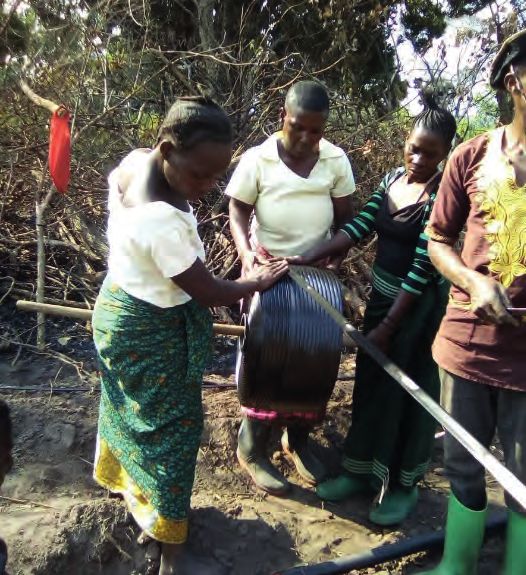
Existing mobility schemes for skills development and shortcomings | 21 Success cases Case Drip Irrigation Skills Exchange Project in Tanzania Douglas Mwaisaka from the NGO Tuelimike reports how rural youth used an exchange project to raise their practical and employability skills. Here in Nsimbo village over 99 % of the people are smallholders dependent on seasonal farming. Youth unemployment is a big issue as there are very few opportunities for young people to find a job or employ themselves. The drip irrigation project enables young people to learn the methods and practices, so that they can find proper work in horticulture or trade. The target group found it easy to learn employability skills such as communication, teamwork and problem solving, and the project allowed participants to perfect these skills. Having the drip irrigation equipment on hand and doing the irrigation practically motivated us to learn to use drip irrigation, and introduced us to technology and methods which were new to us and the whole community of Nsimbo and Mpanda. The business skills needed in horticulture were easy to pick up too. Having drip irrigation equipment changed everything.
22   |    Youth Exchange for Skills Development. A new tool for the Africa-EU Partnership?

Case
Social worker brings experience to Germany

Musiegh Madatt from South Africa worked as a
weltwärts South-North volunteer at Bonns Fünfte, an inclusive
school in Bonn, Germany.

My year of volunteering in Germany has been one of the most profound
experiences of my life to this day. I had previously successfully started as a social
worker in South Africa and had already completed half a degree in clinical social work.
However, I felt that there was more to discover. I decided to take a break from working and
studying and jumped head first into this new chapter.

My professional growth during my voluntary service has paid off extremely well. I was
able to acquire new skills in a targeted manner as well as promote and develop existing
skills. Through my voluntary service I had the opportunity not only to learn a new language
(German), but also to improve my ability to communicate with various target groups in my
native English.

My experience in Germany will be very useful later when I work in an
environment that constantly challenges me on a personal and
professional level. I can now face the challenges that arise in my
work, and solve problems creatively.

     My year of
     volunteering
     in Germany has
     been one of the
     most profound
     experiences of my
     life to this day.
Existing mobility schemes for skills development and shortcomings | 23
1.56
60% 1.13
of Africas
population is
0.78
under
30years old.
2020 2030 2055
Population of
African youth
(65% of 1.27 bn.
in 2020) and
forcast, in billions.24 | Youth Exchange for Skills Development. A new tool for the Africa-EU Partnership?
o p t i o n s
Po l i c y
s u p p o r t
x c h a n ge
sk i l l s ePolicy options support skills exchange | 25 Opportunities arise in times of crisis ` The 2030 Agenda and the 17 Sustainable Development Goals (SDGs) can form the basis of a post-pandemic plan. In recovery from the crisis a focus on building inclusive and sustainable economies that are more resilient in facing pandemics, climate change, and the many other global challenges is becoming more important. ` Both Africa and Europe face a growing number of shared challenges, including the effects of climate change and the digital transformation. The AU and EU Commissions agreed in February 2020 to intensify efforts to enhance youth skills development and better match skills with the demands of the labour market, particularly in sectors with the highest job creation potential, notably infrastructure development, the digital economy, the climate-friendly / green economy, renewable energy, ICT, agri-business, small-scale manufacturing and the cultural and creative industries. ` Coping with the Corona crisis will significantly shape the cooperation of Germany and the EU with African partners in the coming months and years. Cooperation with Africa has been gaining in importance in the EU in the face of migration policy and increasing economic and geopolitical competition. At best, the Corona crisis can promote an urgently needed renewal of the partnership. ` The ILO calls for urgent and large-scale policy responses to prevent long-lasting damage to young people in terms of education/training and labour market prospects. Skills exchange is a solution to the pandemic crisis, as it mobilises active youth participation and contributes to employability and social entrepreneurship. Of course, virtual exchange formats cannot replace all personal encounters. However, digital formats can help to maintain partnerships, ongoing projects and project ideas. Digital skills have grown everywhere during the lockdown. ` The European Commission has set a high ambition for the EU: to move to a green and digital economy. This translates into its crisis response programme “Europe’s moment: Repair and prepare for the next generation”. Reinforced investment in skills and learning throughout life for all is essential to make this transition successful. As all adults will need to upskill and reskill, vocational education and training (VET) will play a pivotal role in the sustainable growth strategy. ` Digital technology can open completely new opportunities. Online skills development may become the new normal as a result of the COVID-19 crisis. This is a trend in Europe, and a chance in Africa. Governments and school administrations have adopted e-learning technologies for home-bound students. For instance, the Kenyan, Egyptian and Nigerian educational systems now facilitate access to materials and programmes through cloud services, radio, television, and social media platforms.
26   |   Youth Exchange for Skills Development. A new tool for the Africa-EU Partnership?

                         ` The African diaspora in Europe can build bridges and mobilise important
                           stakeholder groups. The AU Youth Division is already cooperating with youth
                           initiatives to develop and implement activities and pilot initiatives with other
                           African and diaspora youth organisations to foster youth employment.

                         ` One future-oriented skill will be enabling people to interact and work together
                           using digital technology. Smart technology is transforming traditional
                           manufacturing and industrial practices. Teams cooperate globally, while the
                           physical location of production can be decentralised or roaming. Skills exchange is
                           one solution to these demands.

                         Policy has already evolved
                         ` Under the joint strategic priority area ‘Investing in people – education, science,
                           technology and skills development’, Africa and the EU acknowledge the importance
                           of youth, especially girls and young women, and those living in disadvantaged
                           or vulnerable environments. The key objectives of cooperation in this area are
                           to increase access to knowledge and skills, to better link education and skills
                           to employment, and to unlock the potential offered by research, technology,
                           innovation and the digital economy. The partnership between the EU and Africa
                           builds in particular on the implementation of the AU Roadmap on Harnessing the
                           Demographic Dividend through Investment in Youth.

                         ` NEPAD is currently implementing a flagship programme called Skills Initiative for
                           Africa (SIFA) in partnership with the AU and Germany. Component 3 of this AU-EU
                           programme focuses on improving the skills and competences of Technical and
                           Vocational Education and Training (TVET) lecturers (teaching staff) and of students
                           through a pilot mobility initiative. Two Pilot VET mobility projects involve TVET
                           schools from both continents. Curricula and teaching materials will be developed
                           jointly, and trainee exchange may be included.
Policy options support skills exchange | 27
Success factors for skills exchange
` Young people can do amazing things, if they take the lead themselves. A strong
partnership with youth organisations, including youth civil society and youth
diaspora organisations, will be key for the revitalisation of the EU-Africa
partnership.
` In partnerships, reciprocity leads to mutual benefits. Africans must be able to
come to Europe. Incoming participants will benefit from similar learning effects
as outgoing participants. Only through exchanges in both directions can all
perspectives come together.
` Skills exchange allows TVET systems to provide attractive learning pathways
which lead to future-oriented careers. They also help to develop a lifelong learning
mindset, including a willingness to learn about emerging concepts (such as
sustainable development, ICT and entrepreneurship) and new pedagogical methods
(such as MOOCs, mobile learning and simulation). African youth
can impact on
` African youth can impact on the continent’s development and economic growth. the continent’s
Infrastructure development, the digital economy, the climate-friendly / green development and
economy, renewable energy, ICT, agri-business, small-scale manufacturing and the economic growth
cultural and creative industries have the highest job creation potential and mutual
interest between European and African countries.
` Successful exchange programmes need a sustainable implementation
infrastructure. The programmes have a didactic approach and guide participants
using preparatory and follow-up activities. The guided learning often comprises
digital, leadership and entrepreneurial skills.
` Building on existing structures is always the best option. Large programmes such
as Erasmus+ and weltwärts can be further shaped to serve the purpose in hand.
Many cooperation channels are there to be used, such as company networks, city
partnerships, chamber partnerships, faith-based networks, industry delegates
and diaspora communities. Dialogue with them should lead the design of actions.
Launching artificial new programmes without coordination can damage existing
initiatives.
` Alumni are a key to the sustainability of exchanges. Alumni choose to engage on
their return for multiple and complex reasons, but some conditions can nurture and
support engagement, such as: recognition (informal, formal and in career contexts);
support from sending agencies; access to support services if needed (counselling,
debriefing, coaching, etc.); and embedding development education and continuous
engagement into wider volunteer programmes that include informed action on
return and advocacy as major components.28 | Youth Exchange for Skills Development. A new tool for the Africa-EU Partnership?
Po l i c y
d a t i o n s
m e n
recomPolicy recommendations | 29
Decision-makers have a unique opportunity to explore the synergies
between youth mobility, volunteering and skills development to
increase employability and social entrepreneurship. New initiatives and
programmes should build upon the following recommendations >>>
1 Restart youth exchange leading to skills
After the pandemic lockdown, youth mobility needs a substantial relaunch with a focus
on employment and skills. The focus on skills development and recognition would
be complementary to the existing programmes and would make youth exchange
attractive to a broader group of youth. Accessible virtual exchange formats and many After the pandemic
creative and innovative ideas are needed. lockdown, youth
mobility needs a
` Skills development and inclusion through creativity and the arts should be substantial relaunch
considered as drivers out of the current crisis. Educational activities and lifelong
learning, informal and non-formal learning and youth work (including digital
youth work) with a cultural and creative component can help young generations
and professionals to acquire skills and competences, including digital competences.
These both reinforce creativity in education and boost quality, innovation and
recognition of youth work that support the creative potential of youth.
` Priority should be given to actions that can contribute to job creation, sustainable
development and social inclusion, by fostering innovative participatory and
intercultural dialogue approaches linking education, training and youth
stakeholders with organisations in the private sector.
` Facilitating the involvement of the private sector as sponsors, partners and
ambassadors will be key in furthering the objectives of youth exchange programmes
in Africa, particularly relating to increasing employment and funding opportunities.
Support from corporates through internship programmes and employment
opportunities for youth exchange alumni, for example, would be highly beneficial.30 | Youth Exchange for Skills Development. A new tool for the Africa-EU Partnership?
2 Build a stronger European-African partnership
` Promote youth mobility programmes between the EU and AU countries by
enhancing partnerships between stakeholders in similar professions. These
can include formal vocations as well as functions in the social, ecological and
emergency relief fields (e.g. firefighting, recycling, urban gardening, social
assistance). Secure the active participation of alumni and civil society.
...be open to all ` Build on existing programmes such as Erasmus+ and Ausbildung weltweit
European and through stakeholder dialogue. Build on the contacts that GIZ and Development
African countries ... Partners already have in African countries and add a facility to engage with skills
peers in Germany and Europe. Open the Erasmus+ successor from 2021 – 2028 to
all African countries.
` Guarantee equal access to exchange to allow lasting partnerships.
` Have a multilateral structure and be open to all European and African countries,
even if the action starts with a selection of pilot countries.
3 Harness the potential of youth
` Unlock the potential of young people by bringing their talents together to solve
the problems of our century. By working together on sustainable development
solutions across all borders, young people acquire useful skills for employability
and entrepreneurship. This is critical to success in the 21st century, regardless of
career choice.
` Working together in global and diverse teams promotes skills such as problem-
solving, learning from failure, critical thinking and collaboration with people of
different mindsets and cultures. Ensure that skill promotion efforts are sensitive
to gender, ability, location and other relevant factors.
` Programmes must innovate by developing joint objectives to ensure that
young people, including girls and women, play an active role in the decision-
making and implementation of the partnership. Youth leaders should voice
their needs and expectations towards funding programmes. Especially the
African stakeholders should advocate more to design cooperation partnerships
to meet the needs of their countries. Aim to reduce racism, sexism and colonial
behaviours.Policy recommendations | 31
4 Involve partners on an equal footing
` Governments and public institutions should further invest in and cooperate
with organisations directly involved with youth work, and engage with various
stakeholders to take advantage of sustainable financial mechanisms. They
should pool quality management and know-how, and expand coordination
offices in civil society as central points of contact for ministries, to bring
together sponsoring organisations.
` Programmes will greatly benefit from open dialogue between all stakeholders
in youth exchange and skills development. The accessibility of information
about best practices, experiences, challenges, and successes will enable
organisations to make informed decisions regarding the functioning and
continuous improvement of their programmes. Such open dialogue will also
align expectations between host organisations, sending organisations and
participants.
` Strengthen the operators: host and sending organisations are the central
actors in an exchange service. Youth organisations need to be able to maintain
an exchange infrastructure, and to cover their costs in the administration of
actions.
` Provide substantial basic funding: for the substantial development of skills
exchange services, initial funding is required. Finance incoming costs. Costs
before the official start of the exchange (seminars, travel and visas, vaccinations),
after return (seminars) and during the exchange (especially accommodation,
meals and language courses) should be covered partly in advance. Provide for
educational support at home and abroad within the framework of the exchange.
5 Build greater diversity
Make
` Take action to specifically encourage non-academic young people to take part diversity
in exchange programmes, as they gain the greatest possible overall benefit from possible
international youth exchange.
` Make diversity possible: diverse volunteer profiles that are specific to the agency
and job site enable a variety of target groups and milieus to be addressed. Leave
no one behind: care for the vulnerable groups. Take care not to crowd out offers
that have already emerged spontaneously.
` Informal skills need to be recognised by educational institutions and the private
sector. Create a culture of openness to innovative and transformative skills.
Regulate activities only if necessary.32 | Youth Exchange for Skills Development. A new tool for the Africa-EU Partnership?
o p t i o n s
m e n d e d
Reco m
l s- b a s e d
for s k i l
x c h a n g e
you t h eRecommended options for skills-based youth exchange | 33
1 Virtual and blended learning formats
Take up digital technologies and innovative and open pedagogies. Digitalisation
increasingly offers new forms of communication between young people. This
allows cross-border and inter-continental exchanges to take place without
travelling. [24]
Establish an open contest to award innovative pilot actions. A competition
should be used to repeat the action or start a reverse exchange.
How?
Two youth groups (classrooms, universities, youth clubs for 15 – 35 year-olds)
exchange virtually on a subject linked to sustainable development (e.g. climate
change, peace and security, food security, colonial history). Both groups are
pedagogically accompanied to ensure a meaningful exchange.
Through the exchange joint action, the groups identify projects that each group
implements in its community during the exchange. Thus concrete cooperation
projects on sustainable development trickle down to the community level and
Interview
strengthen the Euro-African partnership at a grass-roots level.
93% are in favour
of intensifying
co operation
between Africa
and Europe.
Source: ‘Africa-Europe Civil
Society Survey’ by IfD-
Allensbach among 360 civil
society representatives from
Europe and Africa, October 202034 | Youth Exchange for Skills Development. A new tool for the Africa-EU Partnership?
2 Group exchange formats
Working in small groups can overcome the hurdles of individual engagement.
Guided groups mobilise the potential of all participants. Groups can build the
basis of lasting institutional partnerships.
Exchange of trainees and young professionals as part of an innovative group
exchange format:
` A 2 – 3 week exchange of a small group of trainees (3 – 5 people),
followed by a return visit
` Preparation online and at a weekend meeting
` Follow-up after the stay and continued mentoring
Support through:
` Initiation of partnerships. Based on the organisation’s profile and
expectations, we connect the partners or companies with suitable
partners in Africa and support them in the first steps of the partnership
` Support in the preparation of an exchange project
` Assistance with the funding application
` Preparation and follow-up of the visits
` Assistance with visa applicationsRecommended options for skills-based youth exchange | 35
t e r v i e w
n
I in5newcoreAU-EU
topics by EU Commission
strategy proposal
Sustainable Peace, Green Migration Digital
Growth and Security and Transition and Mobility Transforma-
Jobs Governance and tion
Energy
Access
42%
31% 27%
22% 21%
13% 3% 12% 4% 1%
African
t
imp
an
Eu
ort
or
fo
me rm
ta
ro
imp
r e
pe
fo
nt
an
Source: ‘Africa-Europe Civil
Society Survey’ by IfD-
Allensbach among 360 civil
society representatives from
Europe and Africa, October 202036 | Youth Exchange for Skills Development. A new tool for the Africa-EU Partnership?
Endnotes
[1] See ILO (11 August 2020) Global Report: Youth & COVID-19: Impacts on jobs, education, rights and mental well-being,
https://www.ilo.org/global/topics/youth-employment/publications/WCMS_753026/lang--en/index.htm. See also the RAY
Network, The impact of the Corona pandemic on youth work in Europe, https://www.researchyouth.net/news/first-findings-
corona-research-pro
[2] See In On Africa (2018) Youth Exchange Programmes in Africa, Impact Assessment and Recommended Practices Guide,
African-German Youth Initiative (AGYI), https://www.inonafrica.com/agyi-publication
[3] From https://au.int/en/pressreleases/20200227/joint-communique-10th-african-union-commission-european-
commission-meeting
[4] See https://ec.europa.eu/social/main.jsp?catId=1223. See the EU Skills Profile Tool for Third Country Nationals for
compatibility with African countries, https://ec.europa.eu/migrantskills/#
[5] https://africa-eu-partnership.org/sites/default/files/userfiles/4th_africa-europe_youth_summit_-_abidjan_
declaration_2017.pdf
[6] According to the UNESCO-UNEVOC’s 2018 Global Learning Forum on ‘Managing Skills in a Time of Disruption’.
[7] See European Commission DG Education and Culture (2013) Youthpass Impact Study. By Marti Taru and Paul
Kloosterman, https://www.youthpass.eu/downloads/13-62-225/Youthpass%20Impact%20Study%20-%20Report.pdf
[accessed 01.09.2020]
[8] The youth occupation informality rate ranges from 32.9 per cent in Europe and Central Asia to 93.4 per cent in Africa.
(ILO Survey)
[9] On a standardised scale of mental well-being, the ILO survey of May 2020 finds more than half of the young people
surveyed have become vulnerable to anxiety or depression since the start of the pandemic.
[10] See Friends of the Earth (2018) Building an inclusive and cross-regional youth movement for environmental justice.
Reflections from African and European youth in Friends of the Earth, https://www.foei.org/wp-content/uploads/2018/12/
Africa-Europe-Youth-Movement-SofS-EN.pdf
[11] Erasmus+ is the EU’s programme to support education, training, youth and sport in Europe. Its budget of €21.2 billion
(2021-2027) provides opportunities for over 4 million Europeans to study, train, and gain experience abroad. Erasmus+
supports traineeships (work placements or study periods abroad) for students currently enrolled in vocational education and
training (VET). These opportunities are also open to company-based apprentices and to recent graduates.
[12] ENSA is a school exchange programme designed for youths wishing to broaden their understanding of development
policy. It supports school partnerships with regard to content creation along with financial support to allow students from
Germany and the countries in the Global South to learn from each other, embrace new perspectives, learn how global
relationships work and become committed to being a positive force for sustainable change. See https://ensa.engagement-
global.deEndnotes | 37 [13] A number of arts and crafts associations in Europe remember that skills exchange has a long tradition. Since the Middle Ages, young artisans have set out on learning journeys to apply and gather skills during their Wanderjahre. In 2014 this ‘Waltz’ was placed on the UNESCO Nationwide Inventory of Intangible Cultural Heritage. [14] Europe has a tradition of city partnerships since the 1950s, that maintain communication links at government, business, and society level, even in difficult times. ENGAGEMENT GLOBAL SKEW – Service Agency Communities in One World supports Municipalities for Global Sustainability. Some city partnerships have started youth exchange and skills partnerships, most notably among fire fighters and emergency relief workers, and youth exchange partnerships are evolving (e.g. Rheinland-Pfalz/Rwanda and Hamburg/Dar Es Salaam). [15] See https://www.bmz.de/en/countries_regions/marshall_plan_with_africa/index.html#tab32564603. The first phase of the special initiative only covers measures in the G20 Compact countries Ethiopia, Morocco and Tunisia as well as in Ghana, Senegal and Côte d’Ivoire. The special initiative aims to complement these partnerships with civil society organisations that are innovative, can implement cooperation with business, and have relevant experience in project implementation. Support is provided in implementing the Special Initiative on Training and Job Creation to achieve its goals in Germany and its partner countries. [16] See https://www.bmwi.de/Redaktion/EN/Artikel/vocational-training-and-profession/skills-experts.html [17] See https://www.sequa.de/projekte-programme/partnerafrika [18] The grant includes a sum for the intercultural and linguistic preparation of the internship as well as country-specific lump sums for travel expenses, accommodation and meals. See https://ec.europa.eu/programmes/erasmus-plus/about_en [19] See the Erasmus+ Programme Guide, https://ec.europa.eu/programmes/erasmus-plus/programme-guide/part-b/ three-key-actions/key-action-2/strategic-partnerships-field-education-training-youth_en [accessed 03.09.2020] [20] Erasmus+ Sector Skills Alliances aim tackle skills gaps by identifying sector-specific labour market needs and demands for new skills with regard to one or more occupational profiles (demand side), or by enhancing the responsiveness of initial and continuing VET systems, at any level (supply side), to sector-specific labour market needs. [21] SALTO-YOUTH working on European priority areas within the youth field links to these countries, combining the Erasmus+ Youth and the European Solidarity Corps programmes. The SALTO Training and Cooperation Resource Centre is located at JUGEND für Europa, the German National Agency for the EU›s Erasmus+ YOUTH IN ACTION programme. https://www.salto-youth.net/rc/training-and-cooperation/about/contactinfo [22] See http://1millionby2021.au.int [23] The AU-EU Skills for Youth Employability Programme aims to improve the prospects of young Africans by supporting job-oriented skills development programmes. The multi-annual budget is €91m. See https://skillsafrica.org [24] AGYI has virtual experience of Countdown 2030, and a similar format could emerge. The skills working group discussed a wwB-like small group format.
38   |   Youth Exchange for Skills Development. A new tool for the Africa-EU Partnership?

Notes

                                                                                                                                 ion
                                                                                                                   i s p u blicat ,
                                                                                                                th              -19
                                                                                                 i r u s icon in s to COVID w
                                                                                            The v reference ndemic. Ho
                                                                                             marks or the pa ic af fect
                                                                                                        a
                                                                                               cor on he pandem t?
                                                                                                   will t evelopmen
                                                                                                            d
Published by the Deutsche Gesellschaft für Internationale Zusammenarbeit (GIZ) GmbH Registered offices Bonn and Eschborn, Germany Address African-German Youth Initiative (AGYI) GIZ African Union Office Kirkos Sub-City, Fitawrari Damtew Road In front of African Union Commission Gate No. 3, Next to Finland Embassy P.O. Box 100009, Addis Ababa, Ethiopia E maria.zandt@giz.de I https://www.giz.de/en/worldwide/43431.html Programme/project description African German Youth Initiative (AGYI) Authors and Editors Karsten Weitzenegger (INBAS), Maria Zandt (GIZ) Design Ira Olaleye, Eschborn Photo credits Pg. 6: © GIZ/Mali Lazell; Pg. 10: © GIZ/David Degner; Pg. 14: © GIZ/Michael von Haugwitz; Pg. 19: © GIZ/Markus Kirchgessner; Pg. 20: © GIZ/Dirk Gebhardt; Pg. 21: © GIZ/ Joel Mwakitalu; Pg. 22: © GIZ; Pg. 24: © GIZ/Ute Grabowsky; Pg. 28: © GIZ/Thomas Imo/photothek.net; ti; Pg. 32: © GIZ/Ute Grabowsky On behalf of German Federal Ministry for Economic Cooperation and Development (BMZ) Division 322 – Civic Engagement, Austausch- und Freiwilligendienste, Engagement Global Addis Abeba, 2020
You can also read


