UFOP Report on Global Market Supply 2018/2019 - European and world demand for biomass for the purpose of biofuel production in relation to supply ...
←
→
Page content transcription
If your browser does not render page correctly, please read the page content below
UNION ZUR FÖRDERUNG VON OEL- UND PROTEINPFLANZEN E.V.

     UFOP Report on
   Global Market Supply
        2018/2019
     European and world demand for biomass for the
    purpose of biofuel production in relation to supply in
              the food and feedstuff markets
                       WWW.UFOP.DE
When revising the Renewable Energy Directive (Red II), the European Union failed to integrate
Global supply to the market and climate change:                                                        this potential properly in its climate protection policy. In fact, production of renewables from
“resource” agriculture – “just” food or more?                                                          cultivated biomass is being gradually shunted aside without developing sales perspectives in
                                                                                                       new markets.

It lasted until December - a drought Germany and Europe have hardly ever experienced before.           Instead, the governments of the world‘s most important agricultural nations in North and South
In some regions, yields of grain, maize, oilseeds and also forage crops fell substantially short       America and Asia are promoting energy-related uses of cultivated biomass in their national
of the previous years‘ average. Whereas in a similar situation in 2008 prices for agricultural         agricultural, energy and climate protection policies. This is reflected in rising requirements for
feedstock rose to record highs, farmers felt disappointed this year. Prices did not go up in the       blending biofuels in fossil fuels. I expect that these countries, as signatories of the Paris Climate
same way despite the smaller crop. In Germany, profits of exclusively arable farms nearly halved       Protection Agreement, not only want to see this instrument of climate protection acknowledged
between the marketing years 2012/13 and 2017/18 to, on average, just less than EUR 35,000.             in their national climate and energy plans they are required to provide by 2020, but that they will
                                                                                                       also continue to pursue its further development.
The causes are to be found in the international markets. The new issue of UFOP‘s Report
on Global Market Supply for 2018/19 once again confirms that - in the case of vegetable oil            This means that production of renewables will take place elsewhere in the future. As a
- large harvests elsewhere, stock levels and international trade can actually overcompensate           consequence, the European Union will lose influence because it can no longer specify statutory
crop losses. In North and South America, yield increases are achieved by applying technical            requirements relating to sustainability criteria that would apply in non-EU countries. This
progress and forging new production areas, whereas in Asia yields are raised by using new oil          situation especially affects the production of oilseeds in the European Union, because it provides
palm varieties for replantings and also creating new plantations in the wake of clearing primeval      the primary, and GM-free, source of protein for animal feeding. Conversely, there will be
forest. The market does not ask if this trend is consistent with international sustainability goals.   additional imports of large amounts of soybeans and therefore the corresponding “acreage”.
Sustainability is not reflected in prices paid to producers.                                           In other words, EU regulations on how to calculate greenhouse gas emissions do not take this
                                                                                                       substitution effect that supports the competitiveness of domestic feedstocks into account.
This means that global supply with food is secured. The reasons for regional famines, such as
in Yemen, have political origins. Military conflicts and widespread poor government leadership         Consequently, the maxim of the liberalization of agricultural market policy the EU Agricultural
continue to be the main factors for deteriorating food supply in many parts of Africa, especially      Council supported again at the end of November 2018 is contrary to an environmentally safer
in rural areas, and for a lack of economic prospects in these regions. The results are prominent in    diversification of crop rotation systems for economic reasons. Because, naturally, farmers grow
international media coverage. Therefore, I very much welcome the fact that the European Union          the kinds of crop that promise them the highest profit. At the same time, dependence on imports
and German Federal Ministry for Economy Cooperation and Development (Bundesministerium                 of feed protein is increasing. The European protein plan will presumably do nothing to change this.
für wirtschaftliche Zusammenarbeit und Entwicklung / BMZ) have announced their intention to
focus their future activities on agriculture and food economics as key factors to create new jobs      Agricultural policy is obliged to combine the requirements for cost-efficient and sustainable
in African rural areas.                                                                                crop production with a proper agricultural and climate protection policy and open up sales
                                                                                                       perspectives in the fuels markets. At the same time, is must also include ambitious sustainability
The production and yield potentials based on a sustained economic system have not yet been             requirements that also apply in countries outside the EU. I am therefore interested to see what
unlocked in many regions. New breeding methods, such as specific genome editing, offer the             the future German agricultural strategy is going to look like in detail given these overall conditions
opportunity to exploit the yield potential of specific varieties due to the varieties‘ improved        of market policy.
nutrient efficiency and enhanced resistance against harmful organisms and, above all, water
deficiency.

Against the background of climate change, the role of sustained intensification of crop production
under the organic economy strategy, which is an aim intensely pursued by Germany, is gaining
strategic importance in the short term. Biomass from sustained production is an important
feedstock source for equally sustained energy supply, particularly in the countryside, and the
                                                                                                       »» Wolfgang Vogel
material use of renewables.
                                                                                                       UFOP Chairman
The current UFOP Report on Global Market Supply shows that this potential is not used fully. Low
or falling prices for grain, oilseeds, sugar and vegetable oils are evidence of global oversupply.
With prices at the current levels, sustainable agriculture is next to impossible, even in African
rural areas. From this point of view, arable farming is highly challenged not just in Germany.

2    Foreword                                                                                                                                                                                Foreword      3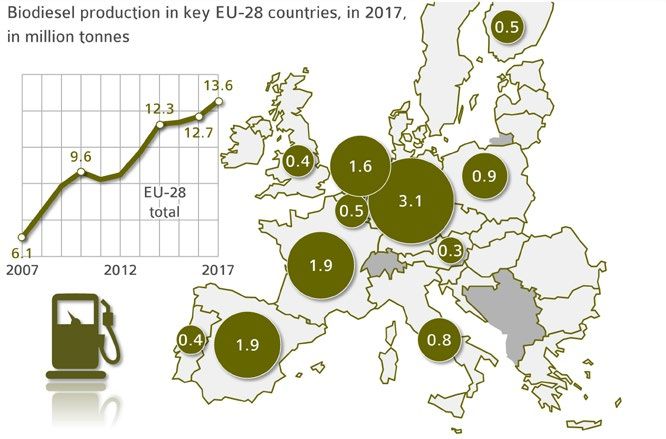
Table of Contents

»» 1 Feedstock supply                                                                »» 3 Food security
    1.1 How much grain is produced on a global scale?                                  3.1 Is there sufficient rapeseed in Germany?
        1.1.1 Global grain production                                                      3.1.1 German rapeseed production and level of self-sufficiency
        1.1.2 Global stocks of grains                                                              3.1.1.1 Output of rapeseed meal with and without biodiesel fuel production
        1.1.3 Global grain supply                                                      3.2 Why is demand for oilseeds increasing?
    1.2 How much oilseed and vegetable oil is produced on a global scale?                  3.2.1 Global meat consumption
        1.2.1 Global oilseed production                                                    3.2.2 Quota requirements to promote biofuels
               1.2.1.1 Composition of oilseed crops                                  3.3 What is the amount of grain and vegetable oil per person?
        1.2.2 Global vegetable oil production                                              3.3.1 Per capita supply of grain and vegetable oil
               1.2.2.1 Price developpement of vegetable oils                         3.4 Is there enough food?
        1.2.3 Global oilseed supply                                                        3.4.1 Use of feedstocks in biofuels production
               1.2.3.1 Global vegetable oil supply                                   3.5 Why do people starve?
    1.3 How much oilseed and grain including rice does each continent produce?             3.5.1 The issue of distribution
        1.3.1 Production of grain                                                          3.5.2 Battle for water
        1.3.2 Production of oilseeds                                                       3.5.3 Food availability and climate change
    1.4 What products are made from grain?
        1.4.1 Global use of grains
    1.5 What products are made from oilseeds?                                        »» 4 Use of land
        1.5.1 Global use of oilseeds
               1.5.1.1 Global production of oils and meals                           4.1 Does growing energy crops create a lack of land for food crops?
                                                                                           4.1.1 Shares of land used for global biofuels production
                                                                                           4.1.2 Development of cropland
                                                                                       4.2 Is there a limit to the use of palm oil?
»» 2 Production of biofuels                                                                4.2.1 Global use of palm oil
    2.1 Which countries promote biofuels?
        2.1.1 Global output of bioethanol
               2.1.1.1 Key EU-28 bioethanol producers                              »» 5 Development of prices
        2.1.2 Global output of biodiesel
               2.1.2.1 Key EU-28 biodiesel producers                                 5.1 Do biofuels push food prices up?
    2.2 What feedstocks are used in world biofuels production?                             5.1.1 Comparison of prices of bread and grain
        2.2.1 Global resource bases for biodiesel                                          5.1.2 Comparison of prices of bioethanol and grain
    2.3 What feedstocks are used in European biodiesel fuel production?                           5.1.2.1 Comparison of prices of biodiesel and vegetable oil
        2.3.1 Resource bases for biodiesel in the EU-28                              »» 6 Statistics
    2.4 What feedstocks are used in the production of biodiesel used in Germany?       6.1 Note on handling statistics
        2.4.1 Feedstocks of biofuels, consumed in Germany                                  6.1.1 Troubles with statistics
        2.4.2 Greenhouse gas savings
    2.5 Where do the feedstocks for biodiesel at German petrol stations come from?
        2.5.1 Origins of feedstocks for biodiesel used in Germany
                                                                                                                     Editorial department, charts and descriptions:
                                                                                                                     Agricultural Market Information Company (AMI)
                                                                                                                     Department plant production
                                                                                                                     In Charge: Wienke von Schenck
                                                                                                                     www.ami-informiert.de
                                                                                                                     Copyright for all charts: AMI GmbH

4     Table of Contents                                                                                                                                      Table of Contents    5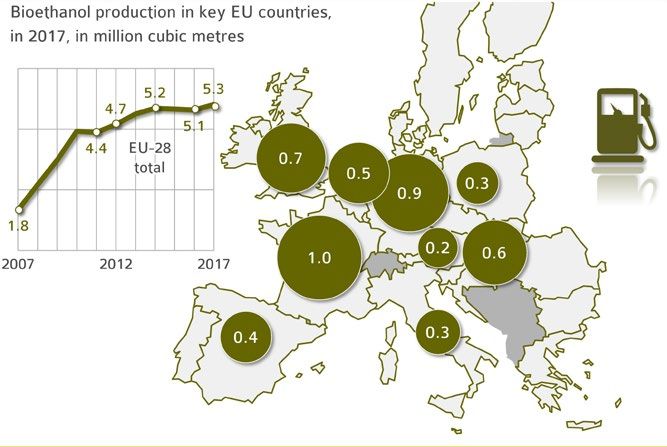
1.1 How much grain is produced on a global scale?
                             »» 1.1.1 Global grain production
                             Poor weather conditions occurring both in the northern and southern hemisphere affected
                             global grain production. This especially applies to wheat (-4.2 per cent) and maize (-2.2 per cent).
                             Since these are the world‘s most important kinds of grain, their decline is reflected in the figures
                             for overall grain production. Although production fell short of the previous year‘s by 2.1 per
                             cent, it remained at a level of more than 2.6 billion tonnes. In general, as a result of progress in
                             plant breeding, expansions in overall area and improvement of agricultural production practices
                             (fertiliser applications, pest and disease control, reduced losses at harvest and in storage), world
                             grain production has continuously increased over the past decades. Since 1971/72 harvest
                             amounts have tripled (maize) or doubled (wheat and rice). Bumper crops in many production
                             regions have led to oversupply on the markets. Maize is the number one grain, underlining
                             its globally growing importance for supply to the feed sector and (US) bioethanol production.
                             Like maize, barley is mainly used as livestock feed. On the other hand, rice and wheat are
                             predominantly consumed in human diets.

                               Global grain production remains at more than 2.6 billions tonnes

        1 Feedstock supply
                                                                                                             © AMI 2018 | Source: FAO

6   Feedstock supply                                                                                     Feedstock supply          7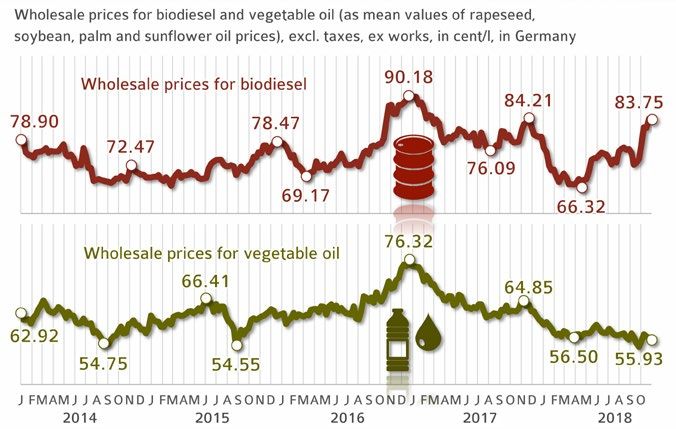
1.1 How much grain is produced on a global scale?                                                          1.1 How much grain is produced on a global scale?
»» 1.1.2 Global stocks of grains                                                                           »» 1.1.3 Global grain supply
Due to significant harvest increases in grain cultivation, world grain stocks have grown                   The ratio of supplies to consumption (also called the stock-to-use ratio) is a key figure in
considerably. In most marketing years, production of wheat and coarse grains exceeded                      estimating supply and, consequently, potential price trends. The decline in grain production in
consumption. These stocks that are left at the end of a marketing year are the ending stocks               2018/19 and the slight rise in consumption lead to a decrease in global ending stocks, with the
that, as beginning stocks, ensure supply at the beginning of the following marketing year.                 result that the stock-to-use ratio will drop. Nevertheless, supply of wheat and coarse grains, at
                                                                                                           35 per cent and 25 per cent respectively of the amounts harvested, is set to remain exceptionally
Based on smaller harvests of wheat and coarse grains (maize, barley and rye) caused by poor                good. This will deter a rise in producer prices right into the following marketing year. To sum up,
weather and the increase in consumption on a global scale, stocks are expected to decline from             from the perspective of farmers grain prices remain too low.
their highest level of 643 million tonnes to 585 million tonnes by the end of the 2018/19 marketing
year. In other words, 2018/19 output will not be sufficient to cover global demand. Although
this will be at the expense of supplies and lead to a drop in stocks of wheat (-4.7 per cent) and
especially coarse grains (-12.3 per cent), overall supply will remain safe with a large surplus into         Supply and demand estimate based on the stock-to-use ratio
the next crop.
                                                                                                                                                                                          © AMI 2018 | Source: FAO

    Large stocks serve as buffer for small harvest amounts
                                                                                © AMI 2018 | Source: FAO

8     Feedstock supply                                                                                                                                                                Feedstock supply          9
1.2 How much oilseed and vegetable oil is produced                                                         1.2 How much oilseed and vegetable oil is produced
    on a global scale?                                                                                         on a global scale?
»» 1.2.1 Global oilseed production                                                                         »» 1.2.1 Global oilseed production
In the marketing year 2018/19, production of oilseeds is likely to hit almost 600 million tonnes,               1.2.1.1 Composition of oilseed crops
the largest quantity ever. Global rise in demand for high-quality feed protein has been a key
driver of North and South American soybean production for years now and is the main
reason for the expansion in cultivation area. On a global scale, soybean is the number one                  Sunflowers have the highest oil content
oilseed crop, accounting for more than 60 per cent of world oilseed production.

Oilseed crops differ in oil and protein content as well as fatty acid composition and protein                                                            © AMI 2018 | Source: Handbuch der Lebensmitteltechnologie

quality, along with their climate and soil requirements. These factors have a determining
influence on the price of the oilseed crop in question. This especially applies to protein quality,
because soybean is also the most valuable source of protein in terms of quality. For this reason,
rapeseed breeders are working intensively on improving the protein quality of rapeseed.

  Soybeans are the world‘s no. 1 oilseed crop
                                                                                © AMI 2018 | Source: FAO

10   Feedstock supply                                                                                                                                                              Feedstock supply 11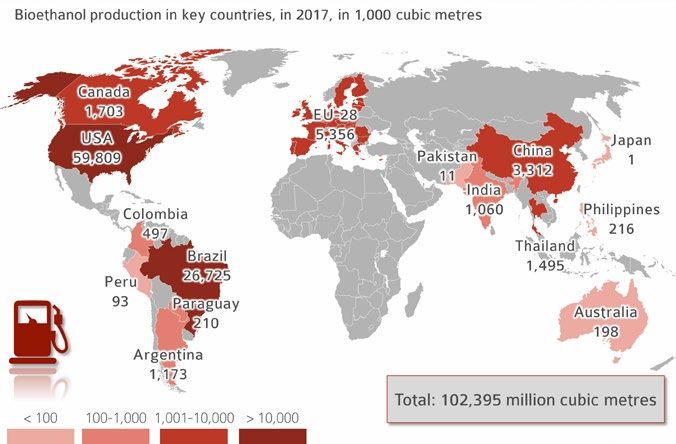
1.2 How much oilseed and vegetable oil is produced                                                        1.2 How much oilseed and vegetable oil is produced
    on a global scale?                                                                                        on a global scale?
»» 1.2.2 Global vegetable oil production                                                                  »» 1.2.2 Global vegetable oil production
Output of vegetable oil increased rapidly over the past decades. Production of vegetable oil from              1.2.2.1 Price developpment of vegetable oils
the eight key oil-yielding crops amounted to approximately 203 million tonnes in the 2018/19
marketing year. This was more than twice the amount at the turn of the millennium. Together,
palm and soybean oil, the world‘s most important oilseed crops, account for 63.5 per cent of
global production. Rapeseed oil occupies third place, accounting for almost 14 per cent, followed          The price gap between oilseed rape and palm oil is the largest since 10 years
by sunflower oil with just over 9 per cent of world output. Vegetable oils are not only used in
human diets, but also as a feedstock for transport fuel production and other industrial purposes,                                                                         © AMI 2018 | Source: USDA

such as soaps, surfactants for use in detergent production, operating supplies such as lubricating
and hydraulic oils, release agents for industrial uses or base substance for cosmetic products.

  Palm oil strengthens its top position
                                                                              © AMI 2018 | Source: USDA

12   Feedstock supply                                                                                                                                                  Feedstock supply 13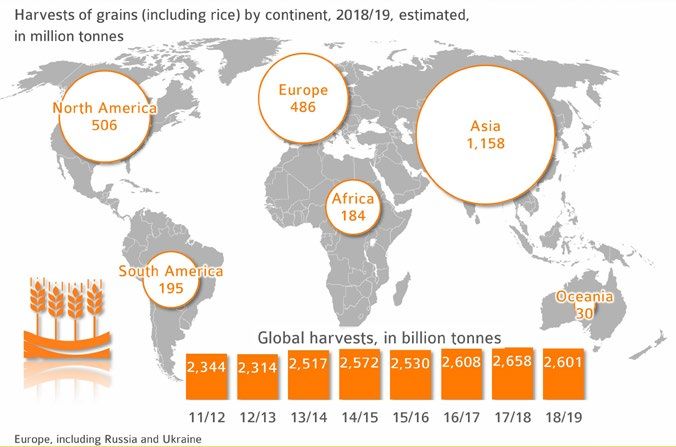
1.2 How much oilseed and vegetable oil is produced                                                        1.2 How much oilseed and vegetable oil is produced
    on a global scale?                                                                                        on a global scale?
»» 1.2.3 Global oilseed supply                                                                            »» 1.2.3 Global oilseed supply
The ratio of supplies to consumption (also called the stock-to-use ratio) is a key figure in                   1.2.3.1 Global vegetable oil supply
estimating supply and, consequently, potential price trends. The stock-to-use ratio for rapeseed
and sunflowerseed has been in decline for years now. If demand for rapeseed oil for EU biodiesel
production were to continue to decline, this trend would intensify, especially in the case of
rapeseed. The picture is somewhat different for soybeans. Bumper crops are causing supply                  Rapeseed oil in strong demand
and stocks to rise significantly. However, there is also a steady growth in demand for soy protein                                                             © AMI 2018 | Source: USDA
for animal feed, very especially in China. Due to the positive development of the economy and
income in the world‘s most populous country, purchasing power is increasing and so is demand
for meat and, consequently, oilseed meals to feed the growing numbers of livestock. China‘s
growth in demand for soy coincides with bumper crops in the US and Brazil in 2018/19. This
correlation generates dynamic changes in price. However, the dynamics are weakened given
the good supply to the market.

  Tight supply of rapeseed and sunflower seed
                                                                              © AMI 2018 | Source: USDA

14   Feedstock supply                                                                                                                                     Feedstock supply 15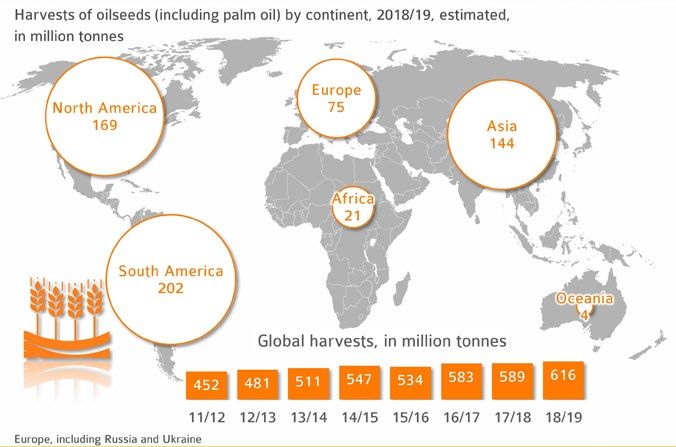
1.3 How much oilseed and grain (including rice)                                                          1.3 How much oilseed and grain (including rice)
    does each continent produce?                                                                             does each continent produce?
»» 1.3.1 Production of grain                                                                             »» 1.3.2 Production of oilseeds
2018/19 world production of grain (including rice) is set to be slightly lower than it was in the        The output of oilseeds is growing rapidly. The Food and Agriculture Organization FAO estimates
record year of 2017/18. The larger global maize harvest cannot offset the decline in wheat and           global production in 2018/19 at 616 million tonnes. This is up 5 per cent year-on-year and just
barley. The harvest was smaller especially in Europe. The Food and Agriculture Organization              over 50 per cent from 10 years ago. The increase is primarily based on growth of output in North
FAO forecast is for around 2.6 billion tonnes globally. The majority, around 45 per cent, is             and South America (expansion of area planted) and Asia. The world‘s most important oilseed
produced in Asia. The main reason is that Asia is the home of rice production. China is the main         and palm oil producing regions are more evenly distributed than grain-producing areas are. The
country of origin for grain and rice. North America holds second position, headed by the US              difference is not so much in output as in crops grown: whereas soybean is the most important
with more than 448 million tonnes. Whereas marketing grain globally is vital for the economy             oilseed crop in South America and the US, rapeseed prevails in Canada and the EU-28 due to
of countries like the US or Canada, China hardly offers any of its grain on the world market. The        climatic conditions. In eastern Europe sunflowers predominate. Asian countries such as China
country produces most of its agricultural feedstock to cover domestic demand and also needs              and India produce large amounts of both rapeseed and soybeans. On the other hand, oil palm is
extensive imports.                                                                                       the primary oilseed crop in Malaysia and Indonesia.

                                                                                                         The US was the world‘s biggest soybean producer in 2017/18, just ahead of Brazil. The EU-28
                                                                                                         was top of the list of rapeseed producing countries, whereas Ukraine harvested the largest
  Asia is the largest grain producer                                                                     quantity of sunflowers.
                                                                              © AMI 2018 | Source: FAO

                                                                                                          Oilseed harvests growing steadily
                                                                                                                                                                                      © AMI 2018 | Source: FAO

16   Feedstock supply                                                                                                                                                             Feedstock supply 17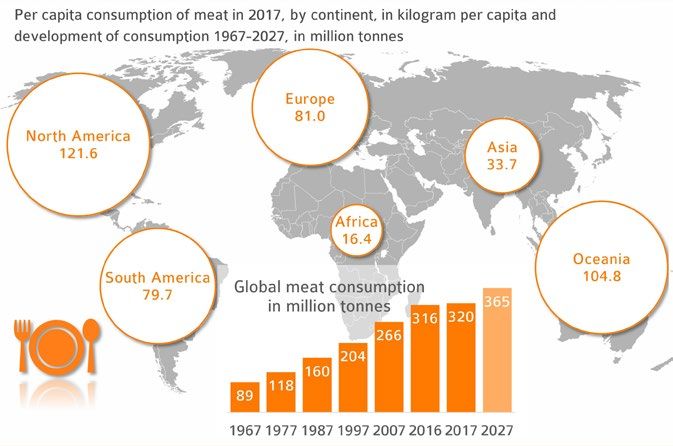
1.4 What products are made from grain?                                                                        1.5 What products are made from oilseeds?
»» 1.4.1 Global use of grains                                                                                 »» 1.5.1 Global use of oilseeds
Global production of grains (excluding rice) in the 2018/19 marketing year amounted to an estimated           Oilseeds grown worldwide are pressed to make vegetable oils, generating extraction meal and
2 billion tonnes. The produce is intended for human consumption, but also used as a livestock feed            oilseed cake as joint products of pressing. Vegetable oil can be gained by various chemical and
and feedstock in bioethanol production. At 47 per cent, the largest part of the grain harvest goes            physical methods. Before being pressed, the feedstock is heated to increase oil yield. The meal
into feeding troughs, trending upward (up 3 percentage points from the previous year). Although               that remains after pressing is used as a high-protein feed. Consequently, the largest part of the
demand for grain for use in transport fuel production has increased slightly, it accounts for less than       oilseeds – around 60 per cent – goes into feeding troughs and the smaller proportion – around
one tenth of total consumption, the International Grain Council (IGC) has reported. This means that           31 per cent – is used as food. Soybean meal is the number one feed in terms of quantity, with
there is enough grain to meet the growing demand for food and feed.                                           global output amounting to 236 million tonnes. It is followed by rapeseed, which has a share
                                                                                                              of around 36 million tonnes in global protein supply. Farmers in the EU-28 only produce GM-
In the US, bioethanol is mostly made from maize. The process generates Dried Distillers Grains                free rapeseed. Consequently, rapeseed is by far the most important GM-free source of protein
with Solubles (DDGS), which is used as a protein feed. One tonne of wheat that is processed into              for animal feeding. Therefore, EU-rapeseed meal reduces the corresponding need for soybean
bioethanol produces on average 295 kg of DDGS with a moisture content of 10 per cent. One                     imports and the acreage of land that would otherwise be required for soy cultivation. On that
tonne of maize yields 309 kg of DDGS. When grain prices are high, processing is the first activity            note, the EU Commission explicitly acknowledges the importance of EU-rapeseed production
to go down, before farmers begin to save on feed. The high added-value potential in the food                  as the primary domestic source of protein. Output of sunflower meal, at 21 million tonnes, is ten
markets ensures that grain mostly goes into the production of food when grain prices are high. The            times lower than that of soybean meal. Production of oil is much more important with this crop.
biofuels market serves as a “supply buffer” that ensures grain is constantly available for human              Any meal produced is also used as animal feed.
consumption and feed.

                                                                                                                Most oilseeds also destined for animal feed
 Grain is mainly used for feed production
                                                                                                                                                                                   © AMI 2018 | Source: USDA, Oil World
                                                                                   © AMI 2018 | Source: IGC

18   Feedstock supply                                                                                                                                                                   Feedstock supply 19
1.5 What products are made from oilseeds?
»» 1.5.1 Global use of oilseeds
1.5.1.1 Global production of oils and meals
Practical dual use of oilseeds
© AMI 2018 | Source: Oil World
20 Feedstock supply Feedstock supply 212.1 Which countries promote biofuels?
»» 2.1.1 Global output of bioethanol
Over recent years, more and more bioethanol plants have been built to save fossil-energy
sources and cut down on greenhouse gas emissions. Politics is a key factor in this by defining
blending quota requirements, which exercises a direct influence on the amount of bioethanol
produced. For example, in the US the blending rate was raised from 10 per cent to 15 per cent
after the rate of 10 per cent was actually reached. By contrast, in China official steps taken
to boost grain processing as a means of curbing local surpluses contributed to an increase in
bioethanol production. The use of grain and sugar in global bioethanol production continues to
grow, but at a significantly slower pace now. In the case of sugar (Brazil), production of 28.436
million m³ was lower than 2016.
Just less than 102.4 (2016: 119.3) million m3 of bioethanol were produced globally in 2017. The
US is by far the most important producer of bioethanol with an output of 59.8 million m3 in 2017,
of which 98 per cent was based on maize and 2 per cent on other kinds of biomass. The second
largest bioethanol-producing country is Brazil with 26.7 million m3 based on sugar from sugar
cane. In the EU-28, just less than 5.4 million m3 of bioethanol were produced from grain and
2 Production of
sugar beet in 2017. This is likely to change in the foreseeable future, because in November 2018
the European Parliament and EU Council agreed on the controversial revision of the European
Renewable Energy Directive (RED II).
biofuels Growth in bioethanol production slows
© AMI 2018
Source: Nationale Statistiken, OECD, FAS
22 Feedstock supply Production of biofuels 232.1 Which countries promote biofuels? 2.1 Which countries promote biofuels?
»» 2.1.1 Global output of bioethanol »» 2.1.2 Global output of biodiesel
2.1.1.1 Key EU-28 bioethanol producers The single most important biodiesel producer is the European Union, which accounted for
virtually 38 per cent of global output of nearly 36 million tonnes in 2017. The term “biodiesel”
is used in the statistics to refer to biodiesel (FAME = fatty acid methyl ester), hydrogenated
France, Germany and Great Britain account for half of EU bioethanol output vegetable oil (HVO) and biofuels made from vegetable oils in petroleum refineries. Whereas
in Europe biodiesel is mainly based on rapeseed oil, soybean oil is the primary source on the
American continent. Soybean oil is a by-product of soybean meal production. It is used in
© AMI 2018 biodiesel production in the wake of the steady expansion of soybean area and soy processing to
Source: FAS, nationale Statistiken
cover demand for soybean meal for animal feeding. The most important biodiesel producers on
the American continent are the US, Brazil and Argentina. The Southeast Asian region has gained
more and more importance in the biodiesel market. In the key palm oil producing countries,
Indonesia and Malaysia, biodiesel production is on a steady increase, driven by increasing glut
and the associated pressure on prices in the vegetable oil markets. Contrary to the EU, these
countries are raising their domestic blending quota requirements to stabilise producer prices.
For the first time, global output of vegetable oils exceeds the level of 200 million tonnes in the
2018/2019 marketing year.
Above-average increase in biodiesel in the EU-28
© AMI 2018 | Source: Oil World
24 Production of biofuels Production of biofuels 252.1 Which countries promote biofuels? 2.2 What feedstocks are used in world biofuels production?
»» 2.1.2 Global output of biodiesel »» 2.2.1 Global resource bases for biodiesel
2.1.2.1 Key EU-28 biodiesel producers Production of biodiesel, and, consequently, the use of feedstocks has increased all over the
world. The percentages of feedstocks used remained virtually unchanged from 2016: palm oil
accounted for just less than one third, soybean oil for just over one fourth, rapeseed oil for
Germany produces one fourth of EU biodiesel one fifth, used cooking fats for one tenth, etc. Waste vegetable oils (WVO) (used cooking
© AMI 2018
oil), animal fats and other fats account for approximately one fourth of the resource basis for
Source: FAS biodiesel production. Palm, soybean and rapeseed oil remained the most important feedstock
sources. This will likely change in 2018, because prices for individual components vary quite
considerably over 2017. Rapeseed oil has become comparatively expensive, whereas palm and
soybean oil are comparatively low-priced. Production of biodiesel from soybean or palm oil in
North and South America and Southeast Asia is expected to grow. In the EU-28, it remains to
be seen whether the proportion of biodiesel from waste vegetable oils and fats will continue to
rise at the expense of rapeseed oil. Feedstock percentages could also change in the wake of the
smaller rapeseed harvest caused by drought, transport issues caused by low water in rivers,
the transition to soybean processing and the EUR 300 per tonne price gap between palm oil and
rapeseed oil.
Shares remained unchanged but total amount increased
© AMI 2018 | Source: Oil World
26 Production of biofuels Production of biofuels 272.3 What feedstocks are used in European biodiesel 2.4 What feedstocks go into the production of biodiesel
fuel production? used in Germany?
»» 2.3.1 Resource bases for biodiesel in the EU-28 »» 2.4.1 Shares of feedstock in biodiesel consumed
Availability and selling prices of vegetable and animal oils and fats have a determining influence In Germany in 2017, just over 2.22 million tonnes of biodiesel were used as a blending component
on the use of these commodities, including in biodiesel fuel production. Rapeseed oil is the in diesel fuel. This was up 3 per cent year-on-year. This figure reflects the raised energy-related
primary feedstock source for biodiesel production in the European Union, but its share dwindles. cap on greenhouse gas (GHG) emissions. The cap was raised from 3.5 per cent to 4 per cent in
In 2017 it fell to 44 per cent, from 48 per cent in 2016. Growing competition from low-price January 2017. The mineral oil groups bound by the regulations have geared their purchasing
feedstocks from overseas combined with scarce and therefore expensive rapeseed oil resulted strategy to comply with the requirement in the most cost and greenhouse gas-efficient manner.
in declining market shares for EU sourced oilseed crop. More specifically, the share of palm oil Providers of feedstock and biofuels compete for the lowest-cost GHG efficiency. The resulting
from Southeast Asia in EU biodiesel production rose to 29 per cent. In countries such as Italy, shift to biofuels from used cooking oils became apparent in 2016 but hasn’t continued since then.
Spain and the Netherlands, imported palm oil is the number one feedstock in biodiesel fuel Quite the opposite, the quantity used in fact fell by 3 per cent. However, the share of biodiesel
production, whereas in Germany and France, the prime feedstock is rapeseed oil. By contrast, from used edible oils remained higher than the share of rapeseed oil-based biodiesel, which
the use of used cooking oil has only seen a marginal increase, despite continued political demand saw a 12 per cent decline. This is a result of the advantage these oils have when calculating
for this. In the EU, with the exception of Germany, biofuels from waste and residues count greenhouse gas emission. These feedstocks, as waste, are accounted for at a „zero“ CO2
double towards national quota obligations (in terms of energy), the purpose being to increase greenhouse gas value, whereas vegetable oils are accounted for at the GHG value resulting
the percentage of renewable energy used in the transport sector to 10 per cent by 2020. This from their production. The transition to the cap on greenhouse gas emissions has led to a higher
requirement is binding on all member states. feedstock efficiency, i.e. manufacturers require less feedstock to meet the obligation. Conversely,
the quota on greenhouse gas (GHG) emissions could be raised as a result of the competition for
efficiency, in which case biofuels could make a major contribution immediately towards reducing
GHG in the transport sector. The German biofuels industry is therefore calling for a widening of
Rapeseed oil, the no. 1 biodiesel feedstock, in slight decline the obligation to reduce greenhouse gas emissions.
© AMI 2018 | Source: Oil World
More palm methyl ester (PME) in biodiesel in Germany
© AMI 2018 | Source: 1BAFA, 2BLE, 3BLE Evaluation Report 2017, 4BAFA
28 Production of biofuels Production of biofuels 292.4 What feedstocks go into the production of biodiesel 2.5 Where do the feedstocks for biodiesel at German
used in Germany? petrol stations come from?
»» 2.4.2 Greenhouse gas savings »» 2.5.1 Origins of feedstocks for biodiesel used in Germany
In 2017, a total of 2.17 million tonnes of feedstocks were used to produce the biodiesel, HVO
or vegetable oil. The majority (around 64 per cent) came from Europe, mostly from Germany.
The use of rapeseed oil alone amounted to 760,000 tonnes, most of which was sourced in
Greenhouse gas savings increase to 81 per cent Europe. The amount of biodiesel from waste oils (used cooking fats, used deep-frying oils,
etc.) also decreased from the previous year, but continued to exceed the amount of rapeseed
© AMI 2018 | Source: BLE
oil-based biodiesel. The largest amount of imported used cooking oil came from China, and
volumes actually increased. By contrast, deliveries from the US dwindled. Imports of palm
oil, mainly from Indonesia and Malaysia, were raised to account for more than one fifth of the
feedstock mix in 2017. Soybean oil from South America and even from European oil mills only
played a secondary role.
Germany is the only country to systematically record high-quality information on biomass
used in biofuel production. The data is stored in a database called Nabisy and published in
the annual Experience and Evaluation Report of the Federal Office for Agriculture and Food
(BLE). However, the unique traceability system exclusively centres on biofuels marketed as
transport fuels and heating fuels (CHP plants). These biofuels can then be counted towards the
quota of greenhouse gas (GHG) emission reduction. The diagram below only shows the part
of feedstock origins used in biodiesel and HVO that was imported to Germany or processed
for such use in Germany.
Most feedstock sourced in Europe
© AMI 2017 | Source: BLE
30 Production of biofuels Production of biofuels 313.1 Is there sufficient rapeseed in Germany?
»» 3.1.1 German rapeseed production and level of self-sufficiency
Supply of rapeseed depends foremost on the domestic harvest volume and consumption. One
of the world‘s largest oilseed-processing countries, Germany needs imported oilseeds, mostly
rapeseed (approximately 60 per cent), in addition to oilseeds from its domestic crop. In 2017,
Germany processed 12.8 million tonnes of oilseeds, of which just over 70 per cent (approximately
9.2 million tones) were rapeseed. Unlike in previous years, 50 per cent of this demand was
covered by rapeseed from abroad. The majority came from EU countries, as it did in previous
years. A significant amount – almost 540,000 tonnes, or 175 per cent more than the previous
year – came from Ukraine. The total amount of rapeseed processed in Germany yielded 4.05
million tonnes of rapeseed oil, more than needed for the production of food and transport fuels
and for uses in the oleochemical industry. About 1.2 million tonnes of rapeseed oil went to the
German food industry, another 1 million tonnes to the engineering sector. More than 1.1 million
tonnes (net) of rapeseed oil were exported.
Smaller rapeseed harvest reduces share of processing
© AMI 2018
3 Food security
Sources: Stat. Bundesamt, BLE
32 Feedstock supply Food security 333.1 Is there sufficient rapeseed in Germany? 3.2 Why is demand for oilseeds increasing?
»» 3.1.1 German rapeseed production and level of self-sufficiency »» 3.2.1 Global consumption of meat by continent
3.1.1.1 Output of rapeseed meal with and without biodiesel fuel production World meat consumption multiplied in the past 60 years to around 320 million tonnes and is set
to increase further in the years to come. The rise is not only a result of the growth in the world’s
The feed market is one of the main beneficiaries of biodiesel production, because rapeseed
population. Meat consumption strongly depends on standard of living, eating habits, and on
meal is generated as a by-product of rapeseed oil production. And rapeseed meal is a key
consumer price levels and macro-economic uncertainties. Compared to other raw materials,
feedstuff. German rapeseed processing in 2017 amounted to 9.2 million tonnes, yielding just
meat involves high production costs and is relatively expensive compared to other staple foods.
less than 4 million tonnes of rapeseed oil and 5.2 million tonnes of rapeseed meal. Since
As a result, demand for meat is related to higher incomes and the associated changes in diets
European rapeseed is produced without using genetic manipulation (GM), its by-product,
that give preference to eating more protein from animal sources.
rapeseed meal, is also classified as GMO-free. This classification promotes the use of rapeseed
meal mainly in dairy feeding, where it can fully replace soybean meal and the corresponding
The growing demand for livestock provokes the need to produce more feed. Alongside grains,
imports from overseas. The key factor is demand for dairy products that qualify as “without
soybeans and rapeseed are the main crops used in feeds. Both soybeans and rapeseed are
GM”. This means that rapeseed meal also significantly reduces the dependence on imports of
used to make protein feed meal. On a global scale, most soybeans are grown from genetically
GMO soy or GMO soybean meal.
modified (GM) seed, as is rapeseed in Canada. Because of the global surge in meat consumption,
demand for feed protein from oilseeds is set to rise further in future. The European Union
If demand for rapeseed oil for use in biodiesel production will to shrink in the future, which
exclusively grows GM-free oilseeds (rapeseed and sunflowers). Since demand for produce
would be the case if biodiesel is no longer seen as a contribution towards decarbonising the
declared as “without GM” is growing, production of GM-free products is increasingly based on
transport sector, more than 60 per cent of today‘s rapeseed meal production would no longer
national or European oilseeds. This aspect will gain more and more importance as a result of
be available. More soybean imports would be required to fill this gap. To offset the gap left by
climate protection policy that gears the cultivation of raw materials increasingly to sustainability
rapeseed, soybean meal imports would have had to increase by 2.7 million tonnes annually –
and greenhouse gas reduction.
which would have required an additional soybean production area of approximately 1 million
hectares. Consequently, the situation would reverse the trend of promoting domestic GM-free
protein sources.
Meat consumption on a steady rise
© AMI 2018
No rapeseed methyl ester – less rapeseed meal Source: FAO, UNO
© AMI 2018 | Source: BLE, AMI
34 Food security Food security 353.2 Why is demand for oilseeds increasing? 3.3 What is the amount of grain/vegetable oil per person?
»» 3.2.2 Blending quotas for biodiesel »» 3.3.1 Supply per capita
On a global scale, the largest driving force promoting biofuels are statutory blending Over the past 50 years the average per capita supply of the world‘s growing population of grain
requirements. The motivation of the various countries differs greatly. Whereas US and Brazilian and vegetable oils was subject to fluctuations, but trended upward. Estimates for 2018 are 344
interests focus on security of supply in the energy sector and reduction of fuel imports, the kg of grain and 26 kg of vegetable oil. These figures exceed the previous year‘s total of 364
EU places great importance on climate protection and an increase in the overall proportion of kg per capita by 6 kg per capita. However, part of this supply is also used in feed production,
renewable energy generated. The goals in Asian countries, such as Malaysia, Indonesia and for transport fuel blends (based on statutory quotas) or other industrial purposes. In purely
China, but also in Argentina and Brazil, are different again. In these countries, the main objective arithmetic terms, food supply is sufficient to feed the world‘s population. However, there are huge
is to reduce vegetable oil surplus in an effort to stabilise market prices. These countries‘ national differences between regions. The difference in availability of agricultural feedstocks is primarily
mandates for shares of volume or energy in fossil-energy diesel fuel range from 1 to 30 per cent. a result of distribution issues, rather than a result of global undersupply due to competing fuel
and feed uses. Moreover, there are substantial differences in purchasing power in the different
The obligation to reduce GHG emissions, which was introduced in Germany in 2015, is truly countries. This calculation takes into account both the cost of living and rate of inflation in the
unique in the world. Distributors (i.e. the petroleum companies) must provide evidence of countries included. However, we still need a comparison between specific shopping baskets and
compliance. Bioethanol plays the most important role in the majority of countries that have quota habits of consumption (e.g. cassava, millet in Africa) that would allow us to draw conclusions
requirements. Again, its use is driven by oversupply in the grain and sugar markets. The biofuel on per capita purchasing power. The currency to evaluate purchasing power is the international
funding policy‘s aim is not only to contribute to protecting the climate and natural resources, dollar, which has the same purchasing power as the US dollar. The World Bank put the per capita
but also to reduce pressure on the market and, consequently, stabilise prices for farmers. The purchasing power in Germany in 2017 at around 51,680 international dollars. In contrast, the
major exporters of agricultural produce in particular can be expected to continue to pursue their purchasing power in Liberia was only 710 international dollars. This means that the existing funds
previous biofuels policies in the national action plans for decarbonising the transport sector they are insufficient for people to buy the amounts of food they need in countries with low purchasing
are required to provide by 2020 (Paris climate protection agreement). power, although supply of agricultural products is adequate. Whereas in poorer countries of the
world food takes up the biggest part of people‘s incomes, the population in industrial nations only
spends a small part of their money on food. The UNO estimated the percentages in 2016 at on
average 50 per cent for Africa, 15 per cent for the EU and 6 per cent for the US.
Blending quotas promote use of biofuels
© AMI 2018 | Source: Biofuels Digest,
FAS, Ländermeldungen
Food production increases with world population
© AMI 2018
Source: FAO, USDA
36 Food security Food security 373.4 Is there enough food? 3.5 Why do people starve?
»» 3.4.1 Use of feedstocks in biofuels production »» 3.5.1 The issue of distribution
Charity organizations and environmental associations, and also politicians, challenge – often very People in many parts of the world starve or are malnourished although in terms of figures there
effectively – the importance and scope of feedstock production for global biofuels production. is adequate supply of the most important staple foods. Along with climate change and natural
The ethical question is whether these feedstocks may be grown and processed for energy disasters, wars and forced migration are the main factors stoking hunger in the world. On top
purposes. The fact is that in terms of total world production, the share of agricultural feedstock of this, international terrorism has become an increasing risk to people‘s lives and safety in a
used in biofuels production is small. Sugar cane and maize do make up a significant share, but growing number of countries. The more people are involved in producing food, the more serious
just a small proportion of maize is used in food production. At the same time, the processing the setbacks in food production caused by political crises or conflicts. It is sadly true that to this
of grain into bioethanol yields a considerable amount of Dried Distillers Grains with Solubles day more money is spent on maintaining and spreading violence than on peace.
(DDGS). This is the equivalent to rapeseed and soybean meal as by-products of processing of
oilseed into oil and biodiesel. Consequently, using agricultural feedstocks for energy purposes There are also other multiple and complex reasons for the shortage of food, such as climate
can even help to cope with the world‘s current biggest challenge – to reduce the protein deficit. change, dry spells, unjust distribution and a lack of democratic structures. All these factors
The share of agricultural feedstock used in biofuels production amounts to only 12 per cent of prevent economies from booming, farmers from farming in a cost-efficient manner and
global use and ranges from 0.2 to 24 per cent for specific feedstocks. Demand for sugar cane countries from establishing democratic structures without maladministration or corruption. It
and maize as feedstocks for use in bioethanol production by far outstrips that for vegetable is a striking fact that in past famines, it was almost always a combination of war and economic
oil feedstocks for use in biodiesel production. The share of wheat and sugar beet is relatively hardship with natural disasters such as dry spells that led to humanitarian emergencies.
small in terms of quantity. Conversely, this confirms the structural surplus, particularly of carbon Countries having no structures for a functioning social system run a much higher risk of famine
hydrates, that exists in the countries where these crops are grown. and malnutrition. Where an appropriate framework is in place, it could be used as a base on
which to intensify locally adapted cultivation systems in a sustained manner and, by so doing,
create the foundation for supply with food that is equally sustained.
Significant use for biofuels production only in the cases of sugar cane and maize
Distribution issue just one of multiple reasons © AMI 2018
© AMI 2018 Source: World Bank, USDA
Source: OECD, USDA, Oil World
38 Food security Food security 393.5 Why do people starve? 3.5 Why do people starve?
»» 3.5.2 Battle for water »» 3.5.3 Food availability and climate change
Water is indisputably a core essential to life. However, this precious resource is growing scarce. The implications of climate change, which vary locally, will have an impact on agricultural output.
As early as in the 1990s, experts predicted that in the 21st century wars would no longer be
waged for oil but for water. And indeed, there have been repeated conflicts over this most coveted In many regions, the adverse impact of climate change on crop yields and agricultural production
resource, especially where countries are forced to share water from the same sea or river. could be partially offset by intensifying agricultural land management or expanding agricultural
land. At the same time, small family farms have little access to innovative technologies and plant
One of many examples is the political conflict between Israel and its neighbour states, which is production methods, which makes it harder for them to adapt to a changing climate.
exacerbated by disputes over water from the River Jordan. Scientists fear that such conflicts will
become more frequent as the climate changes. Above all, scarce water reserves, high population In comparison with the status quo, model calculations project that climate change will cause a falloff
density, imbalances of political power and climate stressors are the key factors causing water- in agricultural output in many parts of Africa, the Middle East and India and South and Southeast
related tension in these countries. Global warming and demographic growth in particular are Asia. By contrast, for countries in more northern latitudes the forecast is that higher temperatures
set to lead to a growing scarcity of water, consequently toughening competition for the precious will lead to a rise in agricultural output, for example in Canada and the countries of the Russian
resources. This development will inevitably also increase the risk of conflicts. Such risk could, Federation.
however, be minimized if the countries affected are well prepared and willing to cooperate.
Differences in access to markets and technologies within and between countries will likely enhance
The hot spots for water conflicts are located in the water catchment area of the River Nile and the impacts of climate change and could cause the gulf between industrial and developing countries
the areas around the Ganges Delta and Indus River. In Asia the situation is exacerbated by the to widen further.
fact that a lot of water is required in farming, on which people there are extremely dependent
economically. Countries bordering with the Euphrates and Tigris rivers are also seen to be
particularly vulnerable to water conflicts. The chances are that the Colorado River, which flows
through the US and Mexico, and whose waters are fiercely contested even now, could also Changes in production due to climate change
become another hot spot.
© AMI 2018
Source: FAO
Hot spots of future water conflicts
© AMI 2018
Source: EU Commission
40 Food security Food security 414.1 Does growing energy crops create a lack of land
for food crops?
»» 4.1.1 Shares of land used for biofuels production
Crop plants are grown on more than 1.6 billion hectares worldwide. These include – among
others – grain, oilseeds, protein, sugar and fibre plants, fruits, vegetables, nuts and others. Most
of this produce is used as food. Only around 4 per cent go into biofuels production.
At the same time, biofuels production is in most cases very obviously located in places where
there is a surplus of feedstock anyway. If the surplus were not used to produce biofuels, it would
have to be placed on the global market, where it would weigh heavily on feedstock costs. The
use in biofuel production reduces the production overhang, generates extra value added and
reduces the need for foreign currency for imports of crude or fossil fuels. The latter is primarily
a problem in poorer countries. Another advantage is the amount of high-quality protein feed
that is generated, demand for which is steadily increasing. The amount and quality of these
protein feeds have a strong influence on feedstock prices. Consequently, they also determine the
amount of land dedicated to growing the feedstocks. In other words, biofuels are by no means
the price drivers in the commodities markets.
4 Use of land Biofuels take up little space
© AMI 2018
Source: OECD, USDA, Oil World, IGC
42 Feedstock supply Use of land 434.1 Does growing energy crops create a lack of land 4.2 Is there a limit to the use of palm oil?
for food crops? »» 4.2.1 Global use of palm oil
»» 4.1.2 Development of cropland Oil palm is the single most important oleaginous fruit crop in Southeast Asia, but is also grown to
The production of grain and rice more than doubled between 1960 and 2014 from 1.3 billion a considerable extent in Colombia and Nigeria. On a global scale, palm oil is the most important
tonnes to 2.6 billion tonnes, and the output of vegetable oils increased even twelve-fold. In the vegetable oil with an annual output of more than 70 million tonnes. Like other vegetable oils, it is
southern hemisphere, this growth is first and foremost based on an expansion of agricultural ideal for a wide range of uses – in food, oleochemical items or as a feedstock for biofuel. Global
land, along with technical progress in production methods.In the northern hemisphere, cropland palm oil consumption in 2018 is estimated at just less than 69 million tonnes. The majority is
is decreasingresult of farmers‘ high levels of qualification, good professional support and prompt used as edible oil in Southeast Asia. Food uses account for 71 per cent, energy uses for 20 per
implementation of new insights. The conversion of primeval forest and other land required to cent (e.g. biodiesel) and oleochemical uses for 7 per cent of overall consumption. World palm oil
protect the environment and climate is increasingly meeting with strong public and political production increases each year due to the expansion in area by clearing primeval forest legally
resistance. For this reason, there is a need to create sustainability requirements that are binding and illegally, replantings and the use of new hybrid varieties with a high yield potential. However,
on all growing areas. Based on these requirements, biomass production must be certified the growth in global demand is lagging behind. This has the result that more and more palm oil
to allow it to be traced back to its origin. In the southern hemisphere, the implementation of surplus is processed into biodiesel in the main palm oil producing countries and governments
social standards and the issues of land acquisition and ownership are paramount for sustained are raising blending quota requirements step by step. In Indonesia, the quota for non-public
biomass production. A stop must be put to illegal clearings of primeval forest or changes in transport is already at 20 per cent. By contrast, the EU aims at curbing the use of palm oil in
land use to create new palm oil plantations or expand soybean cultivation. In the revision of the biodiesel. Plans are to end counting palm oil in biofuels in the achievement of EU climate targets.
European Renewable Energy Directive (RED II), the EU‘s biofuels policy defines more stringent However, fuels at European petrol stations will not be entirely free of palm oil until 2030. The
documentation requirements and greenhouse gas reduction requirements, for the first time also incorporation rate is to be frozen at the level of 2019 and then gradually reduced from 2023
for solid biomass. At the same time, in light of the changes in land use in South America and Asia onwards. On a global scale, palm oil consumption is likely to increase over the coming years,
(clearing primeval forest), there are growing calls to develop these system requirements further especially, it can be assumed, in the food sector. At the same time, the individual sectors are
– irrespective of final use – and lay them down in legislation. The aim should be to create a level poised to make increasing use of palm oil that is certified as sustainable. In the EU-28 today, the
playing field for global fair competition without any environmental or social dumping. percentage of certified palm oil for energy-related uses is one hundred per cent.
Less land in agricultural use in the northern, increasingly more in the Palm oil is primarily food
southern hemisphere
© AMI 2018 | Source: Oil World, USDA
© AMI 2018 |Source: FAO
44 Use of land Use of land 455.1 Do biofuels push food prices up?
»» 5.1.1 Comparison of prices of bread and grain
Wheat is used both for food and bioethanol production, with use in transport fuel production
currently stagnating. Many people argue that production of biofuels causes a shortage in this
feedstock for food production and drives wheat prices. Although prices for wheat and rye bread
did increase in the second half of 2018, biofuel production had little to do with the increase. In fact,
the rise was prompted by a significant surge in wheat prices in response to smaller harvests. The
main reason for consumer price increases of soft wheat-based products, e.g. wheat-rye bread,
has been rising costs for labour, rents, energy etc. The explanation is that raw material only
accounts for approximately 15 cents of the costs in a one-kilo loaf of wheat-rye bread.
The case that the production of biofuels reduces the availability of feedstock for food and drives
prices upwards is not only made in industrial countries. The point is also made as an argument
against the use of renewables in developing countries. However, the real causes of price
increases in these countries are primarily found in government interventions in the markets,
high freight costs, poor infrastructure and inadequate market access.
Bread price versus grain price
5 Development of prices © AMI 2018 | Quellen: AMI/LK/MIO, AMI Consumer Price Panel
46 Feedstock supply Development of prices 475.1 Do biofuels push food prices up? 5.1 Do biofuels push food prices up?
»» 5.1.2 Comparison of prices of bioethanol and grain »» 5.1.2 Comparison of prices of bioethanol and grain
Issues surrounding global nutrition continue to be at the centre of intense discussion, especially
5.1.2.1 Comparison of prices of biodiesel and vegetable oil
since prices for agricultural feedstock and staple foods exploded globally in 2007 and 2008
and prices became volatile as a result. Ongoing famine, hunger and poverty have been closely
associated with the way prices for agricultural feedstock have developed in the global market. Biofuels have little influence on commodities
More specifically, biofuels are often cited as the explanation for the price situation.
© AMI 2018
According to FAO, suppliers have “responded” with intensification and yield increases. For Source: AMI
several years now, bumper crops have led to global oversupply and, as a consequence, a build-
up of stocks at high levels. 2018/19 grain harvests are exceptionally small in many parts of the
world due to adverse weather conditions. As a consequence, production is unlikely to cover
annual demand. Nevertheless, overabundant stocks will close the gap – there can be no question
of grain supplies being short. As the charts show, the increase in demand for agricultural
feedstocks for use in biofuels production only has a minor inflationary impact on prices. Although
both wheat and bioethanol prices went up, there is no direct correlation between the two. In the
wake of the trade conflict between the US and China and the associated increase in crude oil
prices, bioethanol prices increased whereas prices of wheat were driven by harvest losses in
Europe. To sum up, bioethanol does not lead to rising prices of wheat; instead, demand for
biofuels stabilizes producer prices, even to the benefit of agriculture in developing countries.
Biofuel demand has little impact on prices
© AMI 2018 | Source: AMI/LK/MIO
48 Development of prices Development of prices 49You can also read


