2020 SUSTAINABILITY REPORT footwear
←
→
Page content transcription
If your browser does not render page correctly, please read the page content below
Sustainably designed and
responsibly manufactured
footwear

SUSTAINABILITY REPORT
2020
                           1
Our corporate             OBJECTIVE:        ISO 14001          ISO 45001
                                         For our        environmental
                  social               operations
                                                                            occupational
                                                         management       health and safety
              responsibility          to be carbon          system          management
                strategy             neutral by 2035                           system

                 Key areas of
                  corporate
                    social           Environmentally      Taking care       Sustainable
                responsibility         responsible     of our employees     purchasing
                    2019               production

SIEVI | SUSTAINABILITY REPORT 2020                                                            2
EUR               EUR               EUR
                         Sievin
                       Jalkine in       83.5                13               2.6
                                     million turnover       million      million pension
                       numbers                           salaries and     contributions
                        in 2019                         remunerations   and other indirect
                                                                           labour costs

                               EUR
                                         450              78%             4.49 kWh
                              4.1      employees         purchases         electricity
                         million                          audited        consumed per
                      income taxes                                      pair of footwear
                                                                         manufactured

SIEVI | SUSTAINABILITY REPORT 2020                                                           3
FROM VALUES
          TO PRACTICE

           SAFETY                            INNOVATION                           RELIABILITY                           EFFICIENCY
Safety is a top priority in Sievi’s      Sievi continuously develops       Sievi is a reliable partner and an     Sievi develops more effective
    operations and products.             innovative and sustainable         employer who acts decisively,       operating practices continuously
 Sievi’s operations are based on        solutions for its products and     persistently, and in a customer-         and systematically. Existing
 safe, tried-and-tested working       services, which bring added value   oriented way. Sievi stands behind     resources are used appropriately
    methods. Sievi’s products                  to its customers.                       its promises.             by doing the right things as well
promote safety in the workplace                                                                                  as possible, in the best interest
     and during leisure time.                                                                                    of the customer, and in order to
                                                                                                                     maintain competitiveness.

                                                                                                                                             4
Sievin Jalkine Oy is the largest manufacturer of             Responsibility is central to the Sievi brand and its          We take our social responsibility seriously so ensure
safety and professional footwear in Northern Europe.         values. We are committed to responsible practices             that operations at our plants are as resource and
The Sievi range includes safety and professional             in line with our ethical guidelines. We expect our            energy efficient as possible and choose leather,
footwear as well as leisure footwear. The company was        suppliers to comply with our Supplier Code of Conduct         material and component suppliers that follow the same
founded in 1951, and it has production facilities in Sievi   that complies with the Sievi Code of Ethics.                  responsible practices as we do. We are committed to
and Oulainen, Finland.                                                                                                     offering our employees secure jobs, and we expect our
                                                             Our CSR management is incorporated into our overall           partners to do the same. Responsible sourcing ensures
Every year, over one million pairs of shoes are shipped      management. We are guided by our management                   that even those steps in the production process that
from Sievi’s plants to destinations worldwide. Our aim       system, which draws its goals from the company’s              are not in our own hands are carried out with respect
is to strengthen our position as the market leader in        quality, environmental and occupational health and            towards the environment and people.
the Nordic countries and increase our sales in Central       safety policies. Our management system is based on
Europe.                                                      the ISO 9001, ISO 14001 and OHSAS 18001 standards             We manufacture our shoes using leather purchased
                                                             and is applied to all operations of the company.              primarily from European leather suppliers. However,
Sievin Jalkine is part of the Sievi Marketing Group.                                                                       some of our components come from outside of Europe.
In 2019, the Group’s net sales stood at EUR 123 million.     This is Sievi’s second sustainability report. The first one   Some of the materials we use we purchase partially
At the end of 2019, the Group had 527 employees.             was published in 2018. We publish our sustainability          processed.
                                                             report every other year.

                                                             We comply with responsible and ethical
                                                             practises. Common ethically acceptab-
                                                             le practises strengthen the reliability of                             Key areas of
                                                             Sievi’s operations and promote the trans-
                                                             parency of our operations in relation to all                         corporate social
                                                             our stakeholders – customers, staff and the                           responsibility
                                                             surrounding society.
                Sievi Code                                                                                                              • Sustainable purchasing
                 of Ethics                                   More information:
                                                             Code of Ethics
                                                                                                                                   • Environmentally responsible
                                                                                                                                             production
                                                                                                                                  • Taking care of our employees

FROM VALUES TO PRACTICE SIEVI | SUSTAINABILITY REPORT 2020                                                                                                                    5
SUSTAINABLY DESIGNED,
  RESPONSIBLY MANUFACTURED

                  THE SIEVI BRAND STANDS FOR PRODUCTS THAT ARE

  Safe to wear       Durable               Manufactured with respect to     Manufactured from responsibly
and manufacture                          human rights and the environment        sourced materials

                                                                                                  6
Sievi footwear is a combination of quality, comfort,
latest technology and first-class materials. We invest in
durable materials, versatile protective properties, and
a product range that caters for all work and weather
conditions that is contemporary and easy to use.
Our safety and professional footwear complies with
the EN ISO 20345 and EN ISO 20347 standards.

Our product development and material choices are                                    Longer lifespan
made with the requirements of the relevant standards                                with repairs
and REACH regulation in mind. Wherever possible, we
use recycled materials in our production. However,                                  In order to ensure the best
safety regulations place some restrictions on how                                   possible durability, Sievin
extensively these materials can be used.                                            Jalkine uses upper leather
                                                                                    that is 10–25% thicker than
                                                                                    the leather normally used in
                                                                                    footwear. For any complaints
                                                                                    we receive from customers
                                                                                    based in Finland, we do not
                                                                                    automatically offer a new
                                                                                    replacement product, but
                                                                                    instead we investigate the
                                                                                    root cause of the issue and
                                                                                    try to rectify it, for example
                                                                                    by resoling the product or
                                                                                    replacing a zip. Our footwear
                                                                                    comes with a 12-month
                                                                                    warranty against material and
                                                                                    manufacturing defects.
                                                                                    Our repair service was used
                                                                                    2,190 times in 2018 and 2,802
                                                                                    times in 2019.

SUSTAINABLY DESIGNED, RESPONSIBLY MANUFACTURED SIEVI | SUSTAINABILITY REPORT 2020                                    7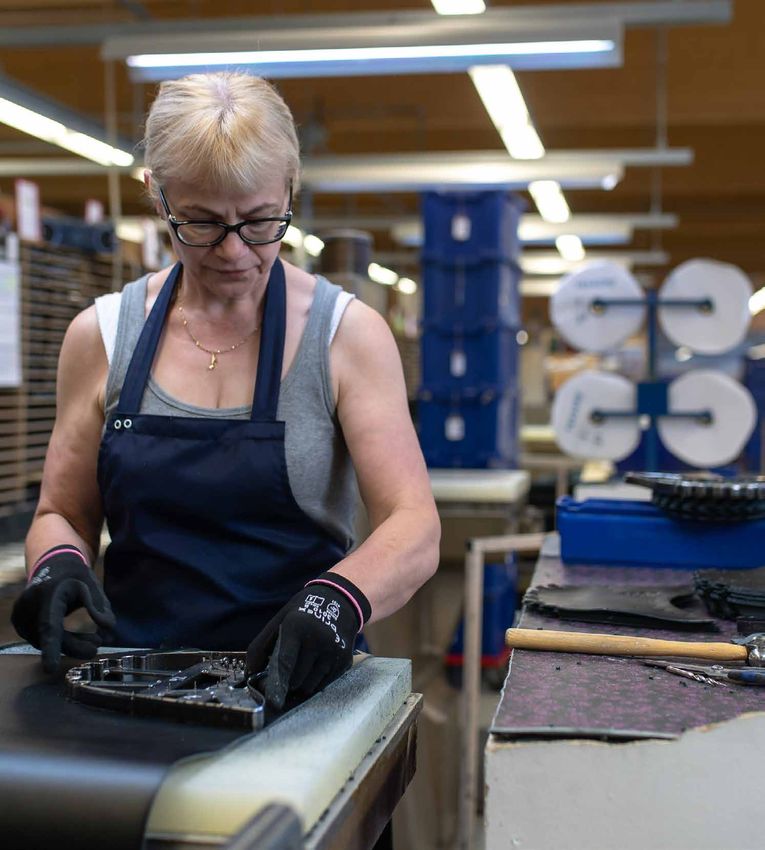
RESPONSIBLE PURCHASING
         REQUIRES TEAMWORK

                                  SIEVI PRINCIPLES OF RESPONSIBLE PURCHASING

Cooperation with    Openness        Suppliers comply with     Country of origin data    Raw materials are safe       Systematic
   suppliers       and fairness      Sievi’s responsibility   available for materials    and comply with EN      auditing of supplier
                                   principles and practices                                  standards             responsibility

                                                                                                                            8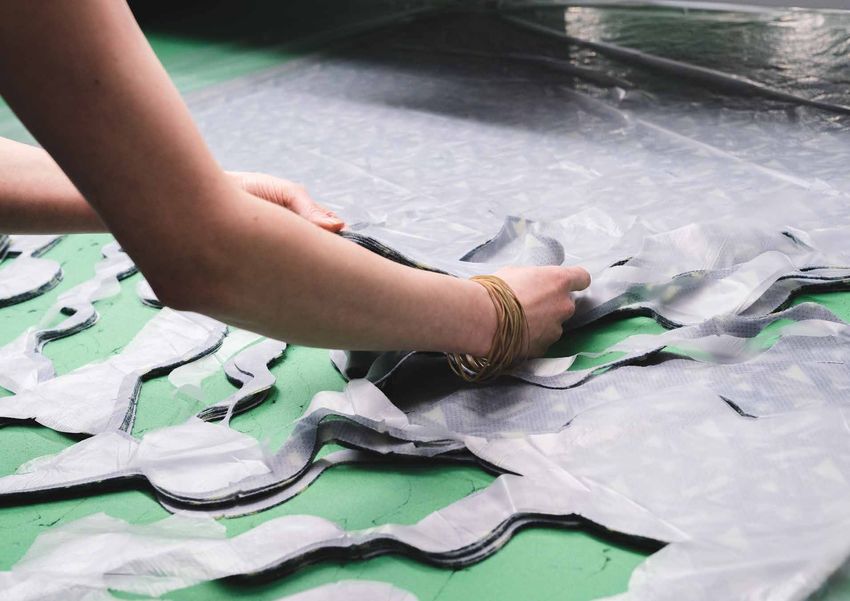
Responsible purchasing is founded on the long-                                                                        Our policy is to continuously improve our operations
established relationships we have with our suppliers.                                                                 together with our suppliers. Supplier audits play
We source our leather, which is our main material,                                                                    a central role in our efforts to ensure that we move
mainly from European suppliers that acquire their                                                                     forward together. Supplier audits are mostly carried
rawhides from European sources. The leather we use              By the end of 2019, a total of                        out by members of our own purchasing team, as we
is a by-product of the meat industry.                                                                                 want to gain experience, assess our suppliers’ situation,
                                                                78% of our acquisitions had                           deepen our partnerships and learn more about our
We have worked together with many of our suppliers                      been audited                                  suppliers’ processes, possibilities and problems. We
for decades. Our cooperation is based on openness                    The auditing process reviews the                 also want to observe any improvements in quality and/
and fairness. We do not accept corruption or unfair                                                                   or operations.
                                                                production, quality and environmental
business practices.
                                                                 aspects of our suppliers’ operations.
                                                                                                                      Auditing potential new suppliers is also a part of this
Suppliers from whom we make purchases totalling                      In our purchasing, we consider the               process. In our leather supply chain, we have gone even
at least EUR 20,000 a year are required to sign                 environmental and social responsibility               further and audited one of the raw material suppliers
Sievi’s Supplier Code of Conduct. We require that              of the acquisition chain, the safety of raw            to our major leather supplier. We work together with
our non-European suppliers hold the SA8000 social                                                                     independent auditors where necessary and especially
                                                                     materials and sustainable trading.
accountability certification. Alternatively, suppliers                                                                if the supplier or plant to be audited is geographically
can demonstrate that they fulfil the criteria of the                                                                  far away.
standard SA8000 in another, reliable way. All new
suppliers are required to sign our Supplier Code of
Conduct prior to being established as a supplier in the    DEEPER PARTNERSHIPS THROUGH AUDITS
Sievi system. We also require details on the country       We carry out supplier audits each year in accordance
of origin for all of our materials. Information on the     with our audit plan. These audits review economic,
origins of all of our current materials is stored in our   social and environmental aspects. We do not require
systems.                                                   our suppliers to use the ISO 14001 environmental
                                                           management system or a similar system, but we
Our guiding principles in sourcing raw materials are       strongly encourage it.
safety as well as meeting, and exceeding, EN standards.
We require the relevant certificate for all materials      Our audits have found that our European partners
that comply with EN standards. We recommend that           fare well in areas related to child labour, occupational
our leather suppliers join the international Leather       health and safety, freedom of association, working
Working Group, which aims to create and maintain           hours, remunerations and management systems. As
auditing practices related to the environmental impact     our audited non-European suppliers are SA8000
of leather manufacturing plants and to promote             certified, we focus on quality and practices in these
environmentally sustainable methods.                       audits.

RESPONSIBLE PURCHASING REQUIRES TEAMWORK SIEVI | SUSTAINABILITY REPORT 2020                                                                                                  9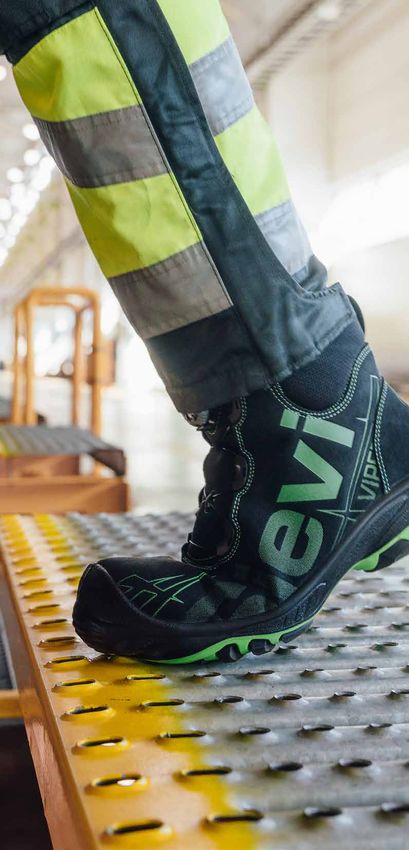
If any shortcomings are detected during an audit,             QUALITY REQUIREMENTS REGULATE THE USE OF                   We encourage our suppliers
either by us or an independent auditor, we require the        RECYCLED MATERIALS IN FOOTWEAR                             to innovate and explore new
supplier to make changes to rectify these in a set time       We have reviewed the availability and usability of        solutions with us, including the
period. We also monitor the implementation of any             recycled materials as raw material for our products.        use of recycled fibres in the
measures agreed upon.                                                                                                   manufacture of linings and felts.
                                                              However, the safety requirements set by EN standards
We select suppliers for auditing based on the following       for safety and professional footwear restrict, for            Other uses for recycled
criteria:                                                     example, the use of recycled leather. Recycled leather          materials include
                                                              does not meet the requirements of EN standards
• The extent of our cooperation                               with regard to tear or water resistance. In tests, tear
                                                                                                                                    Material for
• Uniqueness of the product                                   resistance has proved to be so low that it could cause
                                                                                                                                   Strobel soles:
• Potential risks related to pricing and availability         problems in production. For these reasons, we cannot
                                                                                                                                 recycled PET fibre
                                                              use recycled material even in our leisure footwear.
DEVELOPING AUDITING PRACTICES AND AUDIT
TRAINING                                                      In other materials, our suppliers use recycled fibres
                                                                                                                                    62%
The audit training provided by our purchasing team            wherever possible. For example, our toecap lining felt
covers the basics for carrying out audits to the extent       is 90% recycled PET plastic. Recycled PET plastic is              Plastic cap material:
referred to in the ISO 9001: 2015 standard.                   also used in other felts. Our bonded leather caps are              recycled material

                                                                                                                                    36%
                                                              made of recycled leather.
The audit training addresses, for example, the
principles of risk-based supplier monitoring and
methods that can be used in the implementation of
such monitoring.                                                                                                                 Comfort insoles:

We updated our audit checklist in spring 2020. In the
future, we will also require our suppliers to monitor their
                                                                                                                                90-95%
                                                                                                                                 of frame made of
own suppliers in order to ensure their commitment to                                                                           recycled car seats and
environmental and social responsibility.                                                                                            mattresses

                                                                                                                                Thermal insulation:

                                                                                                                                    90%
                                                                                                                                 recycled material

RESPONSIBLE PURCHASING REQUIRES TEAMWORK SIEVI | SUSTAINABILITY REPORT 2020                                                                             10
PRIORITIES AND LONG-TERM OBJECTIVES
FOR RESPONSIBLE PURCHASING
Priority Long-term objectives
The environmentally responsible operation We extend the lifecycle of our shoes and recycle the materials
of the whole value chain. used in them for other purposes.
We offer a warranty and repair service for all of the shoes we manufacture.
We minimise leather waste in our manufacturing processes.
We are increasing the use of recycled materials in the manufacturing
of our shoes.
We minimise the use of environmentally harmful chemicals in the production
chains for the shoes we manufacture.
We respect labour and human rights Through the use of a separate auditing system we ensure that our partners
in our supply chain. adhere to international and national agreements concerning human and
labour rights.
We develop our auditing practices and our Supplier Compliance Auditing
checklist based on our experiences and feedback.
We require our suppliers to sign Sievi’s Supplier Code of Conduct.
RESPONSIBLE PURCHASING REQUIRES TEAMWORK SIEVI | SUSTAINABILITY REPORT 2020 11PRIORITIES AND LONG-TERM OBJECTIVES
FOR RESPONSIBLE PURCHASING
2018–2019 objectives Results 2018–2019 2020–2021 objectives
We will ensure that all suppliers from whom we All existing suppliers whose deliveries totalled over Each year, we will check that all those existing suppliers
made purchases totalling at least EUR 20,000 in EUR 20,000 a year submitted a signed copy of Sievi’s whose deliveries totalled over EUR 20,000 have signed
2017 have submitted or will submit a signed or their own corresponding Code of Ethics. our Code of Ethics.
copy of the Supplier Code of Conduct
during 2018.
A total of 14 supplier audits in 2018. The target was met:
we carried out 14 supplier audits in 2018.
A total of 13 supplier audits in 2019. A total of 13 supplier audits in 2019. We plan to carry out 11 audits during 2020 in accordance
with our audit plan.
Some of the audit rounds will start again.
Due to the Covid-19 pandemic, most of the audits
planned for 2020 are expected to be postponed to 2021.
A total of 70% of our purchases are audited By the end of 2018, a total of 68% of our purchases were Our objective is for 90% of our purchases to be audited
by the end of 2018 and 85% by the end of 2019. audited while 78% of our purchases were audited by the by the end of 2020. Some of the audit rounds will
end of 2019. start again. Two of our suppliers will be audited by an
independent auditor.
We have increased the use of recycled materials in We encourage our suppliers to innovate and explore new
several applications. solutions with us, including the use of recycled fibres in
the manufacture of linings and felts.
RESPONSIBLE PURCHASING REQUIRES TEAMWORK SIEVI | SUSTAINABILITY REPORT 2020 12ENVIRONMENTAL RESPONSIBILITY
IN THE PRODUCTION CHAIN
Environmental matters at Sievi are managed
in accordance with the ISO 14001 standard.
In 1997, Sievi was the first footwear
manufacturer in Europe to be granted this
certification, and it covers both Sievi plants.
13Carbon dioxide emissions from the company’s Breakdown of the carbon footprint,
in-house operations tonnes of CO2e
Energy 32.8% Staff travel 22.7% Energy Calculated share of leather
1,346 (6.0%) in animal rearing and
Transportation Administration
Transportation slaughtering
18.1% 20.1%
10,496 t (46.7%)
4,099
743 t (3.3%)
22,452
Waste 6.3% Manufacturing of leather
Waste
258 t (1.2%) 2,708 t (12.1%)
tonnes
tonnes Staff travel Other raw materials
of CO2e 5,149 t (22.9%)
of CO2e 929 t (4.1%)
Administration, general Raw materials, total
purchases 823 t (3.7%) 18,353t (82.0%)
The identification of environmental aspects in Where possible, we purchase materials from companies for our products, these were calculated in a group
accordance with our environmental system is an in the Leather Working Group and encourage other even if the actual calculation of the product footprints
ongoing process, and we have identified the health, leather suppliers to join the working group. had not been carried out.
safety and environmental risks leather waste and
the use of chemicals entail as the most significant AIMING FOR CARBON NEUTRAL OPERATIONS In 2019, Sievin Jalkine’s carbon footprint was 22,450
environmental aspects of our production operations. BY 2035 tonnes of CO2e, of which the largest part (82%) comes
Transportation of products and materials, as well The carbon footprint is a figure that describes a from emissions from raw material purchases.
as heating of our facilities also cause environmental company’s or a product’s impact on the environment.
emissions. A particular source of water consumption Sievin Jalkine has calculated the company’s carbon WHERE DO EMISSIONS COME FROM IN THE
is the leather manufacturing process, where in footprint for 2019 and is preparing a plan to reduce FOOTWEAR PRODUCTION CHAIN?
collaboration with our leather suppliers we are emissions. Our goal is to be carbon neutral in our If we include the emissions generated in the production
aiming to reduce the water footprint of the shoes we operations by 2035. and acquisition of raw materials, Sievin Jalkine’s carbon
manufacture. footprint corresponds to the average annual carbon
The carbon footprint calculation covered the value footprint of about 2,200 Finnish people. Compared to
Some of our leather suppliers are members of the chain of Sievin Jalkine’s products from the production other footwear manufacturers, our emissions seem to
international Leather Working Group, which aims to of raw materials to the finished products delivered to be slightly higher than the average. This is primarily
create and maintain auditing practices related to the retailers or the gate of direct shipment customers. As due to the fact that Sievin Jalkine’s calculation also
environmental impact of leather manufacturing plants it was already clear at the definition stage that most includes animal rearing in the emissions from leather
and to promote environmentally sustainable methods. of the emissions come from acquiring the raw material production.
ENVIRONMENTAL RESPONSIBILITY IN THE PRODUCTION CHAIN SIEVI | SUSTAINABILITY REPORT 2020 14We will continue to work with our suppliers on issues Staff travel
such as increasing the use of recycled materials and Staff travel includes the commute between home and
reducing our water footprint. We will work especially workplace as well as business trips.
closely with our leather and PU suppliers to reduce the
climate impact of these materials. Raw materials
Most of Sievin Jalkine’s carbon footprint is generated
We will draw up a plan for the reduction of carbon We have continued to assess outside the company’s own operations: raw materials
emissions by the end of 2022. Our goal is a long- the most significant sources and other supplies account for approximately 82%
term roadmap for minimising emissions from our own of emissions in 2020, and we of our carbon dioxide emissions. The main factor is
operations and eventually achieving zero emissions by are exploring the possibility of leather, which is the most important raw material for
2035. calculating the carbon footprint our footwear and a superior upper material in safety
of some of our products. footwear. The share of leather related emissions
Electricity, heating and water in our carbon footprint is considerable because
The emissions from the electricity supplied by Sievin In 2020–21, we will review energy our calculations also include animal rearing and
Jalkine’s electricity supplier are approximately emissions and draw up an action plan to slaughtering in the leather production.
over one and a half times the average of electricity reduce them.
supplied in Finland. In addition to oil, we use heat The best sole material in terms of meeting the
pumps for heating, and we also utilise waste heat from requirements of the safety footwear standard is
compressors. We use energy-efficient and supply- currently polyurethane. Measured in kilograms, our
safe groundwater for cooling; this is a climate-friendly turned into energy by incineration. We also monitor most important raw material is polyurethane (more
technology that is only spreading in urban areas, cardboard, metal and hazardous waste volumes, and than 40%), but it accounts for less than 10% of our
where it is known as district cooling. we aim to minimise waste and loss of process materials. greenhouse gas emissions. Many of the textile fibres
used in different parts of the footwear also stand out
Transportation Our waste management operations are based on a in the total volume of emissions. Our footwear is sold
We operate globally: even though our production takes hierarchy of waste: we avoid waste and raw material in corrugated cardboard packaging, which is included
place in Finland, we source a significant proportion loss, we direct materials and production side streams in our material emissions.
of raw materials, components and materials from for reuse and recycling whenever this is possible, and
international suppliers. Our main market is Europe. we ensure that batches unsuitable for recycling and We have used both research sources and data from
Both raw materials and finished products sometimes reuse are disposed of safely. audits at Sievi’s material suppliers to determine
travel long distances, so emissions are inevitable. the emission factor of leather. We closely follow
Administration international research on the subject, and we update
Waste The administration’s emissions consist of various our calculation model on the basis of both research and
At the Sievi and Oulainen plants, the highest carbon acquisitions of services and materials as well as staff new audits. It is therefore possible that the proportion
emissions from waste come from mixed waste, which is travel. of leather in our products’ carbon footprint will change
ENVIRONMENTAL RESPONSIBILITY IN THE PRODUCTION CHAIN SIEVI | SUSTAINABILITY REPORT 2020 15Carbon footprint breakdown, excluding animal
rearing and slaughtering, tonnes of CO2e
Leather and climate
11,956
Sievin Jalkine’s main leather supplier For the purposes of transparency, tonnes
countries are Germany and Italy. In our calculation includes a proportion of CO2e
2019, more than 99% of the leather of emissions from animal rearing
we used was sourced from these two equal to the value of leather, even
countries. We know our suppliers though this doubles the carbon
well and have been working with footprint of our raw material Energy Other raw materials
most of them for years. All of our purchases. In light of the information 1,346 t (11.3%) 5,149 t (43.1%)
major suppliers have signed up that we have about our own supply Transportation Manufacturing of leather
to our principles for responsible chain, this is a transparent way to 743 t (6.2%) 2,708 t (22.6%)
sourcing, and we audit our suppliers operate. Waste Raw materials, total
regularly. 258 t (2.2%) 7,857 t (66%)
Sievin Jalkine is guided by product
Staff travel
The most significant part of climate quality and user safety in its choice 929 t (7.8%)
emissions from leather – up to of materials. The footwear we
Administration, general
90% – is caused by the rearing and manufacture is first and foremost purchases 823 t (6.9%)
slaughtering of animals. Several personal protective equipment and
other aspects of leather production only purchased when needed. We are
are also critical to corporate constantly exploring new materials
responsibility, such as the rearing and alternatives for leather, but we
conditions of animals, emissions do not want to compromise on the significantly in future calculations as the calculation
from the production chain as well as durability of our products: the longer
method becomes more accurate and the quality of the
health and safety and other issues its useful life, the less often footwear
related to workplace rights. The needs to be replaced. It makes sense information provided by our suppliers improves.
leather that Sievin Jalkine uses is a to spread a product’s climate impact
by-product of the meat industry, over its useful life as this gives the MATERIAL SAFETY IS ENSURED THROUGH
so the cattle it comes from is not best result not only for the user but
TESTING
reared for the sake of leather, but for also for the environment.
meat. The use of leather is therefore To ensure full compliance with environmental
also justified from an environmental For the sake of comparison, the obligations throughout our production chain, we also
point of view if the alternative was to chart on the right shows Sievin ensure that the raw materials we use meet quality
simply dispose of this waste from the Jalkine Oy’s carbon footprint
meat industry. and safety requirements. Every new raw material
excluding animal rearing and
covered by the EN standard requirements must have
slaughtering.
a corresponding EN report for product certifications.
ENVIRONMENTAL RESPONSIBILITY IN THE PRODUCTION CHAIN SIEVI | SUSTAINABILITY REPORT 2020 16PRIORITIES AND LONG-TERM OBJECTIVES OF
SUSTAINABLE PRODUCTION
Priority Long-term objectives
Ideally, our shoe production operations We are working with our suppliers to minimise the water
will use the absolute minimum in terms of footprint of Sievi footwear.
water required.
We maintain a high level of safety with We minimise the use of environmentally harmful chemicals in the
chemicals. production chains for the shoes we manufacture.
We are a climate-friendly manufacturer We are reducing the greenhouse gas emissions of our
of footwear transportation operations.
We also test materials for banned and allergenic No chromium (VI) was found in the leather. The surface materials were tested for the following
chemicals to make sure that our materials are safe. substances, as applicable:
No banned or allergenic substances were found in the • Short-chain chlorinated paraffins
We now use phthalate-free alternatives for all lining and surface materials that we use. The lining • PAHs
pigments except the black pigment. materials were tested for the following substances • Lead and cadmium residues
according to the PFI test proposal: • Allergenic disperse dyes
In 2019, we commissioned the German test and research • Chlorophenols • Banned aromatic amines
institute PFI (Prüf- und Forschungsinstitut Pirmasens) • Dimethyl fumarate
to carry out a total of 19 tests for the possible presence • Disperse dyes
of chromium (VI) in new types of leather. We also test • Formaldehyde
all types of leather that we use in the manufacture of • Nonylphenol ethoxylates
safety and occupational footwear for chromium (VI) • Banned aromatic amines
whenever the leather is tested for compliance with the
EN standard. We also test all leather used in our casual
footwear on our own initiative.
ENVIRONMENTAL RESPONSIBILITY IN THE PRODUCTION CHAIN SIEVI | SUSTAINABILITY REPORT 2020 17PRIORITIES AND LONG-TERM OBJECTIVES OF
SUSTAINABLE PRODUCTION
2018-2019 objectives Results 2018-2019 2020-2021 objectives
We will establish the average water footprint of Sievi Based on our assessment, the water use of our We will assess the use of water by supplier and by
footwear in cooperation with our leather and materials leather manufacturers varies between leather type.
suppliers and explore opportunities to reduce the 60-98 litres/m2 of leather.
water footprint.
We are striving to reduce the carbon dioxide emissions We will include carbon dioxide emissions from We will set targets for reducing emissions from
generated through the transportation of the materials transportation in the company’s carbon footprint transportation when we draw up an action plan to
we procure and the products we manufacture. calculation. reduce Sievin Jalkine’s carbon footprint.
During 2018, we will survey the opportunities available
for the transportation companies we use to provide us
with low-carbon services.
We will explore ways to reduce the carbon footprint of We have explored carbon footprint calculation services We will calculate Sievin Jalkine Oy’s carbon footprint
our products. and made a decision on the implementation of the and continue to assess the most significant sources of
calculation. emissions.
We will explore the possibility of calcuting the carbon
footprint of some of our products. We will draw up a
plan for reducing carbon emissions by the end of 2022.
We ensure the chemical safety of our products No banned or allergenic chemicals were found We will test the heavy metal content of leathers in
in our products. sample books and we will explore alternative tanning
methods for leathers in sample books used in shoe
shops.
We will continue to test black phthalate-free pigments
and aim to replace the black pigment in 2020.
ENVIRONMENTAL RESPONSIBILITY IN THE PRODUCTION CHAIN SIEVI | SUSTAINABILITY REPORT 2020 18SUSTAINABILITY MEANS A SAFE
WORKPLACE FOR EVERYONE
Fair management and good We work continuously to implement
information flow affect the well-being and maintain conformity and equality
of employees and the atmosphere in in the Sievi Marketing Group.
the entire work community.
19HR PRINCIPLES
At Sievi, employees are treated equally. We promote
RESPONSIBILITY FOR EMPLOYEES:
non-discrimination and equality in accordance with the
PRIORITIES AND LONG-TERM OBJECTIVES
Finnish Non-discrimination Act and the Act on Equality
between Women and Men. Our occupational health
and safety operating programme is updated annually,
and at the same time we assess any needs to update Priority Long-term objectives
our non-discrimination and equality plan.
We maintain a high level of occupational Sievin Jalkine is a safe employer.
safety.
The results of periodic staff surveys are used to
support these updates. Employees have access to
We maintain and promote our People are healthy.
statutory occupational health services.
employees’ occupational well-being. We maintain and strengthen staff motivation.
We believe that employees’ occupational wellbeing can
be best ensured by providing all employees with work Sievin Jalkine’s employees have the We maintain the professional skills of our current employees, and if
best suited to them, by providing clear objectives requisite skills and expertise. necessary provide training for more employees.
for the work, and by unambiguously defining areas of Sievin Jalkine is an attractive employer.
responsibility and authority.
An assessment of risks associated with work tasks are
carried out annually on a department-by-department 2018-2019 objectives Results 2018-2019 2020-2021 objectives
basis at the same time as occupational health and safety
inspections. Additionally, risks are always assessed We will bring the number of work- 2018: 40.5 We will bring the number of work-related
when working methods are changed substantially or related accidents below the industry 2019: 21.8 accidents below the industry average
when new, different tasks are introduced. average (the 2018 average was 31.0). (the 2018 average was 31.0).
Exit turnover of less than 10%. 2018: 14.0% Exit turnover of less than 10%.
We have identified the following health and safety risks
2019: 8.8%
in our production operations:
• Exposure to solvents and isocyanate Paid sick leave, employees in the 2018: 6.22% We are 5.4% below the average in
• Noise production.* 2019: 7.37% sick leave for industrial employees (EK
• Accidents statistics 2016).
• Repetitive strain injuries
* The latest available data on the industry average is from 2016. For this reason, we are reporting the figure for all paid sick leave
of our production employees, which we regularly monitor. In addition to paid sick leave, these figures include temporary paid sick
leave due to a child’s illness that is not included in the sick leave statistics compiled by the Confederation of Finnish Industries (EK).
SUSTAINABILITY MEANS A SAFE WORKPLACE FOR EVERYONE SIEVI | SUSTAINABILITY REPORT 2020 20Our goal is to offer a safe workplace, and the number • We have hired another job analyst to strengthen
of days of absence due to accidents has decreased in our work study operations.
recent years as follows: • We have launched an initiative system.
• We have renovated break rooms and invested in
2016 90 days
the cleanliness of our premises.
2017 215 days
• We have improved our internal information flow
2018 70 days
regarding urgent deliveries, for example.
2019 75 days
• We have organised leisure activities for our
One of the reasons for the increase in the 2018 figure employees, e.g. trail running, kayaking, diving and
for accidents was that in 2017-2018, we employed a lot visits to the theatre and concerts.
of new people; a total of 165 people. The number of
accidents in 2018 was high, but they were mostly minor Based on the preliminary results of the survey
accidents. The accident rate returned to normal in conducted in May 2020, employees are now more
2019. satisfied with supervisory operations and job
guidance, for example. They also find that the work
We compete for
community functions better. The results show that
We conduct a staff survey every three years. In 2017 the best people
the staff survey achieved a response rate of 52 % at that our employees get along with their colleagues,
the Sievi factory, and 61 % in Oulainen. The response supervisors and other management.
rate to the survey conducted in May 2020 increased A committed and skilled workforce is one of
significantly at the Sievi plant and was 62.7%. There Our employees’ assessment of the company’s Sievin Jalkine’s key success factors. However,
was also a slight increase in Oulainen, where the efficiency, financial performance and competitiveness it has been shown that the availability of a
response rate was 65.3% is slightly lower than in the previous survey, but they workforce with the requisite professional
find that they have more say in the workplace and skills, especially skilled seamstresses, is
Based on the results of the 2017 survey, we have they are also more willing to engage in improving it. becoming more and more challenging. We
implemented measures such as the following: Occupational well-being and coping at work have also took part in the 2018 recruitment campaign
been better considered in the design of the workplace organised by the municipality of Sievi, which
and work arrangements. The company’s reliability as sought to recruit employees for industrial
• We have drawn up a supervisors’ handbook to
an employer is still at a reasonably high level, despite companies located in the Sievi area. Although
standardise practices across departments and
a slight dip. the campaign was specifically targeted at
increase occupational well-being, as well as
promote equal treatment. Pohjois-Savo, we gained visibility across
Finland, and we received many applications
• We have drawn up an induction and safety guide
from other parts of Finland.
for new employees.
SUSTAINABILITY MEANS A SAFE WORKPLACE FOR EVERYONE SIEVI | SUSTAINABILITY REPORT 2020 21APPENDIX: SIEVIN JALKINE: KEY FIGURES
2019 2018 2017 2019 2018 2017
Financial responsibility Waste generated by operations, tonnes
Turnover, EUR 1,000 83,436 79,112 78,347 Cardboard 73.4 74.0 72.0
Equity ratio, % 83.2 81.4 79.3 Waste sent for incineration 387.2 389.3 379.8
Salaries and fees paid, Hazardous waste 6.4* 3.6 3.4
EUR 1,000 13,012 12,544 12,261
Leather savings %, target above 3% 2.66 3.44 3.64
Pension and other indirect employee
costs, EUR 1,000 2,606 2,654 2,709
Income tax, EUR 1,000 4,103 4,071 4,012 Responsibility for our personnel
Number of employees in the Sievin Jalkine
(as of 31 December) 450 443 444
Sustainable purchasing
The employees’ assessment of the
Purchases from audited suppliers, success of the work community
% of purchases 78% 68% 46.5% (scale 4-10) ** ** 8.11
Identified breaches of Sievin Accidents leading to absences
Jalkine Oy’s Code of Ethics. 0 0 0 lasting more than 10 days 2 3 2
Production employees’ paid sick leave 7.37% 6.22% 5.76%
Environmentally responsible production
Electricity consumption * The figure includes the hazardous waste from the replacement of the PU boot
per pair of shoes manufactured, machine in Oulainen, 1.8 tonnes in total.
kWh/pr 4.49 4.53 4.35
** The figure is not available because the survey is conducted every three years
Light fuel oil consumption, Litres 91,672 72,360 68,739
Amount of Volatile Organic
Compounds (VOC), kg 5,334 4,269 7,505
Water consumption, m 3
48,798 42,929 37,804 The content of this report was compiled by Sievin Jalkine Oy in collaboration with Sari Kuvaja, Third Rock
Finland Oy, and the carbon footprint was calculated by Outi Ugas, Positive Impact Finland Oy.
SIEVI | SUSTAINABILITY REPORT 2020 22sievi.com
You can also read


