2021-22 Fishing Code Tasmanian Inland - The essential pocket guide - Inland Fisheries ...
←
→
Page content transcription
If your browser does not render page correctly, please read the page content below

Tasmanian Inland
           Fishing Code
                2021-22
          The essential pocket guide

Inland Fisher ies Ser vice
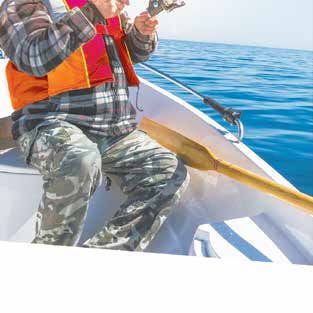
An unserviced lifejacket could be
putting you and your family at risk.
    Do you know if your lifejacket
    is automatic or manual?
    Do those on board
    know how they work?

Have a great
day on the
water and come
home safely.
Go trout fishing to win*
              50 fish = $100,000*
        Tasmanian Tagged Trout Promotion
                    2021-22 Angling Season

        Fifty tagged brown trout will be released into lakes
              around Tasmania for the 2021-22 season.
   Each tag is worth $2,000* to the angler that returns the
      fish to the Inland Fisheries Service (*conditions apply).
The tags are orange and have unique identifying details.
     For more information and full Terms and Conditions, go to
                     www.ifs.tas.gov.au

The waters and number of tagged trout released are:
 Designated water                  Number of tagged trout released
 Arthurs Lake                                    5
 Briseis Mine Hole                               2
 Bronte Lagoon                                   2
 Craigbourne Dam                                 2
 Curries River Reservoir                         2
 Huntsman Lake                                   2
 Lake Burbury                                    5
 Lake Leake                                      3
 Lake Mackintosh                                 5
 Lake Pedder                                     5
 Lake Parangana                                  2
 Lake Rosebery                                   5
 Lake Rowallan                                   2
 River Derwent                                   3
Tasmanian   Inland
 yingina / Great   Fishing Code • 2021-22
                 Lake                            5            Page 3
Message from the Director of Inland Fisheries
The outlook for the 2021-22 angling season is very good following
a cooler and wetter La Nina year. Lake Levels in the eastern half
of the state improved significantly through last season and should
provide excellent fishing. River fisheries along the north and east
coasts and midlands have also benefitted from the increased flows
and cooler conditions.
Lake Leake, Four Springs Lake, Woods Lake, yingina / Great Lake,
Penstock, Little Pine and Bronte lagoons all fished well. Good
catches were also reported from the Bradys Chain of lakes which
has continued to improve over recent years. The Arthurs Lake
fishery provided some great fishing particularly through the first
half of last season and will definitely be worth a visit in 2021-22.
It was encouraging to see the increased number of Tasmanians
making the most of the good conditions, holidaying, and fishing at
home. We expect to be joined by increasing numbers of anglers
from the rest of Australia as the recovery from COVID continues.
This year the Inland Fisheries Service has revamped its tagged
trout promotion with an increased number of fish across a
broader range of waters. The tagged trout promotion was a big hit
last season with one of the five fish caught by Fiona Batterham, a
member of the Westbury Angling Club, and the lucky winner of a
$10,000 prize.
The Carp Management Program continues to make good
progress in the eradication of carp from Lake Sorell. Only three

Tasmanian Inland Fishing Code • 2021-22                       Page 4
carp were caught for the season and we don’t expect any further
temporary closures will be necessary. Water levels will be high at
the start of the season although trout numbers remain low. Across
the road at Lake Crescent we are planning to undertake fisheries
performance assessment including a population estimate to better
understand the recovery of this important fishery. If water levels
remain high, we expect both fisheries to steadily improve in
coming years.
I encourage all anglers to be vigilant with their own personal
hygiene and to keep up to date with the latest information
from the IFS website (www.ifs.tas.gov.au) and the Tasmanian
Government coronavirus website (www.coronavirus.tas.gov.au)
Thank you for buying a licence and supporting our inland
fisheries. It helps fund our anglers access, compliance and stocking
programs and other vital services for anglers.

    Fiona Batterham,
      who caught the
     $10,000 tagged
      trout from Lake
              Rowallan

Tasmanian Inland Fishing Code • 2021-22                       Page 5
Contents
Season dates  . . . . . . . . . . . . . . . . . . . . . . . . . . . . . . . . . . . . . . . . . . . . 8
Regulation changes . . . . . . . . . . . . . . . . . . . . . . . . . . . . . . . . . . . . . . . 9
Report illegal fishing  . . . . . . . . . . . . . . . . . . . . . . . . . . . . . . . . . . . . . . 9
Licence information  . . . . . . . . . . . . . . . . . . . . . . . . . . . . . . . . . . . . . 10
Recreational species  . . . . . . . . . . . . . . . . . . . . . . . . . . . . . . . . . . . . . 13
Rules and regulations  . . . . . . . . . . . . . . . . . . . . . . . . . . . . . . . . . . . . 14
River and lake fishery rules  . . . . . . . . . . . . . . . . . . . . . . . . . . . . . . . 22
River and lake fishery rules exceptions  . . . . . . . . . . . . . . . . . 27 - 34
Boating information . . . . . . . . . . . . . . . . . . . . . . . . . . . . . . . . . . . . . . 35
Angling safety . . . . . . . . . . . . . . . . . . . . . . . . . . . . . . . . . . . . . . . . . . . 37
Inland Fisheries Officers . . . . . . . . . . . . . . . . . . . . . . . . . . . . . . . . . . 37
Protecting the fishery and the environment  . . . . . . . . . . . . . . . . . 38
Accessing waters across private land . . . . . . . . . . . . . . . . . . . . . . . 40
Anglers Alliance Tasmania . . . . . . . . . . . . . . . . . . . . . . . . . . . . . . . . . 40
Trout Guides  . . . . . . . . . . . . . . . . . . . . . . . . . . . . . . . . . . . . . . . . . . . 41
Disclaimer . . . . . . . . . . . . . . . . . . . . . . . . . . . . . . . . . . . . . . . . . . . . . . 42

Contacts, Inland Fisheries Service (IFS)
Head Office
17 Back River Rd, New Norfolk, Tasmania 7140
PO Box 575, New Norfolk, Tasmania 7140
Phone . . . . . . . . . . . . . . . . . . . . . . . . . . . . . . . . . . . . .  (03) 6165 3808
 . . . . . . . . . . . . . . . . . . . . . . . . . . . . . . . 1300 INFISH (1300 463 474)
Email . . . . . . . . . . . . . . . . . . . . . . . . . . . . . . . . . .  infish@ifs.tas.gov.au
Website  . . . . . . . . . . . . . . . . . . . . . . . . . . . . . . . . .  www.ifs.tas.gov.au
Manager (Compliance) . . . . . . . . . . . . . . . . . . . . . . . . . 0438 338 530

COVER: Tailer by Trevor Hawkins. The second of five artworks commissioned for
the cover of the Tasmanian Inland Fishing Code

Tasmanian Inland Fishing Code • 2021-22                                                        Page 6
Other contacts
Anglers Alliance Tasmania  . . . . . . . . . . .  www.anglersalliance.org.au
Biosecurity Tasmania . . . . . . . . . . . . . . . . . . . . . . . . .  (03) 6165 3777
Bureau of Meteorology  . . . . . . . . . . . . . . . . . . . . .  www.bom.gov.au
BushWatch . . . . . . . . . . . . . . . . . . . . . . . . . . . . . . . . . . . . . . . . 131 444
Devil facial tumour disease . . . . . . . . . . . . . . . . . . . . . 0497 338 457
Emergency (fire, police, ambulance) . . . . . . . . . . . . . . . . . . . . . . . 000
Emergency Animal Disease Watch Hotline . . . . . . . . 1800 675 888
Hydro Tasmania (lake levels)  . . . . . . . . . . . . . . . . www.hydro.com.au
Hydro Tasmania . . . . . . . . . . . . . . . . . . . . . . . . . . . . . . . 1300 360 441
Invasive species hotline . . . . . . . . . . . . . . . . . . . . . . . . . 1300 369 688
Marine and Safety Tasmania (MAST)  . . . . . . . . . . . . . 1300 135 513
Orphaned or injured wildlife . . . . . . . . . . . . . . . . . .  (03) 6165 4305
Parks and Wildlife Service (PWS) . . . . . . . . . . . . . . . . 1300 827 727
PWS Great Western Tiers Field Centre . . . . . . . . .  (03) 6701 2104
Report littering  . . . . . . . . . . . . . . . . . . . . . . . . . . . . . . . 1300 135 513
Salmon Ponds Restaurant . . . . . . . . . . . . . . . . . . . . .  (03) 6261 5663
Service Tasmania  . . . . . . . . . . . . . . . . . . . . . . . . . . . . . . 1300 135 513
Tasmanian Boating Weather . . . . . . . . . . . . . . . . . . . . . 1900 969 940
Tasmanian Forecasts . . . . . . . . . . . . . . . . . . . . . . . . . . . 1900 955 364
Trout Guides and Lodges Tasmania
 . . . . . . . . . . . . . . . . . . . . . . . . . . . . www.troutguidestasmania.com.au

Tasmanian Inland Fishing Code • 2021-22                                                 Page 7

Season dates
Saturday 7/8/21              Opening of most waters
Saturday 2/10/21             Opening of designated rainbow
                             trout waters
Sunday 10/10/21              Gone Fishing Day
Saturday 4/12/21             Opening of Canal Bay,
                             yingina / Great Lake
Sunday 3/4/22                Closure of Canal Bay,
                             yingina / Great Lake
Sunday 01/5/22               Closure of most waters
Sat 21 and Sun 22/5/22       Trout Weekend, Liawenee
Sunday 29/5/22
   Closure of
   • designated rainbow trout waters.
   • extended season waters of;
		 • lakes Mackintosh and
			 Rosebery; and
		 • the lower section of Brumbys
			 Creek, Macquarie, Meander
			 and South Esk rivers.

Tasmanian Inland Fishing Code • 2021-22                  Page 8
COVID-19
There may be changes to when, where and how you can fish in inland
waters due to COVID-19. These changes may occur at short notice.
Keep on top of COVID
• Wash your hands
• Keep your distance (1.5M)
• Stay home if sick
• Get tested if you have COVID symptoms
• Follow current restrictions
Please keep up to date at www.coronavirus.tas.gov.au or www.ifs.tas.gov.au

Regulation changes
Estuary perch (Percalates colonorum) is declared to be a protected
fish under the Inland Fisheries Act 1995.
Any estuary perch caught must be released immediately.
Significant penalties apply for taking protected fish.

Report illegal fishing
If you suspect or see illegal fishing, report it on 1300 INFISH
(1300 463 474) or 0438 338 530, Manager (Compliance) as soon
as possible. Let us know:
•   the location, date and time of activity;
•   description of activity and people involved;
•   car/boat registrations; and
•   equipment being used.
You may remain anonymous and all information is confidential.
Tasmanian Inland Fishing Code • 2021-22                            Page 9
Licence information
When and where you need an angling licence
Each person must have a current angling licence to fish with a rod,
reel and line at any inland water in Tasmania. This includes farm
dams on private property.
Most inland waters have an angling (or ‘open’) season. You can
only fish that water during the open season that applies to it.
Open season dates are on page 8 and 22-34 of this booklet.
You do not need an angling licence to fish:
• at a registered private fishery.
• for indigenous fish (including bream) in the specified indigenous
  fish waters listed in the Inland Fisheries Regulations 2019.
• with a single rod at an open inland water if the person is
  under 14 years old.
You must have a separate licence for whitebait fishing.
No fee for junior angling licences
The Tasmanian Government is making junior angling licences free
for the next four years. Children from 14, up to, and including, 17
years of age can fish Tasmania’s inland lakes and waterways with a
free angling licence available online and through agents.
This commitment runs until the end of the 2024-25 season.
Junior anglers under 14 years of age do not require an angling
licence.

Tasmanian Inland Fishing Code • 2021-22                       Page 10
Licence type and cost
Page 13 shows the angling licence types and costs for the
2021-22 licence period, which runs from 1/8/21 to 31/7/22.
Full-season adult angling licences are discounted for:
• Department of Human Services (DHS) or Department of
  Veterans’ Affairs (DVA) Pensioner Concession Card holders.
• Seniors Card holders – issued by states and territories.
You must show your Seniors Card or Pensioner Concession Card
when you buy your licence.
Please note that a Health Care Card does not qualify a person as
eligible for a Pensioner licence.
Buying or renewing a licence
You can buy or renew an angling licence online at www.ifs.tas.gov.au
Licences are also available at all Service Tasmania shops, on board
the Spirit of Tasmania ships and many tackle, outdoor and sports
stores throughout Tasmania.
Angling licence conditions
When you go fishing, you must comply with the Inland Fisheries Act
1995, Inland Fisheries Regulations 2019, and subsequent Orders.
We summarise these rules and regulations in this Tasmanian Inland
Fishing Code. You can view complete versions of the legislation at
www.legislation.tas.gov.au

Tasmanian Inland Fishing Code • 2021-22                      Page 11
Angling licence type                     Cost $
 One Junior (14-17 yrs) full season       No fee
 One Person 48 hours                       23.00
 One Person 7 days                         38.50
 One Person 28 days                        60.00
 One Pensioner full season                 41.50
 One Senior full season                    60.00
 One Adult full season                     75.50
 5 Season Licence - One Pensioner 1 Rod   200.00
 5 Season Licence - One Pensioner 2 Rod   237.00
 5 Season Licence - One Senior 1 Rod      290.00
 5 Season Licence - One Senior 2 Rod      327.00
 5 Season Licence - One Adult 1 Rod       360.00
 5 Season Licence - One Adult 2 Rod       435.00
 Same Person 2nd Rod (Pens/Sen)             7.70
 Same Person 2nd Rod (Adult)               15.50
 Replacement licence                        3.10

Tasmanian Inland Fishing Code • 2021-22    Page 12
Recreational species
The recreational fishing regulations focus on the following species:
• Salmonids (introduced)
  - brown trout (Salmo trutta)
  - rainbow trout (Oncorhynchus mykiss)
  - brook trout (Salvelinus fontinalis)
  - Atlantic salmon (Salmo salar)
• Native (indigenous)
  - black bream (Acanthopagrus butcheri)
  - river blackfish (Gadopsis marmoratus)
  - short finned eel (Anguilla australis)
  - long finned eel (Anguilla reinhardtii)
Separate regulations apply to the recreational whitebait fishery,
which covers several species of small native fish.
Whitebait fishing licence
The run of whitebait occurs throughout the State between spring
and early summer. The runs consist of small transparent fish
migrating from the sea into rivers and streams. Several species are
involved in this phenomenon and most are similar in appearance.
To fish for whitebait you need a separate whitebait licence.
Whitebait licences are available online at www.ifs.tas.gov.au and from
Service Tasmania shops, selected tackle, outdoor, and sports stores.
In 2021, the rivers Derwent, Forth, Leven and kamanaluka / Tamar,
the Black, Brid, Don, Duck, Henty, Huon, Inglis, Little Forester River,

Tasmanian Inland Fishing Code • 2021-22                         Page 13
Pieman and Rubicon rivers are open for recreational whitebait
fishing from 1 October 2021 to 11 November 2021.
Fishing is not allowed in the Duck or Rubicon rivers 50 metres
above and below the water-gauging weir.
All other waters are closed to whitebait fishing. Significant
penalties apply for fishing in closed waters.
There is a daily catch limit of 2 kg and total catch limit of 10 kg for
the season.
Whitebait nets cannot have a circumference of greater than 120
cm and must not be used with any devices capable of diverting
fish into the net or stopping their escape.
It is an offence to sell or buy whitebait. It is an offence to possess
whitebait without a whitebait licence.
A whitebait licence costs $33.00

Rules and regulations
Angling rules and regulations, including seasons, dates and times,
bag and size limits, and angling methods apply to all Tasmanian
inland waters and can change from water to water.
We summarise these rules and regulations in this Tasmanian Inland
Fishing Code. You can view complete versions of the legislation at
www.legislation.tas.gov.au
A database of inland waters and their regulations is available at
www.ifs.tas.gov.au or by downloading the Infish App.

Tasmanian Inland Fishing Code • 2021-22                         Page 14
Bag and size limits
The bag limit is the number of fish you can keep at a water in any
one day. The size limit is how big, or small, the fish must be for you
to be allowed to keep it.
Any fish in your possession at a water counts towards the limit for that water.
Bag limits for salmonids
• Atlantic salmon: a daily bag limit of five (5) fish.
• Brook trout: a daily bag limit of two (2) fish.
• Brown and rainbow trout: the daily bag limit can change from
  water to water; see pages 22-34.
Bag and size limits for native fish in inland waters
• Black bream: a daily bag limit of 10 fish with a minimum length
  of 250 mm.
• Eels: a daily bag limit of 12 fish and a possession limit of 24 fish
  with a minimum length of 300 mm.
• River blackfish: a daily bag limit of 12 fish with a minimum
  length of 220 mm.
• Estuary perch: PROTECTED. Any estuary perch caught must be
  released immediately. Penalties apply for taking protected fish.
Bag and size limits for pest fish in inland waters
• Redfin perch and tench: there is no bag, possession, or size limits.
Measuring fish
Measure fish, other than black bream, from the tip of the snout to
the fork of the tail.

Tasmanian Inland Fishing Code • 2021-22                               Page 15
Measure black bream from the tip of the snout to the end of the tail.
You should measure fish as soon as you catch them and
immediately return them to the water if undersized or exceeding
the upper size limit.
Closed waters
Waters always closed to fishing include:
• All waters flowing into Lake Crescent excluding that section
  of the canal connecting lakes Crescent and Sorell below
  Interlaken Road (C527).
• All waters flowing into Talbots Lagoon.
• Brushy Rivulet, flowing into Brushy Lagoon.
• Craigbourne Dam, from the dam wall and associated infrastructure.
• Curries River Reservoir, within a 400 m radius of the dam
  intake structure.
• Dogs Head Creek, Silver Plains Creek and Mountain Creek
  flowing into Lake Sorell and for a radius of 50 m below where
  that water flows into Lake Sorell.
• Lake Fenton and its tributaries.
• Waters flowing into Arthurs Lake, Dee Lagoon, yingina / Great
  Lake and Lake Leake and for a radius of 50 m below where
  that water flows into Arthurs Lake, Dee Lagoon, yingina /Great
  Lake and Lake Leake.
• Penstock Lagoon Numbers 1 and 2 canals above two white
  posts on opposite banks of those canals.
Tasmanian Inland Fishing Code • 2021-22                      Page 16
• McPartlans Canal between lakes Gordon and Pedder.
• Within 100 m of a fish trap maintained by the IFS.
Special closures
There may be closures at short notice due to COVID-19. Please
check www.coronavirus.tas.gov.au or www.ifs.tas.gov.au
Waters reserved for anglers with a disability
Risdon Brook Reservoir and the Plenty River adjacent to the
Salmon Ponds are reserved for anglers with eligible disabilities for
the purpose of the Transport Access Scheme.
Junior Angling Development Fisheries
Junior Angling Development Fisheries are waters reserved for
junior anglers.
Only people under 18 can fish at Junior Angling Development Fisheries.
The following rules apply:
• a daily bag limit of two (2) fish
• a minimum size limit of 300 mm
• only one (1) fish over 500 mm
• open to all fishing methods
• a season of 7/8/21 - 1/5/22
The following waters are regulated as Junior Angling Development
fisheries:
• Bushy Park Estate Dam		             • Lake Waverley
• Frombergs Dam		                     • Taylors Dam
• Hiscutt Park Pond
Tasmanian Inland Fishing Code • 2021-22                       Page 17
Inland waters and seaward limits
The ‘seaward limit’ is the boundary between marine and inland waters.
The Inland Fisheries Service has jurisdiction over fish and fisheries in all
inland waters in Tasmania. This means all waters on the inland side of the
seaward limit. Seaward limits are marked by ADG 94 map coordinates
and are defined in the Inland Fisheries (Seaward Limits) Order 2004.
Some of the common seaward limits are:
• Arthur River - The mouth of that river at grid reference
     303452E 5452424N.
• Great Forester River – the point where that river enters
     Anderson Bay delineated by a straight line between grid
     references 537659E 5461043N and 537000E 5460780N.
• Huon River – delineated by a straight line between grid
     references 498484E 5224284N and 500623E 5224284N next
     to the southern extremity of Castle Forbes Bay.
• River Leven – the downstream side of the bridge carrying the
     National Hwy 1 across that river at grid reference 428952E
     5442853N.
• Mersey River – a straight line across that river between grid
     references 448089E 5435279N and 448507E 5436286N
     (intersection of the B19 Road and Tarleton Road on the
     western shore to the boat ramp on the eastern shore).
• Scamander River – the downstream side of the bridge carrying
     the A3 road across that river at grid reference 605469E
     5409338N.

Tasmanian Inland Fishing Code • 2021-22                            Page 18
• Swan River – delineated by a straight line between grid
references 592571E 5341270N and 592532E 5341134N, near
where it enters King Bay.
• Kanamaluka / River Tamar – a straight line across that river
between grid references 508939E 5416893N and 509631E
5416893N (extending from Haystack Point).
• River Derwent – a straight line across that river between grid
references 523162E 5262466N and 523944E 5262466N
(extending from the eastern extremity of Dogshear Point).
Please note that an ‘Excepted waters’ boundary extends across
the River Derwent from Dowsings Point to Store Point. Although
this Excepted water is defined as a marine water, you must have
an inland fisheries licence to take trout upstream of this boundary.
Rods and lines
Legal angling methods are fishing with a rod and line using either
bait, artificial lure or fly.
There are inland waters where only one or two of the legal
angling methods are allowed. Please see the River and Lake
Fishery exceptions on pages 27-34.
Only one rod and line is allowed per person – unless that
person is licensed to fish with two rods at the same time (except
for lakes Mackenzie and Augusta, which are restricted to one
handheld rod and line when bait fishing).
Anyone may use two rods at the same time fishing for indigenous
fish (including bream) in the specified indigenous fish waters listed
in the Inland Fisheries Regulations 2019.
Tasmanian Inland Fishing Code • 2021-22 Page 19A single line must have no more than: • two lures; or • one lure and one bait; or • two baits; or • three artificial flies. You must always be within eight metres of your set rod and able to see it. It is illegal to look after another person’s rod and line at any time, even if you have a current licence. Use of a landing net You may use a landing net to land a fish hooked on a rod and line. The landing net must have: • a handle length of less than two metres. • an opening of not more than one metre in diameter. Bait fishing Bait fishing includes natural, artificial or manufactured baits (for example ‘Powerbait’) or similar. It is an offence to use or possess bait in waters reserved for artificial lure or fly fishing, National Parks and the Tasmanian Wilderness World Heritage Area (TWWHA) (except lakes Mackenzie and Augusta where a single, handheld rod is allowed). It is an offence to use frogs, freshwater crayfish or ground bait (berley) at any inland water. You may not use fish or fish products as bait in any inland waters other than those sections of rivers subject to tidal movement. Tasmanian Inland Fishing Code • 2021-22 Page 20
Collecting bait
You may use a seine net to catch live bait, other than whitebait, in those
sections of rivers subject to tidal movement from 31/7/21 to 1/5/22.
The seine net must:
• not be more than six metres long and one metre deep
• have a mesh size between 12 and 30 mm.
Strike indicators
Only a purpose-built strike indicator can be used to warn of
movement in the rod or line while set rod fishing.
Plants such as willow, a noxious weed, should not be used, as it
can propagate. Bottles, jars, cans or similar objects made of plastic,
glass, aluminium or any other metal are not permitted.
Illegal equipment
Includes:
• Use or possession of nets other than a whitebait, seine or
    landing net.
• Unattended set rods or deadlines.
• Use of spears or firearms.
• Use of electrical, electronic, sonic or ultrasonic devices capable
  of influencing fish movement.
Illegal activities not only affect fish populations but can also affect
other wildlife.
We encourage you to please report any suspected cases of illegal
activity to 1300 INFISH as soon as possible.

Tasmanian Inland Fishing Code • 2021-22                           Page 21
River and Lake Fishery rules River fisheries rules • a daily bag limit of five (5) fish. • a minimum size limit of 220 mm. • open to all fishing methods. • a season of 7/8/21 - 1/5/22. Unless listed in the table on pages 27-34. Lake fisheries rules • a minimum size limit of 300 mm. • a daily bag limit of 12 fish. • open to all fishing methods. • a season of 7/8/21 - 1/5/22. Unless listed in the table on pages 27-34. Examples: Arthurs Lake, Lake Echo, Laughing Jack Lagoon, Pine Tier Lagoon, Wayatinah Lagoon. Remember: • A daily bag limit of five (5) fish applies to Atlantic salmon. • A daily bag limit of two (2) fish applies to brook trout. Even if the total bag limit for the water you are fishing is 12, it can only include five (5) Atlantic salmon and two (2) brook trout. Tasmanian Inland Fishing Code • 2021-22 Page 22
FlyLife                  AUSTRALIA   &   NEW ZEALAND

         NEVER MISS A MOMENT

                   flylife.com.au
Tasmanian Inland Fishing Code • 2021-22                        Page 23
map
maps.thelist.tas.gov.au
Plan your fishing trip with LISTMAP . . .
. . . hundreds of layers of information available . . .
Tasmanian Inland Fishing Code • 2021-22 Page 24. . . bookmark your favourite fishing sites . . .
. . . markup locations and save for future trips . . .
. . . and do all this for FREE!
For all your paper and digital mapping needs, visit:
www.tasmap.tas.gov.au
Tasmanian Inland Fishing Code • 2021-22 Page 25GET A GUIDE
AND GET INTO
TROUT FISHING
Samuel Shelley
Our accredited trout guides, lodges
and private fisheries are here to help
you have an unforgettable trout
fishing experience in Tasmania.
troutguidestasmania.com.au
For more information visit
Tasmanian Inland Fishing Code • 2021-22
http://www.discovertasmania.com.au/fly-fishing Page 26River and Lake Fishery Exceptions
KEY: Fishing method: A-Artificial lure, B - Bait, F - Fly
Water Open season Fishing Size limit Bag
method (mm) limit
Argent Dam 7/8/21 – 1/5/22 AF 300 12
Big Lagoon (Bruny Island) 7/8/21 – 1/5/22 A B F 300 (only 2 5
over 500)
Big Waterhouse Lake 7/8/21 – 1/5/22 A B F 300 (only 2 5
over 500)
Blackmans Lagoon 7/8/21 – 1/5/22 A B F 300 (only 2 5
over 500)
Bradys Lake 7/8/21 – 1/5/22 A B F 300 (only 2 5
over 500)
Briseis Hole 7/8/21 – 1/5/22 A B F 300 (only 2 5
over 500)
Bronte Canal 7/8/21 – 1/5/22 AF 220 5
Bronte Lagoon 7/8/21 – 1/5/22 AF 300 12
Bruisers Lagoon 7/8/21 – 1/5/22 F 400 (only 1 2
over 500)
Brumbys Creek - upstream 7/8/21 – 1/5/22 AF 220 5
from Weir 1
Brumbys Creek - 7/8/21 – 29/5/22 ABF 220 5
downstream from Weir 1
to the junction with the
Macquarie River
Brushy Lagoon All year ABF 300 (only 2 5
From 1hr before over 500)
sunrise to 3hrs
after sunset
Calverts Lagoon 7/8/21 – 1/5/22 F 300 12
Camden Dam 7/8/21 – 1/5/22 ABF 300 (only 2 5
From 1hr before over 500)
sunrise to 3hrs
after sunset
Camerons Lagoon 7/8/21 – 1/5/22 ABF 400 (only 1 2
over 500)
Tasmanian Inland Fishing Code • 2021-22 Page 27Water Open season Fishing Size limit Bag
method (mm) limit
Craigbourne Dam All year A B F 300 (only 2 5
From 1hr before over 500)
sunrise to 3hrs
after sunset
Curries River Reservoir 7/8/21 – 1/5/22 ABF 300 (only 2 5
From 1hr before over 500)
sunrise to 3hrs
after sunset
Dee Lagoon 2/10/21 – 29/5/22 AF 300 (only 2 5
over 500)
Edgar Pond 7/8/21 – 1/5/22 AF 300 12
Four Springs Lake 7/8/21 – 1/5/22 ABF 300 (only 2 5
From 1hr before over 500)
sunrise to 3hrs
after sunset
yingina / Great Lake – All year ABF 300 brown 12
except Canal Bay and Tods trout/400 (only 3
Corner rainbow rainbow
trout trout)
yingina / Great Lake – 4/12/21 - 3/4/22 ABF 300 brown 12
Canal Bay enclosed by grid trout/400 (only 3
ref. 476050 E 5362584N & rainbow rainbow
475072E 5361781N trout trout)
yingina / Great Lake – Tods All year AF 300 brown 12
Corner enclosed by grid trout/400 (only 3
ref. 481761E 5354650N & rainbow rainbow
481847E 5356012N trout trout)
Guide Reservoir 7/8/21 – 1/5/22 ABF 300 (only 2 5
over 500)
Gunns Lake 7/8/21 – 1/5/22 ABF 300 (only 2 5
over 500)
Huntsman Lake All year From 1hr ABF 220 20
before sunrise to
3hrs after sunset
Huon River, downstream of All year ABF 220 5
the Huonville Bridge
Lake Barrington All year ABF 300 (only 2 5
over 500)
Tasmanian Inland Fishing Code • 2021-22 Page 28Water Open season Fishing Size limit Bag
method (mm) limit
Lake Binney 7/8/21 – 1/5/22 A B F 300 (only 2 5
over 500)
Lake Burbury All year ABF 220 20
Lake Crescent 7/8/21 – 1/5/22 AF 400 (only 1 2
From 1hr before over 500)
sunrise to 3hrs
after sunset
Lake Dobson 7/8/21 – 1/5/22 AF 300 12
Lake Dulverton 7/8/21 – 1/5/22 ABF 300 (only 2 5
over 500)
Lake Duncan 7/8/21 – 1/5/22 ABF 300 (only 2 5
over 500)
Lake Gordon 7/8/21 – 1/5/22 AF 220 20
Lake Isandula 7/8/21 – 1/5/22 ABF 300 (only 2 5
over 500)
Lake Kara 7/8/21 – 1/5/22 ABF 300 (only 2 5
over 500)
Lake King William All year ABF 220 20
Lake Leake 7/8/21 – 1/5/22 AF 300 (only 2 5
over 500)
Lake Lynch 7/8/21 – 1/5/22 ABF 300 (only 2 5
over 500)
Lake Mackintosh 7/8/21 – 29/5/22 ABF 300 12
Lake Pedder All year AF 220 20
Lake Plimsoll 7/8/21 – 1/5/22 ABF 300 2
Lake Rolleston 7/8/21 – 1/5/22 ABF 300 2
Lake Rosebery 7/8/21 – 29/5/22 ABF 300 12
Lake Rowallan 2/10/21 – 29/5/22 ABF 300 12
Lake Selina 7/8/21 – 1/5/22 ABF 300 2
Lake Skinner 2/10/21 – 29/5/22 AF 300 (only 2 5
over 500)
Lake Sorell 7/8/21 – 1/5/22 AF 300 12
Lake St Clair 7/8/21 – 1/5/22 AF 300 12
Lamberts Dam 7/8/21 – 1/5/22 ABF 300 (only 2 5
over 500)
Tasmanian Inland Fishing Code • 2021-22 Page 29Water Open season Fishing Size limit Bag
method (mm) limit
Lauriston Reservoir 7/8/21 – 1/5/22 A B F 300 (only 2 5
over 500)
Little Lake 7/8/21 – 1/5/22 A B F 300 (only 2 5
over 500)
Little Pine Lagoon 7/8/21 – 1/5/22 F 300 (only 2 5
over 500)
Little Pine Lagoon outlet 7/8/21 – 1/5/22 F 220 5
canal
Little Waterhouse Lake 7/8/21 – 1/5/22 ABF 300 (only 2 5
over 500)
Macquarie River - 7/8/21 – 29/5/22 ABF 220 5
downstream from its
junction with Brumbys
Creek to the South Esk
River
Meadowbank Lake All year ABF 300 (only 2 5
over 500)
Meander River - 7/8/21 – 29/5/22 ABF 220 5
downstream from the
bridge on Selbourne Road
to the South Esk River
Mersey River, upstream of 2/10/21 – 29/5/22 ABF 220 5
Lake Rowallan to TWWHA
boundary at 432004E
5368027N
Mersey River, upstream of 2/10/21 – 29/5/22 AF 220 5
TWWHA boundary at
432004E 5368027N
Montpeelyata Canal 7/8/21 – 1/5/22 AF 220 5
National Parks - all rivers 7/8/21 – 1/5/22 AF 220 5
(except the upper Mersey
and Weld (south) rivers)
kanamaluka / River Tamar, All year ABF 220 5
downstream of the South
Esk River (A7) and North
Esk River (A8) road bridges
Tasmanian Inland Fishing Code • 2021-22 Page 30Water Open season Fishing Size limit Bag
method (mm) limit
Penstock Lagoon 7/8/21 – 1/5/22 F 400 (only 1 2
over 500)
Pet Reservoir 7/8/21 – 1/5/22 A B F 300 (only 2 5
over 500)
Pioneer Lake All year A B F 300 (only 2 5
over 500)
Plenty River, next to the 7/8/21 – 1/5/22 ABF 220 1
Salmon Ponds, reserved
for anglers with eligible
disabilities
Risdon Brook Reservoir, 7/8/21 – 1/5/22 AF 300 (only 2 5
reserved for anglers with over 500)
eligible disabilities
River Derwent, All year ABF 220 5
downstream of the New
Norfolk Bridge
River Leven, downstream of All year ABF 220 5
Whisky Creek
River Leven, upstream of 2/10/21 – 29/5/22 ABF 220 5
the Loongana Road Bridge
Rossarden Dam 7/8/21 – 1/5/22 ABF 300 (only 2 5
over 500)
Rostrevor Reservoir 7/8/21 – 1/5/22 ABF 300 (only 2 5
over 500)
Shannon Lagoon 7/8/21 – 1/5/22 ABF 300 (only 2 5
over 500)
South Esk River - 7/8/21 – 29/5/22 ABF 220 5
downstream from the
bridge on Storys Creek
Road at Avoca to Beams
Hollow upstream of Lake
Trevallyn, delineated by
a straight line between
grid reference 506358E
5406426N and 506467E
5406414N
Tasmanian Inland Fishing Code • 2021-22 Page 31Water Open season Fishing Size limit Bag
method (mm) limit
South Riana Dam 7/8/21 – 1/5/22 A B F 300 (only 2 5
From 1hr before over 500)
sunrise to 3hrs
after sunset
St Clair Lagoon 7/8/21 – 1/5/22 AF 300 (only 2 5
over 500)
Talbots Lagoon 7/8/21 – 1/5/22 ABF 300 (only 2 5
From 1hr before over 500)
sunrise to 3hrs
after sunset
Tooms Lake 7/8/21 – 1/5/22 ABF 300 (only 2 5
over 500)
Tungatinah Lagoon 7/8/21 – 1/5/22 ABF 300 (only 2 5
over 500)
TWWHA - all rivers 7/8/21 – 1/5/22 AF 220 5
except the upper Mersey
River and the Weld
River- South upstream of
grid reference 473359E
5238592N
Weld River – North, 2/10/21 – 29/5/22 ABF 220 5
upstream of Harridge Falls
at grid reference 575755E
5443425N
Weld River – South, 2/10/21 – 29/5/22 AF 220 5
upstream of grid reference
473359E 5238592N
Weld River – South, 2/10/21 – 29/5/22 ABF 220 5
upstream of the confluence
of the Huon River at
grid reference 481046E
5232961N
Woods Lake 7/8/21 – 1/5/22 ABF 300 (only 2 5
over 500)
Woodwards Canal 7/8/21 – 1/5/22 AF 220 5
Tasmanian Inland Fishing Code • 2021-22 Page 32Western Lakes
The Western Lakes is defined as the Central Plateau Conservation Area
west of the A5 Lakes Road and the Walls of Jerusalem National Park.
Water Open season Fishing Size limit Bag
method (mm) limit
Western Lakes - all lakes 7/8/21 – 1/5/22 AF 300 (only 2 5
(except the Nineteen over 500)
Lagoons area, Clarence
Lagoon and lakes Junction,
McKenzie, Meston and
Youd).
Western Lakes - all rivers 7/8/21 – 1/5/22 AF 220 5
(except the upper Mersey
River)
Upper Mersey River and 2/10/21 – 29/5/22 AF 220 5
tributaries (upstream of
TWWHA boundary at
432004E 5368027N)
Clarence Lagoon 7/8/21 – 1/5/22 AF 300 2
Junction Lake 2/10/21 – 29/5/22 AF 300 (only 2 5
over 500)
Lake Mackenzie 7/8/21 – 1/5/22 A B F 300 (only 2 5
Bait over 500)
fishing 1
handheld
rod only
Lake Meston 2/10/21 – 29/5/22 AF 300 (only 2 5
over 500)
Lake Youd 2/10/21 – 29/5/22 AF 300 (only 2 5
over 500)
Tasmanian Inland Fishing Code • 2021-22 Page 33Western Lakes – Nineteen Lagoons
Water Open season Fishing Size limit Bag
method (mm) limit
Carter Lakes 7/8/21 – 1/5/22 AF 420 2
Double Lagoon 7/8/21 – 1/5/22 AF 420 2
East Rocky Lagoon 7/8/21 – 1/5/22 F n/a 0
Emma Tarns 7/8/21 – 1/5/22 AF 420 2
First Lagoon 7/8/21 – 1/5/22 AF 500 1
Howes Lagoon Bay 7/8/21 – 1/5/22 F 420 2
Lake Ada (including Ada 7/8/21 – 1/5/22 AF 300 (only 2 5
Lagoon) over 500)
Lake Agnes 7/8/21 – 1/5/22 AF 420 2
Lake Augusta 7/8/21 – 1/5/22 ABF 300 (only 2 5
Bait over 500)
fishing 1
handheld
rod only
Lake Baillie 7/8/21 – 1/5/22 AF 420 2
Lake Botsford 7/8/21 – 1/5/22 AF 500 1
Lake Chipman 7/8/21 – 1/5/22 AF 420 2
Lake Dudley 7/8/21 – 1/5/22 AF 500 1
Lake Flora 7/8/21 – 1/5/22 AF 420 2
Lake Kay 7/8/21 – 1/5/22 F 300 (only 2 5
over 500)
Lake Paget 7/8/21 – 1/5/22 AF 420 2
Little Blue Lagoon 7/8/21 – 1/5/22 AF 420 2
O’Dells Lake 7/8/21 – 1/5/22 AF 420 2
Rocky Lagoon 7/8/21 – 1/5/22 F 420 2
Sandy Lake 7/8/21 – 1/5/22 AF 420 2
Second Lagoon 7/8/21 – 1/5/22 F 420 2
Talinah Lagoon 7/8/21 – 1/5/22 AF 420 2
Third Lagoon 7/8/21 – 1/5/22 AF 420 2
Tin Hut Lake 7/8/21 – 1/5/22 AF 500 1
Tasmanian Inland Fishing Code • 2021-22 Page 34Boating information A boat is a motorised boat or manually propelled vessel such as a: kayak, canoe, sit-on-top or float-tube. Boating in the Tasmanian Wilderness World Heritage Area (TWWHA) Motorised boating is only allowed on Pillans and Julian lakes, Double Lagoon, lakes Ada, Augusta, Fergus (electric only), Mackenzie, Pedder, St Clair and the Gordon River. Fishing from a boat The rules for fishing from a boat include the following: • You cannot fish from a boat within 100 m of an angler fishing from the shore unless the boat is securely moored. • You may only fish from a non-motorised boat at Lake Lea and Ada, Shannon, and Talbots lagoons. • You may not troll from a boat at Penstock and Little Pine lagoons. • You may take fish from Weir No. 1 and Weir No. 3 on Brumbys Creek from a boat only propelled manually or by an electric motor. • You may not fish from a boat in East Rocky Lagoon, Guide Reservoir, Howes Lagoon Bay, Lake Botsford, Carter Lakes, Lake Dudley, Pet Reservoir, Rocky Lagoon, above Weir 2 at Brumbys Creek and any tailrace, impoundment or tributary flowing into Weir 1 at Brumbys Creek. Tasmanian Inland Fishing Code • 2021-22 Page 35
• Only a boat propelled manually or by an electric motor can be
  used at Curries River Reservoir.
Responsible boating
Anglers must:
• Make sure everyone in a vessel under 6 metres is wearing a
   life jacket whilst underway.
• Have up-to-date safety and emergency equipment.
• Obey speed limits.
• Not obstruct access to a boat ramp.
Anglers should:
• Take care, particularly in shallow water.
• Check their wash and ‘if it’s white, it’s all right – if it’s brown,
   slow down’.
• Use an appropriate size boat and low emission motor.
• Avoid using a drogue in shallow weedy areas.
• Check for and remove weed, mud and other debris from your
   boat and trailer between waters.
Boating on Penstock and Little Pine lagoons
To protect the environment, please follow these regulations and
recommendations.
Penstock Lagoon:
• Stay within the 5-knot speed limit regulation.
• Use outboard motors only in the designated central corridor.
• Use manual power or boats powered by electric motors
  outside the central corridor.

Tasmanian Inland Fishing Code • 2021-22                        Page 36
• Observe the non-motorised boating zone in Beginners Bay.
Little Pine Lagoon:
• Stay within the 5-knot speed limit regulation.
• Use electric motors, row, or paddle north of a line running
  from the northern end of Bertrams Island to the western
  shore of the lagoon.
Angling Safety
Fishing is not dangerous but safety around water is essential. Learn
how to swim and practice wader safety. Fish with a friend and
supervise junior anglers.
Check for emergency warnings.
Be prepared for the weather. Check the forecast at
www.bom.gov.au or phone 1900 955 364.
Check the lake levels and river flows by heading to;
• Hydro Tasmania at www.hydro.com.au/water
• Department of Primary Industries, Parks, Water and
  Environment at www.dpipwe.tas.gov.au/water/water-data
• The Bureau of Meteorology at www.bom.gov.au

Inland Fisheries Officers
Fisheries Officers regularly patrol inland waters throughout
Tasmania. Officers check that anglers are complying with the
requirements of the Inland Fisheries Act 1995. They also collect
important information about your catch and angling effort that
helps guide fisheries management and planning.
Tasmanian Inland Fishing Code • 2021-22                      Page 37
Protecting the fishery and the environment
We all have a responsibility to help protect the natural
environment and the fishery through our actions, attitude and
behaviour. Please:
• Respect other anglers and freshwater users.
• When wading, avoid soft sediments, weed beds and fragile
  plants.
• Do not use motorcycles, 4WD or ATV vehicles in wet, boggy
  or sensitive ecological areas.
• Do not litter – take your rubbish with you.
• Camp in designated camping areas.
• Light fires only in permitted areas. Make sure you completely
  extinguish all fires.
• Do not fell trees for firewood or destroy vegetation when
  making camp or collecting wattle grubs.
• Dispose of fish waste responsibly.
• Use toilets where provided. Otherwise, walk 100 m away
  from any water body, dig a 15 cm hole and bury your waste
  including the toilet paper.
Native fish species
Tasmania has 25 species of native freshwater fish. Twelve of these
are wholly protected under the Threatened Species Protection Act
1995, including the Australian grayling and 11 species of galaxiid.
All species of freshwater crayfish including the giant freshwater
crayfish (Astacopsis gouldi) are protected and fishing is prohibited.

Tasmanian Inland Fishing Code • 2021-22                       Page 38
Significant penalties apply for taking threatened or protected
species.
Pest fish species
Pest fish have the potential to cause significant environmental
harm. Pest fish include European carp (Cyprinus carpio), all species
of mainland yabby (Cherax spp .) and Eastern gambusia (Gambusia
holbrooki).You cannot have any of these fish in your possession.
Goldfish (Carassius auratus), redfin perch (Perca fluviatilis) and
tench (Tinca tinca) are also unwanted introduced pests and it is
important to prevent any further spread of these species.
It is an offence to transport and release live fish into any inland
water in Tasmania without a permit.
Keep out didymo
To help prevent the introduction of the invasive algae didymo,
commonly known as rock snot, we ask anglers visiting or returning
to Tasmania not to bring used fishing equipment that is damp, wet
or contains water into the State.
It takes only a single cell of didymo in a drop of water to transfer
this highly invasive pest. ‘Check, Clean, Disinfect and Dry’ anything
used in freshwater.
River Derwent seafood warning
Before eating fish caught from the River Derwent Estuary,
including Browns River, check
www.derwentestuary.org.au/fishing-and-seafood-safety/

Tasmanian Inland Fishing Code • 2021-22                        Page 39
Accessing waters across private land
An Angling Licence does not provide right of access to rivers and
dams in Tasmania.
If in doubt, obtain the landholder’s permission and observe all
safety warnings and directions.
We have negotiated foot access to some rivers and dams with
private landowners.
Anglers using these formal access points should not:
•   light fires,		          • climb fences,
•   shoot,		                • cut timber,
•   camp ,		                • damage trees,
•   litter,			              • disturb stock,
•   be accompanied by a dog,
•   enter paddocks or trample crops,
•   leave gates other than as they find them (open or closed),
•   enter poppy crops, which are strictly enforced licensed areas.
    Anglers may only walk along the perimeter of crops.

Anglers Alliance Tasmania
Anglers Alliance Tasmania (AAT) is the peak body for freshwater
anglers. AAT represent the interests of all Tasmanian and visiting
licensed anglers.
Anglers should contact AAT with their thoughts and ideas.
Anglers are invited to visit the AAT website at
www.anglersalliance.org.au for more information or to view their
Tasmanian Inland Fishing Code • 2021-22                     Page 40
webcams located at many popular waters. Trout guides The use of an experienced and accredited guide can make the difference between success and failure for the visiting or novice angler. Tasmania offers professional guiding services from one- day fly fishing lessons for beginners through to fully guided expeditions. Trout Guides and Lodges Tasmania Inc. (TGALT) is the industry body whose members meet certified and audited accreditation standards, including the Tourism Council of Tasmania endorsement. For further information, assistance and bookings refer to www.troutguidestasmania.com.au. Tasmanian Inland Fishing Code • 2021-22 Page 41
Disclaimer
This fishing code is not a comprehensive account or precise statement of
the law. The legislation covering inland fisheries is contained within the Inland
Fisheries Act 1995 and subordinate legislation, which can be accessed at
www.legislation.tas.gov.au.
We make every attempt to ensure the accuracy and reliability of information
published in this fishing code, but it should not be relied on as a substitute for
formal advice from the originating bodies or Departments.
The Inland Fisheries Service, its employees and other agents of the Crown
will not be responsible for any loss, however arising, from the use of, or
reliance on this information. The Tasmanian Inland Fishing Code is printed and
published electronically on the IFS website at www.ifs.tas.gov.au

Tasmanian Inland Fishing Code • 2021-22                                   Page 42
By thoroughly cleaning your fishing gear you can
help prevent the introduction and potential spread
of aquatic biosecurity threats, like didymo.

                                       www.dpipwe.tas.gov.au/GBD

TASMANIA
Department of Primary Industries,
Parks, Water and Environment
 Tasmanian Inland Fishing Code • 2021-22                 Page 43
The first Brown and Rainbow Trout
in the southern hemisphere were
raised here in 1864. They were the
base stock of streams and lakes in
Australia and New Zealand. Anglers with an interest in
Visitors can view fish breeding in the heritage of their sport will
all its stages, from fingerlings to enjoy the museum featuring the
full-grown trout. history of angling in Tasmania.
Incorporating ‘Pancakes by the Ponds’
Pancakes by the Ponds specialise in
savoury and sweet, traditional European
style crepes. Fully licensed with
Tasmanian wines and quality coffee.
Enjoy fine food and refreshments,
overlooking the ponds and gardens.
The Salmon Ponds and restaurant are
available for special events, weddings,
parties, meetings and functions.
$6.00 concession entry fee for all Full Season
Licence holders during the 2021
1/2022 2 season
70 Salmon Ponds Road, Plenty. Ph 03 6261 5663
Tasmanian Inland Fishing Code • 2021-22 Page 44
www.salmonponds.com.auTasmanian Inland Fishing Code • 2021-22 Page 45
Introducing the...

Infish App
Access all the essentials
for your fishing needs:
       Find out where you can fish
       and how to get there
       Buy a fishing licence
       Discover which regulations
       apply to different waters
       Find out what fish have
       been stocked where
       Check up to date weather
       observations, weather forecasts
                                                      !
       and warnings for all waters              FREE
       View lake levels and lake web cams

Available from the App store and Google
playstore for both iPhone and Android devices

www.ifs.tas.gov.au
 Tasmanian Inland Fishing Code • 2021-22          Page 46
Fisheries Habitat
Improvement Fund
PROTECT OUR HERITAGE
The Fund has been established as
a public, non-profit Trust to generate
money for practical studies and
works aimed at improving and
restoring habitat for fish and other
aquatic life. Contributions are
being sought from corporations,
government agencies, community
organisations and private
individuals.
RESTORE THE HABITAT
Although the focus of the Fund is
on improving freshwater habitats,
a key outcome is improved fishing
for the angler. The Fund aims
to assist in the protection and
rehabilitation of many of our inland
waters, and to protect Tasmania’s
world class trout fishery.
IMPROVE FOR THE FUTURE
Tax deductible donations can be
made directly to the Secretary/
Treasurer PO Box 575 New Norfolk
7140, or www.ifs.tas.gov.au
Photo by: A. GrodskiHave a good time on us Tasmania’s waterways are used to generate clean renewable energy and provide some of our most popular fishing spots. Make the most of your next fishing trip - check the Hydro Tasmania website for up-to-date information about lake levels and river flows, boat ramps and campsites around the state. Stay safe and enjoy your fishing. www.hydro.com.au/fishing
You can also read


