2021 RECREATIONAL RIDING RULES - American ...
←
→
Page content transcription
If your browser does not render page correctly, please read the page content below
2021 RECREATIONAL RIDING RULES
            ROAD, DUAL SPORT, ADVENTURE AND OFF-ROAD RIDING

American Motorcyclist Association • 13515 Yarmouth Drive • Pickerington, Ohio 43147
Table of Contents
FOREWORD, NON-DISCRIMINATION POLICY................................................................. 3

CHAPTER 1 - ORGANIZER DUTIES..................................................................................... 4

CHAPTER 2 - PARTICIPANT ELIGIBILITY............................................................................ 8

CHAPTER 3 - ROAD RIDING EVENT TYPES..................................................................... 10

CHAPTER 4 - ADVENTURE AND OFF-ROAD EVENT TYPES.........................................21

CHAPTER 5 - EVENT CLASSIFICATIONS.......................................................................... 24

CHAPTER 6 - OFFICER POSITIONS AND DUTIES.......................................................... 25

CHAPTER 7 - SOUND LIMITS AND TESTING PROCEDURES........................................27

CHAPTER 8 - EMERGENCY RESPONSE PLAN & SEVERE WEATHER POLICY.........30

CHAPTER 9 - STATEMENT OF RESPONSIBILITY............................................................ 31

                                                        2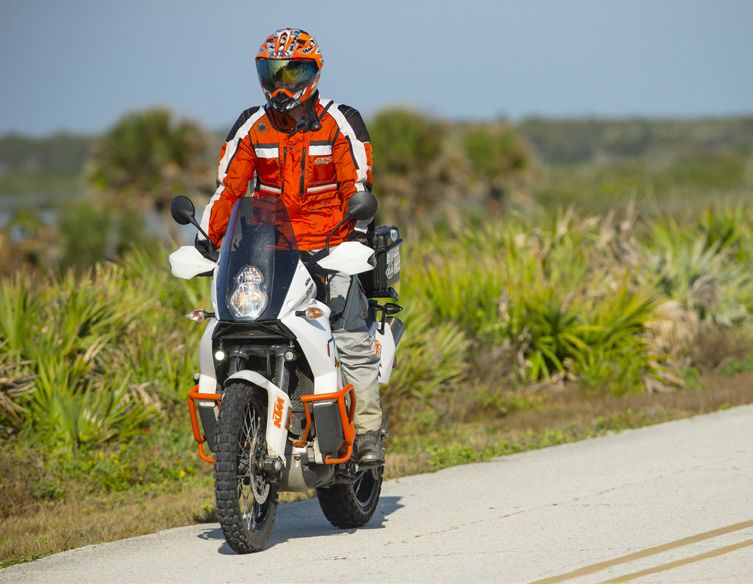
2021
               RECREATIONAL RIDING
                     RULES
                           AN EXCLUSIVE SERVICE TO MEMBERS OF
                         THE AMERICAN MOTORCYCLIST ASSOCIATION
           Copyright by American Motorcyclist Association, 13515 Yarmouth Dr., Pickerington, OH 43147

FOREWORD
   The American Motorcyclist Association is proud of its long record of
achievement as a national organization promoting the motorcycle lifestyle and
protecting the future of motorcycling.
   Rules directed at, or related to, safety are intended to provide a safe riding
environment for participants. However, the AMA does not guarantee the safety
of participants if the rules are followed, nor compliance with enforcement of the
rules. Moreover, each participant in an event has the responsibility of assessing
the safety aspects of facilities and conditions and assumes the risk of the event.

AMA NON-DISCRIMINATION POLICY
  The American Motorcyclist Association prohibits discrimination in all of its
programs and activities (including all AMA-sanctioned events) on the basis of
race, color, national origin, creed, religion, sex, age, disability, veteran status,
marital status, familial status, parental status, sexual orientation, or any other
category protected by applicable state or federal law.

USING THESE RULES
   This reference guide is intended to provide motorcyclists with an understanding
of the wide variety of events available to recreational riders and the rules
that apply to these events. This reference also provides AMA organizers with
information outlining the paperwork and operational procedures required for their
events.

AMA MEMBERSHIP
  AMA membership is suggested but not required for participation in most
AMA recreational riding events. Certain event types and classifications may
require AMA membership for all participants. Please consult the Member Activity
Department for clarification. All event organizers are required to provide the AMA
membership application pad onsite to give participants the opportunity to sign up
as a member at registration.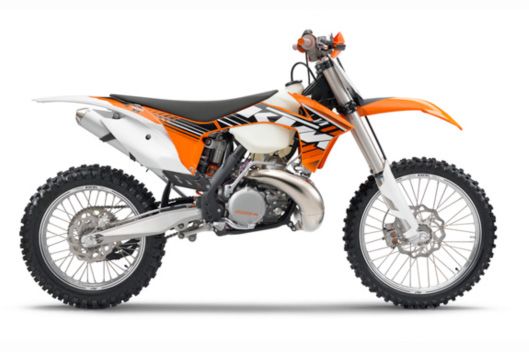
CHAPTER 1 - ORGANIZER DUTIES

I. Charter
   A. Each calendar year, a charter must be obtained or renewed in order to
      be considered an AMA-chartered organization. Select charters allow
      organization’s to sanction events with the AMA.
II. Sanctions
   A. Applying For
   1. An AMA sanction may be obtained only by an AMA-chartered organization.
      Individual chapters of multi-chapter organizations must be chartered as
      individual AMA organizers before any sanctions can be awarded.
   2. For a sanction to be considered, a sanction application and insurance
      request form (available on the AMA website) must be submitted. If the
      organizer is obtaining insurance from an outside vendor, the organizer
      must submit proof of insurance from an AMA-approved insurance provider.
      Insurance through an AMA-approved insurance provider is void if the
      sanction is canceled or withdrawn before the event.
   3. AMA policies and requirements for sanctioning an event are listed on the
      appropriate sanction application and organizers must abide by these rules.
   4. Events of two different sanction types held simultaneously require separate
      sanctions. Example: a dual sport and an adventure ride held at the same
      date and location require separate sanctions.
   5. All sanction applications must be received on or before 14 days before the
      date of the event. Insurance premium payment in full is due at least 10 days
      in advance of the event. Sanction requests received 13 days or less before
      the event, may not be honored or may be assessed a fee.
   6. Two-day events of the same event category may be applied for on one
      sanction application.
   7. Sanctions cannot be transferred or assigned to another organization
      or refunded. Canceled or rescheduled events must be reported to the
      recreational riding department the next business day after the cancelation
      in order to receive a sanction credit. The credit must be used within one
      year from the originally scheduled event date.
   8. The AMA may refuse to grant a sanction, or may withdraw or cancel a
      sanction already granted, for any reason the Association believes is in the
      best interest of the sport.
   9. Organizers must disclose all activities happening during the sanctioned
      event (vendors, vehicles other than motorcycles or ATVs, etc.)
   10.      Insurance is processed by the AMA's insurance broker who works with
         the preferred insurance company. It is approved or denied at the discretion
         of the insurance company.
   B. Advertising

                                           4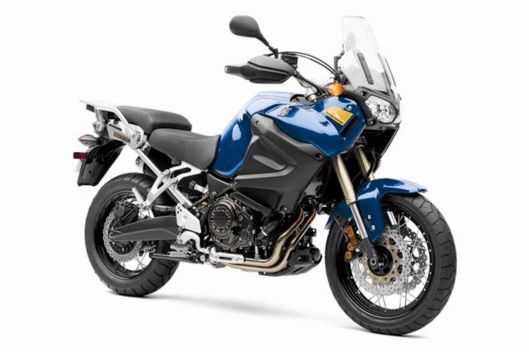
1. Ensure that all conditions regarding participation appear on
   advertisements, the entry application or the event organizer’s website.
2. Ensure that no false or misleading information appears in advertising or in
   announcements to the press or public.
3. Ensure that all advertising includes the type of event, such as poker run,
   dual sport, etc.
4. Ensure that all advertisements state “AMA-sanctioned” and include the
   AMA logo (available for download on the AMA website). No advertisement
   for an AMA-sanctioned event may contain references to non-sanctionable,
   unsafe or inappropriate activities which may not be covered by the event
   insurance or which could reflect negatively on the AMA. Final judgment
   rests with AMA staff.
5. The applicant shall not use the following terms in the event title or
   advertising without express written permission of the AMA: Area, District,
   National, Regional, Major, Featured or State Championship.
6. No reference to the consumption or serving of alcohol may be used in any
   advertising or literature.
C. Entries
1. Entry fees and entry closing dates can be set at the organizer’s discretion.
   In any case, the conditions of entry must appear in all advertisements.
2. Organizers may use their own registration forms to collect participant
   information.
3. The organizer must collect a participant's AMA # (if applicable), first name,
   last names, mailing address and email address and return to the AMA via
   the Electronic Participant List, available for download on the AMA website.
4. If the event requires street legal motorcycles, all participants are required
   to have a valid motorcycle endorsement, registration and at least the
   minimum insurance required by their state. Organizers are responsible for
   verifying this.
D. Risk Management/Safety
1. The organizer should take reasonable and careful precautions to see
   that the route is properly selected with the safety and well-being of the
   participant in mind.
2. The organizer may deny participation in an event to any participant who
   behaves or rides in a way that endangers other participants, officials or the
   public.
3. Ensure that the AMA statement of responsibility poster is conspicuously
   displayed at the registration area.
4. Ensure that an AMA-approved insurance release is properly signed by
   every participant, event organizer staff and/or volunteers.
5. No event personnel, officials, riders, mechanics, photographers and
   anyone associated with riders may consume, or be under the influence of,
   intoxicants or drugs that could affect their normal mental or physical ability.

                                       5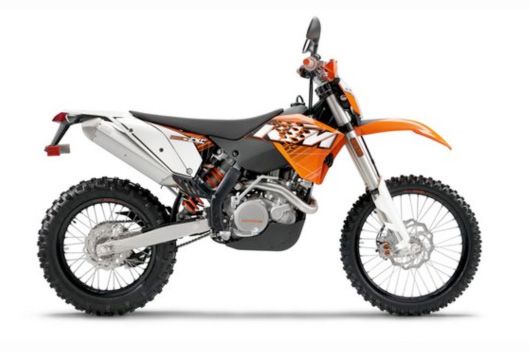
Failure to comply with this requirement may result in dismissal from the
      event.
   6. Alcohol consumption is prohibited during the ride. There may be stops
      at restaurants that serve alcohol along the route, but none of the event
      participants are allowed to consume any alcohol until the ride's end
      destination has been reached.
   7. No gambling is permitted at any AMA-sanctioned event. It is the duty of the
      organizer to ensure that this rule is honored.
   8. It is the organizer's responsibility to make sure the route has been cleared
      of riders at the end of the event. A team of sweep riders is suggested for all
      organized group rides to ensure all participants completed the route safely.
   9. A riders' meeting must be held immediately prior to the start of the event.
   10. It is the sole responsibility of the organizer to ensure compliance with all
       rules relating or directed to safety and to otherwise act to promote the
       safety of the event. The AMA doesn't attend or in any way supervise events
       and can't undertake to determine safety aspects. It's the sole responsibility
       of the organizer to purchase the required liability insurance. If the required
       liability insurance isn't purchased, the sanction for that day’s event will be
       declared null and void.
   11. It is recommended that organizers complete AMA Road Captain Workshop,
        AMA Trail Boss Workshop or other educational workshops or seminars
        offered by AMA to receive recommendations and have discussion on best
        practices for event operation.
   E. After the Event
   1. The Recreational Event Report and Electronic Participant List must be
      submitted to the AMA within 14 days after the event.
   2. AMA membership application pads and sold memberships must be
      returned to the AMA or postmarked within 2 days after the event.
   3. Injury reports (if applicable) must be submitted to the insurance broker
      within 14 days after the event.
   4. The organizer must follow the insurance guidelines for retaining releases
      after the event.
   5. Violating these provisions can result in the suspension of an organization’s
      charter, as well as the loss of the ability to sanction events.
III. Awards/Scoring
   A. Awards may be presented to participants at the organizer’s discretion.
      Conditions for receiving an award must be published and available to
      participants prior to the event taking place.
   B. While recreational events may have a competitive element, the AMA will not
      be involved in award determination or dispute resolution.
   C. If the organizer deems it necessary to halt an event after a time or distance
      equal to half the total event, the event may be considered completed.
   D. Any participant leaving the route can continue again only from the point

                                          6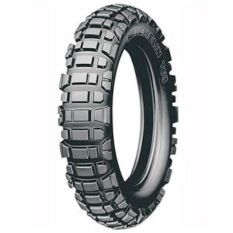
where he or she left the route.
E. A participant whose motorcycle is disabled before reaching the finish point
   may, by muscular energy, push or carry his or her motorcycle to complete
   the event. In such a situation, he or she will be considered as having
   finished the event.
F. A participant is entitled to examine his or her score card with the organizer,
   as well as to see how his or her position has been recorded on the roll
   checks.
G. No official announcement of event winners will be given until all checks
   have been examined and the clerk has approved the cards. Official results
   become final if no re-check is requested by an participant within 30
   minutes after the results have been posted.
H. Events that use a question and answer format must post the questions with
   correct answers along with the results at least 30 minutes before any award
   presentation.

                                      7
CHAPTER 2 - PARTICIPANT ELIGIBILITY
I. General
A. Event participants’ motorcycles must conform to the motor vehicle code of
the state in which the vehicle is registered.
B. Apparel and Protective Gear
1. Off-road and dual sport participants are required to wear full protective
gear during the ride. This includes: long pants, long-sleeve shirt, over-
the-ankle boots, DOT-compliant helmet, gloves and eyewear. It is
recommended that riders use the available protective equipment (i.e.
gloves, chest protector, neck brace and knee braces) to help protect
against the possibility of injury. This applies to both motorcycle and ATV
riders. It is the sole responsibility of the rider to select a helmet and apparel
that will provide appropriate protection. The AMA does not endorse or
certify any manufacturer’s products. The rider must rely on his/her own
judgment in the selection of any helmet and apparel for durability and
safety.
2. Road riding and adventure riding participants are required to abide by
their state's helmet law. Full protective gear is encouraged.
C. If the event requires street legal motorcycles, all participants are required
to have a valid motorcycle endorsement, registration and at least the
minimum insurance required by their state.
D. No participant under the legal age of majority in his or her state may
participate without first having both parents or guardians sign the AMA
minor release waiver in the presence of an unrelated adult witness.
No rider under the legal age of majority in the state in which the event
takes place may compete without the written consent (signature on liability
releases and entry forms) of his/her parents or legal guardians present at
the event. The parents or legal guardians must remain present while the
AMA member who they are responsible for is at the event.
E. All releases must be signed in ink by participants or must be completed via
an approved online waiver from the AMA's preferred insurance provider.
F. All participants must assess for themselves the route, facilities, existing
conditions and other matters relating to safety. The AMA cannot and does
not supervise any event. All participants and other participants must rely on
their own judgment and assume all risks of participation.
G. It is encouraged that participants be current AMA members. The AMA
National Dual Sport Series, AMA National Adventure Riding Series and
AMA-sanctioned riding schools require participants to be AMA members.
H. Participants may not ride in a way that endangers other participants, event
workers or the public.
I. Participants must must not have consumed or be under the influence of
8any alcohol, intoxicant or drug which could affect their normal mental or
physical ability before or during the ride. Participants may not consume any
alcohol until the ride's end destination has been reached.
J. Participants may be removed from a event for unruly conduct. However,
organizers and chartered districts do not have the authority to issue
ongoing suspensions of AMA members.
K. Participants must attend the riders' meeting held immediately prior to the
start of the event.
L. Participants must not falsify one’s name or participate under false
pretenses.
M. Attacking an official or engaging in a fight anywhere on the premises prior
to, during or after an AMA sanctioned event can result in a participant's
dismissal from the event.
N. Disciplinary actions
1. By participating in an AMA event, each member acknowledges and
agrees to abide by the AMA’s rules and procedures, including those related
to release and waiver of liabilities and claims.
2. Riders are responsible for the actions of their families and crew
members. All parties involved in AMA sanctioned events are expected to
conduct themselves in a responsible manner, respecting at all times the
rights of others. Participation in AMA sanctioned activities is a privilege,
and all participants understand that violation of AMA rules and procedures
can lead to forfeiture of their recreational riding privileges.
The participants recognize the need for officials, such as the Risk
Management Officer, to make decisions that require judgment and the
exercise of discretion, often instantaneously, with events as they are
occurring.
9CHAPTER 3 - ROAD RIDING EVENT TYPES
I. Riding Events
A. Bingo Run
Similar to a poker run, each bingo run rider is given a bingo check card.
At first check “B” the rider picks any number from 1 to 15 and the checker
writes that number on the rider’s card and initials it. At the other four checks
the same procedure is followed except that at the “I” (second) checkpoint,
the rider picks numbers from 16 to 30, the “N” (third) from 31 to 45, the “G”
(fourth) from 46 to 60, and the “O’’(fifth) from 61 to 75. At check-in at the end
of the run, the riders’ chosen numbers are recorded in the same manner in
which cards are now recorded in poker runs and the check cards are then
returned to the riders. After the finish deadline, a regular bingo game is
played with the first bingo awarded high point and each following bingo
awarded a class trophy until all awards are given. If there is a tie (i.e., for
second in a class), second and third awards are put aside and the two
riders pick an uncalled number. The first rider whose number comes up is
second and the other is third. If in the meantime another rider in the class
has bingo, they are fourth. As each bingo is called the promoter should
check that the numbers are the riders’ numbers and have been called (just
as in a regular bingo game). Do not clear the call board after each bingo.
Any bingo set numbers apparatus may be used to choose the numbers and
any master board will work fine.
B. Bonus Hunt
A bonus hunt may be held as a single event or combined with or run as
part of any other type of road ride described in this chapter. Organizers may
require participants to meet certain prerequisites in order to compete for
bonus points (for example, participants may have to complete other events
or use specific equipment).
Participants are given a general route and a list of several bonus
locations or activities by the event organizer and may be required to start or
finish at a designated point. The method of validation of these bonuses is
at the organizer’s discretion.
Participants may compete for bonus points individually or in teams,
as directed by the organizer. Bonus points will not be awarded for illegal
activities (e.g. speeding, trespassing) nor for unsafe riding behavior.
Points may be awarded for overall mileage covered during event as long as
participants are encouraged to observe legal speed limits at all times and
points are also given for rest periods during the event.
Note: Events lasting more than 12 hours will be sanctioned under the
“Two or more days” designation on the AMA Recreational Riding Sanction.
C. Carnival Run
A carnival run is similar to a poker run except carnival games are played
at each stop determine scores.
10D. Dice Run
A dice run is similar to a poker run except that dice are rolled at each stop
instead of picking playing cards.
E. Field Meet
A field meet is divided into many contests that test the participant’s skill
in handling a motorcycle in a field or parking lot. No part of a field meet
may be conducted on public roads. Contests relying on speed alone are
to be avoided by the organizer. Games or contests may be organized for
single rider or operators with a passenger. A person may operate the
motorcycle in one event and be a passenger in another at the discretion of
the promoter and when posted prior to the event.
F. Fun Run
A road run that may or may not be guided, in which riders leave from a
departure point. Riders may return to the beginning in a loop, or may ride to
a different destination.
G. Grand Tour
Participants ride to pre-determined destination "checkpoints" and
document completion. This is a self-guided ride where participants choose
their own routes and dates to get to the checkpoints.
1. Checkpoints will be accessible by motorcycle.
2. The event will be held over a specified period of time, 2 or more months
in duration during a calendar year, as designated by the organizer.
3. A log of designated checkpoints with validation information will be
provided by the event organizer.
4. Awards will be based on the number of checkpoints validated by each
participant.
H. Gypsy Tour
Title reserved for the AMA National Gypsy Tour. Gatherings of riders
from all over the country, converging upon a single destination. Gypsy
Tours brings like-minded riders together to enjoy the camaraderie of
motorcycling, often in a location of particular beauty, historic significance
and/or importance to the sport.
I. Map Run
This event tests a rider’s map-reading ability. Just prior to departure, each
participant is provided with a map of the route. Winners are those riders
who come closest to a secret “key time” established by the organizer.
J. Midnight Run
This is a run that begins at midnight.
K. Mystery Run
During this event, participants follow the road captain to the final
destination. The road captain is the only one who knows where the run
ends. One person involved in organizing the event should not be on the run
11and available by phone in case a participant gets separated from the group
and needs assistance in finding the final location.
L. Observation Run/Quiz Run
This ride is a test of the rider’s observation skills. Question sheets may
be given out prior to or after the conclusion of the ride. Answers must be
posted prior to the presentation of awards. The organizer must ensure that
participants are able to observe items along the route without the rider
being distracted from operating his or her motorcycle.
M. Poker Run
1. At established checkpoints along the course, participants draw sealed
envelopes containing playing cards, pickup slips or markers distinctive
to each checkpoint and exchange them for a poker hand at the finish.
Winners are based on the best five-card poker hand. Any variation of
poker games may be used, but the rules must be announced before
the first participant begins the run. Participants may not purchase extra
cards or extra hands to improve their chances of winning, unless the
proceeds go to a charitable recipient.
2. The course must be at least 30 miles long and have three or more
checkpoints on the route. The course can be marked with lime
splotches, or participants may use route cards, maps or gimmick clues.
The method of indicating the route must be explained at an participants’
meeting prior to the start of the event.
4. Checkpoints should be located on the right side of and off the route.
Each checkpoint should be able to accommodate 10-15 motorcycles
at one time. The checkpoints must be identified with clearly visible
markers such as flags, signs or time marks located at least 100 feet prior
to the check. The method of marking checkpoints must be explained to
participants prior to the start of the event.
N. Reliability Run
A reliability run takes place over highways, secondary roads, backwoods,
dirt roads and other types of terrain suitable to the type of motorcycle
for which the event is intended. Prominent permanent landmarks (public
buildings, railroad crossings, etc.) and official route numbers (road) may be
used to mark the course and annotated route cards/sheets.
1. Checkpoints, gas stops, known controls and gas available are to be
determined and established by the organizer.
2. Timing devices are generally limited to electric or mechanical watches.
Unless all participants in a class are so equipped, the use of any type of
computer or two-way radio is prohibited.
O. Road Rally
A rally is a day-long or overnight event held at a single location. Multiple
events may be included in a road rally.
P. Road Enduro (Timed Road Run)
This event is based on participants maintaining a specified time
12schedule where speed is not a determining factor. A series of checkpoints
are used to collect participants’ times along the route. The course,
described on a route card, may include little-used roads, highways and any
other terrain as selected by the organizer for the specific mode of travel.
(If private property is used, written permission must be obtained from the
owner or lessee.)
Road enduros cannot encompass more than 12 hours of continuous
riding, with a minimum of two scheduled stops of at least 30 minutes
each. Each 12-hour riding session shall be followed by a mandatory 8-hour
scheduled rest stop. In any 24-hour event, there must be at least two
scheduled stops of at least 30 minutes each. A 24-hour event is considered
a two-day run. The course must be laid out and the time schedule
established in compliance with all local and state laws, including speed
limits.
1. General
a. Those who actually lay out the course are prohibited from competing.
Participants will be disqualified for riding the course before the
event.
b. Participants must comply with all local and state laws, including
speed limits.
c. The course must be traveled under the power of the motorcycle or
the participant’s own muscular energy. Towing and/or any organized
repair service is prohibited, except at scheduled controls and rest
periods. Violations will result in disqualification. Participants may
assist one another on any part of the course, provided that they are
still contesting the event.
d. Route cards will be given to participants no less than one hour
before the start. The card will provide the key time for the start and
for all known controls, as well as the exact mileage and schedule in
miles per hour between such controls. The route card also will list
the exact mileage between turns and the direction of each turn. It
should indicate by mileage an official gas stop as well as “gasoline
available” locations.
e. The starting order may be determined either by the order in which
entries are received or by a drawing. The method by which the order
is chosen must appear on the entry blank. At the starting time, which
is one minute after the printed key time, the starter will send off one
rider every minute. If there are more than 100 participants, more than
one may be started every minute.
f. A participant who leaves the marked course may continue in the event
only by returning at the point where he or she left the course.
g. If motorcycles are to be sealed throughout the event, the sealing
must be done by officials at the starting control and removed only by
officials at the finish control.
h. Teams, if they are recognized by the organizer, are made up of three
participants (excluding passengers.) Each participant may compete
13as part of only one team.
2. Checkpoints
a. Checkpoints must be conspicuously marked and easily visible. If
conditions are such that participants may not see a check in time,
it must be marked in a way that will provide reasonable advance
warning. Checkpoints and controls must be located where
participants will not be needlessly delayed by traffic lights, speed
limits or congestion.
Checkpoint Definitions:
Known Control- a checkpoint whose location is known to all
participants
Secret Check- an unknown timed checkpoint
Emergency Check-the same as a secret check, except that
minutes and seconds are recorded and used for breaking ties
Observed Check- an unknown checkpoint where no penalty for
time shall be recorded.
b. If flags are used at checkpoints:
Known control- yellow
Secret check- red and white diagonal
Observation check- white
Emergency check- green and white diagonal
Flags must measure no less than 18 inches. All flags must be
conspicuously placed and will designate the exact checking point.
Checking time will be taken the instant the motorcycle’s front wheel
arrives opposite the flag.
c. The finish may or may not be a known control. However, rest stops or
gas stops must be known controls. It is up to the promoter to decide
whether or not checks are known controls.
d. Checkpoints cannot be more than 40 miles apart. Secret checks
must not be less than 5 miles from any known or secret control or
check. If the event covers 100 miles or less, the minimum distance
from other checks will be 3 miles.
e. Each check must be manned by a member of the promoting
organization or an authorized representative. This person marks the
time on the checking sheets and signs the route cards or receipts for
participants. It is the participant’s obligation to make sure the official
signs the checking sheet. Participants are not permitted to mark
their own times or signatures on the checking sheets.
f. All checks are to be opened before the first participant is due, and
remain open until one hour, 59 seconds after the last participant
was to have arrived. If more than 50 percent of the participants still
in contention at the previous checkpoint reached a check station
that is in question, then the questioned checkpoint will be declared
14official.
g. The mileage at any check may be computed from the last known
control and the time may be computed to an even minute. An
participant arriving within 59 seconds after the even minute shall
be recorded as having arrived on the even minute. Participants
may not stop within sight of the check; those who do will have their
time taken when they stop moving forward. Putting one’s foot down
does not indicate the point of timing, but time will be taken if the
participant zig-zags or paddles to stall time.
h. Emergency checks are used to break tie scores. The time to an
emergency check must be computed to an even minute. Time at an
emergency check is recorded in seconds. When participants’ scores
are tied, the rider checking closest to 30 seconds within the minute
due wins the tie. If more than one emergency check is used, the total
emergency points lost will be used to determine the winner of a tie
score. If a tie continues, the emergency check closest to the end of
the run will be used as the tie breaker. Emergency checks may also
be secret checks, but in any case an emergency check must be
marked by a green and white diagonal flag.
3. Scoring
a. Riders are scored on a points-lost basis, with the best score a zero.
b. Participants whose check cards are not properly filled out will have
24 penalty points deducted.
c. Participants are penalized one point for every minute they are late
leaving the starting control. Because of traffic or other conditions,
final scoring may be taken at a secret check prior to the finish
control. In such a situation, there will be no scoring from that point
to the finish, but each participant must reach the finish control to
complete the course.
d. Participants are penalized one point for every minute they are late
arriving at a known control. An participant leaving a known control
before their scheduled departure time will be penalized 2 points for
each minute he or she is ahead of schedule. There is no penalty for
arriving early at a known control, unless the participant is more than
15 minutes early.
e. At emergency checks, participants are penalized one point for each
second they arrive early or late.
f. At secret checks, participants are penalized two points per minute
for arriving early, and one point per minute for arriving late.
g. No penalties are assessed at observation checks. However, at any
check station, if the participant is more than 15 minutes ahead of
their schedule, more than one hour, 59 seconds late or has cut the
course, he or she will be disqualified at that point. However, the
participant will still be credited with the mileage to the last timed
section and is eligible for awards on that basis.
15h. Results must be posted for at least one-half hour before they
become official.
i. Timing devices are limited to mechanical or electric watches only.
Electronic or mechanical computers or two-way radios are not
allowed. However, event organizers may also offer “computer”
classes for riders using computing, global positioning and
communications systems.
Q. Riding School: On-Street Coaching Seminar/Tour
A riding skills and techniques seminar or tour designed to enhance
rider enjoyment and safety through road riding strategies coaching. It
is conducted on the road with opportunities for teaching during breaks.
Organizer must submit documented curriculum or syllabus of skills-
enhancing exercises/scenarios to be covered during seminar/tour with the
sanction application. Ratio of participants to coaches must allow for safe
monitoring of participants at all times. Organizer must comply with all state
and local laws
R. Riding School: Road
A riding skills and techniques seminar or tour designed to enhance
rider enjoyment and safety through road riding strategies coaching. It is
conducted on a parking lot or other paved surface reserved for this use.
(not on a track). The organizer must submit documented curriculum or
syllabus of skills-enhancing exercises/scenarios to be covered with the
sanction application. Ratio of participants to coaches must allow for safe
monitoring of participants at all times.
S. Road Run/Ride
A single- or multi-day organized ride or tour on the road that may be a
guided or self-guided route. Riders must have a valid motorcycle temporary
permit or license and follow their state and local laws. Organizers may use a
variety of mapping options, from paper route sheets, GPS, follow the leader,
etc.
T. Scavenger Hunt
Participants are provided with a list of difficult-to-find items, none of
which should be available for purchase. Each item is assigned a point
value. Each participant is given a list of items to be scavenged, and an
amount of time is announced for the hunt. Winners are determined in
each class by totaling the point values of the items scavenged which are
validated by the organizer.
S. Toy Run
Participants provide a toy to be donated to a charitable organization.
T. Turkey Run
Held around the Thanksgiving holiday, instead of trophies/awards, gift
certificates for turkeys, turkey dinners, etc. may be awarded.
U. Vintage MOTOGIRO
A MOTOGIRO is a road “enduro” type of event for vintage motorcycles
16and scooters manufactured prior to 1968 with less than 350cc
displacement. It is a non-speed event over a prescribed route with a
pre-set average mile per hour speed limit that is very low. The route may
be comprised of both public and private roads with a total distance of no
less than 150 miles for the event. MOTOGIRO events and classes may be
conducted outside the pre-1968 “vintage” and displacement format at
the discretion of the organizer. However, the other timing and event rules
should apply.
1. Vintage Classes
Vintage motorcycle and scooters may be broken into the following
displacement and grouping classes for scoring: 65CC; 125CC; 200CC;
250CC; 305CC; 350CC; scooter, sidecar.
2. Starting Order
The starting order is set by the order of registration or the class
entered. Motorcycles and scooters will depart in numerical order
at 30-second intervals. Participants will receive a starting signal
for departure at their assigned time. In that assigned 30-second
interval, the participant must start his or her motorcycle or scooter
and depart the starting area. Any participant who arrives late for his
or her scheduled departure will receive a penalty for each minute of
delay up to a maximum of 20 minutes. Once this time is exceeded, the
fixed penalty (120 minutes) will be applied. This penalty will be carried
through to the end of the section. Participants should depart in their
assigned times in subsequent sections.
3. Time Cards and Controls
At the beginning of each day, an participant will be given a time card
with the following information:
• Participant’s number
• Class entered
• Participant’s specific STARTING and ENDING times for each section
• Blank spaces for transit stamps
• Approximate distances between check points
Each participant is responsible for and required to carry his or her
own time card throughout the sections and present it at the Stamp
Checks (SC) or Time Checks (TC). The route indicated on the route
sheet must be followed at all times. All Stamp Checks (SC) and Time
Checks (TC) must be passed through. Deviation from the assigned
route or missing checks will receive the fixed penalty of 120 minutes.
Any participant who is found to have altered or falsified his or her
time card will be disqualified. Any participant who loses a time card
should ask for a replacement at the next checkpoint. In that case, the
participant will only be classified in that day’s sections if it is possible
for the officials to reconstruct the his or her missing timings and
stamps, and he or she will incur an additional one second penalty. If it
is impossible to reconstruct the participant’s timings, the fixed penalty
17will be assigned. There will be a minimum of two sections per day and
a lunch break of one hour minimum.
4. Ability Tests
Ability Tests will be set up along the route to test the rider’s ability
to cover a prescribed distance in a predetermined amount of time.
Timing should be done electronically and calculated to at least 1/100th
of a second. (1/1000 of a second timing is preferred, if possible) Ability
tests are not speed tests but rather are a test of the participant’s ability
to ride slowly through a defined course that does not exceed 60
meters without incurring additional penalties. When it is a participant’s
turn to take the ability test, he or she should enter the holding area on
his or her motorcycle or scooter to prepare for the trial. The holding
area is the area before the white flag. When indicated, the participant
should enter the start zone – (the area between the white and yellow
flags). The official will then signal to the participant to begin the test.
The test area (non-stop zone) is the area between the yellow flag and
the white line across the road where the timing beam is placed. The
non-stop test distance must be traversed as closely as possible to the
set time (i.e..... 60m in 20 seconds). The test ends when the participant
crosses the second timing beam at the end of the non-stop test zone
(marked by cones or a white line). Once in the non-stop test zone, it
is prohibited to stop the bike, reverse direction, put the feet on the
ground, go out of bounds or touch any external object for support.
Zigzagging is permitted in order to cross the finish line (break the
beam) in the set time. Ability tests may be set up either in a straight
line or through a slalom. Cones will mark the course for slalom tests.
It is permissible and may be appropriate to alter the established
motorcycle and scooter ability test to accommodate sidecar entries.
Ability tests will generally follow closely after a Start of a Section (SOS)
and after an End of a Section (EOS). There will be a minimum of three
timed ability tests per day.
5. Ability Test Penalties
a. One foot on the ground - 1/2 second
b. Both feet on the ground - 1 second
c. U turn / direction change - 10 seconds
d. Stopping the bike (engine off) - 10 seconds
e. Using external objects for support - 10 seconds
f. For every slalom cone knocked over - 1 second
g. Complete avoidance of the slalom - 10 seconds
h. Partial avoidance of the slalom - 5 seconds
i. Travel out of bounds - 10 Seconds
While participating in ability tests, (other than the rider counting to
him/herself) the following rules apply for devices used by the rider to
measure time: 1. Mechanical watches and simple digital chronometers
18may be used. 2. Any countdown timer is prohibited. 3. All acoustic, light
emitting or vibrating signal devices are prohibited devices deemed
unsuitable for use in the ability test by the supervising official must be
removed or disabled. Participants unwilling to abide by the official’s
requests will receive the maximum penalty points for that test.
6. Exclusions from Classification
In the following circumstances, participants may be excluded from
daily classifications or receive the fixed penalties for each violation.
1) One or more time stamps missing from Time Card. 2) Loss of
the time card (unless officials are able to accurately reconstruct
the participant’s missed timings). In these cases, participants may
continue the next section, but with a fixed penalty (120 minutes)
applied.
7. Check Points
a. The checkpoints must be clearly marked.
b. Stamp Checks (SC) are simply a means of assuring that the
participant stays on the prescribed route. SC are not timed.
Participants do not have to worry about crossing the SC at a correct
time.
c. Time Checks (TC), End of Section (EOS) and Start of Section (SOS)
arrival points are clearly marked and should be crossed at the
prescribed time. Upon approaching a TC, EOS or SOS point, the
participant will find a white flag on the right 100 feet before the
control line followed by a yellow flag 30 feet before the control line.
d. The actual Check Point will be a white line or cone at the
checkpoint. If a participant arrives early, he or she should wait in
the transit area between the white and yellow flags. Once the rider
enters the area between the yellow flag and the control line, he
or she may not stop and has committed to having his or her time
recorded by the official. To check the official time, the participant
may proceed from the transit area to the control desk on foot.
8. Time Keeping
The officials, using either manual or electronic timers, will measure
the time at all checkpoints. Where possible, the use of synchronized
atomic time clocks displaying hours, minutes and seconds should be
the official time standard. The time in the Ability Test will be measured
to a minimum of 1/100 of a second. Times at Time Checks (TC) and
End of Section (EOS) will be measured to the 1/2-minute and be
recorded on the time card by a synchronized electronic atomic time
clock or attendant.
The judgment of the official timekeepers is final and may not be
challenged.
9. Penalties
a. Reporting late at the starting line at the beginning of each leg: 60
seconds for each minute late up to 20 minutes.
19b. Reporting late at the starting line at the beginning of each leg: more
than 20 minutes late: 120 min. / 7200 seconds (Fixed Penalty)
c. Deviation from the official route with the intention of taking a short-
cut when noted by an event official: Fixed Penalty
d. Alteration of the time card: Fixed Penalty
e. Failure to pass a time check or stamp check point: 1 second
f. Loss of time card where the reconstruction of official timings and
checks are possible: 60 seconds
g. Late or early “checking in” at a Time Check (TC): 60 seconds for each
minute over or under accepted margin. There is no allowable margin
for an early check in.
h. Failure to respect highway regulations as witnessed by police:
possible exclusion.
10. Updated Equipment
a. Modern electronic digital bicycle speedometers may be used.
b. Modern electronic motorcycle enduro equipment, including
speedometers, may NOT be used.
c. GPS equipment may NOT be used.
d. Motorcycle enduro roll charts and enduro roll chart holders may be
used at the discretion of the event chairperson.
11. Finishing Positions
Overall finishing position in each class and the event will be
determined by totaling all the penalty points the rider has accumulated
throughout the event. One second equals one penalty point. The
lowest total wins.
20CHAPTER 4 - ADVENTURE AND OFF-ROAD EVENT TYPES
Note: Off-road terrain can vary widely, thus the difficulty and challenges presented
by each event can be quite different. For details about the level of difficulty and
types of challenges an event may have, the AMA recommends you contact the
organizer. This could help you in selection and preparation of your motorcycle and/
or choice of events you participate in.
I. Riding Events
A. Adventure Ride
The route typically consists of limited use of highways, gravel or dirt
roads and less serviced forest or desert roads. Some off-road trails are
used when appropriate for adventure motorcycles. These routes should be
designed to accommodate adventure motorcycles (600cc and up). Routing
may be by descriptive route sheet, arrows, maps, GPS routes, led by trail
guide(s) or any combination of these. No speed competition or timing is
allowed. Motorcycles must be licensed and insured for street riding.
In addition to an adventure ride, an Adventure Ride Rally may offer
seminars/workshops, guest speakers, vendors and/or demo rides held
over a period of two or more days.
C. Dual Sport
The route is typically a combination of trail sections connected by
highway sections. The event may offer one or many routes. More difficult
alternate routes are sometimes referred to as: “Hero sections” or “A loops.”
These sections are typically short, challenging loops that leave the main
route and return to the main route either at the same place or further down
the main route. Alternate routes are optional, and a rider may bypass them
by remaining on the main route. No speed competition or timing is allowed.
Motorcycles must be licensed and insured for street riding since
sections of highway connect the participants to more trail riding.
Motorcycles are typically under 600cc with DOT tires that have a high-
profile knobby design.
In addition to a dual sport ride, a Dual Sport Rally may offer seminars/
workshops, guest speakers, vendors and/or demo rides held over a period
of two days or more.
E. Egg Hunt
1. Colored eggs or similar objects are hidden throughout a field or
wooded area. Point values are established for each color, and those values
are made available to entrants.
2. Participants are assigned numbers.
3. On signal, participants begin looking for eggs, never losing physical
contact with the motorcycle. Each egg must be carried individually to the
start/finish for deposit. At the end of the allotted time, scores are tabulated.
4. Participants will be disqualified for assisting another participant or for
21being assisted by another participant or spectator. Anyone who transports
more than one egg at a time to the start/finish area also will be disqualified.
F. Family Enduro
An event intended to introduce youth and adult participants to enduro-
style riding in a friendly atmosphere. The events use the timekeeping or
restart format in a closed-course (no license/plate required) format.
G. Field Meet
A field meet is divided into many activities that test the skill of the
participant in handling a motorcycle. Activities relying on speed alone are
to be avoided by the organizer. Many activities are often run in a bracket-
style format.
The following activities are approved for a field meet:
1. Slow Race: Participants stage in marked lanes at the starting line. Upon
the official start, riders ride as SLOW as possible between marked start
and finish lines. The last participant to cross the finish line wins. A rider is
disqualified if tire crosses a line of a lane and/or if rider puts a foot down.
2. Ball Race: Passenger collects and replaces tennis balls off of traffic cones
while the operator manages to serpentine the course without putting a foot
down. This is a slow speed contest.
3. Others as approved by AMA
H. Off-Road Poker Run
1. At established checkpoints along the course, participants will draw a
playing card or number chip, colored marker, etc. and exchange them for a
poker hand or high score/total at the finish. Winners are based on the best
five-card poker hand or highest total if numbers are used. Any variation of
poker games may be used, but the rules must be announced before the first
participant begins the run.
2. The course should be marked with a sufficient number of trail markings
so that the riders can find the marked course without getting lost. The
method of indicating the route will be explained prior to the start of the
event.
3. There should be a minimum of one checkpoint per lap. A rider will draw
a playing card, marker, etc. each time he/she completes a lap of the course.
There can be more than one checkpoint on the marked route.
I. Scavenger Hunt
Participants are provided with a list of difficult-to-find items, none of
which should be available for purchase. Each item is assigned a point
value. Each participant is given a list of items to be scavenged, and an
amount of time is announced for the hunt. Winners are determined in
each class by totaling the point values of the items scavenged which are
validated by the organizer.
J. Recreational Trail Ride
A non-competition event on off-road terrain where an unlicensed
22motorcycle or ATV may be ridden. ATVs and motorcycles shall not use the
same trails at the same time.
Routing may be by descriptive route sheet, arrows, maps, GPS routes,
led by trail guide(s) or any combination of these. The event may offer one
or many routes. More difficult alternate routes are sometimes referred to as:
“Hero sections” or “A loops.” These sections are typically short, challenging
loops that leave the main route and return to the main route either at the
same place or further down the main route. Alternate routes are optional,
and a rider may bypass them by remaining on the main route.
No speed competition or timing is allowed. Trails must be one-way traffic,
and no riding after dusk is permitted.
K. Riding School: Off-Road/Trail Ride
Designed to teach riders the basics of operating a dirtbike or improve
their skills. It is conducted in a field or dirt surface. The organizer must
submit documented curriculum or syllabus of skills-enhancing exercises/
scenarios to be covered during training with the sanction application, and
the ratio of participants to instructors must allow for safe monitoring of
participants at all times.
L. Riding School: Adventure or Dual Sport
Designed to teach riders the basics of operating a street-legal dual-
purpose motorcycle or to improve their skills. It is conducted in a field, dirt
surface or on-road. The organizer must submit documented curriculum
or syllabus of skills-enhancing exercises/scenarios to be covered during
training with the sanction application, and the ratio of participants to
instructors must allow for safe monitoring of participants at all times.
ADVENTURE AND OFF-ROAD TIRE AND BIKE EXAMPLES
Adventure tire/bike
Dual-sport tire/bike
Off-road tire/bike
23CHAPTER 5 - EVENT CLASSIFICATIONS
I. General
A. AMA organizers wishing to host an AMA recreational riding event with
a classification above the standard level must complete and submit the
appropriate application to the AMA Recreational Riding Department
by the application cut-off date. To aid in event promotion, applications
may be submitted, considered and awarded up to two years in advance.
Applications must be accompanied by the appropriate sanction fee, which
will be refunded if the proposal is rejected.
II. Sanction Classifications
A. Standard: Event will be published in the corresponding month of
American Motorcyclist magazine if sanction is processed at least
90 days in advance of event date. (Example: event in March will be
published in March magazine) Event will also be listed in the database on
AmericanMotorcyclist.com.
B. Featured: AMA must approve sanction classification. Event must have a
history of success and draw riders from the state or region. Includes all the
benefits of the standard sanction; however, event is listed in the magazine
every month leading up to the event after the sanction is processed.
C. National: AMA must approve sanction classification. An event that is
well-established with a history of success that draws riders from across
the country and includes a large rider turnout. First-year events will not
be considered for this sanction. Includes all the benefits that a standard
sanction offers plus a geographical email blast and social media coverage.
Event is listed in the magazine every month leading up to the event after the
sanction is processed.
D. International: AMA must approve sanction classification. A well-established
event with a proven history of success that draws riders from around the
world and includes a large rider turnout. If the event organizer is based
outside of the U.S., this also requires international approval. Involvement
or contact with the FIM must be done through the AMA. Includes all the
benefits that a standard sanction offers plus a geographical email blast and
social media coverage. Event is listed in the magazine every month leading
up to the event after the sanction is processed.
III. Optional Sub-Classifications
A. Any of the event types may be run as a charity event (proceeds beyond the
organizer’s expense go to a charitable organization)
B. Any of the event types may be run as an invitation-only event. The organizer
must note invitation-only event on the sanction application so that the
event is not published on the AMA website or in the magazine.
24CHAPTER 6 - OFFICER POSITIONS AND DUTIES
All AMA-chartered organization officers must be current AMA members in good
standing.
I. President
A. The executive officer and leader of the organization.
II. Secretary
A. Responsible for taking notes and keeping accurate records for the
organization.
III. Primary Contact
A. The member responsible for communicating with the AMA.
B. A member may hold an office and this role simultaneously.
IV. Road Captain (Applies to road events only)
A. Duties include planning safe and enjoyable group rides.
B. Develops guidelines and procedures for a safe and well-organized ride.
C. Effectively manages the riders before and during the ride.
D. The road captain may dismiss participants for riding in a way that
endangers themselves, other participants, event workers or the public.
E. May not only lead but is trained as a sweep rider.
V. Trail Boss (Applies to adventure and off-road recreation events only)
A. Makes the proper pre-event preparations with the local authorities, land
owners and the general public, including securing permits and permission.
B. Responsible for supervising course layout and the marking of route.
Ensures that the route is safe for participants.
C. Pre-rides the route with a team of riders in advance of the participants on
the day of the event.
D. Utilizes a team sweep riders to ensure the route is clear of participants
after the last rider has left. May remove arrows/ribbons from route while
sweeping or after the event.
VI. Risk Management Officer (RMO)
A. The role of the officer is to ensure a safe environment for your event
workers, participants, spectators, vendors and sponsors.
B. Assure that the event is properly sanctioned with liability insurance
coverage from an approved AMA insurance provider.
C. Check that you have an adequate supply of releases to be signed by all
participants, guardians and workers of the event.
25D. A risk management plan includes at a minimum: event security, route
planning, following the law, following the AMA’s policy regarding alcohol,
insurance and liability waivers.
E. The risk management officer must complete the risk management
workshop annually before an organizer can sanction an event.
F. The risk management officer must report any serious injuries by phone
to the insurance broker on the next business day following the event. The
release that the injured participant signed should be mailed to the AMA's
insurance broker immediately after reporting an injury.
26CHAPTER 7 - SOUND LIMITS AND TESTING PROCEDURES
Sound Requirements
1. The maximum sound limit is set at:
Pre-race inspection Post-race Inspection
Maximum dB/A Engine Type Maximum dB/A Engine Type
96 dB/A 2-stroke 98 dB/A 2-stroke
94 dB/A 4-stroke 96 dB/A 4-stroke
101 dB/A *Vintage 101 dB/A *Vintage
1. The test will be conducted at a fixed RPM as follows:
Race Motorcycles/ATV Trail bikes/Utility ATV
Engine size RPM Engine size RPM
0cc – 85cc 6,000 RPM 0cc – 85cc 4,000 RPM
86cc – 125cc 6,000 RPM 86cc – 125cc 4,500 RPM
126cc – 250cc 5,000 RPM 126cc – 250cc 4,000 RPM
251cc – 500cc 4,500 RPM 251cc – 500cc 3,000 RPM
501cc - Open 4,000 RPM 501cc - Open 3,000 RPM
Examples of Trail bikes are XR, KLX, TTR, DR, etc.
2. Machines entered in all events (except drag racing and land speed trials)
shall have mufflers/silencers that don't exceed the maximum dB/A required by the
state where the event is being held or the prescribed dB/A above, whichever is
less.
3. Applicable sound test limits may not be exceeded at any time during an event.
4. Testing by a club or organizer is required. The testing may be conducted
at any time. Any motorcycle not complying with applicable sound rules may be
penalized.
Sound Testing Procedures
A. Sound Test Equipment
The sound level meter must meet international standard IEC 651 or American
National Standards Institute (ANSI) S1.4-1983 specifications, or newer meeting
ANSI Type 1, Type S1A, Type 2 or Type S2A. The sound level meter must include
a compatible calibrator, which must be used immediately before mass testing
begins and always just prior to a re-test if a disciplinary sanction may be imposed.
27For convenience, a 20-inch string may be attached to the front of the sound level meter for the stationary sound test. It is recommended that the sound meter be attached to a tripod and then placed into position for the test. Allow the sound meter to come to the same temperature as the surroundings. Set the sound meter to slow dynamic response and A-weighting. Always round down the meter reading, that is: 100.9 dB/A = 100 dB/A. An electric tachometer or vibrating reed tachometer shall be used to determine RPM. B. Test Site No one should be within 10 feet (3 meters) of the machine other than the rider, the sound meter operator, an assistant to hold the front of the vehicle and one other person directly behind the sound meter operator. The test area should be a flat, open surface free of large sound-reflecting surfaces within 16 feet, such as a parked vehicle, buildings, signs, and hillsides. The surface should be free of loose soil, snow or grass higher than 6 inches. The surrounding sound should not exceed 90 dB/A within a 16-foot radius of the machine during the test. Always use a windscreen under windy conditions. The stationary test procedure should not be conducted if the wind speed is 20 mph or higher. If wind is present, the machine should face forward in the wind direction (mechanical sound will blow forward, away from the microphone). Testing shouldn't take place in rain, snow or excessively damp conditions. C. Guidelines for Measuring the Sound For initial sound control and technical inspection, a rider (or his mechanic) shall present only one spare silencer per machine. Other spare silencers may be presented after all participants have presented their motorcycles, or on the following days of the event. During the sound test, only the rider (or his mechanic) may sit on the machine in the normal riding position and will follow the directions of the sound test official. No other team personnel may influence the sound test. Readings will be taken with the microphone placed at 20 inches from the exhaust pipe at an angle of 45 degrees measured from the centerline of the exhaust end and at the height of the exhaust pipe, but at least 8 inches above the ground. If this is not possible, the measurement can be taken at 45 degrees upwards. Attach an electric tachometer or set the vibrating reed tachometer to the test RPM. Make sure the engine is warmed up and the transmission is in neutral.
You can also read


