A CHANCE TO GET IT RIGHT - Achieving equity in COVID-19 vaccine access - Save the ...
←
→
Page content transcription
If your browser does not render page correctly, please read the page content below
A CHANCE TO
     GET IT RIGHT
          Achieving equity
          in COVID-19
          vaccine access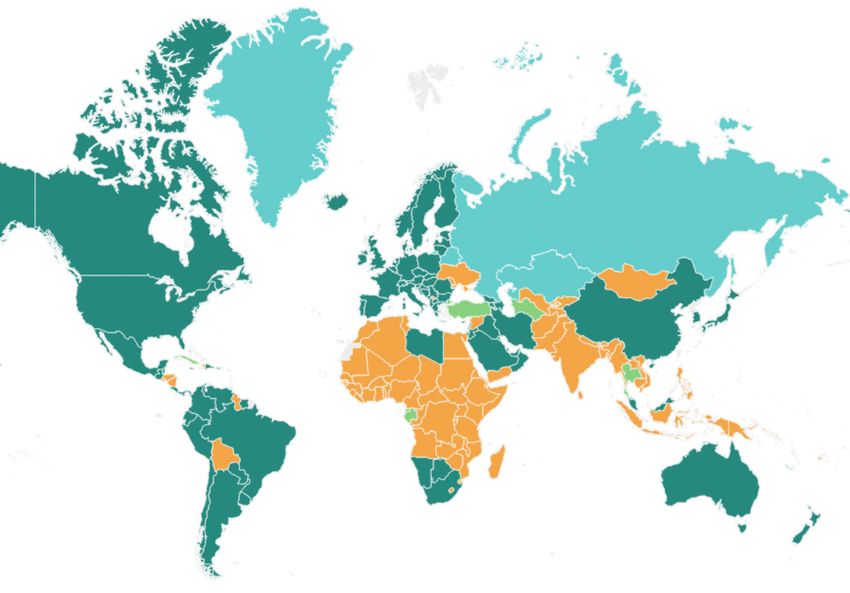
Save the Children exists to help every child reach their potential.
In more than 100 countries, we help children stay safe, healthy and
keep learning. We lead the way on tackling big problems like pneumonia,
hunger and protecting children in war, while making sure each child’s
unique needs are cared for.
We know we can’t do this alone. Together with children, partners
and supporters, we work to help every child become whoever
they want to be.

This report has been written by Karrar Karrar, Kirsten Mathieson and Lenio Capsaskis.

Acknowledgements
Many colleagues across the Save the Children movement contributed to the report.
Thanks in particular to Alva Finn, Kjersti Koffeld, Marionka Pohl and Smita Baruah for
their comments, additions and guidance.

Published by
Save the Children
1 St John’s Lane
London EC1M 4AR
UK
+44 (0)20 7012 6400
savethechildren.org.uk

First published 2021

© The Save the Children Fund 2021

The Save the Children Fund is a charity registered in England and Wales (213890),
Scotland (SC039570) and the Isle of Man (199). Registered Company No. 178159

This publication is copyright, but may be reproduced by any method without fee or prior
permission for teaching purposes, but not for resale. For copying in any other circumstances,
prior written permission must be obtained from the publisher, and a fee may be payable.

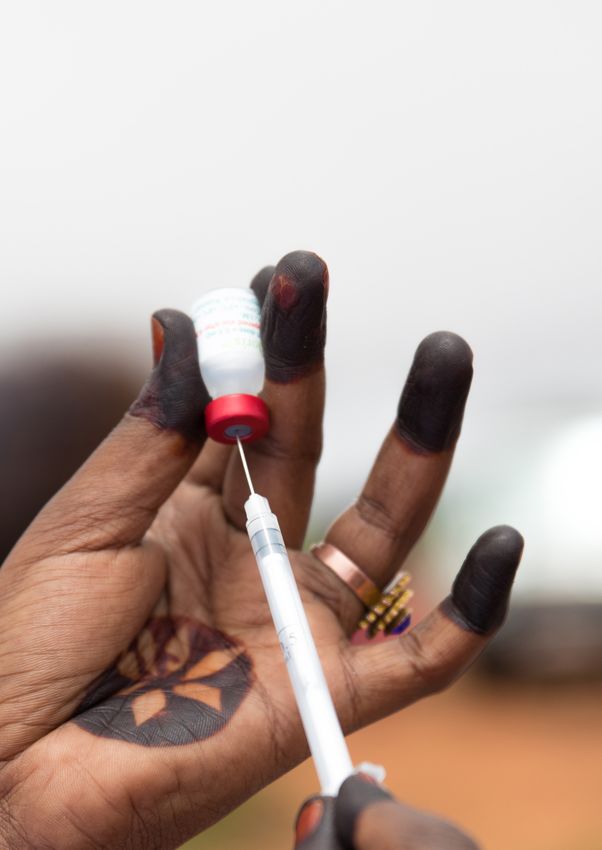
Cover photo: A health worker prepares a pneumonia vaccine during a community outreach
session in Ethiopia’s Somali region. (photo: Hanna Adcock/Save the Children)

Typeset by Grasshopper Design Company
Contents

Our key calls                                                                     iv

Introduction: COVID-19 and vaccine access                                         1
  The impact of COVID-19 on children’s lives                                      1
  The framework for global vaccine coordination and multilateralism               2

1 Build global vaccine solidarity                                                 4
  Our recommendations                                                             4
  The economic argument for a global approach                                     4
  The threat of vaccine nationalism to public health                              5

2 Ensure accountability for vaccine access                                        7
  Our recommendations                                                             7
  Embedding access in public funding of research and development                  7

3 Expand vaccine supply                                                           9
  Our recommendations                                                             9
  Unleashing global supply                                                        10
  Supporting vaccine manufacturing capacity in low- and middle-income countries   10

4 Achieve equitable national vaccine roll-outs                                    12
  Our recommendations                                                             12
  Preparing for national vaccine roll-out                                         12
  Equitable allocation of vaccines                                                13
  Strengthening routine immunisation                                              13

Conclusion: A chance to get it right                                              14

Endnotes                                                                          15

                                                                                       iii
ACHIEVING EQUITY IN COVID-19 VACCINE ACCESS
COVID-19 THREATENS CHILDREN'S RIGHT TO SURVIVE, THRIVE, LEARN AND BE PROTECTED
1.2B
CHILDREN IN MULTIDIMENSIONAL
80M
CHILDREN AT RISK OF VACCINE-
168K
MORE CHILDREN COULD DIE
1.6B
LEARNERS AFFECTED BY
POVERTY – UP 15% PREVENTABLE DISEASES DUE TO MALNUTRITION SCHOOL CLOSURES
2 DECADES OF PROGRESS IN POVERTY ERADICATION AT RISK $28TN LOSS IN GLOBAL OUTPUT OVER THE NEXT FIVE YEARS
GUARANTEEING EQUITABLE ACCESS TO COVID-19 VACCINES IS A
HUMAN RIGHTS PUBLIC HEALTH AND ECONOMIC IMPERATIVE
GLOBAL SOLIDARITY
• Donors must invest now to fully finance the COVAX facility
• Prioritise fair global allocation and distribution of vaccines
• Governments must not engage in vaccine nationalism – it will cost the
world US$9.2 trillion
• Governments must urgently redistribute a proportion of secured doses
to COVAX
ACCOUNTABILITY FOR ACCESS
• Governments have spent €88.3 billion of public funds on COVID-19
vaccines – accountability for this money is critical
• Public funds must come with conditions on transparency and fair access
• Accountability requires meaningful multi-stakeholder engagement,
including civil society
EXPAND GLOBAL VACCINE SUPPLY
• Up to 15.6 billion doses could be needed worldwide – business as usual
will not meet this demand
• Support the COVID-19 Technology Access Pool (C-TAP) and share
technology, know-how and licensing
• Invest in manufacturing capacity in low- and middle-income countries
NATIONAL ROLL-OUT
• Governments must follow WHO guidance for vaccine prioritisation and have
a responsibility to vaccinate all vulnerable groups, without discrimination
• Decision-making must be inclusive with communities at the centre
• Continue to prioritise routine immunisation services
AN EPIDEMIC ANYWHERE COMPROMISES VACCINATION EVERYWHEREIntroduction: COVID-19 and
vaccine access
THE IMPACT OF COVID-19 ON diseases. The WHO’s Director‑General has warned
CHILDREN’S LIVES that the risk of deaths due to vaccine-preventable
diseases because of children missing out on routine
A year on from being declared a global pandemic, immunisations could exceed those from COVID-19.7
COVID-19 has claimed the lives of more than More than two-thirds of households surveyed
2.5 million people.1 The secondary impacts of the by Save the Children reported issues accessing
pandemic on people’s lives and wellbeing have been nutritious food.8 It is estimated that 9.3 million more
far-reaching and devastating. It is estimated that children could suffer from wasting, 2.6 million more
nearly 150 million people could be pushed into could suffer stunting and 168,000 more children
extreme poverty by the end of 2021, potentially under five could die due to malnutrition by 2022.9
reversing two decades of progress in global poverty Furthermore, more than 1.6 billion learners 10 have
eradication.2 The International Monetary Fund been affected by school closures with Save the
has projected that as a result of the pandemic and Children research finding a doubling of rates
its associated economic impact, there will be a reported by children of household violence when
cumulative loss in global output over 2020–25 of schools were closed, compared with when children
$28 trillion.3 were attending school in person.11 This pandemic has
For children, this pandemic has led to the violation further exacerbated impacts of gender inequality,
of their rights by threatening every aspect of with up to an additional 2.5 million girls at risk of
their lives.4 Family incomes have been drastically child marriage over the next five years.12
cut, schools closed, often-fragile health systems Amid this global crisis for children and their
stretched to breaking point. Joint analysis by families, the rollout of COVID-19 vaccines offers
UNICEF and Save the Children revealed that the the potential for real hope. Getting vaccines to all
number of children living in multidimensional poverty countries would have a direct impact on the lives
(without access to education, health, housing, of children, their families and caregivers. Ensuring
nutrition, sanitation or water) has increased by global equitable access to COVID-19 vaccines is a
15%, soaring to approximately 1.2 billion since the matter of rights, public health and economics. But
start of the pandemic. 5 COVID-19 has exacerbated as we face the greatest threat to global health in
inequalities, leaving the most marginalised children our generation, we must ensure existing inequities
and families worst affected. are addressed head on. Currently, the opposite is
Our research found that over 90% of households happening. Millions of doses are being rolled out in
that have lost half their income during the pandemic high-income countries with very few in low-income
experienced challenges in accessing healthcare countries,13 exacerbating the divide between rich
and medicines.6 According to the World Health and poor countries, to the detriment of children.
Organization (WHO), 90% of countries have faced If we are to make real progress on ending the
disruptions to essential health services during the pandemic – and minimise its impact on children –
pandemic, with low- and middle-income countries this equity gap must be addressed as a matter of
(LMICs) worst affected. UNICEF, WHO and Gavi, urgency. We need a global response and the global,
the Vaccine Alliance, warn that COVID-19 related equitable distribution of vaccines.
disruptions to immunisation services could leave
80 million children at risk of vaccine‑preventable
1THE FRAMEWORK FOR GLOBAL phase of the pandemic by the close of 2021. ACT-A
A CHANCE TO GET IT RIGHT
VACCINE COORDINATION has the potential to showcase the power of global
coordination and provide a vision for equity through
AND MULTILATERALISM a coordinated multilateral effort.
The global community has been scrambling to find
ways to protect against COVID-19 and to treat GETTING VACCINES TO THE WORLD
those who are infected.14 The lack of pre‑existing The world urgently needs safe and effective
vaccines and medicines meant there was no COVID-19 vaccines to protect the most vulnerable,
distinction in prevention and treatment between rich stop transmission and prevent the resurgence
and poor countries, or according to background or of COVID-19. Although other interventions,
wealth. This has pushed the debate about access to including therapeutics, diagnostics and public
medicines to the top of agendas and the forefront of health measures, have critical roles to play and
public discourse. should continue to be prioritised, global population
coverage with effective vaccines is considered
To address this huge gap in available medical
the linchpin intervention to sustainably restore
tools to tackle COVID-19, billions of dollars have
health and societal stability. COVID-19 vaccine
been pumped into research and development
development is advancing at an unprecedented
(R&D) of new vaccines and treatments. In order
pace: as of 1 March 2021, there are more than
to coordinate global efforts, WHO, together with
300 candidates across at least eight different
partners, launched the Access to COVID-19 Tools
technology platforms in development with around
Accelerator (ACT-A; see Figure 1).15 The intention
80 candidates already in human clinical trials.16
behind this global collaboration is to accelerate
As of 18 February 2021, at least seven different
the development, production and equitable access
vaccines across three platforms have been rolled
to new COVID-19 diagnostics, therapeutics and
out in some countries.17 Beyond developing vaccines
vaccines, so that all people have access to the tools
quickly, it is critical that there is sufficient supply
needed to defeat COVID-19 and end the acute
FIGURE 1. ACT-A: MULTILATERALISM AT ITS BEST
VACCINES THERAPEUTICS DIAGNOSTICS
2B 245M 500M
DOSES BY THE DOSES FOR TESTS TO LMICS
END OF 2021 POPULATIONS IN LMICS BY MID 2021
BY MID 2021
• Development & manufacturing • Rapid assessment of candidates • R&D
• Policy & allocation • Market preparedness • Market readiness tools
• Procurement & delivery at scale • Deployment in all countries • Supply
• Costing & financing • Country preparedness
HEALTH SYSTEMS CONNECTOR
• Country systems • Financing
• Protect frontline workers • Community-led responses
• Clinical care • Private sector
• Integrated data management • Key supply chain elements
2of the most suitable (safe, effective, appropriate) However, to deliver on this goal, COVAX estimates
INTRODUCTION: COVID-19 AND VACCINE ACCESS
COVID-19 vaccines as soon as possible and that it needs to raise an additional US$6.8 billion in
supply, when available, is prioritised equitably based 2021: $800 million for R&D, at least $4.6bn for the
on public health need. This prioritisation exercise COVAX AMC and $1.4bn for delivery support.24
for what will inevitably be a finite supply of future It is critical that this funding gap is filled to allow
COVID-19 vaccines should be governed by WHO’s COVAX to procure doses and fulfil the agreements
allocation framework.18 signed with manufacturers. Ultimately, COVAX
provides a practical way for governments to turn
The 73rd session of the World Health Assembly
sentiments of solidarity into action by ensuring
saw the endorsement by Member States of the
that everyone globally has access to safe and
COVID-19 response resolution.19 In addition to calls
effective vaccines.
for solidarity, there was acknowledgment that a
future COVID-19 vaccine should be a global public To ensure fair and equitable distribution between
good with equitable access. countries, the WHO allocation framework aims
to guide global allocation decisions and supply
The vaccine pillar of ACT-A, also known as
agreements in order to prioritise finite supply.
the COVAX Facility 20 aims to accelerate the
Allocation prioritisation across countries is set to
development and manufacture of COVID-19 vaccines
be introduced in two phases. During phase 1, doses
and to guarantee fair and equitable access for every
will be allocated to cover 20% of the population
country around the world.21 The ambition is to make
of each country – an initial tranche of doses will
2 billion vaccine doses available by the end of 2021
cover 3% of the population (namely frontline
so that participating countries can protect high-risk
workers in health and social care settings), with
and vulnerable people and healthcare and other
additional doses until 20% of the population is
frontline workers.22 In order to ensure equitable
covered (eg, older people, adults with comorbidities
access irrespective of a country’s ability to pay,
and others depending on locally relevant risk
the COVAX Advance Market Commitment (AMC)
factors – countries are encouraged to follow
was set up to support 92 low- and middle-income
SAGE’s policy recommendations). Phase 2 will
countries through donor-funded doses.23
progressively expand access to continue to cover a
COVAX now has agreements in place to access larger portion of the population in all countries.25
close to 2 billion doses of several vaccine candidates, Governments must not engage in vaccine
including at least 1.3 billion donor-funded doses nationalism that undermines the global COVID-19
for 92 low- and middle-income countries eligible response or stockpile vaccines beyond the equitable
under the AMC, thereby allowing them to cover allocation quota.
20% of their populations by the end of 2021.
“COVAX has now built a platform that offers the world
the prospect, for the first time, of being able to defeat
the pandemic on a global basis, but the work is not
done: it’s critical that both governments and industry
continue to support our efforts to achieve this goal.”
Dr Seth Berkley, CEO of Gavi, the Vaccine Alliance
31 Build global vaccine solidarity
OUR RECOMMENDATIONS
WE CALL ON:
• governments and global stakeholders to guarantee equitable access to COVID-19
vaccines, including through COVAX.
• donors to fully resource global efforts to tackle COVID-19, including ACT-A and
COVAX. Donor government pledges must come from different budget lines (eg, domestic
health and research budgets) to ensure that official development assistance (ODA) is
not over utilised. After all, these initiatives benefit all countries, not just countries eligible
for ODA.
• all stakeholders to future-proof strategies developed to improve equitable allocation
during the height of the crisis as an integral part of building back better, including
developing a more sustainable and equitable approach to resource mobilisation.
• governments not to engage in nationalism that undermines global equitable allocations
of COVID-19 vaccines. Countries that have already entered into bilateral agreements
with manufacturers should contribute a proportion of these doses to COVAX, following
the Principles for sharing COVID-19 vaccine doses with COVAX.26 They should also not
impose export controls on commodities for COVID-19.
THE ECONOMIC ARGUMENT analysis highlights that global solidarity makes
FOR A GLOBAL APPROACH good economic sense. An analysis by RAND shows
that even if ensuring vaccine access to the world’s
While this virus continues to circulate anywhere in poorest countries would cost up to $25 billion, the
the world, efforts to open up society and economies, USA, UK, EU and other high‑income countries
resume international travel and restore global trade could lose a combined $119 billion a year if low- and
will be significantly hindered. Without an equitable middle-income countries are not able to access
approach to vaccine rollout, the global economy vaccines. For every $1 spent on ensuring global
will continue to take a hit: a recent analysis by the equitable access, high-income countries would see
International Chamber of Commerce Research a nearly five-fold return.28 Ensuring COVAX is fully
Foundation estimates that vaccine nationalism financed is not only the right thing to do to ensure
could cost the global economy $9.2 trillion a year.27 all countries can access vaccines to protect the
While the funding gaps for the global response health of their populations, it makes financial sense
may seem big, especially with many donors facing and will support global economic recovery.
fiscal challenges due to the pandemic, recent
41 BUILD GLOBAL VACCINE SOLIDARITY
FIGURE 2. COUNTRIES UNITE AND COMMIT TO COVAX
COVAX status
COVAX committed Non-binding confirmations AMC eligible Non-COVAX
Source: Duke Global Health Innovation Center (2020) Launch and Scale Speedometer, Duke University, retrieved from:
https://launchandscalefaster.org/covid-19
THE THREAT OF VACCINE secured approximately 4.6 billion doses, which
NATIONALISM TO PUBLIC HEALTH accounts for at least 70% of doses of five leading
vaccine candidates available in 2021.31 This
Due to the high failure rates associated with represents vaccine injustice and is exacerbating
vaccine R&D,29 some high-income countries have global inequity.32
made bilateral deals with a number of vaccine While national governments have a responsibility to
manufacturers to secure a portfolio of vaccines in protect their people, COVID-19, like all pandemics,
order to mitigate against the risk of one or more continues to teach us that only by ensuring
vaccine candidates not being successful. However, everyone is safe can we ensure our own safety.
we now have several successful candidates proving As such, our response to this pandemic must be
to be safe and effective. This means that a number rooted in solidarity and collaboration. Short-sighted
of high-income countries that secured pre‑purchase vaccine nationalism will only prolong the human and
agreements are now sitting on enough vaccine doses financial cost of COVID-19. From a public health
to vaccinate their whole population several times and epidemiological perspective, if the pandemic
over.30 To date, this group of high-income countries, continues to rage in some parts of the world, new
representing 16% of the global population, have strains and virus mutations will continue to occur.
5A CHANCE TO GET IT RIGHT
FIGURE 3. HIGH-INCOME COUNTRIES’ VACCINE DEALS: A THREAT TO GLOBAL ACCESS
5,000
4,577,070,000
4,500
4,000
Number of doses procured (millions)
3,500
3,000
2,500
2,000
1,500
1,261,300,075
1,120,000,000
1,000
670,000,000
597,010,000
500
0
High-income Upper-middle- Middle-income Low-income Global entity/
countries income countries countries countries COVAX
Source: Duke Global Health Innovation Center (2020) Launch and Scale Speedometer, Duke University, retrieved from:
https://launchandscalefaster.org/covid-19
This will render unilateral vaccination efforts in a secured through bilateral pre-purchase agreements
select number of high-income countries futile: an to COVAX. This must be done as a matter of
epidemic anywhere will threaten the impact of urgency so that countries around the world can, in
immunisation everywhere.33,34 the immediate term at least, vaccinate their health
workers and most vulnerable people.
COVAX has released a Principles for Dose-Sharing
framework 35 for countries to direct surplus doses
“In an interconnected world, it is high time to recognize a
simple truth: solidarity is self-interest. If we fail to grasp
that fact, everyone loses. ... Populism and nationalism
have failed. Those approaches to contain the virus have
often made things manifestly worse.”
António Guterres, UN Secretary-General 36
62 Ensure accountability
for vaccine access
OUR RECOMMENDATIONS
WE CALL ON:
• donors to incorporate pro-public safeguards on public contributions for vaccine R&D,
including to ACT-A, such as conditionalities of full transparency on clinical trial data,
cost of R&D and price.
• manufacturers to ensure accessibility and affordability through flexible intellectual
property management approaches, such as non-exclusive licences, and technology and
know-how transfers to expand the global supplier base.
• governments to ensure they have and use legal instruments to ensure intellectual
property does not impede access to vaccines, including not undermining countries’ rights
to utilise flexibilities highlighted in the Doha Declaration on TRIPS and Public Health.
• governments to enable World Trade Organization members (as well as countries that
are not members) to import vaccines under a compulsory licence from another country;
this could be critically important during the COVID-19 pandemic, as well as under future
health emergencies.
• multilateral mechanisms and partners to meaningfully engage low- and middle-income
countries, civil society, and communities in their governance and decision-making
structures and to exercise standards of full transparency and stakeholder consensus.
We call on the Boards of these multilateral organisations to hold their leadership to
account for delivering on this.
EMBEDDING ACCESS IN PUBLIC a lack of transparency around the final negotiated
FUNDING OF RESEARCH prices of many pharmaceuticals leaves countries in
a disadvantaged position when engaging in price
AND DEVELOPMENT negotiations with industry due to informational
Healthcare funding pressures, in addition to access asymmetries.38 This issue was hotly debated during
and affordability challenges due to high-cost the passing of a landmark resolution ‘Improving
pharmaceuticals, has brought into question the role the transparency of markets for medicines,
of public funding in pharmaceutical R&D.37 This is vaccines and other health products’ 39 at the 2019
compounded by our inability to validate the cost of World Health Assembly.40 Given the challenges
medicines due to a lack of transparency on the cost in ensuring timely equitable access to COVID-19
of bringing a new medicine to market. Furthermore, vaccines, the pandemic has reopened many of these
7debates, with many calling for public contracts These conditions can include:
A CHANCE TO GET IT RIGHT
with pharmaceutical companies to be made • Commitments to open licensing –
public 41 to allow the assessment of public industry eg, preventing exclusive licensing or ensuring
commitments on access and affordability.42 licensing to a pooling mechanism such as the
Medicines Patent Pool or the the COVID-19
So far, €88.3bn in public sector contributions
Technology Access Pool (C-TAP).46
has gone to vaccine companies for the research
• Commitments on transparency –
and development of COVID-19 vaccines.43 The
eg, uploading clinical trial results onto a WHO
major donors are the USA (32%), the EU (24%),
primary clinical trial registry or any accessible
and Japan and South Korea (a total of 13%).44
public domain; ensuring full transparency on
Public funding into key early R&D efforts 45 has
prices and R&D costs (eg, through WHO’s
been instrumental in achieving the current
Global Observatory on Health R&D); sharing
pipeline of COVID-19 vaccine candidates. With
patent information through the Medicine Patent
such huge sums of public money being committed,
Pool’s patents and licences database,47 MedsPaL
public interest conditions for equitable access
or the Pat-INFORMED database.48
must be embedded into agreements to ensure
• ‘Step-in rights’ – for donor governments
resulting vaccines are made available widely
to issue non-exclusive licenses 49 if a licensing
and fairly based on needs rather than means.
partner fails to comply with the requirements of
providing the health technology at an affordable
and fair price or due to supply constraints.
“The large public funding going into health innovation
means governments should govern the process
to ensure prices are fair, patents are not abused,
medicine supply is safeguarded...”
Mariana Mazzucato, Professor of Economics at UCL,
Director of the Institute for Innovation and Public Purpose 50
83 Expand vaccine supply
OUR RECOMMENDATIONS
TO UNLEASH VACCINE SUPPLY, WE CALL ON:
• donors (both governments and philanthropists) to prioritise investment in manufacturing
capacity and strengthening sustainable and quality-assured supply chains globally,
especially in low- and middle-income countries, working with local stakeholders.
• donors and the pharmaceutical industry to collaborate with vaccine manufacturers in
low- and middle-income countries through open licensing to unleash supply and help the
world prepare for the next global health challenge.
TO ADDRESS INTELLECTUAL PROPERTY BARRIERS, WE CALL ON:
• governments to support C-TAP, including ensuring their domestic manufacturers do the
same, to share COVID-19 health-technology-related knowledge, intellectual property
and data, which are critical to expanding supply and driving equitable access.
• multilateral organisations, like WHO and Gavi, the Vaccine Alliance, to push for action
on issues around patents, know-how and technology transfer, including the use of C-TAP.
• the pharmaceutical and medical devices industry to:
– engage in open innovation to expedite the research and development of COVID-19
vaccines, including sharing platform technologies, compound libraries and intellectual
property rights with third party researchers and ensuring full transparency around
clinical trials data, cost of R&D and prices.
– operationalise access principles of product development partnerships, such as the
Coalition for Epidemic Preparedness Innovations (CEPI) and the Biomedical Advanced
Research and Development Authority (BARDA); register products in low- and middle-
income countries; use non-exclusive voluntary licences; and apply differential pricing
that captures ability to pay of different countries.
– use flexible intellectual property management, including intellectual property waivers,
non-exclusive licensing, technology and know-how transfers with manufacturers in
low- and middle-income countries, and supporting mechanisms like C-TAP.
9Only through population coverage with safe and This will allow other prequalified manufacturers
A CHANCE TO GET IT RIGHT
effective vaccines can we end the global pandemic. to manufacure COVID-19 commodities, thereby
This means vaccinating enough people globally to expanding supply and facilitating timely, equitable
achieve herd immunity. Even though this threshold and affordable access for all.
is not yet known for COVID-19, considering the
Flexible approaches to the intellectual-property-
world’s 7.8 billion people 51 are affected by the
based model are also being proposed. For example,
disease and its wider impacts, the scale of the
the governments of India and South Africa
challenge becomes immediately clear. 52 No one
submitted a proposal for a temporary waiver
company will have the manufacturing capacity to
of certain Trade‑Related Aspects of Intellectual
produce or supply the volumes of doses needed
Property Rights (TRIPS) obligations to facilitate an
to meet global demand.
appropriate response to COVID-19. This would be a
If we assume a two-dose vaccine schedule, it is time-bound proposal related to the acute phase of
estimated that approximately 15.6 billion doses of the pandemic, recognising that these are exceptional
vaccines will be required by the 194 WHO member times that warrant exceptional solutions. It is not
states for a universal COVID-19 vaccination uncommon for the pharmaceutical industry to adopt
programme. If only targeted occupational or flexible intellectual property approaches to different
high‑risk groups were prioritised for vaccination, markets and therapeutic areas, including intellectual
then 10.3 billion doses would be needed. 53 property waivers and voluntary licensing. Numerous
companies choose to waive or not enforce patents
Furthermore, the production of COVID-19 vaccines
in certain low- and middle-income countries. The
must not disrupt the production of other life‑saving
Access to Medicine Index 55 includes this in its
vaccines. Therefore, producing COVID-19 vaccines
assessment of companies and many companies
at the necessary volumes and speed requires
make these commitments public on their websites.
unleashing manufacturing capacity at a scale not
For example, Moderna made a public commitment
before imagined – let alone operationalised.
to not enforce patents on its mRNA-based vaccine
during the pandemic 56 and expressed a willingness
to license out the intellectual property for the
UNLEASHING GLOBAL SUPPLY
post-pandemic period, which will enable other
Vaccine supply constraints in the short term remain manufactures to produce the vaccine.
the Achilles heel in our global efforts to end the
pandemic. The traditional pharmaceutical business
model is based on granting intellectual property SUPPORTING VACCINE
rights to innovators, thereby allowing investments MANUFACTURING CAPACITY
to be recouped during a period of exclusive selling IN LOW- AND MIDDLE-INCOME
rights or monopolies. Given the pressing need, a COUNTRIES
business-as-usual approach to intellectual property
only limits global manufacturing and supply The vaccine market is dominated by a handful
capacities. To overcome this and help expand of companies, the majority of which are large
supply of COVID-19 vaccines – expanding the pie research-based pharmaceutical companies in
instead of having countries fighting over a limited high‑income countries. Unleashing supply will
supply of vaccines in the short term – the COVID-19 be achieved by faciliatating smaller vaccine
Technology Access Pool (C-TAP)54 was lauched in manufacturers in low- and middle-income countries
May 2020 as a pooled mechanism for innovators to to engage in R&D into COVID-19 vaccines.
openly share intellectual property and other forms This is critical for improved and safe supply and
of knowledge, clinical data and know-how relevant affordability, and will leave a legacy of health
to the development and manufacture of diagnostics, security preparedness.
devices, therapeutics and vaccines for COVID-19.
103 EXPAND VACCINE SUPPLY
FIGURE 4: THE DEVELOPING COUNTRIES VACCINE MANUFACTURERS NETWORK
Members as of
September 2019
Members with WHO
prequalification vaccines
Source: Developing Countries Vaccine Manufacturers Network. 2020. (webpage). https://www.dcvmn.org/-About-
The Developing Countries Vaccine Manufacturers Engaging vaccine manufacturers in low- and middle-
Network 57 is an alliance of 41 vaccine manufacturers income countries through providing financial and
in 14 countries and territories across Latin America, technical expertise as well as capacity building
Africa, the Middle East and Asia, working to ensure will help resolve COVID-19 vaccine supply
high-quality vaccines are available and affordable bottlenecks 59 and help strengthen global vaccine
to all. 37 out of the 41 alliance members collectively supply chains in the long term. Investments and
supply around 3.5 billion vaccine doses annually partnerships fostered during this pandemic can
for other diseases. 13 members already supply lead to a transformative change in our global
WHO-prequalified vaccines around the world emergency preparedness as well as ending vaccine
and 19 developing-country vaccine manufacturers preventable diseases.
are engaged in R&D into 22 COVID-19
vaccine candidates. 58
“C-TAP is a sister initiative of the ACT Accelerator and offers
concrete actions to achieve the objective of the ACT Accelerator,
which is equitable access ... WHO recognizes the important role that
patents play in fuelling innovation. But this is a time when people
must take priority. Tools to prevent, detect and treat COVID-19 are
global public goods that must be accessible by all people”
Dr Tedros Adhanom Ghebreyesus, WHO Director-General 60
114 Achieve equitable national
vaccine roll-outs
OUR RECOMMENDATIONS
WE CALL ON GOVERNMENTS TO:
• adequately prepare for the introduction of a COVID-19 vaccine. Governments must
ensure multi-stakeholder representation, including civil society, in their national vaccine
task force and in all decision-making.
• follow the WHO SAGE Roadmap guidance as they make decisions on vaccine
prioritisation within their country, including prioritising frontline health workers and
high-risk populations.
• include all population groups in their country in their national COVID-19 vaccination and
allocation plans, including refugees, internally displaced people, migrants, asylum-seekers,
stateless people, and other marginalised, vulnerable and neglected communities and
groups, regardless of legal status or documentation.
• strengthen national and regional regulatory systems, and ensure they have the required
indemnification legislation in place, which is critical to achieving timely access to high-
quality vaccines. High-income-country drug regulatory authorities should support
authorities in low- and middle-income countries as cross-country collaboration will be
important to strengthen regional and global regulatory networks and systems.
• ensure that routine services are not interrupted by the introduction of the COVID-19
vaccine and that COVID-19 vaccine investment supports long-term sustainability and
reach of other routine immunisations and health services.
PREPARING FOR NATIONAL vaccination plan (NDVP) for COVID-19 vaccines 62
VACCINE ROLL-OUT and the COVID-19 Vaccine Introduction Readiness
Assessment Tool,63 which provides a roadmap
Technical partners, such as WHO, UNICEF, Gavi for countries to plan for COVID-19 vaccine
and the COVAX Country Readiness and Delivery introduction in addition to a structured framework
workstream and subgroups, are working with to self-monitor readiness progress against key
countries to prepare for COVID-19 vaccine milestones. Countries are encouraged to establish
introduction,61 including adaptable guidance, tools, a national task force and coordinating committee
training and advocacy materials. These include (eg, coordination/advisory groups), with multi-
guidance on developing a national deployment and sectoral representation, including civil society.
12Countries will need to invest in reaching included in their national COVID-19 vaccination
4 ACHIEVE EQUITABLE NATIONAL VACCINE ROLL-OUTS
communities through two-way communication to and allocation plans, including refugees, internally
create demand and promote uptake of COVID-19 displaced people, migrants, asylum-seekers, stateless
vaccines, to continue to promote COVID-19 people, and other marginalised, vulnerable and
prevention behaviours and to maintain demand for neglected communities and groups, regardless
routine immunisation. Civil society and communities of legal status or documentation. National
play a critical role in supporting vaccine roll-out governments must also address barriers that these
and community uptake and acceptance; they must population groups may face in safely accessing
therefore be included as an essential stakeholder in vaccinations, including addressing demand issues.
vaccine decision-making, planning and roll-out. This is in line with humanitarian principles and
international human rights law, under which host
Ensuring a successful roll-out of a COVID-19 vaccine
countries are responsible for providing healthcare
within a country will require a coherent whole-of-
to people who live within their borders, including
government approach. Countries must also ensure
migrants, refugees and asylum-seekers, whether
they have the systems in place 64 to ensure they
documented or not. Civil society organisations
can receive their allocation of vaccine through the
should play a critical advocacy and accountability
COVAX Facility. This includes:
role with national governments and decision-makers
a) having financing in place to either procure (self-
to ensure adherence to WHO SAGE guidance
financing payers) or fulfil cost-sharing obligations
and to ensure vaccines are prioritised where
of the COVAX AMC 65 – ensuring this is not
needed most.
diverted from budgets for other essential health
services, including routine immunisation
b) regulatory systems and frameworks for swift
STRENGTHENING ROUTINE
COVID-19 vaccines approvals in country 66
c) appropriate liability and indemnification 67 IMMUNISATION
systems in place.68
Even as countries prepare for the roll out of
COVID-19 vaccines, children need to continue to
receive life-saving immunisation. Routine services
EQUITABLE ALLOCATION must not be interrupted by the introduction of the
OF VACCINES COVID-19 vaccine and any investment for the roll
out should support long-term sustainability and
To ensure equity and fair distribution of vaccines
reach of other routine immunisations and health
within each county, national governments must
services. Naturally, the activities carried out to
follow the WHO SAGE Roadmap guidance as they
prepare, implement and monitor the introduction
make decisions on vaccine prioritisation within their
of COVID-19 vaccination should leverage and
country and develop national plans.69 In settings
strengthen existing immunisation systems through
with community transmission, this prioritises:
integration into and support for a country’s national
• First stage (up to 10% of population): frontline
primary healthcare. This includes establishing
health workers and older people
operational working groups and processes;
• Second stage (11–20% of population): other
strengthening human resource capacity and training
vulnerable and high-risk groups.
for new vaccine introduction; ensuring traceability
It is important that essential workers who are not systems and efficiency of supply chains; enhancing
formally employed and/or salaried by government integrated disease surveillance and surveillance of
ministries, including community-based teachers, adverse events following immunisation; and key
community health workers, community care advocacy and communications activities to promote
personnel and other people engaged in social and demand for vaccination and to improve health
protective service provision, are also considered. literacy around COVID-19. This will ultimately lead
to increased demand and acceptability of general
National governments are responsible for ensuring
essential primary healthcare services.70
that all population groups in their country are
13Conclusion: A chance to get it right
The global community has the chance to adopt a threatening every aspect of children’s lives, it has
lesson-learning approach from previous pandemics resulted in the violation of their rights to survive,
and to ensure solidarity and equity are at the heart thrive, learn and be protected.
of our COVID-19 response. ACT-A and COVAX
Yet, the emergence of safe and effective COVID-19
provide practical solutions for countries to put
vaccines offers hope. However, only through
sentiments of solidarity into actions. The spread of
ensuring fair global and equitable access to these
COVID-19 has highlighted how interconnected we
vaccines can we end this pandemic. This is a moral,
all are. The virus has shown no regard for borders,
public health and economic imperative. We must
race, wealth or status, with this pandemic having
realise that our own protection is rooted in the
caused loss of life, livelihoods, and freedoms – and
protection of others and that we can only ensure
changed how we, as 7.8 billion people globally, live
our own safety by ensuring the safety of everyone.
our lives. COVID-19 has disproportionately affected
the most marginalised groups globally. And in
14Endnotes
1
World Health Organization. Coronavirus Disease (COVID-19) 17
World Health Organization. COVID-19 Vaccines. (webpage).
Dashboard. (webpage). https://covid19.who.int/?gclid=EAIaIQobChMIzt https://www.who.int/emergencies/diseases/novel-coronavirus-2019/
eiofeH7gIVIe_tCh27nw_PEAAYASAAEgI-t_D_BwE covid-19-vaccines [Date Accessed 2 March 2021]
2
The World Bank. COVID-19 to Add as Many as 150 Million Extreme 18
World Health Organization. Fair allocation mechanism for
Poor by 2021. (webpage) https://www.worldbank.org/en/news/press- COVID-19 vaccines through the COVAX Facility. 2020 (webpage).
release/2020/10/07/covid-19-to-add-as-many-as-150-million-extreme- https://www.who.int/publications/m/item/fair-allocation-mechanism-
poor-by-2021 for-covid-19-vaccines-through-the-covax-facility
3
The Guardian. IMF estimates a cumulative loss in global output of 19
World Health Organization. COVID-19 response. 2020.
$28tn over 2020-25 (webpage) 13th October 2020. https://www.the https://apps.who.int/gb/ebwha/pdf_files/WHA73/A73_CONF1Rev1-
guardian.com/business/2020/oct/13/imf-covid-cost-world-economic- en.pdf
outlook
20
GAVI. COVAX. 2020 https://www.gavi.org/covax-facility
4
The Lancet Child & Adolescent Health. Prioritising children’s rights in the
COVID-19 response. 2020. https://www.thelancet.com/journals/lanchi/
21
GAVI. What is COVAX. 2020. https://www.gavi.org/covax-
article/PIIS2352-4642(20)30172-3/fulltext facility#what
5
UNICEF. Impact of COVID-19 on multidimensional child poverty.
22
GAVI. COVAX explained. 2020 https://www.gavi.org/vaccineswork/
2020 (webpage). https://data.unicef.org/resources/impact-of-covid-19- covax-explained
on-multidimensional-child-poverty/ 23
GAVI. COVAX AMC. 2020 https://www.gavi.org/gavi-covax-amc
6
Edwards J. Protect a Generation: The impact of COVID-19 on children’s 24
GAVI. COVAX announces additional deals to access promising
lives. Save the Children, 2020. https://resourcecentre.savethechildren.
COVID-19 vaccine candidates; plans global rollout starting Q1 2021.
net/library/protect-generation-impact-covid-19-childrens-lives
2021 https://www.gavi.org/news/media-room/covax-announces-
7
World Health Organization. WHO and UNICEF warn of a decline in additional-deals-access-promising-covid-19-vaccine-candidates-plans
vaccinations during COVID-19. 2020 (webpage). https://www.who.int/ 25
World Health Organization. Fair allocation mechanism for
news/item/15-07-2020-who-and-unicef-warn-of-a-decline-in-
COVID-19 vaccines through the COVAX Facility. 2020 (webpage).
vaccinations-during-covid-19
https://www.who.int/publications/m/item/fair-allocation-mechanism-
8
Edwards J. 2020 – see note 6 for-covid-19-vaccines-through-the-covax-facility
9
Richards K, Abdi M, Stephenson H, Northcote H and Mathieson K.
26
GAVI. Principles for sharing COVID-19 Vaccine Doses with COVAX.
Nutrition Critical: Why we must act now to tackle child malnutrition. 2020 https://www.gavi.org/sites/default/files/covid/covax/COVAX_
Save the Children. 2020. https://resourcecentre.savethechildren.net/ Principles-COVID-19-Vaccine-Doses-COVAX.pdf
node/18600/pdf/nutrition_critical_english_africa_version.pdf 27
International Chamber of Commerce. The Economic Case for Global
10
Wagner E and Warren H. Save Our Education: Protect every child’s Vaccinations. 2021. https://iccwbo.org/publication/the-economic-case-
right to learn in the COVID-19 response and recovery. 2020. for-global-vaccinations/
https://resourcecentre.savethechildren.net/library/save-our-education- 28
RAND Corporation. COVID-19 and the cost of vaccine nationalism.
protect-every-childs-right-learn-covid-19-response-and-recovery
(2020) https://www.rand.org/pubs/research_reports/RRA769-1.html
11
Edwards J. 2020 – see note 6 29
Pronker ES, Weenen TC, Commandeur H, Claassen EHJHM,
12
The Global Girlhood Report 2020: How COVID-19 is putting progress Osterhaus ADME. Risk in Vaccine Research and Development
in peril. Save the Children. 2020 https://resourcecentre.savethe Quantified. PLoS ONE 8(3). 2013. https://journals.plos.org/plosone/
children.net/node/18201/pdf/global_girlhood_report_2020_africa_ article?id=10.1371/journal.pone.0057755
version_2.pdf 30
The New York Times. Coronavirus Vaccine Tracker. (webpage)
13
BBC News. Covax: How will Covid vaccines be shared around https://www.nytimes.com/2020/12/15/us/coronavirus-vaccine-doses-
the world? 25 February 2021 https://www.bbc.co.uk/news/world- reserved.html?action=click&module=Spotlight&pgtype=Homepage.
55795297 [Date Accessed 2 March 2021]
14
Financial Times. The global hunt for a coronavirus drug. 26 March
31
O Wouters, K C Shadlen, M Salcher-Konrad, A J Pollard, H J Larson,
2020. https://www.ft.com/content/91bd081e-6e7b-11ea-9bca- Y Teerawattananon, M Jit. Challenges in ensuring global access
bf503995cd6f to COVID-19 vaccines: production, affordability, allocation, and
deployment. The Lancet. 2021. https://www.thelancet.com/journals/
15
World Health Organization. Access to COVID-19 Tools (ACT) lancet/article/PIIS0140-6736(21)00306-8/fulltext
Accelerator. 24 April 2020 (webpage). https://www.who.int/who-
documents-detail/access-to-covid-19-tools-(act)-accelerator
32
Duke Global Health Innovation Center. The Launch and Scale
Speedometer. (webpage) https://launchandscalefaster.org/COVID-19.
16
LSHTM COVID-19 vaccine tracker. (webpage) https://vac-lshtm. [Date Accessed 2 March 2021]
shinyapps.io/ncov_vaccine_landscape/. [Date Accessed 1 March 2021]
1533
Peterson Institute for International Economics. C P. Bown, M d Bolle 51
Wang W, Wu Q, Yang J, et al. Global, regional, and national
A CHANCE TO GET IT RIGHT
and M Obstfeld. The pandemic is not under control anywhere unless estimates of target population sizes for covid-19 vaccination:
it is controlled everywhere. 2 February 2021. https://www.piie.com/ descriptive study. BMJ. 2020;37. 15 December 2020.
blogs/realtime-economic-issues-watch/pandemic-not-under-control- https://www.ncbi.nlm.nih.gov/pmc/articles/PMC7736995/
anywhere-unless-it-controlled
52
Karrar K. Delivering a potential COVID-19 vaccine to the world:
34
Financial Times. Top UK scientist warns ‘unpredictable’ Covid understanding the scale of the challenge. (2020). https://www.savethe
evolution threatens vaccine success. 9 February 2021. children.org.uk/blogs/2020/delivering-a-potential-covid-19-vaccine-to-
https://www.ft.com/content/e17f18a5-25e8-451c-abdd-a2f65ec3da92 the-world-understanding-the-scale-of-the-challenge
35
GAVI. 2020 – see note 26 53
Wang W, Wu Q, Yang J, et al. 15 December 2020 – see note 51
36
UN. UN Chief appeals for global solidarity at General Assembly. 54
World Health Organization. 2019. – see note 46
2020. https://news.un.org/en/story/2020/09/1072972
55
Access to Medicine Foundation. Access to Medicine Index, 2021
37
S G Morgan, H S Bathula, S Moon. Pricing of pharmaceuticals is Methodology. https://accesstomedicinefoundation.org/media/uploads/
becoming a major challenge for health systems. The BMJ. 2020 downloads/5f08703db73dc_Methodology_Report_for_2021_Access_
https://www.bmj.com/content/368/bmj.l4627 to_Medicine_Index.pdf
38
Iunes, R.F., Uribe, M.V., Torres, J.B. et al. Confidentiality agreements: 56
Health Policy Watch. Moderna Makes Milestone Pledge To “Not
a challenge in market regulation. Int J Equity Health 18, 11. 2019. Enforce Our Patents” On COVID-19 Vaccine Technologies During
https://equityhealthj.biomedcentral.com/articles/10.1186/s12939- Pandemic & Issue Open Licenses Afterward. 2020. https://healthpolicy-
019-0916-3 watch.news/77521-2/
39
World Health Organization. Improving the transparency of 57
Developing Countries Vaccine Manufacturers Network (DCVMN).
markets for medicines, vaccines, and other health products. 2019. 2020. (webpage). https://www.dcvmn.org/-About-
http://apps.who.int/gb/ebwha/pdf_files/WHA72/A72_ACONF2Rev1-
en.pdf
58
S Pagliusi et al. Emerging manufacturers engagements in the
COVID-19 vaccine research, development and supply. Vaccine. 2020.
40
Health Policy Watch. World Health Assembly Approves Milestone https://www.sciencedirect.com/science/article/pii/S0264410X20307957
Resolution On Price Transparency. 2019. https://healthpolicy-watch.
news/world-health-assembly-approves-milestone-resolution-on-price-
59
Independent. Rich countries should scale up production of the
transparency/ coronavirus vaccine, not stockpile it. 2020. https://www.independent.co.uk/
voices/coronavirus-vaccine-distribution-patents-pharma-b1769212.html
41
EURACTIV. MEPs get glimpse of first COVID contract amid calls
for more transparency. 2021. https://www.euractiv.com/section/
60
World Health Organization. WHO Director-General’s opening
coronavirus/news/meps-get-glimpse-of-first-covid-contract-amid-calls- remarks at the media briefing on COVID-19 – 29 May 2020.
for-more-transparency/ (webpage). https://www.who.int/director-general/speeches/detail/who-
director-general-s-opening-remarks-at-the-media-briefing-on-covid-
42
IHS Markit. The pandemic pricing dilemma: A COVID-19 vaccine 19---29-may-2020 [Date Accessed 2 March 2021]
at-cost or for profit? 2020. https://ihsmarkit.com/research-analysis/
pandemic-pricing-dilemma-covid19-vaccine.html
61
World Health Organization. Generating acceptance and demand
for COVID-19 vaccines. (webpage). https://www.who.int/initiatives/act-
43
Business Wire. Governments Spent at Least €93bn on COVID-19 accelerator/covax/covid-19-vaccine-country-readiness-and-delivery/
Vaccines and Therapeutics During the Last 11 Months. 2021. preparing-countries-for-covid-19-vaccine-introduction [Date Accessed
https://www.businesswire.com/news/home/20210110005098/en/ 2 March 2021]
Governments-Spent-at-Least-%E2%82%AC93bn-on-COVID-19-
Vaccines-and-Therapeutics-During-the-Last-11-Months
62
World Health Organization. Guidance on developing a national
deployment and vaccination plan for COVID-19 vaccines. (webpage).
44
Business Wire. 2021 – see note 43 https://www.who.int/publications/i/item/WHO-2019-nCoV-Vaccine_
deployment-2020.1 [Date Accessed 2 March 2021]
45
Z Rizvi. People’s Vaccines. 2020. Public Citizen. https://www.citizen.org/
article/the-peoples-vaccine/ 63
World Health Organization. COVID-19 vaccine introduction
readiness assessment tool. (webpage). https://www.who.int/
46
World Health Organization. COVID-19 Technology Access Pool. publications/i/item/WHO-2019-nCoV-Vaccine-introduction-RA-
2019. (webpage) https://www.who.int/emergencies/diseases/novel- Tool-2020.1 [Date Accessed 2 March 2021]
coronavirus-2019/global-research-on-novel-coronavirus-2019-ncov/
covid-19-technology-access-pool. [Date Accessed 2 March 2021] 64
World Health Organization – see note 62
Medicines Patent Pool. MedsPal,The Medicines Patents and Licences
47 65
The AMC-92 countries are being asked to consider cost-sharing. All
Database. (webpage) https://www.medspal.org/?page=1. [Date countries will receive a baseline number of doses fully funded through
Accessed 2 March 2021] the AMC (up to 20% coverage). Gavi. Gavi to provide US$ 150 million
to support low- and middle-income countries’ readiness to deliver
48
International Federation of Pharmaceutical Manufacturers & COVID-19 vaccines. 1 October 2020. https://www.gavi.org/news/
Associations’ (IFPMA). Pat-INFORMED – The Gateway to Medicine media-room/gavi-provide-us-150-million-support-low-and-middle-
Patent Information. (webpage) https://www.ifpma.org/partners-2/ income-countries-readiness
pat-informed-the-gateway-to-medicine-patent-information/. [Date
Accessed 2 March 2021] 66
Countries are expected to adapt and implement regulatory
processes that speed up access to lifesaving COVID-19 tools in line
49
H Wong. The case for compulsory licensing during COVID-19. with preparedness for public health emergencies. Countries are
Journal of Global Health. 2020. http://www.jogh.org/documents/ encouraged to ensure their national regulatory authorities use a
issue202001/jogh-10-010358.pdf risk-based approach to assessing quality, safety and efficacy of
vaccines. (World Health Organization, 2020 – see note 70) This
50
UCL. Opinion: The Covid-19 crisis is a chance to do capitalism
includes putting in place emergency approvals or fast-tracked
differently. 2020. https://www.ucl.ac.uk/news/2020/mar/opinion-covid-
regulatory pathways with options of acknowledging and relying
19-crisis-chance-do-capitalism-differently
16on WHO prequalification and Emergency Use Listing (EULs). and use of those vaccines in country. Therefore, the lack of an
ENDNOTES
WHO. Covid-19 Vaccines (webpage) https://www.who.int/teams/ indemnification by a participant will delay and limit access to vaccines.
regulation-prequalification/eul/covid-19 [Date Accessed 8 March To decrease time and transaction costs in negotiating indemnity
2021]. All vaccines supplied through COVAX will undergo a rigorous provisions between AMC participants and manufacturers, Gavi is
regulatory process and will be approved for general use, either negotiating with manufacturers to have a consistent approach on
through regulatory approval or an emergency use authorisation. indemnification.
67
GAVI. Briefing Note: Additional Information on Indemnification 69
World Health Organization. WHO SAGE Roadmap For Prioritizing
for COVAX AMC Participants. 2020. https://www.gavi.org/sites/ Uses Of COVID-19 Vaccines In The Context Of Limited Supply.
default/files/covid/covax/BRIEFING-NOTE-Indemnification-and- 13 November 2020. https://www.who.int/publications/m/item/who-
Compensation-COVAX-AMC-Countries.pdf sage-roadmap-for-prioritizing-uses-of-covid-19-vaccines-in-the-
context-of-limited-supply
68
In the absence of normal liability insurance coverage to
manufacturers (due to the nature and scale of COVID-19), each 70
World Health Organization. Guidance on developing a national
country receiving COVID-19 vaccines through the COVAX Facility deployment and vaccination plan for COVID-19 vaccines. (webpage).
is required to indemnify manufacturers, donors, distributors, and https://www.who.int/publications/i/item/WHO-2019-nCoV-Vaccine_
other stakeholders against any losses they incur from the deployment deployment-2020.1 [Date Accessed 2 March 2021]
17You can also read


