A CHILDREN'S CRISIS Update on Al Hol camp and COVID-19 concerns - ReliefWeb
←
→
Page content transcription
If your browser does not render page correctly, please read the page content below
A CHILDREN’S CRISIS
Update on Al Hol camp and COVID-19 concerns
                                              1
TABLE OF CONTENTS
One: Al Hol population 4
Acknowledgements
This report was written by Orlaith Minogue and Amjad Yamin, with support from Jiwan Said and Miya Tajima- Two: COVID-19 and children 6
Simpson. Design and graphics were created by Lian Saifi and Amjad Yamin, all Save the Children staff.
The production of the report would have not been possible without invaluable inputs and feedback from many
colleagues across the global Save the Children movement. Special thanks for substantive inputs and support to: Three: Child protection risks 8
Cecilia Corriga, Elizabeth Cossor, Emanuela Rizzo, Mana Entezarjo, Beatrice Fiatte, Silvia Gibson, Jacqueline Hale,
Kiran Kothari, Christine McCormick, David Miller, Line Friberg Nielsen, Bernice Romero,Vendela Rundberg, Evan
Schuurman and Andrea Sweeney, all Save the Children staff.
Save the Children would like to thank our dedicated Syria staff as well as the many Syrian communities, individuals Four: Risks of COVID-19 in Al Hol 10
and humanitarian organisations that contributed to this report, without whom it would not have been possible.
In order to protect children and the families who agreed to be interviewed by Save the Children, names in this report
have been changed and exact locations omitted. All testimonies are based on children’s experiences while living in Five: Foreign nationals 12
Syria.
Six: Foreign nationals repatriation 14
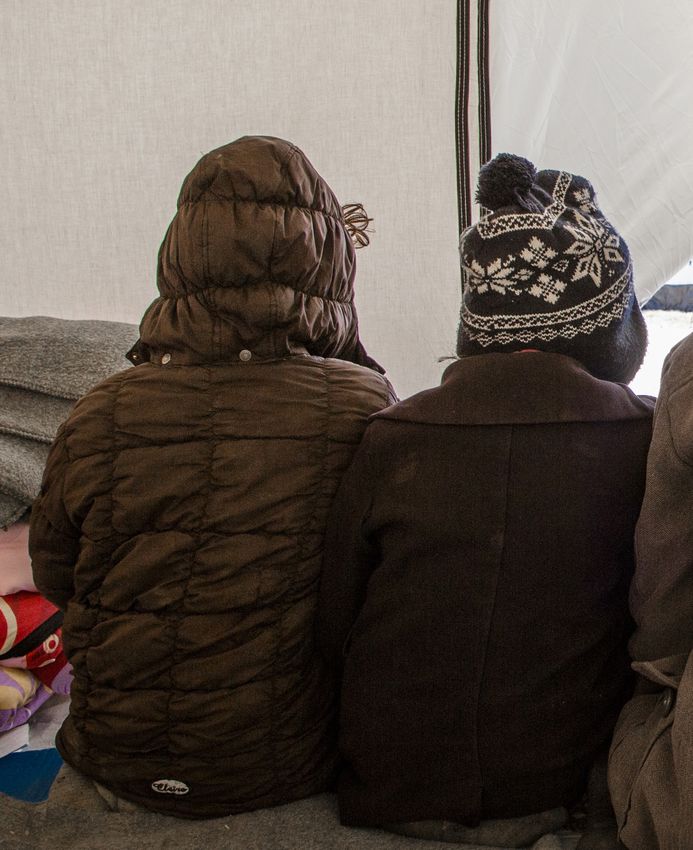
Cover photo: Kareem, an Iraqi father from Mosul, sits with his children in their tent in Al Hol camp in Al Hasakah
Governorate, Syria. Kareem arrived in Al Hol camp with his wife and five children three days earlier after fleeing the
violence in Mosul. Only two of his children, Ahmad and Salim, are featured on the cover.
Seven: Nadia’s story 16
Eight: Recommendations 18
Published by
Save the Children
savethechildren.net
First published 2020 Every child has the right to a future. Save the Children
© Save the Children 2020 works around the world to give children a healthy start
This publication may be used free of charge for the purposes of advocacy, campaigning,
in life, and the chance to learn and to be safe. We do
education and research, provided that the source is acknowledged in full. whatever it takes to get children the things they need –
every day and in times of crisis.
Typeset by: Lian Saifi and Amjad Yamin, Save the Children.
2 3Around
65
Estimated to currently live in
THOUSAND Al Hol camp, compared to 10
PEOPLE thousand at the beginning of
SECTION ONE 2019
AL HOL POPULATION
Al Hol Camp in North East Syria experienced a ‘shock’
surge in population over a five-month period from
December 2018 to May 2019, jumping from housing
10,000 people to more than 73,000 people – a 680%
increase in population.
55 10
THOUSAND THOUSAND
This steep increase in people — the vast majority of IRAQI & SYRIAN THIRD-
whom are women and children — entirely reliant on NATIONALS COUNTRY
NATIONALS
humanitarian aid to survive left the infrastructure of
the camp struggling to cope. A year later, critical gaps
30 25
continue to exist across all sectors, especially water, THOUSAND THOUSAND
sanitation and hygiene (WASH), health, nutrition, IRAQI SYRIAN
education child protection and protection. NATIONALS NATIONALS
Humanitarian actors are committed to improving Estimated to currently live in Al Hol camp,
services, with plans to expand in all sectors, including compared to 10 thousand at the beginning of 2019
mother-baby nutrition areas, new medical and
education facilities, as well as improved WASH facilities.
Humanitarian actors are working on community
messaging to ensure that all camp residents are
More than 70% are children under the age of 18
informed as to how to access available services.
Continued donor commitment is needed to ensure
adequate resources are provided to meet the needs in
the camps.
4 5SECTION TWO
COVID-19 & CHILDREN
A COVID-19 crisis in Al Hol would be a children’s crisis. Children in
the camp, many with already weakened immune systems or underlying
health conditions as a result of living in desperate conditions during
43 THOUSAND
CHILDREN
Continue to need education, child
protection and psychosocial
their formative years, may struggle to cope with this deadly virus. support in Al Hol camp and we cannot fail to adapt quickly in
Suitable health services aren’t in place to adequately respond to an response to the necessary control measures. Some of the areas
outbreak, as already limited health services would easily become over-
whelmed, further reducing children’s access to the care they need.
we look at are:
Children are at risk of losing parents and caregivers to the virus, po-
tentially leaving them at risk of neglect, abuse and exploitation. In the
medium term, children are also vulnerable to recruitment and sexu-
Child protection, as COVID-19 disrupts the
al exploitation due to groups and individuals taking advantage of the environment in which children grow.
situation. Reductions in child protection services and the limited ability
of child protection staff to support children and caregivers due to COV-
ID-19 related restrictions could also increase the vulnerability of the Education, as COVID-19 control measures result in an
children in Al Hol.
Reductions in child protection services and the ability of child protection
increase in the number of out-of-school children.
staff to support children and caregivers due to COVID-19 related re-
strictions could also increase the vulnerability of the children in Al Hol. The reduced quality of access to health care and
Policies that are required to minimise contagion, unless suitably adapted, adequate nutrition for children.
run the risk of limiting children’s access to education, healthcare, and
child protection services, all of which are vital to their care and protec-
tion. If food supplies to the camp are negatively affected by coronavirus
containment measures, the rates and severity of malnutrition among
children may increase. COVID-19 forces us to be
creative,
Access to accurate and age appropriate information in the camp is to find new ways to reach the
limited, reducing children’s ability to understand the threat they face and
how to respond to it safely. children in Al Hol
6 7SECTION THREE
CHILD PROTECTION RISKS
Some of the child protection risks below were observed in previous infectious disease out-
breaks* and a large majority of them are applicable to the current situation faced by children
in Al Hol camp and in North East Syria. Causes of risks
• Childcare/school closures, continued work requirements for caregivers,
Risks presented by COVID-19 and related control measures
illness, quarantine/isolation of caregivers
PHYSICAL AND EMOTIONAL MALTREATMENT • Increased psychosocial distress among
• Reduced supervision and neglect of children * Increase in child abuse caregivers and community members
* Increase in domestic violence * Increase in interpersonal violence * • Availability and misuse of toxic disinfectants and alcohol
Poisoning and other danger and risk of injuries * Pressure on or lack of
access to child protection services
• Increased stress levels due to isolation in
treatment units or home-based quarantine
• Children and parents/caregivers with pre-existing mental health
SOCIAL EXCLUSION conditions may not be able to access usual supports or treatments
• Social stigmatisation of infected individuals or individuals/groups • Quarantine measures can create fear and
suspected to be infected * Increased risk/limited support for children panic in the community, especially in children,
living/working on the street and other children already at risk * if they do not understand what is happening
Increased risk/limited support to children in conflict with the law, • Girls’ gender-imposed household responsibilities such as caring for
including those in detention family members or doing chores
• Social and racial discrimination of individuals/groups
MENTAL HEALTH AND PSYCHOSOCIAL DISTRESS suspected to be infected
• Distress of children due to the death, illness, or separation of a loved • Closure/inaccessibility of basic services for vulnerable children and/or
one or fear of disease * Worsening of pre-existing mental health families
conditions * Pressure on or lack of access to MHPSS services • Disruption to birth registration processes due to quarantine
• Loss or reduction in household income
GENDER BASED VIOLENCE • Opportunity or expectation to work due to school closure
• Increased risk of sexual exploitation of children * Sex for assistance * • Increased obstacles to reporting incidents
Commercial sexual exploitation * Forced early marriage * Pressure
on or lack of access to child protection * Pressure on or lack of access • Reduced family protection of children
GBV services • Reduced household income and/or reliance on outsiders to transport
goods and services to the community
UNACCOMPANIED AND SEPARATED CHILDREN • Increased obstacles to reporting incidents and seeking medical
• Separation * Becoming unaccompanied * Becoming a child head of treatment or other supports
household * Being placed in institutions • Loss of parents/caregivers due to disease
• Isolation/quarantine of caregiver(s) apart from child(ren)
CHILD LABOUR • Children sent away by parents to stay with other
• Increased engagement of children in hazardous and exploitative labour family in non-affected areas
• Disproportionate impact on more disadvantaged
and marginalized groups
* The Alliance for Child Protection in Humanitarian Action, Technical Note: Protection of Children during the Coronavirus Pandemic,Version 1, March 2010
8 910 11
Approximately
SECTION FOUR
RISKS OF COVID-19 IN AL HOL
600
metres of water
a day is the minimum water
3
supply required to minimise
With shortages in water supply across the area the risk of camp residents
contracting COVID-19 in Al
and regular cuts from the central water station, it Hol.*
is difficult for people to implement the necessary
level of hygiene practices to contain the virus.
Furthermore, with the high population density
within the camp, and with people living in tents
Crowded camps make
without a personal water supply, there are major There is social distancing
challenges to implementing social distancing, or if limited
needed, isolation in the event of illness. difficult
testing
capacity in
North East
Syria at
present
INTERRUPTIONS TO SUPPLY CHAIN
increased challenges purchasing a number of items from
vendors, including health items and nutrition supplies
* United Nations estimated figures11,000 foreign nationals from
SECTION FIVE
FOREIGN NATIONALS 66
Different
Children of foreign nationalities trapped in Syria are
innocent victims of the conflict and victims of child nationalities
right abuses and must be treated as such. Like millions From all regions
of Syrian children, these children have lived through of the world are
conflict, bombardment and acute deprivation. They, currently in North
and many children in Syria, need specialised help to East Syria’s Al Hol
recover from their experiences and return to normality, camp.
which is impossible in overwhelmed displacement camps
750
in a volatile warzone. While some states have taken
responsibility for their citizens, many countries have yet People have been
to take steps to ensure the safety of these children and
their families. Given the life-threatening dangers these repatriated to date
children and their families face in Syria, dangers which
Around 750 repatriations*, in 33 instances of repatriation to 22
are currently compounded by the global pandemic, this
countries, had taken place as of the end of 2019. Approximately
failure is unconscionable.
77
half of those repatriations were to European countries.
In Roj camp, the other camp hosting foreign nationals,
there are currently 943 children and 420 women from
third countries. Some of the residents of the camp have Unaccompanied and separated children experience the
been there since 2017, highlighting longstanding inaction greatest challenges, lacking both documentation and
caregivers. In some instances, the name and nationality of
by their governments. an unaccompanied child may only be registered based on Children are
Publicly available sources have confirmed that there are children present in NES from the following countries: Afghanistan, Albania, Algeria, testimonials of former neighbours or persons claiming to unaccompanied
Australia, Austria, Azerbaijan, Bangladesh, Belgium, Bosnia & Herzegovina, Canada, China, Denmark, Egypt, France, Georgia, Germany,
Indonesia, Iraq, Ireland, Italy, Jordan, Kazakhstan, Kosovo, Kuwait, Kyrgyzstan, Lebanon, Libya, Macedonia, Malaysia, Morocco, Netherlands,
have known the child’s family, making it hard to verify. in Al Hol camp, living
Norway, Pakistan, Portugal, Russia, Saudi Arabia, the Republic of Seychelles, Somalia, South Africa, Spain, Sudan, Sweden, Switzerland, Syria, in three interim care
Tajikistan,Trinidad and Tobago,Tunisia,Turkey,Turkmenistan, Ukraine, the United Kingdom, United States, Uzbekistan and Yemen.
centres managed by
* The numbers in this page are sourced from media reports and other publicly available information humanitarian agencies*
in NGO and UN reports and are not comprehensive to the best of our knowledge by December
12 2019. The actual numbers could be higher.
13REPATRIATION,
rehabilitation and
reintegration
SECTION SIX rehabilitation and reintegration
FOREIGN NATIONALS of the foreign population living
in Al Hol and across North East
REPATRIATIONS Syria remains crucial. There are
many services that are needed in
the short term, outlined below,
but repatriation continues to
Save the Children is calling on countries of
be the only viable long-term
origin to safely repatriate these children and solution.
their families, in line with their obligations
set out in the United Nations Convention on In the meantime
the Rights of the Child. Agreed international
Education. Children do not have sustained access to education facilities (especially
standards have established that access to secondary school), safe play areas or specialised protection services. This will have a
serious impact s on their ability to regain a sense of normality, return to education or
support for rehabilitation is key to the recovery socialise adequately for their development.
of these children and their families, access
which is not currently available in displacement Lack of Documentation. Many children who lived under ISIS control, including the
children of foreign fighters, lack the civil documentation that is necessary for them to
camps inside Syria. States should do everything access services in both the immediate and long-term.
possible to maintain family unity, and to provide Mental Health and Psycho-Social Needs. All children who have lived under ISIS
the specialised protection, health, and other control have experienced horrific events – they are liked to have witnessed frequent
acts of extreme violence, have lived in deprivation and under bombardment for weeks
rehabilitative support that these children and or months during siege and military offensive, and nearly all have lost loved ones.
Children and their caregivers should be provided with tailored, gender-sensitive and
their families will need upon their return. While age-appropriate MHPSS services, including those with pre-existing mental health and
air travel services may be limited at these times, psychosocial problems and those experiencing distress and fear regarding COVID-19
Inadequate conditions. The conditions in many locations where populations are
diplomatic missions have demonstrated the ability being hosted or detained are not conducive to a standard of living adequate for their
to repatriate their citizens from different countries development. Children who are deprived of their liberty during the pandemic should be
provided with access to services necessary to enable their continued health and wellbe-
under special measures. ing, including health care to address COVID-19 related needs, without discrimination.
Family Reunification. Children with real or perceived links to ISIS, including those of
foreign ISIS fighters, may face additional barriers to family reunification where one or
14 both parents may be deceased, detained, or in different countries. 15Nadia, 13, and her mother, Julie, a 34 year
old woman from an unknown nationality
moved to Syria in early 2014. After her husband died, Julie married
SECTION SEVEN a man of a German nationality.
NADIA’S STORY
1 2
Al Hol
Syria
When we met Nadia in Al Hol, she was very Four months later, she has a
The man was killed in the fighting
proud to have the responsibility of looking after in Syria three months later.
child with the man.
her siblings. She had set up a ‘school’ for them
at the gravely side of their tent, and gave them
regular classes in math, science and languages, as
she wanted to build on the basic education they Now with two children, she
was forced to take a third husband, She also has another child with him.
were receiving from humanitarian actors, and who already had two children.
3
wanted to make sure they do not fall behind their
peers outside the camps. All she saw under ISIS
was unjust and cruel behaviour, towards her and
her mother, she said. “My mom had to fight hard Julie, a mother of three and
a caregiver to two children, dies The third husband was also
for me to stay unmarried”. She said all she wanted from a medical condition in Baghouz. killed in the fighting.
was to meet her grandmother and: “She makes the
best strawberry jam in the world.”
Nadia, now 16, is now a child
head of household in Al Hol,
taking care of her two siblings and
her two step siblings.
16 17SECTION EIGHT
RECOMMENDATIONS
COVID-19 IN NORTH EAST SYRIA AL HOL RESPONSE
• All parties to the conflict should immedi- will remove uncertainty surrounding the • Children of foreign nationalities trapped protection, health, and other rehabilitative
ately cease all hostilities in order to allow design and planning of principled humani- in Syria are innocent victims of the support that these children and their
mitigation, containment, and treatment tarian assistance at this time of increased conflict and must be treated as such. families will need upon their return.
measures to be implemented unhindered, vulnerabilities. The UNSC should also Like millions of Syrian children, these • Humanitarian actors should be granted
in line with calls from the UN for a global urgently reauthorize UN cross border children have lived through conflict, unfettered access to this vulnerable
ceasefire. assistance through Yarubiyah crossing into bombardment and acute deprivation. They population in order to deliver life-saving
• Authorities in Syria should implement northeast Syria, as it is the only viable need specialised help to recover from services in a timely manner. Currently,
the necessary mitigation measures with- way to ensure that vital medical and oth- their experiences and return to normality, foreign families are being detained in two
in their communities, in line with WHO er supplies are available to humanitarian which is impossible in overwhelmed displacement camps (Al Hol and Roj)
guidance, to slow the spread of the virus actors; displacement camps in a volatile warzone. with inadequate access humanitarian
to provide some relief to the already • Donor governments should review sanc- • While some states have taken responsibil- assistance.
fragile health care systems which will be tions and counter terrorism measures to ity for their citizens, many countries have • Many children, who lived under ISIS
responding to any outbreak. ensure that they are not impeding the yet to take steps to ensure the safety of control, including the children of foreign
• Authorities in Syria, as well as those delivery of the humanitarian response, in these children and their families. Given fighters, lack the civil documentation that
controlling Syria’s border crossings, particular if they are affecting financial the life-threatening dangers these chil- is necessary for them to access services
should ensure that these mitigation and transfers to Syria or the supply of drugs dren and their families face in Syria, this is in both the immediate and longer-term.
containment measures allow critical hu- and medical equipment; unconscionable. For some children, who were born in Syria
manitarian activities to continue and that • Donors should continue to provide fund- • Save the Children is calling on countries under ISIS occupation, their births may
NGO permissions and staff movement are ing to support the ongoing humanitarian of origin to safely repatriate these not have been officially registered. For
facilitated in an expedited fashion, in line response, in addition to scaling up the children and their families, in line with others, who were given birth documents,
with those measures; COVID-19 response. They should continue their obligations set out in the United they may find their documentation is not
• The UN Security Council should renew to show flexibility, including providing pro- Nations Convention on the Rights of internationally recognized. The lack of civil
UNSC Resolution 2504 as is, prior to gram extensions and support to essential the Child. This is even more urgent in documentation, birth certificates, and/or
the July 10, 2020 deadline, for a period staffing costs if/when organizations need light of the increased risk of COVID-19 other identity documents place them at
of twelve months to ensure that the UN to suspend non-essential activities. related illness for children deprived of greater risk of statelessness and denial of
cross-border response continue. This their liberty, and in accordance with their basic rights and services.
global calls to release children from
detention where it is safe to do so and
We call on authorities in Syria to: in consideration of the best interests of
• Approve registration for NGOs in a mitigate the transnational spread of the the child. Agreed international standards
position to scale up and support the virus. have established that access to support
for rehabilitation is key to the recovery
COVID-19 response in government-con- • Provide exemptions to banking closures of these children and their families,
trolled areas, and increase flexibility for and financial service providers’ movement
registered NGOs to broaden the range of access which is not currently available in
to facilitate critical cash flow to enable displacement camps inside Syria. States
their interventions. essential humanitarian activities. should do everything possible to maintain
• Work with humanitarian actors to ensure • Ensure that the shipment of humanitarian family unity, and to provide the specialised
that necessary movements, including the supplies, and particularly those for
ability to medically evacuate staff, are COVID-19 preparedness and response,
18 19
available while still respecting the need to are not interrupted.A CHILDREN’S CRISIS 20
You can also read


