A community in action: How Walgett is redefining food systems
←
→
Page content transcription
If your browser does not render page correctly, please read the page content below
A case study:

A community in action:
How Walgett is redefining food systems
Acknowledgement of Country                                       “It is really important that our work considers
Walgett is on the traditional Country of the Gamilaraay            a decolonising lens, placing the sovereign
people, and we acknowledge the leadership and                     connection between Aboriginal and Torres
custodianship of Gamilaraay, Ngayiimbaa, Wayliwan and
Yuwaalaraay Elders, past and present.                             Strait Islander peoples to land and waters as
This case study was developed on the traditional Country        central to understanding health and wellbeing”
of the Gadigal people of the Eora Nation, and we pay             Keziah Bennett-Brook, Program Lead, Aboriginal & Torres Strait
respects to Elders past, present and emerging.                  Islander Health Program, The George Institute for Global Health

Introduction
                                                                For millennia, the diets of Aboriginal people were rich in
Over the last five years, the Yuwaya Ngarra-li Partnership      local flora and fauna, particularly native fruit, vegetables,
(the Partnership), a collaboration between the Dharriwaa        and lean animal proteins (e.g. game, fish). Traditional diets
Elders Group (DEG) and the University of New South              were disrupted by colonisation and dispossession, with
Wales (UNSW Sydney), has been developing Aboriginal             the introduction of Westernised diets and forced rations
community-led solutions to community-identified                 that included large quantities of refined grains
challenges, including food and water insecurity, in the         and processed foods containing high levels of salt,
remote town of Walgett. These community-led solutions           saturated fat and added sugars. A range of socio-
have focused on establishing resilient food and water           economic, business and government choices,
systems to ensure a sustainable, secure local supply of         environmental and geographic factors have further
affordable, nutritious food and safe drinking water, and        limited the affordability and availability of healthier foods,
present a model of community-university collaboration           leading to worsening diets.2
to improve community health and wellbeing outcomes,
and increase the broader evidence base.

Background
In Australia, it is crucial that Aboriginal and Torres Strait
Islander peoples and knowledges are considered,
included and respected. Central to this is embedding
Aboriginal and Torres Strait Islander ways of knowing,
being and doing into program engagement. This
includes understanding and centring the importance of
connection to Country and relationality of families and
communities. It also includes understanding the holistic
nature of Aboriginal and Torres Strait Islander people’s
paradigm of health, which encompasses the physical,
social, emotional and spiritual wellbeing of not just an
individual but the whole community.1

                                                                                                                                  1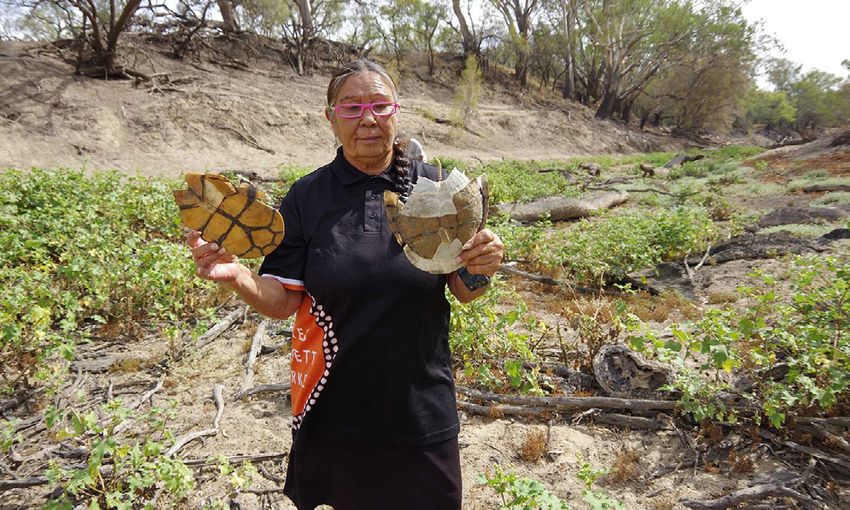
2

   NSW Govt’s James McTavish and Ahsley Albury
   meeting with WAMS and DEG to improve
   Walgett’s drinking water and food security.

     “Addressing food and water insecurity in Australia demands a considered response that
  privileges an Aboriginal paradigm of health and culture, including the continued connection
          between people and Country that has existed over many thousands of years”
Yuwaya Ngarra-li’s Walgett Partnership Manager Wendy Spencer and Walgett Aboriginal Medical Service (WAMS) CEO Christine Corby4

 Today, many Aboriginal communities are food insecure.              and Aboriginal leadership at all stages of program
 Energy-dense, nutrient-poor diets are contributing to              development and implementation.2, 3
 nutrition-related chronic diseases that now account for            In 2019, the Food and Water for Life project was
 10% of the total burden of disease for this population.            launched to build a long-term approach to addressing
 This includes high rates of cardiovascular diseases,               food and water insecurity issues in Walgett, including
 diabetes and cancer. In some communities, cultural                 poor drinking water and lack of affordable, safe and
 knowledges of traditional diets – for example the                  nutritious food, and the associated health and wellbeing
 preparation of bush foods – has been eroded, while in              issues. The project enables community-led, sustainable
 others, they prevail.2                                             food and water initiatives that are run by and employ
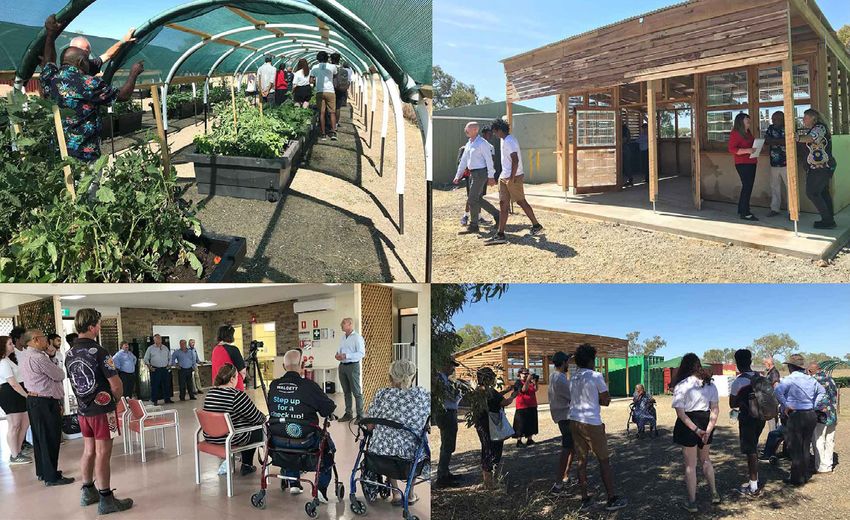
 Community-led programs can be effective at improving               Aboriginal people. Activities to date include innovative
 food security, nutrition and health, and reversing the             water management solutions to increase the drought
 trend of worsening diets and increasing chronic diseases.          resilience of a local community garden and improve
 The most effective programs adopt a multi-strategy                 its yield and variety of foods, and improved access
 approach, including increasing supply of, and demand for,          to quality drinking water and healthy foods through
 healthy foods, targeting the social determinants of food           collaboration with the local council and supermarket.
 choice and integrating genuine community involvement

                  “Isn’t it great, we know we’re in a really caring community where no-
                  one will let anyone go hungry if they know about them. That’s one of
                   the core principles that we’ve found out today: that this community
                     does not accept any member of our community going hungry”
                                  Yuwaya Ngarra-li’s Walgett Partnership Manager Wendy Spencer 2

 Community-led solutions vs top-down approaches5
 Community-led programs                                          Top-down approaches
 • Community groups define the challenges and                    • Outside agents define the challenges and
   opportunities.                                                  opportunities.
 • Programs are coordinated by leaders,                          • Outside “experts” dominate the coordination
   community members, or community-                                of the group.
   controlled organisations from within Aboriginal               • Focus on identifying and addressing
   and Torres Strait Islander communities.                         weaknesses, problems or deficits.
 • Building and strengthening capacity and skills.               • Quantifiable outcomes and targets are a
 • Indigenous research methodologies and                           priority.
   decolonising approaches are used.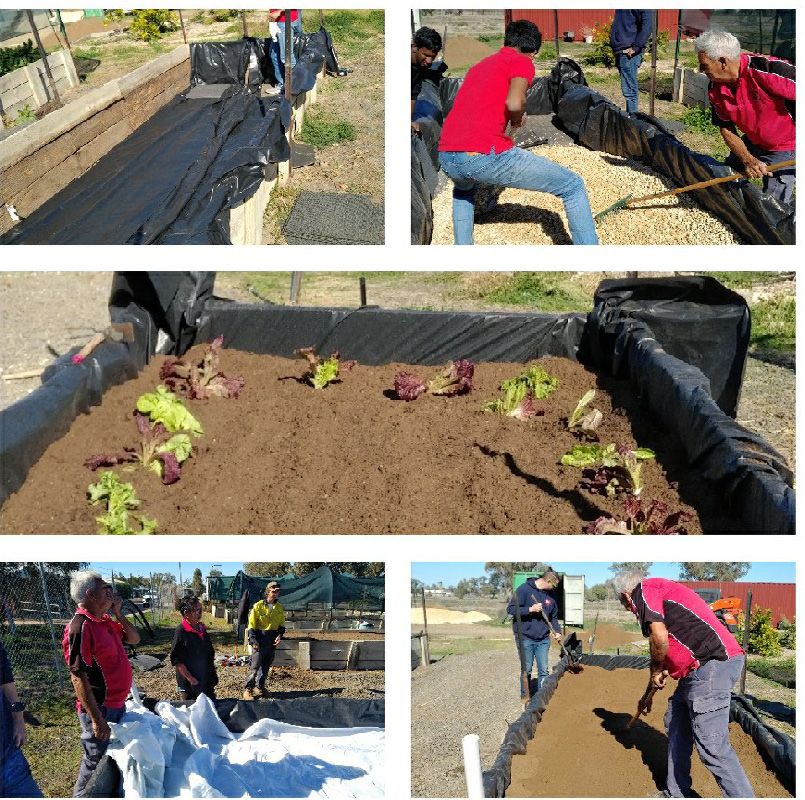
Food and water ‘security’ vs ‘sovereignty’
                                                                    • Food security: “When all people, at all times,
                                                                      have physical, social and economic access to
“When we looked at the sodium levels in the
                                                                      sufficient, safe and nutritious food that meets
water in Walgett, they were shockingly high.
                                                                      their dietary needs and food preferences for
 It was clear they were having a detrimental
                                                                      an active and healthy life”10
      impact on health in the long run”
Jacqui Webster, Professor of Food Policy, The George Institute
                                                                    • Water security: “The capacity of a population
                      for Global Health                               to safeguard sustainable access to adequate
Community-identified challenges
                                                                      quantities of acceptable quality water for
Community consultation led by the Walgett Aboriginal
                                                                      sustaining livelihoods, human wellbeing, and
Medical Service (WAMS) and Dharriwaa Elders Group                     socio-economic development, for ensuring
(DEG) over several years has highlighted community                    protection against water-borne pollution and
concerns around food and water insecurity and poor                    water-related disasters, and for preserving
water quality.2
                                                                      ecosystems in a climate of peace and
Since 2015, the Yuwaya Ngarra-li Partnership has been
                                                                      political stability”11
working on issues that the Walgett community has long
been concerned about.6 In 2019, a Food Forum was                    • Food sovereignty: “The right of people to
convened in Walgett in response to community concerns                 healthy and culturally appropriate food
about food and water security. Key challenges raised by               produced through ecologically sound and
community members included the erosion of cultural
                                                                      sustainable methods, and their right to define
knowledges about bush foods and food preparation
patterns that have been passed on for generations, and                their own food and agriculture systems”12
the cost of fresh fruit and vegetables.2                            • Water sovereignty: An approach based on
 Local rivers are described by Aboriginal people in Walgett           underlying values, whereby land and water
 as the ‘lifeblood’ of their community and hold deep                  and humans and nature are integrated,
 cultural and community significance. The degradation of
 those rivers over time due to drought and government
                                                                      and Indigenous knowledge systems are
 mismanagement has had increasingly devastating effects               prioritised.
 on Aboriginal community health and wellbeing, as well
 as food and water security in the Walgett community.6 As
 well as limiting intergenerational gatherings and activities,   Dry rivers have led to no fish or yabbies and loss of
 including fishing, swimming and camping on Country,             vegetable gardens due to lack of water. This has increased
 the community has had to rely on Great Artesian Basin           the community’s reliance on purchasing packaged foods
“bore” groundwater for drinking. Concerns have been              at the local supermarket, which are far more expensive
 raised about the bore water’s high sodium levels and            and less fresh, or using take-away food options.2, 7
 its long-term impacts on health. Sodium levels in this
                                                                 Walgett has one supermarket and a small selection
 water are almost double the Australian Drinking Water
                                                                 of cafes, restaurants and take-away outlets. The local
 guidelines (which are based on palatability not health)
                                                                 supermarket has burnt down twice in the last decade.
 and 15 times more than the amount recommended for
                                                                 This led to residents having to travel 80 kilometres to the
 people with high blood pressure. Such high levels of
                                                                 next closest supermarket, rely on emergency food relief
 sodium are unacceptable and can lead to dehydration
                                                                 or a very limited temporary supermarket, or frequently
 and increased consumption of soft drinks, thereby having
                                                                 purchase take-away foods.3, 8
 a further negative impact on community health.2, 6, 7

 Participants in the 2019 Food Forum in Walgett.
                                                                                                                               3
4

 The Local supermarket in
 Walgett burning down in 2013

Access to food has been further disrupted by the                 “When there is no water in the river, the
COVID-19 pandemic, when panic buying in cities
                                                              people of the community are getting angry,
plunged remote areas into severe food shortages.
Efforts to maintain stock on city supermarkets shelves        hurt and upset. It’s having massive impact on
in response to increased demand dramatically reduced           everyone in the community. It’s the source
supplies available for remote areas. The temporary             for food, water and the community source
supermarket – Walgett IGA – reported only 26% of the                     of culture and country”
stock it ordered during the height of the first wave of the
                                                                 Walgett Aboriginal Medical Service CEO Christine Corby
pandemic. Families were going hungry on consecutive
days and with schools closed, children were no longer         The cost of living, including the high cost of buying fresh
receiving food provided by the breakfast program and          fruit and vegetables locally, has been raised as a major
school canteens.3, 8                                          problem in Walgett. Nationally, remote supermarkets
                                                                                              have been shown to be
                                                                                              up to 70% more expensive
                                                                                              than supermarkets in
                                                                                              capital cities. In Walgett, a
                                                                                              basic family fortnightly food
                                                                                              shopping basket, consisting
                                                                                              of fruit and vegetables,
                                                                                              grains, meats, and dairy
                                                                                              was priced at $AUD508,
                                                                                              compared to $AUD347 in
                                                                                              a suburb of Sydney. These
                                                                                              prices are unaffordable
                                                                                              for many families in the
                                                                                              community.3, 8

                                                                                               “The river means a
                                                                                              lot: it is country, it is
                                                                                             the meeting place for
                                                                                               camping, de-stress
                                                                                              and connecting. It’s
                                                                                                having an impact
                                                                                                  on the whole
                                                                                                community: kids,
                                                                                              youth, and even the
                                                                                                non-Indigenous
                                                                                                   community”
                                                                                                  Walgett Aboriginal
                                                                                                 community member9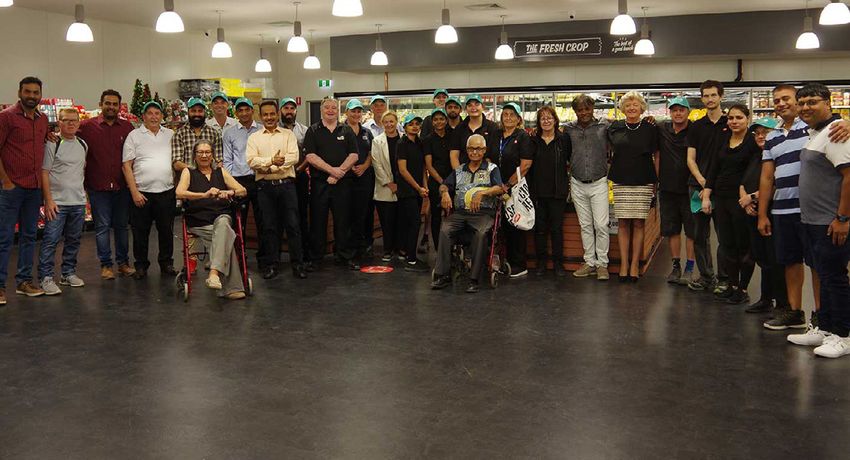
“Being Aboriginal people, we have that                          Indigenous research methodologies1
  connection - going to the river and fishing                       Indigenous research methodologies use a
and camping - now it’s stopped because you                          frame that acknowledges and centres the
  can’t go there because there’s no water or                        cultural practices, knowledge and values of
you’re not going to eat the fish out of the river                   the community within which the research is
          because it’s very stagnant”                               conducted. Examples include:
          Walgett Aboriginal community member9
                                                                    • Yarning: A conversational process that involves
Community-identified solutions                                        the sharing of stories and the development of
The Walgett Food and Water for Life project aims to                   knowledge.
establish resilient food and water systems to ensure a              • Dadirri: From the Ngan’gikurunggurr and
sustainable, secure local supply of affordable, nutritious            Ngen’giwumirri languages, a concept and
food and safe drinking water. It uses innovative
                                                                      spiritual practice of inner, deep listening and
community-led processes, encompassing Indigenous
rights and knowledges, to strengthen, implement and                   quiet, still awareness.
evaluate community solutions and build resilience to                • Weaving methodology: A conceptual process of
mitigate future risks to food and water security.6                    interweaving two knowledge systems together
Recent activities under the project include improvements              at the interface of Indigenous and Western
to the Walgett Aboriginal Medical Service (WAMS)                      knowledge systems.
Community Garden. Established in 2010, the WAMS
Garden provided boxes of fresh vegetables and fruit to              • Aboriginal patient journey mapping: Mapping
the local community. However, by 2017 the productivity                the experience of an Aboriginal person’s
of the garden declined due to drought, which reduced                  journey at different points of contact with the
access to river water, and a shift to the use of saline bore          healthcare system.
water, which reduced yield and destroyed soil structure.
In response, the Food and Water for Life team installed
48 water-efficient wicking beds that can survive harsh          recycling solutions. The aim is to produce weather-
climates, are water efficient and can yield 114 kg per          resilient, high-quality local fruit and vegetables for
month – 3 kg per bed.13 This has led to the Community           households and community and school food programs.
Garden being able to provide free boxes of vegetables          Activities to improve access to quality drinking water
to Elders and patients, supporting members of the              and healthy foods through the local supermarket are
community and their nutritional needs. Fruits and              underway. The community advocated for, and obtained,
vegetables include butternut squash, leafy greens,             a desalination plant and are collaborating with the local
strawberries, rockmelons, cucumbers and tomatoes.12            council to install public drinking water kiosks in Walgett.
Other initiatives planned under the project include a          The supermarket has now been rebuilt and the community
productive micro-farm and compost and waste-water              is working with the supermarket to ensure increased
                                                               availability of healthy foods and to educate community
The Yuwaya Ngarra-li partnership is working                    members around making healthier food choices.
 to “restore a robust belonging to thriving                     In 2020, the project team was successful in obtaining a
  families, community and country, while                        National Health and Medical Research Council of Australia
making our place in the nation and sharing                      Ideas Grant to strengthen and evaluate the community-
                                                                led program and employ local Aboriginal people, including
   our learning with other communities”
                                                                a project co-ordinator and data analyst.
                 Dharriwaa Elders Group8

Decolonising research14
Decolonising is the undoing of colonialism, or                 Decolonising research asks:
the undoing of domination and subjugation                      1.    What research do we want done?
of one people over another. Colonisation                       2.    Whom is it for?
is about power and control and therefore
                                                               3.    What difference will it make?
consciously or often unconsciously informs
whose knowledge counts, and by extension,                      4.    Who will carry it out?
research practice, program design and policy                   5.    How do we want the research done?
formation. Decolonising involves focussing on                  6.    How will we know it is worthwhile?
the strengths, capacity and resilience of peoples              7.    Who will own the research?
and knowledges that have been colonised,                       8.    Who will benefit?
rather than seeing them as a ‘problem’.                                                                                      5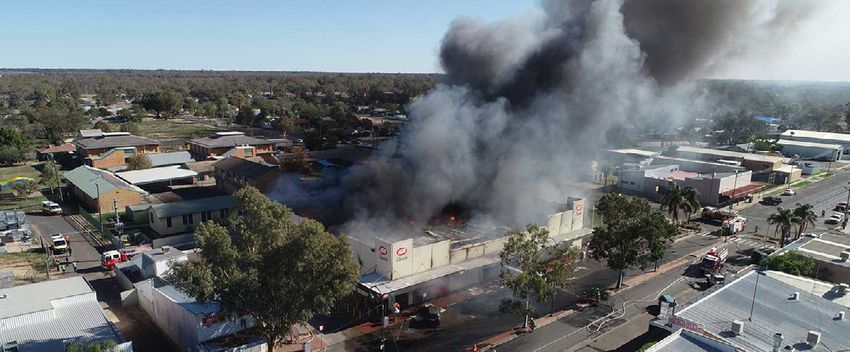
6
A timeline of action:
               Partnership/community action                                                             Environmental events
                                                                                 2010

2010
Community gardens established

2011
Walgett Aboriginal community-controlled health services commence
collaboration with UNSW Sydney

                                                                                        2013
                                                                                        Local supermarket burnt down

2015
Yuwaya Ngarra-li Partnership between the Dharriwaa Elders Group and UNSW
Sydney established

2017                                                                                    2017
Experts engaged to support action to reduce salt levels in Walgett community            High-salinity bore water and restricted access to river water due to
water                                                                                   drought compromises viability of community gardens

2018                                                                                    2018
Discussions held between community, the Council and local health authority              Baawan (Barwon) and Ngamaay (Namoi) Rivers dry up and town drinking
to identify solutions to high levels of sodium in drinking water                        water switched from river water to bore water
                                                                                        Sodium levels in town drinking water found to be 15 times
                                                                                        recommended levels for people with high blood pressure

2019                                                                                    2019
Community forum held, Walgett Food and Water for Life Project launched                  Local supermarket burnt down
Community gardens reconfigured to become more water-efficient and
operate effectively using high-salinity water
Dharriwaa Elders Group and Walgett Aboriginal Medical Service conduct
community meetings to plan drinking water kiosks for high-use public areas in
Walgett
Walgett school principals approached by Dharriwaa Elders Group to discuss
introduction of student and community food programs

2020                                                                                    2020
Dharriwaa Elders Group and Walgett Aboriginal Medical Service respond to                COVID-19 pandemic leads to local food shortages
parliamentary inquiry into food pricing and food security in remote Indigenous          Government installs reverse osmosis system
communities, Productivity Commission’s National Water Reform 202 Inquiry,
a NSW parliamentary enquiry and NSW Government consultations regarding                  Operation of reverse osmosis system unsustainable due to poor planning
water management                                                                        and local consultation resulting in unstainable disposal of concentrate
                                                                                        wastes
Yuwaya Ngarra-li Partnership and The George Institute awarded $AUD1.16
million NHMRC grant to strengthen and evaluate food and water security in               Town water supply switched from bore water back to river water
Walgett                                                                                 New supermarket opens in Walgett
Dharriwaa Elders Group designs a reverse osmosis-treated drinking water
kiosk for installation
Dharriwaa Elders Group and Murray Darling Lower Darling Rivers Indigenous
Nations (MLDRIN) and Environmental Defenders Office (EDO) joint submission
responds to a call by the United Nations Special Rapporteur on Human Rights
and the Environment for input into the “Too Dirty, Too Little, Too Much: The
Global Water Crisis and Human Rights” report

2021                                                                                    2021
Recruitment of Food and Water for Life Co-ordinator in Walgett commences                Town water supply switched from river water to bore water with no
Further discussions held between community, government and local council                reverse osmosis treatment
to improve water supplies
Healthy Supermarket promotions negotiated by Walgett IGA with Dharriwaa
Elders Group and Walgett Aboriginal Medical Service

                                                                                 2022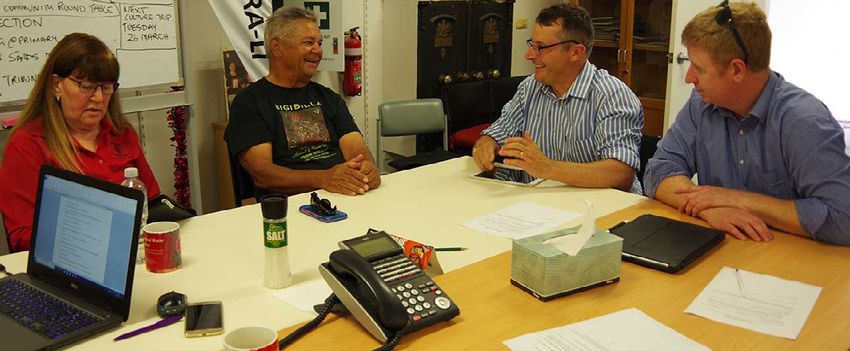
Community recommendations to government
• Establish a National Food and Nutrition Strategy that:       o subsidising retailers to ensure prices are equivalent
  o upholds the Universal Declaration of Human Rights,           across the country and standards relating to prices
    which states that everyone has the right to a standard       are regulated;
    of living adequate for the health and wellbeing of         o prioritising policies to ensure highly nutritious local
    themselves and their family, including food;15               food supplies can respond to increasing climate and
  o prioritises community involvement, including                 water challenges;
    shared planning, decision-making and evaluation by         o ensuring the health of rivers and groundwaters are
    communities and government; and                              restored, protected and maintained to provide river
  o ensures there are mechanisms in place to guarantee           foods and water for garden networks; and
    community-identified food security priorities are          o revising guidelines for drinking water to ensure
    responded to and community needs are met.                    standards for sodium levels are aligned with health
                                                                 guidelines.
• Increase food and water security in Australia by:
  o working with community-controlled organisations,         • Support Aboriginal community-controlled
    councils and state governments to strengthen food          organisations to establish programs to address food
    and water infrastructure and community disaster            and water security in their communities.
    preparedness, including urgently responding to
    climate change;

                                                                                                                           7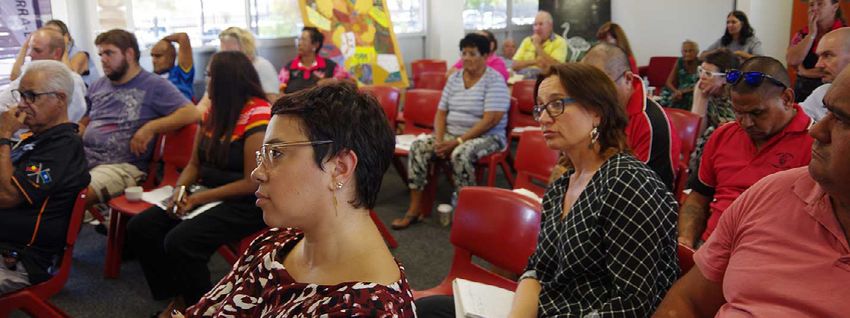
8
Images courtesy of www.dharriwaaeldersgroup.org.au

References                                                        Water Crisis and Human Rights”. Sydney, Australia:
                                                                  Environmental Defenders Office; 2020.
1. The George Institute for Global Health. Evolution of the
   Aboriginal and Torres Strait Islander Health Research      8. McCausland R. New report documents a community-
   Program. Sydney, Australia: The George Institute for           led response to a health crisis in Walgett, NSW Sydney,
   Global Health; 2021.                                           Australia: Croakey; 2019 [Available from: https://www.
                                                                  croakey.org/new-report-documents-a-community-
2. Yuwaya Ngarra-li Partnership. Walgett Food Forum.
                                                                  led-response-to-a-health-crisis-in-walgett-
   Forum Report. Walgett, Australia: Dharriwaa Elders
                                                                  nsw/#:~:text=by%20Vanessa%20Hickey-,New%20
   Group; 2019.
                                                                  report%20documents%20a%20community%2Dled%20
3. Dharriwaa Elders Group and Walgett Aboriginal Medical          response%20to,health%20crisis%20in%20
   Service. Inquiry into food prices and food security in         Walgett%2C%20NSW&text=Community%2Dled%20
   remote Indigenous communities. A submission to the             solutions%20are%20being,by%20the%20Dharriwaa%20
   House of Representatives Standing Committee on                 Elders%20Group.
   Indigenous Affairs from Dharriwaa Elders Group and
                                                              9. Yuwaya Ngarra-li Partnership. Yuwaya Ngarra-li
   Walgett Aboriginal Medical Service. Canberra, Australia:
                                                                  Evaluation. Report on 2018 Community Data Gathering.
   Dharriwaa Elders Group and Walgett Aboriginal Medical
                                                                  Walgett, Australia: Dharriwaa Elders Group; 2019.
   Service; 2020.
                                                              10. Food and Agriculture Organization of the United
4. Institute for Global Development UNSW Sydney.
                                                                  Nations. The State of Food Insecurity in the World 2001.
   September/October Update: Yuwaya Ngarra-li
                                                                  Rome, Italy; 2002.
   Partnership Sydney, Australia: UNSW Sydney; 2020
   [Available from: https://www.igd.unsw.edu.au/              11. United Nations Water. Water Security and the Global
   septemberoctober-update-yuwaya-ngarra-li-                      Water Agenda. A UN-Water Analytical Brief. Ontario,
   partnership.                                                   Canada; 2013.
5. Hudson S, Salvatierra CAM, Andres C. Evaluating            12. The Nyéléni 2007 International Steering Committee.
   Indigenous programs: A toolkit for change: Centre for          Nyéléni 2007. Forum for Food Sovereignty. Sélingué,
   Independent Studies Sydney; Australia, NSW; 2017.              Mali; 2007.
6. McCausland R, Spencer W, MacGillivray P, Robinson          13. Global Water Institute UNSW Sydney. Food and
   V, Hickey V, Baldry E, et al. CommUNIty-Led                    Water for Life in Walgett, NSW Sydney, Australia:
   development: A partnership to realise Aboriginal Elders’       UNSW Sydney; 2020 [Available from: https://www.
   vision for change. Community Development. 2021:1-19.           globalwaterinstitute.unsw.edu.au/food-and-water-for-
                                                                  life-in-walgett-nsw.
7. Dharriwaa Elders Group, Murray Lower Darling Rivers
   Indigenous Nations, Environmental Defenders Office.        14. Smith LT. Decolonizing methodologies: Research and
   Manifestations of Aboriginal water dispossession               Indigenous peoples. 3rd ed: Zed Books Ltd.; 2021.
   in Australia’s Murray-Darling Basin. Submission            15. United Nations. Universal Declaration of Human Rights
   responding to a call by the UN Special Rapporteur              Geneva, Switzerland: United Nations; 1948 [Available
   on Human Rights and the Environment for input to a             from: https://www.un.org/en/about-us/universal-
   report on “Too Dirty, Too Little, Too Much: The Global         declaration-of-human-rights.
You can also read


