A Device Description Repository: An Integrated Operator's Perspective
←
→
Page content transcription
If your browser does not render page correctly, please read the page content below
France Telecom "Mobile Web Initiative: Device Description Re...http://boston.rd.francetelecom.fr/Browsing/docs/W3C/DDR-FTG.htm

                       A Device Description Repository: An
                        Integrated Operator's Perspective

             W3C International Workshop on the Implementation of a Device Description
             Repository
             July 12-13 2006 Madrid, Spain

             Authors
             Keith Waters, Ed Mitukiewicz, Remi Hougonin, Edouard Marques, Jonathan Jowitt,
             Steve Metcalfe, Matt Womer, Yves Lechervy, Diego Anza

             Abstract

             As the mobile web overcomes the limitations of network bandwidth and device
             usability constraints, there remains a technical challenge to present a consistent
             experience across the widest range of devices. The diversity of possible
             form-factors, combined with poor industry consensus on specifying and using device
             characteristics, has forced operators to solve content provisioning and delivery
             issues on their own. For an integrated operator, such problems are further amplified
             when considering the range of devices beyond mobile, such as portable devices
             proliferating in the office and home environments. Today device properties are
             mostly derived though a cumbersome and time consuming process of collecting and
             testing device property information one-by-one. While such an approach extends
             the reach of content across different devices - without compromising the quality of
             operator services - it leads to ad hoc processes that are difficult to manage, scale
             and share with partners. This position paper offers an integrated operator's
             perspective on some of the challenges, opportunities and problems facing a device
             description repository.

              Content
             Abstract
             1.0 Introduction
             2.0 A Profile Database
             2.1 Profile Validation
             2.2 Version Control and Hosting

1 of 7                                                                                                       5/31/06 11:38 AM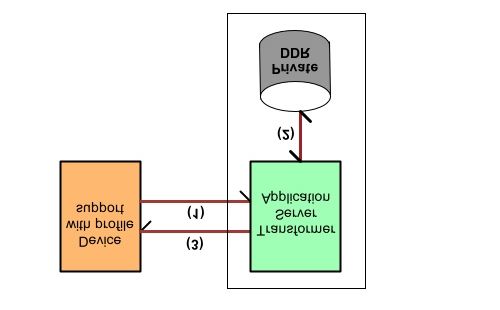
France Telecom "Mobile Web Initiative: Device Description Re...http://boston.rd.francetelecom.fr/Browsing/docs/W3C/DDR-FTG.htm

             3.0 Conclusion
             4.0 References

              1.0 Introduction
             Standardized, accurate and up-to-date information on device properties would
             facilitate shaping and adapting content to diverse capabilities of terminal devices
             and multiple delivery contexts - thus eliminating one of the key roadblocks to better
             access to the web. Today content adaptation relies on custom solutions tailored to
             particular needs of specific mobile operators. This contributes to the fragmentation
             of the web into "walled gardens" in which operators have to guarantee the quality of
             content delivery to their customers.

             Creating device Profile databases is nothing new. The Open Mobile Alliance (OMA)
             described a linear list of device properties UAProf based on the perceived needs of
             the industry. Unfortunately, UAProf adoption has been slow, in part because there
             are fragmented solutions and miss-aligned cost benefits between manufacturers,
             content providers and operators. As a result, UAProf is only used as rough
             properties guidelines for private Profile databases.

             The MWI Device Description Working Group Ecosystem note outlines some of the
             business models surrounding the creation, maintenance and use of device
             descriptions. In addition, the DDWG has started to outline requirements for a single
             device repository with the key themes of: managing device description repository,
             query mechanisms, resilience, validation and accuracy of the supported device
             description to name a few. While both documents provide important touch-points for
             discussion, industry consolidation and agreement requires a great deal more work.

             In reality, User Agent Profiles are a list of device characteristics stored in a database.
             On-the-fly access to entries enables content to be adapted to the end device (see
             Figure 1). In a perfect world there would be a current, valid and accessible
             database of all devices. Unfortunately, this is not the case. Instead there are
             numerous databases created and maintained privately and publicly with a range of
             properties and attributes. While the ultimate database is a worthy goal, the key
             objective for the France Telecom Group is to reconcile property descriptions,
             promote automated validation services and ensure that the datasets are accessible
             to its content providers and partners.

             This position paper examines some of the above challenges, opportunities and
             problems from a perspective of an integrated service provider, with an
             understanding that the future mobile Web "ecosystem" could create win-win
             opportunities for all the players involved. This position paper focuses on just a few
             illustrative issues impacting the mobile device, browser and usage categories.

              2.0 A Profile Database
             Database management is well understood. What needs to be determined is the
             nature of the content being accessed (public/private) and how that information is
             requested. What follows illustrates some issues.

2 of 7                                                                                                       5/31/06 11:38 AM
France Telecom "Mobile Web Initiative: Device Description Re...http://boston.rd.francetelecom.fr/Browsing/docs/W3C/DDR-FTG.htm

                             Figure 1: A Single private Profile repository and access.

             A common solution today involves a single private repository as illustrated in Figure
             1. A request from a device is handled by an application server that makes a request
             into a private device repository. How the request is made and what is returned may -
             or may not - be standards compliant. Often content authors have no access to any
             device repository, consequently static pages/templates are created to support
             specific devices leaving many of an operators devices unsupported.

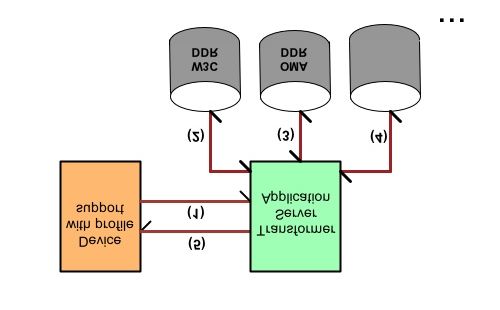
                                 Figure 2: A hybrid model, multi-repository access.

             In a configuration where there are public and/or private repositories as illustrated in
             Figure 2, a device contacts the content server for a particular page. The content
             server needs to know the device and browser capabilities in order to transform the
             content for the device. This process starts with a request to a publicly available root
             DDR server, which returns a Profile containing a pointer to another DDR server, that
             contains more specific information for that device. In this particular example, the
             public server knows that this is a mobile device and returns a pointer to the DDR for
             mobile devices which is hosted, for example, by OMA. Ultimately the content server

3 of 7                                                                                                       5/31/06 11:38 AM
France Telecom "Mobile Web Initiative: Device Description Re...http://boston.rd.francetelecom.fr/Browsing/docs/W3C/DDR-FTG.htm
fetches a third Profile from a private DDR, which could contain private, or proprietary
device information.
Once the Profiles have been fetched from various sources, they can be merged into
one Profile. The transformation engine then uses the device capabilities to transform
the content into the appropriate device/browser specific mark-up. A typical set of
transactions could be as follows:
1. A request is made from the device to the application server
2. A request is made from the application server to the public DDR
3. A request is made from the application server to the mobile-specific DDR
4. A request is made from the application server to the private DDR
5. Content is transformed in the application server and sent to the device
Within the configuration illustrated in Figure 2 it is important to recognize that
multiple DDRs may need to exist. Some may well contain generic device Profiles
while others may contain private device information. Given the current modus
operandi of UAProfile databases, it is highly probable that both private and public
databases will have to be accessible and addressable. Consequently, from an
integrated operators perspective it will be important for a standardization effort to
incorporate such implementations into any proposed framework.
Access to a DDR needs to be designed to be as broad as possible with a range of
supported API's. In addition properties that change over time are refered to as
dynamic. The W3C has defined a framework; Delivery Context Interfaces: Accessing
Static and Dynamic Properties DCI that address this exact issue.
2.1 Validation
It is imperative that Profiles be validated. A critical component will be machine
validation with well defined rules and acceptance criteria. Manually created
databases should be avoided because of an increased risk of introducing errors.
Furthermore, as the size of the database increases a need for regression testing
grows and without an adequate validation system in place, it is doubtful that
manually created and maintained DDRs will be trusted by 3rd parties.
Based on a Profile the properties can be simply created within a XML format and
transcoded to alternative formats on-the-fly. It will however, be important to create a
commonly agreed upon core list of properties and definitions. Furthermore, it will be
important to have an agreed upon definition of properties that make validation easy
to perform and transparent enough to be machine accessible.
While Profile validation is non-trivial, there are a variety of different validators in
existence that can serve as models. For example the RDF Validator and XHTML
Validation services created and maintained by the W3C. More recently OMA have
created a UAProf validation tool as a first step to public interfaces that allow anyone
to validate the syntax of a Profile. While syntax validation of a Profile is important, it
is only one aspect of a valid DDR. Clearly it is vital that properties in a Profile are
complete, valid and up-to-date, this has be broken-down into it's constituent parts
4 of 7 5/31/06 11:38 AMFrance Telecom "Mobile Web Initiative: Device Description Re...http://boston.rd.francetelecom.fr/Browsing/docs/W3C/DDR-FTG.htm
and consolidation and agreement by the industry is required to make this a reality.
2.2 Version Control and Hosting
With a public repository, the following version control issues need to be resolved:
Who can update the database of entries? This might be a list of trusted
reviewers to validate the entries.
A hosted database could logically be created and maintained by the W3C, or
OMA or a third party. Some form of version control is required and the exact
nature needs to be discussed and agreed upon. In a federated database this
might include a community edited database along the lines of Wikipedia
coupled to bug tracking along the lines of Bugzilla.
Such a database maintained and hosted by a contracted 3rd party under some
form of service level agreements.
3.0 Conclusion
The prevailing public perception is than an operator is ultimately responsible for the
quality of service and overall user experience, irrespective of particular devices,
platforms, applications and content involved in the service delivery. Operators
recognize that the availability of a consistent, valid and trusted database of device
information is critical. However, we believe a single consolidated database of device
properties is unlikely to meet the needs of all the participants in the mobile value
chain.
From an integrated operator's perspective, a hybrid "public/private" approach would
be preferable, as most if not all operators are likely to use selected device properties
and/or certain settings for customizing and optimizing content adaptation and
delivery. As the underlying data may be critical to ensuring certain quality and
consistency of user experience, operators are likely to keep such data private and
insist on retaining direct control of its availability, accessibility, testing and
provisioning. Consequently, it should be possible to access public device Profiles
providing a common baseline of core device information, but allow for augmenting it
with certain private solutions allowing for the necessary extensions or overlays.
It would be useful for the industry to reach a consensus on how a public database of
core device properties should be designed, created, maintained and operated. The
W3C could also help by facilitating an agreement on what such common
denominator properties should be-- including the core properties already identified
by the DDWG, for example, with regards to certain device features, screen
characteristics, supported image formats, and markup languages, etc. It is also very
important that a number of broad technical and operational questions regarding
such a database and its environment be discussed in depth with a view towards
eliminating at least some of the inefficiencies and overlaps of the currently existing
private solutions. Specific issues that could be considered during the workshop
include:
What is the scope of the public Profile database? For example, mobile, home
5 of 7 5/31/06 11:38 AMFrance Telecom "Mobile Web Initiative: Device Description Re...http://boston.rd.francetelecom.fr/Browsing/docs/W3C/DDR-FTG.htm
and other portable devices?
Which static or dynamic properties are supported by a Profile database?
Under what business arrangements is the database accessible? For example
licenses, fees for usage, or some combination of both.
What are the incentives to operate and maintain the database?
4.0 References
[DevInd]
W3C Device Independence Activity. See: http://www.w3.org/2001/di/
[CSS]
"Cascading Style Sheets, level 1 W3C Recommendation",
REC-CSS1-19990111, 17th Dec 1996. See:http://w3c.org/TR/CSS1
[OMA]
"Open Mobile Alliance", Open Mobile Alliance
[RDF]
"RDF Vocabulary Description Language 1.0: RDF Schema W3C
Recommendation 10 February 2004",
[DCI]
"Delivery Context: Interface (DCI) Accessing Static and Dynamic Properties",
11 November 2005, eds., K. Waters, et. al. See: http://www.w3.org/TR/DPF/
[UAProf]
"WAP-248-UAPROF-20011020-a: WAG UAProf, Wireless Application
Protocol, Version 20, October 2001" . See: http://www.wapforum.org/
[DELI Validation]
"Overivew of the DELI validation process 2006", Overview of the DELI
validation process, M. Butler, January 2006.
[UAProfile Validator]
"UAPofile Validator", See: OMA Deli UAProf Validator
[RDF Validation]
"RDF document validation", RDF Validation service. See:
http://www.w3c.org/RDF/Validator/.
[Markup Validation]
"Markup Validation Service", W3C Markup Validation Service. See:
http://validator.w3.org/.
[DD Repository Requirements]
"Device Description Repositiory Requirements 1.0", Device Description
Repository Requirements 1.0. Ed., D. Sanders, April 2006.
See:http://www.w3.org/TR/2006/WD-DDR-requirements-20060410/
[DD Repository Landscape]
"Device Description Landscape", Device Description Landscape, Eds., J.
Pearce and M. Womer. February 2006.
See:http://www.w3.org/TR/2006/WD-dd-landscape-20060210/
[DD Repository Ecosystem]
"Device Description Ecosystem", Device Description Ecosystem, Ed. R.
Hanrahan, November 2005.
See:http://www.w3.org/TR/2005/WD-dd-ecosystem-20051121/
Acknowledgments
6 of 7 5/31/06 11:38 AMFrance Telecom "Mobile Web Initiative: Device Description Re...http://boston.rd.francetelecom.fr/Browsing/docs/W3C/DDR-FTG.htm
Joshua Randall - FTR&D (Bos)
7 of 7 5/31/06 11:38 AMYou can also read


