A Novel Tubeless Urinary Catheter Protocol Enhanced Recovery After Minimally Invasive Lung Surgery - Frontiers
←
→
Page content transcription
If your browser does not render page correctly, please read the page content below
ORIGINAL RESEARCH
                                                                                                                                          published: 09 November 2020
                                                                                                                                        doi: 10.3389/fsurg.2020.584578

                                             A Novel Tubeless Urinary Catheter
                                             Protocol Enhanced Recovery After
                                             Minimally Invasive Lung Surgery
                                             Weidong Wang † , Pinghui Xia † , Liang Pan, Jinming Xu, Wang Lv and Jian Hu*

                                             Department of Thoracic Surgery, The First Affiliated Hospital, School of Medicine, Zhejiang University, Hangzhou, China

                                             Objectives: Although previous studies have shown the feasibility of non-intubated
                                             techniques, it is unknown whether avoiding urinary catheters can enhance recovery. This
                                             study aimed to determine whether the tubeless urinary catheter protocol is feasible and
                                             beneficial for minimally invasive lung surgery.
                            Edited by:       Methods: Patients were randomized to the control group, completely tubeless group,
                 Lisandro Ariel Piaggio,     and partially tubeless group. A propensity score–matched (PSM) analysis was performed
               Universidad Nacional del
                         Sur, Argentina      to balance the non-random baseline characteristics. Complications and postoperative
                        Reviewed by:         recovery were compared. Regression analysis was performed to identify the independent
                   Roberto Luis Vagni,       predictors of complications. A nomogram for predicting the risk of non-automatic
            Italian Hospital of Buenos
                       Aires, Argentina
                                             micturition was constructed and internally validated.
                  Andres Gomez Fraile,       Results: One hundred fifty-nine patients were enrolled. The incidence rates of urinary
University Hospital October 12, Spain
                                             irritation and urinary tract infection (UTI) were significantly lower in the tubeless groups
                   *Correspondence:
                               Jian Hu       (74.4 vs. 39.5%, p < 0.001; 28.2 vs. 8.6%, p = 0.001, respectively). The tubeless
                  dr_hujian@zju.edu.cn       group had a higher proportion of 0-degree discomfort (81.5 vs. 30.8%, p = 0.001)
     † These   authors have contributed      and shorter duration of postoperative hospital stay than the control group (4.59 vs.
                    equally to this work     5.53 days, p < 0.001). No difference was observed in terms of urination retention
                                             and urinary incontinence between the tubeless group and the control group. After
                    Specialty section:
          This article was submitted to
                                             PSM, the advantages of the tubeless group still existed, and comparing to the partially
                 Genitourinary Surgery,      tubeless group, the completely tubeless group was of even less UTI and more 0-degree
                a section of the journal
                                             discomfort (18.5 vs. 0.0%, p = 0.019; 96.3 vs. 59.3%, p = 0.002). The tubeless protocol
                    Frontiers in Surgery
                                             was the only independent protective factor of urinary complications. A nomogram was
         Received: 12 August 2020
      Accepted: 22 September 2020            constructed and showed good predictive ability.
      Published: 09 November 2020
                                             Conclusions: The tubeless catheterization protocol led to fewer complications, better
                             Citation:
Wang W, Xia P, Pan L, Xu J, Lv W and
                                             compliance, and shorter hospital length of stay. The advantages were more significant
 Hu J (2020) A Novel Tubeless Urinary        with the completely tubeless protocol. The utility of our nomogram can assist clinicians
Catheter Protocol Enhanced Recovery          in avoiding risks in performing the tubeless protocol.
After Minimally Invasive Lung Surgery.
               Front. Surg. 7:584578.        Keywords: tubeless, urinary catheter, enhanced recovery after surgery (ERAS), urinary tract infection (UTI), lung
     doi: 10.3389/fsurg.2020.584578          surgery

Frontiers in Surgery | www.frontiersin.org                                          1                                        November 2020 | Volume 7 | Article 584578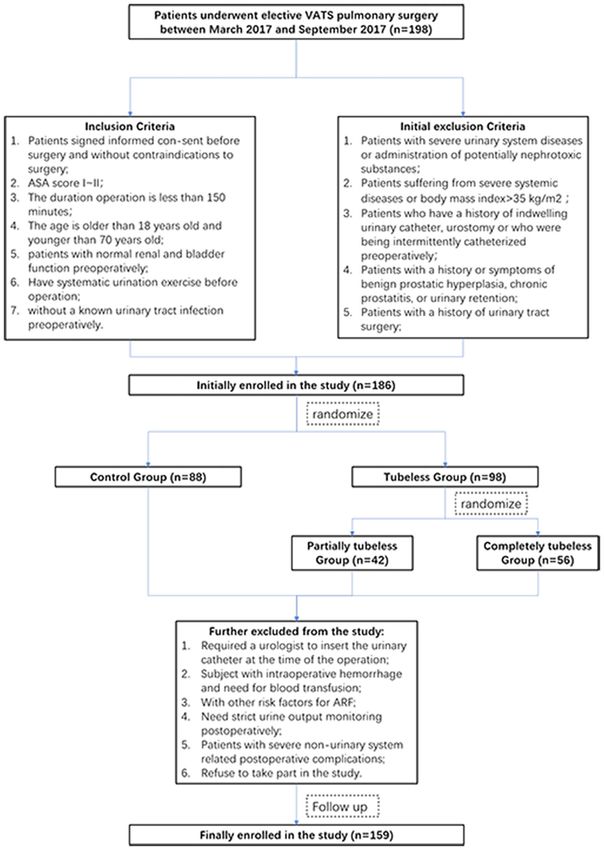
Wang et al.                                                                                                              A Randomized Controlled Prospective Study

INTRODUCTION                                                                              Medicine, Zhejiang University; the reference number is 2016-
                                                                                          249. Every individual participant had signed an informed consent
Enhanced Recovery After Surgery (ERAS) is an evidence-                                    form for participating in the study.
based multidisciplinary perioperative care and surgical quality                              This study initially included 198 consecutive patients who
improvement that has been shown to minimize the invasiveness                              received minimally invasive lung surgery between March 2017
of surgery, promote recovery, and reduce complications (1). The                           and September 2017. Upon admission to the hospital, the patients
concept of ERAS was initially introduced in 2011 and had been                             were randomized into two groups (the control group and the
developed to accelerate recovery, but most available evidence                             tubeless group) according to a random number automatically
regarding the benefits of ERAS mainly focuses on gastrointestinal                         produced by a computer program. The tubeless group was further
surgery (2).                                                                              randomized into two subgroups (the partially tubeless group and
   The use of ERAS in lung resection was introduced 10 years                              the completely tubeless group) (Figure 1). The eligibility and
ago and showed favorable results (3). Since the recommendation                            exclusion criteria are shown in Supplementary Table 1.
of including video-assisted thoracoscopic surgery (VATS) in the                              A propensity score–matched (PSM) comparative analysis was
management of small lung lesions (4), the technique has been                              performed to balance the non-random baseline characteristics
significantly improved, resulting in shorter surgical duration and                        among the groups and to decrease the influence of operation
fewer complications (5). Meanwhile, anesthetists and thoracic                             and anesthesia on the postoperative recovery outcomes. We
surgeons are continuing to reduce the invasiveness, which led to                          adjusted for potential differences between the control group and
the introduction of non-intubated VATS.                                                   the tubeless group with 1:1 matching. The same adjustment was
   Non-intubated VATS is a technique that avoids tube                                     also performed in the tubeless group internally. We produced a
placement after VATS under non-intubated spontaneous                                      propensity score for the matched groups using logistic regression
ventilation. Although intravenous anesthesia without intubation                           based on the patient’s age, gender, surgical type, duration
and early removal of a chest tube were proven to be feasible                              of operation, duration of anesthesia, and tumor size with a
and advantageous over tube-requiring procedures (6, 7), the                               caliper setting of 0.05.
optimal protocol for urinary catheterization still remains
controversial. While urinary catheterization can be helpful for
monitoring urine output and preventing postoperative urinary                              Catheterization Procedure
retention (POUR), it can also reduce patients’ comfort and delay                          Catheterization was performed by the circulating nurse and
postoperative mobilization (8). Besides, about 0.3% of patients                           surgical team after the induction of anesthesia. The control
suffered iatrogenic injuries of the urethra during the insertion                          group had the catheter inserted after the patient was anesthetized
process (9). Furthermore, the risk of catheter-associated urinary                         and had the catheter removed until postoperative day 2. The
tract infection (UTI) increases with prolonged duration of the                            partially tubeless group had the catheter inserted after the patient
indwelling urinary catheter (10). Although the guidelines of the                          was anesthetized and had the catheter removed as soon as the
ERAS Society state that a urinary catheter is unnecessary if its                          operation finished. The completely tubeless group did not have a
sole purpose is to monitor urine output, relevant evidence is                             catheter inserted during the perioperative period.
unconvincing, and a recommendation on the timing of catheter
removal or the criteria for patients who do not need urinary                              Anesthesia Method
catheterization cannot be made (11).                                                      Anesthesia was induced by propofol [3–6 µg/mL, target
   As urinary catheter management is an important component                               control infusion (TCI)], remifentanil (4–6 ng/mL, TCI), and
of ERAS, it is necessary to develop an optimal protocol for                               cisatracurium (0.2 mg/kg) and maintained with propofol (3–
patients who do not need urinary catheterization. Thus, we                                5 µg/mL, TCI) and remifentanil (4–6 ng/mL, TCI). Intravenous
conducted a randomized controlled trial to analyze the feasibility                        patient-controlled analgesia (hydromorphone 6 mg and
of the tubeless urinary catheter protocol, compared it with                               flurbiprofen 200 mg) and paravertebral blockade (PB) of 0.4%
traditional catheterization for selected patients after VATS lung                         ropivacaine 20 mL were used to control postoperative pain.
resection, and evaluated the role of this technique in improving                          Patients were discharged from the post-anesthesia care unit
patient recovery.                                                                         using the Steward score.

PATIENTS AND METHODS
                                                                                          Parameter Collection and Outcome
Patient Selection and Grouping                                                            Definition
This study was registered on the China Clinical Trial Registry                            Patients were asked to finish an online questionnaire
Center (ChiCTR-INR-17010816). It was approved by the Medical                              (Supplementary Table 2) 48 h after the operation in the
Ethics Committee of the First Affiliated Hospital, School of                              tubeless group and 48 h after the catheter was removed in
                                                                                          the control group. Professional staff were available to answer
Abbreviations: CI, confidence interval; ERAS, Enhanced Recovery After Surgery;            questions if any problems occurred in the understanding of
LOS, length of stay; OR, odds ratio; PB, paravertebral blockade; POUR,
postoperative urinary retention; RBC, red blood cell; TCI, target control infusion;
                                                                                          the questionnaire. All the participants were preoperatively
TEA, thoracic epidural analgesia; UTI, urinary tract infection; VATS, video-              informed regarding how to distinguish urinary discomfort from
assisted thoracoscopic surgery; WBC, white blood cell.                                    postoperative pain.

Frontiers in Surgery | www.frontiersin.org                                            2                                  November 2020 | Volume 7 | Article 584578
Wang et al.                                      A Randomized Controlled Prospective Study

 FIGURE 1 | Flowchart of the study.

Frontiers in Surgery | www.frontiersin.org   3   November 2020 | Volume 7 | Article 584578
Wang et al.                                                                                                  A Randomized Controlled Prospective Study

    The time to get out of bed after surgery is the duration from             of 600 mL, diagnosed by bedside                      Austria) with the rms statistical package.
ultrasound (Supplementary Figure 1), in patients who felt
residual urine and was managed by recatheterization. Patients                 RESULTS
who were not able to voluntarily urinate but the residual urine
volume was
Wang et al.                                                                                                                 A Randomized Controlled Prospective Study

TABLE 1 | Baseline characteristics of the study population.

Characteristic                                               Full cohort (n = 159)                                          Tubeless group (n = 81)

                                       Control group               Tubeless group             P               Partially              Completely                P
                                         (n = 78)                     (n = 81)                             tubeless group          tubeless Group
                                                                                                              (n = 30)                (n = 51)

Age, year, mean ± SD
Wang et al. A Randomized Controlled Prospective Study
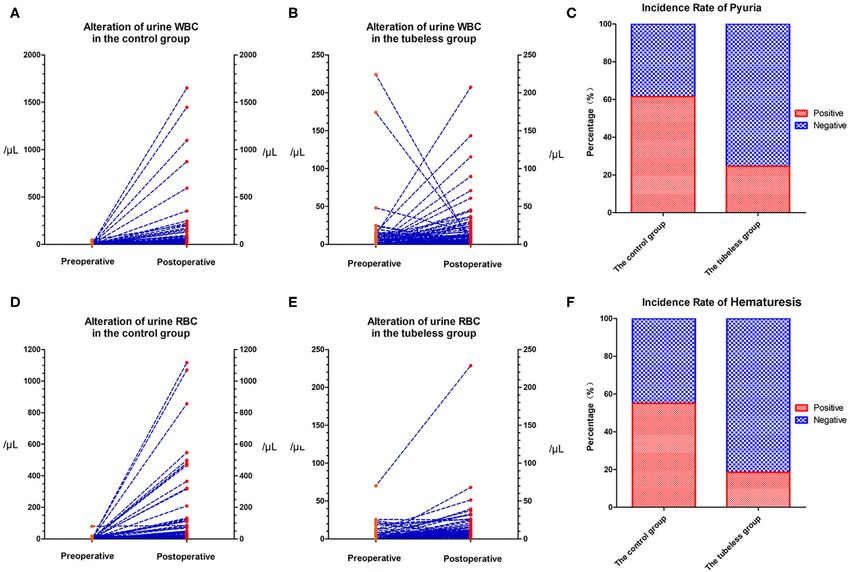
FIGURE 2 | Alteration in urine RBC and WBC levels. (A) Alteration of urine WBC level in the control group; (B) alteration of urine WBC level in the tubeless group; (C)
incidence rate of pyuria; (D) alteration of urine RBC level in the control group; (E) alteration of urine RBC level in the tubeless group; (F) incidence rate of hematuresis.
RBC, red blood cell; WBC, white blood cell.
TABLE 2 | Urine laboratory examination of our study population after PSM.
Characteristic Full cohort (n = 130) Tubeless group (n = 54)
Control group Tubeless group P Partially Completely P
(n = 65) (n = 65) tubeless group tubeless group
(n = 27) (n = 27)
Postoperative urine white bloodWang et al. A Randomized Controlled Prospective Study
FIGURE 3 | Urinary system–related outcomes among the groups. (A) Incidence of urinary irritation; (B) Incidence of urinary retention; (C) Incidence of urinary tract
infection; (D) Incidence of uroclepsia; (E) Objective discomfort of patients.
TABLE 3 | Operative parameters and postoperative recovery of our study population after PSM.
Characteristic Full cohort (n = 130) Tubeless group (n = 54)
Control group Tubeless group P Partially Completely P
(n = 65) (n = 65) tubeless group tubeless group
(n = 27) (n = 27)
Automatic micturition time (h),Wang et al. A Randomized Controlled Prospective Study
FIGURE 4 | Operation and anesthesia duration and postoperative recovery among groups. (A) Operation duration for the three groups; (B) anesthesia duration for the
three groups; (C) automatic micturition time for the three groups; (D) time to get out of bed after surgery for the three groups; (E) duration of postoperative hospital
stay for the three groups.
TABLE 4 | Regression analysis for predictive factors of urinary complications.
Variable Univariable analysis Multivariable analysis
OR 95 CI P OR 95 CI P
Age
≤60 years Reference Reference
>60 years 2.391 1.106–5.169 0.027 1.740 0.742–4.081 0.203
Gender
Male Reference
Female 0.597 0.308–1.160 0.128
Side of operation
Left Reference
Right 1.061 0.553–2.034 0.859
Hypertension
No Reference
Yes 1.079 0.470–2.478 0.857
Heart disease
No Reference
Yes 0.529 0.028–10.035 0.672
Surgical type, n
Wedge resection Reference
Segmentectomy 1.168 0.310–4.397 0.819
Lobectomy 1.348 0.687–2.645 0.385
Volume of intraoperative liquid
≤1,100 mL Reference Reference
>1,100 mL 2.094 1.061–4.131 0.033 1.296 0.596–2.819 0.513
Intraoperative blood loss
≤75 mL Reference
>75 Ml 0.557 0.277–1.122 0.102
Diameter of tumor
≤2 cm Reference
>2 cm 1.766 0.746–4.181 0.196
Lymph nodes dissection>10
No Reference
Yes 0.907 0.236–3.485 0.887
Catheterization protocol
Conventional Reference Reference
Partially tubeless 0.223 0.086–0.582 0.002 0.223 0.085–0.586 0.002
Completely tubeless 0.098 0.037–0.256Wang et al. A Randomized Controlled Prospective Study
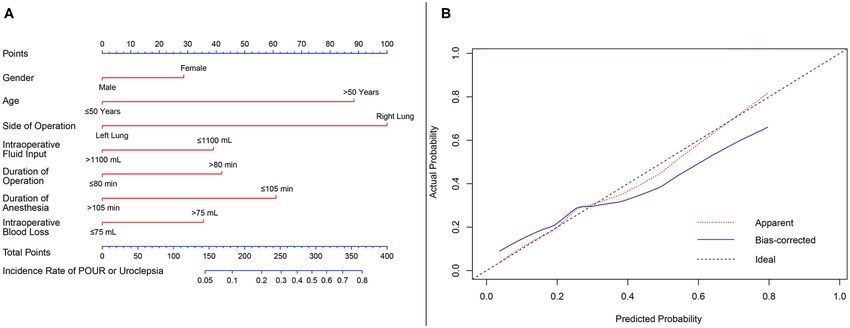
FIGURE 5 | Nomogram predicting the risk of non-automatic micturition in the tubeless group. (A) Nomogram predicting the probability of non-automatic micturition;
(B) calibration curves for the nomogram. min, minutes; mL, milliliter.
levels of WBC and RBC, fewer urinary complications, more urine output and prevent the incidence of POUR (13).
comfort, earlier mobilization and shorter hospital LOS without However, the clinical effect of monitoring urine output for
increasing the incidence of POUR and urinary incontinence. uncomplicated pulmonary resection has been questioned.
Furthermore, the advantages of the tubeless procedure were Sachin’s study demonstrated that intraoperative urine
more significant in the completely tubeless group, and it output was not an independent predictor of acute renal
can completely avoid iatrogenic injury of the urethra. The failure for non-cardiac surgery patients whose previous
benefits of performing the tubeless protocol still existed even renal function was normal (14). Similarly, in VATS lung
after a 1:1 PSM was performed to balance the influence resection patients, a study found that intraoperative urinary
of gender, age, surgical type, surgical duration, anesthesia output and postoperative renal function were not affected
duration, and tumor size. Tubeless protocol was considered by the administration of fluids (15). Thus, except in patients
to be an independent predictor of the occurrence of urinary with previously abnormal renal function or for whom fluid
complications. Additionally, we constructed a nomogram to management is crucial, such as pneumonectomy, placing a
predict the risk for patients with tubeless catheterization for the urinary catheter to monitor perioperative urine output is not
first time. This approach can identify high-risk patients among recommended (11).
those who underwent the tubeless protocol and used to adopt POUR was defined as the inability to void in the presence
preventive measures. of a full bladder. The development of POUR in VATS lung
ERAS is an evidence-based care improvement process for resection is mainly influenced by the type of anesthesia. Thoracic
surgical patients (12). To further reduce the invasiveness of the epidural analgesia (TEA) is associated with a high incidence of
procedure and accelerate recovery, non-intubated procedures, POUR (13). Prevention of POUR is also considered a potential
which use intravenous anesthesia with spontaneous ventilation advantage of indwelling catheterization. Mark’s study reported
without the placement of any tube, have been adopted in that early removal of urinary catheters was associated with a
selected patients to relieve their postoperative pain and facilitate higher rate of POUR, and a greater number of patients required
recovery (6). With the development of anesthesia control, reinsertion of urinary catheters when an epidural catheter was
non-intubated intravenous anesthesia and early removal of still in place after a thoracic operation (16). Compared to
chest tubes have been increasingly employed in pulmonary TEA, PB was believed to reduce the risks of developing POUR,
resection. However, although urinary catheter management is while the effect of analgesia is similar (17). In our study,
an essential part of ERAS, the clinical advantages of not all patients underwent intravenous anesthesia with PB, and
placing a urinary catheter and the optimal protocol of urinary there was no difference in the incidence of POUR or urinary
catheterization have not yet been defined. Thus, our study incontinence among patients with traditional catheterization or
aimed to provide high-level evidence for the recommendation tubeless protocol. Moreover, as POUR was the most common
of urinary catheterization in patients who undergo VATS concern for medical staff to perform the tubeless protocol, we
lung surgery. also constructed a nomogram to predict the incidence rate of
In most health care institutions, placement of a urinary non-automatic micturition. This nomogram not only considers
catheter until postoperative day 2 is considered standard the preoperative characteristics but also takes operative factors
procedure for pulmonary resection patients to monitor into account. For patients with long duration of anesthesia
Frontiers in Surgery | www.frontiersin.org 9 November 2020 | Volume 7 | Article 584578Wang et al. A Randomized Controlled Prospective Study
and at high risk of POUR, the urine catheter should not urethra and related complications were associated with
be removed for patients who underwent the partially tubeless significant cost and longer hospital LOS (25). Although
protocol, or a urine catheterization should be performed to some studies were conducted to design a safer urinary
prevent POUR for those who planned to choose the completely catheter system to prevent catheterization-related urinary
tubeless protocol. Other preventive measures such as more injuries (26, 27), iatrogenic urinary injuries continued to
frequent bedside ultrasound scans and induction therapy should occur. However, for patients without catheterization in our
also be considered. study, the risk of iatrogenic injury of the urethra could
UTI has long been considered the most common health care– be avoided.
associated infection, with the vast majority of these infections Previous studies on urinary catheterization after lung
occurring after placement of often unnecessary urinary catheters resection have mainly focused on the outcome of the early
(18). The risk of UTI increases with prolonging duration of removal of urinary catheter and the association between duration
urinary catheter placement, and a previous study reported that of catheter placement and the incidence of UTIs or POUR.
24% of patients will develop symptomatic UTI, and bacteremia However, a consensus on the timing of removal still cannot be
will develop in 3.6% after 2–10 days of catheterization (19). made, and no validated evidence has identified the feasibility of
Thus, avoiding unnecessary urinary catheter placement is the tubeless catheterization (11). To the best of our knowledge, this
most important strategy in the prevention of UTI. However, is the first study that proposed specific criteria for unnecessary
the urinary catheter use has been reported to be inappropriate catheterization and conducted a prospective randomized trial to
for 21% of patients, and continued catheterization was judged compare the outcomes of three different types of catheterizations.
to be appropriate for almost one-half of catheter-days (20). Our results showed that for selected patients under intravenous
Current guidelines limit the acceptable indications for the use anesthesia with PB, performing of the tubeless protocol
of indwelling urinary catheters, including significant POUR, was associated with earlier postoperative mobilization, less
refractory urinary incontinence, and accurate urine output discomfort, lower risks of UTI, and shorter hospital LOS without
monitoring (10). In our study, compared with traditional increasing the incidence of POUR. Compared with traditional
catheterization, tubeless catheterization was associated with catheterization, tubeless catheterization was considered to be
lower incidence rate of UTI, pyuria, and hematuria. More an independent protective factor for urinary complications.
importantly, patients with completely tubeless catheterization Most importantly, the completely tubeless catheterization had
had an even lower UTI rate than those with partially tubeless the lowest incidence rate of UTI and discomfort with the
catheterization, which indicated that traditional catheterization shortest hospital LOS, which provided evidence for the feasibility
is unnecessary and carries a higher risk of UTI for patients and advantages of avoiding urinary catheter placement in
met our criteria, and not placing of a urinary catheter selected patients. The specific criteria for selecting patients were
can further decrease the incidence of UTI. Moreover, once also proven to be safe and practical. In case of POUR, we
UTI was diagnosed, antibiotics should be used to completely further constructed a nomogram to predictive the risk of non-
cure the infection, which also prolonged the length of automatic micturition. However, for patients who have a history
hospital stay. of urinary system disease and underwent TEA and in whom
Early removal of the urinary catheter could also be fluid balance is crucial, traditional catheterization should still
crucial because it can motivate early mobilization, which is be performed.
essential for ERAS. Proceeding with early discontinuation of There are several limitations to the present study. As
urinary catheters could motivate early mobilization, which we restricted inclusion to patients, the findings might not
lead to prevention of thrombosis and early hospital discharge be generalizable for all patients who underwent VATS
(21). In our study, patients with tubeless catheterization lung surgery. However, from our clinical experience,
had a shorter postoperative in-bed duration and shorter we excluded no more than a quarter of the high-
hospital LOS than patients with traditional catheterization. The risk population, which implies that the exclusion
advantages were more significant when no urinary catheter proportion is small. Additionally, given the intrinsic
was inserted. characteristics of our study, it was impossible to apply
The core emphasis of ERAS is to minimize stress (12). double blinding.
Adequate discomfort relief can attenuate neurohormonal
reflexes, minimize the risk of organ dysfunction, and reduce
complications (22). Our data are consistent with this concept CONCLUSION
and demonstrate that the tubeless protocol was associated with
more comfort and better pain relief, while not placing of a The tubeless protocol led to less complications, earlier
urinary catheter showed the best outcome without the incidence mobilization, more comfort, and shorter hospital LOS
of degree II–III discomfort. without increasing the rate of POUR. The completely
Previous studies reported that the incidence of iatrogenic tubeless protocol was more advantageous. This new
catheter-related urinary injury is 0.3–3.0%, and the protocol is feasible and should be recommended for
most common ways of injury by urinary catheterization patients who meet our criteria. The utility of our nomogram
were inadvertent balloon inflation in the urinary tract can assist clinicians in avoiding risks in performing the
during insertion (23, 24). The iatrogenic injury of the tubeless protocol.
Frontiers in Surgery | www.frontiersin.org 10 November 2020 | Volume 7 | Article 584578Wang et al. A Randomized Controlled Prospective Study
DATA AVAILABILITY STATEMENT acquisition, project administration, resources, supervision,
validation, and writing–review and editing. WL: investigation
The raw data supporting the conclusions of this article will be and visualization. JX: methodology and visualization. LP:
made available by the authors. We may balance the potential investigation and software. PX: conceptualization, investigation,
benefits and risks for each request and then provide the data that methodology, and writing–original draft.
could be shared.
FUNDING
ETHICS STATEMENT
This work was supported by Major Science & Technology
This study was approved by the Medical Ethics Committee of the Project of Zhejiang Province (2020C03058), Key Disciplines of
First Affiliated Hospital, School of Medicine, Zhejiang University, Traditional Chinese Medicine in Zhejiang Province (2017-XK-
the reference number is 2016-249. Every individual participant A33), National Key R&D Program of China (2017YFC0113500)
had signed an informed consent form for participating in and Research Center of Pulmonary Oncology of Zhejiang
the study. Province (JBZX-202007).
AUTHOR CONTRIBUTIONS SUPPLEMENTARY MATERIAL
WW: conceptualization, formal analysis, data curation, software, The Supplementary Material for this article can be found
visualization, writing–original draft, and writing–review online at: https://www.frontiersin.org/articles/10.3389/fsurg.
and editing. JH: conceptualization, data curation, funding 2020.584578/full#supplementary-material
REFERENCES and the European Society of Thoracic Surgeons (ESTS). Eur J Cardio-Thoracic
Surg. (2019) 55:91–115. doi: 10.1093/ejcts/ezy301
1. Altman AD, Helpman L, McGee J, Samouëlian V, Auclair M-H, Brar H, 12. Ljungqvist O, Scott M, Fearon KC. Enhanced recovery after surgery: a review.
et al. Enhanced recovery after surgery: implementing a new standard of JAMA Surg. (2017) 152:292–8. doi: 10.1001/jamasurg.2016.4952
surgical care. Can Med Associat J. (2019) 191:E469–75. doi: 10.1503/cmaj. 13. Baldini G, Bagry H, Aprikian A, Carli F. Postoperative urinary retention:
180635 anesthetic and perioperative considerations. Anesthesiology. (2009) 110:1139–
2. Memtsoudis SG, Poeran J, Kehlet H. Enhanced recovery after surgery in the 57. doi: 10.1097/ALN.0b013e31819f7aea
United States. JAMA. (2019) 321:1049. doi: 10.1001/jama.2019.1070 14. Kheterpal S, Tremper KK, Englesbe MJ, O’Reilly M, Shanks AM, Fetterman
3. Bryant AS, Cerfolio RJ. The analysis of a prospective surgical database DM, et al. Predictors of postoperative acute renal failure after noncardiac
improves postoperative fast-tracking algorithms after pulmonary surgery in patients with previously normal renal function. Anesthesiology.
resection. J Thoracic Cardiovascular Surg. (2009) 137:1173–9. (2007) 107:892–902. doi: 10.1097/01.anes.0000290588.29668.38
doi: 10.1016/j.jtcvs.2008.12.014 15. Matot I, Dery E, Bulgov Y, Cohen B, Paz J, Nesher N. Fluid management
4. Howington JA, Blum MG, Chang AC, Balekian AA, Murthy SC. Treatment during video-assisted thoracoscopic surgery for lung resection: a randomized,
of stage I and II Non-small cell lung cancer. Chest. (2013) 143:e278S–e313S. controlled trial of effects on urinary output and postoperative renal function.
doi: 10.1378/chest.12-2359 J Thorac Cardiovasc Surg. (2013) 146:461–6. doi: 10.1016/j.jtcvs.2013.02.015
5. Yan TD, Black D, Bannon PG, McCaughan BC. Systematic review and meta- 16. Allen MS, Blackmon SH, Nichols FC, 3rd, Cassivi SD, Harmsen WS,
analysis of randomized and nonrandomized trials on safety and efficacy of Lechtenberg B, et al. Optimal timing of urinary catheter removal after thoracic
video-assisted thoracic surgery lobectomy for early-stage non–small-cell lung operations: a randomized controlled study. Ann Thorac Surg. (2016) 102:925–
cancer. J Clin Oncol. (2009) 27:2553–62. doi: 10.1200/JCO.2008.18.2733 30. doi: 10.1016/j.athoracsur.2016.03.115
6. Cui F, Liu J, Li S, Yin W, Xin X, Shao W, et al. Tubeless video-assisted 17. Yeung JH, Gates S, Naidu BV, Wilson MJ, Gao Smith F.
thoracoscopic surgery (VATS) under non-intubated, intravenous anesthesia Paravertebral block versus thoracic epidural for patients undergoing
with spontaneous ventilation and no placement of chest tube postoperatively. thoracotomy. Cochrane Database Syst Rev. (2016) 2:CD009121.
J Thoracic Dis. (2016) 8:2226–32. doi: 10.21037/jtd.2016.08.02 doi: 10.1002/14651858.CD009121.pub2
7. Yang S-M, Wang M-L, Hung M-H, Hsu H-H, Cheng Y-J, Chen J-S. Tubeless 18. Meddings J, Rogers MA, Krein SL, Fakih MG, Olmsted RN, Saint S. Reducing
uniportal thoracoscopic wedge resection for peripheral lung nodules. Ann unnecessary urinary catheter use and other strategies to prevent catheter-
Thorac Surg. (2017) 103:462–8. doi: 10.1016/j.athoracsur.2016.09.006 associated urinary tract infection: an integrative review. BMJ Qual Saf. (2014)
8. Griiths R, Fernandez R. Strategies for the removal of short-term indwelling 23:277–89. doi: 10.1136/bmjqs-2012-001774
urethral catheters in adults. Cochr Datab Syst Rev. (2007) CD004011. 19. Saint S. Clinical and economic consequences of nosocomial
doi: 10.1002/14651858.CD004011.pub3 catheter-related bacteriuria. Am J Infect Control. (2000) 28:68–75.
9. Kashefi C, Messer K, Barden R, Sexton C, Parsons JK. Incidence and doi: 10.1016/S0196-6553(00)90015-4
prevention of iatrogenic urethral injuries. J Urol. (2008) 179:2254–8. 20. Jain P, Parada JP, David A, Smith LG. Overuse of the indwelling urinary tract
doi: 10.1016/j.juro.2008.01.108 catheter in hospitalized medical patients. Arch Intern Med. (1995) 155:1425–9.
10. Hooton TM, Bradley SF, Cardenas DD, Colgan R, Geerlings SE, Rice JC, doi: 10.1001/archinte.155.13.1425
et al. Diagnosis, prevention, and treatment of catheter-associated urinary 21. Chia Y-Y, Wei R-J, Chang H-C, Liu K. Optimal duration of urinary
tract infection in adults: 2009 international clinical practice guidelines from catheterization after thoracotomy in patients under postoperative patient-
the infectious diseases society of America. Clin Infect Dis. (2010) 50:625–63. controlled epidural analgesia. Acta Anaesthesiol Taiwan. (2009) 47:173–9.
doi: 10.1086/650482 doi: 10.1016/S1875-4597(09)60051-5
11. Batchelor TJP, Rasburn NJ, Abdelnour-Berchtold E, Brunelli A, Cerfolio RJ, 22. Kehlet H, Wilmore DW. Evidence-based surgical care and the
Gonzalez M, et al. Guidelines for enhanced recovery after lung surgery: evolution of fast-track surgery. Ann Surg. (2008) 248:189–98.
recommendations of the Enhanced Recovery After Surgery (ERAS R ) Society doi: 10.1097/SLA.0b013e31817f2c1a
Frontiers in Surgery | www.frontiersin.org 11 November 2020 | Volume 7 | Article 584578Wang et al. A Randomized Controlled Prospective Study
23. Davis NF, Mooney ROC, O’Brien MF, Walsh MT. Attitudes among junior 27. Davis NF, Cunnane EM, Mooney RO, Forde JC, Walsh MT. Clinical
doctors towards improving the transurethral catheterisation process. Irish J evaluation of a safety-device to prevent urinary catheter inflation related
Med Sci. (2014) 184:365–7. doi: 10.1007/s11845-014-1120-5 injuries. Urology. (2018) 115:179–83. doi: 10.1016/j.urology.2018.02.026
24. Thomas AZ, Giri SK, Meagher D, Creagh T. Avoidable iatrogenic
complications of urethral catheterization and inadequate intern training Conflict of Interest: The authors declare that the research was conducted in the
in a tertiary-care teaching hospital. BJU Int. (2009) 104:1109–12. absence of any commercial or financial relationships that could be construed as a
doi: 10.1111/j.1464-410X.2009.08494.x potential conflict of interest.
25. Davis NF, Quinlan MR, Bhatt NR, Browne C, MacCraith E, Manecksha R, et al.
Incidence, cost, complications and clinical outcomes of iatrogenic urethral Copyright © 2020 Wang, Xia, Pan, Xu, Lv and Hu. This is an open-access article
catheterization injuries: a prospective multi-institutional study. J Urol. (2016) distributed under the terms of the Creative Commons Attribution License (CC BY).
196:1473–7. doi: 10.1016/j.juro.2016.05.114 The use, distribution or reproduction in other forums is permitted, provided the
26. Davis NF, Cunnane EM, Mooney RO, Hess J, Walsh MT. Characterisation original author(s) and the copyright owner(s) are credited and that the original
of human urethral rupture thresholds for urinary catheter inflation publication in this journal is cited, in accordance with accepted academic practice.
related injuries. J Mech Behav Biomed Mater. (2018) 83:102–7. No use, distribution or reproduction is permitted which does not comply with these
doi: 10.1016/j.jmbbm.2018.04.015 terms.
Frontiers in Surgery | www.frontiersin.org 12 November 2020 | Volume 7 | Article 584578You can also read


