Decreased Cytokine Plasma Levels and Changes in T-Cell Activation Are Associated With Hemodynamic Improvement and Clinical Outcomes After ...
←
→
Page content transcription
If your browser does not render page correctly, please read the page content below
BRIEF RESEARCH REPORT
                                                                                                                                            published: 03 February 2021
                                                                                                                                        doi: 10.3389/fcvm.2020.604826

                                            Decreased Cytokine Plasma Levels
                                            and Changes in T-Cell Activation Are
                                            Associated With Hemodynamic
                                            Improvement and Clinical Outcomes
                                            After Percutaneous Mitral
                                            Commissurotomy in Patients With
                           Edited by:
                                            Rheumatic Mitral Stenosis
            Roney Orismar Sampaio,
        University of São Paulo, Brazil     Vicente R. Silva 1 , Eula G. A. Neves 2 , Lívia S. Araújo Passos 2,3 , Flávia Cristina de Melo 2 ,
                                            Andrea Teixeira-Carvalho 4 , Maria Cecília L. Nassif 5 , Lucas Lodi Junqueira 5 ,
                      Reviewed by:
                                            Elena Aikawa 3 , Walderez O. Dutra 1,2,6 and Maria Carmo P. Nunes 1,5*
                           Laura Iop,
            University of Padua, Italy      1
                                             Post Graduate Program in Infectious Diseases and Tropical Medicine, School of Medicine, Universidade Federal de Minas
                      Steve Bibevski,       Gerais, Belo Horizonte, Brazil, 2 Laboratory of Cell-Cell Interactions, Department of Morphology, Institute of Biological
    Joe DiMaggio Children’s Hospital,       Sciences, Universidade Federal de Minas Gerais, Belo Horizonte, Brazil, 3 Department of Cardiovascular Medicine, The
                        United States       Center for Excellence in Vascular Biology, Brigham and Women’s Hospital, Harvard Medical School, Boston, MA,
                *Correspondence:            United States, 4 Instituto René Rachou, Fiocruz Minas, Belo Horizonte, Brazil, 5 Serviço de Cardiologia e Cirurgia
              Maria Carmo P. Nunes          Cardiovascular do Hospital das Clínicas da Universidade Federal de Minas Gerais, Belo Horizonte, Brazil, 6 Instituto Nacional
           mcarmo@waymail.com.br;           de Ciência e Tecnologia em Doenças Tropicais (INCT-DT), Belo Horizonte, Brazil
          mcarmopnunes@gmail.com

                                            Mitral stenosis (MS) is a consequence of rheumatic heart disease that leads to heart
                    Specialty section:
          This article was submitted to     failure requiring mechanical intervention. Percutaneous mitral commissurotomy (PMC) is
                   Heart Valve Disease,     the treatment of choice for the intervention, and currently there are no soluble markers
                a section of the journal
  Frontiers in Cardiovascular Medicine      associated with hemodynamic improvement after PMC. This study aims to determine the
      Received: 10 September 2020
                                            changes in cytokine/chemokine plasma levels, as well as T cell activation after PMC, and
      Accepted: 18 November 2020            to investigate their association with immediate hemodynamic improvement and clinical
       Published: 03 February 2021
                                            outcomes. Plasma samples from eighteen patients with well-defined MS who underwent
                                Citation:
                                            PMC and 12 healthy controls were analyzed using BioPlex immunoassay. We observed
   Silva VR, Neves EGA, Passos LSA,
                      Cristina de Melo F,   that 16 out of the 27 (60%) molecules assessed were altered in patients’ plasma pre-PMC
      Teixeira-Carvalho A, Nassif MCL,      as compared to control group. Of those, IL-1β, IL-12, IL-6, IL-4, PDGF, and CCL11
    Junqueira LL, Aikawa E, Dutra WO
   and Nunes MCP (2021) Decreased
                                            showed significant decrease after PMC. Stratifying the patients according to adverse
Cytokine Plasma Levels and Changes          outcome after a 28-month median follow up, we detected a significant reduction of
    in T-Cell Activation Are Associated
                                            IL-1β, IL-12, IL-6, IL-4, IFN-γ, CXCL-10, VEGF, FGF and PDGF post-PMC in patients
With Hemodynamic Improvement and
Clinical Outcomes After Percutaneous        without events, but not in those who presented adverse events during the follow-up.
   Mitral Commissurotomy in Patients        Patients with adverse outcomes had lower IL-10 pre-PMC, as compared to the ones
       With Rheumatic Mitral Stenosis.
   Front. Cardiovasc. Med. 7:604826.
                                            without adverse events. In addition, the frequency of CD8+ activated memory cells
      doi: 10.3389/fcvm.2020.604826         was increased after PMC, while the frequency of CD4+ activated memory cells did not

Frontiers in Cardiovascular Medicine | www.frontiersin.org                         1                                           February 2021 | Volume 7 | Article 604826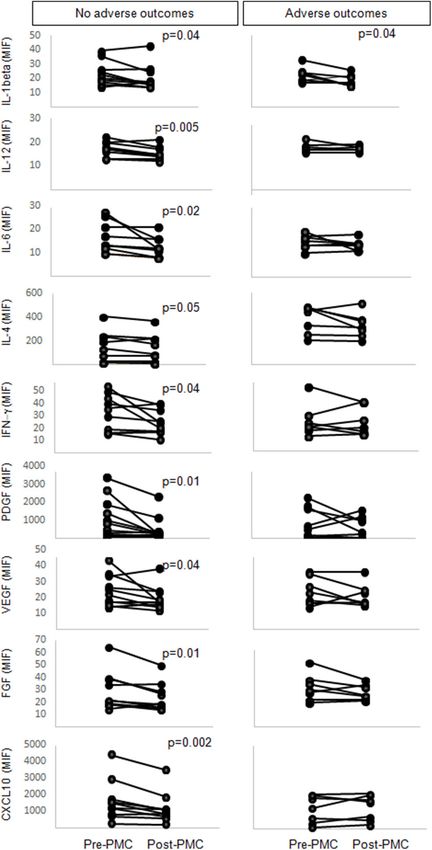
Silva et al.                                                                                                                   Immune Response After PMC

                                            change. Our results show an association between the decrease of specific cytokines and
                                            changes in T cell activation with hemodynamic improvement post-PMC, as well as with
                                            long-term outcomes, suggesting their possible use as soluble markers for hemodynamic
                                            recovery after MS intervention.

                                            Keywords: rheumatic heart disease, mitral stenosis, percutaneous mitral commissurotomy, cytokines, T cells

INTRODUCTION                                                                      2016 at the Federal University of Minas Gerais (UFMG)
                                                                                  Hospital. Exclusion criteria were presence of left atrial thrombus,
Rheumatic heart disease (RHD) is the major sequel of                              moderate-to-severe mitral regurgitation, concomitant severe
acute rheumatic fever (ARF) and is an important cause of                          aortic valve disease or any other contraindication to PMC. The
cardiovascular mortality in children and young adults in low-                     clinical characteristics of the study population are summarized in
and middle-income countries. There are an estimated 33 million                    Appendix 1. At the time of enrollment, patients had an average
individuals currently living with RHD, accounting for over a                      age of 49 ± 2 years, and 89% were females.
million premature deaths annually (1). We have demonstrated                          Echocardiographic examination was performed in all patients
that patients with RHD have higher serum levels of inflammatory                   before and 24 h after the procedure. PMC was performed
mediators than healthy controls, which is a clear evidence of                     according to the antegrade, trans-septal technique with Inoue
ongoing inflammation (2–4). It is also known that expression                      balloon catheter (Toray Medical Corporation; Tokyo, Japan).
of inflammatory cytokines increases in patients with significant                     The control group was composed of 12 healthy volunteers.
pressure or volume overload due to valvular heart disease or                      Peripheral blood samples were collected immediately before
chronic heart failure (5–7). Several studies have demonstrated                    PMC, and 4–11 days after the procedure. The date of enrollment
that T-cells play an important role in the pathogenesis of RHD.                   in the study was defined as the date on which PMC was
It has been shown that CD4+ T cells are the main cell type found                  performed. Adverse outcome was defined as the need for
in the inflammatory infiltrates associated with damaged valves                    mitral valve intervention, either percutaneous or surgical, death
(5–7), suggesting that they play an important role in disease                     related to MS, or new onset of atrial fibrillation. Patients with
progression. On the other hand, a defective response of CD8+ T                    event-free during the follow-up were considered with favorable
cells in chronic RHD patients suggests that these cells display an                outcome. Informed consent was obtained from all participants
important immunoregulatory role in protection against RHD (8).                    and the UFMG ethical review board approved the protocol. The
    RHD is the major cause of mitral stenosis (MS) which                          work described has been carried out in accordance with The
is a progressive and fatal disease, if untreated. Percutaneous                    Code of Ethics of the World Medical Association (Declaration
mitral commissurotomy (PMC) intervention is the main                              of Helsinki).
treatment in patients with significant MS (8–10). While it
has been demonstrated that PMC decreases platelet activation                      Measurement of Plasma Cytokines,
and endothelial dysfunction, the alterations in plasma levels
of inflammatory markers have been controversial (11–13).
                                                                                  Chemokines, and Growth Factors
                                                                                  Plasma concentrations of cytokines/chemokines/growth factors
Currently there are no systemic markers that allow monitoring
                                                                                  were measured using Luminex immunoassay kit (Bio-Plex ProTM
hemodynamic improvement, nor predict outcomes after PMC.
                                                                                  Human Cytokine 27-plex Assay, Bio-Rad, Hercules—CA, USA).
We aimed to evaluate the plasma levels of cytokines pre- and
                                                                                  Results were presented as mean fluorescence intensity (MFI).
post-PMC using a multiplex assay, as well as the frequency of
T-cell activation using flow cytometry, in a well-defined group
of severe MS patients to determine the impact of these changes
                                                                                  Analysis of Frequency of T-cell Activation
on immediate results after PMC and long-term outcomes.                            by Flow Cytometry
Our results show a clear association between hemodynamic                          Purification of peripheral blood mononuclear cells (PBMC)
improvement and favorable outcome with a decrease in the                          and immunofluorescence staining was performed as previously
circulating levels of IL-1β, IL-6, IL-12, IL-4 and PDGF post-                     described (14). Briefly, heparinized blood was applied over
PMC, as well as with changes in T-cell activation, suggesting                     a Ficoll-Hypaque (GE Healthcare Life Sciences) gradient,
that these measures might be useful to monitor PMC-induced                        centrifuged at 600 g for 40 min, at room temperature, and PBMC
hemodynamic improvement and clinical outcomes.                                    were collected at the interface between the plasma and Ficoll.
                                                                                  Cells were washed 3 times by centrifugation with PBS and
                                                                                  resuspended in PBS at a concentration of 107 cells/ml. Cells were
PATIENTS, MATERIALS AND METHODS                                                   plated at 2 × 10⁵ cells/well in a 96 U-bottom plate, incubated
                                                                                  with a 40 µL mix of monoclonal antibodies CD4-Percp-Cy5.5
Patients                                                                          (clone OKT4, 1:20 dilution), anti-CD8-APCCy7 (clone SK1, 1:20
We included 18 consecutive symptomatic patients with severe                       dilution), anti-CD45RO-APC (clone UCHL1, 1:40 dilution) and
rheumatic MS (mitral valve area ≤1.5 cm2 ) and favorable valve                    anti-CD69-PECy7 (clone FN50, 1:20 dilution) for 15 min at 4◦ C,
morphology who underwent PMC between October 17th−27th                            washed with PBS, and fixed for 20 min with 2% formaldehyde.

Frontiers in Cardiovascular Medicine | www.frontiersin.org                    2                                     February 2021 | Volume 7 | Article 604826
Silva et al.                                                                                                                           Immune Response After PMC

Samples were acquired on the FACS CANTO II and analyzed                              group pre and post-PMC. A two-tailed P-value of
Silva et al.                                                                                                                         Immune Response After PMC

phase of disease. Interestingly, levels of IL-12p70, IL-13 and IL-6                       not change (Appendix 3), a decrease in plasma levels of PDGF,
were lower in MS group as compared to controls (Appendix 2).                              VEGF, FGF basic, IL-2, IL-7 and IL-15 was observed post-PMC
   We then compared the levels of circulating growth factors,                             (Appendix 3), probably due to hemodynamic improvement.
chemokines and cytokines between MS patients pre-PMC and                                  Of note, levels of VEGF were negatively correlated with
post-PMC (Appendix 3). Comparing levels of growth factors                                 mitral valve area (p = 0.052, r2 = 0.03). Rajamannan et al.
and proliferative cytokines in patients pre- and post-PMC, we                             (11) hypothesized that the mechanism of valvular calcification
demonstrated that while the levels of GM-CSF and G-CSF did                                included neoangiogenesis in valve tissue and demonstrated
                                                                                          the presence of VEGF in rheumatic valves. Evaluating the
                                                                                          levels of chemokines, only CCL11 decrease in patients post-
                                                                                          PMC as compared to pre-PMC (Appendix 3). Given CCL11 is
                                                                                          involved in recruitment of polymorphonuclear cells, especially
                                                                                          neutrophils, which are the first cells to respond in inflammatory
                                                                                          settings, it is reasonable to think that the hemodynamic
                                                                                          improvement due to adequate relief of valve obstruction may
                                                                                          have a prompt neutrophil response. In addition, given the
                                                                                          observed decrease in CCL11, IL-4 and IL-5 post-PMC, it
                                                                                          is possible to hypothesize that PMC decreases activation of
                                                                                          polymorphonuclear cells, high producers of these cytokines.
                                                                                          Indeed, there were strong correlations between levels of CCL11
                                                                                          and both IL-4 (r = 0.87) and IL-5 (r = 0.88). Evaluating
                                                                                          the levels of cytokines, we observed that the levels of mostly
                                                                                          T cell-derived inflammatory cytokines (IL-17, IFN-γ) did not
                                                                                          change comparing post- and pre-PMC (Appendix 3). Post-PMC,
                                                                                          levels of IL-1β, IL-12p70, IL-6, IL-4, and IL-5 had a significant
                                                                                          decrease, as compared to pre-PMC (Appendix 3). Consistent
                                                                                          with our findings, previous studies have demonstrated that levels
                                                                                          of IL-6 and TNF-α decrease in this phase of the disease (13,
                                                                                          14). Of note, the levels of IL-12, IL-1β, and IL-6, inflammatory
                                                                                          cytokines produced primarily by monocytes/macrophages and
                                                                                          related to innate response, were decreased. Improvement of
                                                                                          hemodynamic parameters after PMC may be responsible for this
                                                                                          decrease, and the improvement might interfere first with innate
                                                                                          immune response and later in adaptive response. We expected
                                                                                          a decrease in levels of TNF-α and IFN-γ, as demonstrated by
                                                                                          Cagli et al., who showed that TNF-α progressively decreased
                                                                                          at the 24th h until the 4th week after PMC (15). However,
                                                                                          Cagli et al evaluated only patients in sinus rhythm and with
                                                                                          no other comorbidity; therefore, it is possible that, in our
                                                                                          group, the levels of TNF-α follow a different kinetics than the
                                                                                          one observed by those authors. The fact that levels of down-
                                                                                          regulatory cytokines IL-10 and IL-1RA did not change after
                                                                                          PMC (Appendix 3) is probably associated with the reduction
                                                                                          in inflammation observed post-PMC. The lower levels of IL-10
                                                                                          pre-PMC were associated with adverse outcomes (No adverse
                                                                                          outcome IL-10 pre-PMC = 16, and adverse outcome IL-10
                                                                                          pre-PMC = 14; p = 0.04), emphasizing the role of IL-10
                                                                                          in controlling inflammation and possibly preventing restenosis
                                                                                          over time.
                                                                                              Finally, we then compared the levels of growth factors,
                                                                                          chemokines and cytokines between control group and MS
                                                                                          patients post-PMC (Appendix 4). PDGF was the only molecule
  FIGURE 2 | Levels of IL-1β, IL-12, IL-6, IL-4, IFN-γ, PDGF, VEGF, FGF-basic             among growth factors and proliferative cytokines that was higher
  and CXCL10 in plasma from mitral stenosis patients pre- and post-                       in patients pre-PMC compared to controls. After PMC, although
  percutaneous mitral commissurotomy (PMC). Patients were followed-up for a               its levels have fallen, they were still higher compared to controls
  median of 28 months and categorized in groups without or with adverse                   (Appendix 4). On the other hand, while all the chemokines
  outcomes. Statistically significant differences between levels of soluble factors
  pre- and post-PMC are indicated.
                                                                                          presented higher plasma levels in patients pre-PMC compared
                                                                                          to controls and only CCL11 had a significant decrease in plasma

Frontiers in Cardiovascular Medicine | www.frontiersin.org                            4                                   February 2021 | Volume 7 | Article 604826
Silva et al. Immune Response After PMC
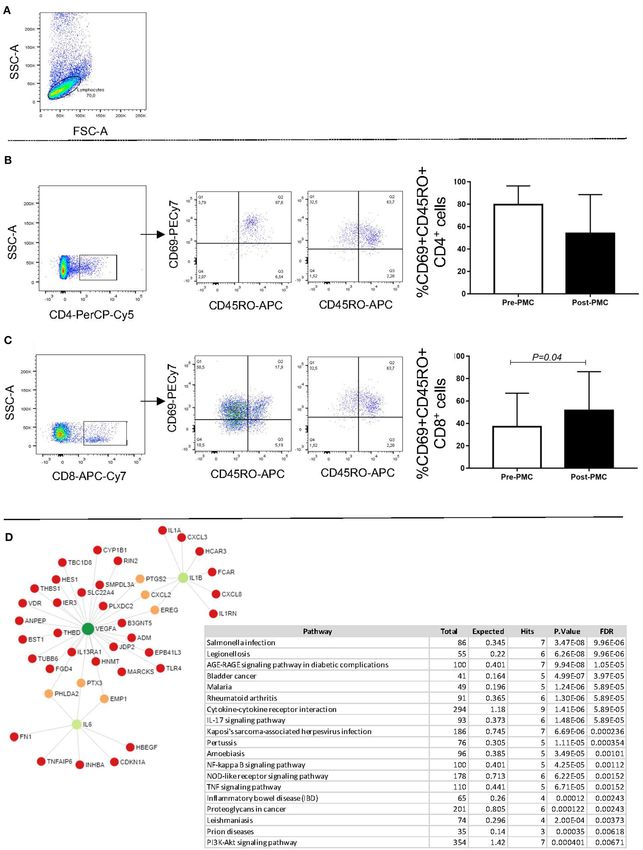
FIGURE 3 | Analysis of the percentage of circulating CD4+CD45RO+CD69+ and CD8+ CD45RO+CD69+ T cells pre and post PMC, and network interactions.
PBMC were obtained from the patients before and after PMC, and processed for flow cytometry analysis, as described in Material and Methods. (A) Shows a
(Continued)
Frontiers in Cardiovascular Medicine | www.frontiersin.org 5 February 2021 | Volume 7 | Article 604826Silva et al. Immune Response After PMC
FIGURE 3 | representative dot plot with the selection of the lymphocyte gate. (B) Shows the selection of CD4+ T cells, representative dot lots showing the frequency
of CD69+CD45RO+ cells, and bar graphs for the analysis before (white bars) and after (black bars) PMC. (C) Shows the selection of CD8+ T cells, representative dot
lots showing the frequency of CD69+CD45RO+ cells, and bar graphs for the analysis before (white bars) and after (black bars) PMC. Data are expressed as average
and standard deviation, and statistical significance is indicated by the p-value. (D) Co-expression network of soluble factors overrepresented in plasma from patients
without adverse outcomes in a background of T CD8-derived genes. KEEG enriched pathways analysis obtained from gene co-expression network.
levels post-PMC, the levels of CXCL10, CCL11, and IL-8 were not and therefore might be more relevant to the functionality than
statistically different from controls (Appendix 4). IL-5 and IL- other nodes in the network. However, the network analysis
1β, that presented a significant decrease after PMC, demonstrated shows that VEGF, IL-1β and IL-6 display direct influence in
levels post-PMC statistically not different from controls, but IL- several other genes. Thus, the observed decrease in the levels
4, that also demonstrated significant decrease after PMC, still of these factors after successful PMC will also interfere with the
presented higher levels than controls (Appendix 4). Levels of overall inflammatory response. The top 20 KEGG enrichment
IL-17, IFN-γ, and IL-1RA continued statistically higher post- analyses identified common pathways of infectious diseases, as
PMC compared to controls (Appendix 4). IL-10 levels were not well as an autoimmune disease, rheumatoid arthritis. Among all
different from controls neither pre nor post-PMC (Appendix 4). enriched inflammatory pathways, we found AGE-RAGE, IL-17,
Interesting, levels of TNF-α, IL-9, IL-6, IL-12p70, and IL-13 were NF-kappa B, NOD-like receptor and TNF signaling pathways,
lower in patients post-PMC compared to controls (Appendix 4). which are under the influence of the three identified hub
We then stratified the patients according to clinical outcomes genes. This entices future studies to further investigate the
at long-term follow-up and compared the levels of soluble factors role of these node molecules as biomarkers and/or potential
pre- and post-PMC in those groups. During a median follow-up intervention candidates.
of 28 months (range, 4–40), 10 patients (55.5%) were clinically PMC is a safe and effective procedure for treating patients
stable, asymptomatic, whereas 8 (44.4%) patients presented with MS, which results in the alleviation of valve obstruction with
adverse outcomes, including five mitral valve replacements, one hemodynamic and symptoms improvement. Despite its wide
repeat PMC, and two onset of atrial fibrillation. The analysis use, there are currently no soluble markers to evaluate PMC-
showed that levels of IL-1β decreased in patients with and induced hemodynamic improvement, nor clinical outcomes.
without adverse outcomes (Figure 2), while levels of IL-12, IL- Using cytokine levels to assess outcome of percutaneous coronary
6, IL-4, IFN-γ, PDGF, VEGF, FGF, CXCL10 were decreased intervention has shown promising results (17). Our study is
only in patients who did not display adverse events, post-PMC the first to evaluate the impact of PMC on plasma levels of
as compared to pre-PMC (Figure 2). This decrease was not a broader range of cytokines, chemokines and growth factors,
significant in patients with adverse events (Figure 2). All these together with the frequency of activated circulating T cell
molecules, except for CXCL-10, presented decreased levels post- subpopulations. Importantly, we showed a clear association
PMC, even before considering PMC outcome after follow-up, between the levels of particular circulating molecules with
reinforcing their possible usefulness as markers of PMC-induced hemodynamic improvement immediately after PMC, as well as
hemodynamic improvement and favorable outcome. with clinical outcomes. These data suggest useful immunologic
In order to determine the influence of PMC on T prognostic markers of amelioration after PMC and at long term
cell activation, we evaluated the expression of CD69 by follow up.
CD4+CD45RO+ and CD8+CD45RO+ T cells. The expression
of CD45RO is associated with pre-activated/memory cells (16).
DATA AVAILABILITY STATEMENT
Our data showed that, while not statistically significant, there was
a slight reduction in the frequency of CD4+CD45RO+CD69+ All datasets presented in this study are included in the article.
cells post-PMC (Figure 3). On the other hand, the percentage
of CD8+CD45RO+CD69+ cells significantly increased
after PMC (Figure 3). The observed increase in a pre- ETHICS STATEMENT
activated/memory CD8+ T cell population, previously associated
with immunoregulatory functions in RHD (8), together with a The studies involving human participants were reviewed
tendency to a reduction in the frequency of memory/activated and approved by Federal University of Minas Gerais
CD4+ cells associated with pathology in RHD (5–7), might UFMG - Ethical Review Board. The patients/participants
reflect the clinical amelioration after PMC. Further studies to provided their written informed consent to participate in
determine the functional characteristics of these cells before and this study.
after PMC will provide important additional information on
their role in MS. AUTHOR CONTRIBUTIONS
To extend the findings, we then turned to the Immuno-
Navigator database to verify co-expression between T CD8- VS: patient care, procedure, and follow up and data analysis
derived genes and the nine altered soluble factors in patients and writing. EN: experimentation and data preparation. LP:
without adverse outcomes. VEGF, IL-1beta and IL-6 were the data analysis and methodology. FC: material collection and
highly connected genes in a T CD8 co-expression network experimentation. AT-C: supervision of experimentation. MN:
Frontiers in Cardiovascular Medicine | www.frontiersin.org 6 February 2021 | Volume 7 | Article 604826Silva et al. Immune Response After PMC
patient care and follow up. LJ: patient care and procedure. EA: LP was a CNPq fellow at the time of the work and EN,
bioinformatic analysis and critical revision of the manuscript. AT-C, WD, and MN are CNPq fellows. EA lab was funded
WD: conceptualization, data analysis and interpretation, and by the National Institutes of Health grants (R01HL136431,
writing. MN: conceptualization, data analysis and interpretation, R01HL147095, R01HL141917). WD lab is funded by NIH
patient care, and writing. All authors contributed to the article (RO1 AI138230).
and approved the submitted version.
ACKNOWLEDGMENTS
FUNDING
The authors would like to thank the medical students of
This work was partly funded by grants from CNPq (National the Federal University of Minas Gerais for their assistance in
Council for Scientific and Technological Development). patient selection.
REFERENCES endothelial growth factor expression and osteoblast-like bone formation.
Circulation. (2005) 111:3296–301. doi: 10.1161/CIRCULATIONAHA.104.
1. Watkins DA, Johnson CO, Colquhoun SM, Karthikeyan G, Beaton 473165
A, Bukhman G, et al. Global, Regional, and National Burden of 12. Bilik MZ, Kaplan I, Polat N, Akil MA, Akyuz A, Acet H, et al.
Rheumatic Heart Disease, 1990-2015. N Engl J Med. (2017) 377:713– Serum Levels of IL-17 and IL-23 in patients with rheumatic mitral
22. doi: 10.1056/NEJMoa1603693 stenosis. Medicine. (2016) 95:e3562. doi: 10.1097/MD.00000000000
2. Diamantino Soares AC, Araujo Passos LS, Sable C, Beaton A, Ribeiro VT, 03562
Gollob KJ, et al. Circulating cytokines predict severity of rheumatic heart 13. Azevedo PM, Pereira RR, Guilherme L. Understanding rheumatic fever.
disease. Int J Cardiol. (2019) 289:107–9. doi: 10.1016/j.ijcard.2019.04.063 Rheumatol Int. (2012) 32:1113–20. doi: 10.1007/s00296-011-2152-z
3. Guilherme L, Ramasawmy R, Kalil J. Rheumatic fever and rheumatic 14. Toor D, Vohra H. Immune responsiveness during disease progression
heart disease: genetics and pathogenesis. Scand J Immunol. (2007) 66:199– from acute rheumatic fever to chronic rheumatic heart disease.
207. doi: 10.1111/j.1365-3083.2007.01974.x Microbes Infect. (2012) 14:1111–7. doi: 10.1016/j.micinf.2012.
4. Marijon E, Mirabel M, Celermajer DS, Jouven X. Rheumatic heart disease. 07.003
Lancet. (2012) 379:953–64. doi: 10.1016/S0140-6736(11)61171-9 15. Cagli KE, Aras D, Topaloglu S, Geyik B, Ayaz S, Cagirci G, et al. Plasma
5. Hirota H, Izumi M, Hamaguchi T, Sugiyama S, Murakami E, Kunisada levels of tumor necrosis factor-alpha and its receptors in patients with mitral
K, et al. Circulating interleukin-6 family cytokines and their receptors stenosis and sinus rhythm undergoing percutaneous balloon valvuloplasty.
in patients with congestive heart failure. Heart Vessels. (2004) 19:237– Heart Vessels. (2010) 25:131–7. doi: 10.1007/s00380-009-1175-9
41. doi: 10.1007/s00380-004-0770-z 16. Dutra WO, Martins-Filho OA, Cançado JR, Pinto-Dias JC, Brener Z,
6. Satoh S, Oyama J, Suematsu N, Kadokami T, Shimoyama N, Okutsu M, Freeman Júnior GL, et al. Activated T and B lymphocytes in peripheral
et al. Increased productivity of tumor necrosis factor-alpha in helper T blood of patients with Chagas’ disease. Int Immunol. (1994) 6:499–506.
cells in patients with systolic heart failure. Int J Cardiol. (2006) 111:405– doi: 10.1093/intimm/6.4.499
12. doi: 10.1016/j.ijcard.2005.08.021 17. Sun J, Yu H, Liu H, Pu D, Gao J, Jin X, et al. Correlation of pre-operative
7. Fukunaga T, Soejima H, Irie A, Sugamura K, Oe Y, Tanaka T, et al. circulating inflammatory cytokines with restenosis and rapid angiographic
Expression of interferon-gamma and interleukin-4 production in CD4+ T stenotic progression risk in coronary artery disease patients underwent
cells in patients with chronic heart failure. Heart Vessels. (2007) 22:178– percutaneous coronary intervention with drug-eluting stents. J Clin Lab Anal.
83. doi: 10.1007/s00380-006-0955-8 (2020) 34:e23108. doi: 10.1002/jcla.23108
8. Baumgartner H, Falk V, Bax JJ, De Bonis M, Hamm C, Holm PJ, et al. 2017
ESC/EACTS Guidelines for the management of valvular heart disease. Eur Conflict of Interest: The authors declare that the research was conducted in the
Heart J. (2017) 38:2739–91. doi: 10.1093/eurheartj/ehx391 absence of any commercial or financial relationships that could be construed as a
9. Nishimura RA, Otto CM, Bonow RO, Carabello BA, Erwin JP III, Guyton potential conflict of interest.
RA, et al. 2014 AHA/ACC Guideline for the Management of Patients With
Valvular Heart Disease: executive summary: a report of the American College Copyright © 2021 Silva, Neves, Passos, Cristina de Melo, Teixeira-Carvalho, Nassif,
of Cardiology/American Heart Association Task Force on Practice Guidelines. Junqueira, Aikawa, Dutra and Nunes. This is an open-access article distributed
Circulation. (2014) 129:2440–92. doi: 10.1161/CIR.0000000000000029 under the terms of the Creative Commons Attribution License (CC BY). The
10. Nunes MC, Nascimento BR, Lodi-Junqueira L, Tan TC, Athayde GR, Hung use, distribution or reproduction in other forums is permitted, provided the
J. Update on percutaneous mitral commissurotomy. Heart. (2016) 102:500– original author(s) and the copyright owner(s) are credited and that the original
7. doi: 10.1136/heartjnl-2015-308091 publication in this journal is cited, in accordance with accepted academic practice.
11. Rajamannan NM, Nealis TB, Subramaniam M, Pandya S, Stock SR, Ignatiev No use, distribution or reproduction is permitted which does not comply with these
CI, et al. Calcified rheumatic valve neoangiogenesis is associated with vascular terms.
Frontiers in Cardiovascular Medicine | www.frontiersin.org 7 February 2021 | Volume 7 | Article 604826Silva et al. Immune Response After PMC
APPENDIX Appendix 2 | Levels of soluble factors in control group and study group pre-PMC.
Variables Control group Pre-PMC group P-value
Appendix 1 | Baseline characteristics of the study population.
Growth factors
Characteristics Mitral stenosis group Control group
GM-CSF 18 (15–19) 17 (13–21) 0.55
(n = 18) (n = 12)
G-CSF 33 (30–42) 51 (33–77) 0.10
Age (years) 49.28 ± 2.45 17.25 ± 0.13 VEGF 22 (21–27) 23 (17–34) 0.84
Female sex, n (%) 16 (88.9%) 4 (33.3%) FGF basic 20 (18–21) 24 (19–37) 0.10
Age at diagnostic (years) 35.6 ± 3.28 – PDGF 124 (50–193) 820 (199–1,810) 0.001
Functional class NYHA: Proliferative factors
I and II, n (%) 12 (66.7%) – IL-2 16 (15–17) 17 (13-23) 0.53
III and IV, n (%) 6 (33.3%) – IL-7 23 (22–24) 22 (20–23) 0.57
Wilkins score 7 (7–8) – IL-15 24 (23–26) 20 (19–27) 0.11
Atrial fibrillation, n (%) 8 (44.4%) – Chemokines
Prior embolic events, n (%) 2 (11.1%) – CXCL10 685 (365–1,104) 1,280 (690–1,971) 0.03
Heart failure at admission, n (%) 9 (50.0%) – CCL2 45 (24–54) 171 (69–357)Silva et al. Immune Response After PMC
Appendix 3 | Levels of soluble factors in study group pre and post-PMC. Appendix 4 | Levels of soluble factors in control group and study group
post-PMC.
Variables Pre-PMC group Post-PMC group P-value
Variables Control group Post-PMC group P-value
Growth factors
GM-CSF 17 (13–21) 14 (12–18) 0.06 Growth factors
G-CSF 51 (33–77) 39 (31–56) 0.14 GM-CSF 18 (15–19) 14 (12–18) 0.02
VEGF 23 (17–34) 17 (16–24) 0.03 G-CSF 33 (30–42) 39 (31–56) 0.40
FGF basic 24 (19–37) 22 (17–29) 0.01 VEGF 22 (21–27) 17 (16–24) 0.03
PDGF 820 (199–1,810) 314 (210–1,033) 0.02 FGF basic 20 (18–21) 22 (17–29) 0.56
Proliferative factors PDGF 124 (50–193) 314 (210–1,033) 0.002
IL-2 17 (13–23) 14 (13–19) 0.01 Proliferative factors
IL-7 22 (20–23) 19 (18–23) 0.03 IL-2 16 (15–17) 14 (13–19) 0.09
IL-15 20 (19–27) 20 (18–27) 0.03 IL-7 23 (22–24) 19 (18–23) 0.03
Chemokines IL-15 24 (23–26) 20 (18–27)You can also read


